Showing posts with label Anniversary Celebration. Show all posts

Friday, April 11, 2014

Best of All of Us: Year Two

Today we nerds of a feather celebrate our second anniversary! It's been real--and at times surreal. But it's always been fun, thanks the the crew of smart, interesting and generally likeable people Vance and I have enticed, sweet-talked, cajoled and coerced into contributing to the site. We now have a grand total of 10 (10!) regular writers, including ourselves--not to mention the individuals who have generously donated their time and thoughts as guest writers and interview subjects (more on them next week). For now, though, to celebrate, I thought I'd compile the Best of All of Us: Year Two (regular contributors edition). For each writer, I provide the most popular post since April 11, 2013 and my personal favorite. And for those who have been with us since the beginning, you can note that I've put our contributors in the order by which they joined.

Oh, and how could I forget? Thanks to all everyone--readers, fellow bloggers, authors, filmmakers and so forth--who have supported and continue to support us as we go forward. You are what makes this whole project special to all of us, and for that we are eternally grateful. 

Now, on to Best of All of Us: Year Two... 

-The G


The G

Most Popular: Draft Hugo Ballot 2014 (1/22/14)

Favorite: True Detective Conquers All (3/11/14)

The Hugos thing was fun to write, as it gave me the chance to heap praise upon some deserving folks. But as far as personal favorites go, well, it's got to be the love letter Philippe and I wrote to the Greatest Television Show Ever. The most fun criticism to write, after all, tends to be that which come from intersections of rational consideration and emotional fervor--either of the proselytizing or righteous condemnation variety. And, frankly, Philippe and I might as well have been hawking "mainlining the secret truth of the universe" tests on Hollywood Blvd. Yet while we might be accused of True Detective zealotry, everything we say about the show is true!
"Sure, True Detective came in familiar packaging--the police procedural, the hardboiled detective story, the hunt for a serial killer, etc. But it kept hinting that it would metamorphose into full-blown horror. There were the little hints sprinkled throughout the season--the recurring patterns, the more-than-coincidental names, the literary references, the signposting. The Yellow King! Carcosa! We grew certain of such things. But in truth, True Detective used the symbolism and iconography of horror to establish its apocalytptic atmosphere. This is noir, pure and simple, a small-scale holocaust of the human soul--Lovecraft without the tentacled bodies; Revelations without the horsemen."


Vance

Most Popular: Beer and Sci-Fi Pairings (3/25/14)

Favorite: Spurs to Spandex: Why Westerns Died and Superheros Fly (5/13/14)

Vance's pairing of craft beers to speculative/SF television programs has become our all-time most popular post. But while its awesomeness cannot be denied, I nevertheless prefer the essay where he relates the shift in Hollywood film archetypes, from the gunslinging cowboy to the superpowered vigilante, to changes in how Americans view the society they live in, their socio-economic prospects and the attainability of "the American Dream." It's probably the most serious thing we've ever published, and by extension, might be the best.
"But reality has begun to approximate this magical aspect of our daily narrative. Peter Parker, Steve Rogers, Harry Potter, Carrie Underwood, Jennifer Hudson, Snooki, and all of the Kardashians share one thing in common: they were unknown, regular people who had something inside of them just waiting to be discovered and exploited on a larger stage. They were destined for greatness. We watch reality TV and Superhero Movies wishing that someone would see past our own humble situations, recognize our latent talent or nobility, and lift us out of our everyday lives."


Molly

Most Popular: Comic Con from Afar -- Second Annual Lamentation (7/23/13)

Favorite: Ender's Game: Heart But No Smarts (11/4/13)

Every year Molly compiles the best intel and video footage from San Diego Comic-Con--wishing from afar that she were there. It's something I've come to look forward to in July. But my favorite post of hers has to be this conflicted review of the Ender's Game film adaptation. See, like me, Molly finds Orson Scott Card's political activism nauseating. Unlike me, though, she loves the Ender novels. This review is thus both a fan confronting a flawed adaptation of a treasured book and a fan navigating difficult questions of whether art can be separated from the artist.
"The movie left out pretty much all the thinkier parts of the book - the entire subplot of Peter/Locke and Valentine/Demosthenes manipulating the politics on Earth, the complex strategies in the battle room, and the denser moral debate on xenophobia. For the most part, it was ok to me that the movie was a heavy-handed spectacle, because that's how Ender's Game the book fits into the rest of the Enderverse: it's a prequel, a flashy podracery bit of awesome that appeals to our baser, pubescent tastes of violence and space war."


Mikey

Most Popular: Tales from a Board Gaming Convention: Geekway to the West (5/16/13)

Favorite: Tales from a Board Gaming Convention: Geekway to the West (5/16/13)

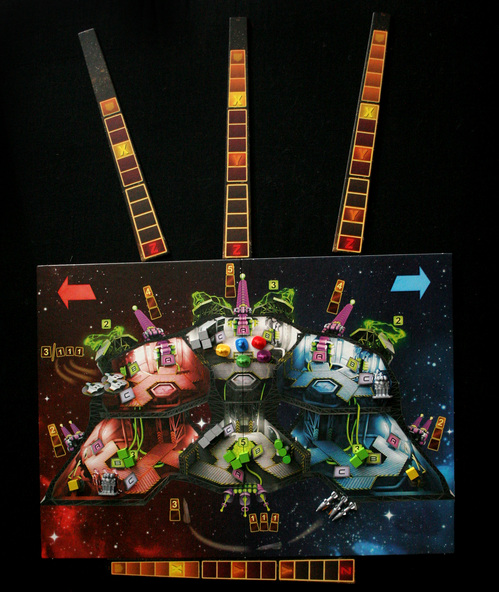
Mikey does a lot of things for this site--including his weekly (must read) roundup of new comics. But his con coverage just can't be beat--and this assessment of five wholly different but equally compelling board games convinced me to bust out the Catan box and get that wood-for-sheep business going again. Next time I'm in Mikey's neck of the woods, you know I'm dropping by for a session of Space Alert (which I really, really need to get my hands on, by the way).


"Space Alert is a real-time, cooperative game in which you assume the role of a crewman of a spaceship stranded in an asteroid field.  As a team you work together through a series of rounds as dictated by a CD that takes you through a 10 minute senario. During these frantic 10 minutes, the players all play their actions face down and communicate to one another what steps they are taking. Whether you are giggling the mouse to keep the computer from falling asleep to firing lasers at a target you hope is in range, you won't know if you were successful until you resolve everything upon completion of the CD."

Philippe

Most Popular: Microreview [book]: The Revisionists (7/10/13)

Favorite: Man...or Astroman? (And some stuff about the nineties, Bakersfield, and sci-fi) (5/10/13)

Philippe's posts often have an nostalgic air, drawing lines between the products of geekdom and his personal journey through three decades of nerd culture. While I love his reviews, this piece about the retrofuturist surf band Man...or Astroman? really hits the spot for me. It's funny, personal and skewers the inauthenticity of today's endlessly cycling nostalgias. Plus it's about an awesome band. 

"The nineties had little of today’s triumphalism, the constant lauding of how awesome and connected things are today. Networks and such. This is an era that has little time for the past. The past is still mined—we’ve gone through the eighties over the last few years—without the conscious, often celebratory nostalgia that accompanied nineties retro. Is anyone actually looking longingly at the eighties? Nineties surf bands with sci-fi personas were homages to a simpler time."


Jemmy

Most Popular: Microreview [book]: The Republic of Thieves by Scott Lynch (8/19/13)

Favorite: All Hail the Black Company! (11/5/13)

Jemmy's review of Scott Lynch's latest swashbuckler has been a huge hit for us--and is slated to appear in in Speculative Fiction 2013, an anthology of the best blog commentary on SF/F. However, I'd argue that Jemmy's paean to Glen Cook's gritty "band of brothers"-style fantasy series is far and away his best work of our second year. I mean, come on--he takes one of the most underrated and important fantasy series of the past 40 years and elevates it to the level of greatness it rightly deserves! And it's beautifully written too.
"Glen Cook's series presaged the darker turn in fantasy--to the grit and darkness that we now tend to associate with writers like Joe Abercrombie, George R.R. Martin, Steven Erikson, Scott Lynch, and Ian Esslemont, to name but a few of the good ones. But Cook's original novel, The Black Company, was written in 1984. That's nearly thirty years ago! Twelve years before A Game of Thrones! So I expected a rather quaint version of grimdark (a quaint pseudo-grit?). After all, wasn't Cook writing in the era of Terry Brooks and David Eddings, when heroes existed to save kittens, pet bunnies, fulfill prophecies, and tell the reader that the world will work out just fine?"


Brad

Most Popular: Tiny Tina's Assault on the Dragon's Keep (7/1/13)

Favorite: Tiny Tina's Assault on the Dragon's Keep (7/1/13)

Brad's series on the various Borderlands expansion packs have been hugely popular, and the game series' goofy humor seems to perfectly fit Brad's own. I routinely laughed out loud, and nowhere more than in his review of Borderlands' send-up of epic fantasy. Plus Bunkers & Badasses.
"Nearly everything...is a melange of Tolkein, Game of Thrones, and D&D, down to the vending machines. Marcus Munitions has become Marcus Missiles and it warns you to, "Watch out for those orcs!" Zed's Apothecary quips, "Have fun storming the tower." There's another reference to a movie I just watched, The Princess Bride. It felt a bit like walking around in Skyrim with corrosive sub-machine guns and missile launchers...."

Dean

Most Popular: AiIP: The Self-Publishing Manifesto (4/15/13)

Favorite: AiIP: Support Your Local Bookstore (even if you buy digitally) (7/15/13)

Dean's self-publishing column is a monthly highlight, and his running series on how indie authors can avoid the Amazon trap has been very informative. My favorite installment is the one where he discusses how indie authors can support local bookstores--even when selling ebooks. Independent bookstores are very important to me, and so this is naturally my personal favorite. 

"I see a lot of authors buying into the Amazon-or-nothing thinking. Amazon has anointed Hugh Howey as the king of self-publishing for his Wool series, including his comments in such places as their GoodReads acquisition press release, wherein he compares Amazon to 'the cool guy next door marrying your mom'...But why at the exclusion of everything else? What possible benefit does that have for the author, the reader or the literary community?"


Zhaoyun

Most Popular: We Rank 'Em: Best Computer (PC) Games of the mid-1990s (8/2/13)

Favorite: Microreview [book]: A Kingdom Besieged by Raymond E. Feist (7/13/13)

This was a tough one for me, because I really like how the 1990s PC game essay captured the nostalgia-seeking mentality of the thirty-something geek (even if I don't agree with all of the individual choices). But as good as it is, Zhaoyun's epic takedown of Raymont E. Feist's mailed-in latest takes the cake for me. The result is highly entertaining, if slightly depressing, and exemplifies what we're trying to do with our review content.
"Weep for Feist—how far he has fallen! How sloppy his writing has become, how formulaic his plots, how uninteresting his characters. My theory? Blame video games. He stopped writing full-time so he could help create several games based on the Midkemia world(s), notably Betrayal at Krondor (excellent) among many others (most of which were utterly forgettable/bad). Unsurprising, given this context, that he...has written less a novel and more a novelization of a game concept: generic characters no reader would identify with who are exposed to a range of uninspired role-playing-esque encounters."


English Scribbler

Most Popular: Microreview [book]: Lagoon by Nnedi Okorafor (3/19/14)

Favorite: Microreview [book]: Once Upon A Time In Hell by Guy Adams (12/30/13)

English Scribbler is not only our newest regular contributor, but probably also the funniest. And so I have to bypass his excellent review of Lagoon for the more tongue-in-cheek charms of the review he did of Guy Adams' second B-movie inspired horror/western mashup. I mean, the following quote needs no exposition, does it....

"Sure, I've been to a cowboy boot store in Kansas, I've drunk whisky in Santa Fe and I've successfully panned for gold (in Legoland in Denmark, but it still counts), but I have no right to write such cod Wild West nonsense. I'm sat in a Victorian flat in London wearing a cardigan and sipping ginger tea. The only Westerny things in my eyeline are the 'Dude' in the 'Dude, Where's My Car?' credits on the telly, and the cat's Lee Van Cleef stare. Ok, at the time I wrote the review I was actually sat by the side of the Mekong river so had at least a little Martin Sheen voiceover in my head but that's no excuse. Especially concerning a book written by a Brit with a superb and uncorny usage of Old West lingo."


Friday, April 19, 2013

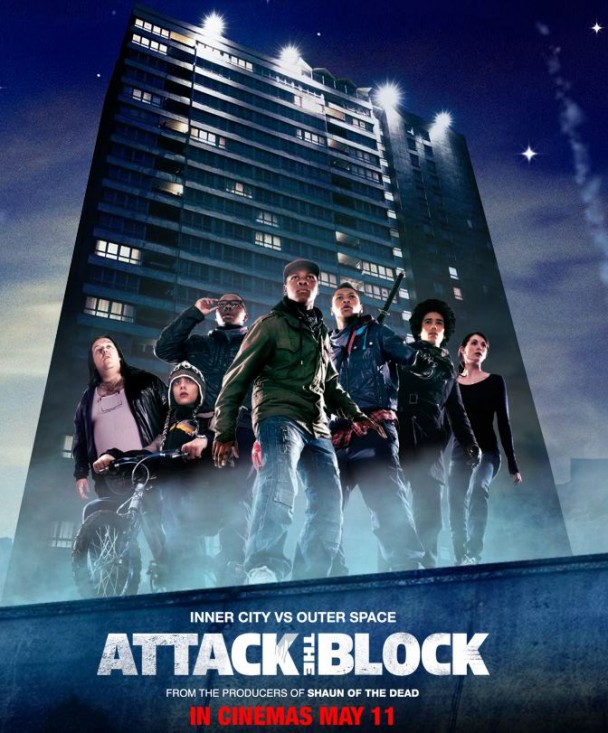
Second Opinion: Attack the Block


Rereviewing Attack the Block: a Second Opinion


The re-Meat

      Do you want to know why Superman Returns was so underwhelming whereas The Dark Knight rocked so hard?  (I'll bet Bryan Singer does!)  I'm convinced it's because Superman is such a good good guy. Sure, that sort of squeaky clean image probably appealed to older generations, people under the shadow of the Cold War and whatnot.  But characters like Superman have little resonance with today's youth, who prefer that their heroes have a healthy streak of bad in them.
      Why is that? The truth is good guys have great difficulty undergoing on-screen character development, since after all how can a morally pure character experience a real dilemma, or break his unwavering commitment to right conduct?  That's probably why, in the Christopher Reeve superman movies, they had to invent the notion of him wrestling with becoming human in Superman 2.  But that didn't work out either, because if there's one thing even less interesting than a totally good superhero, it's a totally good person who's also totally ordinary.
      This brings us to 2011's Attack the Block, about which The G wrote a scathing review.  Am I here to pick apart every claim The G makes and show where he's wrong?  Not at all.  In fact, I agree with almost all his statements about the film—namely, that it's trying too hard to be cool/edgy, that the supernatural threat the gang of street kids faces is kind of lame, and most importantly, that none of the characters is sympathetic in any straightforward sense.  Where we differ is in our reactions to this final fact: he found it a huge obstacle to enjoying the film, whereas I thought it was the movie's strongest feature.
       The main characters are definitely not good guys.  They're crude thugs; the audience can't possibly feel that they have right on their side, which certainly makes rooting for them difficult. 

In fact, upon seeing their antics, we viewers might end up looking rather like these characters:


     But therein lies the movie's special challenge to the viewer: what if, when the bad guys come, the only ones who humanity can scrounge up to face them are a bunch of lowlife punks? Isn't the "punk versus alien" idea less well-traveled than the White Knight versus Total Evil paradigm? Instead of a beacon of justice, we get a loser and his lame crew, teetering on the edge of becoming straight-up criminals, nudged back from said edge only by the bizarre circumstances. They might be almost cartoonish caricatures of British wannabe American tough guys, but somehow listening to their almost unintelligibly slang-ridden bouts of braggadocio felt more fun than yet another "these aliens picked on the wrooooong American!" trope.
      Speaking of which, it's wonderful to have a movie (that doesn't totally suck, like the recent rash of terrible Russian sci fi movies about flying cars and sentient ball lightning and who knows what) in the all-too-familiar alien invasion sub-genre which isn't set in, or about, America (though minus one for, culturally, becoming so like the monster they are trying to overcome). That said, this movie isn't on the same level as District 9 or 28 Days Later, but I'd happily re-watch Attack the Block over quite a long list of alien/disaster movies.
      And if all else fails and you still find yourself wishing the film would end, take heart: it's short! The soundtrack helps the movie maintain its zippy pace, and the producers were smart enough to get the film down to just 82 minutes not including credits, which means we don't quite have time to lose interest in the characters or the situation.  Plus Nick Frost is at his dazed best!
      All in all, Attack the Block doesn't really live up to the critical acclaim it's received, but the makers can always chuckle to themselves that, with a mere 1/16 of the budget, they succeeded where Bryan Singer's lackluster Superman totally failed!

The re-Math:

The G's original score: 2/10


Zhaoyun's take:

Objective quality: 4/10

Bonuses: +1 for anti-hero punks, +1 for not America, +1 for brevity

Penalties: -1 for the trying too hard to be cool/American thing, -1 for lame aliens

Nerd Coefficient: 5/10 "Equal parts good and bad"

[See an explanation of our non-inflated scores here]

Thursday, April 18, 2013

Why Princess Mononoke is Better than Jemmy Thought

I will preface this by stating that I am a big Miyazaki Hayao fan like Jemmy, but don't feel like I have his expertise in the field despite taking a class on Japanese Animation at The University of Texas back in the day.  I don't feel the need to produce a new plot summary as I doubt I would be able to craft one as elegant and complete as Jemmy did here.

My top five Miyazki films are My Neighbor Totoro, Princess Mononoke, Nausicaa in the Valley of the Wind, Spirited Away, and Ponyo.


I will start by saying that I fully agree that Miyazaki created a beautiful world in Princess Mononoke, but I will take that a step farther and say that I think this may be the most beautiful animated movie of our generation.  The color palate that Miyazaki uses throughout this film is so rich and deep in a way that CGI has yet to capture.   According to the Disney site (who owns the U.S. rights to Studio Ghibli films), Miyazaki saw the redraw of over 80,000 cells and the attention to detail shows.  To me the sheer beauty of this film distinguish it from almost all other animated movies.

I must also concur that the complexity of characters is a huge strength of Mononoke, but disagree that San being one-dimensional was a flaw.  As Jemmy stated, both Ashitaka and Eboshi are two very complex and fantastic characters.  I have never enjoyed a movie that lives in the gray as much as Mononoke.  No character is truly good and no character is truly evil.  To me it speaks to a changing world and examines the positive and negative that are associated with that.  As to San, I personally feel that the fact that she is one dimensional and has an internal struggle that she doesn't realize, makes her more believable.  She was raised by wolves and now has the world that she once new and loved challenged to its core.  Her animal like reaction to what is thrust at her, in my opinion, adds to the movie and adds an element of realism to this fantastical tale.


I will concede that Mononoke is not as subtle as Nausicaa, but I have no issue with this.  To me this is merely the context of when the movies were made.  A lot changed between 1984 and 1997 and Miyazaki was able to overtly state his message in a way that may not have been accepted in 1984.


Princess Mononoke remains that film that I use as a gateway to Miyazaki with friends (unless it is fellow parents of children like myself as it is quite violent) and has a very special spot in my heart.  My only criticism with the film is the fact that I couldn't get over Minnie Driver's British accent in the U.S. dub.  Stick with the original audio.


Objective Quality: 9/10.

Bonuses: +1 for its sheer beauty.  +1 for its strong female characters.

Penalties: -1 for Minnie Driver in the U.S. dub. -1 for its over-the-top violence which limits its audience.

Nerd Coefficient: 9/10  "very high quality/standout in its category"

[See an explanation of our non-inflated scores here]

Tuesday, April 16, 2013

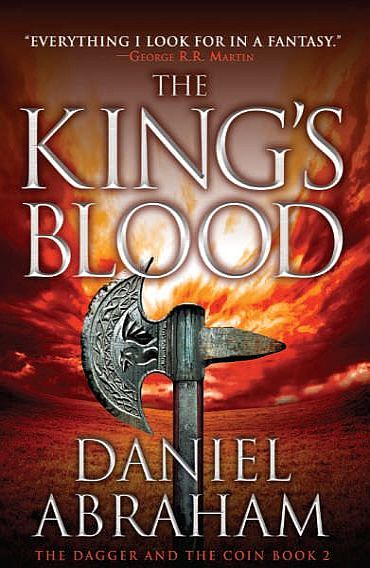
Second Opinion: The Dragon's Path/The King's Blood by Daniel Abraham


As much as we love each other here at Nerds of a Feather, we sometimes do have disagreements. One disagreement that The G and I cannot seem to iron out revolves around our respective views of Daniel Abraham's new epic fantasy series, The Dagger and the Coin. The G wrote excellent reviews of Book 1, The Dragon's Path (which he gave an 8/10) and Book 2, The King's Blood (which he gave a 6/10). My opinion is actually the inverse of his. Whatever the case, I see no reason to reinvent the wheel, which The G has done quite well, so instead of providing a traditional review of both books, I will simply state what I feel were the strengths and weaknesses of each installment of the series. This "Second Opinion" is my contribution to our Nerds of a Feather Anniversary Celebration!


The Dragon's Path

I literally flew through the book, gobbling it up in a few days. It is fantastically well written for a fantasy series, featuring crisp and clear prose. Further, Abraham deals with the issue of morality in a unique and inventive way. Geder, for instance, is pure of heart but evil in action. But Abraham grapples with morality in even more sophisticated a manner through the use of Dawson, a blue-blood (noble) in the truest sense of the term. Dawson fights to uphold the nobility; he fights for tradition, for what he thinks is right, true, and just. But in the process, he emerges as something of an anti-hero. I found myself rooting for his victory and rejoicing in his good fight while reviling his cause. What is morality, Abraham suggests, when what is moral and good to one is truly repulsive to another?  

Of course, The Dragon's Path makes no qualms about the immorality of atrocity. Abraham includes a number of spine-chilling scenes, acts of such emotional power that we rarely find in works of epic fantasy. One of the most horrible atrocities I have encountered occurs in this novel. But the presentation of this atrocity in a lighthearted manner, without celebrating its grit, its blood, or gore, make it all the more disturbing.  

Nonetheless, I had a number of quibbles with The Dragon's Path. As I see it, the book had four main weaknesses. First, the world building is a bit splotchy. Abraham introduces the idea of 13 races, but fails to flesh this idea out throughout the course of the novel. Perhaps it would have been more effective, as The G mentions in his review, had Abraham introduced the various slave races in a more gradual and natural way. The way he has it set up now, I am not sure that the 13 races actually adds anything to this series. 

Second, Abraham only hints at a broader narrative without really beginning to engage in it. Failing to introduce the main story arc, even in a limited way, detracts from the power of the story. Why continue reading the series when we have little idea where it is going?

The answer, of course, should have been the characters. Had Abraham created a character-driven fantasy with protagonists and antagonists about whom the reader truly cares, then that would overshadow the lack of a main story arc. Sadly, Abraham fails to do so. (A perfect example of a writer who does this well is Steven Erikson in The Malazan Book of the Fallen. One has little clue of the overall story line even after the first four or five books. But Erikson creates fantastic characters, an inspiring formula, and brilliant world building that keeps the reader engaged nonetheless). Although I enjoyed watching Cithrin grow up and seeing Marcus grow increasingly more protective over her, I never really began to care for the main characters. 

Finally, the novel only hinted at tenuous connections between the characters. While I understood that they would play more important and interconnected roles as the series progressed, I found myself wondering why each of the four main viewpoints did not connect to the others in a more intuitive way.

In the end, I did enjoy The Dragon's Path. The writing is clear and engaging, and Abraham deals with morality and atrocity in a more engrossing way than most other epic fantasies I have read. But the problems in its story arc and its characters do not warrant the fantastic score The G gave.  

The Math

The G's Score: 8/10

Jemmy's Second Opinion: 6/10 "Still enjoyable, but the flaws are hard to ignore"


The King's Blood    

I also find myself disagreeing slightly with The G's assessment of The King's Blood. In this book, Abraham presents is a more complete package than he did with the first installment of the series. The King's Blood is well written and engaging; I zipped through it, finishing the book it in even less time than I finished the first volume. To me, Abraham transformed most of the weaknesses of The Dragon's Path into strengths in The King's Blood (except the 13 races, which still seems to add little to the broader story).

First, and most importantly, I began to care about the characters. Cithrin truly comes into her own as a bank manager and as a political and economic mind. And although not all her decisions feel natural or make sense (her relationship with and protection of Geder, for instance--in this, I do agree with The G's criticisms), I remained invested enough in the character for my suspension of disbelief mechanism to kick in. After all, Cithrin is a fantastic character: highly intelligent, ambitious, fearless, and eminently practical. Marcus becomes more sympathetic and complex, as he becomes increasingly torn between his duties as Cithrin's head of security and his growing fatherly affections for her. Geder, always repulsive, continues to portray the child-like quality of evil. Child-like purity, after all, is composed of equal parts good and evil, parts which at times seem to be at war within Geder's personality. Dawson, ever the challenger for his particular sense of justice, fights the good fight, engaging in a battle he knows he is unlikely to win. And Clara, Dawson's wife, finds herself pushed into a decision that she otherwise would not have even thought up. It is the characters that make the story, and The King's Blood does a much better job in getting the reader invested in its characters, whether we like them or not.

Equally importantly, the connections between the protagonists and antagonists become clear as a sunny day. The advent of the spider priests (under Geder's protection), Marcus's personal quest, Master Kit's existence, Cithrin's attempts to establish herself in the bank, and Dawson's battle to save the kingdom point to where Abraham is headed with the series, and kept me much more engaged than did the first volume of the series.  

!SPOILER AHOY!

One of The G's biggest criticisms of The King's Blood is the fact that Geder was chosen as Lord Regent instead of Dawson. This, The G argues, makes no sense. But I do not feel that this should be seen as a flaw in The King's Blood. Instead, it is a flaw of the first book of the series, The Dragon's Path. Geder Palliako was the obvious choice or Lord Regent once he became the protector and adoptive father of the crown prince. So while I agree with The G that Dawson was the obvious first choice for Lord Regent, I also recognize that his fate was sealed after Geder became the crown prince's gallant protector. Instead of being a problem with The King's Blood, let's add it to the [growing] list of problems with The Dragon's Path.  

!SPOILER ENDED, READ ON, OH FEARLESS READER!

The King's Blood, in the end, does much to invigorate the series (which has a lackluster beginning). It is well paced, interesting, and ties the otherwise disparate story lines into an organic whole. While there are, as The G points out, some forehead slapping moments, they are offset by wonderful character development and a fast-paced character-driven story. Whereas I am hesitant to give an emphatic recommendation to The Dragon's Path, The King's Blood gets two thumbs up.  

The Math

The G's Score: 6/10 

Jemmy's Second Opinion: 8/10 "Well worth your time and attention"

[Read about our scoring process here, and learn why we say "no" to grade inflation.]

Friday, April 12, 2013

Abandoned First Anniversary Kickstarter Projects

The Nerds of a Feather, Flock Together blog turned one yesterday, and a few weeks ago when The G pointed out that the big day was on the horizon, he asked me what we should do to celebrate. I had a lot of ideas. Big ideas. Ideas that would cost money. Yet we are but lowly blog contributors; we are not made of money, nor are we any of us accumulating it with any great haste. So where do nerds go when they have ideas they can't pay for? That's right --

!KICKSTARTER!

So here are the ideas I presented to The G for our First Anniversary Nerds of a Feather Kickstarter:

Nerds of a Feather Retro Collection
Make your own thrilling retro cover here.
Nerds of a Feather, the Book
The interwebs are great and all, but you can't hold them in your hands. So what better way to commemorate the first year of Nerds of a Feather than by printing up and binding all 365 posts from April 11, 2012 to April 11, 2013 (and yes, by an odd coincidence, there really are 365)? As a special treat, this handsome volume would also include all of the posts that The G started but never finished. You know, for the Nerds of a Feather completist out there. Sadly, this was a nonstarter among the contributors, with the feeling being that we are living in an increasingly ephemeral time in which, soon enough, ones and zeros will replace all of our worldly belongings. So a book was out of the running, but there's always...

Nerdy People, the Movie!
Well, we had to get *somebody* with box office appeal.
Nerds of a Feather, the Movie
Based on the true story of a humble graduate student who had a vision for ranting about nerdy things, like why Robert Heinlein is dumb and movies about killer sharks are super awesome, the story would have followed the creation of a small, nationwide team of highly specialized geeks, all crushed under crippling student loan debt, and their bloody rise to power before succumbing to coke-fueled excess and a late career lapse into saying "hoo-ah!" at inappropriate times while writing run-on sentences. Sadly, the $33 million production budget put it out of reach for Kickstarter. But Amanda Palmer has to make another album someday, so maybe next year the $33 mil will seem more attainable.

Nerdlinger: The All-Geek Supergroup
I cheated and picked the band name myself, but generate your own random album cover and title here.
Nerds of a Feather, the Supergroup
You may not know this, but Nerds of a Feather contributor Molly has a lovely singing voice. I have a voice that sounds a little like crushed gravel by the side of the road, but I write folk songs, so I figure it's cool. The G has more than dabbled in electronica, and I'm sure the rest of the Nerds Feather crew can wield a mean tambourine and/or pair of maracas when pressed. So why not -- why NOT! -- I asked, create a supergroup? This is actually kind of a good idea...we might wind up doing this, Kickstarter or no.

But Finally...
For so, so many reasons, we weren't able to get any of these projects up on Kickstarter, and in the end we decided to keep it simple:
Yoda Cupcake
It's not every Jedi can balance a cupcake on his head while fighting.
A sincere thank you to all of our wonderful readers for a great first year. Here's to not going down in flames in the next 12 months! Follow us on Twitter @nerds_feather.

Thursday, April 11, 2013

Retrospecticus!

Can you believe it's been a year already? Because I can't. In the beginning, there was just me with a URL I'd paid a small amount of money for and the vague notion that I wanted to blog about "nerdy stuff." The idea had come to me while sitting in a dingy Thai restaurant famous for its "secret menu" (which means you just have to ask for it) of southern Thai curries, which for those of you who don't know, tend towards the psychedelically hot. So maybe it was the chili speaking, but blogging about "nerdy stuff" seemed like a good idea at the time. And after a year, I can safely say that it's been orders of magnitude more fun than I ever imagined.

Of course, credit goes where credit's due: nerds of a feather would never be what it is today without the tireless efforts of my co-administrator Vance and our platoon of top-notch writers--Molly, Philippe, Mike, Jemmy, Brad and our newest contributor, Zhaoyun, as well as our monthly columnist Dean. Each brings their own interests and style to the table, but I'm constantly amazed at how good their shit is. Together we've managed to expand from our early coverage of science fiction, fantasy and cult films into comics, crime fiction, anime and gaming. But how did it all happen? Let's ask the nerds of a feather disembodied institutional voice to give it to us straight...

-The G

April, 2012

Things started with a call to arms from some weirdo calling himself "The G," and who was laboring under the strange delusion that this blog would eventually cover "cars, sports, politics" [WTF]. At that time, he was preoccupied with changes in the publishing industry, as well as the imminent arrival of alien dinosaurs hellbent on conquest. Thankfully Vance came on board and helped him simmer down with top-notch reviews of the films It Came From Outer Space, The Iron Rose and provided us with our first bona fide hit when he reviewed Pavane by Keith Roberts, which just happens to be one of Neil Gaiman's favorite books. For his first book review, The G covered Saladin Ahmed's now Hugo and Nebula nominated Throne of the Crescent Moon, while he and Vance entered into a mindmeld in order to systematize the bell-curved scoring system that marks us all as a bunch of cranky old nerds.

May, 2012

Big things happened in May, not least of which was bringing Molly on board. She and Vance did back-to-back reviews of The Fly (1958) and The Fly (1986), and we all came together to rant about the things we hate in film. The G gave Iain M. Banks' sociological space opera novel The Player of Games the site's first 9/10, interviewed Ian Rose from the sadly now defunct SF/F magazine Nine and reduced all six seasons of Lost into haikus. Vance checked out season 3 of Community for our first proper TV review and watched another Criterion Collection attempt to get B-movies, while Molly checked in to see what Dracula and Satan are up to.

June, 2012

More awesomeness ensured in June, not least of which was corralling Philippe into feeding his inner nerd with sweet, sweet comics. To that end, he read Forgetless and Dan the Unharmable, while he and The G got into a long-winded conversation about those annual summer superhero crossovers, where everyone gets together to stop the worst menace ever (since the last one). On the SF/F side, The G had the pleasure of doing a great interview with one of his favorite SF/F people, Djibril al-Ayad of The Future Fire and found Murakami's 1Q84 mostly disappointing, while Vance ranked the novels of Kurt Vonnegut, eulogized Ray Bradbury and they both posted their (intended) summer reading lists. Vance and The G also watched a shitload of B movies, of which The G probably liked The Reef more than any of the others (it has real shark footage), while Vance dug pharaohs-and-Elvis epic Bubba Ho-Tep

July, 2012

July was a true banner month, not least of which because Mike started writing for us with this excellent tale of ComicCon, followed by a reflective piece on his quest for a DeLorean complete with flux capacitor. We were also graced with fantastic guest posts from Rob K. and Raighne Davidson on, respectively, Maus and Pottermore. In terms of SF/F, The G reviewed John Scalzi's Hugo-nominated SF comedy Redshirts and Daniel Abraham's charming fantasy novel The Dragon's Path, and then ranked George R. R. Martin's Song of Ice and Fire novels (sorry, but A Dance with Dragons kinda sucked). Philippe read the cool-ass comic Rachel Rising and then mused about how comic books shaped his spiritual choices. Vance reviewed oddball horror flick Cat People and ranked the Harry Potter films, while The G found himself loving the surreal Viking film Valhalla Rising despite its glacial pace and unnecessary gore. Then Molly showed us all up when she gave Orson Scott Card a virtual wedgie for fixating on the helicarrier in his critique of The Avengers (WTF).

August, 2012

Though no one joined us in August, it was still a great time to be a nerd of the feather. Vance packed the lecture hall for the first installment of his Cult Films 101 series, watched arguably the worst movie ever made and then gave our our first ever perfect score to the masterful French film La Jetee. Meanwhile, Mike entered the third gate, reviewed the top-notch Underwater Welder and then started his weekly comic round-up Thursday Morning Superhero, to much rejoicing. Philippe ranked the various Bat-books of DC's New 52 and checked out Grant Morrison's history/memoir Supergods. The G wasn't around all that much, but did manage to pick his 6 7 favorite books from Gollancz's SF Masterworks series.

September, 2012

In September not one, but two writers came on board. First, there was Jemmy, who took a look at anime classic Porco Rosso and reviewed Jeff Salyards' gritty fantasy novel Scourge of the Betrayer. He was soon joined by gaming guru Brad, who debuted with his first impressions of the addictive Diablo-as-FPS Borderlands 2. Vance continued his Cult Films 101 series and mused about space elevators, while The G poured sweet haterade on the overreated British film Attack the Block. Philippe was out of town, so comics pointman Mike picked up the slack with his weekly TMS column, took a look at Robert Kirkman's Thief of Thieves and checked out a pretty sweet H.P. Lovecraft inspired dice game. And The G was lucky enough to read Andrjez Sapkowski's collection of short stories centered on Geralt of Rivia (aka the Witcher of video gaming fame), The Last Wish.

October, 2012

October started with our biggest story ever--a two part interview with SF critic extraordinaire Paul Kincaid, who expounded on his theory that science fiction has reached a point of "exhaustion." It's a must-read for any SF/F fan, and though I'd love to take credit for its awesomeness, that rightly belongs with Paul, who raised the level of discourse and helped introduce our blog to a lot of our now regular readers. I followed that up with a list of six SF/F short stories that, perhaps, suggest that the genre isn't exhausted, and was lucky enough to review both Sapkowski's fantasy masterpiece Blood of Elves and Rob Ziegler's excellent debut novel Seed. Oh, and there was this little interview with Brian White of Fireside Magazine too! Like I said, big month, but we weren't done there--Jemmy interviewed fantasy author Jeff Salyards and then found to time to explain to us why Princess Mononoke doesn't quite live up to its reputation. Vance, for that matter, kept himself busy with Curse of the Demon and Call of Cthulu and then topped if off by ranking the Roger Corman/Vincent Price films. Meanwhile, gaming guru Brad checked out the kickass Arkham City and lamented the fact that so few of us played Blur, while Mikey fell in love with Cow Boy and finished the month on a high note by covering the very cool Halloween ComicFest.

November, 2012

We reviewed a whole lot of shit in November. Philippe kicked things off with Justin Robinson's novel Mr. Blank, a tidy slice of tongue-in-cheek conspiracy noir, as well as the comics Black Lung and Rebel Blood, the latter of which proves there's still some life in this whole zombie thing. New guy Brad showed us all up by covering Halo 4, two Borderlands 2 expansions, a classic review of NES time-sink Mike Tyson's Punch-Out and still had time to wax poetic about those rarest of beasts, games that tell compelling stories well. Desperately trying to keep pace with Brad, The G pitched in on the video game thing with an in-depth look at the multiplayer component of Black Ops 2. Over in SF/F, Jeremy reviewed an excellent short story collection by Kij Johnson, The G read Michael Sullivan's traditional fantasy Theft of Swords and Mikey looked at Spaceman, which is quality SF in graphic form. Vance ranked the best/worst schemes by James Bond villains (and there are just...so...many), sat through a wacky prison/Kung Fu flick and the much more palatable Ray Harryhausen-animated Earth vs. The Flying Saucers, and we all opined about that whole Disney/Star Wars thing. And then Molly returned from hiatus to show us the future of D&D and then gave Peter Jackson's The Lord of the Rings a virtual wedgie.

December, 2012

Ah, December, you were so chock full of big stories, like Mikey's most popular installment of TMS ever and Molly's alcohol-fueled lament over Peter Jackson's craptastic Hobbit film. Philippe continued to rock the crime fiction, with reviews of James M. Cain's just-back-in-print novel The Cocktail Waitress and noir/SF crossover The Dewey Decimal System. In SF/F literature, The G loved The Apex Book of World SF 2, and Jemmy mostly liked Cory Doctorow's Pirate Cinema. Vance checked out some classic radio SF, and subjected himself to the horrors of the Star Wars Holiday Special, while Brad reminisced about his marathon sessions of Mortal Kombat. And to finish things off, VanceThe G, Molly, Mike, BradJemmy and Philippe all shared their holiday gift guides.

January, 2013

Molly welcomed us to the New Year by spreading the word about Perihelion, and Mikey kicked off an epic run of comics-related posts, starting with his round-up of the Best Comics of 2012 (SPOILER ALERT: there was no winner crowned, but we all kinda won, didn't we?) and his two-part coverage of Nick Spencer's long-in-the-making Infinite Vacation, which finally reached its conclusion. The G began his serialized review of John Scalzi's serialized novel The Human Division before things got seedy as The G and Philippe turned their attention to crime fiction. Turning to the graphic novel-as-journalism, Philippe found an absolute gem in Joe Sacco's Footnotes in Gaza, which earned a rare 10/10. Jemmy fired across the bow at some pirate fiction, and Indie Publishing Guru Dean Smith-Richard reminded independent authors that skimping on quality control only hurts themselves, and shared some great insight into successfully Kickstarting comics from Devin Michaels of the Destiny's Fate series. Brad found a lot to like in the puzzle game/RPG hybrid Puzzle Quest 2, and the nerds tackled a lot of big questions like whether or not franchises might do better under someone other than their creators, and what ramifications violence in video games and beyond has today in the wake of repeated national gun tragedies. But to take a break from the gloom, we got to spend a few minutes with RiffTrax writer Sean Thomason, talking MST3K, terrible, terrible movies, and beer. Hooray, Beer!

February, 2013

February was the most controversial month of our inaugural year.  It began with possibly the most shocking announcement yet: a new scoring system that allowed us to deem the worst of the worst a zero!  The topics heated up and the fans were caught off guard as Phillipe ranked the top moments in 30 Rock and the book Dinosaur Thunder (despite annoying characters and bad editing) took advantage of a +7 in bonuses to earn an 8/10!  In one of our most epic posts, if not the most epic post of the year, Grimmy Grimmy Dark Dark touched on the impact of violence and rape in the fantasy genre and had the interwebs buzzing.  Our monthly adventure down the road in indie publishing took a look at crowd funding and many of the issues associated with platforms like Kickstarter.  Deadspace 3 was the top game of the month clocking in at a near perfect 9/10 and Vance winded us down with self-inflicted pain as he sat through The Baby in its entirety.

March, 2013

While you were busy with your taxes, Nerds of a Feather was in the last month of its very own fiscal year. March was thus jam packed with the most awesome of awesomeness. Molly got into the kitchen and whipped up a nerdy gift guide for your nerdy kitchen. The G started a few posts that he never finished. But hey, he did give us a number of great ones: he continued his epic reviews of John Scalzi’s The Human Division and relived the little bit of the Cold War he remembers when reviewing Ian Sales' Adrift on the Sea of Rains. Vance, too, spent time stuck in the past, remembering what America was supposed to be. That is, when he wasn’t watching awesome cult movies like Tucker and Dale vs. Evil. Mikey showed us what Grand Theft Auto For Kids would look like, and reminded us of the pure, unadulterated wonder of International TableTop day. Jemmy saddled up to review Joe Abercrombie's Old West-inspired fantasy, and spirited us away to his first 10/10 in Miyazaki Hayao's most complete Studio Ghibli movie. Dean Smith-Richard continued his ever-informative quest to educate us about the wonders of indie publishing, and gave us a preview of his own forthcoming book, 3024AD. And last, but definitely not least, we got our first review from new collaborator, Zhaoyun, who took a bite out of a famous post-apocalyptic vampire novel.