Showing posts with label Zhaoyun. Show all posts

Friday, April 27, 2018

Microreview [TV series]: Lost in Space (2018)

Even the gorgeous visuals can't save this turd.

Image result for lost in space 2018
Lost in Space (TV series). Netflix, April 2018.


I remember watching Apollo 13 as a child. I wasn’t impressed with the aesthetics, but recall thinking that while the cascade of near-fatal problems seemed a bit forced (at the time I had no idea it was based more or less closely on actual events!), the cast managed to pull it off and save the movie from the dustbin of (audiovisual) history. Sadly, Lost in Space suffers from the exact opposite issue. Watching it in Netflix’s vaunted 4K resolution—with HDR enabled, no less—the visuals are absolutely stunning. But what stunned me even more is how incredibly insipid the narrative was. In honor of this atrocious series, welcome to the first episode of “Can you come up with a better story than a seventh-grader?” (It goes without saying that the writers for this show would spectacularly fail that test!)
Image result for apollo 13 movie
Except the problem in Lost in Space is "bad writing" and there's no escaping it!

First of all, the series suffers greatly due to its pointless “problem of the week” feel in each episode. I will spoil nothing when I say that each episode confronts the Robinsons with a crisis even more gratuitous or improbable than the last one. I think the main failing of the writing is simply that they were (too) obviously starting from the desired end-point (usually some sort of emotional realization, etc.) and then just throwing darts at the wall until they hit upon some convenient problem that forces precisely that end result. I have dubbed this the “crisis ex machina” effect: the perfect problem at just the right time which forces the character(s) to feel their feelings, and attempts (unsuccessfully for this viewer, needless to say !) to push the audience into melodramatic identification with the doggone unfairness of it all—poor Robinsons!

Just one example, sort of spoiler-free or at least spoiler-lite, will suffice to make this point. Once the robot (who despite the show’s gorgeous visuals looks quite ridiculous, as it is all too obviously a guy in a suit for 90% of the shots—shame on you, producers, for cutting corners on such a key visual design!) bonds with Will, the villain must engineer a scenario in which the boy not only initially tries to hide the robot but, after it alternates—in response to his express commands!—between saving and injuring the other humans, forces it to take a long walk off a short pier (all of this, of course, is done in full view of the only nominally hidden villain). Yeah, the robot, an incredibly advanced alien life form, is forced off a cliff by a 12-year old's whim, cause that makes sense. This is so the villain can attempt a reset and thereby get a chance to be the robot’s protectee. Since the writers obviously wanted to milk the melodrama of the shocking tables-have-turned moment when the villain comes out on top, they simply whipped up a bunch of crises, each more absurd than the last, which produce exactly that result. And I thought John Connor was annoying!
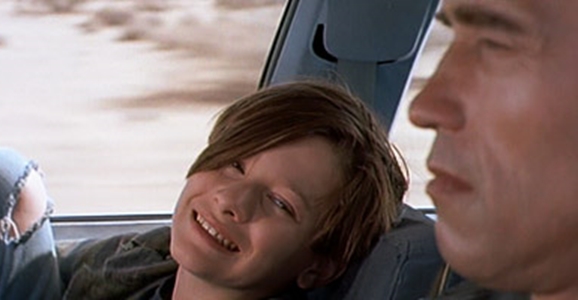
Image result for john connor annoying
By series' end, you'll want to slap Will Robinson a lot more than John Connor/Eddie Furlong, I can assure you!
The writers also made a halfhearted attempt to circumvent some of the obvious objections their hopelessly contrived story-line might provoke in the minds of viewers. Why don’t their various spacecraft just take off and go back to the mother ship? Apparently the writers had been watching Princess Bride and decided to manufacture a convenient methane-eating critter, seemingly stranding everyone on the planet for good. 
Image result for those are the shrieking eels
I.e., "convenient plot device to push us into the next lame crisis"
An alternate source of fuel is found? Don’t worry, the writers find a way to ruin that too, basically by manufacturing a stupid sense of looming crisis via the source’s precarious location plus seismic activity, and then forcing a character to make a one-versus-many decision in the midst of—because why not?—a brand-new threat, steam geysers! Yet another alternative fuel source is located in a later episode? Well, that won’t fill up 45 minutes, so better get some lame-looking bat thingies in there!

The cast is a bit uneven, too. While John and Maureen are well cast and as believable as anything/one else in this amateurish nonsense of a story, others left much to be desired. The villain, partly as a result of casting, was far from intimidating, but more than made up for that shortcoming by being absolutely no fun at all to watch. At times, this villain seemed to start poisonous rumors/hit people in the head just “to watch the world burn”, to quote Alfred, but lacked even the slightest glimmer of the Joker’s manic psychopathy.

But the worst casting choice/performance was definitely Will. In fact, at first, I thought the worst problem with the show was simply the mediocre actor they’d found to play him, because the kid’s performance managed to turn ostensibly the most innocent, likeable character into an infuriating nincompoop with an irritating habit of turning up his chin to look scared, turning up his chin to look brave, turning up his chin and scrunching up his eyes a little to look sad, and so on ad infinitum.
Image result for will robinson 2018
Look, the kid can also turn his chin up to look surprised/scared!

When the villain gets captured, not only does Will the rapscallion see fit to listen to the villain’s absolutely ridiculous let-me-out ploy, he obligingly frees said villain despite the ploy not even making sense. It can be paraphrased thus: “I know someone who could do that dangerous thing instead of your father, and you really don’t want him to leave you again, do you? Let me out right now (even though your father has literally already left!) and I totally won’t tie you up or anything!” Never have I so thoroughly rooted against the ‘good guy’ in a story before, and I initially blamed it all on the actor. But halfway through, I was forced to reevaluate. It’s the writers who should shoulder the responsibility for this hot mess. Sure, the actor may be unimpressive, but oh, the contrived nonsense they keep writing for him to stumble into—it’s enough to make one scream!

Near the end of the series, Will is in grievous danger with seemingly no hope left, and I suppose the audience was meant to stare helplessly at the screen, desperately wishing for the impossible to happen and for him to be rescued. I hope you, dear reader, won’t think less of me if I admit that I was entirely on the other side, praying fervently that the writers would finally have the courage to kill him off! I trust you won’t consider the series spoiled if I reveal that, to my everlasting sorrow, the annoying Robinson family will be stinking up our TVs with a second season if the cliffhanger ending is any indication. Would that they all hurled themselves off a cliff instead! 
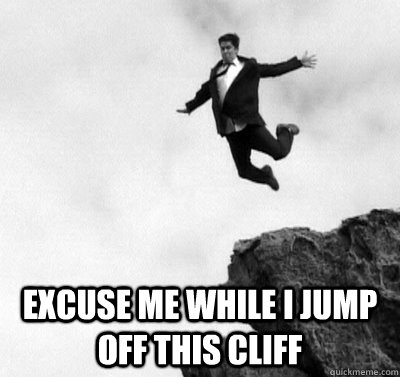
Image result for off cliff meme
I was certainly ready to jump by the end...

TL, DR: this series suuuuuuucks. Give it a miss, and go back to the source: Swiss Family Robinson! (The title of the show should never have been Lost in Space, anyway—it should have been Space Family Robinson!)


The Math:


Objective assessment: 5/10

Bonuses: +2 for truly breathtaking visual aesthetics in crisp 4K+HDR

Penalties: too many to count, but I’ll try: -1 for Will being such an idiot, -1 for the crisis ex machina nonsense, -1 for absolutely terrible end-focused narrative writing, -1 for reducing Smith (the villain) to a mere poison-tongued rumor starter, etc., etc.

Nerd coefficient: 3/10 “Danger, potential viewer!”


[This score, while abysmal, isn’t quite as low as it might sound, since our scoring method is less bombastic than that of most reviewers; see here for details.]

This message was sent out into the furthest reaches of space by Zhaoyun, reviewer at Nerds of a Feather since 2013 and normally an easy grader for these sorts of projects but a stalwart enemy of sloppy writing any twelve-year-old could easily surpass! Seriously, are any of the writers actually 12?

Wednesday, March 21, 2018

Microreview [film]: Mute, directed by Duncan Jones

A Gorgeous Onion!

Jones, Duncan. Mute. 2018
'Tis available worldwide (only?) on Netflix, as of 2018.

The name 'Duncan Jones' will immediately evoke, in the minds of the small but powerful(ly voiced) group of cine-nerds, the masterful 2009 film Moon, and/or the respectable cerebral (get it?!) thriller Source Code of 2011. Garden-variety meathead non-nerds, on the other hand, might recall him as the director of the 2016 video game-to-film adaptation of Warcraft—you know, the movie that absolutely no one was eagerly awaiting. No matter your nerd credentials, then, you probably associate Duncan Jones with a certain cinematographic pizzazz, and like me, your expectations were probably quite high for his latest brainchild, the only-on-Netflix 2018 futuristic neo-noir Mute. The question is, were those expectations met?

Nah. But before we get to the bad news, I’ll give the good news. The film is breathtakingly beautiful, leaving no rock of the delectably dirty futuristic Berlin unturned, and what’s more, it is full of quirky little visual predictions of what the world will be like in twenty years (you know, mini-drones delivering food through the drone-only doggy door on windows, etc.). Plus, Paul Rudd was, in my opinion, an excellent casting choice, as his snarky-but-harmless star persona helps mask the darkness lurking deep within his character here.

Image result for mute film
With a face/attitude like that, you just know (/hope) that Rudd's character will come to a sticky end...
But fans expecting or hoping for the same level of storytelling as was present in Moon, or even Source Code, will likely leave the theater their living rooms somewhat disappointed. The story is fairly predictable from the get-go, and certain things are never adequately explained (like how a bartender, even an unusually tall and lanky one, can use a bedpost to beat down entire rooms full of heavily armed professional thugs, but for the visual flair Jones brings, I’m still willing to watch even rather nonsensical scenes!).

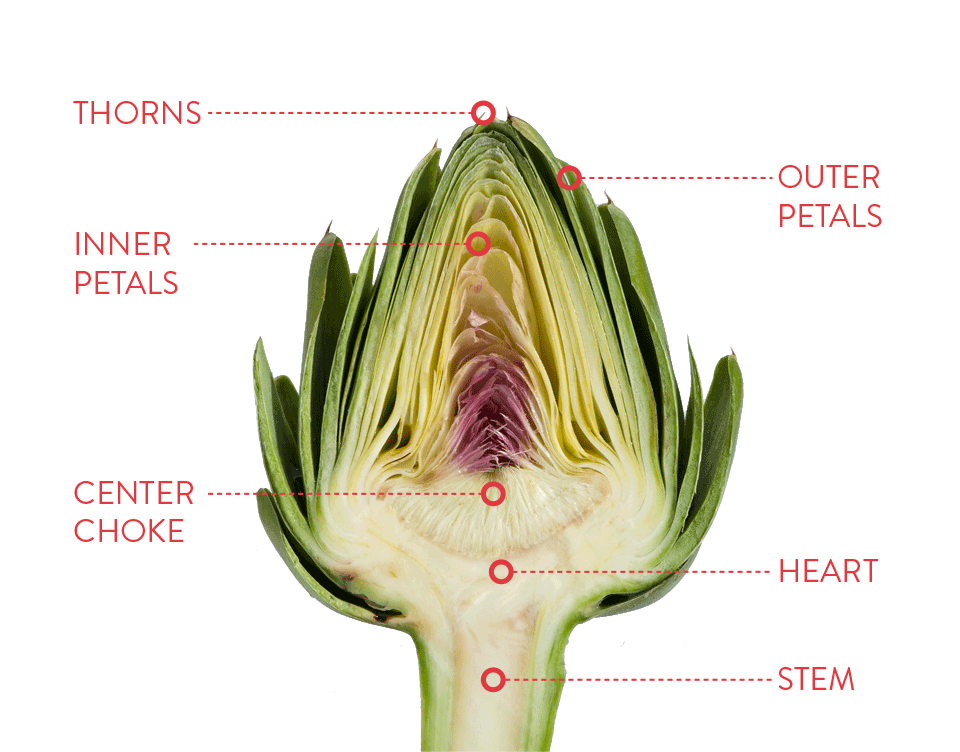
It turns out that Mute is an onion: each layer of the story is delicious, but peel them all away to get to the core and you find…nothing. Side note: I’ve never really understood the high value placed on the onion as a metaphoric device. Lots of things have layers, but shouldn’t the metaphoric object get progressively better/more profound as one works one’s way further in? It seems clear to me that, in the realm of vegetal metaphors, the artichoke is king, because while the outer layers might be palatable, the heart is the greatest prize. This is all to say that Mute feels like an artichoke without a heart (i.e., an onion), or a story with nothing especially profound to say (the title’s making more sense, eh?).

artichoke infographic
Life is like a box of artichokes--kind of a pain, but on balance worth the effort!
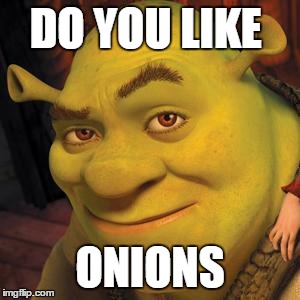
Bottom line: you should totally watch this film, but Moon fans should temper their expectations, because this is no artichoke; it’s a beautiful, shallow onion. But it’s a really good onion, like maybe a Vidalia onion, which means there is only one question:

Shrek Sexy Face | DO YOU LIKE ONIONS | image tagged in shrek sexy face | made w/ Imgflip meme maker
Well said, Shrek!

The Math:

Objective assessment: 5/10

Bonuses: +1 for peppering the film with thought-provoking suggestions of the near-future, +1 for Jones’ flair for the cinematographically dramatic

Penalties: -1 for being such a let-down compared to Moon (and, in a sense, even Source Code)

Nerd coefficient: 6/10 “Worth watching, but the flaws are hard to ignore”
 

[Score seem harsh? Not at all: see here for why this is better than average!]


This message brought to you by Zhaoyun, demigod of nerdery, who is currently halfway through a series on high-profile Netflix projects of potential appeal to nerds of the world (unite!), and has been a reviewer for Nerds of a Feather since 2013.

Wednesday, March 14, 2018

Microreview [TV series]: The Frankenstein Chronicles


They’ve squared the circle! Sean Bean's character shuffles off his mortal coal…yet is alive again for Season Two?!?

Image result for frankenstein chronicles
Doesn't Sean Bean look vaguely surprised to be still alive? Him and me both!
Both seasons currently available on Netflix!


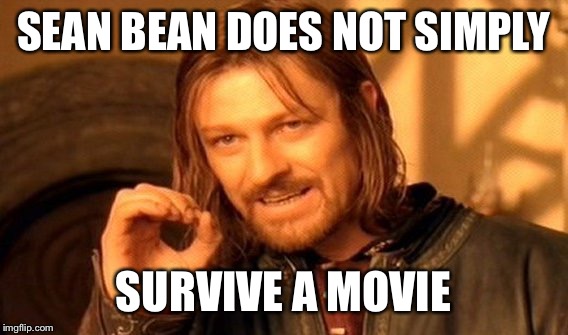
It’s one of the longest-running gags in show business: cast Sean Bean in your TV series and there is an extremely high chance his character will perish by the end of season one. If in a movie, he’ll probably die heroically, indeed motivationally, spurring the surviving heroes on to greater successes; in TV series, his specter looms over the remainder of the show, meaning everything that happens from then on occurs in the shadow of his sacrifice (since he is usually innocent of any wrongdoing but is executed/killed anyway). So when I finally watched The Frankenstein Chronicles, I knew to expect a gruesome end for Bean’s “John Marlott” at the end of season one. I don’t even feel the need to issue a spoiler alert so far, because Sean Bean’s near-inevitable death early in projects is a truth universally acknowledged.


But now I must give you fair warning for the major (if extremely easily predictable) spoiler ahead: not only was I not disappointed (he is hanged), the makers of The Frankenstein Chronicles managed to jolt me out of complacency. They altered the Sean Bean death formula in a unique way, providing a (sort of) plausible pretext to have their cake and kill him too! To speak plainly, Marlott truly does die, in public, after being framed, but he is pseudo-scientifically restored to life at the very end of season one. How marvelous that the makers managed to murder Marlott but maintain him as main character (and astonishing alliteration!). This feat is surely the great triumph of this TV series.
Image result for one does not simply survive
You said it, Sean Bean!

Sad to say, there aren’t many other triumphs in this ho-hum costume drama. Bean brings his customary gravitas and Sheffield brogue to the role of Marlott, and the makers did a reasonably good job in constructing the mise en scene, recreating a broadly believable atmosphere of early 19th century Britain, but the story itself is a bit slow, and the Forrest Gump-like obsession with having Marlott bump into all the luminaries of the day is tiresome. 
Image result for forrest gump meeting Nixon
It was dumb when Forrest Gump did it, and no better today...
I hear A&E, which handled the US broadcast of this British show, dubbed it “thrilling and terrifying” and yet overall, it was neither. Here’s a more accurate epithet: “more or less watchable despite the slow pace.” Yet despite this lukewarm endorsement, I must admit I’m hooked and will finish watching season two; any show which manages to retain Sean Bean into a second season is spellbinding!


The Math:


Objective assessment: 6/10

Bonuses: +2 for finding a (barely) plausible pretext for having Bean’s character survive execution (it’s like a Ned Stark do-over!)

Penalties: -1 for the plodding pace, -1 for the thoroughly irritating Forrest Gump effect

Nerd coefficient: 6/10 “still enjoyable, but the flaws are hard to ignore” for regular viewers, 8/10 for major Sean Bean fans


[For more info on our scoring system, see here.]

This snide review brought to you by Zhaoyun, ardent fan of Sean Bean’s on-screen death scenes as far back as Patriot Games and reviewer at Nerds of a Feather since 2013.

Wednesday, February 21, 2018

Microreview [film]: Bright

Way better than I expected--thanks, critics!

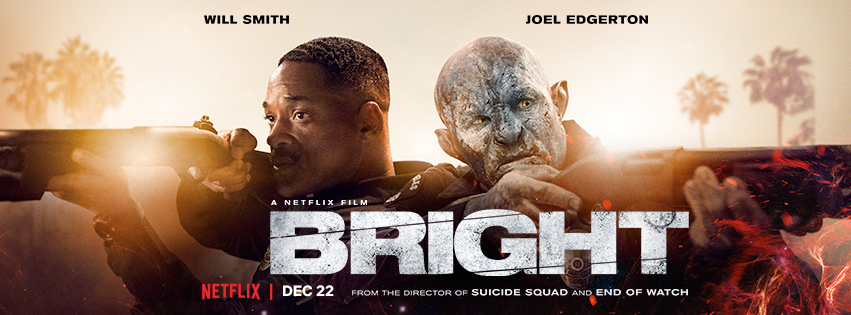
Image result for bright
Ayer, David, dir. Bright. Netflix: Dec. 2017.


It could simply be because I watched it on New Year’s Eve after one three eggnog martinis (liberally spiked with the delightful pumpkin spice flavor of Kahlua!), and because of lowered expectations due to all the hate floating around about it, but Bright was actually fun! Were all the critics who despised it really watching the same film as me? And if so, I’ve got the perfect remedy: eggnog martinis!

First of all, it’s great to see urban fantasy—any urban fantasy—get such a huge-profile debut. The vitriol over the film can be usefully subdivided into two categories: diehard urban fantasy snowflake-fans up in arms over this or that inauthentic aspect of the film’s depiction (or appropriation) of the genre, or clueless lamestream media hack reviewers who have no idea what urban fantasy is or should be, pretentious fops who use terms like “pictures” or “films” and shun hoi polloi vernacular like “movies” religiously.

As a self-proclaimed middle of the roader, I fail to see why we have to listen to either of these categories of ‘experts’ and can instead sit down to appreciate Bright’s many good points (and trust me, they only get better with some eggnogtinis!). For instance, this is a movie which actually addresses racial tensions! Is its attempt to tackle racism (by replacing socially disadvantaged groups with entirely different species) heavy-handed? You bet it is! But at this point, at a time when most people in the developed world receive pre-selected news/‘information’ based upon various algorithms’ predictions of what we already believe, just having such a high-profile film project address such a sensitive issue at all is a win of sorts.

But also—have you actually seen the movie, or are you just spewing hate a priori? You might be surprised by how empirically entertaining the finished film turned out to be. Sure, parts of it are hokey, like the (to me) gratuitous scene of Will Smith’s character beating a mischievous fairy or sprite or whatever to death in his front lawn, to the jeering cheers of his cop-hating neighbors. And yeah, it would have been a better film if it had been made more tongue-in-cheek instead of being billed as a straight-up urban buddy cop action extravaganza. Yet even so, when Bright is good, it's downright watchable! 

The special effects are generally thrilling, and the human performances are pretty good too (though I confess to being a bit disappointed in Naomi Rapace’s turn as villain, as she couldn’t quite sell the necessary menace, that indefinable yet palpable air of lethality). Smith delivers here in a manner fans haven’t seen much in this period of his career--you know, just a few years after he thought it would be a good idea to appear in After Earth. So here’s the final word: what exactly is supposed to be so bad about the movie? Am I missing something? Did I have eggnogtini googles on when I saw this? I’m sure you’ll let me know in the comments below J

Image result for after earth dumb
Smith rediscovers his acting chops, aided by the massive drop in expectations following the turd-fest After Earth!

The Math:

Objective Assessment: 6/10

Bonuses: +1 for sizzling special effects in an urban fantasy movie, +1 for addressing racism, even in this rather goofy way

Penalties: -1 for the heartless scene showing the murder of a fairy and the taking-themselves-way-too-seriously-vibe

Nerd coefficient: 7/10 “An enjoyable experience, but not without its flaws”
 

[Incidentally, 7/10 is a totally respectable score here at Nerds of a Feather—see here for details.]

This message is brought to you by Zhaoyun, purveyor of urban fantasy in all its forms and reviewer for Nerds of a Feather since 2013.

Friday, October 6, 2017

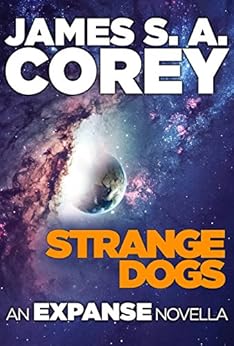
Microreview [novella]: Strange Dogs, by James S.A. Corey

A delightful—because contained in scope—science fiction-y “what if”  


Corey, James S.A. Strange Dogs. Orbit, 2017.

Buy it here.


I am of the considered opinion that this little novella represents a return to form for Abraham and Franck (aka “James S.A. Corey”), as they retreat from the flamboyant villainy of Marco Inaros into something much more provincial, as it were. Of course, the tale they tell has important implications for future Expanse novels: it helps show the broad outline of the threat—and opportunity?—Holden, Nagata et al will soon face from the rogue Martian operations led by Duarte. Since, up until this point, Duarte and his entire world has been shrouded in an impenetrable veil of mystery (from the perspective of the Roci’s crew), it was a great decision by Abraham and Franck to: a) take us behind that veil, and b) hang the story around a child (of limited but growing understanding), who sees the world through (relatively) innocent eyes.

When this child encounters the arch-nemesis of the solar system, Duarte, in the flesh, she of course knows nothing of his infamy, and finds him kind and accommodating. And when the child stumbles upon some of Duarte’s top-secret experiments, she finds them rather less monstrous than the reader has been conditioned to expect. That’s why having the story be told through a child was such a good idea: she doesn’t have any pre-conceived notions that proto-molecule tech = evil, and as a result, is able to see opportunities denied to those more judgmental adult humans who have encountered proto-molecule hybrids in the past. Is it perhaps fair to say that the only ‘evil’ in the proto-molecule is the foul intentions of the humans (like Jules-Pierre Mao, etc.) who sought to use it for their own ends?

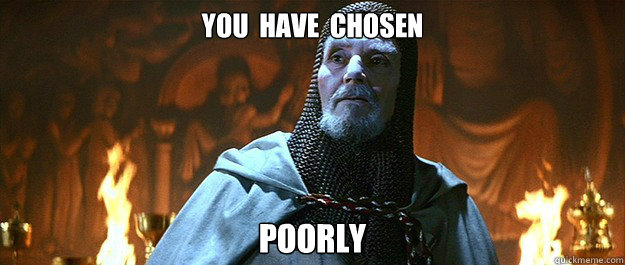
Finally, ask yourself this question: if something terrible happens to someone you love, and a couple of glowing alien ‘dogs’ seem to offer that person a second lease on life (of a sort), would you reject them? And if so, why? Isn’t any kind of life better than the awful finality of death? And besides, there’s no evidence (yet) of that sort of miraculous assistance being weighed down with any Mephistophelean baggage. Our young heroine certainly comes to that conclusion, and I think many of us would follow her lead, even if (like her) we can’t really understand or predict the far-reaching implications of accepting alien organisms’ help. It seems we must stay tuned for the next entry in the Expance series to hear whether she chose wisely or (like Donovan!) ‘poorly.’
  

The Math:


Objective Assessment: 7/10

Bonuses: +1 for drastically limiting the scope of the story, +1 for giving us a ‘child’s eye view’ of the world and its ethical quandaries

Penalties: -1 for, in my opinion, exaggerating the degree to which children’s understanding is primitive (they grasp intuitively a lot more than many adults appear to realize), and having her stream of consciousness be correspondingly ‘kid-like’

Nerd coefficient: 8/10 “Take that, Babylon’s Ashes!”


[Does this score seem low to you? Check our scoring system here to see why it’s plenty high!]


Like Zeus’s brainchild Athena, this review sprang fully formed from the mind of Zhaoyun, a devotee of speculative science fiction (even more than space opera!) since time immemorial and contributor to Nerds of a Feather since 2013.

Friday, September 22, 2017

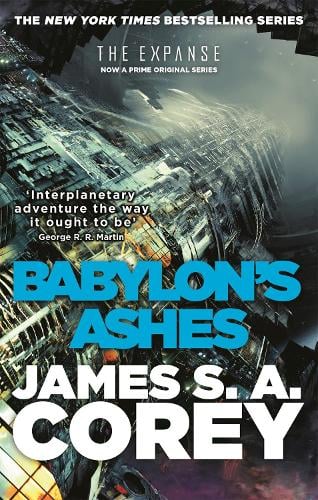
Microreview [book]: Babylon's Ashes (book six of The Expanse), by James S.A. Corey

 A rather anticlimactic conclusion to the Holden/Nagata vs. Inaros saga, with too much Holden and Inaros and not enough Nagata!

Corey, James S.A. Babylon's Ashes. Orbit: 2016.
Buy it here if you wish. 

When The Dark Knight Rises (clumsily!) began building up the villain’s mystique of Bane, we knew two things right away: Batman would fight him twice, and the first time he would be utterly defeated. It is this initial defeat which increases the melodramatic payoff of his eventual victory: we know how tough the enemy is, because we’ve seen it first-hand.
Bane = a worthy adversary; Inaros = an annoying fop
A similar narrative convention is at work in books five (Nemesis Games) and six (Babylon’s Ashes) of The Expanse. Marco Inaros is the Bane of the solar system: he (to hear him retell it) single-handedly rocked (see what I did there?) the inner planets’ equilibrium, nearly destroying Earth. This corresponds to Bane’s initial victory over Batman; so far, so good. But all of this build-up is to increase the melodrama when Batman (or in this case the dynamic duo of Naomi Nagata and Jim Holden) eventually triumphs against this formidable foe. And this is where, in my opinion, Babylon’s Ashes missteps.

It turns out Inaros just isn’t that compelling a villain, and perhaps as a consequence of this, the good guys’ inevitable victory over him isn’t particularly cathartic. In one sense that shouldn’t matter, since of course it’s entirely up to Daniel Abraham and Ty Francks what sort of villain to create, and nothing mandates a “tougher than you can believe” archetype. The problem, as I see it, is that they fell into this narrative trope without having the right sort of villain for it. Inaros is simply a megalomaniac with a flair (sort of) for PR, but his ridiculous behavior and blunders end up alienating many of his erstwhile supporters. This leeches the catharsis right out of the mano y mano confrontation at the end, since in a manner of speaking Inaros has already been beaten, in small ways, numerous times before this.

If the big, bad wolf who wrecked the solar system is nothing more than a navel-gazing fool, it cheapens the hard work the crew of the Roci (et al) have to do to bring him to heel. Indeed, we are left with a somewhat less favorable impression of the super-crew, since defeating a moron like Inaros apparently taxed them to the limit of their abilities! Surely there was something less explosive they could have done to knock out all those rail guns in the ‘slow zone’? I mean, was that really the best plan they could come up with, these brightest minds in the solar system?

Despite Marco Inaros being a nincompoop, the writers chose to focus a bit too much on him and in particular, his thirst for vengeance against Holden, the man who kept humiliating him. Fair enough, to be obsessed with a pissing contest seems in character for the petty Inaros, but why did the writers let him and his quest to destroy Jim Holden dominate the story? A much more compelling storyline, it seems to me, would have been in a more explicit opposition between the methods and worldviews of Nagata and Inaros, since one way of thinking of this book is as a battle for the soul of Filip, their son. Besides, Nagata is a much more interesting character than Holden (of whose earnestness, if we’re all being honest, we’re getting a bit tired, aren’t we?).

Nothing against Alex and Amos, but in general, the male characters of this series just aren’t as compelling as the female ones: the Naomis, Bobbies, Michios, and Clarissas (to say nothing of the indefatigable Avasarala herself!). One humble suggestion for future installments in this probably interminable series: stick with the ladies! (I’m happy to say that their latest novella does precisely this, telling the story of an interesting tweenaged girl growing up on Laconia—stay tuned for my review!)


The Math:

Objective assessment: 7/10

Bonuses: +1 for having such great female characters (but see ‘penalties’ below)

Penalties: -1 for the narrative mismatch between the fop Inaros and his Bane-like mystique, -1 for focusing too much on the boring male characters and too little on the ladies of the system!

Nerd coefficient: 6/10 “Still enjoyable, but the flaws are hard to ignore”


[Does a mere 6/10 seem low to you? Check out our scoring system here, and learn why it’s actually not bad!]


Zhaoyun, who to be honest is more a fan of ‘spacemance’ than of space opera per se, has been inhabiting The Expanse since it burst onto the scene, and has been a regular(ish) contributor at Nerds of a Feather since 2013.

Wednesday, September 6, 2017

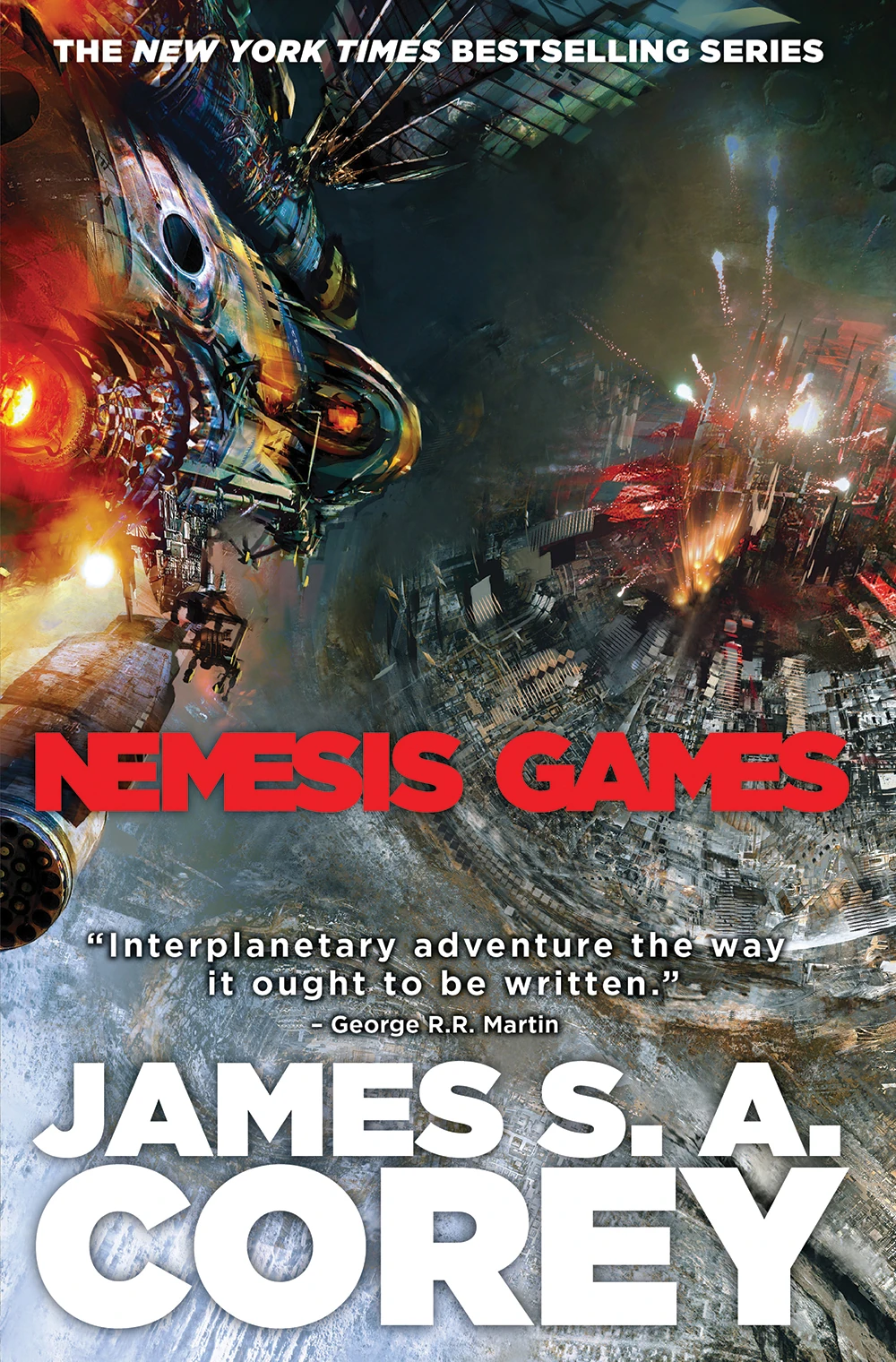
Microreview [book]: Nemesis Games, by James S.A. Corey

‘The gang’  (and, you know, everyone else) imperiled—a satisfying ante-upper indeed!

Image result for nemesis games

You can buy it here

Since there was a bit too much familiarity about the crew of the Roci by book four—a sense that if they pooled their efforts they could somehow triumph against any obstacle, even an alien one—it seemed the series was building to a problem serious enough to jeopardize the synergistic relationship the four had. Sure enough, Nemesis Games almost immediately sends all four main crew members off on disparate quests, with little chance to affect each others’ situations.

This sort of ‘scattered to the ends of the earth solar system’ setup entails some risks. Since we have grown accustomed to having the Roci’s crew (not to mention the Roci herself, practically a fifth main cast member at this point) demonstrate the importance of interpersonal relations by solving every problem together, how will the story proceed if we, the readers, are denied the pleasure of seeing them work together (and denied any meaningful glimpse of the Roci, out of commission temporarily due to damage sustained in Cibola Burn)?

I’m pleased to say that the authors of The Expanse did a masterful job of what is essentially back-story exposition (no easy task to avoid the typical sort of “You know I don’t like snakes…(and I'm saying this now because lots of snakes are in the near future)” clumsiness, but they managed it!), giving us a major glimpse into everyone’s past (well, everyone but Holden). We learn, in essence, some of the key reasons such a skilled group were on the Canterbury in the first place: what they were running from, and why. Since the core relationship on the Rocinante is the one between Holden and (Naomi) Nagata, it is only fitting that it is this romance which is most directly imperiled by the reemergence of these shady pasts.

All this might sound pretty small-time—the ghosts of the main characters’ misdeeds rearing their ugly heads might be scary to those individuals, but it would hardly measure up to the sort of civilization-ending threat these four (+ the Roci) have faced previously. At the risk of being terribly mysterious (thank you, The Sphinx from Mystery Men!), I’ll say only that the stakes turn out to be all too high, the threat all too dire. Just when we thought the worst that was in store was the addition of new crew members to the Roci, and the risk that both the diegetic dynamic and the reader’s appreciation for the tight-knit crew of four could be shaken, we discover that the true danger is to the core of human civilization itself!

Does the "Holden+Nagata, Alex and Amos too" dynamic survive this dire challenge? Is this, in fact, the best Expanse book yet? (Given The G's almost visceral dislike for the first book in the series, one could optimistically say that it must be getting better overall!)  You’ll just have to read it to find out! (Alternatively, you could check out my forthcoming review of book six, Babylon’s Ashes—check back here on NOAF soonish!)

The Math:

Objective Assessment: 7/10

Bonuses: +1 for masterful exposition, without a single “But you KNOW I can’t eat strawberries!” ham-fisted foreshadowing, +1 for successfully upping the ante—with a vengeance!

Penalties: -1 for describing Nagata’s protracted ordeal in what struck me as a conspicuously pseudo-scientific manner (in essence, hit stuff with a wrench after a serious physical injury/setback, but still get one’s message through without being “permanently damaged”, to quote Vader)
Funny how main characters seem to survive just about anything, eh Naomi? Keep swimming around unprotected in deep space--I'm sure everything will work out!

Nerd coefficient: 8/10 “A bit of alright”, as the Australians say!


***
[Puzzled by our scoring system? Learn why 8/10 is an exceedingly high score here.]

Reference: Abraham, Daniel and Ty Frank. Nemesis Games. Orbit, 2016.

All the comments and opinions written here are solely Zhaoyun’s, longtime lover of space opera and fantasy literature and reviewer for Nerds of a Feather since 2013, and should not necessarily be taken to represent all Nerd-kind.

Friday, August 25, 2017

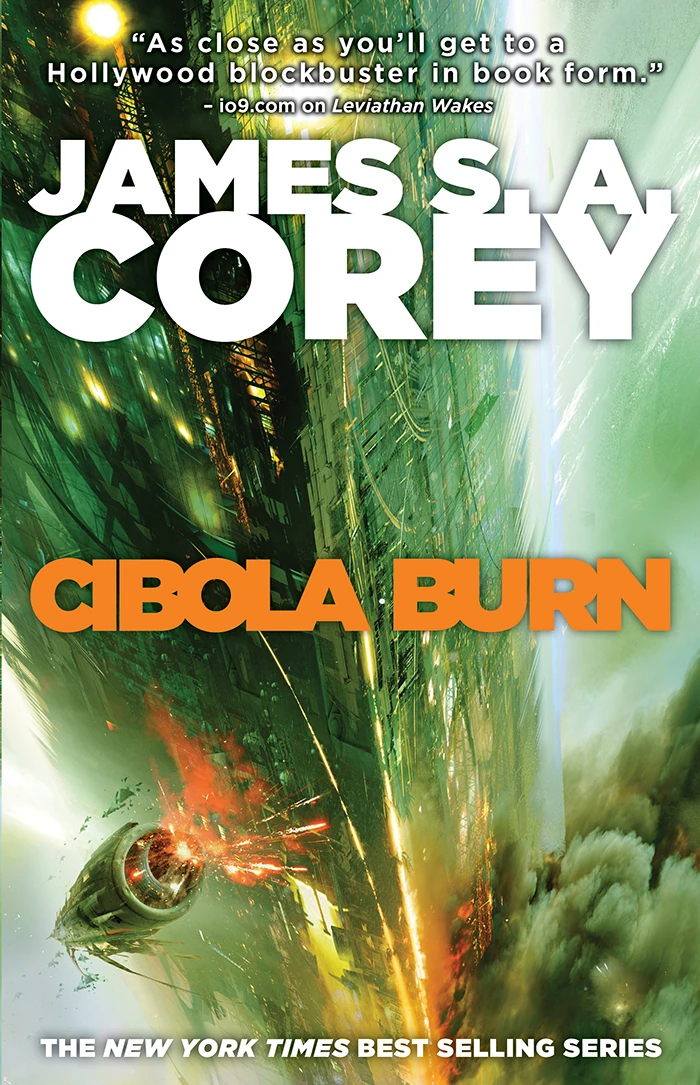
Microreview [book]: Cibola Burn (book four of the Expanse series)

The weakest entry in the series (so far)…and yet still great fun!


Corey, James S.A. Cibola Burn. Hachette Book Group, 2015.
Buy it here.

So here’s the thing—I’m a big-time fan of the Expanse series. At the point I’m writing this review, I’ve read the first five books, and enjoyed them all to varying degrees. The first one got things off to an explosive start, the second one continued that momentum, and the third one upped the excitement ante. Like the first three books of Robert Jordan’s near-interminable Wheel of Time series, the first three almost felt like a stand-alone trilogy, one which had reached a mostly satisfying (if open-ended) conclusion. The question is, how could the authors of The Expanse sustain this impressive pace into book four?

Well, the answer is they couldn’t (though they came close). Overall, Cibola Burn was certainly entertaining, but (like book four of the Wheel of Time) it felt rather anticlimactic.  It’s plenty interesting, but there’s a slight diminishing-returns sense of “they’re at it again” when we see the crew of the Roci solve every problem with trademark skill (if not ease). We are, of course, unable to doubt the overall trajectory of the Holden + (ghost) Miller duo: like the Teenage Mutant Ninja Turtles series theme song, we know “the good guys win and the bad guys lose.” 

Also true of most books, movies, etc.
So it’s no spoiler to say that they manage another miraculous save. My sense is that the authors wrote themselves into a bit of a corner with what film reviewers of every Jason Statham movie would have described as a ‘high-octane’ plot in the first three books, leaving them no room to up the ante.


Perhaps it would be best to see the Expanse as more of a single unit (albeit one whose end is not yet in sight), in which case it would make sense to have something of a lull in the middle, or (like in one of those mix tapes John Cusack raves about in High Fidelity) after a few fast-paced hits in the beginning. By that logic, we might reasonably expect a return to ‘high octane romp’ form in book five. To see if this is the case, check in next Friday for a review of Nemesis Games!

The Math:

Objective assessment: 7/10

Bonus: +1 for somehow turning the entire gate/1000 worlds thing into a manageable story

Penalty: -1 for not quite overcoming sequel fatigue

Nerd coefficient: 7/10 "Enjoyable experience but not without a flaw or two"


To learn more about our unique scoring system, see here.

It is I, Zhaoyun, explorer extraordinaire of space operas of all shapes and sizes, and reviewer for Nerds of a Feather since time immemorial (2013), who brings you this message.

Friday, May 19, 2017

Microreview [book]: Crossroads of Canopy, by Thoraiya Dyer

If you haven’t read this yet, why on earth not? And if you have yet somehow didn’t like it, seriously: why on earth not?

Crossroads of Canopy: Book One in the Titan's Forest Trilogy by [Dyer, Thoraiya]
Dyer, Thoraiya. Crossroads of Canopy. Macmillan, 2017.

You can buy it here, and by the time you’re done reading this review, you’ll want to!

Despite being the target of polarizing reviews (some of which, I am convinced, are consciously or unconsciously motivated by dislike for precisely what makes it unique, namely the unconventional heroine), this story is awesome. Its awesomeness stems partly from its world-building (the unique forest world, consisting of the mysterious Floor, the savage Understory, and the elitist Canopy, with the people and creatures from each a strange and fascinating mix of familiar and alien traits) and partly, perhaps mostly, from its main character. Here’s why heroine Unar is the best female protagonist—and indeed, one of the best protagonists of any biological sex or gender—in years.

Her masculine-without-being-stereotypically-tomboyish femininity:

Unlike the squeaky clean, often virginal heroines of recent popular fantasy and sci fi literature (I’m looking at you, Bella Swan!), Unar has desires…and acts on them. In fact, her coming of age reminded me quite strongly of Tenar’s awakening in Ursula Le Guin’s immortal The Tombs of Atuan. I wonder if Unar’s name might have been inspired by that rather similar story of social and sexual repression, out of which, like two glorious butterflies, these two heroines irrepressibly burst? Unar is not a model of demure femininity; instead, she’s an interesting mix of feminine and (what we might identify as) prototypically masculine traits, especially her tremendous ambition and her hunger for power, qualities that stay-in-the-kitchen traditionalists would doubtless call ‘unfeminine’. Given men’s dismal track record of monopolizing power, controlling female sexuality and indulging their ambitions throughout history (both in the world of Canopy and our own), ‘unfeminine’ girl power doesn’t sound so bad to me.

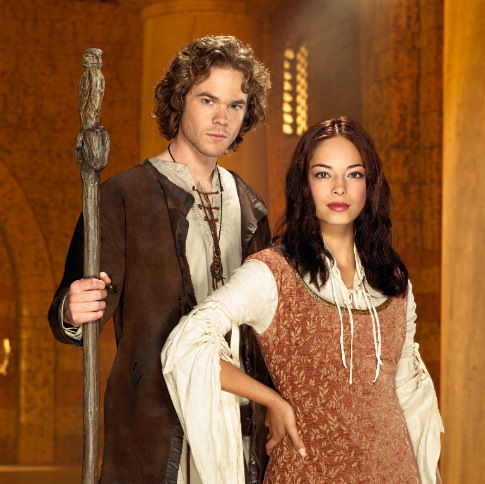
Thanks for taking a giant dump on the Earthsea cycle, creators of this crappy 2004 miniseries!

Her moral ambiguity:

Generally, heroines are presented as always doing the right thing, so even when, e.g., Katniss Everdeen shoots a certain character in the Hunger Games trilogy, the reader certainly is not meant to question Katniss’s essential goodness. That is, female anti-heroes, true anti-hero(ine) protagonists (not just pure-hearted women forced by cruel circumstances to do bad things, or black-hearted ‘fallen woman’ villains) are very rare, as though even most authors can scarcely conceive of a woman anywhere in the ethical spectrum between the polar extremes of pure goodness and total evil. Unar, however, is decidedly a mixed bag, ethically, and as the reader continues to cheer her on, we too become complicit in some of her darker deeds. I’m not talking about when she’s being mind-controlled, her magic used against her will to harm others; that’s just standard victim stuff. I’m talking about when she does have control: often she acts bravely, and sometimes altruistically, but also occasionally acts out of pure selfishness. Gosh, this mass of contradictions almost sounds like a real person—a lot more than most fairytale heroines, to be sure!

Her overall awesomeness:

Unar is betrayed many times, in many forms, by family, friends and allies, but she is like a juggernaut—nothing can keep her down. She’s also almost unique, given her privileged position, in being quick to recognize the worth of people in a lower social class than her; she both uses their talents for her own ends and, sometimes, uses her own vast powers to help them. She is essentially the only person in her highly and literally stratified world that is able to travel between these distinct layers, combining the best parts of both Canopy and Understory. I can hardly wait until we get a sequel and she begins exploring the still dark and mysterious world of Floor!

The fact that there’s no ‘happily ever after’ in sight:

Usually, books about girls (or boys, for that matter) bring everything to a cathartic and suitably romantic conclusion; the heroine finds and wins the man of her dreams, etc., etc. But Unar has no such too-pat ending waiting for her. Even if no sequel is ever written (though that would be a terrible shame!), Unar’s story is complete in its incompleteness. The worth of a young woman, the sum total of her life, cannot be expressed in hetero(or homo)sexual union—nor is her value necessarily tied to her youth. This story emphasizes that, by focusing more on the life-cycle of the oppressed women of this fictional world, introducing not only Maidens, but also Mothers and Crones, and insisting we the readers take notice of their valuable contributions. Fittingly, at the end Unar finds herself decisively deprived—by her own actions—of the chance to settle down and enjoy a quiet, happy life, and given her morally questionable deeds, her inability to resume her old life, while in a sense a cruel fate, is not a surprising one. It’s only surprising if we the readers have been fed a diet of happily ever afters. I for one am looking forward to future stories about Unar’s fascinating exploits, as something tells me her story is far from over.

 The Math:


Objective Assessment: 6/10

Bonuses: +1 for making such a morally complex, endlessly fascinating heroine as Unar
                +1 for quite creative bout of world-building

Penalties: None!

Nerd coefficient: 8/10 “Totally sweet!”
  

See more about our scoring system (under which 8/10 is quite rare!) here.


This message brought to you by Zhaoyun, aficionado of fictional worlds and devotee of earth-shattering heroines like Unar, and reviewer for Nerds of a Feather since ancient times (2013).

Friday, May 12, 2017

Microreview [book]: Wrath, by John Gwynne

A satisfying denouement to a tetralogy teetering on the edge of drowning in grimdark savagery

The reviewer isn't kidding about 'all manner of betrayals'!

Gwynne, John. Wrath. Orbit, 2016.
You can buy this book here.

A fundamental principle of fantasy (all?) literature is that a sufficiently melodramatic, cathartic victory/ending can only be achieved through the sacrifice of (usually) second-tier characters. These are the ones you can remember, whose names and backstories are vivid in your minds, but whose survival isn’t absolutely essential to the everything-and-everyone-tied-together happy ending the book or series has been moving towards since page one. A series like Harry Potter, hurtling towards happiness, could never dare off one of the three principals, forcing Rowling to select her final victims from the B-list: Snape, one of the Weasley twins, etc. Killing anyone more central to the narrative would jeopardize the catharsis. And I don’t mean to single out Rowling/Harry Potter: this is a near-universal feature of fantasy literature. A few B-listers have to die nobly so that the A-listers can live happily ever after.

Enter John Gwynne, who has taken this principle and grimdarked it. The essential calculus hasn’t changed—the principals will still survive and earn their happy ending—but the sheer quantity of second-tier characters required to throw themselves into harm’s way boggles the mind. Readers of the first three books of this tetralogy will be quite familiar with Gwynne’s penchant for throwing beloved but still slightly peripheral characters into the meat grinder, but he has savagely upped the ante here. I thought at one point of the memorable exchange from Casablanca: “What is [this book] like?” – “Oh, just like [the other three], only more so.” Remember Rowling’s judicious choice of a single quasi-central figure, one of the Weasley twins, as scapegoat? Gwynne puts almost the entire cast of B-listers on the sacrificial altar. I haven’t spoiled the story if I say: expect the very-most central characters to survive (obviously—no writer dare do otherwise) and practically no one else!

Multiply this scene of grief at a dead B-lister by a billion, and you will understand Wrath

This savagery may or may not register in the reader’s mind as a bad thing (it struck me as gratuitously excessive, but others might respond more favorably). But one feature of Gwynne’s approach does seem unambiguously problematic: his apparently quite dark view of mercy. Several times in the series, but especially in this fourth and final volume, “bad guys” spared by well-meaning heroes take their unexpected reprieve to (often literally) stab those same heroes in the back at the first opportunity. It’s as though Gwynne believes a) bad guys are incapable of change, or even of admitting their guilt, and (perhaps as a result) b) mercy is always a terrible mistake.

Take Nathair, who has sensed the error of his ways. Gwynne seems to be building to a tearful confession, leaving open the possibility of a way back to the light even for a treacherous viper like Nathair, only to slam that door shut and have the king double down on his evil deeds. Truly we are living in the age of the double-down! But the worst example of the heavy cost of mercy must be Rafe, who once again seemed potentially redeemable (indeed, quite a close approximation of the Harry-Draco dynamic is at play with Corban-Rafe), only to amass quite a body-count after the good guys (foolishly, it would seem) let him go. Naturally, some of the evildoers in the world, if granted a new lease on life, will misuse their second chance, to be sure, but since Gwynne’s only positive examples of the potential of bad guys to change were Veradis (the honorable if naïve warrior) and Alcyon (the honorable giant forced into evil due to magic and the fact his wife and son were held hostage), neither of whom, of course, is actually bad at all, his message is clear: genuine bad guys can’t learn from their mistakes, and will betray their merciful benefactors 100% of the time.

Ironically, this dark-as-grimdark-can-be attrition of B-listers and total denunciation of the idea, for bad guys, of moral rehabilitation after doing something terrible has restored my idealistic faith in humanity. I’m left strangely optimistic, muttering “Surely we humans can’t be that bad?”


The Math

Objective Assessment: 7/10

Bonuses: +1 for keeping victory for Corban at all almost inconceivable until the very last minute, +1 for managing a fairly emotionally satisfying denouement

Penalties: -1 for the somewhat gratuitous/monotonous near-total annihilation of the second-tier characters, -1 for reinforcing the pessimistic idea that those who have once done wrong have essentially no chance of reform (and instead will stab a bunch of beloved B-listers in the back)

Nerd coefficient: 7/10 “An enjoyable experience, but not without its flaws”

Read more on our nerdy scoring system here.


This message brought to you by Zhaoyun, still an unabashed optimist despite a steady diet of the most savage grimdark out there, and reviewer for Nerds of a Feather since 2013.


Wednesday, February 22, 2017

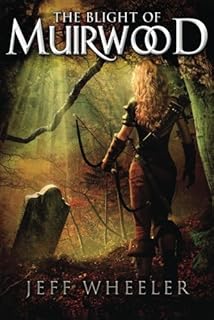
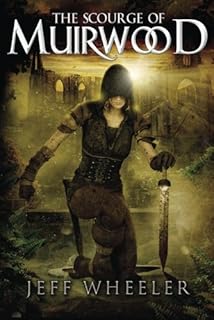
Microreview [books]: The (original) Muirwood trilogy, by Jeff Wheeler

Beats the pants (most of the way) off of expectations, but—ironically—insists in a prudish way that everyone’s pants stay on


Buy them here.

Former computer guy at Intel becomes full-time—and self-published!—writer, you say? What is he writing, instruction manuals? Ha ha, but it turns out the joke was on me: Wheeler writes with uncommon, almost lyrical beauty at times, and his decision to hang this 'romantasy' (romance fantasy, though romance is a pretty integral part of fantasy as a genre so perhaps this is one portmanteau too far, even for me) on the formidable shoulders of heroine Lia, a teenaged sorcerer-priestess (witch?), was a brilliant one. He adds a fair bit of interesting, if somewhat undeveloped, social commentary and critique in to his world-building as well: Lia is a Wretched (i.e., a bastard), so we can immediately predict one of her Monomythic quests will be to discover the identity of her parents. She is strong in the “medium” (i.e., quasi-intelligent fate/magic which responds to strength of belief/faith), and uses this and all her many other talents to kick some major butt.

The original trilogy unfolds skillfully and Wheeler does a good job of sustaining reader interest throughout, even if the extreme youth of Lia and her beau (the former barely a teenager when she falls for him, the latter borderline creepy given he’s four years older) is hard to swallow. The only serious fault of this series (aside from a(n un)healthy dose of Mormon church-inspired prissy morality which is enough to make notorious “no sex before marriage” Stephenie Meyer look like a sex-crazed lunatic!) is that it’s quite predictable: there was literally a 100% chance that “foundling who turns out to be an incredibly powerful sorceress and warrior, in unrequited-but-sort-of-or-actually-totally-requited love with a boy who has sworn his heart to a mysterious missing princess” will turn out to be—you guessed it—said princess, not the thoroughly inferior girl everyone thinks is the princess. About twenty pages in, the entire trajectory of the trilogy was already taking shape in my mind, and sure enough, after that point there weren’t many surprises.

If a story lacks unexpected twists and turns—if its entire scope is easily guessable within the first few minutes of picking it up—can it really be worth reading? Happily, the answer is a resounding yes! Ralph Waldo Emerson or some uppity idiot like that once said “Life’s not about the destination, it’s about the journey”, and it holds true here. Despite the priggishness, despite the fact that the true enemies turn out to be all women, lascivious Satanist-like succubi-priestesses (mostly patterned on French women, for some reason) whose greatest weapon is their seductive power over men (!), and even though we know practically everything that Lia will face once we catch a glimpse of her story beginning to unfold (basically, will she be Mary, or Eve: a virgin heroine or a ‘whore of Babylon’ type figure—a choice, needless to say, that from a narratological standpoint is no choice at all), it’s still quite enjoyable to watch Lia struggle to find her way, and navigate the heady perils of teenage romance while juggling the fate of all creation!

Gee, I wonder if this warrior-priestess who can do friggin' anything might be that lost princess everyone is talking about? Nah, it's probably just a coincidence.

So while it loses a few points for predictability and major pruditude, this story earns full marks for entertainment value, and nearly full marks for the technical side, as Wheeler writes quite well—even the agape-themed dialogue is fairly believable. I mean, who doesn’t want to read a story about a teenaged polymath warrior-sorceress saving the world? Plus, romance!


The Math:


Objective assessment: 8/10

Bonuses: +1 for making Lia so awesome/faultless it’s borderline ridiculous, +1 for exceeding expectations in nearly all ways, including high entertainment value despite penalty #1 below

Penalties: -1 for being so thoroughly predictable, -1 for priggitude (to the point of treating women who allow someone to kiss them on the cheek after a dance as the epitome of evil) -1 for treating being female as more likely than men to lead to great corruption and suffering (hey Wheeler: read a history book! Men tend to suck at peace, human rights, etc. soooo much more than women)

Nerd coefficient: 7/10 “An enjoyable experience, but not without its flaws”


[I think in this case our scoring system is very accurate indeed: this book is well above average yet not quite an ‘I was blown away’-level book, which as you see here is just what a 7/10 is meant to convey!]

This review is the work of Zhaoyun, a romantasy-lover since forever and NOAF contributor since 2013.

Friday, December 2, 2016

Microreview [book(s)]: 2/3 of An Affinity for Steel, by Sam Sykes

Going from not so great to pretty good (to better?)

Sykes, Sam. An Affinity for Steel. Orbit, 2016.

You can buy it here.

Remember when The Phantom Menace came out? I was a teenager at the time, and was kind of excited despite myself—after all, the original trilogy was so friggin’ awesome, and if the new one was even half the trilogy that was, I was in for some entertaining fare! But the truth--which I realized one summer day in 1999 as the last of my childhood evaporated in the heat of my fury over the dumbitude--was that overall the world would be a better place if the prequel trilogy had never been made (yes, even including Revenge of the Sith, “the one that was actually pretty good”). I mean, what does any of it add to our understanding of the characters from the 1977-1983 trilogy? Do we need to see young Anakin to understand old Anakin? (Philosophy dork side note: are they even the same person, if we accept the Lockean idea that memory anchors identity, then point out that the young boy and the old grizzled warrior might well have nothing in common at all! And don't even try the Young Officer rebuttal, since we never see young middle-aged Anakin!)

So when I picked up Sam Sykes’ “new” An Affinity for Steel, after having enjoyed The City Stained Red quite a bit, I immediately made the analogy to the 1999-2005 prequel Star Wars trilogy. Actually, this was totally unfair of me, as Sykes (unlike Lucas) actually wrote the material in this omnibus edition first, before writing The City Stained Red, so the analogy breaks down almost immediately. And yet I couldn’t shake the feeling that there was something to it, nonetheless. Lenk, Kataria, and (everyone’s favorite character, I’ll wager) Gariath, and the others too, had some marvelous adventures in The City Stained Red, and the reader could enjoy Sykes’ crafting of witty banter for the party of adventurers, a sort of tempestuous camaraderie that was endless food for snarky comments and whatnot. And then it hit me: why hadn't Sykes simply pulled a Lucas ca. 1977 and begun the story in media res, focusing on Lenk et al’s “episode four”, so to speak, without ever really explaining what happened in episodes one thru three? Do we learn anything truly vital about any of the characters in these first volumes that we can’t infer equally well by skipping ahead to the fourth installment?

And there’s the rub (what does that even mean, Hamlet?!?): we don’t. As proof, I offer my own experience—I read The City Stained Red first, and found it perfectly intelligible on its own. Nothing about it demanded or required that I go back and read about Lenk et al’s earlier adventures, so when I set about doing so, I was preparing myself for another Phantom Menace-sized disappointment.

Reading even the first third of the omnibus is a far more pleasant experience than a Phantom Menace--unlike that 'film', I got to the end of the book and didn't want to join Anakin in the volcano!

Fortunately, the reality wasn’t nearly so horrid. I must confess I’ve only made it 2/3 of the way through the omnibus trilogy so far, but I plan on continuing to read the final volume, and that should demonstrate my conclusion: it’s worth reading, after all (so Sykes can declare “wictory” over Lucas!). By volume two of this omnibus, the series is almost up to the level Sykes later reached with The City Stained Red, and I am optimistic that the improvements I noted in going from volume one to volume two will only continue, and perhaps accelerate, in volume three.

This has all been an extremely convoluted way of saying, in so many words, that the first volume of this series is, to put it bluntly, not great. The occasional, aggrieved soul-searching and witty rejoinders of the companions in The City Stained Red is a constant, far less witty, and downright aggravating drone in the first installment of Sykes’ original trilogy. I almost put the book down, in fact, so thoroughly did I dislike each and every one of the characters (even Gariath, since as it happens this is what we might call “Gariath in despair, before he has a purpose”). And while The City Stained Red explores racism in quite a pointed way through the relationship of Lenk and Kataria, and generates empathy in the reader for this sort of inter-special romance, in volume one (and thru the end of volume two) of the omnibus I found myself wishing one or the other would make good on their threats and put each other out of the reader’s misery. The love conquers all storyline hadn’t really hit its stride yet, you might say.

Interestingly enough, I think the real problem here was simply that Sykes has grown considerably more adept as a writer, and some of his attempts at witty banter—which he is definitely very skilled at crafting now, in the era of The City Stained Red—fall flat. Reading this omnibus, I felt as though I was watching him grow and improve as a writer, though, which was quite interesting. By the end of book one, and in particular in book two, I recognized the emerging skill of the writer who had produced The City Stained Red, and relaxed, confident I was in safe hands once more.

Now you might be thinking, “this is unfair, criticizing an author for writing a first book which isn’t as polished as his fourth—it’s your own fault for reading them out of order, and having unrealistic expectations!” To be sure, there’s some truth to this. But here’s the delicious irony: if I had done as most did, and begun by reading the first book (the “Phantom Menace” of the series) instead of the fourth (the “A New Hope”), I would probably never have continued on to installment two. So my out-of-sequence reading actually preserved interest in continuing to read, as I wanted to see how journeyman Sykes could dig himself out of his own Phantom Menace and arrive at A New Hope, and in that spirit, I am looking forward to reading volume three—Sykes’ Revenge of the Sith!


The Math:


Objective assessment (average of volumes one and two): 6/10

Bonuses: +1 for Gariath’s awesomeness, +1 for the steadily wittier dialogue in volume two

Penalties: -1 for how I hated all the characters (and their endless soul-searching) almost immediately in volume one, -1 for some of the dialogue, especially in volume one, which, to paraphrase a Blink 182 song, “tried too hard”

Nerd coefficient: 6/10 “still enjoyable, but the flaws are hard to ignore”


[For why this is a way better score than it sounds (probably like a B- rather than a D-, in fact!), see here.]


Zhaoyun has been ready to pounce on anything remotely resembling the Phantom Menace for many years now, and has been reviewing various SF/F and more at Nerds of a Feather since 2013.

Friday, November 11, 2016

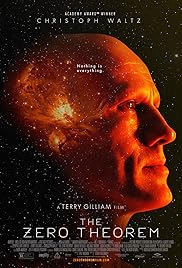
Microreview [film]: The Zero Theorem, directed by Terry Gilliam

To quote Keanu Reeves from practically any movie…whoa.


Gilliam, Terry, dir. The Zero Theorem. 2013. Film.
I’ve seen Brazil, and Twelve Monkeys, and pretty much everything else that Gilliam has created, because (like one of the Bobs from Office Space) I have to tell ya, I’m an honest to God Michael Bolton Terry Gilliam fan! So I went into The Zero Theorem with high expectations, not only for something visually lush and quirkily entertaining, but also something measurably different from the rest of Gilliam’s oeuvre. The first two? Check. The third? Not so much. And thus my reaction to the film resists easy polarization into the totally ‘love’ or ‘hate’ categories, and ends up somewhere north of the middle.

First of all, Gilliam still seems stuck—or to be more charitable, has chosen to remain mired—in the dingy yet somehow impossibly vibrant dystopian world-building/exploring he began with Brazil and continued in Twelve Monkeys. Indeed, The Zero Theorem is sometimes described as the tragic conclusion to the other two, forming a dystopian trilogy of sorts. Despite the heavy debt Gilliam acknowledged to La Jetée in Twelve Monkeys, that film visually, and certainly cinematographically/editing-wise, resembled Brazil to a surprising degree considering how different the narrative content is. Perhaps then it is no surprise that The Zero Theorem, despite no acknowledged debt to any other film or source, feels at times like an eerily close cinematographic echo of Twelve Monkeys.

Space is hella cold, brah!

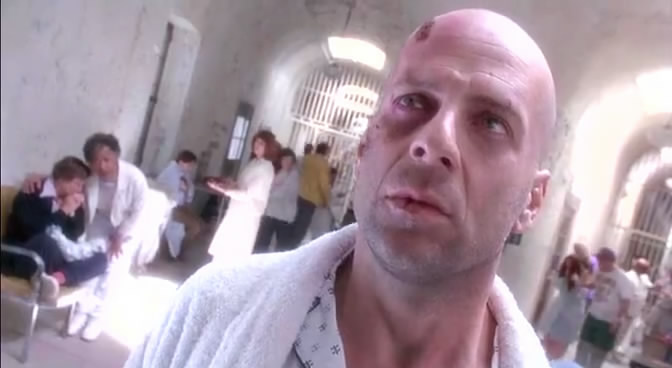
That's weird, I thought the only one who looks like me is Joseph Gordon-Levitt!

What’s wrong with that? You might be wondering, and in general I agree—Twelve Monkeys was a glorious and entertaining film, so Twelve Monkeys 2.0 might be wondrous indeed. Unfortunately, The Zero Theorem feels more like Twelve Monkeys 0.7, if that makes any sense. Much like Ozu Yasujiro’s Ohayo (Good Morning) versus Umarete wa mita keredo...(I Was Born, but…) (since if the latter had never been made, Good Morning would probably be accepted as the comedic masterpiece par excellence of the great Japanese auteur), if there had never been a tragicomic tour-de-force like Twelve Monkeys (or, arguably, a Brazil) this film would have elevated Gilliam to full-on auteur status, and people would be writing their dissertations on its use of color or its Marxist dystopian vision or whatever. As it stands, though, it just feels like a slightly weaker echo of the earlier work.
 Still, I enjoy hearing echoes of things I love, so it’s certainly fair to say that The Zero Theorem is worth watching, and an enjoyable experience both to see and to contemplate afterwards. The cast, led by Christolph Waltz, is absolutely fantastic (my favorite is the werewolf from Harry Potter!), and the script is witty enough, to be sure. You just shouldn’t expect the same level of stunnitude as came from Twelve Monkeys or Brazil.
  The Math:
 Objective assessment: 8/10
 Bonuses: +1 for first-rate performances from pretty much the entire cast
 Penalties: -2 for being Twelve Monkeys lite

Nerd coefficient: 7/10 “super enjoyable, but not as much as Twelve Monkeys or Brazil”

 This has been a cinema-themed public service announcement by Zhaoyun, longtime purveyor of the finest dystopian sci fi in filmic or written form and main cast member (i.e., regular contributor) at Nerds of a Feather since 2013 (as Fin Raziel says in Willow: has it been so long?)

Yes it has, Fin Raziel--yes it has.

Tuesday, October 4, 2016

Microreview [book]: Assimilation, by James Stryker

An intriguing premise that turned out to be an explosive disappointment

Stryker, James. Assimilation. Momentum, 2016.
What if you died, and were floating on towards the proverbial light at the end of the tunnel, your soul gearing up for a major change of pace as you are about to be reincarnated…but were sucked away from that light by being reanimated? (I’m not spoiling anything here, as this is like the first two pages of Assimilation.)

It might be a bit bizarre, but that’s just an awesome premise, if you ask me. Stryker had me at “about to be reincarnated”, in fact, even without the intriguing cryogenic pseudoscience that explains the mechanics of the main character’s reanimation. And I was even more excited when Stryker revealed that the soul in question, formerly belonging to a woman (mangled in a car crash), had formed quite a firm identity as a man, only to find itself back in the woman’s reconstructed body! It sounded mesmerizing to me—the sort of story that Self/Less should have been, adding a bit of Tiresias-style wisdom on the matter of biological sex and gender into the mix.

Yeah, it sounded mesmerizing, and parts of it were—but the extreme hostility shown by the character (Andrew) towards the idea of being a woman was nothing like Tiresias (who, you’ll recall, used his experience at having been both a man and a woman to conclude that women enjoy sex more than men, and for this answer was rewarded with a face-full of going blind from the irate Hera). Without presuming to know anything about the author, I can nonetheless conclude that he has neither interest in nor empathy for heterosexual women or their troubles. Is it really that awful to imagine being a woman that Andrew (trapped in his soul’s former body, and known to everyone as Natalie) has absolutely no interest in it at all? Stryker indicates that Andrew has lost all but the faintest memories of being Natalie, so it’s not like he’s bored of being biologically female. Speaking for myself, if Hera or Zeus or whoever cursed me to forget what it was like to inhabit a body whose biological sex was consistent with my own gender identity, then zapped me into a body that did not match said gender identity, I’m sure I’d be upset, but hopefully without oozing visceral disgust for everyone of the biological sex to which I’d been transplanted!

Moreover, the protagonist shows basically no empathy at all to Natalie’s son (or the admittedly kind of horrible husband). The kid looks at Andrew and sees his mother, but Andrew is so uncomfortable at this that he starts lacing the kid’s drinks with sleeping pills. Natalie’s former BFF, who has several of her own kids, comes in for particularly scathing monologue/description from Andrew, who, it seems, is openly contemptuous of women who choose to have children.

This brings us, finally, to the husband. Without giving too much away, I can say that the husband is definitely the antagonist, the greatest obstacle preventing Andrew from self-realization. And as readers, we are obviously meant to sympathize with poor Andrew while hating the controlling micromanager of a husband. Stryker stacks the deck with signals of the husband’s ‘evil’, and to a large extent they’re effective in preventing the reader from identifying with the husband. But the thing is, for most of the story the husband is extremely understanding, and only goes bonkers right near the end (or in other words, viewed from his perspective, he was extremely slow to anger, and only ‘snapped’ after an incredible accumulation of slights by Andrew/Natalie). Andrew is even worse than the husband, in fact, displaying an almost ludicrous single-mindedness about getting what he wants at any cost.

For example, in the beginning Andrew thinks all he will need to do is pacify the husband for six months before declaring himself desirous of a new identity…and can’t/won’t even do the bare minimum required to pass this threshold despite thinking it’s in his own self-interest to do so. Being with Natalie’s former BFF repels him so thoroughly he avoids her completely after a single queasy encounter, but keeps up a steady stream of lies to Natalie’s husband about seeing her all the time so he can instead do whatever he wants (despite the incredible danger of this, since the husband, in a sense, ‘owns’ the reanimated Natalie). To sum up—Andrew’s a selfish, irrational dick.
            
He monologues about how repelled he feels when Natalie’s husband touches him, no matter how fleeting or innocent the contact (and keep in mind, to the husband all he’s doing is touching his own wife’s body!). Probably many readers will assume this is a sort of homophobia on his part, a sense of discomfort at physical intimacy with a man given that he is identifying as a man internally (very much despite the female body). But later he falls in love with a man, so that certainly complicates the ‘homophobia’ diagnosis, leaving one more puzzle at Andrew’s core. And his reaction when the female friend jumps to the conclusion “Natalie” is pregnant was probably the most misogynistic thing I’ve read in years: to paraphrase, the idea of a baby growing inside him was so repugnant he was physically sick, etc., etc. (way to take a dump on gazillions of women and their experience there, Stryker!).
            
The story also takes aim at the very idea of cryogenic reanimation, introducing several other characters who suffered brain damage during the painstaking procedure and strongly implying (in the absence of a single ‘success story’) that radical personality changes are the norm, not the exception. So a remarkable (if decades distant!) technology is being denounced, Michael Crichton style, because of the risk that it might lead to personality change in some of the people who are freakin’ being resurrected? Stryker’s denunciation notwithstanding, cryogenic reanimation sounds pretty awesome to me, and I fail to see how being alive—and in a perfect, problem-free reconstructed body, no less!—could be worse than being dead. Stryker suggests the process would interfere with reincarnation, but this all really boils down to a “it ain’t natural” sort of objection, to say nothing of the (ahem) lack of compelling evidence on reincarnation. In short, Andrew et al should focus on the positives: they’re alive!
            
And speaking of being alive, the ending of the story, which I can’t discuss in detail for fear of spoilers, was a big, explosive disappointment. Still, at least Styker thoughtfully brought Andrew’s constant and rather shockingly selfish monologues to a merciful end…

In short, if you want to read about an intriguing premise, only to have the story derail into a frustrating pity party by one of the 21st century’s least likeable characters—you’ve picked a winner!


The Math

Objective Assessment: 4/10

Bonuses: +1 for wonderful premise

Penalties: -1 for rampant misogyny, -1 for creating a main character so unlikeable he might be able to outdo Donald Trump

Nerd coefficient: 3/10 “not at all what I’d call ‘good’”


This review is by Zhaoyun, a regular contributor at Nerds of a Feather since 2013 and usually a gentle soul who dislikes scathing reviews but had no choice but to scathe in response to this.