Showing posts with label pulp. Show all posts

Wednesday, October 3, 2018

Microreview [Book]: Lovecraft Country, by Matt Ruff

"Stories are like people, Atticus. Loving them doesn't make them perfect," The Safe Negro Travel Guide publisher George Berry tells his nephew Atticus Turner in the beginning of Matt Ruff's Lovecraft Country.

Berry is sort of an old wise man character in the novel, always there delivering helpful truths and constructive advice when needed. Here he is unraveling Atticus's – and his own – conflicted feelings towards science fiction and fantasy literature. They are both in love with genre classics such as Edgar Rice Burroughs and H.P. Lovecraft but at the same time register that the authors and their works are deeply problematic, especially from the viewpoint of black readers which is what both men are.

The novel takes place in 1950s, but this discussion is a flashback. It is possible that they are supposedly discussing racist undertones of Lovecraft's fiction during the same decade when Moore's Ford lynchings and other infamous killings and home burnings happened, not to mention less lethal forms of systematic oppression in Jim Crow America. I'm not completely convinced that a person who publishes a guidebook dedicated to keeping traveling black Americans safe and alive would really be as generous as uncle George here, but this lingering doubt of the plausibility of the characterization is about the only negative thing I have to say about the novel.

Come to think of it, I'm also not quite sure whether Lovecraft's racism would really have been a talking point among fans in 1940s. Fantasy fandom was happy to give his busts around for 40 years during much, much more modern times, after all, stopping only occasionally to contemplate whether the bust was flattering enough to its source. Ruff's characters and their concerns may seem a bit contemporary at times, but I don't think that it spoils any of the fun, frankly.

Lovecraft Country is formed of consecutive paranormal tales which foreground different members of the novel's cast. The cast is all-black and that is the point – even (or especially) the story which begins with a mysterious metamorphosis of one of the characters into a white-skinned version of herself really draws its power from the discussion of race: how black Americans of the not-so-distant past were second-class citizens in an unbelievable variety of ways. "Nevermind the paranormal stuff – isn't that just horrific?" is to me the question that the book is asking its reader.

Actually, the horror fantasy content of the novel is so un-horrific that it is extremely unlikely to scare anybody. Ruff's light-hearted tone makes it clear from the beginning that nothing too brutal is going to happen to any of the novel's main characters. There is a sinister white shadow looming over all the cheerful action, however, and the mix of registers is interesting. It's a happy book about awful stuff.

In the novel, familiar horror and science fiction tropes are contrasted with the deep-rooted racism and bigotry of the era, and the latter is what the reader will probably consider otherworldly. Moving in to a haunted house is nothing compared to the neighbors who try to spook and vandalize the new home owners to move out of a previously white-only block. What's more, buying a property in the first place was a bureaucratic nightmare for people of color, and Ruff has the infodumps to prove it.

So, there might be a Shoggoth or two running loose in the bushes, and Cthulhu cults scheming to open gateways to alien dimensions, but neither are as dangerous as white sheriffs.

Ruff's book started out as a TV series pitch – it was meant to be an X-Files style show in which the excuse for weekly paranormal adventures was that the characters were collecting data for The Safe Negro Travel Guide. Even though the original pitch was unsuccessful, we are in fact going to see what the people putting together this twisted Hitchikers' Guide to the Galaxy are going to look like on the screen, because now there is a TV show in the works.

I recommend reading the book first, though, because Ruff's prose has levels that the camera probably won't capture.


***

The Math

Base Score: 7/10

Bonuses: +1 for combining unimaginable horrors with truly unimaginable horrors, +1 for winks to readers versed in pulp classics of the genre.

Penalties: -2 for cardboard cut-out characters (-1 in case you are not as severely allergic as I)

Nerd Coefficient: 7/10 – "A mostly enjoyable experience"

Reference: Ruff, Matt. Lovecraft Country [HarperCollins 2016]

***

POSTED BY: Spacefaring Kitten, an extradimensional enthusiast of speculative fiction, comics, and general weirdness. Contributor since 2018.

Friday, June 27, 2014

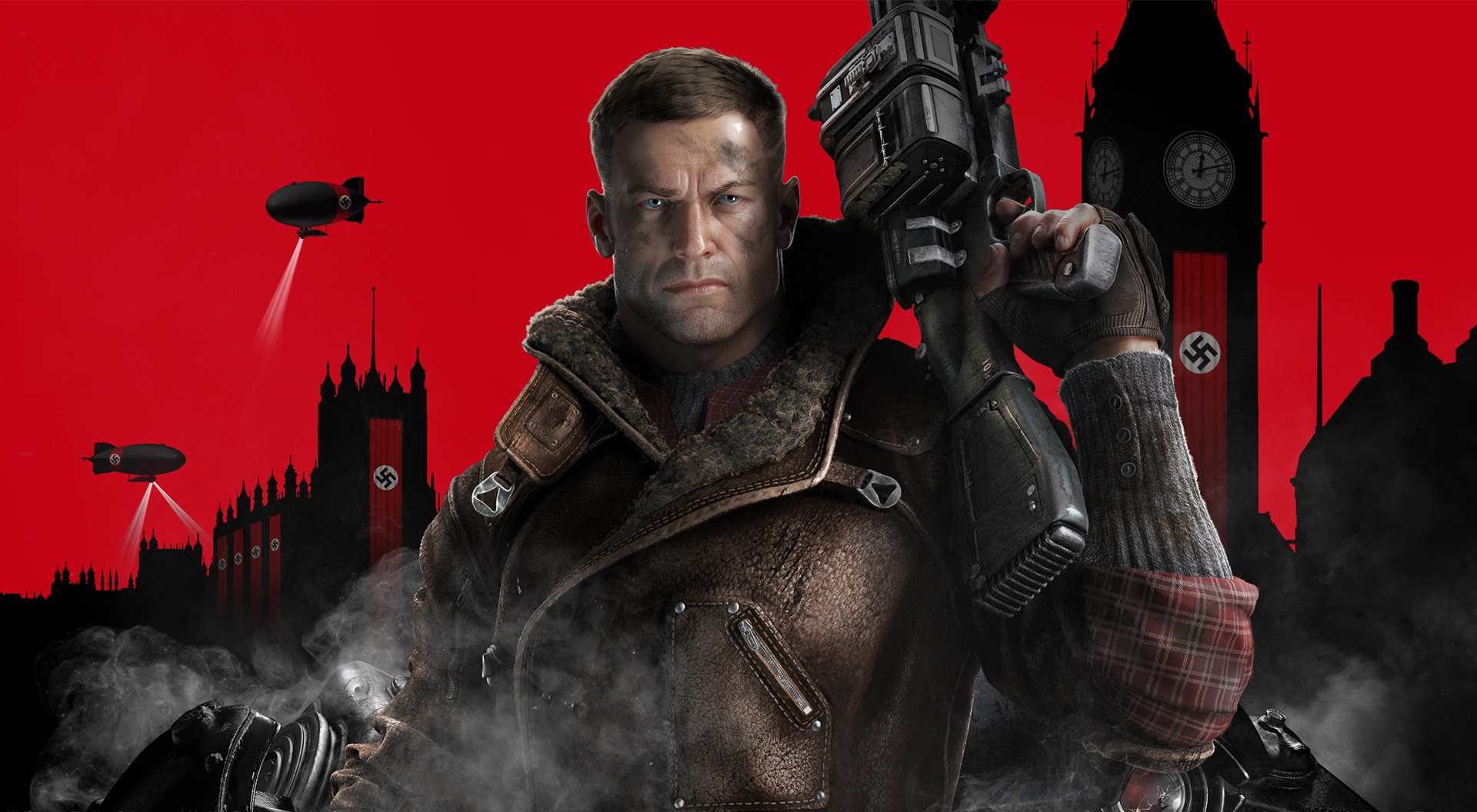
Wolfenstein - The New Order

[Wolfenstein - The New Order, Bethesda Softworks, Machinegames, 2014]

A classic re-visited

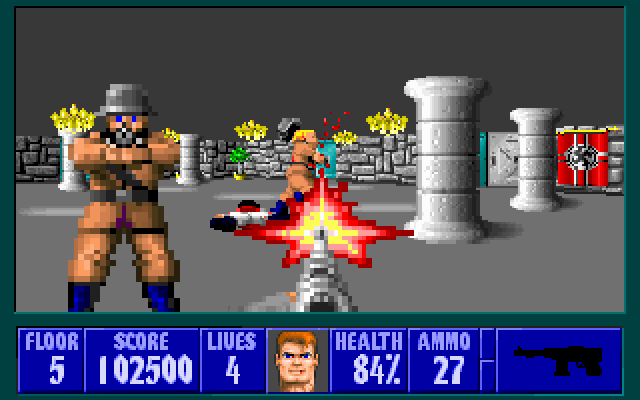
The New Order is the latest in a series that goes back to 1981. Unfortunately, even though I owned a Commodore 64, I didn't play Castle Wolfenstein. It was available on the early system, among others. My first initiation with this classic was with Wolfenstein 3D on my little IBM PC in 1992. In it, you play as Captain B.J Blazkowicz, captured by the Nazis and trying to escape from one of their castles. It was available as shareware (a free game, for those of you born after 1977 unlike me) and is generally credited with being one of the first games to popularize the first-person shooter genre.


I spent weeks, neigh months playing this literal game-changer. It was my original experience with the first-person shooter and my memories are fond, to say the least. Therefore, you can understand why I was noticeably reticent when I heard that they were re-vamping the series yet again. A version of the series came out for the XBox 360 and PlayStation 2 in 2009 to mediocre reviews that generally left fans looking for more. That's why when a new version came out for the XBox One, I had my doubts. That said, I was generally pleased with the result. For one thing, Bethesda Softworks took the reigns. The publishers of personal favorites Fallout and The Elder Scrolls helped to put my mind at ease. For another, the premise is scrumptiously crunchable. It takes place in an alternate universe in which the Nazis won World War II by nuking the U.S. Who couldn't get just a little bit excited about this Tarantino-esque re-writing of history with twinges of childhood nostalgia thrown in for good measure? Only a true Nazi, that's who!


what kind of world did hitler create?

Hitler created a pretty awful place to live, to literally no one's surprise. It's mostly concrete and the Beatles sing neo-nazi ditties because it was that or go to the death camps. When returning as B.J. Blazkowicz, you have been in a coma for over 14 years. You went into the coma in 1946 and didn't come out again until 1960 when the asylum you've been living in is being "liquidated." The kindly old doctor and his wife were killed along with the rest of the patients. The only survivors are their daughter and Blazkowicz, who conveniently wakes up just in time to kill a few Nazis, save her life, and escape. 


You have to be able to suspend a little disbelief to enjoy this one, like forgetting that people who have been in comas for fourteen years can't walk, much less snap necks and fire automatic shotguns within minutes of waking up. However, if you can perform this minor feat of mental gymnastics, you're in for a good time. You eventually meet up with the resistance and take the fight to the Nazis and General "Deathshead" Strasse.


A good multiplayer decision

With nearly everything coming out these days having one including games that probably shouldn't like Grand Theft Auto and Red Dead Redemption, it is refreshing to see a game choose to put all of their effort into creating a quality singly player instead of spending time and effort to make a mediocre and unecessary multiplayer component. According to senior gameplay designer Andreas Öjerfors, the game doesn't contain a multiplayer due to a desire to create the best single player experience possible. "If we could take every bit of energy and sweat the studio has and pour all that into the single-player campaign, it gives us the resources to make something very, very cool, compared to if we would also have to divert some of our resources to making multiplayer." 


In my humble opinion, not enough games make this tough decision today. I realize that the replay-ability rises considerably when companies take this step, but not every game is designed for a multiplayer experience. In the aforementioned Grand Theft Auto, we all played the game with the same single character(s). It simply makes no sense for us all to take the protagonist(s) into a multiplayer game. The math just doesn't work. Even with number five's three main characters, it still felt awkward. With games like Call of Duty and Titanfall that have chosen up front to be multiplayer games, I say run with it. However, there are plenty of titles out there that have a multiplayer that feels tacked on. With these games, they should have just focused their time and energy on the campaign. Instead, you end up with two halves that don't make a whole and a game that feels unfinished. Sometimes adding a multiplayer just because you can takes away from the overall experience and simply shouldn't happen. 


the meat and potatoes


This game was a whole lot of fun. I don't see it winning any Game of the Year awards, but that doesn't mean it wasn't worth picking up. The gameplay is solid. The graphics are impressive, if not mind-blowing. The alternate-history aspect of the story line is intriguing. All-in-all, this is a really good game. I won't go so far as to call it great, but I have trouble when trying to find any flaws in this one. Give it a look. You won't find a reason to be disappointed. 

the math

Objective Score: 7/10

Bonuses: +1 for the use of an alternate universe where the Nazis won WWII. Re-writing history is a winning proposition as proved by Inglorious Basterds.

Penalties: -1 for the need to suspend your disbelief on a regular basis. Once or twice is okay. Every two minutes is a bit much. 

Nerd Coefficient: 7/10 A mostly enjoyable experience.

Tuesday, November 12, 2013

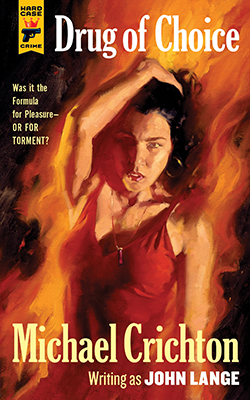
Microreview [book]: Drug of Choice by John Lange/Michael Crichton

Lange, John [Michael Crichton]. Drug of Choice [Hard Case Crime, 2013]


The Meat

Not too long ago a weighty package arrived from Hard Case Crime, one of my favorite publishers of noir and pulp. Inside were eight novels by popular science fiction writer Michael Crichton under the pen name John Lange. I'd never heard of these books before, or known that Crichton had once published pseudonymously. But apparently he did just that...while a student at Harvard Medical School. Let me just state, for the record, that this is insane. 

Later, even after Crichton became famous for books like The Andromeda Strain and Jurassic Park, the Lange novels languished out-of-print and became sought-after collectors items. Why--I'm not sure. Perhaps Crichton was embarrassed by them? Or perhaps there was something enjoyable about maintaining the mystery? Either way, Charles Addai and the good folks at Hard Case Crime managed not only to convince Crichton to put them back in print, but to re-edit the books as well.*

I decided to start with Drug of Choice, a speculative mystery about a secretive research-and-development company and its experiments with psychotropic drugs. The book is the purest pulp, the kind of thing I've often dreamed of finding serendipitously in the paperback aisle of used bookstores. Yet those adventures are often weighted down by frustrating anachronisms, like "golly gee willikers" dialogue or the sexism/racism/homophobia that was once normative but is now (thankfully) objectionable. Drug of Choice is not saddled with these burdens.

The story is tight, a thriller with just the right balance of mystery and action, and has an appealing Twilight Zone sensibility to it. The writing is also quite clear and focused. Sure, it may lack even the slightest hint of poetry or symbolism, but Crichton's prose is ultra-efficient and smooth. I read the book over the course of four days, though I easily could have consumed it in one sitting. And I mean that as a compliment.

My only real criticism is that, while a good example of pulp fiction, Drug of Choice by definition isn't really aiming to be anything more than that. It's good fun efficiently delivered, but at the end of the day, that's all it is. And the ending is a bit convoluted, though it's by no means terrible.

Still, the themes of unethical research, corporate malfeasance and manipulation of individuals should resonate in today's world as much as they four-and-a-half decades ago, making this one I unreservedly recommend to those who like their fiction pulpy.

*How much be managed before passing away in 2008 is not clear.

The Math

Baseline Assessment: 7/10.

Bonuses: +1 for being purest pulp fiction; +1 for not buzzkilling with racism/sexism/homophobia, like so many contemporaries.

Penalties:-1 for not really transcending purest pulp fiction either; -1 for the goofy ending.

Nerd Coefficient: 7/10. "A mostly enjoyable experience."

Monday, June 24, 2013

Summer Reading List: The G

This is the last of our summer reading series. Like the others, I fully intend to read all of these. Like the others, I may not. However, I have each in my possession (thanks, publisher friends) and will do my best to read as many as possible. Without further ado, here's my list in the order I intend to read them.

1. Joyland by Stephen King [Hard Case Crime]

I'm about 120 pages into Stephen King's carnies-n-ghosts mystery and, so far, there aren't many ghosts but there sure are a lot of carnies! That sort of works, as I've always found non-corporate amusement parks fascinating--particularly the sketchy ones. Only this one isn't that sketchy. Actually, I'm not really sure why I can't put this book down, to be honest. But I can't.


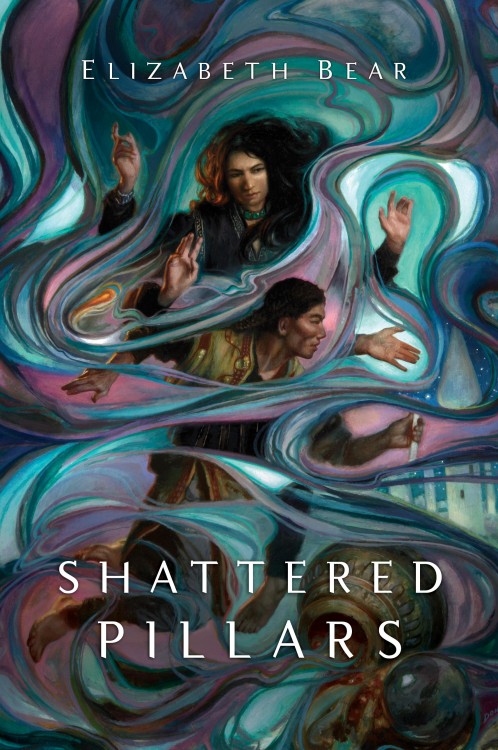
2. Shattered Pillars by Elizabeth Bear (Tor/Forge]

Can Bear keep pace with 2011's excellent Range of Ghosts? After all, that's the only novel we've ever given a 10/10 to. I'm interested to see where the story goes, and especially interested to see how Bear develops the Uthman Caliphate. My expectations are understandably high for this one.


3. The Thousand Names by Django Wexler [Roc]

"Flintlock fantasy" is a thing these days, and though it's actually been around for a while, the style is finally getting some buzz. I've yet to encounter any in the long-form that really hits the spot for me, but early reviews suggest Wexler's latest might be the one.


4. Gardens of the Moon by Steven Erikson [Tor/Forge]

Truth be told, I actually read Gardens of the Moon a few years ago on the Jemmy's recommendation. Well, half of it, at least. Lots of people tell me that it's worth the slog to reach the greatness of the sequels (Jemmy's contention all along), so I've decided to give it another go. I hear the series is very weird. Weird good.


5. The Shining Girls by Lauren Beukes [Mulholland]

This one arrived unsolicited from the publisher, and I guess they know me better than I know myself, because I didn't really care about reading it until I saw the cool cover and read the jacket (super girl vs. time-traveling serial killer). Yes, Beukes' latest sounds awesome. I'm in.


6. Swords of Good Men by Snorri Kristjansson [Jo Fletcher Books]

I have a tortured relationship to Viking fiction: I love the idea but, having read nearly all of the sagas, I get fussy about historical inaccuracies, use of modern language, poor representation of Viking society and religion and so on. At the same time, when someone gets it right (like Frans Bengtsson's Röde Orm books), it's magic. Snorri Kristjansson shares a name with the father of Viking literature and may also be Iceland's second-funniest person. That's promising.


6 1/2. Shaman by Kim Stanley Robinson [Orbit]

As with carnies, so too cavepeople. And who better to write a cavepeople novel than a guy who's primarily famous for scientifically grounded novels about terraforming? Snark aside, Robinson's gift for meticulously researched fiction should serve him well here. Besides, the premise sounds pretty damned cool. Another book that wasn't on my radar, but I'm glad it is now.

Tuesday, April 30, 2013

Guest Microreview [book]: The Fictional Man by Al Ewing

Al Ewing, The Fictional Man [Solaris, 2013]


Al Ewing is real, despite the Dallas-sounding name, and he has written a fantastic novel about fiction vs. reality. It's an easy book to read, but that's not to suggest it is only fun pulp. At times it confuses you as to where it is heading, and often brings up troubling and complex emotional scenarios. This is a book that can combine serious relationship issues, personality crisis, fan parody, spoof humour, gratuitous sex and violence and social comment all in a couple of paragraphs.

Ewing presents us with an alternate present, one where human cloning exists. Hollywood is full of 'Fictionals' - clones developed as fully-fledged fictional characters by writers and brought to life in labs, made to act in films and shows alongside real stars. Niles Goran, a 'real' person, is a hack author of Jack Reacher-esque thrillers whose personal life is a shambles. His only confidants aren't even 'real' - his counsellor, a Fictional who played a TV shrink, and his best and only friend, a Fictional created for a superhero series. He is asked to write a remake of a Flint-style 60's spy spoof which for the proud yet floundering novelist would mean one of his characters would be made into living, breathing Fictional. However, as complications ensue, Niles begins to question his own reality and what he really feels about these clones.

As we explore this world through Niles's story, the fun of the scenario becomes clear - much enjoyment seems to be had by Ewing in rewriting cultural history, and references to everything from Jaws to Weekend At Bernies, Batman to Bond abound. As the Fictionals are designed to BE the character they play- a true 'meat puppet'- jokes such as an old-school Sherlock helping the police, dumbly assisted by an 'Action Holmes', or how Dexter as played by a clone got a little too carried away, fly off the pages.

However, despite Ewing's clear talent shining through as with his work for 2000AD and his earlier novels, with interesting shifts in style and format, I found myself struggling to enjoy this story at the half-way mark. The British author writing about a depressed, arrogant British author struggling with his writing felt self-absorbed at times. It stank of a Mary Sue situation, a writer using his surrogate to bitch about critics and the world in general. The regular giggly 'you know what I'm referring to here, right?' nature of the pop references also began to grate, making me think of the South Park spoof of Family Guy's reference generator machin... oh shit now I'm doing it...

And, worst of all, the device of Niles narrating an alternative reality to each scene in italics began to annoy me; used, it seemed, far too frequently, and too like the tired filmic trick of seeing something happen that turns out to be all in the character's head - which, after making me laugh as a kid at Dream On, now it poisons my blood....(Actually I mainly watched Dream On for the nudity, so maybe it was never funny...).

Yet then something wonderful happens with this book. I realised all these apparent flaws were intentional and designed to highlight Niles's neurosis. Niles's existential dilemma and attempts to finish his movie pitch begin to shift things in an intriguing way. His friendship with the Fictional and his dealing with his ego become far more central than the Hollywood biz story. His narration of his own life is shown to be a major personality flaw, one he tries to overcome, and the constant refs are revealed to highlight the smudged reality Niles has to navigate. Ewing started to really play with my brain in the second half of the story. What is real, other than what we each believe, or tell ourselves to believe? Is a clone any less human than a 'womb-born'? How much do we surround ourselves with lies to make ourselves feel better, and can one person ever really know another? Are love and friendship just fictions with a finite life?

This book became far more than the Futurama-meets-Blade Runner stunt it appeared at first, and although the humour continued, by the perfect and almost gentle ending I was very impressed. Managing to combine explorations on writing, author ownership, identity, sexual disfunction and Hollywood business, whilst never losing its playfulness, and including some wild tangents, this is a superior read and I can't wait for Ewing's next.

The Math

Baseline Assessment : 6/10

Bonuses: +1 for the dark and serious ideas behind the spoofs and winks; +1 for the sly digs at media coverage and bad movie-making; +1 for the ending; +0.5 for the use of the phrase 'Action Holmes'.

Penalties: -1 for indulging too much in the self-narration; -1 for underwritten support characters, particularly women; -0.5 for reminding me Scrubs exists.

Nerd Coefficient: 7/10. "A mostly enjoyable experience."

Read about our scoring system, in which a sufficiently random sample of books would normally distribute around 5, here.

Saturday, April 13, 2013

Bioshock Infinite


the magic is back!

Bioshock has returned with a vengeance! The original Bioshock was, and still is one of the most original games of this generation. Bioshock Infinite is right up there with it, possibly even higher. While there are similar themes to the original and some connections can be drawn, this is a completely different game. Instead of taking place in Rapture, deep under the surface of the ocean, Infinite's environment is high above the clouds in a dystopian city called Columbia. This picturesque metropolis is populated by followers of the Prophet Comstock, a former American patriot who seceded from the Union and took his city into the sky along with his devoted followers. Before we get too deep into this, let me just say that Infinite brought back that sense of wonder and discovery I felt when I played the first Bioshock. It is unique, original, deep, challenging, imaginative, beautiful, and frightening, all at the same time.


the basics

I don't want to spoil a game this great so the amount of information I include about the story will be very limited. To include too much detail would be tantamount to telling a four-year-old every last gift Santa was going to bring him the night before Christmas. Not cool. Still, I have to include a little bit of background so I'll do my best to cover the necessities without giving away too much. It's a fine line I'll be walking, so please forgive me if I step a little too far to one side or the other. I'm trying here. Cut me some slack!


You play this first-person shooter as Booker DeWitt, a former member of the 7th cavalry at the "battle" at Wounded Knee. Most Native Americans would describe it as the Massacre at Wounded Knee, but suffice it to say he isn't the most heroic of protagonists. After that, he worked for the Pinkerton Detective Agency as a union buster. Again, not exactly a saint. Upon arrival, he is given this box and a message, "Bring us the girl, wipe away the debt." 


As I said before, there are some similarities between this game and the original. In Bioshock, the leader of the dystopian underwater city Rapture was named Ryan. In Columbia, the man's name is Comstock. He has led his followers "out of the Sodom below" and up into his perfect city in the clouds. However, as events progress, it becomes more and more clear that Columbia is no utopia. Well, it might be considered utopia by pre-Civil War plantation and slave owners in Mississippi, but in today's terms, it's kinda racist. Columbia runs on slave convict labor and interracial dating/marriage is forbidden. They're even racist against the Irish, as you learn in one of Columbia's many Kinetoscopes. These reminded me of the Penny Arcade at Disneyland and their flip-card movie machines from the late 19th and early 20th centuries. 


You are tasked with finding Elizabeth, "the girl", and bringing her back to New York City. Elizabeth is Comstock's daughter. He has trapped her in a tower and expects her to follow in his footsteps and lead the flock after he dies. That's about all I'm going to say about the plot because I don't want to ruin it for any of you. Suffice it to say the story is deep enough to write a book or two about. Unlike Bioshock, which starts you off in an immediate state of terror, Infinite begins idyllically and slowly devolves into an horrific nightmare. It is the type of game that you will have to play twice in order to have a chance at catching all the details. In fact, I'm already about five hours into my second playthrough. I started it within minutes of finishing the game the first time and watching the credits (be sure to watch until the end). I suspect you will too, if you decide to pick up this masterpiece of modern gaming. 

the soundtrack is a character


One of the first inklings I had that there was more going on here than a simple rescue mission was the music. It begins in total agreement with the period in which the game takes place. The music for the loading screens is Solace, a piece written by Scott Joplin in 1909 and used by Marvin Hamlisch in the movie The Sting. However, as you get deeper into the game, you start to get musical hints that there is something screwy going on. First, I heard a calliope in the distance playing Girls Just Wanna Have Fun, the Cindy Lauper classic from the 1980s. Then I passed by an area that was clearly blasting Creedence Clearwater Revival. My first thoughts were that they had some serious continuity issues they simply expected a musically uneducated audience to miss. 


Finally, when I came across a 1912 version of Painted Love, I realized these tracks were most definitely placed with more than a smidge of thought behind them. They point to one of the themes of the game: the space-time continuum. I won't go into that particular aspect any further so as not to spoil it, but it was quite the epiphany when I figured out that they were using the music to hint at later events in the story. It's just one of the many bits of brilliance contained within Bioshock Infinite. 

elizabeth and the rest of the npc cast


The non-player characters' (NPCs) realism and their addition to the completeness of Columbia can only be compared to those in Grand Theft Auto IV. Of course, the characters and the subject matter of their conversations were completely different, but it is the only other game I've played where they took such time and effort to add detail to the NPCs. Remember the crazy street-preaching bum, the people on cell phone conversations, the groups of girls talking about their dog boyfriends on street corners in Liberty City? They served to make the GTA4 universe feel all the more real and helped with player immersion in the gaming experience. The NPCs in Bioshock Infinite are no less effective at bringing you into their world and making it believable. 


Take everything I just said for the regular NPCs and multiply it by infinity for Elizabeth (see what I did there?). She is immediately sympathetic, locked in a tower like some early-20th century Rapunzel, being unknowingly monitored and experimented upon by her own father. She is a free-spirited innocent with absolutely no idea of the mess in which she's involved. Throughout the action of the game, she never got in the way. She constantly found useful items for you, especially during combat. She was able to open tears (rips in the space-time continuum) that allow for auto-turrets, weapons, cover, or automatons to aid you in combat. While this was one of the weak plot points (tears that release auto-turrets), in my opinion, I was very thankful for it at the time! Still, I would've preferred they leave them out for the sake of realism. I can always die a few extra times. That was literally one of maybe three minor imperfections in this game. It was that good. 


I read that programming Elizabeth was one of the most difficult parts for Irrational Games, the developers, and I can understand why. She is so lifelike that you feel like you're playing with another human being, not a computer-controlled NPC. There were stories of glitch after glitch with the heroine in the beta testing phase, but in the end they really got it right. She is the perfect partner: always helpful, never in the line of fire, never blocking your movement. Discovering the mystery behind Bioshock Infinite with her was a joy. 

gameplay and weapons/powers


As previously stated, there are many similarities between Bioshock and Bioshock Infinite. One of those is the powers that are available to use for dispatching enemies. In the first game they were called "Plasmids". In Infinite, they are known as "Vigors". Of course they had the obligatory fire and electric attacks, but some of the others were quite ingenious and creative. 


The Feast of Crows sent out a flock of flesh-eating birds that attacked enemies in the immediate area. Undertow would pull unsuspecting enemies off the side of whatever part of Columbia they happened to be standing on and plummet them to their death miles below. My favorite had to be Possession, though. It would take over an enemy and they fought on your side until they were either killed or all other enemies had been dispatched. If they managed to survive the onslaught, they immediately committed suicide upon coming out of the haze they were in and realizing what they had done, murderously turning on their fellow police officers. One guy literally bashed his head in three times with a baseball bat to get the job done because he didn't have a gun. That's dedication! 


Traveling around Columbia brought a completely new mechanic to gaming. There were tracks called "skylines" that connected the various sections of the floating city. They were used, along with floating barges and zeppelins, to transport goods and people between areas that weren't physically connected. They were also used to get Booker and Elizabeth further along in their missions. I'm not aware of any games that have used this roller coaster-esque mode of transportation before, so you wouldn't be out of your mind to expect a few glitches here and there. However, the programmers pulled it off without a hitch. It took thirty seconds to master and was an invaluable tool for both travel and combat.


You traveled on the skylines via a skyhook, which the soon-to-be-dead officer is so nicely modeling above. In a not-so-shocking addition, landing on an enemy when detaching from a skyline at 30 mph didn't do good things for them physically. It was also a great way to get out of the line of fire and let your armor re-charge if you were close to death. The use of skylines was a stroke of genius, and the skill with which the programmers pulled it off is no less impressive. Like so many parts of this game, the smoothness with which they instigate new gameplay mechanics like the skyhook is bordering on magical. Many fantastic games like Dead Space, Call of Duty, Gears of War, and Halo took a sequel or two before they honed their mechanics to perfection. Although this is technically the third installment of Bioshock, it is an entirely different game than the first two in many aspects, not the least of which being that it takes place miles above sea level instead of miles below it. The skyhook and Elizabeth alone are reason enough to play this game for yourself.

in summation


If you couldn't tell, I loved this game. Its combination of an amazing story with flawless gameplay mechanics and character development made for one of the most enjoyable gaming experiences I've had since the first Bioshock. It even managed to top it in many areas. The way that Columbia builds tension, starting out as a pleasant, Disney-like utopia and descending into a terrifying hell of racism and murder, presented more overall development than its predecessor. The addition of the best NPC I've ever encountered in Elizabeth and her childlike innocence only served to raise my regard for the game even higher. It is definitely not for children or the faint of heart as it contains many adult themes, not to mention the fact that the depth of the story is simply above the head of your average 12-year-old. Bioshock Infinite is one of those games you will have to play at least twice before you fully understand it. That depth of story is why I'm giving it my highest grade. I highly recommend this game to anyone that, well, to anyone that plays video games. You will not be disappointed.

the math

Objective score: 10/10

Bonuses: +1 for Elizabeth, the finest non-player character to ever be programmed into a game.

Penalties: -1 for the few stretches they made to help the action along, like creating tears with auto-turrets or weapons. They were helpful, no question, but they took me out of the realistic universe Irrational Games created for brief moments. 

Nerd coefficient: 10/10. Mind-blowing/life-changing/(one of the) best...game(s)...ever!

Wednesday, April 3, 2013

Microreview [book]: The Lady in the Lake by Raymond Chandler


The Meat

Every year I try to re-read one of Raymond Chandler's seven completed novels, and though other interests and commitments sometimes win out, I did manage to have a second go at The Lady in the Lake this year [collected in a lovely Library of America edition with the rest of his later novels]. It was a fun experience, as it's the one I've read the fewest number of times, and as such, remember the least well. But there's also a reason for that--The Lady in the Lake simply isn't Chandler's best.

Still, Chandler at his worst is on par with pretty much any other genre writer at his or her best. Or at least close. Genre writers, you see, are often quite good at producing well-paced and memorable stories, but it's rare to see them elevate their game to the level of art. In Chandler's case, that's pretty much how it happened. In the beginning, he was a company man who liked pulp magazines and figured, if he could copy the Perry Mason formula, he could make some money as a writer, maybe even break into Hollywood. It just so happened that he had a way with words.

That said, there are times when when Chandler reminds me more of those literary fiction types who like to slum it in genre, the kind for whom genre is a vehicle and a means to an end rather than the ends in themselves. Like Thomas Pynchon, perhaps, or Margaret Atwood (though without Atwood's tortured relationship to science fiction, since Chandler never had a problem identifying with the detective novel). The shoe does seem to fit, especially when you consider the fact that, while the Marlowe novels are atmospheric and deeply compelling human dramas, they aren't necessarily that good as mysteries.

In many ways, The Lake in the Lake is the novel that best exemplifies this dynamic. Action begins with private investigator Philip Marlowe at the office of one Derace Kingsley, a perfume executive whose wife has disappeared under mysterious circumstances. He's received a telegram from El Paso, Texas, in which Crystal Kingsley informs him that she's running off to Mexico with shady casanova Chris Lavery. Only, when Kingsley runs into Lavery in Los Angeles, it becomes clear that this isn't what happened. Kingsley has Marlowe go up to his cabin at Puma Point (the real-world's Big Bear, for the curious), where Crystal Kingsley was last seen. Marlowe encounters Bill Chess, the alcoholic caretaker of the Kingsley property, only to find a body floating in nearby Little Fawn Lake. Several more murders occur, and Marlowe gets tangled up with a shady doctor, corrupt Bay City (Santa Monica) cops and a rather intricate game of bait-and-switch.

While entertaining, the story is convoluted, meandering and hinges on a few implausible plot mechanisms. But that isn't why we read Chandler. Rather, it's for the tight, playful and elusive dialogue, where more is said between the lines than in them. It's for the heady atmospherics--the cloying menace of 1940s Los Angeles, the grit and grime underneath the Hollywood glitter--and for the endlessly complex characters, with their opaque motivations and rich histories of pain and heartache. And it's for Marlowe himself, a tragic figure trying to live by a code in a world where corruption and malfeasance are the norm, and where any attempt to swim against the stream is pretty much doomed to failure. In such a world, toughness isn't measured by how you throw a punch, but how you take them. Marlowe sure does takes his share, and he keeps coming up for more. But he knows as well as we do that it can't go on forever. He has his victories, but they are small and pyrrhic at best.

The most memorable moments in The Lady in the Lake come from Marlowe's  interactions with Bay City detective Al Degarmo and Kingsley's secretary, Adrienne Fromset. Degarmo initially appears to be a cardboard cutout of the sinister and perhaps a little slow cop on the take, but he turns out to have a peculiar, complex relationship to the events at hand, and a slippery set of motivations. It's never quite clear, up until the penultimate scene, what he'll do and why. Then there's Fromset, who Marlowe quickly (and correctly) recognizes as the most competent person in the whole affair, and whose ultimate role in the drama is left ambiguous. There's more than Chandler tells us, but we're left to ponder what that might be on our own.

All that said, The Lady in the Lake fails to measure up to some of Chandler's other novels. It doesn't have the revolutionary exuberance of The Big Sleep, which mapped out new crime fiction territory so thoroughly that most of it is now cliche. And, though weighty, it lacks the emotional heft of Farewell, My Lovely or The Long Goodbye. Still, if you like crime fiction, and especially if you like the American roman noir, you owe it to yourself to read this book. Just maybe not as often as you read a few of the others...

The Math

Baseline Assessment: 9/10

Bonuses: +1 for the writing, especially the dialogue; +1 for Degarmo and Fromset.

Penalties: -1 for not actually being a well-constructed mystery; -1 for a the "yeah, right" ending.

Nerd Coefficient: 9/10. "Very high quality/standout in its category."

Monday, March 18, 2013

Microreview [book]: The Twenty Year Death by Ariel S. Winter


The New Pulp landscape is littered with tributes to the dead masters of the genre. But banking the fame of classic source material is a difficult trick to pull off. After all, why would I want to read a second-rate Chandler when I can just read Playback for the ninth time? And as far as paeans to Jim Thompson are concerned, well, you can just ask Philippe how those are going.

Fortunately, Ariel Winter's The Twenty Year Death [2012, Hard Case Crime] isn't just an homage to the classics--it's three. "Malvineau Prison" is straight Simenon. While Winter's prose lacks the architectural minimalism of the original Maigret novels, pretty much everything else is spot on. The second novel, "Falling Star," is Philippe Marlowe reimagined. Paradoxically, this was both my favorite and least favorite of the three. That is, I enjoyed it the most, because Chandler is my favorite crime fiction author (and arguably the best writer genre fiction has ever produced), but it was also the least successful at capturing the magic of the original source material. I guess reading it felt a bit like watching a really fucking good Joy Division cover band: for a while you can almost pretend it's really Ian Curtis up there on stage, but then the little things remind you that it's not, and instead it's some other dude who sounds like him but lacks that certain something that made him so special in the first place. But of course, who does?

"Police at the Funeral," by contrast, is a remarkably successful rendering of Jim Thompson. Hell, Philippe might even appreciate it. Of course, I'm not as big a Jim Thompson fan as he is, but this one did make me feel tense and grimy and flipped out just like The Killer Inside Me.

If that was all there was to it, I'd rate the three novels that make up The Twenty Year Death as solid, enjoyable books suitable for most noir fans. But Winter ties these three homages together with a meta-narrative that serves as both commentary on perspectivity in crime fiction and on the evolution of the genre across the three decades of its golden age. American writer Shem Rosenkrantz serves as the linchpin, and we watch his role evolve from witness to victim to perpetrator. The effect is subtle enough  not to take away from enjoyment of any of the book's constituent parts, but provides significant rewards for the reader when all is said and done.

...and kudos to Winter for demonstrating that experimental fiction can still be accessible.

The Math

Baseline Assessment: 7/10

Bonuses: +1 for getting so many things right about the source material; +1 for the meta-narrative, which ties everything together in such a nifty and original way.

Penalties: -1 for the unavoidable "why am I not just reading The Big Sleep again moments."

Nerd Coefficient: 8/10. "Well worth your time and attention."

[To learn more about our non-inflated scoring system, in which the average is a 5/10, click here.]

Monday, January 7, 2013

Microreview [book]: A Death in Mexico

A Death in Mexico by Jonathan Woods [New Pulp Press, 2012]


The Meat

The pulp and noir revival has, in my opinion, produced uneven results--a few gems, but a lot more books that seem fixated on the more lurid aspects of the genre. The first two scenes of A Death in Mexico concerned me--a gruesome murder of a pretty young woman, an act of domestic violence that seemed gratuitous and superfluous to the plot, and an interaction between the couple that found the body with a stereotype of the fat, lazy and corrupt Mexican cop. Now, all these things do appear in real life: some murders are gruesome, some men do hit their wives/fiances/girlfriends and many cops, in Mexico as elsewhere, do accept bribes. But their rapid fire delivery made me wonder if this was going to be the kind of misogynistic "thirdworldsploitation" vehicle I generally try to avoid.

Thankfully that's not the case at all, and I suspect Woods uses this setup as a red herring. To begin, the protagonist, Inspector Hector Diaz, is a virtual inverse of the corrupt third world cop stereotype: he's thin, he's honest, he doesn't take bribes and he won't "play the game." He just wants to find out who killed Amanda Smallwood, a gringo sexpot who modeled at the local art school and, as it turns out, didn't actually sleep with the (many) men who wanted her. To find the killer, he has to delve into San Miguel's expat-dominated art scene, its imbroglios and petty jealousies, while navigating unreliable subordinates, a hostile mayor and various shady characters along the way.

We are led to think the victim's murder is a sex crime, but then we're given ample reason to doubt that. Smallwood isn't at all a "tramp" or "tart," words used by peripheral male characters to describe her. And generally speaking, the women who populate A Death in Mexico are anything but the helpless or too-far-gone types that proliferate in classic noir. Instead, Woods introduces us to a series of strong, capable, sexually liberated and independent figures. The sexism of 1930s-50s America and France, where most classic noir was written, can be understood as an historical construct of that time period, but reproducing it in something written today (about today) is problematic, no matter how much you love Dashiell Hammett or Jim Thompson. Woods consciously subverts these anachronisms, which works as a playful critique of the classics, but also populates his San Miguel with much more interesting characters than if it stayed faithful to the genre's source material.

Woods' portrayal of the parallel universe of San Miguel's expat colony is another strength of the novel. In contrast to romantic depictions of self-actualizing Westerners among "poor but soulful" natives (think Eat, Pray, Love), the expatriates in A Death in Mexico are presented as they are in real life: frequently insular, generally privileged and often disdainful of locals. Woods, an American who spends a lot of time in Mexico, clearly knows this kind of social environment and its "types" well: the drifters, the moochers, the sexual predators, the barflys, the wannabe big shots, the failures at home looking for a second chance, the retirees, the absent diplomats, their bored wives and husbands, etc. It's not a pretty picture, but isn't too grim or essentialist either--there are a few expatriates in the book who may be privileged but aren't insular or disdainful, and whom Diaz grows to view sympathetically.

This glimpse into Mexican perspectives on the gringo expatriates is, in many ways, more interesting than the expatriates themselves. In normal times, these range from bare toleration to a view of the expatriate as a sort of amusing/bemusing curiosity, but they quickly scales down to annoyance and resentment when something goes wrong and the senses of entitlement and superiority that many expatriates assume in their dealings with locals comes to the fore. You ocassionally sense these kinds of perspectives as backdrop to Western novels with "heroic expatriate" protagonists, and they are certainly recurrent in the writings of non-Westerners, but it's rare for Western novelists to confront these ugly truths as clearly, as deftly and as reflexively as Woods does. Though I don't have any special knowledge of Mexico or its expatriate colonies, this treatment felt like an accurate representation of local/expat interactions in places I do know well. (There's also a clear, though not heavy-handed, parallel to how the urban, educated Mexicanos barely notice the brightly-clothed, rural and uneducated Indios who come to San Miguel to sell crafts and agricultural goods. Again, I can't vouch for the realism of this in the specific context of small-city Mexico, but I recognize it from elsewhere.)

So yeah...A Death in Mexico is a clever and thought-provoking novel. But is it a good crime novel? Some readers might be turned off by its languid pace, though this didn't bother me--I devoured the book in three days, not missing the frenetic action that ones finds in a typical mass market thriller. But I did take issue with the ending, which just sort of happened. I'm not asking for an unrealistic tying up of loose ends, but the resolution to the mystery felt tacked on and unrelated to the bulk of the investigation. I'm sure that happens in real life, but I would have liked a little more lead-in.

All in all, though, A Death in Mexico is a well constructed, compelling, character-based mystery that should appeal to readers who want their neo-noir smart and current. Recommended.

The Math

Baseline Assessment: 7/10.

Bonuses: +1 for bringing noir gender relations into the 21st century; +1 for not depicting Mexico as either a hotbed of unending corruption and drug murder or as a colorful backdrop to the adventures of expatriate heroes.

Penalties: -1 for the unsatisfying ending.

Nerd Coefficient: 8/10. "Well worth your time and attention."

Read about our non-inflated scoring system here.