Showing posts with label Chloe. Show all posts

Tuesday, October 29, 2019

LET'S FRIGHTEN CHILDREN! Bonus Conversation Edition

Welcome to a loverly punctuation mark at the end of the LET'S FRIGHTEN CHILDREN! series, in which I look at how to share horror with our offspring. Today's guest is Chloe N. Clark, an author and educator who has taught far more folks about horror than I have children. So let's talk scaring tiny people!

VK: Thanks for agreeing to chat about this!

CNC: Of course, I'm excited! Thank you for asking me!

VK: In your book recommendations for this series, you talked about how you got into horror at a very, very young age. I'm spending a lot of time thinking about how I roll this type of stuff out to my kids. But do you think, in the end, it matters? I mean, you seem to have turned out ok.

CNC: I honestly think it depends on a lot of factors: openness of the family in general and the kind of other media the child is consuming (as a child, I was also watching shows like Homicide: Life on the Street and talking about it with my parents, so there was certainly a level of my parents allowing me to be comfortable talking about adult matters); it also deeply depends on the child — I'm an immediate coward, I jump at jump scares like nobody's business but I also don't carry fears over. So as a child, I didn't get nightmares, for example. So I think a big thing is knowing that the child feels really safe in their surroundings. If they do, then I feel like horror is more manageable. There's also just the fact that a lot of children's entertainment is inherently scary — in Disney films and fairy tales, fucked up stuff happens, too.

VK: That's very true. I didn't realize how twisted even Snow White was until I re-watched it as I was getting into animation more generally as a late teenager. So much of that stuff just missed me as a small kid. Maybe it was because evil step-mothers and those fairy tale tropes felt so foreign. They didn't touch my life.

CNC: That's true, definitely — like they are based out of specifics that, in a way, are true to all genres of terror. There's a quote I love that I can't remember which Italian folklorist said, but is along the lines of "Don't believe fairy tales, they're true." Because at the time of their writings, they were the issues that people dealt with (where women died in childbirth way more frequently, etc), so there were stepmothers aplenty. Or where children did have to act as scullery maids (a la Cinderella)

VK: Right. For me, as someone who has always had very vivid dreams, as a kid the idea of the Nightmare on Elm Street movies was too much for me, and I steered clear of them for a very long time. It wasn't a burned-up guy with razor knives that did it, it was the idea of my dreams turning against me. When I talked specifically about Coraline and ParaNorman in this series, I discussed how it's given me an opportunity to talk with the kids about othering in very specific terms. It's easy for me, and my kids, to identify with Norman, or Coraline, as a kindred spirit with outsider interests. As those characters are othered and rejected by those around them, we've been able to have great talks about empathy, and how we don't want to make the mistakes of the crowd. Do you think that's a central part of the horror narrative overall?

CNC: Definitely, I can see that (fun side fact, Nightmare on Elm Street is how I realized I was a lucid dreamer as a child). And that's what horror does so well: it links into that idea of base primal fears (our own mind going against us, or the beach being dangerous, or whatever), but I almost think those are *good* lessons for kids to learn early. And yes, I think empathy is a key to horror. Obviously I think about othering and horror a lot — it's literally what I teach about. It is how we view monsters as others and how that shapes the narratives of fear told culturally. Horror is actively telling us to listen to those we might not listen to, and that's one of the biggest, most valuable lessons I think it can offer to us.

VK: This is one of the big reasons why I was looking forward to you participating in this series: Monster Theory! Can you talk in general terms about that?

CNC: So in general, Monster Theory is the critical lens of examining how monstrosity is used by different cultures in order to perceive of othering or social constructs, etc. I more specifically use it to talk about constructions of privilege and how horror is often a lens to examine that. This is something Get Out, for example, does exceptionally well. Making groups we fear into monsters has been a tactic since the beginning of storytelling. It's the most effective tactic for controlling a populace. And it's one, more and more, that we see horror narratives questioning in ways other genres are not.

VK: Right. Because there's an understandable, natural aversion to something that's different. But what separates humans from, say, my cats with new people in the house, is that we have an intellect and empathy and ways to synthesize those into an understanding of others. But routinely we see those impulses weaponized by leaders who want to divert someone's gaze away from where they should be looking. I feel like that's one of the most important lessons I can pass on to my kids, because it's a fundamental mechanic of the world. And you're right — I don't know other genres that consistently explore that theme.

CNC: Yeah, that exactly sums up why I teach horror in a rhetoric class. If there is one skill I want college students to have, it is to see the world with empathy and to understand the way fear is used to promote rhetorics of violence. Horror is the perfect genre to combat and explore that.

VK: Is the "what you thought was the monster isn't the real monster" (ie, Frankenstein, etc) a sub-genre in monster stories, or is it sort of the home key, do you think?

CNC: I think for the most part, it's the home key. I mean look at zombie movies — the whole premise is often, Oh shoot, wait! The humans are the ones we should be fearing after all!" The same goes for even things like Jaws — the shark is following its natural instinct, but it's the money-grabbing mayor who is actually the villain by not allowing the knowledge to spread/closing the beach. Like at their hearts, most horror stories operate on someone-did-something-awful-and-it's-created-a-monstrosity.

VK: That winds up getting perverted in the slasher genre, though, right? Because the "something awful" gets colored almost entirely by conformity/regressive morality. The promiscuous teens get chopped to bits, the virginal Final Girl lives on. I'm not showing the kids slasher movies. I mean, it's just something else that exists in the genre waters.

CNC: Definitely, Though I'd argue that in some ways those also have at least one, perhaps unintentionally, progressive bent — the premise is "listen to women." In almost all of them, the Final Girl susses out what's up and then absolutely no one takes her seriously. Which again becomes a people-in-power-not-doing-anything-to-help-stop-the-issue.

VK: Yeah — it's hard to imagine if Kevin McCarthy got pod-peopled in Invasion of the Body Snatchers and Dana Wynter was the one who went to the next town over for help, that anyone would take her seriously.

CNC: Yes! That exactly! In the remake with Donald Sutherland, we even sort of see that a little bit with Veronica Cartwright versus Donald Sutherland's character.

VK: And it's so, so great.

CNC: It is one of my favorite films.

VK: We talked about the dangers of othering and how horror can provide a powerful (however bloody) window into that, so I guess we should talk about the other side of the same coin, which would be to keep a healthy skepticism of the uber-normal. I don't want to wander into the weeds of "Stranger Danger" or anything, but there's a consistent thread that connects The Stepford Wives and Body Snatchers, American Psycho, and even Get Out, I suppose, where the ultimate villain is someone who appears super normal on the surface.

CNC: Yeah, definitely. The veneer of normalcy needs to be interrogated in horror movies a lot of the time. Which I think is important — we idealize certain qualities, right? From "nuclear families" to "perfect marriages," etc, but we don't question enough what goes on beyond the surface of that. Horror helps us to push the idea of, "We can never know what secrets lurk beneath the surface." In horror, it's extreme, right? "Oh no! That successful businessman is a psychotic killer!" or, "Your neighbor is actually an alien!" But on a less extreme level, we do find that out all the time. The perfect husband is actually abusive, the business that seems so environmentally sound and respectable is actually using slave labor. Interrogation of ideals is a good skill to have.

VK: Yeah, and a perfect message for kids. Bruce Springsteen tells a story in his autobiography that he can't stand wind chimes to this day because when he was a kid, the husband in the next house was an abusive drunk, but the wife hung up these wind chimes to try to make the house appear peaceful and "normal" on the outside. You can see how that same lesson informs his entire career, and it's so easy (it's the norm, probably), for people to encourage their kids to be "like" somebody else. What's that really teaching them?

CNC: Yeah, it's teaching them this horrible lesson that if things aren't like everyone else then it's their fault. So many people don't report abuse because they don't want to be seen as being outside those cultural norms, too. Which is much more horrifying to me than a horror movie is.

VK: Agreed. Horror allows us a lens through which to process our own fears, and I'm thankful we've had so many generations of genre storytellers helping us all out.

CNC: Yes, that exactly! It also, I think, helps us to think about the ramifications of those fears. Like, we get the safety of asking "what would I do" before we ever have to actually face that question in real life. What would I do in a dangerous situation? Who would I be and who would I want to be?

VK: "Who would I want to be?" It's a perfect question, and one I think we should be encouraging our kids to ask (be they small, or in college).

CNC: Definitely. It's a lesson it's never too late to learn, but I wish we'd all learn earlier.

Posted by Vance K and Chloe N. Clark — in agreement about horror movies at nerds of a feather since at least 2016.

Monday, October 29, 2018

Feminist Futures: An Introduction


Perhaps bolstered by the success of Hulu's television adaptation of Margaret Atwood's seminal 1985 novel The Handmaid's Tale and perhaps because of the rising tide of anger, fear, and apprehension over and about what path to the future we seem to be on, there is a renewed groundswell of feminist science fiction in popular culture today.

We may be living in a new golden age of feminist science fiction (and of science fiction in general), but it is important to note and remember that feminist science fiction has never gone away. It has been an integral part of science fiction from the very beginning. The nature and the place of the conversation it has engendered and facilitated may have shifted depending on the era, but it has always been here.

Feminist science fiction has never gone away, but we have a damnable habit of forgetting those who have come before, especially those voices that were not among those few writers we still talk about decades later as if they were the only voices that mattered.


First and Second Wave Feminist Science Fiction

In the Encyclopedia of Science Fiction entry on feminism, writers Helen Merrick and Lisa Tuttle point out that beginning in the late 1970's critics have considered "feminist sf within a longer history stretching back to Nineteenth-century Utopian works that arose as part of the movement for women's rights. Unlike the utopias of male writers, these fictions always question the sexual status quo and foreground the position of women"

This stretches the history of feminist science fiction back to novels such as A Few Hours in a Far-Off Age (Henrietta Dugdale, 1883) and A Week in the Future (Catherine Helen Spence (1889), as well as the somewhat more remembered Herland from Charlotte Perkins Gilman, which was serialized in The Forerunner magazine in 1915 (and republished in novel form in 1979). There are many other examples, but Merrick and Tuttle note that "this utopian tradition in women's writing had been mostly forgotten in subsequent decades until its rediscovery by feminist scholars in the 1970's".

Those early utopian feminist novels are considered part of the first wave of feminist science fiction. Like those early feminist utopias, the second wave of feminist science fiction also looked to question the "sexual status quo and foreground the position of women", but these later writers did so in ways that were far less optimistic and often far grimmer. The writers of the second wave often looked at issues and problems they saw in their present and pushed the ideas out as far as they could go to see what that might look like. The second wave of feminist science fiction was larger, louder, and left an indelible mark on the genre itself.

In her essay "An Open Letter to Joanna Russ" (originally published in Aurora, Issue 25), Jeanne Gomoll notes that
"It was not one or two or a mere scattering of women, after all, who participated in women’s renaissance in science fiction. It was a great BUNCH of women: too many to discourage or ignore individually, too good to pretend to be flukes. In fact, their work was so pervasive, so obvious, so influential, and they won so many of the major awards that their work demands to be considered centrally as one looks back on the 70’s and early 80’s. They broadened the scope of SF extrapolation from mere technology to include social and personal themes as well. Their work and their (our) concerns are of central importance to any remembered history or critique.”
It is worth noting here that Aurora (originally titled Janus) was only the second feminist science fiction fanzine to be published (26 issues published between 1975-1990), the first being the very short lived fanzine The Witch and the Chameleon by Amanda Bankier (5 issues published between 1974-1976).

Some of the authors debuting during that second wave of feminist science fiction are giants and legends of the field, though even some of those may be better known simply by name and reputation than active and current reading of the works. There may be none bigger and more important than Ursula K. Le Guin. Her novels The Left Hand of Darkness and The Dispossessed are right considered classics and masterworks. We won't list out the award recognition for every author in this introduction, but Le Guin is in a class by herself, having won 7 Hugo Awards (most recently in 2018), 6 Nebula Awards (not counting the one she declined in protest), 3 World Fantasy Awards, a staggering 22 Locus Awards, a National Book Award, and she was a finalist for the Pulitzer Prize. We won't count the number of nominations Le Guin has received.

Ursula K. Le Guin is only the tip of the iceberg when it comes to major feminist writers from the 1970's. In some ways Joanna Russ may be best known now for her literary criticism and for her nonfiction work How to Suppress Women's Writing. Of course, The Female Man is a title that nearly
every serious reader of science fiction has heard of, whether or not they have read it. Likewise, James Tiptree, Jr (Alice Sheldon) is another writer remembered more by name than by work (and for having the Tiptree Award named after her), though her story "The Women Men Don't See" is counted among the legendary works of science fiction.

This, of course, raises the question: remembered and read by whom? Readers today focused on the new and shiny and who are engaged in the impossible task of keeping up on the field likely are not reading the major writers of the 1970's and even beyond. After all, that is more than forty years in the past. How many important writers or films or songs from forty years ago have truly remained embedded in the public consciousness? Those paying attention to the history of the genre will know the writers who remained important and they will know those who did and who should have remained in the public conversation. Names like Margaret Atwood, Sheri S. Tepper, Octavia E. Butler, Suzy McKee Charnas, Vonda McIntyre, Pamela Sargent, Eleanor Arnason, Suzette Haden Elgin, Marge Piercy, Angela Carter, Carol Emswhiller, Katherine V. Forrest, Donna J. Young, Jayge Carr, Joan Slonczewski, and Joan Vinge.

Many of those names (and an equal number not mentioned here) may be familiar to readers. That Vonda McIntyre is not often discussed in the fanzines and spaces we frequent does not mean that her novels Dreamsnake or Superliminal have been forgotten or that they are not read. Dreamsnake is, after all, a winner of both the Hugo and Nebula Award. While not quite rare, that is still a distinction only twenty three other novels can make.

We asked "remembered and read by whom?" and it is a nearly impossible question. There is no true metric to know that a reader of Ann Leckie's Ancillary Justice is not also a reader of Marge Piercy's Woman on the Edge of Time or that a reader of Mary Robinette Kowal's The Calculating Stars is not also a reader actively working through the four novels of The Holdfast Chronicles from Suzy McKee Charnas. We recognize that when a list of major feminist science fiction writers is put together, there are certain names that frequently are mentioned and when the label feminist is dropped so are most of those writers.

These writers provide both a direct and indirect line of influence to so many important science fiction writers of today, feminist or otherwise.


Feminist Science Fiction Today

If the past of feminist writing is grounded in ways in which the future looks towards bleakness, what about the present of feminist futuristic and speculative writing? What are the futures we imagine for ourselves now that we’ve seen the ways in which the world has and, more importantly, has not advanced? In what ways has this shifted—do strides in one area override the lack of movement, the struggles, in another? Are the futures we imagine too bleak? Or are they not bleak enough? Not angry enough?

The feminist writers of now are imagining futures at once both bleak and filled with light. These futures seem to say: don’t imagine that it can’t get better, but do know that it probably won’t.

Janelle Monae’s Dirty Computer imagines a future as constricting and smothering as the present, all while floating an undercurrent of hope---will love get us through? Can we fight what’s being crushed upon us? How do we do that? The album Dirty Computer ends on a rallying cry, the film that goes along with it ends on a note of devastation. This duality reflects the future of feminist sci-fi writing, which seems to balance every ray of hope with one of acceptance that the world rarely gets better.

In Lidia Yuknavitch’s Book of Joan—the future is bleak but hope can be found in a Joan of Arc like
reimagining that hinges on the power of voices and words as well as the horror of reproductive control being manipulated by those with power. This can be seen as an update of Handmaid’s Tale---for a world in which reproductive rights and people’s control of their bodies and gender identities are still heavily contested.

In Rivers Solomon’s An Unkindness of Ghosts, the plantation era is reimagined in space in the story of Aster who works to uncover the mysteries of the ship they are on as well as the trauma and history of their own past. The novel not only talks about race in compelling ways, but also questions gender binaries and the rigidness of the male versus female dynamic. This is a novel that is not only filled with beautifully examined queerness, but also forces us to contend with the powers of language as both agent of freedom and agent of oppression.

Other writers such as Carmen Maria Machado, Nnedi Okorafor, NK Jemisin, and more, struggle with many of the same questions. Their works imagine a future that could be brighter, but requires fight and strength and hope in order to get there. These futures are also not only the predominately white and straight feminisms of the earlier era. They are futures in which all sexualities, gender identities, and races are being represented. Even if the writing itself paints a bleak future, the hope can be found in the voices whose stories are finally getting the chance to speak these futures.


Feminist Futures

In her essay "For a Genealogy of Feminist SF: Reflections on Women, Feminism, and Science Fiction, 1818-1960", L. Timmel Duchamp argues for feminist science fiction as part of a grand conversation within (and beyond) the genre.
"It is my constant sense of our feminist-sf present as a grand conversation that enables me to trace its existence into the past and from there see its trajectory extending into our future. A genealogy for feminist sf would not constitute a chart depicting direct lineages but would offer us an ever shifting, fluid mosaic."
We envision Feminist Futures to be a small part of that grand conversation. With this project we aim to explore just a tiny fraction of the monumental feminist science fiction that has been written. We have a particular focus in discussing some of the major feminist science fiction works of the 1970's and the 1980's as part of that second wave of feminist science fiction.

Through dossier reviews and essays, we will look at the works of Ursula K. Le Guin and Joanna Russ and James Tiptree and Sally Miller Gearheart and Pamela Sargent and Suzy McKee Charnas and more. We expect to also touch on some of the more modern writers such as Nicola Griffith, Ann Leckie, L. Timmel Duchamp, and Kameron Hurley. We'll explore novels and anthologies and short stories. We'll have personal reflections and a look into the experience of attending Wiscon, the feminist science fiction convention.

We have so much planned, and even if we're able to hit the mark and write about everything we would like to, we're still going to miss so much. We are limited by the time it takes to put all this together, by just being unfamiliar with some major writers who we will then just miss. We know that Feminist Futures is only going to scratch the bare surface of feminist science fiction. We know that we're going to get some stuff wrong and we'll do our best to correct those mistakes. We also recognize that it is nearly impossible for a reader in 2018 to read a work from 1972, 1982, or even 1992 with the same cultural context with which it was written and by which it would have been understood by its contemporary readers. We are limited by the context of our own experiences and our own histories. We are ready for the challenge.

The exciting thing about Feminist Futures is the opportunity it has given us to visit and revisit some of these raw classics of the genre and push us to read more and wider than we might otherwise have done when focused on the new shiny. The ramifications for what we cover and talk about on Nerds of a Feather may well stretch far beyond the bounds of Feminist Futures.

The Dossier Reviews for Feminist Futures will have the following subheadings to focus our commentary.
File Type: Whether the work is a book, film, game, etc

Executive Summary: Plot summary

Feminist Future: How the work blends feminism with science fiction or fantasy.

Hope for the Future: Regardless of whether the work initially presents a feminist hellscape, does it also offer any sort of hope for a better world after? If so, how?

Legacy: The importance of the work in question

In Retrospect: An editorial commentary on how good / not good the work is from the vantage point of 2018.
Through the dossier reviews and essays, we look to engage with that grand conversation surrounding feminist science fiction and reflect on how some of those masterworks and seminal works of feminist science fiction are remembered today and how they are might be read by a modern reader.
"We felt as though we had become involved in a conversation - which was probably due to the texts themselves tending to be distinctly reflexive and dialogical and constantly demanding of their readers immediate reflections on what it means to be a woman in the world as it is and how different the world could become, depending on what women might do or become." - L. Timmel Duchamp
Welcome to Feminist Futures.


Beginning October 29, 2018, Feminist Futures will run every Monday, Wednesday and Friday through Thanksgiving and possibly into December.


POSTED BY: 
Joe Sherry - Co-editor of Nerds of a Feather, 2017 & 2018 Hugo Award Finalist for Best Fanzine. Minnesotan.

Chloe, speculative fiction fan in all forms, monster theorist, and Nerds of a Feather blogger since 2016. Find her on Twitter @PintsNCupcakes

Wednesday, April 18, 2018

HORROR 101: Private Vs. Global


Last time, I discussed Enclosed Versus Exposed horror and how these often are styles that define a larger category of horror—Private Versus Global. So this time, I’ll be tackling this larger category. Here’s how I described it in the previous post: “In the first category divide, we have stories that are personal terrors versus globalized ones—ie a haunted house would be a personal terror and a zombie pandemic would be a global one.” This is based on the scale of the horror being unleashed—ie personal usually affects one person, or at most, a small group of people and is usually contained to a smaller area. Whereas global, as its term would suggest, affects a larger group of people and area. These terms are mostly important to delineate between the two sides of horror so that we can consider how and why people are being affected within them and why that changes the dynamics of the horror itself.

In private horror, the horrors themselves often are symbolic of personal emotions—in The Descent, the claustrophobia and violence embodies the main character’s grief, for example. In The Sixth Sense, the ghosts might be representative of the way that children learn empathy and often carry the burdens of others in ways that are often invisible to the adults around them.

In global horror, the horrors are often symbolic of larger societal concerns—zombies might be are fear of other people or of disease, AI running rampant and overthrowing their creators is emblematic of our fear of technology. One interesting aspect of Global Horror, though, is that it often shifts into Private Horror. In the film Signs we start with worldwide terrors of alien invasion, but the story is essentially a film about family and how the familial bonds can protect us from disaster (a common theme in Global Horror). This makes sense because if we’re willing to risk everything to protect someone or to survive for someone, it makes sense when that someone is our loved ones. Ultimately, Global Horror is often telling us: you can survive even these horrors if you keep your loved ones close to you (whether literally or metaphorically).

This comes in a sharp contrast to Private Horror, in which the protagonists are often consumed by whatever personal horror the film (or book’s) horror is representing: your grief, your guilt, your crushing sense of loss, are things you can try to fight through but don’t always make it out from. Recently, in The Ritual the film seems to circle around the idea that the intertwined horrors of grief and guilt are only conquerable if you are willing to fight like hell and, likewise, to hurt like hell.

What might this be saying about how we perceive of horror? Are our personal demons always going to be stronger than our societal fears? Is the truest horror, the one you get when you look inwards rather than outwards? 

Tuesday, March 6, 2018

HORROR 101: Enclosed versus Exposed

Image result for annihilation movie

Horror often comes divided into two categories in my mind: Personal Vs. Global. Within these two categories, the horror is then again divided into two sets: Enclosed Vs. Exposed. In the first category divide, we have stories that are personal terrors versus globalized ones—ie a haunted house would be a personal terror and a zombie pandemic would be a global one. This is just based on scale of the horror at hand, since ideally all horror is personal horror or you’d just have a bunch of characters no one cares about getting killed off in creative ways (oh, wait, that is a lot of horror. *raises eyebrow pointedly at some horror writers*). The other category divides between two kinds of how the horror is portrayed on screen: Enclosed horror is the tight spaces of something like The Descent whereas Exposed horror is the expanse of the ocean in Jaws, where the threat can be coming from literally anywhere around you. This edition of HORROR 101 is going to delve deeper into Enclosed versus Exposed, and a later edition will tackle Personal Versus Global more in-depth.


Both of the Enclosed/Exposed horror types with the feeling of isolation and being trapped in different ways. In Enclosed horror, we have the feeling of being stuck and unable to escape easily. In Exposed horror, you never know from where the monster will strike and you are literally an easy target as you’re out in the open. I brought up Personal Vs. Global horror earlier because many times these categories go hand in hand Personal horror is Enclosed Horror and Global Horror is Exposed Horror. Zombie apocalypse films are almost always Exposed, as characters have to navigate across landscapes rife with zombie hordes. Haunted house films are almost always Enclosed with characters trapped inside a house that wants to do them harm.

What do both of these horror types give us and what are the best examples of the form? We’ll start with Exposed as it allows me to bring up a very recent film. Annihilation (which, for the record, I liked a lot and I was glad it didn’t stick to the book very closely) uses Exposed horror to create a feeling of constant tension—the scientists in the Shimmer are always in danger, from all possible sides, as they make their way towards the lighthouse. This allows us to have a duality between the fear of attack, while also building up the way that they are literally being exposed to something beyond their control on a much more microscopic level (as the Shimmer may be messing with their minds or bodies in distinct ways). Other entrants in Exposed horror include films like 28 Days Later which does an interesting turn between Exposed and Enclosed 2/3 of the way through the film (a topic I’ll address more in an individual post on the film later); the aforementioned Jaws; and I’d argue the Nightmare on Elm Street series does this in an interesting way—the horror/danger scenes are all Exposed horror as they are literally dreams that can shift and change the surroundings of the victims, but, in some ways, they are also Enclosed as the horror is happening inside the victims’ heads (guess what? I’m also doing an individual post later on the Elm Street series.)

Enclosed horror uses tightly controlled spaces in order to raise the level of terror and does so often in unique ways. This can be seen in the use of ventilation systems in something like Alien to the sometimes collapsing cave tunnels of The Descent. Enclosed horror also allows every object in a given space to become and object of horror. One of my favorite recent horror films (and one of my favorite recent films, just in general, and why oh why didn’t Daniel Kaluuya win Best Actor at the Academy Awards??) Get Out uses this to maximum effect. Main character Chris is isolated in a house in the middle of the woods, so a common Enclosed horror trope. He’s also trapped within his own mind for part of the horror, enclosed within the already enclosed. This makes a dual form of isolation and raises the level of horror beyond just bodily entrapment. The hypnosis scene in the film is one of the most effective uses of enclosed horror that I’ve ever seen on a screen. Other excellent examples of Enclosed horror include: The Thing, The Others, The Devil’s Backbone, and more.

So, which do you prefer: Enclosed vs Exposed? What makes one better than the other? Join in the conversation by tweeting me @PintsNCupcakes.


POSTED BY: Chloe, speculative fiction fan in all forms, monster theorist, and Nerds of a Feather blogger since 2016. Find her on Twitter @PintsNCupcakes

Tuesday, January 16, 2018

HORROR 101: Surrounded by Others--Anatomy of a Pod Person


As a child, two of my earliest film-related memories are watching the 1978 version of Invasion of the Body Snatchers and watching the John Carpenter version of The Thing. In both, what stuck with child me was the depiction of a monster who not only could be anyone, but also could be someone that you think you know so well: your crewmate, your friend, your lover. This early exposure to these two films led to a longtime obsession with pod people (which the Thing is not technically, but I’m extending my definition here to any monster who can appear in the exact visage of someone you know and trust). As a child, there was a visceral terror to the idea, because the world was one I trusted. As an adult, while I don’t think pod people are likely, they still strike a certain fear because the concept at the heart of pod people’s terror-making is very much real. In this edition of Horror 101, I’ll be diving into the anatomy of a monster (a thing I’ll do occasionally in this series).

The most famous example of Pod People in their truest definition comes from Invasion of the Body Snatchers, a novel by Jack Finney from 1954—which was made into a film in 1956. In the book, alien spores (essentially) fall on a Californian town. Once there, the spores make pods where duplicates of the townspeople form inside. The pod people retain the characteristics, mannerisms, and even memories of the people they are copying. However, they lack human emotion and empathy. The epidemic is at first misdiagnosed as a kind of Capgras Syndrome (a real disorder in which a person believes their loved ones have been replaced by imposters). Ultimately, the film becomes an examination of paranoia and distrust, as the characters who realize the truth try to warn people who refuse to listen. The film, despite being outdated, retains a frenetic energy to its paranoia. However, the story reaches higher peaks of excellence in two remakes.

1978’s Invasion of the Body Snatchers, directed by Philip Kaufman, stars Donald Sutherland, and heightens both the paranoia and the distinct unsettling terror of the original. One early scene that stuck with me so vividly as a child that I still sometimes flash on it (and which shares a few parallels with what I still consider Ray Bradbury’s most terrifying story, “The Crowd), wherein a crowd of onlookers stares at a body without showing any kind of emotion. The way to try to survive against the pod people involves stripping the emotion from one’s self, so that you won’t be detected—a disturbing uniformity through loss of empathy. The final scene of this film still remains one of the most effectively chilling of any film. One through line that both films retain is their loss of hope—how do we fight against that which surrounds us?

This question continues in 1993’s Body Snatchers, directed by Abel Ferrara. The action of the plot is moved to a military base but retains the underlying premise of the book and two previous films. This, along with the 1978 version, is one of my favorite sci-fi (or horror) films and features a distinctly chilling performance by Meg Tilly. This version shifts its heroes primarily to teens and children—who are consistently disbelieved. An interesting twist that capitalizes on the way youth is often used as an excuse to not trust the word of children in the face of the horrific (a device horror uses often). The film answers the previous question I raised by asking another, voiced by one of the pod people: “Where you gonna go, where you gonna run, where you gonna hide? Nowhere... 'cause there's no one like you left.” This points to one of the most effective aspects of pod people as monsters.


If monsters are often the way we depict “others,” what then happens when the protagonists become the other? When pod people become the majority and they look just like your friends and family, who is the other in this situation and what does that even mean anymore? Pod people, in terms of monster theory, are fascinating because of the way they shift the dialogue from obvious monstrosity to a subtler depiction of both othering and what constitutes a monster. In a world where consistently loss of empathy towards others creates policies that enact violences (see my last Horror 101for a deeper look into violence as a loss of agency), isn’t a person who looks just like your neighbor but without a guiding emotional core or empathy, the ultimate kind of horror? Or, maybe a better question is, shouldn’t it be?

POSTED BY: Chloe, speculative fiction fan in all forms, monster theorist, and Nerds of a Feather blogger since 2016. Find her on Twitter @PintsNCupcakes.

Tuesday, January 9, 2018

HORROR 101: Violence in Horror, Part One


A lot of times when I mention being a horror fan or horror writer, people say something about the violence in horror: “I can’t watch that stuff, it’s too gory” or “why would you want to write something violent.” Rarely do I want to go into pedantic scholar mode (except for my poor long-suffering students), so I usually just shrug. However, here in Horror 101, is exactly the place for me to get onto my horror scholar pedestal and say: good horror isn’t about the gory, or shocking acts of physical violence being depicted. Instead, it’s often about the true nature of violence which is the loss of agency.  So in this column, I’ll be talking about violence and agency in horror. Violence is a subject I plan to tackle from a few angles in terms of horror—while this is looking specifically at violence as loss of agency, later columns will address violence and women’s bodies in horror and other issues about the use of violence in the genre.

When we think of horror, we might think of the visceral moments that have stayed with us: the opening murder in Scream, for example, or the shark in Jaws taking off someone’s leg. Those moments stick with us because acts of physical violence cause such visceral emotional reactions: disgust, terror, an empathetic surge at the pain. However, beneath these physical moments of violence are the ones of the more subtle but insidious acts of violence.

Violence as a loss of agency is the idea that any act that removes agency is a violent one. These can be individual acts, like if a woman is stalked and then needs to change her patterns of behavior in order to feel safe, or they can be systemic ones like the judicial system putting policies in place that adversely affect a specific group of people. This is not to say that this style of violence doesn’t lead to physical violence, because it does. Get Out (WHICH SHOULD HAVE ALL THE AWARDS, JUST SAYING GOLDEN GLOBES, JUST SAYING) is a film that finds much of its horror and tension through exactly this type of horror and violence. I talked more in depth about Get Outand the rhetoric of violence and using genre as social action here, so I won’tgo into that as much now.

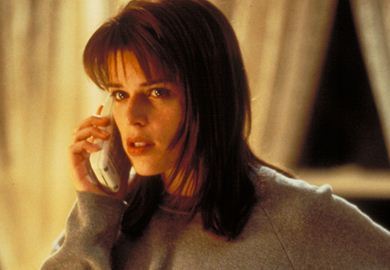
One facet that particularly interests me is how by often using female protagonists, horror allows us to view this type of violence in an amplified way (which is often what good horror should be doing—showing us some horror of everyday life and elevating to an extreme so that everyone can feel it). When Sidney in Scream has to follow arbitrary rules in order to stay safe, we see a loss of agency that all women have probably felt at some time in their lives (don’t walk alone at night, don’t tell someone where you live, don’t smile at the wrong person). So when she takes back control, it becomes a cathartic release not only in the sense of the film but to any woman who has felt like they had no control over the things being done to them.

By using violence as loss of agency in horror, the audience can contemplate larger societal issues around them. Horror is about fear and how we try to survive in the face of it. But, it can also be asking how we confront the things that make us afraid and how we can try to overcome them. I hope to see more socially conscious horror films, following the success of Get Out (here also is my review), as I think it’s a genre that can be more effective than most in making us feel those issues.

What do you think? Is this kind of violence important to discuss? What are your feelings about depictions of violence in horror? Tell us in the comments or tweet me @PintsNCupcakes.


Monday, October 23, 2017

HORROR 101: The Uncanny

For this entry of Horror 101, I thought I’d dive into my personal favorite kind of horror: the uncanny. While we often think of horror as something viscerally frightening, the uncanny builds its horror through the use of the slightly wrong and, through this, creates a far more convincingly real and terrifying world. The uncanny as a psychological idea refers to the idea of something being “strangely familiar” or what I like to think of as the “falsely known.”


The uncanny to me is a crucial element of horror: not being able to pinpoint exactly what makes us scared. While the extreme can be terrifying (the xenomorph in Alien is a category crisis—its something we can’t classify/is not instantly knowable—but it’s not uncanny because we shouldn’t be able to know it/classify it as its something completely new to the human experience). However, even more terrifying is that which is just a little off: pod people who may look like your lover, but they smile in just a slightly different way. A man with fingers just a little too long. Women with hair in front of their faces so that their expressions are unknowable.

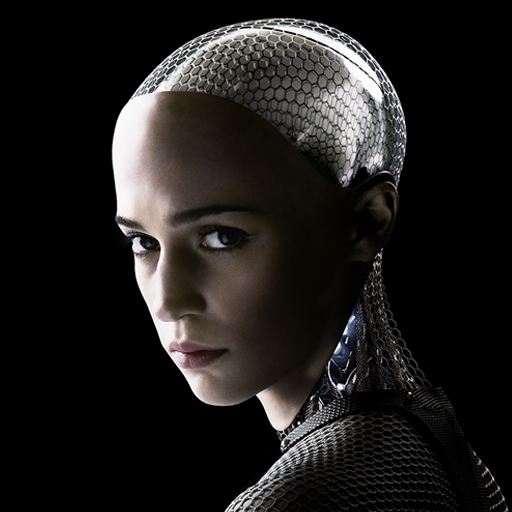
In technology, we refer to the “uncanny valley” (a term coined by Masohiro Mori in the 70’s) when dealing with robots and computer designed images of people. A robot who looks human-like but not realistically so (think Bender in Futurama) wouldn’t trigger the uncanny valley but a robot who looks extremely close to human, but has some tiny bit of offness, such as the more and more realistic robots we have currently, would fall into it and create a sense of slight fear, revulsion, or distrust. In the film Ex Machina (which on its surface is a film about a Turing test going very wrong, but in its heart is a take on the tropes of Gothic literature and the Bluebeard fairy tale), Alicia Vikander portrays Ava brilliantly by making the robotic elements include both Ava’s movements (more perfect than an average person’s) and speech (carefully clipped and enunciated)—this heightens the uncanny valley feeling while going against the entirely human looks of her face (which wouldn’t necessarily fall into the uncanny valley).

In literature, the uncanny is prevalent in Gothic narratives (Madeleine in the “Fall of the House of Usher” clearly falls into an uncanny being even before her turn to something more monstrous) and ghost stories. Haunted houses, in many ways, are examples of place as uncanny: the familiar sounds of a house settling become othered when the house is not one’s own. The uncanny also often coincides with liminal spaces (a subject I’ll explore in even more depth in a future Horror 101) and how these shift our perceptions of what is going on: for example, the nostalgia for childhood mixed with a sense of unease in Neil Gaiman’s The Ocean at the End of the Lane falls clearly into the uncanny. The uncanny also shows up in more contemporary horror and monster films, as well.

Slasher films often times build off of the idea of the normal turned terrifying: a phone call (the Scream franchise) or a shower (Psycho and so many films since), for example. This twisting of what we should consider safe is a form of uncanniness (who didn’t look askance at their VHS collection after watching The Ring or wait an extra ring to pick up the phone after Scream?). However, even more interesting (to me) is when the uncanny creates monsters from the known.

In films with pod people or other variations on this theme, the uncanny is allowed to truly shine by raising our distrust in those we love (the ultimate kind of terror, really). From the shape-shifting thing of The Thing who could be right next to you, looking just like your longtime colleague, to your lover in The Invasion of the Body Snatchers. In pod people films, they look exactly like the person they’ve transformed into and yet they trigger the uncanny valley through their inability to do a trick with their eyes, a slowness to smile at a joke you’ve shared for years, a shift in their speaking tone. This is horror summed up: even the ones you love may not be the ones you love after all. If horror is at its roots often about loss, what greater horror than a loss that no one even believes has happened?

What are your favorite examples of the uncanny? Have a horror topic, style, or monster, that you’d like me to focus on? Let us know in the comments or on Twitter: @PintsNCupcakes or @Nerds_feather.


Posted by Chloe, speculative fiction fan in all forms, monster theorist, and Nerds of a Feather blogger since 2016. Find her on Twitter @PintsNCupcake

Wednesday, October 4, 2017

HORROR 101: Dread

What do you dread? How does dread build inside you as you’re thinking about it? It’s that sinking feeling in your stomach, the rising of your heart rate, the way your thoughts begin to fire too rapidly as everything else slows down around you. Dread in horror is a key feature to terrifying an audience—be it reader, viewer, or player. Dread is built in various ways for different mediums: movies may use visual clues of repetition, video games might use escalating sound effects, and books often use deliberate pacing through paragraph breaks.


In scary stories, from our childhoods, dread is often built through repetition that we know will eventually bring something bad: the sayings in variants of the Mr. Fox/ Bluebeard stories of “Be Bold,” then “Be Bold, Be Bold,” before “Be Bold, Be Bold, But Not Too Bold, Lest Your Hearts Blood Run Cold.” It’s the campfire buildup of someone knock, knocking on a door, before shouting the last phrase so that everyone jumps. We find dread in patterns, because fairy tales have taught us to pay attention to patterns. In The Ring, for example, we know there’s a pattern set in place from the very beginning: watch the video, get the phone call telling you “Seven days,” have increasingly creepy events happen to you going through the next week, and then your TVs pop on and a creepy, demon girl comes to collect you. Not fun. The movie starts by showing us the end of this pattern for one unlucky victim, so that we’re already prepared for what’s to come—we know the pattern and so we can dread it. The film then highlights the patter, not only by counting down the days, but also with visual cues (screens—Tv or computer monitors-- are in a lot of scenes, visual elements from the video appear throughout the film, etc). This slow delay of the pattern, with end results we know are going to be horrific, is one way that films can successfully build a feeling of dread.

Another way is the slow build-up of creepiness through use of tiny visual and audio elements. I remember first watching The Orphanage and becoming so dread-filled that when there’s a banging sound near the end of the film, I probably jumped about three feet in the air. The film uses some, rare, jumpscares, but more effective in creating such dread-filled tension are its uses of small creepy elements—sounds that are just a little off, things flickering in the corners of our eyes.

The slow build-up to dread is almost even more effective in literature, where we have our minds as readers filling in the horrible blanks for us. I recently wrote, at Ploughshares, about the uses of dread in two stories, “The Night Piece” by Andre Alexis and “Sacken” by China Mieville. What I talked about was how each of those pieces used deliberate paragraph break pacing in order to sustain and build dread. In “Sacken,” Mieville makes use of several one to two short sentence paragraphs to force the reader into a pattern of reading that increases the tension leading up to the reveal (paragraph breaks are denoted here by slashes): ““Something was on the floor./ A darkness. A gross misshape. / Something huge and wrong and wet. / It blocked her way./ Mel’s throat closed. The new thing in the room dripped.”

In videogames dread is often built through ambience and sound. In Silent Hill 2 (WHICH WAS A MASTERPIECE), the main character walks through a fog cloaked town. A sign that nasty things are coming through the fog is the use of a radio whose static increases as things approach. When the sight line is diminished, the increasing static tells the player to prepare. Every blip of static, after the first time this effect is deployed, sends the player into a dread-filled panic. This panic often decreases the players chance of survival because we aren’t thinking as clearly which then reinforces the dread of the static.

Dread, ultimately is one of the best ways to build horror. It’s the difference between a jump scare which has an immediate tension and release and the feeling of horror that clings to you long after the film itself is over. Slasher movies tend to fall into jump scares, while dread is something more akin to a movie like The Ring (which bothered me for days afterwards). Dread when done right builds to an impossible tension level. I think of it as the typical plot chart of rising action, except it’s the rising dread that makes the viewer so unnerved that every moment become a terrifying expectation. Movies that utilize dread are often one’s talking about more universal conditions: The Orphanage’s horror is loss and the traumas of childhood, The Ring warns us against what we’re willing to do in the face of horror. I’ll return to my opening question: what do you dread? And how well has that feeling been conveyed through artistic mediums?

Friday, September 29, 2017

HORROR 101: An Introduction to Fear

What makes horror work?


Welcome to Horror 101. This will be an ongoing series of essays about the horror genre: from analysis about the elements of horror to using monster theory to in-depth looks at individual works of horror. While I have some plans already, please let me know on Twitter (@PintsNCupcakes) if there are specific horror texts/tropes/or monsters you think I should tackle!


For this first essay, I thought it would be helpful to illuminate why I’m doing this (and why I begged the lovely Powers That Be at Nerds to allow me to do it). Horror is deeply subjective, so it’s possible my analysis and thoughts about horror won’t agree with everyone. Thus, this might be helpful in gauging whether you wish to follow me on this journey into darkness.

I was drawn to the scary story at an early age—like think a three or four year old watching Aliens on repeat—but it rarely bothered me. I wasn’t a child who got nightmares—as much as I am a coward, trust me I am not the person opening the basement door where a weird noise has been coming from. So it wasn’t the fear that drew me to them, but rather the feeling of safety that they brought. I loved horror because it was contained. Close the book, turn off the movie, and the world was bright again. Even as a child this struck me as a power we don’t often have in life. I also appreciated that horror showed that people can fight against the darkness in their lives. It said be afraid, but be hopeful as well.

I read the Alvin Schwartz Scary Stories to Tell in the Dark series (aka the greatest books of all time) over and over again. Their reliance on folklore and almost fairy tale like logic certainly was an early spawn for my lover (and eventual study) of lore. I joined the Goosebumps book club and then graduated from those to reading very single Fear Street and Christopher Pike book the library owned (as a voracious and fast reader, the time between school ending and me getting picked up from the library was often enough time to read an entire book). By age ten, I moved on to Stephen King (who’d I’d already heard in audiobook form on family car trips) and a new idea about what horror could teach its readers. King often wrote of the underdog overcoming horror. Bad stuff happens over and over in King’s books, but the characters almost always won. One of my fondest childhood memories is reading the entirety of The Stand while home sick from school. It was a novel that tapped into my direct fears (me, with a bad cold, reading about the plague) while also illuminating the idea of people working together to fight evil (my favorite of all story types and one I’ll return to in future essays).

As a child who loved to write, I also found myself returning to horror again and again for my own creative purposes. When I got to college, I’d often come up against the same question again and again in creative writing workshops: why horror? Can you do anything other than monsters? Ugh, ghosts, again. But more interesting to me were the questions people asked that showed no sense of reality: everyone in workshops wanted the horror to be happening because people deserved it. The idea of horror as morality tale is certainly one that we see all over (horrors links to fairy tales is evident for a reason). But it’s a misguided one. To me the power of horror is that it can reflect reality: ie bad shit happens to good people all the time. Maybe it’s not monsters, but it’s the monsters of everyday reality: illness, violence, systems set up to mistreat. Horror can serve as a veil to describe life (something Get Out did recently in a masterful way).

So as a writer and reader I loved what horror could give me. As a teacher and scholar, though, I wanted to look under the hood. I became interested in exploring how horror operates on a level of mechanics as well as how it operates as a means of communicating ideas. What was the rhetorical value of horror? After studying monster theory, a fairly new form of critical study that looks into monsters and horror from the analytical perspective, I began to think even more deeply about the value of monsters and using them both in writing and in teaching. I’m lucky to teach at a university that allows me to shape my composition courses and this allowed me to create a class that teaches multimodal composition and communication through the theme of Monsters. Monsters are a fun way to get students thinking about much deeper issues. By exploring the ideas of monstrosity, we’re able to look at acts of othering and monstering that permeate history: racism, sexism, xenophobia, homophobia, and the list goes on. My students began to pick up on these ideas and tropes in various media they consumed. They realized it wasn’t just a “genre” thing as they could point to the language of othering and monstering in the speeches of politicians.

So horror has rhetorical value. It has value to me as a writer and reader. But what makes horror tick? To me, there are several key features to great/successful horror. I’ll be diving deeper into those in essays to come, but they include dread, the use of the uncanny, private versus global horrors, terror, awe, horror as masks, and more. Throughout these essays, I’ll be pointing to specific textual examples of successful deployment of these ideas. My horror taste runs the gamut from ghosts to zombies, supernatural thrillers to horror comedies, but as a head’s up I won’t be diving into torture porn such as Saw and its friends (which to me is not only not good entertainment, it’s also ethically questionable).

Finally, I hope you’ll stick around with me, as we enter Horror 101. You might not be a horror fan, but you may find that it has more to offer than merely goosebumps.

Chloe, speculative fiction fan in all forms, monster theorist, and Nerds of a Feather blogger since 2016. Find her on Twitter @PintsNCupcakes