Showing posts with label literary fiction. Show all posts

Tuesday, December 31, 2024

Nanoreviews: Private Rites, Orbital, Three Eight One

A roundup of three British novels that play with genre and form to create something a little bit special

Private Rites by Julia Armfield

Julie Armfield is a pioneer in the microgenre of "melancholy lesbians," and has followed up her last sad banger Our Wives Under the Sea with another tragic hit, this time a climate-fiction/horror-adjacent reimagining of King Lear, in which three queer sisters navigate their lives and relationships, especially with one another, in the aftermath of the death of their famous architect father, all against the backdrop of a world being steadily drowned by unending rain.

The main focus of the text throughout remains on the three sisters, using each of them as viewpoint characters, interspersed with some others, including the city itself (predominantly washes of beautiful descriptions of place and vignettes of the various inhabitants trying to live their lives in this damp, changing, drowning world). But the rain is constant—its fact and effects a touchstone throughout the story, never the focus but constantly noticeable just out of the corner of your eye. And so, by the time we reach the end, it is a looming horror that overwhelms the true plot of the story, the disintegrating psychodrama of betrayal and inheritance.

What I found most interesting, and something I think Armfield manages very well, is how the climate-fictional aspects of the story do not read as SFnal in tone, sharing more with litfic and horror respectively in how they are presented—this is a story that rejects explanations, whose climate change takes on a hint of the arcane before the end—and uses it instead as a setting, a psychological spectre and an act of god, not something to be reckoned with or solved, or even survived, but merely endured. Or perhaps weathered (ha). It loses no power from being treated this way, and perhaps even gains some—there is a weight to treating the climate disaster aspect as something unstoppable, unsolvable, that lingers long after the book is done, and felt more impactful on me at least than any number of stories that tackle the issue more head on.

Like all of Armfield's books, Private Rites is chock full of beautiful prose work, lush descriptions of place that unite the profound and the mundane, and sad, queer women in whose interiority we are allowed to revel, finding almost uncomfortable levels of sympathy with their most personal thoughts. It is gripping in all its aspects, and in my opinion may be her best work yet.

Nerd Coefficient: 10/10.

Reference: Armfield, Julia. Private Rites [HarperCollins, 2024].


Orbital by Samantha Harvey

If we count Orbital as genre, the Booker has been on a three winner SFF streak, with 2022's The Seven Moons of Maali Almeida, 2023's Prophet Song and now Orbital. But that's a big if. The events of the story—such as there even are events—may not have strictly happened as yet, but they fall so closely into the realm of the possible that it feels an enormous stretch to call this speculative work, unless you consider all fiction that contains space travel to be that by default. In any case, whether or not it comes in under a technicality, its mode is far from the usual for genre fiction, and therein lie both its strength and its weakness. We follow six astro/cosmonauts on the ISS through one day—sixteen passes over the surface of the Earth—as they muse on their place in the universe, their relationship with Earth, each other and their loved ones, and the new manned mission to the moon they witness launching. They don't do much, and what they do isn't the focus anyway—instead it's a book of pondering, a rolling set of banger one-liners and intensely evocative descriptive passages, lush and wallowing in its use of language. All of which it does stunningly.

The problem comes with the unrelenting sameness of that—Harvey does a great job of evoking wonder at the view from the window of a tin can in space, and at the marvel of space travel at all, genuinely working to craft that emotional response where other books might rest on the assumption that the feeling comes pre-packaged in the reader (which it does not in me). But that feeling—that awe at everything—persists regardless of the variation in content, even when dealing with the cramped mundanities of astronaut life, and the lack of tonal variation rather wears the wonder thin by the end of its (quite short) duration.

However, what it does it does do remarkably well, and only begins to overstay its welcome towards the end. If, unlike me, you are truly dazzled simply by the reality of space travel, it may well continue to land all the way through.

Nerd Coefficient: 7/10.

Reference: Harvey, Samantha. Orbital [Vintage Publishing, 2023].


Three Eight One by Aliya Whiteley

A story of two texts. The first, a fantastical, quest-like, quasi-mythological narrative of a girl who must leave her home village to go on a ritualised journey. The second, in the margins of this, the footnotes of a far-future archivist, reckoning with her life via her connection to this text from a time far outside her ability to fully contextualise.

Three Eight One uses the interrelation of these two stories, their contrast in tone, in voice and in formatting on the page, to examine our relationship with the past and the present, with the nature of humanity and what might be lost to make a utopia, with the things that remain constant no matter how much humanity changes, and with the power of stories.

In the quest narrative, Fairly has to leave her village to follow the Horned Road, as is traditional for young people. This begins by pressing a button on a chain device, switching the narrative from third into first person, and far from the last time format will be played with in such a manner. Her progression through the quest—neatly parcelled out into sections, each of precisely 381 words—becomes increasingly stranger, leading us through a world that feels both modern and alien, both using and defying the tropes of fantasy as we know it. Even alone, Fairly's story, with its interrogation of the motivations of quests, of power structures and community, with its ambiguous and thought-provoking ending, would be worthwhile.

But it is not alone, and it is the annotation from the future author which, for me, really makes this book. We slowly learn through the story that she writes from a time so far ahead of ours as to render some of the context of the story beyond her grasp—the way that she talks about details of narrative and place make it clear through subtle repetitions the extent of her ignorance, despite her profession that she lives in an age of knowledge. We see glimpses into her world, a utopia she considers hard-earned but worthwhile, a world without conflict but where much has been lost to secure that safety. But we also see simple glimpses into her life, into her emotional relationship with a text from a long-dead civilisation. The connection that she herself can barely explain to a text she doesn't fully understand is one of the most compelling things in the story, and watching it develop over the pages, intertwining with that story itself, is incredibly rewarding.

Add to that her development in the later half of the book, where we meet her older, wiser self, and learn how her life has been shaped beyond the boundaries of the text she's annotating, and it becomes even more special.

Above all, it's a book of subtlety, refusing to spell things out for the reader but instead trusting them to make their own connections, while making sure all the tools are available to do so if they're willing. It's a book full of thoughtfulness, and one to sit with, digest and discuss, and one of the most fascinating things I've read this year.

Nerd Coefficient: 9/10.

Reference: Whiteley, Aliya. Three Eight One [Rebellion Publishing, 2024].


POSTED BY: Roseanna Pendlebury, the humble servant of a very loud cat. @chloroformtea.bsky.social

Thursday, June 29, 2023

Review: The Book of Rain by Thomas Wharton

A symphony made of successive voices, some as elegy, some as warning

A little Canadian town surrounded by forest, some distance off from the beaten path, sits on the world's biggest deposit of the world's most potent hydrocarbon fuel. A volcanic island in the Atlantic Ocean matches Plato's description of Atlantis, and might sink for real any day now. A thirsty world builds nanobot clouds to bring rain back, but the clouds reject human control and fly away to make rain where they please. A wounded biosphere shouts its pain in a language no one remembers. A rip in the stitches that keep reality in one piece leaves wrinkles in people's memories, and each time the anomaly seems to calm down, they can't be sure that they're still in the same world. A random family that was just passing by is pulled into the center of the anomalies by one too many bad rolls of fate's dice. All over the world, species are disappearing. Life is still so plentiful in its beauty that it takes deliberate attention to notice how quickly it's fading. There are no heroes, but that doesn't mean ordinary people have no effect. Rescuing even one endangered egg may not only ensure there will be a future, but earn enough goodwill to make a place in it for us.

What I'm describing is one of those precious instances when literary and speculative fiction hold hands and trace a passionate tango on the page. Such embrace between narrative forms that needn't be rivals is not a novelty in Thomas Wharton's writing career, but in the larger publishing ecosystem it's still infrequent enough to merit celebrating each occurrence of it. The Book of Rain not only draws from both traditions, but integrates their respective techniques to create an outstanding consonance of theme and form.

Like many of its animal characters, who make repeated attempts to communicate with humans and can only be understood in tragic hindsight, the fragmented, nonlinear text of The Book of Rain abounds in scattered clues that may not click together the first time, but neatly cohere once the full story is apprehended. This novel is a generous rewarder of rereading. Fittingly for a work of climate fiction, the experience of reading it and failing to catch all the little interconnected facts brings to mind the accumulated negligence of a civilization that chose to ignore the little signs of coming disaster until they piled up into an undeniable colossus. Fittingly for a novel so concerned with what birds think of human actions, its meaning can't be perceived in the details, only from a bird's-eye view. This is a book that asks you to trust it with your continued curiosity. It won't impart the answers to you; you have to reconstruct them from the multiple accounts contained in it.

There's the perpetual wild child who feels more at home in a paranormal disaster zone with a propensity for reality-warping accidents than among the mundane motions of small-town life; there's the globe-trotting secret agent who smuggles rare animals out of ruined habitats while pretending to write tourist guidebooks and is one day visited by a miracle; there's the exhausted game designer who dreams of impossible worlds where he wishes he could hide from the terror of living; there's the doomsday cult that waits for a divine sign about the end times while guarding their sacred place with hunting rifles; there's the underground geothermal laboratory that looks for a way to replace the universe with a marginally less unfavorable one; there's the assembly of birds unexpectedly burdened with deciding whether there's anything worth preserving of humankind; there are the nameless scholars who patiently compile the ancient tale of how the world was saved from final silence. There are the places where lifepaths briefly meet before diverging in irreversible directions. There are the unsuspected consequences that cascade from those chance encounters and are dragged downstream to a realm that from here looks like eternity. There are myriad novels within this novel, their stories incomplete memories that emerge and vanish in endless iterations, their characters a mass of lonely souls facing the blurry, foggy outline of posterity and stumbling confusedly toward it.

Maybe I'm not making much sense. One is supposed to provide an appetizer, a truncated plot summary, in a book review. Trying to do so for The Book of Rain would be beside the point. Each of the main narrators is introduced to the reader in the middle of a search for something crucially valuable, but this is not the story of how they find it. Although the conventions of the novel as a mode of writing were developed in tandem with the cultural shifts that led to the rise of the individual as a psychological and moral fact, here the form of the novel is stretched to encompass the long course of time, a torrent that can be diverted but not stopped, one where the pressing worries of individual lives don't amount to a drop. The Book of Rain is a story about the place that ordinary people occupy amid events that overpower and exceed them. It's a lament for the world we're killing, but its fatalist prediction of inevitable catastrophe doesn't lead to nihilism. This world will end, but another can be built after we pay for our mistakes. That opportunity is not a given: we won't deserve the grace to try again without accepting a position of equality with our fellow creatures. Their voices carry no less weight than ours; their needs are no less urgent. After this world is forgotten, those of our descendants who remain will still have a chance, if they learn the required humility, to share with the rest of nature a common memory. And if they attain such fortune, maybe one of them will read The Book of Rain to the birds.


Nerd Coefficient: 9/10.

POSTED BY: Arturo Serrano, multiclass Trekkie/Whovian/Moonie/Miraculer, accumulating experience points for still more obsessions.

Reference: Wharton, Thomas. The Book of Rain [Penguin Random House, 2023].

Tuesday, February 28, 2023

Microreview[Novel]: Our Wives Under the Sea by Julia Armfield

 A novel of unsettling memories of undersea events and wistfully sad lesbians.

The sea is, in my opinion, a deeply unsettling place. Especially the deep bits. The really really deep bits, where no light penetrates, and all the creatures look like they've escaped from a painting by Hieronymous Bosch. Thinking about that vast depth of unknown blue-black gives me the shivers, and the thought of swimming above the whole "far, far beneath in the abyssal sea" situation... eururugh.

Julia Armfield has taken this deep sense of unease and asked "what if we turned the creepy dial up a bit more? And then a bit more than that?". Against all my better judgment and my desire to sleep comfortably ever again, I have to admit, it was extremely compelling. Just don't ever ask me to get on a submarine.

The story follows Miri and her wife Leah, who has finally returned from a deep-sea mission extended long beyond its planned term, and which clearly ended in disaster of some kind, though the participants won't discuss it. At first, Miri is just glad to have Leah home, hoping to get back to the close and loving relationship they had before. But as the story progresses, we and she begin to suspect that the disaster, whatever it was, wasn't solely contained to the bottom of the sea. Not only withdrawn and quiet, unwilling to eat and with a fondness for drinking salt water, Leah begins to seem... wrong and getting wronger. And all the while, that strangeness serves to reinforce for Miri that the wife she got back isn't the person she fell in love with anymore.

We see the mystery of it unfolding through Miri's eyes, while at the same time learning from Leah's perspective the events that led up to the disaster and the present day, and through both of them the relationship they had before, and what they're missing now.

For all that this is a novel with a strong horror element - which only increases as the story goes on - the primary driver and for me compelling part of reading it is the interpersonal relationship. We get a very close view on Leah and Miri, and who they are to each other, reinforced by the flashbacks and memories throughout the story of how their relationship came to be. There is a terrible, wistful sadness to Miri's perspective, an increasing yearning for the past and how things were, that serves only to reinforce the mundane horror of a wife who simply isn't herself anymore, let alone the more unnatural, unknowable horror that we begin to see as events progress. But it's not a totally rose-tinted view - their relationship wasn't perfect, even in Miri's memory - and because we see snippets of fights and tensions as well as the love and the closeness, it feels all the more real and tangible, and all the greater loss. We also get little tidbits of their lives as they intertwined with others, and Miri is capable of some quite casual brutality in how she judges her friends and Leah's, all kept internal, shared only with the reader, while she maintains a polite façade of everything being... okay.

Everything is really not ok.

The book is divided into sections named after the various depths of the oceans, beginning with the shallowest and heading down to the very depths of the hadalpelagic horror-show (definitely a technical term) zone. Each section steps up the level of unease, the strangeness of what seems to be happening to Leah, reinforcing the feeling of the ocean being a horrifying place, but also a more and more unknown one the deeper we go.

Because fundamentally, a lot of what this book is about is the unknown and the unknowable and the intangible. It's not a story with clear answers and a table at the back to explain things to you. Which is why it being such a relationship-focussed story works so well - much like the growing mystery of Leah and her experiences underwater, relationships are fundamentally things that defy logic and easy clarification, especially to those outside. We are being allowed this window into Leah and Miri's, and we can see the movements under the surface, the evidence of things gone by, but we can never know it in truth. We can, instead, see only the effects it has, the outcomes and the consequences, and how it affects those involved. Intertwining that so closely with the horror elements, making them so personal and intimate, really drives them under your skin as you read, and it is impossible not to keep thinking about some aspects of the story, even after you've put the book down.

The other thing that lingers - which was true just as much for Armfield's previous book, Salt Slow, as it is for Our Wives Under the Sea - is the prose. It is to be savoured, devoured carefully, bite by delicious bite. It is hard to point out any specific thing she does particularly well, but as someone who tends to devour books at pace, the fact that I feel the need to stop and deliberate and fully engage when I read her words really catches my attention, and makes me want to keep coming back for more.

Her prose is however what makes me slightly dubious about the novel's place in SFFH. Instinctively, while reading it, the tone of the prose alongside the deep, internal focus on characters makes me take this as a piece of literary rather than genre fiction, despite the obviously speculative horror angle. It doesn't feel like an SFFH book, and that too, for me at least, is part of its charm. It's doing something entirely SFFH, but not in the way I'd ever expect to see it, and that lends an already quite interesting premise that extra layer of something. Moving speculative elements into the litfic genre, in my experience, either ends in doom (when the author doesn't have enough experience of the genre they're playing with to contextualise them within what already exists) or glory, when, like this, the fusion of the two creates something better than the sum of its parts.

That being said, I'm not sure how well this would work for an inveterate horror reader (of which I am not one, being, as I am, a complete and utter wuss). Certainly, if you go in wanting the horror to be the main event, you will be disappointed. Obviously it's there, and it's a critical part of the story, and I felt very horrified by the end, but it's not the sole focus, and there are definitely points in the narrative where the actual horror parts take a backseat to the more mundane horror of the breakdown of Leah and Miri's relationship. And the two of them are paced very well - it never feels rushed or unnaturally spun out for the sake of keeping us in suspense. There's a creaking inevitability to both parts of the story, and so when things do finally come together at the end, it definitely feels satisfying, but a big chunk of that is the interplay between the horror and the relationship, rather than just the maritime nastiness itself.

But if you're happy for your horror to play second fiddle to a really compelling bit of character work? It's an absolute winner. Come for the sad lesbians, stay for the stunning prose, eerie atmosphere and horrible events involving submarines.

--

The Math

Baseline Assessment: 8/10

Bonuses: +1 genuinely managing to play out the suspense for the whole novel

Penalties:

Nerd Coefficient: 9/10

Reference:  Julia Armfield, Our Wives Under the Sea [Pan Macmillan, 2022]

POSTED BY: Roseanna Pendlebury, the humble servant of a very loud cat. @chloroform_tea

Monday, January 17, 2022

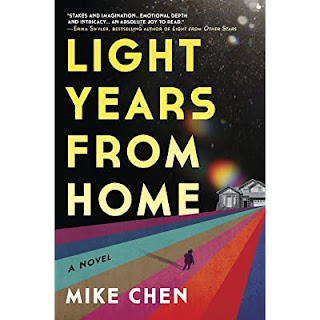
Microreview [Book]: Light Years From Home by Mike Chen

A novel that miraculously bridges people even when they feel light years away.

In these times of 2022, it almost feels like contentment was never something that was available. Any memories of such an opportunity feels stretched back to such a bygone era that when I think of it, it’s distant and scrambled. In Light Years From Home, a family is brought something that seemed unattainable for over a decade: the arrival of a long missing family member. The memories of getting to that point aren’t clear in some characters’ cases, but despite how scrambled it is, it’s miraculous. The story showcases the family coming together in a way that feels messy through difficult circumstances but absolutely clean in its heartfelt humanity. Memories can be scrambled, emotions can peak and sink from the unreliability of human actions, but what makes Light Years From Home such a powerful book is that the mundane yet miraculous instance of finding hope after an expanse of hopelessness is always in the cards, no matter how much time has passed to make it seem like an unattainable wisp.

15 years ago, Jakob was abducted by aliens. His two sisters have different approaches to dealing with the disappearance. Kass dismisses the prospect and assumes he wasn’t abducted but just left as the unreliable person he was. Evie thinks otherwise, devoting her time to studying extraterrestrial life, trying to solve the mystery of her missing brother. Meanwhile, the parents are left in mental shambles. There doesn’t seem to be any developments concerning it for a while until at the start of the novel, Jakob arrives on Earth with a special mission. That mission embroils his sisters in it through incisive developments. 


The characterization is where the story really shines. Whether it’s Evie’s ardent hope that what she’s dedicated her life to is a reality, Kassie’s fed-upness of her family, or the portrayal of Jakob who’s portrayed as making so much growth even though some of him is initially under a veil of mystery. It all works so well. Character arcs move at a pace that makes it so no one feels stuck in a rut. Just about everything feels like their choices align with their personality, making the plot move organically.


One thing to note is that as organic as the developments are, Light Years From Home definitely favors the exploration of familial bonds and human emotions over a rollicking plot. There are seeds for an explosive story here, but Mike Chen holds back, and it mostly worked for this reviewer. Although, there were some times when the vibrancy of the characters wasn’t enough to buoy some slower sections scattered throughout. Despite holding my engagement for the vast majority of the plot, I think it’s worth mentioning that this could very likely be lacking in speculative and action-packed elements to those in search of it.


Despite having a short supply of speculative elements, Light Years From Home is still imaginative through the way it’s able to carry its proceedings through an original voice and some brilliant plot points. It’s a novel full of love with a tenderness that might seem light years from our home. But the more I read about the familiar and cutting specificity of the characters, the more I realized that such a tenderness is still here–it just seems scrambled and distorted. Jakob goes on an interstellar journey, through many light years, surprising you with its direction but ultimately landing at a place that seems new until you realize it’s home.


The Math

Baseline Score: 8/10

Bonuses: +1 For its top-notch emotional intelligence.

Negatives: -1 For some slower and less imaginative chapters scattered sparingly.

Nerd Coefficient: 8/10

POSTED BY: Sean Dowie - Screenwriter, stand-up comedian, lover of all books that make him nod his head and say, "Neat!

Chen, Mike. Light Years From Home [MIRA, 2022].

Thursday, October 21, 2021

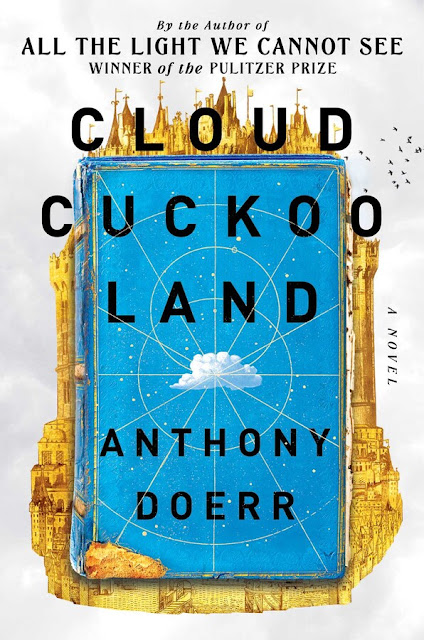
Review: Cloud Cuckoo Land by Anthony Doerr

Three valiant bookworms connected by pain, fear and fervent hope, in a breathtaking journey across time

Imagine a book about the love of books. Imagine a story about the saving power of stories. Imagine a cryptic riddle about a hero deciphering a cryptic riddle. Imagine an infinite library containing gateways to every library. Imagine an obsessed reader researching an obsessed reader. Imagine a timeless masterpiece about the discovery of a timeless masterpiece. Imagine a creation so vast that its intertextual references point at itself. Imagine the most splendid city you can imagine, where people tell legends of the most splendid city you can imagine.

Imagine a novel that does all that.

So let's start counting backwards:

  • In a locked vault in a generation spaceship, not so many years from now, a girl hunts down scanned documents and news videos to try and figure out why her father signed up for a lifelong mission away from Earth.
  • Her research leads her to the writings of an amateur classicist who was at the right place to stop a mass shooting by an ecoterrorist at a small town library.
  • This amateur classicist, as a solitary exercise in his years of retirement, made his own translation of a recently rediscovered Greek codex.
  • Said codex had been saved from destruction by an orphan girl who managed to escape unseen during the fall of Constantinople.
  • That book had been written centuries earlier by Antonius Diogenes for the entertainment and comfort of his ill niece, but he claimed to have found the story in wooden tablets inside a tomb in Tyre.
  • What the tablets contain is a first-person memoir by a shepherd who traveled to the ends of the world because he mistakenly believed The Birds by Aristophanes was a true tale about an actual city hidden in the clouds.

If you hold all those rings within rings in your head, what you have is a story (Cloud Cuckoo Land by Anthony Doerr) that is about a story (spaceship) that is about a story (classicist) that is about a story (Constantinople) that is about a story (Diogenes) that is about a story (shepherd) that is about a story (Aristophanes) that is about a story (fabled city). And all through time, all the way to the future of the human species, characters continue to reread and reenact the original tale, surviving the end of worlds and carrying the scars of heartbreak. A poet writing to his ill niece, a farmboy taking care of his two overworked oxen, an apprentice seamstress trying to heal her blind sister, a war veteran grieving a love that could never be, an oversensitive kid on a quest to avenge his favorite patch of forest, a gardener trying to preserve Earthly life beyond Earth, a quarantined survivor afraid that she might be the last human left. All draw from the millenary power of narration to amaze and to sustain hope.

This novel is fearless and boundless in its ambition. It's like Homer meets Borges aboard Noah's Ark. It's like The Name of the Rose meets The Neverending Story at the Foundation's Edge. It's like The Golden Ass meets The Oracle of Stamboul in the Cemetery of Forgotten Books. It's like The Book Thief meets The Charioteer in the Cloud Atlas.

It feels like reading every book ever written.

It feels like no book ever written.

Cloud Cuckoo Land is aware of the sky-high goals it's set for itself: a key chapter toward the end is titled "The Super Magical Extra Powerful Book of Everything," and it refers to a supposed location in the middle of the cloud city where the visitor can see the whole world at once. The way the text describes this literal bird's eye view of all the beauty and all the horror of the world goes, "On one side is dancing, and the other is death." This becomes a motif across the time periods of the novel. The inhabitants of Constantinople try, until the horrid end, to cling to their normal lives while the enemy shoots cannon balls at the city gates. Centuries later, in the public library, the classicist tries his best to keep a group of children occupied in a theater play while a would-be murderer lurks next door. But in the attacker's eyes, he's the one trying to keep the world safe from the encroaching depredations of humanity. And yet more centuries later, a girl is hidden in a sentient archive with digital files of all human knowledge while an unknown plague spreads outside. In each case, under the gnomic gaze of birds able to peer into the past and future, the liferaft of choice, the only solid refuge in a world that whirls into chaos, is stories. The recitation of the same ancient book serves not only as a distraction from the danger, but as a ritual meant to ward it off, to keep the noise from crushing you, to force death to wait. As long as you keep reading, the world will not end.

However, such a refuge can easily become a tomb. The novel warns repeatedly of the deceptive safety of seclusion. At one point, a character describes himself as "a fish inside a sea inside a bigger fish inside a bigger sea," then another one recalls a legend about a book "locked inside a golden box, which was in turn locked inside a bronze box, then inside an iron box, inside a wooden chest," and later, another one discovers she's trapped "in a circular room at the center of a circular white structure on a mostly circular island." Just like this book contains stories that contain stories, its characters inhabit multilayered structures that somehow maintain both vertical progression and horizontal simultaneity. The plot follows three time periods in parallel, but its characters all read the same book at the same pace (as do we when reading this novel). As the text itself declares, "time folds over itself" and mythic allusions become real locations: a Greek legend about the frozen rim of the world leads to the revelation that an entire section of the book actually took place there; the dream of a city of peace and riches resonates in the brutal conquest of the most magnificent city of Antiquity, and in a personal mission to gain entrance into a secret camp of ecowarriors, and in the eerie quietness of an aseptic self-contained city in the future. And each time, the perennial story can only survive if you leave that city of wonders, because "what really matters [...] is that the story gets passed on."

So pass it on.

Read Cloud Cuckoo Land and read it to each other and invite your audience to read it into the future.

Stranger, whoever you are, open this to find what will amaze you.


Nerd Coefficient: 10/10.

POSTED BY: Arturo Serrano, multiclass Trekkie/Whovian/Moonie/Miraculer, accumulating experience points for still more obsessions.

Reference: Doerr, Anthony. Cloud Cuckoo Land [Scribner, 2021].

Thursday, January 28, 2021

Microreview [book]: On Fragile Waves by E. Lily Yu

A lightly speculative story of a refugee family, told with unflinching empathy


Content Warning: On Fragile Waves contains violence (individual and systemic), abuse and racism

I'm excited by Erewhon Press, the new independent SFF publisher on the block whose offerings almost all seem tailor made to hit my "must read" list. One of the earliest stories I got excited for in their catalogue was On Fragile Waves, a intriguing looking tale of refugee migration from author E. Lily Yu. Originally slated for a 2020 release, On Fragile Waves was pushed back to early this year, and now this prettiest and bleakest of stories is finally coming into the world.

On Fragile Waves is a refugee story, centred around young girl Firuzeh Daizangi, along with her younger brother Nour, and her parents (generally referred to as Abay and Atay, but named Bahar and Omid), as they flee Afghanistan and attempt to reach Australia, falling foul of the country's inhumane policy towards refugees in the process, before finally trying to begin making a new life for themselves despite their still-uncertain status in Melbourne. Firuzeh's story is one impacted by both the deep traumas of her refugee experience, particularly during the boat trip from Indonesia and her family's subsequent stay in Nauru, and the more mundane challenges of being a loved but often overlooked, or overburdened daughter, with an irritating, spoiled younger brother and parents trying to adapt to challenges of their own.

The other defining aspect of Firuzeh's experience is the book's speculative element -although it's important to note that readers approaching On Fragile Waves solely because of its speculative content are likely to come away disappointed. During the family's journey to Australia, Firuzeh meets another girl, Nasima, whose is also fleeing the country with her parents. Self-important, status conscious, and confident about her new life, Nasima isn't a particularly pleasant friend to Firuzeh, but she nevertheless offers continuity and connection which is cut tragically short during the boat ride the two share from Indonesia. Afterwards, Firuzeh begins to see and confide in Nasima's ghost to make sense of developments in her own life, and even to begin to imagine (or exert?) some tenuous control over certain circumstances. The connection between the two girls, despite their brief friendship and diverging paths, underscores the fragility which forms the book's core (the clue is in the title). Everything that separates Firuzeh's life from Nasima's death is built on fragile foundations, and one moment of luck - and Firuzeh and her family have to build their lives within a system that never lets them forget it.

On Fragile Waves is mostly told from Firuzeh's perspective, in sparse but often beautiful prose, but it diverts often into different perspectives and voices, building up a picture of the people around them. These range from the small-minded racist guard whose chapter only serves to highlight the difference between his internal monologue about his actions and their external impacts on the refugees he holds power over, to the language tutor who volunteers with the family, to Nasima's older brothers, already in Australia and waiting for the rest of their family. Each of these chapters takes on a different tone and voice, and the effect is a novel whose prose is a fundamental part of its characters. There are also chapters where the narration becomes significantly more fragmented and poetic, including an opening which effectively summarises Firuzeh's first six years and introduces, in just a few lines, the interplay between threat and beauty in which the rest of the novel takes place, and later on, some of her dreams are told in the same style. One or two stylistic choices aside (the lack of quoted speech always takes a little while for me to get used to), On Fragile Waves isn't a demanding read where its prose style is concerned, but it is a book that encourages its reader to pay attention to style and language to get the most out of it. There's also a distinct separation between the first half of the book, which covers the family's journey from Afghanistan to Nauru and their time there, and the second half in Australia: it feels like because we see Melbourne through the eyes of an older Firuzeh, there's more direct representation of the interpersonal complexity, as well as a greater understanding of her parents' trauma and how it continues to affect them. In contrast, the family's time in Nauru contains more depictions of overt brutality and horror, but some experiences - like Firuzeh's brief befriending of a camp sex worker, and an attack perpetrated against her mother for being late for a bus - are beyond her capacity to process in the same way as the audience does, leaving us to piece together the broader dynamics from her incomplete perspective.

Yu - who is from the USA - has noted that a decade of research went into On Fragile Waves, and there's even a chapter with a self-deprecating self-insert character (a US researcher who doesn't know any of the right questions to ask of the refugees she is interviewing, and has to be set on the right path by a more experienced Australian woman.) The question of authenticity is, on one level, hard to escape from - is Yu the right person to be writing this refugee story? Does this capture the reality of the experience? - but it's not a question that I, as a British person with no refugee experience, can begin to answer. What I can say about On Fragile Waves is that its empathy leaps off the page: an empathy that doesn't shy away from showing characters at their lowest, or darkest, or most destructive, but is always fundamentally generous about the circumstances and motivations that underpin those dark moments. I found it impossible not to feel for almost all of the characters (shitty racist camp guards obviously being among the exceptions), even when their motivations conflicted or it was obvious that one character's emotional response to a situation was notably shallower than the other parties involved. For instance, Grace Nguyen, the language teacher who volunteers with the Daizangis, laments the amount of food at that Bahar insists on her leaving with and considers her Vietnamese family's own refugee experience; we know from Firuzeh that the food Grace has left with will result in the Daizangi family themselves going hungry, in the name of maintaining a form of hospitality which doesn't even cross the cultural divide particularly well. Yu's choice of narrator, and the detached way the narrative plays out, seems to reflect that focus on seeking empathy rather than full understanding Firuzeh's childish reactions to her circumstances require a different sort of narration to what her mother or father's perspective might look like, and I think it was the right choice for the book to avoid making any specific judgement about her parents' motivations. This story isn't the right one to give them a direct voice, and I think that's OK.

On Fragile Waves is a hard book. Given the subject matter, there's no responsible way for it to be anything but a hard book. But it's also a book which ends, however tentatively, with a feeling of hope: that despite systems of oppression, people do survive, and things do get better, and there will always be people who care and try to do right by each other even when our experiences make it hard for us to understand. Despite that, I think it's an excellent read - one which I devoured in an afternoon and found myself deeply satisfied by. If this is where Erewhon is going with it's line, I'm more invested than ever before.


The Math

Baseline Score: 8/10

Bonuses: +1 A deeply empathetic story that works within the boundaries of its own undersatnding

Nerd Coefficient: 9/10

POSTED BY: Adri, Nerds of a Feather co-editor, is a semi-aquatic migratory mammal most often found in the UK. She has many opinions about SFF books, and is also partial to gaming, baking, interacting with dogs, and Asian-style karaoke. Find her on Twitter at @adrijjy

Reference: Yu, E. Lily. On Fragile Waves [Erewhon, 2021]

Thursday, December 7, 2017

FIRESIDE Chat: Cecily Kane of Manic Pixie Dream Worlds

Welome to our latest Fireside Chat! This time I "sit down" with Cecily Kane, reviewer of short fiction and proprietor of the blog Manic Pixie Dream Worlds. Like me, Cecily is a refugee from the world of literary fiction--or rather, is someone who questions whether there should be a boundary between imaginative and literary fiction. You can find Cecily on twitter, where she is most active these days. 


G - Thanks for “sitting down” with me in front of this lovely virtual fireplace! I’m going to start by going big: what do you look for in science fiction or fantasy? What does a story or novel need to do in order to get and sustain your attention?

CK - Thanks for inviting me, G!

In some ways this is an easier question to answer with fantasy, though that answer might be more nebulous. My favorite genre actually isn’t SF/F -- it’s transformative literature (most but not all of which is SF/F). Principally retellings, whether of myths, fairy tales, histories, epics… but when you get down to it, I think fantasy is almost inherently transformative literature, since its suite of tools draws from the world’s existing mythologies and folklores. Regardless of whether it’s secondary world or not, I’m much more interested in fantasy that interacts as an open system with this one than fantasy that is having a conversation strictly with “genre.”

Though perhaps it’s more complex than that. A favorite story of mine, Ruthanna Emrys’ “Seven Commentaries on an Imperfect Land,” opens up Narnia, both to religions besides Christianity and, as Jonah Sutton-Morse pointed out to me, in a dynamic sense with this world; Emrys’ Narnia changes. It’s an open system, while the original Narnia is a closed one. Though I do think portal fantasies can illustrate things about this world if by showing what you’d be escaping -- “The Dancer on the Stairs” by Sarah Tolmie comes to mind.


With science fiction, I’m increasingly drawn to stories that reimagine ways of living that don’t replicate horrors of this world, such as Octavia Butler’s Parable of the Sower (which is also a retelling of the Biblical gospels, a fact that seems oddly omitted from most discussions of it) or Xia Jia’s “Tongtong’s Summer,” which envisions a near future in which life is much better for elderly people. Though to be honest, these days I’m really digging anything that doesn’t replicate empire. Two recent (to me) favorites are “So Much Cooking” by Naomi Kritzer and “State Change” by Ken Liu, which benefit from (and are refreshing in part because of) a sharply reduced sense of scale; they’re about how people live.

I’m also a sucker for relatively unusual literary techniques. The Three by Sarah Lotz would be a forgettable post-apocalyptic novel but for the fact that it’s not only epistolary but is so in multiple formats -- blog posts, chat logs, e-mails, self-recordings for a memoir -- almost mixed media. Jennifer Marie Brissett’s Elysium is striking because the computer resets that change the genders and relationships of the characters start to break down and change your cognitive processes; human thinking is largely associative, so removing the link between, say, a woman’s power and a man probably takes more than representation. Her “A Song for You” works similarly, but as an illustration of how colonialism and apocalypse are two perspectives of the same story and that that fact is not one of distant worlds or times, but this one, right now.

So now that I’ve written them out, those look like pretty similar answers, huh?

G - I also tend to like experimental narrative structures, though it has to be executed well. I liked the nonlinear narrative in Station Eleven by Emily St. John Mandell and the front to back to front structure of Cloud Atlas by David Mitchell. My favorite novel format is probably the short story cycle, where each story is self-contained but reveals more pieces of an evolving meta-narrative. A few of these were really important to me when I was discovering contemporary fiction. Mainly The Things They Carried by Tim O’Brien, Lone Ranger and Tonto Fistfight in Heaven by Sherman Alexie and Jesus’ Son by Denis Johnson. 

Come to think of it, there aren’t a ton of short story cycles in SF/F. The Martian Chronicles by Ray Bradbury and Stone Mattress by Margaret Atwood are the only ones that spring to mind. The Last Wish by Andrzej Sapkowski and Four Ways to Foregiveness by Ursula LeGuin are two more, but they are more stories that fill in the blanks for novel series than proper short story cycles. The Human Division by John Scalzi might count, though it was more episodic than anything--I’m not sure the stories can be read on their own, and I was pretty lukewarm on it anyway. I’m sure there are more examples. There *should* be more, given the cohort of talented short fiction writers we have at the moment. I’d love to see Alice Sola Kim or Karen Tidbeck do a short story cycle.

Its interesting that you mention your frustration with science fiction and fantasy that’s hidebound to the horrors of the present. I have a related frustration with science fiction and fantasy that’s hidebound to the social relations and political institutions of the present. The United Space of America trope is an egregious example of this, the ridiculous idea that the political institutions and conventions of the United States will not only extrapolate far into the future, but will also be the only system that makes it. It’s unimaginative, for one, and strains credulity for another.

There are many others, like fantasy books that reconstruct modern notions of race, nation and gender in an allegedly medieval context. Or space opera that projects them into the far future. This is made more egregious when the discourse centers on the supposed “realism” of these worlds. Fantasy is never realistic; nor is space opera. I do get that imaginative fiction reflects the hopes and anxieties of the present, but it’s also called imaginative fiction for a reason. More and more, I want fantasy and far-future worlds to be weird and different, to explore radical ideas of how societies could be organized and to untether themselves from modernity or modern interpretations of pre-modernity.

Another thing I want is immersion: in the world and in character perspective. There are many ways to go about this. Parable of the Sower/Talent is a great example of doing this by keeping things tidy--one perspective on the world, where the changes from our own are subtle but profound. The Malazan novels take the opposite approach--the world and character building is downright baroque. But they are immersive, and blessedly free of infodumping. Nothing crushes my suspension of disbelief like a narrator breaking the fourth wall, or the shift out of perspective to an encyclopedia-style infodump on the political history of Narvothos, the inner workings of a warp drive or whatever.

The last thing I want, strictly with regards near future science fiction, is some kind of meaningful extrapolation from the present. What changes, how does it change and why? I realize this runs counter to what I said I want from fantasy and far-future SF. But this is a unique strength of near-future science fiction, and sometimes I fear the genre has moved away from this and toward a more trope-forward approach. Just to be clear, I’m not talking about “hard” SF where there are lengthy explanations of how warp drives work. A lot of that stuff, in my opinion, is pretty unimaginative--especially when it comes to political institutions and social relations. I’m thinking more along the lines of Pat Cadigan, William Gibson, Octavia Butler and so forth. Okay, I don’t always want this, but it’s often a plus for me.


CK -- “Social and political institutions of the present” is better wording (we’re talking about the same things, I think).

Insofar as SFnal short story cycles are concerned, the only two recent ones I can think of are from outside the systems and structures of this field. Insurrections by Rion Amilcar Scott is a series of short stories in Cross River, Maryland, a fictional town founded after a successful slave revolt; 17776 is set in a post-scarcity far future, superficially about football but thematically about existential anxiety. What I like about these, and perhaps you would as well, is that they are straightforward Americana, about their investment in America-specific concerns, without being this sort of The United Space of Empire, promoting or at least assuming this sort of American hegemony and dominance.

It seems there are two planes to the distinctions we’re discussing in SF’s relationship to our world. The textual: to what extent its world is reflective of or divergent from “this world”; and the meta-textual, to what extent the narrative is conscious of the associated why’s and how’s. Perhaps it’s failures in the second that lead to most failures in the first, whether by not sufficiently interrogating its perspective or not even being aware that narratives have a perspective in the first place.

So I’m not sure you’re necessarily countering yourself; perhaps “hidebound to” and “extrapolating from” is neither the same thing, nor dichotomous? Something I’ve been thinking about lately is how SF likes to both consider itself “the literature of ideas” and also “totally fake, made-up, not about this world.” I am suspicious of each but particularly so of when and why it does each; the latter, for example, likely being an excuse to posit empire as a neutral (or heaven forbid, aspirational) entity, and the former being a justification for a sort of literary/intellectual parochialism that encourages these tropes to flourish.

But perhaps I’m getting ahead of myself. I hear you on being frustrated with the lack of imagination in “pseudo-medieval Europe.” Two things I think we’ve talked about before, and that I think are both distortions of capitalist ideology. The first is how godawful the worldbuilding of Game of Thrones is; I don’t want to derail into what is certainly a TL;DR mine, but the fact that it changes the entire climate system of its world and doesn’t consider how that might impact its agriculture, when social systems are inherently agricultural -- I mean, it’s feudalism! For the gods’ sake! -- well, how is that “realistic”? (I am increasingly aware of “realism” implicitly meaning “reaffirms existing power relations that I find favorable and comfortable.”) And the second, which I think is more interesting, is how much near-future and apocalyptic SF assume competition rather than cooperation. Two of the books discussed so far, Parables and Station Eleven, are hybrid approaches; I’m increasingly attracted to SF that focuses on community-building. “Police Magic” by Brent Lambert and Andrea Hairston’s “Saltwater Railroad” come to mind.

(Side note: it puzzles me that capitalist ideology frames competition over resources as the primary behavioral driver, but in post-apocalyptic fiction in which the huge majority of humans have died, it becomes more rather than less fierce. Logic does not compute.)

Perhaps my favorite near-future SF of recent years is Aliya Whitely’s The Beauty, in which competition is not over resources but rather collective identity; the group fights not over food or weapons but rather whether their story be framed as a beginning or as an ending. Speaking of extrapolation from the present day and its anxieties, isn’t the fight over our story one of the most dominant of our age, at least in the U.S.? And The Beauty brings me to the last but perhaps most significant literary aspect I look for, narrative voice and language:
I can remember this is not how they were; I knew them, I knew them! Only six years have passed and yet I mythologize them as if it is six thousand. I am not culpable. Language is changing, like the earth, like the sea. We live in lonely, fateful flux, outnumbered and outgrown.
I’m glad I discovered small presses and short fiction, because in the world of big 5 novel imprints, language like that is almost wholly absent; on the occasions it moves beyond an invisible narrative voice that carries the plot along quickly, it tends to be some sort of stilted pseudo-medieval imagined pattern rather than language that uses poetic or prosodic devices.


G - Thanks for the short story cycle recs! Both Insurrections and 17776 sound right up my alley. I also need a break from the Malazan books: I’m midway through book 5 and am flagging a bit. They are very good, though I don’t love them uncritically--there’s a decent amount of stuff I don’t like, though on balance it’s a very impressive series, both in its imaginative-ness and ideationally. That said, a 10 book series is a tall order, and my original idea to read them all in one go probably isn’t going to happen. It probably shouldn’t happen; I need a break.


What impresses me most about the books is a point of contrast to Martin’s A Song of Ice and Fire. You’re absolutely right to bring up weather: there are regions on Earth that largely correspond to “years of summer” or “years of winter,” but they sure as hell don’t look like temperate medieval Europe. Weather affects everything: what you eat, what you wear, how you build things and so forth. I don’t mind that Martin changed the temporality of seasons, but there’s zero attempt to design from that premise. This contrasts with his careful approach to the internal logic of cultural practices in Westeros (though not so much in Essos).

Erikson’s world, by contrast, reads like a purposeful rejection of “realism.” The world is positively dripping with magic in ways that can be weird and confusing but refreshingly different. The internal logic is less that of “modern person bases world on modern interpretation of medieval societies” and more “modern person invents mythological world that adheres to multiple mythological logics.” Does that makes sense? I guess what I’m trying to say is that I love how untethered the Malazan world is from rote expectations of medieval-ness.

This is especially striking with regards race/ethnicity and gender. The Malazan Empire is multiethnic and multiracial, ruled by a blue-skinned woman and featuring an army where half the soldiers are women. Some of the other societies portrayed are patriarchal, but others are matriarchal and others still are neither one nor the other.


I don’t love everything about the books. A couple entries get splatterpornographic, and I’m not a fan of that. But unlike a lot of other grimdark fantasy, the overarching narrative is one of redemption through loyalty, kindness and charity. That’s another point of contrast with ASOIF, where it’s more about getting to the finish alive and never trusting anyone unless they’re a blood relative (and even then not entirely trusting them).

More broadly, I like your distinction between the textual (the world) and the meta-textual (how and why the world came to be what it is), and agree that in SF, failure to think about the latter likely explains a lot of failures in the former. That ties to the notion of trope-forward SF: who cares if the setup makes no sense, because fun! Or because it’s just a metaphor.

This is something that came up in my conversation with Megan. I’m not against books or stories of films that aspire to be good entertainment and nothing more; nor am I against books or stories where the science fictional is confined to literalized metaphors. Both can be done really well. What does concern me, as an observer of genre, is a sense that--increasingly--that’s all anyone wants to do with SF. Outside the dreary hidebound world of stories where libertarians describe warp engines, that is.

That’s a bit unfair--there is a lot of good SF still. And agreed--you need to look at small presses to find a lot of it. Or, increasingly, to non-genre imprints. The big genre imprints seem to be moving farther and farther from the kind of SF I find exciting, and towards the safety zone of trope-forward SF.

But enough of me yelling at clouds. You are a prolific reviewer of short fiction, so I’d like to ask: which short fiction writers are most exciting to you right now? And who would you be most excited to read in novel or series form?


CK - Short stories and novels are such different art forms that I don’t hold longform aspirations for short fiction writers. (In fact, something I often tell people looking for where to start with shorts is not to begin with their favorite novelists; I don’t think that’s generally the best way to go about it.) But as far as series are concerned, I’d love to see series set in Malon Edwards' alt-history Chicago and Ruthanna Emrys’ Tikanu. More fairytale retellings by Veronica Schanoes are always good. Some of Wole Talabi’s stories read like short story cycles unto themselves -- “A Short History of Migration in Five Fragments of You” comes to mind. And recent debut authors whose careers I’ll be watching closely include Ian Muneshwar and Tlotlo Tsamaase.

I haven’t been able to keep up with the field this year; of what little I did read, probably the most memorable story, “Control Negro” by Jocelyn Nicole Johnson, I found outside of it, in Guernica. It’s ostensibly realist and uses the tropes of literary fiction, but the tools it uses are absolutely speculative. So I hope to see more SFnal work from the author.

Wednesday, October 11, 2017

Microreview [novella]: The Only Harmless Great Thing by Brooke Bolander

There is not a single wasted word in this treatise of perfection. 


I love going into a book, or in this case a novella, knowing as little as possible. I might know the general premise, a plot point or two, but generally that's about it. Occasionally, I'll have seen a title recommended by people with similar reading tastes.

In this instance, I tuned into Brooke Bolander's writing later than most. I first came across it when I saw her story, "And You Shall Know Her By The Trail Of Dead," in Lightspeed, February 2015. I knew then I'd be a fan for life and to keep an eye out for any and all new stories.

When I started hearing talk surrounding The Only Harmless Great Thing I knew even less than I normally would because I purposely wanted to go into the story and be surprised. I'd heard references to the radium girls and elephants but I dipped out of any conversation going beyond that. But I should tell you a bit more, that is why you're here after all.

This is an alternate history novella set in Newark, New Jersey taking two historical events, the radiation poisoning of female factory workers and the public execution by electricity of an Indian elephant on Coney Island. Bolander weaves these events into something wholly new and heart-wrenching.

With Bolander's writing, you never know quite where she's going to take you but one thing is always certain, the journey is going to be exquisite.

Bolander's prose is some of the best I've ever read. Period. It is artful and sharp as a razor's edge. Allow me to give you a visual representation of Bolander's writing in my mind:


That's right. I needed a picture from the Hubble telescope. Her writing makes me feel grounded and weightless, as though the ending she provides seems the only possible ending while at the same time I feel the world is nothing but endless possibility.

This novella is not typical anything. It is not a standard scifi adventure, it isn't a literary gem, it isn't any one thing because it is everything.

There is not a single wasted word in this treatise of perfection. Sometimes you read a novella and lament it is not book-length. The Only Harmless Great Thing could only ever be what it is and Bolander nails it. Despite it's brevity you get to know Kat, the scientist, Regan, one of the radium girls turned elephant handler, and Topsy the elephant. My cherished Topsy.

The cast is kept at a minimum to tell Topsy's story and we jump between the narrative timelines as the story progresses. It is never jarring as we switch between points-of-view and timelines, the prose flows like a river.

It might not be the story most genre or sci-fi readers expect when they pick up a a novella from Tor.com, but maybe it should be. Maybe we need more gut-punching, heart-wrenching, definition-defying, stories in the world. I know I'm hoping for more.


The Math:
Baseline Assessment: 10/10  

Bonuses: Read it!

Penalties: None from me!

Nerd Coefficient: 10/10 -- this novella is my new gold standard for what a story can be and do.

  ***
POSTED BY: Shana DuBois--extreme bibliophile and seeker of raindrops.

Reference: Bolander, Brooke. The Only Harmless Great Thing [Tor.com, 2017]
Our scoring system explained.

Tuesday, September 13, 2016

ESSENTIALS: 21 Mind-Bending/Expanding SF/F Novels

Fandom loves a listicle, especially the kind that tells you "the best" or "most essential" works in a  given category. Most of these are pretty cookie cutter, though. Renay's list of 60 essential SF/F novels, on the other hand, approached the topic very differently from what I've come to expect.

In one sense, it is what it appears to be: a list of books she feels are essential reading. On the other hand, the clearly gendered nature of the list (all female-authored books with one by John Scalzi--underscores a few things about these kinds of lists, as well as about the nature of "canon" as a concept.

To begin, the fact that her list is made up almost exclusively of female-authored books signals that female-authorship is one of her selection criteria as a reader. This, in turn, suggests that what we consider canonical is not--and really cannot be--a function of any objective criteria. Rather, it's a product of preferences that are developed over time, what you have been exposed to and what you want to expose other people to.

As it happens, we are frequently presented with lists and listicles that purport to be gender-blind yet are made up of nothing but dudes. One outcome of Renay's list is to confront the reader with a list where female--not male--authorship is taken for granted and its one man, not one women, who is thrown in there as a token. To those who never think about how gender informs selection, the effect may be jarring. It should be jarring, at least.

Fast forward to an internal conversation among us nerds of a feather, when Joe first proposed we think about these issues and come up with lists of our own. I thought: how can I possible come up with a list that adequately captures my own reading interests--and across genres and styles that I don't find to be very comparable? And what do I want to expose readers to, more than anything else?

In my case I don't have a political message to convey *with* my list, but rather have chosen a list of books that either have political messages or which made me think about the world in different terms. Even that was too big, so I decided to further limit myself to books that are either science fiction or transgress the boundaries between science fiction, fantasy, horror and mimetic fiction. It's not an exhaustive list by any means--I probably could have done one with 50 entries or more. But 21 is a snazzy number, isn't it?

Prepare to be mind-bended...


The G's List of Mind-Bending/Expanding Science Fiction and Fantasy Novels


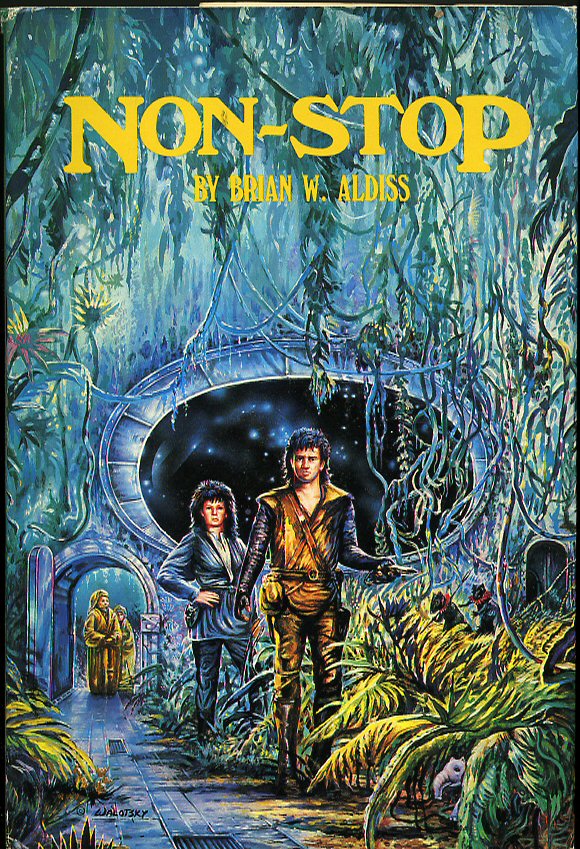
1. Aldiss, Brian. Non-Stop [Faber and Faber, 1958]

Curiosity was discouraged in the Greene tribe. Its members lived out their lives in cramped Quarters, hacking away at the encroaching ponics. As to where they were - that was forgotten. Roy Complain decides to find out. With the renegade priest Marapper, he moves into unmapped territory, where they make a series of discoveries, which turn their universe upside-down... (GoodReads)

The best #GenerationStarship novel I’ve ever read. Thought-provoking, with an ending that still manages to unsettle many years later. Also make rats utterly terrifying. (G)


2. Ballard, J. G. The Atrocity Exhibition [Jonathan Cape, 1970]

Easily one of the 20th century's most visionary writers, J. G. Ballard still lives far ahead of his time. Called his "prophetic masterpiece" by many, The Atrocity Exhibition practically lies outside of any literary tradition. Part science fiction, part eerie historical fiction, part pornography, its characters adhere to no rules of linearity or stability. (GoodReads)

A reality-bending literary experiment that will elicit strong negative reactions from most readers, but will be an exercise in mind-expansion for a lucky few. Possible side effect: may convince you that you are going mad. (G)


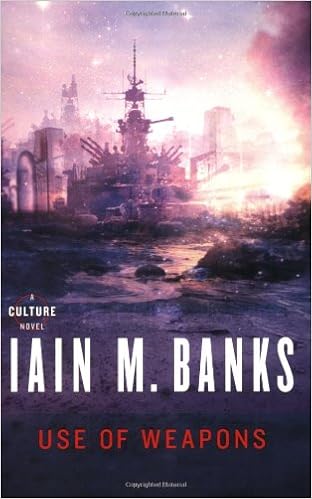
3. Banks, Iain M. Use of Weapons [Orbit, 1990]

Cheradenine is an ex-special circumstance agent who had been raised to eminence by a woman named Diziet. Skaffen-Amtiskaw, the drone, had saved her life and it believes Cheradenine to be a burnt-out case. But not even its machine intelligence can see the horrors in his past. (GoodReads)

Two intertwined stories, one of which runs forwards and the other backwards. Easily the most disturbing Culture novel, and the one that most clearly tackles the moral ambiguity of the imperialistic utopia. A deeply disturbing, albeit profound #SpaceOpera. (G)


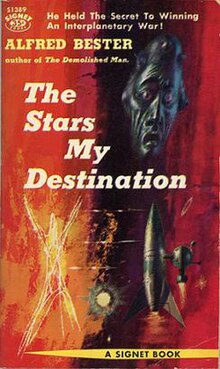
4. Bester, Alfred. The Stars, My Destination [Signet Books, 1957].

In this pulse-quickening novel, Alfred Bester imagines a future in which people "jaunte" a thousand miles with a single thought, where the rich barricade themselves in labyrinths and protect themselves with radioactive hit men - and where an inarticulate outcast is the most valuable and dangerous man alive. (GoodReads)

A science-fictional take on The Count of Monte Cristo, featuring one of genre’s most memorable antiheroes. The rare “classic” work that doesn’t, for the most part, feel horribly dated. Highly deserving of its reputation. (G)


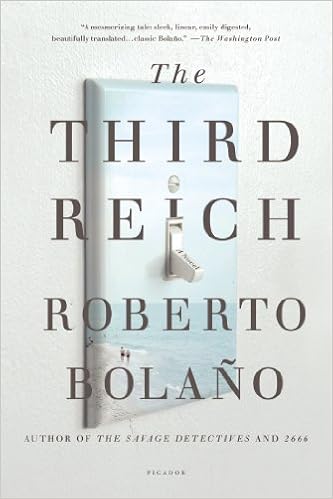
5. Bolaño, Roberto. The Third Reich [Farrar, Straus & Giroux, 2011]

On vacation with his girlfriend, Ingeborg, the German war games champion Udo Berger returns to a small town on the Costa Brava where he spent the summers of his childhood. Soon they meet another vacationing German couple, Charly and Hanna, who introduce them to a band of locals—the Wolf, the Lamb, and El Quemado—and to the darker side of life in a resort town. Soon he and El Quemado are enmeshed in a round of Third Reich, Udo’s favorite World War II strategy game, and Udo discovers that the game’s consequences may be all too real. (GoodReads)

Dark, ambiguous work of #MagicRealism, about board games, and a great introduction to Bolaño--a supremely talented writer. (G)


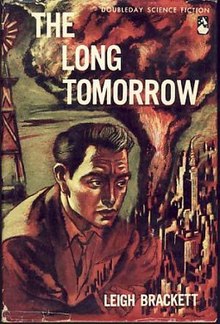
6. Brackett, Leigh. The Long Tomorrow [Doubleday, 1955]

Two generations after destruction rained down upon America's cities, the population is scattered into small towns. Cities are forbidden by law, as is scientific research. Rumors abound of a secret place known as "Bartorstown", where science is untrammelled by interference or hatred. A youth named Len Colter, developing an unhealthy thirst for knowledge exacerbated by the discovery of a forbidden radio, sets out on a long road. During this journey, he will change his mind many times before determining the correct direction for himself, and the benighted America in which he lives. (GoodReads)

Pioneering work of #PostApocalyptic fiction. Significantly better than some of its better-known contemporaries. (G)


7. Brunner, John. Stand on Zanzibar [Doubleday, 1968]

Written in a way that echoes John Dos Passos' U.S.A. Trilogy, "Stand on Zanzibar "is a cross-section of a world overpopulated by the billions. Where society is squeezed into hive-living madness by god-like mega computers, mass-marketed psychedelic drugs, and mundane uses of genetic engineering. Though written in 1968, it speaks of 2010, and is frighteningly prescient and intensely powerful. (GoodReads)

Visionary work of #NearFuture science fiction. Anticipates the zeitgeist (if not the particulars) of the post-millennial world. (G)


8. Butler, Octavia. Parable of the Sower [Four Walls Eight Windows, 1993]

When unattended environmental and economic crises lead to social chaos, not even gated communities are safe. In a night of fire and death Lauren Olamina, a minister's young daughter, loses her family and home and ventures out into the unprotected American landscape. But what begins as a flight for survival soon leads to something much more: a startling vision of human destiny... and the birth of a new faith. (GoodReads)

#PostApocalyptic novel that, following Earth Abides, is really about how to pick up the pieces. Features strong characters and Butler's eloquent prose, making it significantly better than Earth Abides. Also makes dogs utterly terrifying. (G)


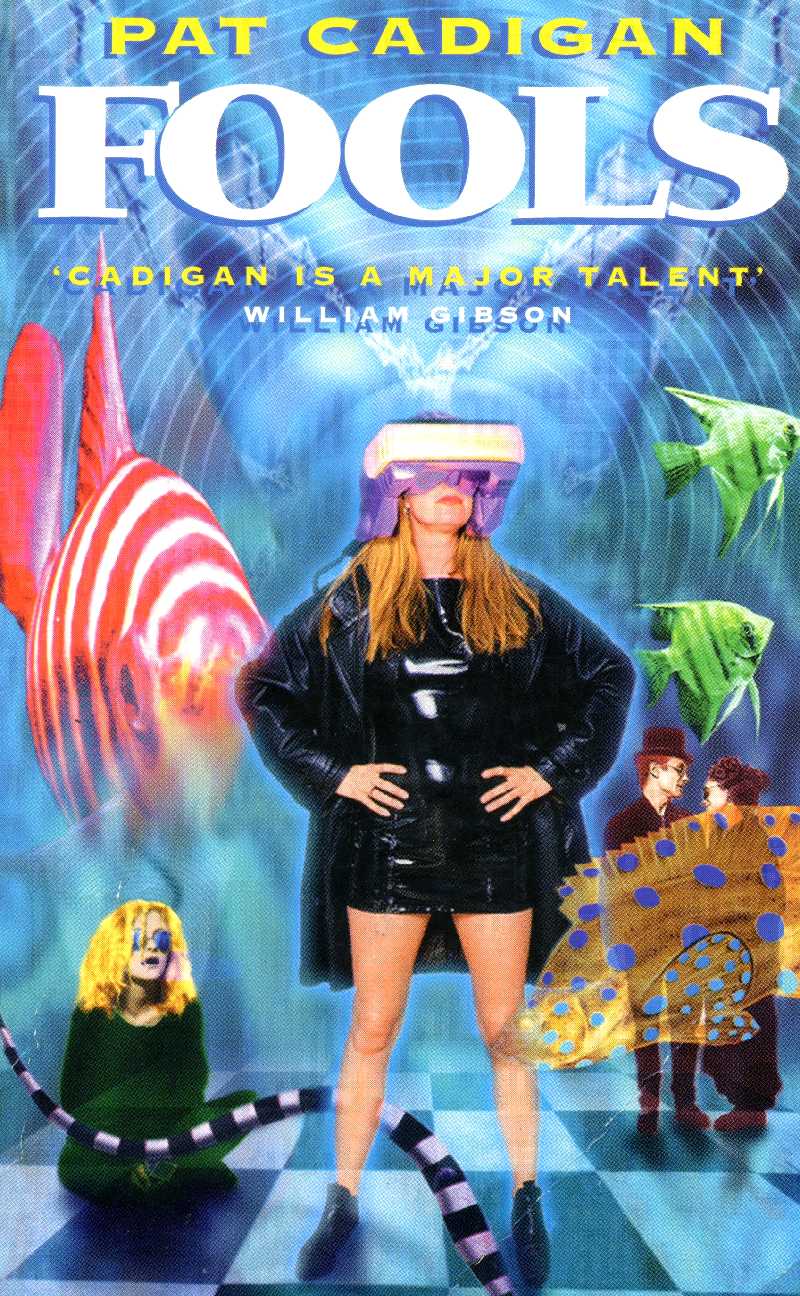
9. Cadigan, Pat. Fools [Spectra, 1992]

When Marva, a Method actress, awakens in a hologram pool, carrying in her head the memory of a murder, she must think fast to find out whose life she is living and to elude the Escort Service assassins who are pursuing her. (GoodReads)

A #PostCyberpunk crime novel about Method acting--need anything else be said? The rare science fiction novel that explores the sociological effects of technological advancement in a non-superficial way. (G)


10. Delaney, Samuel L. Dhalgren [Bantam, 1974]

Bellona is a city at the dead center of the United States. Something has happened there…. The population has fled. Madmen and criminals wander the streets. Strange portents appear in the cloud-covered sky. And into this disaster zone comes a young man–poet, lover, and adventurer–known only as the Kid. Tackling questions of race, gender, and sexuality, Dhalgren is a literary marvel and groundbreaking work of American magical realism. (GoodReads)

Challenging experimental novel centered on an extremely unreliable narrator; requires multiple readings to appreciate the literary pyrotechnics. (G)


11. Dick, Philip K. A Scanner Darkly [Doubleday, 1977]

Substance D is not known as Death for nothing. It is the most toxic drug ever to find its way on to the streets of LA. It destroys the links between the brain's two hemispheres, causing, first, disorientation and then complete and irreversible brain damage. The undercover narcotics agent who calls himself Bob Arctor is desperate to discover the ultimate source of supply. But to find any kind of lead he has to pose as a user and, inevitably, without realising what is happening, Arctor is soon as addicted as the junkies he works among... (GoodReads)

Thinly fictionalized, #NearFuture SF that reflects Dick’s own struggles with substance abuse. Gritty, real and moving. (G)


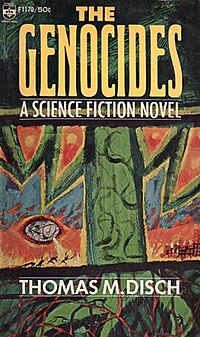
12. Disch, Thomas M. The Genocides [Berkley Books, 1965]

In this harrowing novel, the world's cities have been reduced to cinder and ash and alien plants have overtaken the earth. The plants, able to grow the size of maples in only a month and eventually reach six hundred feet, have commandeered the world's soil and are sucking even the Great Lakes dry. In northern Minnesota, Anderson, an aging farmer armed with a Bible in one hand and a gun in the other, desperately leads the reduced citizenry of a small town in a daily struggle for meager existence. Throw into this fray Jeremiah Orville, a marauding outsider bent on a bizarre and private revenge, and the fight to live becomes a daunting task. (GoodReads)

Chilling #AlienInvasion story that imagines human beings as pests in a gardening venture. (G)


13. Gibson, William. Neuromancer [Ace, 1984]

Case had been the sharpest data-thief in the business, until vengeful former employers crippled his nervous system. But now a new and very mysterious employer recruits him for a last-chance run. The target: an unthinkably powerful artificial intelligence orbiting Earth in service of the sinister Tessier-Ashpool business clan. With a dead man riding shotgun and Molly, mirror-eyed street-samurai, to watch his back, Case embarks on an adventure that ups the ante on an entire genre of fiction. (GoodReads)

The prototypical #cyberpunk novel that spawned a million clichés. Holds up surprisingly well given for a forty-year old piece of #NearFuture science fiction—a testament to Gibson’s vision and superior writing. (G)


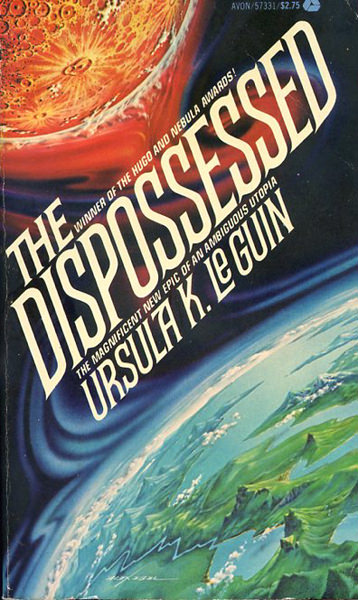
14. LeGuin, Ursula K. The Dispossessed [Harper & Row, 1974]

Shevek, a brilliant physicist, decides to take action. He will seek answers, question the unquestionable, and attempt to tear down the walls of hatred that have isolated his planet of anarchists from the rest of the civilized universe. To do this dangerous task will mean giving up his family and possibly his life--Shevek must make the unprecedented journey to the utopian mother planet, Urras, to challenge the complex structures of life and living, and ignite the fires of change. (GoodReads)

Anarcho-syndicalist #Utopian novel that's deliciously ambivalent on the notion of utopia. Somewhat dated but still highly readable. (G)


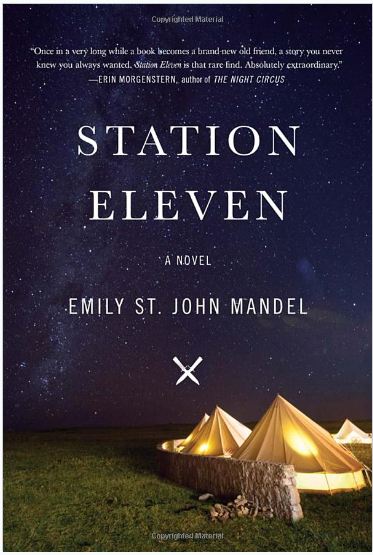
15. Mandel, Emily St. John. Station Eleven [Knopf, 2014]

An audacious, darkly glittering novel set in the eerie days of civilization's collapse, Station Eleven tells the spellbinding story of a Hollywood star, his would-be savior, and a nomadic group of actors roaming the scattered outposts of the Great Lakes region, risking everything for art and humanity. (GoodReads)

Most literary of literary #PostApocalyptic novels, which takes place before, during and after the apocalyptic event. A spiritual sequel to The Road, only better. (G)


16. Mitchell, David. Cloud Atlas [Random House, 2004]

Cloud Atlas begins in 1850 with Adam Ewing, an American notary voyaging from the Chatham Isles to his home in California. Abruptly, the action jumps to Belgium in 1931, where Robert Frobisher, a disinherited bisexual composer, contrives his way into the household of an infirm maestro....From there we jump to the West Coast in the 1970s and a troubled reporter named Luisa Rey, who stumbles upon a web of corporate greed and murder that threatens to claim her life. And onward, with dazzling virtuosity, to an inglorious present-day England; to a Korean superstate of the near future where neocapitalism has run amok; and, finally, to a postapocalyptic Iron Age Hawaii in the last days of history. (GoodReads)

Foz Meadows once called Cloud Atlas a "masterclass in voice," which it is. Its six constituent parts could all stand on their own, yet are instead perfectly assembled into the meta-novel, which is nothing short of remarkable. (G)


17. Russo, Richard Paul. Ship of Fools [Ace, 2001]

Home to generations of humans, the starship Argonos has wandered aimlessly throughout the galaxy for hundreds of years, desperately searching for other signs of life. Now an unidentified transmission lures them toward a nearby planet-and into the dark heart of an alien mystery. (GoodReads)

Meditative, haunting #GenerationStarship novel that garnered some acclaim on publication but has since receded into obscurity--a shame. Allegorical treatment of Catholicism, a subject I find interesting (G)


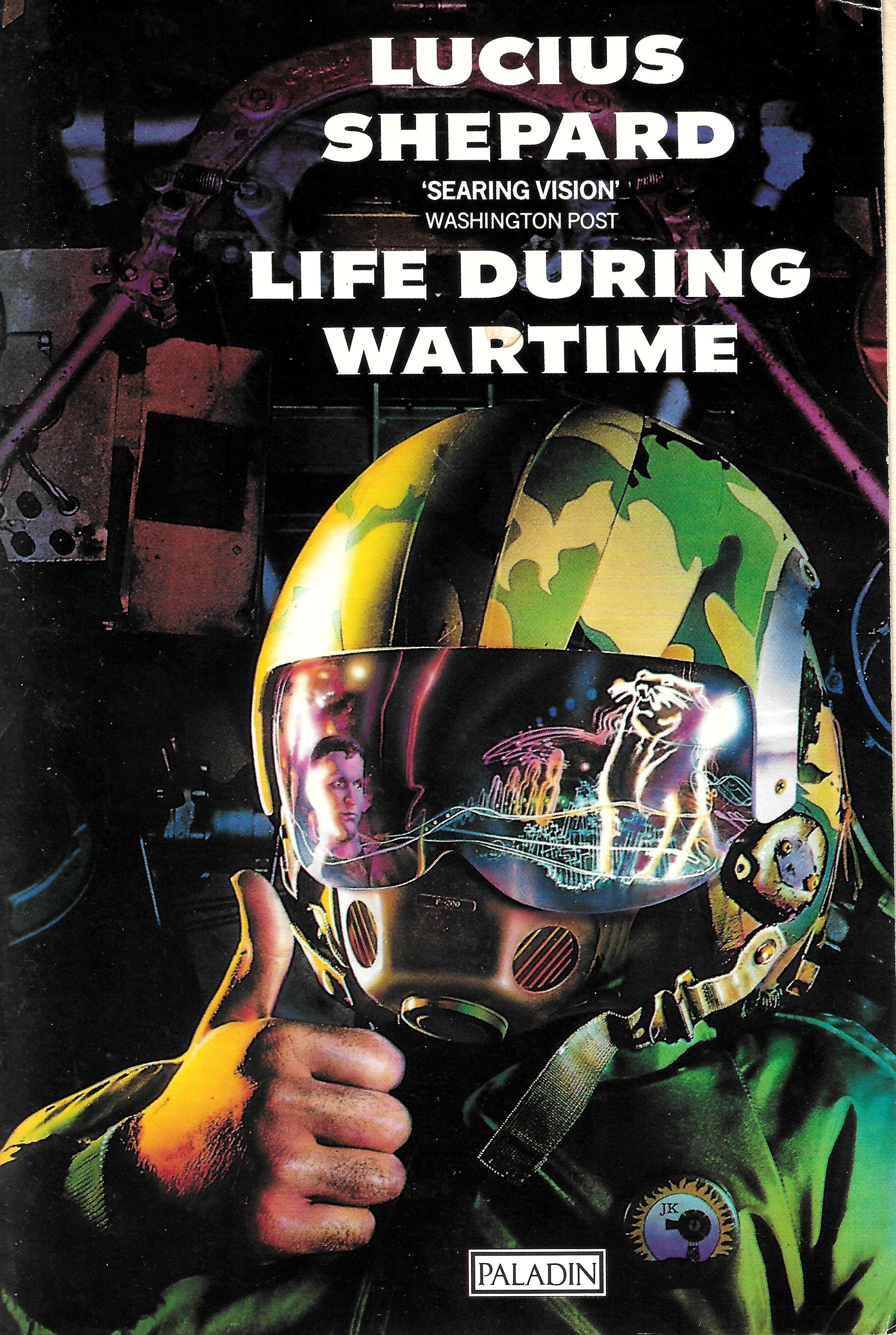
18. Shepard, Lucius. Life During Wartime [Bantam, 1987]

David Mingolla soon learns that escape from the rotten jungles of Guatemala is impossible – he is once more a pawn of secret, ruthless forces lusting for world domination. They try to dominate David by ordering him to kill the woman he loves. (GoodReads)

Uneven and at times problematic work of #FutureWar (see: white man in jungle trope). Sheer quantity of graphic violence and explicit sex will also be a barrier for some readers. However, in its best moments, Life During Wartime captures the pointless, psychedelic horror of war. Grimdark with a purpose (G)


19. Strugatsky, Arkady and Boris. Roadside Picnic [Macmillan, 1972]

Red Schuhart is a stalker, one of those young rebels who are compelled, in spite of extreme danger, to venture illegally into the Zone to collect the mysterious artifacts that the alien visitors left scattered around. His life is dominated by the place and the thriving black market in the alien products. But when he and his friend Kirill go into the Zone together to pick up a “full empty,” something goes wrong. And the news he gets from his girlfriend upon his return makes it inevitable that he’ll keep going back to the Zone, again and again, until he finds the answer to all his problems. (GoodReads)

Like The Genocides, and #AlienInvasion novel where humans don't really factor in to the calculus of the visitors--one way or the other. Fascinating, challenging and full of mysteries to be unlocked on re-read. (G)


20. Tidbeck, Karin. Jagganath [Cheeky Frawg Books, 2011]

Enter the strange and wonderful world of Swedish sensation Karin Tidbeck with this feast of darkly fantastical stories. Whether through the falsified historical record of the uniquely weird Swedish creature known as the “Pyret” or the title story, “Jagannath,” about a biological ark in the far future, Tidbeck’s unique imagination will enthrall, amuse, and unsettle you.  (GoodReads)

Remarkable collection of weird fiction, some of which I've read in the original Swedish. Strongly rooted in folklore and myth, and almost 
militantly economical. Highly recommended. (G)


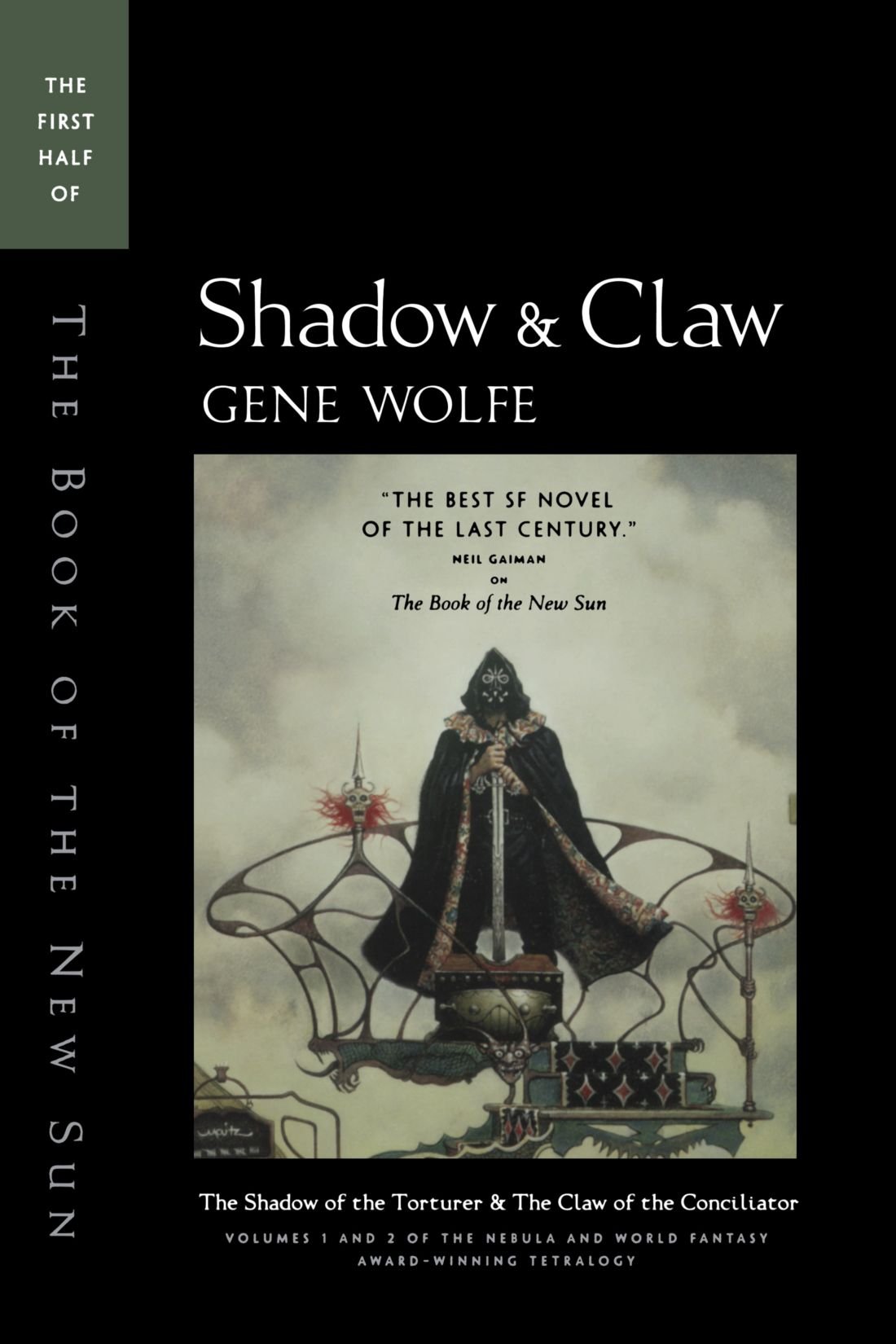
21. Wolfe, Gene. Shadow and Claw [Simon & Schuster 1980/81]

The Shadow of the Torturer is the tale of young Severian, an apprentice in the Guild of Torturers on the world called Urth, exiled for committing the ultimate sin of his profession -- showing mercy toward his victim. The Claw of the Conciliator continues the saga of Severian, banished from his home, as he undertakes a mythic quest to discover the awesome power of an ancient relic, and learn the truth about his hidden destiny. (GoodReads)

Often hailed as a great work of epic fantasy, though it is actually an example of #DyingEarth science fiction. A literary puzzle box; begs to be re-read. (G)


***

POSTED BY: The G--purveyor of nerdliness, genre fanatic and Nerds of a Feather founder/administrator, since 2012.