Showing posts sorted by relevance for query king's blood. Sort by date Show all posts

Tuesday, April 16, 2013

Second Opinion: The Dragon's Path/The King's Blood by Daniel Abraham


As much as we love each other here at Nerds of a Feather, we sometimes do have disagreements. One disagreement that The G and I cannot seem to iron out revolves around our respective views of Daniel Abraham's new epic fantasy series, The Dagger and the Coin. The G wrote excellent reviews of Book 1, The Dragon's Path (which he gave an 8/10) and Book 2, The King's Blood (which he gave a 6/10). My opinion is actually the inverse of his. Whatever the case, I see no reason to reinvent the wheel, which The G has done quite well, so instead of providing a traditional review of both books, I will simply state what I feel were the strengths and weaknesses of each installment of the series. This "Second Opinion" is my contribution to our Nerds of a Feather Anniversary Celebration!


The Dragon's Path

I literally flew through the book, gobbling it up in a few days. It is fantastically well written for a fantasy series, featuring crisp and clear prose. Further, Abraham deals with the issue of morality in a unique and inventive way. Geder, for instance, is pure of heart but evil in action. But Abraham grapples with morality in even more sophisticated a manner through the use of Dawson, a blue-blood (noble) in the truest sense of the term. Dawson fights to uphold the nobility; he fights for tradition, for what he thinks is right, true, and just. But in the process, he emerges as something of an anti-hero. I found myself rooting for his victory and rejoicing in his good fight while reviling his cause. What is morality, Abraham suggests, when what is moral and good to one is truly repulsive to another?  

Of course, The Dragon's Path makes no qualms about the immorality of atrocity. Abraham includes a number of spine-chilling scenes, acts of such emotional power that we rarely find in works of epic fantasy. One of the most horrible atrocities I have encountered occurs in this novel. But the presentation of this atrocity in a lighthearted manner, without celebrating its grit, its blood, or gore, make it all the more disturbing.  

Nonetheless, I had a number of quibbles with The Dragon's Path. As I see it, the book had four main weaknesses. First, the world building is a bit splotchy. Abraham introduces the idea of 13 races, but fails to flesh this idea out throughout the course of the novel. Perhaps it would have been more effective, as The G mentions in his review, had Abraham introduced the various slave races in a more gradual and natural way. The way he has it set up now, I am not sure that the 13 races actually adds anything to this series. 

Second, Abraham only hints at a broader narrative without really beginning to engage in it. Failing to introduce the main story arc, even in a limited way, detracts from the power of the story. Why continue reading the series when we have little idea where it is going?

The answer, of course, should have been the characters. Had Abraham created a character-driven fantasy with protagonists and antagonists about whom the reader truly cares, then that would overshadow the lack of a main story arc. Sadly, Abraham fails to do so. (A perfect example of a writer who does this well is Steven Erikson in The Malazan Book of the Fallen. One has little clue of the overall story line even after the first four or five books. But Erikson creates fantastic characters, an inspiring formula, and brilliant world building that keeps the reader engaged nonetheless). Although I enjoyed watching Cithrin grow up and seeing Marcus grow increasingly more protective over her, I never really began to care for the main characters. 

Finally, the novel only hinted at tenuous connections between the characters. While I understood that they would play more important and interconnected roles as the series progressed, I found myself wondering why each of the four main viewpoints did not connect to the others in a more intuitive way.

In the end, I did enjoy The Dragon's Path. The writing is clear and engaging, and Abraham deals with morality and atrocity in a more engrossing way than most other epic fantasies I have read. But the problems in its story arc and its characters do not warrant the fantastic score The G gave.  

The Math

The G's Score: 8/10

Jemmy's Second Opinion: 6/10 "Still enjoyable, but the flaws are hard to ignore"


The King's Blood    

I also find myself disagreeing slightly with The G's assessment of The King's Blood. In this book, Abraham presents is a more complete package than he did with the first installment of the series. The King's Blood is well written and engaging; I zipped through it, finishing the book it in even less time than I finished the first volume. To me, Abraham transformed most of the weaknesses of The Dragon's Path into strengths in The King's Blood (except the 13 races, which still seems to add little to the broader story).

First, and most importantly, I began to care about the characters. Cithrin truly comes into her own as a bank manager and as a political and economic mind. And although not all her decisions feel natural or make sense (her relationship with and protection of Geder, for instance--in this, I do agree with The G's criticisms), I remained invested enough in the character for my suspension of disbelief mechanism to kick in. After all, Cithrin is a fantastic character: highly intelligent, ambitious, fearless, and eminently practical. Marcus becomes more sympathetic and complex, as he becomes increasingly torn between his duties as Cithrin's head of security and his growing fatherly affections for her. Geder, always repulsive, continues to portray the child-like quality of evil. Child-like purity, after all, is composed of equal parts good and evil, parts which at times seem to be at war within Geder's personality. Dawson, ever the challenger for his particular sense of justice, fights the good fight, engaging in a battle he knows he is unlikely to win. And Clara, Dawson's wife, finds herself pushed into a decision that she otherwise would not have even thought up. It is the characters that make the story, and The King's Blood does a much better job in getting the reader invested in its characters, whether we like them or not.

Equally importantly, the connections between the protagonists and antagonists become clear as a sunny day. The advent of the spider priests (under Geder's protection), Marcus's personal quest, Master Kit's existence, Cithrin's attempts to establish herself in the bank, and Dawson's battle to save the kingdom point to where Abraham is headed with the series, and kept me much more engaged than did the first volume of the series.  

!SPOILER AHOY!

One of The G's biggest criticisms of The King's Blood is the fact that Geder was chosen as Lord Regent instead of Dawson. This, The G argues, makes no sense. But I do not feel that this should be seen as a flaw in The King's Blood. Instead, it is a flaw of the first book of the series, The Dragon's Path. Geder Palliako was the obvious choice or Lord Regent once he became the protector and adoptive father of the crown prince. So while I agree with The G that Dawson was the obvious first choice for Lord Regent, I also recognize that his fate was sealed after Geder became the crown prince's gallant protector. Instead of being a problem with The King's Blood, let's add it to the [growing] list of problems with The Dragon's Path.  

!SPOILER ENDED, READ ON, OH FEARLESS READER!

The King's Blood, in the end, does much to invigorate the series (which has a lackluster beginning). It is well paced, interesting, and ties the otherwise disparate story lines into an organic whole. While there are, as The G points out, some forehead slapping moments, they are offset by wonderful character development and a fast-paced character-driven story. Whereas I am hesitant to give an emphatic recommendation to The Dragon's Path, The King's Blood gets two thumbs up.  

The Math

The G's Score: 6/10 

Jemmy's Second Opinion: 8/10 "Well worth your time and attention"

[Read about our scoring process here, and learn why we say "no" to grade inflation.]

Wednesday, September 12, 2012

Microreview [book]: The King's Blood by Daniel Abraham

The King's Blood by Daniel Abraham [Orbit 2012]


The Meat

The King's Blood is book 2 of Abraham's trilogy The Dagger & The Coin, and sequel to The Dragon's Path. In that book's review, I lauded Abraham for his engaging, character-driven approach to epic fantasy, while criticizing the empty geography and underdeveloped 13 "races" of humanity he introduces us to. The King's Blood picks up right where it left off, and for the first 2/3 of the book at least, possesses all the same charms and drawbacks of its predecessor. This very much includes the lack of "epic" events in favor of more intimate, relationship-driven drama, which may turn some readers off, but which I find refreshing in a genre filled with cataclysm and cliche.

It was with some disappointment, then, that I reached the pivotal moment of The King's Blood, the point beyond which "nothing will ever be the same again...ever!" If my attitude strikes you as weird, let me elaborate. But first, let me change font color so that those who want to avoid the mild, though inevitable, spoilers can skip past.

!WARNING: SPOILERS AHOY!

So here's the problem: now that we're a good 900 pages into the series, we have a pretty good idea of what the characters are like. Dawson is an unbending patriot and arch-conservative; Clara is his dutiful wife; Cithrin is a young, talented banker who is also probably an alcoholic; Marcus is a gruff but caring war veteran who sees Cithrin as a surrogate for the daughter who was murdered; and Geder is an affable, bookish sort who backpeddles into a position of power and is prone to making arbitrary decisions--including one to massacre the city of Vanai--based on moments of personal humiliation. Now, though, our characters begin acting in ways that don't fit into what we know about them. Geder in particular suddenly takes the fast track to Stalinhood, while Cithrin magically transforms from a clever but still raw banking prospect in a small city to a master of political intrigue in a foreign capital. 

Making matters worse, the situation itself is dubious. Palliako's rise is at least partially attributable to Dawson's personal complicity in the intrigues that lie at the heart of The Dragon's Path. With those settled, you'd think this close childhood friend would return to his rightful place at the side of the king. But no--when Simeon dies, Palliako--not Dawson--is named Lord Regent. This makes no sense. 

The introduction of Cithrin into this storyline is also problematic. When things come to a head, she seems to know what to do and how to do it better than people who have a) lived at court their whole lives; and b) lived in Camnipol their whole lives. This also makes no sense. 


!SPOILERS FINISHED!

The way the pivotal scene plays out is just too convenient for my tastes. Its purpose, ostensibly, is the same as the Ned-loses-his-head moment in Game of Thrones. But I'm hard-pressed to think of a single unlikely or unconvincing aspect of that event, whereas this one is full of them. Given how much I like the series, this kind of drove me nuts

There are other problems as well. We still don't get enough sense of geography, and the 13 "races" are still underdeveloped. Plus now we have way too much Clara. Abraham was probably going for something along the lines of Catelyn Stark, but Clara lacks her depth and authenticity, coming off instead like the Lady of Winterfell's cardboard cutout. This stands in sharp contrast to Abraham's other characters, who are complex and relatable. It's not a "male author can't write female characters" thing, as Cithrin is probably the best-developed character in the whole series. So yeah, not sure what's going on there.

All that said, The King's Blood is still a good read, and I am still looking forward to the final installment (which I hear is in the editing phase already). Abraham's prose outshines most others working in fantasy, and he's got a knack with characterization--the two most important elements of writing. Plus things are set up well for a return to form in book 3.

The Math

Baseline Assessment: 7/10.

Bonuses: +1 for the unusual, small-cast intimacy; +1 for a good setup for book 3.

Penalties: -1 for all the "gee that's really convenient, isn't it" moments; -1 for excessive Clara; -1 for Cithrin's ultimately unconvincing superpowers.

Final Verdict: 6/10. "Still enjoyable, but the flaws are hard to ignore"

[Think our scores are too low? Read about our scoring process here, and learn why we say "no" to grade inflation.]
Monday, May 20, 2013

Microreview [book]: The Tyrant's Law by Daniel Abraham

Abraham, Daniel. The Tyrant's Law [Orbit, 2013]


The Meat

I've been on a bit of a roll with fantasy lately, going from strength to strength with Douglas Hulick's excellent Among Thieves and Elizabeth Bear's mesmerizing Range of Ghosts (review forthcoming). So I guess a little part of me expected to be disappointed by The Tyrant's Law [Orbit, 2013], book three in Daniel Abraham's epic fantasy series The Dagger & the Coin. After all, though I loved The Dragon's Path, I felt the wheels came off a bit in The King's Blood, and it wasn't clear to me whether Abraham would get the thing back on track. Fans of the series will be happy to note that The Tyrant's Law is easily the best installment in the series, and marks Abraham as an unusually daring and thought-provoking fantasy author.

(WARNING: mild spoilers follow.)

In the aftermath of Antea's victory over Asterilhold and the crushing of Dawson Kalliam's rebellion, the world has suddenly become a much creepier place. Basrahip, High Priest and advisor to Palliako, claims that Kalliam only rebelled at the behest of the chitinous-skinned Timzinae, one of the twelve additional races of humanity created by the dragons who once ruled the world, and the alleged "loyal servants of the dragons." Their supposed purpose? To stop the re-emergence of the Goddess, who the priests claim was thwarted into hiding by the "evil" dragons.

Geder Palliako's armies, aided by the priests of the Spider Goddess, have therefore set their sights on Sarakal and Ellesai, where the Timzinae predominate. Unfortunately, the race war that ensues doesn't go the Timzinae's way. Oh, and Cithrin--the young Magistra for the Medean Bank who once saved Palliako's life but then kinda freaked and hightailed it out of town when he executed someone right in front of her? She's been sent to apprentice at a bank chapter run out of a city in Antea's crosshairs. Uh-oh. And there's no Marcus Wester to keep her safe either--after all, he's gone off with ex-priest/actor Master Kit to find something to kill a big spider with.

There are two ways to read The Tyrant's Law. One is as a middle chapter in an epic adventure told through multiple character perspectives, a la George R. R. Martin. In this sense, the book largely succeeds. The characters are brilliant, the story well-paced and the writing is crisp and engaging. Cithrun, Marcus, Yardem and Kit are as likable as ever, and I'm also happy to say that the Clara chapters (which had an annoying Cataelyn Stark-goes-Downton Abbey feel to them in The King's Blood) are hugely improved. She has a more complex subjectivity now, and Abraham takes her story arc to interesting places.

That said, some of the problems endure. The world, for one, still feels a bit threadbare--characters travel across wide, featureless expanses as if by express rail or teleportation. And the thirteen races of humanity remain an interesting but underdeveloped idea (though The Tyrant's Law does more to rectify this than either previous installments in the series). Of greater concern were the occasions where I couldn't really figure out what motivated the characters (Cithrin especially) to make certain pivotal decisions. And I found myself wondering (again) if these moments are sacrifices of Abraham's prolific pace of writing. After all, managing two single-authored and one co-authored series that are being published concurrently, and yearly, is a tall order for any human being. While it's a testament to Abraham's skill as a writer that this series is as good as it is, I think it's fair to say that he might be spreading himself a bit thin.

Big Ideas

There is, of course, another way to read The Tyrant's Law--as a novel of ideas. The genre doesn't exactly produce a lot of these, but it does happen--see, for example, my reviews of Sapkowski's excellent Witcher books. As the title implies, The Tyrant's Law is a meditation on tyranny. This in and of itself isn't all that unique--gritty fantasy is already full of stand-ins for sadists like Vlad Tepes and bloodthirsty conquerors like Timur the Great. But the nature of that tyranny, and the horrors that stem from it, feel distinctly modern in this case.

Antea, after all, seeks not only to conquer the world, but to "cleanse" and remake it. And when I say "cleanse," I mean "of all those whose blood is supposedly tainted by association with the dragons" (there's an irony there, which will be evident to anyone who reads the book). That association is conceived as both collective and as an immutable consequence of birth, rather than belief, while the mission, so to speak, is to completely and utterly remove that taint in systematized fashion. This is a thoroughly modern way of thinking, and stands in stark contrast to the unsystematized, "sack-and-slaughter" violence of pre-modernity. Even the language used by the cultists to sow the seeds of distrust and enmity towards the Timzinae are familiar to students of the 20th century--"roaches" was in fact a term used by Hutu Power to dehumanize Tutsis, while accusations of collective guilt for phantom "conspiracies" were central to the experience of Jews under Hitler and Kulaks under Stalin.

The victimization of the Timzinae takes place in stages, much as Hitler's victimization of Jews began with harassment, moved on to a curtailment of rights, proceeded to ghettoization and devolved into mass slaughter. We watch, powerless, as these discourses spread across the population, infecting otherwise good people until there are very few left who do not accept them as truth.

It's true that genocide is the ultimate grimdark endgame, and those who weary of all the grim darkness may balk at reading about this kind of thing. But let me say this: Abraham takes us down this path to hell with a minimum of gore. There are no extensive flaying scenes, no graphic rapes or highly detailed descriptions of organ matter being removed from the body. The restrained approach is refreshing, and still highly effective at inducing a sense of dread.

One thing did trouble me, though. Palliako has to this point been presented as a fairly likable and relatable guy, an affable, bookish sort who gets bullied around a bit and probably reminds you of a bookish sort you know, if not yourself. We're clearly supposed to like him and sympathize with him, yet be simultaneously repulsed by what he ends up doing. I see two purposes to this approach: to suggest that "pure evil" is a fiction and to argue that we create our own monsters from decent folk.

Abraham explores this territory deftly, but I can't help but find it problematic in some respects as well. Even if we just stick to the psychological side of things (and ignore sociological, historical or economic factors), tyrants of this sort tend to come in two varieties: extreme zealots (e.g. Hitler) and paranoid sociopaths (e.g. Stalin). Geder is neither. He isn't even a sadist, the kind of who enjoys the personalized violence of rape or torture. So what, exactly, is motivating him? Abraham gives some answers (which I won't spoil for you), but I found them unsatisfying--reinforcing the general criticism of character motivation.

One Last Thing...

Leaving heavy topics like racial stigmatization and the nature of tyranny aside for the moment, I should mention that there's a scene at the end of the book that potentially changes everything. Or, at least, I think it changes everything. It's the kind of ambiguous cliffhanger you might find on a show like Twin Peaks or Lost. If I'm right about what it means (and I'm increasingly convinced that I am), then Abraham has done something extremely clever starting way back in The Dragon's Path, and done so with enough subtlety that it would be very difficult to pick up on until now. I'm chomping at the bit to see if I'm right.

The ending is, in a way, emblematic of what makes this series so good, and so addictive. Sure it has its problems, and some are fairly serious, but The Tyrant's Law has considerably more strengths than weaknesses, and gets bonus points for having something legitimate to say about human nature. That marks The Tyrant's Law as an unusually smart installment in an unusually likable fantasy series.

The Math

Baseline Assessment: 8/10

Bonuses: +1 for doing more than just telling a good story; +1 for OMG the ending!

Penalties: -1 for character motivation issues; -1 for the persistent lack of geography.

Nerd Coefficient: 8/10. "Well worth your time and attention."

Read about our scoring system, in which a sufficiently random sample of books would normally distribute in a bell curve around a mean of 5, here.

Monday, May 13, 2013

Microreview [book]: Promise of Blood by Brian McClellan

Brian McClellan, Promise of Blood [Orbit, 2013]


The Meat

If ever a title gives away the contents of the book, it's this one. Brian McLellan promises blood, and blood he delivers in spades. 

The story begins with a coup d'etat (straight out of the French Revolution, with all its attendant savagery and gore). In a bold move, Field Marshal Tamas, a powerful powder mage, (literally) guillotines the monarchy and kills off the corrupt cabal of sorcerers who upheld the King's rule. Tamas and his small cadre of powder mages overthrow the political system, leading Tamas to declare "The Age of Kings is dead... and I have killed it." But his great victory is haunted by a counterrevolution, internecine struggle, and an important but nebulous mystery: in their dying breaths, each member of the royal cabal Tamas had assassinated whispered, "You can't break Kresimir's curse." Worried about the implications of their dying message, Tamas sends Adamat, a police investigator with a special Knack of a perfect memory, to investigate. At the same time, Tamas also sends his son Taniel (a talented powder mage accompanied by a "savage" girl, Ka-Poel) to track down an uncommonly powerful member of the royal cabal who escaped assassination. Gradually, Tamas begins to realize that his revolution has triggered a series of events that may change the world forever. 

Promise of Blood is Brian McClellan's debut novel and the first book in his Powder Mage Trilogy. It is on the whole a fast-paced, enjoyable, and well-written dark fantasy, one that finds similarities not only with Brandon Sanderson's Mistborn series, but also with the recent trend of grit or grimdark in high fantasy.  The sheer brutality featured in Promise of Blood at times reminded me of Joe Abercrombie's First Law trilogy. Thus fans of the grittier turn in the genre will find much to appreciate in McClellan's debut.

One of the most interesting aspects of this book is its three overlapping magic systems. First, powder magic. With this, McClellan is taking a page (or a chapter) from Brandon Sanderson's Mistborn series. The similarities with Mistborn's allomancy are striking. Powder mages can consume gunpowder, which gives them heightened abilities and senses and dulls pain. Powder mages can use their magic to explode gunpowder, float bullets, curve them around difficult to reach areas, and aim with superb accuracy. Second, the Else. This is a more traditional magic used by members of the royal cabal and the Predeii. It involves manipulating "the Else," the energy that surrounds us in our world. And sorcerers must put on their special rune-based gloves in order to do so. These first two overlapping magic systems create an interesting tension between the upstart powder mages and their traditional royal cabal rivals. Third, voodoo...? Ka-Poel, the "savage" who accompanies Taniel, uses a special type of magic (that McClellan leaves unexplained) that involves the use of dolls and other organic elements associated with voodoo.

McClellan is firmly entrenching himself in the "grittier," darker tradition of recent fantasy, and at times it feels as if his writing uses brutality for no other purpose than shock value. Now I am not opposed to brutality, gore, and death. I have had no difficulty getting through even the most brutal scenes of Steven Erikson's Malazan Book of the Fallen... after all, the brutality in those books serves an overall purpose. But at times, Promise of Blood seems to use violence for shock value. This is something we at Nerds of a Feather have complained about in the past (I won't belabor this point, but if you are interested see here). McClellan's weird fascination with severed fingers, in particular, highlights this point.

Promise of Blood also suffers from rather weak treatment of women. Adamat highlights his world's pervasive misogyny when he thinks: "Damned woman. What he'd give for an obedient wife." This is not a problem in itself. People can be misogynistic in the real world, so it is understandable that characters in a fantasy world may be as well. But McClellan does not complicate his world's misogyny through the introduction of nuanced and strong female characters. Granted, his female characters (the Predeii and Ka-Poel) wield perhaps the most powerful magics. But his female protagonists (and antagonists) all are annoyingly weak in some way, have sordid pasts, or lust for power. Nila is a weak and indecisive maid/laundress, one who keeps finding herself thrust into situations she cannot influence. Vlora, Taniel's fiancee, is talented in powder magic, but weak in resolve (she cheats on him before the story begins) and spends most of the time off camera. And Ka-Poel may be powerful as well, but she underwent unspeakable abuse in her past, abuse from which Taniel saved her.  

Finally, the story seems to wander at times, and not all the story arcs fit together. The Nila story arc, in particular, feels directionless, lacks sufficient tension, and does not fit with the book's overall tenor. I suspect that Nila will play a much broader role in the upcoming books, but her story fell flat in this first volume.

In the end, McClellan has crafted a new fantasy series that will appeal to (and will find a strong audience in) young male readers. Although it remains to be seen where he will take his Powder Mage Trilogy, I doubt that I will stay on for the ride.      

The Math

Baseline Assessment: 6/10

Bonuses: +1 for his interesting and overlapping magic systems; +1 for Adom.

Penalties: -1 for a pervasive misogyny; -1 for his weird fascination with severed fingers; -1 for the Nila story arc.

Nerd Coefficient: 5/10 "equal parts good and bad"

Read about our scoring system here. And remember, we categorically reject grade inflation! 

Monday, October 11, 2021

Microreview [book]: When Sorrows Come, by Seanan McGuire

A surprisingly and ultimately happy novel, which is not necessarily the norm for for Seanan McGuire and October Daye.


I remember reading Katherine Kurtz’s novel King Kelson’s Bride when I was younger (but not quite as young as I thought I was since the novel was published in 2000) and being disappointed that it was a novel about a wedding. It was, potentially and partly, *gasp* a romance. Other things happened in that novel, but the main thing is the wedding. It was King Kelson’s “Bride” after all. I was younger then.

When Sorrows Come is the fifteenth October Daye novel and this is the wedding novel, the one where Toby and Tybalt get married. Seanan McGuire is really good at exposition and recapping, because you could *almost* jump into When Sorrows Come without having read the preceding 14 novels, and you probably can, but the problem with that (and it is not a problem) is that When Sorrows Come is earned by everything that came before it. Readers care because they’ve been on the journey with Toby from the start - from being turned into a fish and trying to have as little to do with faerie as possible to reclaiming her position as Sylvester’s Knight to becoming a Hero of the realm, from an initial distaste regarding Tybalt to a casual alliance and almost friendship to straight up courtship and romance. The other character arcs are just as notable and it matters that you’ve been on this journey because When Sorrows Come pays off so much.

Toby actually makes a comment relatively early in the novel that her wedding dress will end up covered in blood and readers will nod along because if there is anything this series has taught us is that Toby will end up covered in blood, usually her own, but that it’ll still turn out mostly okay.

The wedding party makes their way to the High King’s Court in Toronto, moving the action away from San Francisco and into the family home of Quentin’s parents (the High King and Queen, naturally) and it’s pretty quickly evident that something is wrong because of course something is wrong and as such, things go wrong pretty quickly and there are dead bodies and Toby is leading the investigation on why there is treason and dead bodies and all the while inching ever closer to her wedding (for which is only a day or so away) and with fears from Tybalt that this is all just a way for Toby to get out of marrying him, thought not going so far as to suggest that this is her fault but more that she always jumps in with everything she has and is.

There’s a larger plot against the High King’s throne and several swords of Damocles hanging over Toby - there’s no way we’re done with Amandine and at some point Oberon has to officially decide he wants to announce himself and return and that’ll change everything - but despite all of the blood and death and not knowing, When Sorrows Come is ultimately a celebration.

It is perhaps a funny thing to say after talking about all the blood and plots and dead bodies, but When Sorrows Come is ultimately a positive novel. On one hand there is a lot packed into a few tight chapters, on the other hand it feels spread out and diffuse as we gradually work our way to the actual wedding ceremony. It would have been such a cop out to delay Toby and Tybalt’s wedding any further and McGuire doesn’t. Spoilers, I suppose, but this is the wedding novel and we do get to that happy event. There is a brief sense of a farce (in the category of a comedic sub genre) when we finally get to the ceremony and oh, it’s one more thing! But we get there and there are some very nice and deeply satisfying moments. There are moments to breathe and there is, ultimately, a happy ending for Toby. This isn’t the final novel in the series, but maybe this is the book we need in the middle of a pandemic that just won’t end.

The Math

Baseline Score: 8/10

Bonuses: + 1 the included bonus novella "And With Reveling" is a really nice postscript that is functionally just the wedding party and all of the formal blessings Toby and Tybalt receive. There are some nice moments and it serves as an epilogue more than a bonus novella.

Penalties: - 1 Some readers will be disappointed by the relatively smaller narrative and (thus far) lack of follow through on the major event from the previous novel.

Nerd Coefficient: 8/10


Reference: McGuire, Seanan. When Sorrows Come (DAW, 2021)

Joe Sherry - Co-editor of Nerds of a Feather, 5x Hugo Award Finalist for Best Fanzine. Minnesotan. He / Him

Monday, June 6, 2016

Tia's Summer Reading List 2016


I didn’t do too badly on my summer reading list last year, conquering both the Mistborn and the Magicians trilogies for one, except that I didn’t actually read either of those over the summer. Apparently, I struggle to read when baseball is on TV and the sun is shining outside. BUT, have no fear, I have found a solution this year: the audiobook. The audiobook, when well narrated, is one of the greatest (and technically oldest, I guess) forms of storytelling ever. It makes any commute or chore worthwhile and allows you to enjoy a good story while participating in an outdoor adventure like hiking or biking or canoeing or fishing or whatever is your thing.

I am by no means an audiobook pro, but I’ve learned a few tips: 1) the narrator is EVERYTHING. Listen to a sample before you buy; and 2) consider Audible’s subscription service. Audiobooks can get expensive, especially if you go for long ones, but with Audible’s subscription services, you get one free credit/book a month at the $15/month rate which is way better than paying full price (which can approach $50). See here for more money saving tips.

I still plan on reading some print though, and I’m open to suggestions for great audiobooks and tips from audiobook experts. 

Enough ado....

1. Harry Potter and the Half-Blood Prince by J.K. Rowling, narrated by Jim Dale (Audiobook). So far I have clocked around 80 hours in Harry Potter listening and words can hardly describe the experience. The narrator, Jim Dale, is phenomenal, and his voice is like liquid happiness. Having read the books and seen the movies so often, I didn’t think there was any way to relive the feeling of experiencing Harry Potter for the first time, but I have found that in the audiobook. If you are a Harry Potter fan, I highly recommend this experience.


2. Harry Potter and the Deathly Hallows by J.K. Rowling, narrated by Jim Dale (Audiobook). Naturally, this follows.


3. Uprooted by Naomi Novik (Print). This book seems very much up my alley. I like that it is a stand-alone, as a new series is too much for a summer commitment. As I’m sure I don’t need to point out, Uprooted has received much praise, both in the greater SF/F community and here on NOAF.


4. The Eye of the World by Robert Jordan (Print or Audio, not sure). Yes, I know this completely contradicts my previous statement about not wanting to start a series, but I am actually only interested in reading this first book. I keep going back and forth about diving in to the behemoth that is Wheel of Time so I think it is best to just test the waters.


5. The Lies of Locke Lamora by Scott Lynch, narrated by Michael Page (Audiobook). This is another ‘must read’ that I downloaded an e-book sample for but never read more than a few pages. I hear good things about the audio version so I will at least give the first in this series a listen.


6. The King's Blood by Daniel Abraham (Print). Amazon just informed me that I purchased this item on May 10, 2012. Shortly after I stopped reading it because I was appalled by Abraham’s representation of women. Here’s the thing… I can’t remember why. More than once recently this topic has come up in conversation and I want/need to reread this book so I can tell you all why I feel this way, if indeed, I still do.


----

POSTED BY: Tia  -- overambitious reader and Nerds of a Feather contributor since 2014

Tuesday, September 18, 2012

Contributor Profile: Jemmy

We all gather to welcome Jemmy to the fold! He will be our point man on new fantasy and science fiction releases, though I'm sure he'll cover some classics while he's at it. He may, even, educate us on topics like manga, of which we know little, yet he knows much. Either way, we are very excited to have him on board!


NAME: Jemmy

SECRET UNDISCLOSED LOCATION: Beantown

NERD SPECIALIZATION(S): Fantasy, Science Fiction, Manga

MY PET PEEVES IN NERD-DOM ARE: Failing to observe the distinction between the nonrestrictive "which" and the restrictive "that"!!!! Aaaaargh!

VAMPIRES, WEREWOLVES, ZOMBIES, ALIENS OR ROBOTS: Zombies, and I plan to join them, not fight them. Give me a pair of razor-sharp teeth and the luck to last long enough before they fall out. Brains…. mmmm….

RIGHT NOW I'M READING: Forgotten Armies, Scourge of the Betrayer

...AND A COUPLE BOOKS I RECENTLY FINISHED ARE: The Dragon's Path, The King's Blood

NEXT TWO ON QUEUE ARE: Cloud Atlas, Postwar: A History of Europe Since 1945, Something by Steven Erikson

MY FAVORITE SUPERHERO AND SUPER-VILLAIN ARE: Batman, The Mule.

IF I WERE A SUPERHERO/VILLAIN, MY POWER WOULD BE: The power to eat food and to convert it into energy. Check and check. Ready for world domination!

THE BEST COMIC FILM OF THE PAST 5 YEARS IS: The Dark Knight

THE WORST COMIC FILM OF THE PAST 5 YEARS IS: Far and away Green Lantern, though Daredevil and its spinoffs were pretty bad.

I JUST WATCHED [FILM X] AND IT WAS AWESOME: Okuribito, Twilight Samurai

I JUST WATCHED [FILM Y] AND IT WAS TERRIBLE: Green Lantern! It was so bad it was awesome.

EVERYONE SHOULD SEE [FILM Z] BEFORE IT'S TOO LATE: Porco Rosso

BEST SCIENCE/SPECULATIVE FICTION SHOW OF THE PAST 10 YEARS: The pilot episode and seasons 1 and 2 of Battlestar Galactica

WORSE ENDING--LOST OR BATTLESTAR GALACTICA: Never made it to the end of either.

THE OFFICE--BRITISH OR AMERICAN VERSION: Huh? The Office? I don't get out much… Does Dr. Who count?

GAME OF THRONES--LIKE OR DISLIKE DEVIATIONS FROM THE BOOKS: Don't mind most of the deviations.

Tuesday, September 30, 2025

Film Review: Him

Justin Tipping knows writers who use subtlety and they are all cowards


American football has been compared to the gladiatorial matches of ancient Rome, and not without reason. It is a bloody sport, bloodier than any other popular sport in America. Going further, it has been likened to getting hit by a car repeatedly; I myself have referred to it as “one team on one side, one team on the other side, and they all get permanent brain damage.” Such is the driving force of Him, released in 2025, directed by Justin Tipping and written by Tipping, Skip Bronkie, and Jack Ayers.

Cameron Cade (Tyriq Withers) is a young football fan who idolizes famed football player Isaiah White (Marlon Wayans), and after the latter’s injury is inspired to play the game himself on White’s old team, the San Antonio Saviors. He becomes successful in college, but then suffers an injury of his own after being attacked by a man in a strange animalistic costume. As he takes the field again, despite warnings from his doctor, he is invited to White’s training compound in the middle of the Texas desert to become a better player. As he learns, though, White has made deals with unsavory forces and is pursuing this goal beyond all reason.

This is a brutal film. There are truly copious amounts of blood, delivered in ways that feel deliberately cruel, for none of the violence is accidental. It is a literalization of the idea that football is a blood sport. Cade is suffering for his own glory, for his duty to his family, and for what White wants to mold him into, and he is not the only one who suffers. As so many isolated compounds have warped into, this training facility has become so caught up in its mythology that it makes people do detestable, depraved things, the most visceral involving a machine that launches footballs through the air at a terrifying velocity. This group buy-in is the only way that these young men would tolerate such poor lighting, and what little there is is often in red.

I have read a number of other reviews of this film, and a running theme through them is that they don’t believe the film is particularly thematically coherent. The two themes that grind against each other, so it is claimed, are the theme of racism on the one hand (as the majority of the characters in this film, like the majority of NFL football players, are Black) and the theme of personal ambition on the other hand. I for one find that they can be squared if one looks at the film through the lens of racial capitalism. I am particularly indebted to Nathan Kalman-Lamb’s and Derek Silva’s book The End of College Football: the Human Cost of an All-American Game in my analysis here, and I recommend the curious read it post-haste. Long story short, they believe that the game should be abolished because it is both inhumanly cruel and because its structural pressures force young Black men into life-ruining violence for no real compensation. College Football, they say, is a relic of the plantations. And so with this film.

From this point onward I am going to spoil this film extensively because keeping it vague simply would not be satisfying. Those who want to see the film themselves are advised to stop here.

There are two characters who want something from Cameron: Cameron himself, and Isaiah. Both of these wants are filtered through and influenced by the reality of racial capitalism in which they are immersed. One force that shapes this is their own sense of masculinity; they are expected to be tough, to be ruthless, to sacrifice everything good in the world in the name of ambition. Cameron enters this training facility in a committed relationship, and is later brought to a pool where a number of scantily-clad women are there for his pleasure. He may or may not have had sex with one of them; when he expresses regret over infidelity to Isaiah, the latter says that he cannot care about the feelings of others on the way to football stardom. In the hands of a lesser story, this plot would simply serve as cheap titillation for straight male audiences, but here it represents a very real thing, as Silva and Kalman-Lamb discuss in their book. I refer to part of the bargain football teams implicitly strike with their players: endure all sorts of physical violence, and in exchange these young men can brutalize women as they please (as many sexual assault scandals at colleges and professionally bear witness to). This is seen again at a drug-induced ritual with the white team ownership, with several flashes of half-naked women (the cinematography is psychedelic). This bargain is made even clearer at the end, as Cameron, after killing Isaiah, strides onto a football field, his bare chest caked in blood, flanked by cheerleaders in revealing costumes. More revealing than their costumes are the masks that they wear, hiding their eyes, covering sockets with what appears to be flesh. In exchange for serving the white masters who own the San Antonio saviors, he is being offered women, white women at that, who cannot bear witness.

But women are not the only people Cameron is encouraged to brutalize. The entire system of this compound is not unlike a military boot camp, where young men are desensitized to brutal violence. One scene involves Cameron having to throw footballs at a target; every time he misses, a football is fired through one of the aforementioned machines at the face of another player. As one player is on the ground in incredible pain, the others, Cameron and Isaiah included, huddle around him and sing a team chant. Here, men are being encouraged to find camaraderie in one another, but only camaraderie in violence that serves the rulers of his society. In this society, it is the only way that men like Cameron are allowed camaraderie at all; namely, though hurting others.

At the end of the film, it is revealed that the initial attack on Cameron by a man in a strange animalistic costume was orchestrated by the Saviors leadership to isolate him, thereby making him an easy target for recruitment by the team later on. Cameron is forced to confront his role in the system of racial capitalism, specifically the fact that he is of the caste designated for brutal, degrading work, thereby propping the system up. He was chosen by accident of birth to suffer for others, as so vividly shown by the visceral display of interior human anatomy every time he gets an injection (and there are many injections in this film), or through the sequences where you see players without skin, but as collections of organs held together by bones. Through this X-Ray filter, you are forced to see the very real damage they are suffering - and by extension, the very real damage America consumes for entertainment, and cheers on with marching bands and fan clubs and broadcasts and trophies.

The scene where Isaiah reveals to Cameron that he is but one in a line of football players who have shared blood and ritual as part of the Saviors, followed by a fight between the two culminating in Isaiah’s death, bears a comparison to a scene in the recent film adaptation of Stephen King’s The Long Walk. In an ending changed from the novel, Peter McVries wins the titular competition and is congratulated by the Major, the man in charge of the brutal competition. Following the wishes of his compatriot Ray Garraty, who died not long before, he wishes, as is his prerogative as winner, for the rifle of a nearby soldier. The Major orders the soldier to give Peter his gun, upon which Peter shoots the Major dead. Some have wondered why the Major would not have seen this possibility coming, but I suspect the Major knew of this possibility much as Isaiah saw his death at Cameron’s hands as inevitable. By encouraging Peter and Cameron, respectively, to be violent, they validate the violence that has been inflicted upon them. By transforming these young men into monsters, they have justified in their own minds the monstrosities they uphold. I suspect that both the Major and Isaiah would be proud.

All of this thematic work is brought together in a bloody ending laden with symbolism. You have the rich white men in cushy suits serving as the arbiters of the dignity of a Black man who has been through hell. You have the rich white woman serving as an intermediary. You have a literal contract to be signed by Cameron, accepting a role in the system in exchange for his right to be cruel and to be applauded for his violence. You have the demonic sacrifice, complete with pentagram, showing how morality has been sacrificed to human greed. You have the violence these white men have encouraged bounding back towards them, which is as surprising to them as it is inevitable to us, and the one that gets the most screen time pathetically grovels as he realizes what has happened. You have all the minor functionaries, the cheerleaders and marching band members, all blinded with masks so they cannot witness the workings of this awful spectacle. But of all these the film has a stroke of genius with a chorus garbed in strange animal costumes deliver a rendition of The Star-Spangled Banner as a droning chant, with no melody and none of John Philip Sousa’s embellishments that can make the song beautiful but also a nightmare to sing. The genius is not merely in presentation, but in the fact that this chorus sings not one but two verses, one long-forgotten by most Americans. That verse reads:

And where is that band who so vauntingly swore

⁠That the havoc of war and the battle's confusion,

A home and a country should leave us no more?

⁠Their blood has washed out their foul footsteps' pollution.

No refuge could save the hireling and slave,

From the terror of flight, or the gloom of the grave:

And the star-spangled banner in triumph doth wave,

O'er the land of the free and the home of the brave.

This verse is one widely considered racist, as it refers to the defeat of the British armed forces at the Siege of Fort McHenry, including enslaved Black Americans that they had freed. It is a verse that is a condemnation of Black freedom as anathema to the American national project. It is a direct threat to those Black people in British service, and a demand that they know their place. That is exactly what the owners of the Saviors are doing to Cameron in that scene: demanding he accept his inferior status, and in exchange he will get to be a monster.

Him is a far smarter film than many critics give credit. It is a searing indictment of racial capitalism in America, and how Black men are sacrificed in droves for the entertainment of the nation. The entire structure of football culture in this country is ultimately a massive arena for human sacrifice, and that bloody enterprise is only barely metaphorized in this film (nor are players the only sacrifices; each year, the American city with the highest rate of sex trafficking is the one hosting the Super Bowl). As hard as it may be to admit, there are many Camerons playing football, and all who love the game are sacrificing him for their amusement.

--

POSTED BY: Alex Wallace, alternate history buff who reads more than is healthy.

Wednesday, October 3, 2012

Microreview [film]: The Legend of Hell House

The Legend of Hell House

The Meat

There is a bright, interesting line, I believe, that can be drawn between Shirley Jackson's influential 1959 novel The Haunting of Hill House and Stephen King's pop culture titan The Shining, and that line goes directly through The Legend of Hell House, and its source material, which was written by Richard Matheson. In fact, I find it very difficult to discuss -- or even really think about -- The Legend of Hell House outside of the context of Shirley Jackson's book, and the 1963 genre movie classic it spawned, The Haunting, directed by the quietly masterful Robert Wise. Despite the overlap with The Haunting, Richard Matheson is a legend of the genre and was a huge influence on Stephen King, so this is a clear spiritual, and possibly even direct, influence on both the literary and film treatment of one of King's best-loved works.

In The Legend of Hell House, almost every element of the earlier Jackson/Wise works is recycled, and then turned up to 11. The basic set-up for both is the psychic investigation of a sprawling, Gothic mansion with a reputation for being haunted, and the four (two men, two women) poor, dumb souls who decide to spend a week in the house to investigate it. Needless to say, things go awry.

For me, The Haunting is still one of the finest horror movies ever made. It evokes a pervasive creepiness, relies on the psychological for its scares, and manages a not inconsiderable amount of them. Despite being made a decade later, after blood found its way into the movies, I found The Legend of Hell House to be a less frightening, and certainly less disturbing, film. That said, it brings in some interesting new additions to the discussion (like deviant, deviant sex!), and starts from a place where paranormal manifestations and occurrences are a given. The question at hand, then, is not whether something weird is going on at the Belasco House, but whether the source of it is a lingering personality (a ghost), or an imbalance in electromagnetic energy that can be scientifically measured and counteracted.

On the whole, an effective-enough film as a bridge between The Haunting and The Shining, though the former exceeds it in humanity and the latter exceeds it in terror.
Jack Nicholson in "THE SHINING"
"Heeeeeeere's....some familiar genre tropes!"
The Math

Objective Quality: 7/10

Bonuses: +1 for Richard Matheson's screenplay from his own book; +1 for the lower third date/time stamp throughout the film that would be reused by Kubrick in The Shining.

Penalties: -1 for hewing so very closely to The Haunting; -1 for the cool at first, then just kind of odd finale (prosthetic legs? wha?!?).

Cult Movie Coefficient: 7/10. An enjoyable experience, but not without its flaws.

[See explanation of our non-inflated scores here.]

Thursday, February 25, 2021

Microreview [book]: The Gilded Ones by Namina Forna

Full of fun, YA tropes, The Gilded Ones explores a violent world where friendship is a matter of survival. 


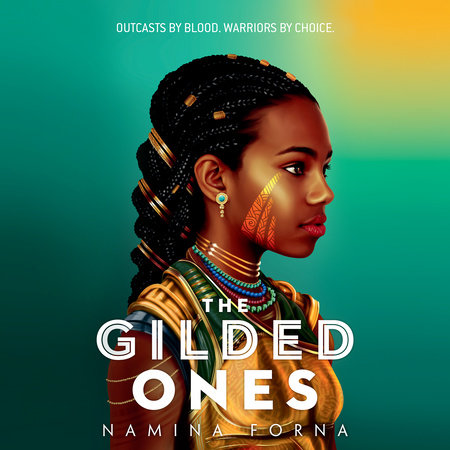
A picture of the protagonist Deka with gold on her skin


Content Warning: Rape, Torture, Religious Trauma 

One aspect of what makes The Gilded Ones a fun read is Namina Forna's control YA tropes. The novel opens with a common beginning: the protagonist Deka must go through a ceremony to find her place in the town. Of course, Deka isn't normal, and Forna drags the reader into the horrors of what happens when a young woman's body is not considered her own. While I would hesitate to call this book grimdark, it's definitely not shying away from the realities of a violent, patriarchal system. 

Because Deka does not bleed red, but rather gold, she is outcast from her town and collected to be part of the king's army to fight deathshrieks--large, hulking monsters that can kill with the sound of their screams. Girls who bleed gold have heightened senses, strength, and are very hard to kill, which was why until recently, the king had ordered them put to death rather than utilized in his army. Now, they train with young men their age, jatu, in order to campaign against a massive deathshriek army gathering at the edge of the emperor's land.

Enter Keita, a young lord turned jatu warrior who is partnered with Deka. While the other girls are friendly with their jatu partners, Keita and Deka connect more deeply over their shared horrors: Deka, being tortured by her family and elders for bleeding gold, and Keita for the massacre of his family by deathshrieks. Once again, Forna demonstrates her control of the warrior-lover trope that so often appears in YA, but I appreciated that Keita was not just shown to be a great warrior--since all the characters are--but rather it's his ability to empathize with Deka and the other girls that forms their bond. Of course, there is more to Deka and the deathshrieks than we are first led to believe...

Much of the emotional heart of this book is Deka and her friends coming into their strength as women warriors. As Deka says: "Our whole lives, we've been taught to make ourselves smaller, weaker than men. That's what the Infinite Wisdoms teach--that being a girl means perpetual submission (149). Ultimately, this is a feminist novel. It takes particular issue with faith-based patriarchies. 

Even though Deka can save lives with her powers, she's considered a demon and learns to take pride in that. "Are we girls, or are we demons?" (150). As a rallying cry, I related to this a lot, even as reader beyond the age group. I know I would have loved this novel as a sixteen-year-old trying to escape a misogynistic religious community. That said, the imagery of golden blood and bleeding together enforces the gender binary present throughout the book (other than one brief mention of a lesbian character). While it's obvious that the US (and other countries) has yet to escape a patriarchal and misogynistic past, I'm not sure that creating a world that is so binary is entirely useful, either. That being said, this is a series, and I have a feeling that since so much of this book was about shaking off male oppression that the binary might be broken in book two. 

Ultimately, this book takes some favorite YA tropes and turns smashing the patriarchy into a rich, fantasy adventure. Even though this book is fun, there's a lot of pain and the realities of what it means when a young girl has no choice over her body. This violence is made clear on the page. While being reminded of the current horrors of patriarchy that many of us still experience isn't for every reader, I do think Forna's realism demonstrates the difficulty and necessity of smashing the patriarchy. 

--

The Math

Baseline Assessment: 7/10

Bonuses : +1 realistic depictions of patriarchy's violence; +1 great reinterpretation of YA tropes  

Penalties: -1 a little too limited in terms of worldbuilding 

Nerd Coefficient: 8/10 Well worth your time and attention

 POSTED BY: Phoebe Wagner is a PhD candidate at University of Nevada, Reno. When not writing or reading, she can be found kayaking at the nearest lake. Follow her at phoebe-wagner.com or on Twitter @pheebs_w.

Reference: Forna, Namina. The Gilded Ones [Delacorte Press 2020]

Wednesday, December 14, 2022

Microreview [book]: Daughters of the Storm by Kim Wilkins

Daughters of the Storm is an epic fantasy that centres women and allows them the space to be flawed.

Australia has a long history of female authors of fantasy; we've been known to look confused when claims are made that there hasn't been women writing fantasy until recently. One of the reasons for this is Sara Douglass. A pioneer of Australian fantasy, she beat George R.R. Martin to the punch, with her debut novel Battleaxe released a year before A Song of Ice and Fire. Her epic fantasies were an international success at a time when breaking into the US market was all but unheard of. To quote the Aurealis Awards:

Sara Douglass was the flagship author of the HarperVoyager Australian line, which launched the careers of many of our most popular writers, and paved the way for the vibrant and diverse speculative fiction scene Australia has today. Sara’s contribution to the state of speculative fiction in Australia cannot be underestimated...

After she died in 2011, and with permission from her estate, the Sara Douglass Book Series Award was established in conjunction with the Aurealis Awards. The inaugural award was presented in 2016 and is given only once every three years.

The 2021 award was presented earlier this year to Kim Wilkins for the Blood and Gold series. The first book in the series is Daughters of the Storm, and is a fitting successor to Sara Douglass.

When the king of Thyrsland falls into a coma, his five daughters gather at his side to investigate the cause and determine the fate of the kingdom. This is a character-driven epic fantasy told in close third person. I actually tripped over the perspective in the prologue because at first it seemed to me to be coming from the king. It turned out to actually be coming from his wife, the step-mother of the five princesses. This seemed to me to be pretty appropriate for the book, which centres women in a traditionally male-dominated genre.

It's a story that tends somewhat towards the grimdark. Each of the daughters has a very distinct character with definite flaws. While I tend to prefer my characters to be more likeable, I appreciated that they were given the space to be unlikeable and in a variety of ways. With so many female characters present, there's no danger of them needing to be the sole representative (or one of very few) of their gender; they get to be well-rounded people.

Bluebell is the eldest daughter and heir apparent. She's the sister most likely to be voted the Strong Female Protagonist: a fearsome warrior and commander, rumoured to be unkillable, and deeply devoted to her father. However, she's not much of a people person (even if she has her moments), coming across as a bit of a bully, and not always the brightest of sparks.

I admit it took me a bit to adjust to Bluebell as a warrior's name. In addition to undermining expected masculine norms, I suspect there's an aspect of playing with the Victorian language of flowers. According to Jessica Roux in Floriography, bluebells represent humility and faithfulness. While Bluebell is very faithful to her father (at least so far), humility is not exactly one of her key traits.

Likewise, rose represents love. As the second of the sisters, and perhaps the most beautiful, Rose was married off to the ruler of the neighbouring kingdom. Her affair with the king's nephew threatens to jeopardise an already fragile peace. While her desire to follow her heart is most certainly sympathetic to a modern audience -- along with her desire to be treated as more than just a womb -- her tendency to want what she can't have casts a shadow over her love.

I found Ash to be perhaps the most sympathetic of the sisters. In training as a counsellor of the common faith, she finds her gifts of magic and precognisence stronger than the order finds acceptable... and growing stronger daily. When she receives a mental message from Bluebell regarding the state of their father, she flees for home, haunted by a premonition of her own death. Even as she slowly embraces her powers, her priorities remain muddled, torn between loyalties.

The twins Ivy and Willow are rather younger than their siblings. Ivy is thoroughly spoiled and boy-crazy, quickly developing a crush on Heath, Rose's secret paramour. Willow has much more backbone, tending to take after her sister Bluebell. However, she's a convert to the foreign Trimartyr religion and views her sisters as heathens, encouraged by the voices of the angels she apparently hears. This analogue of Christianity is not portrayed in a particularly flattering light... but perhaps no worse than any of the other religions at play in the world.

For the most part, the story alternates between the perspectives of the sisters. However, we do get a token male perspective from Wylm, their step-brother. This perspective is necessary because he functions as an antagonist, and one who is often deceitful and acting alone. Thus we are able to see the true extent of his cowardice.

With so many threads to juggle, the pacing can be a bit slow in places. This is particularly the case towards the middle.

The setting seems heavily inspired by Viking-age England. There are small, feuding kingdoms plagued by raiders from the sea. A new, patriarchal religion is rising up against the old, more nature-focused warrior gods. Magic is part of the world view, which accepts (to varying degrees) the existence of elemental spirits and that a brain fever may instead be the effects of elf-shot. It even manifests in the language, where there are no bedrooms, only bowers.

As might be expected, given the genre, the story comes with some content warnings, including violence, sexual assault, and human and animal death.

While it's most definitely not my cup of tea, I nevertheless felt it was doing some interesting things and well deserving of the award it received.


The Math

Baseline Assessment: 8/10

Bonuses: +1 for the variety of female characters, +1 for balancing flaws with understandable motivations

Penalties: -1 for occasional slow pacing

Nerd Coefficient: 9/10


POSTED BY: Elizabeth Fitzgerald, a writer, binge reader, tabletop gamer & tea addict. @elizabeth_fitz@wandering.shop


References

Wilkins, Kim. Daughters of the Storm [MIRA, 2014]

Roux, Jessica. Floriography [Andrews McMeel Publishing, 2020]


Thursday, August 8, 2024

TV Review: House of the Dragon Season 2

Is this season slow? Yes. But honestly, how many dragon dances, child murders, and to-the-death twin fights can we have in a season before drama loses all meaning?


As a lifelong fantasy disliker, I've taken a strange route to my love of all things Game of Thrones. In fact, I'd dare say George R.R. Martin kickstarted my love of dragons, an interest until recently I'd actively disavowed. 

But House of the Dragon, like Game of Thrones before it, isn't just fantasy — it's about human beings (granted, I know fantasy lovers will say that there's tons of others depictions that are more worthy, but this was my entry and I'm obsessed). 

When rumors of House of the Dragon started appearing on the scene, I still scoffed though. Who cares about the backstory to the Targaryen dynasty's fall? Turns out I do! As I quickly raise my hand like the sentient Four Seasons baby meme

Season one of the show was fairly well acclaimed, which led us to the epic marketing campaign this summer in anticipation of season two. Choose your side! The bridge-spanning AI banners down epic New York City landmarks! Team Green or Team Black! (I cannot imagine a world in which anyone roots for Team Green. If you do, please email me your reasoning.) 

This season, as it progressed weekly from June 16 until August 4, was eight episodes — two installments fewer than every other Westerosi-inspired HBO series. 

It begins almost immediately after the events of the season one finale, namely after Aemond kills Lucerys on dragonback. This begins a theme that will dominate all season: how do you answer cruelty without becoming the enemy yourself? Rhaenyra demands vengeance, but Daemon goes a bridge too far and sends assassins into Kings Landing to exact revenge, a son for a son. Only they get the wrong son, and poor sweet Helaena's baby is killed instead. Not exactly the most positive way to kickstart a new season, but hey, this is Westeros, and George R.R. Martin will kill anyone, even children. 

There's so much to talk about this season (despite what the naysayers are shouting into the void on X), so I think I'll focus on my top five moments and low five moments. 

Top five moments

1.  Getting to know the dragons better

We get three dragons in Game of Thrones, but I never felt like we settled into their personalities or lives. They were just ... around Danerys, but apart from knowing (some?) of their names, I couldn't tell you the difference between them any more than I could tell the difference between three crossbows. They were just weapons. With House of the Dragon, though, we learn the names of multiple dragons and their respective riders, and they're all extremely different. I love the way the show explores the concept of unattached dragons, too, and how the bond between rider and dragon is paramount to the success of the Targaryens. 

2. Rhaenys' final sacrifice 

The Queen Who Never Was tried telling Rhaenyra early on that the realm wasn't kind to women in positions of power, and she was proved right when King Viserys ultimately had more sons with Alicent. But nevertheless, Rhaenys stood by Rhaenyra's side with Meleys, her battle-hardened dragon. Honestly, by the time of her death, she was probably exhausted — she'd been fighting for a while, and both her children had died tragically. But she knew what was on the right side, and in the end she died supporting her brother's final wish that named Rhaenyra as rightful heir to the Iron Throne. 

3. Everytime Rhaenyra is on screen

Emma D'Arcy's portrayal of Rhaenyra is what would happen if you asked AI to create an epic Targaryen queen. It's picture perfect, of course, but also one imbued with empathy, ire, and real humanity. She knows that she should be ruling, but there's a world of scheming patriarchy fighting her at every turn. Whether she's angling to keep control of her own small council or deep in study over the potential genealogical lines of dragonriders, you never doubt her commitment to ruling the seven kingdoms — and she deserves to, especially compared to her degenerate half-brothers.

4. Chekhov's smallfolk

Throughout the season the showrunners pepper into the plot these strange glimpses into the lives of ordinary residents of King's Landing. I wondered at first why we were getting these random takes, but it turns out it's for a pretty cool reason — these three smallfolk (Ulf, Hugh, and Addam) possess enough dragon-rider blood that they'll eventually be able to become riders for the lonely dragons of Team Black. Now, I don't much about Westerosi royalty OR dragons, but even I know that's pretty special. But also question: Was Corlys loading that damn ship ALL SEASON or was it just me? There's so many scenes of sailors loading boxes onto that boat that it was like a scene from Law & Order where they're interrogating a reticent dock worker who won't stop working.

5. Larys' finagling

In Game of Thrones, we were privy to two of the most epic finaglers of all time — Littlefinger and Varys. Their predecessor? Why it's clearly Larys Strong, a disabled member of a powerful house that somehow has found himself at the court of Team Green and wishes to make some serious moves. Is he good at his job? I'm not exactly sure! But I like seeing him try, and I also enjoy seeing Aemond completely ignore him during his time as Prince Regent.

Low five moments

1. Daemon's haunted mansion adventure at Harrenhall

Is this season slow? Yes. But honestly, how many dragon dances, child murders, and to-the-death twin fights can we have in a season before drama loses all meaning? I think people get addicted to beloved character deaths for which George R.R. Martin IP is so known. But the pace is unsustainable. That being said, however — I could not have been less interested in Daemon's time spent at Harrenhall. Yes, I understand he had to secure the Riverlands. Yes, he was mad at Rhaenyra. But man was this drafty and rainy castle boring. The one exception? Ser Simon Strong! 

2. Ser Cristen Cole, full stop

I just don't like his smarmy face. 

3. Alicent's quick-change of feeling

Alicent, to be fair, misunderstood dying, drugged Viserys when he uttered his last words (there's a lot of Targaryens with the same name, also in her defense). But she made moves to challenge Rhaenyra's claim to the throne, so a lot of this season is technically her fault. By episode eight however, she realizes she's made a huge mistake. This, I don't buy — she's known for a while that her two songs are douchebags. She saw both Aegon and Aemond at the council table and realized they were not kind rulers. But surely she had some inkling before. There was one scene in particular where she severely chastises Aegon for not listening to the council and their wisdom, especially after all their machinations to get him to the throne. That makes you realize — what was it all for? For the Hightowers to rule as a proxy? Did she even want that? I'm not sure what Alicent wants, but by the season finale she basically asks her one true love Rhaenyra to run away together. 

4. The Riverlands negotiations

Look, I like a lot of the lore of Westeros. Put me in front of some Starks, some Tullys, some Lannisters, some Martells, and I'm happy. But dealing with the Blackwoods and Brackens? Total snooze fest. If someone can tell me why I feel this way, I'm happy to listen. 

5. Aemond's motivation

Aemond had a very tragic childhood incident involving his eye, but did that really turn him completely evil? It's possible I suppose, but unlike a lot of characters, he's more like King Joffrey in Game of Thrones in that he's completely a static evil bad guy.

Final take

I liked this season, slow that it was. Episodes 5 and 6 were especially painstaking, and I found myself wishing they'd fly by a little quicker. But I enjoyed my weekly Dragon Tales, and I remain in awe of the acting, production design, and CGI. These dragons are in fact stellar, and I'm once again shocked to find myself googling the names of different beasts after an episodes so I can learn more about their traits and history (The black dread?!?! So cool.) 

I count that as a success.  

--

The Math

Nerd coefficient: 7/10

POSTED BY: Haley Zapal, new NoaF contributor and lawyer-turned-copywriter living in Atlanta, Georgia. A co-host of Hugo Award-winning podcast Hugo, Girl!, she posts on Instagram as @cestlahaley. She loves nautical fiction, Vidalia onions, and growing corn and giving them pun names like Anacorn Skywalker.