Showing posts with label crime fiction. Show all posts

Monday, July 20, 2026

TV Review: Maul: Shadow Lord

A fun space opera crime story that sneaks in a bit of commentary


I think it’s telling that both the Legends continuity and the Disney continuity of the Star Wars franchise both saw it fit to bring Darth Maul back from the dead. He was undoubtedly an imposing character. His lines were generic, sure, but Ray Park provided him with some great physical acting. He also got great makeup, great choreography, and a cool lightsaber. In the new canon, there’s a fair bit of him, but it’s spread among different shows and is difficult to track the whole way through. Now, though, he gets his own show to shine in, that being Maul: Shadow Lord on Disney Plus.

It’s only natural, I think, that the way Disney figured out how to let Darth Maul survive was to make him a crime lord. It’s a way of living that is both obviously cruel as well as opposing the power structure under which he lives. He can be cruel, raspy, imposing as he was in his appearance in The Phantom Menace, but with no need to follow pre-established rules on the nature of the Sith, nor any involving potential service to either side of the Clone Wars. This setup lets him be his own agent, beholden to only himself, free to be as ruthless as he can to entertain us.

One of this show’s strengths is its visual design. You are treated to a story set mostly in a single city on a single planet. The city has clear inspiration from Blade Runner with more obvious departures from reality. For an episode or two, I wondered if it were the same city planet as seen on a moon in The Mandalorian and Grogu but that turned out not to be the case. But as so many cities in science fiction are seen only at nighttime, advertisements glowing like gemstones against the dark, you also get to see the city in the day. It reminded me of some of the older parts of New York I’ve been to. Even better, you get a sense what it is like for the normal people of this city to live here. It seems to have a certain car (or speeder) dependence that makes commuting a chore, but it’s still a thing people not involved in high politics or crime experience - something that the Star Wars franchise historically has not been great about showing.

This is a crime show, and about half of it is a cop show. Other than Maul and his organization, the other major group of characters (barring an important duo) is this planet’s local constabulary. The investigator we follow, played by a suitably weary, suitably gruff Wagner Moura, is in some ways the platonic ideal of a cop show protagonist - divorced, teenage son, throws himself into his work in order to stay sane, but nevertheless with a moral core that will not let him take the easy way out of a morally difficult situation. Another character in the station is Two-Boots, a protocol droid adapted to police use whose programmed imperatives conflict with his own sense of duty.

In this section of the show, it will bring up inevitable comparisons to Andor. This isn’t Andor, and it was never going to be the deep dive into the nature of fascism that Tony Gilroy blessed us with. This show does, however, have its own element of commentary on the nature of imperialism that is hidden in the background, probably not intentional, and manifests itself in a way that may have simply been clumsy writing: whenever the Empire is mentioned, it is mentioned as a foreign entity, a thing that the characters very much do not identify themselves with. They don’t refer to the ISB, or any other named agency in the way that American cops in a mundane police drama may refer to the FBI, they refer to ‘the Empire’ as if they were not its own reluctant citizens.

This plotline, then, is an extended discussion of the nature of a political community. To play on an old Chinese saying: the galaxy is vast, and the Emperor is far away. The Empire, being a fundamentally personalist regime, cannot micromanage every city on every planet in every system in every sector. As such, it is easy for those who avoid attracting Coruscant’s attention to get away with a lot. The great mistake Two-Boots makes is assuming that the Empire exists to help people (and no I am not considering the Yuuzhan Vong here), and contacts Coruscant for assistance. The new Imperial presence spends its time terrorizing the city, caring far more about its sense of order rather than any actual care for the rights and livelihoods of its people. The commentary on the nature of fascism is rather blunt: these people are only using what ills you to gain power and to satisfy their own lust for domination. It is a lesson learned the hard way, both in this show and in our own world.

Maul’s operation and entourage, on the other hand, are not as rich. They are entertaining, certainly, pleasingly ruthless when dealing with other criminals who have crossed them. But just among them, and not their interactions with others, is rote: they are your typical space opera crime syndicate doing typical criminal things. This is where the connections to the broader franchise lore are the thickest, particularly near the end. It’s fun, yes, but it’s not particularly substantial. This segment of the story is the part most purely what people love Star Wars for, and it works on that level.

The other set of characters are two Jedi, master and apprentice, who happened to be on this world when Order 66 was issued and their comrades in the Order were duly felled. They are refugees, homeless, dispossessed by the change in regime and stranded on a world they barely know. To go on about their plight would spoil too much of what makes this story work as well as it does, but they are worth watching, too. They serve to reveal the nature of characters around them, for they elicit positive change in police characters and pure ruthlessness from Maul’s enterprise and from the Imperial forces that have come to impose their own will.

So, ultimately, no - Maul: Shadow Lord is not fundamentally another incisive commentary on the dangers of democratic backsliding. What it is is a fun space opera show with some thematic depth if you decide to dig in a bit. It is, satisfyingly, just a bit more than what we expected it to be, and I think, ultimately, that was enough. As a longtime Star Wars fan, I had fun with this show, and I think that other fans of this franchise will also have fun with it.

--

POSTED BY: Alex Wallace, alternate history buff who reads more than is healthy

Monday, July 28, 2025

Book Review: Arkhangelsk by Elizabeth H. Bonesteel

When we fly through the galaxies, will our worst side come with us?

As human civilization broke apart in vaguely defined wars, scattered groups tried to preserve what they could of human history and culture in colony ships sent in all directions, without means to communicate with one another or any coordinated plan. As far as each group knows, they're all that's left from Earth. One of those ships, the Arkhangelsk, found a barely inhabitable planet where a new beginning could be attempted. The colonists have to live underground, though, because the surface is lethally cold, lethally irradiated, and lethally low in oxygen. Those who need to briefly walk outside for work reasons must wear thick protective suits and carry their own oxygen. After a couple of centuries, they've made their little society work, even if they're dangerously short on genetic diversity and their rusty machinery is held together with bubblegum and prayers. This community has sworn off the petty divisions that tore apart humans on Earth, and is committed to a nonviolent approach to law. Life is rough and precarious, but it still goes on. Even as they face one impossible challenge after another, they're proud of the fragile survival they've managed to snatch from the hostile conditions of their new home.

So it's understandable that their entire conception of their place in the universe goes out the window when another colony ship comes knocking at the door.

The new ship left Earth much later, after the wars ran out of steam and civilization had a chance to restart. The crew didn't even know that the Arkhangelsk had succeeded at colonizing a planet; the reason they arrived there was to build a relay antenna. Like the members of the first trip, they carry their own cultural memory of what Earth is like and what the lessons of history are. When they make contact, purely by blind luck, with the descendants of the Arkhangelsk, the first point of conflict, albeit implicit, is about their differing views on the true character of the human species. Those who arrived first believe that they need to constantly watch out for the worst impulses of the human heart; those who arrived later believe that humans have demonstrated the capacity to drag themselves up from rock bottom. There we have a microcosm of every point of inflection in human history: two cultures with incompatible principles, trying to interact and understand each other. Is mutual destruction a natural tendency or a choice that can be avoided?

We follow two narrators through the novel: Anya, an officer of the peace in the underground colony; and Maddie, the former doctor and now emergency captain of the newcome ship. Both carry the weight of tragic losses that have come to define them until the moment they meet each other. Amid the unforgiving hardships necessary to keep the colony functioning, Anya's little daughter was the only bright spot in a dull, directionless life. After losing her to one of the diseases typical of a population going through a genetic bottleneck in a radioactive planet, Anya has been merely going through the motions of a job that gives her no satisfaction and that her neighbors resent her for. Currently she's investigating a row of disappearances that most witnesses suspect to be suicides; the tacit consensus is that, although the colony strives hard to stay alive, there's very little to live for. So whenever there's news that another inhabitant has walked out and vanished in the snowy wasteland, the prevailing attitude that Anya finds is that no one blames them. Meanwhile, reluctant captain Maddie has been struggling to complete her mission after a navigation accident pulverized half her ship and most of her crewmates. Thrown by circumstance into a position of leadership she's still quite unprepared for, she now has to convince the Arkhangelsk colonists that her team comes with peaceful intentions, even as her mission is to help Earth send many more ships their way.

The most enjoyable part of reading this novel is the complicated interplay between two factions that are sincerely trying to present themselves as friendly yet keep giving each other the wrong impression. From the colonists' perspective, the visitors could be carrying all the evil ideas the Arkhangelsk ran away from when they left Earth, but also a potential solution to their genetic bottleneck. From the visitors' perspective, the colonists have cultivated exactly the kind of close-mindedness that doomed Earth in the past, but also valuable metallurgic expertise that could help repair their ship. As both groups proceed with as much mutual fear as mutual need, the slow-motion trainwreck of their diplomatic efforts raises questions that go deeper than culture shock and point at humanity's stubborn failure to learn from history. Will the world wars that ended civilization erupt anew in this remote settlement? Is survival the highest imperative, for the sake of which the rest of our common interests must be surrendered?

This novel has answers, but they're by no means final. The cosmic irony of the human condition isn't that life stops right at the moment when we think we've got it figured out; it's the much more unnerving fact that, when we think we've got it figured out, it keeps going.

Reference: Bonesteel, Elizabeth H. Arkhangelsk [House Panther, 2022].

Nerd Coefficient: 7/10.

POSTED BY: Arturo Serrano, multiclass Trekkie/Whovian/Moonie/Miraculer, accumulating experience points for still more obsessions.

Tuesday, April 8, 2025

Book Review: Murder Your Employer, by Rupert Holmes

Don't take the title literally

I must confess I read this book for the title. There is a certain hilarious bluntness in the name Murder Your Employer that most books vaguely gesturing in that direction would pad over in the name of politeness. Not so here: this is a book about, among many other things, a character inflicting fatal violence against the man who employs him. I also have to say that the man who wrote this book (also the man who wrote the Pina Colada song) is named Rupert Holmes, which is the best name I have ever seen for a crime writer (‘Rupert’ sounds like a character in an Agatha Christie novel, and ‘Holmes’ from the eminent Sherlock). So long as you have ‘Holmes’ you’re set, and ‘Rupert’ is wonderfully Victorian-sounding.

But regarding the actual book: this one is set in the years after World War II. It feels to me as a sort of invocation of Chandler American Time, as TVTropes calls it, the golden age of the American crime story. Holmes takes a particular delight in subverting the perceived glamor of those years, where prosperity for one caste was held up by the suffering of all the others. The book begins with a man trying to murder his employer and failing; clearly, the years after the good war were not good for everyone. It is after that failure where the McMasters Conservatory enters the picture.

The McMasters Conservatory is the only institute of learning in the world where the prime course of study is that of how to commit murders and get away with them. There is a particularly funny bit at the beginning where the Conservatory boasts of its famous alumni, and this includes many luminaries of the late nineteenth and early twentieth centuries (another good reason to set this book far enough in the past: Holmes can make that joke without being sued!). The book goes out of its way to prevent anyone from knowing where the Conservatory actually is physically located, and this can be very funny sometimes. What it reminded me of was the John Wick movies, where there is this truly massive amount of worldbuilding that does not involve a single actual supernatural element, so far as I can tell. The result of this is a story whose first half or so feels like a dark parody of a campus novel, but with more dead people. It’s a compelling, amusing juxtaposition, one with shades of the rite-of-passage plots many young adult stories do (but, again, with more dead people).

Holmes varies the format from standard crime stories of this sort; a good chunk of the book is composed of a publication from the press of the McMasters Conservatory (side note: I love how that word ‘conservatory’ is used, as if murder were another type of musical work—it’s an art, according to McMasters, without question) about its own history (all appropriately laudatory, all properly wry, as is best). These bits give you a much fuller sense of the subterranean world of homicide that this book depicts; this wouldn’t be as fun without knowing the aforementioned luminaries who had attended McMasters. It also allows amusement through its self-aware tone; imagine if you were reading the Lockheed Martin website where it obliquely and in a darkly humorous manner alluded to the dead Yemeni children that are the inevitable result of the company’s policies, and you’ll get the gist of it all. Furthermore, the entire book is a packet of sorts, composed of interviews with three graduates of the homicidal program that allow for a diversified look at the people that are produced by the institute.

There is a certain element of wish fulfillment here; all the prominent victims of McMasters graduates are terrible people. In the world of Murder Your Employer, the most fantastic element, the most spellbinding departure from the real world, is that these awful people get lethal consequences for their actions. Of course, it is not only death that comes for them, but several more inventive schemes that make the murder feel ever sweeter. Yes, there is schadenfreude, and yes, it is not the finest expression of human emotion, but there is a certain visceral pleasure in seeing the plots come together. They become labyrinthine, like the works of demons sent specifically to torture specific awful people, and you may end up agreeing with the people who run McMasters that murder is indeed a work of art. Holmes certainly puts his best foot forward here.

Aristotle described catharsis as the way that tragedies can relieve emotions in the viewer (he was discussing this in a theatrical context) via the depiction of action and particularly the conclusion of the action (the word ‘catharsis’ originally referred to ritual purification). Digging deeper into the book, and why it works, may bring up unpleasant aspects of the human psyche, namely why we like reading about murder to begin with. A lot of it is simple curiosity from people who fortunately do not need to be exposed to truly awful things day after day, and the exposure to these things sates inquisitiveness and relieves boredom. All the murders are intensely cathartic, showing Holmes’s skill, but it may occur to those of us familiar with the works of Bertolt Brecht and his ‘distancing effect’ that this may well be the only way the book could have seen print, or perhaps written at all. Even the title is unabashedly provocative, hilariously so, reminiscent of Mark Fisher’s Capitalist Realism, where he argues that the culture industry under late capitalism creates nominally anti-establishment works that serve to temper the rebellious instincts of the people. There’s a tension here that I’m not really sure Holmes actually intended between the provocativeness of the title and the resolution of the story.

Murder Your Employer is darkly funny, exquisitely plotted, and deeply atmospheric in the way the best crime stories are. All crime stories are heavily about setting, and this book practically drags you into this grotty world of professional homicide. The whole thing just works, in a way that is so twisty that to give too many more details would spoil it. But one thing to conclude this—don’t take the title literally.


Reference: Holmes, Rupert. Murder Your Employer [Avid Reader Press, 2023].

POSTED BY: Alex Wallace, alternate history buff who reads more than is healthy.

Friday, June 19, 2020

Summer Reading List 2020: The G

It's that time of year again (which of course you already know since we've been running these all week long). But ever since 2012, when I started our annual Summer Reading tradition, it's been the post series I've most looked forward to. After all, what's summer for if not sitting outside in the warm sun, beverage of choice in hand, and the pure joy of getting lost in other lives and worlds. So without further ado, here is my list of books for 2020 - a year that needs every last bit of joy there is.   


1. Hothouse, Brian Aldiss.

Aldiss wrote one of my favorite SF novels, Non-Stop, and one of my favorite short stories, "Supertoys Last All Summer Long." Hothouse is a far-future novel where a growing (i.e. dying) sun has triggered a massive vegetative bloom and humans are among the last fauna left. Hothouse promises to be very weird and unnerving. (Spoiler alert, as I'm 3/4 of the way through: it's very weird and unnerving.)


2. Children of Ruin, Adrian Tchaikovsky

Children of Time is one of the best SF books I've read in years - the kind of "hard SF" novel that used to win Hugo Awards, just without the dreary libertarianism. Children of Ruin is the sequel, which if reports are to be believed, picks up exactly where the first one left off.
3. The Mothman Prophecies, John Keel.

Do I believe in UFO visitations? No. Not really. Do I like the idea of UFOs, alien visitations and all that fun stuff? Hells yes. Also, this book will apparently melt your brain, so there's that too.


5. Your House Will Pay, Steph Cha.

Korean-American author Cha is one of the hottest names in crime fiction - I read Follow Her Home and found it to be a fresh new spin on the hardboiled detective formula. Your House Will Pay is much more ambitious, taking on the riots and racial tensions of 1990s Los Angeles.


5. The Vanished Birds, Simon Jimenez.

Paul DiFilippo recently called this a "touching, bold, surprising, gorgeous debut novel—a certain manner of postmodern space opera." I like everything about that description, so count me ready to blast off into the far future.


6. Pedal Crush: Stompbox Effects for Creative Music Making, Kim Bjørn.

My nerdliness stretches into many a domain, and the latest obsession is the wonderful world of boutique guitar pedals. These boxes, often handmade, can transform any sound in all kinds of wonderful ways. Plus they are just fun to look at. Cue a future We Rank 'Em that only Vance and I (and NOAF alum Philippe) will want to read...


***

POSTED BY: The G--purveyor of nerdliness, genre fanatic and Nerds of a
Feather founder/administrator, since 2012. 

Wednesday, November 2, 2016

Microreview [book]: Follow Her Home by Steph Cha

Millennial Noir?


Genre fiction is, in a sense, a covenant between writer and reader. The writer agrees to abide by certain conventions, which allow the reader to make certain assumptions--assumptions that, in turn, facilitate the quick and easy digestion of the narrative. This is not always true, as genre can be both highly experimental and surprisingly artful. But it is often true, and it is more true of crime fiction than other categories of genre. There is the unsolved event, the intriguing clue, the snowballing investigation, the red herring and--finally--the big reveal. On top of that, of course, there is the personal narrative, which must link the central mystery to some momentous event in the investigator's life, in turn rendering the narrative--and by extension the book--relatable on a human level.

This structure of tropes not only features in most crime fiction; it defines what is and isn't crime fiction. For crime writers, then, the devil really is in the details, with standouts measured by a delicate balancing act between executing the tried-and-true and innovating on the margins.

Steph Cha's Follow Her Home is an interesting debut precisely in what it does on the margins of what is otherwise a highly conventional detective story. Juniper Song is an unemployed, Raymond Chandler-obsessed millennial dilettante living in mid-city Los Angeles. At a party, her friend Luke convinces her to do some snooping, to see if his father--a wealthy lawyer--is sleeping with a junior associate at the firm, who is present at the party and near-blackout drunk. Song drives her home but is then summarily knocked unconscious by an unknown assailant. When she wakes up and retrieves her car, she discovers the body of another junior associate in her trunk. She then receives a mysterious phone call from a man who threatens to harm her family if she tells the police, and also seems to know about her sister's suicide--a deeply traumatic event that Song rarely discusses with anyone. Rather than back off, however, Song digs deeper into an unfolding mystery with disturbing parallels to her sister's death.

By the usual metrics, Follow Her Home is a pretty ho-hum debut. The mystery is not only formulaic, but nonsensical with alarming frequency. Characters repeatedly implicate themselves for no apparent reason other than to move the plot along, use violence when it would not advisable for someone trying to hide secrets to use violence (for example the unknown assailant who makes the murder he just committed known to Song, despite nothing otherwise linking him to the crime)--and then fail to use it when it would be. What's more, the motivations of several major characters remain unclear even at the book's end. Oh, and the prose often struggles to establish the appropriate mood (especially in those moments when we are supposed to feel Song's fear).

At the same time, Follow Her Home is quite a fun read. Song is a likable and relatable protagonist, and even if Cha is not exactly Chandler, the novel is briskly paced and hard to put down. And as much as the mystery presents problems for the reader, Song's personal narrative--the story of what happened to her sister--is very compelling.

Thematically, the book explores the "Asian girl fetish" and its impact on Asian women, and this I also thought was very well done. Cha differentiates between interracial coupling and the kind of toxic race fetishism that infantilizes Asian women or categorizes them as "highly-sexual-but-submissive" objects that exist to serve (non-Asian) male desires. Cha explores how this kind of racialized fetishism has impacted Song (who is, of course, an Asian woman).

But what really struck me was how clearly and unobtrusively Cha sets out the issues. This is not "message-forward" fiction where the story is a delivery system for the social message, but rather a piece of fiction that effectively addresses a social issue in such a way as to enhance the story. And Song's perspective feels instantly relatable, in the sense that you quickly come to understand how the issue looks through her eyes. In fact, I'd wager that readers who have never thought about this issue with any depth are likely to see things differently after finishing Follow Her Home.

In the end, Follow Her Home is a light, breezy but somewhat clunky detective story that nevertheless manages to stick with you due to the charisma of its protagonist and deft handling of a complex social issue.


The Math

Baseline Assessment: 6/10

Bonuses: +1 for Song and her backstory; +1 for the deft exploration of complex social issues.

Penalties: -1 for but it's otherwise pretty forgettable; -1 for and then there's all the stuff related to the central mystery that makes no sense when you really think about it.

Nerd Coefficient: 6/10. "Enjoyable, but the flaws are hard to ignore."


***

POSTED BY: The G--purveyor of nerdliness, genre fanatic and Nerds of a
Feather founder/administrator, since 2012. 


Reference: Cha, Steph. Follow Her Home [Minotaur, 2013]

Monday, November 2, 2015

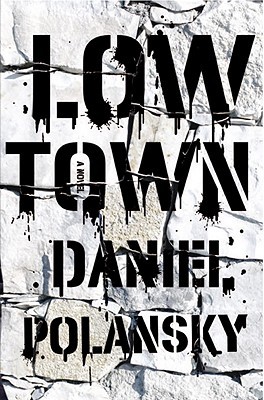
Microreview [book]: Low Town by Daniel Polansky

Grime, Crime and...Magic


Low Town is part of a new breed of fantasy: small-scale and urban in focus, and taking cues as much from crime fiction (and films) as in-genre classics. Some have used the term "fantasy noir," but I don't really see much connection to Thompson, Cain or Chandler. Rather, Low Town feels rooted in gangland fiction (and film), while also evoking science fictional takes on the grime and crime aesthetic. Scratch that--not gangland, per se, but the "street novel" (or film). And the British kind at that--think Irvine Welsh only not as funny, but with magic.

Low Town is named after the rough and tumble quarter of Rigus, which is the capital of a very powerful state. It's a place where most are poor or struggling, the state is mostly absent, and criminals abound. It's the place where, when the plague hit, it hit hardest. It tells the story of a man known only as the Warden. As a child he was orphaned by the plague, but was then taken in by a mercurial and benevolent sorcerer. He is a veteran of a nasty war against a rival state, and a disgraced former member of Rigus' feared secret police. Now he peddles drugs on the streets, and is a fearsome enough figure that he doesn't need or want an organization.

Though the Warden is a hard man to the core, he is neither sadistic nor nihilistic. He lives by a code, and tries to use violence only when it is the most efficient means to an end, or when the person really had it coming. And when children begin showing up dead on Low Town streets, you just know someone's going to pay.

The Warden is the primary reason why Low Town works so well. He's world-weary and jaded, but his reactions to things that happen around him are extremely relatable. That is to say, despite the exterior, this is, fundamentally, a person who cares about right and wrong--in the way most people care about right and wrong. It's flexible, when necessary, but there are lines you just don't cross. As a reader, you come to really care about what happens to him and the people he depends on.

The Warden's (and by extension the book's) moral compass makes me hesitant to lump Low Town in with the style of fantasy frequently referred to as "grimdark." Yes, it's gritty as hell, and pretty gory in spots. This is not a book for the feint of heart, and those who have tired of contemporary fantasy's fixation with ultraviolence should probably look elsewhere. At the same time, it isn't nihilistic, and it isn't terribly relativistic either. The Warden is a troubled, flawed man, but he actually has a pretty clear sense of right and wrong and does what he can, in his way, to make Low Town a better place to live. He doesn't always get it right--and makes some major errors, in fact. But he tries.

The other thing I loved about the book was its mood--dark, cold and foreboding. And the action scenes are just fantastic.

My one quip is that the plot, while serviceable, isn't all that well constructed. There's a mystery, but it's never quite clear why things happen the way they do, or why the Warden draws the conclusions he draws. This makes the big twist at the end kind of superfluous. Twists, after all, depend on the reader having certain assumptions; yet if the reader never quite develops them, what exactly is the twist doing?

Still, it hardly matters--this book is propelled by character and setting, and those are fantastically well rendered. I can't wait to read book #2.


The Math

Baseline Assessment: 8/10

Bonuses: +1 for the Warden, who is all kinds of awesome.

Penalties: -1 for a plot that doesn't quite work.

Nerd Coefficient: 8/10. "Well worth your time and attention."


***

POSTED BY: The G--purveyor of nerdliness, genre fanatic and Nerds of a
Feather founder/administrator (2012).
 

Friday, September 11, 2015

Microreview [book]: Bent Twig by Joe R. Lansdale (Rogues #4)


Fourth installment in the Rogues anthology edited by George R. R. Martin and Gardner Dozois


I’ll start by saying that of the 4 stories I’ve read so far from Rogues, this is the second to feature female prostitution. So, here’s our obligatory reminder that women can be interesting in ways that don’t involve sex.

Bent Twig is a Hap and Leonard story, starring two of Lansdale’s most popular characters. Hap’s girlfriend Brett’s daughter has gone missing, which isn’t really surprising to Hap because she’s a known drug addict and prostitute and he doesn’t really care for her and he would rather leave her to her own devices but he decided to go try and rescue her for Brett’s sake. There is an off put comment about trailer park living which is offensive frankly and perpetuates the stereotype about people who live in mobile homes. Sorry Hap, but not everyone who lives in a trailer is a prostitute and a drug addict. Moving on. They arrive at Tillie (Brett’s daughter)’s boyfriend/pimp’s residence and do some poking around in a manner that is (no pun intended) full of plot holes. For example, after finding a dead body (not Tillie’s) Hap goes back in the house claiming to touch nothing but the doorknob, since there will be an investigation. However, they’ve already been in the house and presumably touched everything and further announce that Tillie is not under the bed or in the closet, in which case they would have had to touch things to find this out (the closet bit at least). Anyway, law enforcement shows up which, in fitting with the small town stereotype, consists of a green and squirrely young deputy and a disgruntled old sheriff. Sheriff gets out of the car and blatantly checks out Haps girlfriend. Naturally, Hap is okay with this because she’s hot and he doesn’t blame him for looking at her. The sheriff tells Hap, unofficially, that since his small town department is pretty much incompetent he should go look for Tillie himself and gives Hap a lead to go on.

All this while Hap is trying to contact his partner Leonard, who eventually shows up just in the nick of time to save Hap after he gets himself caught by the bad guys. Leonard is black, and gay, which is made evident as busts through the door yelling “Queer n****r, coming through” because, that’s necessary. Leonard’s sexually has NOTHING to do with the story (except to put in to context his exclamation at the end of the story that he is an "expert on dicks") and his race was already made clear by Hap seeing his shiny black head go by the window. I mean, it’s not like in Hap’s first appearance he walked into the kitchen announcing “straight white guy in the house.” I shouldn't really say that though because Lansdale doesn't bother to inform us of anyone else's skin color, so for all I know, Hap could be purple. This othering is further propagated by Leonard’s barbaric, violent nature, and our mighty whitey (or purpley) Hap not approving of it.

So, more stereotypes about Texan making racist comments, and an action scene full of plot holes again, and then, to top it all off, the story ends with Hap and Leonard 'rescuing' (read: busting in on) a catatonic Tillie being ganged raped. Sorry, spoiler alert.

I had a professor once who lamented that he could no longer read for pleasure because every book he picked up was seen through a critical eye. Yes, this is true for me to some extent. But I believe that you know a book (or movie, or song, etc.) is good because you can just enjoy them. The critical eye has nothing screaming at it. Anyway, I’m saying this because I feel like I’m CONSTANTLY writing about this kind of stuff, sexism especially, and I want you all to know I don’t go in trying to peel discrimination and stereotypes out of the things I read and review. In fact, I go in excited and looking for entertainment. But if the shoe fits…

And maybe I’m missing something here with Bent Twig since I haven’t read the other Hap and Leonard stories. But if that’s the case, then this one just can’t stand alone.


The Math

Bonuses: nothing
Penalties: everything

Sorry, I’m just too whatever to even attempt to rate this. Remember what I said before about how one of the joys of the short story is that it isn't long enough to piss you off? I was wrong.


Bitchy WOP, signing off.


Previously: Inn of the Seven Blessings by Matthew Hughes

Up Next: Tawny Petticoats by Michael Swanwick


---
Posted by: Tia


Monday, January 12, 2015

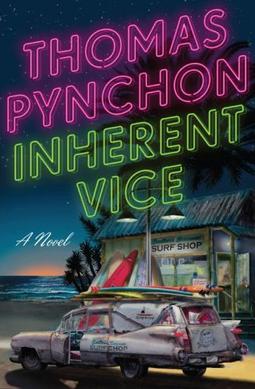
Microreview [book/movie combo}: Inherent Vice

A match made in...well, if not heaven, then at least the South Bay


Book

First of all, I have to preface this by saying Thomas Pynchon is my guy. I haven't read all of his books (they're usually quite long...), but I've read most of them, and re-read most of those. I'm also (no surprise) a fan of genre fiction, so in 2009 when Pynchon published what was touted as a detective novel, I got very excited and picked up Inherent Vice the day it was released. I didn't get a noir/crime/detective genre novel, though. Instead, I got a Pynchon novel whose main character happens to be a P.I.

The story revolves around Larry "Doc" Sportello, a private investigator in the fictional Los Angeles South Bay city of Gordita Beach, California, in 1970, who lives in a perpetual haze of weed smoke and, along with everyone else in the book, under the cloud of the Vietnam War, Nixon White House, and the crashing end of the 1960s, which took place with the Manson murders. The book begins with the familiar P.I. trope of Doc's "ex-old lady" Shasta Fay Hepworth, an aspiring actress and now plaything of the married, high-profile housing developer Mickey Wolfmann, paying Doc a visit. Shasta thinks Mickey's wife and boyfriend may be conspiring to get Mickey involuntarily committed to an asylum in order to get their hands on his money. The next day, Doc is approached at his office by ex-con Tariq Khalil, who is trying to recover money from Glen Charlock, an ex-inmate and member of an Aryan Nation biker gang hired to work as Mickey Wolfmann's bodyguards. Doc begins looking into the related matters, and on his visit to the construction site of Wolfmann's Channel View Estates, he's knocked unconscious and wakes up to find Wolfmann disappeared, Charlock murdered, and Doc himself the prime suspect, thanks to "renaissance" detective "Bigfoot" Bjornsen. He's not really a suspect, but Bigfoot likes to kick Doc around and they have a history. What follows from there, and for the rest of the novel, is much harder to explain. But it involves a secret organization (echoes of the Tristero), faked deaths, lost continents, Hollywood witch hunts, zombies, surf music, Nazis, moral, physical, and legal corruption, and so, so many drugs.

The takeaway is that this book is a tremendously fun and complex (mostly) comic novel that could also be considered pretty much a failure in terms of being a straightforward detective novel. But that's not what it wants to be, and if you're expecting a detective novel, you're going to be waaaay frustrated. Pynchon delights in juggling more and more glass balls, and then gleefully letting them crash to the ground and shatter. This isn't unique to this book — like silly songs and odd sex and long sentences and weird names and and complex, fantastical digressions, they are Pynchon's signature — and if you're willing to take the trip, I'd highly recommend it.


Movie

All of the above does not, to me, sound like a particularly good movie. On it's face, it's too unfocused and meandering a story, with far too many characters, and no clear goal that it sticks with. Judging by popular reactions, many who have not read the book seem to agree. But I think it's because, like I noted above, they're probably expecting a detective movie. I've seen lots of people mention The Long Goodbye and The Big Lebowski as cousins of Inherent Vice, although suggesting that Inherent Vice doesn't measure up artistically.

Allow me to disagree.

First of all, I was in the theater on The Big Lebowski's opening night, and there weren't a whole lot of people in there laughing along with me. And there weren't a whole lot of positive reviews at the time, either. It found its audience later, and that may be the case with Inherent Vice, because time allows movies to be taken for what they are, rather than how the studio marketing department has decided to sell them at the time of their release. To my mind, this is a near-perfect adaptation of Pynchon's book, filled with smart creative decisions that allow it to hang together as a movie.

The first half of the film is an almost literal translation of the events in the book, and then about halfway through, Paul Thomas Anderson made a really smart geographical decision that allowed him to cut about a third of the book out, while maintaining the spirit of those pages. In addition, the movie focuses much more on the relationship between Doc and ex-old lady Shasta Fay, giving the film an emotional through-line that the book simply wasn't that concerned with. Another fantastic decision Anderson made was to give whole swaths of the book's text to the relatively minor character of Sortilege (played by the wonderful Joanna Newsom), which allowed the movie to maintain Pynchon's narrative voice, and helped tie the room together, narratively speaking.

I saw this movie a week ago now, and can't stop thinking about it. I'll probably go see it again this week. I won't suggest it's for everybody — it is not — but it did exactly what it set out to do with very difficult source material. And, as a final aside, I have it on good authority that the author himself is well pleased with how Doc's adventures came out onscreen. If you want to get in touch with me and ask more, you know how to reach me...

The Math

Baseline Assessment: 8/10

Bonuses: +1 for the complex interplay of straight-world, hippie, music, and business cultures (book); +1 for the stunning, single-take scene in which Doc and Shasta Fay have sex, which Katherine Waterston plays both physically and emotionally naked.

Penalties: Nope

Nerd Coefficient: 9/10. Pretty dang great, unless you voted (our would've voted) for Nixon...

Posted by — Vance K. Achiever since March 6, 1998.

Monday, November 24, 2014

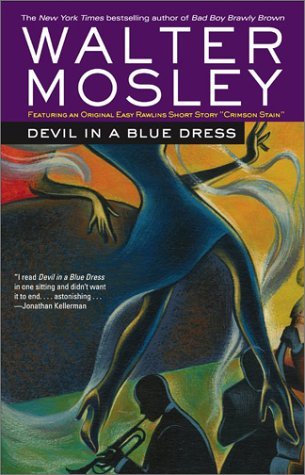
Microreview [book]: Devil in a Blue Dress by Walter Mosley

The other side of Chandler's Los Angeles


Regular readers know of my Chandler obsession--the unshakable, near-religious belief that his Marlowe novels and short stories are the most literary works genre ever produced, and contain enough mesmerizing prose and astute social commentary to transcend genre and sublimate to significant works of literature. They are, however, products of their time; nowhere is that more apparent than in Chandler's dismissive treatment of race.

Walter Mosley's Devil in a Blue Dress is a text both indebted to and in conversation with Chandler. It takes place in 1940s Los Angeles, stars a hard-nosed, persistent and stubbornly moral protagonist who takes a punch better than he throws one, and centrally involves a femme fatale. But if Chandler's fiction is ultimately about the relationship between corruption and class division in 1940s Los Angeles, then Devil in a Blue Dress is about those same things refracted through the deleterious race relations of the time.

It's an important point of contrast with Chandler, not least because of Marlowe's ambivalence towards the African-Americans he encounters. But it also made me think about the contrast between that time and this one. Though American society has improved, racism-wise, in any number of meaningful ways, Mosley makes the implicit point that in other ways things have gotten worse. Rawlins' LA is a place of economic opportunity, where manufacturing jobs are plentiful and social mobility is possible even for the city's downtrodden. Compare that with American inner cities of today--disproportionate populated by ethnic and racial minorities, and where jobs and opportunity are scarce--and today doesn't look so hot. In that sense, Devil in a Blue Dress is also thematically focused on a death of a specifically black version of the American Dream, which emerged in the immediate post-war days and closed sometime after "white flight" (i.e. re-segregation), de-industrialization and the crack epidemic gutted the American inner city during the 1970s and 1980s.

Howvever, though Devil in a Blue Dress addresses some weighty issues, it never feels heavy. Easy Rawlins is a likable rogue, a borderline drunk and a working stiff who has issues with his boss (who, for the record, is kinda racist). He's a homeowner and proud of it, but also has a problem--if he can't pay the mortgage, the bank will foreclose, and, well, he just told his racist boss where to shove it. Along comes Joppy, an ex-boxer turned speakeasy proprietor who might just have a line on some work for Easy. An old associate, DeWitt Albright, is looking for a white girl who was last seen in Watts. Joppy tells Easy it will be a cakewalk, but Easy has a bad feeling about Albright. But as it turns out, that bad feeling is only the tip of the iceberg...

Devil in a Blue Dress is a smart and perceptive novel whose social commentary blends into the background and never gets in the way of the fun. I certainly enjoyed reading it. At the same time, it does feel like Mosley is still working through the formula here. There are too many murders and, well, too many characters--many of which never really get much in the way of development. As a result, a couple major elements of the plot feel forced. Incidentally, the paperback version I bought also includes a short story, "Crimson Stain," which was written a number of years later and, perhaps uncoincidentally, feels a lot more sophisticated. But if that's what I have to look forward to with this series, then sign me up for the whole thing.  


The Math

Baseline Assessment: 7/10

Bonuses: +1 for doing social commentary the right way; +1 for bringing race into a literary conversation with Chandler;

Penalties: -1 for excess characters; -1 for "huh?" moments.

Nerd Coefficient: 7/10. "A mostly enjoyable experience."


***

POSTED BY: The G--purveyor of nerdliness, genre fanatic and Nerds of a
Feather founder/administrator (2012).


 Reference: Mosley, Walter. Devil in a Blue Dress [Washington Square Press, (1990) 2002]


Friday, August 29, 2014

Microreview [book]: Paying for It

A guy gets drunk in Edinburgh and sometimes he investigates a murder.


Black, Tony. Paying for It. New Pulp Press, 2013.

I never really know how to write a bad review. I know how to write a review badly, but I’m never sure what to do when the book I’m reviewing wasn’t great, but I have to write something because I offered to post a review and this was the book that was on deck. I could trash the book, but that’s pretty much what the internet does. Plus, there's not much to trash, per se. I could write about something else—and I’ll do a bit of that here. Or I can just limit myself to legitimate critiques and keep it at around 700 words.

Paying for It, from Scottish crime novelist Tony Black, avoided the P.I. trope. That was a thing I liked about the book.

Gus Dury is a disgraced former journalist who drinks. His local bartender asks him to look into his son’s recent death—officially a suicide, despite suspicious circumstances. Gus accepts. We soon learn that the dead kid had been involved with Russian mobsters and dabbled in human trafficking. And so on. In many respects, this is a straightforward update of classic detective fiction—there’s the blond femme fatale, one His Girl Friday, some mildly flamboyant gangsters, a case the cops won’t touch. But Gus isn’t a P.I. Instead, he’s an opinionated drunk. Which is basically a P.I. without an office. But still not a P.I.

Some of the themes and character tropes in Paying for It rubbed me wrong. First, Gus Dury is an opinionated bastard. I’m not much of a fan of British music, movies, fiction—I do like their comics—so maybe that partly explains why Gus’s opining annoyed me. I am American, after all, and thus I assume we know better, even about comics. But it’s more the way Gus reminds me of an aging hipster, bitter about no longer being cool, about not understanding what cool is anymore. (Black does nothing to derail this impression.) And he’s roughly my age. Like Gus, my cultural tastes haven’t been refreshed much in the last few years. And yes I too have lectured people younger than me about things they should love—I am one class away from assigning The Road Warrior to my students. So yes, what I didn’t like about Gus are things I don’t like about me: I’m aging, I don’t like new music, I think kids are dumb. (Though I also think we were dumber than we remember and probably just as dumb as the kids currently and objectively are.)

Paying for It also featured alcoholism, the most annoying trope in crime fiction. Actually, second most annoying. (#1: the P.I.) I complained about this in my last review and I have complained about it before, but the alcoholic protagonist needs to be retired. Or drink a bit more responsibly. At least Black is realistic in his portrayal. Gus drinks, a lot. But he gets drunk. He feels like shit. He struggles with his alcoholism. He even tries during the book to dry out, though he ditches that plan quickly. I appreciate that Gus cannot drink obscene amounts of alcohol and continue working on a case. In fact, he doesn’t do a whole lot in the novel because he’s sitting around drinking and opining. It would have been more enjoyable had he been wittier or had better opinions. But, he’s a bitter drunk. In his later-mid-thirties. And the nineties were good.

Fortunately for Gus, the plot happens to him. Conveniently. Much of the story’s development entails Gus walking down the street and running into someone he knows who tells him something he needs to know. I’ve never been to Edinburgh. (Had plans to, but with the British pound trampling the dollar and all…) I doubt that in a city of 500,000 you randomly run into that many friends. While I do run into people here in Los Angeles—more often than one would think—they never have anything interesting to say, much less clues to offer that’ll break the case wide open. But, perhaps Edinburgh is a different place. I hear it was better in the nineties.

I can’t say that I hated this book, but I didn’t relish reading it. And this ultimately is the only criteria that matters. I’ll let a lot slide if I’m entertained. But a sluggish read gives me time to critique a novel. Paying for It was a slow read at 279 pages. It wasn’t so bad that I now refuse to read anymore installments from Tony Black. But the next one will probably sit on my shelf for a minute.


The Math

Objective Score: 5/10

Bonus Points: +1 for Gus not being a P.I.

Penalties: -1 for alcoholism; -1 for making me feel old 

Nerd coefficient: 4/10 "At least it wasn't a 600 page mystery novel"

Friday, August 15, 2014

Microreview [book]: Blackbirds

The Dead Zone meets No Country For Old Men, plus some Juno thrown in to annoy me


Wendig, Chuck. Blackbirds. Angry Robot Books, 2012.

From the outset, I’ll make it clear that I am a bit ambivalent about Chuck Wendig’s supernatural noir Blackbirds.

Miriam is a psychic of sorts, but a very specific one. She can foresee a person’s death by touching their skin. That’s it. Limited as it is, her gift has allowed Miriam to eke out a meager existence on the road: a chance encounter with a dude who’ll be dead in days can mean easy money, keeping Miriam in booze and cigarettes. (Because the book is part crime fiction, the protagonist must drink and smoke.) She’s been at it for a while until she meets Louis, a goodhearted giant of a truck driving man who’ll be horribly murdered in two weeks’ time. And Miriam will be the cause of his death. If that isn’t bad enough, she becomes entangled with a drifter con man named Ashley who blackmails her into scamming Louis out of his hard earned earnings immediately upon his death. And Ashley’s got some colorful psychopaths after him because of a large metal suitcase he stole. And Miriam, knowing she’ll cause Louis death, spends 200 or so pages working with Ashley—sometimes willingly, sometimes less so—ensuring that the poor bastard will die horribly before the novel ends.

Because of fate. Or because Miriam can be kind of dumb. Because of fate.

Here’s a quick recap of my Blackbirds reading experience: I immediately liked it a few pages in. Then I immediately didn’t after a few more, but I kept on. Then I was annoyed. Then I became intrigued. Then really annoyed. Then the last 75 pages were really good. The ending was great. Then it ended differently, but I had become fully ambivalent by then so I didn’t mind much.

Wendig is clearly a skilled writer. The book is well paced with sharp narration and exposition. The plot’s ambitious are wisely humble—it’s more or less an on the road crime novel with just enough of the unexplained, Miriam’s ability, to make the book not just another on the road crime novel. But, the brisk storytelling is too often weighed down by dialog that is far too clever—Miriam’s penchant for swearing; her Junoesque references, a generation or two out-of-date; her constant need to make a sarcastic comment about everything. While it didn’t entirely ruin the novel, it did annoy me. Ganted, Miriam is not a manic pixie. But she is more or less what nerds—myself included—dreamed of in high school: cute, smart, snarky, kinda punk, with psychic powers. And she talks how nerdy boys in high school imagine cool girls talk: like them but confident.

Miriam’s negligible pixiness cannot offset her agency problem. (Sorry, I’m an academic.) Initially, we’re introduced to Miriam as a protagonist. She drinks, she swears, she gets into fights—and handles herself well. But that’s for the first 50 pages. Thereafter, she’s pretty much either being led around by men or running to them for protection. It’s not until the novel’s conclusion that she actually takes any real action.

While this may superficially appear to be a problem of gender—yet another agentless female character—Miriam’s passivity is actually a philosophical, if not cosmological problem. She has tried in the past to change the future she foresees, to keep alive those who she know will die. And every time, her attempt to prevent a person’s imminent death ends up directly causing it. In a world so unequivocally determined by fate, why not sit back and make snarky comments that never land? I picked up on this quite early—Wendig does nothing to be subtle about Miriam’s cosmic predicament—but I nevertheless wanted her to try. To do something. Anything other than spew snark, smoke cigarettes, or think about wanting to smoke cigarettes. By signaling the dilemma she faced, Wendig seems to want the reader to be frustrated by her actions. He wants us to want her to act. In this, the author is a bit of a tease.

Keep reading. She eventually becomes the protagonist.


The Math
Objective Score: 6/10

Penalties: -1 for frustrating me, the humble reader

Bonuses: +1 for what is perhaps the single funniest chapter of a book ever written; +1 for the nice cover art (a specialty of the good folks at Angry Robot)

Nerd Coefficient: 7/10 That's an ambivalent 7/10

Monday, June 9, 2014

Summer Reading List: The G

Today The G--purveyor of nerdliness, genre fanatic and Nerds of a Feather founder/administrator--shares his fantasy-heavy Summer Reading List! He tells us ("he" being "me," and "us" being "you") that this is the order in which he intends to read the books, but cautions that lists are meant to be tinkered with.


1. Annihilation by Jeff VanderMeer [Farrar, Straus & Giroux, 2014]

Since it's technically summer, I can include the book I'm currently reading--the first installment in VanderMeer's Southern Reach trilogy, which centers on an expedition into the mysterious Area X, where a calamity of unknown origin has upended many of the base assumptions of how reality is supposed to behave. So far it's a dense and extremely well-written slice of the New Weird, a subgenre I'm not that well acquainted with, but clearly have some affinity for. I've got the sequel, Authority, as well, so I might just power through.


2. Sworn in Steel by Douglas Hulick [Ace/ROC, 2014]

I've made no secret of my affection for Hulick's debut Among Thieves, and I hear from reputable sources that the long-awaited sequel is top-notch. Not that I'm surprised--Drothe has been made a Gray Prince of the Kin, but acquired a host of powerful enemies in the process: what could possibly go wrong? With Among Thieves, Hulick showed that he has a knack for pace and writes just about the best sword fight you could ever imagine. Every nerd's summer reading list needs at least one straight-up adventure, and this one promises to be smarter and more rewarding than most. 


3. Artemis Awakening by Jane Linskold [Tor, 2014]

I have to admit this wasn't really on my radar until recently, but from what I gather, Artemis Awakening is one of those "homages to the masters" (in this case, Andre Norton and C. L. Moore) that updates and problematizes rather than reproduces the tropes and stock devices of the source material. It's anthropological "lost world" SF too, and that's a niche I quite enjoy. Plus it might inspire me to re-read Forerunner!


4. Kansas City Noir by Steve Paul, ed. [Akashic, 2012]

Akashic has made a name for themselves with their municipal-themed anthologies of short noir fiction. And if you know Kansas City like I do, you know it's got all the elements in place for some serious grit. Editor Paul assembled a great collection of local authors, including Daniel Woodrell, Grace Suh, Nancy Pickard and J. Malcolm Garcia, so I'm confident this will be a good one. Bonus points to the first author who recognizes the superiority of Gates & Sons BBQ. 


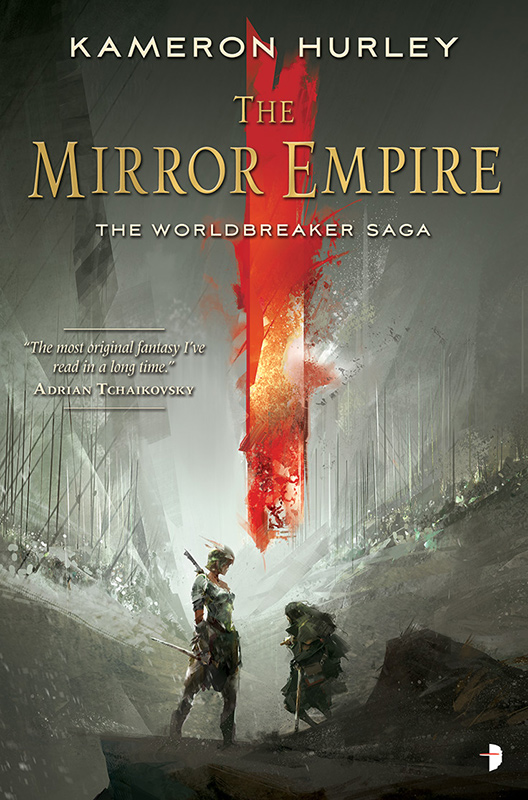
5. The Mirror Empire by Kameron Hurley [Angry Robot, 2014]

Hurley is best known for her "bugpunk" space opera series the Bel Dame Apocrypha; now she switches focus to epic fantasy. This will be my first taste of Hurley's fiction, but if reputation is anything to go by, I expect it to be heavy on the grit, but without a lot of the stuff people complain about when they complain about gritty/grimdark fantasy. Well, some of it at least. It wouldn't be gritty otherwise, would it?  


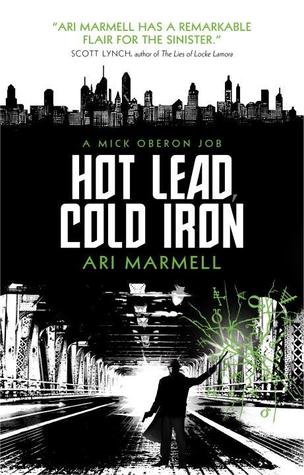
6. Hot Lead, Cold Iron by Armi Marmell [Titan, 2014]

I don't usually go in for urban fantasy, but the review on Bookworm Blues got me hooked. See, my big problem with UF is that I just can't suspend disbelief when the magic and monsters and such are in the hear-and-now. I know, I know--if anything epic fantasy is less believable. But for whatever reason I can imagine wizards more easily when there are castles and swords and such. So this is me broadening internal SF/F horizons. Plus I hear the fantasy bits are restrained, and that's a plus for me.


The Book that Should Be on the List, but Isn't


The Shadow Throne by Django Wexler [Ace/ROC)

If you recall, Wexler's The Thousand Names was one of my Hugo ballot. And make no mistake--I am very excited to read the sequel. Unfortunately, the book has not found its way to me yet. If or when it does, then it will instantly shoot up to the top of the list.


The Book that Is Most Likely to Supplant Something on the List, Given a Shift in Mood

Defenders by Will McIntosh [Orbit, 2014]

Another one I can thank Sarah from Bookworm Blues for (she calls it "too good to rate"). And this tale of what happens to soldiers bred to kill once the war is finished does sound like a serious page-turner. The only reason it didn't make my list is, well, the other books. Luckily there are three months of summer ahead of me, and I tend to read a lot while school is out of session.

Wednesday, May 28, 2014

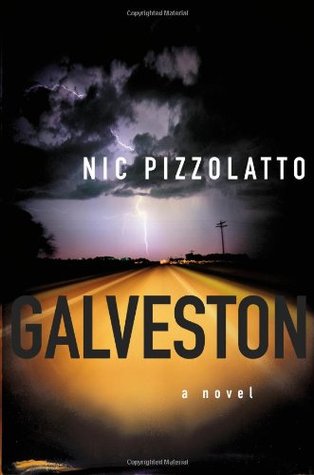
Microreview [book]: Galveston by Nic Pizzolatto

Pretty but Uninspiring


To feed my borderline unhealthy obsession with True Detective, I tracked down a copy of show creator Nic Pizzolatto's crime novel Galveston. I wasn't exactly sure what to expect, though "gritty," "artsy" and "weird" all seemed plausible--particularly after reading Dennis Lehane's glowing review in the New York Times. Turns out Galveston is plenty gritty, but not nearly as ambitious or abstract as I wanted it to be.

Galveston tells the story of Roy Cady, an enforcer for a mid-level gangster in New Orleans. Cady finds himself in a tight situation and so hightails it to the eponymous city on the Gulf with hard case Roxy and a young child in tow.

Galveston is fairly classic noir, but as I outlined in my Friday Five for pornokitsch, noir basically comes in three flavors:


1. The Hardboiled Thriller, in which a stubborn and ethical hero pushes back against dark and corrupt world, ultimately settling for small, symbolic victories against a backdrop of general hopelessness (e.g. Dashiell Hammett, Raymond Chandler).

2. The Sadsack Tragedy, in which a well-intentioned but weak-willed antihero attempts but is unable to escape the clutches of said dark and corrupt world (e.g. James M. Cain, Jim Thompson).

3. The Revenge Fantasy, in which a sociopathic product of the dark and corrupt world seeks revenge against its agents, yet is unconcerned with changing or improving that world (e.g. Patricia Highsmith, Richard Stark). 

The genius of Galveston is that Pizzolatto keeps us guessing as to which one Cady's story will turn out to be. And the book is beautifully written too--sharp, evocative and peppered with passages that are, quite simply, dazzling.

Unfortunately, Galveston often feels weighed down by reliance on the tropes of the genre--the tough-but-caring criminal, the hard case (yet vulnerable!) love interest, the innocent child, etc. It isn't that Galveston is bad--it's not at all; it's that Galveston plays things a bit too safe. In other words, it's no True Detective.


The Math

Baseline Assessment: 6/10

Bonuses: +1 for Pizzolatto's gorgeous prose.

Penalties: -1 for "meh."

Nerd Coefficient: 6/10. "Enjoyable, but the flaws are hard to ignore."

***

POSTED BY: The G--purveyor of nerdliness, genre fanatic and Nerds of a
Feather founder/administrator (2012).


Pizzolatto, Nic. Galveston: A Novel [Scribner, 2011]

Monday, May 19, 2014

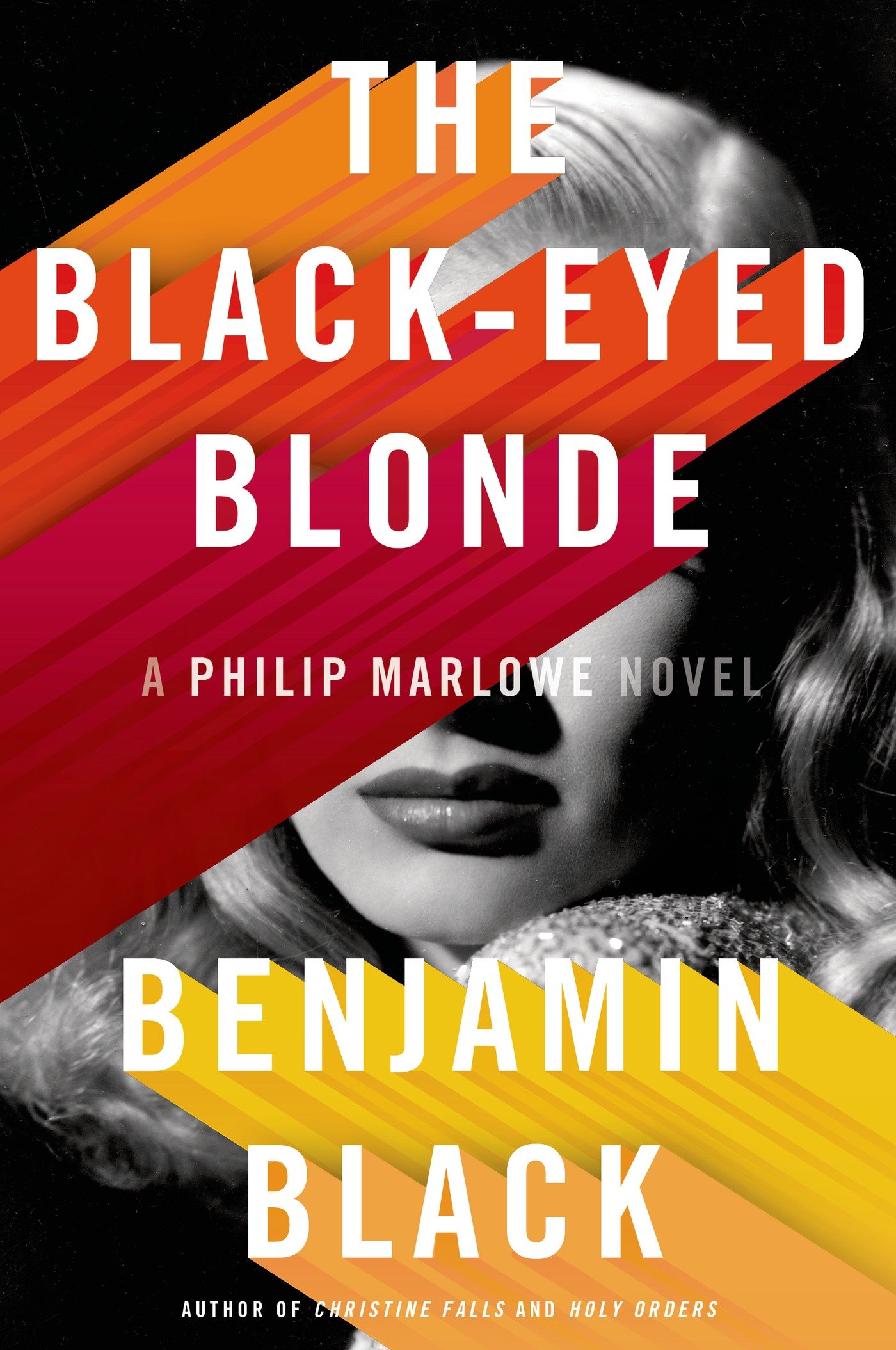
Microreview [book]: The Black-Eyed Blonde by Benjamin Black


Black, Benjamin. The Black-Eyed Blonde [Henry Holt, 2014]

I confess that I am a bit of a Raymond Chandler fanatic. I've read each of the seven Marlowe novels at least twice, and some several times more than that. I consider Chandler to be one of the most significant novelists of the Twentieth Century, and easily the best stylist genre fiction has ever produced.

Over the years, I've read a number of homages to the master, from lighthearted spoofs to more serious fare. The best of these, like Jonathan Lethem's science fictional Gun, with Occasional Music or the middle chapter in Ariel Winter's The Twenty-Year Death, adopt a playful tone and a respectful distance from the author whose work they celebrate but, really, can never hope to equal.

The Black-Eyed Blonde by Benjamin Black, otherwise known as Irish novelist John Banville, does not have that luxury. After all, it is not an homage, but a new Marlowe novel. Thus Banville faced the distinct challenge of producing something that would evoke Chandler but not just make you wish you were reading The Big Sleep.

The last time someone tried to do this was in 1989, when crime novelist Robert B. Parker completed Chandler's unfinished manuscript for Poodle Springs. It quickly became a joke among hardboiled fiction aficionados, with Parker memorably dismissed by Martin Amis for having turned Marlowe into "an affable goon." But there was good reason to think Banville might succeed where Parker failed. After all, while Parker is best described as a likeable, forward-thinking crime hack, Banville is a bona fide literary rock star. If anyone was going to do this right, it was going to be someone Don DeLilo once described as writing "dangerous and clear-running prose" with "a grim gift of seeing people's souls."

On that note, let me begin by saying that The Black-Eyed Blonde is orders of magnitude better than Poodle Springs. It's a crisply, efficiently-written and briskly-paced detective story set in Marlowe's Los Angeles. While Banville isn't exactly breaking new stylistic ground here, the book is an undeniably well-crafted and smart bit of hardboiled detective fiction.

Yet Chandler did not write "well-crafted and smart bits of hardboiled detective fiction"--he wrote artistically significant literature that wore the clothes of hardboiled detective fiction, and this is not that. Banville by his own admission views crime fiction as "cheap." And a lot of it is. But Chandler's fiction is anything but, and in the end The Black-Eyed Blonde does unfortunately feel like a cheapened rendition of the genuine article. Nearly every sentence Chandler wrote spawned a cliche, and at times it feels like Banville is channeling the cliches rather than the authentic item. Banville's Marlowe is too direct, too reliant on simile over metaphor and, well, acts a bit too much like Sam Spade.

So did I like it? Sure--though I didn't love it. Perhaps, if I'm feeling reflective, I might admit that I never could. But this is only partially my problem. After all, not only does Banville try to sell us on the authenticity of his Marlowe, but he fuddles with Chandler's penultimate achievement, The Long Goodbye (I won't spoil the book by saying how). This is sacrilege for someone like me, and there are enough of us to make me think that The Black-Eyed Blonde would have been better off as homage--starring someone else who just looks and talks like Marlowe, but isn't supposed to be Marlowe. Because this isn't Marlowe anyways.


The Math

Baseline Assessment: 7/10

Bonuses: +1 for being a good homage to Chandler's Marlowe.

Penalties: -1 for "but it's just not Marlowe"; -1 for thinking The Long Goodbye needed or even wanted a sequel.

Nerd Coefficient: 6/10. "Enjoyable, but the flaws are hard to ignore."

***

POSTED BY: The G--purveyor of nerdliness, genre fanatic and Nerds of a
Feather founder/administrator (2012).

Friday, April 4, 2014

Microreview [Book]: The Last of the Smoking Bartenders


Howell, C.J. The Last of the Smoking Bartenders [New Pulp Press, 2013]


The Meat

Tom is on a mission in the desert of the American Southwest. He’s out to stop the illusive Network from carrying out another terrorist attack. In order to defeat the Network, Tom has gone off the grid, erasing his identity and even avoiding handling paper money—something or other about micro-tracking devices on the bills. Tom’s so deep underground, he’s  a homeless transient, a foul smelling bum. Along his journey west, Tom hooks up with a young drifter, Lorne, and inadvertently enlists him in a little arson and murder. This brings the duo to the attention of Hailey, the only federal agent in this desolate section of the Southwest. Tom’s quixotic quest ensnares others along the way—a crew of Navajo tweakers, a goitered psychopath, and, for a brief moment, the last of the smoking bartenders. Hence, the genius title. 

The Last of the Smoking Bartenders is an uneven novel. In many respects it is unlike much of contemporary crime fiction, in all the right ways. C.J.Howell’s writing is lucid and economical, his characterizations strong, his violence shocking, and his philosophical excursions fitting in this post-True Detective landscape. But the book suffers from an unfocused, often meandering plot.

The novel is effectively a chase: Lorne and Hailey are both trying to catch up with Tom, Lorne to assist him in taking out the Network, Hailey to arrest him for setting fire to an abandoned mine and killing a security guard in the process. After a strong first third, however, The Last of the Smoking Bartenders loses steam, becoming bogged down in Tom’s wanderings. This section of the novel is salvaged somewhat by thoughtful considerations of homeless living and human altruism—and some brutal violence, tersely written. It picks up again in toward the end, though the last twenty pages seemed to be unnecessary after the violence that ended the chase.

C.J. Howell, however, made many wise choices. First, though he set his novel in the Utah/Arizona dessert, Howell embraced a more subtle approach to the region’s meth-fueled criminal class. His scaled-back, stark depiction stands in marked contrast to the heavy handed, often cartoonish portrayals of tweakers common to Southwestern noir. (Even Breaking Bad suffered from a bit of this.) The characters are still insane, but more realistically so. They do drugs—and drink—but feel the effects. And, unlike your average noir P.I. or other stock psychopath, the drugs and booze affect the characters' behavior. Adversely.

Second, Howell takes a similarly realistic approach to FBI Agent Hailey. I need not rehash the argument that the depiction of women in noir is often misogynistic. Women are also, and more generally, depicted unrealistically, particularly when the character is against type. Hailey isn’t Ms. Tree or other “tough” female hero. She doesn’t say things like, “Move it, lady!” Instead, Howell allows her to be a vulnerable and lonely individual, whose career and personal life have gone off course. She drinks too much, and takes too many pills. In other words, she gets to be human.

Unfortunately, Howell doesn’t give her much to do. She disappears in the second act, only to reappear at the finale and not really do much. This does not really matter in terms of how Howell writes his female leads, as much as how he plotted the novel.


I wanted more from this book. But he gets points for throwing Bakersfield in toward the end.


The Math

Objective Score: 6/10

Bonuses: +1 for one decent female character; +1 for Bakersfield

Penalties: -1 for the actual last smoking bartenders, who was a total letdown 

Nerd coefficient: 7/10

Friday, March 21, 2014

Microreview [Book]: Odds On


Crichton, Michael (writing as John Lange), Odds On [Hard Case Crime]


The Meat 


I hate writing bad reviews.

I have no illusions about what I’m doing here. I’m the crime (sometimes comics) guy on a nerd blog. My reviews aren’t going to do much damage. And this is the internet, a media designed for hating. So, drop in the bucket. But it’s not my place to bash the novels I read for this site. Many of these books are small press debuts, penned by someone who’s slaving away as a teacher or adjunct, as a spouse and parent, squeezing in a few pages of edits on a Saturday or outlining chapters on a bus. I’ve never written a novel, so even if I hated their work, they’ve bested me.

But Michael Crichton, I can hate. Even the young, medical school student/aspiring novelist writing under the name John Lange, I can hate. I can hate him for writing Odds On.

Odds On is the story of master thief Stephen Jencks who plans a heist using computers. In 1966! So he hires two other pros and the three set out to rob the guests at the Reina, an uber-posh coastal resort in Franco’s sunny Spain. The heist: the thieves are going to rifle through the guests’ rooms. Yes. This, along with a couple explosions and a diversionary fire, is the heist. The computer program Jencks used merely determined the most efficient sequencing of individual tasks in the robbery—which may be close to what 1966 computers could do. But it’s still boring.

An underwhelming heist does not necessarily doom a novel. Three hundred pages of not much happening does. Two thirds of Odds On takes place prior to the actual, thoroughly boring heist. So there’s a lot of lounging around, a lot of idle banter on car trips, over cocktails, and after way-to-easy sex. For two hundred pages. Rich people taking it easy. The main characters aren’t interesting, neither are the secondary characters. Even the weed-slinging old English Lady and her French gigolo are boring. For three hundred pages.

As for the heist, there’s not much of it, neither in design nor in execution. It’s rifling through people’s shit, after all. There’s a twist in the last quarter of the book that keeps things interesting for fifteen or so pages. But then it’s resolved disappointingly.

I expected more from Odds End. Not because I’m a Crichton fan. In fact, I’ve read two of his books, his John Lange books. Scratch One and Binary. And I really enjoyed them, and was surprised that I did. They were rapidly paced, fun action novels, perfect for a Sunday afternoon. Odds On suits no afternoon. It reads like what it is: the early effort of a master hack. We all know he found his stride. But just not yet.

On the other hand, when he wrote Odds On, Crichton was a medical student. At Harvard. Writing novels. On the side.


The Math

Objective score: 4/10

Bonuses: +1 for modest approach to computers

Penalties: -1 for way too casual sex (that’s going in my neo-noir manifesto); -1 for being over 250 page (also in the manifesto)


Nerd coefficient: 3/10