Showing posts with label second opinion. Show all posts

Wednesday, February 22, 2023

Second Look: Civilizations by Laurent Binet

 A second look at Civilizations by Laurent Binet. 


In October 2021, my colleague Arturo Serrano reviewed Laurent Binet’s alternate history novel Civilizations here on the blog.[http://www.nerds-feather.com/2021/10/review-civilizations-by-laurent-binet.html]. He did not find much favor with it. As I will be deeply engaging with that review, I recommend you read that review so you can get some details I am not going to repeat here and to get a general sense of context.


Back? Great. Let’s dig in.


Since Serrano’s piece, the novel has garnered some critical acclaim, including the Sidewise Award for best Alternate History, 2021, where it is that it came on my radar.  I decided, especially urged on by a colleague who was very interested in my opinion on the book, to give it a try and see for myself what I thought of it. And so here we are.


So this is not quite so much of a review as a reaction to the book, and thinking and interpolating the thoughts of friends and colleagues, and using them, and my own history, in coming to terms with the book, and ultimately where do I think it sits. 


Alternate History has been a power chord for me ever since coming across stories such as “Sidewise in Time”, Lest Darkness Fall (which is a time travel creating alternate history), “Delenda Est” ,and of course the works of Harry Turtledove. But the alternate history book I want to talk about here, because this work feels very much in conversation with it to the point that I think that, if you can find it,  you might want to read it before reading Civilizations is For Want of Nail: If Burgoyne Had Won at Saratoga, by Robert Sobel. ¹


Sobel’s book is not a novel, and does not even pretend to be, even though Civilizations has ambitions to be a novel or at least sits closer to the novel format. Sobel’s work is a sweeping look at an alternate history of North America and the world, with one change: the British win the battle of Saratoga and end the American Revolution. He then spins out two hundred years of alternate history. Hamilton and other failed leaders of the American Revolution wind up in Texas, and use that as a springboard to eventually take over all of Mexico and rule it Caudillo style. The story of the 19th and up to the mid 20th century is the rivalry between the British possessions in North America and Mexico. 


But the point is, there are no characters, there are no plots, it is really just a textbook of ideas, reflections, thoughts and historical review and analysis of the events being written about in the book. The historical author has opinions, and is clearly writing (until the “modern day”) from a historical perspective of hindsight, and a political and social point of view on those events.


So, thus, although with more narrative drama, runs Civilizations.  Civilizations, unlike Gaul, is divided into four parts, although dominated by one narrative, and three shorter ones. The major narrative is the most Sobelian in nature, being told much more like a history book than a straighforward narrative, and I will talk about it further in due course.


The first narrative comes across as an attempt to write a Viking Saga, in telling the story of an Viking expedition that winds up exploring down the coasts of North and Central America. This is Binet’s point of divergence, since this voyage solves three of the historical weaknesses that Native American civilizations had in facing the Europeans: the Columbian Exchange of diseases, ironworking, and horses. If you have read Jared Diamond’s Guns, Germs and Steel, you will recognize that Binet is substituting horses for gunpowder in his formulation.². I do see Binet’s point here. Gunpowder and guns were initially far less impactful on the 16th century contact between Europeans and Native Americans than you might think. It was horses, and steel and a lot of luck that helped Pizarro and Cortez.3


The first second gives way to a shorter second section, however, and further to set up the pieces on the chessboard for his major third section, this section is a story of an alternate Christopher Columbus.  The aforementioned Viking saga and timeline divergence (the Vikings never returned) did not affect European history in the slightest, and so Columbus’ voyage happens on exactly the same time frame and starts off in exactly the same way.


The first portion of the novel was told as a Viking Saga and in the style of a Viking Saga. This second portion is found footage, pieces of the journal of Christmas Columbus.⁴. Binet is using the real journal as a model, as a guide as a framework for the reader.   It is when Columbus lands on the islands, that we see the changes between the texts, even given the more fragmentary nature of the journals produced within Binet’s book.  Without the Columbian exchange to quickly sicken the natives, and with iron, and being aware of horses, the local inhabitants are much more of a challenge for Columbus than in our own timeline. It is here that Binet plays the gunpowder card, but his point seems to be that gunpowder alone is NOT enough. The Native Americans do not have it, but it alone is not enough of a technological edge (especially given the size of Columbus’ force) to save him. Columbus fails and falls. 


One reason for this interlude, in addition to introducing the natives to gunpowder, is perhaps one of the thinnest reeds in the alternate history in setup for the third portion. Even given the Horses, Germs and Steel, and now the beginnings of firearms, one can see how he sets up his Native Americans to be on a footing much more equal with Europe. But for his true tour-de-force portion of the novel, the third, he needs a way to get the Inca TO Europe.  Columbus’ captured ship is the answer to that dilemma. I think it is the thinnest of reeds, but let’s continue for the moment and talk about it some more momentarily.


With Columbus’ fall, the third and the bulk of the novel is the Sobelian piece--the story of the Incan invasion of Europe. Without the Columbian Exchange, Binet has to invent a reason for , Huayna Cápac, the Incan Emperor, to die and have it fall to his two quarreling sons, but with this managed, Binet shows that with Steel and Horses, war in the Incan empire is a very different affair than in our timeline. Atahualpa, instead of grinding out a slow victory against his brother, instead, elects to flee with his supporters and followers. He eventually winds up in the Caribbean where a still seaworthy ship of Columbus is there to carry him east, away from his brother, to find a Fifth Quarter to rule as his own. 


As mentioned before, this is all told in a Sobelian manner, with events skipped over, dramatization sometimes strong and sometimes weak, and all with a looking backward approach to it. As for example:


"Later the scene would be immoritalised in a famous Titian painting: Athahualpa, young, handsome, imperial in his dignity, a parrot on his shoulder, his puma on a leash, surrounded by his wives...At the centre of the image, a Levantine, sitting cross-legged, naws at a bone, his lips drawn back, in front of a hrrified priestess of the Sun. Another, curious, reaches out to touch the ears of an impassive Inca Lord...of course Titian wasn't there to witness the scene and it didn't actually happen in precisely that way"


Once the Inca (Quitonians) are in Portugal, just after the Lisbon Earthquake of 1532⁵, they go through trial and tribulation in order to attain political and temporal power. There are resonances here with our own history, basically putting Charles V, Emperor of Spain, in the role of Athahualpa, winding up a prisoner, hostage and negotiating chip to Athahualpa in his bid for power. It’s a precarious climb to power, just as it was for Pizarro in South America, but with terrain and characters that will likely be much more familiar to the reader. This IS the part of the novel where the cameos and walk on roles from this time period fly by, and sometime become very plot relevant. 


Binet has a lot of fun with this. Pizarro winds up becoming the servant/man of Athahualpa. Machiavelli gets mentioned a couple of times. In the course of events, Athahualpa (who becomes Holy Roman Emperor) winds up encountering and alternatively working with and clashing with Martin Luther. Athahualpa’s political naivete comes off very weird here, not understanding the conflicts swirling around him.


The other thing that Binet decides to do is to have a religious conflict, having the Inca as being religious tolerants in a Europe that is starting to splinter over the ideas of Martin Luther and his contemporaries. The idea of Sun worship being such a tolerant belief feels a lot like wish fulfillment than anything from history, quite frankly. Athahualpa, too in his beliefs and approaches feels much less than being steeped in Empire and power as he doubtless was. The reforms and policies he puts out (including the aformentioned religious toleration) does feel like wish fulfillment on the author’s part. He does stir the pot with the arrival of the Aztecs on European shores, taking advantage of the political and social chaos by Athahualpa’s arrival to get a piece of the pie for themselves.⁶ The Incan and Aztecs do not, in the end get along anything but uneasily. Again, Binet is doing a thing here, reversing the European drive for Empire and influence over peoples and nations around the world by having the Europeans be the ones on the receiving end.  As Serrano notes in his review, the Aztecs (that is to say, the “Mexicans”) impose a ruler on France and the French, in a reversal of our own 19th century history.⁷


The last portion of the book ends on, for me a whimper. The Adventures of Cervantes tells an alternate story of the writer Don Quixote. In real life, he had amazing adventures that were not quite his literary creation’s, but close enough, winding up in battles, acting as a spy, sold as a slave, and even more. The Cervantes in this book goes through a number of the same events as the Cervantes of our timeline, but there is one fundamental fear and difference in this timeline that Cervantes fears to face--the Aztecs. In the main section, the Aztec use of human sacrifice is definitely not tempered down from our history, and anyone captured by the Aztecs or an ally of the Aztecs would rightly fear. But Cervantes crossing “the Ocean sea” is the inconclusive ending to a story that does feel like Don Quixote. The chapters have the old style sort of foreshadowing of events in their titles, which gives the chronicle an antique feel. Perhaps I know little about Cervantes as a person to really judge or connect with this final section of the book and after the Inca section, it feels like an unnecessary coda to the entire book, in my opinion. The book, in end, does not land on the strongest of notes. 


As such, given this essay, I do not think that a rating is warranted. I will let my thoughts above serve the reader in that regard.


POSTED BY: Paul Weimer. Ubiquitous in Shadow, but I’m just this guy, you know? @princejvstin.


Reference: Binet, Laurent [author], Taylor, Sam [translator]. Civilizations [Farrar, Straus and Giroux, 2021].


¹The book is out of print, and out of print copies are expensive. I find myself, with my many books, wondering just where MY copy is (I bought it over 20 years ago. Did it survive my many moves??) 

² Charitably, Diamond’s work is problematic in many ways. 

³ I am reminded of Fred Saberhagen’s Mask of the Sun, where the protagonist winds up in the Incan Empire just before Pizarro and his merry gang show up, and his marching orders (and to stay alive) he needs to figure a way to defeat them. He is far more concerned with the Spanish Cavalry than their guns, and his focus in defeating the Spanish is to try and figure out how to handle them. 

⁴Which you can read at the Internet Archive.https://archive.org/details/cihm_05312  I remember reading some of this in Junior High in history class. Given this was the early 1980’s, it was not very critical of Columbus at the time.

⁵My suspicion is that Binet saw the temporal convergence of the Incan Civil War, and this earthquake and may have built the book so that the Inca would be in a position to take advantage of it. 

⁶Again in Mask of the Sun, the intertemporal timeline conflict eventually reveals itself to be between rival Aztec and Incan Empires.This does make me think that Binet read Mask of the Sun as one of the inspirations for this book.

⁷ A book I recently read on this is The Last Emperor of Mexico by Edward Shawcross.


Friday, April 19, 2013

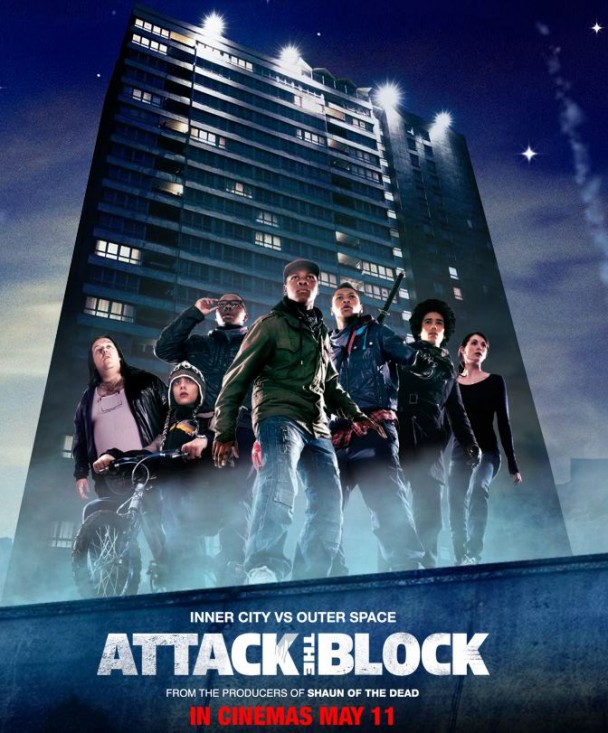
Second Opinion: Attack the Block


Rereviewing Attack the Block: a Second Opinion


The re-Meat

      Do you want to know why Superman Returns was so underwhelming whereas The Dark Knight rocked so hard?  (I'll bet Bryan Singer does!)  I'm convinced it's because Superman is such a good good guy. Sure, that sort of squeaky clean image probably appealed to older generations, people under the shadow of the Cold War and whatnot.  But characters like Superman have little resonance with today's youth, who prefer that their heroes have a healthy streak of bad in them.
      Why is that? The truth is good guys have great difficulty undergoing on-screen character development, since after all how can a morally pure character experience a real dilemma, or break his unwavering commitment to right conduct?  That's probably why, in the Christopher Reeve superman movies, they had to invent the notion of him wrestling with becoming human in Superman 2.  But that didn't work out either, because if there's one thing even less interesting than a totally good superhero, it's a totally good person who's also totally ordinary.
      This brings us to 2011's Attack the Block, about which The G wrote a scathing review.  Am I here to pick apart every claim The G makes and show where he's wrong?  Not at all.  In fact, I agree with almost all his statements about the film—namely, that it's trying too hard to be cool/edgy, that the supernatural threat the gang of street kids faces is kind of lame, and most importantly, that none of the characters is sympathetic in any straightforward sense.  Where we differ is in our reactions to this final fact: he found it a huge obstacle to enjoying the film, whereas I thought it was the movie's strongest feature.
       The main characters are definitely not good guys.  They're crude thugs; the audience can't possibly feel that they have right on their side, which certainly makes rooting for them difficult. 

In fact, upon seeing their antics, we viewers might end up looking rather like these characters:


     But therein lies the movie's special challenge to the viewer: what if, when the bad guys come, the only ones who humanity can scrounge up to face them are a bunch of lowlife punks? Isn't the "punk versus alien" idea less well-traveled than the White Knight versus Total Evil paradigm? Instead of a beacon of justice, we get a loser and his lame crew, teetering on the edge of becoming straight-up criminals, nudged back from said edge only by the bizarre circumstances. They might be almost cartoonish caricatures of British wannabe American tough guys, but somehow listening to their almost unintelligibly slang-ridden bouts of braggadocio felt more fun than yet another "these aliens picked on the wrooooong American!" trope.
      Speaking of which, it's wonderful to have a movie (that doesn't totally suck, like the recent rash of terrible Russian sci fi movies about flying cars and sentient ball lightning and who knows what) in the all-too-familiar alien invasion sub-genre which isn't set in, or about, America (though minus one for, culturally, becoming so like the monster they are trying to overcome). That said, this movie isn't on the same level as District 9 or 28 Days Later, but I'd happily re-watch Attack the Block over quite a long list of alien/disaster movies.
      And if all else fails and you still find yourself wishing the film would end, take heart: it's short! The soundtrack helps the movie maintain its zippy pace, and the producers were smart enough to get the film down to just 82 minutes not including credits, which means we don't quite have time to lose interest in the characters or the situation.  Plus Nick Frost is at his dazed best!
      All in all, Attack the Block doesn't really live up to the critical acclaim it's received, but the makers can always chuckle to themselves that, with a mere 1/16 of the budget, they succeeded where Bryan Singer's lackluster Superman totally failed!

The re-Math:

The G's original score: 2/10


Zhaoyun's take:

Objective quality: 4/10

Bonuses: +1 for anti-hero punks, +1 for not America, +1 for brevity

Penalties: -1 for the trying too hard to be cool/American thing, -1 for lame aliens

Nerd Coefficient: 5/10 "Equal parts good and bad"

[See an explanation of our non-inflated scores here]

Tuesday, April 16, 2013

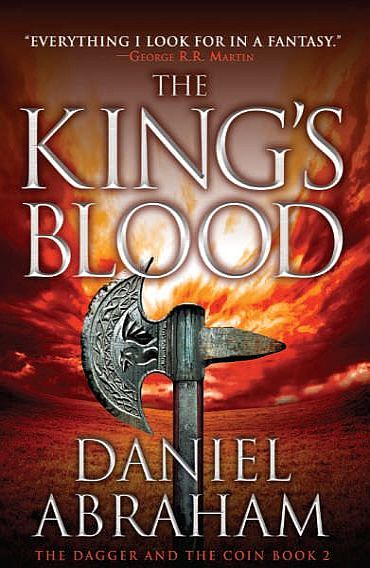
Second Opinion: The Dragon's Path/The King's Blood by Daniel Abraham


As much as we love each other here at Nerds of a Feather, we sometimes do have disagreements. One disagreement that The G and I cannot seem to iron out revolves around our respective views of Daniel Abraham's new epic fantasy series, The Dagger and the Coin. The G wrote excellent reviews of Book 1, The Dragon's Path (which he gave an 8/10) and Book 2, The King's Blood (which he gave a 6/10). My opinion is actually the inverse of his. Whatever the case, I see no reason to reinvent the wheel, which The G has done quite well, so instead of providing a traditional review of both books, I will simply state what I feel were the strengths and weaknesses of each installment of the series. This "Second Opinion" is my contribution to our Nerds of a Feather Anniversary Celebration!


The Dragon's Path

I literally flew through the book, gobbling it up in a few days. It is fantastically well written for a fantasy series, featuring crisp and clear prose. Further, Abraham deals with the issue of morality in a unique and inventive way. Geder, for instance, is pure of heart but evil in action. But Abraham grapples with morality in even more sophisticated a manner through the use of Dawson, a blue-blood (noble) in the truest sense of the term. Dawson fights to uphold the nobility; he fights for tradition, for what he thinks is right, true, and just. But in the process, he emerges as something of an anti-hero. I found myself rooting for his victory and rejoicing in his good fight while reviling his cause. What is morality, Abraham suggests, when what is moral and good to one is truly repulsive to another?  

Of course, The Dragon's Path makes no qualms about the immorality of atrocity. Abraham includes a number of spine-chilling scenes, acts of such emotional power that we rarely find in works of epic fantasy. One of the most horrible atrocities I have encountered occurs in this novel. But the presentation of this atrocity in a lighthearted manner, without celebrating its grit, its blood, or gore, make it all the more disturbing.  

Nonetheless, I had a number of quibbles with The Dragon's Path. As I see it, the book had four main weaknesses. First, the world building is a bit splotchy. Abraham introduces the idea of 13 races, but fails to flesh this idea out throughout the course of the novel. Perhaps it would have been more effective, as The G mentions in his review, had Abraham introduced the various slave races in a more gradual and natural way. The way he has it set up now, I am not sure that the 13 races actually adds anything to this series. 

Second, Abraham only hints at a broader narrative without really beginning to engage in it. Failing to introduce the main story arc, even in a limited way, detracts from the power of the story. Why continue reading the series when we have little idea where it is going?

The answer, of course, should have been the characters. Had Abraham created a character-driven fantasy with protagonists and antagonists about whom the reader truly cares, then that would overshadow the lack of a main story arc. Sadly, Abraham fails to do so. (A perfect example of a writer who does this well is Steven Erikson in The Malazan Book of the Fallen. One has little clue of the overall story line even after the first four or five books. But Erikson creates fantastic characters, an inspiring formula, and brilliant world building that keeps the reader engaged nonetheless). Although I enjoyed watching Cithrin grow up and seeing Marcus grow increasingly more protective over her, I never really began to care for the main characters. 

Finally, the novel only hinted at tenuous connections between the characters. While I understood that they would play more important and interconnected roles as the series progressed, I found myself wondering why each of the four main viewpoints did not connect to the others in a more intuitive way.

In the end, I did enjoy The Dragon's Path. The writing is clear and engaging, and Abraham deals with morality and atrocity in a more engrossing way than most other epic fantasies I have read. But the problems in its story arc and its characters do not warrant the fantastic score The G gave.  

The Math

The G's Score: 8/10

Jemmy's Second Opinion: 6/10 "Still enjoyable, but the flaws are hard to ignore"


The King's Blood    

I also find myself disagreeing slightly with The G's assessment of The King's Blood. In this book, Abraham presents is a more complete package than he did with the first installment of the series. The King's Blood is well written and engaging; I zipped through it, finishing the book it in even less time than I finished the first volume. To me, Abraham transformed most of the weaknesses of The Dragon's Path into strengths in The King's Blood (except the 13 races, which still seems to add little to the broader story).

First, and most importantly, I began to care about the characters. Cithrin truly comes into her own as a bank manager and as a political and economic mind. And although not all her decisions feel natural or make sense (her relationship with and protection of Geder, for instance--in this, I do agree with The G's criticisms), I remained invested enough in the character for my suspension of disbelief mechanism to kick in. After all, Cithrin is a fantastic character: highly intelligent, ambitious, fearless, and eminently practical. Marcus becomes more sympathetic and complex, as he becomes increasingly torn between his duties as Cithrin's head of security and his growing fatherly affections for her. Geder, always repulsive, continues to portray the child-like quality of evil. Child-like purity, after all, is composed of equal parts good and evil, parts which at times seem to be at war within Geder's personality. Dawson, ever the challenger for his particular sense of justice, fights the good fight, engaging in a battle he knows he is unlikely to win. And Clara, Dawson's wife, finds herself pushed into a decision that she otherwise would not have even thought up. It is the characters that make the story, and The King's Blood does a much better job in getting the reader invested in its characters, whether we like them or not.

Equally importantly, the connections between the protagonists and antagonists become clear as a sunny day. The advent of the spider priests (under Geder's protection), Marcus's personal quest, Master Kit's existence, Cithrin's attempts to establish herself in the bank, and Dawson's battle to save the kingdom point to where Abraham is headed with the series, and kept me much more engaged than did the first volume of the series.  

!SPOILER AHOY!

One of The G's biggest criticisms of The King's Blood is the fact that Geder was chosen as Lord Regent instead of Dawson. This, The G argues, makes no sense. But I do not feel that this should be seen as a flaw in The King's Blood. Instead, it is a flaw of the first book of the series, The Dragon's Path. Geder Palliako was the obvious choice or Lord Regent once he became the protector and adoptive father of the crown prince. So while I agree with The G that Dawson was the obvious first choice for Lord Regent, I also recognize that his fate was sealed after Geder became the crown prince's gallant protector. Instead of being a problem with The King's Blood, let's add it to the [growing] list of problems with The Dragon's Path.  

!SPOILER ENDED, READ ON, OH FEARLESS READER!

The King's Blood, in the end, does much to invigorate the series (which has a lackluster beginning). It is well paced, interesting, and ties the otherwise disparate story lines into an organic whole. While there are, as The G points out, some forehead slapping moments, they are offset by wonderful character development and a fast-paced character-driven story. Whereas I am hesitant to give an emphatic recommendation to The Dragon's Path, The King's Blood gets two thumbs up.  

The Math

The G's Score: 6/10 

Jemmy's Second Opinion: 8/10 "Well worth your time and attention"

[Read about our scoring process here, and learn why we say "no" to grade inflation.]