Showing posts with label Halo. Show all posts

Tuesday, October 7, 2014

A Brief History of Bungie

Today we welcome Brian to the Nerds Feather family! Brian is an ex-Army veteran who works in IT in the Midwest (USA). He loves video games, science fiction and fantasy, tabletop RPGs, and long distance running.
 

From Darkness to Destiny

(2014) When I get into a game, I often think about where the game came from. What were its influences? Who made it? What else did they make? This is especially rewarding when I come across a game from a developer that's flown under my radar, and suddenly I have a back catalog of interesting new games to try out. While Bungie is far from flying under anyone's radar, they have been around far longer than some people are aware, with a history reaching years before Halo. This is a brief history of what led to their latest release, Destiny.


(2001 - 2010) The Halo series is what Bungie is most famous for. Spanning five Bungie-developed games (Halo 1 - 3, ODST, and Reach), the original Halo: Combat Evolved is what threw Bungie into the mainstream spotlight. What I find most interesting about the development of Halo: Combat Evolved is that it started life as a real-time strategy game aimed at Mac and PC. In fact, it was unveiled by Steve Jobs at Macworld 1999! You can see a lot of elements of the original Halo in the unveiling trailer, despite being demonstrated in a third person perspective. What's clear is that Halo went through many iterations and changes before release, as many games do.


(2001) Oni is a weird one, right? It's a Bungie game because it was developed by the remote Bungie West studio, but it was their only game. When Microsoft bought Bungie, part of the deal was that their previous arrangement with Take 2 meant Take 2 would continue to publish Oni while the rest of Bungie fell in with Microsoft. Oni is a huge departure from the rest of Bungie's catalog. It's an anime-inspired third-person action game. It's got guns and a fairly deep melee fighting system. Unfortunately, it was completely hamstrung by loose controls and a horrible camera, as typically what kills third-person action games. Combined with being a pretty difficult game, I personally never made it past the first boss. It exploited the worst qualities of the game: aimed shooting and nimble dodging of moving obstacles. A lot of the ideas in Oni were cool, and the main character is clearly a rip-off of Major Motoko Kusanagi from Ghost in the Shell, but the game was nothing to get excited about.


(1997 - 1998) Did I say that Oni was Bungie's biggest departure from their history? Because the Myth series is actually the biggest. They are fantasy real-time strategy games. Making them stand out from other RTS games from that time (Command & Conquer, Warcraft 2), Myth featured a fully 3D battlefield (meaning you could rotate the camera to almost any perspective) and there was no resource management. With a fixed number and composition of units, you had to rely on formations and tactics to beat an enemy that often outnumbered and overpowered you. They also had friendly fire on at all times, so if you didn't tell your grenadiers to stop throwing bombs before your melee fighters got in their range, they'd happily bomb the crap out of your own units. Every unit under your command had a name, and they could gain in ranks through surviving previous missions.

All of these unique qualities made Myth stand out from the rest of the RTS games of the time. You couldn't win with overwhelming numbers. You couldn't win without micro. Positioning was important, and no blob of units was going to survive for long. It was very comparable to how the Total War games depict combat, except on a much smaller scale.


(1994 - 1996) The Marathon series is to Macintoshes, as the Doom series is to PCs. They came out after Doom, and benefit from a number of improvements, but they play pretty close to the same. Like Doom, Marathon is a 2.5D first-person shooter. Marathon didn't have jumping but it did have some low-gravity platforming. Most weapons needed to be reloaded but there was no reload button, so managing when your magazine ran out of bullets was important. The magnum starter pistol that was so popular in Halo: Combat Evolved got its start here in Marathon, as did dual-wielding, and AI characters. In fact, the bulk of the story in the Marathon series is regarding artificial intelligences gone insane. It also involves alien invaders, alien enslavement, cyborg super-soldiers, and alternate realities. The story is largely delivered through computer terminals that can be found scattered through the levels of the game, much like the terminals scattered throughout Halo: Combat Evolved Anniversary Edition and Halo 4. They're all text-based, but they added so much to atmosphere of the game by giving out bits of plot to those who found them.

Like Doom, the Marathon series also featured multiplayer, demo recording, and a long-living map-making community. Marathon 2: Durandal was given an HD remake and released on Xbox 360. Eventually, Bungie released all three Marathon games for free! They can be played on modern hardware using the Aleph One source port, and they're still very playable to those of us used to Doom. You can get all three Marathon games in handy platform-specific bundles here: http://marathon.sourceforge.net/


(1993) If Marathon was the Doom of Macs, then Pathways Into Darkness was the Wolfenstein 3D. Like Marathon, it improved upon the standards set by Wolfenstein 3D. Pathways was a more complex games and it had a time limit. In the game, you are racing against the clock to stop an ancient god from awakening and destroying the Earth. It had an inventory system, puzzles, and an item that allowed the player to speak with the dead. Through this, they would learn parts of the story as well as mission hints. I can't say I've played Pathways Into Darkness, which is a bummer because it sounds pretty awesome! But Blendo Games, makers of several fantastic indie games, did an abbreviated remake using the Doom 3 engine called Pathways Redux that can be found here: http://blendogames.com/older.htm

And that's that! There are older Bungie titles, but they're far lesser known than these. As can be seen by their history, Bungie has a way of taking existing ideas, adding their own innovations, and making some amazing games. Despite the relatively mixed reception to Destiny, I'm hoping they continue to make new and exciting games for a long time.

Friday, September 19, 2014

Destiny

[Destiny, Bungie, Activision, 2014]

One of the Biggest Video Game Releases in History, You Say?

Well, probably, but not as big as Activision Blizzard initially reported. Although they announced $500 million in first day sales, they only shipped $500 million worth of units to stores, but the actual sales were quite a bit lower. They really only made about $325 million in sales during the first five days on Destiny. However, that's nothing to smirk at, and Call of Duty: Ghosts did the same thing claiming $1 billion sold on day one when the actual number was also significantly lower. It has been one of the most hyped games the public has ever seen with the television marketing campaign costing somewhere in the neighborhood of $6.7 million. However, the fact that they didn't release early copies to critics for release day reviews was a bit disconcerting. When a movie does that, you know it is going to be a stinker. The reasoning Bungie gave for the decision, and it does make sense, is that they wanted critics to have the ability to play a fully populated MMO (Massively Multiplayer Online) rather than one with only a few other critics online at the time. With MMOs, there are thousands of people online at the same time occupying the same virtual worlds, so it would make a difference in how the game appears if critics gave it a try without all of the actual players running around doing missions in the area. It would also make some parts of the game unplayable as they require three-man teams to even begin, much less complete. Anyway, enough with the hype, let's get to the meat of the game!


Gameplay

I'll cut to the chase. This game is about as polished as they come with regard to mechanics. It plays like a Porsche drives. Smooth. You start out by choosing between three types of protagonist. There are Titans, which are the tanks of the game. They can take massive amounts of damage without dying, but lag drastically behind the other two in movement and damage recovery. The second is the Hunter. This character class moves quickly and easily with a high agility score. Unfortunately it takes forever to heal with the lowest recovery setting of the three classes. The third type is the Warlock. This is your typical mage that can recover quicker than the other two, but doesn't have very dangerous attacks outside of its special magic moves. The Warlock isn't the quickest of movers, either. All of that said, I've played all three characters and it seems like Bungie did a pretty good job of balancing out their various skills and deficiencies. Each character also has two subclasses that define their special moves. You should choose your subclass early because any upgrades to one won't transfer over to the other. Pick a subclass based on its special moves and stick with it throughout the game. 


Beyond that, you can choose between Human, Awoken, and Exo. You can customize the look of your character, but race and the appearance are only cosmetic. They don't effect how the character plays at all. Humans are, well, like us. They managed to survive the destruction wrought by the Darkness, dubbed the Collapse, and are just trying to survive in the last city not controlled by its minions. The Awoken are humanoids with bluish skin and an ethereal glow about them. They are based on mythological creatures such as elves, vampires, ghosts, and angels. The Exo are either machine or cyborg, I've read both definitions. They supposedly survived the Collapse but have no memory of their history before that. 


There are four species of alien enemies that fight for the Darkness: the Fallen, the Vex, the Hive, and the Cabal. The Fallen are scavengers that are attempting to take over the Earth. They are filthy urchins that constantly look for anything of value left behind after the Collapse. Vex are robots that employ a hive mind, all connected to a single consciousness. They came to our universe through warp gates from another dimension and mostly populate Venus. Hive are a species of undead that live on the Earth's moon. Their strength is in numbers and they tend to attack in hordes. Finally, the Cabal are massive creatures that employ thick armor and huge metal shields for protection. They generally stick to Mars missions and are the last species you encounter before finishing the campaign. None of the species like each other and you can often sit back and watch firefights where they kill off one another, leaving a much smaller force for you to take out before moving further through the game's many maps. Unfortunately I had to dig up nearly all of this information about the enemy species online because so little of their background stories is covered in the game itself due to the painfully thin plot. But more on that later. 


Special Moves


Each character type has two special moves. The first is called a Super Charge and it is the more powerful of the two. The second is a melee attack that has various effects depending on character type and subclass. All special moves can only be used sparingly and take time to recharge. Grenades act the same way. 

Titan


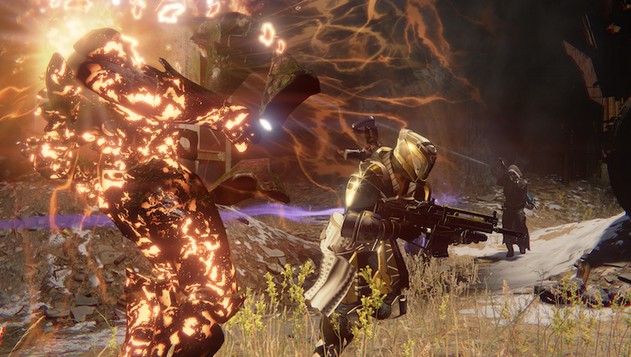
The Titan's Super Charges are titled Fist of Havoc and Ward of Dawn. The Fist causes the player to jump in the air and come crashing down, slamming both clinched hands into the earth causing high levels of damage to any nearby enemies. Ward of Dawn creates a small shield through which the player can fire but no projectiles can penetrate. The Titan's melee attacks are dubbed Storm Fist and Disintegrate. Storm Fist is simply an overpowered punch that does a lot more damage than your average pop to the jaw. Disintegrate actually has nothing to do with disintegration. After you smack an enemy you absorb any incoming attacks and transform them into ammo, health, or a quick recharge for Storm Fist. 

Warlock


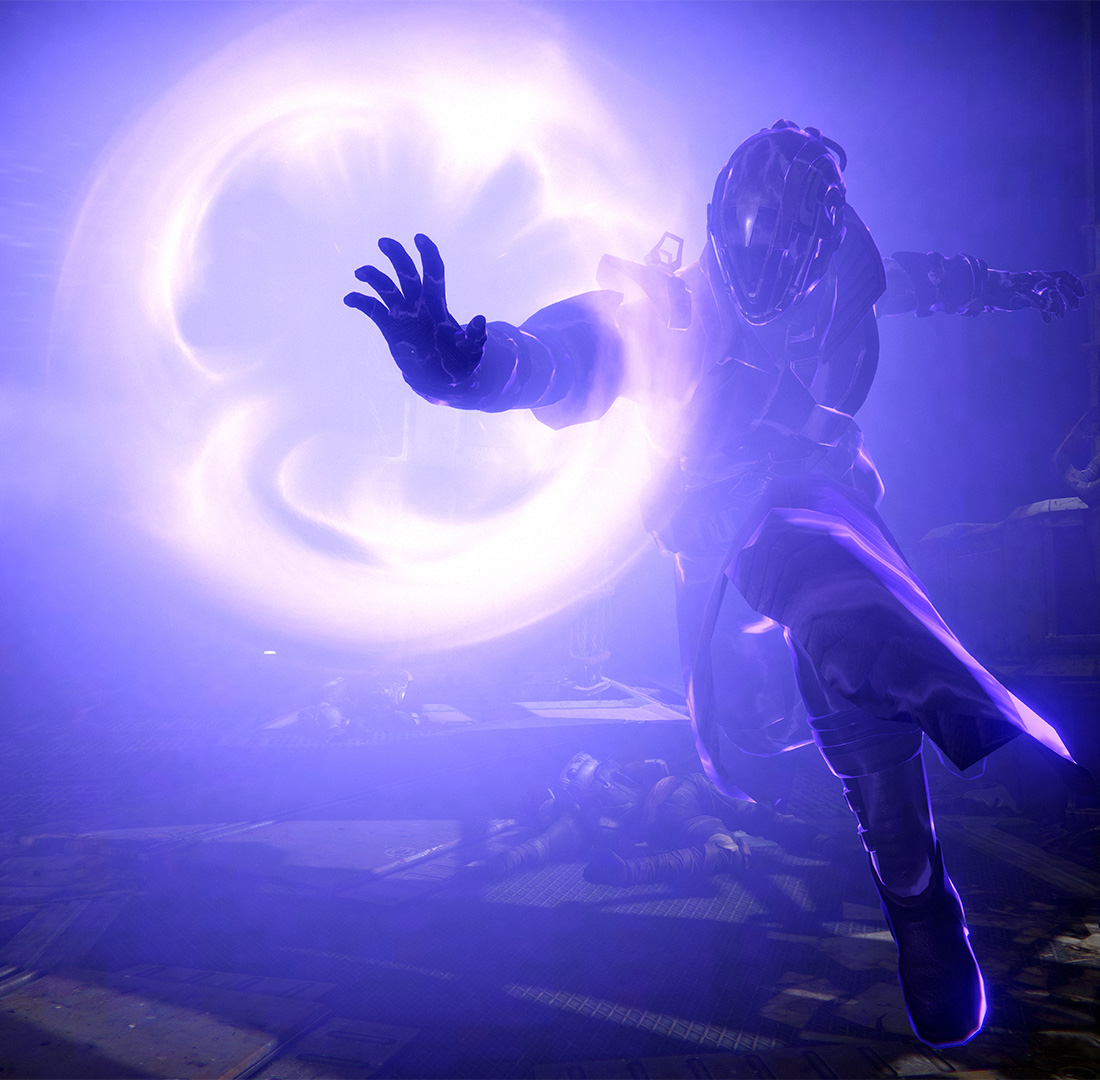
The Warlock's Super Charge attacks are referred to as Nova Bomb and Radiance. Nova Bomb hurls a bolt of damaging light at the enemy. Radiance boosts your skill recharge speed, damage resistance, and melee damage resistance for a brief period. The Warlock's melee attacks are called Energy Drain and Scorch. The first one, strangely enough, drains energy. Heh. It removes health from your enemy and speeds the recovery of your health, grenades, or Nova Bomb. More than any other character class, I found the effects to the Warlock's Super Charge attack to be vastly superior to its melee attack. 

Hunter
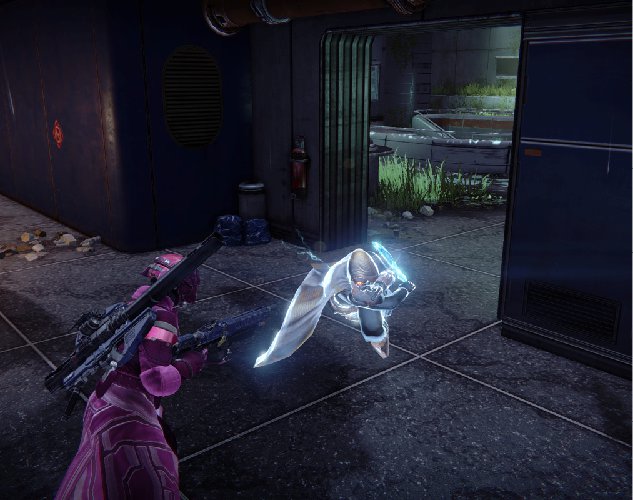

The Hunter's subclass' Super Charges are Arc Blade and Golden Gun. These two are easily the most visually appealing of all the special moves. Arc Blade generates a knife of pure energy for about eight seconds, letting you attack as many enemies as you can in that time period. For most, one shot is all it takes. Bosses may require multiple hits, but the attacks come so fast that they can't do anything but reel in pain from the impact. With Golden Gun, you fly up into the air in a yellow whirlwind of flame, landing with a fiery pistol in your hand. You have three highly damaging shots with the revolver that, again, take out nearly anything but a boss with a single shell. The Hunter's melee attacks are Throwing Knife and Blink Strike. It's as if Bungie had to balance the beauty of the special moves with the plainness of the melee attacks. Throwing knife is decently effective, but no more impressive in graphic design than a knife thrown in Call of Duty. Blink Strike is also unimpressive, being merely an extended melee attack with more range than your standard stab with a kitchen knife. 

Bang Bangs and High Fashion


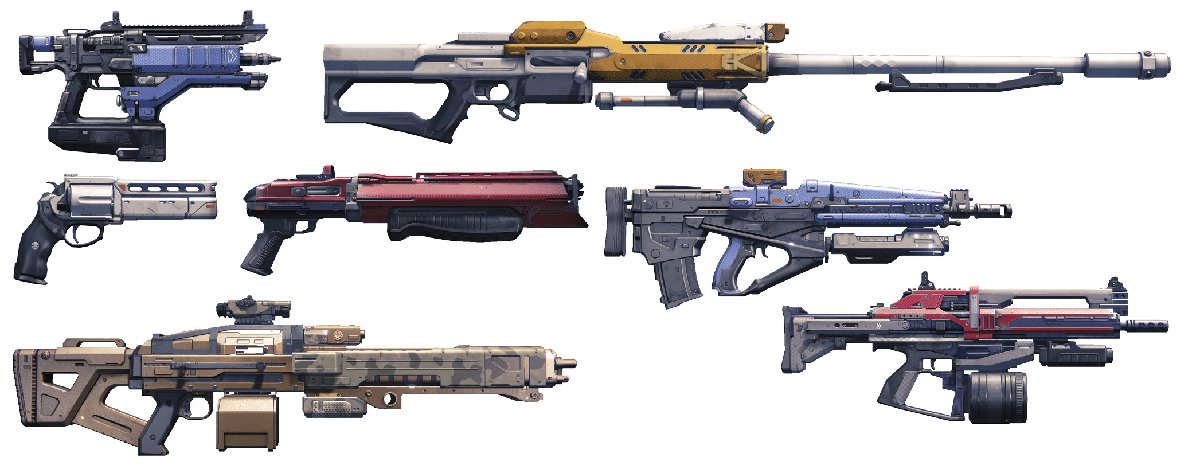
There are a plethora of weapons and armor to choose from in Destiny. Your character carries one primary weapon, one secondary weapon, and one heavy weapon. The primary weapons include auto rifles (machine guns), hand cannons (revolvers), scout rifles (hunting rifles), and pulse rifles that fire three-round bursts. The secondary weapons are the shotgun, fusion rifle, and sniper rifle. Heavy weapons are just a rocket launcher and a machine gun. Each weapon group can have a variety of upgrades. I won't bore you with every single option as that list would take up three pages and this review is long enough already. Some examples are Quickdraw, Upgrade Damage, Kinetic Damage, Extended Mag, Hawkeye, Warhead Verniers, Reactive Reload, and Void Damage just to name a few. Upgrades are available on every weapon and must be earned in battle. On top of that, you have to have enough Glimmer, the primary currency of Destiny, and, with many, additions like Ascendent Shards, Weapon Parts, and Plasteel Plating. 

The armor consists of four different pieces: the helmet, gauntlets, chest armor, and leg armor. Each one carries with it bonuses, just like the weapons. Not only do they have the same upgrades as the guns, but they also hold bonuses for Intellect, Discipline, and Strength. That's just a short way of saying your Super Charge, your specialized grenades, and your melee attack, respectively. You also wear a class identifier, which is a scarf for the Titan, a cloak for the Hunter, and a bond for the Warlock. You can also purchase these pieces of clothing in order to ally yourself with one of the cults (More on them later). While wearing a piece of cult clothing, all of your reputation points go toward that cult rather than your Vanguard score. It makes little difference beyond allowing you to purchase items from specific vendors. There is no bonus or upgrade given by wearing one piece over another. 


Campaign


While the gameplay in this game is fantastic, its one shortcoming is in the story. I suspect the reason for so many of the hot-or-cold reviews that have been coming out is the plot. It is very vague and there isn't much to it. The Traveler - a massive, moon-sized, planet-looking thing - comes to Earth and teaches us about space travel. Humans populate Mars and Venus. Then, the Darkness, the Traveler's ancient enemy, destroys nearly all of mankind. A small group of humans, Awoken, and Exo survived and are fighting the minions of the Darkness. There. That's the whole thing in four sentences. Of course there are more detailed mini-stories in the missions, but that's the gist. The missions usually consist of traveling to somewhere, killing a bunch of minor enemies, then killing a boss and going back to the Tower for a reward. Usually I'm worried about giving away too many spoilers in a review but with Destiny it's hard to do so because there's just not that much to spoil. It's unfortunate that the story doesn't have much depth because the rest of it is spectacular, but sadly that's the case.  


For players that were expecting the next science fiction epic like Halo or Mass Effect, they will be sorely disappointed with Destiny. The universe is sparse and barren. The massive hype of the next epic science fiction masterpiece has fallen painfully flat. For players that just wanted a finely polished FPS MMO, there are few out there that are better. I believe that the main culprit behind all of the highly polarized reviews, both from professional critics and users, is the thin plot. It's like Bungie spent so much time building lush, verdant landscapes and intelligent, believable AI that they ran out of time and threw the story together in the last thirty minutes before the deadline. I fully expect that Destiny 2 will flush out the universe quite a bit due to all the negative press. At least I hope so, because the franchise has such great potential that it would be a crying shame to let it remain so unfulfilled. 

There is a soft cap of 20 on every character, but it is possible to go beyond that ceiling by collecting "Light Points." The only way to get light points is by equipping gear that has a certain light point amount assigned to it. With this light-infused gear on your character, your level can rise above the level 20 cap. I've seen players online reach as high as 27, but I'm not sure there is a true cap on your character. Due to the limit of 100 Vanguard/Crucible marks (other currencies) you can accrue per week, it's hard to tell this close to the game's release what the true limit is, if any. It isn't necessary to join a cult in order to get gear with high light points, not to mention damage/defense numbers, but it helps. 


Multiplayer Games


Initially the pure multiplayer aspect, dubbed the Crucible, left me feeling more than a bit disappointed. There was only a single game type on the Xbox One. I'm not much of a multiplayer addict. I just prestiged my first character on Call of Duty: Ghosts last month if that's any indication. Due to that fact, I've done less-than-spectacularly in the Crucible. That said, I've managed to level up to 24. They equal out the leveling for the purposes of multiplayer, but I suspect from my numerous deaths that the same can not be said for the weapons and armor. I'll shoot someone five times with a high-powered rifle and they just hit me once with a machine gun and I'm the one that goes down. Something's not right about that.


Vanguard


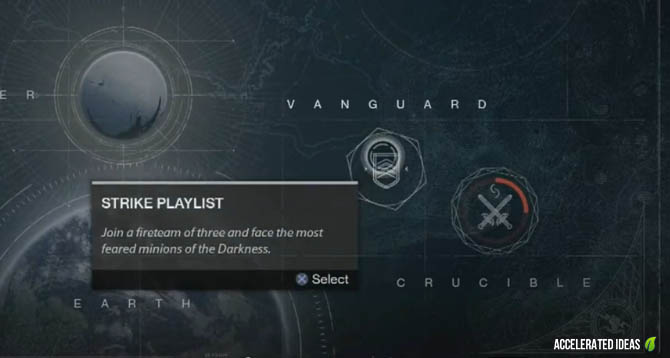
The Vanguard is a game mode where you take on Strike missions with two other players. There are four levels of Vanguard mission to choose from of varying difficulty. The game requires that you undertake these missions with three players, but that doesn't mean you have to have two other friends online in order to complete them. The servers do a good job of matching you with similarly-leveled players. These missions offer you Vanguard Reputation and Marks that can be spent with the Vanguard and cult merchants in the Tower to purchase special armor and weapons. There is a limit of 100 Vanguard/Crucible Marks per week that can be earned. I'm not sure if that's to keep the multiplayer from becoming an unbalanced mess, to keep players coming back each week for more, or a little of both. Either way, I've maxed out my Vanguard/Crucible Marks for the week so my desire to run these slightly more difficult missions has wained until next Monday. 


Crucible

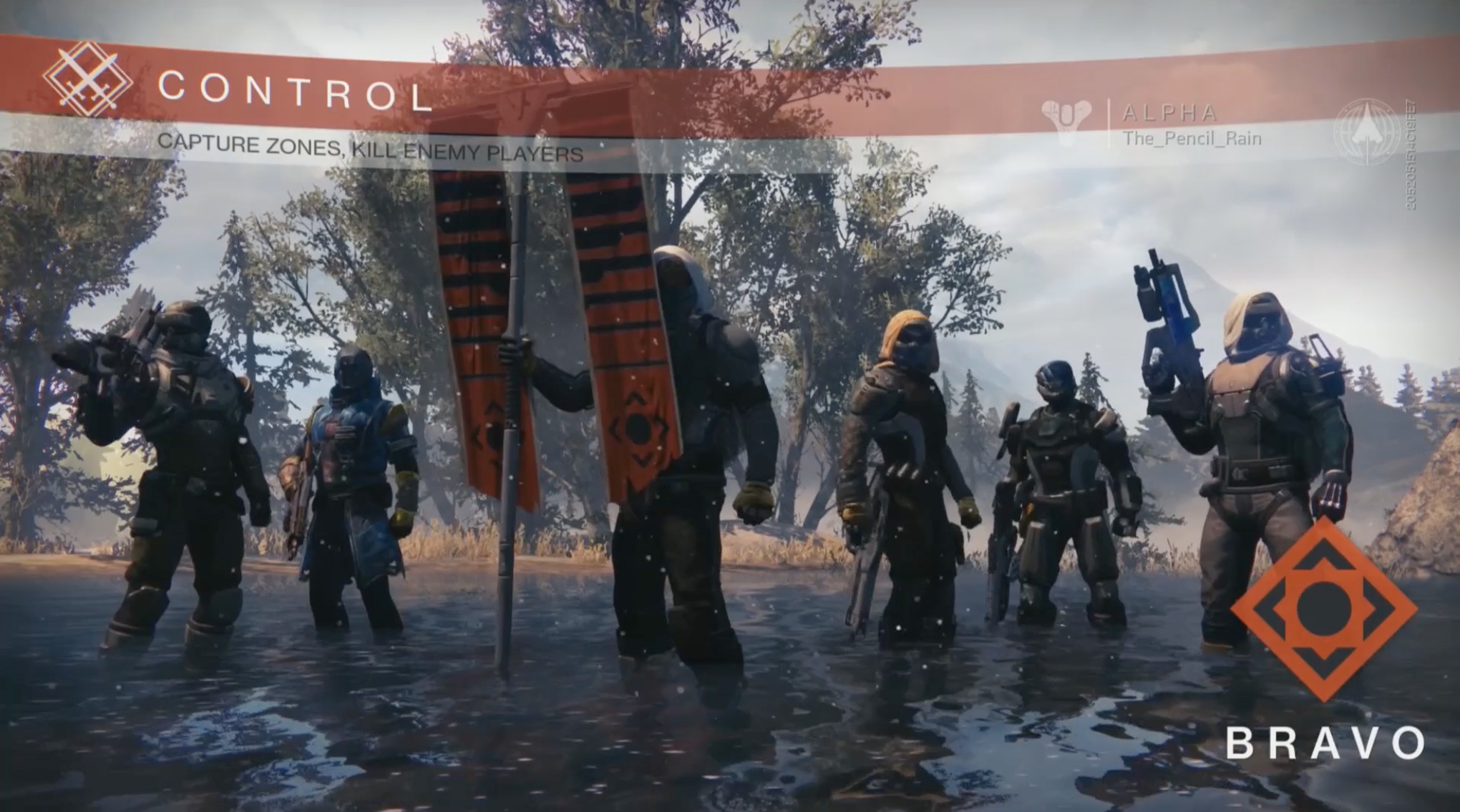
The Crucible is the game's true multiplayer portion. It started with only one game type on day one of the release, but it has since expanded to four. That's still a sadly low number for the developers who essentially created the multiplayer craze with Halo, but it's enough to keep a casual multiplayer participant like myself happy for the time being. The four game types are called Control, Clash, Rumble, and Skirmish. In Control, two teams of three players have to capture three zones and hold them. Doing so increases your point total for every kill. Clash is classic team deathmatch with six gamers on each team. Rumble is an every-man-for-himself game where every one of the six players is out for the others' blood. Skirmish is just a smaller version of Clash where the teams are made up of three players instead of six. In Crucible matches, you win Crucible Reputation and Marks, which are spent on weapons and armor from one of the three cults. 


Join a Cult


There are three factions in Destiny. Bungie refers to them as "cults." They include The Future War cult, the Dead Orbit cult, and the New Monarchy. You have to reach level 20 before you can join up with one of them, but they're the only way to get the most powerful weapons and armor in the game. Well, almost the only way. You can stay non-affiliated and use your Crucible Marks to buy things from the Crucible salespeople in the Tower. All four factions' pieces of armor contain a light point amount. As mentioned before, light points are the only way you can level up your character above the soft 20 cap. From what I can tell, the cult contacts in the game (there are three, one for each group) and the two Crucible salespeople (a non-political, general group) have the best weapons and armor for sale when compared to the Vanguard leaders.  
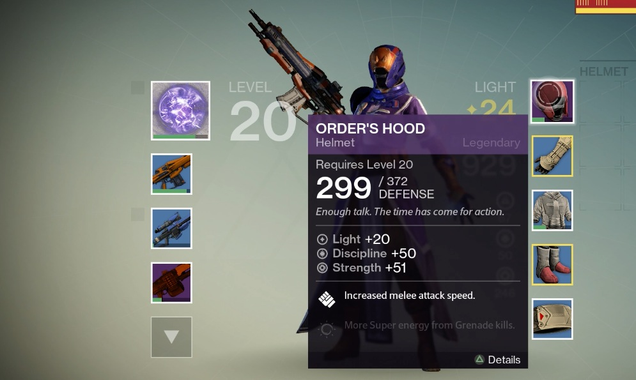

There are advantages to choosing one cult over another based on the way you choose to play. Each one has an effect on two of your three attributes, those being Intellect, Discipline, and Strength. Choosing a cult will give you the opportunity to gain bonuses to these attributes through their armor. If you purchase Dead Orbit armor you get a bonus to Discipline and Strength, reducing the cooldown time of your grenades and melee attack. Joining the Future War gives boosts to your Intelligence and Discipline (grenade and Super Charge cooldown). The New Monarchy offers you the chance to get bonuses in Intelligence and Strength (Super Charge and melee). Each group has a history that isn't really covered in the game and I won't get into here. You don't use Glimmer to purchase items from the Dead Orbit, New Monarchy, Future War, or Crucible vendors. Instead, you have to earn Vanguard and Crucible Marks. These are an entirely separate type of currency that must be earned by doing Strike missions for Vanguard marks or Crucible battles for theirs.

Music and Environment


Two places apart from the gameplay where Destiny really shines are the lush soundtrack and the impressive, varied battlegrounds. That shouldn't be a surprise, though. Bungie used the same duo of composers that wrote the music for the Halo series, Michael Salvatori and Martin O'Donnell. Even Paul McCartney collaborated on the project. Yes, that Paul McCartney. The music fits the game perfectly, building with the action and easing off into lush soundscapes for the menus and load screens. The suspenseful parts of the game were made even more intense with spooky ambience. There are even seamless transitions between portions of the game where there normally would have been only silence. 


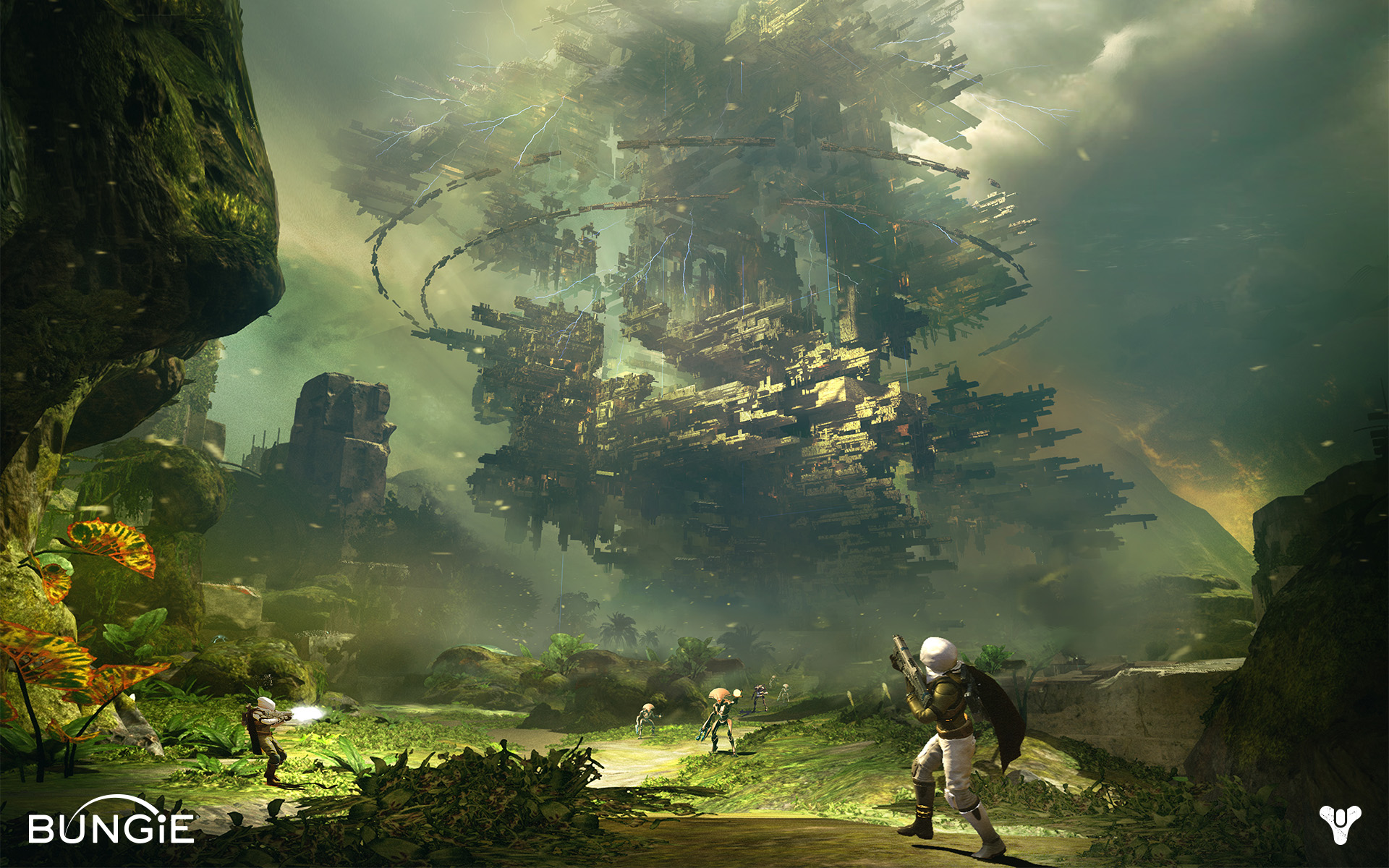
The environments are as sumptuous and varied as the planets on which they represent. The Earth portions take place in what used to be Russia and it is every bit a decrepit wasteland as Mad Max or Cormac McCarthy's The Road. The moon looks just like the footage we've all seen dozens of times in movies and on television. The Red Planet appears like the shots that were beamed back from the Curiosity rover. Some poetic license was taken and "ancient" ruins were added to give the maps some variety. Finally, Venus emerges as a tropical rainforest after it had been developed by terraformers. Suffice it to say the graphics in this game are second-to-none. 


Tick, Tock, Tick, Tock...

According to www.howlongtobeat.com, Destiny takes ten hours to complete the main story and seventeen-and-a-half for the campaign plus extras. I found that to be a bit of an underestimate. I did all of the missions in the game including the Strike missions and easily spent twenty-plus hours on the campaign before I even touched the multiplayer modes. Now, I'm a bit of an OCD perfectionist when it comes to finishing a big game that I'm enjoying (That's a nice way of saying I'm anal), but even so, it isn't something you can do in a day like the Call of Duty campaigns. So plan on a good week or so unless you're one of those people who partakes in eight-to-ten hour marathon gaming sessions. 


The Math

Objective Score: 9/10

Bonuses: +1 for being one of the smoothest games I've played, mechanics-wise, not to mention it's just plain beautiful. Plus, your sidekick, Ghost, is voiced by Tyrion, Game of Thrones' Peter Dinklage!

Penalties: -1 for the paper-thin plot. I mean, come on! What did they spend, twenty or thirty minutes writing the story? This is supposed to be the next big science fiction franchise, but instead it's merely an FPS MMO, albeit a very good one. Here's hoping Destiny 2 brings a lot more to the universe than Bungie's first outing did. -1 for the painfully long load screen scenes. I realize that it would take light years to reach Venus, but that doesn't mean you have to take it literally in the game for the sake of realism. I probably spent at least 2 hours of my life during the last week watching my ship hover in space between missions as it loaded up the Tower or the next mission. 

Nerd Coefficient: 8/10.  Well worth your time and attention. 

Friday, July 12, 2013

Portal 2


puzzle perfection

It's a bit slow for games this time of year, so I've decided to look back on one of the best titles of this generation, Valve's Portal 2. As many of you may remember, Portal was part of the Orange Box, a collection of five games from Valve including Team Fortress 2, Half-Life 2, Half Life 2: Episode One, and Half-Life 2 Episode Two, along with the aforementioned Portal. 


Portal was a short 2-3 hour trial at a puzzle game that the good people at Valve had been tinkering with and decided to include in the "Best deal in gaming of this generation." It received many unexpected game of the year awards. In order to complete the puzzles, you were tasked with using a "portal gun" to reach the exit of each room by using the gun and the environment to bypass a series of obstacles and reach the next puzzle. The portal gun shoots a blue portal and an orange portal. When you walk through one, you exit the other. Simple, right? Where it gets more complicated is when you have to use things like momentum to complete the puzzle. If you jump from 40 feet up into a portal, you come out with the same momentum with which you entered. It was a cute yet challenging game with a classic credit track (hit play below).


the full monty


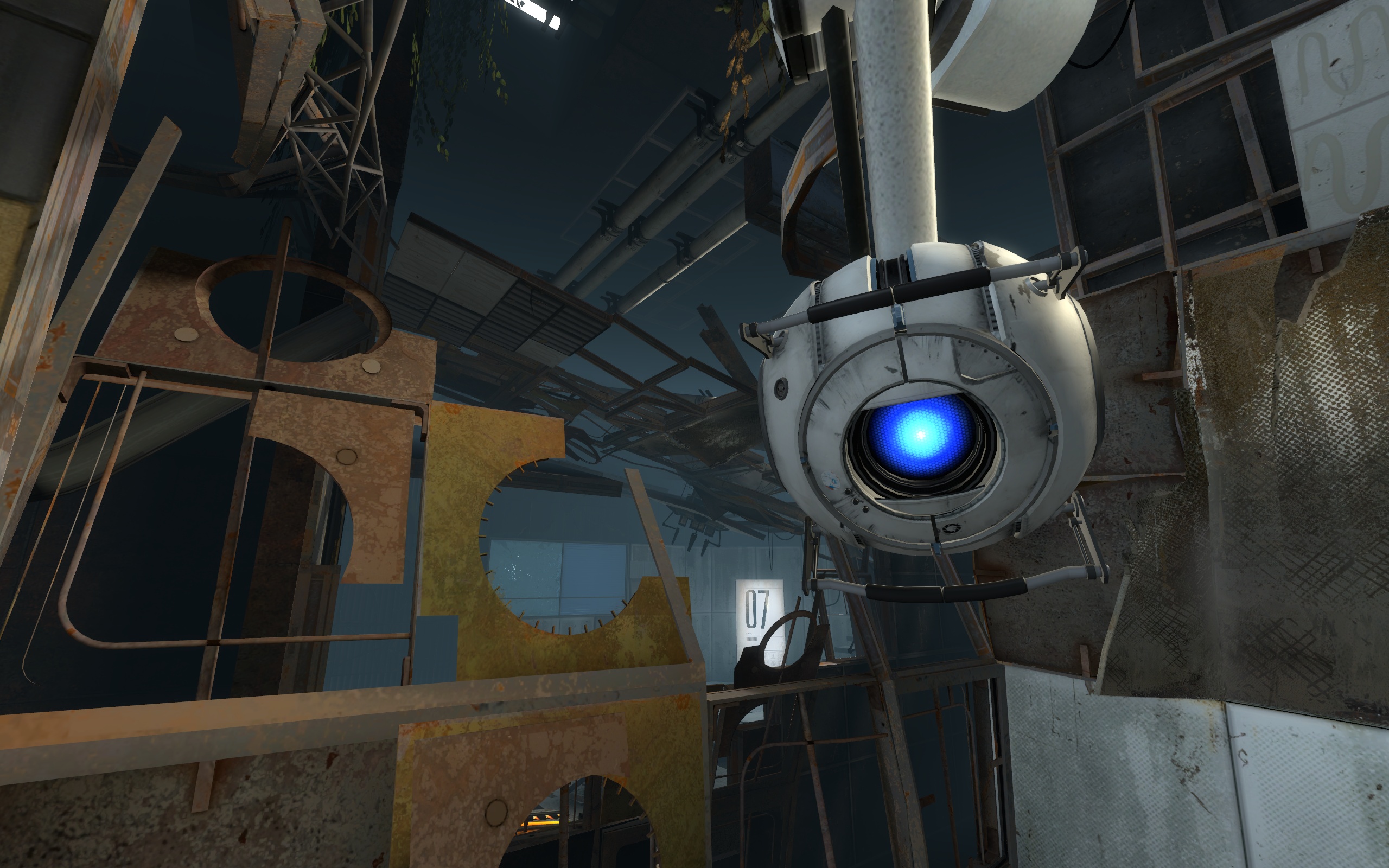
Portal 2 was described by the programmers as their real intention with Portal. It's a full 10+ hours of gameplay that continues within the universe begun in Portal. In the first iteration, you are facing a female testing program named GLaDOS (Gladys). Those of you who have been around computers as long as I have will get the reference to the DOS programming language, an early way to run computers. In the second Portal, you face GLaDOS again, but you have a small round robot on your side named Wheatley. Some of the best humor in the game comes from this little British bugger, oddly reminiscent of Ricky Gervais, who can't seem to do anything right.


Since this game came out in 2011, I'm going to assume that you've either already played it or don't intend to, so spoilers are open for business. After disabling all of GLaDOS' defense mechanisms including the turrets and neurotoxins, you replace GLaDOS with Wheatley, fully expecting the (up-until-now) friendly robot to help you escape the testing facility. Instead, the little brat goes mad with power, places GLaDOS into a potato, and throws you both down an elevator shaft. The rest of the game is made up of you and GLaDOS making your way through old testing facilities that date back to the 50s in order to finally return and face Wheatley in the hopes that GLaDOS will keep her word this time and free you.


As you progress through the older tests, you are joined by narrator J. K. Simmons who voices the CEO of Aperture Science. Fans of the Half-Life series will recognize the company as the one that brought about the subjugation of mankind, but that's a story for another game. In this one, Aperture has already collapsed and you're working your way through their old testing chambers, along with GLaDOS the potato.


The older testing chambers were perfect. They felt like a throwback compared to those in Portal 1 and the early levels of this game. The surrounding environment and Simmons' narration serve to complete the illusion that you are, indeed, back in Aperture's old 1950s test chambers. It takes some doing, but you eventually thwart Wheatley's attempts to kill you and return to the chamber where he is housed. Using corrupt software, you prompt a second core replacement (the first being the replacement of GLaDOS with Wheatley).


However, Wheatley has booby trapped the process and the change of cores brings the entire structure down around you. Only by shooting a portal at the moon are you able to drag the little traitor into space and remove him from the testing facility. GLaDOS grabs you at the last second as Wheatley is dragged through the portal and onto the moon. Luckily for you, GLaDOS has realized that testing you is a useless endeavor and she decides to release you. The game ends as you walk alone into a corn field, accompanied only by your companion cube.

why is it so good?


This is the seventh-best game on the Xbox 360, according to Metacritic.com, with a total score of 95. I think that one of the reasons this game received such high marks is its difference from the norm. Although you carry a gun, it's hardly the AR-15 from Call of Duty, or even the Covenant pistol from Halo. The purpose of this gun isn't to kill, but rather for navigation around massive puzzle rooms. The portal gun is used to manipulate lasers, light bridges, turrets, companion cubes, and most of all, yourself. 


This unique take on the "shooter," along with Valve's high-quality writing and seemingly never-ending wit, make this game stand out among its peers. It is a game that simply must be played if you haven't gotten around to it, yet. I had as much or more fun playing it through a second time as I did the first. It was a joy to play, and while I enjoy a nice FPS, none of them bring that sense of childhood wonder that comes with Portal. They also don't have the "Aha!" moments that Portal does when you finally figure out a puzzle. Although it has its fair share of anger-inducing portions where you just can't figure out what you're supposed to do next, the payoff is made even greater by the struggle to complete each test. If you haven't tried Portal or Portal 2 yet, pick up the Orange Box for twenty bucks. It is easily the most bang for your buck of this generation, and you might just discover a new favorite games as I did. 

the math

Objective score: 9/10

Penalties: -1 for making me want to throw my controller on occasion. As mentioned before, most of these moments were followed shortly by an "Aha!' epiphany that made it worth while, but a few levels took just a bit too long to reach this point of understanding. 

Bonuses: +1 for the quality writing. As regular readers will know, I prefer a story-driven game to one that survives only through explosions and non-stop action. This is a single piece of an entire sci-fi universe (including Half-Life and Team Fortress) that take place in Aperture Science's dystopian "science project gone horribly wrong" universe. Once you've played the Half-Life series, this will feel like a spin-off. However, it is entirely capable of standing on its own. That is mostly due to the quality writing. Keep it up, Valve!

Nerd coefficient: 9/10. Very high quality. Standout in its category. 

Saturday, May 18, 2013

First Impressions: XCOM Enemy Unknown


wandering the desert

For gamers, the current months are something akin to Moses and the Israelites after their liberation from Egypt. It's slim pickings out there. Other than the fourth Borderlands add-on downloadable content in June, there's not much coming down the pike until Grand Theft Auto V in September. It's usually the time of year most of us either pull out the best games of the last year for another playthrough, or go find something to do outside. 


Much like the Hebrews, I was wandering the desert (also known as Best Buy) last weekend  looking for manna from heaven. Then I saw XCOM. My cousin had loaned me the game several weeks ago with a highly positive recommendation, but it's been a while since I played a real-time strategy and tactics type game. I'm used to squad games that use a turn-based combat system, but most of the ones I've played are Japanese. Ever since he gave me the disc, it had just been sitting on my shelf. I hadn't heard of it and the back cover copy didn't really grab me. However, I already had it so I thought I'd do some research to see if it was any good. To my shock and excitement, the only game this year with a higher rating on Metacritic.com was Bioshock Infinite. XCOM was rated a 90 while Bioshock got a 93. XCOM came out last October, but it was clearly the best option I had for playing a quality game right now. 


It was that or play the new Star Trek game, and it's getting absolutely demolished by critics. So far, I have to say I made the right choice. 

the big picture


The Earth is under alien attack. A truly original concept in gaming, I know, but the approach to the traditional theme is different than any I've seen. The game is a re-make of a 1994 Amiga game that was later converted to the original Playstation. I missed the first one, but this version is awfully fun. You are in charge of XCOM, the Extraterrestrial Combat Unit. They are responsible for the protection of Earth from an increasing number of alien abductions and direct attacks. As you can see above, all the continents and many of the largest countries on the planet are counting on you. Fail to adequately protect them and they will leave your fragile alliance, preferring to be responsible for their own defense.


In order to learn about alien attacks, you must scan the planet looking for activity. You begin the game with one satellite. As you progress, you build and deploy more satellites over different countries. They are used to catch incoming alien ships before they get to the planet's surface. If an incoming ship is identified, you can scramble Interceptors to take them down. If you are able to destroy the alien warship, you then send your squad of soldiers to the crash site to wipe out any survivors and recover alien technology that survived the impact.

strategy and tactics


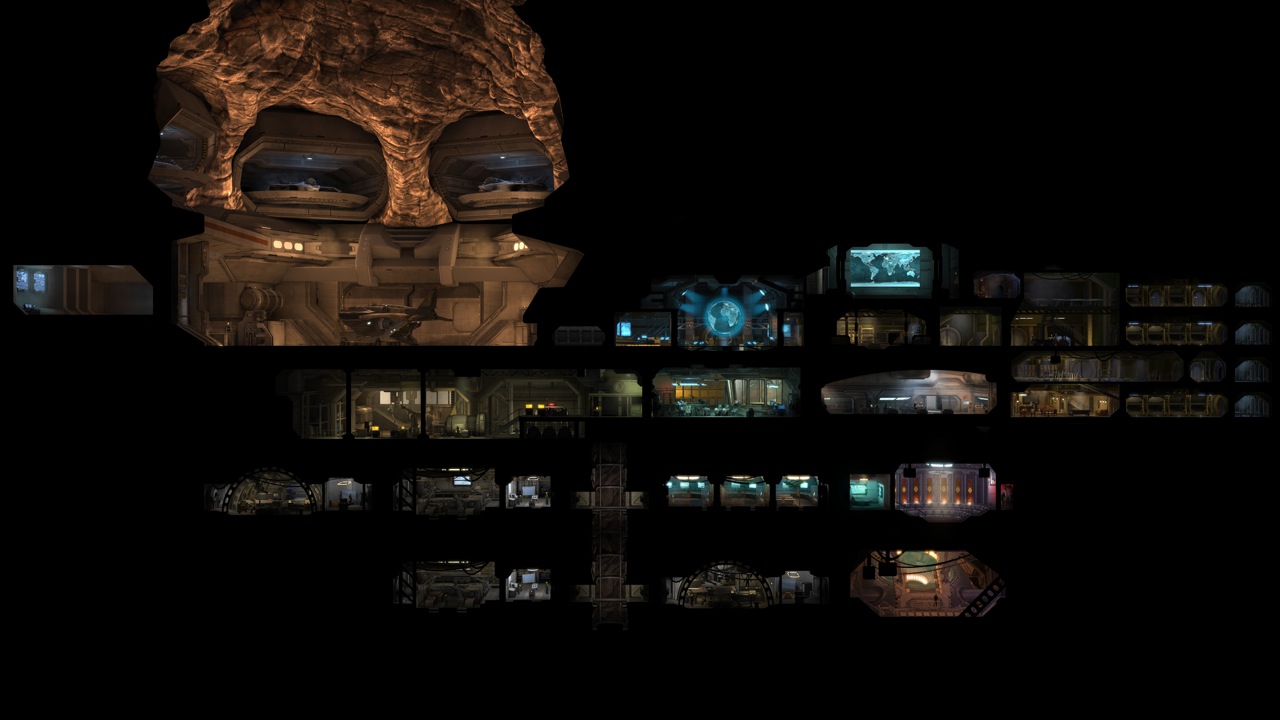
A large part of the game involves your team of researchers and scientists. The researchers take alien technology your squad recovered from alien abduction attempts or crashed UFOs and use it to upgrade your own weaponry and technology. The picture above is the XCOM headquarters, also know as the Ant Farm. It contains your Engineering and Research divisions, as well as a barracks for your troops, the Situation Room that tracks worldwide panic levels, a hangar to house satellite-protecting Interceptors, and Mission Control from which you launch attacks on enemy incursions.


You can expand your "Ant Farm" by building new facilities such as Power Plants, Thermo Generators, Foundries, and Satellite Uplinks. You must have satellite uplinks to control and monitor the various satellites you've put into orbit. The foundry allows you to develop upgrades for your existing weapons, armor, and vehicles. Power plants and thermo generators merely improve the speed and skill with which you create new items and facilities. The depth and detail involved in simply learning all the aspects of this game was astounding. It made the upgrade system in other RPGs like Skyrim look simplistic in comparison. I'm some 15+ hours in and I still feel I've only scratched the surface. While I have a general understanding of the game at this point, I still feel there's a lot more to discover before I've finished it all.

squad combat


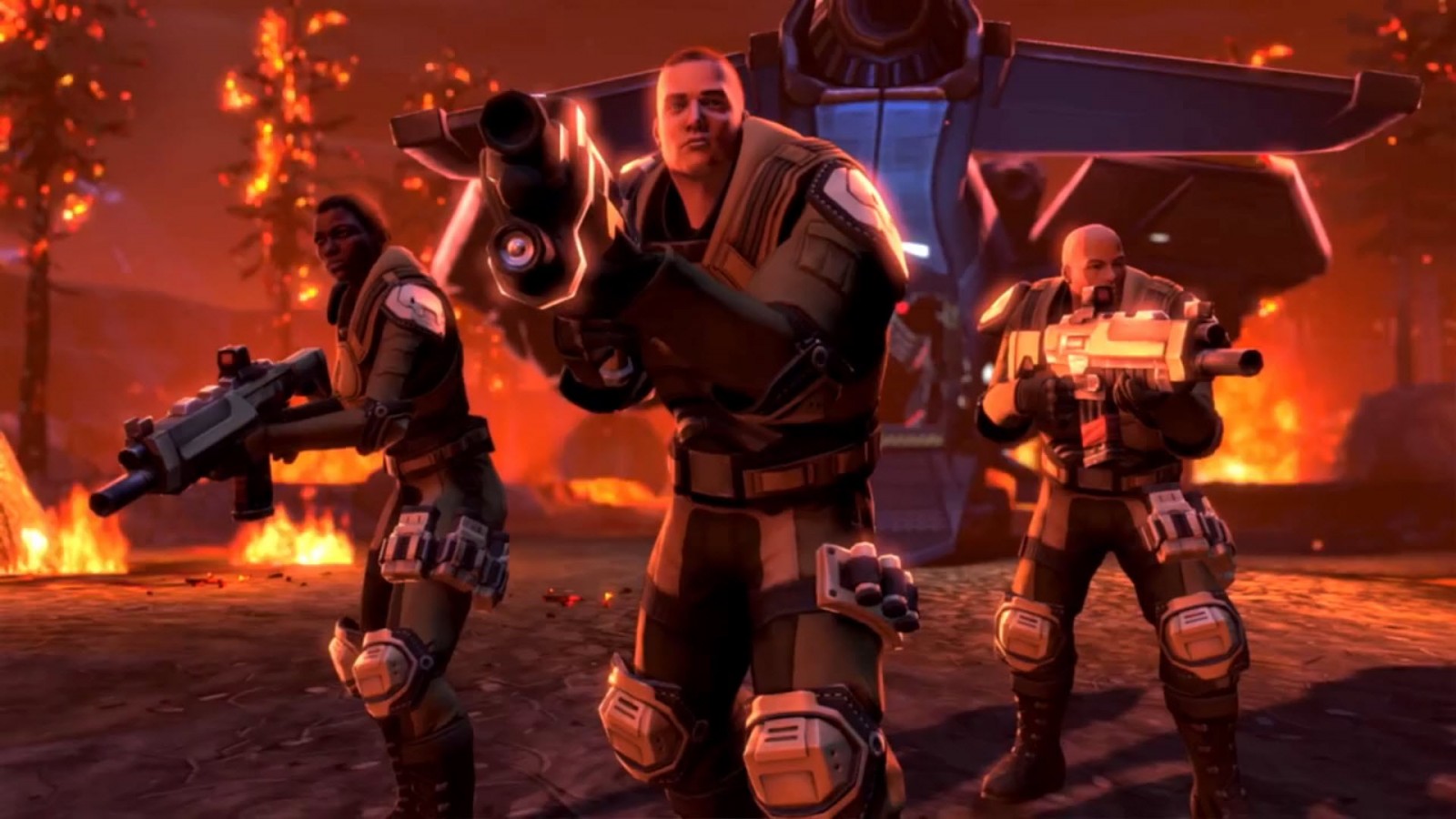
Before leaving on any combat missions, you must outfit your squad. You begin the game with four members, but can expand it to six as you gain experience and cash by completing early missions. The soldiers come in several types including Assault, Support, Heavy, and Sniper. Each one has upgradable skills that are added to their arsenal of moves as they are promoted up the chain of command. Snipers gain a headshot. Heavies can fire a rocket launcher. Assault troops gain the ability to fire after moving or get off two shots per turn instead of the normal one. Support can use multiple medpacks to heal other squad members during battle. 


The combat in XCOM is turn-based, which is unusual in Western games, in my experience. I've played several turn-based games this generation including Lost Odyssey, Star Ocean, and Tales of Vesparia, but they were all Japanese. This is the first American game of its type that I've experienced. XCOM was made by Firaxis, the company headed by Sid Meier, the famous creator of the Civilization series. For the uninitiated, turn-based combat is kind of like playing a board game or Dungeons & Dragons. Each character, including the enemies, gets one turn to make a move. After that, the game moves on to the next character and allows them to make a single move. 


While some Call of Duty fans might find this style of combat slow and tedious, it adds considerably to the strategic aspect of the gaming mechanic. You must use competent squad-based tactics if you want to keep all of your soldiers alive throughout the mission. The quickest way to kill off a character is to send them charging off by themselves, Rambo-style. I learned the hard way that lone soldiers are quickly ganged up on and wiped out by groups of enemies beyond their ability to withstand. 
the breakdown


Although this is considerably different than any of my recent gaming experiences, I've been enjoying it immensely. I wish I'd had time to finish the game this week, but it requires 30+ hours of gameplay to complete and I simply didn't have the time to finish it in five days. That said, if I had to rate this game today I would give it an 8 or a 9. Although the game has tons of moving parts and keeping track of them all seems daunting at first, once you've grasped the various responsibilities you have as the leader of XCOM, the smoothness with which they work in tandem is nothing short of amazing. 

If, like me, you're looking for a quality game during this down-time in big name releases, give XCOM a look. It isn't for everybody. If you're a fan of the Call of Duty series or other shooters like Halo, this one may not be for you as the action isn't as fast-paced or intense as those blockbusters. On the other hand, if you enjoy a game with depth that requires thought and planning in order to succeed, XCOM is right up your alley. It is very similar to Sid Meier's Civilization series, but set in a completely different universe. If you are a fan of his previous games, I believe you will enjoy this title just as much if not more. Good luck and happy gaming!

Saturday, April 13, 2013

Bioshock Infinite


the magic is back!

Bioshock has returned with a vengeance! The original Bioshock was, and still is one of the most original games of this generation. Bioshock Infinite is right up there with it, possibly even higher. While there are similar themes to the original and some connections can be drawn, this is a completely different game. Instead of taking place in Rapture, deep under the surface of the ocean, Infinite's environment is high above the clouds in a dystopian city called Columbia. This picturesque metropolis is populated by followers of the Prophet Comstock, a former American patriot who seceded from the Union and took his city into the sky along with his devoted followers. Before we get too deep into this, let me just say that Infinite brought back that sense of wonder and discovery I felt when I played the first Bioshock. It is unique, original, deep, challenging, imaginative, beautiful, and frightening, all at the same time.


the basics

I don't want to spoil a game this great so the amount of information I include about the story will be very limited. To include too much detail would be tantamount to telling a four-year-old every last gift Santa was going to bring him the night before Christmas. Not cool. Still, I have to include a little bit of background so I'll do my best to cover the necessities without giving away too much. It's a fine line I'll be walking, so please forgive me if I step a little too far to one side or the other. I'm trying here. Cut me some slack!


You play this first-person shooter as Booker DeWitt, a former member of the 7th cavalry at the "battle" at Wounded Knee. Most Native Americans would describe it as the Massacre at Wounded Knee, but suffice it to say he isn't the most heroic of protagonists. After that, he worked for the Pinkerton Detective Agency as a union buster. Again, not exactly a saint. Upon arrival, he is given this box and a message, "Bring us the girl, wipe away the debt." 


As I said before, there are some similarities between this game and the original. In Bioshock, the leader of the dystopian underwater city Rapture was named Ryan. In Columbia, the man's name is Comstock. He has led his followers "out of the Sodom below" and up into his perfect city in the clouds. However, as events progress, it becomes more and more clear that Columbia is no utopia. Well, it might be considered utopia by pre-Civil War plantation and slave owners in Mississippi, but in today's terms, it's kinda racist. Columbia runs on slave convict labor and interracial dating/marriage is forbidden. They're even racist against the Irish, as you learn in one of Columbia's many Kinetoscopes. These reminded me of the Penny Arcade at Disneyland and their flip-card movie machines from the late 19th and early 20th centuries. 


You are tasked with finding Elizabeth, "the girl", and bringing her back to New York City. Elizabeth is Comstock's daughter. He has trapped her in a tower and expects her to follow in his footsteps and lead the flock after he dies. That's about all I'm going to say about the plot because I don't want to ruin it for any of you. Suffice it to say the story is deep enough to write a book or two about. Unlike Bioshock, which starts you off in an immediate state of terror, Infinite begins idyllically and slowly devolves into an horrific nightmare. It is the type of game that you will have to play twice in order to have a chance at catching all the details. In fact, I'm already about five hours into my second playthrough. I started it within minutes of finishing the game the first time and watching the credits (be sure to watch until the end). I suspect you will too, if you decide to pick up this masterpiece of modern gaming. 

the soundtrack is a character


One of the first inklings I had that there was more going on here than a simple rescue mission was the music. It begins in total agreement with the period in which the game takes place. The music for the loading screens is Solace, a piece written by Scott Joplin in 1909 and used by Marvin Hamlisch in the movie The Sting. However, as you get deeper into the game, you start to get musical hints that there is something screwy going on. First, I heard a calliope in the distance playing Girls Just Wanna Have Fun, the Cindy Lauper classic from the 1980s. Then I passed by an area that was clearly blasting Creedence Clearwater Revival. My first thoughts were that they had some serious continuity issues they simply expected a musically uneducated audience to miss. 


Finally, when I came across a 1912 version of Painted Love, I realized these tracks were most definitely placed with more than a smidge of thought behind them. They point to one of the themes of the game: the space-time continuum. I won't go into that particular aspect any further so as not to spoil it, but it was quite the epiphany when I figured out that they were using the music to hint at later events in the story. It's just one of the many bits of brilliance contained within Bioshock Infinite. 

elizabeth and the rest of the npc cast


The non-player characters' (NPCs) realism and their addition to the completeness of Columbia can only be compared to those in Grand Theft Auto IV. Of course, the characters and the subject matter of their conversations were completely different, but it is the only other game I've played where they took such time and effort to add detail to the NPCs. Remember the crazy street-preaching bum, the people on cell phone conversations, the groups of girls talking about their dog boyfriends on street corners in Liberty City? They served to make the GTA4 universe feel all the more real and helped with player immersion in the gaming experience. The NPCs in Bioshock Infinite are no less effective at bringing you into their world and making it believable. 


Take everything I just said for the regular NPCs and multiply it by infinity for Elizabeth (see what I did there?). She is immediately sympathetic, locked in a tower like some early-20th century Rapunzel, being unknowingly monitored and experimented upon by her own father. She is a free-spirited innocent with absolutely no idea of the mess in which she's involved. Throughout the action of the game, she never got in the way. She constantly found useful items for you, especially during combat. She was able to open tears (rips in the space-time continuum) that allow for auto-turrets, weapons, cover, or automatons to aid you in combat. While this was one of the weak plot points (tears that release auto-turrets), in my opinion, I was very thankful for it at the time! Still, I would've preferred they leave them out for the sake of realism. I can always die a few extra times. That was literally one of maybe three minor imperfections in this game. It was that good. 


I read that programming Elizabeth was one of the most difficult parts for Irrational Games, the developers, and I can understand why. She is so lifelike that you feel like you're playing with another human being, not a computer-controlled NPC. There were stories of glitch after glitch with the heroine in the beta testing phase, but in the end they really got it right. She is the perfect partner: always helpful, never in the line of fire, never blocking your movement. Discovering the mystery behind Bioshock Infinite with her was a joy. 

gameplay and weapons/powers


As previously stated, there are many similarities between Bioshock and Bioshock Infinite. One of those is the powers that are available to use for dispatching enemies. In the first game they were called "Plasmids". In Infinite, they are known as "Vigors". Of course they had the obligatory fire and electric attacks, but some of the others were quite ingenious and creative. 


The Feast of Crows sent out a flock of flesh-eating birds that attacked enemies in the immediate area. Undertow would pull unsuspecting enemies off the side of whatever part of Columbia they happened to be standing on and plummet them to their death miles below. My favorite had to be Possession, though. It would take over an enemy and they fought on your side until they were either killed or all other enemies had been dispatched. If they managed to survive the onslaught, they immediately committed suicide upon coming out of the haze they were in and realizing what they had done, murderously turning on their fellow police officers. One guy literally bashed his head in three times with a baseball bat to get the job done because he didn't have a gun. That's dedication! 


Traveling around Columbia brought a completely new mechanic to gaming. There were tracks called "skylines" that connected the various sections of the floating city. They were used, along with floating barges and zeppelins, to transport goods and people between areas that weren't physically connected. They were also used to get Booker and Elizabeth further along in their missions. I'm not aware of any games that have used this roller coaster-esque mode of transportation before, so you wouldn't be out of your mind to expect a few glitches here and there. However, the programmers pulled it off without a hitch. It took thirty seconds to master and was an invaluable tool for both travel and combat.


You traveled on the skylines via a skyhook, which the soon-to-be-dead officer is so nicely modeling above. In a not-so-shocking addition, landing on an enemy when detaching from a skyline at 30 mph didn't do good things for them physically. It was also a great way to get out of the line of fire and let your armor re-charge if you were close to death. The use of skylines was a stroke of genius, and the skill with which the programmers pulled it off is no less impressive. Like so many parts of this game, the smoothness with which they instigate new gameplay mechanics like the skyhook is bordering on magical. Many fantastic games like Dead Space, Call of Duty, Gears of War, and Halo took a sequel or two before they honed their mechanics to perfection. Although this is technically the third installment of Bioshock, it is an entirely different game than the first two in many aspects, not the least of which being that it takes place miles above sea level instead of miles below it. The skyhook and Elizabeth alone are reason enough to play this game for yourself.

in summation


If you couldn't tell, I loved this game. Its combination of an amazing story with flawless gameplay mechanics and character development made for one of the most enjoyable gaming experiences I've had since the first Bioshock. It even managed to top it in many areas. The way that Columbia builds tension, starting out as a pleasant, Disney-like utopia and descending into a terrifying hell of racism and murder, presented more overall development than its predecessor. The addition of the best NPC I've ever encountered in Elizabeth and her childlike innocence only served to raise my regard for the game even higher. It is definitely not for children or the faint of heart as it contains many adult themes, not to mention the fact that the depth of the story is simply above the head of your average 12-year-old. Bioshock Infinite is one of those games you will have to play at least twice before you fully understand it. That depth of story is why I'm giving it my highest grade. I highly recommend this game to anyone that, well, to anyone that plays video games. You will not be disappointed.

the math

Objective score: 10/10

Bonuses: +1 for Elizabeth, the finest non-player character to ever be programmed into a game.

Penalties: -1 for the few stretches they made to help the action along, like creating tears with auto-turrets or weapons. They were helpful, no question, but they took me out of the realistic universe Irrational Games created for brief moments. 

Nerd coefficient: 10/10. Mind-blowing/life-changing/(one of the) best...game(s)...ever!