Showing posts with label steampunk. Show all posts

Wednesday, September 10, 2025

TV Review: Washington Black

Slavery, steampunk, spirituality and science combine in a unique coming-of-age story about the search for knowledge and family connection

Washington Black is a steampunk-style adventure about Wash, a young Black boy trapped in brutal, violent slavery in 1800s Barbados, whose life is changed by his time with Titch, an idealistic but insecure inventor whose family owns the plantation where Wash is enslaved. The idea of a Disney-esque slave story may give viewers pause, especially with what initially seems to be a guilt savior trope in the premise of the story. However, Sterling K. Brown’s presence (behind and in front of the camera) grounds the story, as does the fact that the series is based on Esi Edugyan's gorgeous Booker Prize finalist novel of the same name. Ultimately, Washington Black is a story of self-determination, community, and creativity in the face of unimaginable odds.

The short, eight-episode series is primarily told in two timelines: childhood flashbacks and adult present in the life of the protagonist. George Washington Black, (wonderfully portrayed by Eddie Karanja), nicknamed Wash, is a ten(-ish)-year-old enslaved child on a brutal plantation in Barbados. He is cared for by Big Kit (Shaunette Renée Wilson), a sturdy enslaved woman who tells Wash stories of her/their original home in Dahomey. The slavemaster, Erasmus Wilde (Julian Rhind-Tutt), is particularly brutal in his abuse of the plantation slaves, leading some to commit suicide. But Kit tells Wash that if they die, they will wake up in their old home in the beautiful Dahomey.

Things change for Wash when Erasmus’s brother, Christopher Wilde (Tom Ellis), arrives at the family’s plantation to work on his invention of a flying machine. He takes an interest in Wash because the child is clever, and is the right size to balance his flying machine. When another plantation family member dies in Wash’s presence, Wash is falsely believed to be the killer, so Titch flees the island with him by using their newly created flying technology. Their journey takes them to many locales and dangerous adventures as Wash grows into a talented engineer and scientist. However, his relationship with Titch struggles under the pressures of their fugitive status and Titch’s own insecurities.

In the present timeline, Wash (Ernest Kingsley Jr.) is now a young man living under a different name in Halifax, Nova Scotia. He is mentored by Medwin (Sterling K. Brown), an older Black man who helps former slaves get to freedom and find their place in Halifax’s substantial and multicultural Black community, of which Medwin is the de facto leader. Wash meets Tanna (Iola Evans), a biracial young Black woman who is passing as white and traveling with her white scientist father (Rupert Graves). Wash and Tanna share an interest in science and are attracted to each other despite multiple barriers, including Wash being stalked by a relentless Javert-like bounty hunter (Billy Boyd) and Tanna being trapped in a forced engagement to William McGee (Edward Bluemel), a wealthy young British benefactor with his own strange secret.

There is a lot to like about the series, despite some shortcomings. The fantastical flying machines and other devices that propel the characters to their next adventure add a whimsical feel to the story, which is odd, given the grim premise. Throughout the show there is an appealing contrast and overlay of spirituality and scientific exploration, both of which require faith, imagination, and commitment from Wash. Additionally, we have a classic coming-of-age/journey narrative in the spirit of The Wizard of Oz or The Snow Queen, where Wash travels to new locations on his journey (from England to Dahomey, from the Caribbean to the Arctic) and meets interesting and supportive characters along the way. In particular, he encounters a new member of the African diaspora in each adventure, including a West Indian pirate queen and female warriors in Dahomey. Other important side characters include Gaius (in the past) as the observant, well-spoken, seemingly aloof house slave in Barbados who secretly keeps an eye out for the other enslaved people; and Angie (in the present), who is the sharp-tongued but kind maternal figure who runs the restaurant and who acts as an alternative to Wash’s original maternal figure Big Kit. The collection of diverse but connected characters adds to the fantasy folktale feeling of the story, as does Wash’s spiritual visits with the dead in the spiritual realm, and the implied mystical identity of Wash’s father.

On the other hand, many of the more central and grounded characters are introduced and then abandoned in the later episodes. This is particularly true of Medwin, who seems like a central character both in terms of the show’s narrative structure and in terms of his unwavering mentor relationship with Wash, particularly as an alternative to Titch and Titch’s insecurities. Tanna’s fiancé McGee is another key character whose surprising backstory is intriguing and highly entangled with Tanna and Wash’s relationship. However, he soon disappears from the plot with barely a one-sentence explanation. Tanna and Wash’s courtship progresses at a leisurely pace to the detriment of other key story elements, making the overall pacing of the story uneven, especially in the later episodes.

The abrupt and abbreviated treatment of many of Washington Black’s interesting characters and storylines indicates that a longer series might have created a more interesting exploration of the themes of racism, belonging, identity, betrayal, and scientific curiosity. Fortunately, the series has a satisfying ending that brings Wash’s tale full circle. Washington Black acknowledges the harshness of slavery and racism, but also opts to focus on relationships and optimism and to keep the onscreen violence moderate. This is in contrast to the novel, which has graphic content. As a result, the show is an intriguing confluence of adventure, romance, steampunk technology, and social commentary that is unique in contemporary storytelling and is certainly worth the journey.

Highlights:

  • Quirky steampunk tech
  • Interesting but underused characters
  • An exploration of slavery and racism and self-determination through a PG lens

Nerd Coefficient: 7/10.

POSTED BY: Ann Michelle Harris – Multitasking, fiction writing Trekkie currently dreaming of her next beach vacation.

Thursday, November 7, 2024

TV Review: Nautilus

You can humanize Nemo, but you can't Disneyfy colonialism

A character like Captain Nemo is challenging to write, all the more so in a prequel. Originally conceived by author Jules Verne as a Polish noble on a vendetta against the Russian Empire (which would have made the novel damaging to French foreign relations), upon publication he became an Indian noble on a vendetta against the British Empire. By the time we meet him in 20,000 Leagues Under the Seas, he's a jaded misanthrope, self-banished from civilization, who in his burning hatred for tyrants has ended up creating his own little tyranny. The wonderful ship he commands is not a symbol of human progress, but a weapon of mass destruction (and eventual self-destruction). How do you turn such a character into a hero, when many in the audience already know who he's going to become in the novel?

One thing you can do is break free from the novel. The new TV series Nautilus, produced by Disney and then absurdly abandoned by Disney before being rescued by Amazon, rewrites Nemo as a revolutionary fighter who leads a rebellion of slaves and steals the Nautilus just before the East India Company can use it to take over world trade. This version of Nemo keeps the rough outline of the backstory Verne gave him: the British killed his family and stole his lands, so now he's an enemy of the British. Some (not enough) layers of complexity are added to that characterization. Verne's Nemo was fueled by raw spite; this Nemo begins headed in that direction, but is steered toward a gentler, more honest reckoning with his grief through his interaction with his crew. He may have a yearning for the abyss, but he comes to realize that he must not drag others down with him. Still, the character isn't written with the depth a lead role needs. Even after doing the hard work of earning the goodwill of his Designated Love Interest, in the last episode he makes a crucial choice against her wishes that reveals he hasn't paid attention to what she's been going through. So the most charitable description of his arc is from "total jerk" to "not a total jerk, but still very close."

A slightly better treatment is given to Nemo's crewmates. They don't even get names in the novel. In an adaptation that focuses so much on the theme of toppling hierarchies, that needed to be fixed. Alas, the cast we get is a mixed bag. Their use as comic relief is excessive, although it gradually lessens toward the middle of the season. One character in particular spends several episodes being nothing but comic relief, and not in an endearing way but in an annoying way, which later in the series detracts from the expected impact when his fortunes change for the worse.

This mishandling of tone is a major flaw of the series. It wants to be a sincere narrative of rebellion against cruelty, but it also wants to sand away its rough edges with the trademark Disney aesthetic. The result is an incongruity: a cutesy romp through colonies ravaged by famine and massacre; a kid-friendly, bloodless adventure where our heroes routinely face and barely escape the world's most brutally rapacious institution and end each episode with a goodhearted laugh. Disney wants to have it both ways, and fails at both. The way our heroes finally prevail against the East India Company, cleverly beating capitalists at their own game, relies on so many artistic licenses about the workings of a stock market that the fact it succeeds feels almost cartoonish.

The bright spots must be celebrated, though. Thierry Frémont's character is a great addition to Vernean lore as the engineer who designed the Nautilus. He's the voice of reason that tempers Nemo's effervescent passion, and making this character French is a nice homage to Verne as the titular submarine's actual creator. Céline Menville, one of the precious few women in the show, shines as a multiclass fugitive/bodyguard/chaperone/assassin with a mysterious past. Cameron Cuffe expertly channels the perennial detestability of aristocracy. Damien Garvey eats up each of his scenes with a gloating smirk of pure evil. Richard E. Grant has a fun cameo as a puppet ruler with skeletons in the closet. And Luke Arnold carries half of the show's emotional load in an incredibly complex role as Nemo's childhood friend who grew up to repay betrayal with betrayal.

Did you notice the key problem with the preceding paragraph? Most of the show's best-written roles are given to the white actors. Although Nautilus (the ship), and therefore Nautilus (the show), has a laudably diverse cast, reflecting the extent of the British Empire's depredation of the whole world, the script wastes some very talented actors by not giving their characters enough material to work with. This is one of the recurring consequences of the impractically short seasons of today's TV. The most that the script does to distinguish the members of Nemo's crew is to give each of them a couple lines of sad backstory; beyond that, their personalities may as well be interchangeable (the only exceptions, proving the rule, are the aforementioned characters reserved for the position of comic relief). In one episode, Nemo is berated for not knowing his crew on a personal level, but neither does the audience.

Nautilus is a great concept stretched thin by the pull of incompatible demands. In trying to bundle the grim realities of anti-colonial struggle in the same package with the childlike awe of exploring wonderful landscapes, it ends up much like the Avatar movies, doing a disservice to its own intended message.


Nerd Coefficient: 6/10.

POSTED BY: Arturo Serrano, multiclass Trekkie/Whovian/Moonie/Miraculer, accumulating experience points for still more obsessions.

Thursday, October 17, 2024

Film Review: My Hero Academia: You're Next

Despite a predictable opening, the anime feature film finishes strong in the second half. 


The popular, long-running, manga, My Hero Academia has ended its ten-year print run this year and the accompanying kid-friendly anime series has just confirmed that 2025 will be its final season. In the midst of the excitement and sadness at the impending conclusion of the story, the latest feature film in the franchise opened in U.S. theaters after a run earlier this year in Japan. My Hero Academia: You’re Next is a stand-alone story set between the destruction of Japan / Liberation Front war arc and the final war arc (approximately between Season 6 and Season 7, in case you’re wondering about certain characters). 

My Hero Academia is set in a future version of Earth, where most humans have some variation of special powers (quirks), and children with extraordinary superpowers are sent to academies to be trained as licensed superheroes. The protagonist, pure-hearted Izuku Midoriya (aka Deku), receives a transferable superpower from the most powerful and beloved hero All-Might who can no longer maintain it due to a critical injury. Throughout the series, Deku and two of his friends (loudmouth, explosive Bakugo and brooding, fire and ice powered Shoto) eventually become the top heroes among the students at their hero academy. The current film You’re Next takes place after the villains in the Liberation Front have destroyed much of Japan and decimated the hero system. As a result, the students often find themselves as the first line of defense in the current lawless society. Early in the film, Deku encounters and tries to help a girl, Anna, being chased and eventually recaptured by her kidnappers (later revealed to be the Gollini crime family). A cyborg boy, Guilio, also appears and tries to intercept the kidnappers. He is, confusingly, both kind to Anna but also trying to kill her. Deku, Guilio, Bakugo, Shoto, and the other students are also caught by the Gollini family and trapped in a giant floating fort. The head villain idolizes the former hero, All Might, and, after an angry conversation with the former hero, the villain names himself Dark Might. Dark Might creepily copies All Might’s appearance and clothing and declares himself the successor to All Might’s hero leadership, planning to bring order to the country by force and subjugation of the people. Throughout the film, Guilio and the students struggle to escape from Dark Might’s fort while also trying to free Anna. Anna’s quirk is over-modification which gives strength to some (including the villain) but hurts others and will eventually destroy basically “everything” (a la X-Men’s Jean Grey / Dark Phoenix) if it gets out of control. We later find out that Anna and Guilio have a special symbiotic relationship because of their respective quirks and we find out why Guilio feels he must kill Anna. 

The first half of the film is mostly running and chasing and feels like rehashed storylines and fight choreography from prior seasons. We also get an interesting dream-trap sequence that is reminiscent of the final dream capture arcs of Naruto Shippuden. The lead villain Dark Might is fun visually but he is thin in character and motivation. Interestingly, instead of the usual futuristic hero versus villain scenario, we have retro, steampunk vibes and visuals. The characters, inexplicably, dress in Victorian attire and the backstory feels like we have time traveled to a different setting with Dark Might’s murderous Gollini crime family attacking and massacring Anna’s wealthy Scervino family. The vibe is reminiscent of early prequel seasons of JoJo’s Bizarre Adventures. Fortunately, the second half of the film digs deeper into the characters, particularly Anna and Guilio and their tragic motivations. The final conflicts feel like an homage to the X-Men “Dark Phoenix” story arc. But the best part of My Hero Academia: You’re Next is the stoic, slick, stylish Guilio, whom Bakugo refers to as the “cool side character.” Guilio’s backstory and character design fit all of the great orphan hero tropes and the final scenes, with him as a broken cyborg and Anna as a lethal damsel in distress, are gorgeously drawn.

My Hero Academia: You’re Next works best for existing My Hero Academia fans who will understand the overall setting and character context. However, the new villains and new heroes are unconnected to the main series’ story arcs and, like most My Hero Academia features, the film is not required for the anime continuity. Unfortunately, that likely means we won’t see more of brooding cyborg, Guilio, especially since his character and aesthetic overlap with that of Shoto. Instead, the film works well as an entertaining side quest for those who need a little more of My Hero Academia before we say a final farewell to the teachers and students of UA’s class 1-A. If you can get through the unoriginal opening and the two-dimensional lead villain, the final half delivers a nice payoff in both character study and action.

--

The Math

Nerd Coefficient: 7/10

Highlights:
  • Lackluster opening half
  • Excellent new side character
  • Worth it for the final finish

POSTED BY: Ann Michelle Harris – Multitasking, fiction writing Trekkie currently dreaming of her next beach vacation.

Wednesday, April 26, 2023

Review: 1899

A melodramatic feast for puzzle box fans

When Netflix announced it would not renew the mind-bending historical series 1899, disappointed voices rang out across the internet. The single-season status made some of us wonder if it would still be worth watching. However, if you are in the mood for a sci-fi mystery dressed up as a steampunk period drama, then 1899 might be just what you need—a show to fill the time until your next binge-worthy series comes along. From the producers of the television show Dark, we have another twisty, angsty, German puzzle box series.

At the turn of the twentieth century, the luxury steamship Kerberos sails from England on its way to New York. On board the transatlantic cruise ship is a diverse, international group of passengers, crew, and stowaways. The set design immediately evokes the Titanic, a luxurious but doomed period piece. But the opening scene of 1899 quickly lets viewers know they are headed deep into Twilight Zone territory. After some heady, off-camera narration about the largeness of the brain and the sky, the main character, Maura, a young British physician, is shown being dragged away and restrained in an asylum-like setting. A few moments later she is in her cabin on the Kerberos, and adjusts the sleeves of her elegant dress to cover the strap wounds on her wrists.

We get a quick overview of the other characters (the wealthy but unhappy passengers above deck and the oppressed and even more unhappy working-class passengers below deck). In addition to the protagonist Maura, we meet Eyk, the moody, grief-stricken German captain of the Kerberos, whose wife and children were killed in a fire. Other passengers include the wealthy and unhappily married French newlyweds Clemence and Lucien; fake brothers, playboy Angel (from Spain) and priest Ramiro (from Portugal); Ling Yi, a purported young geisha traveling with her older companion Yuk Je. The lower-deck passengers include the Danish siblings, pregnant Tove and brother Krester, their little sister Ada, and their overbearing parents. Additional key characters are Olek, a Polish worker who spends his days shoveling fuel for the steamship’s fire; and Jerome, a French soldier and stowaway with a connection to Lucien.

Several of the passengers and crew have a mysterious envelope which creates concern for them and which they hide from the others. Then the main plot gets going when the long-missing steamship Prometheus mysteriously reappears. Eyk, the emotionally tormented captain of the Kerberos, must decide whether to continue to America or go back to investigate the ghost ship. The longer they hover near the Prometheus, the more unexplained occurrences happen. Although 1899 is a series from the team behind the German series Dark, it is much more of a callback to Lost, with an ensemble cast trying to solve the mystery of their circumstances. Like Lost, 1899 is a puzzle you will never really solve but hope to have fun trying. But will you have fun trying? That depends on what you are in the mood for.

Also like Lost, 1899 has an appealingly diverse ensemble cast of characters, all with haunting, traumatic backstories that inform their current choices on the ship. Or so we think. On multiple levels, no one is who they seem to be. This is an important difference from Lost. In Lost, flashbacks revealed each person’s true character. In 1899 many of the flashbacks are unreliable red herrings. As the story progresses, the ship’s occupants experience both temporal and spatial shifts that make them question their sanity and the wisdom of staying near the Prometheus. Robotic beetles, portal-inducing pyramids, and mass suicides complicate things as life on the Kerberos becomes increasingly deadly.

1899 is best enjoyed with a willing suspension of disbelief, not just in the puzzling occurrences but also in the protagonists' extremely emotional behaviors. Without that willing suspension, viewers will find themselves frustrated by the repeated poor choices made by otherwise sensible characters. The main theme of the show is the power of the mind and the power of heightened emotions in determining our behavior. Secondary themes include classism, bigotry, extremism, oppression, love, and betrayal, and the universality of those themes across various cultures.

In terms of culture, the show’s characters are international and speak in eight different languages to each other onscreen. Watching this in its original format immerses the viewer in an environment where the lead characters often cannot understand each other’s words but manage to communicate in other ways. The effect is charming and intriguing but also a bit unbelievable, especially at moments of crisis. The English version dubs all the characters into English and creates a very different effect because the characters' difficulty in understanding each other disappears. Once the very big twist is revealed in the last episode, we are left with as many questions as we have answers.

1899 is entertaining for those who like character studies in an offbeat setting. Viewers looking for a point will find themselves frustrated. The show’s haunting opening song White Rabbit lets us know that ultimately none of this will make sense; you just have to enjoy (or endure) the ride.

--

Nerd Coefficient: 7/10

Highlights:

  • Fun dueling languages
  • Exhausting melodrama (and I am someone who loves melodrama)
  • A puzzle with so many red herrings
  • Binge-worthy

POSTED BY: Ann Michelle Harris – multitasking, fiction-writing Trekkie currently dreaming of her next beach vacation.

Thursday, April 8, 2021

Microreview [Book]: Tower of Mud and Straw by Yaroslav Barsukov

A story with rip-roaring pacing and imagination.

Playing with magic can be enchantingly impressive, but it can also be a dangerous act. That is never more clear in Tower of Mud and Straw. Its magic system is so inflammatory that it could spell doom for those affected. But there’s a different kind of magic going on in this novella, and that lies in its writerly craft. At a sentence level and in sheer ambition, it’s admirably wild and feels like at any time, the story could overload and explode in disaster. I’m happy to say that in terms of literary talent, Tower of Mud and Straw has writerly spellcraft that sometimes buckles under its own weight but otherwise soars.

The novella takes place in a steampunk-esque setting. Minister Shea is ordered by the queen to gas protesters but refuses. As punishment, he’s sent to the border to oversee a massive anti-airship tower. But something is awry, both regarding his history and the tower’s. He’s met with forces of various interests that try to pull him in their direction. He must reconcile with his own trauma, while digging into the world’s underbelly, and he may not like what he finds.

Tower of Mud and Straw takes a moment to lay the foundation for its unique world, but once the grounding is down, it charges on through—especially at its conclusion. While that rushing proved to be entertaining, some character development got lost along the way. The romantic relationship felt abbreviated, and what could’ve been a big a reveal for a certain character’s motivation felt more like moving the plot along, rather than a full-forced, surprising gut punch.

Two characters that did not suffer from abbreviated development is the protagonist Shea and his sister Lena. Shea is faced with quandary after quandary, and the novella does a great job of getting inside his head as we witness him processing and weighing selfish vs selfless gains. Despite showing compassion and humanity from the outset, I liked how he wasn’t a completely gilded, one-dimensional character. There was a sheen of morality, but by human nature, darkness still seeped into him, however small. Meanwhile, his sister Lena is dead from the outset of the novella, but the story intersperses flashbacks that expertly explore her and Shea's relationship, making the loss feel all the more potent.

The worldbuilding also left me wanting. As the title should indicate, the tower is the centerpiece of the story. Not only is it colossal in size, but its immensely described. But in its periphery is a world that has enough for me to get a bearing of, investing me in its story, but not nearly enough for me to sink my teeth in. A story that piques my interest and makes me wish for hundreds of more pages is something that deserves praise amidst the criticism. I hope there will be further stories in this universe, to further explore the world’s political machinations, magic, and fables.

The tower is a massive thing, made from countless hours of work. It’s something that inspires awe in the story for its sheer ambition. Later in the tale, it comes to light that there are architectural deficiencies therein. Just like the novella, there are some tarnishes and imbalances, but even when you learn about it, you can’t help but still be awed by the sheer imagination of the thing. Tower of Mud and Straw might not have answered all my burning questions, but it stands majestically tall, in many ways that tower over most.

 The Math

Baseline Score: 7/10

Bonuses: +1 For many beautifully lyrical passages.

Negatives: -1 For a few rushed instances.

Nerd Coefficient: 7/10

POSTED BY: Sean Dowie - Screenwriter, editor, lover of all books that make him nod his head and say, "Neat!"

Barsukov Yaruslov. Tower of Mud and Straw [Metaphorsosis Publishing, 2021].

Monday, January 25, 2021

Interview: Matt Betts, author of Red Gear 9

I've been following Matt Betts' career for a while now. From his pop culture short stories to his steampunk Civil War zombie thriller Odd Men Out, to his X-Men-but-darker urban fantasy Indelible Ink.  Betts writes quirky stuff that packs a wallop and then comes out of left field with a perfectly placed joke.  With a professional background in radio communications and side gigs in comedy, Betts is just the guy to pull you into any story. 

Betts's newest novel Red Gear 9 has all the steampunk, airships, zombies, and wild imagination of it's predecessor Odd Men Out, along with James Bond style spyware and gadgets, and new characters and adventures.  If steampunk, humor,  and pop culture is your thing, this is the series for you!   Not familiar with Odd Men Out? The review I wrote at SFSignal can catch you up to speed without too many spoilers. 

Red Gear 9 takes place shortly after the events of Odd Men Out, which means I'm hoping for more snappy dialog, steampunk technology, fun characters, found families and fresh starts, and faster-than-you-think zombies.  

Betts has written novels, short stories, flash fiction, and has published two books of poetry.  His poem "Godzilla's Better Half" was nominated for a Rhysling Award, and his short fiction and poetry have appeared in Arkham Tales, Ethereal Tales, Bizarro Fiction!, A Thousand Faces, Star*Line, Kaleidotrope, and elsewhere, and his other novels include The Boogeyman's Intern and White Anvil: Sasquatch Onslaught.  You can learn more about Betts and his work by checking out his website, mattbetts.com, or by following him on twitter at @betts_matt.   He was kind enough to chat with me about Red Gear 9, and the fun of returning to world of Odd Men Out.  Let's get to the interview!


NOAF: What's the elevator pitch for Red Gear 9? And as much as I love the cryptic title, could you explain it?


Matt Betts: Red Gear 9 takes place just a few months after Odd Men Out ends. It opens with a Confederate spy named Reeves breaking out of Alcatraz after being stuck there for years. He and his fellow escapees find themselves in a new world of airships and hordes of the dead. As they prepare to make their way home to their families in the east, old contacts tempt them back into the life they went to prison for.

The crew of the Polk from the first book are hot on the trail of the escaped prisoners, and determined to keep the peace. Three of their best officers, Cyrus, Bethy, and Lucinda race to stop the convicts before the criminals either disappear into the vast reaches of the two Americas, or burn everything down.

The title is one of my homages to the spy genre of movies and books. As we go through the novel, we find it's the equivalent of James Bond's '00' designation. The Red Gears are the book's Confederate version of elite spies and clandestine operatives. In the story, I suggest that most of the Red Gears were rounded up after the truce, captured during the war (with some still languishing in prisons) and others dead. I tried so many different titles for these undercover soldiers but none of them stuck, but when I came up with Red Gears, I figured that was a pretty excellent title for a steampunk novel.


NOAF: Odd Men Out came out in 2013, and has meta pop-culture references that all these years later, I am still giggling about. When did you get the idea to write the sequel, Red Gear 9, and what was it like to return to this world?

MB: I really loved the world, too. When I finished with OMO, I really wanted to revisit it, but I was kind of burnt out with all the writing and revisions. So I wrote a couple of other books and outlined three books in the same world as OMO. Once I got started on Red Gear 9, I ended up combining two of the stories I outlined and making it one. On their own, the plots were too thin, so I took the best of each and they worked well together.

I do include a pop culture reference or two in this book as well, but nothing quite as overt and fun as the one you like from the first book. I really had fun creating the main character, Reeves. I made him a combination of Boyd Crowder from the Justified TV show, Tom Cruise from the Mission Impossible movies and James Bond. He's a Confederate spy who's been in prison for years, so when he breaks out, he's a little rusty, but still somewhat savvy. He was in prison when the chewer outbreak started and wasn't prepared for it. I equip him with various cool (for the era) gadgets and a network or sort of trustworthy people. He was fun to create because I really got to channel those inspirations to ask "How would Ethan Hunt handle this... if he were in Civil War-era America?

NOAF: Can readers who are new to the series start with Red Gear 9, or is it imperative that they read Odd Men Out first? For the newbies who are starting with Red Gear 9, what should they know about this world, before diving in?

MB: I've had that conversation with a couple of my beta readers. They were split on whether they thought it could stand alone or if you needed to read them both. I think they finally came down to the thought that it could stand on it's own, but reading OMO would certainly enrich the reading of RG9.

To catch anyone up that hasn't read the first... It's set in a world where the Civil War ended in a treaty so that both sides could fight off an outbreak of men who've come back from the dead. The story itself begins long after the truce, where we find Cyrus and his friend Lucinda joining a peace-keeping force called the Office of Military Operations. The group was created to keep the peace, but in the course of the novel they also fight rebels, chewers, circus folk and other surprising enemies.


NOAF: This series takes place in the 1860's, and writing alternate history can be tricky. What research did you do for the historical aspects of this story? How did you decide what historical aspects to stay true to, and which to play fast and loose with?

MB: The research and those kinds of decisions are so much fun when writing alternate history. I started by asking what would happen if the Civil War was interrupted by a zombie outbreak. What would change as far as the war is concerned? As far as the rest of the world?

I used the internet quite a bit for things like Civil War battle maps, fort locations, personnel lists and firearms. I hit the bookstores and libraries to check out other details I might want to pursue. I enjoyed the illustrated books I found with colorized pictures from the Civil War. Those brought some ideas to life for me and humanized the officers a little more. For Red Gear 9, I contacted park officials at Alcatraz Island and they were very helpful in pointing me to Civil War-era maps of the place. I also used my family history records when writing OMO. We were lucky enough to have a good stack of information about one of our relatives who was shot during the fighting. I borrowed a few details from his medical records and muster rolls, which was fun.

As for what to keep and what to change, it really depends on what I needed for the story. I did research on various weapons and where they were used during the war, then I looked a little further ahead in history to see when certain innovations came about. If they were pretty close together I figured the fight with the chewers could accelerate the research for those items. In fact, one of the plot points in Odd Men Out involved a warehouse of things a scientist was developing. In RG9, there's a scene where several men are walking through these weapons, and trying to figure out how they all work. Another thing that caught my eye in research was the fact that both sides in the war had used balloons for one thing or another. This helped me design how the airships in my books might work and how they got started.


NOAF: Who was your favorite character to write in Red Gear 9, and why were they your favorite?

MB: I think the new character, Reeves, was the most enjoyable to write. There are several new characters in this book, but he was the most fun to figure out. The returning characters from the first book felt like they were ready to go, broken in already. These new ones, especially Reeves, took a little while to figure out, and really weren't crystal clear until maybe the final draft. There were so many questions that he left hanging for me until I actually wrote him into the manuscript, where I would think "OH! That's why he would do that." or "That's how that situation might resolve itself better." Being this amalgam of spy tropes in my head made me want to push him into more and more interesting and difficult situations. I have at least two scenes that I was sad to cut, but they served no other purpose than to show off his spy skills and how good he was at his job.

NOAF: Without giving any spoilers, can you tell us what scene in Red Gear 9 was most challenging to write, and how you got through it?

MB: Without spoilers... There's a big fight toward the end that involves almost the whole cast of characters. I think the challenge, was to make it interesting and clear. I didn't want it to be "this person shoots this other person, so that guy punches this guy..." through the whole scene. I think what got me through it was figuring out who the most important person was as the scene progressed. Since I use different points of view for each chapter, I had to know who had the most to lose or gain as the fight went on. So, once that was figured out, it hopefully clarified things for me as the storyteller and for the reader. I may even admit to using action figures and whiteboards to block out the fighting, much as a director might do for a play. I needed to know where everyone was throughout the airship at any given time, and that seemed like the best way!

NOAF: Who are some of your favorite writers? How has their work impacted you as a writer, and as a reader?

MB: I'm a big scifi fan, but I have to admit I probably read more crime novels than anything. I love Elmore Leonard's work. He told the best stories of criminals, while also giving them unforgettable personalities. His dialogue is something I try to emulate as much as possible - believable conversations. He liked to keep things simple and brief without a lot of embellishment. I also like Carl Hiaasen for the same reasons.

I've also read a lot of Stephen King. In fact, I started writing because after reading some of his work, I said "I can do that." Eh, it wasn't so easy. The thing about King's earlier work is that he makes them seem pretty simple. The plots aren't terribly intricate, but his characters, his details and nuances make the story have some emotional resonance with the readers. And that makes his work more accessible to me than some other authors I've read.

Some of the scifi writers I've loved include Arthur C. Clarke and Isaac Asimov, and steampunk authors Cherie Priest, Scott Westerfeld and Ekaterina Sedia.

NOAF:  Thanks Matt!


POSTED BY: Andrea Johnson lives in Michigan with her husband and too many books. She can be found on twitter, @redhead5318 , where she posts about books, food, and assorted nerdery.  

Tuesday, July 9, 2019

Microreview [Book]: Pimp My Airship by Maurice Broaddus

Strap in for smart steampunk adventure centring Black characters in an alternative Indianapolis

Cover Art by Godwin Akpan
With its associations with Victoriana and all the implications for real-world colonialism and oppression that the period evokes, developing a well-realised Steampunk world is an activity that benefits immensely from a critical standpoint that engages with the historical oppression and racism embedded in the genre rather than simply glossing over and thereby almost certainly reproducing it. Joining work like The Black God's Drums by P. Djeli Clark and Everfair by Nisi Shawl, both of which posit alternative histories in which Black polities form and are able to challenge the technological and political dominance of white colonialism, Pimp My Airship by Maurice Broaddus takes a different approach, centring Black narratives in a world where white supremacy and marginalisation has taken a recognisable, but alt-historical turn.

The world of Pimp My Airship has already been explored fairly extensively in Broaddus' short fiction, including a story of the same title, and the Tor.com novella Buffalo Soldier (a full chronological reading list is available in the acknowledgements of this book) but the novel is accessible even if, like me, you haven't read Broaddus' prior work. It takes place in an alternate Indianapolis where the American Revolution failed: the USA is instead the United States of Albion, having never officially split from the British Isles despite having moved its capital from London to Washington D.C. This alternate history means that the Civil War also didn't take place, though slavery has been quietly abolished through the creation of machines which can work more efficiently than slaves. As you'd expect, racism and sexism are still very overtly part of the landscape and all of the main characters are grappling in some way or another with marginalisations which seek to limit the shape of their lives and ambitions.

Pimp My Airship switches between two narrators. The first, Hubert "Sleepy" Nixon, is a pot smoking poet with no aspirations to do anything beyond living his life and getting high. Unfortunately, Sleepy has a run-in with a revoluationary called (120 degrees of) Knowledge Allah, who quickly sucks him into his intense numerological theories about the world and, concurrently, a political underworld which gets the two of them into deep trouble. On the other side, Sophine Jefferson is a mixed-race heiress trying to break into a scientific community which remains heavily biased against women, when she gets caught up in events around the death of her father. Both Sleepy and Sophine are enjoyable protagonists, although Sleepy's reactiveness can be frustrating, and it's his interactions with Knowledge Allah which keep those chapters rolling along. It isn't entirely clear how the two are going to be brought into the same narrative until it happens, but once it does everything ramps up to a satisfying, action packed conclusion.

Pimp My Airship is packed with references, and I think I only caught a small percentage of them: the fact that the two main characters are surnamed Nixon and Jefferson is surely no accident, and each chapter heading is a song title, ranging from "All Along the Watchtower" (Jimi Hendrix) to "Welcome to the Terrordome" (Public Enemy) via "Because I got High" (...Afroman). The local propaganda news channel, Vox Dei, makes regular disparaging references to Social Justice Crusaders in its dispatches - which are often quoted in order to bring us on board with particular elements of the worldbuilding and political situation. There's also elements which I'm sure are rooted in historical richness that I don't have context for, like the use of namechanging and nicknames for many of the characters, and Knowledge Allah's use of numerological reference in his political speeches. Because the novel exclusively centres Black characters, there's a really interesting lack of context for how "objectively" authoritarian this alternate history is compared to our own: on the one hand, the use of Vox Dei propaganda and other cues suggest that we are supposed to read this as a less free future, but at the same time the specific barriers and challenges that the characters face are very recognisable from how Black people are treated in the actual world we live in. The result is something which really confronts the way we conceptualise alternate history and "dystopia", using a steampunk setting in which we expect the trappings of Victoriana to provoke thought about how those trappings also affect our own world, even if we don't have steampunky airships floating around (surprisingly, there's not much of those in Pimp My Airship either).

Having acknowledged that it may be my historical knowledge at fault, I still have to admit that the alternate historical setting sometimes feels flatter than it should. Because Broaddus' alternate history seems to have changed the entire trajectory of technology, I struggled to figure out what time period this was actually supposed to be - were the references to Queen Diana supposed to indicate that, actually, this is the 1990s or after, but technology has developed more slowly and the political landscape feels like its decades earlier than we'd expect? It's likely that this would work better for readers with a greater level of contextual understanding to pick up more of the historical cues, but for me the result is something that's enjoyable but sometimes unmoored. It's hard to really get to grips with this version of Indianapolis in all its complexity, despite the care that's clearly gone into creating a Steampunk setting which really grapples with questions of racism that the genre has a reputation for glossing over.

That said, if you're after a read that offers plenty of complexity and a sly self-awareness of the genre, while still delivering a solid adventure, Broaddus is an author to get on board with. Pimp My Airship didn't work as well for me as I had hoped, but it's definitely interested me in learning more about this universe, and I can feel a read of Buffalo Soldier coming in my near future. If you're interested in steampunk, this is definitely a series to check out.

The Math

Baseline Score: 7/10

Bonuses: +1 Smart, genre-savvy steampunk with a ton of easter eggs.

Penalties: -1 Title promises more airships than it delivers; -1 Stakes of the action sometimes get lost in all the clever references.

Nerd Coefficient: 6/10 "still enjoyable, but the flaws are hard to ignore"


POSTED BY: Adri is a semi-aquatic migratory mammal most often found in the UK. She has many opinions about SFF books, and is also partial to gaming, baking, interacting with dogs, and Asian-style karaoke. Find her on Twitter at @adrijjy.

Reference:  Broaddus, Maurice. Pimp my Airship [Apex, 2019].


Tuesday, March 1, 2016

Microreview: The Honey Mummy, E. Catherine Tobler

0

The Honey Mummy, by E. Catherine Tobler


It's probably not fair, exactly, to review one's favorite author, or someone at least in the top five. I'm going to do it anyway, though, because Tobler's spot on my favorite authors list is well-deserved, and her latest entry does not disappoint, and in many ways, takes her work to new heights.

I love layers, I love things which are more than they are, more than the sum of their parts, and The Honey Mummy is exactly that. The third entry in the Folley & Mallory series (Edited to say I can't count: Book 1, Rings of Anubis, Book 2: the Glass Falcon) is complex, detailed, and moving.

It is a mystery, and boy, do I love a mystery and an adventure. From the word go, it invites you to turn the page and find out what happens (and, in the case of this series, what has happened, and why). It's like Miss Fischer's meets Indiana Jones.

If that's not enough, the characters, which were good enough in previous installments, but probably the weakest link, are much more fleshed out and detailed here. I cared more for Folley, Mallory (as well as the rest of the cast) more than I did previously. The romance never feels forced, but natural and right. In so many mediums romance is misplayed- characters are shoved together by the quote-unquote need for there to be romance, or they wait too long and misplay it entirely. That doesn't happen here-  the romance never takes from the action or the mystery, but adds depth to it, and vice versa.

Top to bottom, Tobler's writing is outstanding, and this is her best work yet. The writing is gorgeous, the characters and wonderful, the adventure is gripping. If you like anything in the vein of mystery, adventure or just plain steampunk, this is a must-read.


 The Math:

Baseline: 8/10: well worth your time and attention

Bonuses:

+1 for being a perfectly balanced book

Penalties:

I got nothin'. I read it in one sitting, and that says it all.

Conclusion: 9/10: very high quality/standout in its category

Hold up, hold up, hold up, you say. That's two books in a row you gave her a nine, and this is an improvement over Falcon? Doesn't that make it a 10, Mister Engineer person, you ask? To which I reply, one would think so. But, given the quality- and the steady increase in it, and her other work, there is something to come from Tobler that is transcendent. And when I write that review, after she writes that book, I want that 10 in my back pocket. So my recommendation is to start reading her now so you can be super hipster when that day comes, and be all "I read her back when". 


Friday, February 19, 2016

Microreview [book]: The Bands of Mourning, by Brandon Sanderson

The ultimate chimera, this book is a surpassquel: a sequel that surpasses the original!


[Buy it here, or elsewhere, but whatever you do, be sure to read it!]

I’d thought it was just a myth, a story told to children before life beat all the creativity and optimism out of them. There’s no such thing as a surpassquel! How could there be? If the original sets out the narrative boundaries of the story, all subsequent iterations of the story must almost inevitably exist only within the confines of those boundaries. To put it mathematically, sequels are asymptotic—they can approach, but never hope to surpass, the greatness of the original. Plus, on the practical side, authors, for obvious reasons, tend to lead with their best foot forward, so to speak, and as a consequence, it’s exceedingly unlikely that an author would intentionally save his or her best idea for installment six—if the first effort doesn’t catch on, there won’t be any more, after all.

To bring the conversation back (or forward?) to Brandon "Branderson" Sanderson’s Mistborn series, I had even less reason to hope, since after the original Mistborn trilogy, centered around the peerless Vin, books four and five, while interesting and plenty entertaining, didn’t have quite the sparkle of the Vin era. Why hold out any hope that Branderson would find authorial magic on his third attempt at the Wax + Wayne (or wax and wane? Yin and yang?) formula?

Yet somehow…Branderson managed it. And I think I’ve figured out how.

I can’t say much without potentially spoiling the surprise, and in fact that’s part of the reason this sixth book in the Mistverse is so scintillatingly good: it’s basically a detective novel, full of twists and turns galore. But that’s not the main reason. You see, I had always thought the Wax&Wayne stories were especially unlikely to reach surpassquel status, because even within the diegesis, the mythology of Vin et al continues to overshadow the present. Kelsier has become the center of a vaguely Christian religion, while other characters we came to love in the first trilogy are similarly venerated, their real motivations poorly understood under the terrible weight of mythology.

It was an interesting decision for Branderson to let the original series loom so definitively over later stories set in the same world, but it was also, I reasoned, a brave/foolhardy one, since how can we admire this new cast of characters/situations if we—and they themselves!—know they are in every way inferior to the original band of heroes? Why, it would be almost as though someone made a fantastic trilogy of movies about a story of considerable pathos and gravitas, then decided to follow it with another trilogy set in the same world, but with waaaay less at stake, and try to pass it off as equally awe-inspiring (yes, I’m talking about you, Peter Jackson!).  

But in The Bands of Mourning, Branderson has delivered a masterstroke (of the metaphorical pen) showing why this mythological feedback loop can work: 1) he’s found a way to connect the latter-day heroes with the legendary figures of the past, and 2) he’s also exploring, far more dramatically than ever before in the Mistverse, the potential that Allomancy itself might soon be superseded by technological progress…yet also showing how nope, Allomancers will continue to thrive with each new innovation. This sort of myth + technology mash-up felt less successful in the first two Wax and Wayne volumes, but here, it strikes just the right tone.

All in all, it is my considered opinion that The Bands of Mourning is Branderson’s finest work in the Mistborn series—and in fact, his finest work, period!


The Math

Objective Assessment: 7/10

Bonuses: +1 for finding a way to bring the past into the present—and keep both past and present relevant despite the encroaching future; +1 for crafting an excellent mystery

Penalties: none!

Nerd coefficient: 9/10 “Very high quality—a standout in the series, and the genre itself.”

[“What? Only a 9/10, and after such a glowing review?” –some reader
“Ah, but a 9/10 is as rare as a chimera here at Nerds of a Feather…see for yourself!" –me]

***

POSTED BY: Zhaoyun, long on a heretofore quixotic quest to find a surpassquel and regular contributor at Nerds of a Feather since 2013.

REFERENCE: Sanderson, Brandon. The Bands of Mourning. Tor: (January) 2016.

Monday, January 11, 2016

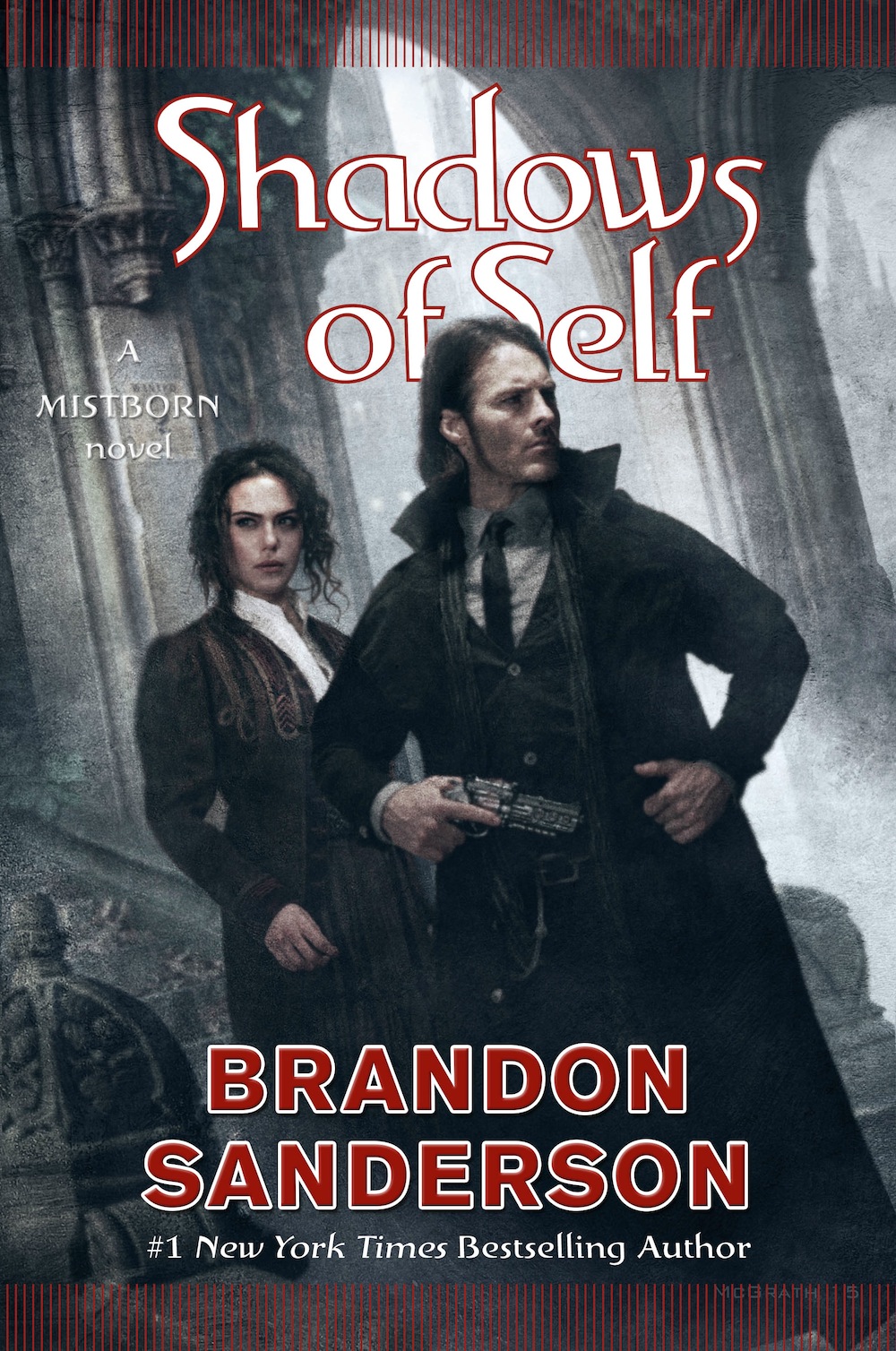
Microreview [book]: Shadows of Self, by Brandon Sanderson

A first-rate second installment for this sequelilogy! Branderson strikes (gold) again!


Sanderson, Brandon. Shadows of Self. Tor: 2015.

Buy it here.

What is a sequelilogy, you ask? Simple: it’s a sequel trilogy, of which this is the second volume. I’m getting a massive tsunami of déjà vu writing this, so perhaps I’ve already coined a new term for this phenomenon, but if so, I doubt it can hold a candle to the brilliance of sequelilogy, am I right?

Anyway, the original Mistborn trilogy by Brandon “Branderson” Sanderson was fantastic, so any sequel effort was bound to feel a little underwhelming. Sure enough, Alloy of Law, the first in the new series, evidently conceived as more of a one-off at first than the start of a new trilogy, left me intrigued but somewhat unmoved. Wax and the others, especially Wayne, were compelling enough as characters go, and Branderson’s interesting mixing of near-modern technology with allomancy and other essentially magical arts was spellbinding. But overall, something just felt a bit lacking. This led to slightly reduced expectations on my part for Shadows of Self, which I knew to be a continuation of the Wax storyline. Surely there was no way Branderson could continue a story already palpably less awesome than Vin’s and somehow raise his game?

My oh my, was I wrong! Like Empire Strikes Back (though emphatically not SW 2, Clone Wars!) before it, the middle volume of the sequelilogy delivers the emotional punch, and a more cosmic sense of crisis (and mystery), than the initial installment. I would still rate Vin’s story as superior, but Wax’s emotional journey in this volume is certainly nothing to sneeze at, and the stakes are much higher than merely a tough-to-kill baddie and a cabalistic business conspiracy (a la Alloy of Law). Heck, even the title ‘Shadows of Self’ is oodles better than Alloy of Law.

All in all, Branderson has given us an excellent ride in this volume, and raised expectations considerably for the concluding installment in the sequelilogy, due out later this month. Here’s hoping you deliver, Branderson!


The Math:


Objective assessment: 6/10

Bonuses: +1 for giving us the first hint of a foe truly worthy, not only of Wax himself, but of his god, +1 for integrating the mythological aspects of the world so seamlessly with the present-day ones, and +1 for managing to package the emotional wallop of the story in always amusing one-liners and situations (thanks mostly to Wayne)

Penalties: -1 for still failing to live up to the glory of the Ascendant Warrior (or her life story)

Nerd coefficient: 8/10 “Pretty frickin’ awesome” 

(fact is, I’d give it an 8.5 if such things were allowed! See here for more on our scoring system)


This review brought to you by Zhaoyun, would-be Allomancer and actual NOAF reviewer since 2013.

Friday, August 14, 2015

AiIP Microreview: The Glass Falcon, by E. Catherine Tobler


http://www.amazon.com/Glass-Falcon-Folley-Mallory-Adventure-ebook/dp/B00W2JQK6K/ref=sr_1_2?ie=UTF8&qid=1439532256&sr=8-2&keywords=the+glass+falcon

The Meat: I love adventures. Mary Shelley, Robert Lewis Stevenson, Mark Twain, so many others- I love stories that simply carry you away. So it is probably little surprise that I am quite fond of this story, but there are far more reasons than the fact that it is simply an adventure story, through and through.

Tobler has what I would term a gift for words. The Glass Falcon is a novella- fairly short, a mere 89 pages. But her vocabulary, and use of ornate, precise and detailed language makes it seem much longer, or rather, deeper. In a world of epic fantasies that drag on forever (lookin' at you, George R.R.), I really appreciate a story - author - who knows what details to include, which ones to omit, and how to express them in a rich way.

I also enjoy the way very diverse elements blend together - on one hand, it is a steampunk adventure, a sort of love letter to Paris that doesn't precisely exist - But also deals with shapeshifters, Egyptian gods and ancient history, and the mystery which lies at the heart of this story. It's a lot to pack into 89 pages, and it is done without moving too swiftly or getting bogged down in clunky exposition.

Potential spoiler alert here, but I have to comment on it, because it was masterfully handled, and central to the story and its ending: the perspective of the gods. Every bloody YA/NA (which this is not), paranormal, etc book out there right now has gods and immortals by the bucketload, and they are all perfectly relatable to humans. This is catastrophically stupid. These infinite beings fall in love with normal humans, schoolgirls, etc, with no problem at all. Instead, Tobler gives us a treat with how it really would be- these beings of extreme power and wisdom don't actually relate to our world very well at all. Not in how they talk, not in how they act, or even how they think.

My only complaint has to do with the characters. While this story stands alone, reading its predecessor (Rings of Anubis) is helpful. I like Folley quite a lot- she is a well-developed, strong character, but I didn't feel she progressed much though the story. She enters the story, reeling one might say, from the events and revelations of Rings, rightly so, but for a character of her strength and depth, by the end of Falcon, I really think she would/could/should be much more in control of things - in fact, there is one scene where she is quite in control (not like that, you perverts). More of that, please. Likewise, Mallory acts more as a sounding board than he did in the Rings, where we saw him much more strong-willed and determined.

The Math:

Baseline Assessment: 8/10

Bonuses:
+1 for being a well-balanced, complex story that is not over-long
+1 for the spoiler alert thing above

Penalties:
-1 for having the human characters remain stagnant

Conclusion: 9: very high quality/standout in its category

Grab it here, and pick up Rings of Anubis while you're at it.

Wednesday, August 12, 2015

6 Books with E. Catherine Tobler


E. Catherine Tobler was born on the other side of the International Dateline, which either gives her an extra day in her life or an extraordinary affinity when it comes to inter-dimensional gateways. She is the senior editor of Shimmer Magazine and lives in Colorado, which has a distinct lack of inter-dimensional gateways, but an abundance of mountains, which may prove mad indeed.

1. What book are you currently reading?

I got an early copy of The House of Shattered Wings by Aliette de Bodard (who will be joing us for her six books on 8/25! -ed), thanks to Netgalley. This book is about a vaguely post-apoc Paris, and that is absolutely in my wheelhouse. Fallen angels, fashion, great houses, conspiracy, politics, murder mysteries. Lucifer is on the prowl in every shadow and it's just unexpected and fantastic.
 

2. What upcoming book you are really excited about?

The Crown & Key books juuuust came out this summer, from Susan and Clay Griffith, and they look like an amazing combination of steampunk, urban fantasy, historical hijinks, and maybe romance (I hope romance!). They appear to be a trilogy: The Shadow Revolution, The Undying Legion, The Conquering Dark, and I am really eager to read them.
3. Is there a book you're currently itching to re-read?

I haven't read The Lord of the Rings in quite some time, but recently bought the digital version, and would love to revisit Middle Earth. Some of Tolkein's passages are so very striking; especially haunting are the scenes where Sam and Frodo are looking for water in Mordor.

This spring, I revisited the Gateway series by Pohl, in anticipation of its eventual television series. I'm surprised how well it holds up--I read it first when I was in high school and did not expect to love it as much as I still do.
4. How about a book you've changed your mind about over time--either positively or negatively?

This is a difficult question, given our relationship with books is often be influenced by our circumstances when we first read or encounter a work. The winter I was twenty-one, I was terribly sick and reading a staggering amount. I encountered Outlander by Diana Gabaldon. This book swept me away and I was enchanted--even more when I discovered it was not a stand-alone, but the first in a series. Devoured. While this is still a series I read, my opinion of it has changed greatly--because I have changed greatly. When I read it at 21, I was not someone who thought much about rape or how it is so often used/portrayed in books and television. It never occurred to me exactly how much it is used--though now it does. I look at those books and cringe to think exactly how many people are raped within them. Gabaldon does one unusual thing with it in book one, but beyond that, the series dilutes the horror, because it happens so very often/

 
5. What's one book, which you read as a child or young adult, that has had a lasting influence on your writing? 
 
 
I would say it's a trio of books--or perhaps worlds is the better word. Narnia, Oz, and Wonderland all absolutely shaped my reading mind and later my writing mind. The idea that our world could be opened and one could enter entirely different worlds was amazing to me. How I longed to be Dorothy or Lucy or Alice. I wanted to meet baffling creatures in snowy woods, fight wicked witches, and drink myself silly at tea parties.

6. And speaking of that, what's *your* latest book, and why is it awesome?

My latest book is more a novella, The Glass Falcon. It's part two in the Folley & Mallory Adventures, a series set in turn-of-the-century (the last century, that is!) Paris and Cairo. This second adventure takes the shapeshifting pair to the Louvre, to solve a mystery that may be buried in the bone-laden catacombs beneath Paris. It is absolutely about stepping from our world and into another, and surviving the perils (and delights) one discovers there.

Tuesday, March 17, 2015

An Interview with Elizabeth Bear

Recently, I reviewed Karen Memory by Elizabeth Bear (spoilers: I was a fan!).


As an added bonus, the author herself took the time to answer some questions I had regarding the book and her writing in general. This being my very first author interview, I tried real hard to refrain from hyperventilating and passing out from excitement. So without further ado, the questions:


Friday, March 13, 2015

Microreview [book]: The Goblin Emperor by Katherine Addison

Slice of Life Fantasy?


Addison, Katherine. The Goblin Emperor [Tor, 2014]

The Goblin Emperor, by Katherine Addison (well-known fantasy and horror author Sarah Monette), is a breath of fresh air. Perhaps all the more so considering the fact that it deliberately eschews the grittier or darker turn to fantasy. Part steampunk and part high fantasy, Addison has written a moving coming of age story of a boy who, after being thrust in to a position of power, begins to find himself. 

It revolves around the story of Maia, the half-goblin son of Emperor Varenechibel IV who has eked out a rather miserable life in exile, forgotten by the imperial capital and abused by his cousin, Setheris. When his father and three brothers are killed in a tragic airship accident, however, Maia finds himself thrust back into the imperial center. This young adult--at the tender age of 18, and almost wholly unschooled in the politics of the capital--is forced to succeed his father as the next Emperor of the Elves. Surrounded by sycophants and scheming nobles, Maia soon learns that he can trust nobody if he is to stay alive. All the while he yearns to fill one of the most basic needs in life: connecting to people. 

What is striking about this novel is how much it succeeds without having a compelling story arc. This is a coming of age story that almost reads like a slice of life novel (if there is such a term?). While there are plots against the throne that Maia has to deal with, for the most part the story avoids epic or traditional story arcs. There is no single, great conflict. Instead, it centers on smaller issues, issues we all deal with in daily life: finding friendship, remaining true to oneself, doing the right thing, and building bridges (in this case, both literal and figurative). In the process, Addison ably fleshes out perhaps the most sympathetic and lovable character ever found in fantasy. Readers can relate to Maia. We can sympathize with his pain, and we want him to succeed in life. And we love the fact that he is very liberal, because his progressive views were born from pain and isolation.  

But The Goblin Emperor is about so much more. It deftly deals with issues of race, gender, abuse  in all its forms (physical abuse, emotional abuse, and the abuse of power), the problems of isolation in social life, and the emotional impacts abuse can leave on people's lives. It highlights the difficulty of getting people to accept one another and see eye-to-eye on even the most basic issues. And it does so with a verve and style that I don't often find in the genre.    

Of course, it does have some weaknesses. The beginning of the novel is replete with infodumping, a pet peeve of readers here at Nerds of a Feather. And some may be turned off by the elvish language Addison invents for the novel. Personally, once I gave up trying to figure out the titles, position, and place names, I became a much happier reader and was finally to focus on the novel's unique strengths. 

In the end, The Goblin Emperor is a truly rewarding book. It succeeds marvellously as a slice of life novel (or a coming of age novel), one that eschews focusing on a great conflict or a single narrative arc. Instead, it is the minutiae of Maia's daily life, his social struggles, and his incessant worrying about whether he can do the right thing that truly pulls the reader in. Highly Recommended.

The Math 

Baseline Assessment: 8/10

Bonuses: +2 for succeeding as a slice of life novel

Penalties: -2 for the infodumping and the stilted language

Nerd Coefficient: 8/10 "Well worth your time and attention"

Read about our scoring system here. And remember, we categorically reject grade inflation!

POSTED BY: Jemmy, a SF/F fanatic, a failed wall gazer, and a Nerds of a Feather contributor since 2012.
     

Wednesday, December 3, 2014

Microreview [book]: Discovering Aberration by S.C. Barrus

Lovecraftian in the Best Possible Way
Buy it from the author here.

Self-published author and friend of the blog S.C. Barrus is currently releasing a steampunk serial set in the world of his debut novel Discovering Aberration. I wanted to read the serial, so I figured I should read the novel it drew upon first. What I got wasn't what I was expecting, exactly, but in the end was a very solid first novel.

Franklin "Freddy" Fitzgerald is having trouble settling into his new, respectable role as a professor, following a youth spent in street gangs and then a brief career as a sort of professional adventurer, which he parlayed into a successful book. His only friend on the faculty, Dr. Lumpen, teaches archaeology, which in this world is a disreputable, cutthroat field regarded as essentially grave-robbing. But Lumpen has discovered a map to a previously uncharted island, stolen it from the most feared name in the criminal underworld, and wants Freddy to help him reach the island and bring back what Lumpen supposes are riches and strange wonders. Freddy agrees, they get a ship and a crew, and set off, with the big complication that a number of other crews have also gotten their hands on copies of the stolen map, and suddenly it's a race out to sea. 

That's the first half of the book, and it's where I felt the story struggled a little. There is some fantastic world-building here, rounded-out with wonderful linguistic inventions (or appropriations, either way) my favorite of which is "he laid down his knife and fork" as a euphemism for dying. But it's a slow first half. There are a lot of characters to set up, a lot of backstory, and quite a bit of internal "should I or shouldn't I" back and forth on Freddy's part. This all felt like prologue to the real story, and despite Barrus' skill at rendering the world and characters, I found myself wanting the book to get to it, already.

But once Freddy, Lumpen, and company reach the island, everything changes. Things go sideways immediately, and get very dark. Not grimdark — there is a lot of violence, but it's not what I would consider excessive or sadistic — but the juxtaposition of a steampunk alt-Victorian society and a savage, almost alien island that literally distorts its visitors' sanity and quickly runs red with blood is striking. From the halfway point forward, I found myself increasingly reluctant to put the book down, and loved being immersed in a truly Lovecraftian world that continually surprised me. I don't want to spoil any of those surprises, though, so grab the book. You can get it free, for Pete's sake (though you should really throw the writer a few bones, or clams, or whatever you call them).

The Math

Baseline Assessment: 7/10

Bonuses: +1 for consistently well-rendered characters, both male and female; +1 for being evocative of Lovecraft without feeling like an imitation

Penalties: -1 for feeling like the proportions were a little off.

Nerd Coefficient: 8/10, well worth your time and attention

Posted by — Vance K, resident cult film nerd who occasionally wades into the book-reviewing waters.

Barrus, S.C. Discovering Aberration [Away and Away Publishing, 2013].

Wednesday, August 20, 2014

Friends of NoaF: Steampunk Kickstarter


Author-publisher S.C. Barrus, who contributed a guest blog post to Nerds of a Feather on isometric gaming, is also the author of the steampunk novel Discovering Aberration. You may remember this book as a top pick of our monthly Adventures in Indie Publishing correspondent D.E.S. Richard, and it appeared on my Summer Reading List (I'll finish it soon — it's long!). Discovering Aberration is the product of a successful Kickstarter project, and now Barrus is ready to release his follow-up.

Set in the same world, The Gin Thief is a serialized novel, which is just a super cool thing to be doing, and in itself pretty steampunk. Kickstarting a 19th-century publishing platform? Put some goggles on it and you're already 9/10 of the way to the Steampunk Hall of Fame. The project is already funded, and will only be online for a week, so it's simply a good opportunity to pre-order these books and get a copy of Discovering Aberration along with it.

So take a look, and become a backer if it seems interesting, tossing some support behind self-published authors who are delivering quality and outside-the-mainstream ideas.

Posted by Vance K — cult film reviewer, occasional book reviewer and general pontificator, and Nerds of a Feather contributor since 2012.

Wednesday, June 4, 2014

Summer Reading List - Vance

One of the great things about writing for this blog is getting reading recommendations from my awesome co-conspirators, er...co-contributors. Way more than I can ever hope to keep up with, certainly, but this year a few have made my annual Summer Reading List.

That means that this year's list includes some works I've missed by a couple of legendary writers, and some brand new works by folks that may one day become legendary authors. We can hope, right?

1. Discovering Aberration, by S.C. Barrus

S.C. Barrus contributed a guest post to Nerds of a Feather awhile back on Isometric Role-Playing Games. At the time, he was readying his steampunk novel Discovering Aberration for publication. The summary reads like a Victorian-era Indiana Jones adventure, and to me that sounds awesome. It's a big book, and I'm a man with an unreasonable number of demands on my time, but this is at the top of my to-read list this summer.


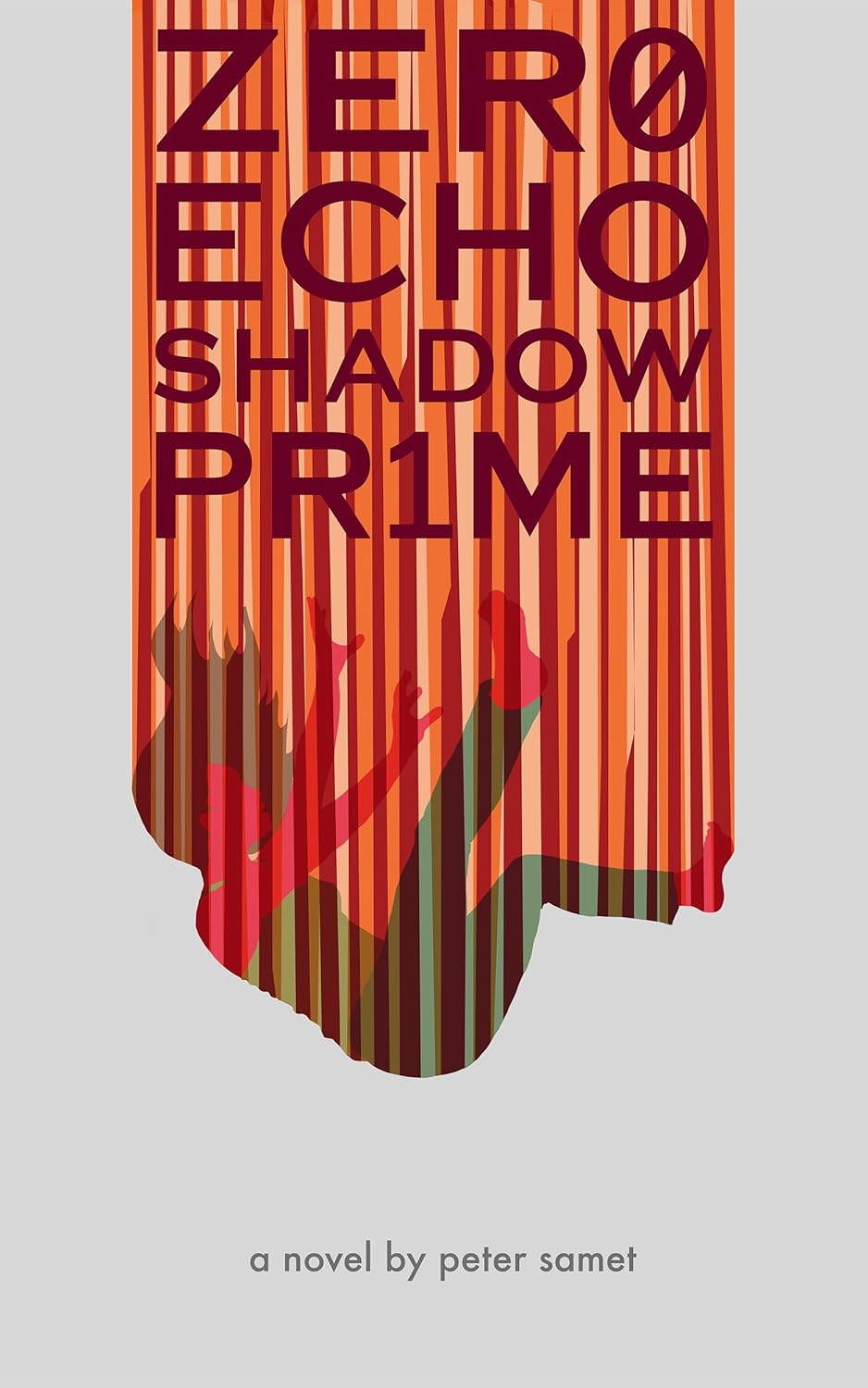
2. Zero Echo Shadow Prime, by Peter Samet
 
A friend of mine, comic book writer Mark Landry (bloodthirstycomic.com) did the cover art for this, and showed it to me awhile back. I thought it was awesome, and Mark told me I should read the book. He'd read it multiple times throughout his time involved on the project, and spoke very highly of it, so I was happy to get my little e-inkstained fingers on it. With a female-centric story about the singularity, robots, consciousness, and immortality-through-technology, it's got my expectations high. And check out that cover!


3. Planks, by S.C. Harrison

Our intrepid monthly Adventures in Indie Publishing columnist D.E.S. Richard interviewed S.C. Harrison for this site and subsequently reviewed her horror collection Planks. After reading the review, I immediately bought the Kindle edition...and then didn't read it. But I intend to do so now! Usually I do a lot of horror reading in the fall, not just because of Halloween, but because I love fall and horror and the grey days and long nights have always made the two feel compatible for me. But this year I'm bloodying up my summer, and I've been promised in Planks a collection of interrelated short stories that do a masterful job of world-building.

4. Pale Fire, by Vladimir Nabokov

When I read Lolita years ago, I had the annotated edition. Not only did I love the book, but I found myself loving it all the more since I had the ability through those annotations to see so much more of what laid beyond the surface than I would have been able to grasp without them. Nabokov had an unmatched gift for prose that continues to astonish me. So how I have not managed to read Pale Fire — in which a fictional scholar introduces, includes, and fully annotates the final poem of a fictional poet — escapes me. That's three levels of Nabokov. I just hope I can keep up.


5. The Man in the High Castle, by Philip K. Dick

I have read probably a half-dozen of Philip K. Dick's novels and a handful of short stories, but never this one. To be honest, beyond knowing that it's an alternate history where the Axis won WWII, I'm not even really sure what it's about, and I don't care to investigate since I'm willing to let myself be surprised by the journey he wants to take me on. After all, V.A.L.I.S. isn't really about whatever the summary of the plot says it's about, anyway, and Flow My Tears, The Policeman Said starts off being about one thing and winds up being about something else entirely, so I'm just excited for the journey.

6. Science Fair Season, by Judy Dutton
 
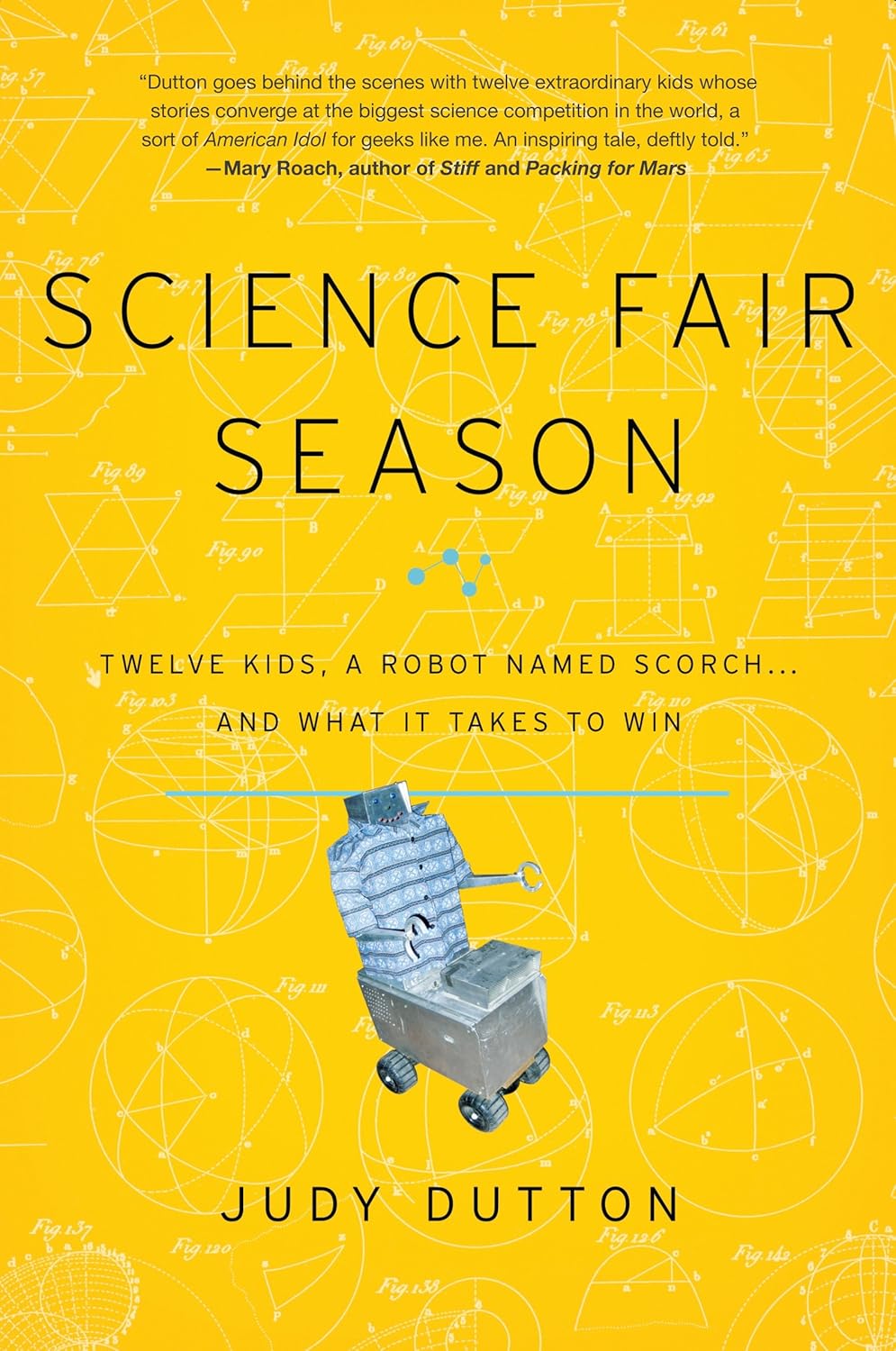
This is the only non-fiction book on my list this year, and another entry in my bought-it-on-Kindle-didn't-read-it-yet file. Judy Dutton spent time immersed in the competitive world of serious science fair competitors (not me — I tried to make an automatic dog-walker like on The Jetsons with some leftover carpet scraps), and these days I would so much rather read about kids getting bent out of shape through science competition and aspiration than out of sports competition and aspiration. The book's a couple of years old now, but the kids are probably still in their late-teens, and I for one am looking forward to reading about those that may one day make all the wacky sci-fi shit in lots of these other books I'm reading come true. 

Posted by: Vance K — cult film aficionado, unapologetic lover of bad movies, and Nerds of a Feather contributor since 2012.