Showing posts with label cult movies. Show all posts

Tuesday, November 6, 2018

Frankenstein at 200: What Monstrosity Looks Like

One might have been forgiven, in 1966, for thinking, "Welp, that's the end of Frankenstein, right there." It was in that year, you see, that the world got Jesse James Meets Frankenstein's Daughter. In this, um, "movie," notorious outlaw Jesse James escapes down to Mexico, where the only doctor in town, and the inhabitant of the ancient castle in the village — you know, one of those great ancient, European-style castles that tiny Mexican villages are always known for — is Doctor Frankenstein's granddaughter. Not daughter, but that's the least of our worries. Jesse's traveling with his only surviving gang member, Hank, who's hurt. When Maria Frankenstein, the "doctor," sends Jesse out into the village to get medicine for Hank, she takes the opportunity to chop out Hank's brain, give him a new one, and turn him into a beefy kill-machine. Even when compared to its awful, awful companion film Billy the Kid Versus Dracula, produced by the same company in the same year, this movie is stunningly incompetent. Words simply fail.

If it were a piece of literature or a cultural icon any less durable than Mary Shelley's Frankenstein, it would have seemed like the gas tank was entirely empty at that point. The book was 150 years old, after all, and James Whale's iconic films were both over thirty years old, and had been followed by over a decade's worth of increasingly dubious sequels and spin-offs that saw Frankenstein's monster paired with several members of the Frankenstein family tree, the Wolfman a few times, Dracula, Abbott and Costello, and...at some point, who could even keep track? So when you've got fly-by-night, drive-in movie producers putting Frankenstein's heirs in the Old West, it would sure seem like the creative well was dry, and the world might have had its fill of Frankenstein movies.

And yet.

You may recall Harry Potter Daniel Radcliffe's recent turn in Victor Frankenstein. Or you might recall the stage play Frankenstein with Sherlock Holmes Benedict Cumberbatch and Johnny Lee Miller. Or, unfortunate soul, you may recall the film I, Frankenstein in which the creature gets caught up in the, um, ancient war between...*checks notes*...I guess gargoyles and demons? And there were in the 1990s Roger Corman's Frankenstein Unbound, which featured time travel, and Kenneth Branagh's Mary Shelley's Frankenstein, which featured Branagh and Academy Award-winning screen icon Robert DeNiro wrestling naked in some type of amniotic goo. The point is, if the world should one day tire of reincarnating Mary Shelley's creature, it will be a long, long time hence.

But Shelley's work has invited re-interpretation ever since its original publication 200 years ago — even by Shelley herself. The book first achieved prominence not upon its initial, anonymous publication, but upon its first adaptation to the stage, in 1823. The success of the stage play led to the publication of the second edition of the novel that same year, and the first time Mary Shelley was credited as the author. In 1831, Shelley herself radically altered the text, and published a new version of the book, which takes much of the blame for the events in the novel away from Victor Frankenstein and attributes it rather to fate. There is something primal in Shelley's story, something fundamental that has found continued resonance with the human spirit even through the seismic upheavals in culture, society, and technology that have taken place over the last two centuries.

Shelley's original version of the text carried this epigraph, taken from Milton's Paradise Lost:
Did I request thee, Maker, from my clay
To mould me Man, did I solicit thee
From darkness to promote me?
Guillermo del Toro has called Frankenstein the ultimate teenage novel, a book forever echoing familiar adolescent feelings like, "I didn't ask to be born," and "How can the people who gave me life not understand me at all?" That is an apt observation, and almost certainly contributes to the book's longevity. And it can't be ignored that Shelley wrote the novel when she was a teenager, herself. But baked into del Toro's observation is a perspective, and it is the Creature's. Del Toro's implicitly suggesting that the reader does and should identify with the Creature, and it is the "monster" who is the point-of-view character. I feel the same way, which is something I discussed in the first installment of this series.

But I also feel that the lessons of the novel, or the cautions and warnings baked into it, extend far beyond one's adolescence and are lessons we must continually re-examine and re-visit on a societal level, specifically because of the cultural and technological upheavals that have led from Shelley's youth to our present. We have accrued greater power over life and death than ever could have been imagined in even the most outlandish speculations of 1818. The casualties of World War I 100 years later could scarcely have been imagined, let alone the notion that organ transplants would one day become routine medical practice. The "horror" of Shelley's imaginings — pillaging corpses for their organs to put into another body — has now saved countless lives. And, unless I am consumed by flame and if I die with my driver's license on me, one day part of me will live on in someone else. Hopefully it's a good part...

As long as humankind is faced with the question of "Though we can do this thing, should we do this thing?" I believe Frankenstein will stay with us, constantly re-invented and re-imagined for our times and our contemporary struggles. And, sure, for crappy movies here and there that are just trying to get mileage from the name. But Mary Shelley seemed to believe that Victor Frankenstein was the guilty party, and his creation Frankenstein's first victim. That's how I read it, anyway, sitting here 200 years later. And that remains instructive. What are the ramifications of our decisions? Our technologies? Our innovations? What might the human cost be? What constitutes "acceptable losses" in the pursuit of knowledge?

But maybe none of this applies to you. I doubt it applies to me. I am neither a creator of technologies nor a wielder of great power. So the thing that I take away from Frankenstein, and the thing that maybe we all need to be reminded of more than anything else, is that those who are different from us are no less human, and we all, in fact, have an obligation to one another. This is not, I think, a lesson we will ever fully learn, and if we need Mary Shelley's Creature to remind us of this from time to time, then long may he live.

Published by Vance K — co-editor and cult film reviewer for nerds of a feather, flock together since 2012, songwriter, and longtime Franken-fan.

Tuesday, October 18, 2016

ESSENTIALS: 24 Cult Films for Late, Late Nights

I feel like I should preface any list of "Best" cult films or "Most Important" cult films with the disclaimer that there is no list. The thing that makes cult films memorable is that they are a representation of a unique voice, and different voices appeal to different people. Plus, there are just so, so many movies out there, nobody can see them all. If you've got a film that you (or you and your friends) love and quote and everybody else thinks you're nuts, I think you're doing the thing right, and it doesn't matter if that movie's on a list anywhere or not.

The other key thing about cult films is that they are usually produced outside of the mainstream, so a lot of lists of "Best Cult Films" that I see online are rehashes of movies like The Big Lebowski or Office Space, which were box office flops, but gained a second life through word-of-mouth after their disappointing theatrical runs. I love both of those movies, and they certainly have cult followings — Office Space prompted Swingline to actually make a red stapler, and The Big Lebowski started a religion — but now they're so well-known I don't need to invoke them here.

Since I get to make this list, I wanted to focus on movies that didn't show up on the other lists. I also wanted to stay away from "The Worst Movie Ever" kinds of films (plus, I already covered that ground), and try to share movies that I think are legitimately good, or moving, or compelling, even if you can see their seams sometimes.

These are in no particular order, but they are all perfect for late nights or rainy days:

1. Carnival of Souls

After a traumatic accident, a woman becomes drawn to a mysterious abandoned carnival. - IMDb

Mistakenly thought to be in the public domain for decades and widely available in grainy, garbled versions, Carnival of Souls has a new blu-ray release from Criterion with restored picture and sound that really shows off this movie for what it is. It's a legitimately eerie movie, beautifully shot, full of evocative imagery and intelligent subtext. This movie also has special significance for me, because seeing the original Criterion Collection release of this movie alongside films by Renoir, Godard, Kurosawa, and Bergman was the first time I really understood that cult films didn't have to be a guilty pleasure. That release made me realize that there were other people like me who loved both art house cinema and outsider cinema and took them equally seriously.

2. Chimes at Midnight

The career of Shakespeare's Sir John Falstaff as roistering companion to young Prince Hal, circa 1400-1413. - IMDb

For many years, the crown jewel of my DVD collection has been a DVD-R of this movie, which was only briefly released on VHS and was extremely difficult to find and even more difficult to own. But this is another movie that Criterion has recently rescued from the pit of abysmal picture and sound quality. And good thing, too. This movie and the never-completed Don Quixote were Orson Welles' dream projects. Constructed from texts pulled from four Shakespeare plays, Welles made John Falstaff, who has more lines than any other character in Shakespeare, the tragic hero of his own movie. The larger-than-life Welles plays the larger than life mentor to Prince Hal, later King Henry, and the thread of wasted talent and unbridled excess that runs through the film cannot help but reflect on the former boy-wonder of Welles himself. It is a movie that was financially and logistically hard to make and it shows, but it is full of stunning images, and a truly heart-rending conclusion.


3. A Bucket of Blood

A frustrated and talentless artist finds acclaim for a plaster covered dead cat that is mistaken as a skillful statuette. Soon the desire for more praise leads to an increasingly deadly series of works. - IMDb

I will go to the mat with anybody who says Roger Corman isn't a good director. He's certainly known as a producer of exploitation films and for launching the careers of people who went on to be iconic directors, but his directorial work (which he pretty much stopped doing in the late-1970s) was extremely sharp, both in terms of visual style and intelligence. A Bucket of Blood is one of the best satirical take-downs of the art scene I think I've ever watched, and it wraps it inside the costume of a schlocky horror movie. It's funny, full of gentle social commentary, and has just enough of an "ick" factor to create some intentionally cringe-worthy moments. If you've ever wanted to see the Beat Generation get some comeuppance, this one's for you.

4. Faster Pussycat, Kill Kill

Three go-go dancers holding a young girl hostage come across a crippled old man living with his two sons in the desert. After learning he's hiding a sum of cash around, the women start scheming on him. - IMDb

I'm much more of a Corman guy than a Russ Meyer guy, but when it comes to exploitation films, you have to give Russ Meyer his due. Meyer is most closely associated with busty women with quick tops, but there's actually no nudity in this, his best-known movie. Busty women, sure, and car races, and inexplicable danger aplenty. This movie is also notable for being the source of most of the movie dialogue samples used in White Zombie's breakout album La Sexorcisto: Devil Music, Vol. 1. That's actually what got me to watch this movie in the first place.


5. Blacula

An ancient African prince, turned into a vampire by Dracula himself, finds himself in modern Los Angeles. - IMDb

There are a lot of 1970s blaxploitation movies you can watch and have a pretty great time with, but the thing I love about Blacula is how William Marshall's performance really elevates this movie way past what you think it would be from the amazingly schlocky title. He was primarily a Shakespearean actor, plays the character of Prince Mamuwalde totally straight, and sells it. This movie is at its heart a love story, and despite some *ahem* lines that ring out particularly jarringly to modern sensibilities, the performances in this movie should earn it far more prominence among horror fans than I think it currently has.


6. Killer of Sheep

Stan works in drudgery at a slaughterhouse. His personal life is drab. Dissatisfaction and ennui keep him unresponsive to the needs of his adoring wife, and he must struggle against influences which would dishonor and endanger him and his family. - IMDb

This underground film shot in south Los Angeles in the early 1970s is not to be confused with a blaxploitation film. This is a poetic and deeply touching movie that went unseen for over two decades because of rights clearance issues with the music in the film. The picture of daily life in Watts that it shows is both stifling but also affirming and moving. When it was added to the National Film Registry in 1990, that helped raise awareness for the movie, and ultimately led to a limited theatrical release in 2007. It is now available on DVD.


7. I Bury the Living

Cemetery director Robert Kraft discovers that by arbitrarily changing the status of plots from empty to occupied on the planogram causes the death of the plots' owners. - IMDb

I came across this one on a Public Domain movies site years ago, and I was pleasantly surprised. What the description here doesn't include is that the director doesn't want to be killing people, and begins thinking that he's descending into madness. As this starts to happen, there are a couple of visual effects sequences that are really striking, and take on the air of a twisted re-imagining of Fitzgerald's "eyes of Dr. T.J. Eckelburg." The film suffers a little from a Scooby-Doo ending, but there are rumors that there was a different ending originally shot. That's going to have to be one for the angels, though, because in 1958 nobody was keeping alternate endings of B-pictures around for archivists to find later.

8. Billy the Kid vs. Dracula

Dracula travels to the American West, intent on making a beautiful ranch owner his next victim. Her fiance, outlaw Billy the Kid, finds out about it and rushes to save her. - IMDb

I reviewed this movie before, and you can read that at your leisure, but for our purposes here I will simply quote one line of that review: "At some point in 1965 or '66, some actual human being must have had this thought: 'Let's get John Carradine to play a vampire again, but this time we'll stick him in the Old West, name the movie after two characters not actually appearing in the movie, and shoot the thing for a nickel in, say, my back yard in Encino!'" The IMDb description is actually not correct: Carradine is never identified as Dracula because they didn't want Universal suing them, and "Billy" in the film did not have a previous career as a notorious outlaw. So if this sounds like it's up your alley, it probably is. If it doesn't, man, you've been warned.

9. Plan 9 from Outer Space

Aliens resurrect dead humans as zombies and vampires to stop humanity from creating the Solaranite (a sort of sun-driven bomb). - IMDb

This is also an objectively bad movie, but Edward D. Wood Jr. deserves a place on this list if for no other reason than that Ed Wood is maybe the greatest movie ever made about movies. Plan 9 is also, and I don't know anybody who would argue with me on this, the closest Ed Wood ever got to making a decent movie. The idea of a bomb made out of the sun's rays is not the worst sci-fi idea ever, and the story is more or less coherent. As opposed to, say, Glen, or Glenda?. Plus, the reach of this movie has been remarkable, from the Tim Burton biopic to the name of Glenn Danzig's record label, so it's worth watching if you haven't actually seen it. May I recommend watching Ed Wood and then Plan 9 as a double-feature?


10. Primer

Four friends/fledgling entrepreneurs, knowing that there's something bigger and more innovative than the different error-checking devices they've built, wrestle over their new invention. - IMDb

Of course, if you'd actually like to see a good sci-fi movie made for no money, you might want to skip ahead a few decades to Primer. This movie has a reputation for being quite a mind-bender of a time-travel movie, and it does not disappoint. I would argue that only with (many) multiple viewings and some graph paper could you actually untangle what's happening in all the different timelines, but at a certain point, it doesn't matter. The storytelling is dizzyingly complex, but you get the impression director Shane Carruth knows what's going on, and that he's going to take you somewhere worthwhile, so you go along. It's a tense and confusing ride, but I'm not aware of another movie like it. I actually prefer Carruth's poetic, disjointed follow-up Upstream Color, but start here.

11. It's Such a Beautiful Day

Bill struggles to put together his shattered psyche, in this new feature film version of Don Hertzfeldt's animated short film trilogy. - IMDb

As long as we're talking about bending minds, let's also dip our toes into the animation end of the pool. Don Hertzfeldt bends minds with the best of them, and I am truly at a loss as to how he is able to tell such elliptical stories with stick figures and still elicit powerful emotional responses from me. I am a big fan of Don Hertzfeldt, and this re-packaged collection of three of his related short films is a perfect example of why. Bill seems to be emotionally falling apart, but then it seems like he's actually mentally falling apart. His journey yo-yo'ing closer to and farther away from "sanity" and "reality" is both tremendously imaginative and tremendously moving. Hertzfeldt's World of Tomorrow short film was absolutely robbed of an Oscar, too, for whatever that's worth.

12. Sita Sings the Blues

An animated version of the epic Indian tale of Ramayana set to the 1920s jazz vocals of Annette Hanshaw. - IMDb

Animator Nina Paley made this animated feature film on her own. By herself. Alone. Feature film. Bill Plympton does the same kind of thing, and I am simply in awe of these artists. Paley's movie tells the story of Sita and her lover Rama from the Hindu epic Ramayana, and intertwines that tale with the story of the dissolution of Paley's own marriage. It's simply a beautiful, enthralling piece of work that not only explodes with imagination, but is full of beautiful visual design, too. It blurs the line between myth, fiction, and documentary, and is set entirely to torch songs. What's not to love?


13. The Beaver Trilogy

It begins in 1979 with the chance meeting in a Salt Lake City parking lot where filmmaker Trent Harris is approached by an earnest small-town dreamer from Beaver, Utah. - IMDb

And speaking of blurring lines...man, this one's something. As quick as I can tell it: Trent Harris was working at a TV station in Utah when they got their first video camera, and he was testing it in the parking lot when a guy called "Groovin' Gary" spotted him and came over.Gary always wanted to be on TV, and had his car adorned with images of Olivia Newton-John. He invited Harris back to Beaver for a talent show that Gary wanted recorded. In it, Gary dressed in drag and performed *as* Olivia Newton-John, to the befuddlement and ridicule of the small, conservative town. That really happened. A couple of years later, Harris moved to LA, and fictionalized the story a bit, and shot it as a short film with a pre-Fast Times Sean Penn. A couple of years later, while at USC film school, he made another go at the same story with a pre-Back to the Future Crispin Glover. If you can't find this amazing, unique gem, track down the new documentary The Beaver Trilogy, Part IV, which tells the whole story in stunning fashion.

14. The Sid Saga

Spurred by house guests Bob Sandstrom and Karlene Sandstrom leafing through his scrap book and asking about photographs in it, Sid Laverents begins to tell his life story. - IMDb

This is simply one of the crown jewels of amateur cinema. I don't know how to find it, except UCLA shows it sometimes and it occasionally airs as part of the sporadic TCM Underground series. But it is truly unforgettable, with Sid Laverents taking viewers through a stunning, three-part filmic biography that not only tells the story of Laverents, but of 20th Century America, too. It begins in poverty and vaudeville, goes through World War II, the 1950s and Cold War, the aerospace boom and introduction of the space program, and finally the rise of amateur film and videography that put storytelling tools into the hands of everyday people. And it's all told first-hand from Laverents, who lived it all. I reviewed this film a couple of years ago, and it is absolutely worth tracking down.

15. Head

The Monkees are tossed about in a psychedelic, surrealist, plotless, circular bit of fun fluff. - IMDb

Whoever wrote this IMDb summary can suck it. This is anything but "fan fluff." This is the weirdest damn thing, and as far from the Monkees TV show as I can really imagine. It's a smart, self-indulgent, self-reflexive piece of meta-storytelling made by Jack Nicholson and Bob Rafelson, who would immediately after this project go on to collaborate on Five Easy Pieces, with Nicholson exploding into the mainstream world in Easy Rider in between. The Monkees got a bad rap at the time, and I think it persists, that they were just a slapped-together attempt by a record company to make an American version of the Beatles. That may have been their genesis, but their songs are great, the guys were interested in things beyond the show, which came through in songs like "Randy Souse Git" and this film, which was reportedly the first time Americans had seen the now-famous footage of  the South Vietnamese Chief of Police executing a handcuffed Viet Cong prisoner. Fan fluff, right? This was Tor Johnson's final film, and also, in a restroom, Peter Tork gives Davy Jones the advice that, "Nobody ever lends money to a man with a sense of humor."

16. The X from Outer Space

The spaceship AAB-Gamma is dispatched from FAFC headquarters in Japan to make a landing on the planet Mars and investigate reports of UFOs in the area. - IMDb

In the 1960s, the Shochiku studio in Japan, which was known for more serious, art-house films like those of Yashujiro Ozu, decided it wanted to get in on some of that sweet Godzilla money that Toho was pulling down, and this film was their attempt. In it, some swinging astronauts jet back and forth between Earth, the moon, and Mars for reasons that are clear, but don't make any logical sense. While exploring, they get some goo on the ship, which hatches into a giant space chicken called Guilala. The English dub of this movie is legitimately terrible, but the original Japanese version, subtitled, is wonderful. It is everything I love about silly, 1960s monster movies, and may even exceed some of the Godzilla movies with shady aliens in them.

17. Suspiria

A newcomer to a fancy ballet academy gradually comes to realize that the school is a front for something far more sinister and supernatural amidst a series of grisly murders. - IMDb

This movie, by Italian horror icon Dario Argento (who also co-wrote the unmatched Once Upon a Time in the West), is the real deal. It's creepy, scary, grisly, bloody, mysterious, and atmospheric. It hits all of my favorite notes of horror movies, and has an ending that is serious nightmare fuel. Emerging from the giallo scene in Italy, it took things a step farther, and is really not for the faint of heart. But man, this is such a great horror movie. I've written before about the line that connects certain films between the 1950s and early 60s, ultimately resulting in Rosemary's Baby, and I think Rosemary in turn made Suspiria possible.


18. Bay of Blood

An elderly heiress is killed by her husband who wants control of her fortunes. What ensues is an all-out murder spree as relatives and friends attempt to reduce the inheritance playing field, complicated by some teenagers who decide to camp out in a dilapidated building on the estate. - IMDb

Staying in Italy with a giallo contemporary of Argento's, we have Mario Bava's Bay of Blood. Bava was making his mark a decade before Argento hit the scene, so a lot of what Argento would build on came from Bava. And it goes way beyond that. Because Bay of Blood is not a "proto-slasher" movie, it is a full-bore, perfect example of a slasher movie, made almost a decade before slasher movies were a thing. You could pretty much take the cliched rules laid out in Scream that govern slasher movies and apply them one-for-one to this movie, but if that's the case, that means this movie invented those rules. I don't know if American filmmakers in the early 1980s looked at this movie and drew inspiration, or if Bava was simply ahead of his time, but this movie is about as good as straight slashers get, and it accomplished that while creating the lexicon, so I think that's one hell of an achievement.

19. The Wicker Man

A police sergeant is sent to a Scottish island village in search of a missing girl whom the townsfolk claim never existed. Stranger still are the rites that take place there. - IMDb

When I was in college and found 1) the Internet and 2) a pair of amazing video stores near my dorm, I spent some time combing a bunch of lists to find movies to rent. The Wicker Man consistently showed up on lists of "the scariest movies ever made" and that sort. So I rented it and I thought it was stupid. But I just sort of missed it — there's something sticky about this movie. Even though I didn't think I liked it, something made me want to revisit it, and when I did, a switch flipped and I fell in love with this movie about the collision of modern life, Christianity, and very, very old pagan beliefs that have still never really gone away. It's a movie with a lot going on under the surface, and which was also plagued for decades with a "the movie that could've been" legend that told the tale of how we never got to see the director's real vision of the movie. That has since been solved, despite the original camera negatives being used as fill underneath the M1 motorway connecting London to Leeds. And for what it's worth, my copy of The Wicker Man DVD actually came in a wicker box.

20. Equinox

Four friends are attacked by a demon while on a picnic, due to possession of a tome of mystic information. Told in flashbacks by the sole survivor. - IMDb

To be honest, this movie is mostly remarkable because of the people that worked on it. As a film on its own, it's only ok, and the present-day framing device of a police detective interviewing a survivor of all that went down is...clumsy at best. So you've really got to have some patience to get to where the movie begins to cook. This film was created by friends who met through Forest J. Ackerman (Uncle Forry), who founded Famous Monsters of Filmland in Los Angeles, and decided to make their own film. These friends, including Jack Woods and Dennis Muren, went on to become transformational figures in Hollywood through their contribution to sound and visual effects. It's truly remarkable to see their first film, knowing that they went on to redefine the modern cinematic language. No hyperbole. There are entire passages of The Evil Dead and Evil Dead 2 that are cribbed directly from this film, and while the humans-talking-to-each-other portion of the movie is clunky, the finale, made from stop-motion, rotoscoping, and glass mattes, is legitimately badass.

21. Incubus

On a strange island inhabited by demons and spirits, a man battles the forces of evil. - IMDb

You notice how vague the plot summary for this movie is? That's about right. I mean, what I remember from this movie is William Shatner and some girl hiding in a barn, and then I think they ran for a bit...and maybe one of them was briefly possessed, but I couldn't swear to that. This movie is totally forgettable except for one kinda important thing: it was spoken entirely in Esperanto. You know what Esperanto is, right? It's an invented language that blends elements of the Romance languages, English, and probably a few other languages into what was hoped to be a universal language. Created in the 1880s, it took almost 100 years to make a movie in the language, and that was Incubus. So if you want to watch a movie where Bill Shatner speaks a made-up language, this is your only option, folks. Who gives a shit if it is entirely, and utterly, forgettable otherwise? But look: I have friends who have learned Swedish to watch Bergman movies in the native language, and friends who have learned Japanese to watch anime in its native language (I have undeniably awesome friends), so if you want to be able to turn the subtitles off in Incubus, you can currently learn Esperanto in the free language-learning app Duolingo on your phone.

22. Venus in Furs

A musician finds the corpse of a beautiful woman on the beach. The woman returns from the dead to take revenge on the group of wealthy sadists responsible for her death. - IMDb

This is definitely an outsider kind of film. I haven't seen any other of Jesus "Jess" Franco's films, but from what I know, a number of his films have veered into the more hardcore elements of mixing sex and cinema. Venus in Furs certainly has sex and nudity, but what it has more of, and in spades, is atmosphere and intrigue. The story is told through the eyes of Jimmy, a jazz musician, who sees a beautiful girl at a swanky party, then finds her merdered body on the beach, then sees her again, walking around. There's a wonderful current of I Spit on Your Grave-style cosmic retribution for sexual violence that runs through the movie, but mainly it's just sort of out-there and entrancing. Like the jazz musician at the center of the movie, you're never quite sure what's going on, and you're kind of ok with that because it's a unique ride you want to get to the end of.

23. The Masque of the Red Death

A European prince terrorizes the local peasantry while using his castle as a refuge against the "Red Death" plague that stalks the land. - IMDb

To be honest, I didn't realize this was my favorite of the Roger Corman/Vincent Price/Edgar Allan Poe movies until I wrote songs about a bunch of horror movies, and the one I wrote for this one turned out to be my favorite. Like in Bucket of Blood above where Roger Corman is a good director, and in Blacula where performances can elevate an otherwise straight exploitation film, for me Hazel Court makes this movie. There are a number of wonderful things in this one, from the dwarf circus performer who murders a friend of Prince Prospero (Vincent Price) to avenge an insult to a girl he loves, to the amazing set design that was the apotheosis of the Corman/Price/Poe look, that if I have to let this one movie stand in for all the wonderful films in this series of movies, I'm happy to do so. If you can only watch one Roger Corman movie this Halloween season, I recommend this one.

24. Perversion for Profit

This anti-porn short film shows a flood tide of filth engulfing the country in the form of newsstand obscenity. - IMDb

This is maybe a bit of a cheat. This isn't a narrative film or documentary, but I guess you could say it's a sort of outsider cinema. This instructional film was created in 1965 to warn America of the dangers of the secret filth hiding in the newsstands in the form of comics, men's, and women's magazines. This film is amazing in many ways. There's the slice-of-life sense of giving the modern-day viewer a picture of what life was like in the mid-1960s, and what people could see walking into the corner drug for a magazine, but mainly it's a totally un-self aware look at the hypocrisy of the morality police. The fact is that this movie is a half-hour of words talking about how terrible the "smut" problem is in America, while showing the "smut" in question in full detail. There are very tiny black bars over nipples or eyes, but it's clear to see that this film became, in a sense, exactly what it beheld. By damning pictures of nude women while showing pictures of nude women, today this seems like a way to get soft-core porn into the hands of moral crusaders who could only enjoy nude bodies if they felt they were also condemning them. This movie is a really interesting artifact that says a lot more about the people who made and watched it than it does about they people they were trying to denigrate. It's a fascinating time-capsule that conveys a very different message these days than it was originally meant to.

Posted by Vance K — Emmy-winning producer, folk musician, and cult film reviewer and co-editor of nerds of a feather, flock together since 2012.

Tuesday, March 8, 2016

Microreview [film]: Kung Fury

Swedish steel.


Like Turbo Kid, which I reviewed last week, Kung Fury is a parody of/homage to the low-rent action films of the '80s. Only this one's much heavier on the irony. See, for example, the plot:

Sometime in the early 1980s, Miami-Dade Police Department detective Kung Fury and his partner Dragon apprehend a red ninja in a back alley, but Dragon is sliced in half by the ninja while Kung Fury is suddenly struck by lightning and bitten by a cobra, giving him extraordinary kung fu powers that enable him to defeat his foe. Years later in 1985, after defeating a rogue arcade machine robot, Kung Fury quits the force when he is assigned to partner with Triceracop, fearing that he would lose another partner in the line of duty. Meanwhile, Adolf Hitler, a.k.a. "Kung Führer", enters the timeline and remotely guns down the police chief and attacks the precinct through a mobile phone. Intent to avenge the chief, Kung Fury has computer whiz Hackerman send him back in time to kill Hitler in Nazi Germany. A glitch in the system, however, sends him back into the Viking Age. After Kung Fury meets the Viking valkyries Barbarianna and Katana, the Norse god Thor sends him to Nazi Germany for him to finish his job.

Or consider the fact that Kung Fury (Sandberg) opens the doors to his Lamborghini Countach by shooting it. Or the scene where two Nazi guardsmen argue, in fake German (it's really Swedish) over who has the more Aryan mustache. Or the VHS glitch effects that periodically reappear. Or the fucking amazing Mitch Murder soundtrack, which features David Hasselhoff on vocals:


Indeed, Kung Fury may be the ultimate film for that certain kind of person who both seeks out a certain kind of ironic humor and enjoys a bit of '80s nostalgia--ironically, of course. For others Kung Fury may lay the insanity on a bit thick. Personally, I thought it was funny as hell, but also noted that, in comparison to Turbo Kid (and the comparison is inevitable), it's a pretty superficial film. And that was even more apparent second time I watched it, when all the surprises had already been sprung. 

At the same time, Kung Fury is only 30-minutes long, which is just about perfect for what is, in essence, a superbly well done one-note symphony. Oh, and Kung Fury's partner, Triceracop? Yes, he is an anthropomorphic triceratops--something that remains thankfully unexplained. 


The Math

Baseline Assessment: 6/10

Bonuses: +1 for the concept of Triceracop; +1 for the amazing soundtrack: +1 for TOTAL INSANITY.

Penalties: -1 for the moment when the joke starts to get a bit old. 

Nerd Coefficient: 8/10. "Well worth your time and attention."


***

POSTED BY: The G--purveyor of nerdliness, genre fanatic and Nerds of a
Feather founder/administrator, since 2012.


Reference: Kung Fury, directed by David Sandberg [Laser Unicorns/Lamprey, 2015]

Tuesday, June 16, 2015

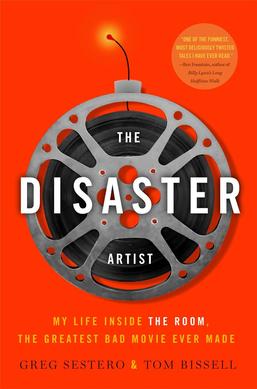
Microreview [book]: The Disaster Artist by Greg Sestero & Tom Bissell

Rises above this reviewer's ambivalence about the movie it chronicles


There is, apparently, a cottage industry of people affiliated with godawful-terrible movies telling the story of their experience making them. Michael Stephenson got in on the game a few years ago with his documentary Best Worst Movie about his involvement with Troll 2, and now Greg Sestero has gotten the story of his involvement in The Room out there. Sestero's story is set to form the basis of a film adaptation starring James Franco. Thankfully, I don't believe anybody is planning a tell-all about Birdemic yet. Despite the claims of people selling the stories of their own particular worst movies, Birdemic, for my money, remains the worst movie. But I've already harvested those fields.

I am deeply ambivalent about The Room, and to be honest, I'm pretty ambivalent about most of Sestero's account of his involvement with it. It has been a real struggle for me to separate my feelings about this particular work from my feelings about this field in general. See, I myself have been involved with some terrible, incompetent productions. I have been through the grind of acting workshops and castings and hunting for an agent and the stop-start pull of trying to get traction for a career in movies. Fully one-third of The Disaster Artist chronicles these activities in the young Greg Sestero's life, as he takes acting workshops in his Bay Area hometown, contemplates a move to LA, finally does move, gets an agent, takes more classes, auditions, questions himself, wonders if his mom's nay-saying was right, and struggles with the reality of having to get a day job that still accommodates increasingly infrequent auditions. To me, this was laborious stuff to get through, because I lived it. There are a million and a half people living it right now within a thirty-mile zone around where I type this, and there have been a million and a half people doing it here every day since Clara Bow put stars in the eyes of would-be it-girls and it-boys all around the country. It is a story that is profoundly unexceptional.

What makes Sestero's story different, though, is a peripheral character who evolves into a central one — the riddle wrapped in a mystery inside an accent that is Tommy Wiseau. Greg meets Tommy in an acting class in San Francisco, as Tommy murders a scene from A Streetcar Named Desire. Tommy's performance is so bizarre and incoherent that Greg asks Tommy to be his scene partner just to try to figure out what makes this odd man tick. It's unclear if Greg has yet, to this day, figured it out, but he's come closer than anybody else. If you don't already know, here's the mystery of The Room: In 2003, Hollywood witnessed the independent theatrical release of an evident ego-service project written, produced, directed, and starring an unknown, unkempt, and vaguely foreign cat named Tommy Wiseau. Wiseau's odd, heavy-lidded face stood twenty feet high, looming over motorists on scenic, heavily trafficked Highland Blvd from a billboard. That billboard stayed there for years and years. So too, the film played at midnight at the Laemmle Sunset 5 theater (across from LA's best deli, Greenblatt's. This point is not open for debate.) for years, and began to attract crowds drawn by word-of-mouth about how awful and bizarre this movie was, and the question of who was this ego-manaical oddball at the center of the whole thing?

Here, then, is the mystery of Tommy Wiseau: How did a man of totally indeterminate age and origin amass a fortune that allowed him to spend millions of dollars making and promoting a totally incomprehensible vanity project with characters, stories, and diseases that magically come and go, never to reappear again? Why did he make the baffling decisions on display in the film? Just, why? Wiseau has always been publicly circumspect regarding the answers to these questions, so The Disaster Artist is as close as we're likely to get to any answers. Where the book excels is in conveying the utter lunacy of the actual production, and the revolving door of cast and crew members trying to get this thing in the can. It also, in spite of everything, makes you feel sympathy for the inscrutable Wiseau.

As the RiffTrax for The Room points out (co-written by past NoaF interviewee Sean Thomason), the water in a fountain featured prominently in one shot is full of the tears of talented filmmakers whose films will never see the light of day as we all ironically watch The Room. In the end, the success of The Room, which is only reinforced by the narrative of The Disaster Artist, is both a testament to and an indictment of the way America awards success to individuals.

The Math

Baseline Assessment: 5/10

Bounses: +1 for the book's alternating narrative structure, which I credit to co-writer Tom Bissell; +1 for Sestero's narration in the audiobook, chiefly his impersonation of Wiseau; +1 for Tommy Wiseau as a character, even if key mysteries remain unanswered

Penalties: -1 for the Sunset Blvd and The Talented Mr. Ripley quotes that kick off each chapter — we get it, we get it, ok?;

Nerd Coefficient: 7/10 (audiobook) (a mostly enjoyable experience); 6/10 (in print) (still enjoyable, but the flaws are hard to ignore)

***
Posted by Vance K — nerds of a feather co-editor and cult film (and attendant baggage) reviewer, and LA-denizen since before the billboard for The Room disappeared from Highland Boulevard.

Reference: Bissell, Tom and Greg Sestero. The Disaster Artist [Simon & Schuster, 2013].

Friday, March 14, 2014

Microreview [film]: Cinema Six


The Meat

Cinema Six is the kind of movie you hope for when you take a chance on a movie starring nobody you've ever heard of. I love independent movies – good ones, flawed ones, and really, really bad ones – but the really good ones have a special kind of magic that are totally unique. At festivals over the years, I've seen a small handful of indies that legitimately moved me and stuck with me, and as recently as only five or so years ago, sadly if those movies didn't come out of the festival circuit with a distributor, that was it and they'd missed their window. It was like an awful, winner-take-all pilot season for the film world, except all of the money was being poured in by poor artists with big dreams, not studios who could absorb the production costs and then afford to shelve the final product. Thankfully, through the rise of video-on-demand, gems like Cinema Six have the potential to reach a much, much larger audience. So three cheers to an Internet technology that the NSA hasn't yet turned into a way to spy on us!

There's a lot to love about this little movie, so I'll try to hit the high points quickly and adhere to the spirit of the "microreview." The plot is easily summed up by saying a group of employees at a small-town movie theater, all at different stages of their lives, each wrestle with maturity. One of the wonderful choices co-writers/directors Mark Potts and Cole Selix made in the script was to have each of the three central characters – Mason, Dennis, and Gabe – at different stages of their lives, which enables the film to deal with each of them facing their own, idiosyncratically frightening next steps. I vastly prefer this approach to what I'd consider the Apatow-standard, where all the characters are pretty much in the same zone, and the central character is the one individual allowed to rise up out of his own muck. Which brings me to point number two, which is that while this is (verbally, certainly) within the "raunchy comedy" genre, and much of the dialogue is VERY funny, it's never at the expense of character, which I am on record as saying was something I responded to in the Amazon series Betas as well. Third, the actors are all uniformly strong, with John Merriman and Brand Rackley displaying enough charisma to easily build an entire film around, an area where I find a lot of indie films wind up falling short. I liked Brand Rackley so much, that after watching this I tracked him down and cast him in a project I was working on, too. Finally, it was just really cool as a film nerd to see so many scenes set in the projection rooms, storage closets, and other out-of-the-way corners of a working movie theater that for all the time we've spent in cinemas, we've never really been invited into.

Watch Cinema Six at Amazon here. Warning: Trailer contains NSFW language

The Math

Baseline Assessment: 7/10

Bonuses: +1 for Kerri Lendo's filthy and stunningly deadpan performance in a walk-on scene; +1 for a high-profile cameo I think the filmmakers would rather I not mention

Penalties: None

Nerd Coefficient: 9/10. Very high quality/standout in its category

Posted by Vance K - Resident cult film aficionado, unapologetic lover of bad movies, and Nerds of a Feather contributor since 2012.

In the interest of full disclosure, I should say I have worked in the past with this film's editor, Don Swaynos. Here is a hypnotic and wonderful short film he made while cutting
Cinema Six.:

Wednesday, November 20, 2013

Mario Bava on Netflix


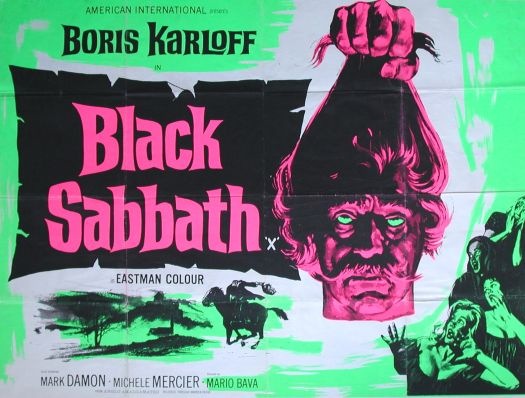
I have a soft spot in my heart for the 1963 Italian horror film Black Sabbath, directed by Mario Bava and from which the legendary band took its name. I first watched it on my fifteenth birthday, with a group of friends late at night after discovering that our local independent video store (International Video, it was called), had a VHS copy. It's a horror anthology film, with three separate closed-ended vignettes, and while watching it I eerily predicted the ending of one of the segments with a frightening level of detail, down to guessing the name of the "evil" character revealed at the end of the segment. It was creepy. Everybody looked at me funny and I had to swear I'd never seen the movie before. It was one of those odd moments where time seems to swallow its own tail.

I've seen both the American and Italian versions a few times in the intervening years, and a few weeks ago, just before Halloween, I had another urge to re-watch the movie. I was happy to find it on Netflix, and this discovery led me to another one -- the films from an out-of-print DVD series called The Mario Bava Collection have all found their way onto Netflix. So I've spent the last couple of weeks watching A LOT of Italian horror movies from the 1960s and 70s. It's been a lot of fun.

Mario Bava was a filmmaker who was imminently worthy of a two-volume "collection," but he isn't particularly well-known outside of die-hard genre circles. He was important in the evolution of several genres, so there's certainly a film history kind of appeal to watching his movies, but he was also an original and highly entertaining filmmaker, whose films continue to be evocative and engaging even when completely divorced from any historical significance they may have. He came of age in the Roger Corman horror-movie heyday of the early 1960s, tackling the kind of gothic horror films that were making Vincent Price an icon, and Bava went on to help shape the horror/thriller hybrid giallo films that came to embody much of Italian cinema in the 1970s and launched the careers of directors like Dario Argento.


Now we come to which of these films are available on Netflix for instant streaming. Black Sunday (1960) is one of these gothic horror stories, and it's a total standout among its peers. It starts with a witch being burned at the stake and having a mask of the devil nailed to her face (which is badass), and then leaps forward a couple of hundred years, when the witch's spirit grows restless. Black Sabbath, which I already mentioned, has Boris Karloff as a vampire (or, more specifically, a wurdulak), and features a genuinely moving and heartbreaking scene where a character has to confront what it costs to be a survivor among so many that have fallen under an all-consuming supernatural curse. One of a number of similar horror triptych films of the same vintage, it ranks among the best. The same year, Bava made The Girl Who Knew Too Much (1963), which was his last black and white film and is universally regarded as the first giallo film. It's not a great movie, and hews much more closely to the prototypical Hitchcock thrillers from which is cribs its name than to later (and bloodier) giallo films, but it has some genuine moments of humor and an interesting premise (a girl who reads too many murder mysteries thinks she witnesses a murder in front of the house she's staying in while visiting Rome), even if the mystery itself is kind of lame.

There are some Netflix gaps here in Bava's filmography, and the available titles pick up at the end of the decade, when Bava had fallen on hard times and was struggling to find distribution for his movies, but still managed to make interesting and visually striking films, even if they struggled at the box office. Bava used color to wonderful effect, and if some of his signature camera moves like zooms (so, so many zooms) and artistically out-of-focus shots lose a little of their appeal, his saturated color palettes never do. Movies like Hatchet for the Honeymoon (1970) don't necessarily hang together from start to finish, but they are beautiful to look at and have amazing sequences in them, such as a ghost that everybody except the killer can see. It's great stuff, and Bava would continue to jam non sequitur sequences into his later films, like Bay of Blood (1971), where he essentially invented the slasher movie ten years before its heyday by sending four horny teenagers to the woods and hacking them to bits in the middle of an entirely different plot about the murder of a wealthy dowager who has remarried and has people after her money. And yes, it is as awesome as it sounds.

After the success of Bay of Blood and a couple of other early 1970s hits, Bava regained total creative control over his movies and decided to make a surrealist tone-poem of a horror movie in Lisa and the Devil (1973). Telly Savalas maybe isn't the most convincing evil mastermind you've ever seen (especially if you remember Phil Hartman's parody of Telly on SNL for the "Player with Yourselves Club"), but the movie remains an engrossing and totally bizarre experience, even 40 years later. To try to piggy-back on the success of The Exorcist, the American distributor re-cut and re-titled the film The House of Exorcism, which is nearly unwatchable garbage, though, so stick with the Italian version.

I can't recommend these movies highly enough, and have to say it's one of the most consistent pockets of goodness I've found in Netflix's streaming offerings. There are a few other titles that I watched and haven't mentioned, and a couple more that I didn't get to, but Bava's output was never dull, and his films are uniquely entertaining. Check 'em out.

Tuesday, October 8, 2013

Microreview [film]: The Wicker Man


The Meat

Let's get one thing straight: this movie does not have Nicolas Cage in it. It does not have bees. It does not have Nicolas Cage dressed as a bear in it. Glad we got that straight.

In The Wicker Man, a British police inspector played by Edward Woodward receives a letter informing him that a girl named Rowan Morrison has gone missing from a community on a remote Scottish island, and he goes to investigate. But when he arrives, he is told that no one has ever heard of any girl named Rowan Morrison. He finds her mother, and she informs him that she never had a daughter named Rowan. He goes to the school, and is informed that there has never been a student there named Rowan Morrison. But there's an empty desk, and he finally discovers the class roster, which has Rowan's name on it. These are the makings of a pretty good mystery, but what adds a level here and lends the proceedings an undeniably creepy air is that this island is entirely pagan, led by the polite but intimidating Lord Summerisle (played by Christopher Lee), and they are preparing for their May Day celebration. Traditionally a time of human sacrifice...

I first came across The Wicker Man many years ago on a list of The Most Terrifying Movies of All Time, so I sought it out. I didn't find it to be terrifying. I also didn't find it to be good. See, Woodward's character, Sergeant Howie, is a devout Christian and much is made of him being an adult virgin. The first time I watched the movie, I felt like it was making sport of Howie and his beliefs. He's not the most sympathetic character – pushy, belligerent, uptight – and as an interloper who comes into a closed community and stomps all over their beliefs, I wasn't exactly rooting for the guy and felt like he was almost a caricature of a Christianity. But a couple of years later, I found myself wanting to watch The Wicker Man again, and I tried to look at it afresh. I realized that this movie wasn't about who was "right" or "better," the pagans or the Christian, but this is a movie about things that are very old. It's hard as an American, with our country still so young, to fathom the conflict that has played out in Europe over the last two thousand years, as traditional pagan beliefs collided with Christianity, and how that struggle both defined and continues to define so many aspects of life. I find that struggle very interesting, and the way this movie deals with it is particularly compelling. At this point, I've seen the movie maybe a half dozen times and every Halloween season I feel myself drawn back to watch it again.

There is some controversy over the many versions of this film, which bears mentioning. As the film was being finished, either the production company or the distributor was in financial trouble and also hated the film, so they attempted to dump it. Director Robin Hardy's original cut was variously given as either 99 or 101 minutes, and the studio cut it down to 88 minutes. This is the version that is the most widely available. There is a 99-minute version that is very difficult to find, and the restored 11 minutes of footage came from a 1" tape master that I believe was found at a TV station somewhere. Those 11 minutes look like hell. It's a better version of the film, but suffers in visual quality. However, if you live in the UK, this month you are lucky enough to be able to see The Wicker Man: The Final Cut in theaters or on blu-ray. The original negatives and prints of the film were destroyed in the studio's financial collapse, and there is a story that they were eventually used as filler on the M5 motorway in Somerset. The runtime on this new version splits the difference between the two previous incarnations – which is probably the ideal length for this movie – and the missing footage was restored from a print found via a public hunt for materials using Facebook. The entire film has been scanned in 4K and cleaned up, and it looks amazing.

The Math

Objective Quality: 7/10

Bonuses: +1 for its stunning job of creating an eerie, unsettling atmosphere almost entirely in broad daylight; +1 for having the ability to draw me back even after not liking it on first viewing

Penalties: -1 for knowing that (unless you get the new UK blu-ray), any version you see is going to be an incomplete viewing experience

Cult Film Coefficient: 8/10, well worth your time and attention

Read about our scoring system here.

Tuesday, September 3, 2013

Microreview [film]: Lady Frankenstein


The...um...Meat

The Frankenstein story is my favorite in what might be considered the classic horror canon -- I enjoy it more than vampires, werewolves, and/or zombies in their many iterations. I like it so much I even wrote a song about it once (like to hear it? here it go...)


That abiding love is the only thing that enabled me to push through all the way to the end of Lady Frankenstein, an 85-minute movie that seemed like it went on for three hours.

Over the years, I had heard a little about this movie (notice the monster gripping his own shaft on the poster above), so I certainly didn't expect it to be "good," but I had hoped for interesting. See, it has Joseph Cotten in it, who you may remember from a couple of movies with Orson Welles called Citizen Kane and The Third Man, or alternately from Alfred Hitchcock's personal favorite of all of his own films, Shadow of a Doubt. I knew that the 1970s saw Cotten in some B and B+ horror movies, but some of those are pretty good, like The Abominable Dr. Phibes and Soylent Green. But seeing him in this just hurt. It didn't help that his assistant -- the Igor character -- is named "Charles," and when Cotten calls out to him, it sounds like he's calling to Charles Foster Kane.

Here's the gist of the film. Take the standard Frankenstein story -- with the Baron and his experiments and the gravedigging and whatnot -- but now add to the mix that Frankenstein has an adult daughter Tania who has just returned from medical school and wants to participate in her father's work with "transplants." While Tania sleeps, Frankenstein and Igor, er, Charles, do their big experiment they do with the lightning and whatnot, and, sadly, the monster's face catches on fire. Frankenstein assesses the situation quickly: "I don't care what he looks like, I want him to live!" Well, apparently the filmmakers didn't really care what he looked like, either, because the result is a bulbous-headed doofus that is one of the worst monsters I've seen in any film. The monster kills Frankenstein and hits the countryside, looking for couples having sex so he can kill them. Why couples having sex? Why not? Tania wants to prove that her father was onto something though, so she apparently marries Charles (I guess?) as they begin lying to a sarcastic police inspector who smells a rat in Frankenstein's death. Charles, who is now crippled (I guess?), is too old and run down for Tania, so she suggests they kill the mentally challenged servant Tommy, and put Charles' brain in Tommy's otherwise underutilized skull. That way Tania can screw a body she likes, and still have stimulating conversation after. Blah blah blah, pitchforks and torches, the camera operator loads the wrong filmstock in the camera for some of the outside scenes so everything is weirdly blue, I ponder cancelling my Netflix Instant subscription, more boobs, some fire, and finally, mercifully, the movie comes to its wearying conclusion.

The Math

Objective Quality: 2/10

Bonuses: +1 for Mickey Hargitay, who may have actually been The Most Interesting Man in the World (seriously, look him up) playing the sarcastic police inspector

Penalties: -1 for turning what started as a female-empowerment in the sciences story into a bloody striptease; -1 for using Joseph Cotten against me

Cult Film Coefficient: 1/10. Really, really bad.

This is bad, but it turns out things can be even worse. Check out an explanation of our non-inflated scores here.

Monday, June 24, 2013

Microreview [film]: The Foreigner

The then-brand-new World Trade Center.
The Meat

The Foreigner is a movie so obscure it doesn't even have a Wikipedia page. Not even a stub. Shot in New York in 1978 by a handful of people with seemingly a nickle and length of rope between them, there's really not much to recommend the film either narratively or technically. There's not really a story, so much as a vague idea being played out very slowly across its running time, the sound is so bad that long stretches of dialogue are totally incomprehensible, and no one in it, no matter how much responsibility they seem to have in the world of the story, looks any more than about 24 years old.

But The Foreigner is one of those odd gems that makes a fascination with cult cinema so rewarding. If you can soldier past the (very significant) problems with it, the movie offers its own set of rewards that are pretty much distinct from the experience you get watching a normal movie where you hope to get caught up in the human struggle of made-up characters. Shot over the course of one week by Amos Poe, who a couple of years earlier made what is considered the first documentary about punk music (The Blank Generation), you could argue that The Foreigner is the first punk feature film. It's rough, intentionally ugly in parts, transgressive, and was clearly done for the sake of doing it. Like punk music.

There's a fine line here, of course, between "rugged DIY experiment" and "who cares?" but the film's immediate impact on the small circle of artists involved in the scene that produced it (called No Wave Cinema at the time) was significant and lasting. I could describe the movie as some kids attempting to do their impersonation of Godard's Alphaville, which is accurate but also makes it sound like something your pretentious high school neighbor did last weekend. So instead, I'll describe this movie about a secret agent who is so secret neither he nor anybody else knows what his mission is as the filmic contemporary and equivalent of Blondie's self-titled 1976 debut album -- more memorable for what it started than for its own content. And Debbie Harry has a small part in The Foreigner, which is neat to see. The movie, its filmmakers, and others all revolved around CBGB's, and so the result is sort of an insider-outsider film, a film about outsiders made by a trusted member within that group.

The Math

Objective Quality: 2/10

Bounses: +1 for providing a DIY model and sense of what was possible to people like Jim Jarmusch, who was also in the scene at the time but not yet making films; +1 for achieving an evocative atmosphere unhindered by the movie's own technical shortcomings; +1 for the present-at-the-creation view of the late-70s NYC punk scene

Penalties: None, it would just feel like piling on.

Cult Film Coefficient: 5/10
This is how we make DIY title-cards.

[See explanation of our non-inflated scores here.]

Tuesday, April 9, 2013

Microreview [film]: Burn, Witch, Burn

The Meat

A few months ago, I reviewed Curse of the Demon, which holds up quite well as a "good" horror movie (as opposed to "campy" or "so-bad-it's-good"), especially since it was made in 1958. It's hard for me to talk about 1962's Burn, Witch, Burn without invoking (see what I did there?) the earlier film, because they're very much kindred in their storytelling, influences, and overall effect.

College professor Norman Taylor has a lot going for him at the beginning of Burn, Witch, Burn -- he's young, with a nice house and beautiful wife, Tansy, he's managed to avoid entangling himself in the ugly campus politics that seem to have ensnared so many of his colleagues, and it looks like he might be in line to be named department chair. He teaches philosophy or medieval superstition, or one of those subjects that is bound to get somebody cursed by demons in horror movies. And guess what happens? He discovers his wife keeps a dead spider as a talisman, and then begins to go hunting through the house, only to discover a veritable compounding pharmacy of witchery-related odds and ends. Tansy confesses that she's been practicing witchcraft to protect him and provide blessings for his career, but Norman makes her promise to cut that malarkey out. After all, witchcraft is just a bunch of malarkey. Right?

Right?

Well, you'll have to watch the rest of the movie to find out, but needless to say Norman hits a patch of bad luck after he makes Tansy burn all of her eyes of newt and graveyard dirt and whatnot. Where Curse of the Demon lets you know the score right away, showing you the demon in the opening scene, Burn, Witch, Burn teases out information so the audience accompanies the movie's hero on his journey of discovery, just as in the dark as he is, just as overwhelmed by events and wondering at their meaning. It's hard to imagine that this film wasn't heavily influenced by both Curse of the Demon and that film's direct influences such as the Val Lewton films that helped launch the career of Demon's director Jacques Tourneur. While I find Curse of the Demon the more memorable of the two films, it isn't by much.

The Math

Objective Quality: 7/10

Bonuses: +1 for building the film around a believably honest love story between Norman and Tansy; +1 for legendary writer Richard Matheson's involvement; +1 for being a spiritual bridge for thoughtful horror movies, connecting earlier films like Curse of the Demon and later ones like Rosemary's Baby

Penalties: -1 for some confusion about what exactly's going on with a reel-to-reel tape that seems pretty important; -1 for missing the mark in both of its titles -- the American Burn, Witch, Burn led me to expect a very different film, and the original British Night of the Eagle sounds like a movie about a World War II mission or a father-son bonding adventure.

Cult Film Coefficient: 8/10. Well worth your time and attention.

[See explanation of our non-inflated scores here.]

Tuesday, April 2, 2013

Microreview [film]: The Atomic Submarine

The Meat

It pains me to admit that -- despite how much I love the Criterion Collection -- they just don't seem to know what makes a B-movie a cult movie. You can't just trot out any picture that was shot in six days sometime in the 1950s and expect it to be engaging. Sadly, that is the case with The Atomic Submarine. Even sadder, though, is that now I've watched the entire Criterion Monsters and Madmen collection, and I have to report that none of the movies are particularly noteworthy. The Atomic Submarine has the flaws you'd expect on a movie shot in six days (and probably written in even fewer) -- bizarre and nonsensical dialogue, utterly inexplicable character motivations, hundreds of feet of stock film footage, and strange lapses in logic or narrative -- but the biggest problem with the movie itself is the fundamental place that it's coming from.

In the movie, submarines exploring the Arctic Circle are being mysteriously attacked by some type of energy that's sending them down to Davy Jones' locker. The U.S. Navy puts together a crack squad of seamen and sends them off aboard the Tiger Shark, the baddest mamma-jamma in the whole fleet of atomic submarines. Nobody except a random Englishman aboard seems to know what they're all doing there, but apparently the plan is to spend the next few months making a big, bow tie-shaped path over and around the North Pole in the sub. As it happens, the disturbance that's been sinking subs is actually an alien spaceship that's been staying underwater, since it originated on an aquatic planet. Once the crew of the Tiger Shark figure this out, boy howdy is it killin' time.

The movie really loses points due to this shaky moral footing. This is First Contact with an alien race, and not only are the humans immediately resolved to kill it, but the movie holds up their mindset, pursuit, and actions as right and just. If a movie has something interesting to say, I'm willing to forgive...well, pretty much every single failing in Plan 9 from Outer Space...but The Atomic Submarine represents the kind of belligerent jingoism that left the entire world on the precipice of self-destruction for basically the entire second half of the twentieth century.

The Math

Objective Quality: 3/10

Penalties: -1 for making human nature look particularly brutal and thoughtless; -1 for an alien that looked like a live-action Mr. Hankey and made my stomach hurt.

Bonuses: +1 for the interesting idea that the reason flying saucers were never seen more than once was because they were submersed underwater; +1 for fun with miniature submarines and a fishtank

Cult Film Coefficient: 3/10. Very little good I can say about this.
Howdy Ho! I'm here to colonize your world!

[See explanation of our non-inflated scores here.]