Showing posts with label Cult Films 101. Show all posts

Friday, May 24, 2024

Hail to the King: A Tribute to Roger Corman

Roger Corman, whose eight-decade career in Hollywood earned him nicknames like “The King of the B Movies,” died last Thursday at the age of 98.

I cried. Telling my children, I did.

As the resident cult film nerd here, I have written a lot about Roger over the years (he told me to call him “Roger,” so I will), and it is one of the great joys of my life that writing for this site gave me the opportunity to interview him.

As a fan, I get to be an admirer and advocate for his work. It’s commonplace to dismiss b-movies or genre movies as cash-grabs or just dumb, but I will always stand up and say that I unironically think many of the movies that Roger made are capital-G Great, and if you happen to know the circumstances or budget constraints under which they were produced, that makes them even more compelling accomplishments. They are often archly funny, or stunningly atmospheric, or racially progressive, or culturally subversive, or formally experimental. No Roger Corman film will ever be a guilty pleasure for me. I mean, some of the hundreds of films he produced stink — I doubt he’d argue — but most of the films he directed and many of the high points of the ones he produced are take-me-to-my-happy-place films that I will watch forever.

And my kids love them! What a joy it has been to share with my kids the Roger Corman/Edgar Alan Poe films, first at home on video and then more recently on the big screen thanks to Los Angeles' own American Cinematheque repertory screenings. Last month I took two of my daughters to see House of Usher, and a few months ago I took most of my family to see Masque of the Red Death on a newly-struck 35mm print on the big screen. As part of American Cinematheque's ongoing Hail to the King: The Films of Roger Corman series, I kept hoping that Roger might make it out to one of the screenings. That I might be able to say hi again, and introduce my girls. The screenings are ongoing, and we will keep attending, but it makes me sad that the joy of seeing Roger in person again is forever off the table. 

As someone who loves classic films and Hollywood history, I can only sit in awe of the careers he impacted directly. The names of people who worked for Roger are all out there and have been repeated a million times — Ron Howard, Francis Ford Coppola, Jack Nicholson, Martin Scorsese, Jonathan Demme, Peter Bogdanovich, James Cameron, Gale Anne Hurd, Dennis Hopper, Bill Paxton, Joe Dante — the legendary writers he relied on, like Richard Matheson, Robert Towne, and Charles Beaumont, and the actors whose careers he resurrected, re-framed, or extended, like Vincent Price and Boris Karloff. I’m not sure any individual in the 97-year history of talking pictures has had a more significant roster of talent (that's right -- Roger Corman was born the year before talking pictures were introduced). These Corman-alumni are largely responsible for independent films existing at all. The landmark book on the rise of independent cinema is called Easy Riders, Raging Bulls — and both of those eponymous movies trace their roots to Roger. 

My friend Howard Rodman, past president of the Writers' Guild of America, said when Roger passed that the last of the Founding Fathers was gone. Howard meant “of Cinema.” The last of the Founding Fathers of Cinema. Writ large. In Christopher Nolan’s Academy Award acceptance speech for Oppenheimer, he pointed out that movies are only about 100 years old. Roger Corman helped shape them for almost the entire time we’ve been watching these flickering lights on our various screens.

Now...as a filmmaker, Roger has been a guiding light. When I was in film school, I couldn't afford film stock or processing. I couldn't necessarily get professors to sign off on certain projects I wanted to do. So I just did what I needed to do to Make The Thing. I shot on video, I made the phone calls and got the buy-in and found the collaborators and Made The Thing. And then I submitted The Thing to the film festivals and competitions that featured all of the officially-sanctioned projects...and I beat them. My producing partner had a closet full of Vincent Price VHS tapes he'd grown up on, most of them directed by Roger Corman. When I got the chance to shoot the interview with Roger, I called my friend Mark to help me film it --Mark had worked with me on a number of scripts, Public Service Announcements, and other projects for probably a decade -- and as we were setting up, Mark told me how he had grown up watching Death Race 2000 at his grandmother's house. I found my people by finding people who found the movies through Roger Corman.

How to say this? I'm not being hyperbolic -- I do not think I am the same person in this world without Roger Corman. And I'm not even somebody who he hired! 

Look, Billie Jean King said, "You have to see it to be it." I understand that Billie Jean King didn't mean, "white guy sees white guy do a thing," but making films is tremendously expensive, and our most recent Writers' Guild Strike was explicitly about making it possible for people who aren't independently wealthy to make filmed content. I have four Emmy Awards and a career in making films that literally provides for my family. I have a Hugo Award for writing for this site, which I do largely because of the films Roger Corman opened me up to. I just...I don't think my life exists as it is without Roger Corman. 

And that's a hell of a thing! 

If you have heard any of the news stories, you heard all the names, and you probably thought "wow," or whatever. But what gets lost when you talk about a legend is that it's really...it's just a human being, and they don't walk through their day as A Legend. When I reviewed the documentary Corman's Worldthe moment that most struck me was when Jack Nicholson almost broke down in tears at the thought that someone wouldn't respect Roger. He said, "If Roger doesn't know how important he is, I'll go to his house and tell him right now." Utterly Singular Hollywood Legend Jack Nicholson believes that he owes his career to Roger Corman. 

I am very lucky. I got to tell Roger Corman myself that he inspired me as a director.

That interview I did with him — since he was always producing, an off-camera comment that took place after we wrapped our conversation and we were breaking down the cameras led to me coming back to discuss a potential film project with him. Per IMDb, Roger has 491 producing credits. His first was in 1954, the same year On the Waterfront came out, and he has a few more coming out still. That averages out to a little over seven movies a year, for seventy years. If Roger hadn’t done it, the idea that anybody ever could have done it would have been utterly unbelievable.

Gale Anne Hurd, whose legendary career as a producer includes the Terminator films, Aliens, and The Walking Dead, got her first job in movies with Roger. In a recent interview with journalist Madeline Brand, she said of Roger’s passing, “There’ll never be another.”

There will never be another. 

I am sad the Roger is gone. But I am so, so grateful that he was here.

Roger Corman
1926-2024

Thursday, April 11, 2013

Retrospecticus!

Can you believe it's been a year already? Because I can't. In the beginning, there was just me with a URL I'd paid a small amount of money for and the vague notion that I wanted to blog about "nerdy stuff." The idea had come to me while sitting in a dingy Thai restaurant famous for its "secret menu" (which means you just have to ask for it) of southern Thai curries, which for those of you who don't know, tend towards the psychedelically hot. So maybe it was the chili speaking, but blogging about "nerdy stuff" seemed like a good idea at the time. And after a year, I can safely say that it's been orders of magnitude more fun than I ever imagined.

Of course, credit goes where credit's due: nerds of a feather would never be what it is today without the tireless efforts of my co-administrator Vance and our platoon of top-notch writers--Molly, Philippe, Mike, Jemmy, Brad and our newest contributor, Zhaoyun, as well as our monthly columnist Dean. Each brings their own interests and style to the table, but I'm constantly amazed at how good their shit is. Together we've managed to expand from our early coverage of science fiction, fantasy and cult films into comics, crime fiction, anime and gaming. But how did it all happen? Let's ask the nerds of a feather disembodied institutional voice to give it to us straight...

-The G

April, 2012

Things started with a call to arms from some weirdo calling himself "The G," and who was laboring under the strange delusion that this blog would eventually cover "cars, sports, politics" [WTF]. At that time, he was preoccupied with changes in the publishing industry, as well as the imminent arrival of alien dinosaurs hellbent on conquest. Thankfully Vance came on board and helped him simmer down with top-notch reviews of the films It Came From Outer Space, The Iron Rose and provided us with our first bona fide hit when he reviewed Pavane by Keith Roberts, which just happens to be one of Neil Gaiman's favorite books. For his first book review, The G covered Saladin Ahmed's now Hugo and Nebula nominated Throne of the Crescent Moon, while he and Vance entered into a mindmeld in order to systematize the bell-curved scoring system that marks us all as a bunch of cranky old nerds.

May, 2012

Big things happened in May, not least of which was bringing Molly on board. She and Vance did back-to-back reviews of The Fly (1958) and The Fly (1986), and we all came together to rant about the things we hate in film. The G gave Iain M. Banks' sociological space opera novel The Player of Games the site's first 9/10, interviewed Ian Rose from the sadly now defunct SF/F magazine Nine and reduced all six seasons of Lost into haikus. Vance checked out season 3 of Community for our first proper TV review and watched another Criterion Collection attempt to get B-movies, while Molly checked in to see what Dracula and Satan are up to.

June, 2012

More awesomeness ensured in June, not least of which was corralling Philippe into feeding his inner nerd with sweet, sweet comics. To that end, he read Forgetless and Dan the Unharmable, while he and The G got into a long-winded conversation about those annual summer superhero crossovers, where everyone gets together to stop the worst menace ever (since the last one). On the SF/F side, The G had the pleasure of doing a great interview with one of his favorite SF/F people, Djibril al-Ayad of The Future Fire and found Murakami's 1Q84 mostly disappointing, while Vance ranked the novels of Kurt Vonnegut, eulogized Ray Bradbury and they both posted their (intended) summer reading lists. Vance and The G also watched a shitload of B movies, of which The G probably liked The Reef more than any of the others (it has real shark footage), while Vance dug pharaohs-and-Elvis epic Bubba Ho-Tep

July, 2012

July was a true banner month, not least of which because Mike started writing for us with this excellent tale of ComicCon, followed by a reflective piece on his quest for a DeLorean complete with flux capacitor. We were also graced with fantastic guest posts from Rob K. and Raighne Davidson on, respectively, Maus and Pottermore. In terms of SF/F, The G reviewed John Scalzi's Hugo-nominated SF comedy Redshirts and Daniel Abraham's charming fantasy novel The Dragon's Path, and then ranked George R. R. Martin's Song of Ice and Fire novels (sorry, but A Dance with Dragons kinda sucked). Philippe read the cool-ass comic Rachel Rising and then mused about how comic books shaped his spiritual choices. Vance reviewed oddball horror flick Cat People and ranked the Harry Potter films, while The G found himself loving the surreal Viking film Valhalla Rising despite its glacial pace and unnecessary gore. Then Molly showed us all up when she gave Orson Scott Card a virtual wedgie for fixating on the helicarrier in his critique of The Avengers (WTF).

August, 2012

Though no one joined us in August, it was still a great time to be a nerd of the feather. Vance packed the lecture hall for the first installment of his Cult Films 101 series, watched arguably the worst movie ever made and then gave our our first ever perfect score to the masterful French film La Jetee. Meanwhile, Mike entered the third gate, reviewed the top-notch Underwater Welder and then started his weekly comic round-up Thursday Morning Superhero, to much rejoicing. Philippe ranked the various Bat-books of DC's New 52 and checked out Grant Morrison's history/memoir Supergods. The G wasn't around all that much, but did manage to pick his 6 7 favorite books from Gollancz's SF Masterworks series.

September, 2012

In September not one, but two writers came on board. First, there was Jemmy, who took a look at anime classic Porco Rosso and reviewed Jeff Salyards' gritty fantasy novel Scourge of the Betrayer. He was soon joined by gaming guru Brad, who debuted with his first impressions of the addictive Diablo-as-FPS Borderlands 2. Vance continued his Cult Films 101 series and mused about space elevators, while The G poured sweet haterade on the overreated British film Attack the Block. Philippe was out of town, so comics pointman Mike picked up the slack with his weekly TMS column, took a look at Robert Kirkman's Thief of Thieves and checked out a pretty sweet H.P. Lovecraft inspired dice game. And The G was lucky enough to read Andrjez Sapkowski's collection of short stories centered on Geralt of Rivia (aka the Witcher of video gaming fame), The Last Wish.

October, 2012

October started with our biggest story ever--a two part interview with SF critic extraordinaire Paul Kincaid, who expounded on his theory that science fiction has reached a point of "exhaustion." It's a must-read for any SF/F fan, and though I'd love to take credit for its awesomeness, that rightly belongs with Paul, who raised the level of discourse and helped introduce our blog to a lot of our now regular readers. I followed that up with a list of six SF/F short stories that, perhaps, suggest that the genre isn't exhausted, and was lucky enough to review both Sapkowski's fantasy masterpiece Blood of Elves and Rob Ziegler's excellent debut novel Seed. Oh, and there was this little interview with Brian White of Fireside Magazine too! Like I said, big month, but we weren't done there--Jemmy interviewed fantasy author Jeff Salyards and then found to time to explain to us why Princess Mononoke doesn't quite live up to its reputation. Vance, for that matter, kept himself busy with Curse of the Demon and Call of Cthulu and then topped if off by ranking the Roger Corman/Vincent Price films. Meanwhile, gaming guru Brad checked out the kickass Arkham City and lamented the fact that so few of us played Blur, while Mikey fell in love with Cow Boy and finished the month on a high note by covering the very cool Halloween ComicFest.

November, 2012

We reviewed a whole lot of shit in November. Philippe kicked things off with Justin Robinson's novel Mr. Blank, a tidy slice of tongue-in-cheek conspiracy noir, as well as the comics Black Lung and Rebel Blood, the latter of which proves there's still some life in this whole zombie thing. New guy Brad showed us all up by covering Halo 4, two Borderlands 2 expansions, a classic review of NES time-sink Mike Tyson's Punch-Out and still had time to wax poetic about those rarest of beasts, games that tell compelling stories well. Desperately trying to keep pace with Brad, The G pitched in on the video game thing with an in-depth look at the multiplayer component of Black Ops 2. Over in SF/F, Jeremy reviewed an excellent short story collection by Kij Johnson, The G read Michael Sullivan's traditional fantasy Theft of Swords and Mikey looked at Spaceman, which is quality SF in graphic form. Vance ranked the best/worst schemes by James Bond villains (and there are just...so...many), sat through a wacky prison/Kung Fu flick and the much more palatable Ray Harryhausen-animated Earth vs. The Flying Saucers, and we all opined about that whole Disney/Star Wars thing. And then Molly returned from hiatus to show us the future of D&D and then gave Peter Jackson's The Lord of the Rings a virtual wedgie.

December, 2012

Ah, December, you were so chock full of big stories, like Mikey's most popular installment of TMS ever and Molly's alcohol-fueled lament over Peter Jackson's craptastic Hobbit film. Philippe continued to rock the crime fiction, with reviews of James M. Cain's just-back-in-print novel The Cocktail Waitress and noir/SF crossover The Dewey Decimal System. In SF/F literature, The G loved The Apex Book of World SF 2, and Jemmy mostly liked Cory Doctorow's Pirate Cinema. Vance checked out some classic radio SF, and subjected himself to the horrors of the Star Wars Holiday Special, while Brad reminisced about his marathon sessions of Mortal Kombat. And to finish things off, VanceThe G, Molly, Mike, BradJemmy and Philippe all shared their holiday gift guides.

January, 2013

Molly welcomed us to the New Year by spreading the word about Perihelion, and Mikey kicked off an epic run of comics-related posts, starting with his round-up of the Best Comics of 2012 (SPOILER ALERT: there was no winner crowned, but we all kinda won, didn't we?) and his two-part coverage of Nick Spencer's long-in-the-making Infinite Vacation, which finally reached its conclusion. The G began his serialized review of John Scalzi's serialized novel The Human Division before things got seedy as The G and Philippe turned their attention to crime fiction. Turning to the graphic novel-as-journalism, Philippe found an absolute gem in Joe Sacco's Footnotes in Gaza, which earned a rare 10/10. Jemmy fired across the bow at some pirate fiction, and Indie Publishing Guru Dean Smith-Richard reminded independent authors that skimping on quality control only hurts themselves, and shared some great insight into successfully Kickstarting comics from Devin Michaels of the Destiny's Fate series. Brad found a lot to like in the puzzle game/RPG hybrid Puzzle Quest 2, and the nerds tackled a lot of big questions like whether or not franchises might do better under someone other than their creators, and what ramifications violence in video games and beyond has today in the wake of repeated national gun tragedies. But to take a break from the gloom, we got to spend a few minutes with RiffTrax writer Sean Thomason, talking MST3K, terrible, terrible movies, and beer. Hooray, Beer!

February, 2013

February was the most controversial month of our inaugural year.  It began with possibly the most shocking announcement yet: a new scoring system that allowed us to deem the worst of the worst a zero!  The topics heated up and the fans were caught off guard as Phillipe ranked the top moments in 30 Rock and the book Dinosaur Thunder (despite annoying characters and bad editing) took advantage of a +7 in bonuses to earn an 8/10!  In one of our most epic posts, if not the most epic post of the year, Grimmy Grimmy Dark Dark touched on the impact of violence and rape in the fantasy genre and had the interwebs buzzing.  Our monthly adventure down the road in indie publishing took a look at crowd funding and many of the issues associated with platforms like Kickstarter.  Deadspace 3 was the top game of the month clocking in at a near perfect 9/10 and Vance winded us down with self-inflicted pain as he sat through The Baby in its entirety.

March, 2013

While you were busy with your taxes, Nerds of a Feather was in the last month of its very own fiscal year. March was thus jam packed with the most awesome of awesomeness. Molly got into the kitchen and whipped up a nerdy gift guide for your nerdy kitchen. The G started a few posts that he never finished. But hey, he did give us a number of great ones: he continued his epic reviews of John Scalzi’s The Human Division and relived the little bit of the Cold War he remembers when reviewing Ian Sales' Adrift on the Sea of Rains. Vance, too, spent time stuck in the past, remembering what America was supposed to be. That is, when he wasn’t watching awesome cult movies like Tucker and Dale vs. Evil. Mikey showed us what Grand Theft Auto For Kids would look like, and reminded us of the pure, unadulterated wonder of International TableTop day. Jemmy saddled up to review Joe Abercrombie's Old West-inspired fantasy, and spirited us away to his first 10/10 in Miyazaki Hayao's most complete Studio Ghibli movie. Dean Smith-Richard continued his ever-informative quest to educate us about the wonders of indie publishing, and gave us a preview of his own forthcoming book, 3024AD. And last, but definitely not least, we got our first review from new collaborator, Zhaoyun, who took a bite out of a famous post-apocalyptic vampire novel.

Wednesday, September 26, 2012

Cult Films 101: The Worst Movie Ever Made

So far in our survey of cult films, we've tried to zero in on films with merit, however modest. But there's a cottage industry out there -- and let's be honest, it's far more mainstream than most actual cult films -- built around the idea of The Worst Movie Ever Made.
medieval torture chair
Strange there hasn't been as much debate about
The Worst Chair Ever Made.
But what does "The Worst Movie Ever Made" even mean? The most inept? The least coherent? Something that advances a morally repugnant ideology (the highly praised Nazi propaganda film Triumph of the Will, for instance)? The most insulting to the audience's intelligence? It's a fraught question I'm not entirely sure I know the answer to, but let's jump in.

Best-Loved Worst Movies

Troll 2
The subject of the documentary Best Worst Movie, Troll 2 is not the sequel of Troll, nor does it actually feature any trolls. But while bad, it ranks low on the utter incompetence scale. It had a decent budget and was shot by film professionals. They did not, however, tend to speak English, so the resulting dialogue spoken by the non-professional actors is pretty stilted and unintentionally laughable. It's not so much that it's inept, it's just that every single creative decision made in the movie was terrible.

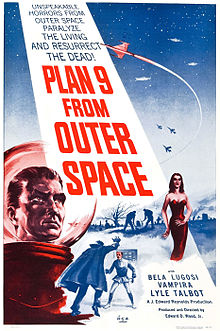
Plan 9 from Outer Space
I talked about this Ed Wood movie as an example of the "Guilty Pleasure" variety of cult films. It's a bad movie, particularly in the acting and set-decoration departments, but it gets a lot of unfair knocks against it, such as day and night continuity errors when a lot of films in the 50s still used the time-honored day-for-night photography trick because of slower film speeds. It's my favorite film on this list.

Manos, The Hands of Fate
Also the subject of a documentary, this time called Hotel Torgo, Manos, the Hands of Fate was made on a bet by a fertilizer salesman, was forgotten after a single screening in El Paso, Texas, but rose to prominence after receiving the Mystery Science Theater 3000 treatment, earning distinction as one of the worst movies the crew had ever seen. But there are some memorable elements, like Torgo, the weird satyr servant of The Master, the Master's ceremonial robes with giant, red hands on them, and a protracted fight between ladies wearing granny panties. Look, I'm not saying it's good, I'm just saying you won't forget watching it.

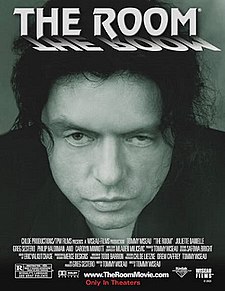
The Room
This train wreck has been a fixture in Los Angeles ever since I moved here, but much like the Springfield Tire Fire, its stink has spread. It ranks high -- so, so high -- on the utter incompetence scale, and gained notoriety for it. For years now, it has regularly sold out midnight screenings, and has even been shown at the American Film Institute. It just goes to show, kids, if you make your movie, and make it bad enough, people will take notice.

Simpsons - Springfield Tire Fire
Only slightly less offensive than seeing writer/director
Tommy Wiseau naked in
The Room.
Maybe Actually the Worst Movies

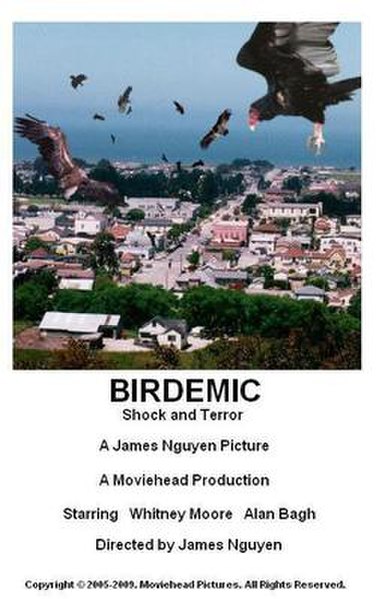
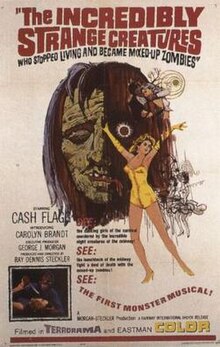
There are only two movies I would not willingly endure again due to their utter and complete awfulness. There are other movies I'd rather not see again because of their content, but these two movies are the cinematic equivalent of that single tear that leaks out of your eye while the dentist scrapes your gums to shreds with that little metal hook they have.


Birdemic: Shock and TerrorThe Incredibly Strange Creatures Who Stopped Living and Became Mixed-Up Zombies 

They continue to arm-wrestle in my brain over which is the worst movie I've ever seen.

They Really Should Have Known Better

Hollywood, bless its little Botoxed heart, will occasionally line up its utterly unparalleled storytelling, production, marketing, and technical skills behind a pile of poo that somebody along the line should've smelled, scooped, and disposed of way before anybody had a chance to buy a ticket to the thing. Usually, these movies result from an actor/producer's inflated ego, a contract with a star that has to be honored with a movie release, no matter how bad the finished product, or just terrible, terrible luck. As Bill Murray told Elvis Mitchell, nobody wants to make a terrible movie. Even the terrible ones require long hours and tremendous amounts of work. When it comes to Hollywood misses, the end product often looks beautiful and is technically excellent, but the story, script, utterly uncharismatic acting, or confounding direction make it largely unwatchable. I personally find these the least enjoyable "bad" movies because they are often dishonest and cynical money-grabs by people capable of much, much more. But to each his or her own...

The usual suspects in this category are too numerous to mention, but include Battlefield Earth, Catwoman, Freddy Got Fingered, everything by Uwe Boll, and Ballistic: Ecks vs. Sever.

I believe that, ultimately, the Worst Movie Ever Made is one in which you can find no enjoyment whatsoever. And to be honest, that's hard to do because when it comes right down to it, we're still watching movies. Things could be worse.

Friday, September 21, 2012

Cult Films 101: The Corman

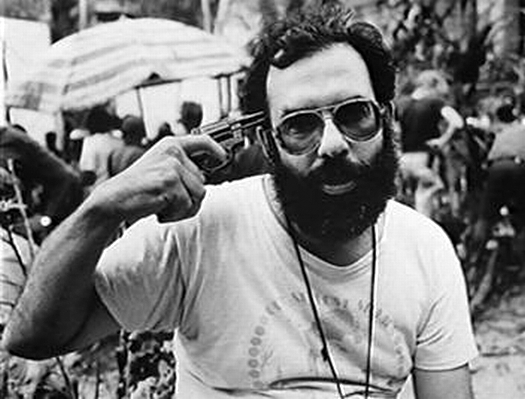
Francis Ford Coppola feels Happiness is a Warm Gun
I swear by this mighty beard, Vance, if you don't shut up about
Dementia 13 already, the Apocalypse is coming right the f*$% now.
Welcome back to Cult Films 101, where this week's film is Dementia 13. This is a b-horror movie about some folks jockeying to inherit a fortune but instead meet untimely ends at the blade of an axe murder, and it's an example of the third main type of cult film...The Corman. Made in 1963, Dementia 13 was written and directed by Francis Ford Coppola. Now, from 1972 to 1979, Francis Ford Coppola had about as good a run as any director has ever had, cranking out four consecutive, unassailable film classics -- The Godfather, Parts 1 & 2, The Conversation, and Apocalypse Now. But ten years earlier, like so, so many fimmakers of his generation, he was working for Roger Corman.

If you ask my honest opinion, I'll tell you that Dementia 13 is a good movie. It manages a not inconsiderable bit of atmosphere, has a number of memorable scenes, inventive camera work, and it clips along well enough for 70 minutes to keep you entertained. But let's be honest, the real draw here is that this was Francis Coppola's first credited directing job.

This trait is the unifying factor for The Corman category of cult movies. They could be good, bad, or indifferent, but they launched the careers of filmmakers who subsequently went on to make remarkable work. Most often, these movies will have been made under extremely tight budgets and restrictive production circumstances (often both, and for Roger Corman), and sometimes those conditions will have gotten the better of the movies and made kind of a mess of them. But we watch hoping for that flash of genius, the little recognizable spark that, with hindsight, we can point to and say "That! There's the birth of something amazing!"

William Faulkner in Hollywood
"Dear Ma - I made it to Hollywood, where shirts are
optional but high socks are totally required."
At the University of Texas, my alma mater, the Harry Ransom Center contains many, many treasures. One of them is a letter a young William Faulkner wrote to his mother. It is the first piece of writing in which appears, fully formed and breathtakingly, the style that is now recognizable as William Faulkner's "voice."

When we watch films like Coppola's Dementia 13, Christopher Nolan's Following, Wes Anderson's short film Bottle Rocket, Katherine Bigelow's Near Dark, or watch a 20-year-old Jack Nicholson in The Cry Baby Killer or Crispin Glover and Sean Penn in The Beaver Trilogy, we're looking for the joy of that discovery.

And also, it makes us feel better to know that Francis Coppola started with Dementia 13 and Battle Beyond the Sun before becoming a genius. It gives us hope. Because if everybody had to crank out a Reservoir Dogs or The 400 Blows right out of the box, aspiring filmmakers everywhere would be burying their dreams under a stepping stone in the back yard as we speak.

Tuesday, September 11, 2012

Cult Films 101: The David Lynch

Welcome back to Cult Films 101, where we are continuing our discussion about the three main types of cult films. Last week, we discussed the Guilty Pleasure -- films that are objectively bad, but nevertheless have something worthwhile that redeems them or makes them entertaining. This week, we will discuss the second type of cult film, the David Lynch, films that take an unconventional approach to narrative or subject matter.

This week, we'll be screening Joel and Ethan Cohen's 1998 film The Big Lebowski.

When we think of cult movies, many times we think only about films that are "gloriously bad" or "so-bad-they're good." The image of Edward D. Wood, Jr. comes to mind. The other side of the coin, however, has a picture of David Lynch on it. See, films made by folks like David Lynch are far from incompetent, like our Guilty Pleasures. They are in fact staggeringly accomplished in their execution. It takes an uncommon control of filmmaking tools and vernacular to be able to tell an utterly idiosyncratic story in a way that makes it comprehensible to a mass audience.

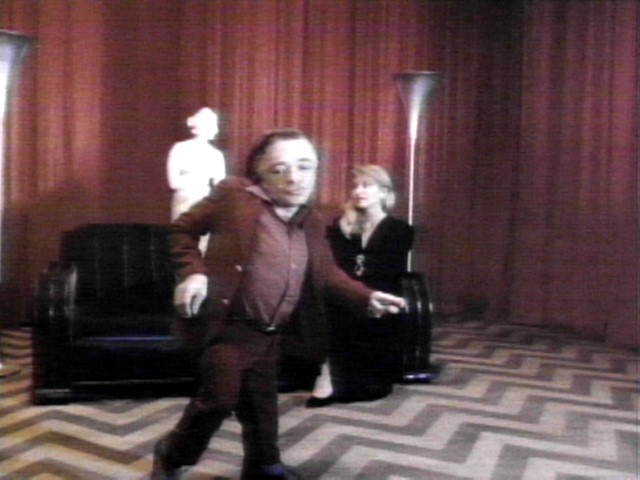
In the Black Lodge, you will probably see midgets, and they may dance.
But they'll definitely talk backwards. So you just need to deal.
For those of you who have watched the entire run of Twin Peaks (and for those of you who have not, what are you waiting for?), consider for a moment that the final episode, in which Agent Dale Cooper visits the Black Lodge with all of its midgets, backwards talking, and general level of Dali-esque insanity, aired in prime time on a major American network before most people had cable. Stop and really think about that. This is clearly a piece of art that is in total control of its mode of expression, and is not at all for everybody.

That brings us to this week's film, The Big Lebowski, which has spawned a festival, several books, a spike in the sale of White Russians (the drinks, not the humans), and at least one religion. In this film, which appropriately tanked at the box office (an unwritten rule of cult films), the Coen Brothers essentially remake the 1946 Humphrey Bogart/Lauren Bacall movie The Big Sleep, except with pornographers, Vietnam vets, feminist artists, cowboy narrators, bowling, pedophiles, In N Out Burger, and 20+ years of insider Hollywood stories. What about this doesn't spell "Box Office Goldmine"?

Clearly, we have strayed off the beaten path, here. But to put all of this stuff in a pot and make a gumbo that doesn't just immediately make you ill, the Coen Brothers required total command of their filmmaking faculties. They subsequently tried more straightforward remakes, like The Ladykillers and True Grit, which were substantially less effective films, so this is no mean feat they pulled off. What they were able to accomplish was to use Hollywood studio money to tell an extremely personal story (i.e., one that they found interesting with no assurance anyone else would), that eventually found an audience with which it could resonate.

And resonate, it did. The Big Lebowski is a David Lynch par excellence, and here are three keys to its success:
  1. It was made by competent, professional filmmakers, who
  2. Possess a clear and idiosyncratic vision, and
  3. Did not set out to make a cult film.
That last one is key. People love cult films, and sometimes they try to make them. This is usually a mistake. If you set out to make a cult film, you are almost inevitably doomed to fail, because:
  1. You don't know what you're doing, and
  2. You're spending your own money, and
  3. You're far more likely to make a Guilty Pleasure than a David Lynch, even if you're successful
These are problems. But fear not, next week we will discuss the kinds of films young filmmakers may hope to accomplish, given their own limited means.


Friday, August 31, 2012

Cult Films 101: The Guilty Pleasure

Welcome, thank you for coming. Please take your seats, we have a lot to cover. Today, we'll be screening Plan 9 From Outer Space, which many of you have heard is The Worst Movie Ever Made. Then, by a show of hands, we will select either The Big Lebowski or Bubba Ho-Tep as the film for next week's screening.

In this course, we will look at three types of films that generally achieve "cult" status:
  1. Films whose reach exceed their grasp, and spectacularly so (the Guilty Pleasure)
  2. Films that take an unconventional approach to narrative or subject matter (the David Lynch)
  3. Films that become significant for reasons beyond their intrinsic merit (the Dementia 13)
First up, Plan 9 From Outer Space, written and directed by Edward D. Wood, Jr. This film, produced in 1959, was popularized in 1994 thanks to the Tim Burton film Ed Wood. This film is not -- not by any measure -- the Worst Movie Ever Made. It's not even Ed Wood's worst film...in fact, it's likely his best. Have any of you actually seen Glen or Glenda?, because that thing's just a train wreck.

Plan 9 is a prime example of your Type 1 Cult Film, the Guilty Pleasure. Notice the way the cardboard graveyard wobbles as people walk through it. Notice the blank wall that stands in for an airplane cockpit and the lovely curtains that form the interior of an intergalactic space cruiser. Wooden dialogue delivered by non-professional actors. It's all here. But also, notice the sincerity of all involved. Most of them genuinely believe in what they're doing here. They're excited just to be making a movie. We empathize with them, because we understand the joke, but they don't seem to. Watching them move and speak like no human beings have ever moved or spoken in real life is kind of touching...maybe even a little heartbreaking, isn't it?

But not everything about this film is terrible. The lighting is fine. The editing is consistent and looks reasonable enough. And the idea of "solarbonite," sunlight molecules that can be weaponized, is actually sort of interesting and taps into the late-50s zeitgeist. There are many films in the Guilty Pleasure category of Cult Films that cannot make even these modest boasts.

This brings us to the epic question of why do we bother with Cult Movies? There are some laughs in your Guilty Pleasures, sure, but intentionally funny movies are bound to have more. Watching great actors or directors in their first films has novelty value, but their later films are by far the greater achievements. So what gives?

Three reasons. (And these will be on the final.)
  1. They are Outsider Art. Whatever the type of Cult Film, these movies are all created by either amateurs with no connection to the mainstream filmmaking establishment, or they represent film professionals intentionally subverting established forms. Both broaden the scope of human experience portrayed on film. In many ways, Manos: Hands of Fate, however abysmal in its technique, is a more honest reflection of real life in America in 1966 than something like Who's Afraid of Virginia Woolf? because of what's not onscreen. The simple fact that it exists illustrates that the Hollywood Dream reached even to El Paso, Texas, and beyond, catching fertilizer salesmen, local theater actors, retired judges, and other regular people up in its mystery and promise. (Read about the effort to restore Manos from its original film elements here and here.) 
  2. They are life affirming. These films, especially the Guilty Pleasures, are full of pathos. We instantly feel for these people (not the characters -- good lord, no -- but the actual people making the films), and we root for them. We understand that they have no idea what they're doing either in front of or behind the camera, and we wonder how we'd respond under similar circumstances. Because of that, the part of us that always roots for an underdog wants to see them and their celluloid babies succeed in spite of themselves.
  3. We just like them, and that's totally ok. No explanations or apologies necessary. Sometimes, we just enjoy dumb stuff because it makes us happy.

Should we discuss The Big Lebowski or Bubba Ho-Tep next week? Let me know in the comments or on the Twitter @vkotrla.