Showing posts with label zombies. Show all posts

Tuesday, February 10, 2026

Film Microreview: Cold Storage

If exploding zombies are your thing…

Cold Storage is the latest iteration of the fad for fungus zombies, which seem to be still in vogue. This time, they’re the result of a medical experiment that was once aboard Skylab and everyone forgot about until it escaped an oxygen tank that fell on Australia. In an extended prologue, we witness the disaster that happened two decades ago when a comically understaffed team of experts went to contain the mutated organism and lost one member in the most gruesome way. This is the type of fungus that takes over the nervous system and compels the victim to seek a location for optimal dissemination. That’s scary enough, but on top of that, the infection ends up blowing up your guts all around you. The movie delights in showing the many ways this can deform a cadaver.

Another member of that ill-fated team, played by Liam Neeson, suffers an unspecified back injury that conveniently keeps him out of the main action in the present, when the military building that kept the last sample of the zombie fungus (now decommissioned and repainted as a self-storage facility) has a minor electrical mishap with catastrophic cascading effects: a freezer malfunctions, the fungus starts growing again, it breaks containment, and it climbs up the food chain until it becomes a problem for humans. Liam Neeson is dragged back from retirement to save the day again, but he spends most of the movie traveling to the site of the crisis, and most of the rest of the movie lying on the floor because his broken back can’t handle gunfire recoil. Why do you even hire Liam Neeson to not let him do Liam Neeson stuff escapes me.

Instead, our heroes are Joe Keery, fresh from saving the world in Stranger Things, and horror veteran Georgina Campbell, whose character is very tired of running from monsters and just wants to hide and wait. These two stumble into the whole world-ending menace because they’re bored and decide to investigate a weird noise in the self-storage facility where they work the night shift, and discover the alarm that was triggered by the broken freezing system. Meanwhile, the fungus has already spread to the local fauna, and when the shambling victims cross paths with our heroes, it’s time for them to run for their lives.

It helps that they have more plot armor than Bugs Bunny. The fungus zombies repeatedly ooze, spittle, burst open and projectile-vomit their gooey innards right next to our heroes, and somehow not one drop of infected material splashes onto them. When you consider that this fungus has been shown to be able to penetrate cement and metal, the protagonists’ eventual survival can only be explained because their names are on the poster and aren’t allowed to die. So the gore quota is met by an array of secondary characters established as unpleasant enough for it to be OK to enjoy watching them suffer the most spectacularly messy deaths. This movie has a lot of fun with zombie makeup, and even more fun with throwing zombie guts at every surface.

Cold Storage is the kind of supremely silly flick that demands out loud that you switch off your brain. There’s no point in pausing to question the multiple instances of military bureaucratic dysfunction that it must have taken for this plot to happen. Don’t expect any implied reflection on the problem of badly maintained public infrastructure or the irresponsibility of storing hazardous materials near civilian areas (one character has a small atom bomb hidden in a house with children, and it’s treated as a nonissue). Just sit and savor the spectacle of a screen smeared with squishy rotten organs. Hey, the world is ending anyway, right?

Nerd Coefficient: 4/10.

POSTED BY: Arturo Serrano, multiclass Trekkie/Whovian/Moonie/Miraculer, accumulating experience points for still more obsessions.

Wednesday, December 10, 2025

TV Review: Zomvivor

An entertaining succession of jump scares and survival stress.


Horror stories have been abundant in 2025, providing a cathartic outlet for processing contemporary stress. One of the latest contributions to horror’s zombie sub-genre is a new Netflix short series from Thailand. Zomvivor is the story of several groups of college students trying to survive a zombie outbreak on their locked down campus while trying to uncover and understand the true nature of the infected people who are trapped there with them. With plenty of blood, zombie bites, and moderate gore, the series works well as an entertaining succession of jump scares and survival stress, despite the fact that the larger story arc and backstory are much less satisfying.

The show begins in the midst of a zombie outbreak on a college campus in Thailand. Hordes of flesh-hungry, infected humans attack the remaining survivors on the campus. Once bitten, the victims also turn into a ravenous, vicious, but seemingly mindless, zombies. As students flee the escalating attacks, the survivors settle into several groups including a group of cheer squad guys in a greenhouse and a group of alpha personalities and their minions in a library. In an ironic flashback we see a student film project about a woman who has been turned into a zombie and is now tied to a chair as her colleagues figure out what to do with her. The student actress, Lily, agrees to the student director’s request that she cry tears in her bound zombie state and Lily ponders whether a person so damaged and infected would have the capacity for that type of self-reflection. 

A central plot point involves a genius student Ning who accepts an offer to work with a nervous Professor Wiroj on a project that may cure her comatose mother. Through a series of flashbacks, we learn that Ning and her younger brother Non were raised by their single mother in a working class household. Ning and Non are both students at the university where Ning is a promising honor student on a scholarship. Their mother becomes unexpectedly ill and eventually comatose. Professor Wiroj recruits Ning to help find a cure by working on a body-preserving project for rich people called Anisong. The project is funded by the mysterious benefactor who funds the university. However, through a series of unfortunate and deeply upsetting events, the benefactor’s awful son and heir gets infected with a defective serum and the research pivots to a cure to revive and regenerate his body and that of Ning's comatose mom. As part of the test trials, Dr. Wiroj targets poor, vulnerable, working class workers on the campus to be the test subjects. He feels bad about this, but not enough to stop, especially because he is secretly in love with Ning’s mom. As it turns out, the variant serum is volatile and the test subjects begin to display some very odd behavior. Meanwhile, back in the present, a group of students try to make a stand against the growing hordes of zombies. On group is focused on compassion and the other is focused on violence. Complicating things are the military / private security who want to kill all the students to contain both the outbreak and the secrets behind it. Some of the survivors are also impeded by an uninfected but delusional student who sabotages their safety. They are also hampered by power dynamics among the alpha leaders; and by many students’ feelings of guilt at having to kill their fellow classmates.

Zombie stories have so many commonalities that viewers often know what they're getting when they start to watch. Zomvivor adds some interesting twists to the usual zombie drama which make it quite entertaining, despite the predictable elements. One useful twist is having the story take place in an elite college setting. This allows the characters to have a more strategic engagement with the zombie outbreak since many of them are science students who can theorize on how the zombies behave and can try to create biological and chemical based options for responding, rather than just fighting, running, and hiding.

Another interesting twist is the contained nature of the outbreak. Many zombie horror films involve a zombie apocalypse where entire countries are devastated and only pockets of survivors remain. In Zomvivor, the zombie outbreak we see is essentially confined to the campus. The surviving students are unable to leave but so are the zombies. In the series, the rest of the country may theoretically still be living a normal life while the survivors and zombies remain caught in a confined, locked room adventure.

The story is also told from multiple points of view rather than focusing on a single, lead character. And, Ning, the character who has the most camera time, is an interestingly unreliable narrator and ultimately unlikeable character as she processes new revelations about her morally gray science project. There is, in fact, no central, pure heart hero with whom viewers can emotionally align themselves. The very large ensemble cast makes it hard to bond with a particular character. This is surprising given the show’s survival story concept but it also adds tension to the story by emphasizing the general sense of uncertainty.  On the other hand, the series does a nice job of showcasing kindness, through the altruism and compassion the cheer squad boys show to an infected friend and with each other. The show also briefly addresses class disparities and the way the working class people are treated as disposable, even by the lead characters. In a creepy twist, the zombies, particularly the original cleaning and custodial workers, continue to incoherently follow their pre zombie life routines on the campus, compulsively and sloppily mopping or sweeping with vacant eyes and bloodstained hands. The effect is nicely poignant.

However, despite these interesting elements, the larger sinister background plot feels a bit convoluted and ultimately not emotionally engaging. Key moments of revelations about the villains are hurried through, larger motivations are unclear, and the show ends on an incomplete cliffhanger. After so many satisfying, intense, and entertaining moments throughout the series, the finale is a bit frustrating and leaves viewers without closure. Instead, the ending intentionally leaves us with more questions. For those who like a twisty ambivalence, the adventure may be worth it. For everyone else, it may be a thoughtful and enjoyable ride with an unexpectedly abrupt exit.

--

Nerd Coefficient: 7/10

Highlights:
  • Entertaining jump scares and intensity
  • Appealing side characters mixed with negative or unreliable narrators
  • Leaves viewers with more questions than answers
POSTED BY: Ann Michelle Harris – Multitasking, fiction writing Trekkie currently dreaming of her next beach vacation.

Thursday, September 11, 2025

TV Review: Wednesday Season 2, Part 2

The Night of the Return of the Revenge of the Attack of Unresolved Mommy Issues

In season 1 of this show, Wednesday Addams solved a murder mystery and saved her school. At the start of season 2, she deals with her unwanted fame by doubling down on her lone genius act, thus antagonizing the allies she ought to be relying on when a new murderer comes to town. The season concludes by showing Wednesday the consequences of her arrogance and putting her on a path toward repairing her strained relationships.

The execution isn't the most elegant, a problem that the show had since the previous season, but the expanded focus on the supporting cast provides parallels to Wednesday's journey that help the clumsy bits of the plot work more smoothly. Wednesday's roommate Enid has been avoiding her first boyfriend because she's afraid of telling him she fell in love with someone else, an unstable situation that resolves with a serving of karmic irony. Their classmate Bianca has been suffering in silence under the blackmail of the new school director, who is forcing her to use her mind control powers to secure donations; her plight gets predictably worse as she continues to refuse to ask for help. And Wednesday's brother Pugsley has been coping with his loneliness by keeping a zombie as a pet, starting a series of events that come back to threaten his whole family for their unhealthy habit of keeping dirty secrets.

The theme is clear: we can't handle everything on our own, and keeping people in the dark only brings more complications. Wednesday herself is the most significant illustration of this idea. She received a psychic vision that said she would cause the death of Enid, and she keeps this information to herself because she underrates Enid's strength and overrates her own. Through the whole season, Wednesday's biggest flaw is her excessive self-reliance. With Enid, she learns of her mistake by literally walking in her shoes. With her mother, Morticia, it takes the rest of the semester. Wednesday has valid reasons to keep strict boundaries with her meddlesome parents, but when lives are at stake, she should admit that her mother is more versed in the occult arts and that there's a precedent of psychic mishaps in her family tree.

Motherly ties are a central axis of this season. Besides the difficulties between Wednesday and Morticia, the latter also has unfinished business with her own mother. Bianca's predicament revolves around keeping her mother away from the influence of a destructive cult. Tyler, the secondary villain of season 1, kills his substitute mother figure, only to reunite with his actual mother, with whom he has a big final fight after she schemes to (symbolically) emasculate him. Even Pugsley, by virtue of accidentally giving life to a zombie, gets thrown into a motherly role at which he fails repeatedly and catastrophically. And to the extent that a severed hand can experience mommy issues, Thing goes through a small identity crisis arc of its own when its original body reappears to reclaim it.

While the character-focused writing is more solid this time (and one always welcomes more scenes with the radiant goddess that is Catherine Zeta-Jones), the first season's bad habit of overcomplicating the plot comes back with a vengeance. The early episodes build up to what promises to be an important antagonist who soon turns out to be a red (-headed) herring and becomes far less interesting from then on. The mysterious flock of ravens that plague the first half of the season are given an underwhelming explanation before being removed from the picture. The cult that had trapped Bianca's mother makes a last-minute reappearance that feels out of nowhere. In total, we meet no less than six separate characters who at some point seem to be this season's Big Bad Boss. Our young heroes are kept so busy investigating and unmaking this tangle of conspiracies that it's no surprise that, once again, this show that is supposedly set in a school doesn't have scenes where they attend classes or do homework.

Finally, there's the issue with the characterization of the Addams family. The show doesn't know whether it wants to portray the Addams as endearing weirdos or heartless sociopaths, so when they join efforts to save one of their own, it's hard to buy that they truly love each other (at one point Wednesday suspects her family will be threatened, and coldly proposes to sacrifice Pugsley; shortly after, he does fall in real danger, and she forgets her own words and jumps to the rescue). Add to this incongruity the family's volatile way of choosing which deaths to care about, and what we get is a tonally scattershot story that is more interested in the spooky aesthetic than in the consequences of dealing with dark forces on a daily basis. You can either tell a silly absurdist comedy where casual cruelty is hilarious and random murders are background noise in the macabre goofiness that defined the '90s films, or tell a crime drama where people's feelings matter, death is taken seriously and family trauma weighs on the protagonists. Aiming for both is trying to have your ant-infested cake and eat it too.

Nerd Coefficient: 7/10.

POSTED BY: Arturo Serrano, multiclass Trekkie/Whovian/Moonie/Miraculer, accumulating experience points for still more obsessions.

Thursday, August 21, 2025

TV Review: Wednesday Season 2, Part 1

Clever, funny, horror mayhem and lots of family drama

After a bold and successful first season, Wednesday has returned to Netflix with a suitably creepy new adventure. For those unfamiliar with the series, Wednesday is the latest iteration of The Addams Family, the creepy, wealthy, cynical, and humorously ghoulish family that evolved from classic New Yorker cartoons to a 1960s sitcom, to numerous feature films, and now to a daughter-focused, light-horror, Netflix series. In season one, teen daughter Wednesday Addams (Jenna Ortega) is sent to Nevermore Academy after her defiantly macabre behavior gets her in trouble elsewhere. Nevermore is an isolated academy for “outcasts” who, in this setting, are teens with supernatural identities such as werewolves, sirens, gorgons, vampires, witches, etc. Cynical, dour Wednesday must adjust to life on the Edgar Allen Poe-inspired campus while reluctantly accepting the friendship of her sunshiny roommate Enid (Emma Myers), and solving the mystery of a serial killer who is deceptively hiding in plain sight in the town. She approaches the challenge with her signature combination of intelligence, clairvoyance, and fearlessness.

In season two (part one), Wednesday overuses her clairvoyance and begins to suffer physical consequences including crying or bleeding black tears and becoming exhausted and passing out. Meanwhile, as she returns to school at Nevermore, she is irritated to discover that she is now a beloved celebrity on campus. But, there is a new mysterious killer in town, assassinating people via a swarm (murder) of crows and also overtly stalking Wednesday. When Wednesday has a vision of Enid’s death, she becomes determined to use her clairvoyance to find the killer and save Enid. This puts her at odds with her mother Morticia (Catherine Zeta-Jones), who is openly worried about Wednesday succumbing to the same obsession, psychosis, and physical harm that Morticia’s sister Ophelia suffered. As a side story, Wednesday’s younger brother Pugsley (Isaac Ordonez) enrolls at the school and accidently creates a murderous zombie from a long dead Nevermore student. With multiple killers, stalkers, and high stakes crises, Wednesday quickly moves towards a mid-season climax in which yet another killer joins the chaos.

Season one was a funny, clever, horror mystery with lots of red herrings and lots of adventure. However, season two intensifies the emotional investment of the characters. Instead of directly rehashing the same type of plot, season two builds on certain elements of the first season but takes the storytelling in a more character focused direction. A major driving force of the current season is Wednesday’s friendship with Enid. Instead of Enid being a comedic foil or general annoyance to her, Wednesday’s determination to protect Enid emphasizes Wednesday’s emotional evolution in the midst of the mayhem and cynicism. Conversely, in season two, Wednesday has a degenerating antagonistic relationship with her mother, even as Morticia struggles with anger at her own mother. The multi-level mother-daughter conflicts, and the mutual insecurities that fuel them, is a secondary driving force of the story. Despite these meaningful emotional overtones, the show still has plenty of action as Wednesday deals with a primary murderous stalker, as well as a creepy fangirl stalker (a show-stealing Evie Templeton) and the fallout of her little brother’s accidental zombie creation.

While the core adventure and emotional overtones are solid, the show sometimes suffers from an overabundance of side plots which can, at times, be distracting and does periodically slow the pacing of the primary story. In addition to the main storyline, we also have Pugsley’s rampaging zombie, Enid’s love triangle with Ajax (Georgie Farmer) and Bruno (Noah B. Taylor), a newly arrived music teacher (Billie Piper), and a mysterious psychiatrist (Thandie Newton) at the town’s high security psychiatric hospital. There is also a bit of social commentary regarding the way Bianca (Joy Sunday) is manipulated by the new Nevermore headmaster (Steve Buscemi) who uses her status as a scholarship recipient to exploit her for financial gain. And we have Bianca’s issues with protecting and hiding her mother. Most of the stories are entertaining, albeit voluminous, with the possible exception of Pugsley’s zombie, which is often a bit campy despite being a poignant representation of Pugsley’s relatable feelings of awkwardness and isolation as he begins the new school.

Despite being a teen adventure, Wednesday is also a horror comedy series, which means several characters meet their demise onscreen in horror film ways. Fortunately, the actual gore is kept to a PG safe minimum. This balance of intensity makes the show a satisfying and entertaining gothic adventure without becoming overly graphic. Overall, the first half of Wednesday Season 2 is off to a promising, albeit overstuffed, start with solid acting and entertaining plotting as things move from bad to worse for Wednesday.

Highlights:

  • Escalating emotions
  • Lots of subplots
  • Clever, funny, horror adventure

Nerd Coefficient: 8/10.

POSTED BY: Ann Michelle Harris – Multitasking, fiction writing Trekkie currently dreaming of her next beach vacation.

Monday, June 30, 2025

Film Review: 28 Years Later

The third entry in the series is a breathtaking glimpse at brutality, humanity, and hope

The week prior to seeing 28 Years Later I reactivated my long-dormant account my local video rental store to catch up on the series, since 28 Days Later isn't streaming anywhere. I reacquainted myself with the rage virus (it's important to remember that the infected in these movies are NOT living dead zombies, but deeply ill human beings with a horrible disease) and remembered that the focus in the series (like all good post-apocalyptic media) isn't on the monsters but on the people left behind. I think some folks forget this key part of dystopian storytelling.

If you want just a run-of-the-mill shoot 'em up of infected, play Call of Duty: Zombies with unlimited ammo. The nuance is in the horrible reality and choices that human must live with in a post-apocalyptic society, and the thrill and terror comes in knowing that we're only a failed power grid away from having to make similar choices.

I loved this movie, and was in awe of its intellect, direction, acting, and storytelling. It takes the traditional zombie film and adds so much lore expansion that it ends up surpassing the genre entirely.

28 Years Later opens with a throwback to outbreak day as a young British boy named Jimmy watches The Teletubbies as a horde of infected break into his house. He manages to escape to the local church where his father is welcoming judgment day, allowing himself to be killed while Jimmy escapes yet again. (This is the first part of a bookend that we'll revisit later.)

Flash-forward 28 years and we're in what appears to be a thriving small community that's separated from the mainland by a tidal causeway. Things seem nice, if a bit old-timey. Spike, a 12-year-old boy, is being taken to the shore to go hunting with his father Jamie in a sort of rite of passage, and the two embark on their voyage to raucous celebration and cheer. Spike's father sees the voyage as a sort of respite from his ailing wife, Isla, played by Jodie Comer, who is suffering from a disease that the local population cannot name nor cure.

Hunters and searchers are free to go visit the mainland, but one rule of their society is that you do at your own risk—no rescue parties will ever be launched. When Jamie and Spike make landfall, the countryside, which is England untouched by industry, pollution, or commerce, is a vibrant green. They're out for only a short while before they come across the first new evolved form of infected appear—the slow and lows, which are large, slow-moving, and consuming enough calories from the ground to survive on non-human protein like worms. (This reminded me of the bloaters and shamblers from the Last of Us, and it's fascinating to ponder how these two IPs have influenced each other by leapfrogging around various installments over the years.)

This is such an important point, since in prior films the infected died after around 7 months due to starvation. The existence of the slow and lows means that the virus is evolving and mutating. Once again, you have to keep remembering that the infected are not dead—it's so easy to forget and just think things don't make sense.

Seeing the feral groups of rage-infected human is fascinating because they're living together in what appears to be harmony—a sort of society, almost. Humans, no matter what, are still social creatures. And their depiction in 28 Years Later is far different from the brain-thirsty, mindless hordes of zombies in other movies.

Okay, back to the plot: Spike hesitatingly makes his first kill on one of the slow and lows, and he and his father continue on their journey. They next encounter an Alpha version of an infected—enormous, smarter, and more cunning. Also, he's possessed of a comically large phallus that's impossible to ignore in every single shot it's in.

The existence of an Alpha infected is not only incredibly cool, but also makes total sense given its place in the grand scheme of humanity. Maybe he's just the examplar of an evolutionary new type of human—homo sapiens ira, ira being the Latin word for 'rage.'

The Alpha hunts in such a menacing way that Spike and Jamie are forced to sprint back to the island over a half-flooded causeway, cutting it close to the wire before making it in.

This scene is my absolute favorite in the movie, as it's visually stunning to watch, the panicked running kicking up saltwater as the northern lights and bioluminescence in the waves throw colorful shadows all over the scene—all while the looming Alpha bears down on them with cruel efficiency.

Fun fact: 28 Years Later was filmed with hundreds of iPhones. Contrast this with the fact that the original 28 Days Later was also filmed on a portable camera, and it's fun to see just how much video technology has changed in three decades.

Back on the island, the town celebrates Spike's victory as Jamie lies about how courageous Spike was. The scene is very Wicker Man-esque—in fact, the entire vibe of the isolated and strangely violent island society is very folk horror. The town seems frozen in time because it is, as society is regressing to hunter-gatherer-type activities along with very clear gender roles.

In this isolated island world, Queen Elizabeth II will forever be the monarch hanging in frames upon their walls. Underscoring this thematically is director Boyle's decision to splice in footage from Henry V films, along with the incredibly creepy recitation of the poem "Boots" by Rudyard Kipling.

Later on that evening, Spike sees his father cheat on his mother with a townswoman, which disillusions him as to his father's god-like status. While on their mainland sojourn, Jamie told Spike about a doctor that lives alone and isolated on shore, but mentions that he's crazy and anti-social.

Spike, stewing in his anger and disillusionment, takes Isla the next day and escapes to the mainland in search of this doctor, hoping to help his mother heal from the disease that's affecting her mind and body.

On their search for the doctor, they meet up with a Swedish soldier who was shipwrecked, and he's the sole survivor after members of his team were killed by the infected. There's a fascinating scene where the soldier discusses everyday normal things like online delivery and smartphones, which Spike has absolutely no knowledge of. Another thing it's important to remember about this universe is that only the UK is ravaged and quarantined—everywhere else in the world it's the modern day with all of its conveniences and technology.

The trio comes across an abandoned train that's echoing with shouts of pain and investigate it. An infected woman, feral after years of living with the rage virus, is alone and in the process of giving birth. From start to finish, this scene is absolutely WILD and moving and shocking. Isla, an empathetic mother, approaches gently and actually assists in the birthing process.

For a brief moment, it's just one woman helping another, as has been happening throughout all of human history. The infected woman delivers a regular infant (though most definitely a carrier like the mother in 28 Weeks Later). As the mother begins raging again, the soldier shoots her, and Isla grabs the baby and keeps moving as an Alpha then in turn kills the soldier. Isla and Spike, a new baby in tow, continue on their journey to find the doctor.

This point is where people begin to either start loving or hating 28 Years Later. Up until now, it's been a straightforward look into a new civilization and a raucous infected bow-and-arrow turkey shoot. Pretty standard.

But once Isla and Spike encounter Dr. Kelson, the film turns into an incredibly moving treatise on family, loss, and grief. Meeting Dr. Kelson is a delight, as it's a bald Ralph Fiennes-covered-in-iodine jump scare (a very welcome one, of course!).

Kelson has been living alone and coexisting amongst the infected, in a sort of Jane Goodall-type way. When he saves Isla and Spike in their first meeting, he blows a morphine dart at the Alpha rather than shooting an arrow at his heart. This is the first time I can recall in a "zombie" type movie that someone is approaching them with a nonlethal motive. Again, this could be because they're not zombies, and as a doctor, Kelson appreciates a person's humanity, however little of it there may seem to be.

Kelson is not crazy, despite Jamie's insistence, and over the past 30 years has been building an elaborate Bone Temple as a monument to the countless dead in the UK. He bleaches and sterilizes bones for this process, and the result is towering pillars of femurs, arm bones, and skulls, and it's very reminiscent of catacombs in Europe.

Kelson evaluates Isla and realizes it's metastatic cancer. With her wishes, he euthanizes her while Spike is slightly sedated, returning with her cleaned skull so that he can place it atop the piles of skulls.

This scene is wild, to be fair, but it works for a number of reasons. Isla is finally no longer suffering. Spike is learning first-hand how cruel and horrible and indiscriminate death is. He also is realizing that in this world, no matter grief-struck you are, you cannot stop—you have to keep moving, keep evading, and keep trying to live.

He returns to the island and drops off the infected child, whom he's named Isla, and leaves a note saying that he's going to off on his own for a while. The island that had raised him, he has realized, is not the only way forward.

The movie could have ended here, and it would be completely fine. But we get a few minutes of Spike wandering through the green countryside before being overrun by infected. Then, a posse of jumpsuit-clad long-haired blonde men jump to his rescue—it's Jimmy from the beginning of the movie all grown up! And he and his gang kick butt Power Rangers-style and save Spike.

Now, as a non-British person, I neither knew this was a strange allusion to British entertainer Jimmy Savile nor do I feel qualified to really speak as to how jarring this was for British people to watch. Savile worked with children and was a known predator and abuser, but I didn't know any of this until watching TikToks later about it. For a more in-depth discussion of it, check out this article.

I thought this bizarre ending was truly surreal and definitely very different tone-wise, but it didn't hamper my enjoyment of the movie. I've not been able to stop thinking so many different parts, and I can't wait to watch it again.

And good news for fans—28 Years Later: The Bone Temple is set to release January 16, 2026 as the first installment in a new trilogy. And yes: that is roughly 28 weeks later from now. We see what you did there, Danny Boyle.

Nerd Coefficient: 8/10.

POSTED BY: Haley Zapal, NoaF contributor and lawyer-turned-copywriter living in Atlanta, Georgia. A co-host of Hugo Award-winning podcast Hugo, Girl!, she posts on Instagram as @cestlahaley. She loves nautical fiction, growing corn and giving them pun names like Timothee Chalamaize, and thinking about fried chicken.

Monday, August 21, 2023

Movie Review: Valley of the Dead

Luchamos contra los zombis, rumba-la-rumba-la-rumba-la...

(Editor's note for American readers: When discussing the Spanish Civil War, the word ‘Republican’ has a very different meaning than in US politics. The Spanish Republican faction leaned left-wing and was fighting against Francisco Franco's overthrow of democracy.)

In Spain, there’s a joke that every Spanish movie is set during their Civil War, a war about which so much has been said. It is a dress rehearsal of World War II, the Nazis’ great weapons testing range, the last gasp of classical anarchism, a classic case of leftist infighting, colonial savagery brought home to Europe, a great blooming of international working-class solidarity, the root of the divisions of modern Spain. I never thought, though, I’d see that old joke made so literal:

A Spanish Civil War zombie movie?!

It makes sense, come to think of it. Call of Duty has had Nazi zombies for years, and the Wolfenstein games have certainly dabbled in the trope. There was enough occultism in Nazism for the trope to be so enduring, and the melding of historical evil and fantastic evil is natural. It flows logically, then, to switch up the premise by setting the German experiments with reanimation in the first country the Luftwaffe pulverized.

That film is Valley of the Dead, released in 2020 and directed by Javier Ruiz Caldera and Alberto de Toro.

There’s something vaguely ironic about this movie, as serious as it comes across; it feels like the directors, the cast, and basically everyone involved said, ‘Yes, we know this is silly, and we’re doing it anyway.’ The result is entirely po-faced, and frankly it’s better than a spoof. It is also, quite surprisingly, a serious attempt to reckon with the trauma of the Spanish Civil War, the conflict that left what is now a Western liberal democracy littered with mass graves.

The setup is, at its core, that of a fairly standard horror movie, with a cast of people who don’t get along particularly well isolated together to fight a supernatural evil. You have a motley band of Republican militants, complete with a Soviet-style political commissar (who acts as one of the film’s hate-sinks, deservedly), as well as a nun and one of the Moroccan mercenaries in fascist service. To my delight, he is not a racist caricature, not a savage, not a rapist (all images common in portrayals of Moroccans during the war).

There’s a razor-sharp wit to the dialogue that shows up more often than not, a wit that is grounded in a deep knowledge of the historical subject. These people are all grinding against each other in a way that feels ever-so-believable—you can absolutely buy that a nun would cooperate effectively with a female militia known only as the ‘priest-killer’ (‘matacuras’ in Spanish).

The film is not lacking for pyrotechnics, or for special effects. The zombies are properly scary, and Ruiz and De Toro know when to show them and when to let dread or character development take the lead. The two know not to wallow in aesthetics, to merely let the novelty factor (now not as nearly as new as it once was) ride out spectacle. In this regard, it reminds me of 2018’s Overlord, a film with its issues but one that I adore. This one is even more original by virtue of its setting.

There is one component I have my doubts about, and it made me a tad queasy after reading so much about this awful war. In the beginning, you are introduced to a hotshot Nationalist (read: fascist) soldier who has gotten himself in too much trouble and is put on an obvious suicide mission, upon which he stumbles into the drama with the zombies. In civilian life, he says, he was a corporate lawyer. I don’t object to having Nationalist characters sympathetically; those types of characters, fundamentally good people who are serving evil, are very important to show how evil lurks in everyone, and how we can be complicit in evil.

My issue is that he is the closest thing the film gives you to an ‘everyman’ character. No Republican character is portrayed as quite so ‘normal’ as he is; they all have quirks and eccentricities that move them somewhere beyond ‘normal.’ The first act of the film focuses on him, and the other acts less so, but he is clearly the ‘main’ character as it is. I don’t really know how to feel about how the audience surrogate is a grunt in fascist service, but it certainly gives me pause. It could have been brought out as commentary on the banality of evil (Franco was a rank opportunist, and the Moroccans who fought for him were mostly poor and desperate by my understanding), but the film doesn’t focus on that issue, to its detriment.

Valley of the Dead feels like a combination of two types of movies I like a lot: richly detailed historical films and schlock pulp fiction. It’s a combination that is occasionally done, not always well, but this film mashed them up in a way that I had never seen before. In the US, it’s on Netflix, and well worth the runtime.

Highlights: Great period detail, especially the vehicles.

Nerd Coefficient: 8/10.

POSTED BY: Alex Wallace, alternate history buff who reads more than is healthy.

Monday, January 25, 2021

Interview: Matt Betts, author of Red Gear 9

I've been following Matt Betts' career for a while now. From his pop culture short stories to his steampunk Civil War zombie thriller Odd Men Out, to his X-Men-but-darker urban fantasy Indelible Ink.  Betts writes quirky stuff that packs a wallop and then comes out of left field with a perfectly placed joke.  With a professional background in radio communications and side gigs in comedy, Betts is just the guy to pull you into any story. 

Betts's newest novel Red Gear 9 has all the steampunk, airships, zombies, and wild imagination of it's predecessor Odd Men Out, along with James Bond style spyware and gadgets, and new characters and adventures.  If steampunk, humor,  and pop culture is your thing, this is the series for you!   Not familiar with Odd Men Out? The review I wrote at SFSignal can catch you up to speed without too many spoilers. 

Red Gear 9 takes place shortly after the events of Odd Men Out, which means I'm hoping for more snappy dialog, steampunk technology, fun characters, found families and fresh starts, and faster-than-you-think zombies.  

Betts has written novels, short stories, flash fiction, and has published two books of poetry.  His poem "Godzilla's Better Half" was nominated for a Rhysling Award, and his short fiction and poetry have appeared in Arkham Tales, Ethereal Tales, Bizarro Fiction!, A Thousand Faces, Star*Line, Kaleidotrope, and elsewhere, and his other novels include The Boogeyman's Intern and White Anvil: Sasquatch Onslaught.  You can learn more about Betts and his work by checking out his website, mattbetts.com, or by following him on twitter at @betts_matt.   He was kind enough to chat with me about Red Gear 9, and the fun of returning to world of Odd Men Out.  Let's get to the interview!


NOAF: What's the elevator pitch for Red Gear 9? And as much as I love the cryptic title, could you explain it?


Matt Betts: Red Gear 9 takes place just a few months after Odd Men Out ends. It opens with a Confederate spy named Reeves breaking out of Alcatraz after being stuck there for years. He and his fellow escapees find themselves in a new world of airships and hordes of the dead. As they prepare to make their way home to their families in the east, old contacts tempt them back into the life they went to prison for.

The crew of the Polk from the first book are hot on the trail of the escaped prisoners, and determined to keep the peace. Three of their best officers, Cyrus, Bethy, and Lucinda race to stop the convicts before the criminals either disappear into the vast reaches of the two Americas, or burn everything down.

The title is one of my homages to the spy genre of movies and books. As we go through the novel, we find it's the equivalent of James Bond's '00' designation. The Red Gears are the book's Confederate version of elite spies and clandestine operatives. In the story, I suggest that most of the Red Gears were rounded up after the truce, captured during the war (with some still languishing in prisons) and others dead. I tried so many different titles for these undercover soldiers but none of them stuck, but when I came up with Red Gears, I figured that was a pretty excellent title for a steampunk novel.


NOAF: Odd Men Out came out in 2013, and has meta pop-culture references that all these years later, I am still giggling about. When did you get the idea to write the sequel, Red Gear 9, and what was it like to return to this world?

MB: I really loved the world, too. When I finished with OMO, I really wanted to revisit it, but I was kind of burnt out with all the writing and revisions. So I wrote a couple of other books and outlined three books in the same world as OMO. Once I got started on Red Gear 9, I ended up combining two of the stories I outlined and making it one. On their own, the plots were too thin, so I took the best of each and they worked well together.

I do include a pop culture reference or two in this book as well, but nothing quite as overt and fun as the one you like from the first book. I really had fun creating the main character, Reeves. I made him a combination of Boyd Crowder from the Justified TV show, Tom Cruise from the Mission Impossible movies and James Bond. He's a Confederate spy who's been in prison for years, so when he breaks out, he's a little rusty, but still somewhat savvy. He was in prison when the chewer outbreak started and wasn't prepared for it. I equip him with various cool (for the era) gadgets and a network or sort of trustworthy people. He was fun to create because I really got to channel those inspirations to ask "How would Ethan Hunt handle this... if he were in Civil War-era America?

NOAF: Can readers who are new to the series start with Red Gear 9, or is it imperative that they read Odd Men Out first? For the newbies who are starting with Red Gear 9, what should they know about this world, before diving in?

MB: I've had that conversation with a couple of my beta readers. They were split on whether they thought it could stand alone or if you needed to read them both. I think they finally came down to the thought that it could stand on it's own, but reading OMO would certainly enrich the reading of RG9.

To catch anyone up that hasn't read the first... It's set in a world where the Civil War ended in a treaty so that both sides could fight off an outbreak of men who've come back from the dead. The story itself begins long after the truce, where we find Cyrus and his friend Lucinda joining a peace-keeping force called the Office of Military Operations. The group was created to keep the peace, but in the course of the novel they also fight rebels, chewers, circus folk and other surprising enemies.


NOAF: This series takes place in the 1860's, and writing alternate history can be tricky. What research did you do for the historical aspects of this story? How did you decide what historical aspects to stay true to, and which to play fast and loose with?

MB: The research and those kinds of decisions are so much fun when writing alternate history. I started by asking what would happen if the Civil War was interrupted by a zombie outbreak. What would change as far as the war is concerned? As far as the rest of the world?

I used the internet quite a bit for things like Civil War battle maps, fort locations, personnel lists and firearms. I hit the bookstores and libraries to check out other details I might want to pursue. I enjoyed the illustrated books I found with colorized pictures from the Civil War. Those brought some ideas to life for me and humanized the officers a little more. For Red Gear 9, I contacted park officials at Alcatraz Island and they were very helpful in pointing me to Civil War-era maps of the place. I also used my family history records when writing OMO. We were lucky enough to have a good stack of information about one of our relatives who was shot during the fighting. I borrowed a few details from his medical records and muster rolls, which was fun.

As for what to keep and what to change, it really depends on what I needed for the story. I did research on various weapons and where they were used during the war, then I looked a little further ahead in history to see when certain innovations came about. If they were pretty close together I figured the fight with the chewers could accelerate the research for those items. In fact, one of the plot points in Odd Men Out involved a warehouse of things a scientist was developing. In RG9, there's a scene where several men are walking through these weapons, and trying to figure out how they all work. Another thing that caught my eye in research was the fact that both sides in the war had used balloons for one thing or another. This helped me design how the airships in my books might work and how they got started.


NOAF: Who was your favorite character to write in Red Gear 9, and why were they your favorite?

MB: I think the new character, Reeves, was the most enjoyable to write. There are several new characters in this book, but he was the most fun to figure out. The returning characters from the first book felt like they were ready to go, broken in already. These new ones, especially Reeves, took a little while to figure out, and really weren't crystal clear until maybe the final draft. There were so many questions that he left hanging for me until I actually wrote him into the manuscript, where I would think "OH! That's why he would do that." or "That's how that situation might resolve itself better." Being this amalgam of spy tropes in my head made me want to push him into more and more interesting and difficult situations. I have at least two scenes that I was sad to cut, but they served no other purpose than to show off his spy skills and how good he was at his job.

NOAF: Without giving any spoilers, can you tell us what scene in Red Gear 9 was most challenging to write, and how you got through it?

MB: Without spoilers... There's a big fight toward the end that involves almost the whole cast of characters. I think the challenge, was to make it interesting and clear. I didn't want it to be "this person shoots this other person, so that guy punches this guy..." through the whole scene. I think what got me through it was figuring out who the most important person was as the scene progressed. Since I use different points of view for each chapter, I had to know who had the most to lose or gain as the fight went on. So, once that was figured out, it hopefully clarified things for me as the storyteller and for the reader. I may even admit to using action figures and whiteboards to block out the fighting, much as a director might do for a play. I needed to know where everyone was throughout the airship at any given time, and that seemed like the best way!

NOAF: Who are some of your favorite writers? How has their work impacted you as a writer, and as a reader?

MB: I'm a big scifi fan, but I have to admit I probably read more crime novels than anything. I love Elmore Leonard's work. He told the best stories of criminals, while also giving them unforgettable personalities. His dialogue is something I try to emulate as much as possible - believable conversations. He liked to keep things simple and brief without a lot of embellishment. I also like Carl Hiaasen for the same reasons.

I've also read a lot of Stephen King. In fact, I started writing because after reading some of his work, I said "I can do that." Eh, it wasn't so easy. The thing about King's earlier work is that he makes them seem pretty simple. The plots aren't terribly intricate, but his characters, his details and nuances make the story have some emotional resonance with the readers. And that makes his work more accessible to me than some other authors I've read.

Some of the scifi writers I've loved include Arthur C. Clarke and Isaac Asimov, and steampunk authors Cherie Priest, Scott Westerfeld and Ekaterina Sedia.

NOAF:  Thanks Matt!


POSTED BY: Andrea Johnson lives in Michigan with her husband and too many books. She can be found on twitter, @redhead5318 , where she posts about books, food, and assorted nerdery.  

Monday, July 17, 2017

Remembering George A. Romero and Martin Landau

Yesterday hit us with a double whammy: we lost both Martin Landau and George Romero. Fun fact: Martin Landau played "Leonard," the henchman to James Mason's "Vandamm" in North by Northwest, and a young George Romero worked as as a gofer or production assistant on that film. I don't know that their professional lives ever crossed again, but I wanted to take a minute to say thank you and celebrate these two artists, both of whom had a profound effect on me, personally, and on countless others.


I heard about George Romero's passing first, so let's talk zombies. It's hard to imagine a time in pop culture without zombies, but it wasn't that long ago. Richard Matheson, whose excellent novel I Am Legend has been made into movies several times, none of which particularly pleased him, felt that the best adaptation of his book was an unofficial one — Night of the Living Dead. I think Matheson's claims were a little overblown, but one thing both writer and filmmaker had in common were the focus on and exploration of humans making destructive decisions in the face of constant assault by the murderous victims of the...plage, or cosmic rays, or whatever. The great innovations of Night of the Living Dead that make it totally distinct from I Am Legend are the mindlessness of the zombies — they are unthinking, unfeeling forces of malevolence that cannot be reasoned with, spoken to, dissuaded, or deterred — and the realization that you may bar the door, but when you look around at the people in the house with you, you've just locked yourself in with monsters, too.

As an independent filmmaker and low-budget director, I certainly have my heroes like Roger Corman, but it's mostly individual movies that stand out to me as brilliant, innovative, creative battles fought against a paucity of resources and in which the filmmakers managed to make something enduring. Night of the Living Dead is one of those movies. I have raved to many people about the scene where Ben nails boards over the doors and windows. It's a loooong scene, and all you see is a guy hammering nails into boards. It's visually boring. It breaks the "show, don't tell" rule that every film professor and directing book ever has held up as a mantra. But when you have zero dollars, sometimes you don't have the luxury of "showing." What Romero did is not only brilliant and inexpensive, but it is far, far more effective than the alternative you've seen a million times since, where you watch ranks of shambling zombies closing in. He plays the radio in the background. That's it. The unfolding news reports ratchet the dread up, and up, and up. Night of the Living Dead is masterful filmmaking. Romero was also on record as saying he drew inspiration from Carnival of Souls one of my favorite films, so he'd have a warm, fuzzy place in my heart just for that.


An editor friend of mine also pointed out that Romero not only created the template for zombies that has now arguably reached its zenith, but he also created a template for independent filmmakers. Romero worked making commercials and even Mister Rogers segments to make his own films on his own time. This is how we all roll these days, but it was new stuff in 1968.

Most of the remembrances and obits I've seen or heard on Martin Landau say "best known for the 1960s TV series Mission: Impossible," and that may well be, though I've never seen it. As a young actor, Martin Landau was absolutely chilling. Watch him in the Twilight Zone episode "Mr. Denton on Doomsday." I've already mentioned his role in North by Northwest, which prompted one of my favorite Hitchcock stories. As Landau told it, he was nervous working on the movie — it was his first film, for God's sake! — and particularly nervous because he had decided to play Leonard as a gay man. So there he is on set, playing his scenes having made this huge (especially in 1958) choice, and Hitchcock isn't even talking to him...just not acknowledging him in any way. So finally Landau approaches Hitchcock and asks if there's anything he needs to change, or any notes, and Hitchcock says (please read in your best, however terrible, Alfred Hitchcock voice), "Martin, when you're doing something I don't like, I'll tell you."

But the thing that puts Martin Landau on my own personal Mount Rushmore is his protrayal of Bela Lugosi in Ed Wood. It would probably be hard to overstate the impact that movie had on me. I'd been interested in old horror movies from a very young age. I remember the local TV station (there was only one...ABC, NBC, CBS, and local Channel 20) showing tinted prints of Frankenstein and Dracula, as they were sometimes shown on their initial theatrical releases when I was maybe 7 or 8 years old, and I was transfixed. But until I got into high school and was able to hit video stores on my own, there wasn't a ton of access to old horror or sci-fi movies. The Million Dollar Movie was often a spaghetti western or action movie, and we didn't have anything like Vampira or Elvira's late-night shows featuring those old public domain movies. It just so happened that Ed Wood came out my first year in high school, and White Zombie's La Sexorcisto: Devil Music, Vol. 1 came to national prominence within the same few months. The profundity of Martin Landau's performance as Bela Lugosi, introducing me to a performer's previously unknown second act hit me at the same time as an album full of samples taken from Night of the Living Dead, Faster Pussycat, Kill, Kill, and the Boris Karloff The Mummy. Those two things helped cement in me a fascination with B-movies, independent film, outsider cinema, horror...you name it. Ed Wood remains the greatest movie about movies ever made. Don't even talk to me about The Player. I don't give a damn about your Wellesian long-take at the beginning of your movie if you don't have Martin Landau-as-Bela Lugosi in a puddle of water flopping around the arms of a rubber octopus as he pretends its killing him.

It would probably be wrong to not mention Landau in Woody Allen's Crimes and Misdemeanors, in which the avuncular, mild-mannered personality we had sort of come to expect from Martin Landau masked the awful, vengeful aspect that he also had inside as a performer, on display back in those early Twilight Zone episodes. But his Bela Lugosi is everything. I have been directing films and videos for almost twenty years now. I guarantee that on more of those shoots than not, either I or somebody else in the cast or crew has said either, "Let's shoot this fucker!" or, "Bullshit! I'm ready now!" Many are the times during our annual October horror-a-thons my wife or I have looked at each other and said, "Karloff? Sidekick? FUCK YOU!!!"

One of those October viewing parties gave rise to the EP I released a few years ago called October, where I wrote a song inspired by Ed Wood. No other song on the album was inspired by any film more recent than 1963. As good as Johnny Depp is as Edward D. Wood, Jr., it is Landau who has always spoken the most clearly to me in that film. And on the EP, I sequenced it (of course) right after "Dracula, 1931."


Both of these men had long lives, and left tremendous bodies of work behind. I feel their loss, but mainly, I celebrate all that they gave as artists. It's one thing to be able to enjoy stuff like The Walking Dead that owes so much to Romero, or to be able to enjoy the many, excellent performances Martin Landau gave over his long, long career in front of the camera. But these two guys had a material impact on the course of my life, and I'm just so, so grateful that they were willing to stand up on the side of outsiders and weirdos and iconoclasts and help show a way forward for more of them.

Posted by Vance K — cult film reviewer and co-editor of nerds of a feather since 2012, Emmy-winning producer, and folk musician.

Tuesday, June 2, 2015

Microreview [books]: Extra-Special Double-Bill! Radiant and Defiant, by Karina Sumner-Smith

An awesome sismance (the sisterly equivalent of a bromance) in post-apocalyptic magic-land!


Sumner-Smith, Karina. Radiant. Talos, 2014.
Sumner-Smith, Karina. Defiant. Talos, 2015.


Think back to the near-perfection of Terminator 2. It has it all, right? Excitement, poignancy, a bit of engagement with Deep Stuff, you name it. But have you ever thought about what it doesn't have? Romance. The main characters? An asexual cyborg, an awesome female protagonist whose worth has nothing at all to do with her attractiveness to anyone else, and a (super-annoying) prepubescent boy. The cyborg can be fatherly, and the three of them certainly come to resemble a weird nuclear family, but without the messiness of sexual attraction or desire.
With a face like this, you just know heterosexual romance is in the air

"But Zhaoyun, you're always going on and on about romance as the Best Thing Ever—what gives?" It's true, I'm about as romantic a person as there is. In sentimentality, I stand second to none: I cry at virtually anything. I'm almost as bad as that Brendan Fraser character in Bedazzled (you know the one I mean--Sunset Man!). The eternal dream of heterosexual union is near and dear to my mushy heart. Nonetheless, even for a terminal romantic like me, sometimes it's nice for books and movies to explore other dreams, and other kinds of love.

This brings us, at last, to Karina Sumner-Smith's glorious Towers trilogy, of which I've read the first two (in my defense, the third book has yet to be released!). At its core is the mighty bond of love (possibly Sapphic but seemingly asexual and, even if romantic in nature, obviously impractical!) between two young women and their very different types of magic. The first two novels are riveting (after the brilliant start with Radiant, Sumner-Smith may have accomplished that rarest of feats, actually surpassing her first novel with the sequel), despite knowing that obviously neither character is going to find true love—Sumner-Smith gently but firmly makes it clear that there is more to young women than who they're going to fall in love with, in the process throwing down the gauntlet on like 99% of cultural products nowadays (my favorite example is The Hundred, which is like a reality TV tell-all complete with webs of jealousy and almost immediate, and constant, speculation about who will shack up with whom in heterosexual bliss, but love triangles and so forth abound in post-apocalyptic/sci-fantasy fiction, e.g. Twilight, The Hunger Games, etc.).

As Vince Vaughn says in every movie, we "are [or can/should be] better than this." Ask yourself: do we really only care about characters when we can be confident they'll end up together? Is that all there is to their stories? Sumner-Smith has produced a resounding rebuttal in Radiant and Defiant (and, one hopes, a climactic conclusion in the eagerly awaited third volume!). Xhea and Shai form an unlikely friendship over these two books, and it certainly kept this reader entertained despite a serious addiction to romance and no prospect of a fix anytime in the future. Personally, I think it would have been even cooler if Sumner-Smith had taken it one step further and played with reader expectations (which, of course, will be overwhelmingly for some sort of heterosexual pairing by each novel's end) by introducing a likely male suitor only for him to suffer some grisly fate, or turn out to be gay, or something like that. For better or worse, Sumner-Smith has a far lighter touch than that, and weaves together a mesmerizing tale without the biggest crutch of all, romantic love.

To understand just how momentous an accomplishment this is, especially in this particular sub-genre of post-apocalyptic sci-fantasy, imagine that you didn't have me singing the series' praises, explaining how great and occasionally downright poetic the writing is, the delightfully rapid pacing and the extremely well-rounded characters. Instead, all you have is the following tag-line: "it's about two girls, one of whom is a ghost, and there are basically no boys in the story at all." Sound like a book you want to pick up? And the truth is, these are books we all should pick up, because it's such a wonderful series, but I have no idea how Sumner-Smith managed to convince the publishing industry to take a chance on her. I'm just glad she managed it, because this is the only sismance I've ever encountered and it's awesome!


The Math

Objective Assessment: 8/10

Bonuses: +1 for hanging a great, fast-paced story around two young women, with no male love interests in sight, and +1 for making those two young women awesome

Penalties: -1 for not sticking it to addicted-to-romance readers by playing with their expectations

Nerd coefficient: 9/10 "A standout in its category"


[Note that a 9/10 here at Nerds of a Feather is incredibly rare, and indicates the work in question is better than all but a tiny handful of all books—ever! See here for details.]


Zhaoyun, Terminator-2/sismance lover by day, regular lover by night, has been tearfully, joyfully reviewing books and other stuff here on Nerds of a Feather since 2013.

Tuesday, August 12, 2014

Microreview [book]: I, Zombie, by Hugh Howey

Like Warm Bodies but without the Funny


Buy it here.
 
Howey, Hugh. I, Zombie. Broad Reach Publishing, 2012.

Don't like exceedingly visceral descriptions of death by zombie? Then perhaps you should give this book a miss. I decided to listen to the audio version rather than read this, thinking the vignette style would be perfect for my bit-at-a-time-while-making-dinner (etc.) listening practices, and I'm still not sure whether I was right and the audio format is best suited to the story/structure, or I did the book a disservice and would've liked it (even) more if I'd just read it like a normal person.

Howey presents us with quite a gory series of encounters between zombies and their (mostly) hapless victims, but with a twist that separates this tale from the vast majority of zombie stories out there: it's a zombie-eye perspective. That's right, we see the world filtered through their hunger for braaaains (and all the viscera, as it turns out). Yet that's not all—we are also treated to the horrified observations, via internal monologue, of the people these zombies used to be, aghast at what their bodies are doing.

If I had to choose one song that best characterizes the strange situation these people-yet-zombies are in, it's definitely Metallica's "One" (the know the 'one', right? haha!). That's because they're definitely locked in, *almost* entirely unable to influence their zombie bodies' behavior and certainly powerless to resist the hunger for other humans. This is a curious coincidence for me personally, as the next book I will review here at Nerds of a Feather is Scalzi's "Lock In", about a very different and rather more optimistic version of locked-in syndrome.

Strange as it may sound to say, this might be, despite the gore, Howey's most beautifully written book (so far). Some of the descriptions of what each zombie is doing (and what each former person thinks of these actions) are exquisite, not in the florid, yanking-on-the-heartstrings melodramatic way but with the staccato beauty of Hemingway. And parts of it, where Howey suggests the new reality these people experience being locked inside zombies might not quite be as final and irrevocable as they think, have deliciously chilling implications for human nature: if you were bitten, and then felt a very powerful urge to chomp on the hapless idiot standing next to you, of course the most appealing interpretation of the messy result would be that you had no choice, that you were powerless next to that mighty hunger...but what if, instead of being truly powerless, it was simply very difficult to resist the compulsion to snack on your neighbor—and you chose not to fight it? Howey may be hinting, here, that some of us might experience a rather smoother transition to zombiehood than we might want to believe.

Despite all that recommends it, I ultimately couldn't connect with this particular story (or format) quite as well as Howey's more straightforward sci fi adventure stories like Wool or Sand (both of which we've reviewed here). Perhaps that is because of my slavish desire for a mostly sympathetic or at least tough as nails protagonist with whom I can (in my dreams!) identify, a feature that is certainly missing from this vignette-style panorama of zombiedom. Or perhaps I should've read this rather than listened to it (the endless descriptions of evisceration by teeth did get to me, I'd wager, more by listening to another human being narrating them than they would if I could just scan the page and potentially skip over the gore). Whatever the reason, for this reviewer, at least, I, Zombie, while intriguing and certainly worth reading (listening to!), can't measure up to Howey's best work.

 The Math


Objective assessment: 6/10

Bonuses: +1 for reanimating the zombie genre with an interesting if horrifying speculation on what would happen to people whose bodies are zombified; +1 for the hauntingly beautiful descriptions

Penalties: -1 for the vignette approach (though, admittedly, I can't really think of a better method to tell this sort of story, as any one zombie would have a difficult time sustaining reader/listener interest as a traditional protagonist)

Nerd coefficient: 7/10 "An enjoyable (if gory!) experience, but not without its flaws"

[We use a bell-curve scoring system in which very high or low scores are exceedingly rare, meaning a 7/10, while not earth-shattering, is quite a good score: see here for details.]


Brought to you by Zhaoyun, zompire aficionado and NoaF jedi knight (or at least Paduan apprentice, though in the interests of full disclosure, I've never even been to Padua!) since 2013.

Wednesday, June 18, 2014

Microreview [book]: The Remaining, by D.J. Molles

An Intriguing Zompire Premise Poorly Executed


Buy it here.

Zompires! Technically, the baddies in The Remaining are victims of a plague, presumably some sort of super-strain of bacteria that's resistant to antibiotics and creates an insatiable hunger for living flesh in those infected by it, but even though they might still be alive, their initial characteristics are an intriguing mix of zombie and vampire menace. I say "initial" because in some ways one senses author D.J. Molles moving in an I Am Legend or The Girl with All the Gifts direction, dropping hints quite early in the book that there may be more to the infected than mere murderous hunger.

The Remaining is at its best when describing protagonist Lee's first contacts with the infected, as he quickly learns he's facing less the shambling corpses of Night of the Living Dead than the ferocious, near-unstoppable sprinting horrors of 28 Days Later.  So horrible are they that human civilization is pretty much entirely destroyed in about a month, as people (and not only the infected) start tearing each other apart, often literally.

Where the story is markedly less successful is in the other half of the premise: that the U.S. government had prepared for the apocalypse by selecting 48 of the most psychologically resilient soldiers they could find and sending them into little bunkers whenever there was a potentially civilization-ending threat, and telling them to wait a month (if they got no 'all clear' message, that is) and then emerge to aid groups of survivors in rebuilding. If, when reading this paragraph, you started out by nodding your head, but gradually found yourself shaking it in puzzlement by the end, you and I are on the same page. In a word...wuuuuut?

Moreover, as Lee struggles to make sense of the new post-apocalyptic reality, his trademark resilience (which I took, apparently wrongly, to mean the ability to make wise decisions and not crumble under pressure) epically fails him time and time again. Indeed, he makes so many utterly inane decisions (my favorite was leaving a preteen refugee in his precious bunker before leaving on an incredibly risky mission, then acting all surprised when he comes back to find the place a gutted ruin) one has to wonder what on earth he did to qualify for the elite government program that landed him in said bunker.

Worst of all, there's a deeply troubling current of misogyny running through the story. Finally, the male survivalist type characters like Lee and eventual comrade Jack (and, perhaps, the author himself) seem to be saying, a world where men can be men, and can just shoot guns and make fun of women for not knowing about them! In fact, the only female character of any significance in this, the first book in the series, is immediately shunted into a nurturing role, looking after the two kids (one of whom, admittedly, is her own) and contemptuously denied access to the all-male arena of combat (she claims she can help the two macho men as they prepare to do battle, only to be openly mocked, then derisively tossed a shotgun and told to stay with the kids where she belongs). I have no idea what qualifies Lee (or Jack) to make these snarky comments, especially with Lee's astonishingly bad track record of decisions while playing Cops and Zombies, but my interest waned all too rapidly when "the men" started talking this way.

All in all, The Remaining has at its core a mildly intriguing premise, but it is rather poorly realized. The characters are mere archetypes, the protagonist lacks charisma and just seems shockingly dumb, and the female character (yes, the singular is intentional here) is present only to mind the kids (and, in the sequels, presumably become a sexual conquest for the unlikable Lee). Does all this add up to me being interested in reading the sequel? I never thought I'd say this of any post-apocalyptic zompire story with echoes of I Am Legend, but my answer is "not so much."


The Math


Objective assessment: 5/10

Bonuses: +1 for going the 28 Days Later rather than the Night of the Living Dead direction with the zompires

Penalties: -1 for Lee's utterly terrible decision-making, which exposed me to a potentially lethal dose of prescient dramatic irony; -1 for making the main male characters so openly misogynistic

Nerd coefficient: 4/10 "not very good"


[Here at Nerds of a Feather, even a 4/10 is better than it sounds; check here for more info on our non-inflated scoring system.]


This was a public service announcement by Zhaoyun, sf/f aficionado and Nerds of a Feather stalwart since early 2013.

Molles, D.J. The Remaining. Orbit: 2014.

Monday, June 2, 2014

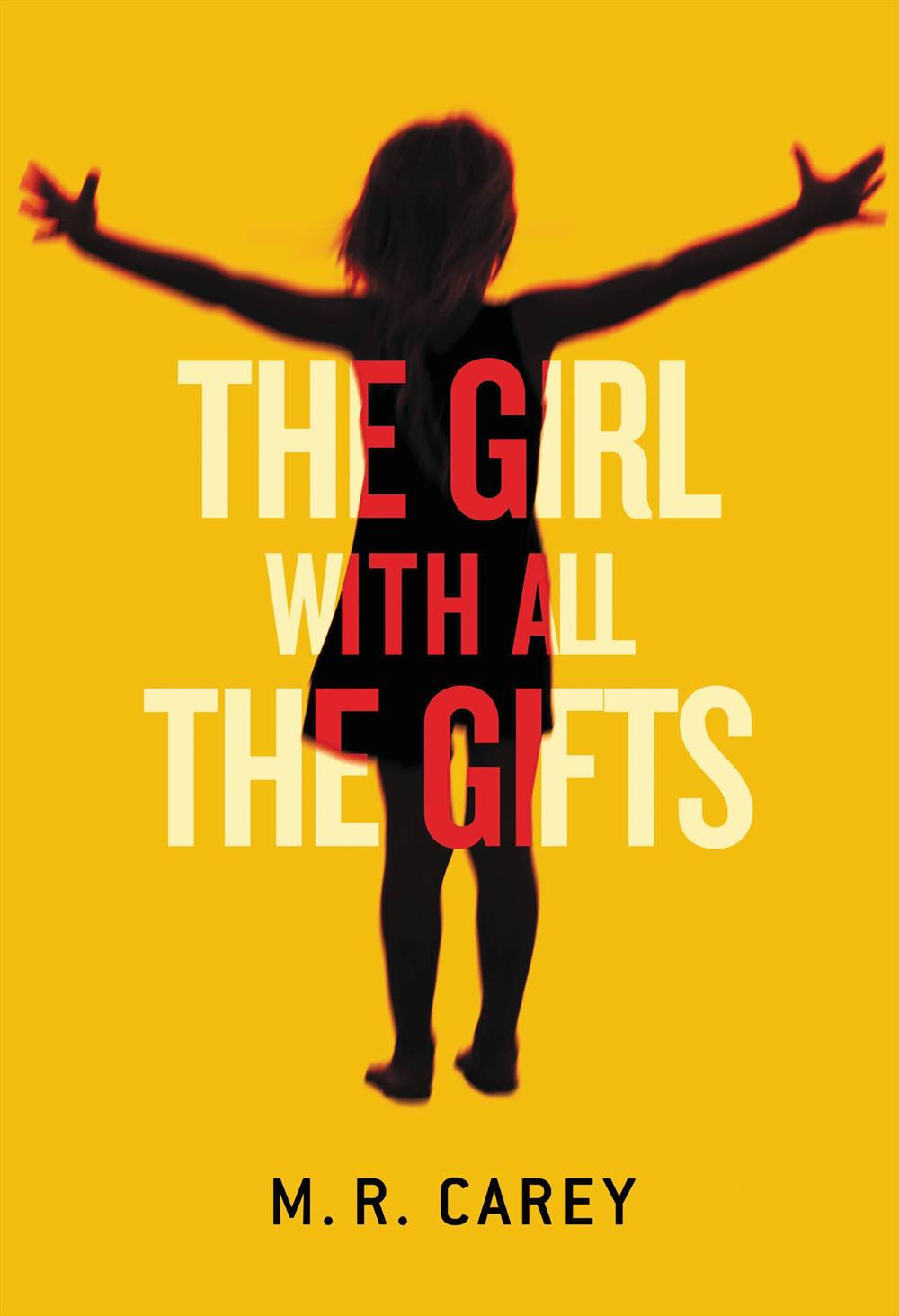
Microreview [book]: The Girl with All the Gifts, by M. R. Carey


Carey, M. R. The Girl with All the Gifts. Orbit, June 2014.
Buy it here starting June 10th!

The Meat (of the Mushrooms

Or, Fungocalypse Now! 

Books about bad guys are awesome. Best of all are those where either the readers or the bad guys themselves (or both) don't even know they're bad guys! Since 'the reveal' about the eponymous girl, Melanie (but her true name, thematically at least, is Pandora!), happens right at the beginning, I'm giving little away when I say that Melanie is just such a doesn't-know-she's-bad character. There are wonderful, slightly displaced echoes of Matheson's I Am Legend here, and a glorious twist at the end worthy of an M. Night Shyamalan movie (one of his good early efforts, not the trite drivel he poops out these days). Choosing to introduce us to the post-(but not fully)apocalyptic human world partly through the eyes of one of its near-destroyers, Melanie, ensures the reader's sympathy for her rather unique plight, caught between the human and 'hungry' worlds.


 ++


                                Ophiocordyceps unilateralis!


                                                                                  =
(Crichton-esque 'meddling with nature' is the implied cause of the fungocalypse)
One of the book's greatest strengths, however, is that despite this tacit endorsement of Melanie's perspective, Carey (the author) doesn't let us slide into the seductively easy trap of identifying entirely with the protagonist (Melanie, the anti-hero) at the expense of those characters to whom she takes a dislike (Sergeant Parks, seen initially from her perspective as a loathsome, hateful Napoleon of a man, turns out to have quite a human dimension as well).
The key in melodrama, broadly defined, is generating an intense burst of antipathy in readers for certain characters because of the injustice or essential unfairness of their actions (i.e., creating someone to hate as the foil for the hero, who we are meant to love), then providing a cathartic (and often violent) resolution in the form of the hero, justice personified, triumphing over the unreasonable foe. So this decision by Carey to take the high road (avoiding the easy payday of a totally despicable character) and keep things balanced between multiple competing, and (perhaps) equally valid perspectives brings deliciously sustained tension to the story as it unfolds. I can't recall the last time I read something possessing such fine equilibrium (and I have no doubt that when this is, inevitably, made into a Hollywood movie, this rare anti-melodramatic quality will vanish, replaced by a much more straightforward morality play, the kind where bad guys are irredeemably bad and good guys as unimpeachable as friggin' Albus Dumbledore). Warm Bodies (book and/or movie) was close, but the future father in law was just such a jerktard!
Was every single aspect of The Girl with All the Gifts full of the same brilliance as the highlights mentioned above? No, there were naturally weaker aspects of the story, in particular behavior by certain characters (here's looking at you, Private G.!) that was frankly so mind-bogglingly dumb as to be, in essence, out of character, as well as a certain coldly rational scientist who indeed began to approach the 'totally bad' type of villain, almost a caricature of "(evil) scientist", so impersonal and inhuman were her actions. But if we leave aside these just slightly jarring notes, we can enjoy what remains: a delightfully entertaining symphony of the fungocalypse!


The Math


Baseline assessment: 7/10

Bonuses: +1 for villain's-eye-view, +1 for humanizing (almost) all the characters and preventing any one viewpoint from achieving melodramatic dominance

Penalties: -1 for including a few less developed characters, indeed mere caricatures of archetypes

Nerd coefficient: 8/10 "Well worth your time and attention"


[As you can read here, 8/10 from us is like an 11/10 from the guys in Spinal Tap!]