Showing posts with label crime. Show all posts

Tuesday, June 17, 2025

Film Review: The Phoenician Scheme

This is a solid, well composed entry in the Wes Anderson canon, though it lacks the emotional depth of some of his older films

Critiquing Wes Anderson films, in all their symmetric and stylized glory, has become similar to critiquing genre films—you have to understand and at least appreciate them to make a fair assessment. If you hate gore, spooky nonsense, and final girl tropes, you probably won't like a new horror movie. Similarly, if you despise Anderson's twee and color-saturated aesthetic sensibility, you'll probably never jive with an Anderson joint. And that's okay! We just have to know what we're getting ourselves into.

All this to say, of course, that I'm an O.G. Wes Anderson fan. I've been chasing the high of seeing The Royal Tenenbaums for the first time ever since I was 19 years old. Over the years, I have looked forward to whatever new and weird thing he's doing, resting assured that he's maintaining his style and peculiar sensibility.

The story

2025's The Phoenician Scheme is the latest entry in his oeuvre, and it centers on a ruthless business magnate named Zsa-Zsa Korda (played by Benicio del Toro). After a failed assassination attempt, he reevaluates his life, reaching out to his estranged daughter, Liesl, a novitiate nun played by Mia Threapleton (a nepo baby, I recently found—Kate Winslet's daughter!). As they reconcile, they hit the road to acquire some investors, accompanied by a Swedish entomologist named Bjørn (played by Michael Cera, but more on this development later). Traveling around the world, we encounter classic Andersonesque bit characters, from the elderly-yet-spry Sacramento Consortium to the classic Frenchness of Marseille Bob.

Like in Anderson's other films, there's a very strong Dad element to the plot. In this case, Liesl is coming to terms with her less-than-moral, long-missing father, who for some reason wants her back in his life. It's very clear throughout the movie that Korda is trying to make amends, though it comes across as a bit heavy-handed. Case in point: showing that he's growing as a character by saying lines like, "Fine, I won't use slave labor."

As you'd expect, there is the usual treasure trove of running gags, from Liesl's bejeweled corncob pipe to the dainty basket of artisanal hand grenades that Korda offers to everyone like fine cigars. These small bits absolutely scream Wes Anderson, and their inclusion helps make the world more whole. (The artisanal hand grenade bits reminded me of my love for Portlandia and the sketch with Jeff Goldblum selling handmade decorative knots.)

The characters

Del Toro's Korda just doesn't do it for me. It may be because I don't think he has a sense of humor. The entire time I just wished that Gene Hackman or Owen Wilson was steering the ship as Korda. Also, it could be something to do with portraying a selfish, Art-of-the-Deal-type protagonist in the current climate that makes it hard to escape into a fun movie.

The best characters that appear on screen are Tom Hanks and Bryan Cranston as two business brothers from California. Korda challenges them to a game of basketball/HORSE with the winners fronting money for the scheme, and the resulting 5-minute scene is hilarious, charming, and almost surreal. The two brothers, sporting '50s-era Stanford and Pepperdine workout shirts, go to town on Korda and his associate, talking smack and taking names.

Because of Korda's near-death experience, he dreams often of heaven, God, and judgment, and in these brief black-and-white sequences, you can occasionally spot a silent Willem Dafoe, an enjoyable task kind of like finding Waldo in an artsy movie. In my screening, people were literally laughing and pointing every time he appeared.

Michael Cera's big Anderson debut

Just as Voltaire once said, "If God did not exist, it would be necessary to invent him," so too, "If Michael Cera didn't exist, Wes Anderson would have invented him." I can't believe it's taken nearly 30 years to get him in an Anderson movie, but to be fair, in the early 2000s he was only a teenager.

In The Phoenician Scheme, he does a lot of heavy lifting, playing first a heavily accented, bespectacled Swedish tutor, then, it's revealed, an American spy, complete with a manly swagger and cigarette. He's an absolute delight, even when he's just standing awkwardly around in the background of different scenes—an anthropomorphic set piece expertly curated like so many other parts of the movie.

The music issue

Alexandre Desplat is (as usual) in charge of the music in The Phoenician Scheme, but his score and picks skew more classical than modern pop. I know this was probably done intentionally, but when I think back to my favorite moments from Anderson films, they're tied irrevocably to absolutely cinematic and top-tier needle drops, from Nico's "These Days" in The Royal Tenenbaums to the plaintive chords from Seu Jorge's Bowie tributes in The Life Aquatic. Even Asteroid City has some classic Western bops to tie us into the setting's place and time. The Phoenician Scheme lacks all that—and consequently a firm grasp on the exact time period, as well, again most likely on purpose—resulting in much less emotional heft for me.

Overall

It was perfectly fine, though I didn't laugh nearly as much as I was expecting to. There are so many characters and plot throughlines that nothing gets very much explanation—everything is a mile wide and an inch deep. To be fair, though, this movie does a lot.

The end of the movie sees Korda's Phoenician Scheme to completion, with him sacrificing his wealth to make it work. As as result, he's lost all his money, and he, Liesl, and his sons move to Paris to open a bistro. Honestly, I was way more into this tiny aspect of the story, even though it was only on screen for a few seconds. I'd love to see the misadventures of a titan-of-industry-turned-chef and his ex-nun daughter running a successful restaurant in France, like a Wes Anderson version of The Bear. Who knows? Maybe that's next.


Nerd Coefficient: 7/10.

POSTED BY: Haley Zapal, NoaF contributor and lawyer-turned-copywriter living in Atlanta, Georgia. A co-host of Hugo Award-winning podcast Hugo, Girl!, she posts on Instagram as @cestlahaley. She loves nautical fiction, growing corn and giving them pun names like Timothee Chalamaize, and thinking about fried chicken.

Friday, February 14, 2025

Book Review: The Sentence by Gautam Bhatia

A secondary science fictional world whose protagonist, and her world, turns on matters of justice and law

Nila is an ambitious student of law in the city of Peruma. And it is an exciting time to be a student on a track to be a full-fledged Guardian, which you might usefully think of as a neutral lawyer and advocate. Nila’s hope, given her high standing in the community of students, is to be selected for the case of the century, to be one of the twelve students chosen to argue one of the two sides of a question that could decide the future of the city. Nila is not selected for that case, but is instead asked to argue to overturn the sentence of a murder... a murder which changed the course of history a century ago.

This is the story of Gautam Bhatia’s The Sentence.

The novel takes place in a rather unique setting. It is a completely mundane alternate world that nonetheless appears to be the only world. It’s not a colonized planet. It’s not the far past or far future of Earth. And yet it is a world that has no magic or even the hint or trappings of a fantasy setting, either. It’s just an alternate cradle of humanity, from all the textual evidence.

That said, the history of this world reflects, refracts and rhymes with our own. It takes place on a subcontinent with a number of city states besides Peruma, where all the action takes place. Peruma, once upon a time, was an imperial power and dominated the entire subcontinent before a world with technology slightly ahead of ours. A revolution in the imperial capital, freedom for the other cities, and war left them with a subcontinent of competing and jockeying city states, high in technology. Given the names of the other cities (Chemur, Monara, Lubini, Jharna and Sampi), and other worldbuilding we get, this all gives the subcontinent that Peruma sits on a very Indian flavor. However, this appears to have been a homegrown empire rather than one imposed from without—much more like the Chola empire, rather than the Mughals or the British.

The empire, however, is four centuries in the past (this is the kind of novel that has a timeline up front). After the fall of the empire, the city of Peruma turned into a mercantile republic (republic in theory, anyway) wracked by revolts from the lower classes. Finally, a hundred years ago, Purul, the head of the republic, the Director, had a lethal confrontation with a worker, Jagat R., leading to a revolution within the city and its division into two halves. Jagat R. was found guilty, but in a world where the death penalty had been abandoned, he was instead put into cryosleep.

A hundred years later, it is Jagat R.’s sentence of murder that our protagonist, Nila, is asked to reopen and overturn, rather than what she really wanted: joining the “case of the century”, which is an examination of the treaty signed at the end of that same revolution.

And thus our plot is up and running.

So, while the ostensible plot is Nila trying to work on what is seemingly an open and shut murder case from a century ago, and one that literally is seen to have changed history, the novel is really about the sociological and legal questions that the author poses in the narrative. The Sentence itself, the cryosleep that in a real sense is almost always just a slow-motion death penalty (after about 100 years, someone put into cryosleep cannot be revived) is just one of the base questions. Questions of justice, due process, and equity in sentencing and representation (the Guardians are a fascinating legal idea) are part of the pie.

Even bigger are the sociological and political questions that the novel raises. I didn’t mention that when half of the city broke away from the other after the assassination, that lower city’s revolution took its form of government in a radical direction that went all the way to an anarchic commune. A century later, it is mostly following the precepts of its own revolution, but the upper city still holds a strong hand, and would definitely want to reintegrate it back into its political control. What is more, the commune’s future is already at stake. Someone upsetting the applecart of the fact of a lower city martyr, Jagat R., assassinating the Director could be at best a destabilizing force on its very existence.

And did I mention that Nila’s mother is an important member of the commune?

So The Sentence is The Paper Chase by way of the Paris Commune, set in a secondary science fiction world loosely based on the Indian subcontinent, with aircars, cryosleep, and a few other twenty-minutes-into-the-future-level technologies. It’s a legal thriller, certainly, but even more it is a sociological and societal thriller that poses some not-easily-answered questions about justice, society, government, and the role of personal responsibility to all three.

It makes the book hard to judge with its peers in the SFF community because it takes several uncommon subgenres (a legal thriller, a sociological piece, and a de novo secondary world unconnected even by hint to our own) and alloys them all together. There is definitely DNA of LeGuin here, but the deep study and appreciation and concern over the ideas and use of anarchism are far rarer in science fiction outside of LeGuin, and perhaps Doctorow and to an extent MacLeod, and given the author’s setup here, The Sentence is much more in dialogue with things like The Dispossessed than anything else in terms of the anarchism (which does really feel like the beating heart of the book) but combined with the legal aspects and the sociology of the entire world), and it really is boldly striding into uncharted territory.

How it gets into that territory is, of course, the proof in the pudding. The book is written cleanly, strongly and crisply, but with a lot of overt worldbuilding, necessary because of the nature of the setting (I mentioned the timeline before as just one example). The writing is thus rich with details of all kinds. One particular highlight is Unclean Hands, which is a fictional play that turns into a touchstone for Nila and other characters. It might be inspired by the real Dirty Hands by Sartre, but the two are clearly different.

Another interesting highlight is the historical attitude and viewpoint of this society and it frames itself within it. The society has a theory of history that works on points of potential divergence, where the course of history was shaped, called Inflection Points. The entire society agrees that this is the standard model of how history is currently interpreted, looked at, discussed and debated. The assassination of the Director a century ago is seen as the Fourth Inflection Point in the post-imperial era, and everyone seems convinced that the 100th anniversary of that assassination and the debate between the halves of the city is destined to naturally be the Fifth Inflection Point. And that is even before it is revealed that Nila is going to try and reopen the case of the murder of the Director by Jagat R.

Although the politics are extremely different, the only other recent work that really compares to The Sentence is The Broken Trust (Mazes of Power) series by Juliette Wade. That too takes place in a society that is not our own, and explores some thorny questions about sociology and anthropology as well.

While there is intrigue, and some action sequences intended to dissuade Nila from handling the case get more and more overt and dangerous, the real heart of the book is, in fact, Nila’s heart. She is faced with some very difficult decisions, morally, ethically and personally in the course of her legal investigation, with implications for the city, for society, and most importantly, the author points out, her own soul. It makes The Sentence fascinating reading, and as of the writing of this review, frustratingly only published in India. This seems to be a wasted opportunity by UK and US publishers. The Sentence is the type of science fiction that demands a much wider audience.

Highlights:

  • A world not our own, with thorny and interesting sociological questions
  • Strong legal framework and centrality to society and main character
  • A book that will remain with you long after you read it

Reference: Bhatia, Gautam. The Sentence [Westland IF, 2025].

POSTED BY: Paul Weimer. Ubiquitous in Shadow, but I’m just this guy, you know? @princejvstin

Tuesday, March 19, 2024

Review: Drive-Away Dolls

Be lesbian do crime.

If there is one word that describes the filmography of the Coen brothers, it is ‘quirky.’ They are almost instantly quotable. There is always some character with an outlandish accent. There is an endlessly weird plot that nevertheless says something intelligent and profound about America (and it’s always America) by the end. Now, Ethan Coen sets off with his debut as a solo director, the lesbian crime film Drive-Away Dolls, written by Coen and Tricia Cooke, released in February of 2024.

This film is set at a very particular junction in American history: the late 1990s, the turn of the millennium, the dawn of the digital age, the time when America bestrode the world like a colossus with no equal (and I must admit, it is strange that a time that I was alive in, although was too young to remember, being born in the last days of 1996, is becoming the object of these somewhat nostalgic period pieces, as has been done with the 1960s, 1970s, and 1980s - Madame Web, being set in 2004, was something that made me feel very old, despite not being that old). In this regard, it feels like an odd throwback to older crime films, albeit with a Coen-esque quirkiness and an unrepentant queerness.

When I was describing this movie to my sister, I called it ‘be lesbian do crime,’ to echo the internet meme. This is a movie that is about lesbians, primarily a pair of characters whose inner journeys parallel the very real physical journey on which they have embarked. This voyage starts in Philadelphia, where Jamie (Margaret Qualley) and Marian (Geraldine Viswanathan) rent a car that happens to be carrying precious cargo for organized crime. They are pursued, and hijinks ensue. I would understand if viewers are worried that a straight man would not write or direct lesbian characters well, as there are so many of them in the ensemble, but it bears noting that Ethan Coen’s wife Tricia Cooke, who is a lesbian (they have a relationship where they each have sex with other partners but are involved romantically with one another, from what I can tell - an odd arrangement, but if it works for them, more power to them), co-wrote the film. I accept that, as a straight man, I am utterly not the best person to judge the representation of lesbians in this film, but at least one lesbian was intimately involved in its production. Make of that what you will.

As you would expect from its director, this is a gut-bustingly funny film; my lungs were tired by the end of it. It has the trademark razor-sharp wit that results in lines that are eminently quotable. This is punctuated by perfect delivery, especially by Qualley’s Jamie, the designated ‘funny woman’ to Viswanathan’s ‘straight woman’ (in the comedy sense, not the sexuality sense, of course). Qualley is the designated character with the funny accent, a Texas twang that emphasizes what a fish out of water she is on the East Coast, and what a foil she is to Viswanathan.

What really shines in this film are the performances of Qualley and Viswanathan. They are, as I said, a traditional comedic duo; one is bubbly and extroverted, and the other introverted and intellectual (she spends much of the time reading Henry James, and describes him as long winded; as someone who recently read The American Scene I found her complaints amusingly relatable). So much of the film is Jamie trying to break Marian out of her shell, be it at skeevy lesbian dive bars or swanky Florida hotels or college parties. It’s a delightful contrast of characters that the writing gets a lot of mileage out of. They are yin and yang, so different and yet so necessary for each other.

Something should also be said for two of the hired guns the mob sends after them, who in some ways parallel the two leads. They are Arliss (Joey Slotnick) and Flint (C. J. Wilson), another comedic duo. One wants the other to live a little, while the latter thinks the former is a nag. It is a blunter, more physical partnership, one more concerned with brawn than brain, and is in many ways a funhouse mirror of the protagonists. They likewise bumble through the American South, including multiple juke joints. They have that same clash and yet complement of personality, of contradictory but congruent goals, but the congruence only lasts so long before it heads south in a way that the protagonists never did.

There is a lot of sex in this film, to an extent that somewhat shocked me, even with some idea that it was there. To my straight male eyes, the cinematography and the writing of these scenes did not strike me as written for the male gaze, as so many scenes of lesbian intimacy have been over the years, although I am the first to admit I am not the most qualified person to judge that. Every sex scene in this film has a meaning to it, a purpose to it, and all of them involve character development in an artful way. Indeed, there is a warmth and intimacy to some of these scenes that have the role of more chaste scenes in more reserved films, to the point I cannot help but suspect that a degree of parody of more serious dramas is involved. Ethan Coen, so far as I can tell, views his two leads as proper characters and not merely objects of lust, and it enriches the film.

Drive-Away Dolls is fun, good fun. It is yet another great film produced by a Coen in Hollywood, although interestingly one that is only helmed by one of them (I wonder why Joel was not involved, but that’s ultimately his business). I don’t know where it fits in the history of queer representation in Hollywood, but that’s not my call to make. All I can say is that it is really funny, and quite touching in just the right parts. I highly recommend it.

--

The Math

Nerd Coefficient: 9/10

POSTED BY: Alex Wallace, alternate history buff who reads more than is healthy.

Tuesday, November 9, 2021

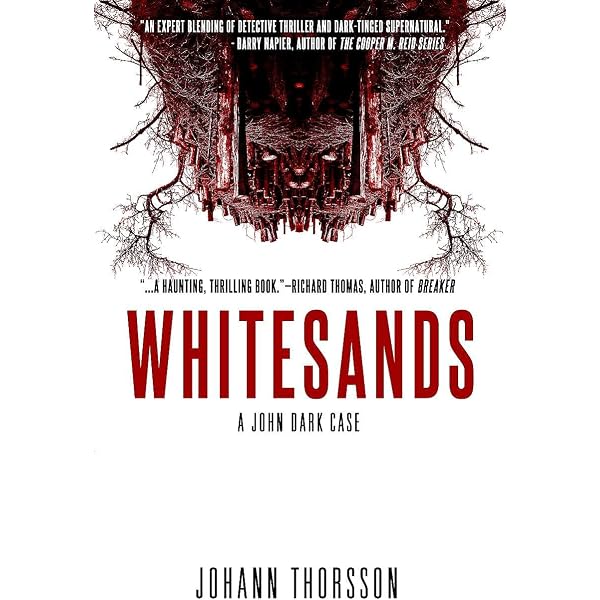
Microreview [book]: Whitesands by Johann Thorsson

A true creeper 


Thorsson is an Icelandic author and former contributor to Book Riot. His stories have appeared in Fireside Fiction and The Apex Book of World SF 4, among other places. Whitesands is his first novel, published in the US by Headshot Books. It is a supernatural thriller, skirting the line between hard-boiled detective fiction and horror - but approaches the genre in an unusual way. 

Whitesands tells the story of John Dark, a police detective in an unnamed American city. Dark and his partner Monique Moreno were once known as the best of the best, but have been reassigned to desk duty after an unsanctioned attempt to find Dark's missing daughter went wrong. They receive their first true case in months, a bizarre, ritualistic murder whose apparent perpetrator, despite clear physical evidence that he did it, has no apparent motive and zero memory of the deed. They are given the case because it's a slam dunk, an easy way to start rebuilding their reputations. But something about the video footage is off. There is, of course, no question as to whether the man committed the crime - but Dark comes to suspect that something else may be afoot...

I will say no more, because part of the fun is how Thorsson slowly introduces the concept of the supernatural into what up to that point reads like a fairly straightforward, fast-paced work of hardboiled detective fiction. To be honest, I'm a much bigger fan of hardboiled detective fiction than I am of supernatural horror, so I probably would have been perfectly content to let things evolve as they were. In this case, however, the horror elements both compliment and enhance the core thriller narrative. 

There are other details to note as well. For one thing, Whitesands takes place in an unnamed American city. Local color and lore are key components to the American detective novel (think: Chandler's Los Angeles, Hammett's San Francisco). The detectives are also presented in generic terms - their names, "Dark" and "Moreno" signaling with little subtlety that we are firmly in noir territory. But while "generic" is usually a pejorative term, in this case it's set up - since this is decidedly not a generic detective story. 

The book also has excellent pace. At several points, I made myself stop reading so I could better digest what I'd just taken in. But the urge to continue on was constant. This is the kind of book you could happily devour on a long plane ride, but there are definite advantages to taking your time. 

Without giving too much away, Whitesands ends on a cliffhanger - akin to the end of a TV season. I'm fine with that, as I intend to read the sequel when it comes out. But some readers may wish for more resolution, even if major storylines continue. 

All that said, Whitesands is not a perfect book. There are elements, like John Dark's preternatural instincts, that are referred to but not really developed in any way. And Moreno sometimes presents more like a vehicle for Dark's character exposition than a fully-rendered character in her own right - though the hints we do get about her back story are very intriguing. Hopefully this is explored more in later volumes. Finally, though I did enjoy the "Everywherescity, USA" approach to world building that Thorsson takes, there are times when it seems to come less from intentionality and more from a lack of the kind of intimate familiarity that a native or deeply embedded transplant would have. Yet the fact that these moments are rare is also notable. 

Overall, Whitesands is a brisk, enjoyable read that I recommend to fans of both detective fiction and supernatural horror. 


The Math

Baseline Assessment: 7/10

Bonuses: +1 for the slow introduction of supernatural elements, which is refreshing; +1 for brisk pace

Penalties: -1 for elements that could have been developed further

Nerd Coefficient: 8/10. Well worth your time and attention. 


***

POSTED BY: The G--purveyor of nerdliness, genre fanatic and Nerds of a
Feather founder/administrator, since 2012. 

Wednesday, May 28, 2014

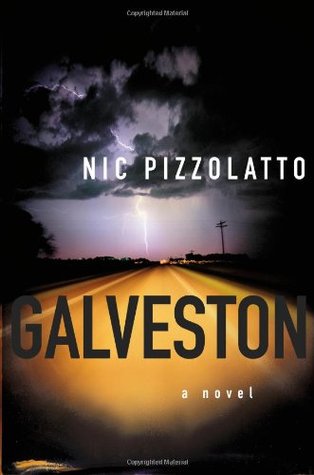
Microreview [book]: Galveston by Nic Pizzolatto

Pretty but Uninspiring


To feed my borderline unhealthy obsession with True Detective, I tracked down a copy of show creator Nic Pizzolatto's crime novel Galveston. I wasn't exactly sure what to expect, though "gritty," "artsy" and "weird" all seemed plausible--particularly after reading Dennis Lehane's glowing review in the New York Times. Turns out Galveston is plenty gritty, but not nearly as ambitious or abstract as I wanted it to be.

Galveston tells the story of Roy Cady, an enforcer for a mid-level gangster in New Orleans. Cady finds himself in a tight situation and so hightails it to the eponymous city on the Gulf with hard case Roxy and a young child in tow.

Galveston is fairly classic noir, but as I outlined in my Friday Five for pornokitsch, noir basically comes in three flavors:


1. The Hardboiled Thriller, in which a stubborn and ethical hero pushes back against dark and corrupt world, ultimately settling for small, symbolic victories against a backdrop of general hopelessness (e.g. Dashiell Hammett, Raymond Chandler).

2. The Sadsack Tragedy, in which a well-intentioned but weak-willed antihero attempts but is unable to escape the clutches of said dark and corrupt world (e.g. James M. Cain, Jim Thompson).

3. The Revenge Fantasy, in which a sociopathic product of the dark and corrupt world seeks revenge against its agents, yet is unconcerned with changing or improving that world (e.g. Patricia Highsmith, Richard Stark). 

The genius of Galveston is that Pizzolatto keeps us guessing as to which one Cady's story will turn out to be. And the book is beautifully written too--sharp, evocative and peppered with passages that are, quite simply, dazzling.

Unfortunately, Galveston often feels weighed down by reliance on the tropes of the genre--the tough-but-caring criminal, the hard case (yet vulnerable!) love interest, the innocent child, etc. It isn't that Galveston is bad--it's not at all; it's that Galveston plays things a bit too safe. In other words, it's no True Detective.


The Math

Baseline Assessment: 6/10

Bonuses: +1 for Pizzolatto's gorgeous prose.

Penalties: -1 for "meh."

Nerd Coefficient: 6/10. "Enjoyable, but the flaws are hard to ignore."

***

POSTED BY: The G--purveyor of nerdliness, genre fanatic and Nerds of a
Feather founder/administrator (2012).


Pizzolatto, Nic. Galveston: A Novel [Scribner, 2011]

Monday, May 19, 2014

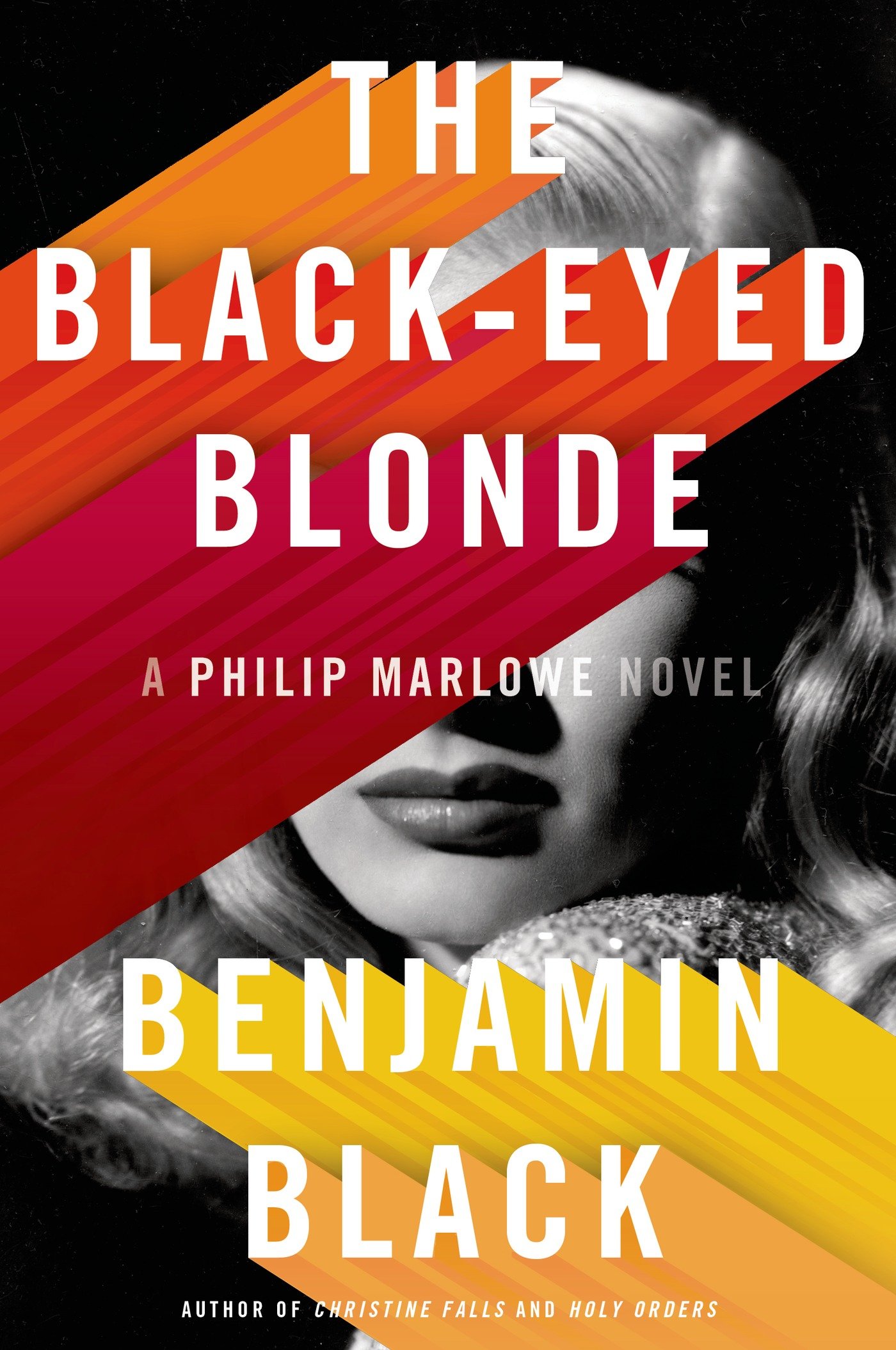
Microreview [book]: The Black-Eyed Blonde by Benjamin Black


Black, Benjamin. The Black-Eyed Blonde [Henry Holt, 2014]

I confess that I am a bit of a Raymond Chandler fanatic. I've read each of the seven Marlowe novels at least twice, and some several times more than that. I consider Chandler to be one of the most significant novelists of the Twentieth Century, and easily the best stylist genre fiction has ever produced.

Over the years, I've read a number of homages to the master, from lighthearted spoofs to more serious fare. The best of these, like Jonathan Lethem's science fictional Gun, with Occasional Music or the middle chapter in Ariel Winter's The Twenty-Year Death, adopt a playful tone and a respectful distance from the author whose work they celebrate but, really, can never hope to equal.

The Black-Eyed Blonde by Benjamin Black, otherwise known as Irish novelist John Banville, does not have that luxury. After all, it is not an homage, but a new Marlowe novel. Thus Banville faced the distinct challenge of producing something that would evoke Chandler but not just make you wish you were reading The Big Sleep.

The last time someone tried to do this was in 1989, when crime novelist Robert B. Parker completed Chandler's unfinished manuscript for Poodle Springs. It quickly became a joke among hardboiled fiction aficionados, with Parker memorably dismissed by Martin Amis for having turned Marlowe into "an affable goon." But there was good reason to think Banville might succeed where Parker failed. After all, while Parker is best described as a likeable, forward-thinking crime hack, Banville is a bona fide literary rock star. If anyone was going to do this right, it was going to be someone Don DeLilo once described as writing "dangerous and clear-running prose" with "a grim gift of seeing people's souls."

On that note, let me begin by saying that The Black-Eyed Blonde is orders of magnitude better than Poodle Springs. It's a crisply, efficiently-written and briskly-paced detective story set in Marlowe's Los Angeles. While Banville isn't exactly breaking new stylistic ground here, the book is an undeniably well-crafted and smart bit of hardboiled detective fiction.

Yet Chandler did not write "well-crafted and smart bits of hardboiled detective fiction"--he wrote artistically significant literature that wore the clothes of hardboiled detective fiction, and this is not that. Banville by his own admission views crime fiction as "cheap." And a lot of it is. But Chandler's fiction is anything but, and in the end The Black-Eyed Blonde does unfortunately feel like a cheapened rendition of the genuine article. Nearly every sentence Chandler wrote spawned a cliche, and at times it feels like Banville is channeling the cliches rather than the authentic item. Banville's Marlowe is too direct, too reliant on simile over metaphor and, well, acts a bit too much like Sam Spade.

So did I like it? Sure--though I didn't love it. Perhaps, if I'm feeling reflective, I might admit that I never could. But this is only partially my problem. After all, not only does Banville try to sell us on the authenticity of his Marlowe, but he fuddles with Chandler's penultimate achievement, The Long Goodbye (I won't spoil the book by saying how). This is sacrilege for someone like me, and there are enough of us to make me think that The Black-Eyed Blonde would have been better off as homage--starring someone else who just looks and talks like Marlowe, but isn't supposed to be Marlowe. Because this isn't Marlowe anyways.


The Math

Baseline Assessment: 7/10

Bonuses: +1 for being a good homage to Chandler's Marlowe.

Penalties: -1 for "but it's just not Marlowe"; -1 for thinking The Long Goodbye needed or even wanted a sequel.

Nerd Coefficient: 6/10. "Enjoyable, but the flaws are hard to ignore."

***

POSTED BY: The G--purveyor of nerdliness, genre fanatic and Nerds of a
Feather founder/administrator (2012).

Friday, April 11, 2014

Best of All of Us: Year Two

Today we nerds of a feather celebrate our second anniversary! It's been real--and at times surreal. But it's always been fun, thanks the the crew of smart, interesting and generally likeable people Vance and I have enticed, sweet-talked, cajoled and coerced into contributing to the site. We now have a grand total of 10 (10!) regular writers, including ourselves--not to mention the individuals who have generously donated their time and thoughts as guest writers and interview subjects (more on them next week). For now, though, to celebrate, I thought I'd compile the Best of All of Us: Year Two (regular contributors edition). For each writer, I provide the most popular post since April 11, 2013 and my personal favorite. And for those who have been with us since the beginning, you can note that I've put our contributors in the order by which they joined.

Oh, and how could I forget? Thanks to all everyone--readers, fellow bloggers, authors, filmmakers and so forth--who have supported and continue to support us as we go forward. You are what makes this whole project special to all of us, and for that we are eternally grateful. 

Now, on to Best of All of Us: Year Two... 

-The G


The G

Most Popular: Draft Hugo Ballot 2014 (1/22/14)

Favorite: True Detective Conquers All (3/11/14)

The Hugos thing was fun to write, as it gave me the chance to heap praise upon some deserving folks. But as far as personal favorites go, well, it's got to be the love letter Philippe and I wrote to the Greatest Television Show Ever. The most fun criticism to write, after all, tends to be that which come from intersections of rational consideration and emotional fervor--either of the proselytizing or righteous condemnation variety. And, frankly, Philippe and I might as well have been hawking "mainlining the secret truth of the universe" tests on Hollywood Blvd. Yet while we might be accused of True Detective zealotry, everything we say about the show is true!
"Sure, True Detective came in familiar packaging--the police procedural, the hardboiled detective story, the hunt for a serial killer, etc. But it kept hinting that it would metamorphose into full-blown horror. There were the little hints sprinkled throughout the season--the recurring patterns, the more-than-coincidental names, the literary references, the signposting. The Yellow King! Carcosa! We grew certain of such things. But in truth, True Detective used the symbolism and iconography of horror to establish its apocalytptic atmosphere. This is noir, pure and simple, a small-scale holocaust of the human soul--Lovecraft without the tentacled bodies; Revelations without the horsemen."


Vance

Most Popular: Beer and Sci-Fi Pairings (3/25/14)

Favorite: Spurs to Spandex: Why Westerns Died and Superheros Fly (5/13/14)

Vance's pairing of craft beers to speculative/SF television programs has become our all-time most popular post. But while its awesomeness cannot be denied, I nevertheless prefer the essay where he relates the shift in Hollywood film archetypes, from the gunslinging cowboy to the superpowered vigilante, to changes in how Americans view the society they live in, their socio-economic prospects and the attainability of "the American Dream." It's probably the most serious thing we've ever published, and by extension, might be the best.
"But reality has begun to approximate this magical aspect of our daily narrative. Peter Parker, Steve Rogers, Harry Potter, Carrie Underwood, Jennifer Hudson, Snooki, and all of the Kardashians share one thing in common: they were unknown, regular people who had something inside of them just waiting to be discovered and exploited on a larger stage. They were destined for greatness. We watch reality TV and Superhero Movies wishing that someone would see past our own humble situations, recognize our latent talent or nobility, and lift us out of our everyday lives."


Molly

Most Popular: Comic Con from Afar -- Second Annual Lamentation (7/23/13)

Favorite: Ender's Game: Heart But No Smarts (11/4/13)

Every year Molly compiles the best intel and video footage from San Diego Comic-Con--wishing from afar that she were there. It's something I've come to look forward to in July. But my favorite post of hers has to be this conflicted review of the Ender's Game film adaptation. See, like me, Molly finds Orson Scott Card's political activism nauseating. Unlike me, though, she loves the Ender novels. This review is thus both a fan confronting a flawed adaptation of a treasured book and a fan navigating difficult questions of whether art can be separated from the artist.
"The movie left out pretty much all the thinkier parts of the book - the entire subplot of Peter/Locke and Valentine/Demosthenes manipulating the politics on Earth, the complex strategies in the battle room, and the denser moral debate on xenophobia. For the most part, it was ok to me that the movie was a heavy-handed spectacle, because that's how Ender's Game the book fits into the rest of the Enderverse: it's a prequel, a flashy podracery bit of awesome that appeals to our baser, pubescent tastes of violence and space war."


Mikey

Most Popular: Tales from a Board Gaming Convention: Geekway to the West (5/16/13)

Favorite: Tales from a Board Gaming Convention: Geekway to the West (5/16/13)

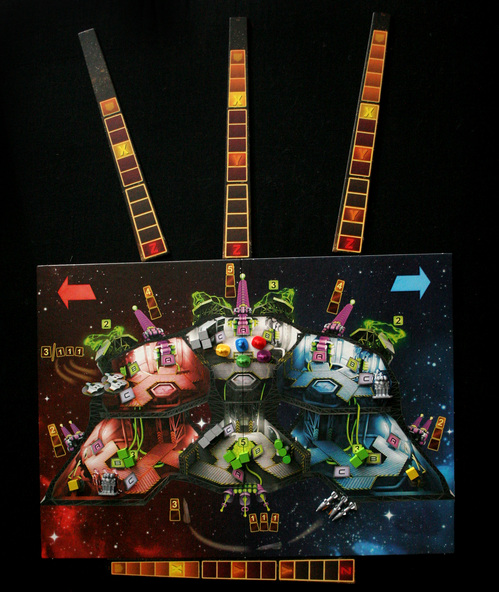
Mikey does a lot of things for this site--including his weekly (must read) roundup of new comics. But his con coverage just can't be beat--and this assessment of five wholly different but equally compelling board games convinced me to bust out the Catan box and get that wood-for-sheep business going again. Next time I'm in Mikey's neck of the woods, you know I'm dropping by for a session of Space Alert (which I really, really need to get my hands on, by the way).


"Space Alert is a real-time, cooperative game in which you assume the role of a crewman of a spaceship stranded in an asteroid field.  As a team you work together through a series of rounds as dictated by a CD that takes you through a 10 minute senario. During these frantic 10 minutes, the players all play their actions face down and communicate to one another what steps they are taking. Whether you are giggling the mouse to keep the computer from falling asleep to firing lasers at a target you hope is in range, you won't know if you were successful until you resolve everything upon completion of the CD."


Philippe

Most Popular: Microreview [book]: The Revisionists (7/10/13)

Favorite: Man...or Astroman? (And some stuff about the nineties, Bakersfield, and sci-fi) (5/10/13)

Philippe's posts often have an nostalgic air, drawing lines between the products of geekdom and his personal journey through three decades of nerd culture. While I love his reviews, this piece about the retrofuturist surf band Man...or Astroman? really hits the spot for me. It's funny, personal and skewers the inauthenticity of today's endlessly cycling nostalgias. Plus it's about an awesome band. 

"The nineties had little of today’s triumphalism, the constant lauding of how awesome and connected things are today. Networks and such. This is an era that has little time for the past. The past is still mined—we’ve gone through the eighties over the last few years—without the conscious, often celebratory nostalgia that accompanied nineties retro. Is anyone actually looking longingly at the eighties? Nineties surf bands with sci-fi personas were homages to a simpler time."


Jemmy

Most Popular: Microreview [book]: The Republic of Thieves by Scott Lynch (8/19/13)

Favorite: All Hail the Black Company! (11/5/13)

Jemmy's review of Scott Lynch's latest swashbuckler has been a huge hit for us--and is slated to appear in in Speculative Fiction 2013, an anthology of the best blog commentary on SF/F. However, I'd argue that Jemmy's paean to Glen Cook's gritty "band of brothers"-style fantasy series is far and away his best work of our second year. I mean, come on--he takes one of the most underrated and important fantasy series of the past 40 years and elevates it to the level of greatness it rightly deserves! And it's beautifully written too.
"Glen Cook's series presaged the darker turn in fantasy--to the grit and darkness that we now tend to associate with writers like Joe Abercrombie, George R.R. Martin, Steven Erikson, Scott Lynch, and Ian Esslemont, to name but a few of the good ones. But Cook's original novel, The Black Company, was written in 1984. That's nearly thirty years ago! Twelve years before A Game of Thrones! So I expected a rather quaint version of grimdark (a quaint pseudo-grit?). After all, wasn't Cook writing in the era of Terry Brooks and David Eddings, when heroes existed to save kittens, pet bunnies, fulfill prophecies, and tell the reader that the world will work out just fine?"


Brad

Most Popular: Tiny Tina's Assault on the Dragon's Keep (7/1/13)

Favorite: Tiny Tina's Assault on the Dragon's Keep (7/1/13)

Brad's series on the various Borderlands expansion packs have been hugely popular, and the game series' goofy humor seems to perfectly fit Brad's own. I routinely laughed out loud, and nowhere more than in his review of Borderlands' send-up of epic fantasy. Plus Bunkers & Badasses.
"Nearly everything...is a melange of Tolkein, Game of Thrones, and D&D, down to the vending machines. Marcus Munitions has become Marcus Missiles and it warns you to, "Watch out for those orcs!" Zed's Apothecary quips, "Have fun storming the tower." There's another reference to a movie I just watched, The Princess Bride. It felt a bit like walking around in Skyrim with corrosive sub-machine guns and missile launchers...."

Dean

Most Popular: AiIP: The Self-Publishing Manifesto (4/15/13)

Favorite: AiIP: Support Your Local Bookstore (even if you buy digitally) (7/15/13)

Dean's self-publishing column is a monthly highlight, and his running series on how indie authors can avoid the Amazon trap has been very informative. My favorite installment is the one where he discusses how indie authors can support local bookstores--even when selling ebooks. Independent bookstores are very important to me, and so this is naturally my personal favorite. 

"I see a lot of authors buying into the Amazon-or-nothing thinking. Amazon has anointed Hugh Howey as the king of self-publishing for his Wool series, including his comments in such places as their GoodReads acquisition press release, wherein he compares Amazon to 'the cool guy next door marrying your mom'...But why at the exclusion of everything else? What possible benefit does that have for the author, the reader or the literary community?"


Zhaoyun

Most Popular: We Rank 'Em: Best Computer (PC) Games of the mid-1990s (8/2/13)

Favorite: Microreview [book]: A Kingdom Besieged by Raymond E. Feist (7/13/13)

This was a tough one for me, because I really like how the 1990s PC game essay captured the nostalgia-seeking mentality of the thirty-something geek (even if I don't agree with all of the individual choices). But as good as it is, Zhaoyun's epic takedown of Raymont E. Feist's mailed-in latest takes the cake for me. The result is highly entertaining, if slightly depressing, and exemplifies what we're trying to do with our review content.
"Weep for Feist—how far he has fallen! How sloppy his writing has become, how formulaic his plots, how uninteresting his characters. My theory? Blame video games. He stopped writing full-time so he could help create several games based on the Midkemia world(s), notably Betrayal at Krondor (excellent) among many others (most of which were utterly forgettable/bad). Unsurprising, given this context, that he...has written less a novel and more a novelization of a game concept: generic characters no reader would identify with who are exposed to a range of uninspired role-playing-esque encounters."


English Scribbler

Most Popular: Microreview [book]: Lagoon by Nnedi Okorafor (3/19/14)

Favorite: Microreview [book]: Once Upon A Time In Hell by Guy Adams (12/30/13)

English Scribbler is not only our newest regular contributor, but probably also the funniest. And so I have to bypass his excellent review of Lagoon for the more tongue-in-cheek charms of the review he did of Guy Adams' second B-movie inspired horror/western mashup. I mean, the following quote needs no exposition, does it....

"Sure, I've been to a cowboy boot store in Kansas, I've drunk whisky in Santa Fe and I've successfully panned for gold (in Legoland in Denmark, but it still counts), but I have no right to write such cod Wild West nonsense. I'm sat in a Victorian flat in London wearing a cardigan and sipping ginger tea. The only Westerny things in my eyeline are the 'Dude' in the 'Dude, Where's My Car?' credits on the telly, and the cat's Lee Van Cleef stare. Ok, at the time I wrote the review I was actually sat by the side of the Mekong river so had at least a little Martin Sheen voiceover in my head but that's no excuse. Especially concerning a book written by a Brit with a superb and uncorny usage of Old West lingo."


Tuesday, March 11, 2014

True Detective Conquers All

Today Philippe and I mourn the passing of True Detective, a show that will return but in fundamentally different form. We present our eulogies, point-counterpoint style, though in truth we agree far more than we disagree. WARNING: some heavy-duty spoilers, so don't continue if you haven't finished the series yet.


The G - Remember when people used to argue over whether The Wire or Breaking Bad was the best American TV show of all-time? Yeah, fuck that. Sure, I still haven't gotten around to Breaking Bad (I know, I know), but here's the thing: True Detective isn't just the best TV show I've ever seen, it's pretty much the best TV show I can imagine ever seeing.

Now, I could cite any number of things as proof of its greatness: the acting, the dialogue, the depth of characterization. But plenty of other Golden Age of Television shows have these things as well. And it's not the deep social commentary either. The Wire is, in essence, a literary ethnography of the American inner-city and its on-going decay; Breaking Bad, I've heard, does the same for the suburban middle-class; The Sopranos for the American family; etc. True Detective has that kind of stuff too, though its philosophical musings are a bit more abstracted.

It is worth lingering on the acting for a minute, though. It's a thing now for well-regarded film actors move to the small screen, but most of them, frankly, kinda blow. I mean, that Christian Slater/Steve Zahn bullshit ABC is currently trying to smear on the walls? Come on. Matthew McConaughey's portrayal of the idiosyncratic pessimist philosopher/cop Rust Cohle, on the other hand, is a revelation--a portrayal so focused and purposive that, for each 60 minute episode, it positively annihilates any memory of Dazed and Confused. For 60 minutes, McConaughey is Rust Cohle. And as the show progresses, it dawns upon you that Woody Harrelson's meat-and-potatoes cop Marty Hart may in fact be the more complex character. It's a subtle portrayal, which McConaughey's Rust is not, and that's partially attributable to the writing and direction, but it's also testament to how fucking good these actors are in these roles.

And then there's Michele Monaghan's Maggie Hart. She's has gotten some flak for her "vindictiveness" from some, and written off as a plot device by others, but those are shallow readings in my book. Maggie is a good mother and wife driven to the edge by her philandering drunk of a husband, and who, when she reaches that point of no return, stands up to Marty and refuses to back down--even when he threatens violence. This is a scene about consequences (for both Marty and Maggie) of the choices we make, and about agency--Maggie's agency. To the degree that it is about Marty and Rust, it exists to outline the uncomfortable relationship between Marty's personal misogyny and the gendered violence he and Rust confront during the course of their work as detectives.

It is also worth lingering on that confrontation scene, because in fact no violence comes. And for a show centered on the serial murder of women and girls, True Detective for the most part eschews the exploitative, sexualized and festishized violence that plague this category of show, and resists splatterpornography. True Detective lingers on the threat or intimation of violence, not the cheap thrills of graphic cruelty and gore. 

And I could go on about how True Detective, more than any other show I've seen, manages to be both highly critical of religious power and deeply respectful of religious beliefs and religious people.

But while of these things are unambiguously good, if I were to identify the elements of this show that are near unprecedented, the things that set it apart from just about anything ever made or anything that will ever be made for the small screen, American or otherwise, it would be two things and two things only.

No American show has ever had such a clear artistic vision

This is art, the way Ingmar Bergman and Andrei Tarkovski films are art. Plenty of Golden Age shows have great dialogue, memorable characters and heady atmosphere. But True Detective is the first show I've seen since Twin Peaks that cares--I mean, really, really cares--about what image and sound can actually do. But Twin Peaks was only really good in that way when David Lynch was in the director's chair. Cary Joji Fukunaga, by contrast, directs all eight episodes. True Detective has a distinct, consistent and incredibly well-implemented artistic vision. It's slow, ponderous, abstracted and careful, the way The Seventh Seal or Solyaris are slow, ponderous, abstracted and careful.

There are so many little moments of wonder in True Detective, from the cultish death scene that opens the premiere to the quasi-Lovecraftian horror of Childress' Carcosa, from the overhead shots of Rust's pickup on the freeway to the panoramic views of Louisiana--its foreboding jungles, swamps and the evidence of humanity's decline. And they fit the script as well as you could imagine. As James Poniewozik writes, on one of my absolute favorite moments in the series:

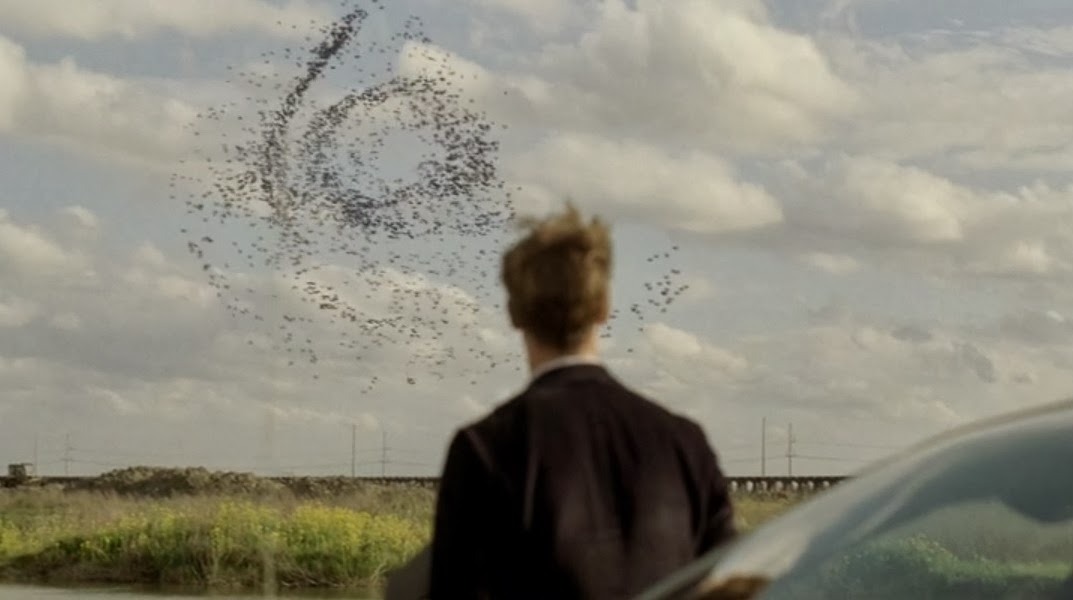
Streetlights streak like heavenly bolts; clouds on the horizon take on an apocalyptic glow; the swamp and backwoods seem haunted. “The visions—there were times that I was convinced that I’d lost it,” Rust says. “There were other times I thought I was mainlining the secret truth of the universe,” and that hits home with a striking visual at the end of the episode, when a flock of birds seems to briefly resolve itself into an intelligible pattern before Cohle’s eyes and ours.

This is the heart of genre darkness

Shows that contain mysteries about the nature of the mystery (Twin Peaks, Lost, BSG, etc.) tend to produce an awkward discourse between writers and fans, where writers drop clues and red herrings, fans develop theories, and writers struggle to create a solution that both satisfies the investigators and still manages to surprise everyone.

The result is almost inevitably disappointing to at least some corners--and True Detective is no different. Sure, True Detective came in familiar packaging--the police procedural, the hardboiled detective story, the hunt for a serial killer, etc. But it kept hinting that it would metamorphose into full-blown horror. There were the little hints sprinkled throughout the season--the recurring patterns, the more-than-coincidental names, the literary references, the signposting. The Yellow King! Carcosa! We grew certain of such things.

But in truth, True Detective used the symbolism and iconography of horror to establish its apocalytptic atmosphere. This is noir, pure and simple, a small-scale holocaust of the human soul--Lovecraft without the tentacled bodies; Revelations without the horsemen.

At heart, True Detective is noir, real noir the way Raymond Chandler wrote it. Not the crapsack pessimism of James M. Cain or Jim Thompson, but the deep anguish of Marlowe's world, where the good take punch after punch and still get up and come back for more; where victories are small but meaningful.

The series ends on an optimistic note, as if to argue that it isn't all meaningless. “Well," Rust says as he looks to the stars. "Once there was only dark. You ask me, the light’s winning.” 

With Fukunaga leaving and the show reverting to direction-by-committee, True Detective may never scale these heights again. Perhaps no TV show ever will. I'm fine with that.


***

Philippe: There was never a King in Yellow. No Carcosa, no black stars, no Hastur emerging from the bayou.

Your disappointment was intentional. There were never going to be any revelations or resolutions, nothing that would make sense of it all. It was just murder. Creepy fucking murders that we all overanalyzed. Like Rust, we frantically sought meaning in True Detective, though we feared, perhaps unconsciously, that there was nothing there there. And there wasn’t.

Nic Pizolatto did something brilliant: he’s made manifest the madness that Robert W. Chambers associated with the The King in Yellow.

The play at the center of The King in Yellow not only drives its readers insane, but it provokes obsession, fervent speculation, and endless theorizing among the masses. Did Pizzolatto intend for True Detective to provoke a similar outcome, to cause us to ponder every possible angle, to fall into an online rabbit hole, Googling “Carcosa” and “the Yellow Sign”? Did Pizzolatto seek to make real the madness Chambers imagined?

I want to say yes. Perhaps I am giving him too much credit. Perhaps our collective obsession was simply a typical reaction to such a symbolically dense work of art.


There’s no need to rehash the theories and speculations—we’ve all been proven wrong. There is a larger conspiracy that remains unsolved. As the anchor revealed, Errol Childress’s relation to the Tuttle clan was denied. Maybe there was witchcraft, bayou voodoo meshed with medieval Catholic folklore. Or maybe the Tuttles are a bunch of sadistic psychos whose pageantry was intended to instill terror in their victims.

The pessimistic season finale would certainly have pleased Rust. There’s no resolution in life, no bigger picture, no hidden meanings. There’s flesh and murder. Pain, suffering, and senselessness. Nietzsche, Lovecraft, and Camus knew this. Rusyy knows it. Some of us have accepted this fact, though most of us cling franticly to mythologies and empty platitudes that prevent us from seeing the world in all its meaningless and chaotic glory. “Everything happens for a reason.” Sorry, things just happen. Like murder.

So, in case you didn’t listen to Rust’s pontificating this season, the finale was there to remind you: there’s no fucking point to all.

The philosophy of True Detective has been criticized by philosophers. I am a philosophical layman, but I feel that this criticism is misplaced. The haters have called out Rust for being a rather shallow and superficial philosophers. But what exactly is wrong with his philosophy? Life is a pointless circle from which we cannot escape. As anyone who has struggled with addiction or bad relationships knows all too well, this is how the world works. This may go against out Protestant American individualist penchant for self-improvement. It’s certainly possible, but few of us ever become better people. We remain who we are. And we keep smoking.

This isn’t Satre’s analytical acrobatics, 50,000 words to make a simple point. This is Camus’s directness, bashing us over the head with the simple and seemingly cruel absurdity of it all. There’s no need to read Being and Nothingness, at least not for most of us. The Stranger and True Detective have the same message: It’s all pointless. (Read this for someone smarter than me making a better argument. I’m a sociologist, after all.)

 Of course, Rust doesn’t live by his own philosophy. He is seeking meaning through solving the case, the paying the debt he and Marty owe. And that’s the point: we all seek meaning, because the chaos of it all is terrifying. Plus, it’s a cop show. That we got any philosophy from it is a considerable accomplishment.

Last point: I absolutely loved the show’s last scene. Rust and Marty finally got to be buddies. Buddies are the best.

***

Wednesday, February 12, 2014

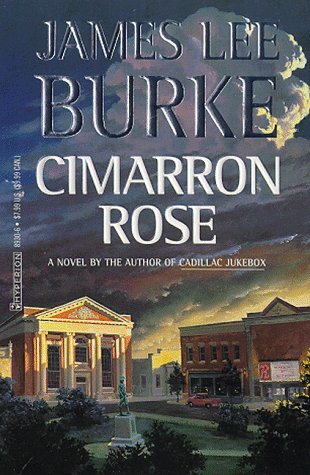
Microreview [book]: Cimarron Rose by James Lee Burke


Burke, James Lee. Cimarron Rose [Hyperion, 1997]
File under: crime, thrillers

If you'll recall, I found James Lee Burke's Bitterroot to be a distinctly well-written and atmospheric crime novel, so much so that I didn't linger on the book's flaws. So when I started Cimarron Rose, the first in the Billy Bob Holland series, I expected to find more of the same--that is, after all, what tends to happen with one-a-year crime series. A formula is established, after which a limited number of pieces get plugged into set places. Lots of stuff repeats, including language.

The plot is basically this: Billy Bob's out-of-wedlock son Lucas has been accused of a murder he didn't commit. Billy Bob sets out to clear his name, so when he discovers that Lucas is sharing a wing of the county jail with two sadistic killers, he figures to use any stuff Lucas overhears to establish good faith. Only, one of the killers escapes and the other gets out. That second one, a super creepy dude named Garland T. Moon, has some weird thing for Billy Bob. Meanwhile, local rich guy Jack Vanzandt tries to hire Billy Bob to help his Joffrey-esque son get out of some assault charge. Only, Darl Vanzandt appears to be connected to the murder Lucas is accused of. Darl, it turns out, is the leader of a gang of affluenza-suffering rich kids. Darl is bad news.

Add to this a love story between Billy Bob and a local Sheriffs deputy, a menacing Mexican drug agent who may or may not be connected to Billy Bob's past (you'll recall from my previous review that Billy Bob used to be a Texas Ranger, until he and his partner, L. Q. Navarro, crossed the border to kill off a bunch of drug mules, at which point Billy Bob accidentally shot his partner), and--just like in Bitterroot--a superfluous mobster and equally superfluous dirty federal agent (see also: stock characters).


Oh, and did I mention that L. Q. Navarro talks to Billy Bob, and Billy Bob also from time to time reads long passages from his great-grandfather's diary, which tells the tale of his courtship with a beautiful Native American women, the eponymous Rose of Cimarron? Because all that happens too.

Sum it all up and you've got clusterfuck-a-la-Bitterroot on the menu. Only, in Bitterroot, Burke more than makes up for the messy plot with his writing, which is vivid, tense and atmospheric. And the messy elements are really just a bunch of red herrings anyways. Unnecessary, sure, but not problematically so. For about two-thirds of the book, I expected to write the same in my review of Cimarron Rose. Burke's writing is, after all, vivid, tense and atmospheric--here as elsewhere. And Burke seems, at least, to know where he's going with things.

Yet whereas Bitterroot moves slowly towards an almost inevitable end, shaking of the silly and superfluous plot elements as it goes along, Cimarron Rose goes to the wrong places. Compelling narrative threads get de-emphasized in favor of the stuff that feels grafted on at the last minute. As a result, tension that's been building over the course of the novel fizzles, while other, ultimately important storylines feel rushed--or, worse, make no sense whatsoever. Note: Poochie died on the way back to his home planet.


And then there are Great-Grandpa Sam's diaries--which, as far as I'm concerned add nothing of value to the book. I thought they might, but in the end they do not. Sure, the whole book-within-a-book thing can work, but that kinda sorta depends on the interior book being: a) important; and b) interesting. Lemonade?


At the end of the day, Cimarron Rose tries to be many things--a neo-Western, a political thriller, a love story, a trial drama, a social critique, etc.--but isn't any of these things in sufficient quantity to be compelling. And the really frustrating thing? It could have been a quality small-batch bourbon distilled by a master craftsman--like Bitterroot. Instead it's a Long Island Ice Tea of cheap well liquor from a North Hollywood dive served up by the guy who played Mr. Belvedere's stunt double on Fantasy Island. Or, perhaps, a little something like this...


The Math

Baseline Assessment: 5/10

Bonuses: +1 for Burke is actually a very talented writer, and that does show for the first 2/3 of the book.

Penalties: -1 for the giant, gaping plot holes; -1 for the ending, which is BSG-level bad; -1 no, actually, it's worse--so bad that it ruins nearly everything that was, up to this point. compelling.

Nerd Coefficient: 3/10. "Very little good I can say about this."

Yes, a 3/10 means this is an awful book. 

POSTED BY: The G--purveyor of nerdliness, genre fanatic and Nerds of a
Feather contributor since 2012.

Tuesday, January 14, 2014

Microreview [book]: Ritual Crime Unit : Under The Skin by E.E.Richardson


Richardson, E. E. Under the Skin (Ritual Crime Unit). Abandon Books.

The Meat :

The first novel aimed at adults from teen horror author E.E. Richardson, Under The Skin is the first in what must be a planned series of books following a fictitious team of British police, known as the Ritual Crime Unit.

Starting with a nighttime raid on a barn, we meet the chief protagonist, DCI Pierce, a middle-aged officer who's been working in the RCU long enough to have the right mix of knowledge and cynicism to fit the classic jaded hero role. Her thoughts and actions are the focus throughout, and she makes for a fairly absorbing guide into Richardson's world.

What the author enjoyably does is to slowly allow us to gain an understanding into Pierce's work and the fantasy world of the unit without spelling it out in standard bad cop procedural fashion. Straight away we are told of 'skinbinders' and magical tattoos and animal pelts being stitched to humans, but the details and reasons are hazy. No time is given for, say, a new recruit to be schooled in all this for the benefit of the reader. We stay with Pierce from the off, as the raid goes horribly wrong, she loses her team to injury and worse, and she spends the following hours racing to solve the mystery.

The skinbinders, the pelts, the silver bullets, are all part of a weird, hidden world of police work where dark magic and ancient rites are real. A series of killings occur at the hands of people who have, through these rites, shifted their bodies into lethal animal form, taking on the form of the skins they bind to themselves. As Pierce attempts to hunt down the culprits, a shadowy government task force pulls her off the case and forces her to spend the rest of day working on the fringes.

So we have a rebellious cop going against procedure. We have bossy superiors and secret service interference. We have a tough, no-nonsense female hero who eats greasy lunches and talks tough with the best of her colleagues. We have, in short, all the ingredients for a dull tred through tired clichés and predictable scenarios, and, admittedly, some dialogue and moments do hallmark this being the case. Yet combined with the original fantasy elements, the story keeps things believable and enjoyable. All the action takes place in the bland everyday of suburban Leeds, a town in the north of England, and most of the characters, including Pierce, have a down-to-earth, underplayed humanity to them that fits the setting. Ok, it's not Nordic noir but it's also not shouty CSI territory, and despite the far-fetched magical action, the events and people all seem very rooted in the real world.

The book ends on a cliffhanger - a rather chilling one - and many loose ends are left dangling, supporting the idea of this being the first in a series, and so it should be, as Richardson does an absorbing job of introducing us to the RCU. What I would have liked more of, and hope to see in the next chapter, are other characters, and more complex details, than this non-stop drama allowed for. Yet I would happily follow Pierce and whoever her new team are in the future.


The Math:
Objective Score: 6/10

Bonuses: +1 for resisting cliché and dull exposition; +1 for a compelling and sympathetic protagonist; +1 for leaving us wanting more

Penalties: -1 for a being a bit too brief and light on complexity; -1 for, whilst gaining believability, letting the normal dominate over the more exciting fantasy

Nerd Coefficient: 7/10


Monday, January 6, 2014

Microreviw [crime fiction]: By the Balls: The Complete Collection


By the Balls: The Complete Collection
Jim Pascoe and Tom Fassbender


The Meat

By The Balls feels like a hoax. It’s not simply because the concept behind the stories of P.I. Ben Drake is in some sense fake—they are, after all, the work of Dashiell Loveless, who is a definitely fake author. There’s a touch of con artistry in the story behind the rise and fall UglyTown and the Jim Pascoe/Tom Fassbender partnership, at least in how its presented in this collection’s introduction. It just all seems a bit off...

By the Balls: The Complete Collection consists of ten short stories—five stand alones and the five that make up 1999’s Five Shots and a Funeral—and the novel By the Balls. The stories follow the career of Ben Drake, a firefighter turned PI, and his entanglements with the underworld of Testacy City, Nevada. As far as PIs go, Drake is mild-mannered. He has little of Marlowe’s coolness, Hammer’s brutality, or the Continental Op’s cunning. Ben Drake is in fact remarkably average—other than his alcoholism, of course. And he is also a broken man, haunted by the death of his wife. In fact, most women in Drake’s life seem to meet unfortunate ends. But maybe these things make him more average.

Drake’s average Joe persona stands in stark contrast to the comic otherworldliness of Testacy City. Otherworldly if you’ve never traveled through Nevada outside of Vegas, or at least been to Reno. Testacy City is Reno’s evil twin. For one thing, gambling hasn't taken a foothold here, mainly because the city’s thriving criminal community wants to keep it that way. Pascoe and Fassbender created a subtly odd cast of gangsters and crooks, noteworthy since they did it in the nineties when all fictional criminals were required to have some quirk or specific neuroses. The authors choose a more subdued approach compared to their contemporaries. A very large thug wearing an even larger suit. His diminutive yet deadly partner. Their boss, Small-Tooth Kelly. There’s nothing overtly odd about them: they don’t speak in outdated slang, or quote Chaucer prior to dispensing with a beating. If anything, they’re closer to the stock characters of classic hardboiled fiction than the hipster criminals of the nineties. The city too feels like a stock character of old school noir, replete with debonair mod bosses and drug-running Senate candidates.

All of this could have gone wrong. The very fact that the stories center on a private investigator should have doomed the whole Ben Drake venture from the start. But Pascoe and Fassbender, though obviously referencing the classics, do so in a carefully self-referential way. Their absurdist and counterintuitive treatment of genre themes—Drake’s almost pathologically platonic treatment of women, for example—lighten the stories. Though By the Balls is tongue-in-cheek, the stories never stray into parody. The authors' background in comics may also have influenced their skillfully subdued yet cartoonish take on the hardboiled genre.

The stories themselves are almost comedic in their setups. Though some of the stories felt unnecessary, particularly those providing background on central characters in the series (“Fireproof,” “Partners,” “Across the Line”), they were for the most part fun, often madcap narratives based on absorb premises. In this regard, “The Silent Ventriloquist” (case one from the generally good Five Shots and a Funeral) stands out. (I googled “Orpheus” and “Alexander Graham Bell" after reading it.) The centerpiece of this collection is By the Balls, wisely positioned in the last half of the collection. The novel is far superior to the short stories that make up the rest of the volume. It sticks with the basic absurdist and madcap nature of the shorter pieces, but as a short novel this approach is particularly effective. 


Finally, Akashic’s By the Balls: The Complete Collection gets bonus points for including Paul Pope’s artwork. Actually, I will give them two points on this. One bonus point because I am a fan of Paul Pope. And a second point for the mere inclusion of artwork. I have always found it odd that novels don’t include artwork more often. Who doesn't like pictures?


The Math

Objective Score: 7/10

Penalties: -1 the inclusion "over twenty short essays" praising the authors

Bonuses: +1 for artwork; +1 for Paul Pope's artwork

Nerd coefficient: 8/10

Tuesday, November 19, 2013

Microreview [book]: The Bayou Trilogy by Daniel Woodrell


Woodrell, Daniel. Bayou Trilogy [Mulholland, 2011]
Available via: Independent Bookstores; Amazon

You may have noticed my slight obsession with Justified. Well, this has led me to seek out all things country noir. That, in turn, led me to Daniel Woodrell, a crime writer I'd heard a lot about but never read. I decided to start at the beginning, something possible now that crime/speculative fiction imprint Mulholland has re-released his debut Bayou Trilogy.

Country noir is a bit of a misnomer in this case, unless you take "country" to mean "red states." After all, the Bayou Trilogy takes place almost exclusively in the fictional Louisiana city of San Bruno, a smaller version of New Orleans marked by the kind of corrupt machine politics, rampant criminality and invidious ethnic/racial divides familiar to basically all major American urban centers in the 19th and 20th centuries. The racism is more severe and frontal, because this is the South, and the Cajun "frogs" give the stories a unique ethnic flavor, but the books could easily have been transported to, say, Newark and much would have remained the same. This isn't to say that the setting is unimportant. Actually it takes main stage, and as I'll explain in more detail later on, this is both the book's strength and source of its problems.

The Bayou Trilogy comprises three novels, originally published separately: Under the Bright Lights, Muscle on the Wing and The Ones You Do. All center on Rene Shade, ex-boxer and current police officer, a mostly incorruptible local boy who doesn't particularly want to play the game or by the rules. Sound familiar? Most of the time I imagined Shade played by Timothy Olyphant, only without the Stetson. I wonder if these specific books had an influence on Elmore Leonard when he concocted the Raylan Givens character a few years later? I know James Elroy once described Woodrell as a "bayou version of Elmore Leonard," so it's not beyond the pale to imagine the influence went both ways. Or maybe it's just my imagination.

Regardless, Shade is a good character. So are most of the other core characters--Shade's untrustworthy big brother Tip, his ambitious little brother Francois, his pool-hall owner mother, his pool shark father, his sharp girlfriend Nicole and, of course, the collection of low-down hustlers, grifters, mobsters, bent cops, even more bent politicians and thugs that populate San Bruno, and especially its racially-segregated, working class 'hoods Frogtown (white) and Pan Fry (black). If you like colorful characters in colorful places, this may be the book for you.

There are, however, times where it all gets a bit too cute. See, that's the thing about colorful characters and colorful places--a spoonful is memorable; a bucketload veers towards overkill. Both Under the Bright Lights and The Ones You Do spend too much time trying to convince the reader that Frogtown is "one helluva quirky/kooky/chaotic town." They do pick up nicely and finish on high notes--particularly The Ones You Do, which has an exquisitely abrupt ending. But Muscle on the Wing is the best of the three for the precise reason that it doesn't waste too much time on this kind of stuff. Still, I guess it's better to have too much personality than not enough.

Muscle on the Wing, as it happens, is near perfect noir. It's a short, compact novel centered on a crime gone wrong and an investigation that almost never gets off its feet. It's full of hard men and harder women, all of whom occupy the gray area between good and bad, and between lucky and unlucky. It's a bit reminiscent of James M. Cain, to a degree, as well as Donald Westlake's Parker novels--though not as relentlessly grim as the first or as nihilistic as the second. There are, perhaps more obviously, shades of Leonard and a hint of Chandler, though more in the effect than in style. Suffice to say, it's good. Very good.

Composite Math

Under the Bright Lights: 7/10. (Solid but unspectacular.)
Muscle on the Wing: 9/10. (Truly great noir.)
The Ones You Do: 8/10. (Wobbles a bit but ends perfectly.)

Nerd Coefficient: 8/10. Well worth your time and attention.