It’s an odd thing, watching elements of your childhood, particularly ones that you didn’t even know were remarkable, fade into legend. Ask [extremely old guy voice] kids these days, and they will be incredulous at what us ‘90s kids did, and were allowed to do. What do you mean, you just… went out? How did your parents know when to pick you up? How did they know you were safe? How did they even know where you were? (We just did, friends’ parents or a quick collect call message*, they didn’t until we got home, they didn’t). We roamed all over the small, country town I grew up outside of with just bikes and the confidence that none of the (disturbingly high number of) serial killers known to be active in Western Washington were targeting teenage boys. Probably. As far as we knew.
My neighbor growing up either contributed to this vagrancy or helped protect us from it. He was an ideal neighbor, his kids were grown, he had way more money than us, and used it to collect classic cars, for which he build a massive garage/shop, in which he put a home theater—doing so in the ‘90s was no small accomplishment. He was obsessed with movies, buying literally every single movie that came out every single week. His DVD* collection was enormous. Best of all, he allowed us to go in there whenever we wanted, provided we didn't make a mess or steal too much of his beer.
All this is to say, I had unfettered access to a lot of R-rated movies at a young age. Combined with my love of scifi, I was very excited to watch this very grown-up scifi movie called Event Horizon. I’ve written all this without having seen it since that day, because ~12-year-old-me was traumatized. I wanted to do this part of the writeup because I honestly don’t know if it’s a good movie or not, or if it’s scary or not, or if my younger, squeamish self was just too shocked by someone ripping their own eyeballs out. It seems to have enjoyed a resurgence lately, with comics explaining backstory, Sam Neil passing and his brilliance getting the appreciation it has always deserved, and the idea of it being a Warhammer 40k prequel all having brought it back into at least some level of public consciousness.
So now it’s time to face my fears and rewatch it. Hang tight, read a magazine in the lobby or something.
Still here? Good. Before we get to the (literal) gory details, I have to say that, for a mid-‘90s movie, Event Horizon holds up remarkably well. Some of the effects, mostly those related to zero gravity, look somewhat dated, but not terribly so. The opening and closing credits have some very ‘90s electronic music which Trent Reznor would have improved upon, but that’s not present in the film itself.
This movie provided the epiphany that apparently my favorite genre is lost in space** or at sea. I read way too many books about shipwrecks, I love Alien, I will defend Sunshine until my dying breath, so this is right up my adult alley. Did it scare me out of my mind, like when I was a kid? Of course not; I’m old and jaded now. However, it was brilliantly tense and did an amazing job of building suspense all throughout. Despite a brief text intro, it immediately gives us the feeling that something isn’t right. One of the very clever ways this is done is by transitions. They’re never slow fades, or wipes, but smash cuts that seem to occur right as something is about to happen. It creates these mini-jumpscares that create a sense of unease. When the action happens later, and there are really scary things happening, we are primed for not knowing what is around the corner—especially since a key component of the characters’ horror is their deteriorating mental state, as they hallucinate and can’t be sure what is real or not—in a way, neither can we.
At the center of all this uncertainty is Dr. Weir, played brilliantly by Sam Neil. When we meet him, he is ostensibly there to help a rescue crew, as he tries to humbly ingratiate himself to them. The film doesn’t tell us when, exactly, his descent into madness happens (more on this in a sec), but it clearly happens earlier, and more willingly, than his shipmates. His actions become more unnerving as the film progresses, and his motives are more and more in question, and he clearly knows more than he initially let on. Neil plays this part so perfectly, his voice always level and sinister—but somehow disarming.
The recent comics that are a prequel that follows the journey of the Event Horizon spell out his motives—which we do see in the movie, having essentially driven his wife to suicide with his obsession with his work—as well as going into what happened in the seven-year period the ship was missing. While I enjoy this, and it adds to the mythos, one of the strengths of the film is that it doesn’t show us all this. There’s a fair amount of gore (not as much as I remember!), but their trip into the Chaos Realm/hell is only shown in brief flashes. Just like Weir’s embrace of Chaos is not pinpointed, this contributes to the overall unease of the setting, instead of just splashing gore all over the walls (although that does literally happen).
Grounding the whole affair is Lawrence Fishburne’s Captain Miller, who is delightfully hard-assed, and really just wants to do his job and go home—even when that job turns out to be trying to stop a literal portal to hell from opening in Neptune. His stories and interactions with the rest of the crew actually make me think that the “normal,” lived-in part of the Event Horizon universe would make for more interesting story fodder than the prequel/sequel comics that explore, ya know, literal hell. Or maybe all of that is what ultimately leads to humanity as we know it in the Warhammer 40k universe? I stand by that fan theory, because it’s awesome.
In conclusion—if you haven’t seen Event Horizon, I highly recommend it. If you watched it at way too young of an age like me, I recommend it even more.
—DESR
Dean Smith-Richard is the author of 3204AD, and will definitely publish something again one day, probably. He loves to cook, play baseball, and is way too much of a craft beer nerd. He lives in the Pacific Northwest, and likes the rain, thank you very much.
* I have to explain this too, don’t I?
**Ironically, it is apparently impossible to make a decent modern version of Lost in Space.
I started writing for this site way back in 2013, which may as well have been when dinosaurs were alive in internet terms. It's been one of those rare things in life that is just good, and I've gotten to (virtually, at least) meet some absolutely incredible, talented, and just plain good people over those years. It does my overactive imposter syndrome absolutely no good to share my frequently sarcastic ramblings with people who are actually talented and know what the hell they're talking about.
Not least among these is the guy at the top of the masthead, Arturo Serrano. Go read anything he's written, and then come back here for something not anywhere near as good (that Encanto review is probably my favorite thing that's ever appeared on this site. I'm so sorry for everything you have to read now). So when I watched and loved Widow's Bay, and pitched writing this piece, his response was that he wasn't really 'vibing' with it, because it's billed as a horror/comedy, and, well, it's not that funny, my immediate reaction was 'wait, why do I like it? He knows way more than me!". Therefore, I watched the rest of the show with a more critical eye. I might be wrong, but I still like it (he will probably edit this piece to say something like "I drink cold hot dog water" or something, but I stand by it).
But I get why - like I said, it's not really funny. Fear and laughter are two sides of the same coin - misunderstanding, or a lack of understanding, is the key to both. Much of horror depends upon the impossible - the killer with the slow, plodding, methodical walk still catching up or appearing around every corner. Charles Schulz said that misunderstanding is the key to comedy (or words to that effect). Like horror, we see something we don't understand (or the protagonist doesn't), but here our caveman brains decide it's not a threat, and humor results.
Marrying these two is a hard task to do well. If it's not threatening enough, it's just a comedy (see: any number of Simon Pegg/Edgar Wright films), if it's too threatening, it's not funny. For my money, Widow's Bay strikes this balance very, very well - it just doesn't do it with jokes. Before I get to how, let's set the stage:
The titular Widow's Bay is an old New England island that was a home port for whalers. It's cursed by some ancient evil, and this first season takes us on a tour de force of not just the manifold manifestations of the curse, but the commitment the curse has to making sure it checks off every horror movie genre. Haunted by an ancient creepy woman? Check. Teenagers were murdered in slasher fashion and now the killer is back? Check. Creepy puritan family historical horror? Also check. Each episode is a different flavor, which is mostly fun, but makes for a weird tonal shift sometimes, and it feels like threads are abandoned in order to jump to the next genre. It makes you wonder exactly what the Lovecraftian horror lurking is up to, exactly. But there is a season two coming, so maybe all that ties together.
Our protagonist is mayor Tom Loftis, played brilliantly by Matthew Rhys, following his equally brilliant role in 2025's The Beast in Me. This role is a complete 180, where in The Beast in Me, he was charismatic and sinister, he is now unassuming, insecure and tries to do the right thing, but does so in that way which is borne of needing everyone to like him. He is a widower, has a son in his late teens, Evan, who is doing boy-in-his-late-teens things like getting high and going places he shouldn't. Normal teenage rebellion is exacerbated by the fact that he lives on a cursed island he can't leave, only he doesn't know any of that, just that he hasn't ever left the island and his dad is pretty absent despite, ya know, being trapped on an island.
Alongside them - calling them 'supporting characters' would be an injustice - are the wizened old sailor, Wyck (Stephen Root), and his awkward assistant Patricia (Kate O'Flynn), and the cranky, chain-smoking old lady Rosemary (Dale Dickey). The character dynamics of all of these (plus a few others who are in truly supporting roles) lend to a lot of the comedy. Wyck is gruff, self-assured, well-versed in island lore and prone to believing in curses and superstitions - which, in this case, is a good thing. Patricia is awkward, and an outcast, even on an island with a trapped population, and she and Wyck end up being a great odd-couple pairing (not romantically). Meanwhile, Rosemary finds ways to be offended by literally everything they do, while still hanging around all the time. A good chunk of the comedy comes from simply letting them bounce off each other.
As I mentioned, the comedy doesn't lessen the horror - and while there are slasher elements, or, more accurately, one slasher-adjacent episode, most of it is a slow burn and creepy. The fourth episode, Beach Reads, may be one of my favorite episodes of TV in recent memory. It's representative of so much of the show, where the ostensibly innocent has the unshakable feeling that something is off - like I said, misunderstanding, or lack thereof, creates a feeling of dread. I won't spoil it, or say too much, except that they did an amazing job of making an innocent-seeming book seem creepy, and the payoff is immaculate, littered with just enough clues and brilliant camerawork that makes you sit upright, and nervous about what is coming next.
Widow's Bay uses this against us, though, to set up the humor, and this is where I fully embrace it, and others might not enjoy it as much. I grew up on M*A*S*H, which means my humor and martinis are both very, very dry. Jump scares in Widow's Bay are all innocent, right when you think something bad is about to happen. Moments of tension are interrupted, not by knee-slappers, but by someone being intensely awkward. All of this dovetails together to make you not trust anything, so when (small spoilers) we spend a whole bunch of time (KINDA/SORTA SPOILER ALERT) with what seems like a sweet old lady, it feels like something is deeply wrong and is about to be revealed, but it turns out, she is, in fact, a sweet old lady. Instead of humor and horror working against each other, Widow's Bay uses them to compliment each other and work in concert, deepen the creep factor, ramp up tension and the fear of the unknown. Sometimes the tension is relived because it's funny, sometimes it's relieved because it's very much not.
--
The Math:
Highlights:
Perfectly blends horror and comedy in a way few things have
A great cast of characters, beyond the ones I've highlighted. They're delightful, and quirky, and the acting is great (I also love that Stephen Root and Dale Dickey were both side characters in Justified, which is always a way into my heart)
Fun exploration of different genres. This is another thing I won't fault someone for not enjoying, but I didn't mind it.
Lowlights:
If you're looking for a hide-behind-your-pillow, scare-you-senseless type show, this ain't it. The creep factor, and a feeling of foreboding are well-done, but it won't scare your socks off (and I'm a weenie)
The same goes for jokes. It's not Simon Pegg/Edgar Wright that will make you ROFL or whatever the kids say these days. The comedy is dry, and dark.
Nerd Coefficient: 8/10 - well worth your time and attention.
Dean Smith-Richard is the author of 3204AD, and will definitely publish something again one day, probably. He loves to cook, play baseball, and is way too much of a craft beer nerd. He lives in the Pacific Northwest, and likes the rain, thank you very much.
I have a weird relationship with video games. I certainly don’t consider myself a “gamer.” I will play for a while, and then sort of forget they exist for a while, before jumping back in. As a certified Old Guy (“unc,” as the youths say), this worked pretty well back in my day, when most everything was single player, or required you to be physically present with another person to play against/with each other. There was no such thing as DLC, season passes, or (so far as I knew) people who play obsessively and obliterate me every single time I log on to Battlefront. I just want to play as a stromtrooper, dear lord.
But I digress.
Red Dead Redemption 2 is, in my opinion, video game perfection. A massive open world that is incredibly detailed, has immense depth, and always feels like there is another thing to discover. It helps that it marries that with one of the best stories in video game history. Plus, if I don’t play it for a while, I can just jump back in without 12-year-olds shooting me immediately*. I could make this entire post about how great RDR2 is—but it’s been out for seven years, so it seems redundant.
I bring RDR2 up so I can talk about Crimson Desert. In the first place, because there are a fair amount of varied opinions about the game—r/CrimsonDesert is populated with people calling it the greatest game ever, and others complaining about anything and everything (r/RDR2, not so much. Maybe that says something). In the second place, because a review *I* do is going to be pretty subjective, and you are likely to strenuously disagree if you’re a speedrunner/hardcore gamer/one of the 12-year-olds who owns (PWNZ) me at Battlefront.
Like this review, it’s hard to know where to start with Crimson Desert. It’s so stinking massive. The most important thing to me is: is it fun? To this, I say a resounding yes. I enjoy it. You can explore for days, do a pretty wide variety of things, and get happily sidetracked for hours.
There are negatives, to be sure, and how much they affect your fun quotient depends a lot on you and what you’re looking for out of a game.
One of the big ones, from where I sit, actually has me conflicted. The game does a pretty good job of teaching you a lot, obviously, about the mechanics and gameplay. But it also just doesn’t. I highly recommend spending a fair amount of time on YouTube watching videos along the lines of “20 things I wish I knew when I started Crimson Desert,” because there are a lot, from combat to companions to the way the world works, to (literally) what icons on your map mean. On one hand, I appreciate the game not holding your hand. On the other… I don't want to google what the doohickey on my map is.
Gary Larson was unintentionally a prophet.
Another big complaint is that the game is pretty light on story. Full disclosure: I haven’t finished it yet, because while I’m breaking tradition by writing about something I’ve actually played, I can’t go all the way and have the whole picture. I have a reputation to uphold. You can have pets in this game, and I have ADHD, so you can guess what I spend a lot of time doing. Like above, the game kind of sort of forgets to tell you the story directly. But (and I absolutely love this kind of thing), it rewards you snooping around and finding out information that gives you context and depth for what does happen in the story. The story itself isn’t terribly original—you’re the chosen one, save the universe, blah blah blah, but the hidden details give it depth, explain why you’re the chosen one, and make it more compelling. It’s a massive open world—using it is rewarded. Plus the story is kind of secondary to the myriad of other things you can do in the world.
My biggest complaint is, for as massive as it is, it is kind of shallow, in spite of the above. NPC dialogue is very limited, and not really connected to the NPC who is speaking. Sure, it would be a massive undertaking, but RDR2 did such an amazing job of this—the NPCs felt like people. They didn’t all say the same things, in the same voice (“My baby’s gone and called me PA at last”—bro, I am about to hunt down your stupid baby if I hear that one more time), and just stand around in the same place for all eternity. They also cower and make the most obnoxious whimper if you push the wrong button and even pull a weapon out. It’s probably a nitpick, but it ruins the immersion in a game that is meant to be immersive.
I do enjoy how currency is managed—mostly. You end up with a ton of different types—you have your basic “coin,” which there are some clever mechanics (that you’re not told about!) to keep you from being a billionaire (looking at you, RDR2) if you use them. You have “contribution,” which is basically your reputation within a region that unlocks specific gear. The camp funds/missions mechanic is fun, and as your camp grows, you basically have an entire passive game generating income for you, all of which becomes important later in the game. It’s sort of a lot to manage, but, like I said, you get sidetracked by it, in a good way (usually) and it pays off.
The game itself is stunningly gorgeous, in the same way as RDR2. Climbing to the top of mountains or towers is rewarded with spectacular views (and you can glide down, which is just fun). However, it struck me as I fast travelled all over the place—I never do that in Red Dead. Riding around is rewarding. Riding slow is rewarded more. There are random encounters in Crimson Desert, but as noted above, the bland NPCs make it neither interesting nor rewarding. So I jump around using the Abyss Nexus littering the landscape and don’t think twice about it, which is a little bit of a letdown. Not that this stops me from wandering around and trying to find new things—which there aren’t too many to find, aside from Abyss Artifacts (more on them in a sec). So while it’s just as pretty, and bigger, than Red Dead, it just lacks depth—Red Dead gives you side quests that last the length of the game, details and oddities to find that are quests unto themselves, or just pieces of another story. If Crimson Desert has these, I haven’t found them, and the totality is that between that and the “people” populating it, it feels very, very shallow.
Crimson Desert does a nice job of being an RPG without going too in depth—it has three basic skill trees, and various skills can be enhanced, but it doesn’t require the level of micromanagement a lot of RPGs fall victim to. I might have preferred skill trees that allowed for slightly more customization—Borderlands isn’t far off from how this operates, but allows for more “specialty,” but I’m pretty fine with the way it is. The area that really could use customization is the character—Kliff is… fine, but he’s such a blank slate, I don’t know why they didn’t just allow you to make a character entirely. A lot of the dialog is fairly generic—and many conversations pass without Kliff actually participating in them—so it doesn’t seem that far off (it’s rumored to be part of an upcoming DLC, which, fine, but why not do it in the first place?). It’s another missed opportunity for an immersive experience.
None of these, for me, are dealbreakers. There is tons of good. As I mentioned, it looks amazing and it’s fun to wander around in, and find new areas and slaughter bandits with reckless abandon. The combat system is great, and ironically given the above, almost too detailed—I keep forgetting about abilities or attacks. The game spoils you for options—you can fight equally well unarmed, with a one-handed weapon and shield, or a two-handed weapon. The Abyss Artifacts you find can be used in a few ways—most straightforwardly, as skill points, but also can be used in upgrading higher quality gear. Like currency, it does a good job of making you choose on how it’s used instead of just grinding and levelling up to God tier early in the game. There are also Sealed Abyss Artifacts, which are unlocked after completing certain challenges, making getting them rewarding in-game and not just to check off a box.
It also runs into the classic open-world problem of being a one playing as a someone possessing immense power, clad in armor worth more than the entire kingdom and wielding enough weaponry to take down God while also having literal superpowers, but half the quests you go on are carrying some old lady’s groceries or whatever. It’s unavoidable, but it’s also comical. There is a decent variety of minigames and puzzles, of varying difficulty and quality, but that gives the game nice texture.
There is honestly so much more to talk about - the variety of mounts (you can literally tame a dragon!), the diligence with which the game is updated and patched (which is great, but can be jarring), the camp dynamics - basically, it's a really big game. The enjoyment is going to be pretty subjective.
I meant for this to be more of a compare/contrast between Crimson Desert, Red Dead and other open-world games (I had a whole Ghost of Tsushima thing, which I made the mistake of playing immediately on the heels of RDR2. Basically, I want open-world games to be Westworld, and that’s probably not a fair ask. It is fair, I think, to ask Crimson Desert to live up to its full potential while also enjoying the good qualities it has.
Highlights:
Stunning, massive open world
Fun, rich combat, both between swarms of baddies and repayable bosses
Diverse gameplay befitting the size of the world
Doesn’t hold your hand
Lowlights:
NPCs are bland and lifeless
The world is shallow for as big as it is
Doesn’t hold you hand enough
Makes you do homework to figure out several key mechanics
Isn’t quite RDR2 in a fantasy setting
Nerd Coefficient: 8/10. Well worth your time and attention.
*We will not be discussing the miserable failure that is RDO.
—DESR
Dean Smith-Richard is the author of 3204AD, and will definitely publish something again one day, probably. He loves to cook, play baseball, and is way too much of a craft beer nerd. He lives in the Pacific Northwest, and likes the rain, thank you very much.
I have to preface this whole review with a little (lot?) of backstory. I am by no means a “gamer”—I play video games pretty casually, and as a certified Old Guy, I grew up when you bought a game on a series of discs that most people now only associate with the save icon. I certainly don't play enough to really enjoy a lot of online stuff—I lose immediately to people who spend far more time than I do (that's not judgement, just fact), nor do I have the time or inclination to keep up with tons of DLC, season passes or whatever. Red Dead Redemption 2 is pretty much my ideal game—I can play for as much as my time and ADHD allows, put it down for a while, and pick it up again and it's still the same game.
All of that is to say—your mileage may vary. But that's where I'm coming from.
Civilization—the first one—is the first video game I even remember playing. It hooked me instantly, countless empires rising and falling on that technicolor grid. Civilization II was even better. I missed III and IV mostly, as real life took over, and then I returned to put in literally thousands of hours in V (I prefer it to VI, overall, but VI definitely does several things better, but that's another story).
VII changes a lot—and that's pretty much the lens I have to write this review through. If you're new to Civilization, I don't know if VII is a good starting point—or not. It might be, but I can't speak to going into it with new eyes. On the off chance you're reading this and have never played it, my two cents is to grab a bundle of existing games and dive in that way. But don't shy away from VII, it has a ton of high points, but it doesn't exactly feel representative of the series.
All that being said, I'm going to break this up into sections, again—assuming you're familiar with the game.
Behold the might of my (current) empire!
The Good:
The first thing I noticed is that this game is gorgeous. Civilization is not a game that really even needs great graphics, but some older versions don't really let you see your cities, or the terrain, and in this iteration, being able to zoom in and see, say, the Pyramids sitting in the middle of your city is pretty darn cool. Same goes for rivers, mountains, etc. Settlements now occupy more than a single tile, and expand as they grow, and you can see the improvements you've made on the map itself. It's just a pretty game.
“Goody huts” and barbarians are my favorite change, in that they don't actually exist. Goody huts are replaced with narrative choices—they don't just grant you something free, they can start quests or make you choose between things. Sometimes they involve sacrifice of production, gold, etc. for something else, or choosing between them and a more immediate reward. Likewise, formerly simple, reductive “barbarians” are replaced with independent powers (this simultaneously replaces city-states, in a way)—some hostile, some friendly, and you can spend “influence” on them for a variety of reasons (including befriending, and eventually, incorporating them into your civilization). These are probably my favorite updates—it adds a ton of depth where it was severely lacking before. It's fun and engaging and educational.
Navigable rivers is another brilliant addition—you can now sail inland on wide rivers, and build ports, harbors, etc on them, giving you flexibility with where you place your cities. There's not a whole lot to say about it, but it is definitely a fun addition.
But let's talk about the big change—civ switching. In every previous Civ game, you picked your civilization and that was it. If you picked Mongolia, Genghis Kahn was the leader, and that was it. Now, you pick your leader, and, separately, you pick your civilization. Each has distinct attributes, and choosing different leaders and civilizations will result in unique combinations. At the end of each age, depending on what you've done, different civilizations are unlocked.
The idea is that “history is built in layers.” For example, Britain was once a small outpost of the Roman empire—and then became an empire of its own, which in turn gave way to America.
In my opinion, this is a very clever and deeper addition to the game. It makes for a more immersive game, and more reflective of actual history—while allowing for the “what if” factor that makes the series so engaging.
This necessitated (I think?) a change in the Age structure—previously, you progressed at your own pace, driven by what technologies your civ had discovered. Now, each age ends after a certain number of turns—which is driven by several factors, like conquering other settlements or discovering new technologies or civics (more on that in a sec). Each Age has several paths you can follow—economic, militaristic, scientific, etc. In all Ages except the last, these grant you advantages in the next Age (more on this in a sec as well, depending on how much you accomplished. In the final Age, these are the victory conditions. I'm a pretty big fan of this, because despite the fact that I'm pretty pacifistic IRL, oftentimes Civilization just turns into Genocide Simulator for me, and in every previous installment, to achieve a military victory, you have to defeat everyone. But sometimes those other civs are my friends! So I don't want to hurt their feelings by committing wanton acts of bloodshed against them. Now you don't have to! You can keep your friends close while you mercilessly slaughter Napoleon and win the game. It's wonderful.
Splitting off “civics” from “technologies” is another great move which deepens the game. Functionally, this just gives you two separate tech trees. Civics also comes with its own additional (much smaller) tree that is unique to your civilization—this is very fun all on its own, but can add a ton of flavor when you eventually switch civilizations and will result in very unique combinations. Most civics and technologies now also have the option to “master” them—instead of researching a new tech or civic, you can “master” an already discovered one for additional advantages.
Your leader (the permanent part of the game) now has “attribute points.” Most leaders start with a couple in the categories most suited to them (more on that below), and others can be earned with various narrative events. Depending on what you've accomplished along the previously mentioned “legacy paths,” you will frequently earn several at the beginning of each Age. It adds a decent RPG-style element to the game, instead of your leader simply having static attributes, there is now some dynamism to what they can do. Coupled with the civ switching mechanic, it adds flavor and customization that previous games didn't have. It's a shock, to be sure, but after several games, I like it.
But it's not without flaws.
The Bad:
One of the stated reasons for all these changes is because the developers looked at that data and saw that very few games of Civilization were played to completion. While I enjoy a lot of these changes/new features, it doesn't solve that problem, because, well, it's not solvable, and frankly, it's not a problem. Pretty much anyone who plays any game in the series with any sort of regularity will know by about 60-70% of the way through a game if victory is likely, or even possible. Am I going for a science victory and left my western settlements unguarded when Napoleon launched a surprise war? Did I not claim enough land early on and now have no income and am surrounded by larger civs with more resources? Etc., etc., etc. So if victory is out of sight, the “new game” button is right there. There still isn't motivation to play a losing game through to completion. Which is totally fine! So don't throw fixes at something that's not broken.
I talked about the Age system up there a bit, and overall it's… fine? I think? I don't think you have to have everyone advance at the same time. and each Age ends with a “crisis,” which makes for an interesting challenge, but is more of an annoyance, and it feels forced instead of organic like most of the narrative events in the game.
I also understand that they're trying to make the game “chunkable,” so you can just play one Age and feel like you've played an entire game—again, to try to get you to play all the way through—but when you're playing the whole timeline (which is the only way to play, don't @ me), it makes the game feel broken up, and actually provides a jumping off point where a player might not feel inclined to load a save that's at the beginning of an Age, so it actually works against the stated goal.
It also makes it super restrictive—for example, in the first Age, you cannot, under any circumstances, cross oceans. That's fine, it's ancient. But part of the fun was racing ahead of your competition, via science, or military, or whatever, and getting advantages that way (or getting pissed off that Napoleon did that before you). So now if you've researched every tech/civic available, you're stuck researching “future tech/civic,” which grants you attribute points for the next Age and hastens the end of the current Age—the more I write, the less I like how Ages are structured—which, sure, helps some in the next Age, but I'd rather be able to settle in the “distant lands” before everyone else.
For a game that is stunningly beautiful, no longer having cutscenes (or whatever) for great works of art or music is a massive oversight. We get a beautiful map, animations of wonders being built, but any great work is just a side note? Super weak.
Oh, and having religion limited to one Age is dumb and basically doesn't do anything outside of that? I feel like this should be its own victory path, or at least influential the way it was in V.
Conclusion:
I refuse to spend money on any new edition of Madden NFL or MLB: The Show. It comes out every year, with rudimentary updates, barely improved graphics, and just isn't very good. So kudos for not doing that here and not letting the series be stagnant and repetitive. The changes are certainly dramatic, and resulted in the predictable response from a lot of players about how horrible it is. I'm not in that camp; I like new and different things, especially in a series I've played my whole life. They're not all good by any means, but I don't think any of them are downright horrible. I've played several games all the way through (and bailed on a couple) and enjoyed them all. My only major complaint is that it feels… simpler? For all the layers which are added through leader attributes, having a separate leader and civ, separate civics and techs, as well as civ switching, it feels more simplistic than earlier iterations.
I'm still gonna sink thousands of hours into it.
The Math:
Objective Assessment: 7/10. It's definitely on the good side of average.
Bonuses:
+1 for being the prettiest Civilization to date +1 for the leader/civ mechanic (sorry, I love it) +1 for victory paths being better than before
Penalties:
−1 for trying to force players to play all the way through. Let me rage quit in peace −1 for ages being simultaneous for all players
Nerd Coefficient: 8/10. Overall, I really like it. Apologies to all the people in my Haters Club. I'd be very curious to hear thoughts from anyone who has played it and never played any other Civilization games.
-DESR
Dean Smith-Richard is the author of 3204AD, loves to cook, play baseball, and is way too much of a craft beer nerd. He lives in the Pacific Northwest, and likes the rain, thank you very much.
Predator is one of my favorite franchises out there, possibly even rivalling my rabid Star Wars fandom. One of the things I love about the growing Predi-verse is that it is simply unapologetically what it is. The first two are tight, tense affairs, with a few hints at a larger universe and timeline. The years that followed brought some fun comics and video games, before the tepid AVP movie threatened to derail the whole endeavor. Then came the vastly underrated Predators, then Prey, and now the lid is off with Killer of Killers. It doesn't concern itself with silly frivolities like a super deep story, historical accuracy, subtlety or nuance. It gives us what we came for - scenery chewing hunters, wrecking everything around them and slaughtering redshirts in brutal and hilarious ways.
Split into three(ish) parts, across the Viking era, feudal Japan and WWII in the Pacific, a different Predator (the species we now know to be called 'Yautja'), with different weapons, takes on a different warrior from each timeline. The extremely simple review is: It's really good. Like I said - it's exactly what it is. Each Yautja is unique, with badass weapons that slaughter everyone except their target in creative ways. Each target is likewise unique, a badass (with Torres, the American, playing a little too much into the aw-shucks-underdog American fantasy a little too much), that overcomes their pursuer with ingenuity and determination.
Thank god I'm safe, unless there is a drinking-game-driven Predator
This exposes the inherent flaw in the Predi-verse: They are presented as the ultimate hunter, killer of killers, etc, and yet... they always lose. Sure, they kill the NPCs with reckless abandon, but the main character always wins in the end, and sure, we see those people get picked up by squads of Predators, but the title card fight always ends with the humans on top. It was one of the things that drove me nuts about AVP - the tagline was "whoever wins, we lose", and yet, humans were the ones standing at the end.
Perhaps the upcoming Badlands fixes this, but at a certain point, it takes the punch out of Predators treating Earth like a hunting preserve, but getting their asses kicked every time (that we see). To be honest - it's a fairly small complaint, and each one of the movies, including this one, is extremely entertaining in its own right. But like so many other cinematic universes, as it grows, it opens itself up to more and more scrutiny, especially of its own in-universe rules and composition.
All that being said, since Disney owns the rights to Predator and nearly every other IP in the known universe, and we are clearly trying to visit every era of human history with Predators, I am available to write any of the following movies for a modest fee:
Predator vs Stitch - Stitch is ultimately accepted by the Yautja as one of their own; Lilo disembowels her bullying classmates. Post-credit scene teases Predator vs Toothless.
Predator vs Terminator - Dutch is brought out of stasis to fight the OG terminator; this confuses the Yautja greatly.
Predator vs the Sith - just two hours of lightsabers and Yautja weapons
Predor vs Ewoks - Just two hours of Predators slaughtering Ewoks
Predator in the era of the Aztecs. Two movies - in the first, a Predator defeats an Aztec warrior, immediately before the Spanish arrive. Post-credit scene shows them taking the Aztec gold, with the Yautja watching. They become the curse of the Aztec gold, slaughtering any who possess it for taking it dishonorably.
--
The Math Baseline Assessment: 9/10
Bonuses: None, but worth mentioning the score above includes points for not trying to hard, and just focusing on the basics.
Penalties: -1 for the humans winning.
Nerd Coefficient: 8/10 - well worth your time and attention See more about our scoring system here.
Obama is now my second least favorite living ex-President.
I was really, really excited for this movie. Amazing cast, everything about it screamed innovative, original, captivating thriller. The good news is, for like 65% of the movie, that's what we get. The rest, though... ooof. I've preached from my little soapbox that it is far more of a crime to be mediocre than outright bad, and never has that been more true than with Sam Esmail's adaption of Rumaan Alam's novel, Leave the World Behind. Because I have more taglines than the crack about the Obama's XP cred, we're going to break this into parts, like the film itself:
Part I: The Good
Clever taglines come later. For now, I want to address the good parts of this movie - which are, in fact, plentiful, but that's the twist in this review, it actually actually works against the film, because of the massive letdown to come.
First and foremost: Please let Esmail just... be behind a camera forever. His directing and tone in this are amazing. I believe he will refine the weak parts of his feature-length work, but his use of angles, movement and score are nothing short of brilliant.
I would watch Mahershala Ali read a phone book (note to young people: a phone book is... never mind. I would watch him read a random Wikipedia page). He, as usual, dominates every scene he is in, with his perpetually-composed demeanor, even tones, and overwhelming presence, which only add to his scenes. Ethan Hawk is his usual fantastic self, and I need to watch Predestination as a palate cleanser.
Kevin Bacon gets a title card, and is in the movie for ten minutes. WHY
Part II: Let's Talk About Talking About Things
This is a long movie. I don't care about long, I care about runtime suiting the story. There are a lot of "slow" parts that serve the story very, very well, and build tension and intrigue.
The opening scene is not one of them.
Instead, we get Clay (Ethan Hawke) slowly waking up, as wife Amanda (Julia Roberts) (who I would have listed up there in "good", because she was fine, but her character...) tells him, in a painfully long scene, that:
She rented them a house in a small town for the weekend, spur-of-the moment
She likes the business of the city, but hates people (she says this several times in the movie. This is never reflected in her actions)
Work is stressful (if your characters say "as you know", find a different way to say it)
They have kids.
This scene should not exist. Instead, we should pan down from the cool establishing space shot, to NYC, to a road out, to them in the car. Dad says "we needed this" while looking at the house on his phone (with only the name of the lister shown), mom agrees with a comment about how she feels less stressed already, we see the whole family in the car, and the whole thing takes 30 seconds.
We actually basically get that scene anyway with the car ride, as Amanda has another exposition-heavy phone conversations, and we meet the kids, playing on tablets in the back seat.
If the movie had stuck the landing, this would be fine. Exposition dumps are needed sometimes, or come across ham-fisted. But Amanda serves as a combination of our Cortana, ignorant of a lot of things, giving us these info dumps (or reasons for someone else to), and simultaneously the smartest man in the room. We are reminded of this by comments about what a tech wiz she is and things like that. We never see her do anything like this, though. So we know she is super smart, strong and capable, even though she mostly sleepwalks through the plot as a vehicle for other characters to develop (or explain things to us).
Circling back to her other trait that we are told about - she hates people. She expresses this by:
Taking her family on a nice weekend getaway when they all seem to need it
Being suspicious of the people who show up completely unannounced in the middle of the night and can't prove who they are (more on this in the next section)
Trying to protect her family as the world is ostensibly ending
That's it! It's so goddamn unearned that it's comical. When it gets circled back to in the third act, I had forgotten she had even made that comment, because it's so irrelevant to her character. You live in New York and wanted to get away for a few days, not went full Falling Down.
This is how the movie communicates things to us.
Part III: Applying Horror Movie Logic to Horrific Situations
So our Empty Vessels of Exposition protagonists are enjoying their break from the city, kids are in bed, and Amanda and Clay are drinking wine and playing jenga. Before I talk about the next thing, I want to voice my complaint (as long as I am complaining) about a global trend in these types of movies - that is, ones with families that aren't comedies. Families come in two flavors:
Sickeningly perfect
Overwhelmingly dysfunctional
There's no in between. We get #1 in this picture, and hear about their flaws - distaste for humanity, stress over jobs, kids play games and are obsessed with Friends (this is a real plot point), but again, none of these things are actual problems for the characters. We are told they are - in a movie - but we never see it. It definitely goes out of it's way to show us that it's a happy family, then remembers to inject them with humanity, so (for example), the brother will pick on his little sister, and then everything is fine again.
Just... have normal families, please.
Anyway, they are surprised by a knock at the door, and after discussing how to defend themselves, answer it find people claiming to be the owners of the house. We get some more exposition about how G.H. is George (Mahershala Ali) on the emails with Amanda. He and his daughter (Myha'la) do everything in their power to act as suspiciously as possible, thus showing that there is no way they are who they say they are.
But, twist! They are! There's no secret! They just got wind while they were in the city from G.H.'s client that something was going down, so they came home. But for the sake of tension, he doesn't have any ID on him, because of course he doesn't. That way we get Amanda not trusting them, Clay being super chill about it, and eventually they all sort of settle into getting along.
Wait, I forgot to talk about the ship. So did they! Yeah, a goddamn oil tanker crashed on the beach the day before, while they were all enjoying their vacation, and that's apparently not causing anyone concern. So as weirder and weirder things happen, they just... go about life? Chill by the pool, let the kids roam way outside of eyesight. And when random suspicious people show up, with more weird things happening, the reason Clay and Amanda give for not mentioning it is that it would confirm something big is happening.
Ignorance is bliss.
Part IV: The One Where Dean Gets Really Yelly
I want to take a moment before I lose my mind again, and remind y'all that for a really, really good portion of this, I really, really, really liked this movie. A little exposition heavy, but the first two acts were so damn good that I was willing to overlook a few flaws. I'm pulling out all the stops for this, so if you don't want the (godawful) ending spoiled, go watch it and come back later. If you're just reveling in reading along as I go insane, here's what you need to know going into the third act:
G.H. and daughter are who they say they are. It is their house.
G.H. is a finance guy for ultra-rich people. He has a client/buddy that goes and hangs out with the "cabal of evil", which is a joke, because the really scary thing is no one is actually pulling the strings of international affairs. We get this in another Amanda-driven exposition dump.
Oh, yeah, he is married, and his wife is on a flight back from Morocco, and is probably dead, because all navigation satellites are disabled and planes are falling from the sky, LOST-style. This does not affect him at all emotionally except for the scene we learn this.
Animals are being weird.
There's a weird noise.
All freeways etc are jammed up with smart cars gone rogue, I, Robot-style, and just mashing into each other (who had "Elon Musk is behind the apocalypse"? Everyone? Okay, carry on), so they can't go anywhere.
The daughter is obsessed with the show Friends, and was watching the finale when all internet went out, and she needs to see how that show ends.
Clay tried to go into town for a newspaper to see what is going on, got lost, because we are useless without GPS, and a bunch of flyers in Arabic were dropped from a drone.
The son's teeth start falling out
They still manage to have a glass of wine/smoke some weed and let the kids roam through all of this.
I didn't like this for reasons I am about to hammer on, but I always have to make allowance for the possibility of me being an idiot. So I turn to google, and read interviews with the author. And this is the problem with setting up a premise this tense: you better have a good goddamn explanation.
Guess what?
They don't.
Not the writer, not the director could explain what happens next. They try to play it off as if it's creative and original, but it's a goddamn cop out.
G.H. and Clay go to visit Kevin Bacon to get medicine for the son (which he has?!), who is a doomsday prepper who also lives in an adorable, well-maintained home in possibly the most incongruent character in cinematic history. Conveniently, he has all the answers G.H. doesn't, and we find out that "Koreans, or maybe Chinese" have dropped similar flyers on the west coast, and G.H. explains to us that 'maybe a bunch of America's enemies got together', because this is apparently a ground-level James Bond movie. Kevin Bacon also explains, like a video-game NPC, that some rich folk have a bunker, and probably aren't there. Why Kevin Bacon is not in the bunker is left to our imagination (in my version, he is an NPC and can't move from where he is).
G.H. and Clay have a conversation about trust, Amanda and Ruth are in the woods and scare off a bunch of deer who were... standing there, kind of menacingly? They have the aforementioned conversation about Amanda hating people.
The daughter finds the rich people's bunker (EVERY HOUSE IN THE AREA IS MASSIVE AND NICE AND IT'S MADE VERY CLEAR THEY ARE ALL RICH), which has a Friends DVD, and she watches her finale.
That's it. Nothing is earned, just told to us. The only character with any sort of motivation that tracks is the daughter's quest to watch the Friends finale, which, if they had told the whole movie through her eyes, would have been a great tongue in cheek thriller, a la Over the Garden Wall. Instead, we get this dreary nonsense that only would have been worse if the endless exposition was literal voice over - but that barely would have made a difference. Alam and Esmail painted themselves into a corner by having a great premise, told from the ground level, but couldn't get outside of that to show us what is going on - even when they functionally break the fourth wall by having Clay get out of the car, they one time the radio works, so we can hear something that isn't a character just speculating.
The most egregious failing is that Steven King in The Mist, and 28 Days Later managed to execute in that arena without restoring to cop outs, and the only twist we get is what a letdown it ends up being. They could have gone several ways with it, given the characters agency and motivation and had a conclusion that was satisfying - even if it was tragic. Instead, they did the laziest thing imaginable and tried to pretend it was clever.
The Math:
Baseline Assessment: 5/10 - The good is really good, and honestly the bad could be worse. But it took what could be a classic and made it forgettable.
Bonuses:
+1 for a brilliant score
+1 for moments of real tension
Penalties:
-1 for endless exposition
-3 for the ending
Conclusion: 3/10. Just bad.
Dean Smith-Richard is the author of 3204AD, loves to cook, play baseball, and is way too much of a craft beer nerd. He lives in the Pacific Northwest, and likes the rain, thank you very much.
Star Wars - the title, the actual phrase - has always stood out to me. At this point, Star Wars - the franchise, the entity - is so ingrained in the fabric of society, that the words themselves don't mean a whole lot. That phrase grabs you, though, and evokes images of a broad, massive conflict on a scale we can barely imagine. And yet, for us Old People, who grew up with the Original Trilogy (and the Holiday Special, but we just pretended that never happened), we never actually saw that. Episode IV was a ragtag group of rebels overcoming seemingly insurmountable odds, V saw a super-cool battle, on a ice planet far from civilization, and then finally VI saw a massive space battle above the moon of Endor. The Special Edition teased larger worlds after the second Death Star was destroyed.
That's not to knock those movies, obviously I love them, but Star Wars tells its best stories away from the main action (more on this in another piece). Tight, character-focused stories in the margins of galactic conflict, about people whose influence will be felt by the entire galaxy - but whose names and faces are likely unknown to the world (galaxy?) at large. It also teases more - Us old folks spent countless hours wondering what came before - it started with IV, what are the first three?*
Rebels picks off, spiritually, where the Clone Wars ends. It fills in more margins, but unlike Clone Wars, pretty much lives there, but in a way where the actions of Our Heroes are felt across the OT and later works. It does so in a very effective way - in a way, it has the feel of what Star Trek is often praised for, being about The Crew, and also unlike Clone Wars, the lens never goes far from our hearty band of Rebels.
This is where I'm slightly conflicted - I really like Rebels, and I think it matures as it goes along - but the first few episodes feel very immature. The first time, I gave up a couple episodes in - not because it's terrible-terrible but it just felt very this is a kids show, which is fine, but, again, old guy. So maybe just not for me. I'm glad I pushed through, though, because it definitely grows up and lends a lot of personal stakes to people who were rebelling before the was a Rebel Alliance.
The deeper problem with the characters - especially in the early seasons - is the characters feel very one dimensional and cliché. Ezra Bridger is a typical headstrong street urchin. Zeb is the big brute with a heart of gold. Hera Syndulla is a stubborn, skilled, loyal pilot. Sabine Wren is the biggest culprit in the early going - she's artistic and rebellious and super talented omgggggg. Again, as the show progresses, there is some depth layered in, but has the side effect of feeling forced instead of natural, as if the writers realized that after several episodes those characters should posses other qualities.
The counterpoint to this is Kanan Jarrus, a Jedi Padawan-in-hiding, and the Dad of the group, both in the sense of being the mature mentor to most of the misfits, and in having more depth to his character from the word go. His relationship with Hera, in particular, summarizes what makes Rebels (along with The Mandalorian, The Clone Wars, and Rogue One - Ahsoka [the series] is going down this road as well) really great - Star Wars, especially the Original Trilogy, is very black and white, good and evil. The Jedi have a code, and it's ostensibly good. So do the Sith, and it's coolevil. But now we're seeing that good and bad people exist on both sides of that line, and hard choices have to be made. Kanan is obviously "good" but the fact that he has a romantic relationship, and a crew he is absolutely loyal to, ultimately sacrificing himself for, goes against the code that he was brought up with (it's a stupid code). It makes me wonder - was it conscious? Did he try to keep that code, or did he shrug, say it doesn't exist anymore, so I can do whatever? His decision to train Ezra plays into that as well - it makes for a character needing to make choices about how he will train a Jedi, when the Jedi don't exist anymore (maybe the Sequel Trilogy should have leaned into this even a little bit) - does he follow the code? Does he teach him to use the force, and hope he doesn't turn evil?
Agent Kallus is a solid character who splits all of this somewhere down the middle - Fairly generic Imperial Antagonist to start, yet eventually has a redemption arc that gives him and Zeb a ton more development than they had earlier in the show.
I think Rebels came out at a weird time for Star Wars (the franchise) - the media it existed in was now more than movies, and The Clone Wars had softened the blow for us Old People who were disappointed in the prequels, and the new generation of people who grew up with those films being formative to their childhood were at an age to embrace a show like this. It didn't revolutionize Star Wars; but it didn't need or try to. It needed to set the table for the things that would, and fill in more of the margins of that universe. It's a little odd to rewatch now, and see it completely integrated into that universe, when at the time it felt like it stood alone. It still does, and stands up as a fantastic story, but it's even cooler to see what it's become.
*Prequel apologists, see yourselves out
-DESR
Dean Smith-Richard is the author of 3204AD, loves to cook, play baseball, and is way too much of a craft beer nerd. He lives in the Pacific Northwest, and likes the rain, thank you very much.
Despite being at the very center of the Star Wars universe, first training (in-universe chronology) training Anakin Skywalker's whiny ass, and then beginning to train Anakin's whiny progeny (there's a pattern with Skywalkers) before following in his own master's footsteps and being bisected by a Lord of the Sith, Obi-Wan never got to be the star of the show. That may not be a bad thing - some characters should just stay out of the spotlight, or stick to being supporting characters. There's no shame in that. While being fairly center stage in the prequels (and being damn near the only good part of them) and TheClone Wars, those feature the likes of Anakin, Ahsoka, and a host of clones and other Jedi sharing the stage.
Kenobi takes all that away and asks him to stand on his own, in exile, watching the kid who he hid in literally the most obvious spot in the galaxy from his father who has infinite resources at his disposal. The good news is, we have heard Luke's story, we know where it starts and where it ends, and that is the first thing Kenobi gets right is by not trying to shoehorn Luke into this story.
The second thing it gets right is by recognizing that we are no longer bound by the conventions of television, with set run times and commercial breaks. Every episode is as long as it needs to be, tells the story it needs to tell, and then we move on. More series do this please.
I'll be honest - there's not much that Kenobi gets wrong, which is what you're going to get when you hand Deborah Chow the reigns. The story construction, alongside the variable runtimes, means this is a tight, well-executed Star Wars story. As I've said in several of these pieces, I think Star Wars exists best in the margins, and Kenobi is true to that. There are no earth-shattering revelations, not anything that pretends to change the complexion of the galaxy in the middle space between Order 66 and A New Hope, but what we get adds to both of those, in the same way that the final season of The Clone Wars did.
For all the margins that get filled in by the likes of Andor, The Madalorian, etc., Kenobi may be the most important. Anakin Skywalker/Darth Vader is the central figure for pretty much all of Star Wars, and directly responsible for most of the events and storylines in that universe. Arguably, the two most important people in his life are Ahsoka and Obi-Wan - even more so than Padme and his children. The Clone Wars' final season brought his relationship with Ahsoka (mostly) full circle, and what Kenobi gives us is a brilliant finality to their relationship, while adding to what we have already seen from it.
Kenobi also makes the very wise choice to add some color to a couple underserved characters - Lars shows a little spine, and we get a bit of an understanding about why he's so grumpy in ANH (besides, you know, being a moisture farmer on a backwater world). The Inquisitors get some live-action screen time, and are predictably badass.
I hesitate to call Leia underserved, but at the same time... she kind of is. Again, steering clear of Luke is a great choice, but Kenobi succeeds where the sequels fail - her reluctance to train in the force is sort of shoehorned into a trilogy where literally everything feels shoehorned. Here we get Young Leia, excellently portrayed by Vivien Lyra Blair, who is wise beyond her years, but stubborn and headstrong - qualities we see honed in Carrie Fisher's Leia, and serve her well as a senator and Rebel leader. They are not, however, qualities befitting a Jedi - and this is where I think Kenobi excels in its storytelling - simply showing her being like Anakin does more to draw a line between them then saying She's Luke's sister - she stands more on her own, as a character, as Anakin's daughter, and her choices, both in the show proper and the entire arc of her character have more fidelity.
Star Wars - the franchise is still finding out what it is. There is some good, and some bad, and a lot of fans are inclined to be on one side of that line. The OT, for all that it revolutionized, is a fairly paint-by-numbers heroes journey about Good vs Evil. But that's not a world that we or anyone else lives in, and as that universe grows, we start to, by necessity, ask questions about the reality of it. Are the Jedi pure bastions of good? Clearly not, but I think Kenobi - the person - always tried to do good, regardless of any code, order or structure, and this is driven home nowhere better than in his penultimate duel with his former pupil - defeated, literally buried by Anakin's overwhelming hatred, anger and lust for power. Ready to accept fate in lieu of continuing a life in exile, watching over a new generation that might fail him just as the last did, as the Order he dedicated his life to did - instead he finds resolve in those new charges, and wills himself back into the fight - that, and love and the vague home that Anakin can be redeemed. The fight concludes, not with either of them victorious or defeated, but with Obi-Wan tearfully apologizing to Anakin, and then being forced to confront the fact that Anakin no longer exists.
Because that, lately, as much as anything defines Star Wars - the franchise - lately: missed opportunities. Kenobi could have just been another one, another paint-by-numbers affair, where the titular character set off on adventure, challenges ensued, were overcome, fade to black. Instead, we get a brilliant exploration into the heart of a character that is, himself, at the heart of the franchise.
Dean Smith-Richard is the author of 3204AD, loves to cook, play baseball, and is way too much of a craft beer nerd. He lives in the Pacific Northwest, and likes the rain, thank you very much
No, it's cool. It's not like I adored Boba Fett or anything. Just desecrate his corpse on TV. It's fine.
Nothing in the show is as cool as this image leads you to believe
Today is compare & contrast day here at NoaF, as I am handed entirely too much editorial control and you get to read (or, more likely, ignore) two of my essays rants about my favorite fictional universe. One of the questions I ask with any particular piece of Star Wars (well, any) media is "does this need to exist?" - clearly, none of them need to, in the sense of being essential to our survival, but do they add anything to the broader landscape, or simply take up space? I love mysteries and thrillers, but there are a whole host of books, movies and shows that do not need to exist.
Star Wars is much the same - it is deep, and broad, colorful and well-explored, so if you're going to tell a story, make damn sure that story needs to be told. Check back a noon PST for one that wasn't crying out to be made, yet triumphed over that and told a story that did.
The Book of Boba Fett, on the other hand...
I have this recurring nightmare that I am about to be handed the keys to some piece of the Star Wars universe - they're telling me: DESR, go tell the story YOU think needs to be told. And it's gonna be *awesome*. You guys are gonna eat it up. And right before we sign this deal for incredible amounts of creative control that is also incredibly lucrative, they say "hey, you wrote for this Fanzine, right? Ever write anything about Star Wars?"
I begin sweating profusely. "Well, not much..."
They start googling. "Oh, neat you covered The Book of Boba Fett? Twice?"
"I mean, I had some jokes, and..."
"You know I wrote that, right?" [click]
And then I wake up in a cold sweat.
Because, as I state in the linked piece up there, if the best part of a character is not knowing. JJ Abrams has talked at length about the mystery box, and yeah, that's all fine and good, but at some point you gotta open the damn box. And if what's in the box isn't better than not knowing, keep the damn thing closed.
Bad day for boxes
Boba could have stayed in that Sarlaac pit forever and people would have talked about him, wondered if he got out, was he still rotting in there. But no, they pulled what was left of him out, and what we got was tepid, at best, and an exploration of the character that masqueraded as depth and development. In truth, it was none of those things - they tried to make Fett this sympathetic, heart-of-gold crime lord, who suddenly cares for the people of Tatooine and none of it makes any sense. MC Chris better captured the character in four minutes than this show did in its entire run.
It's truly baffling that this show missed the mark, and missed it so, so badly. The entire show is a fundamental misunderstanding and misuse of the character. We are blessed with some amazing content right now (more on that at noon!), that does an amazing job of broadening the Star Wars universe, introducing great new characters and lending more to familiar ones, so it's tragic that they couldn't do that with someone as iconic as Boba Fett.
-DESR
Dean Smith-Richard is the author of 3204AD, loves to cook, play baseball, and is way too much of a craft beer nerd. He lives in the Pacific Northwest, and likes the rain, thank you very much.
It's a tricky business, adapting books (I think it was Gandalf who said that). Up until recently, that pretty much came in the form of movies, which frequently missed the mark when adapting novels - after all, a lot of nuance of 100,000+ words gets lost when shoved into a 2-hour box. I've long maintained that short stories and graphic novels are the best media for movies to adapt.
But the medium has changed, and for the better. Miniseries can tackle works of any length, and feed them to us in bite-sized chunks, which we then consume all at once anyway, and I am here for it.
The Fall of the House of Usher caused both trepidation and excitement in me - that tricky business of adapting things, not least of all Poe. Tackling the Usher story itself is, on its face, simple enough - but Netflix bit off a lot by choosing to package all of it in one miniseries - and set it in 2023. I approached it the same way I approach most horror - peeking out from behind a pillow. Not because I was afraid of the show*, but because I was afraid of what they might do.
I love Poe for a myriad of reasons, but he is the author I have grown the most in my love of. There is such a tremendous weight to every word, nothing is fluff or wasted, and every line delivers so much. There are definitely filmmaking equals to this - Kubrick famously calls "every frame a painting", Denis Villeneuve is the best director working today, David Fincher delights in small, meaningful details, and I think a lot of younger filmmakers are informed by the need to embrace detailed, punchy filmmaking.
But lifting meaningful words off a page and making them meaningful on a screen is much, much easier said than done. So hats off to Mike Flanagan for having the ambition to tackle this project, and even more impressive... I think he nailed it.
If you read my lambasting of Zach Snyder linked up there, my feelings going into this are pretty much identical to going into Watchmen. Coming out, however, is a completely opposite feeling. What we walk away with is a modernization of all the subtext and irony that Poe brought to his writings - a stirring critique of not just capitalism, but our modern, disposable culture, filled with characters who are unlikable in the best way. You know they're going to die, in creatively grotesque fashion, and you can't wait to see it - not because you just want to see some Final Destination-style death*, but because the way they happen is so perfectly married to how that terrible person lived.
Which is by design - Poe's horror comes, not from gore, torture, jump scares, or the like, but from an overwhelming sense of foreboding inevitability. Indeed - in many of his stories, the worst has already happened. This is quite possibly where the adaptation shines the brightest - the flashbacks to the Usher twins meteoric rise is littered with corpses and broken enemies; we know this, and yet when those flashbacks occur, there is still that sense, the gloom and fear that is Poe's hallmark.
Poe often tells the story by the story being told to a narrator, or narrated by someone who is likely unreliable. We do have a narrator, Roderick Usher narrating to his old frenemy, a modern Dupin (brilliantly portrayed by Carl Lumbly). But it's the addition of Verna (an anagram of Raven) that brings all the disparate threads of Poe's stories together. Not death or fate, but amoral and immortal, making deals with driven individuals - I don't want to say too much, on the chance you haven't watched it, but it's a hefty swing to add something to such classic tales, and have that addition fit seamlessly - and in fact, enrich it.
There isn't a whole lot to nitpick here - the performances and directing are both brilliant, and details down to the sound design are spot on (with the possible exception of Another Brick in the Wall. A touch on the nose for my taste). The finale drags on, and gets preachy, even for having messages I 100% agree with. It's a little too cheeky for its own good on a few occasions - the reason the Rue Morgue is called that in the show leaps to mind - but it's also very self-aware. It doesn't take itself too seriously, so those moments it tries to be overly-clever work in a satirical way.
--
The Math:
Baseline Score: 9/10
Bonuses:
+1 for the all-star cast delivering brilliant performances
+1 for... not screwing it up? I was fully prepared for this to be so bad, and it went above and beyond.
Penalties:
-1 for the over-long, preachy finale. You have to work hard to lose me with an anti-capitalist speech, and it did.
-1 for shoehorning The Raven into it. I get it, but it felt forced.
-.5 because I kind of wish it wasn't set in modern times
Nerd Coefficient: 8.5/10. It's just not quite a nine to me. Brilliantly done, and it definitely works in the modern age, which speaks to the creative team behind it. It has very few flaws, and is a must-watch.
*Also that
Dean Smith-Richard is the author of 3204AD, loves to cook, play baseball, and is way too much of a craft beer nerd. He lives in the Pacific Northwest, and likes the rain, thank you very much.
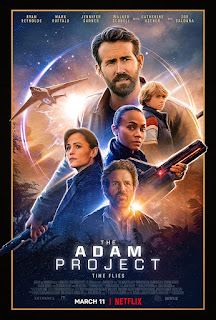
Do you like Ryan Reynolds playing Ryan Reynolds? Boy, do I have a movie for you.
My favorite thing about Ryan Reynolds is probably his jawline. It's exquisite. Trailing that is how self-aware he is that he has an exquisite jawline, among several other physical features that I won't go into on a family-friendly website, as well as charm and charisma just... oozing (can I say oozing?), yet somehow manages to do that without coming off as egotistical.
My point is, Ryan Reynolds is who he is, he knows who he is, so every movie he is in right now (particularly ones he produces), is just him playing himself in a vareity of settings. you had video-game Ryan Reynolds in Free Guy (which was great, go watch it), superhero Ryan Reynolds in Deadpool, Indiana Jones Ryan Reynolds in Red Notice... you get the idea.
"But you forgot the OG superhero Ryan Reynolds," you say. "What about Green Lantern, you idiot? Do you think Ryan's cheerful-yet-brooding eyes could make us forget that atrocity?"
I mean, I hoped.
This is the redemption arc for that. Ol' RR plays Hal JordanRyan ReynoldsAdam Reed, a pilot in the year 2050, which we don't see much of, because we get dropped in the middle of him stealing his own time-travelling jet while under hot pursuit and makes it to 2022, which isn't where he wanted to go.
Here we meet young Ryan Adam, who, my god, is Walker Scobell a dead ringer for Ryan Reynolds, at least in his voice and delivery. So for those of you who wanted more Ryan Reynolds, you get it, in the shape of a undersized*, asthmatic** 12-year-old. It's hilarious and I love everything about it.
Before we get to the meat of what happens, I want to refer back to Reynolds knowing who he is, which is nowhere more apparent than his acting and the characters who he portrays. He also, at least publicly-facing- is very heartfelt and caring. That really shines through in his movies - I should write about Free Guy, which honestly blew me away by being a lot more than the sum of its parts. I'm not sure that happens here, but he*** takes a time-travel popcorn flick and injects it with a lot of feeling, making it about relationships and choices.
Those relationships take center stage as the second act begins. Adam lost his father 2020-ish, so young Ryan Adam and his mom are still dealing with that trauma. We shortly learn that Ryan Adam had a wife, who was also a time-travel-pilot-person (they did not give them a cool name, like chrononauts or something) and she disappeared going to 2018, which is where he is trying to go.
Those of you who can subtract see where this is going.
But, like I said, at this point, those relationships are at center stage. The film does a great job of putting our protagonists in jeopardy, without feeling heavy. I wrote in this space about the need for healthy male relationships in media, and this film does a great job with that - The two Ryans Adams relationship, as he pleads with his younger self to, basically, not be 12. His younger self gives him perspective on their father, and how he managed his grief over losing him.
Mark Ruffalo is pretty great as well, as the dad, who is also asked to examine his own priorities and values, as well as what he is going to about being potentially gifted the ability to prevent his own death. Likewise, Zoe Saldaña is excellent as Laura (uh, spoiler, she's not actually dead), and both her and older-Ryan Adam have to decide between finding and keeping a lost love, or ya know, saving humanity.
Again - still a popcorn flick. None of this is, like, Sophie's Choice or whatever, but they did a good job of taking a fairly standard formula, and doing something other than the standard love interest and leaving it at that. Plus.... Ryan Reynolds.
The Math
Baseline Assessment: 7/10.
Bonuses:
+1 for being tremendously heartfelt
+1 for a tight cast & plot
Penalties:
−1 for making a big deal about the dad's jacket, and then jacket game being very weak. I care too much about jackets, I know, write your own review.
-1 for basically sticking Guardians of the Galaxy and Back to the Future in a blender. Although that could also be a positive.
Nerd Coefficient: 7/10.
*He is very normal sized
**This just kinda... goes away
***I'm not sure it's him, but it's his production company, and a thread in these movies
Dean is the author of the 3024AD series of science fiction stories (which should be on YOUR summer reading list). You can read his other ramblings and musings on a variety of topics (mostly writing) on his blog. When not holed up in his office writing, he can be found watching or playing sports, or in his natural habitat of a bookstore.


 The recent comics that are a prequel that follows the journey of the Event Horizon spell out his motives—which we do see in the movie, having essentially driven his wife to suicide with his obsession with his work—as well as going into what happened in the seven-year period the ship was missing. While I enjoy this, and it adds to the mythos, one of the strengths of the film is that it doesn’t show us all this. There’s a fair amount of gore (not as much as I remember!), but their trip into the Chaos Realm/hell is only shown in brief flashes. Just like Weir’s embrace of Chaos is not pinpointed, this contributes to the overall unease of the setting, instead of just splashing gore all over the walls (although that does literally happen).