Showing posts with label cult film. Show all posts

Thursday, October 9, 2025

Cult Film Review: In The Mouth of Madness (1994)

Cosmic horror without the Lovecraft


This month, just in time for Halloween, the Criterion Channel launched a John Carpenter retrospective. I took the opportunity to revisit 1994's In the Mouth of Madness, one of the strangest John Carpenter films... and I feel like that's saying something.

Fresh off of Jurassic Park in 1993, Sam Neill went to work for John Carpenter, playing insurance investigator John Trent. We meet Trent ranting and raving as orderlies at an insane asylum drag him into a padded room. The next morning, when asylum psychiatrist Dr. Wrenn visits Trent to get his story, he opens the door to find Trent has drawn symbols all over his room, clothes, and face, and he begins to unfold his tale of madness.

John Trent was not always the raving maniac Dr. Wrenn sees before him. No, indeed. Trent was once a successful, can't-bullshit-a-bullshitter insurance investigator. The popular horror author Sutter Cane, Arcane Publishing's biggest literary star, has disappeared, and Arcane wants Trent to find him. Trent reluctantly accepts the assistance of Cane's editor, Linda Styles, but believes from the start that this whole thing is a fakeout—an elaborate publicity stunt designed to generate headlines for Cane's new novel, In the Mouth of Madness. Trent tries to do his research, grabbing copies of all of Cane's novels, but they're too scary. They wind up getting inside his dreams, and maybe even into his waking reality. Maybe everybody's waking realities. A spike in violent crime seems to be tied to people who read Cane's books. And it comes home for Trent while he sits at a restaurant and a man wielding an axe smashes through a plate glass window, coming for Trent before the police shoot the attacker. It turns out this madman was Cane's agent, and right before he raised the axe over Trent's head, he asked a question everyone seems to be asking:

"Do you read Sutter Cane?"

In the same way that Stephen King sets much of his work in the fictional town of Derry, Maine, in the film Sutter Cane sets his work in the idyllic New England town of Hobb's End. Trent realizes that design elements consistent across Cane's various novel covers fit together and form a map to the fictional town. So he and Styles set off to follow the map and see where it takes them. After trading off behind the wheel, Trent falls asleep in the passenger seat, and while Styles drives, things get weird. A figure looms up out of the darkness, the road seems to vanish, the figure returns, but different, then again, then there's a crash, or is there? The radio distorts, goes out, the night seems to bend around Styles, and then... poof. It's daytime and they're in Hobb's End.

That's all the plot summary you get, because after that, the film begins playing with reality in very interesting and increasingly labyrinthine ways. If you haven't seen the film, I don't want to take any of the fun out of it. But extremely telling is the exchange about Cane's books that Trent and Styles have on the road right before he hands over the wheel:

Trent: What's to get scared about? It's not like it's real or anything.

Styles: Well, it's not real from your point of view, and right now reality shares your point of view. What scares me about Cane's work is what might happen if reality shared his point of view.

Trent: Whoa, we're not talking about reality here. We're talking about fiction. It's different, you know?

Styles: But reality is just what we tell each other it is. Sane and insane could easily switch places if the insane were to become the majority.

I have to be honest: that line hit a little closer to home these days than it probably did in 1994. I do remember renting this movie (on VHS!) when it came out, and when it ended, I felt so perplexed, so surprised by the final moments of the film, thinking that I must have missed something, that I rewound it back to their arrival in Hobb's End and watched it again. Watching it this time, having vaguely remembered that experience from 30 years ago, I was a little more prepared to simply go on the journey that Carpenter and writer Michael De Luca wanted to take me on.

If you are a fan of Carpenter and/or Stephen King, this movie is a ton of fun. Carpenter throws in a number of signature visuals that are reminiscent of The Thing, and the movie really nails the Stephen King vibe, not only with the setting but down to the author font on the paperbacks. But one of the most enjoyable aspects of the film is the way it manages to give the viewer a full-on cosmic horror experience without H.P. Lovecraft. Sure, there are a ton of homages to Lovecraft, but it's not his mythos, not his settings, and not his baggage.

Like many people, I can no longer enjoy the work of Lovecraft—certainly not the way I could at maybe 13 years old, reading paperbacks with evocative titles full of odd, elliptical stories that hinted at a hostile cosmos and latent dangers outside of the realms of our perception. But Lovecraft's racism and eugenicist views, which revealed themselves in tropes I wasn't equipped to fully understand at that age, make the experience of reading him one I can no longer find much joy in. And while there are a couple of good ones, Lovecraft film adaptations tend toward the schlocky and cheap, as name-recognizable IP in the public domain might lead you to believe.

So I'm grateful to John Carpenter for In the Mouth of Madness. It scratches the cosmic horror itch in a satisfying way, and wraps it in something of a puzzle box narrative that's akin to a film like Mulholland Dr. but very much in the horror genre. I'm happy to recommend this without having to caveat it.

In the Mouth of Madness is currently streaming on the Criterion Channel (October 2025), and Tubi with commercials.

Thursday, January 9, 2025

Film Review: Seven Samurai

Akira Kurosawa's Seven Samurai is a legend for a reason — here are some influences and thoughts on a 4K rewatch on the big screen.


Seven Samurai has been making the rounds at repertory theaters recently in honor of its 70th anniversary, and I was lucky enough to see it on a cold January Sunday at the Plaza in Atlanta. Enjoying it in glorious 4K on the silver screen with twenty or so like-minded cinephiles, I had an absolute blast. I've seen it many times before, and it seemed to always be playing in the background at my grandmother's house growing up (strangely enough, my classical Southern matriarch was a big fan of samurai movies). 

For those that aren't familiar with the plot, the story centers around a medieval farming village that's been beset by bandits who come to steal their crops — as it's not ripe for harvest yet, the bad guys vow to return when it is. The farmers set out to convince samurai to come to their aid, offering unlimited food as payment. Fortunately, a starving ronin (samurai without masters and thus jobs), takes them up on their quest, and manages to gather a crew of like-minded warriors to commit to the cause. 

Discussion-wise, I don't think that there's much I can bring to the table that hasn't been the subject of countless textbooks, documentaries, and college seminars, so I thought instead I'd focus on 5 things that brought me joy or that I hadn't noticed until this viewing.

1. Oh George Lucas, I'd recognize that flower field anywhere


It's no secret that George Lucas was heavily influenced by Kurosawa's filmmaking techniques, from screen wipes to dramatic musical accompaniment. He even acknowledged that Hidden Fortress inspired him to tell the story of A New Hope through the eyes of lowly droids, stand-ins for the lowly peasants that anchor Hidden Fortress. (Here's a quick primer on exactly all those similarities.)

But in the middle of Seven Samurai, there's a scene of beauty and respite for the youngest samurai, Katsushirō and Shino, a local village girl. They meet secretly in field of flowers, laughing and flirting while trying to ignore the fact that bandits are about to besiege their town. Even though Seven Samurai is shot in black and white, this scene stands out with the sheer number of small delicate flowers, and they contrast well against the dark and scrubby brush behind them. It's very clear that Lucas had this scene in mind while filming Attack of the Clones, as Anakin and Padme similarly share a moment of joy in the flower field on Naboo. (Another fun reference? Darth Vader's helmet is 100% influenced by samurai helmets. The list goes on and on when it comes to Lucas' love for Kurosawa.)

2. Kambei's easy smile makes me want to be a better person


The first time we meet Kambei, he's shaving his ceremonial chonmage, or top knot, so he can disguise himself as a monk to go undercover and rescue a kidnapped child. This isn't something that's taken lightly, as a samurai's haircut was not only practical (it helped to keep his helmet securely on his head in battle) but also symbolic, identifying him to all the world as a warrior. He is, as we'll see throughout the movie, a total good guy. His decision to help the struggling villagers is the only reason the others join him, as he's a natural leader. But what I love most about him is how kind he is — his smile is contagious and very pure. He doesn't raise his voice, he doesn't get impatient, and he's always, always cool, calm, and collected. I aspire to take his approach to life, and smile more to the world. 

3. The villager choreography definitely had an influence on Mad Max: Fury Road


To understand Seven Samurai, you have to know a little about the life of a farmer in this era. It's the 1580s, in rural Japan, and life is hard. Like, really hard. Farmers are the lifeblood of the empire, but they're also vulnerable to droughts, famine, and pillaging attacks from bandits. Daily life is full of toil and hard work, and their bodies are rough for the wear. Kurosawa depicts his villagers in an interesting way in this movie, and the "villager choreography" as I call it always sees them moving together en masse, whether they're planting, harvesting, mourning, fighting, or celebrating. I think this is a nod to the communal nature of their existence, as it you can't do literally anything by yourself when you're a farmer. 

While watching, I was reminded of the poor souls known as The Wretched who eke out a sad existence outside Immortan Joe's Citadel in Mad Max: Fury Road. They have a much worse life, it's true, but the way the move together, down to the stick baskets they wear strapped to their backs, very clearly resembles the villagers in Seven Samurai. And like the samurai, Mad Max and Furiosa help deliver them from evil and restore abundance.

Oh! And another way George Miller included an homage to Seven Samurai? Remember when Max ventures into the (former) Green place swamp, all you hear is shooting, and then somehow miraculously returns with a ton of guns and ammo? Kurosawa did it first, only with Kyūzō volunteering to go steal a musket from the bandits in the dead of night and comes back with it a few hours later, with two more dead bandits to add to Kambei's tally. Kyūzō is the stoic and skillful swordsman, and watching him on screen is absolutely mesmerizing. Even though he's a samurai, he gives kung fu hero vibes. 


4. The sheer likability of the samurai is just mind-blowing


The world loves a "we're putting together a team for a job" movie and I am certainly no exception. From The Dirty Dozen and The Magnificent Seven to Ocean's 11 and The Italian Job, these kinds of movies are just incredibly watchable. Why? I think it's because you get a super diverse array of characters (all with unique skillsets that are fun), witty banter, and a sense of camaraderie that's extremely FOMO-inducing.

Kambeo assembles a crew to protect the villagers that's got everything: a skilled and stoic sword master, a woodchopper that can help them through dark times, an old friend, a hot head, a youngster eager to prove his worth, and a skilled archer. And the best part is, when these guys are on screen, the actually seem like they like hanging out with each other. Some are in it for the glory, some for the rice, and some for revenge, but they're all also in it for the sense of belonging they get — even the blustery and crass Kikuchiyo, who starts the movie out as an annoying hanger-on but who comes full circle as a hero. No joke, I would kill to have lunch with these guys.

5. This time around, Kikuchiyo's story choked me up a little


Comic relief in Seven Samurai comes in the form of Kikuchiyo, a peasant-born street fighter that longs to be a samurai. He is loud, crude, almost always nearly naked, and constantly scratching himself. He only makes it on to the team thanks to his sheer persistence as he trails along beside the heroes on the way to the village, refusing to take no for an answer. It isn't until well into the movie that we learn about his origin story, and it helps us understand why he's choosing to fight for these trod upon people. It's his past.

In the final battle scene, he rushes towards burning buildings to help those trapped inside, and a dying mother hands him her child before collapsing. He grabs the baby and then absolutely just falls apart, confessing "This child was me!" It is at this point that we learn about his trauma-filled past. He too was an orphan, the victim of violence against his small community. In a movie this old, and about samurai warriors, you wouldn't expect this level of emotionality, and it's refreshing to see with modern eyes. Kikuchiyo goes on to fight bravely and sacrifice himself for this village, and in the process helps to break the cycle of trauma for many others and giving them a chance to escape a fate like his.

Overall

Seven Samurai is three and half hours long, but there's not a wasted minute or any filler. I even found myself waiting until the brief intermission to run to the bathroom so I wouldn't miss a single scene, and this despite the fact that I'd seen it before. The film is a somewhat shocking 70 years old, yet it still looks incredible and is compulsively watchable. I think it's because it's the classic battle of good versus evil, filled with universal archetypes that all know and love, from the one-eyed bandit to the clear-eyed hero who can make it all right. It's long run time is thus a feature and not a bug, as it can freely spend time letting the audience get to know the characters and their struggles. Somehow, it's still relatable for modern audiences, too — from the jaw-dropping action scenes and forbidden romance to the potty humor jokes.

Everyone should see Seven Samurai, I fully believe this. I'm still riding the high of seeing it on the big screen. Be right back, going to look into ordering a T-shirt with the samurai flag on it...


POSTED BY: Haley Zapal, NoaF contributor and lawyer-turned-copywriter living in Atlanta, Georgia. A co-host of Hugo Award-winning podcast Hugo, Girl!, she posts on Instagram as @cestlahaley. She loves nautical fiction, growing corn and giving them pun names like Timothee Chalamaize, and thinking about fried chicken.

Friday, May 24, 2024

Hail to the King: A Tribute to Roger Corman

Roger Corman, whose eight-decade career in Hollywood earned him nicknames like “The King of the B Movies,” died last Thursday at the age of 98.

I cried. Telling my children, I did.

As the resident cult film nerd here, I have written a lot about Roger over the years (he told me to call him “Roger,” so I will), and it is one of the great joys of my life that writing for this site gave me the opportunity to interview him.

As a fan, I get to be an admirer and advocate for his work. It’s commonplace to dismiss b-movies or genre movies as cash-grabs or just dumb, but I will always stand up and say that I unironically think many of the movies that Roger made are capital-G Great, and if you happen to know the circumstances or budget constraints under which they were produced, that makes them even more compelling accomplishments. They are often archly funny, or stunningly atmospheric, or racially progressive, or culturally subversive, or formally experimental. No Roger Corman film will ever be a guilty pleasure for me. I mean, some of the hundreds of films he produced stink — I doubt he’d argue — but most of the films he directed and many of the high points of the ones he produced are take-me-to-my-happy-place films that I will watch forever.

And my kids love them! What a joy it has been to share with my kids the Roger Corman/Edgar Alan Poe films, first at home on video and then more recently on the big screen thanks to Los Angeles' own American Cinematheque repertory screenings. Last month I took two of my daughters to see House of Usher, and a few months ago I took most of my family to see Masque of the Red Death on a newly-struck 35mm print on the big screen. As part of American Cinematheque's ongoing Hail to the King: The Films of Roger Corman series, I kept hoping that Roger might make it out to one of the screenings. That I might be able to say hi again, and introduce my girls. The screenings are ongoing, and we will keep attending, but it makes me sad that the joy of seeing Roger in person again is forever off the table. 

As someone who loves classic films and Hollywood history, I can only sit in awe of the careers he impacted directly. The names of people who worked for Roger are all out there and have been repeated a million times — Ron Howard, Francis Ford Coppola, Jack Nicholson, Martin Scorsese, Jonathan Demme, Peter Bogdanovich, James Cameron, Gale Anne Hurd, Dennis Hopper, Bill Paxton, Joe Dante — the legendary writers he relied on, like Richard Matheson, Robert Towne, and Charles Beaumont, and the actors whose careers he resurrected, re-framed, or extended, like Vincent Price and Boris Karloff. I’m not sure any individual in the 97-year history of talking pictures has had a more significant roster of talent (that's right -- Roger Corman was born the year before talking pictures were introduced). These Corman-alumni are largely responsible for independent films existing at all. The landmark book on the rise of independent cinema is called Easy Riders, Raging Bulls — and both of those eponymous movies trace their roots to Roger. 

My friend Howard Rodman, past president of the Writers' Guild of America, said when Roger passed that the last of the Founding Fathers was gone. Howard meant “of Cinema.” The last of the Founding Fathers of Cinema. Writ large. In Christopher Nolan’s Academy Award acceptance speech for Oppenheimer, he pointed out that movies are only about 100 years old. Roger Corman helped shape them for almost the entire time we’ve been watching these flickering lights on our various screens.

Now...as a filmmaker, Roger has been a guiding light. When I was in film school, I couldn't afford film stock or processing. I couldn't necessarily get professors to sign off on certain projects I wanted to do. So I just did what I needed to do to Make The Thing. I shot on video, I made the phone calls and got the buy-in and found the collaborators and Made The Thing. And then I submitted The Thing to the film festivals and competitions that featured all of the officially-sanctioned projects...and I beat them. My producing partner had a closet full of Vincent Price VHS tapes he'd grown up on, most of them directed by Roger Corman. When I got the chance to shoot the interview with Roger, I called my friend Mark to help me film it --Mark had worked with me on a number of scripts, Public Service Announcements, and other projects for probably a decade -- and as we were setting up, Mark told me how he had grown up watching Death Race 2000 at his grandmother's house. I found my people by finding people who found the movies through Roger Corman.

How to say this? I'm not being hyperbolic -- I do not think I am the same person in this world without Roger Corman. And I'm not even somebody who he hired! 

Look, Billie Jean King said, "You have to see it to be it." I understand that Billie Jean King didn't mean, "white guy sees white guy do a thing," but making films is tremendously expensive, and our most recent Writers' Guild Strike was explicitly about making it possible for people who aren't independently wealthy to make filmed content. I have four Emmy Awards and a career in making films that literally provides for my family. I have a Hugo Award for writing for this site, which I do largely because of the films Roger Corman opened me up to. I just...I don't think my life exists as it is without Roger Corman. 

And that's a hell of a thing! 

If you have heard any of the news stories, you heard all the names, and you probably thought "wow," or whatever. But what gets lost when you talk about a legend is that it's really...it's just a human being, and they don't walk through their day as A Legend. When I reviewed the documentary Corman's World,  the moment that most struck me was when Jack Nicholson almost broke down in tears at the thought that someone wouldn't respect Roger. He said, "If Roger doesn't know how important he is, I'll go to his house and tell him right now." Utterly Singular Hollywood Legend Jack Nicholson believes that he owes his career to Roger Corman. 

I am very lucky. I got to tell Roger Corman myself that he inspired me as a director.

That interview I did with him — since he was always producing, an off-camera comment that took place after we wrapped our conversation and we were breaking down the cameras led to me coming back to discuss a potential film project with him. Per IMDb, Roger has 491 producing credits. His first was in 1954, the same year On the Waterfront came out, and he has a few more coming out still. That averages out to a little over seven movies a year, for seventy years. If Roger hadn’t done it, the idea that anybody ever could have done it would have been utterly unbelievable.

Gale Anne Hurd, whose legendary career as a producer includes the Terminator films, Aliens, and The Walking Dead, got her first job in movies with Roger. In a recent interview with journalist Madeline Brand, she said of Roger’s passing, “There’ll never be another.”

There will never be another. 

I am sad the Roger is gone. But I am so, so grateful that he was here.

Roger Corman
1926-2024

Tuesday, March 16, 2021

Microreview [film]: Born in Flames, Lizzie Borden [dir.]

A Punk-Inspired Underground Gem from 1983


Described by The Village Voice as "a radical-lesbian-feminist sci-fi vérité," Born in Flames might be a little hard to pin in any one genre, but it's a tightly-packed, singular film, produced on a shoestring, with a vision of society that has profound, unfortunate resonance forty years later.

Born in Flames is set ten years after a fictitious socialist revolution swept American politics, but now a decade in, it has become clear that women have been left behind, an afterthought of social progress. The movie follows a number of women: organizers, reporters, editors, and others in their orbit who embrace, or reject, or remain ambivalent about the rising tide of increasingly militant women's activism. Stylistically, it's a brilliant hybrid of scripted scenes, improvisational dialogue, news footage, security camera footage, and just good-old guerilla filmmaking that allows writer/director/editor Lizzie Borden to get a ton of production value on the screen, in service of a story whose scope is one of the broadest I've seen in outsider cinema.

There are difficult parallels in this movie to our current moment, from a bombing at the World Trade Center to the shady in-custody death of a Black woman, which felt like an eerie echo of Sandra Bland, but from thirty-five years in the past. There are definitely moments in this film that are hard to watch, especially when considering that they could be describing events happening right now. But one of the most compelling takeaways from Born in Flames is the idea of intersectionality. This topic is something that we are grappling with daily (just check whatever the trending topics on Twitter are right now), and even ten years before the term was coined, Born in Flames tackled it head-on. There are viewpoints across class, racial, and sexuality divides depicted in the film, and many of the same talking points we hear today that exclude or marginalize different groups of women are pilloried in this movie. Are the attitudes and representations totally in sync with today's norms? No, of course not. But the dialogues taking place on screen remain relevant and thought-provoking.

Very simply, Born in Flames is the kind of movie that reminds me why I love cult movies. I found out about it because the Criterion Channel is doing a retrospective on Afrofuturism, so this is one of those times where I went into a movie with no background, introduced to it because it was included in some retrospective a film preservation group put on, and I walked away with not only an example of astonishing techincal achievement accomplished with negligible resources, but also with a window into an entire worldview and generational movement that I never knew existed. If you had told me before watching this movie that in 1983 there was a collective of intersectional feminists in New York City discussing militarism, exploitation, forced domestic and sexual labor, bridging racial divides, and international solidarity for common cause, I might have said, "I wish I could've seen that." Thanks to Born in Flames, I kinda did.

The Math

Baseline Assessment: 6/10. This is low-budget guerilla filmmaking, but inventive use of technology creates a broader canvas than usual.

Bonuses: +1 for the NYC punk vibe of the early 80s, +1 for early appearances from fellow members of the emerging scene such as Kathryn Bigelow and Eric Bogosian, +1 for staying topically relevant for almost 40 years

Penalties: None from me

Cult Film Coefficient: 9/10. I'll be thinking about this one for a while.

Posted by Vance K — cult film reviewer and co-editor of nerds of a feather since 2012.

Monday, October 12, 2020

Nerds on Tour: A Girl Walks Home Alone at Night, Ana Lily Amirpour, dir. (2014, film)


Dossier: A GIRL WALKS HOME ALONE AT NIGHT

Location: Iran (Persia)

Package Type: Film

Itinerary: Here in Bad City, there's a ditch where the town dumps its dead. That should tell you a lot about Bad City. Arash lives in Bad City, but he's a good dude. In a city full of drug dealers and worse, Arash works hard, and has worked for years to save up in order to buy a classic car. His pride and joy.

Arash also takes care of his widower father, who is addicted to heroin. It feels like a pain-pills-gave-way-to-worse situation. But Arash's father, Hossein, is nevertheless in deep to a drug dealer, who takes Arash's car as partial payment. This dealer guy sucks a lot. So none of us feel too bad when he picks up an innocent-looking Girl, tries to convince her to become a prostitute, but instead she grows fangs and murders the dealer for his blood. Not a huge loss, and when Arash comes by to try to get his car back and finds the dealer dead and mutilated, it's the easiest thing in the world to take his money, and his unsold drugs, and dump his body in the ditch where these things go.

Turns out, Arash isn't a great drug dealer! He tries to offload some of his stuff at the club, but a pretty girl instead convinces him to ingest some of it himself. So Arash gets blitzed. Stumbling around, lost in an unfamiliar neighborhood, dressed in a Dracula costume, Arash comes upon The Girl. An actual vampire. He assures her that he is not to be feared. It's only a costume. He is harmless and charming, so she takes him home.

That's where things get more complicated, and where they begin to unravel.


Travel Log: Let the Right One In is the character-driven, off-the-beaten-path vampire movie par excellence, and A Girl Walks Home Alone at Night owes a lot to that earlier, Swedish film. While the plot points and age-ranges differ, the vibe is decidedly similar. 
 
And in a low-budget film with only a small number of characters, it must be said, it's pretty easy to predict the ways in which these few characters might intersect. That doesn't take away, however, from the charm of this film. 
 
For a movie where people have their limbs bitten off, bodies are routinely dumped in ravines, and drug addicts are used as prey, it's a super-charming adventure! Throughout, the audience knows more than the characters, so one of the most interesting balancing acts the movie pulls off is the shifting of perspective between Arash and The Girl. The ways in which they come to see each other, and to interpret one another, are the areas in which this movie really shines.
 
It was a little disappointing to learn that, though the film was written and directed by Iranian-American filmmaker Ana Lily Amirpour and billed as "the first Iranian vampire movie," it was actually shot in California. It's set in a fictitious Iranian city, though, and the actors all speak Persian. The Iranian life it depicts is one of nightclubs, music, drugs, prostitution, and wealth disparity. It's probably a vision of Iran that many Westerners wouldn't expect, and a depiction that would make it dangerous, if not impossible, to actually shoot the movie in Iran. Hence, the California stand-in. Walking into this sphere of decadent nightlife, wearing a traditional chador covering, The Girl presents as something very different from what she really is. She looks like a modest, possibly devout individual, when in fact she is the most powerful — and depending on your definition, unholy — being in the film. It's a clever redirect that plays on cultural codes and expectations. 
 
Also, it must be noted that the movie has an all-time great movie cat, and the black-and-white cinematography is gorgeous.  

Analytics

The Adventure: 4/5
The Scenery: 4/5.
NerdTrip 8/10

Posted by Vance K — cult film reviewer and co-editor of nerds of a feather since 2012, fan of vampire movies since the local channel showed that blue-tinted print of Dracula one Halloween, lo these many years ago.

Wednesday, September 16, 2020

Microreview [film]: The Love Witch

There’s a lot to love


The Love Witch is a movie shot in 2016 that looks like it was shot in 1972. Supposedly, it was *the last* film shot on 35mm film and edited on a negative without using a digital intermediate. As a big film nerd, this all makes me way happy, but what writer and director Anna Biller did with this film far outpaces a simple stylistic exercise.

The eponymous love witch is Elaine, who is attempting to recover after the end of a marriage, and has — as she puts it — been reborn as a witch practicing love magick. But her magic is maybe a little too effective, as the dudes she sets her sights on never really seem to be able to move on from her. This failure to move on takes several forms throughout the movie, and Elaine seems both a little confused by this effect, but also ambivalent. It’s not really her concern if a romantic plaything can’t move on.

This is where gender dynamics come into play. I’m not the best reviewer to discuss this, but let me say that the gender dynamics in the film are complex and nuanced. Elaine articulates the notion that women should be subservient to men, and give them sex all, all, all the time. She tries to convince other female characters in the film of this. But Elaine doesn't really practice what she preaches. Instead, she seeks out men for *her own* sexual and relational gratification. We hear the abusive voices of her father and her ex-/late husband demanding greater physical perfection from her, and we watch her sexually engage with men only to come away still wanting, while the men collapse in weepy heaps in her wake.

For me, this is where the aesthetic beauty of the film comes into play. And please understand, this is a BEAUTIFUL movie. Anna Biller not only wrote and directed it, but also designed the sets and costumes. She and cinematographer M. David Mullen purportedly worked out blocking and lighting schemes from 1970s giallo movies in order to better mimic the look of those films. It’s one thing to mimic the look of old film with a plug-in, or even to shoot on the same medium, but to fully mimic it down to the nuts and bolts...well, something else happens there.

By perfectly copying the aesthetic of a bygone generation of films and doing so in the context of a new work that handles gender, narrative, and thematic content differently, Biller is setting her film up explicitly in dialogue with those earlier films. Giallo and independent Technicolor horror movies brought us a number of female heroines, but when fifty years later it’s plausible that a woman might yet be attacked in a bar because someone calls her “witch,” the narrative takes on an additional layer of meaning.

That is maybe too esoteric. At brass tacks, we have the following: Samantha Robinson as Elaine is probably as beautiful as any human has ever been in a movie; the production design is sumptuous and layered; there are evocative references to films like The Seventh Seal that make my film-nerd heart happy; and the narrative leaves room for ambivalence and competing interpretations of Elaine, her goals, and her accomplishments.

In the end, this is kind of everything you want from an independent film — a strong narrative voice, bold visual choices, and a thoughtful re-examination of genre conventions.

The Math

Baseline Assessment: 7/10

Bonuses: +1 for Samantha Robinson’s highly stylized performance; +1 for literally every single thing in front of the camera lens, because nothing is wasted

Penalties: -1 for a certain lack of narrative integrity that makes a couple of plot developments feel pretty mushy

Cult Film Coefficient: 8/10

POSTED BY: Vance K — Emmy Award-winning producer and director, cult film reviewer and co-editor of nerds of a feather, flock together for lo these many years now.

Wednesday, April 24, 2019

Microreview [film]: My Name is Julia Ross

A long time coming, but worth the wait


Out of the ashes of the late, lamented FilmStruck streaming service, comes the Criterion Channel. When it launched this month, the Criterion Channel came out of the gate with a showcase of Columbia Film Noir, and one of the films included was 1945's My Name is Julia Ross. Since 1945, the movie hadn't been easy to see. I found out too late that it had been included in a retrospective at one of the art house theaters here in LA about a decade ago, but it never had a home video release of any kind until it was briefly issued in a box-set of backbench noir films issued by Turner Classic Movies in 2011. I missed that one, too. But the retrospectives had the effect of creating a kind of aura around this film   one of the great noir films you couldn't see. It was referenced in DVD commentaries and articles about other, better-known noir films, but was itself hard to put your eyes on.

It certainly didn't help matters that the lead actress, Nina Foch, told me in her 80s that it was one of her favorite roles, even more than the film for which she was nominated for an Oscar. Nina taught for decades at USC, and was an inspirational figure for hundreds of students like me throughout the years. So why couldn't I see her favorite role?!?!

So, thanks, Criterion Channel. Plus, watching this movie in 2019 offers additional joys that it maybe wouldn't have had I caught it at that retrospective all those years ago. Because My Name is Julia Ross is about gaslighting. We get the term "gaslighting" from the 1944 George Cukor movie Gaslight (the most popular rendition of a story that began on the stage in 1939), and I'm here to tell you folks, the term should be "Julia Rossing." I think My Name is Julia Ross is the better movie (produced with a tiny budget and with only a 64-minute running time), and for a number of reasons.

Here's the plot: Julia Ross, an American living in London, answers an ad for a personal assistant for Mrs. Hughes, a wealthy old widow with an adult son, Ralph. Julia gets the job. After Mrs. Hughes sends Julia away with some money for shopping and packing her things, she tells the woman staffing the temp agency that they can close up shop. Like, all the shop. Like, disappear. So what's up? Julia reports for work, and wakes up in an entirely different place, surrounded by Mrs. Hughes, her son, and the servants, who all call her "Marion," Ralph's wife. They tell her she's been ill, and confused, and she never was any "Julia Ross." She's been there at the seaside house, recuperating, for months. So we know the Hughes family is trying to brainwash her, but to what purpose?

What makes this movie so awesome, apart from Nina's performance that really anchors us to Julia and a Gothic-noir atmosphere, is that Julia is always herself, and always fighting. I have a number of issues with Gaslight, from Charles Boyer's performance to the way in which Ingrid Bergman's Paula character is written in a fainting, sort of damsel-in-distress manner. But Julia Ross don't play. I kept worrying that her derpy boyfriend, left behind in London, was going to be maneuvered into saving her, but I needn't have been concerned.

This movie was killer in 1945, and through the machinations of social discourse in 2019, it has additional resonance and a hero we are happy to root for.

The Math

Baseline Assessment: 6/10

Bonuses: +1 for Nina Foch's magnetic performance in the title role; +1 for a kick-ass heroine who isn't here for these rich people's legal problems; +1 for taking the noir out of the gutter and sticking it in a Gothic setting

Penalties: -1 for the 64-minute running time

Cult film Coefficient: 8/10, well worth your time and attention

Posted by Vance K — co-editor and cult film reviewer for nerds of a feather, flock together since 2012, Emmy-winning producer, and veteran of two semesters with Nina Foch.

Friday, March 8, 2019

Microreview [film]: The Last Woman on Earth (1960)

This movie is hot garbage


The Last Man on Earth with Vincent Price (1964) follows the lone survivor of a global plague, as he does resourceful things to survive, fight off hordes of zombie vampires, and try to work out a cure to the plague that might allow others to live. He's pretty active.

By contrast, The Last Woman on Earth is about two jerks who fight over Evelyn (get it? "Eve"?), one of the jerks' wife, while asking her to make breakfast and coffee, and she reads books about having a baby. I kept waiting for her to realize that these guys are dipshits and come into her own — and at one point she even said something along those lines — but Friends, I waited in vain. I fell asleep with five minutes left in the movie, while the two jerks were duking it out over "possession" of The Last Woman on Earth, and when I woke up, I rewound the movie to actually see the last five minutes, watching for the moment where Evelyn steps out and tells them both to go to Hell. Friends, I rewound in vain.

This movie was written by Robert Towne! Academy Award-winning writer of Chinatown! Astute readers of this site will know that I am a huge Roger Corman fan, and though this film was produced and directed by Roger, there is literally nothing I can recommend about this movie.

The Math

Baseline Assessment: 3/10

Bonuses: What's the mathematical equivalent of blowing a raspberry at the screen?

Penalties: -1 for there being entirely too goddamn many dudes in a movie called The Last Woman on Earth, -1 for literally everything else in the movie

Cult Film Coefficient: 1/10. Really, really bad.

Posted by Vance K — cult film reviewer and co-editor of nerds of a feather, flock together since 2012.

Tuesday, December 5, 2017

Microreview [film]: The Haunted World of Edward D. Wood, Jr.

In which we see that Ed Wood's story is better than...well...any of Ed Wood's stories


I'm on record as saying I think Ed Wood is probably the best movie ever made about making movies. It came out in 1994, and a year later, apparently to capitalize on the sudden name recognition generated by the Tim Burton movie, the independently-produced documentary version of the same events came out. It is very odd, but also very touching.

If you are not familiar with the events of Ed Wood, it's going to be hard for me to summarize what this documentary's about, but I'll give it a go. Edward D. Wood, Jr. was a World War II veteran who moved to Los Angeles after the war to try to get into the picture business. When the story of Christine Jorgensen — one of the first Americans to openly undergo gender-reassignment surgery — hit the news, Ed Wood managed to land the job of directing an exploitation picture called, I Changed My Sex. Ed landed the job because he was secretly a transvestite, which he revealed to the film's producer. After promising to shoot the movie in three days, Ed wrote a script about the life he was leading, keeping his transvestism secret from his girlfriend Dolores Fuller. Dolores would go on to write hit songs for Elvis Presley and Nat King Cole. The resulting movie, ultimately released as Glen or Glenda? is one of the most incomprehensible things ever set to film. And it stars Bela Lugosi. Ed and Bela met somehow, I guess there are a couple different versions of what went down, and became...probably...friends. Bela hadn't worked in a while, and needed money. Ed would keep Bela employed until Bela's death, and I kid you not, beyond. The three films they made together are widely thought of as some of the worst movies ever made. Also appearing in them are Tor Johnson, a Swedish professional wrestler, Vampira, an out-of-work late-night horror TV host who was the inspiration for Disney's Maleficent and, later, Elvira, and a group of friends, some actors, chiropractors, girlfriends, investors' kids, and whoever else would be in them for nothing. Ed's "masterpiece," which was finished after Bela died, was actually financed by a Baptist church in Beverly Hills, and Ed got the cast and crew to agree to be baptized as a condition of financing.

Phew. Ok, so all that is in Ed Wood, and familiar to anybody who's seen it. But it is remarkable to hear the people who were actually involved tell the story. The filmmakers got EVERYBODY. They got Bela's only son, they got Dolores, and the woman who stole Dolores' part in Bride of the Monster because of a misunderstanding about her investing in the production, they got Ed's ex-wife and step-son, they got surviving members of Ed's casts and crews, they got Maila Nurmi (Vampira), they even got the pastor of the Baptist church that paid for Plan 9 from Outer Space. And things you think, "Well, that probably didn't happen like that," while watching Tim Burton's movie, you find out, no, it pretty much happened like that.

Ed's story was not a happy one, though. He died a homeless alcoholic at the age of 54. While not lingering on it, the movie doesn't skip over Ed's last years, in which he was usually drunk and making pornographic films. Similarly, Ed's relationship with Lugosi has been the subject of a lot of speculation and some recrimination. Was Ed a heartless, exploitative fraud who ruined Bela Lugosi's legacy (a position held by Bela Lugosi, Jr.), or were they actually friends? Did Ed give something to Bela in the legendary but then-forgotten actor's final years that Bela cherished? To hear Ed's stepson recount visits to Lugosi's house, for instance, you might be inclined to think that, yeah, the two were odd but close friends. As the film ends, and each of the interviewees signs off on their final memories of the actual man — not the character named "The Worst Director of All Time," but the actual human being that they knew for better and worse — the movie is profoundly touching. To hear these people express their regrets for not understanding Ed's cross-dressing at the time, for not being there when they felt he may have needed them most, or for some, how much it meant to them that they were with him right to the end...it's moving stuff.

Ed Wood was not a good filmmaker. But he was loved, and he was complicated and frustrating and misunderstood, and when he was gone, he was missed. And for all of its complexity and murkiness, I think his story is a meaningful one, and I'm glad we have it.

The Math

Baseline Assessment: 6/10

Bonuses: +1 for getting all the interviewees they got; +1 for an unexpectedly evocative emotional experience; +1 for being quite frank about topics that were emotionally perilous for some of the people on camera; and +1 for Maila Nurmi's sorry-not-sorry admission that Orson Welles gave her an STD

Penalties: -1 for a little bit of narrative unevenness in terms of who-did-what-when; -1 for being mostly talking heads, but what are you gonna do?

Nerd Coefficient: 8/10. I feel like this is a must for fans of Wood, but also a good watch for anybody invested in independent or cult filmmaking

Posted by Vance K — cult film reviewer and co-editor of nerds of a feather since 2012. For reviews of other documentaries about cult film figures, check out Corman's World and Spine Tingler! The William Castle Story.

Friday, October 13, 2017

Microreview [film]: Fiend Without a Face

Brains. Filled with telekinesis goo.


Look, I’m going to cut to the chase — you’re going to want to watch this movie for the last fifteen minutes, when killer brains start attacking all the stock characters. Before that, it’s pretty standard fare.

There’s a wonderful scene in Ed Wood where Ed pops in to see an old editor on the studio lot that just got a batch of stock film, and Ed laments it all ending up filed away, saying,
“Why, if I had half a chance, I could make an entire movie using this stock footage. The story opens on these mysterious explosions. Nobody knows what's causing them, but it's upsetting all the buffalo. So, the military are called in to solve the mystery.”
The reason why I love that line so much is because it almost perfectly describes so many actual, low-budget sci-fi movies from the 1950s. In film after film, the entire first reel is just stock footage of various military exercises and two guys in Army uniforms in a nondescript office describing some mysterious problem. Fiend Without a Face is no exception. The problem the guys talk about in the nondescript office is the locals complaining that the nuclear tests from the base are messing up milk production from the family cows.

Little do they know there’s a bigger problem brewing. I’ll keep it simple and just say the nuclear tests don’t play well with a local professor who has been perfecting his theory of telekinesis, and an invisible killing machine that sucks out its’ victims brains is the result.

When those brains reappear at the end of the movie, it is more than worth the wait. They still have the spines attached, and have grown these sort of eye-stalks, like a slug. They can climb, these brains, they can jump, and they can ooch along the floor. They can also, when shot with an Army .45, make a disgusting gurgling sound and belch out black goo. We’ll call it telekinesis goo.

This movie has been called the goriest of its era, and I won’t argue that point. If you think sentient, malevolent, crawling — and then exploding — brains are up your alley, not only are you my kind of person, but you should probably also put this movie up at the top of your list.

The Math

Baseline Assessment: 5/10

Bonuses: +2 for all the stuff I said about the brain monsters, +1 for the line, "You ever consider trying sleep instead of Benzedrine?"

Penalties: I think I've made it pretty clear what to expect

Nerd Coefficient: 8/10 (which is pretty dang high, given our scoring system)

Posted by Vance K — cult film reviewer and co-editor of nerds of a feather, flock together since 2012, folk musician, and Emmy Award-winning producer.

Monday, August 28, 2017

Microreview [film]: The Invisible Boy

Oh...boy. Just, yep. I'm gonna leave the pun right there.

Forbidden Planet is an undisputed classic of sci-fi film. At the time it was produced, it was a tremendously expensive film, and a disproportionate amount of that budget went to pay for a single prop: Robby the Robot. That sure must've seemed like a good investment when the breakout star of the film was not sexpot Anne Francis, or strapping, not-yet-gray Leslie Nielsen, or even venerable actor-with-gravitas Walter Pidgeon. Nope, the breakout star was Robby the Robot.

And with good reason. Robby is amazing. Robby is better than Gort, and I love Gort. I don't even care. We can fight. So given the success of Forbidden Planet and Robby, the studio wanted a sequel, naturally. That sequel was The Invisible Boy. Now, The Invisible Boy is bonkers, so rather than write a straight review, I wanted to try something different. Here, then, is An Imagined Conversation Between Screenwriter Cyril Hume and the Producers of Forbidden Planet and The Invisible Boy.

The scene is a small, executive office on the MGM lot. A PRODUCER sits behind a mahogany desk. It's nice. Swanky digs, sure, but it's second-class fancy, for Golden Age Hollywood. The really nice offices start a floor up. But this producer's doing ok. We'll give him a cigar. Because 1956.

In walks CYRIL HUME, screenwriter. He's in a suit, also because 1956, but you can tell. It's the 1956-everybody-wears-suits equivalent of a Foo Fighters concert-T. Still, this has been the biggest year of his professional life — three hits. Ransom!, with Glenn Ford (big star), Forbidden Planet, and Bigger Than Life directed by Nicholas Ray right after Rebel Without a Cause.

PRODUCER: Cyril, baby. Have a seat. Have a seat! You want a cigar?

CYRIL HUME: Scotch and soda? Just, Scotch with a ray of sunlight that passed through a bottle of Schweppes.

PROD: That's a writer for you! I'll have my girl mix it right up for you.

He pushes a button on the intercom.

PROD: Stella, mix up a, er? Is it "Stella"?

VOICE ON INTERCOM: Sheila, sir. But keep trying.

PROD: Great. Listen, baby. I need a Scotch and soda for our writer friend, and that's Scotch with a...what was it?

CH: It's just Scotch and soda. Just...really?

PROD: That's just Scotch and soda, Shirley. In a glass. With ice, maybe.

(ANNOYED CLICK FROM INTERCOM)

CH: So...?

PROD: Right. Listen, baby. This Forbidden Planet, it's a humdinger. It's doing gangbusters. We need a sequel, ready to shoot, right away.

CH: I told you a science fiction version of Shakespeare's Tempest would work.

PROD: Whatever, whatever. This Shakespeare guy, friend of yours? If he's got other ideas, great. But listen, we need another movie with Robby the Robot, right now. Like, yesterday. Something real...science fiction-y. For the, uh, for the geeks and stuff.

CH: Yeah, that's great. Making a film on such a huge canvas was fantastic. We could explore other worlds...maybe on their way back to Earth...

PROD: You kidding me? No, they're on Earth. Jesus, that fake planet cost me a fortune. And black-and-white. Color film was a nightmare. I chewed through three pillows in my sleep just from seeing the lab bills.

CH: So...a black-and-white sequel, on Earth, to a Technicolor space tragedy that takes place 300 years in the future?

PROD: On the nose, baby! And present-day. No space cities, or future science, or none of that. Just put the robot in it.

CH: The robot won't be invented for 300 years.

PROD: Then make it come back with time travel or something. That's a thing, right? People from the future? All that?

CH: Wow, yeah. There's never really been a serious time travel film. This could be pretty amazing.

PROD: Yes! There you go! But don't spend too much time on that part. We don't want to have to build any fancy time machines, or go to other times, where the costuming...oh the costume costs, just give me an antacid. So it's now, but there's a robot from the future. Go! Oh, no wait! Listen, I got this cousin...or, second cousin? I don't know. But they got this kid, he wants to be in pictures, he's, whatever, he's kid-aged. Like, we'll say 10. Put him in it.

CH: Look, not to tell you your business, but "dogs and kids," you know? Never work with them?

PROD: He doesn't have to be in the whole thing. Just, I don't know, make him invisible halfway through and then forget about him.

Sheila enters, gives the screenwriter his Scotch and soda. It disappears in a single toss of the head.

CH: Two more, please.

Sheila cocks an eyebrow, then looks at her boss. Gets it totally. She leaves.

CH: So it's a black-and-white picture about a time-traveling robot and a little kid who turns invisible halfway through?

PROD: Solid gold. We'll call it...The See-Thru Kid! Or, something like that. As long as it's eight reels long.

CH: What if, and I'm just thinking out loud, what if the sequel to the fantastic, futuristic space picture took place in space. In the future? We could re-use the ship from the first movie, we could --

PROD: Cyril, baby. We already sold the ship to CBS, and they're going to use it in a bunch of TV shows this cat Rod Serling is making. The ship is gone. Damn, sailed. The ship has sailed. Let's pretend I didn't flub that joke, ok? Where were we?

CH: You had just put my career in a time machine and sent it backwards twenty-something years to when I was writing Tarzan movies.

PROD: Right, right. You know what else is hip these days, is computers, and aliens. I have definitely seen those words on the covers of magazines.

CH: So you want eight reels about a kid who plays with a space robot from the future, but then turns invisible halfway through, with a computer that may or may not be from another planet?

PROD: Perfect. You're a genius.

Sheila appears with two more Scotch and sodas.

And...scene.


Let me just say that our hero, screenwriter Cyril Hume, accomplished everything that was asked of him in this imagined meeting. If you think that sounds like it'll make a good movie, than The Invisible Boy is right up your alley. I will say, and this is no B.S., the movie has one of my most favorite lines of dialogue ever from any movie. I will sometimes put this movie on at home just to watch that moment. And if that's not a cult film punching above its weight, I don't know what is.

Posted by Vance K — cult film reviewer and co-editor of nerds of a feather, flock together since 2012, Emmy-winning producer, and also folk singer.

Monday, August 21, 2017

Microreview [film]: Seconds (1966)

Shadowy, Faustian, and Sci-Fi-Adjacent

The premise of Seconds is solidly science fiction — a middle-aged, middle-manager type tired of his life allows a shadowy company to stage his death, give him a new face, a new name, and a new life — but the execution doesn't spend much time on the fantastic elements. Billed as a sci-fi movie, it actually unfolds more like a paranoid thriller. This feels natural since director John Frankenheimer's two previous movies were the paranoid classics The Manchurian Candidate and Seven Days in May.

The scenes inside The Company have an almost surrealistic feel to them, with unexplained rooms full of people sitting around and waiting for...who knows?...and offices with random people present, staring at the wall doing...who knows? This is essentially the extent to which the movie characterizes the science fictional or fantastic aspect of its tapestry. The main character, Arthur Hamilton, undergoes the surgery and recovery process, and emerges as Rock Hudson, well, his name is now "Tony Wilson," but as played by Rock Hudson. Rock Hudson was never one of those movie stars that pushed the boundaries of film acting, you might say — he always feels to me like Cary Grant, but not as witty or sharp-edged. He had a great role in Giant and did a good job with it. But he really surprised me in Seconds.

The bulk of the movie concerns itself with the reality of actually escaping oneself. Ok, let's just take as a given that some mysterious group can provide you with a new face, name, house, all that. But under the new exterior, you're still "you." And is it your circumstances that you were tired of, that made you want to go down this bonkers rabbit hole, or was it just...you? Beach house, servant, new girlfriend, sure, but can that make you happy? Can you really hit the reset button as easy as all that?

One of the most effective sequences in the film is also one of the strangest. Arthur/Tony goes with his new girlfriend, Nora, to a wine festival, and suddenly people start stripping off their clothes and dancing around in the wine vats naked. Arthur/Tony is repulsed at first, the way a middle-aged baner from 1966 might well be, but slowly lets himself go, allowing himself to get caught up in the moment. This is the first moment in the film where he really loosens the fist clenched around the idea of who he's "supposed" to be, and feels the freedom of this new, second chance at life. This sequence — and it has a lot of female nudity — was unsurprisingly cut from the American theatrical release, but has since been restored. I think without that experience, though, this would feel like a very different movie. From a character standpoint, I think it's an essential scene, and a lot would be lost without it. It's one of the only moments where I felt like I could start pulling for Arthur/Tony.

This is the most natural, and engaging performance I've ever seen from Rock Hudson. And he does a really convincing drunk, in one crucial scene. I have to wonder how much this role was informed by his real life as a closeted gay man. It feels like the kind of role, where he is having to hide his true self and can only let go in a couple of stolen moments, that he was probably living off-screen, as well. It is a heartbreaking idea to consider.

This movie did poorly on its initial release, but in recent years has bubbled up again. I first became aware of it because I am a big nerd for movie title design, and I saw the Saul Bass-created opening sequence maybe a couple of years ago. Criterion and the Library of Congress National Film Registry have helped raise the movie's profile recently, and I think it's well-deserved. It's an odd movie, and not perfect, but in the end, Seconds feels like an extended, darker-than-usual episode of The Twilight Zone. If that sounds good, you'll probably dig it.

The Math

Baseline Assessment: 7/10

Bonuses:: +1 for Rock Hudson's performance; +1 for Murray Hamilton's brief, but unsettling performance; +1 for gorgeous black-and-white cinematography by the legendary James Wong Howe

Penalties: -1 for an outcome that feels like a foregone conclusion; -1 for the sort of blasé approach to the sci-fi setup

Nerd Coefficient: 8/10. Well worth your time and attention.

Posted by Vance K — cult film reviewer and co-editor of nerds of a feather since 2012. Emmy-winning producer, and folk musician.

Wednesday, July 12, 2017

Summer Reading List 2017: Vance

I remember the night before I got married, I was laying on my bed reading a book — I don't remember which — and I realized that moment was to be prized, because it would be the last of its kind. I would certainly be alone in a room with a book again in the future, but it would never be exactly the same...and moving forward, I would probably never be able to allocate the same percentage of my time to just chillin' on my own with a book. Fast-forward *cough* years and *cough* children, and now the moments I spend with books are like the rarest of birds, come upon unexpectedly and with no expectation that they'll ever return.

All I can say is, thank the great ones and zeros that control our lives for Audible...

This year, a couple of the books on my list are coming to me in audiobook form, but more than half are staring at me right now...literally...taunting me, telling me they don't think I'm going to get to them. But I can hope.

Dirty Words & Filthy Pictures: Film and the First Amendment by Jeremy Geltzer

In case there was any doubt about how deeply the well of my love for off-the-beaten-path and outsider film runs, I admit to reading stuff like this for fun. Dirty Words & Filthy Pictures is a scholarly exploration of the tug-of-war between filmmakers and film censors from the late-19th century until today. Look, it wasn't until a 1952 Supreme Court case that film was even recognized as falling under the protection of the First Amendment. In the 1960s, it was Grove Press, the publisher that had worked to fight obscenity charges against the works of James Joyce and D.H. Lawrence, took on the distribution of I Am Curious, Yellow in order to secure the same protections for film, preventing them from being barred from even entering the country on obscenity grounds. I find this stuff fascinating, and timely, as there are many overt and many subtle ways in which artistic expression might be curtailed, and they've all been tried against filmmakers.

Day of the Locust by Nathanael West

The Hollywood theme got me thinking about this one, and I happened to find a copy at my favorite used bookstore. I read it years and years ago, maybe in junior high, and most of it was utterly lost on me. Having read all of Raymond Chandler's novels in the ensuing years, and having now lived in Los Angeles for over a decade and worked in film, I'm eager to dive in. It's a funny thing — when Budd Schulberg published What Makes Sammy Run? in the 1930s, it was a huge scandal. Schulberg, a Hollywood legacy, was blackballed, and people were shocked at how seedy were the lives and business practices in the studios and production company bungalows. Reading it today, very little has changed, but it's all shrug-worthy. Producers prey on young writers and claim credit for their work? And don't pay them? People sell out and undermine friends for that next gig or to try to move a project toward a greenlight? Employers try to undermine union protections? Representatives represent themselves first and their clients second? *Yawn* All this is so commonplace and so openly on display trying to work in "the picture business" these days that the novel doesn't have much punch. I'm wondering what 80 years has done to the bloody, satirical punch of West's novel.

Born to Run by Bruce Springsteen

That Bruce Springsteen, he can tell a story. No genre interest here, particularly, but if his keynote speech a few years back at South by Southwest is any indication, this should be a compelling and insightful read (ok, listen). Plus, I'm going to head into the studio this summer to start work on my fourth full-length folk album, so any and all inspiration is welcome.


Infomocracy by Malka Older

I'm behind on some of the more highly-recommended books other reviewers on this site have highlighted, but I've been keeping an informal list of some of the ones I'm most excited to tackle. I'm more of a sci-fi than a fantasy guy, and Older's book sounds like it's going to scratch a lot of my genre itches. Years ago, I had the idea that if corporations are people, then it's only a matter of time before one runs for office, and so I toyed with the idea of Ralph's grocery chain being President of the United States. I think Infomocracy is probably a better, less openly satirical look a similar concept, and I always admire artists who can take ideas that echo ones I've had myself, and then hit those pitches much farther than I ever could.

The Fifth Season by N.K. Jemisin

Like I said, I'm behind on some books. This series from N.K. Jemisin is a site favorite, but here I am, on the cusp of the final book's publication, and I haven't even started the series. Bad nerd blogger. It's actually been a while since I read fantasy that wasn't tinged with steampunk or some other additive, so it'll be good to dive back in with both feet. And I can't imagine a more highly-touted series to do it with.

Oh, and I will say, if you haven't heard the 1997 album The Fifth Season by Sacrilege, it's a melodic death metal gem.

Morning Glories Vol. 2 - ??? by Nick Spencer and Joe Eisma

I really enjoyed this series after the first trade came out, but for whatever reason it got away from me and I never picked up any more volumes. Digging through my Comixology library, I recently re-read Vol. 1, and I'm going to grab a few more volumes and pursue the story a little farther. Nick Spenser has gotten a lot of coverage recently for penning the evil-Captain America arc going on right now, and while I'm not totally versed in all the details of that fray, I'm going to dig a little deeper into the original world of the Morning Glory Academy he created.


Posted by Vance K — cult film reviewer, co-editor and Summer Reading List-maker for the (now Hugo nominated!) nerds of a feather, flock together, since 2012. Emmy-winning producer and nothing-nominated musician.

Monday, April 18, 2016

Microreview [film]: Angry Red Planet


It's a Misfits cover! and space philosophy! And embarrassing gender norms! 

If you're a fan of The Misfits and remember the giant spider-crab-thing on the cover of Walk Among Us, welp, that's from Angry Red Planet, and it's what got me to watch Angry Red Planet. 

In a lot of ways, this movie is your standard dose of 1950s sci-fi, except everything has an exclamation point after it. The opening Army-types-around-a-table-explaining-everything scene is like the one you've seen a million times, but the science is all a little more made-up sounding, the uncomprehending stares are a little extra confused, and the marching orders are just a bit more incomprehensible than usual. It's a truly fantastic scene.

So, look. I'm writing this review in a Vegas diner, which is kind of perfect, because Vegas is like America with an exclamation point. And I think "America With an Exclamation Point...In Space!" could have been the tagline of this movie. But what I can't figure out is if the filmmakers did that on purpose.

You've got heedless destruction — to test their freeze ray, the astronauts blithely destroy some native Martian vegetation and then cheer when it shatters like glass. Their first reaction upon seeing alien life is to blast it! Blast it!!!! You've got upsetting gender assumptions — the female astronaut thinks she must be nervous as one of the first four people on a new planet "because she's a woman." You've got the fetishizing of guns — the guy who gets to wield the freeze gun loves it, and pets it, and damn near calls it George. 

But the most remarkable thing about this movie is the goddamn bats. No. Not the bats. The neon. Wait...sorry. Almost. Vegas, you know? You know how in The Martian it looks like Matt Damon's on Mars? Well in Angry Red Planet it looks like they're in a picture taken at The Bellagio gardens and then ruined by Photoshop filters. 

Dubbed the "Cinemagic Process," all the scenes on Mars appear to be dyed red. It's not actually that simple — I couldn't figure out exactly what was happening. Suffice to say somebody went wild with the Filter Gallery back when that could only be achieved photochemically. It's legitimately captivating.

But all of this, like Las Vegas itself, begs the question of who is in on the joke? See, it's one thing to watch this movie and think, "Damn! It's a miracle we didn't blow ourselves all up!" But at the end of the movie (Spoilers? I don't know. Probably not.) the astronauts decode a message from the Martians that says Earthlings (read: "Americans") are "scientific adults but intellectual children." 

For as much as this movie echoes the themes of other, better movies, this is maybe — given the hindsight provided by history — the most clear-eyed assessment of 1950s America that I've heard. But it's impossible to tell if everything that has come before in this movie was designed to reinforce that idea, or was in spite of it.

Maybe I'll ask the ghost of Hunter Thompson.

The Math

Objective Quality: 6/10

Bonuses: +1 for the dialogue in the opening scene; +1 for being on a Misfits album cover; +1 for Cinemagic!

Penalties: -1 for that "I'm just a woman" line; -1 for the miraculous "we just did all this amazing stuff off-screen!" ending

Cult film coefficient: 7/10. It'll scratch your classic sci-fi itch, but it's not going to earn a place on your "Classic Sci-Fi" shelf of DVDs

Posted by Vance K — cult film reviewer er and co-editor of nerds of a feather since 2012.


Tuesday, October 27, 2015

HALLOWEEN SPECIAL: Scary Movies

Just in time for Halloween, we are celebrating the best scary/spooky films out there! Here are some of the films that scared, disturbed or unnerved us in the best possible way...


The G

Let the Right One In (dir. by Tomas Alfredson, 2008) 

I gravitate toward brooding horror, and Let the Right One In is exactly that. It's the story of a bullied kid, his coming-of-age romance with a vampire, and how the pressure-cooker of early teenagehood can lead otherwise good kids down dark paths (though, in this case, our horror is tempered by sympathy for the protagonists). It's beautifully shot, capturing the emotional desolation felt by Oskar and Eli through a bleak, snow-packed landscape poked with anonymous tower block apartments. 


English Scribbler

Bram Stoker's Dracula (dir. Francis Ford Coppola, 1992)

For me at least, Halloween has matured from being a vague childhood event of pumpkin carving and that thing in ET to a global festival of chocolate ghosts and movie marathons at indie cinemas. It certainly still feels more joyfully American, and more fun, than some of the Japanese/Euro horror films closer to my fearful heart. So to my choice, Bram Stoker's Dracula (1992) - a confection of 'boo!' moments and cool costumes that results in guilty giggles rather than any haunting dread or terror. It is a bag of high camp and decadent fright candy thrown at the big screen with glee and fanboy passion, yet with incredibly spooky visuals and sound and enough gothic gore and genuine menace from Oldman's Count to grant it horror status (and of course Keanu - never better). 


Brian

Event Horizon (dir. Paul W.S. Anderson, 1997)

Event Horizon combines two of my favorite things: space sci-fi, and space madness. The vessel Event Horizon mysteriously returns after being lost in space on its maiden voyage, and the search-and-rescue team that responds to it finds it's gone far beyond the reaches of space. It's got great performances from Laurence Fishburne and Sam Neill, as well as really classic gore horror imagery. Weak ending, but otherwise a fantastic sci-fi/horror film.


Vance


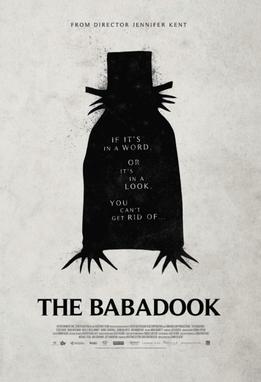
The Babadook (dir. Jennifer Kent, 2014) 

This is a movie that does a masterful job at evoking a sense of pervasive dread, so even when things aren't really happening, the tension continues to mount. The result is as effective an example of a contained, low-budget horror movie as I've seen in recent years. Not a lot of jump scares, not much gore, but this is a movie that can definitely tweak you. The plot concerns a single mother with a special needs son who is obsessed with monsters. So when he plucks a mysterious pop-up book called Mr. Babadook off the shelf at bedtime and he then begins seeing the frightening character from the book and going into convulsions, it's hard to know what's really happening and what's only in his head -- and it's impossible for his beleaguered, exhausted mother to know. The mother's fatigue, frustration, and helplessness feel deeply lived-in, and the core conflicts of the movie are visceral and primal. This, to me, is an excellent example of why we need more female writers and directors making films, because I don't think we ever would have seen this story from a male filmmaker, or if we had, I doubt it would've felt as emotionally on-point. 


Zhaoyun


Audition (dir. Takashi Miike, 1999)

When screened at a 2000 film festival, Audition made such a forceful and unsettling impact on the audience that many fled from the theater, and one viewer denounced Mr. Miike as “evil” for daring to make this film. Miike, after all, is the Lars von Trier of Asia, and he definitely lives up to his reputation for sadistic suffering in Audition. But the truly scary part comes after we’ve begun to identify with/root for the protagonist…and then he is totally and horrifically (if not, thankfully, literally) emasculated. The blood content is actually low, especially compared to the deep ocean of sadism into which the characters—and the viewers—must dive. We must watch in horror, unable to look away, as the ultimate femme fatale goes to work...