Showing posts with label guest post. Show all posts

Tuesday, November 19, 2024

GUEST POST: Joseph Brant Interviews Chinese Horror Authors in the SINOPHAGIA anthology

Today Joseph Brant interviews Xueting C. Ni, Chu Xidao and Hong Niangzi about writing horror and their recent anthology Sinophagia

Cover by Alyssa Winans

Xueting C. Ni has been extolling the virtues of Chinese cultures to the geek community since the mid 2000s, hosting tea tastings and Wing Chun demos at anime conventions, publishing articles on China’s traditions, emerging popular cultures, both on her own website, and for major media such as the BBC and RTE. She writes nonfiction books which have covered mythology and the growth of internet fiction in China, as well as collecting, editing, and translating (a set of roles she refers to simply as “curating”) genre fiction for a Western audience. The latest of these, Sinophagia, was released worldwide on September 24th, from Solaris Books.

We managed to sit Xueting down, alongside Chu Xidao (a pen name meaning Knife-Loving Chu), and Hong Niangzi (The Red Lady), both contributors to the book, to ask them about the project.

Ms. Chu, Ms. Hong, your works are all very popular in China, and are beginning to be translated for the West. Ms. Chu, I know you had work in The Way Spring Arrives, which Ms. Ni was also featured in, but for those of our audience who have yet to discover you, what can they expect?

CX: I’m a writer from the generation that grew up during the transition between traditional and internet literature. As a student, I was educated in the traditional classics, but when I was beginning to write for the general public, it coincided with the explosion of China’s internet age, and I found homes for my work, not just in magazines and anthologies, but on forums, blogs, and literary websites. I was getting instant feedback from my readers. At university, I studied pop culture, and particularly found its dissemination of narratives interesting. This is definitely present in my creative work, which combines my interests with the changing times. Even though I write fantasy about ancient or imagined worlds, the themes are unique and the issues are eternal, and I hope I’m reflecting the current psyche of the public.

XN: She’s not just famous for horror, though. She’s well known in China for qihuan (fantasy) and wuxia (martial arts fantasy) works, and also, she’s just released a new licenced novel based on the Assassins Creed games, set in the Tang Dynasty.

HN: Well, I’m a woman born in 1981 in a remote mountain village in the Chinese province of Hunan, whose culture venerates witchcraft and spirits. I grew up with no television or radio, and there were frequent power cuts, so our main entertainment was lighting a fire in the house to keep the cold out and listening to the older generation telling us scary tales. Many of these stories became the inspiration for the horror works my readers have loved. I’m so happy to be translated into different foreign languages, and for these fireside stories told in our village to make their way out of China and be enjoyed across the world.

Xueting, after the success of Sinopticon, many people were clamouring for a Sinopticon Volume 2. What made you pivot to horror?

XN: As an eclectic reader, I have always read across genres. As I said in a previous interview, science fiction reflects the hopes of a nation, and horror reflects its fears. I think that both of these facets are important to explore, particularly in such an unusual and rapidly developing society as China. I can also see that, after what the world has been through in the current decade, it really needs the darker genres right now to work through some of those experiences and emotions, and the popularity of horror attests to that thought. China has produced some excellent pieces of horror both traditionally and in the contemporary times (although it may not like to see them as such) which I feel the Anglopsphere would enjoy and benefit from. Sci-fi, horror, wuxia and crime, these are genres I have always been drawn to and are particularly important to me.

We’ve recently heard a lot about science fiction in China, but not modern horror. Why is that?

XN: Part of the reason is in my previous answer: what horror represents is not what China likes to present to its people or the world. After a mini-boom in the 2000s, there was a slew of trashy works exploiting the profitability of this type of storytelling that gave the genre a bad reputation, as well as tragic copycat killings that happened around the same time as the Death Note incidents in Europe. These resulted in a ban that went on for a decade, discouraging many writers and eventually, filmmakers, that persisted for a while. There seems to be a rather polarised view of horror in China. The traditional zhiguai or chuanqi, records or tales of the strange that are often quite atmospheric and employ the supernatural to explore a range of social and societal issues, these are treasured but not seen as horror. What is seen as horror are the stories with the jump scares and torture gore. Part of the aim of this anthology and the talks I’m currently touring is to try and merge these two concepts and elevate the genre to the literary status it deserves, on par with others, because, just like them, it seeks to explore the depths of the human experience.

HN: Science fiction novels gained a lot more attention in recent years because they express advancements in technology and imaginings of the future, which resonates with the social psyche in this age of rapid development, whereas horror literature in China is usually associated with superstition as well as the supernatural. Even modern horror isn’t free from this stereotype. Moreover, I don’t think there’s enough translated works out there to enable foreign readers to appreciate China’s excellent horror tradition, which is an immense shame, because Chinese horror writing is often entangled with its millennia-old cultures, it depicts the intuitive foresight of an ancient Eastern civilization on human nature, reincarnation, fengshui and cosmology in the modern times. It’s mysterious and bizarre, but also splendid and magnificent.

How difficult is it as a woman to write in the horror genre? Do you think it is harder in China than it is in the West?

CX: I feel the genre is very well developed. I’ve seen plenty of dark suspense magazines, and the best-selling novels have all been thrillers. And online, the genre is booming.

XNI think the use of those terms demonstrates the issue China has with horror. A lot of writers don’t want to be associated with it at the moment. They prefer the term xuanyi, “doubt and suspense” or dark mysteries. If you euphemise something or avoid it altogether, then it comes under the danger of erasure. I was not aware of this euphemism at first. When I was initially putting together this anthology, quoting the terms for horror (kongbu and jingsong) to some publishers and agents, I stuck out like a sore thumb. Some publishers choose to assume I was soliciting for work and tried to assess me for translating their fantasy titles. Some authors backed out of the project altogether; others ignored the messages of this mad woman. I got sent some works that were suspenseful rather than horror. At the moment, it is hard for writers in China, especially women who want to delve into social horror, because very often a lot of their experiences are not seen as disturbing, and should be.

HN: Another challenge, especially in China, is the majority of horror fans are men, who tend to be bolder and want more thrills, so trying to engage them with female perspectives is no easy matter. On the other hand, appealing to female readers with love stories that are full of gore can also be a big challenge, as they tend to like sweet romances. Relatively speaking, the Western horror tradition is more established and more diverse, and female writers have a firmer foothold in the landscape. Yet, these challenges are what compels me to keeping breaking through the existing frameworks, to explore ever more unique, creative ways of storytelling, to grip the reader’s attention from the start with a marvellous sense of suspense, and thus to win their recognition and support.

Hong Niangzi / The Red Lady / 红娘子

Hong Niangzi, you have a huge following in China, especially with your Seven Colour Horror series. You yourself present as a “Colour-Coded Horror Heroine.” How much do you feel your persona is part of your success, especially in the age of social media and net novels?

HN: In the age of social media and internet novels, an author’s personal image definitely plays an important role on the propagation of their works and their success. The “Red Lady” persona I created for myself is closely associated with my work, and aims to provide the reader with a vivid and memorable symbol. With the seven colours I am representing seven kinds of emotions. It is a quick way of conveying the essence of the stories I intend to express, and my self-image, with its scarlet nature, represents my fiery passion, like a nüxia of ancient China.

XN: That’s the classic swordswomen of martial arts fantasies.

HN: In this way, I not only improve the interactions I have with my readers, but attract more attention on social media. Personal image and style of work combine to create a unique brand, and definitely give it more of an impact.

What do you think is the biggest difference between Western horror and the Chinese tradition?

XN: The biggest difference between Chinese and Western horror traditions seems to hinge on broad concepts such as delineation and pacing. The earliest Chinese concepts for gui, which is usually translated as ghost, actually had crossovers with divinity. It’s not until later that gui became associated with supernatural beings that cause harm, and morality. There’s even a place in the cosmos for spirits in the modern Chinese consciousness; they are not intrinsically frightful. Where Western horror may delineate more between the natural and the supernatural, for the Chinese, the horror is generated when taboo boundaries between the living and the dead are crossed. Chinese storytelling also has a different pacing, a four-part structure rather than the traditional Western three, and Chinese horror articulates yet a further variation on this. The pacing is something that reviewers and readers of Sinophagia have already picked up, and feel is an element that makes the works thrilling for them.

CX: China has had a tradition of “shamanism” since ancient times, and Taoism has its share of spells and charms to drive away evil spirits. Domestic thrillers pay more attention to karma. An individual’s death is not the end, and there is still the divine punishment of evil. Beyond that earthly conflict between good and evil, there is also divine justice, which focuses on roles within society. Western horror seems far more influenced by psychology, religion and the gothic aesthetic. Tropes like multiple personalities, the apocalypse, vampires and homunculi, etc. Behind the fear, there is often a complex psychoanalysis to be carried out, with more focus on the individual.

Chu Xidao / Knife-Loving Chu / 楚惜刀

Ms. Chu, what inspired you to write horror, and how does it interact with other genres?

CX: Horror comes from an inner fear, a fear of loss, which is then caught and recorded with a pen. I then combine it with fantasy, and add a little bit of interpretation outside reality, with impossible, imaginary scenarios, to dissolve that inner anxiety.

Do you think a country needs to be comfortable to write horror, or in hardship?

HN: The creation of horror literature is closely linked to a country’s social environment. In a comfortable environment, people are more likely to lean towards psychological horror and explorations of the supernatural; as their basic needs are being met, they can turn their attention to the experience of mental-related thrills. In hardship, horror novels usually reflect social problems or survival anxiety, manifesting in a more direct, radical expressions. I think different environments give rise to different types of horror literature, but whether in comfort or hardship, it’s possible to write compelling horror stories.

CX: No matter the circumstances, as long as humans experience death, there is parting, loss, and fear, and from that, violence and horror are born.

XN: Definitely. But I think that a country needs a certain amount of comfort to write horror. It would be ghastly to wish hardship upon any country. But literature is reflective by nature, and when reality is the very stuff of nightmares, it’s hard to find the space to reflect. Those nightmares don’t just go way after they occur. Decades after the Resistance and Cultural Revolution, writers like She Congge and Nanpai Sanshu are still reflecting on those recent collective experiences, and it’s important to do so. Contemporary experiences are more fragmented, and those who find themselves in horrific situations may not be in a position to tell their story, but horror writers like Yimei Tangguo and Zhou Dedong could and would, with their empathy and imagination. The roots of human fear are somewhat timeless, and often period settings can be effective frameworks to examine current or recurring concerns. This is why I loved working on Xidao’s piece Immortal Beauty. By retelling such an iconic classic tale as Pu Songling’s Painted Skin, it examines women’s objectification by society and individual fulfilment, issues that keep cropping up because they never seem to be resolved.

Sinophagia offers a mix of styles. Supernatural stories, folk horror, and stories that stray into science fiction and fantasy. Ms. Chu, are there any other stories in the collection you particularly enjoyed, or authors you’re glad the West is discovering?

CX: Death of Nala offers a brief glimpse into such a multifaceted dilemma and is a story that really gripped me by the heart. Xiaoqing, who wrote The Shanxiao, has been a long-time friend of mine, and I’m so glad to see her writing included in this collection. She’s always been an author who writes about love in such a sly, seductive way, and can always make the reader’s heart flutter.

Ms. Ni, you’ve written in particular about how difficult it was to get the broad mix of stories you wanted in this collection. What were the biggest hurdles and triumphs?

XN: One of the biggest hurdles was getting authors and agents to come forward with their stories, given horror’s bad press in China. Once I’d convinced the agents that this contemporary horror anthology was a vanguard that presented a valuable opportunity, it took them a long time to reach the writers I wanted. This led to some nail-biting moments as my schedule rolled on. For the authors I had to reach out to myself, I could stalk them in a friendly way and hope they wouldn’t think I was a madwoman and just ignore my messages. Luckily, a few of them did not. Once submissions started flooding through, the other biggest hurdle was trawling through the gore and misogyny to find solid gems beneath—I could see the exploitative approaches that gave horror a bad name. And I also had to specifically request works by women to address the gender imbalance in the pile, and to deal with some male contributors who demanded certain terms or for the collection to feature their works only. I could hardly believe it when it started to come together; it felt like a miracle or the workings of the dark forces, take your pick. One of the triumphs is all the love I’m already seeing for the stories in this collection.

Ms. Ni, one problem about writing about “horrible things from China” is that it may add fuel to the fire of Sinophobia in the west. Was this something you considered when curating this book?

XN: This was something I had anticipated, after some Sinophobic readings were somehow made of the title of the last collection Sinopticon, and the worsening geopolitical situation around us, the flak from which I myself have not been free at author events. We picked the title of Sinophagia for its memorability and the creepy feeling it evokes, in the sense of devouring, but also as an ironic comment on the fear of Chinese and Asian eating habits that had been rife over the last few years because of COVID reportage. Unfortunately, we were still unable to totally avoid Sinophobia from one of our promotional collaborators, who stated as an “appeal” of the book “the horrors of living in China.” I insisted we dropped them, though it was incredibly stressful during an important stage of the book’s journey. It felt even more important to get through these hurdles and put the proper representation out there for the contributors, myself and my heritage.

Ms. Chu, your story is about beauty, and violence, and power—themes you return to repeatedly. What is it about these themes that work so well together?

CX: This piece was inspired by the classic ghost story from Pu Songling’s Strange Tales from a Studio, Painted Skin, which terrified me for most of my childhood, and the original title of the story, 红颜未老, comes from a song that was written by Chow Yiu Fei for Sandy Lam. A woman waits for her lover, looking and looking for him, but he’s a bad person. What she’s lost, she takes back for herself. It seems to be a love song, but it’s not quite. The human heart is a more complex thing than just love, but all we can see is what’s on the surface. This question reminded me that after I finished this, I wrote a story series called This Phantom Life, about a plastic surgeon who helps her employers change their fates by changing people’s faces. It seems to be a common theme in my writing, wanting to explore beauty and the violence hidden behind it, and the way they both affect human relationships.

Xueting C. Ni 倪雪婷
The West has such an established idea of China, the supernatural, and the legacy of Pu Songling, but this collection also features a lot of modern settings, with very modern characters and mechanics. Are you actively trying to update the idea of horror in modern China?

HN: I’ve always experimented with combining modern settings and traditional horror, to create new styles in the narrative. In this way, I hope to break that rigid Western view and propel Chinese horror towards the international stage. Confucian ethnics and Daoist principles play an important role in my stories, and still give cultural depth to modern horror, but the modern setting enables the reader to feel immersed in the fictional environment. A modern setting also allows for more innovative constructions, which I believe allow Chinese horror to be better represented.

What sort of horror stories do you like personally? What do you read for your own enjoyment?

CX: I love thrillers. I watch Hitchcock movies, and adaptations of Agatha Christie novels. They give me just the right level of chills. Horror films are a bit too much for me, so… maybe I just need a good proportion of beauty within my thrills. I loved Punchdrunk’s Sleep No More. Aside from those, I like reading Japanese speculative fiction, especially Eichi and Kotaro Isaka.

HN: I personally enjoy stories that combine psychological horror with supernatural elements, especially works that delve into the weaknesses of human nature and social problems. I tend to read Western horror, like the Cthulhu mythos, and Stephen King, but I also like to read Chinese tales of the strange, such as Pu Songling’s Strange Tales, Ji Yun’s Notes from Yuwei Cottage, China’s County Records, and also works like Investiture of the Gods, from which I can absorb traditional horror elements that feed my creative writing.

XN: Interesting what Xidao says about beauty and thrills. That’s how I found Immortal Beauty; whilst there’s certainly a sense of horror to the story, I also loved translating the beauty of the embedded cultural elements. I grew up with Chinese tales of the supernatural, and classic European gothic literature such as Dumas, Radcliffe and Wilkie Collins, so shapeshifting demons in caves and trapped but spirited female heroines will always have a special place on my shelves. Jump scares can be overwhelming for me, and creepy tales I find far more impactful than slashers and gore. And I think tales like that, Susan Hill and Shirley Jackson’s works, always stay with you long after you finish the story. Hammer village horrors and films like Get Out are also a favourite, along with China’s urban legends. I agree with Hong Niangzi about needing to return to those Strange Tales too. In my research, not just for this book but my lectures and talks, I’m always surprised by how creepy they still are, even by todays standards.

What is the one question you’ve never been asked in an interview that you wish someone would?

HN: I’ve been hoping that someone would ask me, “What first motivated you to write horror?” so I could reveal my inner motivations as an author and my passion for horror literature. In fact, what originally motivated me was wanting to bring those fireside tales, that I had heard as a child, to the world. Ancient stories passed down for centuries, stories that gave me insomnia, and the sense of dread that inspired in me, as well as the insight into the shining qualities in human nature. Through the external shell of horror, I hope to lay bare the complexities of human nature and dark side of society, and rouse more readers to contemplate their own destinies.

CX: I'm so delighted we’ve got the chance to introduce readers in the West to China’s dark suspense and this sort of dark history. So thank you, Xueting and Solaris. But, at the same time, whilst we've had many great works of horror and suspense come from the West, including film, television, novels, and games, there has been a section of those stories dealing with “the mysterious world of the East” as alienating and fearful, because of the cultural differences and barriers between them. We hope that Sinophagia will interest more readers in Chinese culture, bring people closer to each other, and encourage more excellent publishers to participate in projects like this and bring Chinese thrillers to life in different languages.

What else are you currently working on? Where can we see more of your work once we’ve finished Sinophagia?

CX: I’m continuing to write my fantasy works, set in the floating continent of Jiuzhou. Skylight and Cloud Shadows is the story of an avian man helping his friend take revenge and infiltrate the inner cadre of a league of assassins. I’m also working on a sequel to This Phantom Life: The Legend of The Cherished Night, which is the story of a young boy who learns incantations and spells as he roams the world. When I started the series, my own son Maike was ten, the same as the protagonist. But now he’s 15, and my character has aged far slower, so I feel I’ll have to pick up the pace. I hope I can finish these, and maybe they’ll be published in English. I’d love you all to read them.

XN: I’m working on a nonfiction book on the culture of wuxia fiction, a horror lecture and a few SFF translation projects. My translation of Whale Ocean, which is a scifi by Nanpai Sanshu (also featured in Sinophagia) will be published in Strange Horizons’ Samovar. So lots of exciting things to come, and I’m still regularly turning out articles on my site, but yes, next projects already lining up and ready to go…

HN: At the moment, I’m planning the next novel in the Seven Colour Horror series, and expanding it into a grander fictional universe. The next one I’m writing will be associated with the colour yellow. To me, it has always represented sadness, nostalgia, and the past, so within these tonalities, I want to write a story about the past, that is full of sadness and longing, to commemorate my late grandmother. I hope that she’s doing very well in another world, and occasionally thinks of me. After Sinophagia, readers can continue to find my new works on my personal website, social media platforms and major internet publishing platforms. I’m also planning to introduce more translated works in English, so that more international readers could get to know my work.

Chinese inkwash painting by Qi Qing, inspired by Immortal Beauty, by Chu Xidao

Sinophagia is now available as paperback, ebook and audiobook.


Joseph Brant is a writer and editor who has worked on everything from esoteric mythology and pop culture to stories about dolls, monsters, and gender norms. He’s run Goth Nights in Beijing and has over 200 plush bats. Find him on Bluesky as @Macula.bsky.social.

Monday, November 11, 2024

GUEST POST: Pontypool Stage Show Review by Alasdair Stuart

Pontypool is my favourite horror movie. Adapted from Tony Burgess’ cult novel, it follows the crew of a tiny Canadian local radio station on the night that a virus spread through language breaks out in their small town. As they become the story, and the story becomes a killer, the three must work out how to communicate with each other and the world. It’s intensely humane, relentlessly funny and unlike anything else I’ve ever seen.

It's ridiculously appropriate then that a story about a linguistic virus should evolve so well. As well as the excellent original book, there’s an audio drama using the movie’s cast and now, the show has jumped the Atlantic to land in the home of the other Pontypool, Wales.

For the next week, a stage production of Pontypool is playing in the Millennium Centre’s Westin Studio in Cardiff. I saw it last week, chatted to the director and had an incredibly good, fun night.

 This is a show that’s deeply Welsh in fascinating, subtle ways. In addition to relocating the story to the valleys, it also leans into the very real cultural divide between the different elements of the UK and the stories we tell ourselves about where we come from and who we are. No one tgells those stories louder than Grant Mazzy, the exiled shock jock at the heart of the play. Lloyd Hutchinson plays him with Clarksonian glee, revelling in the sound of his own voice and trying not to think about how far it carries. Thrown out of the BBC, Grant is a legend in his own lunchtime, performatively railing against the dying of the light from Beacon Radio’s tiny studio.

His only appreciative audience is Megan Davies, played by Mali O’Donnell. The production assistant for Beacon is intensely competent, cheerful and likes everyone, the social glue that holds Grant and producer Rhiannon Briar played by Victoria John together. O’Donnell and John are both fantastic and there’s a smartly handled dynamic between the two women that does the vital work of grounding the story. We find out as the story goes on that Rhi is guilt-ridden over the fact Megan is at the station. Not because of what she does but because of how small it is and how few opportunities there are. Grant is exiled here, Rhi feels like she’s the sole defender of the station status quo and Megan is quite happy where she is, even if Rhi isn’t. Three people at three different stages of their career, all crammed into a tiny studio on the day the world ends. Elements like that, and the universally strong cast give the play a foundation it only ever builds on. Its characters do the same, clinging to their training, using their job as a shield even as they slowly realise just how much trouble they’re in. John is especially good in this regard playing Rhi as furious, terrified, exhausted and relentless she’s just trying to understand the problem, even as Grant is trying to make the problem his road home.

The problem itself is chillingly well realised, and movement coordinator Lucy Glassbrook has given the virus victims (Referred to as ‘Conversationalists’ in the original text) a chilling set of common movements as the virus overtakes them. Director Dan Phillips uses this as a handle to crank the tension with the second half featuring an extended sequence where the radio staff are locked in with multiple victims. Because the event is so unprecedented, and Grant is often so self-absorbed, we notice before they do and the ‘IT’S BEHIND YOU!’ tension is cut with the horror of watching someone be taken over to create some gloriously dark theatrical horror. Philips and Robinson give us multiple cups too, with Corwyn Jones is particularly impressive as ‘helicopter traffic reporter’ Ken Loney who witnesses the original breakout in a manner that shatters his, his colleagues’ and our illusions that anything is safe.

That’s the big takeaway from the show. Hefin Robinson’s script comes at the original idea from a different angle that makes it both more focused and humane and, if anything, bleaker. Grant’s motivations are an oil and water slick of personal gain and altruism and as the second half continues and order collapses, he rises to the occasion whether anyone wants him to or not. Dan Phillips peppers that act with some glorious moments of theatricality, all of which land like the arcing flashlight blows of one character clubbing another to death on a near blacked out stage. Language, music, implication and psychology all mix in the increased damaged studio and your perception of the characters shifts even as the language they’re using does. The ending, whose final line has been on my tattoo list for years, is subtly retooled too, as Grant both tries to save the world and redeem himself. It’s not the end of the world, it’s not even the end of the show, but it’s the end of Grant Mazzy’s exile and God help anyone in his way.

 Every choice this show makes is smart. Every performance is top notch. The production looks brilliant. It deserves a longer run, a wider audience and a lot of acclaim and if you’re a horror fan and can make it to Cardiff, you need to see it.

Pontypool is currently playing at the Millennium Centre in Cardiff until November 16th.

--

Alasdair Stuart is a professional enthusiast, pop culture analyst, and writer behind the award-nominated weekly newsletter, The Full Lid. He is a multiple Hugo finalist and co-owns the Escape Artists podcast network. He can be found on bluesky.

Thursday, November 9, 2023

An Adventure in Space and Timesaving: How To Speed-Run 60 Years Of Doctor Who In 30(ish) Stories!

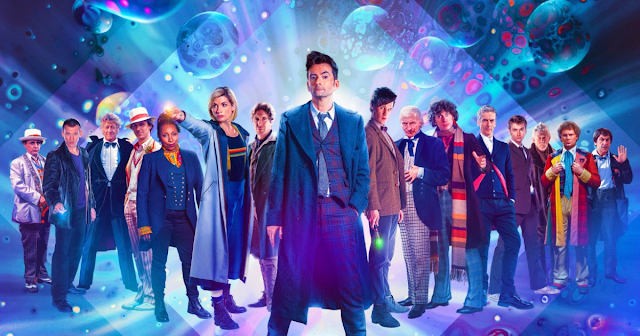
Today, in the lead-up to the Doctor Who 60th anniversary special, we're excited to run a guest post from Joseph Brant covering just what to watch from the show's extensive archives to be all caught up for this event. Joseph is a writer and editor who has worked on everything from toy fiction and game narrative, to esoteric mythology and pop culture titles. He also has an extensive collection of transforming robots and Sonic Screwdrivers. Find him on Twitter at @The_Macula or on Bluesky as @Macula.bsky.social.


Now that the entirety of Doctor Who has been made available on the BBC iplayer, and internationally, across Disney Plus, Max, and Britbox (Until Disney pull everything together) the rather daunting array of Doctors, time periods, and classic monsters unfurls like the infinite expanses of space and time. If you are coming to the series as a fan of “Modern Who” (from Christopher Ecclestone onwards), or even completely fresh to the world of rogue Timelords, reversed polarities and robot dogs, how do you get the most out of access to all this content?

I mean the obvious answer is to watch all of it! It’s not quite as daunting as it first appears. Yes, it is 60 years’ worth of content, but the BBC did a poor job of preserving a lot of the early stories, and whilst some, like The Faceless Ones and The Power of The Daleks have been recreated as animations, others have just been lost forever to the bins behind broadcasting house. There were also two very long hiatuses for the series. The first between the end of Sylvester McCoy’s run as the Doctor, which finished in 1989, and the one-off TV movie in 1996, which saw Paul McGann in the title role. An outing so spectacular, that nobody felt able to make another episode for almost 10 years.

So yes. There is a lot, and whilst there will be Whovians across the planet who will tell you every second has its own merits, if you were to sit down, and play the whole lot back to back, without sleep, food or bathroom breaks, you’d still not be able to watch it in its entirety before the first of the three 60th anniversary episodes airs on November 25th.  So, what I have here, is a quintessential watchlist, to take you from the Doctors’ first appearance to the last regeneration and give you a taste of how the series has developed over its long history.


My rules were simple:

  • There must be content from every Doctor.
  • Every regeneration gets a free pass, but I won’t necessarily be covering the appearance and departure of every assistant. 
  • I won’t otherwise include the animated episodes because at the time of writing I am not sure if they’ll be included. (editor's note: all animated episodes have since been uploaded to iPlayer with the exception of "The Abominable Snowmen")
  • I’ll try to keep our personal tastes out of it… which is of course impossible, but you need to hold up these pretences.

An Unearthly Child

First aired on 23rd November 1963. This silly little kids’ history series was completely overshadowed by the assassination of American President John F. Kennedy, and it was only by the producers insistence of a repeat that the British public really got to know the crotchety William Hartnell. A fugitive timelord, hiding out in a scrapyard with his granddaughter, evading responsibility, justice, or library fines. It’s never made entirely clear.


Seemingly on a whim, or just to show off, The Doctor, his granddaughter, and her two secondary school teachers are whizzed back to ancient Earth, where they meet a Neanderthal tribe, and somehow avoid rewriting all human history ala the Sound of Thunder. We see the Tardis for the first time, with its dimension warping interior, get the ‘Cleverer than Everyone’ Doctor running a tight line between trying to help, and trying to stay distant, and of course, quizzical companions asking all the right questions so we can have the plot explained to us. That first episode also ends with the looming shadow of a Neanderthal, ready to bring a rock down on our heroes’ heads, letting us know that this show is not here to mess around.


There is still actually some concern whether this very important episode will be in the package, with the current rights holder (Anthony Coburn’s son) arguing that the deal he was offered being ‘a pittance’, but also, quite publicly decrying the casting of female and black actors as The Doctor. If this is not sorted out (Editor: it wasn't), I'll point out that the DVD of these episodes is still knocking around on Ebay for about a fiver.


The Daleks

Running straight on from An Unearthly Child (I promise, this is NOT a list of all the episodes ever), is The Daleks. Possibly the most recognisable characters most from the show, even more so than the titular Doctor. This is the story that introduces the hate-driven fascist little pepper pots with their menacing laser blasters, and slightly less menacing kitchen-sink plunger arms. The story sees The Doctor and his companions landing on a petrified planet, where they make their way to a great metal city, inhabited by robotic creatures with a gooey centre, who are planning to enact the final stages of their war with the planet’s other inhabitants, The Thals. Directed by Christopher Barry, and written by Terry Nation, this really is Doctor Who at full pace right from the start. Allegorising the Nazi exterminations in the least subtle of ways, whilst The Doctor still seeks the most peaceful solution, what sticks with you is how perfect the Daleks are right off the bat. The voices, the movement, the shape is all pretty much intact from here to the very latest Dalek episodes. In fact, this story was considered so perfect an encapsulation of the characters, that it was later reworked into the script of the first Doctor Who movie, starring Peter Cushing and Bernard Cribbins (more on him later).


The Tenth Planet

Here we meet our first sticky spot with regard to missing episodes. The last story to feature William Hartnell as the regular Doctor, it is also the first to feature The Doctor’s other major enemy, The Cybermen. This story has the Doctor and associates stuck in the Antarctic, in the futuristic year of 1986, studying a mysterious Tenth Planet, which we discover is the home of the heavily augmented race of Cybermen, who plan to drain the energy of Earth to prolong the life of their own dying planet. Unlike the Daleks, the Cybermen have evolved through their appearances in Doctor Who, and this first iteration of bodystockings, camera parts, and space accordion doesn’t quite scream “Inhuman Terror”. The “Base Under Siege” storyline would be one DW would return to time and again, but this was the story around which the cookie cutter was formed! 


The showrunners had long realised that Hartnell’s failing health was as much a risk to the show, as the show was becoming a risk to him, and the first regeneration was a masterstroke of genius born of necessity. The effect itself may have been simple (bleaching out the white balance and coming back with the new actor in an identical pose), but it was a defining moment for the series, both preserving the format for way longer than any actor’s natural lifespan, but also saving the show from fits of artistic temperament, ill health, or any other barriers usually caused by lead actors. I don’t know whether we will get to see the “stills and scans” reproduction of the final episode, or the Area 51 animation, but without doubt, an iconic moment for the Doctor.


The War Games

It seems a bit cruel to fast forward through Patrick Troughton’s run so quickly. As the “funny little space hobo”, his tenure as the Doctor brought so much to the series. The first use of a sonic screwdriver, the ‘Cassandra Effect’ of being spot on with regards alien invasions, or impending doom, whilst also being completely disbelieved until a Cyberman had his hands around the naysayer’s throat. Again though, so much of these stellar series was binned, recorded over, or otherwise destroyed by a space-saving BBC. The War Games is one of the few stories to survive in its entirety, and what an entirety! 


An impressive 10-episode story which probably took the entire backlog of BBC Costume’s war fatigues, to create a training ground where an alien race have been helping themselves to Earth’s finest soldiers, in order to cherry pick an elite fighting force to take over the Galaxy. This rather epic production sees the Doctor overwhelmed for the first time, especially when he realises that he is being pitted against another renegade Time Lord. This feels like a mixture of an epic finale, and a reigning in of the series, as the Doctor must put out a call to those forces which he has spent six seasons desperately avoiding, his own people. The longer series allowed some proper screen time with Jamie, the Highland warrior, and Zoe, an astrophysicist from the 21st Century, and the first of a line of forward thinking female companions, though this series would ultimately see them both returned to their own places in space and time, whilst the Doctor gets one of the most unique regeneration scenes in all of Who, and lays down the lore that fans would argue about for decades.


Terror Of The Autons

Wait a minute! That’s a whole first series of John Pertwee missed out! What happened to Spearhead From Space? Whilst Pertwee’s first outing as the Doctor is a fun jaunt, including his stealing of a new set of clothing from a pompous surgeon general, and Bessie, the first of two ‘Whomobiles’ our newly earthbound Doctor is forced to adopt rather than the trusty Tardis, that first series always felt like a kludgy mess as they tried to find a balance between suave, smart and sciency. Desperate to tap into James Bond Chic but trying not to look like a rehash of Adam Adamant, which shared a lot of the shows’ DNA. Terror of the Autons brings back the terrifying villains of Spearhead in Space, with the living plastic Nestene Consciousness. Here, not just limited to living shop dummies, but also killer toys. More importantly though, this story also introduces another renegade Time Lord, The Master. 


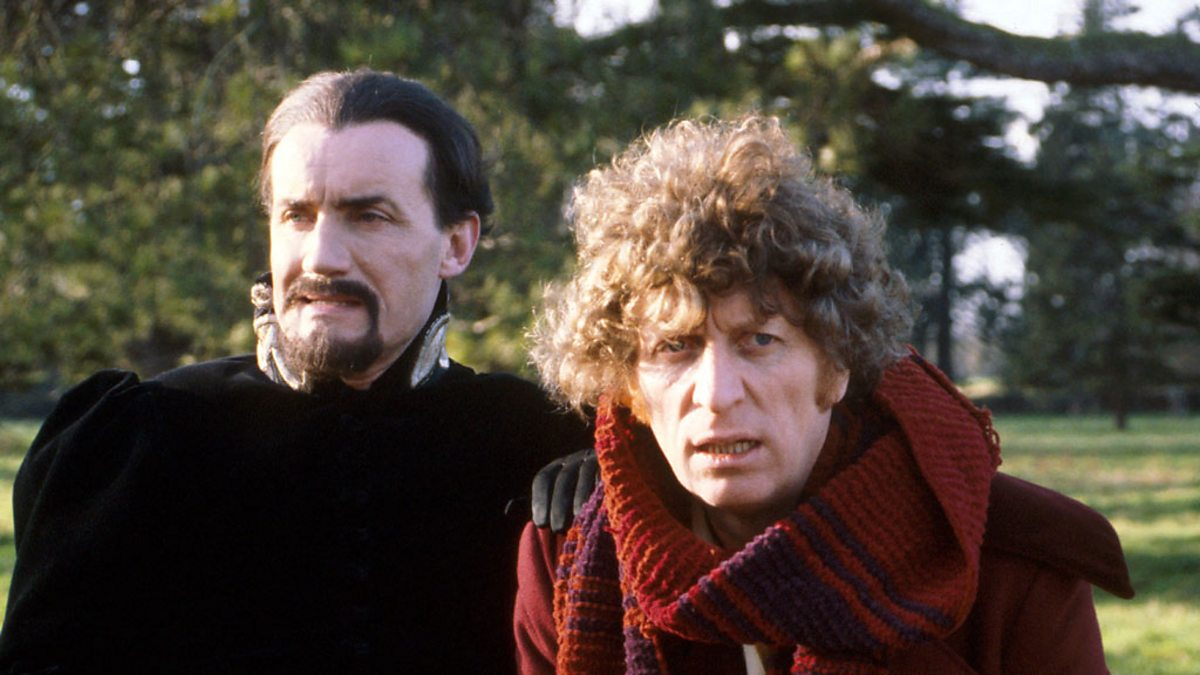
Breaking up the pattern of “aliens get the upper hand till the Doctor shows off how clever he is”, the Master acts almost as the Anti-Doctor, able to match wits and better the Doctor at his own game. Played here by the brilliant Roger Delgardo, this foil to the Doctor really sat well with Pertwee’s secret agent vibe. He would return throughout the Third Doctor’s run, providing a sort of overarching story, but here it’s just fun to watch him chewing up the scenery.


The Curse Of Peladon/The Monster Of Peladon
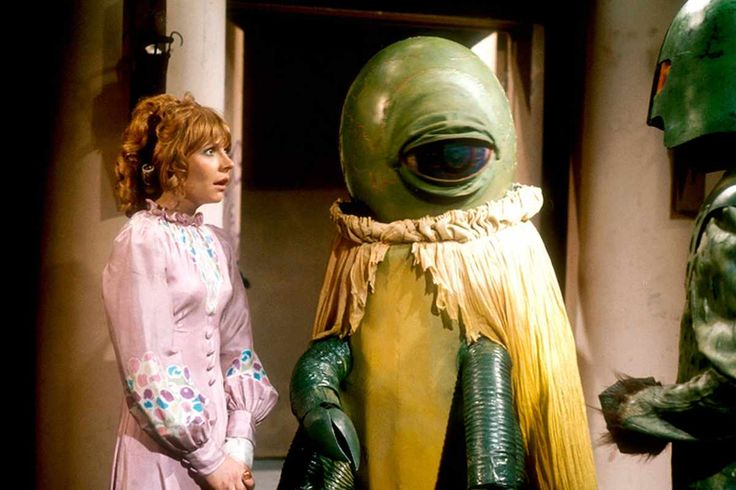
A bit of a cheat, listing two stories at once, but this was the first time that Doctor Who, a show about time travel, really strayed into the whole Wibbly-Wobbly-Timey-Wimey thing, having the Doctor time-jump 50 years on from hist first attempts to save a planet, and discover that his fixes may need running repairs. In the same way that so many fans love Star Wars’ Cantina scene, for its mixture of alien life forms, this is classic Who’s attempt at showing the diversity of alien life, bringing in Martian Ice Warriors, disembodied heads, and the rather peculiar looking Alpha Centauri, from Alpha Centauri. The first of these stories takes obvious influence from Britain’s attempts to join the EEC (back when Brexit sounded like a breakfast cereal), and the second, from the Miners’ Strike, which interrupted so much of the broadcast of Curse. Still, we didn’t hear anything then about Doctor Who being too political.


Robot
Technically Pertwee’s last outing as the Big D till The Five Doctors. This began what many consider to be a golden age of Doctor Who, the Tom Baker Years. Robot itself is a definite follow-on from the Third Doctor adventures, with the freshly regenerated Doctor, still in a state of confusion, helping UNIT out against an earthbound threat. Yup, it’s the Fascists again. Here, using an unstoppable robot to steal parts of a doomsday machine, hold the world to ransom, etc, etc, before realising he has remembered how to pilot the Tardis, and heading off into space, with Sarah Jane Smith, and UNIT officer Harry Sullivan in tow, for a ‘Best of Doctor Who Villains’ tour, meeting the Cybermen, Daleks, and Sontarans all in short order). It’s a real treat to see how a standing cast of characters react to the absolute lunatic left turn of Tom Baker’s Doctor, letting the oddity settle in before we get a new direction for the series. This also sees Terrance Dicks back in the writer’s chair after a five-year sabbatical. A fan favourite, and a definite indicator of the more “spacey” direction the series would take.


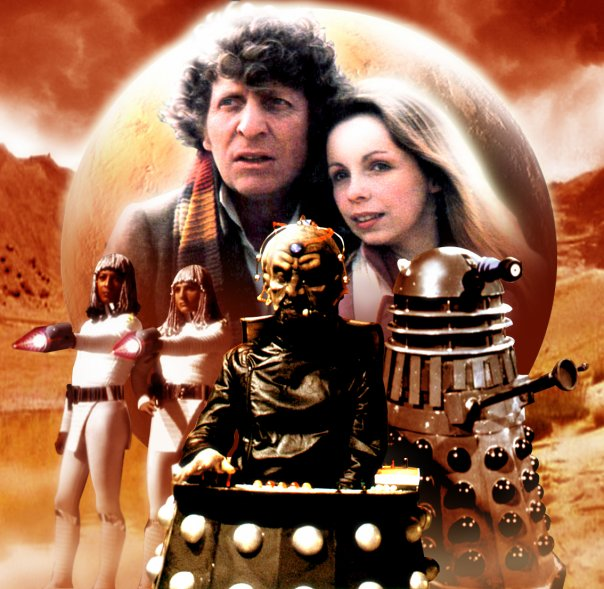
Destiny Of the Daleks

Tom Baker had the most years in the Tardis of the Classic Who Era, and it would be easy enough to fill this list with his exploits. Disclosure time. This is not only my favourite Doctor, and favourite story, but the one that first introduced me to this franchise, which it did with such force, I find it hard to believe that any other story could have as big a hook for a new fan as this.


Destiny Of the Daleks is such a perfect storm of Doctor Who tropes and sigils. We obviously have the pearly toothed Tom Baker, tinkering in the opening scenes with K9, the robotic dog he picked up during The Invisible Enemy. We have the previously introduced Time Lord (Lady) Romana burning through regenerations like trying on outfits, until we have Lalla Ward, an actress who had turned up in the previous episode but had such chemistry with Tom that they went on to feature in 11 more stories, and a very stormy marriage.

We have the filming in a disused quarry just outside Reading (the home from home for Doctor Who, due to BBC’s budget limitations), and of course, we have the Daleks. Breaking through trembling sheets of black plexiglass and terrifying the viewers, whilst the Doctor is quick to point out their rubbish rope climbing ability and enters battles of wits with robots armed only with a packet of Jelly Babies. It’s raucous, dark, and humorous in ways that could only be provided by the stand-in showrunner, Douglas Adams. Still riding high on the success of Hitchhiker’s Guide to the Galaxy, Adams is quick to drop easter eggs and references throughout the story, none of which ever really detract from the impending danger.


Logopolis

Not everything on this list is “good”. Some of it really is there to show you the ever-shifting pattern of the show. Logopolis is quite a technical slog, starting with the Doctor ignoring a call to aid by the Time Lords, and instead focussing on a running repair to the Tardis. It ends up involving The Master, Time Loops, and plucking a helpless airline stewardess out of the timestream, all to get that particular cast onto a planet, to stabilise the McGuffin of the week into something The Master can use to hold the whole Galaxy to ransom. This is the fullest the Tardis has been since the early days of Hartnell and paves the way for the ‘Scooby Gang’ mentality that dogged Jodie Whitaker’s tenure. I mean obviously, this is the start of Nyssa/Tegan, and has one of the most peculiar, visceral regenerations, but I almost feel like including it as evidence that not all of Dr Who is great, and sometimes we just have to accept the shoe-leather.


Earthshock

A series that wholly divides fans but is included for two reasons. The first being the evolution of the Cybermen. By this point, the suits seem far sleeker, with big shoulder pads, Perspex chest plates, deep Darth Vader voices, and all in all, lending themselves far more to action figure production. The awakening of the Cyber Army is a great scene, and the inclusion of the Cyber Leader builds up all that yummy lore. The second reason for its inclusion is… and this is spoilers… the death of a companion. It’s the first time we really hear about fixed events in spacetime, and the limitations of the Doctor. Where we’ve seen the Doctor use up one of his many lives, for the greater good, it’s never really hit us the way, especially when we see the Doctor powerless to help, and his other travelling companions realise that not everything can be fixed by the Doctor.


The Caves of Androzani

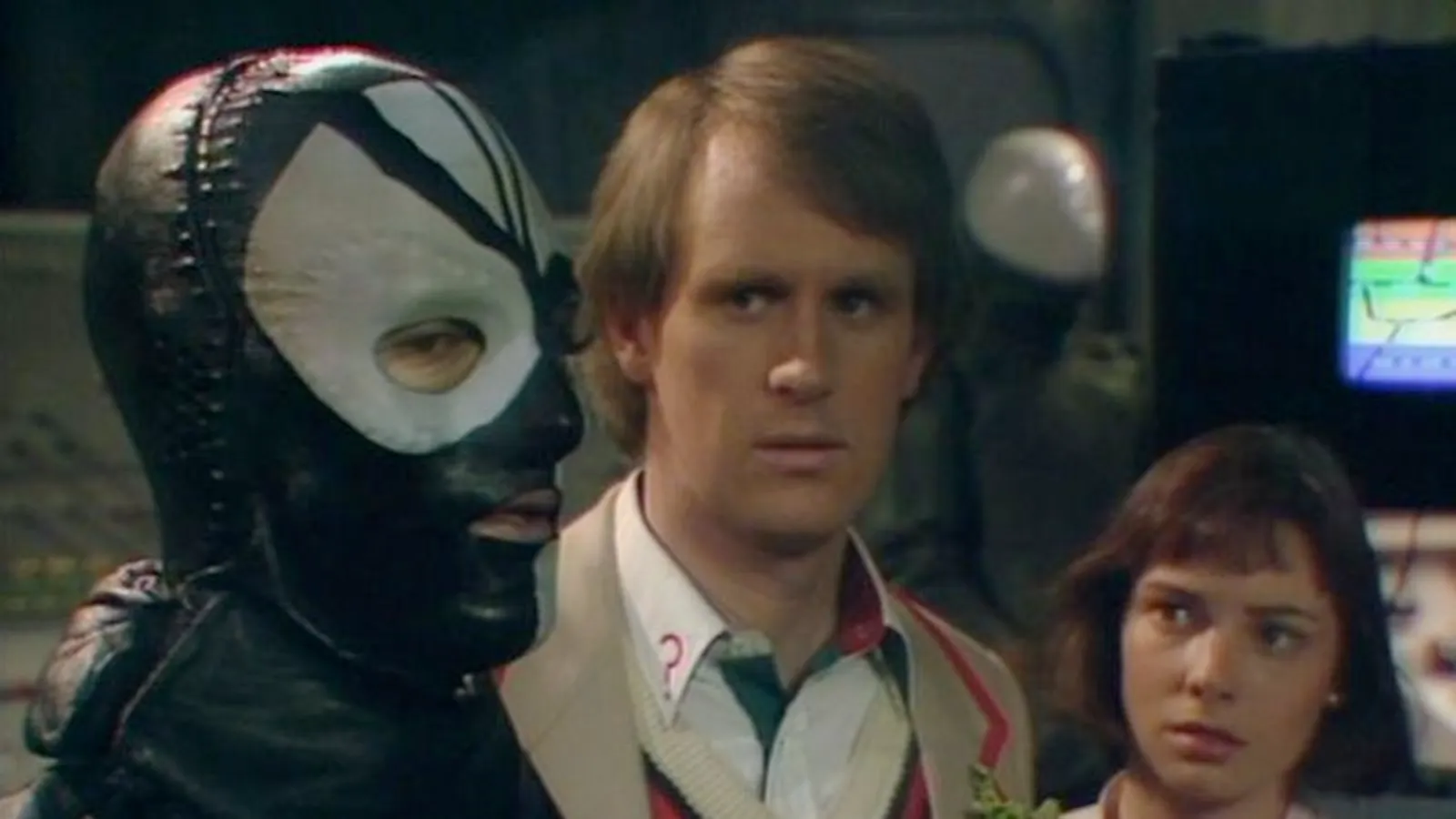
Sometimes, one of Doctor Who’s saving graces, is its ability to dip into other genres. From action adventure and murder mystery to gothic horror, Androzani is probably the closest we get to a Whovian Phantom of the Opera. Whilst on the surface, we have a civil war over a Dune-inspired life prolonging substance, the Mysterious Jek, one of the only ‘one-time villains’ I mention here, skulks in his underground lair, masked and lusting after the Doctor’s assistant. It’s a darker tone, and honestly, that could be said of all of Davidson’s adventures, that it’s summer dappled adventure with some dark, dark shadows. We do also see a good proportion of self-sacrifice and basic heroisms from the Fifth Doctor, as well as a wonderfully back-planned explanation for why he’s got a stick of celery pinned to his coat. 


The Two Doctors

Yes, the two doctors. Not the five doctors, not the three, but the two.

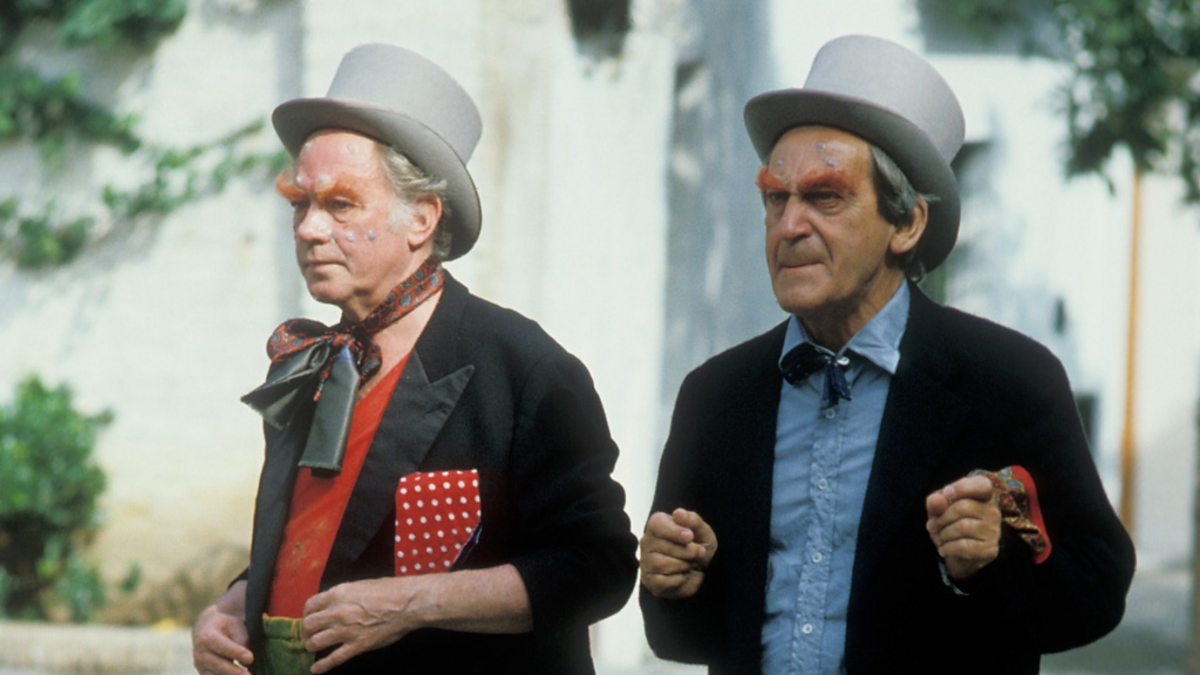
Multidoctor episodes are rather a mixed bag, offering up plenty of fan service for long time devotees, but also a lot of set vignettes, with little holding them together. Also, the numbering can be misleading. The Three Doctors was predominantly Patrick Troughton and John Pertwee mucking about, whilst William Hartnell was wheeled out to make a few cutting remarks, and The Five Doctors took a handful of shots from Shada to excuse Tom Baker’s absence, and yet he was included in the count. The Two Doctors is a wonderfully balanced story, pitching the harried, supercilious Colin Baker against the rather laid back Troughton, and then having the genius move of swapping their assistants. It’s a wonderful retrospective of the changes in the series, and definitely the best multidoctor story of classic Who.


Revelation of The Daleks

It wasn’t going to be long before we went back to Daleks was it. And whilst this was the only story where Six met the pernicious pepper pots, it is sheer nightmare fuel. Set in an intergalactic funeral home, we discover the Daleks latest plan for world domination is to convert human corpses into Dalek mutants, and wage a war of numbers across the entire universe. It stars Alexi Sayle as a DJ brought in specifically to sooth the dead, adding a sense of gallows humour, and an unforgettable scene where the Doctor sees the face of his current incarnation on his gravestone. The highlight though, is the infamous Glass Dalek, with an unnervingly visceral scene which still holds up as one of the scariest moments in Doctor Who in the last 40 years.


Time And The Rani

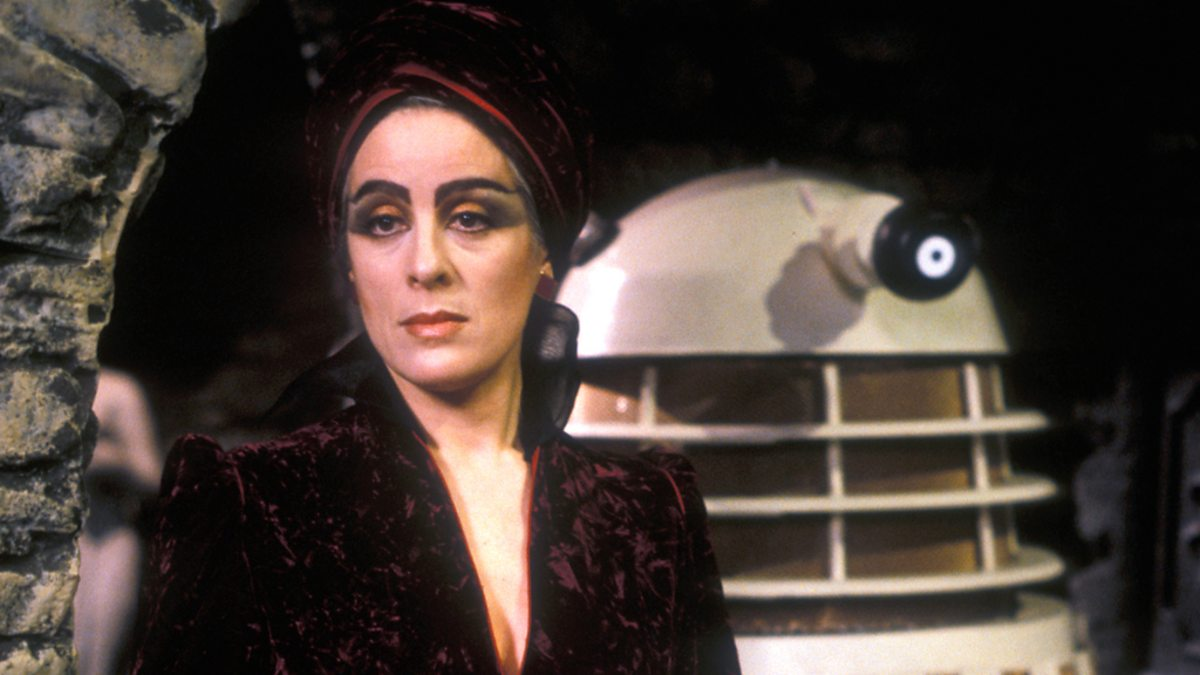
Whilst much has been made of The Master, The Rani is another one of those renegade Time Lords who seem to show up recurrently. We begin the story with the dazed and confused Seventh Doctor, tricked into helping The Rani, who has disguised herself as his companion, planning to collect some of the greatest brains in the universe to create a time manipulator. It’s a relatively light story, again, bridging the gap between Colin Baker’s Doctor and the new one, in a very traditional Whovian tale, before it all gets a little bit darker.


Remembrance of the Daleks

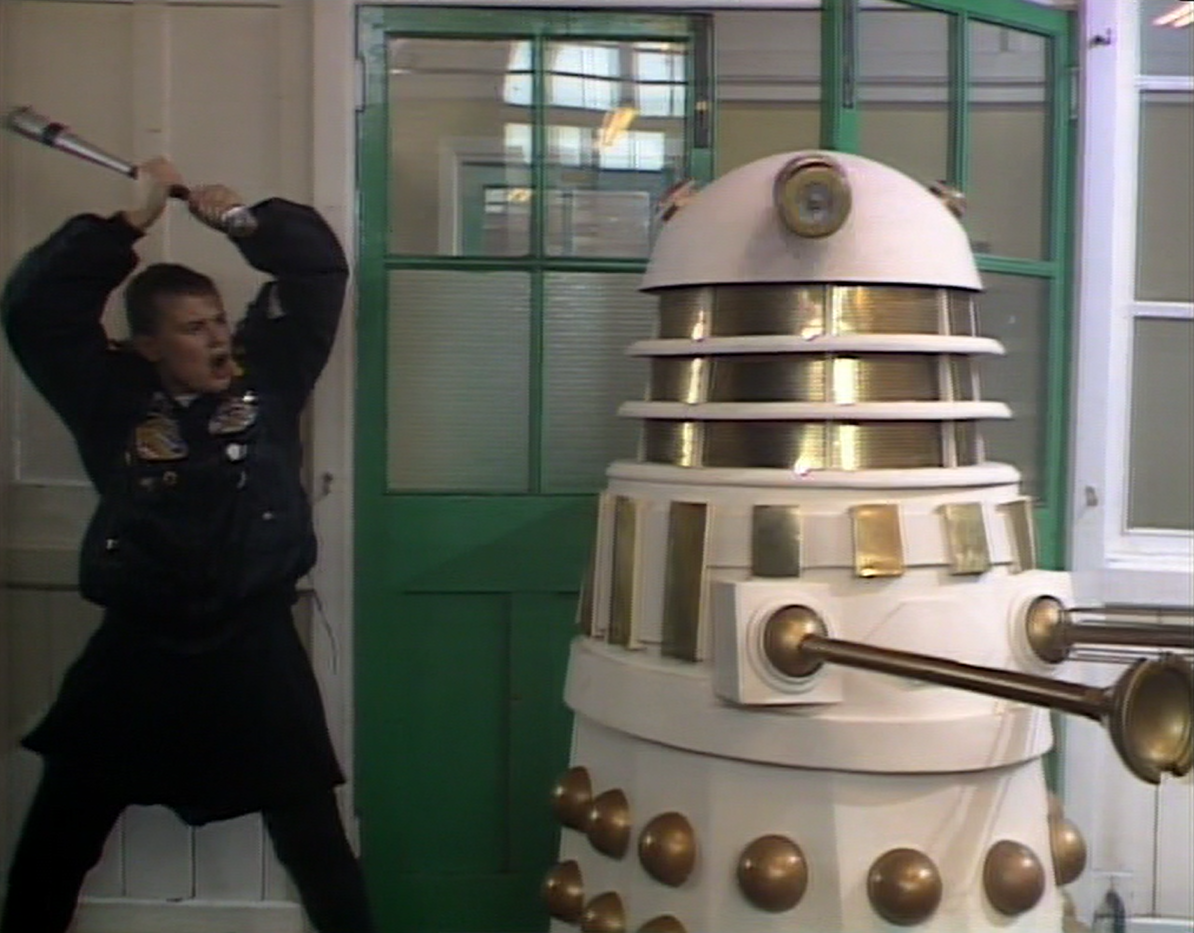
Whilst there is a lot to be said about both Paradise Towers and Silver Nemesis in providing a snapshot of this era of Doctor Who, with its big, anti-establishment ideas, and tiny, show-killing budgets, Remembrance of The Daleks is a fantastic mix of fresh ideas and nods to the show’s long history. Taking place predominantly at Coal Hill School (where the first Doctor Who story opened), this story opened the 25th Anniversary season of the show with a bang. Quite literally, as we see different factions of Daleks blasting away at each other, and Ace McShane, The Doctor’s newest assistant, taking out these alien tanks with augmented baseball bats and home-brewed explosives. Brilliant. There are of course human sympathisers to the Dalek cause (yet another bunch of Fascists),  and a new Heavy-Weapons Dalek to contend with, and most terrifyingly of all, as if to spite Tom Baker’s earlier taunting, Daleks that can go up the stairs!


Doctor Who: The Movie

Want to see the 8th Doctor? This is it. He does get a nice Shakespearian regeneration speech in Night Of The Doctor, and if you want to dig into audio stories, there’s a huge number staring Paul McGann’s iteration. But for stuff to watch? That’s yer lot.


And at this point, we’ve covered all of classic Doctor Who. An era when the series went from Playground Favourite to Nerd’s Delight, to Cornerstone of Britishness, and mildly embarrassing monster of the week thing that you could happily reference in your own comedy.


It wasn’t till 2005 that we got our beloved Doctor back in any real sense with…


Rose

The initiation of Modern Doctor Who with a relatively demurely dressed man in a killer leather jacket introducing himself with the simple word “Run!” was a fantastic, minimal way to bring all the urgency and terror of Classic Who to the new audience, without all the silliness of walking shop manikins… oh, actually, this one did start with Autons, didn’t it? 


Bringing a new element to the storytelling, each series now has overarcing stories threaded through the individual episodes, though you could still dive in to see this manic, damaged Doctor slowly being healed by his interactions with this human companion. 


The Empty Child/The Doctor Dances

Another cheat? A little, but not so much, as this is a two-parter. The Doctor and Rose in blitzed London whilst a creepy child with a gasmask for a face is roaming the bombed-out landscape, infecting others with the curse by touch. Oh, and a time traveling conman who would turn into a recurring character. We showed this to a non-Doctor Who fan for the first time, who responded “and they let kids watch this? Damn. No wonder your country is so fucked up”. He’s not wrong.


The Parting Of The Ways

Again, a two-parter with Bad Wolf, and a coming together of all the little hints speckled through the series. It is however, in its solo form, a big bombastic love letter to cleverness and to humans doing things for themselves, which sort of expands to the central point by the next series. We get a good farewell to Chris Ecclestone’s new Doctor, and the first generation of new regenerations. Big firework displays of gold and sparkle, and the beginning of the Tenant Era.


Blink

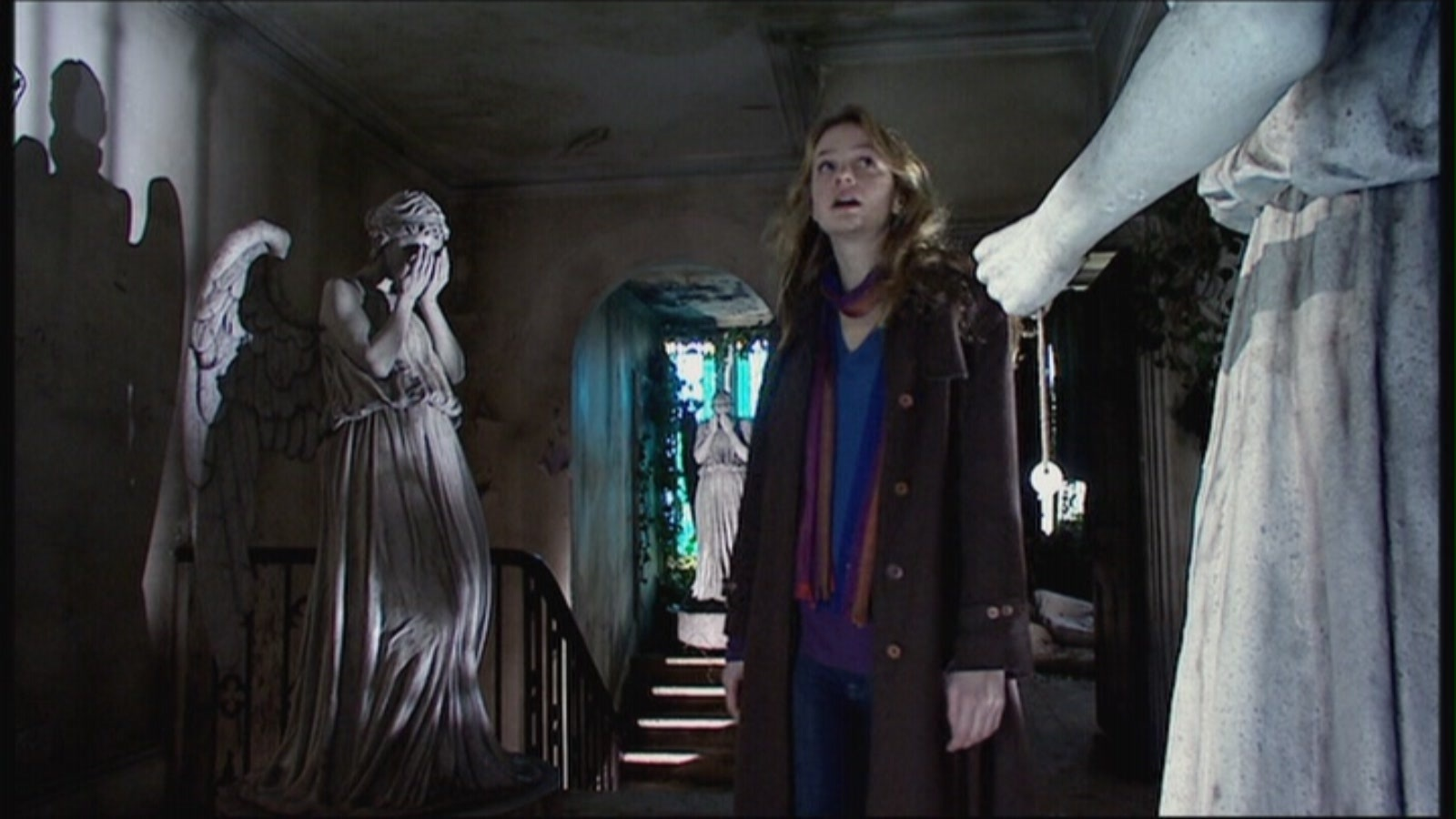
Whilst there are A LOT of David Tenant episodes to trawl through, and more to come, it’s odd that the one that I think most people are immediately drawn to was written as a story for 9. There are a few recurring monsters from New Who, such as The Ood, and the skin-stealing Slitheen, but none have really come close to the Weeping Angels.  One reason I may like this episode so much is the cleverness of the to-ing and fro-ing of pre-recorded conversations, more than the silliness of the temporal energy stealing statues, but Blink is a prime example of New Who’s human-led episodes, which I understand is to give the main cast a bit of recuperation time through filming, but ultimately, puts far more power into our hands, which can only be a mixed blessing.


The End Of Time

This has probably been the biggest and silliest of New Who’s series finales. Set in the modern day, it brings back The Master, in a huge, planet-affecting disaster, where the Doctor is forced to choose between Earth and his home world of Gallifrey. And nobody seems to remember afterwards! Classic Who tended to keep its Earth-based stories on the down low, with forgivable, forgettable events that UNIT could run round and hush up, but Modern Who seems to have thrown that out the window for the sake of spectacle. A bold move, but it does make you wonder if they’ll need to hit some sort of big reset button at some point, before the history books get too crowded with robots and aliens. This double-parter is worth watching if you want to see the mawkishness of the Doctor, taking a good 10 minutes to do a final round of goodbyes, before regenerating. It is also worth it for the inimitable Bernard Cribbins, playing the grandfather of the Doctor’s latest assistant, with a humour and depth you would not have expected. It will also get you prepared to tear up seeing his last ever performance as the character in the upcoming specials. 


The Eleventh Hour

It’s very rare that a Doctor’s first episode can be counted amongst their best, but Matt Smith hit the ground running. The Eleventh Hour still bears the traces of Sherlock, which had been developed in tandem with this series, and it has been posited that Matt Smith and Benedict Cumberbatch may have been swapped in their roles. Story wise, The Eleventh Hour is a detail laden tale of hero worship, responsibility, and perspective, and Smith plays 11 to a turn, encapsulating an ancient traveller writ young again, with all the cringe that entails.


The Power Of Three

It is often forgotten quite how quintessentially English Doctor Who is, without reliance on fast cars, big guns, or super gadgets. The Power of Three is a very quiet story, in which very little happens, until it suddenly does. It would be hard to imagine The Expanse or The Mandalorian having a fence painting scene. This story has an almost John Wyndham-esque feeling to it and shows how fantastically the programme can handle changes of pace.


The Day Of The Doctor

When Doctor Who reached 50, there was an air of excitement, and was, ostensibly, a three-Doctor story, featuring a previously unseen regeneration, played by John Hurt. It is epic, climactic, indulgent and through the trickery of clever editing, sound-alikes, and a few uncredited cameos, gives us a scene featuring twelve incarnations of the Time Lord, including our first official look at Peter Capaldi’s Doctor, in the form of a very intense stare, and some very intimidating eyebrows. Certainly not a starting place for your understanding of Doctor Who, but an excellent indicator of what we can expect as these 60th anniversary shows roll around.


The Time of The Doctor

Modern Doctor Who has had a tradition of producing Christmas specials. Nice big family pleasing affairs where the story does not always have a big knock-on effect in the overall universe, just in case you are stuck tending the Christmas pudding whilst it’s broadcast. So it was rather odd for Eleven’s run to be tied up so neatly in the Christmas special. Smith is allowed the most spectacular regeneration, as the rules of the show are rewritten. Again, interesting, rather than a necessity, but good to see those limited regenerations, like a ticking clock to the series’ conclusion, get trashed in a fantastic display of pyrotechnics, and the sudden emergence of 12.


Under The Lake / Before The Flood

For a show about time travel, the actual mechanism of cause an effect in the time stream is very rarely played with, But Under The Lake, and Before The Flood are a wonderful pair of intertwined stories which follow The Doctor and his companion as they go around the same adventure twice, carefully controlling their interactions. It’s comic and scary, and allows Capaldi to indulge in long, dramatic monologues, in which he excels. It’s tone is chilling, it’s logic barely followable, and its effect fantastic.


Twice Upon a Time

If you’ve followed this guide, the opening shots of this episode will have you pointing with recognition as you see the First Doctor standing outside the Antarctic base of The Tenth Planet. This is of course, not Hartnell, but David Bradley, who had played Hartnell in the docudrama An Adventure in Time And Space, and is ultimately, a wrapping-up of an era. We are given a rather uncomfortable view of how attitudes were at the time of the first regeneration, and how we have changed as a society. We are treated to almost a best-of intergalactic kindness montage, with the World War One Christmas Truce, a Pacifist Dalek, and ultimately, 12’s parting words. All, it seems to prepare us for the big change coming. The First Female Incarnation of The Doctor.


Fugitive of the Judoon

The new showrunner of Doctor Who, Chris Chibnal, was an interesting choice. He certainly brought a lot of ideas to the table and made the show something very different. Unfortunately different is not always synonymous with good. Whilst Jodie has always been given great support by the majority of fans, her run seemed mired in some very peculiar choices, such as the unnecessary fridging of characters, and whilst there was certainly an attempt at reintroducing the educational element of Doctor Who, its historic retellings were very sanitised, and seemed to stem from a very privileged position. One idea that did resonate though, came up in Fugitive of the Judoon, where we discovered that perhaps this little rundown didn’t cover All the Doctors after all, with another previously unseen incarnation, this time not even known to the Doctor herself. 


The Power Of The Doctor

Another anniversary special, this time to celebrate 100 years of the BBC, celebrates the human heroes who have followed the Doctor, as she finds herself trapped by the triple threat of The Master, the Cybermen, AND the Daleks. Featuring a swathe of assistants, acting to greater or lesser roles, as well as a handful of Classic Doctors, we get to see a lot of resolutions, as well as the humans doing most of the leg work, in a manner which had really been a hallmark of David Tenant’s run. I wonder if that’s what caused that particular regeneration!