Showing posts with label Adri. Show all posts

Tuesday, August 27, 2024

Cool Books I Read While I Was Too Overwhelmed To Review

You want reviews? I've got reviews! Small ones!

Back in February, I rounded up some recent-ish books that I received review copies of, and read, but couldn't find the time or headspace to review at the time. Well, surprise! There were more books that I still hadn't got around to reviewing! This is the second round of clearing the decks for me, inspired in no small part by all the great reviewers and creators I got to hang out with at Glasgow Worldcon. Let's get back into it:

The Last Hero by Linden A. Lewis wraps up the trilogy that began with The First Sister, and it's a book that particularly deserves attention for anyone looking for more books in the vein of Emily Tesh's Hugo winning Some Desperate Glory. While Lewis' trilogy doesn't have that book's 90 degree plot swerves, it offers a much deeper look at what radicalisation and deprogramming look like when the bullets are actually flying, and we get to watch the young protagonists from across different factions—the fundamentalist Geans, the caste-based Icarii and the marginalised Asters—grapple with what is expected of them within their respective systems, and the price of trying to overthrow them. Add in some great bits of worldbuilding and a hefty dose of character gender feelings, and you've got a trilogy well worth checking out.

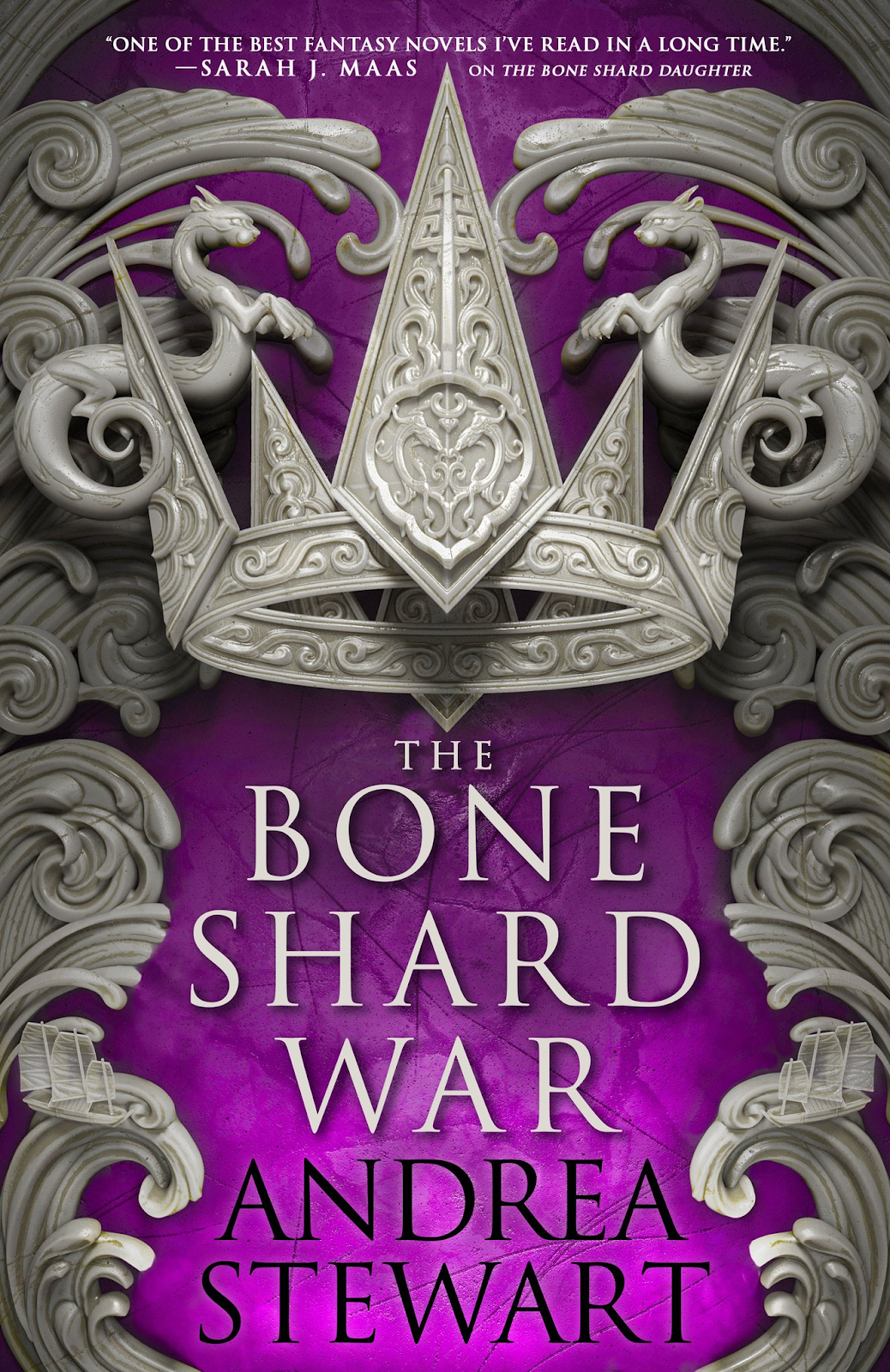
The Bone Shard War by Andrea Stewart also closes out a trilogy (the Drowning Empire) about exploitation and the cost of change, and especially grapples with the question of who ends up on top when said exploitative system is overthrown. It is also, deliciously, about earnest but silly youths in love, who are being kept apart and even forced into betrayals! At this end of the Drowning Empire, the brutally high cost of bone shard magic isn't as viscerally present, and that feels like a bit of a loss despite the emergence of new magics and the rediscovery of how this world functions, and (relatedly) what those cute animal companions that the main characters picked up have been about this whole time. While it has its ups and downs, this is a cool trilogy by an author I hope to see even better things from in future.

Book three, but not a series ender, The Mystery of Dunvegan Castle by T.L. Huchu is part of the Edinburgh Nights series, and while I'll forgive this year's Hugo voters for not putting it on the best series ballot, my patience on that front is not endless (nor will the series be). These books are the chronicles of Ropa Moyo, a highly motivated Zimbabwean-Scottish teenager who is offered entry to a prestigious occult library... as an unpaid intern. This time, Ropa's aspirations and hustle come fully up against the barriers placed in her way, and this series does a great job of showing how institutional racism and classism are perpetuated not just by bigots in the institution, but by people who limit their allyship or try to offer "meritocratic" entry points rather than fighting the corner for marginalised people. It's an interesting shift for Ropa—who, to this point, has been a bit naive about her circumstances and whether she can just push through them—and it makes me even more eager to see what book 4 brings.

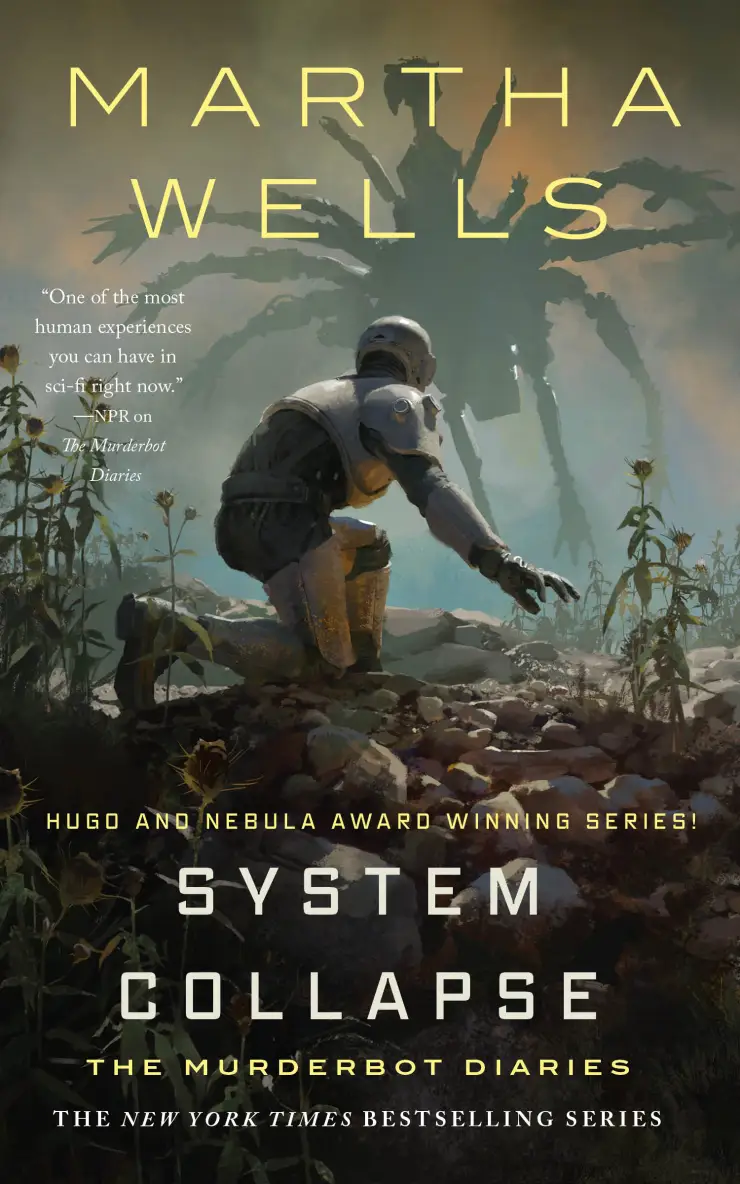
System Collapse by Martha Wells. The second Murderbot novel feels structurally closer to the novellas than the previous Murderbot novel, and at this point the recommendation is "if you like Murderbot, you'll like this Murderbot." Unlike the rather static-feeling Fugitive Telemetry, System Collapse does push things onwards from Network Effect in an interesting way, both literally (conflict de-escalation through documentaries!) and in Murderbot's character development and how it narrates its story. We quickly learn that Murderbot is not working at full capacity, and that it is keeping something from us about how this happened, and while the reader is used to the quirks and selectiveness of Murderbot's narration, this withheld information immediately puts the reader off balance, adding an extra layer of tension to both the conflicts and the crew relationships that are both staples of this series. Of course Murderbot and friends save the day with the power of love and justice—not that Murderbot itself puts it quite that way.

The Ten Percent Thief by Lavanya Lakshminarayan wasn't a Subjective Chaos Award winner this year, but it was an interesting addition to a stacked ballot. This mosaic novel, centred around a future Bangalore now known as Apex City, shows us the ins and outs of a society where citizens are constantly tested against the "Bell Curve". The city's residents are constantly striving - through conspicuous displays of capitalist productivity - to be promoted to the super-privileged ten percent, and to avoid deportation outside the city to join the "Analogs", who are treated as sub-human and denied basic ameneties by a city that nevertheless relies on them for its continuation. Through the novel, we see both confident Virtuals and those barely clinging on inside the system, as new technologies create further alienation; we also see, though not with as much depth as I would like, the way in which Analogs are organising themselves to resist and overthrow their oppressors. It didn't add up as well as I wanted it to, but there's a lot going on here for readers to enjoy, especially if you like Black Mirror-esque technological absurdities and the overthrow of transparent dystopias.

Untethered Sky by Fonda Lee was just beneath the Hugo finalist cut-off this year, and it's a very well-crafted fantasy novella: Ester's story has a strong thread of revenge, but there's also more going on: her progressing in her vocation as a rukher to a roc named Zahra, the relationships she builds with her comrades (and her bird), and the strains of being part of a military campaign whose political and propaganda motives seem at odds with actually making the Kingdom safer. Untethered Sky does suffer from the "author of incredible thing (Green Bone Saga) goes on to write pretty good thing" but it works great. 

The Lies of the Ajungo by Moses Ose Utomi is an incredible book, and somehow it's not on the Hugo longlist, but it is on the Ignyte novella shortlist so we can celebrate that recognition at least! The best thing about this story is its worldbuilding, which feels like it's come straight out of a fable: the protagonist comes from the "City of Lies," which has made the terrible bargain to cut the tongue out of every adult resident in return for an annual allocation of water from the Ajungo. This, of course, means that its residents can no longer tell their own story, and that their own history is now in the hands of their oppressors. When almost-13-year-old Tutu leaves the city in search of water to save his mother, he somehow avoids the disappearance that has befallen every other child who has left, and instead he finds out the truth behind the Ajungo's conquests and where his city falls within it. Amazing stuff.

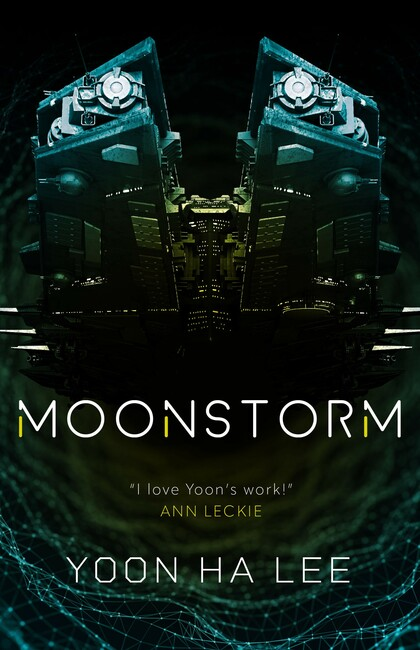
Finally, Earth-space adventure Beyond the Hallowed Sky by Ken MacLeod, fantasy adventure The Wolf of Oren-Yaro by K.S. Villoso, and mecha-YA Moonstorm by Yoon Ha Lee are all series openers which fall into the "fun, but probably not reading on" category for me—a category which I need to be more firm in maintaining, as the list of books gets bigger and my time on this Earth grows shorter (fatalistic? me?) I did enjoy MacLeod's speculation of near-future superpower blocs, especially the split between Anglophone death capitalism and optimistic-but-also-vaguely-sinister European socialism; and The Wolf of Oren-Yaro did not disappoint with its main character's Bitch Queen credentials, but had me shrugging at its relative cliffhanger ending rather than rushing to download the second book. Moonstorm, I am simply not the target audience for, and that's OK! I think this is a great contender for the Lodestar list, especially since books by authors who have also been nominated for adult SFF do very well there, and I hope that this story of giant robots, terrible empires, friendships, rivalries and betrayals IN SPACE finds each and every one of its people.


Adri, Nerds of a Feather co-editor, is a semi-aquatic migratory mammal most often found in the UK. She has many opinions about SFF books, and is also partial to gaming, baking, interacting with dogs, and Asian-style karaoke. Find her on Bluesky at adrijjy.bsky.social.

Tuesday, May 14, 2024

Adri and Joe Talk About Books: 2024 Hugo Award Finalists (finally!)


Joe: We’ve had a few weeks to sit on the announcement and start the always exciting process of trying to read and watch all the things and fully engage with the Hugo Awards. The finalists were announced on March 29 and let’s not bury the lede here.

Nerds of a Feather is a finalist for Best Fanzine (thank you again, everyone), which is forever a thrill even with this being the seventh time we’ve been on the ballot. Before we move on because we’re not here to talk about ourselves, I do want to say that I’m thrilled to share a category with Black Nerd Problems, The Full Lid, Idea, Journey Planet, and the Unofficial Hugo Book Club Blog. It’s super cool to be able to share this experience with such wonderful finalists.

Adri: Yes, congratulations to everyone! It never gets less exciting to be here, especially not in fine company. And since Glasgow is as close to a local Worldcon as London is likely to get (shit here is expensive), I’m already looking forward to going in person

Joe: I think I’d like to start with Novel both because I think in novels and also because this an interesting category for me this year - and I’m not saying that because I only predicted 4/6 of the finalists.

I struggled a bit with my reading last year, especially in regards to trying to stay up to date with what was published and what was hot. Back in October I messaged you and Roseanna to recommend things to me because the only negative of stepping away from social media is that I’m not seeing as much of the chatter of what books are interesting and what books are part of a conversation that I should consider to know what’s going on in the genre. It helped, but Roseanna recommended multiple 900 page books to me and somehow I had it in my mind that The Saint of Bright Doors was one of those mammoth tomes so I held off reading it and it turns out it is a perfectly reasonable sized 300ish page novel and is perhaps the most notable book of last year.

Adri:
I follow author Vajra Chandrasekera on Bluesky (as should everyone reading this, he’s great!) and in March he had something like five announcements for different accolades that The Saint of Bright Doors has been nominated for, or won. So this book is really making the rounds and it deserves all of the praise it gets! I’m unusually underprepared for Best Novel, having only read this and Translation State (which I had some personal sticking points with, though I know it’s been very beloved otherwise!), and Saint of Bright Doors is for sure my novel to beat. It’s weird and subversive and unpredictable, which are not things Hugo voters are the best at, but I really hope this one gets a million trophies.

My predictions were worse than yours at only 3/6. I know the Hugo buzz for The Adventures of Amina al-Sirafi passed us both by, although it probably shouldn’t since S.A. Chakraborty has been previously nominated in Best Series. I also hadn’t realised that Witch King had got the traction it clearly had, although once the Nebula nominations came out it became clear we wouldn’t be seeing any Murderbot on a major awards ballot (side note: good for Martha Wells for deciding this - it’s a tricky decision to recuse, and being able to say “no, that’s enough for one series” is a very classy move). Some Desperate Glory was on my predictions and it’s the first Hugo book I’ve picked up for my 2024 reading: I’m loving it so far, so this is a good start.

I don’t think I will love Starter Villain, and I wish the Hugo voters had cycled out their token boilerplate white guy novelist this year (there are several to choose from in the British SFF scene!), since I’ve heard nothing but “meh” about the book and I don’t even like the Scalzi that everyone else raves about. But inertia is going to do its thing, I guess.

Joe:
Witch King and The Adventures of Amina al-Sirafi were my two prediction misses. Witch King because I hadn’t read it AND because I wasn’t confident that Hugo voters were going to go with Wells outside of the Murderbot series, even granting the Nebula nomination for Witch King. Maybe Witch King feels like a fantasy Murderbot, I don’t know. Or maybe readers are fully on the Martha Wells train and it’s not just Murderbot. That’s cool, if so.

The Chakraborty I did read last year, very much enjoyed it, but it gets to a conversation we’ve had over the years - except for Daevabad in Best Series (well deserved), Chakraborty hasn’t been in the Hugo conversation and it’s hard for me to predict a writer who hasn’t made it on the ballot in the past for Best Novel to make it onto the ballot in the future for Best Novel. It’s hell on my prediction stats. If there was Hugo chatter on her behalf, I missed it, but I missed a lot of things last year so that’s not a big surprise.

I’ve variations on the same feelings you have for Translation State, but my highlight (of the nominated novels) is Some Desperate Glory. That one was fantastic and thrilling and it hit all the notes I was looking for. I’m so thrilled that it made the ballot. Along with The Water Outlaws (sadly not a finalist), Some Desperate Glory was one of my favorites of the novels I read last year.

The Scalzi - I enjoyed it. It’s John Scalzi doing John Scalzi things. My wife enjoyed it, possibly more than me. But compared to the other novels on this ballot (that I’ve read) it feels slight, and I’m saying that having nominated The Kaiju Preservation Society the previous year. But hey, we don’t have Bookshops and Bonedust on the ballot. Did you read that one? I remember you were reasonably offended by Legends and Lattes picking up the Hugo nod the year prior.

Adri: I did not read Bookshops and Bonedust. I think Travis Baldree has earned a reprieve from me dunking on his work and all it represents, and frankly so have our readers.

It was never a likely Hugo finalist, but my beloved “outsider” for 2024 was Chain Gang All-Stars by Nana Kwame Adjei-Brenyah. It’s a challenging read because of the brutality of the subject matter - it’s about a future where the US has turned its prison system into a gladiatorial entertainment spectacle where people fight to the death for the slim hope of freedom - but that book is so full of radical empathy for the people whose lives are destroyed by the “justice system”, regardless of what they did that brought them into contact with it (and some of its characters have done terrible things) that it left me thinking for a long, long time.

Joe: Chain Gang All-Stars was on my ballot. It’s an incredible, powerful novel. And, I agree, it was never going to be a real Hugo contender.


Adri
: The interesting thing about this novel ballot, also, is that it compensates for the shift away from Tor dot com dominance in novella by having three Tor dot com published novels instead. On that note, I’m excited about the novella category despite also having read very little of it (I had a very backlist heavy year last year, OK?), not least because two of the novellas are Chinese works in translation, from the same UK small press anthology no less! Both are relatively old in original publication (1995 and 2002 respectively), but I've been nominating Jin Yong's Legend of the Condor Heroes translation to best series every year it's been eligible, so I can't complain about it not being the most up to date of Chinese SFF.

Joe: The two Chinese novellas are a fun addition to the category, especially stepping away from the Tordotcom of it all. I’m looking forward to reading them - fairly soon, actually, since I bought the Adventures in Space anthology.

I’ve only read half of the novella finalists, but Nghi Vo’s Mammoths at the Gate is a particular highlight. Vo is a previous novella winner and a semi perennial finalist, but Mammoths at the Gate is straight up one of my favorite stories of the year. Also of note is Arkady Martine’s Rose / House, a story completely unlike her Hugo Award winning novels. Not to mention T. Kingfisher’s Thornhedge. It shouldn’t be a surprise that each of Kingfisher’s stories are superb.

Adri
: All things I'm enthusiastic to read! And then there's Malka Older’s The Mimicking of Known Successes, which I absolutely loved last year, so there’s a high bar to clear for me, and I’m excited to see what if anything clears it.

Joe: I’m always happy for more Malka Older.

To bounce around a little bit from prose fiction, and to a category I’m not sure you’re going to read much of if I remember previous years correctly - Graphic Story is really interesting this year.

We’ve got the return of Saga which unfortunately isn’t landing for me since its return from hiatus like the first nine volumes did, but Bea Wolf is a very creative retelling of Beowulf if Beowulf and all of the thanes were children and Grendel was that one adult neighbor who doesn’t even tolerate the presence of kids. It has the formality of an epic poem, but in comic form.

Shubeik Lubeik was originally written and published in Arabic in Egypt in 2017 and I am delighted by the opportunity to read this story of the buying and selling of wishes. I never would have encountered this before and it’s really good and I’m so glad it’s on the ballot.

I’m likewise excited to read Kelly Sue DeConnick’s Wonder Woman Historia and Paul Cornell’s The Witches of World War II. Before I watched the Netflix adaptation of The Three-Body Problem I’d have said I wasn’t into the idea of any adaptations of that novel / series (I didn’t appreciate the novel despite the accolades) but the Netflix show was fantastic and now I’m curious what a Chinese translation in comic form might look like. Of course, I’ve no idea if it’s been translated and what availability might look like in the states, but that’s a problem for future-Joe.

Adri: I didn’t manage the graphic novel category last year, but this feels like a year with great potential to come back to it. Made easier by the fact that I’ve been keeping up with Saga, so being eleven volumes in isn’t a problem - and everything else here is either a standalone or a first in series! Aside from Wonder Woman Historia, which looks BIG, it’s a much less daunting category than it has been in the past. Which fits well with my energy levels, frankly.

Joe: Shubeik Lubeik is a fairly large volume, for what it is worth. Excellent, but it’s not a slim 4 issue collection.

Adri
: To go from one visual category to another, this is the first year of Best Video Game or Interactive Work, and it’s a great ballot. While we’re sadly lacking any non-video games to give the second part of that category description a precedent to start from, there’s a really intriguing mix of indie and bigger titles here. Chants of Sennaar and Dredge are on the smaller end of that and both have really interesting storytelling - Dredge is about being a fisherman catching increasingly eldritch critters for increasingly worrying ends, and Chants of Sennaar is about climbing a tower of different cultures and trying to piece together new languages and the history of the location and its divisions. I love a language puzzle game so Chants of Sennaar in particular was a hit for me, and I even found it fun on a replay despite already knowing what the puzzles were expecting of me. I’d love to see this game take the award home!

That said, its going up against Baldur’s Gate 3, which is about as Sensation as a Video Game Sensation gets, and for good reason. I LOVED my time in this D&D-adjacent video game and I think it does many, many awesome things that you could spend literally thousands of hours exploring. The one thing I don’t like is the game’s original ending, which felt quite limited in how it sent off the characters you’ve spent so long getting to love - and yes, there’s a content patch that helps a lot with that, and it was also released in 2023 so is part of the “Hugo-judgeable-package”, but it affected my original feelings after my playthrough and I haven’t quite got over it yet.

Tears of the Kingdom is also here, and it’s well deserved. This game got me through a rough part of 2023, and before that it’s the game I was playing when we got to hang out in person last year!

There are two games I haven’t played: Jedi: Survivor is the only Star Wars on the ballot this year, which feels kinda notable in this oversaturated Star Wars era. I have friends who love it specifically for the type of male protagonist it has, and that might also end up being me. Alan Wake isn’t the kind of thing I’d usually go for, and I guess I need to play the first game before the second? So that might be the one I don’t get to, but I’m gonna be doing my best.

Joe: I’m so thrilled about the inaugural Video Game category as a permanent thing and as a person who plays a fair amount of video games I also now see a challenge with the category because I’m just not going to get to Baldur’s Gate 3. It’s a huge game, I’ve been waffling about when to buy it but because I didn’t jump on it right away I’m kind of behind the game here. I’m in the middle of God of War Ragnarok, which is its own bit of epicness that I keep putting down because I can’t focus and just want to power wash things on Power Wash Simulator. I can’t believe I’ve put in 30 hours into that so far.

Adri: Power Wash Simulator is a gem and I’ve replayed more of it than I care to admit.

Joe: I don’t think I’m going to revisit any levels, especially fiddly ones, but it’s peacefully occupying more of my gaming time than I’d like to admit. But for actual finalists, I’m partway through Dredge and am really enjoying the mix of peaceful fishing game and absolute terror when I’m staying out on my boat too late and what the hell are these red lights and things in the dark chasing me and where did that rock come from it wasn’t there two hours ago?

Tears of the Kingdom was absolutely fantastic and I mostly enjoyed playing it more than I did Breath of the Wild (ascend for the win) - though as with most things, I completely ignored building stuff and because it’s an extension of that game Tears of the Kingdom didn’t have the same sense of wonder and discovery that Breath of the Wild did. But everything is relative because the highs of Tears of the Kingdom are so very high.

I have the same issue with Alan Wake 2 and Jedi: Survivor that you do. I haven’t played them, and I haven’t played the first game and I think I want to because I’m less likely to go backwards on either game (especially since I have Jedi: Fallen Order on PS+).

I will play Chants of Sennaar, though. Once I beat one of the three main Playstation games I’m in the middle of, as previously mentioned, I plan to add Chants to my rotation (ignoring the fact that I also started Tchia). You really sold Chants in a way that I’m very intrigued for a game I would have otherwise skipped over.

Best Series is a category that I love as a thing but have somewhat mixed feelings on this year. We have our recurring Seanan McGuire and I really hope this is the year October Daye brings home a Hugo. It really is the sort of thing that isn’t going to be recognized anywhere else on the ballot unless one of McGuire’s short stories breaks through again and to my mind it’s exactly the sort of thing that *should* be recognized by the Best Series Hugo. Also, and correct me if I’m wrong - it doesn’t look like we’re getting a new October Daye novel this year for the first time since she started publishing novels with Rosemary and Rue.

Adri: That seems to be correct, because of the publisher shift from DAW books to Tor. Aren’t you wishing you saved one of last year’s double to tide you over this year?

Joe: Is that what happened? I somehow missed October Daye switching publishers. But since I’m deep in my re-read all this means is that if Tor keeps the traditional September publication date I’ll have plenty of time to almost catch up. At this point I’m never not reading October Daye.

Adri
: I like this ballot, on the whole, although I’ve read as much Charles Stross as I ever intend to so I’m a bit bemused to see the Laundry Files back. Xuya is a fantastic nominee in this category though, as is The Last Binding, and while Adrian Tchaikovsky’s Final Architecture trilogy isn’t quite as amazing as Children of Time, it’s still an excellent space opera and Adrian deserves an untainted Hugo.

Joe: I’m really hit and miss on Stross, but I’m not at all surprised to see The Laundry Files on the ballot. Hometown kid and all. I read the first two or three plus a few stories, generally enjoyed them but fell off and never came back for no particular reason. I keep waffling on whether to jump back in either from where I left off or from when Tor picked up the series. Not sure if that makes a ton of sense given that everything seems to build off each other but therein lies the peril of series.

Likewise, I’m not all that excited about the Xuya Universe, though I do agree it is a fantastic nominee. I’ve read several novellas and short stories and I think my only issue with it is that Xuya is a bit more diffuse than other series in this category. I’m behind on the two novels, though, and that might make a difference. I’m not at all familiar with Freya Marske or her work, so that’ll be one of my discoveries for this category.

I’m so behind on reading Adrian Tchaikovsky because he is so incredibly prolific (though I’ve read one of his Shadows of the Apt novels on each of my last two trips and expect to read the third on my Scotland adventure), but I’m excited to jump into Final Architecture. It’s on request at the library and maybe will pop up in the voter packet but if I need to prioritize anything on this year’s ballot it’s going to be more Tchaikovsky. You’ve been singing his praises for years now and I should really pay attention.

Adri
: Tchaikovsky has had a patchy publication history in the USA as well, which doesn’t help.

Anything else you’re excited for on the rest of the ballot? I’m really happy that Maureen Kincaid Speller’s collection, A Traveller in Time, is represented in Best Related Work, though I very much wish that Maureen was with us to enjoy (or at least have enjoyment-adjacent feelings about) that recognition. And I’m delighted that Ai Jiang is in both novelette and Astounding - she’s really burst onto the short fiction scene in the last couple of years and she’s really, really good. I keep a little list in my head of amazing new short fiction writers that should have been Astounding finalists but were robbed and it’s nice not to make the list longer.

Relatedly -- and this is the only bit of process-related griping I’m going to do --  I’m happy that Xiran Jay Zhao has been given extended eligibility, but I wish Dell had declared that there should be seven finalists rather than six, rather than indirectly kicking a non-extendedly-eligible writer off the ballot. Because Zhao’s extended eligibility wasn’t announced in advance, I doubt they received enough votes to reach the ballot organically, and that means that whoever placed sixth among this years nominators has had an opportunity taken away from them in order to rectify a wrong done to one of last year’s finalists. That doesn’t feel good.

Then again, voters vote for ineligible things all the time, so hopefully my assumption that Zhao didn’t receive votes is wrong, people put them on their ballot in protest, and this situation is not as bad as all that. But there could have been space for seven in the circumstances.

Joe: There is a non-zero chance that Zhang received enough votes to make the ballot, but I agree that an announcement would have allowed fans to nominate with intention regarding Xiran Jay Zhao. I’m cautiously optimistic that Dell told the Hugo Committee that if Zhao receives enough votes to include them on the final ballot, but am likewise concerned that Dell added them to the ballot by fiat - in which case, yes, it is unfair that because a wrong was done last year than a wrong was done this year to make amends. On the other other hand - had that announcement been made in advance, I have no doubt that Zhao would have received sufficient votes and we’d have ended up in the same place - but I can definitely see a path to where the first one off the ballot when stats are announced doesn’t feel good about this.

Also, you missed the bad joke of saying that it doesn’t feel astounding.

(Adri could have written a response here, but she didn't because it was a bad joke).  

Joe: For the rest of the ballot, I’m always happy to see a story from Sarah Pinsker up for a Hugo. Dramatic Presentation Long Form is a fun mix of movies while Short Form feels like a category from twenty years ago - though I haven’t seen most of what’s nominated. I’ll probably get to all but The Last of Us, assuming I can muster up enough interest to push into the second season of Loki after being bored by the first.

My hope is that this is the year either Strange Horizons or GigaNotoSaurus can break through in Semiprozine, though I’d certainly be happy about FIYAH picking up their second Hugo. I’d really like to see Alasdair Stuart take home a Hugo for *something* this year - whether it is his fan writing (not that I’m rooting against Paul, maybe they can tie), Escape Pod, or if Nerds of a Feather doesn’t win I’m pulling for The Full Lid this year. Actually, that’s something Mary Robinette Kowal told me in DC a few years back when I was a bit extra stressed out - think about who you would like to win that isn’t you and root for them so that you have someone to cheer for if it doesn’t go your way. Regardless, Stuart is now an 11 time finalist. He’s such a force for good in the genre community and consistently puts out such good fan work that he absolutely deserves to be recognized - and what better time than in a UK based convention for a UK based fan?

I think that’s also a grand place to wrap this up. This is a fantastic lineup of Hugo finalists and given how excessively open Glasgow has been thus far I am very confident there will be absolutely no shenanigans. I’m excited to attend the ceremony in person and see you and Roseanna and Paul and everyone else who will be there!

Adri: Absolutely - so far from a finalist perspective we’ve seen the Glasgow team putting their absolute best foot forward and I really appreciate the level of communication, transparency and thoughtfulness that’s been evident so far. It doesn’t undo the damage of 2023, but it’s a good place to move forward from, and I’m really glad for it.

Thursday, April 18, 2024

Review: Someone You Can Build a Nest In by John Wiswell

A "who is the real monster?" story that dodges the complexity of its own premise


(Note: there is a fairly significant (though not plot-revealing) spoiler in this review - read on at your own risk!)

Opening confession: before reading Someone You Can Build a Nest In, I didn't rate John Wiswell's work very much. Clearly, his writing is doing a lot of things right for a lot of people, since you don't get to be Hugo and Nebula nominated without folks thinking you're great at what you do. But beyond the cute ideas, I don't find a lot in Wiswell stories to sink my teeth into. On a technical level, the prose tends towards the same basic voice regardless of the type of story being told, and on a thematic level, there's a lot of narrative "flattening" to make stories about dark, monstrous themes resolve with a relatively small number of people carving out a safe space and calling it a happy ending. Short fiction might not have much space for complex characters or worldbuilding, but it provides plenty of space for moral complexity, and I find it weird to set up complex premises only to ignore their complexity. Maybe there's something radically cosy in that that I'm just too curmudgeonly to appreciate, or maybe I'm just not picking up on complexity that everyone else sees. Who knows.

Despite not loving the author's prior work and also having a finite amount of precious reading time, I read Someone You Can Build a Nest In for two reasons. First, Hugo and Nebula nominated short fiction authors have a very non-zero chance of landing on a Best Novel ballot, and I like to read things for award purposes. Second, I really wanted this book to give me the experience that it gives people who love Wiswell's writing, because if something different is going to happen for me, it's probably going to happen at a different length, right?

Alas, it didn't happen.

Someone You Can Build a Nest In is the story of Shesheshen, an amorphous shapeshifting monster who eats people and repurposes their organs in order to survive. Shesheshen is content in her isolated, people-eating lifestyle, although she misses her mother - also a people eating shapeshifter, tragically killed by a monster hunter - and reminisces fondly about the father who she and her siblings ate from the inside out after he gestated them, as part of the people eating shapeshifter life cycle. She's also not much of a talker, and the whole book is told in her "voice": which means plenty of simple, unpolished prose. So I guess I'm not having my expectations of the author challenged on that front!

Anyway, when Shesheshen is rudely awoken from hibernation by some monster hunters (led by a posh asshole, so you know you're supposed to root for the people eating monster and not the hunters trying to put an end to all the people eating), it puts her out of her regular people eating schedule and she has no choice but to go into town to find some people to eat immediately (target: another posh and kinda sleazy asshole, also fine to root against). When that doesn't work, she falls off a cliff and is tended to a kind, fat, practical young woman called Homily, who is hunting monsters in the ravine. Shesheshen is delayed from eating Homily for long enough to fall in love with her, Homily is selectively dense enough not to realise the person who survived a fall off a cliff and has no recognisable human organ structures might actually be a monster, and thus begins a beautiful relationship.

Complicating factor number one in Homily and Shesheshen's relationship: for Shesheshen, "falling in love" coincides with getting a strong urge to lay eggs in Homily and have them eat her from the inside out. For me, this aspect of the story actually delivered what I wanted from it to a large extent, albeit without a huge emphasis on the actual wanting to build a nest in her girlfriend bit (you'd have thought... but no). I'd really like to read more stories where "alien" biological urges are things that sentient creatures can exert control and choice over, and while things work out rather conveniently in terms of Shesheshen eradicating those urges, she goes through an interesting process to re-examine what she assumed being in love with someone would look like versus what she actually wants with, and from, Homily. That she has to do this without guidance from a parental figure is both thematically relevant and also kind of interesting, and it makes Shesheshen's convenient discoveries about herself less annoying - maybe she's not the first people eating shapeshifter to do certain things, but she's never had any fellow shapeshifters to learn from. It's heavily implied, though not literally stated, that Homily is asexual ("enby" is a word in people's vocabulary in this queernorm setting, so it's perhaps a bit odd that "ace" isn't, but I digress) so Shesheshen doesn't have any human sexual preferences to figure out how she fits with, aside from an easily discovered mutual enjoyment of cuddling. Good for them, and a win for alien monster protagonist portrayal.

Complicating factor number two is, unfortunately, where things go off the rails. See, Homily isn't just some random monster hunter hunting some random offscreen monster: she's the daughter of the land's war hero leader, and her mother and siblings (one of whom was the posh asshole from earlier! Who already got eaten, oops) are back from the exile which Shesheshen's mother imposed on them by "cursing" the family if they stayed. Homily's family are abusive towards her, and Homily has adapted to this abuse by trying to make herself as "useful" as possible in any given situation, even when it hurts her to do so. Now that Shesheshen has avoided detection as a people eating shapeshifter, she gets roped into the expedition to hunt herself, and to try and help Homily with a toxic family reunion, while also throwing the monster hunting off her own scent.

To fully contextualise why I hated this plot, I have to give that one significant spoiler mentioned above: none of Homily's immediate family survive this book. That means her mother, her adult younger sister Epithet, and her child sister Ode (and her posh asshole brother, but he's gone and we've already mostly forgotten about him, except when Shesheshen uses his teeth to smile at her girlfriend) all meet their ends in ways that are apparently intended to provide context or even catharsis about the familial abuse. This is some morally grey shit right here, especially since one sister was a child eight years younger than Homily while most of her part in the abuse was taking place, and the other is still an actual child. That's not to say that children can't cause real physical and emotional damage to their siblings, even much older ones, but it's surely an open question to what extent the culpability lies with the child and not with the adults who had a duty of care to both siblings? Someone You Can Build A Nest In doesn't seem to care about that question. Instead, we get "straightforward" lessons, in 21st century therapist vocabulary, about how terrible abuse is, and therefore aren't abusers the real monsters here? If the text is nudging us towards answers more sophisticated than "yes", it's laying down clues too subtle for my reading skills, so I'm left assuming that "yes" is the desired answer, and I don't like it.

Ode's death is particularly egregious: having been a bratty bit of comic relief in the narrative, her death is mourned on page by nobody except her mother, whose grief is called out as toxic and wrong. Meanwhile, Homily learns the valuable life lesson that she didn't have to risk her own life trying to save her sister, she's still a good person and nobody should judge her for not trying a bit harder to rescue a child from a grim death. I'm glad we got that lesson sorted out and now you don't have to have any complicated feelings about your role in that situation, Homily! While the other family deaths are treated with a bit more weight, the whole familial comeuppance sits poorly, particularly because it was an authorial choice to make two of Homily's most prominent abusive family members children, set up what should have been a complicated moral situation, and then just... sidestep that complexity, because the story you want to tell is about how abusers are the real monsters, and not the people eating girlfriend. Also relevant: Shesheshen has conveniently gone the whole story without eating anyone who hadn't broken the law or been a posh asshole first, because having to grapple with the ethics of eating people to live is apparently also beyond this story's interests. Textual moral greyness averted again!

So no, I do not get anything cathartic or heartwarming out of Shesheshen and Homily's story. To find those things would require me to narrow down my curiosity and my empathy to the tiny number of characters that the story wants me to believe are worthy of it, and it did not succeed in convincing me of its judgements (was it the people eating? maybe...). In different hands, the messiness inherent in this story could have been kind of amazing. While reading, I drew comparisons to The Book Eaters, which also features obligate people eating and is fully aware of how bleak and antithetical to a heartwarming familial ending that diet is, even as it tries to bring that ending about. I also thought about Light From Uncommon Stars, which portrays an escape from abuse and into the loving orbit of an objectively fucked up person who needs to be convinced not to sacrifice the protagonist to the devil, and which tells that story in a way which acknowledges both the love and the irredeemable mess. But unless I'm missing something huge, that's not the story Wiswell wanted to tell, so I'm left with another question: is there a version of this kind of story, where all we are meant to care about is the comfort of the main characters regardless of what they do to others, that is uncomplicatedly cosy and heartwarming? I don't know, but I'm going to go back to seeking out the messy, fucked up monster stories, and the radical empathy they often demand, rather than putting myself through this sort of book too often.

Tuesday, February 27, 2024

Cool Books I Read While I Was Too Sad to Review

If a review copy lands in the inbox when the reviewer is too overwhelmed to read it, does it even get a review?

Well, no, obviously it doesn't. Despite my fervent hopes, the review fairy did not visit me once while I was having a Big Bad 2023 to magic away my Netgalley obligations and show love to books during my period of chronic distraction. But the books continued to be good, and I'm going to cover some of them here in not-even-nano-sized review chunks.

Case in point: The Saint of Bright Doors by Vajra Chandrasekera was a 2023 highlight. I've seen a lot of deservedly flattering comps for this novel, a story of divine destiny denied set in a fantasy Sri Lanka:  my own mind was drawn to Sofia Samatar and Ursula K. Le Guin while reading, with a few of the bleak vibes I last felt in A.K. Larkwood's The Unspoken Name. For a story that really invites comparisons, however, Saint of Bright Doors is very much making its own mark on modern genre - and I'm sure there are plenty of threads of Sri Lankan and wider South Asian influence that I missed entirely.

Highlights of the reading experience for me included the way the story's geography seems to literally rearrange itself around the absurd authoritarianism of Luriat's state politics, the portrayal of gods and unknowable supernatural forces co-existing with a mundane, modern setting, and the greatest first person pronoun drop in genre history. This is an essential novel and I hope we'll be talking about it for years to come.

Translation State by Ann Leckie was a novel I hoped to feel similarly about. This latest standalone-ish instalment in Leckie's Imperial Radch universe is a solid, thought provoking piece of SF (Clara has some excellent provoked thoughts here) but it hasn't withstood the test of time as a standout novel for me, Don't get me wrong, I love the Presger translators, and I highly appreciated the way Leckie gives us crumbs of further context without really making anything clearer about the setting's most mysterious alien race. Less attractive on reflection is the treatment of alien biological urges as fundamentally irresistible in a way that would simply not make sense if the author were talking about humans. Protagonists Reet and Qven are, for different reasons, terrified of the urges of their alien heritage, but all Presger translators simply have to go through "puberty" in the way their creators designed, so oh well, suck it up kids, they'll be fine once it's done. 

I understand the narrative is setting up questions about personhood in general, not creating any deliberate queer parallels, but gender is so integral to the setting as a whole, and aliens so often used as a stand-in for human queerness (and neurodivergence) that it's hard not to think about Qven and Reet's lack of choice through that lens. It would be nice to see stories that think more about how alien queerness would manifest, from the starting assumption that of course it would manifest in any sentient species, but I'll keep searching for those books elsewhere. In the meantime, any Imperial Radch is good Imperial Radch, but this one didn't hit "great" for me.

Joe and I share a love of Seanan McGuire's October Daye series, and while he does the honours of the full Nerds of a Feather reviews, I also found time for both of last year's double-Toby entries, Sleep No More and The Innocent Sleep. These are the 17th and 18th books in the series respectively, and they effectively act as companion novels to each other: Sleep No More follows series protagonist October - a fae changeling - as she grapples with the effects of a reality-altering mass illusion, while The Innocent Sleep breaks with series tradition to focus on her Cait Sidhe husband Tybalt, who is working against the illusion from the outside. The actual points of narrative overlap didn't set my world on fire (In one book, October thinks Tybalt looks angry! In the next book, we learn Tybalt is angry!), but the double-bill allows McGuire to let loose with the most unsavoury conventions and darkest corners of fae society in a way that brings the series full circle to its earliest vibes. There's also more time across the books to feature a wide set of supporting characters - including one unexpectedly sympathetic "recast" - who demonstrate the breadth of the series' worldbuilding. As always, I'm eager for more.

Let's talk about some more underrated series! Claws and Contrivances is the second in Stephanie Burgis' Regency Dragons romances and it's just as delightful as the first: an intricate and often hilarious plot of misunderstandings and reversals, sprinkled with fun dragon naturalism and centred around a young protagonist with a lot to learn and a LOT of willing accomplices to her various schemes. Unlike the first book in the series, Scales and Sensibility, Claws and Contrivances takes place in a fundamentally loving family environment where queerness and difference are accepted, and it's the perfect backdrop for Rose Tregarth and her nerdy, autistic-coded love interest Aubrey to fall for each other.

Furious Heaven by Kate Elliott is anything but light, both in content and in physical weight. As Paul covered in detail, this is a 750 page chonk retelling events from the life of Alexander the Great, except Alexander is now Princess Sun, daughter of Eirene of Chaonia, an expanding galactic power rubbing up against the much larger might of the Phene while trying to maintain their own powers at home. If you know the history of Alexander the Great, you'll probably recognise more moments from real history, but it's certainly not necessary to enjoy the combination of pew-pew space battles, irreverent epithet-laden narration, "oh no she DIDN'T" politicking, and silly teenagers with entirely too much power. Go look up the facts afterwards to find out which bits really happened (no genetically modified four-armed people in antiquity, unfortunately), and get some knowledge useful for pub quiz as a bonus!


Adri, Nerds of a Feather co-editor, is a semi-aquatic migratory mammal most often found in the UK. She has many opinions about SFF books, and is also partial to gaming, baking, interacting with dogs, and Asian-style karaoke. Find her on Bluesky at adrijjy.bsky.social.

Tuesday, February 6, 2024

Novella Project: A Necessary Chaos by Brent Lambert

 A constantly expanding package of juicy worldbuilding, great characters and hot hot feelings

Vade thinks Althus is really, really hot. The two of them have been hooking up sporadically for years in various far-flung locations, but it's never gotten super serious between them... and it can't, because Vade is a magical assassin, and Althus is the amoral terrorist he's been contracted to tail and, eventually, to kill. It'll be a shame to lose out on all the mind-blowing sex once he's dead, but Vade's inner voice is saying that it's a great idea and surely it's just another job, right?

Althus thinks Vade is really, really hot. Sure, he's a killer working for the Amos-Morbine Compact, one of the three corporate political entities which has contracted with hellish alternate dimensions to bring magic to the world. And sure, as a member of the Phantom Dragons anarchist group, he's duty bound to kill him at some point. But really, it's hard to emphasise just how fine this man is. It'll be a shame when Althus has to kill him but every rebellion has a few casualties, and a remorseless assassin isn't a death to lose sleep over, surely?

Vade's superior, Desiree, says its time to make a move. Althus' superior, Karmola, thinks it's also time to make a move. Vade's inner voice is really quite interested in death and destruction and oh, huh, maybe it's not the regular type of inner voice? Seemingly nothing can get in the way of a murderous outcome, except... oh, what's this? Feelings? And the feelings say "screw mutually assured destruction, let's bring down the corrupt corporate government"?

Well then.

One of the hallmarks of novella storytelling is the balance of storytelling elements the author chooses to include within the constrained length. Because there aren't hundreds of pages to tell a story in, this often translates to few characters or shallower, archetypal characterisation, or less intricate worldbuilding, or less time for characters to process their emotions around the events of the story, lightening in some areas so that other elements can shine. These choices aren't bad - and as a reader, I've gotten better at not getting to the end of a novella and going "cool, but why didn't they just do everything" - but they're often quite visible and have an impact on how I as a reader enjoy a particular story. Somehow, however, those constraints don't apply to A Necessary Chaos, which manages to pack in everything it could possibly need into an accomplished tightly woven novella-length package.

First up, you've got Althus and Vade, and the book wastes no time in establishing both of them through the lens of their lust for one another. Althus and Vade do have quite similar "voices", a fact which is most obvious while their stories are mirroring each other, but their circumstances diverge plenty in the second act once Sides Are Taken, and I think the similarity in how each thinks about the other reinforces their connection rather than getting confusing or same-y. An interesting supporting cast soon follows - I particularly enjoyed Karmola, Althus' take-no-shit superior, and Sajime, his colleague and fellow magic wielder - and we get enough about their lives, and the unexpected connections between them, to make the stakes for everyone feel real as the plot progresses. 

Through the opening, we also learn about the politics and magic of this world, developed through contact with dimensions of torture, cancer and war, powers which tie in beautifully with the garbage corporations that wield them. Both Vade and Althus have the power of Two-Voice, as bestowed by the torture domain, and are able to secretly command and manipulate people around them while apparently speaking innocuous sentences. Said magic doesn't come into play a lot, but when it does it's pivotal and often quite creepy, underlining its provenance. The relationships between the magic and politics are effectively drawn without being oversimplified - magic is the provenance of corporations but an unaffiliated person like Althus can still wield it if he's already learned. Vade's politics, as the point of view character who starts on the wrong side of the imperialist divide, are pretty easily changed by a combination of cold hard facts and also learning a bit more about that pesky Inner Voice, and it lets him get an earned HEA with Althus at the end. There's a steep on-ramp to some of these worldbuilding elements but it never gets overwhelming, and the magical domains make for an unusual magic system whose fundamentals are easily grasped in the space of a novella.

And then there's the FEELINGS and. oh boy. If the idea of one character saying "I love you, you idiot" to their soulmate gets you fuzzy in the tummy, THIS IS THE BOOK FOR YOU. Vade and Althus are introduced to us through a steamy beach scene, and somehow both of them find the time in the midst of the constant happenings of this book to constantly check in internally on their feelings as they progress from lust to reluctant antagonism to genuine love and a desire to start over openly with each other.

This is a great novella, and I'm in awe of the technical accomplishment to make so many different pieces fit together. Come for the romance, stay for the magic - all of it.

Monday, January 22, 2024

Novella Project: Between Blades by Filip Hajdar Drnovšek Zorko

 You've heard of sword lesbians... now it's time for spear queers

When does a story begin? Is it at the birth of a new dynasty, following the journey of a charismatic empress-to-be and her loyal retainer as they redefine magical combat and fight their way to ultimate glory? Is it the moment that three young folks, constrained by societal expectations on their gender and social roles, choose to leave and find new ways of expressing themselves? For Between Blades, it's neither: this is a story about after those first journeys of awakening and self discovery, set largely on the outskirts of an established regime that's as Not Great as empires tend to be, with characters who are comfortable, if not entirely secure, in who they are. Also, people in this world can magically turn into sentient weapons, and use this ability to fight conveniently non-lethal gladiatorial matches for fun and profit AND as another source of confirmation and anxiety about their self-identity. Humans are resourceful like that!

Between Blades is the story of young-ish gladiators Leris a Leshin and Gerthe a Mnibo, an up-and-coming fighting duo on the outskirts of the empire. Leris and Gerthe are unusual in several respects, as fighters go. While most fighting pairs switch up the person who goes into "swordform" and the person who doesn't, giving them more fighting options, Gerthe hates transforming while Leris adores the time she spends as a sentient spear, pushing the limits of the magical form as she does. Gerthe, as a Mniboan, also has an unusual relationship with her twin brother Ulmo: they share a body, although Ulmo rarely "fronts" and never, ever fights. Leris and Gerthe are doing very well on their provincial circuit when an opportunity arises: a competition overseen by the Emperor's right-hand woman (and wielder) Maria Agrippa, where the winners will be sponsored to fight in Traiti, the heart of the empire. The gang - though it's mostly Leris doing the deciding - must choose whether push forward with an opportunity that will further their careers and increase their chances at glory, but will also bring them to the heartland of an empire: a place that will both test their fighting capacities and treat them as outsiders, with all the emotional upheaval that brings.

Leris, Gerthe and Ulmo do find themselves journeying into empire, though it's not quite as simple as they expect, and find themselves in the middle of political dynamics far beyond what they anticipated, which test all three of them in quite traumatic ways. These political dynamics are excellent, and Maria Agrippa and her empress Livia have to be two of the deepest written side characters I've ever read in a novella, conveying enormous promises of untold story when they're on the page together and even when Agrippa is carrying things on her own. But all of Between Blades' intricate, detailed worldbuilding is ultimately in service of its main characters' stories, and these are at heart stories of queerness, neurodiversity and more broadly how we present to the world.

Leris' story is very explicitly about gender: she comes from a culture where men and women have specific gender roles, symbolised by the axe for men and the spear for women respectively, and her transformation into a spear in swordform has become a sign that the men's social role that her community expected of her was wrong. The reader is given no reason not to accept this at face value - Leris uses she/her pronouns throughout and never doubts her own womanhood - but the simplicity and rigidness of her culture's binary gender roles becomes a limiting factor in how she defines herself, and it takes a rather intense shake-up to reconceptualise her relationship to... well, speariness. 

Meanwhile, Gerthe and Ulmo's roles are more in the background until the novella's third act, and we don't directly see their point of view, but the reason for their outsider status becomes a key factor in the story's climax. I won't spoil it here, but the connecting thread for both Leris and Gerthe/Ulmo is the weight of societal expectations on one's identity, and how impossible this can be to mould oneself to if it doesn't already fit. Sometimes your swordform is a spear, or an axe, or a whip, and you can't make yourself be a sword. And sometimes you are a spear one day and an axe the next, and only you get to decide what that means, no matter how ritualistically invested the rest of your community is in making you one or the other.

This is a story that combines two of my favourite storytelling angles: people growing and learning about themselves even after their youthful bildungsroman era is over, and ordinary people inhabiting huge, complex fantasy worlds who get to have their stories respected and told without needing to overthrow an empire (not that I wouldn't read empire-overthrowing stories in this world, to be fair). It's rich and thoughtful and it hinges on the sort of magic that simply is, with no further questions needed. It's free, it's online, it's very, very good. You should read it.

--

Reference: Filip Hajdar Drnovšek Zorko, Between Blades, [Beneath Ceaseless Skies, 2023]

Posted by: Adri Joy, Nerds of a Feather Senior Co-Editor, @adrijjy on Twitter

Friday, January 12, 2024

Novella Project: Virgin Land by Chloe Smith

 A small story in a frighteningly complex world


Throughout the history of genre: most space-setting science fiction has agreed on one thing: space is scary. Lots can go wrong when you put fragile life into in an unimaginably big place full of forces and phenomena that could obliterate us in an instant (or, if we're unlucky, longer). Fewer stories lean into what I think should be a similarly fundamental "truth": alien worlds are even scarier. Oh, sure, maybe the lifeless rock balls are only a little bit more frightening than the void, but if you start putting mercurial oceans or endless ion storms or spooky-deep space crevasses into the picture, things get "no thanks" pretty fast. And when we start speculating about other planets with life? With their own complex ecosystems and moving parts and hungry bundles of biological process looking for the next convertible energy source? Well, that's the sort of place where nightmares can be born. Like, for example, the armoured snakes and giant flying predators of Erde, the "newly discovered" planet of Chloe Smith's novella Virgin Land.

Of course, scary locations aren't scary without some humans to be ill-advisedly in them, and Erde's settlement is the result of a corporate planetary settlement system that we only get a glimpse of through the novella. Human expansion is big business in Smith's world, but we are told that ordinary people usually only get to live in cramped cities on barely viable planets, while corporations keep the best worlds uninhabited for spurious reasons. That we are told this from the perspective of an anachronistic patriarchal community of "settlers" desperate to claim large parts of fertile new planets in order to play at being oldy-timey homesteaders, doesn't make it less believable, but it immediately becomes clear that the settler movement isn't a great place to be either, particularly if you're a woman. 

Virgin Land is told from the perspective of Shayla Gainrad, a newlywed who has moved to an otherwise-uninhabited hemisphere of Erde with her garbage husband Gerald. Shayla is now trying to reconcile the achievement of "her" dream as a settler with the realities of being a subjugated, isolated woman trying to achieve a wildly outdated and unrealistic dream home in the middle of a voracious alien planet. The book starts with her seeing a shikra - the aforementioned flying predator, which was supposedly eradicated by the company which prepared the planet for settlement - flying overhead, and the wildlife encounters only get closer from there. Shayla's only recourse to fight infestation is to constantly check the perimeter for entry points, which she does obsessively and with resentment at her husband's lack of similar care. Garbage husband Gerald, meanwhile, is busy enacting his plan for subsistence farming, which definitely has the steps "??????" and "profit" written in it somewhere. His belief in self-sufficiency does not stretch to literally doing all the work to set up his farm himself, however, and he hires a crew of spacers to help him with some of the heavy lifting. These strangers quickly turn out to know far more about the system which the Gainrads are trying to fit themselves into, and the challenges ahead of them, than Gerald believes there is to know - but this is where he gets (temporarily) taken out of the picture by some supposedly exterminated wildlife, and things get real.

Gerald's absence firmly frames this as Shayla's story - not that it wasn't all along, but Smith makes the right choice to get the human embodiment of ignorant, arrogant colonisation out of the picture at the point where we have seen all there is to see of him. Instead, the "conflict" between Shayla and the spacers (particularly the attractive Captain Alis Tinsdale) on one hand, and the natural world that the settlers have begun meddling with on the other, takes centre stage. As the various aspects of Gerald's terrible farming plan begin to unravel, Shayla doubles down on her attempts to create a safe space for the group, but she also pushes herself well beyond her community's expectations to learn about the principles of farming and ecosystem management, which in turn prove the impossibility of the settler colonialist dream she has been raised to want. Shayla is very far from perfect, and when given her agency she uses it to do some damaging things. But her growing empowerment is enjoyable to watch, as is her relationship with Alis.

The actual explanation of ecosystem collapse that we see in Virgin Land isn't complex in terms of what is represented on the page. The plant which the Gainrads have introduced to Erde is kudzu, which is a very neat shorthand for "oh god no that's so invasive why would you", and the extremely fragile genetically modified livestock calves hardly inspire confidence either. On the other hand, we mostly see how the Gainrads' interference with the landscape causes imbalances in predator-prey relationships through encounters with creepy armoured snakes and the shikra, with other prey animals given interchangeable names and existing on a nebulous scale of cuteness. It works, though: the limited ecosystem relationships we see on page give the sense of a much bigger, unknowable system at work, one which Shayla and Gerald have no chance of winning against, while making the direct threats to Shayla and the others feel tangible. Nothing in Virgin Land is given an overtly unpleasant description, but the whole environment feels terrifying, even more so for its sense of isolation from the rest of humanity.

Perhaps inevitably, given that it's about a complex problem that human interference can only make worse, Virgin Land's conclusion doesn't end with answers to its big picture questions. The ecosystem that Shayla and Gerald have lived in is changed forever, and the interplanetary system that let them settle on Erde in the first place is unchanged and barely influenceable. There is a bit of Gerald-related denouement that I honestly didn't need - it makes him look even worse, but he was already garbage and I don't think he needed hypocrisy on top of his other shortcomings to make him look bad. Shayla has an uncertain future, but at least she winds up with the agency to make her own choices about what is worth pursuing in life. It's a small but satisfying victory in an uncaring world, and that's the best you can get in a story like this. Great stuff.

--

Reference: Smith, Chloe, Virgin Land, [Luna Press, 2023]

Posted by: Adri Joy, Nerds of a Feather Senior Co-Editor, @adrijjy on Twitter

Monday, October 9, 2023

Adri and Joe Read the Hugos: Novel


Joe
: I don’t want to oversell what’s going to go down here, but I almost began this by cracking my knuckles and neck like we’re about to scrap. Not that I actually know anything about scrapping, but I’ve seen movies and I’ve read books and that’s almost like the real thing, right?

I’ve been looking forward to talking about the Best Novel category since right around the time we started making our Hugo predictions (we were both terribly wrong) because even then you were salty about one of the books that eventually made the shortlist and you’ve become even saltier about what is currently sitting at the top of my ballot.

Adri: You’re entirely too excited about this, but: yes. We had some surprises on both sides about how we ranked certain books, but my overall feeling about this ballot is “ugh”.

To clarify my exact level of saltiness: I have three books sitting below No Award on my final ballot, and I don’t feel like this is an overreaction to the works we’ve been presented with this year. 50% of these novels are fluffy escapist confection, with little deeper quality or meaning to them, and I simply don’t think that this is the best the genre has to offer. Yes, it’s 2023, we’re exhausted, the pandemic ruined many of us for “deeper” reading, but “I wanted to read fluff in 2022” and “I think the best genre writing of 2022 was fluff” are two different statements and the fact that voters have gone in on the second one is really quite disappointing to me.

I also want to say that sticking my head above the parapet on fluffy fiction is nerve-wracking, not least because one of the (very established!) authors on this ballot has gone very “I’m not mad, please don’t print in the newspaper that I got mad” about folks who think his book isn’t good, to the tune of multiple thousand word blog posts and a customised t-shirt. There’s a “who are you to say what’s Hugo worthy over and above the actual voters” element to saying a work isn’t good enough, and everyone is encouraged to take all such opinions with a grain of salt (I’ve got plenty of spare!). But, fundamentally, saying that your book is unquestionably award worthy because it’s been nominated for an award makes as much sense to me as saying a person has unquestionable leadership qualities because they get elected to run their country, and I’m just going to leave that there and move on to the actual critique.

Let’s start at the height of 2022 fluff: Legends and Lattes. I’ve said everything I needed to say about this book, except that I wish I’d encountered it in a non-award-ballot capacity. But you’ve just read it, so I’d be interested to hear your thoughts!


Joe
: I do think the three books under No Award is a bit excessive, but I tend to use No Award in a very surgical manner. Or, more likely, I can be a fairly basic person and I generally like most things that meet a relative level of quality - whatever that means to me on a given day.

We do need to talk offline about whichever author is so incredibly thin skinned, though, because my gradual weaning myself off of social media means that I completely missed the side entertainment / drama of whatever that was. There aren’t any books that I’m expecting to tee off on, though most years there aren’t. Sometimes it would be more fun if I was just angry about a book making the ballot, but at most I get mild parental disappointment at the other voters.

Which brings us to Legends and Lattes.

We are mildly closer in how we view this book than you might think - but mostly in the sense that I wouldn’t have nominated it even had I read it before the nominating deadline.

Legends and Lattes is an absolutely delightful book and I fully understand why people fell so hard for it, loved it, and likely nominated en masse to the point I expect that it’ll be on the most nominating ballots of all the finalists, possibly by a large margin.

Legends and Lattes is absolutely fluff, though I do think it’s high quality fluff and it reads as having just about all of the trappings of epic fantasy and epic fantasy seldom makes the Hugo ballot because epic fantasy is often part of series work and also I don’t think is quite the flavor of the typical Hugo voter - though at the same time Legends and Lattes isn’t really *epic* fantasy. It is secondary world fantasy (often a trademark of epic fantasy, but not exclusively). The epic, in my opinion, is generally in combination with the idea of secondary world fantasy with a large “epic” story or quest that could shape the world

This is not that. This is a small, quiet, cozy story of an orc opening a coffee shop in a part of the world that has never experienced coffee (which makes Viv a coffee evangelist as well) and while the stakes are high and deeply personal to Viv they’re pretty low stakes overall. Legends and Lattes is also low conflict, in that there is conflict and struggle in getting this small business off the ground but that conflict and struggle is exactly that, the struggle of a small business owner.

I expect one of your complaints is going to be that everything comes very easy to Viv, and yep, some of the overcoming is pretty handwavy. Overcoming the struggles isn’t exactly a struggle. It’s….cozy.

Adri: Overcoming the struggles sometimes involves giving a crime boss some cakes, and overlooking any ethical questions about whether befriending the crime boss while she happily extorts your rivals solved anything in a meaningful way. But sure. Cosy.

Joe: Hey, we all have to live in the world we’re born in.

But here’s the thing - Legends and Lattes is absolutely delightful and charming and I didn’t want to put it down. It’s not an ambitious novel by any stretch of the imagination, and I’d like to talk next about an ambitious novel that I think really didn’t hit the mark, but Legends and Lattes is a book that is exactly what it was aiming to be: a cozy, pleasant, quite-kind fantasy novel.

Now, whether it should be on the Hugo ballot is an entirely different conversation and the root of what this is all about - and that’s where I’m always a lot easier on the finalists than you are here. In comparison to all of the other finalists, how does it compare and how would I feel about it winning? For Legends and Lattes it’s pretty solidly in the middle of my ballot. It’s above a fairly ambitious novel and a disappointing work from a favorite author. It’s behind more technically accomplished and impressive work, and one that I found utterly delightful and stronger overall that we’re going to argue about quite a bit.

Since I’m using way too many of my words: I liked Legends and Lattes, have requested Bookshops and Bonedust, would not have nominated it and I’m perfectly fine with it being on the ballot. I think it’s a perfect representation of the shape of the genre in 2022. We can also revisit some of the stuff we lament not being on the ballot later, too.

Adri: There’s far too much high quality, thoughtful work from last year for me to call this the “shape of the genre”, regardless of how effective its fluff is.

Joe: See, I’ll disagree with that, but mostly because I didn’t intend to suggest Legends and Lattes was the entirety of the shape of the genre last year, though I can definitely understand how it could be read as such.


Adri
: Before we get to this long teased fight, let’s talk about the cosy work that disappointed you and actually surmounted the (admittedly low) bar I had for it. The Spare Man by Mary Robinette Kowal is a murder mystery set on a space cruise ship, in which a ludicrously wealthy heiress’ incognito honeymoon is spoiled by an inconvenient death on the ship, for which her husband becomes prime suspect. Tesla Crane is “cover your eyes and peek between your fingers in horror” levels of awful, in ways that I’ve disliked Kowal protagonists for before: on a surface level, she’s aware of her privilege, but she doesn’t let that awareness stop her from bulldozing and ask-for-the-manager-ing her way through every interaction. While the book gives her a chronic illness and PTSD to manage, it also allows her to abuse her medical aids in ways that seem like they should have consequences, but never do. The dog is amazing, but it’s also a yappy little Westie so I’m not even giving full marks for that.

The reason this worked better than the later Lady Astronaut books for me is because it’s fluff, and therefore I don’t have to take it seriously as a social justice narrative. Everything in The Spare Man is set up to tell a particular kind of locked room mystery, in which folks who are used to having more resources at their disposal have to figure out an initially baffling crime. That aspect of The Spare Man is really very enjoyable. I will also admit, though I’m not proud of this, that “wealthy, skilled heiress bulldozes and outwits everyone around her” is a more enjoyable form of wish fulfillment for me than “burned out mercenary opens small business, makes friends” or “insecure gig worker takes job they are massively overqualified for, makes friends, sees cool stuff”. If you embrace the fact that Tesla is awful, and meeting her in real life would be a miserable experience, it becomes quite entertaining to watch her solve the mystery.

It’s still a no award for me, but it’s the highest of my no awards.

Joe: For those keeping score at home - The Spare Man isn’t the aforementioned fairly ambitious novel, but rather the “disappointing work from a favorite author”. Most recently, I absolutely loved The Calculating Stars and The Fated Sky (though maybe a little bit less The Relentless Moon) and farther back, I’ve been a fan of Kowal’s short fiction and transition into novels with the first of the Glamourist Histories, though I haven’t read them all (or Ghost Talkers, which I always meant to) - which is a long way to say that I really dig Kowal’s work and The Spare Man really didn’t work for me.

I couldn’t be more disappointed that this is at the bottom of my Best Novel ballot. I’m not using No Award this year, but The Spare Man isn’t it. Thankfully, this isn’t a novel truly dealing with the troubles of the extraordinary wealthy and elite because Tesla Crane’s troubles aren’t specifically that of wealth. Wealth is the tool she uses, often as a bludgeon, to get her way and I am absolutely shocked that it didn’t piss me the hell off. It should. It’s a testament to Kowal’s generally soft touch that Crane is generally sympathetic even as she’s railroading everyone around her into submission.

My problem is that the central mystery wasn’t that interesting to me and the quirks of Tesla Crane aren’t nearly as charming as those of Elma York in the first two Lady Astronaut novels. I get what you’re saying about not taking the social justice aspect as seriously as you might otherwise because The Spare Man is fluff, but therein lies the problem. It’s heavy handed fluff and while Kowal’s handling of how Crane used her wealth and position was softer than one might expect, the rest of the novel - the social justice aspects and the mystery storytelling, was just clumsy.


Adri
: Which leaves us with fluff-novel number three: The Kaiju Preservation Society. I know you loved this one, and that this is where our foreshadowed showdown takes place, but: I just don’t have much to say about this book, except that it was a resounding failure on every level for me. The plot was basic and weak, the humour felt like something from the 2000s, almost every character sounded the same (to the point where other characters have to point out “oh, you’re the less snarky one” and “oh, you’re the REALLY snarky one” among the main group for you to notice any difference), and the kaiju go basically undescribed so the action scenes are impossible to satisfyingly visualise. It’s readable, sure! If I was stuck in a remote mountain hostel without my kindle and this was the only thing on the book swap shelf, I’d have a diverting couple of hours with it. But I have nothing nice to say about it beyond “it’s readable”, and it feels like a significant step backward for Scalzi after The Collapsing Empire.

Now you can tell me why I’m wrong!

Joe: You’re just keeping me from complaining about Nona right now. You know that, right?

You’re wrong!

Actually, you’re wrong about the significant step backwards since The Collapsing Empire as much as you are wrong about this not being good, because The Last Emperox was the significant step backwards and I’m really confused about the 7/10 score I gave it three years ago because the lasting memory that book gave me was just a sour note over The Interdependency. I thought I hated it way more than that.

But The Kaiju Preservation Society was just a damned delight.

Listen, if you’re not down with the basic conceit of a dude stumbling his way into a job he has no frame of reference to understand and the whole thing turning into Scalzi’s version of Jurassic Park, I really don’t know what to tell you.

The Kaiju Preservation Society is VERY Scalzi. The only thing that might be more Scalzi is his next book, Starter Villain. And I know you’ve been on board with Scalzi in the past, but I’m just confused because absolutely everything works here.

I read it when I was coming off watching 30+ Godzilla movies in relatively short order and while missing the commentary of the original Godzilla - The Kaiju Preservation Society is an absurdist Godzilla movie, it’s Jurassic Park when we get through the gates and the music swells, it is absolutely full of that sense of wonder I’m looking for.

Where you didn’t get a sense of the kaiju, I did. I felt their enormity and whether I could fully visualize one didn’t matter because I *felt* them. They are real, and they are spectacular.

Adri: Surely this is just nostalgia and projection in the place of good writing, though. Sure, you can hum the Jurassic Park theme tune to yourself because the setting is a bit like Jurassic Park, and that feels great because the Jurassic Park theme is banging. You can imagine the kaiju from the 30+ Godzilla movies when the writing says “there was a kaiju ahead, it was very, very big, no, bigger than that, really humongous like the mountain”. (not an actual quote). But that feels like a pretty shallow form of storytelling to me, and it doesn’t do anything to convince me this is a good novel.

A comparison that springs to mind is Into the Drowning Deep by Mira Grant: a novel which has also been compared to Jurassic Park, and takes plenty of beats from monster thrillers, but which takes the time to establish the variety of characters populating this world (or, in this case, ship), and to make it clear exactly what is hunting them down (mermaids). It doesn’t rely on “hey, you know what mermaids look like from all those killer mermaid movies? Well, imagine them doing a thing!” - to be fair, it can’t, but it also makes it a much better book.

Joe: Into the Drowing Deep was a staggeringly good novel that should have received all of the acclaim and I dearly want more of *that*.

Scalzi is a commercial science fiction writer and The Kaiju Preservation Society hits the mark for being that fast paced entertaining book that landed at just the right time, especially given that I read this in late 2021 when Covid was dropping another wave on the United States - so I needed what this book was laying down. But, beyond that, with the exception of Lock In (and maaaaybe Fuzzy Nation), this was a different sort of novel than what John Scalzi had written before at novel length. He’s off the sweeping space opera / military SF and into, well, I don’t know, a rip roaring friggin dinosaur book?

But, where The Spare Man is Mary Robinette Kowal doing Mary Robinette Kowal things not nearly as well as she’s done in the past, The Kaiju Preservation Society is John Scalzi doing very John Scalzi things at a really high level.

This is #1 on my Hugo Ballot.

Adri: It’s a piece of fluff, and iif it ends up winning - or if any of the above do - we might have to put these conversations on hold until I regain my respect for the Hugos again.

ANYWAY.


That’s a very long time complaining, and I want to move on to less disappointing works - but here I run into problems because even though I think we’re firmly in Hugo worthy territory with the rest of the ballot, I did run into some personal disappointments with two of the three books remaining here.

I reviewed Nona the Ninth last year and to say this book was hyped is like saying the ocean is a bit damp. The Locked Tomb has picked up a huge fanbase by this point, and tor dot com has been very happy to capitalise on that with ALL the marketing. This is a series that pulled a frankly ridiculous stunt in its second book in the way it messes with the first book’s canon, and that created my one of my favourite books ever in Harrow - but the similarly jarring perspective shift from Harrow to Nona unfortunately didn’t captivate me in the way it seems to have worked for others. Nona the Ninth presents us with an intricate, complex plot full of returning characters in unexpected circumstances and new characters who seem to have more going on than we realise. However, it presents these things from the perspective of a clueless ingénue whose entire character can be summed up as “just happy to be here”, and despite all of the marketing to the contrary, I did not love Nona. Unlike Harrow, where the misdirection and canon confusion made me desperate to keep reading and find out what was going on, the first half of Nona is quite a slow experience, and it’s only in the second half that things start to get wild in the way that this series thrives on.

That said, the Locked Tomb continues to be amazing and nothing about the way Nona the Ninth unfolded makes me less confident about the series as a whole. Hopefully I will go into Alecto and realise “oh, that’s why Nona the Ninth had to be that way”, and there are plenty of elements (John, ugh, John) that have stuck with me in a good way. This would be a weird winner, though, since I do think it’s the weakest of the series so far.

Joe: I do think you are right about Nona being explained by Alecto. If I remember correctly, Nona was born out of Tamsyn Muir writing Alecto and realizing the supposedly smaller “Nona” opening section of the novel was turning into a much larger work and Tor dot com said “yes, we like money” so The Locked Tomb Trilogy became The Locked Tomb Quartet and Nona the Ninth became a full length novel.

This is my “fairly ambitious novel” that didn’t work for me. Like you I loved Gideon the Ninth and Harrow the Ninth. I was blown away by how effectively Muir pulled off the twist, or the stunt as you called it, in Harrow. Muir had moxie to spare and no shame and she absolutely pulls it off.

Nona the Ninth is no less ambitious than Gideon or Harrow, possibly all the more so because it obviously upends everything we know of the series and whatever we expected from Nona - this isn’t it. Nothing makes sense. Nona, the character, doesn’t make sense. Her place in the world doesn’t make sense. I know it’s intentional and I trust Muir to deliver this story, but the amount of questioning I’m doing and trying to figure out who the hell Nona is (because there’s no way she’s *just* a cipher) was taking up more of my energy that should have been spent falling into the narrative.

I really need to read Alecto to see how Nona fits. I think how we ultimately view Nona will depend fully on how well Muir pulls off Alecto.

But that’s where I struggled because where I was onboard with Harrow’s mystery and thought that story was perfectly told, Nona didn’t quite feel like it belonged to the same overarching story and I had a very difficult time accepting Nona on its own….not quite merit, but as its own thing.

Adri: Still, I love that this series has captured the Hugo voters’ imagination, along with the hearts of a million Gideon/Nona-avatarred Tumblr/AO3 kids. Muir has done well to bring that unholy alliance together.

Joe: Each of the novels we’ve discussed up until this point were not Hugo surprises, at least to me. We disagreed on the Hugo odds for Legends and Lattes, but even though this wasn’t the line up I necessarily predicted, they are not unexpected.

The Daughter of Doctor Moreau and Nettle and Bone were unexpected, though you were less surprised by T. Kingfisher than I was. My thing is that, with the exception of new authors, until you make the Hugo ballot I have a hard time predicting you for the Hugo ballot. Authors who have built a reputation of writing quality work but not making the Hugo ballot are tough to predict to make the ballot unless they have a real breakout novel. Seanan McGuire’s Middlegame was that novel after being nominated up and down the rest of the ballot for years, but until that novel broke out I’m not predicting McGuire for Best Novel.

Adri: Give or take a few Mira Grant nominations, but I agree that those are different.

Joe: On the other hand, you have Elizabeth Bear, a two time Hugo winner for her shorter fiction (and a two time winner in Fancast) who writes novels I often consider the best of the genre and the best of the year and whom I may never predict for Best Novel because until she breaks through in that category I don’t think she’s breaking through.

That’s where T. Kingfisher fell for me - she’s a hella prolific writer who is consistently good and has an impressive following. She’s been on the ballot three times before, winning once as T. Kingfisher (as well as winning a Lodestar Award) and twice more as Ursula Vernon - but she was never a finalist for Best Novel.

Until Nettle and Bone.

What isn’t a surprise is that Nettle and Bone is good!


Adri
: Nettle and Bone is indeed very good Kingfisher - practical women and unsentimental fairy tale telling with some solidly creepy stuff thrown in for good measure. Supernatural dogs are a fast way to my heart, and “Bonedog” was already in my skinny white whippet’s nickname rotation (as was “Noodle”, the name of the dog from Nona the Ninth - it’s a very Zag heavy ballot!), so that was a winner. Like much of Kingfisher’s work, this is a book that spends time on the margins of political power but focuses on the kinds of people who don’t want to wield it - in the case of Princess Marra, this is partly a requirement of her position, but Nettle and Bone is pretty firm on the moral toll of wielding fairy-tale-monarch power and makes it clear that this is no sort of happy ending for a woman who values her integrity.

I didn’t get around until reading this until it landed on the Nebula ballot, and even if I had read it during nominations I’m not sure it would have cracked my top five, but it’s my favourite of the works here, and I think it gives Kingfisher a great shot at her first Best Novel Hugo to go on her already well-populated award shelf.

Joe: I liked it a lot. It was a reminder that I should read more Kingfisher / Vernon because I’ve been delighted with just about everything she’s written.

Adri: Which leaves the final book on the ballot, The Daughter of Doctor Moreau. I’m a huge fan of SIlvia Moreno-Garcia and I happily follow her into genres I wouldn’t normally have much to do with, but I put this one off because I’ve never actually read the H.G. Wells story that it’s based off. It turns out that’s not a big problem, since Wells’ work is archetypal enough to make everything obvious as long as you’re familiar with the concept. This story does what Moreno-Garcia does best, which is to ramp up the tension between people in a very claustrophobic environment (whether the characters are actually isolated, as here or in Mexican Gothic, or more emotionally isolated like Velvet Was the Night). That isolation is punctuated by glimpses of the outside world - through the arrival of Eduardo Lizalde, the dangerous son of Doctor Moreau’s patron, and through the shadowy threat of Maya rebels lurking deeper in the jungle - but most of the drama comes from interpersonal relationships, and the actions of Carlota Moreau, the titular daughter.

Unfortunately, The Daughter of Doctor Moreau didn’t do it for me in the way that Mexican Gothic and Gods of Jade and Shadow have, and I suspect that’s because the world here is too darn interesting for the souped-up love triangle between Carlota, Lizalde and Loughton (Moreau’s overseer) to be an interesting focus of attention. I know that keeping the wider politics of the Yucutan is a deliberate choice in this story, but it’s one that I found myself railing against for much of the novel, and it left me with less enjoyment for the actual story. Also, while Moreno-Garcia’s reimagining of Moreau’s experiments - and their undeniable personhood and agency in this story - are interesting from a literary standpoint, they aren’t particularly interesting from a science fiction angle. It adds up to something that feels like a cool literary experiment, but not like a top novel of 2022. Still, I’m absolutely delighted that Moreno-Garcia is getting noticed by the Hugo awards at last and I don’t begrudge this being the novel that finally does it for her. It’s in a solid second place for me.


Joe
: I also have The Daughter of Doctor Moreau in second place on my ballot, we just have very different #1 picks. Moreno-Garcia was another surprise Hugo finalist for me. Not because this novel isn’t worthy or that Silvia Moreno-Garcia hasn’t deserved a place on a Hugo ballot for a number of years, because it is and she has - but simply because I didn’t see Moreno-Garcia as an author who receives Hugo recognition. I’m happy she has.

I want to say The Daughter of Doctor Moreau is probably the most technically proficient novel on the ballot, but I’m afraid that’s going to suggest the “literary” quality of a book gives it more merit than - say, the easy commercial properties of John Scalzi or Mary Robinette Kowal - and that’s not quite what I mean because writing smooth, fast reading prose that propels a story can be as technically difficult as writing “serious literature”. I also don’t want to fully launch us off topic here.

What I am trying to say, though, is that The Daughter of Doctor Moreau is working hard to exist within the science fiction trappings of the original story of The Island of Doctor Moreau, but to reframe it away from a shipwrecked Englishman discovering Moreau and towards a tale of colonialism, family, and identify - while still very much being a Doctor Moreau story. It’s incredibly well done and it feels more “accomplished” than many of the other works on the ballot, for whatever that means. Sometimes I only have these vague ideas of how and why I’m slotting work together on a Hugo ballot. We’re ranking novels for an award and none of the finalists are anything like the rest.

Adri: And I think that brings us to the end of a marathon discussion! We’ve already talked about favourite books and omissions from this ballot a few times this year, so I don’t want to retread old ground too much, but it does disappoint me to think of all the things we could have had on this ballot but don’t. Of course, we’re late enough in the year that plenty of those books have been recognised already, but I wish I had more to look forward to when it comes to best novel announcement this year. I’ll have to hold my excitement for other categories.

Joe: It was a year! These extended Hugo seasons are weird, because I feel like I should be reading next year’s work and we’re still talking through last year - so let’s push on.