Showing posts with label Culture series. Show all posts

Monday, September 30, 2013

Why Breaking Bad was *the* Show of Our Time

There will be books written and august journalistic institutions like The Atlantic will talk about what it all meant, so I know these themes will all be expounded on with greater detail and clarity as time unfolds before us, but I can still play in their sandbox for a few minutes.

First, spoilers will probably follow. I'm not that worried about it. If you haven't watched the Breaking Bad finale, maybe stop here.


Breaking Bad was, simply put, the show of our time. People mention The Wire and The Sopranos along with Breaking Bad in current discussions of "The Best Show Ever," but that's not exactly what I'm talking about. Through a happy convergence of both internal and external factors, Vince Gilligan's AMC drama became a mirror held up to society and to ourselves, and a vehicle for real-world change in the television industry. To wit:

Internal (Thematic) Resonance

Here is a brief look at some of the themes that ran from the pilot episode to the finale of Breaking Bad, and that contributed to both the relatability and the inevitable heartbreak viewers felt for the characters. These themes were never didactically paraded before the audience, but they formed the first assumptions of the show. Without these elements, the show fundamentally could not exist.

The Death of the Middle Class. The Whites were a stereotypical, middle class family with what are becoming stereotypical middle class problems. They were immediately relatable. We got to see in flashbacks their pride at buying their first house together as a young couple starting a family, and we saw the sad end of that dream in a gutted house behind a chain-link fence. Just like so many millions of Americans did as they watched their houses lapse into foreclosure. Many of those families took out their rage at the system on the houses themselves. I saw that firsthand, and it was heartbreaking. In the real world, nine months after Breaking Bad premiered on AMC, Lehman Brothers declared bankruptcy. As we know, that event triggered a wave of mutilation that washed across all of America, where only the unbelievably wealthy were allowed to continue as they were. For the rest of the country, the idea of a comfortable middle class existence – so long the picture of "The American Dream" – suddenly seemed like a taunt or a fairy tale. The same thing happened to Walter and his family when he got his lung cancer diagnosis.

The Abhorrent U.S. Healthcare System. Maybe you've heard that one party currently wants to undermine all Congressional credibility in an effort to send U.S. healthcare back to an intolerable status quo. The Huffington Post ran this great comic panel the other day:
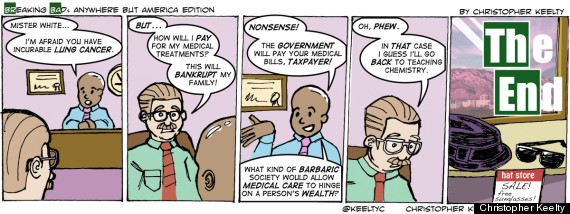
Forget everything else. Everything that came after. Possibly the most horrifying consequence of Walter White's meth empire was the midair collision of two airliners in Season 2. Those that died didn't get their turn on the show to become three-dimensional characters, but that was wholesale destruction of lives and families that never would've happened if Walt had been able to stay in his teaching job after his diagnosis. Which brings us to...

The Crumbling U.S. Educational System. We see two products of Walt's classroom in each episode: Walt and Jesse. Despite his years of service, Walt's cancer diagnosis is a death sentence – either for him, if he forgoes treatment, or for his family if he tries to pay for it – which speaks to the way teachers are treated today in terms of financial and social rewards. And Jesse was one of those kids that slipped through the cracks. Jesse may say "bitch" a lot, but he's a smart guy, man. Emotionally troubled, for sure, but only Walt and Jesse can make the blue. Lots of other folks try, but they're the only ones that can do it. Jesse had one of the most severe curses of our time: unrecognized potential.

The Failed War on Drugs. I wrote at length a few months ago about the transition from "The American Dream" being something based on hard work to something based on magical transformation. Walter White's personal transformation isn't particularly magical, but in his desperation at watching the hard work version of success evaporate, he turned to the other one, looking for a scenario where somebody could make $600,000 in about six months. And that opportunity was literally waiting for him on the street corner, under the watchful eye of his DEA agent brother-in-law.

But Don't Worry. None of this Applies if You're Rich. Elliott and Gretchen Schwartz have basically all the money in the world. They can easily pay for Walt's cancer treatment, and offer to do so. Walt's pride prevents him from accepting their offer – as Walt's pride prevents him from taking every road that doesn't lead to damnation. Walter and his family's struggles are a remote abstraction for the Schwartzes. They feel bad for him, sure, but they can never know the lived-in quality of Walt's desperation...or his resentment toward them. But in the end, Walt hands his money over to these two in order to get it into the hands of his family. They help Walt win, to get what he's always said he wanted, because as Walt says, no one would think twice about them handing over $10 million dollars to anyone they want. They are above the system.

External (Industry) Resonance

Any debate about Breaking Bad's place in the television pantheon is necessarily subjective. But it lies at the crossroads of many objective, substantial changes to what's going on in television now.

The Golden Age of Television. That's what folks are calling it these days. But I haven't seen The Wire, and I only saw the first season of The Sopranos because that's all my college roommate had on DVD. Didn't see Weeds or Nip/Tuck or Dexter, either. That's because those shows all aired on premium, subscription-based channels I can't afford. AMC broke that mold with Mad Men, and that show's success paved the way for Breaking Bad ever getting it's shot. But the knock on Mad Men was always that it was a critical and awards-season darling that never brought in the numbers. Each season's finale scored fewer viewers then its premiere, topping out at about 3.4 million viewers. Breaking Bad brought the numbers, though. It brought the darkness, too, which not only made similarly dark AMC shows possible, but also darkened up other networks' fare, like USA, who used to live by the adage of a "fruit bowl" in every shot. Anybody watch the final season of Burn Notice? That was some bleak shit, right there. Before the ratings and cultural success of Walter White's downward spiral, I wouldn't have thought such an ending was even possibly for that show, and new USA additions like Graceland were darker and edgier from Day 1. AMC's position on the basic cable tier made larger and more diverse audiences possible. The big-four networks will follow suit, if they aren't already.

The Role of Technology (Netflix, etc.) in Viewership. Different people say different things about how significant the impact of Netflix was in terms of growing Breaking Bad's audience, but from my personal experience, I can attest that I would not have been glued to my TV tonight had it not been for the hours I spent with episodes of the show on Netflix. The fact is, before the Season 5 premiere, the show's biggest audience had been around 3 million viewers. Season 5.2 premiere = 6 million. Series finale? North of 6.6 million (Correction: 6.6 million was for "Granite State." Series finale pulled north of 10 million.). Those are revolutionary numbers both in terms of growth and in terms of non-sports basic cable. Other shows have been in the same neighborhood (Burn Notice beat the networks on Thursday night for a while with around 7 million viewers) but none have followed this trajectory. Only Netflix has their internal numbers, but they have said that their analysis of how people watch popular television shows using the service (*cough* Breaking Bad) gave them the confidence to invest hundreds of millions of dollars in shows like House of Cards, Orange is the New Black, and the fourth season of Arrested Development. If you read the Vulture article I linked to above, you'll see they don't want to give Netflix too much credit, and spend a lot of time talking up DVR ratings. In the same way that The Office was able to stay on the air because NBC started taking iTunes downloads into account, other shows are seeing their chances at staying on the air improve as delayed-viewing numbers for shows like Breaking Bad swell the total audience far beyond what the Nielsen overnights are able to quantify.

So that's it. Now, let the books be written.

Poor Andrea.

Tuesday, May 14, 2013

Spurs to Spandex: Why Westerns Died and Superheroes Fly

In his only DVD commentary, which accompanies his 1950 movie Winchester '73, Jimmy Stewart was asked about the enduring popularity of Westerns. In his own words, Stewart answered that he believed the Western was the essential version of the American identity, that it totally encapsulates the pull-yourself-up-by-your-bootstraps, hard-work-makes-anything-possible American ethos. He believed that to this day we had maintained a frontier mentality, and in retelling the story of the United States' westward expansion we continued to tell stories that spoke meaningfully to our present-day lives. And for that reason, screen legend Jimmy Stewart felt the Western would remain enduringly popular for as long as people made movies.

Sorry, Jimmy.
Jimmy Stewart
"Well, this is what I think of YOU!"
For the last decade or more, there's been a new sheriff in town, and he wears spandex instead of spurs. And he can usually fly. And more often than not, he's super-well coiffed and bullets pretty much just bounce off of him. Because he's a superhero. I believe this shift in the genre balance is more meaningful than just a simple evolution of tastes. First, I think Hollywood has yet to understand (but is starting to) that "Superhero" has become an actual genre, and with that comes a tremendous degree of latitude that film executives are still unwilling to exploit, but that a market exists for. But second, and more importantly, I think this evolution in genre preference is actually a response to a much larger cultural shift that has changed the fundamental definition of what it means to be an American.
Captain America
"Pretty sure I'm still what it means to be American, bud."
In many ways, Westerns and Superhero Movies are identical. They are both action/adventure-oriented stories that 1) celebrate the "individual" as a type/archetype, 2) exist in a reality outside of the audience's own (past/future/alternate present) and so are essentially fantasies, and 3) are primarily concerned with the intersection of violence and power. While some movies are overtly and explicitly concerned with that question (The Man Who Shot Liberty Valance and Spider-Man, for instance), both genres are fundamentally undergirded by the push-pull between violence and power. In the Western, it's your outlaws and scheming land-grabbers pitted against the homesteader or lawman, and both sides are pretty much outfitted with the same gear -- your six-shooter and Henry rifle, or something similar. For Superhero Movies, it is generally the massive, superhuman power of the hero pitted against either the massive, superhuman power or the mechanical product of the massive, superhuman brain of the villain. It's the same struggle, but played out with different toys against a different backdrop. Both sides possess the tools of violence, but the struggle is between whether to use those tools for good or ill.

In the 21st century, then, we prefer our stories about outliers caught up in the battle between good and evil to be clothed in more capes and fewer chaps. More explosions, fewer horses. More stardust, less, well, actual dust. A quick look at BoxOfficeMojo bears this out. The box office-tracking site lists 55 Superhero Movies released since January 1, 2000, and only 32 Westerns in the same time period. That's not a tremendous difference, but take a look at the highest-grossing Western of all time, Dances with Wolves (yep, really), and its lifetime theatrical gross of $184 million. BoxOfficeMojo lists 18 Superhero Movies that have all eclipsed Wolves, all but one of which have come out in the last decade. Dances with Wolves came out 23 years ago. Even adjusted for inflation, there are at least seven Superhero Movies released since Wolves that have left it well in the dust.

If this is the case, if Superhero Movies have established themselves as their own genre and have taken the place of the Western, what does that mean for filmmakers and fans? A lot, naturally, but until the people who greenlight movies are hip to this transformation, we're not going to see much innovation. We can look at the incredible breadth of stories Westerns provided as a possible indicator of things to come. Tables were turned, where we began to see antiheroes and were asked to invest in the story from the "bad guy's" perspective, we saw stories of smaller lives touched by much larger struggles playing out around them, allegories for cultural and religious struggles, broken people forced into the hero mold and asked to do something beyond themselves, fringe voices telling familiar stories in entirely different ways, comedies, etc.

"But wait!" you may be saying, "We've already seen all of that in Superhero Movies!" Right. Because a genre establishes a set of tropes and the storyteller's creativity rearranges those pieces into something new within familiar boundaries. It's what allows audiences to experience something new while also getting exactly what they expected. The hang-up right now is the familiar fear-based decision-making process inside of Hollywood. Until a broader way of looking at this type of movie takes hold, the response you're most likely to get to a new idea (especially if it doesn't involve a pre-existing character, like, say, Stretch Armstrong...or Aquaman) is "Well, didn't such-and-such movie already do that?" I've run into this both as a writer and working in studio development. One case in particular involved a superhero comedy script that a manager sat on because somebody "already did a superhero comedy and it tanked," only to have the script for Kick-Ass come along a few months later and step into that gap.

Is it possible that a Superhero genre isn't large or diverse enough to contain that many stories, though? No. We have 80 years of superhero comics that refute that pretty definitively. Like anything, the quality of the storytelling will usually win out, especially as the market becomes more mature. I do not believe it can become saturated in any real sense, but expectations have to be adjusted. Not every movie with a cape or a costume will make $100 million. Chronicle didn't cost much, didn't have a huge marketing push, but it gave audiences a new twist and did well, despite not coming from a pre-existing property. With successes like that, and with the emergence of independent filmmakers stepping into the waters with films like the little-seen Super, I expect Hollywood will begin experimenting a little more, inasmuch as it ever really allows experimentation.

Why this surge in superhero popularity? After all, we've had superheroes in comic books since the 1930s, and superheroes like Flash Gordon in films since about the same time, but they never enjoyed the same broad-based appeal that they're seeing now. Imagine walking into Bob Evans' office at Paramount in 1972 and pitching The Avengers why don't you? I'll argue that this new swell in popularity is because the Superhero story, much more than the Western, has become the quintessential American story for today's audience. This is the genre -- for all of its fantasy -- that speaks most directly to our lives today.
The Avengers Godfather
"They're going to make him some shawarma he can't refuse."
It comes down to how we answer one, giant question: What really is the American Dream? As far back as Fitzgerald, we pretty much knew it wasn't simply amassing great gobs of money (although a few years after Gatsby we'd face a long American Nightmare when great gobs of money suddenly evaporated, and then we'd do it all over again 90 years later). The Declaration of Independence outlines the familiar "life, liberty, and the pursuit of happiness," where the emphasis is on one's ability to pursue something that might make them happy without facing barriers based on race, creed, or color. We've done a pretty shaky job of that in the last 250 years, though, and these days people have pretty much figured that out. If that version of the American Dream has become so mist-enshrouded and distant that it may as well be a literal dream for all but a very few Americans, then what has taken its place? Hard work doesn't pay off like it used to. Many of the hardest working people in this country can barely keep a roof over their heads, and people who have played by the rules and "done everything right" can find themselves out of work for years and unable to repay medical or student loan debts.

Superheroes tend to have a couple of things in common: they exist in a primarily urban landscape, and they believe in magic. Just like their audiences. As a culture, we are far more likely to believe in magic today than in hard work, and not without reason. Sut Jhally, one of the foremost media scholars in the U.S., really doesn't like advertising. In Advertising and the End of the World he argues persuasively that the entire consumerist model is based on a belief in the magically transformative abilities of products. Listen up, guys, drinking poor, mass-produced beer will make beautiful women attracted to you. Buying this or that article of clothing or car will make your sad, dull life exciting and fresh! This bottle of household cleaner will unleash a muscular bald man who will scrub your floors! You get it, you've seen TV.

But reality has begun to approximate this magical aspect of our daily narrative. Peter Parker, Steve Rogers, Harry Potter, Carrie Underwood, Jennifer Hudson, Snooki, and all of the Kardashians share one thing in common: they were unknown, regular people who had something inside of them just waiting to be discovered and exploited on a larger stage. They were destined for greatness. We watch reality TV and Superhero Movies wishing that someone would see past our own humble situations, recognize our latent talent or nobility, and lift us out of our everyday lives. I mean, tell me that there's no magic in a world where a woman can make a sex tape with a mediocre rapper and then become so much more famous than that rapper that the entire rest of her family becomes famous. Tell me that's not magic.
This one. This one is like, the most famous one ever.
I don't think there's an antidote to this type of thinking, any more than there was an antidote to the glorification of a genocidal period of national history. In time, we become more educated, we perceive more of reality, or different aspects of it, and these observations inform our view of ourselves, both individually and collectively. We then seek out stories that speak to us. Today, and for some unknown period of time stretching out ahead of us, those stories will involve gods and goddesses...er, I mean knights, er...cowboys and Indians?

Oh, right. Superheroes.

There is probably a much better, longer, and more fully researched and articulated version of this idea that I could've written if I'd had a bunch of time, but you do what you can.

Wednesday, September 26, 2012

Cult Films 101: The Worst Movie Ever Made

So far in our survey of cult films, we've tried to zero in on films with merit, however modest. But there's a cottage industry out there -- and let's be honest, it's far more mainstream than most actual cult films -- built around the idea of The Worst Movie Ever Made.
medieval torture chair
Strange there hasn't been as much debate about
The Worst Chair Ever Made.
But what does "The Worst Movie Ever Made" even mean? The most inept? The least coherent? Something that advances a morally repugnant ideology (the highly praised Nazi propaganda film Triumph of the Will, for instance)? The most insulting to the audience's intelligence? It's a fraught question I'm not entirely sure I know the answer to, but let's jump in.

Best-Loved Worst Movies

Troll 2
The subject of the documentary Best Worst Movie, Troll 2 is not the sequel of Troll, nor does it actually feature any trolls. But while bad, it ranks low on the utter incompetence scale. It had a decent budget and was shot by film professionals. They did not, however, tend to speak English, so the resulting dialogue spoken by the non-professional actors is pretty stilted and unintentionally laughable. It's not so much that it's inept, it's just that every single creative decision made in the movie was terrible.

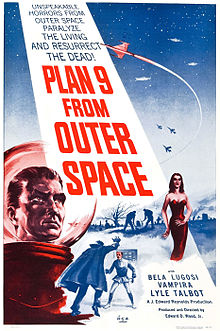
Plan 9 from Outer Space
I talked about this Ed Wood movie as an example of the "Guilty Pleasure" variety of cult films. It's a bad movie, particularly in the acting and set-decoration departments, but it gets a lot of unfair knocks against it, such as day and night continuity errors when a lot of films in the 50s still used the time-honored day-for-night photography trick because of slower film speeds. It's my favorite film on this list.

Manos, The Hands of Fate
Also the subject of a documentary, this time called Hotel Torgo, Manos, the Hands of Fate was made on a bet by a fertilizer salesman, was forgotten after a single screening in El Paso, Texas, but rose to prominence after receiving the Mystery Science Theater 3000 treatment, earning distinction as one of the worst movies the crew had ever seen. But there are some memorable elements, like Torgo, the weird satyr servant of The Master, the Master's ceremonial robes with giant, red hands on them, and a protracted fight between ladies wearing granny panties. Look, I'm not saying it's good, I'm just saying you won't forget watching it.

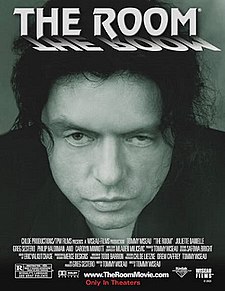
The Room
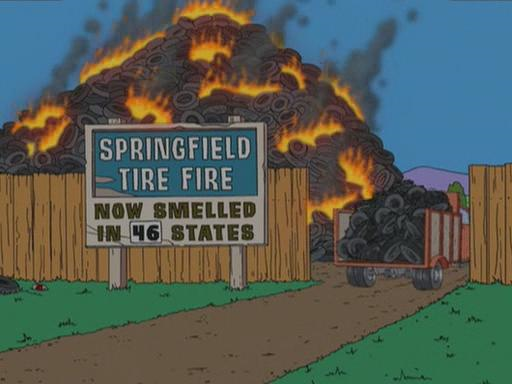
This train wreck has been a fixture in Los Angeles ever since I moved here, but much like the Springfield Tire Fire, its stink has spread. It ranks high -- so, so high -- on the utter incompetence scale, and gained notoriety for it. For years now, it has regularly sold out midnight screenings, and has even been shown at the American Film Institute. It just goes to show, kids, if you make your movie, and make it bad enough, people will take notice.

Simpsons - Springfield Tire Fire
Only slightly less offensive than seeing writer/director
Tommy Wiseau naked in
The Room.
Maybe Actually the Worst Movies

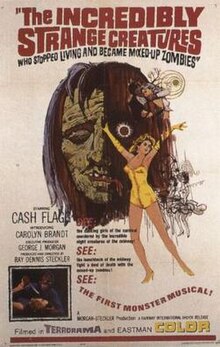
There are only two movies I would not willingly endure again due to their utter and complete awfulness. There are other movies I'd rather not see again because of their content, but these two movies are the cinematic equivalent of that single tear that leaks out of your eye while the dentist scrapes your gums to shreds with that little metal hook they have.


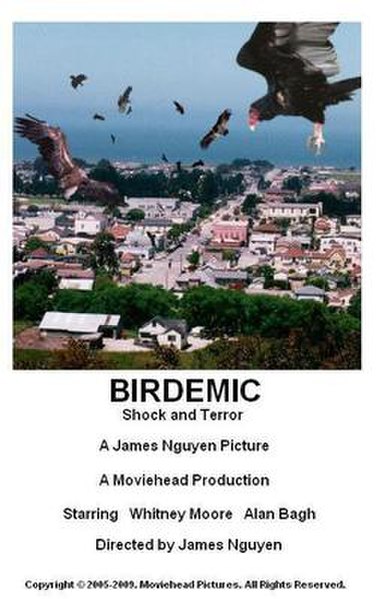
Birdemic: Shock and TerrorThe Incredibly Strange Creatures Who Stopped Living and Became Mixed-Up Zombies 

They continue to arm-wrestle in my brain over which is the worst movie I've ever seen.

They Really Should Have Known Better

Hollywood, bless its little Botoxed heart, will occasionally line up its utterly unparalleled storytelling, production, marketing, and technical skills behind a pile of poo that somebody along the line should've smelled, scooped, and disposed of way before anybody had a chance to buy a ticket to the thing. Usually, these movies result from an actor/producer's inflated ego, a contract with a star that has to be honored with a movie release, no matter how bad the finished product, or just terrible, terrible luck. As Bill Murray told Elvis Mitchell, nobody wants to make a terrible movie. Even the terrible ones require long hours and tremendous amounts of work. When it comes to Hollywood misses, the end product often looks beautiful and is technically excellent, but the story, script, utterly uncharismatic acting, or confounding direction make it largely unwatchable. I personally find these the least enjoyable "bad" movies because they are often dishonest and cynical money-grabs by people capable of much, much more. But to each his or her own...

The usual suspects in this category are too numerous to mention, but include Battlefield Earth, Catwoman, Freddy Got Fingered, everything by Uwe Boll, and Ballistic: Ecks vs. Sever.

I believe that, ultimately, the Worst Movie Ever Made is one in which you can find no enjoyment whatsoever. And to be honest, that's hard to do because when it comes right down to it, we're still watching movies. Things could be worse.

Friday, September 21, 2012

Cult Films 101: The Corman

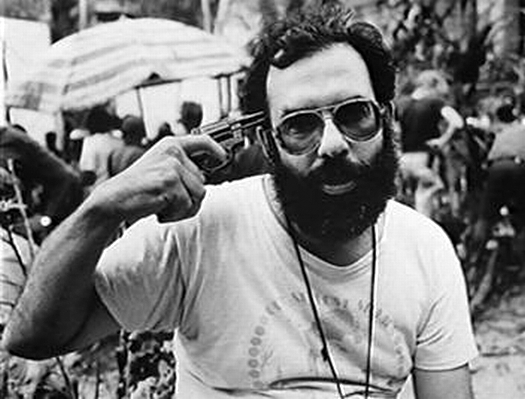
Francis Ford Coppola feels Happiness is a Warm Gun
I swear by this mighty beard, Vance, if you don't shut up about
Dementia 13 already, the Apocalypse is coming right the f*$% now.
Welcome back to Cult Films 101, where this week's film is Dementia 13. This is a b-horror movie about some folks jockeying to inherit a fortune but instead meet untimely ends at the blade of an axe murder, and it's an example of the third main type of cult film...The Corman. Made in 1963, Dementia 13 was written and directed by Francis Ford Coppola. Now, from 1972 to 1979, Francis Ford Coppola had about as good a run as any director has ever had, cranking out four consecutive, unassailable film classics -- The Godfather, Parts 1 & 2, The Conversation, and Apocalypse Now. But ten years earlier, like so, so many fimmakers of his generation, he was working for Roger Corman.

If you ask my honest opinion, I'll tell you that Dementia 13 is a good movie. It manages a not inconsiderable bit of atmosphere, has a number of memorable scenes, inventive camera work, and it clips along well enough for 70 minutes to keep you entertained. But let's be honest, the real draw here is that this was Francis Coppola's first credited directing job.

This trait is the unifying factor for The Corman category of cult movies. They could be good, bad, or indifferent, but they launched the careers of filmmakers who subsequently went on to make remarkable work. Most often, these movies will have been made under extremely tight budgets and restrictive production circumstances (often both, and for Roger Corman), and sometimes those conditions will have gotten the better of the movies and made kind of a mess of them. But we watch hoping for that flash of genius, the little recognizable spark that, with hindsight, we can point to and say "That! There's the birth of something amazing!"

William Faulkner in Hollywood
"Dear Ma - I made it to Hollywood, where shirts are
optional but high socks are totally required."
At the University of Texas, my alma mater, the Harry Ransom Center contains many, many treasures. One of them is a letter a young William Faulkner wrote to his mother. It is the first piece of writing in which appears, fully formed and breathtakingly, the style that is now recognizable as William Faulkner's "voice."

When we watch films like Coppola's Dementia 13, Christopher Nolan's Following, Wes Anderson's short film Bottle Rocket, Katherine Bigelow's Near Dark, or watch a 20-year-old Jack Nicholson in The Cry Baby Killer or Crispin Glover and Sean Penn in The Beaver Trilogy, we're looking for the joy of that discovery.

And also, it makes us feel better to know that Francis Coppola started with Dementia 13 and Battle Beyond the Sun before becoming a genius. It gives us hope. Because if everybody had to crank out a Reservoir Dogs or The 400 Blows right out of the box, aspiring filmmakers everywhere would be burying their dreams under a stepping stone in the back yard as we speak.

Tuesday, September 11, 2012

Cult Films 101: The David Lynch

Welcome back to Cult Films 101, where we are continuing our discussion about the three main types of cult films. Last week, we discussed the Guilty Pleasure -- films that are objectively bad, but nevertheless have something worthwhile that redeems them or makes them entertaining. This week, we will discuss the second type of cult film, the David Lynch, films that take an unconventional approach to narrative or subject matter.

This week, we'll be screening Joel and Ethan Cohen's 1998 film The Big Lebowski.

When we think of cult movies, many times we think only about films that are "gloriously bad" or "so-bad-they're good." The image of Edward D. Wood, Jr. comes to mind. The other side of the coin, however, has a picture of David Lynch on it. See, films made by folks like David Lynch are far from incompetent, like our Guilty Pleasures. They are in fact staggeringly accomplished in their execution. It takes an uncommon control of filmmaking tools and vernacular to be able to tell an utterly idiosyncratic story in a way that makes it comprehensible to a mass audience.

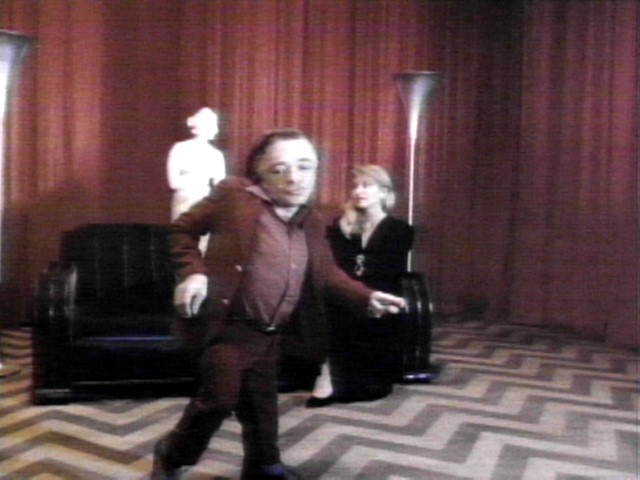
In the Black Lodge, you will probably see midgets, and they may dance.
But they'll definitely talk backwards. So you just need to deal.
For those of you who have watched the entire run of Twin Peaks (and for those of you who have not, what are you waiting for?), consider for a moment that the final episode, in which Agent Dale Cooper visits the Black Lodge with all of its midgets, backwards talking, and general level of Dali-esque insanity, aired in prime time on a major American network before most people had cable. Stop and really think about that. This is clearly a piece of art that is in total control of its mode of expression, and is not at all for everybody.

That brings us to this week's film, The Big Lebowski, which has spawned a festival, several books, a spike in the sale of White Russians (the drinks, not the humans), and at least one religion. In this film, which appropriately tanked at the box office (an unwritten rule of cult films), the Coen Brothers essentially remake the 1946 Humphrey Bogart/Lauren Bacall movie The Big Sleep, except with pornographers, Vietnam vets, feminist artists, cowboy narrators, bowling, pedophiles, In N Out Burger, and 20+ years of insider Hollywood stories. What about this doesn't spell "Box Office Goldmine"?

Clearly, we have strayed off the beaten path, here. But to put all of this stuff in a pot and make a gumbo that doesn't just immediately make you ill, the Coen Brothers required total command of their filmmaking faculties. They subsequently tried more straightforward remakes, like The Ladykillers and True Grit, which were substantially less effective films, so this is no mean feat they pulled off. What they were able to accomplish was to use Hollywood studio money to tell an extremely personal story (i.e., one that they found interesting with no assurance anyone else would), that eventually found an audience with which it could resonate.

And resonate, it did. The Big Lebowski is a David Lynch par excellence, and here are three keys to its success:
  1. It was made by competent, professional filmmakers, who
  2. Possess a clear and idiosyncratic vision, and
  3. Did not set out to make a cult film.
That last one is key. People love cult films, and sometimes they try to make them. This is usually a mistake. If you set out to make a cult film, you are almost inevitably doomed to fail, because:
  1. You don't know what you're doing, and
  2. You're spending your own money, and
  3. You're far more likely to make a Guilty Pleasure than a David Lynch, even if you're successful
These are problems. But fear not, next week we will discuss the kinds of films young filmmakers may hope to accomplish, given their own limited means.


Friday, August 31, 2012

Cult Films 101: The Guilty Pleasure

Welcome, thank you for coming. Please take your seats, we have a lot to cover. Today, we'll be screening Plan 9 From Outer Space, which many of you have heard is The Worst Movie Ever Made. Then, by a show of hands, we will select either The Big Lebowski or Bubba Ho-Tep as the film for next week's screening.

In this course, we will look at three types of films that generally achieve "cult" status:
  1. Films whose reach exceed their grasp, and spectacularly so (the Guilty Pleasure)
  2. Films that take an unconventional approach to narrative or subject matter (the David Lynch)
  3. Films that become significant for reasons beyond their intrinsic merit (the Dementia 13)
First up, Plan 9 From Outer Space, written and directed by Edward D. Wood, Jr. This film, produced in 1959, was popularized in 1994 thanks to the Tim Burton film Ed Wood. This film is not -- not by any measure -- the Worst Movie Ever Made. It's not even Ed Wood's worst film...in fact, it's likely his best. Have any of you actually seen Glen or Glenda?, because that thing's just a train wreck.

Plan 9 is a prime example of your Type 1 Cult Film, the Guilty Pleasure. Notice the way the cardboard graveyard wobbles as people walk through it. Notice the blank wall that stands in for an airplane cockpit and the lovely curtains that form the interior of an intergalactic space cruiser. Wooden dialogue delivered by non-professional actors. It's all here. But also, notice the sincerity of all involved. Most of them genuinely believe in what they're doing here. They're excited just to be making a movie. We empathize with them, because we understand the joke, but they don't seem to. Watching them move and speak like no human beings have ever moved or spoken in real life is kind of touching...maybe even a little heartbreaking, isn't it?

But not everything about this film is terrible. The lighting is fine. The editing is consistent and looks reasonable enough. And the idea of "solarbonite," sunlight molecules that can be weaponized, is actually sort of interesting and taps into the late-50s zeitgeist. There are many films in the Guilty Pleasure category of Cult Films that cannot make even these modest boasts.

This brings us to the epic question of why do we bother with Cult Movies? There are some laughs in your Guilty Pleasures, sure, but intentionally funny movies are bound to have more. Watching great actors or directors in their first films has novelty value, but their later films are by far the greater achievements. So what gives?

Three reasons. (And these will be on the final.)
  1. They are Outsider Art. Whatever the type of Cult Film, these movies are all created by either amateurs with no connection to the mainstream filmmaking establishment, or they represent film professionals intentionally subverting established forms. Both broaden the scope of human experience portrayed on film. In many ways, Manos: Hands of Fate, however abysmal in its technique, is a more honest reflection of real life in America in 1966 than something like Who's Afraid of Virginia Woolf? because of what's not onscreen. The simple fact that it exists illustrates that the Hollywood Dream reached even to El Paso, Texas, and beyond, catching fertilizer salesmen, local theater actors, retired judges, and other regular people up in its mystery and promise. (Read about the effort to restore Manos from its original film elements here and here.) 
  2. They are life affirming. These films, especially the Guilty Pleasures, are full of pathos. We instantly feel for these people (not the characters -- good lord, no -- but the actual people making the films), and we root for them. We understand that they have no idea what they're doing either in front of or behind the camera, and we wonder how we'd respond under similar circumstances. Because of that, the part of us that always roots for an underdog wants to see them and their celluloid babies succeed in spite of themselves.
  3. We just like them, and that's totally ok. No explanations or apologies necessary. Sometimes, we just enjoy dumb stuff because it makes us happy.

Should we discuss The Big Lebowski or Bubba Ho-Tep next week? Let me know in the comments or on the Twitter @vkotrla.

Monday, July 23, 2012

Guest Post: Inside "Pottermore"

Raighne Davidson's nerd specialties are Harry Potter (naturally), The X Files, Star Trek, 50s sci-fi, and Sherlock Holmes (retro nerdery!). She recently undertook a voyage through Harry Potter and the Sorcerer's Stone on Pottermore, the new online interactive Harry Potter destination, and reports back.

First of all, Pottermore looks beautiful. Really beautiful. The colors are rich (and I’m on a laptop with a regular screen, nothing fancy), the texture is deep, and the illustrations pop off the screen. Please don’t crucify me for this, but I love these visuals so much more than Mary GrandPre’s original book illustrations. They are a beautiful, velvety representation of the world of the books – you just want to crawl inside them and stay there.
Platform 9 3/4: Your gateway to murder, persecution, and terror! Exciting!
Here’s how Pottermore works: you go through the standard sign up/confirmation email/log back in stuff, but when it comes to choosing your screen name, you get offered these wonky compound non-words with numbers as your only options. Part of me understands why this is (there will be no SnapeLove69 or OneEyedMoonyPants14 on this site!) but receiving the odd pairings and having that be it, no ability to change or request more options, eh, well, let’s just say that is my least favorite part of the whole experience.

You start off, quite properly enough, in Chapter 1 of Sorcerer’s Stone. Everybody wants to just sign up and get sorted into their house at Hogwarts, but hold onto that Thestral, fanboy, all in good time. You read about Privet Drive and you see Hagrid in the sky on his flying motorcycle delivering Baby Harry while Professors Dumbledore and McGonagall wait on the street. As you move through the chapters, you visually hit all the high points: setting the snake loose at the zoo, receiving the Hogwarts letter, moving to the shack in the middle of the sea, the arrival of Hagrid. Once Hagrid joins you, however, the experience becomes much more involved. He takes you to Diagon Alley where you visit Gringott’s and receive your wizard gold. You then have to purchase all the items on your school list before you can proceed. This includes your wand, of course, and even though you can’t hold it in your hand, you do think your little mouse pointer has been chosen by this particular wand to be yours and yours alone.

After a quick trip on the Hogwarts Express, you arrive at the castle to be sorted (which is what everybody is waiting for). In a nutshell, you answer several questions that I think used to be a personality quiz in a magazine somewhere. And there are more of them than I expected. After the fourth or fifth one, I thought, wow, this is thorough. At the end, the Sorting Hat thinks awhile and pronounces your house. I know the Hat is supposed to take your choice into account, but it doesn’t ask here. I was sorted correctly. I will not tell you where. Let’s just say I know I ended up where I belong.

Once classes begin, the interactivity continues. You learn spells and can duel to win house points. You can brew potions (which can sometimes be difficult), also to win house points. At the end of the year, all of the collective house points are totaled and a House Cup is awarded and the Great Hall is decorated appropriately. Let’s just say I was very happy with the colors in the Hall at the end of last term...

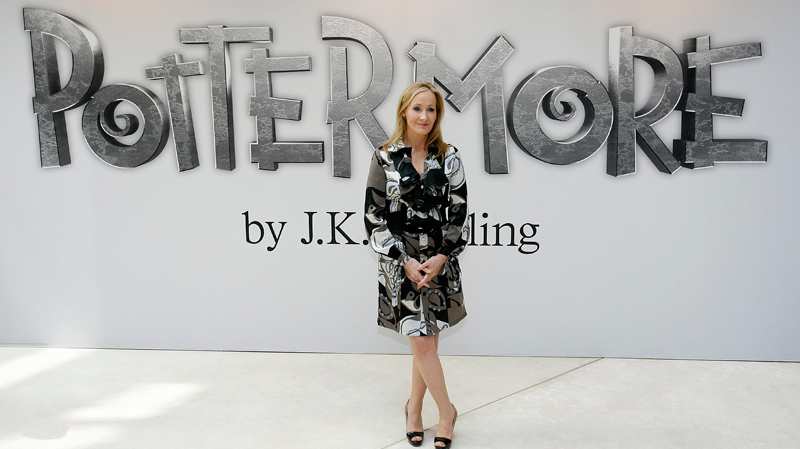
Inside Pottermore, JK Rowling explains how she transfigured Matthew Lewis
from bumbling pre-teen into Clive Owen, Jr. 
The "more" in "Pottermore" refers to the fact that J.K. Rowling has added new information about the world of Harry Potter that you can unlock as you move through the chapters. This is, hands-down, my favorite part of Pottermore. Digging deeper and learning more background on the people and things you love in this world is so fascinating. Rowling also includes some info that is utterly unique, like the list of ‘The Original Forty.’ It’s her original list of forty student names from Harry’s year. We only see the names themselves, but in Rowling’s notebook, there are also notations of their parents and which house they were sorted into. There are also extended descriptions and backgrounds on characters themselves. I loved reading about Professor McGonagall – from the development of her name, to the struggles of her mother, to the men she loved – I read it all and still wanted more.

I think that statement right there is the reason everything to do with Harry Potter has been so utterly successful. I still want more. A single experience is not enough. We read the books and then we want the movie. We see the movie and we want to read the books again. We experience the books in a new way as part of an interactive website and want to move to a castle in Scotland that is Unplottable. Then we catch ourselves telling our children things like, “No, the proper way to mount a broom for flying is like this...”

We, the collective fans of all things Potter, wanted more. So JKR provided. Pottermore. I will keep coming back. For more. Always.

Friday, July 20, 2012

Guest Post: The Con Away from the Con

Dr. Michael Newhouse-Bailey brings Nerds of a Feather our first actual boots-on-the-ground reportage in this wrap-up of Comic Con 2012. The good doctor's nerd specialties are comics, anime, and the Simpsons. Also, even though he's a little out-of-practice, he can still embarrass you on the tennis court. Take my word for it. - Ed.

It is the time of year where I weed through a giant bag of stuff to sort out what I want to keep, what my family gets and what I mail out to my friends. I am talking of course about San Diego Comic Con.

The author, with sad Yo Gabbite.
My favorite thing about Comic Con is that everyone attends for different reasons. While this year marks the final installment of the Twilight films, the SDCC had the Twi-hards, the fanboys, the fangirls, the comic collectors, the toy collectors, the autograph seekers and more. If you are passionate about anything, you will fit in and can have a great time among the 140,000 plus people. I attended for the fourth consecutive year and had another great time with my brother and my friends.

Through both on- and off-site events I was able to gain insight into some true creative geniuses. Whether it was the King of the Con, Joss Whedon, at the Nerd HQ (a little about that later) or Joe Hill and Gabriel Rodriguez discussing their comic Locke and Key, this type of access usually isn’t granted for a fan. I learned how Joss builds human connections between the viewer and the character and that Joe enjoys seeing his characters have flaws and make mistakes. 

Observe: a Fringe hat.
See what I did there?
I was fortunate enough to witness the Community panel, the Firefly 10th anniversary panel (which we linked to here - Ed.), and the Fringe panel. Two of the three previously mentioned panels included tears and all felt like a huge thank you to the fans from our favorite shows. The sheer emotion that is felt on stage by the actors, the swag and the exclusive clips (at least until later that night) led to a great time. My favorite item of swag had to be the Fringe hat that had all of Hall H ready to “observe” the final season.

Enough about my personal experience, what about SDCC as a whole? This year there was even a greater trend to move the fans away from the Convention Center. Highlighted by Zachary Levi’s Nerd HQ, you couldn’t walk around the Gaslamp without bumping into something Comic Con related.

I hope Yvette Strahovski's
inside.
The Nerd HQ is the brainchild of Zachary Levi of Chuck fame, and brings some of the biggest names from the Con into an intimate setting and a no holds barred Q & A. In addition, there were game demos, raffles, merch, a photo booth and just all around good times. Through photo ops, donations and the conversations, the Nerd HQ raised $140,000 to Operation Smile. Conversations included Twilight, Dr. Who, Joss Whedon, and Nathan Fillion to name a few. In only its second year, this has become one of my favorite things about attending SDCC.

What surprised me the most was The Walking Dead Escape, an obstacle course through PetCo Park infested with zombies. Four of our group braved the wandering herd and climbed, ducked, crawled and jumped over obstacles as we tried to make it through without getting infected. It was a little pricey, but in hindsight, is one of my top moments of the Con this year.

Twitter proved valuable once again. We were able to locate some Django outlaws and get our merch tokens, compete in a bat signal search to win an advanced screening of The Dark Knight Rises (I won a limited edition Mondo poster in the contest!) and be entertained through the nerd panic that fellow con-goers feel as they wait in a line they are sure will never end, wonder about what exclusives are left, or brag about a celebrity encounter.

As I look back on another successful year I can’t help but feel tired. My kids think it was worth it because I returned with prizes, but I think it was worth it as it is the opportunity to spend time with my friends in mobs of sweaty people. Pre-sale for next year, only open to 2012 attendees, begins next month so if the internet gods are kind, I will be attending for a fifth time in 2013.

Time for the coveted announcement of the first annual Newhouse awards!

Best Panel
Firefly 10th Anniversary – even though I am not a huge Firefly fan (I know I shouldn’t admit this, I like the show, I just don’t think it’s the greatest thing ever), the panel was really heartfelt. The look on the faces of the actors when they saw the 4,000 plus giving them a standing ovation was worth it alone.
Runner-up
Fringe/Locke and Key – Fringe was also really heart felt and full of humor. Joshua Jackson yelled thank you at the end and the cast took a bow as they prepare to wrap up the series.
Locke and Key may be the best book published right now. Joe Hill and Gabriel Rodriguez are hitting on all cylinders as this book prepares for the final chapter.

Mondo Dark Knight trilogy poster.
Best Swag
Fringe Hat – The theme of the panel and the upcoming season are they are coming. They referring to the observers. If you attended in Hall H then you got your very own observer hat.
Runner-up
Mondo Dark Knight Poster – If you have ever tried to purchase a Mondo poster online you know they sell out in no time at all. I was extremely lucky to win this poster and can’t wait to put it on my wall.

Best Fan Access
Nerd HQ – Zachary Levi has done it again. Seats to conversations are limited to around 240 and fans can ask whatever their heart desires. Add in random celebrity sightings at the HQ (I saw Larry King!) and you have an amazing off-site experience

Best Off-Site
Zombies: Big baseball fans.
Who knew?
Tie: The Walking Dead Escape and Nerd HQ – I already have mentioned the Nerd HQ a lot (I really like it and they raised $140,000 for Operation Smile, so sue me!), but the Walking Dead Escape was great. They used the makeup team from the show to ensure the zombies looked great and the course was a mix of fear, humor and was a good challenge to complete. If you were infected you could choose to be “shot” and left with a bullet hole tattoo on your forehead. You were really immersed from start to finish.

Best Exclusive Footage
Community – they showed a fan made clip that showed how much the cast of Community is appreciative of their fans and the bond that the two share. It was great feeling like a part of their family.
Runner-up
Wreck-it Ralph – They showed around 9 minutes of the movie and I couldn’t be more excited. I feel this movie was made for me and my son.

Tuesday, May 22, 2012

Microreview [book]: The Player of Games


The Meat

The Culture is a society without scarcity, expertly managed by hyper-intelligent AI (Minds) and populated by both long-living and biologically advanced humans and other sentient AI (ships and drones). The humans are ostensibly the center of things, but do the least of the heavy lifting, and spend most of their time living it up and having fun. There are no class divisions in the Culture, no racial injustice, no religious intolerance and--crucially--a fluid, changeable notion of gender and sexuality that obviates discrimination along those lines.

Clearly the Culture is Banks' utopia, a place without the problems that dog our own world. If that was all there was to it, though, these novels would be really boring. Thankfully, Banks has situated the Culture within a galaxy full of other societies, and his novels largely explore the interactions between the Culture and its neighbors, most of which can be described as "not good." Utopia though it may be, when the Culture gets involved in foreign entanglements, it looks awfully neo-colonial and paternalistic. This is, in the end, a direct result of the Culture's "superiority" over its neighbors, and Banks is a sophisticated enough writer to navigate us through the murky moral terrain this implies, offering more questions rather than neat, tidy answers.

THE PLAYER OF GAMES is the second installment in Iain M. Banks' culture series. It is not necessary to read the first, CONSIDER PHLEBAS, to enjoy this book. In fact, I'd actually recommend starting here, as THE PLAYER OF GAMES is a much better introduction to the series. Why? Here's why:

1. Readers get a clearer sense of what the Culture is, its internal social relations and how it deals with neighboring societies it deems "inferior."

2. The characters are fully-fleshed out, relatable and much more memorable.

3. The plot is actually quite simple, whereas in other Culture novels it tends to be complex bordering on opaque.

All of this will come to your aid when you read USE OF WEAPONS or EXCESSION, both of which are excellent books, but require a bit of background knowledge and contextualization to get through.

THE PLAYER OF GAMES centers on Jernau Morat Gurgeh, a champion game-player who has grown bored with his life of leisure. Enter Special Circumstances, one of the Culture's two clandestine services. Through some dirty tricks, they manage to recruit Gurgeh for a mission to the Empire of Azad, a highly stratified and downright oppressive society marked by extreme gender divisions. Why this particular playboy? Because social position and rank in the Empire are determined by the results of a grand contest, also called Azad. Special Circumstances figure Gurgeh might actually be able to win the game, and if so...well...I don't want to give up too much.

Bottom line is, this is about as good as the New Space Opera gets. I say "about" because USE OF WEAPONS is even better. But you should read this one first. It's well-crafted, well-written, memorable and thought-provoking--everything SF should be.

The Math

Objective Quality: 8/10

Bonuses: +1 for OMG space opera that's well written; +1 for moral ambiguity that makes you think more deeply about your own world, and the way people act in it--rather than just conclude that everyone's an a**hole; +1 for quirky little bits of humor that never seen trite or distracting

Penalties: -1 for Banks' occasional need to remind us that Azad is really really bad and the Culture is really really good, which rein in the more complex questions of moral universalism vs. relativism; -1 for, along those lines, the lack of sympathetic characters among the Azadians.

Nerd Coefficient: 9/10. "Very high quality/standout in its category."

[See explanation of our non-inflated scores here.]