Showing posts with label Sci-fi. Show all posts

Thursday, September 24, 2026

Review [Video Game]: Control Ultimate Edition by Remedy Entertainment

Control remedies my faith in its studio

Imagine that all rumors of supernatural/paranormal occurrences were not only real, but that they were processed and intensely researched in a secretive American government agency. Welcome to the Federal Bureau of Control. Unfortunately, an entity has infiltrated the highly elusive agency, possessing anyone it can get its hands on. If only someone could come and help cleanse the infection and seal the festering wound. Enter Jesse Faden, the new director.

Ever wonder what it would be like to walk into a federal agency and receive the best job in the house on your first day and with no qualifications? This is precisely how Control opens. Once Jesse collects the service weapon, she instantly becomes the director, no questions asked. While there are all sorts of weird things going about throughout Control, this odd transition kept me at arm’s length. An extremely secretive official bureau simply accepts whoever picks up the gun? I kept expecting people to question her, to refuse to serve under her, but no. You get the gun, you get the job. Once I pushed that aside, I could dig in more and enjoy the game.

The gun in question, or service weapon as it’s called, is one of the two main offensive options in the game. Throughout a playthrough, the player is able to unlock and upgrade six forms of this weapon (five in the main game, one from add-on content), from an automatic pistol form to a rifle; the service weapon services all weapon needs. The gunplay is fun, smooth, and rewarding, and opens up creative opportunities in combat. I do wish there was some kind of weapon wheel, so that I didn’t have to switch between weapon forms in the menu mid-combat, but for the most part, two guns at a time worked. The gunplay works as you would expect a third-person shooter to, but the game elevates when combined with Jesse’s paranatural abilities.


Jesse’s paranatural abilities come in the form of telekinesis and are a blast to wield. From launching objects around at enemies, to creating a shield from debris, to launching Jesse into the air—combined with the gunplay—Control’s mechanics create some exhilarating moments that are the true bread and butter of this supernatural romp. Blasting a shielded enemy with a telekinetically propelled boulder, leaping in the air, then quickly dodging to the side to avoid incoming fire, then finishing said enemy with a well-placed headshot before the shields could recuperate was so satisfying no matter how many times I’d pulled it off. Control does not just play well, it feels fantastic, too.

Though the gunplay rocks, the crouch/duck cover system is weak, and I sometimes got shot by enemies that shouldn’t have been able to hit me. Once I got the levitate ability (which comes later in the game than I would have liked), I barely used the crouching system, instead opting to shift between taller cover as quickly as possible.

Besides these weapon forms and abilities, the player can upgrade the power and ability of all offensive capabilities as well as modify them. Increase headshot damage for my rifle mod? Yes, please. Do I want to do 75% more launch damage? You know it. Upgrading the weapon forms and finding complementary mods that changed the way the weapon functioned was part of the driving factor for finding more mods. It’s a shame they never had a multiplayer mode; I could see it being a chaotic treat.


Control
definitely has a more cohesive story than Alan Wake, despite my initial misgivings about Jesse’s acceptance to the director position. In fact, there is an add-on (AWE) included with the Ultimate Edition that connects the universes of Control and Alan Wake, which helps lend context to what is going on over in Bright Falls. While it didn’t make me want to go back and play Alan Wake Remastered, it piqued my curiosity for the sequel. The supernatural elements of the story loosen the amount of suspension of disbelief necessary to pull through the crazier parts of the narrative. That said, sometimes the game takes risks with something silly or ambiguous, and it doesn’t play well, separating me from the experience. Other times, like the man forced to stare at a refrigerator or die, are hilarious and clever. Control has a mix of these moments. Sometimes Remedy creates vague mumbo jumbo for the sake of it because they figure they could get away with it with all the other stuff going on, and I just don’t like it. It doesn’t happen enough to ruin my experience, but is just enough to remind me why I didn’t like Alan Wake.

Exploration is great, and reminds me of some of my old favorites like Bioshock (structurally, not aesthetically). I read almost every collectible I discovered, though I wish I didn’t have to stand by the audio recordings to listen to them (some of them are quite lengthy). The world looks good and holds up well for a seven-year-old game. Some animations come off with a whiff of the uncanny valley, but nothing too severe. The environments themselves look great, some of the shining instances being those used to exemplify the striking lighting work and contrast Remedy excels at.


One of the few things I remember liking about Alan Wake was its soundtrack, and Control doesn’t push me away here. The sound work in Control is no slouch; from the music to the voice acting to the sound effects, the game does well on all fronts. The sound effects help make the paranatural abilities pop and assist in solidifying the pleasurable combat.

I’ll admit, it took me a while to boot up Control. I’ve had this downloaded on my console for a long time. Years, in fact. My adventures in Bright Falls certainly did their best to deter me, but I’m glad I finally gave in. Control isn’t perfect. There are some monotonous puzzles that remove me from the game occasionally, not to mention some of the story elements that don’t click (another game guilty of making me question whether some events of the game were real or imagined), though thankfully those were kept to a minimum. But on the whole, enjoyable exploration, gratifying gunplay, and a solid story make Control worth playing and even have me looking forward to Alan Wake II. With Control Resonant right around the corner, now is the time to check out this solid effort from Remedy Entertainment. Even if you don’t love the story, it’s hard not to enjoy the frenetic action.


The Math

Objective Assessment: 8/10.

Bonus: +1 for explosive, satisfying gameplay. +1 for quirky story.

Penalties: −1 for odd/vague narrative beats. −0.5 for some boring puzzles. −0.5 for poor cover/crouch mechanics in combat.

Nerd Coefficient: 8/10.

Posted by: Joe DelFranco - Fiction writer and lover of most things video games. On most days you can find him writing at his favorite spot in the little state of Rhode Island.

Wednesday, July 9, 2025

Film Review: Lost in Starlight

 This Korean animated film on Netflix straddles rom-com and space adventure


Lost in Starlight begins on Mars, with an astronaut in a busy, vibrant housing facility for the team members recording a message to her daughter back on Earth. On the wall of her bunk, she has a small crayon drawing of an astronaut that her daughter made for her, and a vinyl record hanging up. But during the recording, a tremor shatters the entire facility, collapsing it on all of the astronauts inside, killing the entire crew.

Fast-forward some 25 years, and we meet the now-grown daughter who was to receive that message -- Nan-young. Despite losing her mom in that tragedy on Mars, Nan-young has pursued a career at NASA, as well, and she plans on being a member of the crew that will make humanity's first return voyage to the Red Planet since her mom and the others were lost. But her supervisors are worried about her -- not because she seems to emotional, but because she doesn't seem emotional enough.NASA removes her from the mission, believing that she never fully processed the loss of her mother, and that the psychological effects of arriving on Mars might prove overwhelming or unpredictable.

Upset by losing her spot on the team, Nan-young begins going through some of her mother's things, and finds an old, broken record player that she had decorated with crayon drawings as a child. She tries to find a repair shop that can tackle the record player, but has no luck until she literally bumps into Jay as she's going into a store and he's coming out. The record player falls to the ground, and Jay says he repairs machines like that. Some coincidence.

As Nan-young and Jay begin spending more time together, she opens up to him about how much she loves music, and one song in particular really helped get her through the long nights of studying in college. But she got the song off of a file-sharing site, and never knew who the artist was. She begins playing the song, and Jay confesses that he actually wrote the song with his old band, and he never knew anyone had heard it. Again, some coincidence.

As Nan-young continues her scientific work at NASA, she encourages Jay to get back with his old band and explore writing and performing again. He's reluctant to do so, but does reconnect with his old band mates, and agrees to play guitar live. Then suddenly, Nan-young makes a breakthrough involving plant-life on Mars, and earns a spot back on the crew. The public announcement goes out before she can tell Jay, and his feelings are hurt, leading to a rift before the mission.

Once the Mars mission begins, the film begins intercutting between their two narratives. Nan-young has to do a reconnaissance mission on the surface, and a windstorm comes up, seeparating her from the rest of the crew, shorting out her coms, and threatening her oxygen supply. Back on Earth, Jay has agreed to play and sing with the band at a festival date, and since he hasn't sung on stage in years, he's really nervous.So, one character is literally fighting for her life on an alien planet, and the other...has stage fright. 

This is where the movie lost me. The stacking up of coincidences early in the film was a little clunky, but I could get over it. For a good portion of the movie, it does play much more like a romantic comedy with a bit of sci-fi flavor on the periphery, so if it hewed a little more closely to rom-com meet-cute conventions, it didn't feel out of place. And the movie does a couple interesting things with the idea of the bifurcation of self in the face of past trauma, and finding ways out of that. But the climactic juxtaposition of a literal life-or-death, high-drama space adventure vs. taking a deep breath and singing a song in front of what looks to be about 100 people...it just didn't track for me.

In the end, I found myself reminded of movies that plowed similar ground, but which I enjoyed much more. Movies like The Martian or Your Name, where in the former dealt with survival on Mars and the latter with romantic partners trying to communicate across impossible distances, felt like they were big inspirations for a lot of the action of the film, and though I was reminded of them, Lost in Starlight never resonated with me the way those films did. Even First Man, about Neil Armstrong trying to compartmentalize his child's death while embarking on the moon mission, felt a little more emotionally impactful while dealing with very similar material.

--

Nerds coefficient: 6/10

Posted by Vance K - resident cult-film reviewer and co-founder of nerds of a feather, flock together 

Tuesday, December 3, 2024

Videogame Review: Dead Space Remake by Motive Games

So many limbs to sever, so little time


Sent on a mission to help repair the USG Ishimura’s communications breakdown, Isaac Clarke and the crew of the USG Kellion arrive just in time to discover that the Ishimura's comms are the least of their worries. Infested with monsters called necromorphs, the crew has their work cut out for them if they have any hope of repairing their ship and getting out alive.

I’m not one for horror games anymore, not that I ever was, but I would partake in them more frequently when I was younger. For me, Dead Space Remake was more of a nostalgia trip to the mid to late 2000s, when single-player games had fun interconnected-level design and unreliable protagonists (Bioshock anyone?). This remake does what a proper remake should do: it stays faithful to the original but builds on it in small ways and fixes some of its issues. It makes it feel like you remember it to be, a tough balancing act in the games industry. To preserve a game’s story is one thing, but to preserve the spirit of the entire project is another, and on that, EA Motive has done a superb job.

One of the most striking things that hits right away is the visuals. The lighting and reflections, the detail in Isaac’s suit, and the upgraded animations all contribute to something that feels like a high-quality product. But even more importantly (as mentioned before), it feels like Dead Space as I remember it. It was a quality product that launched, subsequently aged, and now feels brand new again. For all its gruesome, visceral violence, Dead Space Remake is a beautiful game that nails its sci-fi/horror aesthetic with aplomb. Dead Space is one of those games you remember for its atmosphere: the thrum of the engines, the vibrant large open rooms, and the small, dark, tight corridors. No detail was spared in the remake to ensure that old players and new alike will remember their time aboard the Ishimura.


But not all is the same, and this is a good thing. One of the biggest and best changes is a more vocal Isaac Clarke. This may not be a positive for some, but on the whole, I think it was a great change that enhanced the experience. Isaac has more personality now and contributes his expertise as an engineer. Instead of being guided like a puppet, he now comes up with solutions and reasonings for his actions. It brings a lot to the character, and by extension, the game itself. In addition, the weapons have all been rebalanced, and the flamethrower is a worthy weapon now. The mechanics are more in line with Dead Space 2’s superior gunplay. They also upgraded the de-limbing system, which adds not only extra detail but more strategy to gameplay.

When I mention the de-limbing system, I refer to the primary mode of dispatching enemies in Dead Space; removing limbs. Headshots hold no power here. In the original, simply shooting at a limb two or three times would make it come off. Now, certain weapons are better for cutting through flesh, and some for cutting through bone. You can see the enemy’s flesh disappear with each shot, eventually getting down to the bone (now it’s time to switch to the ripper). This is an extremely detailed addition that deserves praise. It’s advantageous to synergize your weapons loadout, especially on the harder difficulties (or just run around with the flamethrower). The rest of the weapons have been balanced and adjusted so that the combat feels great and the movement is smooth. I do wish there were a few extra additions that are staples in the genre, like a quick turn-around option and an over-the-shoulder switch. Their absence didn't hurt the experience, but they certainly would have enhanced it.

Speaking of combat, the weapons themselves are such a blast to use. One of the things I loved about the Bioshock and Ratchet & Clank series is their use of imaginary weaponry that you can upgrade over time. Dead Space turned the plasma cutter and its teal laser guides into an iconic weapon, and with good reason; it may be the first weapon you get, but it’s damn good. Its precision makes you feel like a surgeon as you sever necromorph limbs. But the plasma cutter is just the beginning. The ripper, the line gun, the force gun, and the contact beam are all useful mining tools-become-weapons that are inventive and enjoyable to use. The flamethrower and pulse rifle are a bit more basic, but their alternate fire abilities add extra strategic layers to more complex encounters. In combination with stasis (freezes enemies briefly) and kinesis (telekinetic module), combat is a blast.


Once in a while, one of the game's flaws would flare up, and while it doesn't deal directly with the combat itself, it impacts it. In larger open areas, lurkers (little baby-looking enemies) climb the walls and start shooting at you. This isn’t a problem in itself, but when the area is open and other enemies are assaulting you, this simply becomes an irritation. It doesn't add to the tension of the encounter. Any spitting enemies poorly placed make certain encounters feel cheap and unenjoyable. Luckily, those don't happen too frequently, but when they do, it’s noticeable. A frustration that did come up frequently was the kinesis’s inability to prioritize. When using kinesis, you can take items from the environment, as well as the enemy’s sharpened bones, and launch them. Sometimes kinesis picked up every other body part besides the weapon-worthy items, causing much frustration. A system should have been put in place to prioritize useful items before picking up useless garbage, especially in frantic situations.

One of the most important things about the original Dead Space remains here, in a way I wish it applied to more games. The in-game UI is smart, simple, and direct, crafting a more intimate experience as a byproduct. Everything the player needs to know is on Isaac. Sure, there is a menu for item and lore management, but when it comes to combat, there is no HUD on the corners of the screen: it’s all on Isaac’s person. The amount of ammo in your clip shows on the weapon. The amount of health remaining runs down Isaac’s vertebrae and his stasis stock is visible on his shoulder blade. You don't need to look at anything other than the character and the enemies. Since you’re looking at the character’s back the entire game, why not make it your HUD? Brilliant.


While Dead Space isn’t an open world, it does have an explorable ship that can be traversed more and more throughout the adventure, almost like a Metroidvania. This gives the player reason to go back and look around at things they missed. Luckily, the remake added more encounters to keep things fresh, even when returning to a previously explored area. That said, it would have been nice to have a fast travel option to go exactly where you want. The tram isn’t the worst thing in the world, but it isn't exciting or expedient.

What is a horror game without sound? The sound design here is part of what makes the game and its atmosphere have so much character. The whispering in the walls, the sound of necromorphs scurrying in the ceiling, the screech of the automatic water supply systems, the electrical currents running through the thrumming ship, and the sound of flesh tearing off necromorph corpses when you use kinesis to turn their sharp limbs against them all contribute to creating an immersive, tense environment throughout the entire game. The voice acting is great, and each character gives a solid performance. The audio logs are great; there’s nothing like listening to what transpired on the Ishimura, the experiments and religious insanity that brought the gigantic planet cracker to its knees. The music appropriately adds to the sense of tension and horror as well, though at times the music lingers longer than it should (same with Isaac’s heavy breathing). These are obvious bugs that are momentary immersion killers. Walking down a long, empty hallway while combat music played kept me on my toes for no reason. Overall, however, this isn’t extremely detrimental, though it was noticeable quite a few times.

One of the other issues I had with the game was a random jittery frame rate, sometimes when nothing taxing occurred. Random door opening? Frame rate drop. Walking down a hallway? Random frame drop. Thankfully, this never happened during crucial moments. I also experienced other minor bugs or glitches, like items randomly disappearing (I still think about that power node that disappeared on my impossible mode run). Another of my gripes deals with the game’s story. I won’t spoil it for those who haven't played, but the story cheats a bit to deliver one of the game's biggest moments. It’s a bit obvious that something is off, and while I love the unreliable protagonist, the delivery mechanism feels a bit cheap. That said, the story is still enjoyable. Who can hate everything going wrong all the time?


Going through the narrow halls of the Ishimura brought me back to one of my favorite eras of gaming. Dead Space Remake is a faithful iteration that builds on and adds to the original. For those who played the original Dead Space and loved it, this remake is worth the price of admission as it not only fixes much, but also adds an alternate ending for new game plus, and a more intense impossible mode (where you only get one save that deletes itself upon death!). For those who haven't played it, I ask you this: Do you like sci-fi? Horror? Fun weaponry? Interesting lore and story? Get Dead Space and support the developer. Maybe we’ll all be lucky and get blessed with a remake of Dead Space 2.


The Math

Objective Assessment: 8.5/10.

Bonus: +1 for smooth gameplay, +1 for beautifully detailed visuals, +1 for memorable atmosphere.

Penalties: −2 for bugs/frame rate drops, −1 for lack of fast travel.

Nerd Coefficient: 8.5/10.

Posted by: Joe DelFranco - Fiction writer and lover of most things video games. On most days you can find him writing at his favorite spot in the little state of Rhode Island.

Wednesday, September 18, 2024

Film Review: Uglies

Meaningful messaging wrapped in predictable plotting

Decades ago, the television series The Twilight Zone presented an episode called “Eye of the Beholder” in which a disfigured woman gets a chance to have plastic surgery to become beautiful. Throughout the episode, we never fully see the faces of the characters until the very end. And, in traditional Twilight Zone form, there’s a twist in the reveal. Last year, the film Barbie gave us a thoughtful, poignant exploration of the pressure of unrealistic beauty standards that left women around the world cheering. The new Nexflix film Uglies is the latest story to tackle the concept of beauty. However, unlike its predecessors, the positive messaging in Uglies gets a bit tangled in the execution.

Uglies is based on Scott Westerfeld’s 2006 middle grade novel set in a future dystopian society where children are required to undergo cosmetic surgery to become beautiful (“Pretties”) when they turn sixteen. Until then, teens who have not yet had the surgery are called “Uglies.” Once the surgery occurs, the beautiful ones get to live in a perpetual frat party in the futuristically cool Pretty City (yes, that’s the name). How exactly does this help society? According to the backstory, the old world destroyed itself with overuse of fossil fuel, environmental pollution, and wars. Beautiful people had unfair advantages over ugly people and people had conflicts based on physical appearances. To solve this problem, everyone is made beautiful. This setup comes from the source material, but it’s confusing for appearance-based conflicts to be solved by making everyone look like the primary discriminators. Also, the racial and ethnic differences continue after the surgery, so it requires a willing suspension of disbelief to theoretically create peace by turning everyone into Balenciaga models. Of course, we eventually find out there is more to the surgery than just creating facial symmetry, and eventually the story slides into The Stepford Wives territory.

The film follows protagonist Tally Youngblood (Joey King) as she anxiously awaits her turn to become pretty while she attends the boarding school for Uglies. In flashbacks, we see her long-term, close friendship with her bestie Peris (Chase Stokes), who is a few months older than her. The two promise to remain best friends for life, and Peris promises to visit her after his surgery. However, when the story opens, Peris has been transformed and now has cut off communications with Tally. Tally engages in low-stakes shenanigans, like sneaking into New Pretty City to see him, but on a return trip she encounters a new friend: Shay (Brianne Tju), who tells her about an alternative, surgery-free community outside the city (called The Smokes), run by a mysterious leader called David. When Shay disappears, Tally gets caught up in the government’s search, led by the cruel and severe Dr. Calder (Laverne Cox), for David and the Smokes community.

Although the story has several departures from the novel, the film is entertaining in a low-stakes way. The special effects of the hover skateboarding are fun, and the visuals of the dystopian community and the gorgeous scenery of Tally’s journey to the Smokes is appealing. The acting from all the leads is solid and engaging throughout the film. The problem is the plot. There are so many incongruities that eventually they become distracting. For example, except for Peris, the appearance differences between the existing Uglies and the existing Pretties ranges from minimal to non-existent. Tally’s new bestie Shay is supermodel gorgeous despite being an “Ugly.” When Tally gets to the Smoke, outsiders David (Keith Powers) and his best friend Croy (Jan Luis Castellanos) look like they fell out of GQ. A few characters undergo the long-discussed surgery during the film. Again, with the exception of Peris, the big glow-up amounts to an anti-climactic addition of department store makeup and a quick trip to the salon for clip-ins. Anyone who understands the concept of mascara and lipliner will be rolling their eyes at the “change.” If this were a stage play, it would be understandable. But the unwillingness to take visual risks in a big-budget Netflix film is a little disappointing. The only character who stands out as particularly changed or uniquely “pretty” is Peris. Between the makeup and the special effects, he manages to look artificially chiseled, with razor-sharp cheekbones, piercing eyes, and a perpetual William Shatner in Star Trek glow about him. His visual is the best example of what creepy, out of control beauty would look like. The similarity in attractiveness between Pretties and Uglies may be an intentional choice in the film, perhaps designed to be an ironic social commentary on the relativism of beauty. If so, the premise of the story, that universal beauty eliminates societal problems, becomes irrelevant.

In addition to the lackluster visuals, the plot itself is problematic. David, who is a likeable classic hero/prophet/leader archetypal character, falls too suddenly in love with Tally, almost at first sight, and certainly too shortly after meeting her. The acting is fine, but the behavior is inconsistent with both David’s reputation as a sharp, elusive, pragmatist and with their short and relatively meaningless relationship. Tally’s character is also inconsistent. She is initially presented as inquisitive, rebellious, and fierce, but she is simultaneously whiny, cowardly, and indecisive. Teen emotions are complicated, but by the end of the film it was hard to take her character seriously. Joey King’s acting is solid and appealing, but some of the cliché lines she is forced to recite were eyeroll-worthy.

If you are expecting a Barbie-esque discourse into the superficiality of societal standards, or commentary on racism and sexism, this is not that film. Uglies is a traditional middle grade/YA dystopian adventure where the grown-ups are bad, besties betray you, the rebel-boy is boyfriend material, and in the end, you finally find your true self. Depending on what you are in the mood for, this may be the perfect low-stress film for you.

Nerd Coefficient: 6/10.

Highlights

  • Appealing actors
  • Incongruous plot and visuals
  • Perfectly fine background entertainment

POSTED BY: Ann Michelle Harris – Multitasking, fiction-writing Trekkie currently dreaming of her next beach vacation.

Monday, August 19, 2024

TV Review: Scavengers Reign

 Hopefully the move from Max to Netflix will help this fantastic series find a broader audience

Scavengers Reign is an animated sci-fi series (very much) for adults that sets up a great premise, then unfurls its surprises judiciously, dispenses its violence suddenly and shockingly, and episode-by-episode, earns its emotional pay-offs. 

When the colony ship Demeter is forced to crash land on the planet Vesta, the crew members rush into escape pods. But upon landing, they find themselves distributed across the planet’s surface, with no way to communicate with one another. With no way of knowing if any other crew members survived the crash, Azi and her robot Levi (a pair), Sam and Ursula (a pair), and Kamen (on his own) each make the decision to try to make their way back to the Demeter. Not only does it seem like the only way to survive and possibly get off of this planet, but there is also a shipload of colonists in cryosleep on board.

But the thing about Vesta is that it’s crawling with flora and fauna — and all of it, if it considers human space travelers at all, considers them food. Or worse…hosts.

Azi and Levi work well together, but when some spores get into Levi, the robot begins changing — and, profoundly. Where will this hyper-speed evolution end? Kamen, wracked with guilt over something that happened on the ship, and experiencing increasingly material hallucinations of his wife, makes a cuddly friend. But Kamen, blinded by these hallucinations, misses some…warning signs, let’s say. Sam, the oldest member of the crew, seems like he might hold Ursula back, until something about Vesta begins agreeing with his constitution. But when his ability and drive tips toward the superhuman, alarm bells begin ringing for Ursula.

And unbeknownst to any of them, the Demeter itself is facing challenges of its own. If any of the survivors manage to navigate this hostile planet and get back to the ship, what will they find when they get there?

When I was a kid, survival fiction had a big boom. I read books about kids stuck under houses, alone and bitten by rattlesnakes, stranded in the woods, stranded on a glacier, stranded on an island, you name it. My teachers characterized them as man vs. nature narratives, rather than man vs. man, or man vs. self. And they were everywhere. Gendered nouns aside, the dawning realization I had in the first episode of Scavengers Reign that this was a character vs. nature survival narrative dressed in sci-fi clothes got me very excited. But over the course of the 11 episodes, creators Joseph Bennett and Charles Huettner find ingenious ways of developing cascades of character vs. character and character vs. self arcs that build upon one another and interweave with the overarching struggle against a planet that is both indifferent to the survivors and also stunningly lethal.

The writers also seem to have done their homework on Earth creatures that use unconventional camouflage or seemingly innocuous enticements to attract prey, because there is a stunning breadth of metaphorical tripwires present on Vesta, many of which the characters are able to navigate, but some they aren't. So each time a character experiences awe at seeing some magnificent offering of a brand new world, and when they feel drawn to it, the sense of dread that began around the edges of the viewer's experience creeps ever closer to the center of the frame.

Because when characters die in Scavengers Reign, it hurts. And each time it happens, that death has broader consequences that ripple out across the narrative. As Sam says, in a line that pretty much sums up the characters' experience of Vesta, "God damn this place."

On just a storytelling level, beyond the widening narrative that continues to bring surprises, the flashback structure deployed to various degrees throughout the different episodes parcels out information just as needed, giving the viewer crucial context when it is the most meaningful and feels the least like exposition. And lest I forget, the art and animation style is gorgeous.

I could spend a lot of time exploring the symbolism and metaphorical structures that weave in and out of this show, but that's not what this review is. Instead, this review is just to encourage folks to jump in and watch, because in the notes I made to myself while watching the series, the last thing I wrote feels like a good way to sum up my overall feelings about Scavenger's Reign:

This is extraordinary science fiction.

--

Highlights

  • Compelling characters who reveal more of themselves as we spend more time with them
  • Beautiful environments and creatures that evoke Studio Ghibli in many ways, and then bend and contort them into horrors
  • A rich text that rewards re-watching and reconsidering the characters, their motivations, and their ability to accurately perceive their own situations at any given time

Nerd Coefficient: 9/10

Posted by Vance K - cult film nerd, music guy, Emmy Award-winning producer/director, and co-founder of nerds of a feather, flock together. 

Thursday, March 7, 2024

Review: Spaceman

Adam Sandler takes a turn as a serious and sad astronaut in this film that feels like the offspring of Project Hail Mary and Solaris.


Despite that hooky opener you just read, Spaceman, the latest Netflix sci-fi venture, is based not on Andy Weir's Project Hail Mary (which also features a lonely astronaut befriending a kind space arachnid) but on Czech author Jaroslav KalfaÅ™'s 2017 Spaceman of Bohemia.

The film follows Jakub, an astronaut on a solitary mission to study a remote space cloud. It's unclear when the movie takes place, though based on the technology, it seems like an alternate future where despite deep space missions, all-white sterile nanotechnology and shiny flat screens never emerge. The spaceship is full of chunky manual buttons, rotating switches, and heavy machinery, all in the nondescript, waiting-room beige, mint green, and burnt ochre colors of the 1970s.

This design decision makes sense when you learn that the director, Johan Renck, was also responsible for the muted greens and blues of Soviet-era Russia in HBO's Chernobyl.


Jakub, alone and lonely in the vastness of space, senses something is wrong with his relationship with his wife. Indeed, she records a Dear John letter down on Earth hoping to end things, but the space agency doesn't let it go through. Instead, he hears absolutely nothing from her for days on end, and like any of us who get ghosted, starts to slowly unravel mentally. 

Following in the hallowed footsteps of other Men Who Are Sad About Things In Space, Jakub wallows. And wallows. (See also: Interstellar,  Ad Astra, Solaris).

And then, enter HanuÅ¡ — a sentient spider being who happened to be passing by. Drawn, he states, by Jakub's loneliness. HanuÅ¡'s presence is incredibly soothing, voiced with effortless aplomb by Paul Dano. His epithet for Jakub is "skinny human," and it's like a mantra. 

HanuÅ¡ is interested in his human friend's emotional turmoil, and the middle chunk of the film is essentially a psychoanalysis session. The spider can replay memories like a movie, probing deeper regardless of Jakub's protestations and unwillingness to revisit scenes from his life with Lenka, played by Carey Mulligan (She's made a career out of nailing the unhappy wife character longing for a different life).

The question one faces while watching is: Is this real? Or is HanuÅ¡ a vehicle for Jakub to work out his emotions? I'd like to think that it's real. But that's what makes it fun, seeing him veer off into near insanity with his space spider therapist.

Speaking of Solaris, you can't watch Spaceman without acknowledging its influence. It's like trying to listen to The Strokes or Interpol without hearing the Velvet Underground underneath everything. From the achingly sparse world and glacial pace to the Soviet-inspired production, Spaceman cribs a lot from Solaris, Andrei Tarkovsky's epic about space, memories, and whether you can really know someone. 


At the end of the day, Spaceman didn't do much that hasn't been done before, but I found the performances moving — including Adam Sandler's! However,  I will admit that every 15 minutes or so, he'd float by in zero-G in basketball shorts and I'd think "Oh weird, it's Adam Sandler being serious in space". My favorite Letterboxed reviews just consisted of one word: Intersandlar.  

I like a slow and thoughtful space movie, though. Gattaca is one of my all-time favorites. Spaceman is worth a watch if you want to be space emo for a little bit. It does the soul good. 

--

The Math


Baseline Score: 7/10


Bonuses: The retrofuturistic Soviet-era production design is gorgeous; Isabella Rossellini as a military space commander is perfection and a wonderful surprise.

Penalties: Some folks will not be able to handle an Adam Sandler non-comedic portrayal. Also, the ending is sentimental and rushed.


POSTED BY: Haley Zapal, new NoaF contributor and lawyer-turned-copywriter living in Atlanta, Georgia. A co-host of Hugo Award-winning podcast Hugo, Girl!, she posts on Instagram as @cestlahaley. She loves nautical fiction, growing c

Thursday, September 14, 2023

Game Review: Outer Wilds

Developing bad habits around black holes and other fun adventures.


Though Outer Wilds is not the big space exploration game on the scene today, it is nonetheless an indie title of note that recently caught my attention. Released in early 2019, Outer Wilds has made a name for itself as the premier title from studio Mobius Digital, published by the narrative-centric indie publisher Annapurna Interactive. Outer Wilds is a spacefaring adventure that puts the player at the center of a mystery in a small solar system. With only twenty-two minutes until the sun explodes, the player is stuck in a repeated loop to discover what’s going on and why.

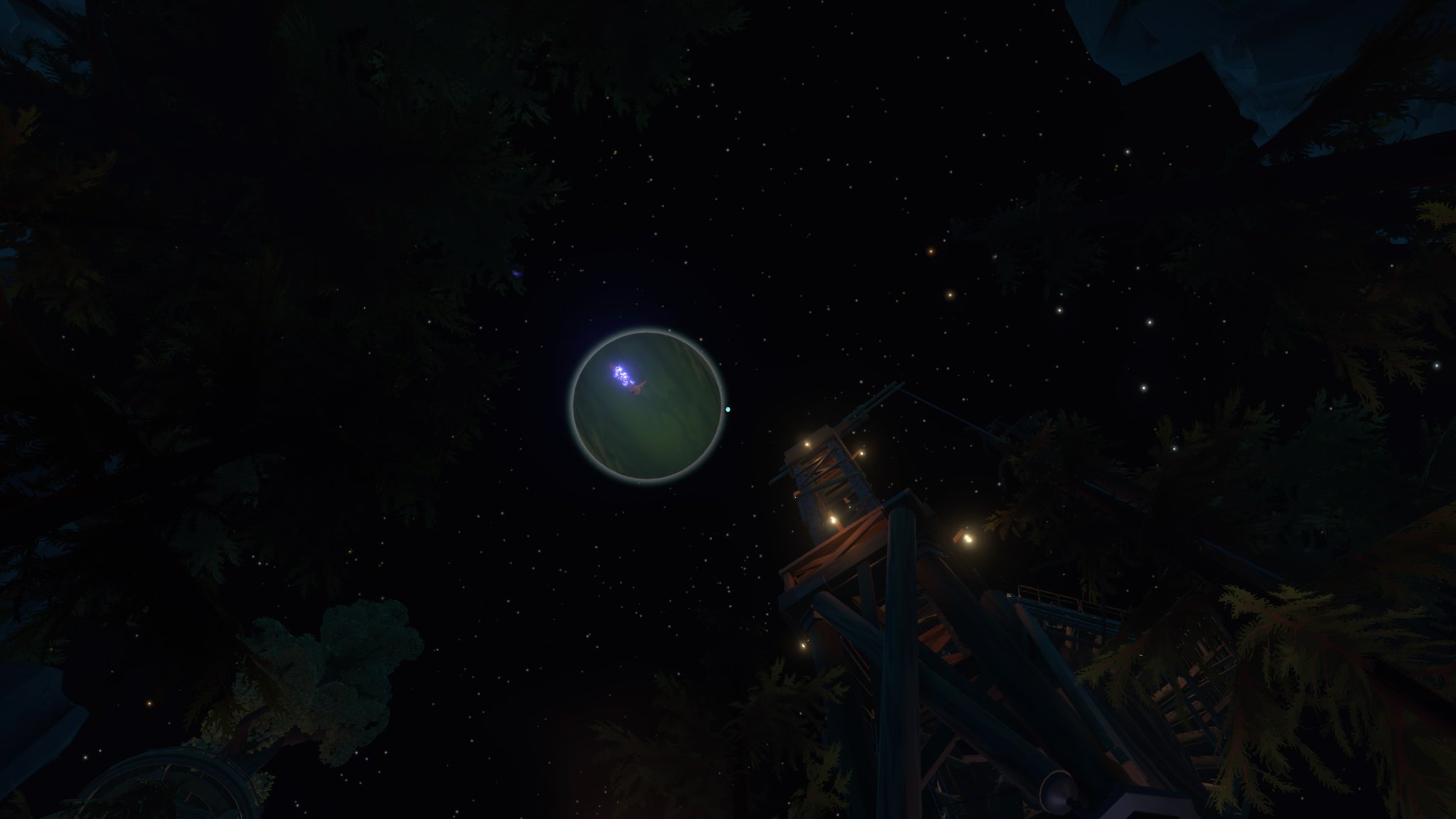
As you take your first gasping breath on Timber Hearth, you see the gas giant—Giant’s Deep far above, hovering in space. You notice a small purple explosion propel a piece of something out into space. If you play this game prepare to see this scene a lot, as this is how every time loop starts. It ends when the player dies, either self-inflicted or by the explosion of the sun. But somewhere in between is where the magic happens. The game draws some inspiration from rogue-likes, forcing you to use the knowledge of the world to advance further in each subsequent loop. With an untraditional approach to storytelling, Outer Wilds cements itself as an inspiration for developers to take risks, even at the expense of traditional rewards and potential player enjoyment.


Outer Wilds walks an interesting line, at times I was enamored with the exploration and discovery, at others I was completely frustrated with the mechanics and lack of rewards. I would sometimes go multiple loops without finding anything of note to record in my ship’s log (the only thing that gets saved between loops). There were times I found myself putting the game down for days due to poor in-game time management options and a lack of meaningful advances. Some discoveries—necessary for advancement—I found completely by accident at a very specific time within a time loop. It made me wonder if I would have found said thing otherwise.

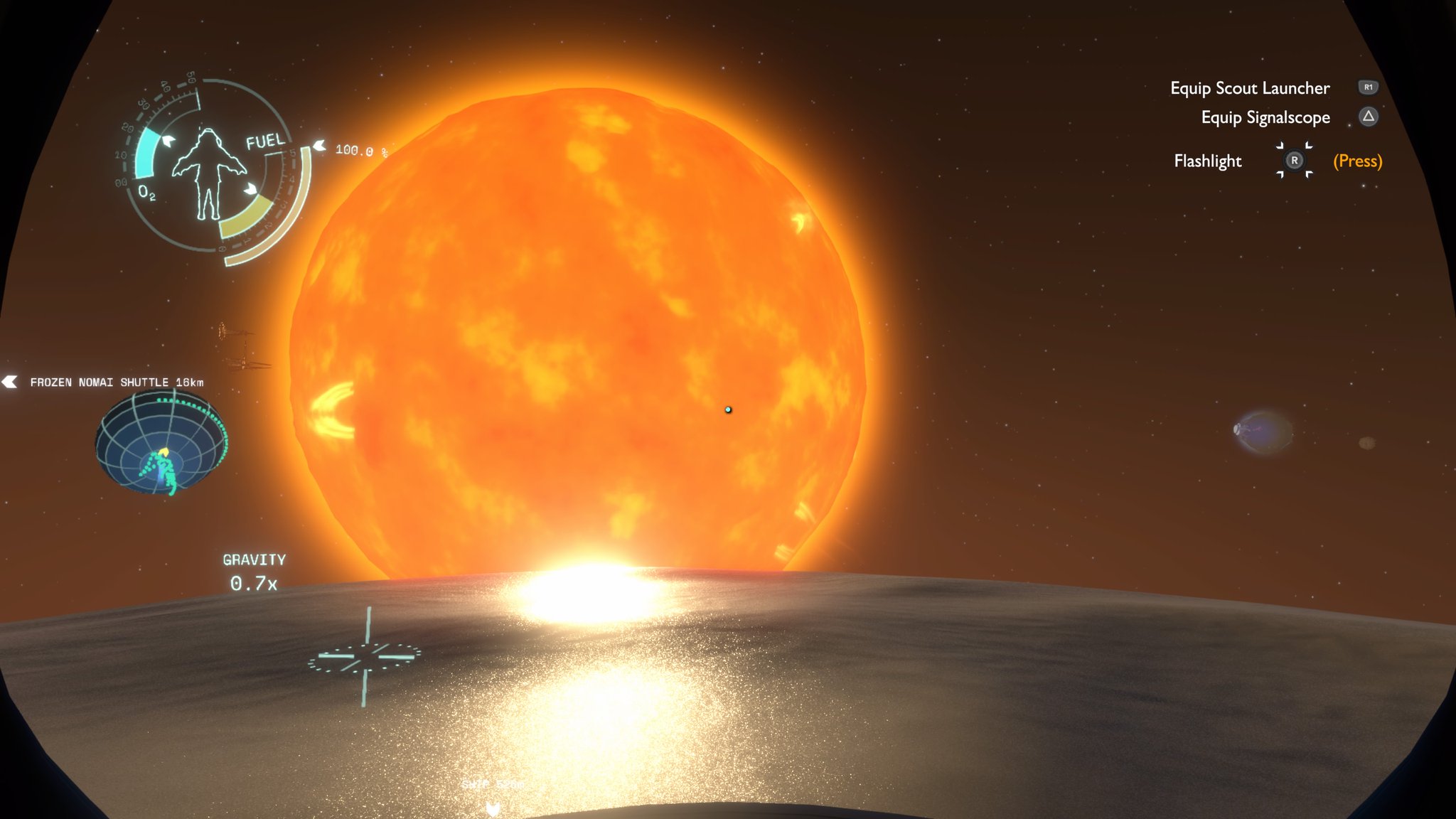
Some puzzles feel clever and rewarding while others are simply frustrating. Once I learned to play around with the time within a loop, things became more clear. But then I was subject to the terrible waiting system and unfortunate control scheme that hampered the game for me. Outer Wilds is meant to be a spacefaring game, but it isn't a sim. So why are the controls so wonky? By trying to fight with acceleration, gravity, inertia, etc., I lose some of the enjoyment of exploration. And good luck with using auto-pilot, sometimes it flies you directly into the sun or allows your ship to be sucked into the gravitation pull of another planet. After finding myself stranded in space a dozen times, the waiting game became old quite quickly.

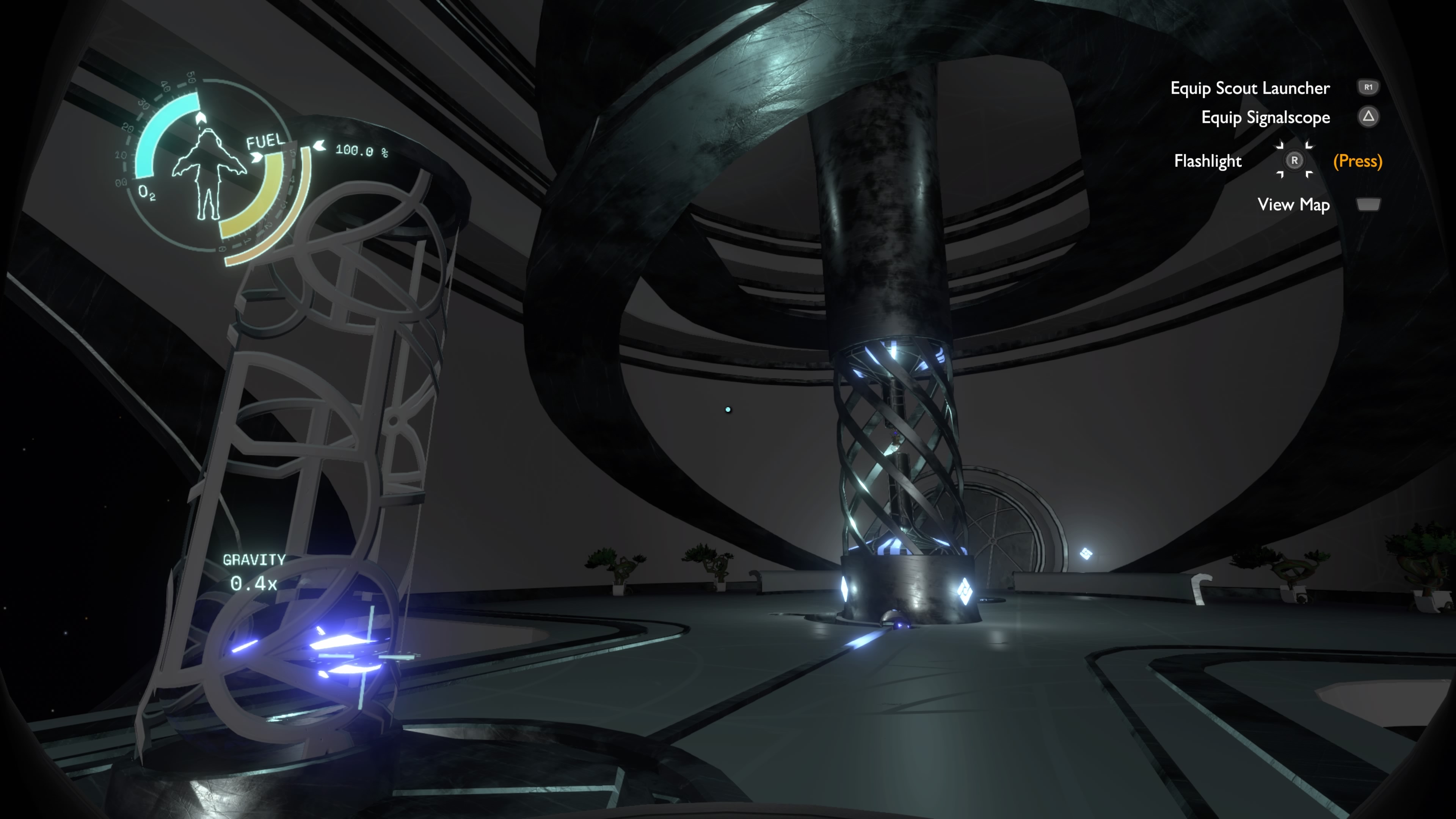
Despite the sometimes cumbersome controls and unpleasant waiting I had to endure, Outer Wilds exudes significant charm. From the unique planets to the Outer Wilds Venture tune that hums in your head even once you’ve exited the game, the game has many memorable traits. Discovering the unique properties of each planet was a delight. A black hole in the middle of a hollow planet? Count me in (except for when I fell into it for the twentieth time). Each body in the solar system—whether it be a moon, planet, or comet—has some sort of history attached to it, and stumbling upon something can be quite satisfying. More so if it was difficult to reach. The Nomai space predecessors left quite a bit of information behind, but it’s the sweet, human-like recorded interactions that made me smile. Little nuggets like these are scattered all over the solar system.

Outer Wilds is an odd paradox, it feels huge due to its nature as a space exploration game, but at the same time creates a coziness within its confines. Some places are mostly barren, while others have tons to explore, but at any point, you can equip your singalscope and listen to a fellow member of the Outer Wilds Venture play the theme song on their chosen instrument. So even after getting sucked into a black hole and getting thrown into deep space, you can find the music thousands of kilometers away and you’ll never feel alone.


It was difficult to decide how Outer Wilds made me feel as a whole. I don’t normally put a game down never to pick it back up, but there were moments where I considered doing just that. There were also times that I stayed up late into the night trying to discover more hidden messages from the Nomai. Though I found some frustrations with the game, when the credits rolled I was satisfied with the final message and many of the decisions that the developers over at Mobius Digital implemented. Outer Wilds takes many risks, and while some don’t pay off, the ones that do make this a venture worth taking. The game may not be perfect, but it is memorable. I recommend it to anyone who likes space travel and discovery sprinkled with a little charm. Just try not to get stuck in outer space too often.


The Math

Objective Assessment: 8/10

Bonus: +1 for unique storytelling method. +1 for satisfying space discoveries.

Penalties: -1 for wonky controls that don't ever feel great. -1 for poor waiting options. -1 for progression/reward imbalances.

Nerd Coefficient: 7/10

Posted by: Joe DelFranco - Fiction writer and lover of most things video games. On most days you can find him writing at his favorite spot in the little state of Rhode Island.

Tuesday, September 6, 2022

Microreview [Video Game]: Cyberpunk 2077 by CD Projekt Red

Hackin' and Packin'.

It’s no secret that the launch of Cyberpunk 2077 was an abysmal mess. The console versions were unable to run on their native hardware. Constant crashes, massive game-breaking bugs, and wonky animations (among many other things) made the flame of day one adopters’ enthusiasm flicker, and their trust in the revered developer CD Projekt Red turn to ash in their mouths. Okay, maybe that was a bit much, but it’s fair to say a lot of people were upset. As a day one buyer, I knew I couldn’t play the game in its release state and instead waited for the promised next-gen patch (for PS5 and Series X). Fast forward one and a half years later. The game that was announced in 2012, delayed numerous times, and released in 2020 is finally playable in 2022! What a ride. I wanted to ensure I played the game at its best before giving it a go for two reasons; A) to witness the developer’s final vision, and B) because I wanted to enjoy the game (as I’d been highly anticipating it).

And enjoy it I did. Cyberpunk 2077 is a great game filled with lots of lore, plenty of gameplay options, and unique and interesting characters with well-written quests. Almost two years later, Cyberpunk 2077 is worth putting some time into.

Night City is a place of contrasts. It holds both beauty and hideousness. In some parts, it's bright and vivid, in others grime and filth are prominent. Slums surround hundred-story buildings that glisten in the sun’s shine. This is a place where high-class citizens intermingle frequently with the lowest of the low. Gang members make pacts with CEOs to get jobs done that need doing, while fixers send hired assassins to kill corpos who harmed some poor soul living in a hovel. In Night City, many are out to become a legend—to be remembered for their deeds. Most die in the process or fizzle out. But now it's V’s turn to shoot their shot. V is a mercenary who does jobs for her local fixer. Do enough gigs in Night City and you just might get noticed.

V is whoever the player wants them to be. For my review, I will refer to them as female, as that's how I built the character. The player is given many options to customize their V right from the start. They can alter how they present V’s gender as well as which gender V identifies as. The customization even allows for a choice of genitals (which are seen in some romance cutscenes). The player is also allowed to make their character look cybernetic or natural. There are only two options for voice, however.

While I didn’t get a chance to hear V’s masculine voice in action, I had plenty of time with the feminine one. At first, the voice actor (Cherami Leigh) would grate on my nerves, a mix of the dialogue and the actor’s portrayal of the character irritated me. Over time, I came to appreciate Leigh’s performance, even if there were a few lines here and there that seemed off (the character always sounds like they have a rough grittiness about them, even during sensitive line delivery). In the end, I think she was the right choice for the role and I'm glad I stuck with my decision.

What am I doing talking about voice actors and environments before actual gameplay? Well, Night City is not just a setting, it’s the impetus of every character’s actions. It forms their opinions and personalities. It’s one of the most realized game worlds since Rapture. In most games, the environment is a backdrop, a place for the player to traverse that takes a back seat to gameplay and/or narrative. But Night City is wound into every quest you do and the effects of the city and its inhabitants are with you every step of the way, there’s no way to talk about Cyberpunk 2077 without first mentioning what makes the game work. The city isn’t perfect, but it’s incredibly well done. Night City is the star, and V is just one of the many planets orbiting it. The game makes you feel special like you've got what it takes, but you don’t ever truly feel like a legend. There’s always something further to achieve, and I found that Cherami Leigh’s contribution in combination with the other VO performances and the ever-present Night City fully immerses the player in their quest to be remembered.
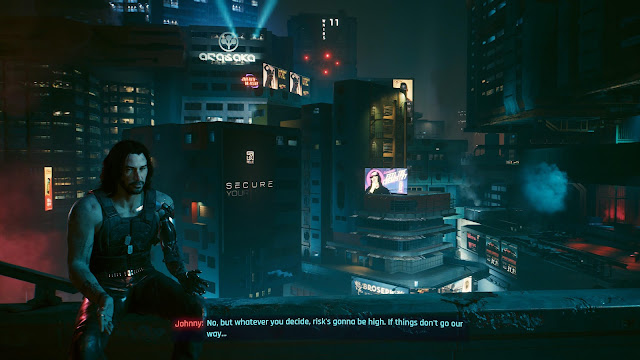

In the initial hours of the game, you’re offered a big job. A heist to be precise. What starts as an elaborate robbery somehow goes wrong and suddenly Keanu Reeves is in V’s consciousness and you spend the next seventy hours trying to get him out. I say Keanu Reeves because even though the character he portrays is rocker-boy terrorist Johnny Silverhand, it is still always Keanu Reeves (just go watch one of his movies if you don’t understand). It doesn't help that the character is modeled after him. This may work for some people, but for me, it was disengaging. His delivery was stiff and unnatural at most times. And though he came to irritate me less later in the game, Keanu never sold me. This wouldn't be a problem if the character was needed for a one-off side quest, but this isn't the case. He’s with you the entire game. I’m not saying Keanu’s not a great person, he is. His brand of acting, however, was one of the biggest hindrances to my enjoyment of Cyberpunk.

Despite Keanu’s overall performance, he does deliver a few good lines that made me chuckle. Not to mention, Johnny Silverhand plays into the plot quite well and it makes for good entertainment to see V engage with the construct in her head that’s slowly killing her. The main quest is pretty straightforward, but CD Projekt Red gives the player the ability to solve the issue in multiple ways. A multitude of endings are available for players who complete certain character’s side missions, and each one is distinctly different unlike some other—yes, I’m looking at you Mass Effect 3. I save-scummed for the multiple endings (I certainly wasn’t playing the game four times at eighty hours a pop). I was pleased by the detail that went into each ending, as each one has playable portions that could have easily been accomplished as a quick cutscene. And, depending on the players’ romance option in the game (Hi Judy, I miss you already), the ending may present that character for a final dialogue. This means that there are technically many more than four endings, though the template for them will be similar.


Many praise CD Projekt Red for their quest design on The Witcher 3, myself included. I’m happy to say that Cyberpunk 2077 doesn't disappoint. Whether I was chasing down a serial killer that keeps people locked up like farm animals, retrieving a set of lost vehicles—each with an individual personality—that were separated from their AI host, getting revenge on gang leaders for selling sex workers for spare parts, helping a convicted murderer to reenact the crucifixion of Christ, or if I was just assisting a sentient vending machine named Brendan, I appreciated the creativity and effort that went into the writing.

Everyone in Night City is looking for a good high. Whether that’s sexual or substance-induced comes down to the individual (though most frequently take advantage of both). Cyberpunk 2077 is rated M for Mature for a reason; every city block and every elevator has ads for a pleasure offering establishment. In the world of Cyberpunk, many opt to use a brain dance instead of going for the real deal. BDs, as they’re often referred to, record one’s experience and put it into a file that someone else can then participate in for their pleasure or a thrill. BDs are primarily used for pornographic purposes in the game’s world, but some main quests use a hacked BD that allows the player to become a detective of sorts. Going through someone else’s mind and using that to discover clues and create plans for upcoming quests was an enjoyable aspect of the game, even if solving the brain dances was quite simple.


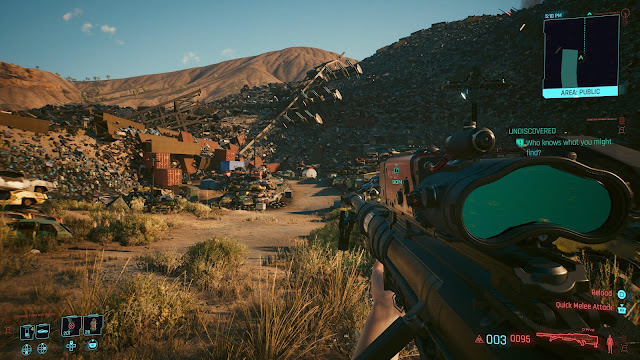
The core gameplay is that of a first-person shooter. The game gives you many options when tackling your quests. You can use melee (either blunt or sharp, think spiked bat or katana), you can use guns, you can use stealth, or you can use your hacking skills. It’s possible to hack a camera so you can see things from a different angle, then hack enemies from the perspective of the camera. The game lets you play any way you want, and the gameplay is quite satisfying. You can slash someone up with a katana, knock them back ten feet with a heavy swing of your crowbar, blast their arm off with a shotgun, or simply use the short-circuit hack and fry them out. Whichever way I approached a situation, I consistently enjoyed the combat. I did have a few issues where the game had a bit of slowdown during intense engagements with lots of enemies, but not always. The music that accompanies combat can get irritating at times, but it doesn’t outweigh the enjoyment of the gameplay. Blasting my way through a stronghold with my double-barreled shotgun while hacking everything in my way always felt good, especially combined with my cybernetic enhancements. After all, who doesn't love a double jump?

The beauty of the gameplay is that not only do they give you the tools to use all of the skills, but they also allow you to solve most missions with them. There is always a way to sneak into/out of a building if you wish to focus on stealth. While there are a few missions you can’t sneak your way out of, they are never overwhelming or unbalanced (now I'm looking at you, Deus Ex: Human Revolution). Many times after blasting my way through a building (what can I say? It’s what I do), I would discover a back door or side window that I could have accessed had I wanted to use stealth, something I appreciate from a level design perspective.

There are five skills in the game, each with two to three sub-skills. To level up the sub-skills, the main skill must first be leveled up. Intelligence, Body, Cool, Reflexes, and Technical Ability are the skills that govern everything you do. Want to be able to hack turrets, craft the best items, and open tech-locked doors? Technical Ability is where you'd invest. Want to have a lot of HP, be able to tear doors off their hinges, and control the spread of shotguns and LMGs better? You want to put those points into Body (bet you couldn't guess I maxed out this skill). However you invest, each of the skill sets is fleshed out, with each sub-skill offering perks to tweak to your gameplay style.

Though most of the bugs had been ironed out by the time I finally got around to playing Cyberpunk 2077, a few remained. At one point, I was stuck in a tutorial for twenty minutes. I had to deflect an incoming attack and I couldn't understand what I was doing wrong. I eventually reloaded a save and discovered it was a glitch. Another time I found that when I fast-traveled out of an area before my previous “Quest Complete” marker popped up, I couldn't do anything. I couldn't hack, I couldn't pull out my guns, I couldn't climb. It was the weirdest thing and I essentially had to become a QA tester to figure out what was going on. Eventually, I figured it out, but it took over a half hour. I had about a dozen game crashes as well. Luckily the SSD booted the game back up quickly and my saves weren't corrupted. Even still, another minor irritation.

Unfortunately, Cyberpunk also suffers the plague of many other open-world games: too much padding. Many of the little extra missions are quite similar, especially the NCPD missions (which pretty much all have you stopping gang violence). The map is littered with so much to do, but as you go down the list, you find a lot of it is quite similar. But amidst the padding, the good stuff does shine.


Cyberpunk 2077
had me riding a motorcycle at one hundred-sixty miles per hour, speeding between traffic on the highway, and narrowly avoiding pedestrians—yes, I was that person. I would blame myself, but I believe that Night City brought it out of me. I went around hacking and shotgunning every gang-banger and corp-loving jerk in my way. In a world where corporations manipulate everything at the expense of the poor, what better way to make a name for yourself than to take the power into your hands? While CD Projekt Red doesn't always hit the notes they want with their vision for Cyberpunk 2077, when it does, it’s fantastic. And even when it doesn’t, it’s still an enjoyable game to play. It’s a shame it took so long to become playable. In the end, I'm glad I waited to play.

For those on the fence; put on your mercenary gear, update your cybernetic enhancements, and call your closest fixer. Night City awaits.

The Math

Objective Assessment: 8/10

Bonus: +1 for incorporating fluid sexuality seamlessly. +1 for a great dystopian open world. +1 for exciting gameplay. +1 for multiple fleshed out endings.

Penalties: -2  for technical issues. -1 for too much Keanu. -1 for too much padding.

Nerd Coefficient: 8/10

Posted by: Joe DelFranco - Fiction writer and lover of most things video games. On most days you can find him writing at his favorite spot in the little state of Rhode Island.