Friday, January 7, 2022

Microreview [book]: Sounding Dark by Jo Graham

A diverse set of heroes fighting against an interstellar tyranny combine with inventive and richly mythic worldbuilding

Steel Captain Adelita Massacre has a problem. As one of the captains in the small fleet of the half-pirate, half-freeport world of Eresh, it is her duty to protect her people against the looming Calpurnian threat that might roll like a tide over them at any time. Eresh is a small world, with a tiny fleet, and their freedom is precarious. And so when the Captain investigates the remnants of an attack on the Eresh fleet, she is certain this is the opening gambit in a full scale attack on her world and those she has been charged to protect.

Bister also has a problem. She is the sole survivor after that space battle: but a survivor who lasted far beyond the capacity of her emergency space suit. Even weirder, she is not a Calpurnian or from the Eresh forces at all, but a former Eresh prisoner on board one of the Calpurnian ships, the only one the Eresh  managed to destroy in the conflict. Her inexplicable survival may be tied to her devotion to The Lady of the Void. The Lady of the Void is not commonly revered these days, even on Eresh. But if the Lady had saved Bister...why? And what does she want?

The fate of Adelita, Bister, and the inhabitants of Eresh and beyond may lie in finding and harnessing a legendary ghost ship to help fight the Calpurnians: the titular Sounding Dark.

Sounding Dark starts off first and foremost with an interesting set of characters. Bister, the plot driver for many of the novel's events, is a character who thinks she knows herself, but the unexpected survival puts her on a path that she is winningly both confident and forthright about... and still, humanly vulnerable and unsure what her position and her role really are, or should be. She is also the “well connected” character who forges bonds and connections across the spectrum of Eresh society and gives the reader hooks to understand those she interacts with. She is undoubtedly the heart of the novel and the primary point of view.

Captain Adelita Massacre, as the face of the expedition by Eresh, is the bold and strong starship captain that you wish, even two decades after Captain Janeway, was more common in space opera. I particularly liked her connection to her fellow Captain Tal Robber, who winds up going through some troubles of his own as the Calpurnians move in. As the novel progresses. Tal’s role in the narrative shrinks a bit, and I think that is a bit of a missed opportunity on the part of the novel, but what we see gives a good contrast to the events going on during the search for Sounding Dark. 

And even within the names of those characters, Graham unfolds rich and inventive worldbuilding. Eresh last names relate back to the crimes that got their ancestors deported from Calpurnia in the first place, helping to give Eresh a bit of an Australian feel... if Australia had managed to break away from the British Empire and was under threat of reconquest at any time, but in the meantime Australia was making a living as a trading entrepot. Then there is nearby planet Inanna, where the population has been deemed ‘Tainted’ by the Calpurnians and in theory, are not only restricted in their technology and development, but not allowed to leave (although Bister proves that people can and do escape). My mental attempts as I read the book to pigeonhole it in terms of other works constantly brought up imperfect fits. Sure you could make the Calpurnians into Lois McMaster Bujold’s overpowerful and overweening Cetagandans, but Eresh and Inanna don’t match to Barrayar in any meaningful way. Is Eresh resonant with, say, C.J Cherryh’s Downbelow Station? I think that might be firmer ground, but the political frames don’t quite match--this ‘Downbelow Station’ is *already* free, however precariously. But I do think that readers who like Cherryh’s work will find favor with Graham’s. 

But the major worldbuilding talking point in this book is a spiritual one. What is our relation to the numinous? How do cultures engage with the ineffable? These are questions that human societies have faced since there were human societies. Graham leverages this connection to the numinous to make it a central part of the interstellar civilizations in her novel in a way that much space opera and science fiction in general has struggled to try and deal with. For a long time, and in a large swath of science fiction, a relatively secular future has been the default, if not outright rejection of religion as a force in people’s lives. And even in those SFF worlds where religion and a connection to the numinous was acknowledged, there was often an awkwardness in talking about it and engaging with it as an everyday thing, a natural part of people’s lives. 

Not so in the world of Sounding Dark. There are multiple paths to the numinous within Sounding Dark, and it is a now underexplored one - reverence to the Lady of the Void - that is a key thread of character growth as well as the flow of the plot itself. The glossary at the back fleshes out and illuminates some of how and why this interstellar civilization developed in the way it did. Although I do appreciate it being here at all, and it answered questions I had while reading the novel, I do wish it was a little more enfolded in the narrative itself, because it is such a crucial factor in understanding and seeing how the plot unfolds and how it affects the characters, particularly Bister.

In sum, Jo Graham’s space opera is a richly imagined narrative with a spectrum of relatable heroes who face overwhelming odds with drive, determination, grit, and most powerfully of all, hope. Sounding Dark uses these heroes to buttress a story on multiple levels: a fight against an interstellar tyranny, a search for the meaning of an unexpected survival against all reason, and the story of a lost, ancient connection to a Mystery reforged. With its inventive use of Sumerian motifs in its intriguing worldbuilding, Sounding Dark soars to reach a liminal place on the boundaries of science fiction and myth.

I understand that Graham intends more novels, not with these characters, but elsewhere within the “Nine Worlds”. I am intrigued to see further stories set in this universe.

The Math

Baseline Assessment:7/10

Bonuses: +1 for strong and inventive use of the numinous in the worldbuilding and the makeup of the characters, a real highlight of the novel.

Penalties: -1 Some real roughness with the plotting of a couple of narrative threads

Nerd Coefficient: 7/10 

POSTED BY: Paul Weimer. Ubiquitous in Shadow, but I’m just this guy, you know? @princejvstin.

Reference: Graham, Jo. Sounding Dark [Candlemark and Gleam, 2021]

Thursday, January 6, 2022

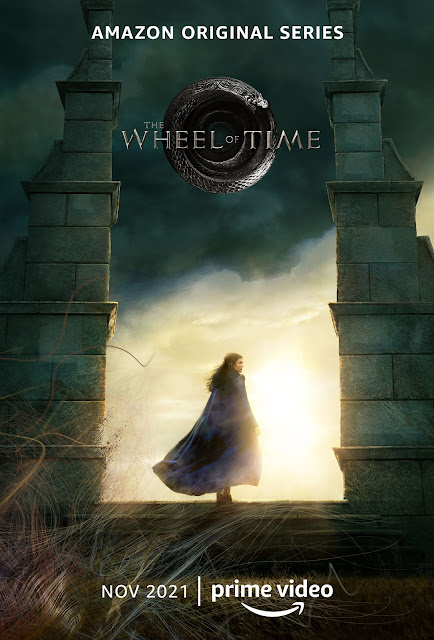
'The Wheel of Time' is an interesting exercise in adaptation

TV networks are searching for "the next Game of Thrones," but The Wheel of Time is playing a different game

After the colossally successful era of Game of Thrones (and its just as colosally divisive final season), it was to be expected that producers would scramble for something to keep feeding an audience still hungry for Medieval shenanigans. An earlier attempt by MTV to make The Shannara Chronicles the next hit resulted in failure (a big part of which can be blamed on the less than stellar source material), while Netflix seems to have struck gold with The Witcher, now on its eagerly awaited second season. In a strange turn inward, both Game of Thrones and Lord of the Rings have spawned prequel shows, a sign of risk aversion that runs contrary to the adventuring spirit of high fantasy. We can wish them well, for the sake of all artists involved, but the risk of Westeros and Middle Earth burnout cannot be left unmentioned.

Robert Jordan wrote the series of books that comprise The Wheel of Time more or less at the same time as George R. R. Martin started writing A Song of Ice and Fire,  but they are radically different responses to Lord of the Rings. Tolkien's theme of power as a corrupting influence is taken by Martin to ghastly extremes, with hardly any character in Westeros being fully free of the poison of ambition, whereas Jordan did something arguably more interesting: in his world, it's not that power per se is bad; rather, power has been corrupted, and it needs to be saved.

Jordan worked with this metaphor by dividing magic into masculine and feminine halves, and adding a backstory that resulted in masculine magic being tainted and incontrollable. This runs into an essentialist can of worms, on which enough has been commented, but the TV adaptation by Amazon Studios is doing a laudable job of lifting the female characters out of their simplistic archetypes. On another day, we could have a longer discussion on what it means for power to be so rigidly aligned with gender, but since this is already the source material Amazon is working with, we need to ask a different type of questions: what insight on power does a high fantasy show have to convey to current audiences that hasn't been explored by Game of Thrones in gory detail, and what deep truth about humanity can be expressed in a fictional world where masculine power is inherently harmful and deserving of suspicion?

The status quo we find in The Wheel of Time is one where women have been at work trying to repair the world while keeping masculine power in check. This feels like an unstable state of affairs, one imposed temporarily to give the world a chance to heal while people figure out what to do about men. In-universe, this period has lasted for thousands of years, but people are not satisfied with the way things have turned out. It's as if we envisioned a hypothetical future where patriarchy has been dethroned, but things are very much in flux, because a new, lasting structure for social organization has not yet been reached. As much harm as patriarchy is capable of causing, a world where an entire half of the population are viewed as dangerous is not a viable model of society. The journey of restoration that takes place across The Wheel of Time is about finding a way to reintegrate masculine power without throwing the world into darkness. This is a break from recent treatments of related themes. Where Game of Thrones consistently punishes characters for not being cruel and manipulative enough, and The Witcher repeats all the time that humans are the real monsters, The Wheel of Time trusts humans. It's not certain that the world can be fixed, but if anyone's going to do it, it's us.

To properly explore this theme in the 2020s, the first season needed to shed many elements from the original novel The Eye of the World that are no longer as well received as they were in the 1990s. There is less emphasis on traditional gender roles, less hyperfocus on a single protagonist, and less dependence on fate to propel the narrative. In the TV version, the key choice by which our hero Rand saves the world hinges on respecting female autonomy. That is an apt test of character for a male hero in the world of The Wheel of Time, and a smart move by the screenwriters, because, according to the rules set in the novels, masculine magic requires asserting one's will to dominate the flow of power. A quiet family life may be what Rand wants the most, so his true moment of heroism, at the easily suggestible time when he's just learned to wield masculine magic, is the realization that he doesn't want that life if it means superimposing his will over his beloved Egwene's aspirations.

In other words, the story trusts a male character to be responsible and considerate in his use of power. That's a level of humanization that was too often missing in the exhaustingly bleak Game of Thrones. This is not the horrible Dung Ages of impassive tyrants and cutthroat cunning; this is a more enlightened world that is actively in search of healing. The Wheel of Time is gritty, but not grim; and even when it deals with darkness, it does not revel in it. This is a world that used to have advanced technology and peaceful governments, so it is known for a fact that a less cruel life is possible.

However, the path to restoration is anything but easy. The subsequent novels in the series deal with intense scheming and backstabbing within the Aes Sedai sisterhood of witches, as well as the standard amount of palace intrigue between ruling houses. In the first season we get but the briefest glimpse of the entanglements of power play in this world, but so far it doesn't have the normalized dog-eat-dog mentality that made life so dreadful in Westeros.

The Wheel of Time is consciously setting some distance from the show that defined fantasy TV for the last decade, and that's for the better. It is a more hopeful, more empathetic look at the weaknesses of humanity. It benefits from a beautiful choice of shooting locations and a believable cast of heroes whose struggles and frictions are handled with the due maturity. This season is a very good start, and a very good promise for future seasons.


The Math

Baseline Assessment: 7/10.

Bonuses: +2 for the brilliant casting of Rosamund Pike, who delivers a precious mix of compassion and toughness, of mystery and vulnerability; +1 for making a sincere effort to update 1990s gender politics to today's sensibilities; +1 for the ethereal feel of Lorne Balfe's soundtrack.

Penalties: −3 for building up to a huge final confrontation that turned out to be inexplicably anticlimactic.

Nerd Coefficient: 8/10.

POSTED BY: Arturo Serrano, multiclass Trekkie/Whovian/Moonie/Miraculer, accumulating experience points for still more obsessions.

Wednesday, January 5, 2022

Thursday Morning Superhero: New Year's Resolutions

 I hope I am not stepping on any Nerds of a Feather toes by posting my own resolutions, but they are multi-faceted and since I only post once a month these days this felt right.  2021 was an interesting year that marked what felt like the end of the pandemic, only to see it extend into 2022.  I watched a lot of anime with my son in 2021 and that proved to be quite the blessing.  I expanded my comic book reading into additional indie titles and read a lot more manga.  My board game playing was sadly down, but I have plans for 2022.

Resolution #1 - My first resolution is to expand my manga reading even further. I am currently working my way through Attack on Titan, but want to visit Black Butler and Prince of Tennis at a minimum.  I recently subscribed to Crunchy Roll and manga is part of that service so I am hopeful I will find some titles worth exploring.

Resolution #2 - I would like to re-establish a regular gaming group.  The pandemic made this difficult, but I was able to play Detective from Portal Games remotely and want to make a solid commitment to game with a consistent group on a monthly basis at a minimum.  My family is moving from Texas to Illinois and I think we have enough friends that this should not be a problem. This will allow me to reduce my pile of shame and play some of the games I love more.

Resolution #3 - It has been a long time since I have read some of my favorite Captain America arcs and this might call for 2022 to be the year of Ed Brubaker.  This would account for me reading his masterful work on Captain America, and revisit some of his earlier works. Scene of the Crime is about a slacker detective and I have sadly never read his work on Batman.  I should cap off the year reading his collaboration with the legendary Darwyn Cooke on Catwoman.

Resolution #4 - This is going to be my most difficult resolution, but I would like to start to cull the amount of collectibles I have.  This process has started in preparing to move, but I want to focus on the items that I feel I need to have.  I recently sold some of my Funko Pops in order to fund a Simpsons Arcade1up cabinet, and I feel I can purge more and become more active on eBay.

I hope everyone has a wonderful New Year and I remain optimistic about what it has in store.  While I wanted to put a return to in person conventions, I am not sure I am at the comfort level for that type of engagement currently.  

POSTED BY MIKE N. aka Victor Domashev -- comic guy, proudly raising nerdy kids, and Nerds of a Feather contributor since 2012.

Nerds of a Feather, Flock Together is Recusing from 2022 Hugo Awards


In 2021, Nerds of a Feather. Flock Together won the Hugo Award for Best Fanzine. It was our fifth nomination and first win in the category. However, we will not win our second this year - continuing an emergent tradition in this category started by our friends at Lady Business (and continued by 2020 winners The Book Smugglers), we are recusing ourselves from consideration for this year's award.

Why, you ask? Well, it's pretty simple: Fanzine is more than just an award category - it's a community. Over the years we've gotten to know our competitors for the award as peers, colleagues and friends. Really, "competitor" is a wrong term, because we aren't fighting over readers; rather, we all benefit from the community's growth and the conversations that emerge from that growth. We hope that other fanzines will benefit from the publicity and excitement that comes with being on the ballot, and have their own shot at taking home the big rocket. And while there's no guarantee we would win in 2022, we really just want to stand and cheer for our friends this year.

(We'll compete again in 2023.)

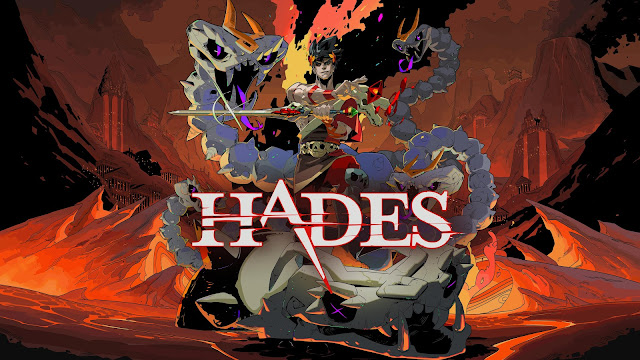
Microreview [Video Game]: Hades by Supergiant Games

 If at first you don’t climb your way out of hell, try, try again.


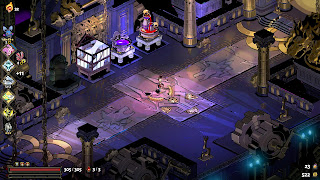
The main gameplay loop of Hades has players accompanying Zagreus in his many attempts to escape the Greek underworld. In this rogue-lite adventure, every failure (and success) advances both player skill and story. Hades has a way of making every failure feel meaningful, never frustrating. This is a title that excels in nearly every aspect of the medium. From the divine voice acting and masterful storytelling to the brilliant visuals and finely crafted gameplay, this game exudes quality and should not be missed.

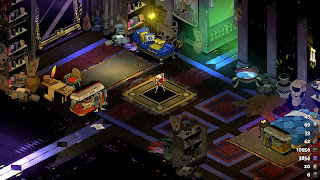
From the moment I booted up Hades, I could tell I was in for a treat. In traditional Supergiant style, the game has a gorgeous art style. Each environment is distinct; from the House of Hades to the Temple of Styx. Supergiant’s stylish characters and levels are still captivating after over eighty runs.

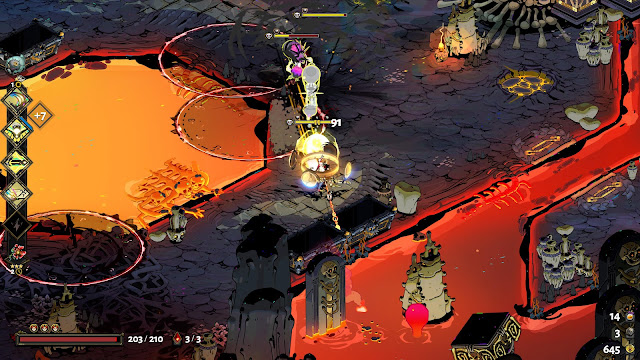
The developer was aware of the repetitive nature of the genre and instilled within Hades the gift of variety. Though running through the same gorgeous levels repeatedly is the hook of the game, every attempt feels different due to the variability of boons (power-ups from different Olympian benefactors) and the players' choice of weapon. Not only are there six unique weapons, but each one has various aspects to be unlocked which creates even more layers to the gameplay. For instance, the Heart-Seeking Bow's standard attack shoots a single charged up arrow and its special attack is a volley of arrows that shoots in a V formation before Zagreus. If the aspect of Chiron is equipped, every enemy struck by a standard attack gains a target for the special attack, turning that V formation into a volley of homing arrows that follow said enemy. Combo that with a certain character’s freezing boon and I would instantly put my enemy in stasis, allowing for more time to strategize when clearing a room.

In addition to the selected weapon, Zagreus also has access to his “cast”, an ability that shoots at enemies and can be leveled up (via Nyx’s Mirror of Night) and equipped with boons to have extremely different effects. An upgrade from the king of Olympus has Zag’s cast become a ball of electricity, chaining lightning between enemies, while a blessing from Dionysus sees that cast create an area effect that stuns enemies intermittently. The combination of different weapons, boons, Daedalus upgrades, and aspects make each run feel fresh.


What extends Hades’ longevity even further is the sheer amount of unique dialogue for each character. Offering any character nectar, whether it be Chthonic deities, Olympian kin, or shades of the underworld, results in an increased bond which leads to more conversation from any given character. In addition, each event encountered or surpassed may trigger a special dialogue with certain characters. This makes Hades aware of itself, like a unified composition where everything feels like part of the whole with nothing included for the sake of padding. Such a numerous amount of voice-overs and unique writing was an impressive inclusion that elevated the entire experience. After clearing the main story (about ten completed runs), I assumed the unique dialogue would dissipate soon after, but there was still so much the game had to give. It took the span of around eighty runs before I saw repeated dialogue from one of the bosses. This made me a bit sad, but also grateful for all the content Supergiant had created for the player.

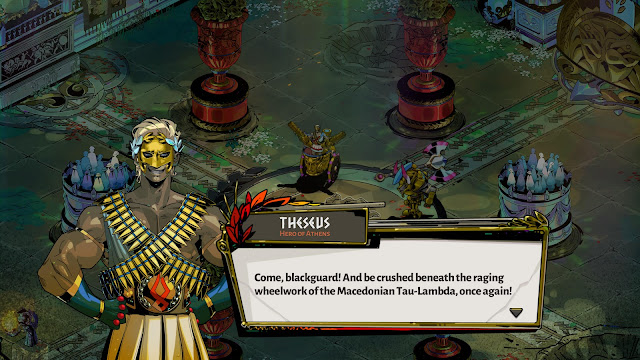
Hades is a retelling of one of my favorite classic Greek myths with a Supergiant twist. Zagreus, son of Hades, wants to discover why his lineage has been hidden from him. While Zagreus is the biggest straying point from the myth, the character is an essential part of what makes the story work. Darren Korb lends his voice to the character and does a lovely job of bringing the cheeky young god to life. The casting for the rest of the gods and Greek denizens of Hades are impeccable. Cyrus Nemati’s portrayal of Theseus offered great comedic relief in the middle of each escape attempt.

The game’s soundtrack elevates every enemy encounter and increases the tension during fights while also causing relief when the heat dies down. My favorite song, “Good Riddance”, performed by Eurydice (Ashley Barrett) occasionally occurred on my treks through Asphodel. I would put my controller down and listen to the beautifully executed performance every time I entered her chamber and let the tune entrance and calm me during an otherwise adrenaline-fueled experience. Orpheus’ (Darren Korb) “Hymn to Zagreus” is a great showcase for Supergiant’s tongue-in-cheek humor. Without playing Hades, one could still appreciate what the soundtrack has to offer.

One of the things I respect most about Supergiant’s effort is their consideration for the player. After completing one run, I was given access to the Pact of Punishment: a list of additional challenges that increase the difficulty of the next escape attempt. One of these challenges adds a timer. Instead of keeping the clock ever ticking, Supergiant made sure to pause the timer if the player wanted to use a fishing spot, take a moment to select which boon they wanted, engage in conversation, or whenever they enter one of the respite chambers. Having trouble with the game? Turn on God Mode for a damage resistance buff that increases after each defeat (incurring no penalty to the player’s ability to unlock in-game items or trophies/achievements). Is the game getting too easy? Raise the heat level and increase the challenge in unique ways instead of making enemies mere bullet sponges. Hades puts the players’ needs and wants front and center, making for very few incidents where I wished things were different.

My lengthy playtime consisted of a few glitches, one of which occurred at the end of a thirty-two heat run (very high difficulty). The game didn’t offer me the item I needed to advance at the end of the run. I was pleased with my progression and boons during that attempt and was disappointed when I was forced to restart without a chance at the final boss. There were also a few times when I was unable to cure my poison despite depleting the antidote basin. This contributed to a few failed runs that exacerbated my irritation from combatting enemies with a poison mechanic. Though I loathe any sort of poison-inducing enemies, Hades makes it as bearable as possible—except the few glitches I encountered—by keeping the antidote a few dashes away.


When looking at Hades in its entirety, the few minor flaws I encountered didn't do much to alter my overall enjoyment of the title. In a sub-genre known for its difficulty, Hades never feels like a Sisyphean task. Every success and failure brings the player closer to the truth and every run made me love the game more. This game is a complete experience. It's the perfect example of a studio figuring out its purpose and leaning into development with every trick they’ve learned along the way. I find Hades to not only be Supergiant’s best game but one of the best video games of the last decade.

The Math

Objective Assessment: 9/10

Bonus: +1 for incorporating fluid sexuality seamlessly. +1 for additonal additional storylines to some of my favorite greek myths.

Penalties: -1 for ending my best run with a technical bug. -1 for poison mechanics at the end of each run.

Nerd Coefficient: 9/10

Posted by: Joe DelFranco - Fiction writer and lover of most things video games. On most days you can find him writing at his favorite spot in the little state of Rhode Island.

Orignally posted at: https://josephdelfranco.wixsite.com/pforp/post/hades-review

Tuesday, January 4, 2022

Some of the Best Books of 2021: A Conversation

Joe: 2021 was one heck of a year and sometimes felt like more of an extension of 2020 than its own distinct year. As someone who pays obsessive attention to the Academy Awards, the Oscar eligibility season was only ten months long rather than being a full year because the previous year had a 14 month eligibility window. I’ve long joked that the Hugo Award season is eternal, but 2021 legitimately had a twelve month experience with the awards just being given out a few weeks ago rather than a few months ago. That doesn’t even get into personal life stuff which will remain, well, personal.

On a typical year I would write up my Top 9 books of the year right around this time. I generally do a really good job staying on top of the genre and reading all the things. I still read all of the things last year, but some of the things I read were a lot more of the previous Hugo Award winners rather than the newest and shiniest books. I also caught up on a quite a few 2020 books that I had missed the first time around. It was a really good year for reading, but the end result is that I’m not quite up on all of the best of last year even for what is naturally a deeply personal list.

To that end, I’ve asked for a little help from my friends. Rather than doing a ranked list of some sort, Paul Weimer and Adri Joy are joining me to discuss a few of the books we loved last year and maybe put a quick spotlight on some books that we are still excited to read but just didn’t get to yet. There may be some overlap and that’s absolutely okay.

Adri, would you like to kick us off?

Adri: I’d like to kick off with Light From Uncommon Stars by Ryka Aoki (review), a big mashup of urban fantasy and science fiction tropes that tackles themes of family and belonging and finding the space to create, with a heavy emphasis on trans coming of age. It follows three characters: trans teen runaway Katrina Nguyen, violin teacher turned soul-broker Shizuka Satomi, and starship captain in hiding Lan Tran, as their lives intersect. Aoki’s narrative tackles some very difficult subject matter, particularly when it comes Katrina’s experiences of abuse, sexual violence and transphobia; even her “safe” landing with Shizuka is far from a true escape. Somehow, though, there’s a sense of gentleness and hope and individual goodness that shines through in Light From Uncommon Stars, and the result is a very powerful story.

The Unbroken, by C.L. Clark, had me rambling thirstily about cover art in my Strange Horizons review, and I wasn’t the only one: check the #TourainesArms hashtag on Twitter if you don’t believe me. (And thanks, Tommy Arnold, for the meal!) But this book could have been wrapped in the cover equivalent of a brown sack and I’d still want to rave about it, because it is probably the best take on colonial fantasy politics I’ve ever read. Taking inspiration from French colonisation of North Africa, The Unbroken stars Touraine, a conscript stolen from her home as a child and raised to be part of the colonial army, and Luca, a princess trying to cement her own power by crushing a rebellion - with Touraine as her proposed secret weapon. Full of conflicted loyalties and unwinnable scenarios, Clark’s debut also prominently features a ton of enemies-to-lovers romantic tension between its leads, which is the delicious icing on a many layered cake.

Jade Legacy, by Fonda Lee, wraps up the Green Bone Saga, a secondary world crime family saga that also demonstrates how the epic fantasy genre can totally work alongside late 20th and early 21st century tech and politics. At the centre of the Green Bone Saga is bioenergetic jade; when worn, it enables various superpowers like super strength, emotion reading and really cool jumps. Until the events of the trilogy, jade could only be worn by a few people from the country of Kekon, but when the technology arrives to enable its use worldwide, the Kaul family and their various rivals and allies find themselves playing a much larger political game to maintain their power and secure Kekon’s position in the world. Unlike its predecessors, Jade Legacy covers decades rather than years, and it’s a heart-poundingly, heartbreakingly successful conclusion to this intricate and wonderful series.

Also ending a brilliant trilogy on a high was Soulstar, by C.L. Polk, the culmination of the Kingston Cycle trilogy which began with Witchmark (review). Combining romance and a secondary world Edwardian-ish political adventure in a world where witchcraft has been banned but practiced in secret by an exploitative ruling class, Soulstar follows political activist and witch Robin Thorpe as she fights for widespread democratic reform following the moderate changes of the second book, and reconnects with her spouse after a long period of imprisonment. The queer and asexual representation in the romance is fantastic, but what really steals the show is the depiction of revolution: it’s a little hard to discuss without spoiling earlier books, but there’s a really satisfying story about political change of a kind which we don’t see often enough in fantasy. Read the whole trilogy to spend time with Miles and Grace Hensley and get the full effect.

The Liar of Red Valley by Walter Goodwater (review) was my most unexpected surprise of 2021: a gothic fantasy set in a small, weird American town, Goodwater’s book centres around Sadie, as she processes the death of her mother (the titular Liar of Red Valley) and tries to take on her legacy. What follows is a really intriguing deconstruction of tropes around Sadie and her position in this town, and a story that balances the cynicism of the genre with a genuine interest in showing how people can change and be mobilised to do good, when given the right opportunities. An absolute page turner.

Finally, I want to shout out some novellas. Three of my favourites were, in fact by the same author: These Lifeless Things (review), The Annual Migration of Clouds (review) and And What Can We Offer You Tonight form a fantastic trifecta of stories from Premee Mohamed, all riffing off themes of survival under apocalyptic circumstances. They’re all very different: These Lifeless Things is about an alien invasion that appears to literally rip apart the fabric of reality, and is told by two protagonists separated by decades who never formally meet; The Annual Migration of Clouds features a woman yearning to escape life in a tiny post-apocalyptic settlement, and living with a parasitic infection that affects her cognition in strange ways; and And What Can We Offer You Tonight features a sex worker in a hugely unequal society whose friend is killed and then reappears under mysterious, revolutionary circumstances. If those all sound equally good, and you read just one, make it These Lifeless Things, which is strange and wonderful and centres a fragile, wistful connection between people that broke my heart in the best way.

Wow, this has been a very fantasy-heavy list. I’ll do some honourable mentions too: Sorrowland by Rivers Solomon (review), The Jasmine Throne by Tasha Suri (review), She Who Became the Sun by Shelley Parker-Chan (review) and The Necessity of Stars by E. Catherine Tobler (review) are all equally worthy of your time! But I am out of space to talk and will pass back to you, Joe.

Joe
: Louise Erdrich has been on the edge of genre fiction for much of her career, depending on how you view her use of mythology and the supernatural in her fiction (and she did win a World Fantasy Award for The Antelope Wife in 1999). The Sentence is her latest novel. If we’re going for a genre connection seeing as this is a genre blog, the novel does feature a ghost. The Sentence is a novel very much of this moment. It is set, as many of Erdrich’s novels are, in Minnesota and in present day Minneapolis. The novel wraps itself around language, around books (it is set in Erdrich’s real life bookstore Birchbark Books), and while a significant portion of the novel is about understanding the haunting, it is also as much about understanding grief and love and trauma and identity and family and all of the stuff that goes into a major novel from a major novelist. But being a novel of this moment, except for a very small portion set a few years ago the novel begins in late 2019 and runs right through the first year of Covid, the murder of George Floyd in Minneapolis, and the subsequent protests. In some ways it is almost too close, too raw and too soon. Like so many of Erdrich’s novels, the storytelling is wrapped up in the emotional immediacy of it all. The Sentence is just on the edge of being too much but it manages to be just write and one of the finest novels I could hope to read last year.

Readers really can’t go wrong with Sarah Pinsker, whether it is a shorter work of fiction or novel length. We Are Satellites (review) is Pinsker’s second novel and she is building a legacy of excellence.

We Are Satellites looks at the near future of technology, with an implant designed to improve the focus and an ability to functionally multitask. It's such a boon to those who receive the implant, truly transformative except, no technology is perfect and there are always those left behind. Sarah Pinsker examines the social and personal consequences of such a transformative technology and how that technology is used by governments and countries. The scale of We Are Satellites is tight and personal to one particular family - and all of those dynamics are explored, but that family is used to widen the scope for so many permutations for how that technology can work and go wrong. We Are Satellites is really good, y'all.

I would be inclined to call 2021 the year of Seanan McGuire, but she is so prolific that many years could reasonably be called the year of Seanan McGuire (2019 was also particularly strong and 2022 is shaping up quite nicely). Be that as it may, I read no less than six new books from McGuire last year. There was a Wayward Children novella in Across the Green Grass Fields (review). One of my favorites was When Sorrows Come (review), the October Daye wedding novel filled with almost literal buckets of blood. There was an Incryptid novel, Calculated Risks (review), and then *another* Incryptid novel that was posted for patreon readers - Halfway Through the Wood. Staying in the same universe, Angel of the Overpass (review), the third Ghost Roads novel, was published and it was a doozy of a book. I can’t wait to see how that intersects back up with Incryptid again. And finally, a complete surprise to me was McGuire’s Dying With Her Cheer Pants on, a wonderful collection of linked short stories about cheerleaders taking on the supernatural and the world. Taken individually and especially as a whole, these have been some of my favorite reads of the year. Only Dying With Her Cheer Pants On stands alone, so if you’re not already into McGuire’s other series the other books listed here are probably not the best place to start - but if you’re a lapsed reader I’d definitely recommend getting back into them. Seanan McGuire’s fiction is pure joy.

Another don’t miss writer for me is K.B. Wagers. Out Past the Stars (review) is the sixth and, presumably, final Hail Bristol novel. It wraps up their Farian War trilogy and, ultimately, the overall story arc of Hail. Wagers goes hard with the Farian War novels, expanding the scope of what we know of this future galaxy and then leans in on the trauma, recovery, and found families. Wagers writes novels deeply laced with loyalty and compassion and filled with action and plotting Out Past the Stars is an excellent conclusion to the series. I would also talk about their novel Hold Fast Through the Fire here, but I’m not quite halfway through that second NeoG book and I won’t be finished by the time this goes live. But - I do heartily recommend both NeoG novels (A Pale Light in the Black (review) is the first).

Paul
: I wondered what was going to attract my attention now. Plenty as it so happens. It seems that while I read (by my own counts) equal amounts of SF and fantasy, I leaned a little more toward fantasy this year. Maybe the whole Pandemic has led me a bit more toward fantasy worlds than SF worlds this year. I don’t know. Parker-Chan’s She Who Became the Sun (review) scratched a lot of itches, some of them long standing for me in dealing with the alternate history of a place I don’t know enough about--China. I know the broad strokes of Chinese history in some aspects, but, say, the fall of the Yuan Dynasty (which Kublai Khan started) is a complete mystery to me. Fortunately, in recent years, I’ve read works like The Water Margin and watched movies like Red Cliff, so I could see the Chinese traditions (as well as the Western) that the author is engaging in dialogue with, although I am sure my understanding of those former engagements is at a surface level at best.

Shards of Earth (review) is a big screen Space Opera from a writer who has dipped his pen into just about every subgenre of SFF out there: Adrian Tchaikovsky. Shards of Earth features a quarreling found family on an itinerant space ship, big dumb objects (transformed planets, including the poor lamented Earth), mysterious aliens, chase narratives, secrets, and intriguing worldbuilding. It *is* everything I want and love in Space Opera and written to a pitch perfect level.

Reset by Sarina Dahlan surprised me. On a lark I signed up for it to review not knowing all that much about it and the author,and I fell hard for it. It is a very character driven piece, and it asks intriguing and deep questions about utopia, dystopia, and the prices to pay for a happy and stable society. There’s a love story in there too, and heartbreak, and an emotionally colored and crafted world. I connected with the book on a deep level in a way that surprised me going in, and I still keep thinking about it to this day.

I agree with you, Joe, about K.B. Wagers. Wagers’ novels have been a delight ever since Hail Bristol first swaggered ‘onto the screen”. The Neo-G definitely has lived up to that initial delight.

Other books that got my attention this year include A Desolation Called Peace (Arkady Martine, review), Water Horse (Melissa Scott, review), The Mask of Mirrors (MA Carrick, review) and The Unbroken (C.L. Clark). I am going to have a heck of a time with my Hugo nomination ballot, I tell you.

Joe: The other half of putting together a list of some of the amazing books published in a given year is recognizing that we missed out on an equal or greater number of amazing books. Some we missed because we just ran out of time and there are too many books and too few days to read them, others we missed because we didn’t find out about them until just yesterday, and yet others we still have not heard about but we are quite sure we would love if only we knew to read them. Here are some of the books we do know about from last year and hope to get to in the relatively near future.

We’ll start with three books from Paul.

Paul
: First up is Being Seen, Elsa Sjunneson. I especially should be reading Sjunneson given that she has won a fan writing Hugo. I don’t read enough book level or book length criticism and views of fandom and of genre fiction, and Being Seen definitely fits that bill.

Then there is Noor. Nnedi Okorafor’s work has always been solid for me ever since I picked up Lagoon and I just today saw a Gary K Wolfe review that makes me want to read Noor now now now (oh, Mount TBR). There are always unusual or seemingly incongruous elements in her genre work that somehow just WORK in the narrative and worldbuilding, that vibrance and sense of the unexpected is a joy to discover.

Finally, Far from the Light of Heaven. Tade Thompson is a strong voice and the concept behind his Space Opera, an escape room mystery, feels like a potential peanut butter and chocolate combination for me.

Adri: Oh no. This list. I do not want to think about it. One thing which happened to me last year was a total inability to read advance copies in time for publication and review, so I have an uncomfortably large folder of ebooks which I have obligations around. And I want to read them! I will read them! It's just... complicated.

Anyway. let’s start with a non-SFF title. Velvet Was the Night by Silvia Moreno-Garcia is a fascinating-looking noir by a must-read author for me, and yet… still it waits.

Anarchist publisher AK Press has started Black Dawn, a new speculative fiction series, and its first two titles are both waiting for me. One (A Country of Ghosts, by Margaret Killjoy), is a reissue, but Grievers, by adrienne maree brown, is a 2021 publication and looks excellent. Set in Detroit, it follows the path of a mysterious illness which instantly sends people from normal functionality to a nonresponsive state, and whose roots lie in the city’s history of loss.

As for other things on the shelf: The Actual Star (review) by Monica Byrne sounds totally bananas in the best way, telling three stories separated by millennia from an ancient Mayan story to a post-apocalyptic civil war. I’ve literally just started reading A Master of Djinn by P. Djeli Clark, and I already suspect if I’d read it earlier it would be on my first list. This is Our Undoing by Lorraine Wilson got basically hand sold to me by a friend at Fantasycon (hi Womble!) and I’m always down for some apocalyptic UK. The Memory Theatre by Karin Tidbeck looks like a kind of reverse portal fantasy, with children from a mystical and dangerous land called the Gardens setting out to our own world to find someone who can help them escape the fate that awaits them if they dare to grow up. Um, yes please.

Finally, let’s talk sequels. The Veiled Throne by Ken Liu is roughly the size of a breezeblock, which is why I haven’t got to that yet. I adore almost everything about The Dandelion Dynasty (aside from the first book taking its sweet time to introduce more than two female characters), a fantasy riff on classical Chinese storytelling, and I’m really interested to see where Liu takes his characters (and their airships!) next. I also have not yet read The Bronzed Beasts by Roshani Chokshi, which is astonishing given it's on my shelf and the last novel ended on a heck of a cliffhanger. And Tristan Strong Keeps Punching, by Kwame Mbalia, makes me tear up a little bit every time I think about that title and the characters and everything poor Tristan has been through - so I should probably find out how that one ends soon too. All in good time.

Joe: The list of 2021 novels that I haven’t read yet is long and distinguished and my saving grace for not having read them yet is that I’ve got some truly fantastic books left to catch up on. I won’t lean too heavily on not having read Fonda Lee’s Jade Legacy or the final Expanse novel, Leviathan Falls since both were published pretty late in the year. I’m absolutely going to get to them as soon as I can, but that’s less of a miss than it is that they’re so new.

After eagerly anticipating Helene Wecker’s follow up to The Golem and the Jinni for years now. With the “expected” publication date pushed back several times now I somehow missed The Hidden Palace’s release this summer. That first book was spectacular.

My biggest regret, such as it is for not injecting a book directly into my face the moment it was published, is for Savage Bounty, by Matt Wallace. We loved Savage Legion (review) here at Nerds of a Feather. It made my best of the year list for 2019 and was very well reviewed by Paul. I’m a huge mark for Matt’s writing. His Sin du Jour series of novellas is straight up one of my favorite things ever and Savage Legion fulfilled every promise made by the idea of an epic fantasy written by Matt Wallace. I’m long overdue to read Savage Bounty.

I could list another dozen books that I wanted to read and just didn’t for a bunch of different reasons (Black Water Sister and Chaos on CatNet both look really great, and I just got The Wisdom of Crowds from the library), but I think the most significant of the books I missed out on last year was She Who Became the Sun, by Shelley Parker-Chan - which should be evidences by both Paul and Adri discussing it as among the best books *they* read last year.

There are obviously far more spectacular books than we mentioned here but any “best of” list should not be considered exhaustive because it is inherently subjective to what we’ve actually read, the vagaries of our taste, and our understanding of the impossibility of reading enough. Which is why we wanted to highlight some of the books we missed. This was another excellent year of science fiction and fantasy and we’re happy to have shared some of it with you. 


Joe Sherry - Co-editor of Nerds of a Feather, Hugo Award Winner for Best Fanzine. Minnesotan. He / Him

Adri, Nerds of a Feather co-editor, is a semi-aquatic migratory mammal most often found in the UK. She has many opinions about SFF books, and is also partial to gaming, baking, interacting with dogs, and Asian-style karaoke. Find her on Twitter at @adrijjy

Paul Weimer. Ubiquitous in Shadow, but I’m just this guy, you know? @princejvstin.

Monday, January 3, 2022

Nanoreviews: Monkey Around, A Marvellous Light

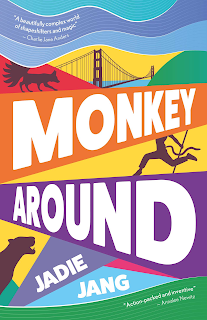
Monkey Around by Jadie Jang (Solaris)

Monkey Around is the debut from author Jadie Jang (aka Claire Light), an American urban fantasy which puts a ton of thought into "what would a secret group of mythical figures who live among humans look like in a nation formed of waves of immigration?" Protagonist Maya lives in the San Francisco of 2011, where she divides her time between volunteering for the Occupy movement, working at the local supernatural hangout, and running an Asian American magazine. She's also trying to work out exactly what's up with her weird blend of shapeshifting and reality bending superpowers: as a mixed race Asian adoptee with minimal ties to her birth culture, Maya has been dissuaded from trying to pursue her heritage too directly, but that doesn't mean she's not interested in knowing what, exactly, she is. (The reader will know, from the first sentence if nothing else, that she's an incarnation of the Monkey King... but Maya's going to take her time getting there, and you'll have to go with it.)

When shapeshifters start getting murdered, and a handsome crush enlists Maya and her boss Ayo to track down his sister, Maya finds herself drawn into a dangerous plan involving a powerful magical artefact: a stick that appears to have a weird hold on its owners. Maya's hunt for Chucha - a Nahual shapeshifter whose culture stems from the Aztecs - brings her into the orbit of said crush and his family dynamics, and when the shapeshifter murders start to take on a more personal turn, everything comes together in a neat, entertaining mystery, with Maya's strong narrative voice making the whole thing a very enjoyable read. There's a lot of set up for later instalments here: in particular, there's a second love interest who remains mysterious (BUT TOTALLY SUPERNATURAL) and there's clearly going to be some choices further down the line. While I'm not totally enamoured with those dangling plot threads, I am definitely on board for more of Maya's journey of self-discovery, and I'm excited to see where future books take the whole concept.


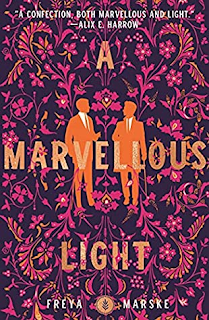
A Marvellous Light by Freya Marke (Tor Books)

Freya Marske's fantasy romance had a lot of buzz in my circles, and I'd be lying if I said I wasn't attracted by that cover alone: it's so pretty! So colours! Set in a version of England where magic is real and runs in old, wealthy families who go to some lengths to conceal themselves from the rest of society. Robin Blyth is a young baronet working at the civil service, trying to build a career in the shadow of his deceased parents' complicated legacy. When someone with a grudge against him appoints him to a bizarre, unheard of cabinet post after the disappearance of its former occupant, he isn't expecting to end up as liaison to a magical world he had no idea existed. His magical counterpart Edwin Courcey certainly isn't expecting a completely non-magical person to end up in the post, and before anyone can wipe Robin's memories and leave him none the wiser, he ends up the recipient of a strange, painful magical curse. The only solution lies in Edwin's family library, but that means Edwin needs to return to the family that consider him a weak disappointment, and try to shield Robin from the excesses of his sister and her gang of blustery, overzealous friends. Also, Edwin thinks Robin is cute, and Robin thinks Edwin is cute, and this being Edwardian England complete with period-appropriate homophobia, that takes some time to figure out.

A Marvellous Light is very, very good fun, driven by two characters who it's impossible to not want good things for. Both Edwin and Robin are a mess in quite different ways before coming into each others' orbit, and the way Robin reaffirms Edwin's magical talents is particularly noteworthy, hitting a lot of great emotional beats and creating a magical world full of stuffy, narrow thinking that we want to see both men triumph over (also, their sisters and female colleagues should triumph over it too - the other dudes can mostly fuck off). More books are planned, although as this is a romance series they will be following different characters: there's more of this world I'd like to see fleshed out, but this is a jolly entertaining way to kick things off.

Read the full review of A Marvellous Light by Roseanna here!


Adri, Nerds of a Feather co-editor, is a semi-aquatic migratory mammal most often found in the UK. She has many opinions about SFF books, and is also partial to gaming, baking, interacting with dogs, and Asian-style karaoke. Find her on Twitter at @adrijjy