The other side of Chandler's Los Angeles
Regular readers know of my Chandler obsession--the unshakable, near-religious belief that his Marlowe novels and short stories are the most literary works genre ever produced, and contain enough mesmerizing prose and astute social commentary to transcend genre and sublimate to significant works of literature. They are, however, products of their time; nowhere is that more apparent than in Chandler's dismissive treatment of race.
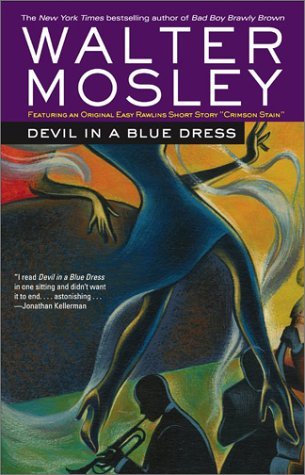
Walter Mosley's Devil in a Blue Dress is a text both indebted to and in conversation with Chandler. It takes place in 1940s Los Angeles, stars a hard-nosed, persistent and stubbornly moral protagonist who takes a punch better than he throws one, and centrally involves a femme fatale. But if Chandler's fiction is ultimately about the relationship between corruption and class division in 1940s Los Angeles, then Devil in a Blue Dress is about those same things refracted through the deleterious race relations of the time.
It's an important point of contrast with Chandler, not least because of Marlowe's ambivalence towards the African-Americans he encounters. But it also made me think about the contrast between that time and this one. Though American society has improved, racism-wise, in any number of meaningful ways, Mosley makes the implicit point that in other ways things have gotten worse. Rawlins' LA is a place of economic opportunity, where manufacturing jobs are plentiful and social mobility is possible even for the city's downtrodden. Compare that with American inner cities of today--disproportionate populated by ethnic and racial minorities, and where jobs and opportunity are scarce--and today doesn't look so hot. In that sense, Devil in a Blue Dress is also thematically focused on a death of a specifically black version of the American Dream, which emerged in the immediate post-war days and closed sometime after "white flight" (i.e. re-segregation), de-industrialization and the crack epidemic gutted the American inner city during the 1970s and 1980s.
Howvever, though Devil in a Blue Dress addresses some weighty issues, it never feels heavy. Easy Rawlins is a likable rogue, a borderline drunk and a working stiff who has issues with his boss (who, for the record, is kinda racist). He's a homeowner and proud of it, but also has a problem--if he can't pay the mortgage, the bank will foreclose, and, well, he just told his racist boss where to shove it. Along comes Joppy, an ex-boxer turned speakeasy proprietor who might just have a line on some work for Easy. An old associate, DeWitt Albright, is looking for a white girl who was last seen in Watts. Joppy tells Easy it will be a cakewalk, but Easy has a bad feeling about Albright. But as it turns out, that bad feeling is only the tip of the iceberg...
Devil in a Blue Dress is a smart and perceptive novel whose social commentary blends into the background and never gets in the way of the fun. I certainly enjoyed reading it. At the same time, it does feel like Mosley is still working through the formula here. There are too many murders and, well, too many characters--many of which never really get much in the way of development. As a result, a couple major elements of the plot feel forced. Incidentally, the paperback version I bought also includes a short story, "Crimson Stain," which was written a number of years later and, perhaps uncoincidentally, feels a lot more sophisticated. But if that's what I have to look forward to with this series, then sign me up for the whole thing.
The Math
Baseline Assessment: 7/10
Bonuses: +1 for doing social commentary the right way; +1 for bringing race into a literary conversation with Chandler;
Penalties: -1 for excess characters; -1 for "huh?" moments.
Nerd Coefficient: 7/10. "A mostly enjoyable experience."
***
POSTED BY: The G--purveyor of nerdliness, genre fanatic and Nerds of a
Feather founder/administrator (2012).
Reference: Mosley, Walter. Devil in a Blue Dress [Washington Square Press, (1990) 2002]
- Reviews
- _Book reviews
- _Film and TV Reviews
- _Game Reviews
- _Thursday Morning Superhero
- _Short Fiction Reviews
- Lists
- _New Books Spotlight
- _6 Books Posts
- _We Rank 'Ems
- Features
- _Interviews and Blogtables
- _Talking About Books
- _The Hugo Awards
- _Mini-Projects
- Projects
- _Nerds on Tour (2020)
- _The Hugo Initiative (2019)
- _Feminist Futures (2018)
- _Dystopian Visions (2017)
- Meet the Flock
- Review Policy
- Home
Showing posts with label Raymond Chandler. Show all posts
Monday, November 24, 2014
Monday, May 19, 2014
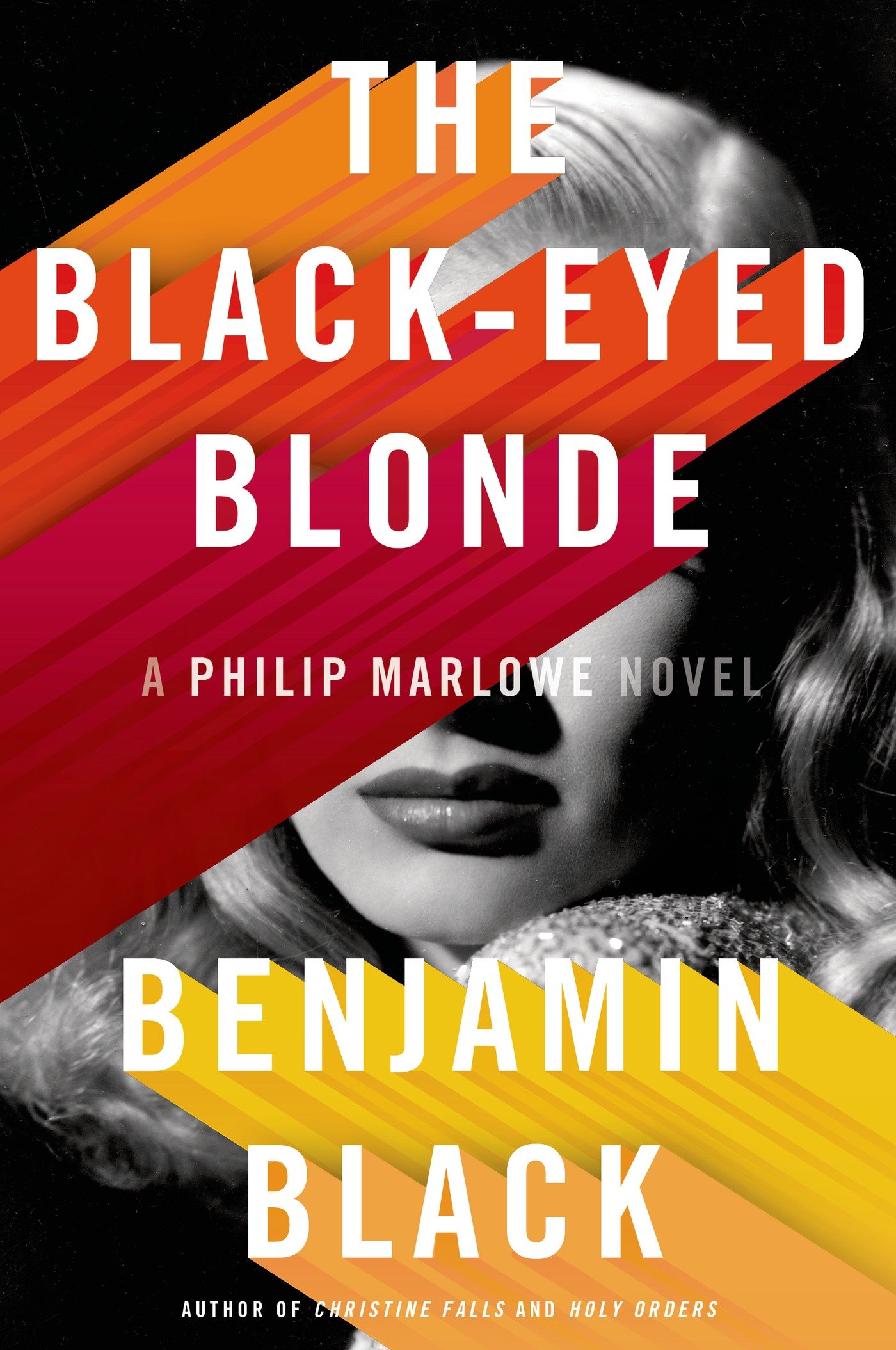
Microreview [book]: The Black-Eyed Blonde by Benjamin Black
Black, Benjamin. The Black-Eyed Blonde
I confess that I am a bit of a Raymond Chandler fanatic. I've read each of the seven Marlowe novels at least twice, and some several times more than that. I consider Chandler to be one of the most significant novelists of the Twentieth Century, and easily the best stylist genre fiction has ever produced.
Over the years, I've read a number of homages to the master, from lighthearted spoofs to more serious fare. The best of these, like Jonathan Lethem's science fictional Gun, with Occasional Music
The Black-Eyed Blonde by Benjamin Black, otherwise known as Irish novelist John Banville, does not have that luxury. After all, it is not an homage, but a new Marlowe novel. Thus Banville faced the distinct challenge of producing something that would evoke Chandler but not just make you wish you were reading The Big Sleep
The last time someone tried to do this was in 1989, when crime novelist Robert B. Parker completed Chandler's unfinished manuscript for Poodle Springs
On that note, let me begin by saying that The Black-Eyed Blonde is orders of magnitude better than Poodle Springs. It's a crisply, efficiently-written and briskly-paced detective story set in Marlowe's Los Angeles. While Banville isn't exactly breaking new stylistic ground here, the book is an undeniably well-crafted and smart bit of hardboiled detective fiction.
Yet Chandler did not write "well-crafted and smart bits of hardboiled detective fiction"--he wrote artistically significant literature that wore the clothes of hardboiled detective fiction, and this is not that. Banville by his own admission views crime fiction as "cheap." And a lot of it is. But Chandler's fiction is anything but, and in the end The Black-Eyed Blonde does unfortunately feel like a cheapened rendition of the genuine article. Nearly every sentence Chandler wrote spawned a cliche, and at times it feels like Banville is channeling the cliches rather than the authentic item. Banville's Marlowe is too direct, too reliant on simile over metaphor and, well, acts a bit too much like Sam Spade.
So did I like it? Sure--though I didn't love it. Perhaps, if I'm feeling reflective, I might admit that I never could. But this is only partially my problem. After all, not only does Banville try to sell us on the authenticity of his Marlowe, but he fuddles with Chandler's penultimate achievement, The Long Goodbye
The Math
Baseline Assessment: 7/10
Bonuses: +1 for being a good homage to Chandler's Marlowe.
Penalties: -1 for "but it's just not Marlowe"; -1 for thinking The Long Goodbye needed or even wanted a sequel.
Nerd Coefficient: 6/10. "Enjoyable, but the flaws are hard to ignore."
***
POSTED BY: The G--purveyor of nerdliness, genre fanatic and Nerds of a
Feather founder/administrator (2012).
Friday, April 5, 2013
Microreview [film]: Lady in the Lake
The Meat
Lady in the Lake is the kind of movie that receives mention and has some clips featured routinely in documentaries about film noir because it's a movie with a capital-G Gimmick. For this Raymond Chandler adaptation, the entire movie was shot in "first person," meaning that the camera stands in for detective Philip Marlowe himself. Other actors address their conversations directly to the camera, if somebody punches Marlowe, or kisses him, they punch or kiss the camera, and if Marlowe looks in the mirror, we see...well, not the camera, but actor Robert Montgomery, who also directed.
This whole project was Montgomery's brainchild, and nobody but him seems to have cared too much for the idea. Raymond Chandler never liked the idea (and likely didn't care for MGM using somebody else's adaptation of the book, after Chandler had already adapted it himself), the studio didn't like it and made Montgomery shoot some interstitial segments where he addresses the camera directly, and audiences didn't like it either, since they paid their two bits to see Robert Montgomery in a movie, not listen to him in a movie. But it's certainly an ambitious directorial debut, and Robert Montgomery got what he wanted out of it, which was an opportunity to move from in front of the camera to behind it, where he would spend most of the rest of his career.
But how's the movie itself? More or less mediocre in every way. The plot is your standard Chandler-esque maze of lies and double-crosses, this time concerning a web of mistresses of different men, powerful each in his own way, and each of whose trails cross somehow in the town of Little Fawn Lake (think Big Bear, for those of you familiar with Los Angeles). The movie differs considerably from its source material, focusing most of its energy on the relationship between Marlowe and his client Adrianne Fromsett, whose role was expanded for the movie. It lacks Chandler's edge and lyricism, and what results is a shallow but enjoyable detective story with some unique camera work.
The Math
Objective Quality: 6/10
Penalties: -1 for noir stalwart Audrey Totter's repeated and cartoonish expressions of shock, anger, and/or disgust, all directed right at the camera lens; -1 for the cop-out interstitials that break into the first-person POV conceit arbitrarily
Bonuses: +1 for its place in the Movie Gimmicks Hall of Fame; +1 for Robert Montgomery being the father of Elizabeth, my favorite TV witch ever
Nerd Coefficient: 6/10. Still enjoyable, but the flaws are hard to ignore.
![]() |
| The spectacular new Raymond Chandler picture! In which Audrey Totter simply can't BELIEVE a single damn thing anyone tells her! |
[See explanation of our non-inflated scores here.]
Labels:
classic,
film,
microreview,
noir,
Raymond Chandler,
Vance K
Wednesday, April 3, 2013
Microreview [book]: The Lady in the Lake by Raymond Chandler
The Meat
Every year I try to re-read one of Raymond Chandler's seven completed novels, and though other interests and commitments sometimes win out, I did manage to have a second go at The Lady in the Lake this year [collected in a lovely Library of America edition with the rest of his later novels]. It was a fun experience, as it's the one I've read the fewest number of times, and as such, remember the least well. But there's also a reason for that--The Lady in the Lake simply isn't Chandler's best.
Still, Chandler at his worst is on par with pretty much any other genre writer at his or her best. Or at least close. Genre writers, you see, are often quite good at producing well-paced and memorable stories, but it's rare to see them elevate their game to the level of art. In Chandler's case, that's pretty much how it happened. In the beginning, he was a company man who liked pulp magazines and figured, if he could copy the Perry Mason formula, he could make some money as a writer, maybe even break into Hollywood. It just so happened that he had a way with words.
That said, there are times when when Chandler reminds me more of those literary fiction types who like to slum it in genre, the kind for whom genre is a vehicle and a means to an end rather than the ends in themselves. Like Thomas Pynchon, perhaps, or Margaret Atwood (though without Atwood's tortured relationship to science fiction, since Chandler never had a problem identifying with the detective novel). The shoe does seem to fit, especially when you consider the fact that, while the Marlowe novels are atmospheric and deeply compelling human dramas, they aren't necessarily that good as mysteries.
In many ways, The Lake in the Lake is the novel that best exemplifies this dynamic. Action begins with private investigator Philip Marlowe at the office of one Derace Kingsley, a perfume executive whose wife has disappeared under mysterious circumstances. He's received a telegram from El Paso, Texas, in which Crystal Kingsley informs him that she's running off to Mexico with shady casanova Chris Lavery. Only, when Kingsley runs into Lavery in Los Angeles, it becomes clear that this isn't what happened. Kingsley has Marlowe go up to his cabin at Puma Point (the real-world's Big Bear, for the curious), where Crystal Kingsley was last seen. Marlowe encounters Bill Chess, the alcoholic caretaker of the Kingsley property, only to find a body floating in nearby Little Fawn Lake. Several more murders occur, and Marlowe gets tangled up with a shady doctor, corrupt Bay City (Santa Monica) cops and a rather intricate game of bait-and-switch.
While entertaining, the story is convoluted, meandering and hinges on a few implausible plot mechanisms. But that isn't why we read Chandler. Rather, it's for the tight, playful and elusive dialogue, where more is said between the lines than in them. It's for the heady atmospherics--the cloying menace of 1940s Los Angeles, the grit and grime underneath the Hollywood glitter--and for the endlessly complex characters, with their opaque motivations and rich histories of pain and heartache. And it's for Marlowe himself, a tragic figure trying to live by a code in a world where corruption and malfeasance are the norm, and where any attempt to swim against the stream is pretty much doomed to failure. In such a world, toughness isn't measured by how you throw a punch, but how you take them. Marlowe sure does takes his share, and he keeps coming up for more. But he knows as well as we do that it can't go on forever. He has his victories, but they are small and pyrrhic at best.
The most memorable moments in The Lady in the Lake come from Marlowe's interactions with Bay City detective Al Degarmo and Kingsley's secretary, Adrienne Fromset. Degarmo initially appears to be a cardboard cutout of the sinister and perhaps a little slow cop on the take, but he turns out to have a peculiar, complex relationship to the events at hand, and a slippery set of motivations. It's never quite clear, up until the penultimate scene, what he'll do and why. Then there's Fromset, who Marlowe quickly (and correctly) recognizes as the most competent person in the whole affair, and whose ultimate role in the drama is left ambiguous. There's more than Chandler tells us, but we're left to ponder what that might be on our own.
All that said, The Lady in the Lake fails to measure up to some of Chandler's other novels. It doesn't have the revolutionary exuberance of The Big Sleep, which mapped out new crime fiction territory so thoroughly that most of it is now cliche. And, though weighty, it lacks the emotional heft of Farewell, My Lovely or The Long Goodbye. Still, if you like crime fiction, and especially if you like the American roman noir, you owe it to yourself to read this book. Just maybe not as often as you read a few of the others...
The Math
Baseline Assessment: 9/10
Bonuses: +1 for the writing, especially the dialogue; +1 for Degarmo and Fromset.
Penalties: -1 for not actually being a well-constructed mystery; -1 for a the "yeah, right" ending.
Nerd Coefficient: 9/10. "Very high quality/standout in its category."
Labels:
books,
crime fiction,
noir,
pulp,
Raymond Chandler
Subscribe to:
Posts (Atom)