Showing posts with label True Detective. Show all posts

Wednesday, February 21, 2024

Review: True Detective Season 4

The dark and icy fourth season of True Detective is the first deserving follow-up to the incredible first season, and Jodie Foster & Kali Reis help showrunner Issa Lopez stick the landing in the finale. (Spoilers abound below.)


It's been a cold winter here in Georgia, and my six Sunday night journeys to Night Country have felt strangely similar to True Detective season 4 as it explores the dark and frigid world of Ennis, Alaska. There are no one-eyed polar bears or months-long night in Atlanta, of course, but isolation, cabin fever, and icy winds give you a taste of what life at the edge of the world would feel like — basically microdosing Alaska.

And that claustrophobic and cold weather-induced feeling is such an important part of this season. Arctic horror has a long and storied history in the popular imagination, starting with Mary Shelley's Frankenstein and progressing along to tales of Franklin's lost expedition (Shout out to Dan Simmon's The Terror, a book that I think about at least once a week) and John Carpenter's The Thing. Why is Arctic horror so effective? Because cold, icy dark is inimical to life. Because it's inescapable, unforgiving, and just damn uncomfortable. And maybe, just maybe, because the kind of chill that months of dark and damp and ice make you believe that anything could be possible, even monsters on the frozen sea. 

A brief recap

This season starts with the death of a team Arctic research scientists who, for reasons unknown, ran out into a blizzard, undressed, and froze together into a corpsicle. Chief Liz Danvers (played with incredible aplomb by Jodie Foster) and Trooper Evangeline Navarro (the divine Kali Reis) work to unravel the mystery, tied up as it is with the local pollution-generating mine, a prior cold case concerning the murder of local Iñupiaq protester, and possibly even her vengeance-seeking spirit. 

Along with the plot-driven elements, we also get fascinating character studies of the people who choose to live in Ennis, and the things that haunt them. 

Danvers is a cold, brusque and no-nonsense detective — she's also utterly unliked by most of her coworkers and a good chunk of the town's residents. Try as I might though, I just couldn't bring myself to dislike her. Jodie Foster is too intelligent, too charming, and too damn competent to truly be an Arctic Karen, despite her best efforts. 


Navarro is the opposite. While she's tough, intelligent, and good at her job (and a military vet), she really cares about people. It's why she hasn't given up on the Annie K. cold case from six years prior. She threads the needle delicately with her Iñupiaq heritage, turning to it sometimes while also trying to stand apart as an officer of the law. 

There are tons of other fascinating characters, from the monk-like scientists at Tsalal research station to my favorite character in the show, Rose Agineau (played by Fiona Shaw). 

She lives on the outskirts of town, butchers wolves, listens to Tim Buckley, and throws elaborate Christmas dinners for herself. She's a former professor but also the kind of person you call when you need to hide a body (she knows you have to puncture the lungs so a body won't float under the ice). I would watch an entire season of Alone with her as the star (and yes, she would absolutely win it all). 

The finale, explained

We get a super-sized episode to tie everything together, and it's fairly safe to say that nobody guessed this one. It turns out that 6 years ago, Annie K. was killed in a fit of rage by the scientists at Tsalal when she broke in and destroyed their years of research. The scientists knew that the mining company was polluting Ennis, and they encouraged this since it was melting the ice faster and helping their tests. Hank Prior disposes of the body for the mine bigwigs, and then her case is closed with no further investigation. 

So, who killed the scientists, then? Eventually, we find out, the cleaning ladies and local worker women discover what happened, and they barge into Tsalal and drive the men out onto the ice. It's an interesting turn of events, because in the first episode we learn a little about these scientists, and they seem like quiet, intellectual milquetoast types. Danvers goes through their belongings and sees a Wilco t-shirt, a Cormac McCarthy novel, and Ferris Bueller appears to be a station favorite. The scientists appear to be the liberal kind of men that are nice dads, that wouldn't dream of hurting a woman. 

But when their precious research (and years of hard work) are destroyed, they killed Annie K. in a riotous rampage, stabbing her dozens of times. 

We learn the truth in a powerful scene where the detectives question these women about the events that transpired. The viewer gets to witness individuals who are usually voiceless (native women) being given the power to enact justice when the law can't — or won't. 


Seeing a group of women like come together gives me the same rah-rah feeling I got from the Vuvalini in Mad Max: Fury Road. Action movies and revenge stories aren't usually the realm of older women and minority characters. When we get to see it, it's revelatory. 

A brilliant choose-your-own-adventure of supernatural belief


In this fantastic interview with showrunner Issa Lopez, she talks about her intentions with the mythological and supernatural elements of this season. Every single thing that happens in the show has a reason grounded in reality. But just how far you want to take it depends on your point of view, and what you want to believe. In a setting as spooky as Night Country, you can really lean into it. Over the past few weeks, I watched countless TikToks of people speculating on all sorts of conspiracy theories and supernatural bit-parts that people believed where actually happening. My favorite was idea that Rose was a ghost à la Sixth Sense

We get callbacks all throughout to the first season of True Detective, from the swirled line imagery and Rust Cohl's Alaskan-born father to the infamous "Time is a flat circle" line. It's never completely explained what all of these things mean, but they add up to create a spooky vibe that can make you start rabbit-holing into various ideas.

Adding to the supernatural timbre of the show are certain aspects of the Iñupiaq folklore, specifically Sedna, the goddess of the sea. Peter's son is drawing a picture of her way back in episode one, which is our first introduction to her. In the myth, she angers her father and he cuts off her fingers and throws Sedna off the side of his kayak. She falls to the water below and becomes the ruler of the monsters of the sea, her fingers becoming sea creatures like whales and walruses.

At the end of the day, though, the show isn't focusing on the supernatural — it's about people. The first season was the same way, too (though people may argue this point). Homicide detectives, the focal point of each season of True Detective, see the absolute worst parts of humanity. They have to do their job while not crumbling inside when faced with rage, torture, anger, racism, misogny, everything that contributes to and leads up to one person killing another. Rust Cohle in season one takes a nihilistic, pessimistic approach. In this season, we see a different approach. Danvers is haunted by the death of her family, but she still is a mother at heart and continues to keep trying to make a difference.

Navarro loses everything, and while the show is ambiguous about her destiny (Does she die? Does she leave? Is she on a walkabout away from Ennis?), we learn that her Iñupiaq name means the "return of the sun after a long darkness” — I choose to believe she settles with her past and looks to the future, and lives.


Unanswered questions

  • Where has the tongue been for 6 years? 
  • Has it been in a freezer like a piece of wedding cake?
  • What happens to Navarro at the end?
  • Will the mining company ever face justice?
  • Did Hank ever have a real mail-order bride?
  • How did that polar bear lose his eye?

--

The Math


Baseline Score: 8/10


Bonuses: Stellar performances by the lead actors; a feminist twist ending; coldness is personified in the icy, blizzardy city of Ennis


POSTED BY: Haley Zapal, new NoaF contributor and lawyer-turned-copywriter living in Atlanta, Georgia. A co-host of Hugo Award-winning podcast Hugo, Girl!, she posts on Instagram as @cestlahaley. She loves nautical fiction, growing corn and giving them pun names like Timothee Chalamaize, and thinking about fried chicken.

Tuesday, September 15, 2015

WE RANK 'EM: Shows That Were Awesome and Then Sucked

In no particular order...

1. Lost

For a while, I dedicated any and all free time to binge-watching Lost via Netflix. I had no idea what was going on, but that was all part of the fun. "The Others? The numbers? The Dharma Initiative? GIMME MOAR!" Then the show reached its natural end point with the season 3 finale and...kept going. Only now it was about time travel and something.

It isn't that seasons 4-6 were bad, per se; it's just that show lost its focus and went on tangents that eroded the sense of wonder developed in the first 3, while never quite replacing it with something of equal value. Instead we watched that rarest of rare birds--the 'A' grade network TV drama--slide into 'B-' range.

2. Revenge

In its inaugural season, Revenge introduced us to a corrupt financier and his wife, who once betrayed her lover to protect her husband's assets; and to Emily Thorne, the daughter of said lover and a highly-trained revenge ninja, who is now singularly focused on exacting vengeance from all involved. It was ridiculous and over-the-top, but delightfully so. Then, in season 2, we found out that it was really all the work of some illuminati-style conspiracy and the eternal struggle of the revenge ninjas to stop their evil plotting. BARF! Though the showrunners tried to right the ship in season 3, the magic was gone. And so were the ratings.

3. Heroes

Heroes was cool before the Marvel cinematic universe really pushed superheroes into the moving picture spotlight (yes, I know--there had been major superhero movies prior to that, but let's face it: superhero films are bigger and more important now than ever). It had likable characters, a strong central mystery and just enough moving plot pieces to keep you riveted without getting overcomplicated. Unfortunately, the second season was poorly plotted, featured tiresome romance tangents and characters who suddenly began behaving out of character. (Mohinder the spider, anyone?) Ratings plummeted by 15%; the show sputtered on for a couple more seasons, then died an unceremonious death.

4. The Simpsons

Unarguably the greatest television show of all time...for a few years. That thing that has the form of The Simpsons but neither its heart nor soul, and which has continued to run since the year 2000? I don't know what that hot garbage is.


5. Law & Order 

I used to watch a LOT of this, and by a LOT, I mean the new one every week and a shit ton of episodes in syndication per week. There was a formula: cops discover scene of crime; cops investigate crime; early suspect turns out to be wrong; second suspect turns out to be right; lawyers build case; lawyers often but not always get a conviction. The high point, in my opinion, were the Briscow/Green and McCoy/Southerlyn years. But the formula was plug-and-play--you could pick any number of cop and lawyer combinations, and provided the formula remained (and the show remained physically in New York, not some fake-ass "New York" set at Universal Studios), you could be guaranteed a watchable show. Yet in the later years, the showrunners evidently thought we really wanted more plot twists, because that's what we got. Twist after after fucking twist. So many, in fact, that Law & Order was cancelled after an epic 20-season run--the vast majority of which had not involved said unwanted twists. Oh, and SVU? Same as above, only worse with the twists...and inexplicably still on the air! Occasionally I get the urge to watch it. This is invariably a very bad life decision.


6. True Detective

This is it, folks--a descent from the absolute pinnacle of small-screen achievement to midway down the $5 bargain bin at Best Buy. No, scratch that--if there is any justice in the world, Best Buy will refuse to sell you a DVD of season two on principle. So what went wrong? Well, think on this: season one worked because creator Nic Pizzolato had a singular vision, which was then executed to perfection by director Cary Fukunaga and actors Matthew McConaughey and Woody Harrelson. It featured: (a) a complex narrative structure; (b) haunting visuals; and (c) absurdly good performances. And that stuff was so good that we not only forgave the hokey, "dude in college who took philosophy 101 and hangs out in cafes trying to impress girls with how deep he is" dialogue, we ate it right up! So how do you follow that up? With a story that lacks all of these things, and worse, replaced its auteur with...the guy who directs Fast and Furious movies. Now try pairing that with "dude in college who took philosophy 101 and hangs out in cafes trying to impress girls with how deep he is" dialogue, and see what it gets you. As far as I'm concerned, well, now now I want to punch that dude in the face. I have never, and probably never will be, as disappointed with a TV show as I was with season two of True Detective.

Oh, and future showrunners note: when the thing you're putting out there is hot garbage, you *might* want to reconsider taking that cheap shot at the guy who made people want to watch it in the first place. Truly embarrassing.


***

POSTED BY: The G--purveyor of nerdliness, genre fanatic and Nerds of a
Feather founder/administrator (2012).

Monday, December 22, 2014

2014 Holiday Gift Guide: The G

Hard to top all the excellent gift ideas my fellow nerds of a feather have already suggested, but in case you need some last-minute ideas, here goes...

-The G 

1. Kindle Voyage/Paperwhite or Kobo Aura


At $99, the Paperwhite is an incredible value. The Voyage, meanwhile, is arguably just a dressed up Paperwhite at twice the price. However, the higher resolution and better backlighting do make a difference to those who, like me, suffer from chronic headaches/migraines. I mean, that’s why I bought a dedicated e-reader in the first place—to be easier on the eyes—so if that’s a priority, and you plan to use the thing a lot, it makes sense to spend a little more to get the one that best fits your needs. For those wary of getting sucked into the Amazon ecosystem, the Kobo Aura also has a great reputation. 


2. True Detective: Season One Blu-Ray

The Best Show Ever, says two random guys you should definitely listen to. And at under $20, the DVD edition is practically a steal (you'll spend a bit more for the blu-ray). Sit back, relax and mainline the secret truth of the universe.

Buy: True Detective: Season One Blu-ray or DVD.

3. LEGO Bricks & More Creative Bucket (607 pieces)

Have kids? Don’t have kids but wish you could recapture the creative wonder of childhood? Well, look no further than this big ol’ bucket of Legos! Note these are just the colored blocks—no themes, no branding, just your imagination and 607 pieces to build whatever you can think of.

Wednesday, May 28, 2014

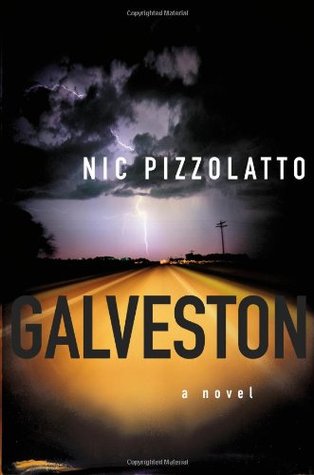
Microreview [book]: Galveston by Nic Pizzolatto

Pretty but Uninspiring


To feed my borderline unhealthy obsession with True Detective, I tracked down a copy of show creator Nic Pizzolatto's crime novel Galveston. I wasn't exactly sure what to expect, though "gritty," "artsy" and "weird" all seemed plausible--particularly after reading Dennis Lehane's glowing review in the New York Times. Turns out Galveston is plenty gritty, but not nearly as ambitious or abstract as I wanted it to be.

Galveston tells the story of Roy Cady, an enforcer for a mid-level gangster in New Orleans. Cady finds himself in a tight situation and so hightails it to the eponymous city on the Gulf with hard case Roxy and a young child in tow.

Galveston is fairly classic noir, but as I outlined in my Friday Five for pornokitsch, noir basically comes in three flavors:


1. The Hardboiled Thriller, in which a stubborn and ethical hero pushes back against dark and corrupt world, ultimately settling for small, symbolic victories against a backdrop of general hopelessness (e.g. Dashiell Hammett, Raymond Chandler).

2. The Sadsack Tragedy, in which a well-intentioned but weak-willed antihero attempts but is unable to escape the clutches of said dark and corrupt world (e.g. James M. Cain, Jim Thompson).

3. The Revenge Fantasy, in which a sociopathic product of the dark and corrupt world seeks revenge against its agents, yet is unconcerned with changing or improving that world (e.g. Patricia Highsmith, Richard Stark). 

The genius of Galveston is that Pizzolatto keeps us guessing as to which one Cady's story will turn out to be. And the book is beautifully written too--sharp, evocative and peppered with passages that are, quite simply, dazzling.

Unfortunately, Galveston often feels weighed down by reliance on the tropes of the genre--the tough-but-caring criminal, the hard case (yet vulnerable!) love interest, the innocent child, etc. It isn't that Galveston is bad--it's not at all; it's that Galveston plays things a bit too safe. In other words, it's no True Detective.


The Math

Baseline Assessment: 6/10

Bonuses: +1 for Pizzolatto's gorgeous prose.

Penalties: -1 for "meh."

Nerd Coefficient: 6/10. "Enjoyable, but the flaws are hard to ignore."

***

POSTED BY: The G--purveyor of nerdliness, genre fanatic and Nerds of a
Feather founder/administrator (2012).


Pizzolatto, Nic. Galveston: A Novel [Scribner, 2011]

Tuesday, March 11, 2014

True Detective Conquers All

Today Philippe and I mourn the passing of True Detective, a show that will return but in fundamentally different form. We present our eulogies, point-counterpoint style, though in truth we agree far more than we disagree. WARNING: some heavy-duty spoilers, so don't continue if you haven't finished the series yet.


The G - Remember when people used to argue over whether The Wire or Breaking Bad was the best American TV show of all-time? Yeah, fuck that. Sure, I still haven't gotten around to Breaking Bad (I know, I know), but here's the thing: True Detective isn't just the best TV show I've ever seen, it's pretty much the best TV show I can imagine ever seeing.

Now, I could cite any number of things as proof of its greatness: the acting, the dialogue, the depth of characterization. But plenty of other Golden Age of Television shows have these things as well. And it's not the deep social commentary either. The Wire is, in essence, a literary ethnography of the American inner-city and its on-going decay; Breaking Bad, I've heard, does the same for the suburban middle-class; The Sopranos for the American family; etc. True Detective has that kind of stuff too, though its philosophical musings are a bit more abstracted.

It is worth lingering on the acting for a minute, though. It's a thing now for well-regarded film actors move to the small screen, but most of them, frankly, kinda blow. I mean, that Christian Slater/Steve Zahn bullshit ABC is currently trying to smear on the walls? Come on. Matthew McConaughey's portrayal of the idiosyncratic pessimist philosopher/cop Rust Cohle, on the other hand, is a revelation--a portrayal so focused and purposive that, for each 60 minute episode, it positively annihilates any memory of Dazed and Confused. For 60 minutes, McConaughey is Rust Cohle. And as the show progresses, it dawns upon you that Woody Harrelson's meat-and-potatoes cop Marty Hart may in fact be the more complex character. It's a subtle portrayal, which McConaughey's Rust is not, and that's partially attributable to the writing and direction, but it's also testament to how fucking good these actors are in these roles.

And then there's Michele Monaghan's Maggie Hart. She's has gotten some flak for her "vindictiveness" from some, and written off as a plot device by others, but those are shallow readings in my book. Maggie is a good mother and wife driven to the edge by her philandering drunk of a husband, and who, when she reaches that point of no return, stands up to Marty and refuses to back down--even when he threatens violence. This is a scene about consequences (for both Marty and Maggie) of the choices we make, and about agency--Maggie's agency. To the degree that it is about Marty and Rust, it exists to outline the uncomfortable relationship between Marty's personal misogyny and the gendered violence he and Rust confront during the course of their work as detectives.

It is also worth lingering on that confrontation scene, because in fact no violence comes. And for a show centered on the serial murder of women and girls, True Detective for the most part eschews the exploitative, sexualized and festishized violence that plague this category of show, and resists splatterpornography. True Detective lingers on the threat or intimation of violence, not the cheap thrills of graphic cruelty and gore. 

And I could go on about how True Detective, more than any other show I've seen, manages to be both highly critical of religious power and deeply respectful of religious beliefs and religious people.

But while of these things are unambiguously good, if I were to identify the elements of this show that are near unprecedented, the things that set it apart from just about anything ever made or anything that will ever be made for the small screen, American or otherwise, it would be two things and two things only.

No American show has ever had such a clear artistic vision

This is art, the way Ingmar Bergman and Andrei Tarkovski films are art. Plenty of Golden Age shows have great dialogue, memorable characters and heady atmosphere. But True Detective is the first show I've seen since Twin Peaks that cares--I mean, really, really cares--about what image and sound can actually do. But Twin Peaks was only really good in that way when David Lynch was in the director's chair. Cary Joji Fukunaga, by contrast, directs all eight episodes. True Detective has a distinct, consistent and incredibly well-implemented artistic vision. It's slow, ponderous, abstracted and careful, the way The Seventh Seal or Solyaris are slow, ponderous, abstracted and careful.

There are so many little moments of wonder in True Detective, from the cultish death scene that opens the premiere to the quasi-Lovecraftian horror of Childress' Carcosa, from the overhead shots of Rust's pickup on the freeway to the panoramic views of Louisiana--its foreboding jungles, swamps and the evidence of humanity's decline. And they fit the script as well as you could imagine. As James Poniewozik writes, on one of my absolute favorite moments in the series:

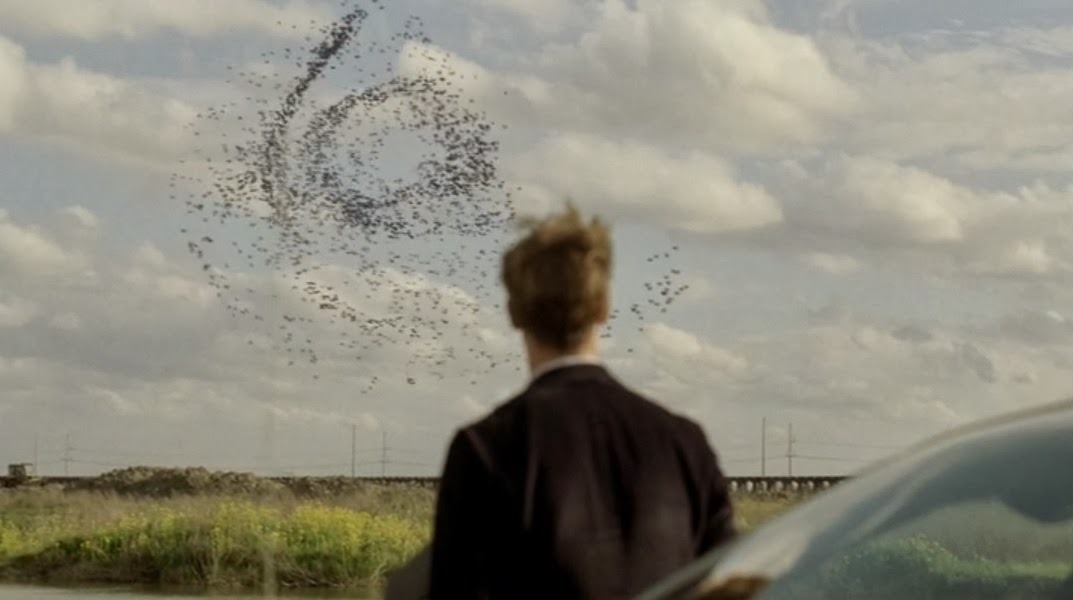
Streetlights streak like heavenly bolts; clouds on the horizon take on an apocalyptic glow; the swamp and backwoods seem haunted. “The visions—there were times that I was convinced that I’d lost it,” Rust says. “There were other times I thought I was mainlining the secret truth of the universe,” and that hits home with a striking visual at the end of the episode, when a flock of birds seems to briefly resolve itself into an intelligible pattern before Cohle’s eyes and ours.

This is the heart of genre darkness

Shows that contain mysteries about the nature of the mystery (Twin Peaks, Lost, BSG, etc.) tend to produce an awkward discourse between writers and fans, where writers drop clues and red herrings, fans develop theories, and writers struggle to create a solution that both satisfies the investigators and still manages to surprise everyone.

The result is almost inevitably disappointing to at least some corners--and True Detective is no different. Sure, True Detective came in familiar packaging--the police procedural, the hardboiled detective story, the hunt for a serial killer, etc. But it kept hinting that it would metamorphose into full-blown horror. There were the little hints sprinkled throughout the season--the recurring patterns, the more-than-coincidental names, the literary references, the signposting. The Yellow King! Carcosa! We grew certain of such things.

But in truth, True Detective used the symbolism and iconography of horror to establish its apocalytptic atmosphere. This is noir, pure and simple, a small-scale holocaust of the human soul--Lovecraft without the tentacled bodies; Revelations without the horsemen.

At heart, True Detective is noir, real noir the way Raymond Chandler wrote it. Not the crapsack pessimism of James M. Cain or Jim Thompson, but the deep anguish of Marlowe's world, where the good take punch after punch and still get up and come back for more; where victories are small but meaningful.

The series ends on an optimistic note, as if to argue that it isn't all meaningless. “Well," Rust says as he looks to the stars. "Once there was only dark. You ask me, the light’s winning.” 

With Fukunaga leaving and the show reverting to direction-by-committee, True Detective may never scale these heights again. Perhaps no TV show ever will. I'm fine with that.


***

Philippe: There was never a King in Yellow. No Carcosa, no black stars, no Hastur emerging from the bayou.

Your disappointment was intentional. There were never going to be any revelations or resolutions, nothing that would make sense of it all. It was just murder. Creepy fucking murders that we all overanalyzed. Like Rust, we frantically sought meaning in True Detective, though we feared, perhaps unconsciously, that there was nothing there there. And there wasn’t.

Nic Pizolatto did something brilliant: he’s made manifest the madness that Robert W. Chambers associated with the The King in Yellow.

The play at the center of The King in Yellow not only drives its readers insane, but it provokes obsession, fervent speculation, and endless theorizing among the masses. Did Pizzolatto intend for True Detective to provoke a similar outcome, to cause us to ponder every possible angle, to fall into an online rabbit hole, Googling “Carcosa” and “the Yellow Sign”? Did Pizzolatto seek to make real the madness Chambers imagined?

I want to say yes. Perhaps I am giving him too much credit. Perhaps our collective obsession was simply a typical reaction to such a symbolically dense work of art.


There’s no need to rehash the theories and speculations—we’ve all been proven wrong. There is a larger conspiracy that remains unsolved. As the anchor revealed, Errol Childress’s relation to the Tuttle clan was denied. Maybe there was witchcraft, bayou voodoo meshed with medieval Catholic folklore. Or maybe the Tuttles are a bunch of sadistic psychos whose pageantry was intended to instill terror in their victims.

The pessimistic season finale would certainly have pleased Rust. There’s no resolution in life, no bigger picture, no hidden meanings. There’s flesh and murder. Pain, suffering, and senselessness. Nietzsche, Lovecraft, and Camus knew this. Rusyy knows it. Some of us have accepted this fact, though most of us cling franticly to mythologies and empty platitudes that prevent us from seeing the world in all its meaningless and chaotic glory. “Everything happens for a reason.” Sorry, things just happen. Like murder.

So, in case you didn’t listen to Rust’s pontificating this season, the finale was there to remind you: there’s no fucking point to all.

The philosophy of True Detective has been criticized by philosophers. I am a philosophical layman, but I feel that this criticism is misplaced. The haters have called out Rust for being a rather shallow and superficial philosophers. But what exactly is wrong with his philosophy? Life is a pointless circle from which we cannot escape. As anyone who has struggled with addiction or bad relationships knows all too well, this is how the world works. This may go against out Protestant American individualist penchant for self-improvement. It’s certainly possible, but few of us ever become better people. We remain who we are. And we keep smoking.

This isn’t Satre’s analytical acrobatics, 50,000 words to make a simple point. This is Camus’s directness, bashing us over the head with the simple and seemingly cruel absurdity of it all. There’s no need to read Being and Nothingness, at least not for most of us. The Stranger and True Detective have the same message: It’s all pointless. (Read this for someone smarter than me making a better argument. I’m a sociologist, after all.)

 Of course, Rust doesn’t live by his own philosophy. He is seeking meaning through solving the case, the paying the debt he and Marty owe. And that’s the point: we all seek meaning, because the chaos of it all is terrifying. Plus, it’s a cop show. That we got any philosophy from it is a considerable accomplishment.

Last point: I absolutely loved the show’s last scene. Rust and Marty finally got to be buddies. Buddies are the best.

***