Showing posts with label spy. Show all posts

Wednesday, January 21, 2026

Anime Review: Spy x Family: Season 3

Spy x Family returns for a bold, emotional, and action packed season 3.

Anime seasons ebb and flow, with some seasons feeling slower and others being absolutely amazing. After an uneven second season, everyone’s favorite fake family has returned in fierce form for an action-filled and emotion packed Season 3. The latest stories of super-spy Loid, lethal assassin Yor, mind-reader Anya, (and clairvoyant dog Bond), are poignant, stressful, and very entertaining.

Spy x Family takes place in Ostania, a fictional 1960’s style country in a cold war with its enemy, the neighboring Westalis. To prevent another devastating war between the neighboring countries, a cynical Westalis super-spy (Agent Twilight) is ordered to spy on an extremely reclusive Ostanian political party leader. The only way to do this is to enroll a child in the elite Ostanian private school that the political leader’s son attends. To create the required fake family, the spy takes on the fabricated identity of psychiatrist Loid Forger and adopts young Anya from an orphanage but is unaware that the child is a telepath. He then meets Yor, a sweet and kind city hall clerk who needs a fake marriage to help with her own job security because, in Ostania, single women over a certain age are often suspected of being spies or insurgents. Unbeknownst to Loid, his new wife Yor is secretly an elite assassin. Yor is genuinely kind when she’s not killing people at her night job, but she is a little clueless when it comes to normal life and she is unaware that mild-mannered Loid is a super-spy. 

Only telepathic Anya knows the truth about her adoptive parents’ true identities but, thanks to her obsession with violent crime tv shows, Anya finds Loid’s and Yor’s hidden occupations to be very exciting. After a wild adventure, the family adopts a clairvoyant dog they name Bond but only Anya can sense Bond’s premonitions about the future. Rounding out the cast are Anya’s grade school classmates, Damian, the political target’s young son, and Becky, a pampered but friendly heiress. We also meet Franky, the comic relief informant, and we meet Yor’s stressed out younger brother Yuri, whom she helped raise after their parents died. Unbeknownst to Yor, her brother is a member of the secret police who is suspicious of Loid. Because Loid, Yor, and Anya are all orphans, the show emphasizes the importance of both biological and chosen family ties. The balance of cuteness and violence is what sets the story apart, especially with a cast of funny supporting characters, all with 1960’s fashionable clothing and a cool retro setting. 

Season 3 has three primary story arcs. The first and strongest arc is the long awaited deep dive into Loid’s backstory. Throughout the series, we are reminded that “Loid” is a fake name for the spy “Twilight” which a fake name for a person whose true identity remains a mystery, even to viewers. Like Sai in Naruto Shippuden, Loid/Twilight has lost his original identity and takes on a new transient persona for every job. Also like Sai, Loid begins to change when he takes on a role in his new found family that reignites his long hidden emotions. But who was Loid before he accepted his life of deception? Other than a few fleeting flashes of a crying child, we know nothing about Loid other than that he suffered the devastation of war. Over a series of beautifully written episodes in Season 3, we learn about Loid’s creative childhood friends, his harsh father, his protective mother, and the idyllic town in which he was born. Without revealing his or his parents’ names, the story shows us how he went from being a playful imaginative boy to being a war orphan, then a jaded soldier (including a poignant early encounter with his current informant Franky), and eventually accepting recruitment into the spy program. After losing everything he loved, he learns to be distrustful of others and to use deceit to survive. However, despite the repeated negative impressions of the Ostonians who attacked his country, it is ironic to see how close and protective he has become of his make-believe Ostonian family. 

The second major story is a terrorist hijacking of Anya’s school bus. Conveniently for the plot, Loid and Yor are unavailable to help, which means this story is focused on Anya and her school crew who are on their own against a violent group of hostage takers. Unlike Loid’s backstory arc, the hijacking episodes have lots of traditional Spy x Family humor notwithstanding the tense premise. Despite the weapons pointed at her, Anya’s mindreading gives her an upper hand with the kidnappers as does Damian’s grumpy bravery and protectiveness, and Becky’s cleverness and loyalty. But the key to cracking the situation occurs when Anya discovers tragedy involving the main hijacker’s daughter and her involvement in a political protest. This gut-punch of sadness sits in sharp contrast to the primary humor and adventure tone of the story. 

The third major story is the spy conflict that ultimately pits Loid against his brother-in-law Yuri in a tense battle of wits and fists. Loid’s Westalis spy agency is betrayed by a double agent who steals their information and plans to sell that data, including the identity of their agents, to Ostania. Loid is ordered to stop the traitor before he makes it to his meeting with the Ostanian secret police. Unfortunately, Yor’s brother Yuri is part of the squad meeting the traitor and he is on the lookout for the famous spy Twilight to make his move. After much speculation throughout the series, we finally see Loid and Yuri facing each other in their true spy versus secret police personas. The result is intense and fast paced excitement with just enough family drama and irony to tie it together. 

A shorter but still funny mini-story is the introduction of Damian’s seemingly cheerful mother, Melinda whose encounter with Yor leads to a day of fun in which Yor repeatedly and inadvertently shows off her superhuman strength. However, in the hijacking arc we later find out that Melinda’s cheerful exterior hides disturbing thoughts and emotions towards her mostly neglected son. 

A common thread throughout the third season is the importance of family in all of its various forms. A second, less endearing theme, is the harm caused by authoritarian regimes and political machinations. Spy x Family’s premise is modeled on regimes that are politically repressive. Yor was originally willing to accept the fake marriage because being a single woman makes her look suspicious in their society. However, in Season 3 we truly get to see how repressive a society Ostania is. We also finally get to see Yor’s brother Yuri in action as an agent of the Ostanian Secret Police. His single-minded dedication to the government is unsettling, especially since it is the same government that puts people at risk just for being “different.” Overall, Season 3 of Spy x Family has the strongest storytelling thus far. It dives into difficult subjects and pauses the humor long enough to do those moments justice. But there are still moments of the traditional Spy x Family dark comedy, especially with Anya having to navigate a dangerous situation with the help of her elite school classmates instead of her super powered parents. This combination of intense storytelling and complex emotions make Season 3 of Spy x Family the strongest so far.

--

The Math

Nerd Coefficient: 8/10

Highlights:
  • Tragic and poignant backstory
  • Big themes of family and political machinations
  • Strongest storytelling so far

POSTED BY: Ann Michelle Harris – Multitasking, fiction writing Trekkie currently dreaming of her next beach vacation.

Friday, January 16, 2026

TV Review: The Copenhagen Test

A deadly game of stories inside stories, masks behind masks

You probably don’t need to be told about the less than cordial relationship that US society has with its immigrant members. Real life provides daily reminders. Even though the country itself is a plurinational entity built of and by immigrants, the prevailing attitude among the white people in power is that the rest of ethnicities are on permanent probation. In the new spy TV series The Copenhagen Test, that seemingly incurable paranoia in the American psyche is the shadow hanging over our protagonist Alexander, a son of Chinese immigrants who has done more than should be asked of anyone to demonstrate his patriotic loyalty to the US, but who somehow keeps having to earn the country’s trust again and again. This is the story of a good man begging for some basic respect from a system that doesn’t deserve him.

At some point in the past, Alexander was in the US Army. Because immigrants are never done proving their allegiance, during an overseas rescue mission he was subjected to a secret test: there was only one available seat left in a helicopter, and he had to choose between saving a foreign child or an American adult. He had received explicit orders to prefer the American, but he took the correct option (it’s not the option the test prefers, but it’s indisputably the correct one): he saved the child. This moment has cascading consequences for his career. Because he was falsely led to believe he left someone to die, he lives with PTSD and repeated panic attacks, which he hides from his superiors. Because he supposedly didn’t show enough loyalty to the US, he’s been removed from field missions and assigned to an office job. And because his Chinese parents anxiously raised him to be more American than baseball and hot dogs, he feels like an impostor.

So we have a protagonist with more than enough inner complexity to lead the show. And that’s only the backstory; we still haven’t gotten to the part where an enemy faction puts nanobots in his head to turn him into a live streaming camera. That doesn’t help his chances now that he’s applying for a spy job.

Against all odds, he gets the job, at a super-extra-ultra-secret agency that watches the other US agencies (we’re told it was created during the Bush Sr. presidency, which means the immediate context for the project must have been the fallout of the Iran-Contra scandal). Alexander’s bosses are aware of the nanobots in his head, because he’s a walking radio emitter, and instead of kicking him out, which would alert the enemy, they decide to use him as a triple agent: he’s working for the US, but everything he sees and hears is still being broadcast 24/7 at the enemy, but he’s going to broadcast an edited version of his life in order to lure and catch the enemy. He’s not 100% sure his bosses aren’t planning to eliminate him in the end, and his bosses aren’t 100% sure he wasn’t complicit in hacking his own head, but they’re going to need to act like they trust each other if they want to reach any solution.

What follows is a fascinating pantomime, meticulously designed between Alexander and his bosses to give misleading information to the enemy without alerting either the enemy or the rest of the spies at the agency. And the architect of this believable fiction is a brilliant character: Samantha, an English lit graduate who was previously hired by the agency to concoct cover stories and predict threat scenarios. If you’re wondering why spies would need the services of a dramaturge, consider this: when you’re a spy, your entire life is a performance, and you need to be alert to subtextual clues in everyone else’s performance. You need to prepare against the most outlandish villain plans and push the right buttons to influence others’ behavior. Spycraft is about controlling information delivery and ascertaining human motivations, and that’s exactly where a creative writer excels.

So The Copenhagen Test isn’t the type of spy story that boasts shiny gadgets, cocktail suits, or acrobatic stunts. Its plot is more contained, less reliant on spectacle and more demanding of the viewer’s attention. Under Samantha’s direction, Alexander becomes a decoy of himself, letting his eyes and ears perceive only what his bosses curate, while being careful not to let the enemy notice that he knows he’s been hacked, or that his bosses know. As the story progresses, he starts suspecting that even his bosses are hiding stuff from him, so he adds another layer of pretense: he has to do all of the above plus conduct his own investigation without letting his bosses notice that he’s doing it.

With me so far? Great, because that’s only half of the complications.

The other half is another brilliant character: Michelle, an infiltration specialist who was originally hired by the agency to play the role of love interest for Alexander. But she has her own agenda in this whole mess, and she has ways of communicating with Alexander outside of either faction’s notice, so the visible faces of their relationship multiply thusly: the corny romance story they enact for the enemy’s eyes, the simultaneous digging into his loyalty that she does for the agency, the private messages they exchange when they’re in a place that blocks his head’s signal, and the extra level of subterfuge that she deploys in those moments, when she believes that he believes that she’s really on his side.

The result of this kabuki-grade dance of innuendo and misdirection is that Alexander, Samantha and Michelle play at all times the parallel roles of scriptwriter and actor and spectator. As I often say on this blog, the best stories are those about stories. And The Copenhagen Test uses this example of a man’s loyalty being under constant test to suggest a uncomfortable idea: if there’s no difference between being a patriot and acting like one, then patriotism is simply a performance, and our identities as citizens and as political subjects are stories we continually tell each other. The whole edifice of society and its reciprocal responsibilities rests on a sustained belief reenacted daily.

The show gives us a dark parallel of this idea in the figure of the villain, whom we meet rather early in the season. He was a spy from the communist bloc in the ’80s, who betrayed his country for the promise of immigration to the US, but was discarded once he was no longer useful. Once again we see the theme of a society that weaponizes its membership: whereas the American government has failed Alexander by refusing to believe he’s American enough, it also failed the villain by luring him into believing he could be. This self-sabotaging pattern on the part of the US is also related to the loyalty test in Alexander’s backstory: the rules of the test are based on the unquestioned assumption that American citizenship endows a human life with greater inherent worth.

That, in a nutshell, is the conceptual trap that makes American exceptionalism possible: the belief that people’s worth can be given and removed, instead of just acknowledged. It’s the lie that Alexander still accepts, the motivation that drives all of his mistakes: the promise of a society where people don’t aspire to be respected, but to be usable. Alexander’s parents are perpetually stressed about not coming off as true Americans, so they overcorrect to the point of self-negation. His bosses don’t care if he behaves morally or if he hates himself for the choice they forced on him years ago; they only care about how much use can be made of him. And as long as he agrees that that’s the proper way for the land of the free to frame his personhood, he won’t be free.

Even in a healthy society, there’s a degree to which each of us must play a public role to convince the rest that we’re good and reliable. But in the uniquely spectacle-poisoned US, the show must go on. People like Alexander (or like Samantha and Michelle, who also are nonwhite) aren’t allowed to truly experience their lives, only to perform them—look American, sound American, seem American. Because the test doesn’t end; because in a society built on suspicion, the tools of spycraft become necessities of survival; because if you can be certain of one thing in these uncertain times, it’s that there’s always someone watching.

Nerd Coefficient: 8/10.

POSTED BY: Arturo Serrano, multiclass Trekkie/Whovian/Moonie/Miraculer, accumulating experience points for still more obsessions.

Thursday, December 4, 2025

TV Review: Talamasca

The world’s most clueless spy, working for the world’s most ineffective spy agency… what could go wrong?

Our guy has a problem: his name is Guy. This show’s lack of imagination only gets worse from there.

Guy has another problem: he can hear other people’s thoughts, but the universe conspires to put him in the presence of either so many people that telepathy is too painful to use, or one person who is specially trained or magically gifted to resist it, so he’s that supremely irritating type of protagonist who has an awesome superpower that is of no use ever.

As it turns out, Guy’s life has been watched and orchestrated by the secret order of the Talamasca, who recruit people like him to keep tabs on the hidden supernatural world. The theory is that collecting data on vampires, witches, ghosts and demons (the series is set in the same universe as Interview with the Vampire and Mayfair Witches) will help normal humans keep a reasonably peaceful life alongside so many warring superhuman factions. The reality is that the magical police is incapable of keeping its own house in order and its hierarchy is a tangled mess of betrayal and backstabbing enabled by jaw-dropping incompetence.

Welcome to the worst spy agency I’ve seen since Get Smart.

Our guy Guy is played by a too distracting Nicholas Denton, who, in fairness, isn’t to blame for looking so much like the spitting image of Eddie Redmayne that one forgets to listen to what he’s saying—not that he has much to comment on, what with the absurd level of secrecy his boss likes to maintain. Said boss, who goes by Helen, is a veteran spy and a master of the art of posing dramatically and giving a knowing smile as a substitute for having anything useful to say.

Helen has been the one in charge of steering Guy’s life from behind the scenes, preparing him for the right time to recruit his psychic talents in the neverending mission of keeping humankind safe. Nevermind that she never does anything to earn Guy’s trust; every one of his questions gets slammed down with the promise that all will be revealed in due time, which I guess is intended to be in the middle of season 4.

Because there’s apparently an urgent crisis going on, Helen gives Guy a crash course in spycraft (inexplicably, the course doesn’t include a lesson on “Don’t Read Your Spy Textbook in Public Transportation”), and sends him on his own across the pond to listen to the thoughts of a powerful vampire who has infiltrated the British branch of the Talamasca. On his first day in London, Guy fails at basic spying and hooks up with the first woman who makes eyes at him. One has to wonder why the spy textbook didn’t cover this kind of scenario.

Guy is supposed to be provided with a mentor/handler, who is alarmingly absent during most of the mission, and when it’s finally time to go looking for the big bad vampire, Helen refuses to make any plan. She basically tells him, “You’re smarter than any plan I could give you. You’ll think of something.” With this dismal neglect from his superiors, it’s no wonder that he turns against the Talamasca at the first opportunity.

Even before that, he seems to devote more effort to spying on his boss than on the vampire. He has valid reasons to resent the ways the Talamasca has meddled in his life since childhood, and when he discovers that his mother was also some form of spy, and that she and the agency parted ways in bad terms, any hope of retaining his loyalty is lost. But the side he chooses instead cares even less for his personal gripes, his lack of experience, or his continued existence. At times I wondered whether this series was supposed to be a comedy, because Guy speedruns through one disastrously bad choice after another, somehow making it way past the point where he should have already been dismembered by vampires several times.

The show’s aim appears pointed at feeling mysterious rather than narrating a mystery. We’re told that the magic police has vast resources, but when they task a complete noob with undoing a vampire conspiracy, they don’t equip him with as much as a cove of garlic. We’re told that the world has vampires, witches, ghosts and demons, but we only ever see vampires, and in the rare scenes that feature a witch coven, they don’t do anything particularly witchy, so they may as well be a hippie commune. We’re told that the order is ancient and has tentacles everywhere, but across the season we meet at most the same half dozen top operatives, which gives the impression that we’re watching a school play with zero budget.

As for the mystery of the season, it’s admittedly a clever one, but getting there is an ordeal, even with just six episodes. Someone has destroyed the centuries-old archives of the Dutch branch of the Talamasca, which should severely cripple the order’s ability to keep tabs on the supernatural world, but we don’t see any serious consequence. Out of earshot of her colleagues, Helen has been searching for something called The 752, which sounds like the name of a chemical weapon, or a model of missile, or a limited edition comic book. Whatever it is, it has immense power, so it must not fall into the wrong yadda yadda, or else the world will yadda yadda. And it just so happens that the person closest to finding it is the same vampire our guy Guy has to follow. Neat!

Oh, have I already mentioned that the season’s two-part premiere has not one but two fridged women? You know, for extra drama.

I haven’t watched the TV adaptation of Interview with the Vampire, but the praise I’ve heard about it has been consistently enthusiastic. This spinoff, on top of being mediocre on its own merits, does a shameful disservice to a beloved story.

Nerd Coefficient: 4/10.

POSTED BY: Arturo Serrano, multiclass Trekkie/Whovian/Moonie/Miraculer, accumulating experience points for still more obsessions.

Wednesday, July 30, 2025

Anime Review: Lazarus

A unique, quirky, jazz-infused puzzle box series from the makers of Cowboy Bebop

What would you do if you only had 30 days to live? And, so did most of the rest of the world? For the characters in Lazarus, the answer is different from what you would think. Lazarus is a unique, retro-vibed, slow-paced, jazz-infused puzzle box anime from the makers of Cowboy Bebop. In it, a cobbled-together team of strangers is drafted to find a way to save humanity from history’s largest act of mass murder.

In a near-future version of Earth, Dr. Skinner, a gifted scientist and genuine humanitarian, develops Hapna, a revolutionary drug designed to make people feel happier by interacting with the synapses that lead to sadness. The drug is effective, accessible, and affordable, and soon becomes wildly popular and almost universally used worldwide. Three years later, the inventor reveals that the drug is actually, and intentionally, lethal, and that everyone who has used even one dose will die in the next thirty days. But Skinner is willing to release the cure if someone is able to find him despite the extraordinary lengths he has gone to stay in hiding. A government official, Hersch, assembles a team of highly talented misfits to track down the rogue scientist and save humanity in a high-stakes, reverse-heist version of Carmen Sandiego. The five recruits are coerced into participating due to each one’s legal problems, and they are forced to wear bracelets that monitor their locations, heart rates, and communications. In the search for Skinner, each episode provides another clue (or red herring) for the Lazarus team to chase after as the clock ticks down to the end of humanity.

The strength of the show lies in the likeable ensemble of the five main misfits who make up the Lazarus team. The characters are thoughtfully portrayed, but all feel slightly underdeveloped compared to other popular anime. Bold, cynical, escape expert, felon Axel is the first person we meet and by far the most interesting. His point of view is often the primary one throughout the series. Doug is a Black scientist genius whose de facto leadership and by-the-book approach clashes with Axel’s brash boldness. In an interesting moment, Doug discusses the racism he constantly faced as a student and a scientist. This is an ongoing characteristic of the series—raising powerful commentary and then moving on, back to the hide-and-seek chase plot. The rest of the team includes Leland, a sweet-natured, teenaged, billionaire playboy with a complicated past; Eleina, a quiet, top-level hacker who escaped a cult commune worshipping an AI; and Christine, a brash Russian sharpshooter with a lethal secret past. Together, the five strangers create an appealing found family who grow closer to each other and who are willing to risk everything to save each other when danger strikes. And the show provides a surprising amount of diversity with characters of color in multiple key roles.

However, despite the interesting character backgrounds and the solid onscreen chemistry of the Lazarus team, the characters often feel a bit underused and not as fully developed as they could be. It’s clear that the primary focus of the show is on the mission to hunt down clues to finding Skinner. That style of teasing a personal connection and then abandoning it keeps the show from realizing a true emotional potential and creates more of the tone of a late-night video game where the characters are clearing levels in a mystery scenario. Additionally, the overall sense of urgency in the larger society, despite facing the impending demise of humanity, is relatively laid back. Early on, passing background characters assume that the government will find a cure, or that someone is working on it, and continue their day-to-day lives while acknowledging the reality of the threat. As a result, the vibe is less like an end-of-the-world chaotic panic and more like Keep Calm and Carry On.

In some ways, Lazarus has the cynical, pragmatic problem-solving vibe of the show’s predecessor, Cowboy Bebop. Like Cowboy Bebop, the action scenes in Lazarus are underscored by sleek jazz beats and tailored, unfussy MAPPA animation. At times, the show shifts from chases, fighting, and dark humor to more intense and upsetting violence, including an episode where Christine is kidnapped and forced to face her past, and another episode where Axel is hunted by a mentally unstable assassin. These bold episodes balance out others where the red herring clues seem to lead nowhere. Lazarus gives viewers a little bit of everything, but for fans of Cowboy Bebop, this is not the same type of story or storytelling. However, like Cowboy Bebop, each episode works well for one-at-a-time late-night chill viewing rather than a stacked and binged fast-paced action indulgence or emotionally intense adventure. And the music is timeless and fantastic if you like jazz. This combination makes Lazarus a pleasant, low-stakes break in between other, more intense stories.

Nerd Coefficient: 7/10.

Highlights:

  • Jazz vibes, slow paced
  • Likeable but underdeveloped characters
  • Relaxing, end-of-the-world clue hunting

POSTED BY: Ann Michelle Harris – Multitasking, fiction-writing Trekkie currently dreaming of her next beach vacation.

Thursday, July 24, 2025

TV Review: Phineas and Ferb, 2025

Still funny after all of these years, using the fantastical to poke fun at the everyday ridiculousness of life.
 

One of the best gifts you can give to parents of young children is kid friendly programming that somehow also manages to include sassy, cynical, funny content aimed at adults. Over the years, there have been a few shows that have done a good job of this combo technique, giving us a break from bland kids content. For years, Phineas and Ferb was such a show, one filled with bright animation, humorously designed characters, and lots of silly songs but, at the same time, highly entertaining for grown-ups due to its funny social commentary tucked into its fantastical premises. It’s been ten years since the last adventures of the two very clever step-brothers and their bossy big sister. But now Disney has revived this gem and brought it back for a new decade of viewers. How does it compare to the original? Weirdly, the transition feels seamless, despite the years that have passed since the last episode aired. Phineas and Ferb is still funny after all of these years, perfectly using the fantastical to poke fun at the everyday ridiculousness we must all face.

The series follows the adventures of small town grade schooler Phineas Flynn, a fearless inventor with genius level engineering skills, and his equally talented, but quieter, British step-brother Ferb Fletcher, as they find outrageous ways to entertain themselves during the “104 days” of summer break from school. The boys’ daily creations are always NASA-level outlandish to the irritation of Phineas’s teenaged sister Candace who is obsessed with revealing her brothers’ antics to her mom. The large cast includes Phineas and Ferb’s grade school classmates: sweet and charming Isabella, nerdy and sarcastic Baljeet, and tough, loud mouthed Buford, all of whom help with the brothers’ inventions. A regular subplot involves their pet platypus Perry who is secretly a highly athletic super-spy who regularly battles the town’s philosophizing and bumbling evil genius Dr. Doofenshmirtz. In addition to these primary characters who appear in almost all episodes, there are minor characters who appear periodically and many of them get a chance to shine in the new season, including Candace’s bestie Stacy; Doofenshmirtz’s cynical teen daughter Vanessa; and the five other girls in Isabella’s campfire scout troop who sometimes assist with the daily inventions. Each episode traditionally follows a repeating structure: 1) the brothers get inspiration for a complicated project to entertain themselves; 2) after starting they passingly notice that Perry has disappeared; 3)Perry gets assigned to thwart Doof’s next plan and 4) Doof has an ill-fated plan to take over the tri-state area; 5) Candace tries in vain to convey her brothers’ antics to her mom; Doof’s and the brothers’ unrelated inventions collide in a way that cancels them out without each inventor realizing why.

At the end of the 2015 season, Doofenshmirtz decides to take a break from being “evil” but in the reborn 2025 season, he decides to go back to his evil ways but on a smaller scale. As a result, Perry returns to duty as his super-spy nemesis. So, despite the storyline shifts in the original series finale, the new season has reset itself back to the plot rhythms of the original show. The 2025 revival continues the theme of using outrageous scientific inventions, along with humor and sarcasm, to discuss small funny elements or relatable irritations in the drudgery of life including topics such as the ridiculously long wait windows for repair or delivery appointments or the annoyance of having a long awaited television episode ruined by a co-worker’s spoiler comment. Another hallmark of the show’s humor is the way it interiorly breaks the fourth wall. The opening song always ends with Candace complaining to her mom that Phineas and Ferb are making a title sequence. The boys often reference the scientific improbability of some of their escapades. In episode 3 they create an infinite ice luge track that runs amok in the town. When Candace ends up accidentally covered in clothes from a boutique while chasing her brothers, the store clerk wants to charge her but gives her a break because he notices that she’s in a song sequence. In episode 4, the kids design the world‘s largest zoetrope using the campfire girl scouts as models, and this leads Isabella to note that animation is so easy. And one episode comments on the formulaic elements of the episodes. The revival also has lots of celebrities, including Michael Bublé playing himself and belting out a zoetrope ballad in the zoetrope episode.

In addition to the self-aware humor, the most fun thing about the new season is seeing the stock characters continuing to take on complexities and contradicting their stereotypes, including Isabella becoming a bold leader, Buford engaging in literary analysis, and Baljeet discovering his fierce side. If you have never watched the show, it’s best to flip through a few early episodes from prior seasons to catch the rhythm of the repeated plot set up and the side character arcs. Much of the show is laugh-out-loud funny but not all of the episodes land with the same top level humor and a few are a little slow. And the ongoing gag of Candace trying to convince her mom of the boys’ inventions does start to wear thin as you wonder why there’s never just a photo taken. But, for parents with younger kids or for grown-ups who just need a break, the return of Phineas and Ferb is a much needed respite of humor, sarcasm, and tight social commentary packaged in a range of subtle to over the top humor.

--

The Math

Nerd Coefficient: 8/10

Highlights:

  • Still funny after all these years
  • Self-aware commentary and storytelling
  • Using the outrageous to tell stories of ordinary life

POSTED BY: Ann Michelle Harris – Multitasking, fiction-writing Trekkie currently dreaming of her next beach vacation.

Tuesday, July 1, 2025

Film Review: M3GAN 2.0

If your sequel requires that you wipe away all the characterization from the original, maybe it's a sign that not everything needs to be a franchise

The first M3GAN film was a contained family drama with a measured sprinkle of techno-horror; it had a strong grip on its themes of parental neglect and the anxieties of digital interactions; and it knew not to take itself too seriously. But now that studios mistake a successful release for an invitation to launch a franchise, a sequel was inevitable. Unfortunately, and perhaps predictably, this new entry doesn't feel like it's even set in the same universe as the first. M3GAN 2.0 drops entirely the horror and turns its titular killer doll into an acrobat/spy/hacker who suddenly knows kung fu. The plot explodes in size to include a decades-long corporate conspiracy, government cover-ups, international black ops, and a mysterious piece of hardware that may or may not have bootstrapped itself into godhood.

The impossible transition from the smaller plot of the first movie to the tutti-frutti of the sequel is handled via an interminable infodump clumsily disguised in the script as a therapy session for Cady, the girl who had to endure, and barely survived, M3GAN's increasingly toxic protection. Hearing the way she narrates the aftermath of M3GAN's stabby rampage, it's obvious that she isn't really saying this to a therapist. The infodump commits the unforgivable rudeness of extending into the next scene, this time disguised as a sales pitch: Cady's aunt and M3GAN's creator, Gemma, has reformed her company and now builds assistive technology for the disabled. It's very on brand for her established obliviousness that she doesn't figure out by herself that her new inventions could easily be weaponized by malicious parties; at least this bit of characterization is kept consistent. But when she's approached by the government with questions about her suspected involvement in the creation of another rogue robot, she takes surprisingly little time to enlist M3GAN's help, prior assassination attempts notwithstanding.

What comes next is a drastic revision of the main trio of characters, which depletes the viewer's suspension of disbelief even before we get to the convenient underground lair and the wingsuit stunts, but without that change, we can't have the second act, where M3GAN needs a new, stronger body. So, out of nowhere, now Gemma has to treat M3GAN as a confidant with whom she vents about her parenting frustrations; Cady brushes away the horrific trauma of having almost been mutilated by her doll and now suspects she's capable of developing human feelings; and M3GAN has to quickly explain, in her signature snarky tone, that she's had time to mature and reflect on her past misdeeds. Good! Now that our protagonists have easily forgotten their main motivations, with their mortal enmity thrown out the window, they can cooperate to defeat the killer robot that someone has set loose.

Said killer robot is one of the high points of the movie. Ivanna Sakhno does a spectacular job playing an unfeeling machine that nonetheless conveys deadly menace with just a look. In a scene where she infiltrates a tech bro's house to get access to his secure files, she channels the steely singlemindedness of Kristanna Loken in Terminator 3 and seamlessly merges it with the uncanny feigned innocence of Lisa Marie in Mars Attacks! Another reason why this scene works so well is the brilliant casting choice for the tech bro: Jemaine Clement, who already demonstrated in Harold and the Purple Crayon that he knows how to portray an insufferably arrogant manchild with zero self-awareness. Another new character, played by Aristotle Athari, is a walking plot twist with blinking neon arrows pointing at him, but he performs his role with an exquisitely precise understatedness that makes him the right amount of annoying before the reveal and the right amount of spine-chilling after.

These good choices, however, don't suffice to rescue the film from its absurdly complicated plot. Moving M3GAN to Team Good should require an immense amount of inner growth that the script doesn't have time for; instead, it speed-runs through the checkpoints of apology and redemption and gives the character a sentimental side that doesn't convince. M3GAN 2.0 manages to reach higher peaks of silly camp than the original, and on that level is perfectly enjoyable, but its experiment with spy thriller action leading to the end of the world forces the story to carry a load of heavy themes that it doesn't know how to balance. The new model looks shinier and cooler, but is by no means an upgrade.

Nerd Coefficient: 6/10.

POSTED BY: Arturo Serrano, multiclass Trekkie/Whovian/Moonie/Miraculer, accumulating experience points for still more obsessions.

Tuesday, June 17, 2025

Film Review: The Phoenician Scheme

This is a solid, well composed entry in the Wes Anderson canon, though it lacks the emotional depth of some of his older films

Critiquing Wes Anderson films, in all their symmetric and stylized glory, has become similar to critiquing genre films—you have to understand and at least appreciate them to make a fair assessment. If you hate gore, spooky nonsense, and final girl tropes, you probably won't like a new horror movie. Similarly, if you despise Anderson's twee and color-saturated aesthetic sensibility, you'll probably never jive with an Anderson joint. And that's okay! We just have to know what we're getting ourselves into.

All this to say, of course, that I'm an O.G. Wes Anderson fan. I've been chasing the high of seeing The Royal Tenenbaums for the first time ever since I was 19 years old. Over the years, I have looked forward to whatever new and weird thing he's doing, resting assured that he's maintaining his style and peculiar sensibility.

The story

2025's The Phoenician Scheme is the latest entry in his oeuvre, and it centers on a ruthless business magnate named Zsa-Zsa Korda (played by Benicio del Toro). After a failed assassination attempt, he reevaluates his life, reaching out to his estranged daughter, Liesl, a novitiate nun played by Mia Threapleton (a nepo baby, I recently found—Kate Winslet's daughter!). As they reconcile, they hit the road to acquire some investors, accompanied by a Swedish entomologist named Bjørn (played by Michael Cera, but more on this development later). Traveling around the world, we encounter classic Andersonesque bit characters, from the elderly-yet-spry Sacramento Consortium to the classic Frenchness of Marseille Bob.

Like in Anderson's other films, there's a very strong Dad element to the plot. In this case, Liesl is coming to terms with her less-than-moral, long-missing father, who for some reason wants her back in his life. It's very clear throughout the movie that Korda is trying to make amends, though it comes across as a bit heavy-handed. Case in point: showing that he's growing as a character by saying lines like, "Fine, I won't use slave labor."

As you'd expect, there is the usual treasure trove of running gags, from Liesl's bejeweled corncob pipe to the dainty basket of artisanal hand grenades that Korda offers to everyone like fine cigars. These small bits absolutely scream Wes Anderson, and their inclusion helps make the world more whole. (The artisanal hand grenade bits reminded me of my love for Portlandia and the sketch with Jeff Goldblum selling handmade decorative knots.)

The characters

Del Toro's Korda just doesn't do it for me. It may be because I don't think he has a sense of humor. The entire time I just wished that Gene Hackman or Owen Wilson was steering the ship as Korda. Also, it could be something to do with portraying a selfish, Art-of-the-Deal-type protagonist in the current climate that makes it hard to escape into a fun movie.

The best characters that appear on screen are Tom Hanks and Bryan Cranston as two business brothers from California. Korda challenges them to a game of basketball/HORSE with the winners fronting money for the scheme, and the resulting 5-minute scene is hilarious, charming, and almost surreal. The two brothers, sporting '50s-era Stanford and Pepperdine workout shirts, go to town on Korda and his associate, talking smack and taking names.

Because of Korda's near-death experience, he dreams often of heaven, God, and judgment, and in these brief black-and-white sequences, you can occasionally spot a silent Willem Dafoe, an enjoyable task kind of like finding Waldo in an artsy movie. In my screening, people were literally laughing and pointing every time he appeared.

Michael Cera's big Anderson debut

Just as Voltaire once said, "If God did not exist, it would be necessary to invent him," so too, "If Michael Cera didn't exist, Wes Anderson would have invented him." I can't believe it's taken nearly 30 years to get him in an Anderson movie, but to be fair, in the early 2000s he was only a teenager.

In The Phoenician Scheme, he does a lot of heavy lifting, playing first a heavily accented, bespectacled Swedish tutor, then, it's revealed, an American spy, complete with a manly swagger and cigarette. He's an absolute delight, even when he's just standing awkwardly around in the background of different scenes—an anthropomorphic set piece expertly curated like so many other parts of the movie.

The music issue

Alexandre Desplat is (as usual) in charge of the music in The Phoenician Scheme, but his score and picks skew more classical than modern pop. I know this was probably done intentionally, but when I think back to my favorite moments from Anderson films, they're tied irrevocably to absolutely cinematic and top-tier needle drops, from Nico's "These Days" in The Royal Tenenbaums to the plaintive chords from Seu Jorge's Bowie tributes in The Life Aquatic. Even Asteroid City has some classic Western bops to tie us into the setting's place and time. The Phoenician Scheme lacks all that—and consequently a firm grasp on the exact time period, as well, again most likely on purpose—resulting in much less emotional heft for me.

Overall

It was perfectly fine, though I didn't laugh nearly as much as I was expecting to. There are so many characters and plot throughlines that nothing gets very much explanation—everything is a mile wide and an inch deep. To be fair, though, this movie does a lot.

The end of the movie sees Korda's Phoenician Scheme to completion, with him sacrificing his wealth to make it work. As as result, he's lost all his money, and he, Liesl, and his sons move to Paris to open a bistro. Honestly, I was way more into this tiny aspect of the story, even though it was only on screen for a few seconds. I'd love to see the misadventures of a titan-of-industry-turned-chef and his ex-nun daughter running a successful restaurant in France, like a Wes Anderson version of The Bear. Who knows? Maybe that's next.


Nerd Coefficient: 7/10.

POSTED BY: Haley Zapal, NoaF contributor and lawyer-turned-copywriter living in Atlanta, Georgia. A co-host of Hugo Award-winning podcast Hugo, Girl!, she posts on Instagram as @cestlahaley. She loves nautical fiction, growing corn and giving them pun names like Timothee Chalamaize, and thinking about fried chicken.

Thursday, May 29, 2025

Film Review: Mission Impossible: The Final Reckoning

Your mission — if you choose to accept it — is to enjoy the spectacular stunt pieces while ignoring the uncharacteristically bad dialogue in this final film of the series. 


30 years after the very first installment, Tom Cruise has put the finishing touches on his Mission Impossible franchise with The Final Reckoning. Clocking in at nearly 3 hours, it's stuffed to the brim with the usual spy-versus-spy hallmarks — double agents, military air, land and seacraft, death defying stunts, and, of course, Tom Cruise running at full speed across bridges and highways. But first, let's recap how we got here.

The plot

I asked a friend if I needed to go back and rewatch Dead Reckoning so I could be fresh with my plot lines, and she laughed and said no. It's true — these types of blockbuster films are popcorn movies in the same vein as Fast and Furious. I did anyway, of course, and honestly had forgotten where we last left Ethan and company back in 2023. So, real quick: Ethan and his team are once again (and as usual) at odds with the U.S. government, working solo to prevent a worldwide nuclear war. The primary antagonist is a malevolent AI called The Entity, who has a once-and-future-type relationship with the secondary bad guy, Gabriel, who is as bland as they come and honestly unrepresentative of the kind of evil-doers this franchise is known for (RIP Phillip Seymour Hoffman).

The Final Reckoning picks up with Ethan and his crew chasing after a series of robotic MacGuffins in absolutely wild locales, from the depths of the Bering Sea to the skies above the jungles of South Africa. Recapping the plot is ridiculously complicated, however, and the first hour of the film is mainly just exposition in various board rooms with U.S. government higher-ups, including a criminally underused Janet McTeer. The tasks are, as you'd expect, the most impossible of any task Ethan has been given, and the stakes, as per usual, are the end of the world. 

What works

Tom Cruise saved cinema back in 2022 with Top Gun: Maverick, and I firmly believe that there's no living actor more committed to the craft of moving making than he is. His love for this franchise in particular is clearly evident. Even though I have some gripes with this movie (which I get into below), it's a hell of a ride, and completely entertaining.

Seeing the crew all together — Ving Rhames and Simon Pegg — after 30 years is impressive and adorable, and it doesn't feel like they're acting when they're talking and reminiscing, there's that much chemistry. 

There are also some incredible casting choices that keep surprising you every few minutes. Hannah Waddingham plays an admiral in charge of an aircraft carrier, and that was definitely not on my 2025 bingo card. It was awesome. 

Tramell Tillman, better known as Mr. Millchick from Severence, shows up as a sub commander and absolutely steals every scene he's in, providing some much-needed comic relief.

A mustache-less Nick Offerman plays an army general who's all bluster and bluff, but ends up saving the day.

The best set piece in years

Under a constantly ticking clock  — of which there are literally many in the film — Ethan is given carte blanche with the U.S. Navy to head to the frozen wastes of the Bering Sea to retrieve the source code of the evil AI. The only catch? It's locked deep inside a sunken Russian sub called the Sevastopol, sitting 500 feet under the surface in frigid waters. 

As a scuba diver, I realized instantly how insane this mission is. 500 feet is at the limits of human diving ability — the average vacation diver gently coasts along beautiful reefs at 30 feet — and it appears Ethan has no experience or training in underwater technical diving. 

But have no fear! The badass divers of the friendly American sub give him a crash course, a dry suit (warmer than a wetsuit), and a final reminder to constantly breathe out during his ascent to the surface or else his lungs will explode. (This scene also had a fantastic appearance by Katy O'Brian, who you might remember from Love Lies Bleeding and The Mandalorian.)

After Ethan suits up, he's shot into the freezing cold, inky black water to take on the submarine. For the next 15 minutes, there's no dialogue, the tension is ratcheted up to 11, and you could hear a pin drop in my IMAX theater in between the shrieks of expanding metal and watery deluges.

It's hard to explain just how incredible this scene is — even looking on Google for images, you can't capture the claustrophobia or fear that permeates every shot. Even if you hate the rest of the movie (which some people might!), this set piece alone is worth the price of admission. 

After Ethan finally retrieves the source code, he attempts to escape out of a torpedo tube, but his life support equipment doesn't fit. In typical Ethan fashion — or maybe Tom Cruise fashion? It's getting harder and harder to tell them apart – he sheds his dry suit, his oxygen, and his mask, then on a single breath ascends to the surface. 

I think my jaw literally was open for 5 solid minutes.


Yes, this action should have killed him. Yes, he has hypothermia. Yes, he literally drowned. Yes, he has the bends. But fortunately the team is at the surface with a portable decompression chamber and a knowledge of CPR. Some folks will absolutely lose it at this point, calling it unrealistic. But that's the movie for you. Of course he wasn't going to die. 

Some fans will argue that the plane stunt in the final act overshadows the sub stunt, but I disagree. But the plane sequence is objectively incredible, as well — Ethan basically wing walks for 20 minutes on two different biplanes, managing to unseat both bad guys and take control of the aircraft by himself. 

What doesn't work

I think my primary gripe with The Final Reckoning is the bad guy(s). First, having a malevolent AI not only has been done, but The Entity in this film is incredibly impersonal. Skynet and the various terminators in the Terminator franchise had a constant boot-on-your-neck threatening feeling that actually was kind of scary. The Entity is mysterious, all-knowing, and playing fast and loose with the world's nuclear powers. I guess that objectively is scary, but it never hooked me in. Much like how creative works produced with AI lack no heart, a villain that's just AI similarly has no heart. Not even an evil one.

Speaking of nuclear threats, it's wild that it's the primary doomsday weapon in the film. It just seems out of place and very Cold War, and today's generation will never fully know just how scary that threat has been. 

Gabriel, the supposed link to Ethan's past life before the IMF, is somehow connected to The Entity, but it's never really explained, and he just doesn't give off evil vibes. He's probably my least favorite villain in years. Give me somebody to really hate!

Finally, the dialogue just really threw me off. It's over-the-top bad — and I have a very high cheese level when it comes to action movies. It's so bad it keeps you from emotionally investing in the outcome, and my viewing partner was scoffing or laughing at every other line.

The Final Reckoning somehow has the militaristic scope and shock-and-awe factor of a '90s Michael Bay movie, but without the actual emotion of a Michael Bay movie — and this is coming from someone who usually cries at Armageddon on every rewatch, so I mean this without irony or sarcasm. Yes, I realize how silly this sounds, too.

All of this to say, of course, that if you can get over the fact that there's not a compelling emotional heft to the film, you'll have a grand time with a bucket of popcorn and an icy beverage. I comforted myself by telling a friend, "If I want good dialogue, I'll go watch a Jim Jarmusch movie!" and then proceeded to fan girl about the stunts and action sequences. That's what makes a Mission Impossible movie, anyway — the scenes where Tom Cruise defies death and manages to blow our minds with what's possible to film.

--

The Math


Nerd Coefficient: 6/10


POSTED BY: Haley Zapal, NoaF contributor and lawyer-turned-copywriter living in Atlanta, Georgia. A co-host of Hugo Award-winning podcast Hugo, Girl!, she posts on Instagram as @cestlahaley. She loves nautical fiction, growing corn and giving them pun names like Timothee Chalamaize, and thinking about fried chicken.

Wednesday, April 24, 2024

Review: Spy x Family: Code White

The big-screen version of the popular action-comedy anime is accessible for newcomers, but its lighter tone may disappoint existing fans seeking edgier content

The popular anime and manga Spy x Family has made the transition to the big screen in Spy x Family: Code White. For those who don’t normally watch anime, the Spy x Family TV series is an excellent gateway show due to its intensely likeable and quirky characters and its darkly humorous plot that wraps murder and mayhem into the breezy pastels and cuteness of an adorable fake family. The story takes place in a fictional country with a retro, 1960s Cold War vibe. To prevent another war between the neighboring countries, a cynical super-spy (Agent Twilight) is ordered to spy on an extremely reclusive political party leader. The only way to do this is to enroll a child in the elite private school that the political leader’s children attend.

To create the perfect fake family, the spy takes on the name Loid Forger and adopts young Anya from an orphanage, but is unaware that the child is a telepath. He then meets Yor, a sweet and kind city hall clerk who needs a fake marriage to help with her own job security. Unbeknownst to Loid, his new wife Yor is secretly an assassin. Yor is authentically kind when she isn’t stabbing people to death, and she’s unaware that mild-mannered Loid is a super-spy. Only telepathic Anya knows the truth about her parents’ true identities but, thanks to her obsession with violent crime TV shows, Anya finds Loid’s and Yor’s hidden occupations to be “so cool.” She periodically comments inwardly that “Papa is a liar”  (and notes that he has a pistol with a silencer) and she refers to Yor’s night job as “stabby, stabby, die, die.”

The show is filled with humorous adventures as Anya goes from being a poor, neglected orphan to navigating life at an elite private school filled with spoiled wealthy children. Because Loid and Yor are also both orphans, the show leans into a charming found-family element that is sharply contrasted with significant onscreen violence whenever Loid and Yor confront their enemies. The juxtaposition of cuteness and violence is what sets the story apart, especially with a cast of funny supporting characters, all within a fashionable 1960s décor.

Like many feature films based on ongoing anime, Spy x Family: Code White is a self-contained side story designed to threaten our beloved fake Forger family before returning to the show’s regular storyline. The film does a good job of explaining the overarching premise and the backstories of the lead characters. Viewers who are completely new to the franchise will be able to readily follow the story. Code White is also much less violent onscreen, and thus family-friendlier, than the anime series. On the other hand, fans who enjoy an edgier vibe may find this film a bit too light.

In Code White, Anya has an upcoming school cooking project in which the winner will potentially receive access to the school’s honors program. This will get the family closer to super-spy Loid’s political target at the school. Loid decides to take the family on a vacation to a region known for making the headmaster’s favorite dessert. While en route by train, the always curious Anya accidentally ingests microfilm containing dangerous state secrets that could lead to war. The family’s idyllic vacation and dessert quest is upended when the villains kidnap Anya, forcing Loid and Yor to take extreme measures, using their secret skills, to rescue their daughter.

Other than the brief opening backstory on Yor, the film is mostly bloodless. People are killed mostly offscreen with minimal splatter, and for the most part, villains are pummeled rather than outright killed. However (content warning for violence against children), there’s an overtly stated plan by the villains to kill Anya by cutting her open, and there are major fight scenes involving Yor and a dangerous cyborg assassin, as well as a scene involving Loid and poison gas. But overall, the film is much lighter than the series, and is mostly safe for kids and families. In fact, there is an extended potty humor scene that seems entirely designed for children.

Since it’s a feature film, Code White suffers from the very limited presence of the colorful side characters who make the TV show hilarious, including Yuri, the younger brother whom Yor raised and who worships her with hilarious intensity even as he has his own violent hidden life as a member of the government’s secret police. Also given very limited onscreen time is cynical grade schooler Damian Desmond, the son of Loid’s target political leader. Damian’s and Anya’s sharp-tongued, hate-love relationship is a funny ongoing gag on the show. We also see very little of Franky, Loid’s lovelorn, long-suffering bestie and secret spy equipment supplier. The Forgers’ clairvoyant dog Bond is onscreen often in Code White, but is not as much of an active participant as he is in the show.

But the limited time with side characters allows for more focus on the core Forger family. Cynical Loid continues to grow into the reality of his role as a real father even as he struggles with news that the family mission may be terminated by the agency. Yor experiences surprising angst when she sees Loid (seemingly) in an intimate moment with another woman. Telepath Anya absorbs the competing tension within her parents and struggles to find ways to help.

Newcomers will find Spy x Family: Code White to be enjoyable, accessible, and (mostly) family-friendly. Fans of the show will appreciate time with Loid, Yor, and Anya on the big screen, but may be disappointed by the lighter tone. Still, the film joyfully fills the gap while viewers wait for the regular anime to resume and, if nothing else, it will leave many fans even more eager for the next season to finally begin.


Nerd Coefficient: 7/10

Highlights

  • Wild big-screen adventures of the popular anime characters
  • The lighter, family-friendly tone may disappoint older fans
  • Accessible for newcomers and will leave fans ready for the new season

POSTED BY: Ann Michelle Harris – Multitasking, fiction writing Trekkie currently dreaming of her next beach vacation.

Monday, February 5, 2024

Argylle is every cliché it thinks it's mocking

It's bold, to put it mildly, to make a story about storytelling that has no clue of how stories work

Matthew Vaughn's new spy film Argylle is clearly proud of itself for stacking so many secrets inside secrets, although the trick is not executed as elegantly as a Matryoshka, its artfulness befitting more a turducken. Twist after twist pile up in absurd proportions without even the benefit of being surprising, killing the plot by starvation moments before it would regardless have died of strangulation. It's possible to tolerate a ridiculous movie that is aware of its ridiculousness. It's torture to live through a ridiculous movie that knows it's ridiculous and also believes it's being clever.

Argylle kicks into motion by shaking the world of novelist Elly Conway, whose cheesy spy fiction has veered too close to real life and attracted the attention of actual spy agencies. So, for the first third of the movie, it looks like we're in a higher-stakes version of Stranger than Fiction. How is Elly able to predict international crises in such detail? That's a big premise. Alas, the plot twists in Argylle quickly fall into a routine of replacing the viewer's suspicions with a less interesting alternative. Oh, does Elly somehow sense the future? No, it turns out those events already happened. Oh, is her new spy friend plotting to kill her? No, he was speaking in hyperbole. Oh, is a close relative secretly also a member of the bad guys? Well, yes, but he wasn't really a relative, so the emotional impact is lost. Oh, did Elly betray her spy friend? Sorta, but only as part of an overcomplicated gambit that goes nowhere because she forgot a password. Every time a twist seems to steer the narrative in a more exciting direction, the next twist deflates the excitement and brings the plot back to the mundane. Argylle doesn't use its twists to reveal more substance beneath, but to disguise the absence of substance. There's never a resolution that satisfies the viewer's curiosity; only the disorientation of continuously having to discard all that was said a moment ago.

To this basic filmmaking sin is added the misuse of the character of Elly as a writer. For the duration of the film's starting pretense that her imagination is connected to the events in the background, there's a fleeting hope that our heroine will take advantage of the devices of storytelling to anticipate the bad guys' moves and break their plans. After all, who better than a mystery writer to solve a mystery? But soon enough, the script expressly disavows that promise and turns into a more boring type of story. We weren't following Stranger than Fiction; we were following Total Recall. Everything we believed was special about Elly is the part of her she no longer has. Worse still, later we learn that Elly, the professional narrator, has been living a narrative crafted by someone else, and once again there's the missed opportunity to play with the power of stories to convincingly simulate reality. What does it say about the nature of storytelling that the unwitting subject of an entire fictional life ended up using fiction to unconsciously liberate herself?

There's no use in expecting answers. By this point, what little coherence still remained has gone out the window. We can almost hear the director giggling proudly, convinced that his genius has blown our minds, but he's just punched them repeatedly into a bloody pulp. Quick successions of betrayals and reveals of past betrayals make the actual, hidden plot so nonsensical in hindsight that reason gives up, rendered defenseless to swallow the hyperviolent extravaganza that ensues. And then the director goes deep into an exploration of the pointless question that no one asked but cinema seems unable to move beyond: Is mass killing an art form? I haven't watched John Wick, so I may never know. But Matthew Vaughn seems to find a form of beauty in a duet of machine guns in the middle of smoke bombs that form the shape of a heart, shortly followed by a disturbing blend of Olympic-level skating and serial slashing. Are we meant to laugh? Or look in awe? Or shake our heads at the shared acknowledgment that all spy fiction is inherently unserious? The tone of these scenes is so unstable that their intricate choreography is wasted on the confused audience.

The escalating ridiculousness in the last third of the movie culminates in a couple of reality-breaking twists that don't even register in the viewer's by now desensitized awareness. Sure, this character was never dead. Why not. Sure, this other character who isn't even supposed to exist can show up in the flesh. Go ahead. Who cares. Oh, this was all along a spinoff from the Kingsman franchise? What the hell, nothing matters anyway. Austin Powers already told all the jokes there were to tell about James Bond, so what's left for the rest of filmmakers is to mock themselves in a self-referencing death spiral as cosmic punishment for needlessly keeping this genre alive.


Nerd Coefficient: 3/10.

POSTED BY: Arturo Serrano, multiclass Trekkie/Whovian/Moonie/Miraculer, accumulating experience points for still more obsessions.

Friday, June 27, 2014

Wolfenstein - The New Order

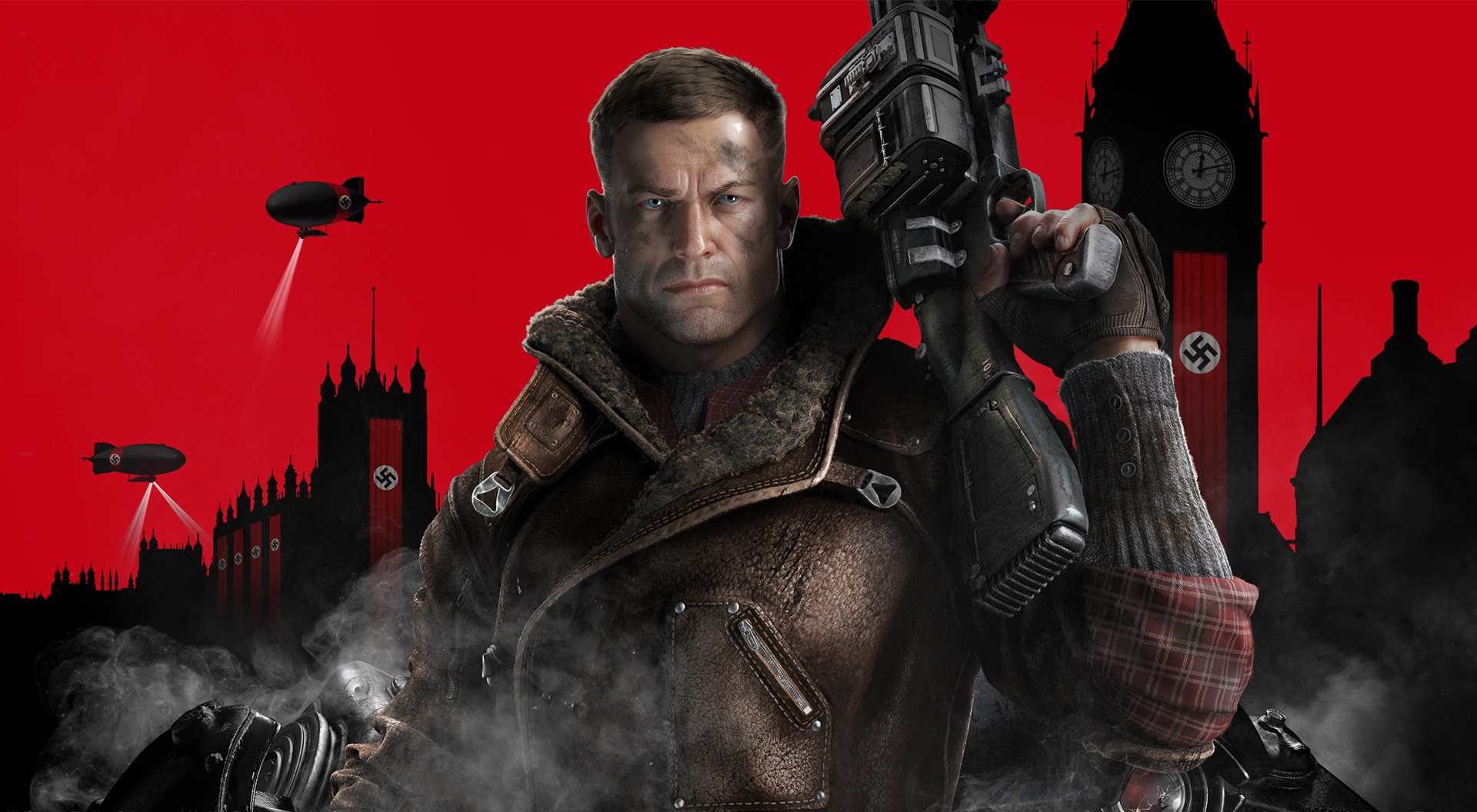
[Wolfenstein - The New Order, Bethesda Softworks, Machinegames, 2014]

A classic re-visited

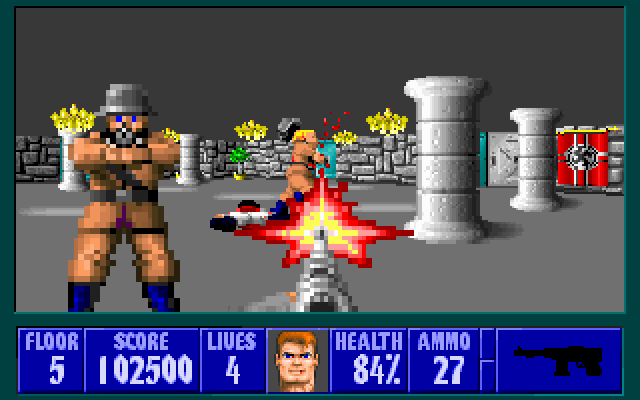
The New Order is the latest in a series that goes back to 1981. Unfortunately, even though I owned a Commodore 64, I didn't play Castle Wolfenstein. It was available on the early system, among others. My first initiation with this classic was with Wolfenstein 3D on my little IBM PC in 1992. In it, you play as Captain B.J Blazkowicz, captured by the Nazis and trying to escape from one of their castles. It was available as shareware (a free game, for those of you born after 1977 unlike me) and is generally credited with being one of the first games to popularize the first-person shooter genre.


I spent weeks, neigh months playing this literal game-changer. It was my original experience with the first-person shooter and my memories are fond, to say the least. Therefore, you can understand why I was noticeably reticent when I heard that they were re-vamping the series yet again. A version of the series came out for the XBox 360 and PlayStation 2 in 2009 to mediocre reviews that generally left fans looking for more. That's why when a new version came out for the XBox One, I had my doubts. That said, I was generally pleased with the result. For one thing, Bethesda Softworks took the reigns. The publishers of personal favorites Fallout and The Elder Scrolls helped to put my mind at ease. For another, the premise is scrumptiously crunchable. It takes place in an alternate universe in which the Nazis won World War II by nuking the U.S. Who couldn't get just a little bit excited about this Tarantino-esque re-writing of history with twinges of childhood nostalgia thrown in for good measure? Only a true Nazi, that's who!


what kind of world did hitler create?

Hitler created a pretty awful place to live, to literally no one's surprise. It's mostly concrete and the Beatles sing neo-nazi ditties because it was that or go to the death camps. When returning as B.J. Blazkowicz, you have been in a coma for over 14 years. You went into the coma in 1946 and didn't come out again until 1960 when the asylum you've been living in is being "liquidated." The kindly old doctor and his wife were killed along with the rest of the patients. The only survivors are their daughter and Blazkowicz, who conveniently wakes up just in time to kill a few Nazis, save her life, and escape. 


You have to be able to suspend a little disbelief to enjoy this one, like forgetting that people who have been in comas for fourteen years can't walk, much less snap necks and fire automatic shotguns within minutes of waking up. However, if you can perform this minor feat of mental gymnastics, you're in for a good time. You eventually meet up with the resistance and take the fight to the Nazis and General "Deathshead" Strasse.


A good multiplayer decision

With nearly everything coming out these days having one including games that probably shouldn't like Grand Theft Auto and Red Dead Redemption, it is refreshing to see a game choose to put all of their effort into creating a quality singly player instead of spending time and effort to make a mediocre and unecessary multiplayer component. According to senior gameplay designer Andreas Öjerfors, the game doesn't contain a multiplayer due to a desire to create the best single player experience possible. "If we could take every bit of energy and sweat the studio has and pour all that into the single-player campaign, it gives us the resources to make something very, very cool, compared to if we would also have to divert some of our resources to making multiplayer." 


In my humble opinion, not enough games make this tough decision today. I realize that the replay-ability rises considerably when companies take this step, but not every game is designed for a multiplayer experience. In the aforementioned Grand Theft Auto, we all played the game with the same single character(s). It simply makes no sense for us all to take the protagonist(s) into a multiplayer game. The math just doesn't work. Even with number five's three main characters, it still felt awkward. With games like Call of Duty and Titanfall that have chosen up front to be multiplayer games, I say run with it. However, there are plenty of titles out there that have a multiplayer that feels tacked on. With these games, they should have just focused their time and energy on the campaign. Instead, you end up with two halves that don't make a whole and a game that feels unfinished. Sometimes adding a multiplayer just because you can takes away from the overall experience and simply shouldn't happen. 


the meat and potatoes


This game was a whole lot of fun. I don't see it winning any Game of the Year awards, but that doesn't mean it wasn't worth picking up. The gameplay is solid. The graphics are impressive, if not mind-blowing. The alternate-history aspect of the story line is intriguing. All-in-all, this is a really good game. I won't go so far as to call it great, but I have trouble when trying to find any flaws in this one. Give it a look. You won't find a reason to be disappointed. 

the math

Objective Score: 7/10

Bonuses: +1 for the use of an alternate universe where the Nazis won WWII. Re-writing history is a winning proposition as proved by Inglorious Basterds.

Penalties: -1 for the need to suspend your disbelief on a regular basis. Once or twice is okay. Every two minutes is a bit much. 

Nerd Coefficient: 7/10 A mostly enjoyable experience.

Tuesday, February 4, 2014

Microreview [book]: Europe in Autumn by Dave Hutchinson


Item: Hutchinson, Dave. Europe in Autumn [Solaris, 2014]
File under: science fiction, dystopia, spy thriller
Buy: Print or Kindle

The Meat

This is yet another superbly-realised sci-fi novel from Solaris; they seem to have a particular knack for finding writers whose penchant is for stories set in a world we can imagine coming about. Hutchinson's vision is of a Europe in fractured disorder, at some point in the later half of this century. 

No flying machines, no moon bases, no robot slaves overthrowing us. Instead we find ourselves on a continent not too distant from how it is now, despite cataclysmic changes. A virus has wiped out tens of millions and the EU has collapsed, leaving dozens of new nation states sprouting up everywhere. Bickering and infighting take the place of diplomacy and currency exchange rates and transport problems keep the populace in check. Yet this isn't some over-the-top dystopia of nightmarish madness; people go about their lives, complain about badly cooked food, go shopping, worry about rent.

In this place of borders, multi-lingual migrants and immigration security we find quiet yet confident Latvian restaurant cook Rudi ("I'm a chef!"), who via his connected boss in Krackow begins doing little jobs for the local mafiosi. As he wrestles with the demands and confusion of odd trips to lonely cities and across checkpoints, he slowly is trained up by a senior 'courier' to become a trans-European smuggler and spy. The detail and patience with which his induction is told is totally absorbing. The author takes time to gently let the recent history of this Europe leak out in fragments, avoiding the usual traps of awkward exposition with refreshing ideas, simply told. Even a passage explaining a cross-continental railway line's faltering construction fascinates.

As Rudi is sucked deeper into the world of espionage and becomes a full-time 'Coureur', truths are revealed and the book could have ended up as sub-rate spy thriller (on a side note, though obviously indebted to the thrillers of the Cold War, Polish characters directly referencing Le Carre and Deighton seemed odd to me). Yet Hutchinson's knack with sharp dialogue and subtle action, as well as surprising twists, kept me hooked. 

Rudi in particular is a fine creation - cynical yet imaginative, selfish yet compassionate, he makes for a great hero. However, it is the time the writer takes with his tale that really makes the novel shine for me. After a climatic moment in Berlin with a Coreur's severed head (which the back-cover blurb suggests is a key moment), instead of a Bourne-esque car chase or race against time, there is a pause, a calm meeting with superiors several weeks later, then a family get-together and quiet reflection. Not, perhaps, sounding like heart-stopping stuff, but the narrative builds and builds from this strategy, forming complex situations and complete characters. For once this is a downbeat future I'd actually quite like to visit, but for now am content with having read one of the more mature, considered and entertaining sci-fi novels I've encountered in a long time.

The Math

Baseline Assessment: 8/10

Bonuses: +1 for depth, pacing and invention rare in spy thrillers, and down-to-earth realism rare in sci-fi

Penalties: -1 for perhaps not being quite as explosive and exciting as I, guiltily and shallowly, would have liked at the end.

Nerd co-efficient : 8/10

POSTED BY: English Scribbler, reviewer, film fanatic, lapsed book worm, Archer fan and Nerds of a Feather contributor since 2013.