Showing posts with label genre TV. Show all posts

Tuesday, June 3, 2025

Andor and the Reimagining of Star Wars

Star Wars, as a franchise, is almost 50 years old. It remains extraordinarily popular—as much or more than any other cinematic universe. At the same time, nearly all Star Wars properties are divisive in some way.

As I noted in the introduction to our special series Star Wars Subjectivities:

...search around the internet and you'll find many a lengthy opinion piece on which Star Wars properties are good and which ones are bad. Some will be Original Trilogy fanatics like me, others will tell you how secretly great the Prequels are. Others still will opine on how The Last Jedi is really a Top 3 Star Wars film sandwiched between two cinematic commercials for Disney theme park rides.

This is not only true for the films, but also for the various television shows, animated series, video games, books and comics that bear the Star Wars logo. Except Andor. I have yet to meet someone who loves Star Wars but dislikes Andor. Sure, I've met people who found the first season a bit dry and joyless (as I did, at the time), but not one fan who thinks it's bad. Nearly everyone—fans and critics alike—agree that it's good. Many think it's the best Star Wars property ever made.

I'm too heavily invested in the Original Trilogy to go that far—after all, it did change the way we think about movies. But after the masterpiece that is season 2, I think there's a serious case to be made for Andor. I want to delve deeper into why this show is so compelling to so many people—and, in the spirit of Star Wars Subjectivities, why it is so compelling to me.

(Before getting started, I'd like to note that Phoebe has written extensively on the show, including a great review of Andor Season 1, as well as an essay for Star Wars Subjectivities on Andor as community action—and is currently running a weekly review series breaking down each episode (ep 1, ep 2, ep 3, ep 4, ep 5). All are must reads, if you ask me. This will be a complementary take.)

Andor is a grown-up story for grown-ups

Star Wars has always tried to thread the needle between its two core audiences: adults and children. I discovered the Original Trilogy as a boy—and it captivated me the way media only can when you are that age. But the genius of the Original Trilogy is that it continues to captivate as you grow older. However, when George Lucas launched the prequel trilogy in 1999, it was obvious to all of us who were now teenagers or adults that these films were not aimed at us, but at a new generation of children. At Cannes in 2024, Lucas said that people like me were just grumpy because we weren't looking at the films through 10-year old eyes.

It's true that I never saw the prequels through 10-year old eyes, but I have consumed a metric ton of children's media over the years—as an adult—and can say with confidence that The Phantom Menace and Attack of the Clones are not good, not even by the relaxed standards of children's media. As I wrote about The Phantom Menace:

The writing is bad. The acting is bad. The direction is bad. The production is bad. The pacing is bad. The design is bad. The effects are bad. The characters are bad. The plot is bad. The concept is... well... okay, maybe this could have actually been a good movie, in theory, but unfortunately... the execution is, in a word, bad. Like, bad on a very basic, fundamental level.
Or as Vance more succinctly put it in his piece on Attack of the Clones:
Of all the millions of stories that could exist in that galaxy far, far away, Lucas picked the wrong ones to tell in these prequels.

Nearly everyone, including yours truly, agrees that Revenge of the Sith is a much better film. The story is actually interesting—and highly political, weaving the tragedy of Anakin's turn to the dark side alongside the broader tragedy of the Republic's dissolution and the death of democracy. It has its cringe kid content moments ("Nooooooooo!"), but ultimately Revenge of the Sith aspires to be a serious film for whoever is watching, regardless of age. Like the Original Trilogy, Revenge of the Sith successfully threads the needle between its core audiences.

Most Star Wars content since has attempted the same feat. In the Disney era, this has worked sometimes (e.g. Mandalorian, Ahsoka) but more often not (e.g. Solo, The Book of Boba Fett, Obi-Wan). You could argue that success just boils down to quality, but the fact is that designing content for the broadest possible audience usually leads to bland, mediocre fare that is passable to everyone but not great to anyone.

Perhaps for this reason, Disney has recently grown more and started to develop properties specifically for each audience. I'm focusing on Andor here, but Skeleton Crew is also worth mentioning—it's a true kids' show designed for parents to watch with their little ones. And it's good!

Meanwhile, Andor is a mature show written for adults, a complex political drama set against a dark background, featuring hard-boiled characters who shoot first and don't fight according to Queensbury rules. There are no adorable creatures, no comic relief characters and no Jedi. Instead, there are real people struggling against very real oppression, making tough choices that don't always work out—and which almost always come at a high cost. Yet it is also a moving, sensitive and stirring portrayal of those people and the terrible world they were born into. I'm still astonished that this is a Star Wars story—and that it is almost the exact Star Wars story I've long wanted to see told.

The best Star Wars stories enhance the Original Trilogy; the worst cheapen it

This is something I've been chewing on since we ran Star Wars Subjectivities back in 2023. The Original Trilogy is the keystone for the Star Wars universe. All subsequent works—whether in film, television or other media—are essentially contextualizing those films. More precisely, they try to either (a) help you understand why things happen the way they do in the Original Trilogy; or (b) explore the aftereffects and consequences of what happens in the Original Trilogy. The good stuff adds richness, depth and gratifying exposition to a story with a lot of whitespace, or render something silly, well, less silly—in all cases enhancing the Original Trilogy.

Consider this example: In A New Hope, we learn that rebel spies managed to obtain plans for the Empire's Death Star. When Darth Vader boards the Tantive IV, he is specifically looking for those plans—which Princess Leia gives to the droid R2D2, with instructions to hand them over to the Jedi Master Obi-Wan Kenobi. The plans demonstrate a fundamental weakness in the Death Star's design, which the Rebel Alliance hopes to exploit, thus winning a first major victory in their rebellion against the Empire.

Rogue One tells the story of how those rebel spies obtain the plans and transfer them to the Tantive IVAndor then gives us the backstory for one of its main characters, Cassian Andor. But it doesn't only do that. We get a deep dive into Mon Mothma, the political leader of the Rebel Alliance—who has a small but compelling role in Return of the Jedi. And we get to see the Rebellion—and the Empire—from a range of perspectives, from Senators to regular people (none of whom, I'll note, are lightsaber-wielding Force sensitives of destiny).

In every way possible, Andor fleshes out the story and world presented in the Original Trilogy, enhancing our understanding of what happens, why it happens and who is important to the story it tells.

Contrast this with the Disney-era Sequel Trilogy. In The Force Awakens, director JJ Abrams eschews the opportunity to explore the New Republic's struggles to govern under the power vacuum left by the Empire's dissolution (which all of us who participated in this roundtable were keen on), in favor of... just remaking A New Hope with new, less interesting characters and cheaper-looking sets. As Haley put it, Abrams remade A New Hope for Gen Z. And that's probably the nicest way to put it.

The Last Jedi is more daring, but its aspirations are weighed down by inconsistent writing and direction, plot holes and—again—the misguided urge to just remake a film that everyone already loves (in this case, The Empire Strikes Back). As I wrote in a (fairly grumpy) review back in 2017:

This brings us to the on-going Disney trilogy, which so far has presented a vision of... the exact same one as the Original Trilogy. Actually, there is a mild subversion of the original trilogy’s meta-narrative, but one so mild that it's barely a critique. Once again, we have a ragtag group of plucky individuals who confront immense power and (are sure to) triumph against all odds. And the films hit you over the head with the referential frying pan. Starkiller Base from The Force Awakens is the Death Star, but bigger! Kylo Ren is Darth Vader, but emo! Luke’s island is Dagobah, salt planet is Hoth, casino planet is Cloud City and so forth and so on. It's the same old same old, only with crappier design and little romance—the kind of thing dreamed up by corporate executives with checklists in hand and theme park rides in mind.*

So how does the Sequel Trilogy function as Star Wars canon? Not well—and especially not well when the big reveal occurs in Rise of Skywalker (which all of us in the Disney Star Wars roundtable agreed is the worst of the three). All it achieves is to make the Original Trilogy less consequential in terms of canon, while rendering the few redeeming bits of The Last Jedi null and void in favor of insipid fan service that didn't even appeal to the fans who complained about The Last Jedi. I can say one good thing about it, though: it features such an unsatisfying ending that this instantly rendered all those contrarian critiques of Return of the Jedi null and void. After all, why would anyone complain about that ending when there's another one that's so drab, colorless and utterly devoid of life?

We finally see the Empire for what it really is

Back to Andor, this is the first major piece of Star Wars media where we truly see the Empire for what it is. And I don't mean that we get a quantitatively higher level of grimdark badness (the Empire destroys a planet in A New Hope, after all, and it's hard to get much worse than that). What I mean is this: in Andor, we get to see how Imperial rule is experienced by noncombatants; we get to see what animates the Imperial project; and we come to understand why the Empire behaves the way it does.

These are not zealots of the 20th-century grimoire, animated by nationalistic hatreds, a radically remade society or a murderous desire for purity. Rather, the Empire is more or less a traditional empire. It is a fundamentally extractive enterprise, the way Dutch colonialism was fundamentally extractive in present-day Indonesia—that is to say, the Empire is motivated by the straightforward desire to take and hoard.

For example, in Season 2, we learn that Director Krennic needs a mineral called kalkite for his top secret Death Star project; a rich source of the mineral exists beneath the crust of the planet Ghorman, a sparsely populated colony world whose leadership had backed the Separatists during the Clone Wars, but mining the kalkite from Ghorman would render the planet unstable—and unsuitable for habitation. Krennic gathers a council of officials from the various military branches, directorates of the Imperial bureaucracy and, of course, the Imperial Security Bureau (ISB) to discuss their options. The meeting is straightforwardly designed to evoke the 1942 Wannsee Conference, where a group of 15 Nazi officials decided to exterminate Europe's Jewish population (as Tony Gilroy himself has stated).

But while there's no doubt that the Empire will commit genocide, if it decides that doing so will further its goals, the Empire isn't motivated by any specific hatred for the people of Ghorman. Rather, the people of Ghorman are an inconvenience, as is the need for their removal—so the conspirators decide to look for alternatives, but ready a plan to reduce any blowback they might face if they ultimately decide to commit genocide and the mass ethnic cleansing of the planet.

Despite the aesthetic similarities between the Empire and Nazi Germany, this is not at all like the Holocaust, which was the culmination of several decades of consistent, ideological antisemitism from a political party founded on the premise that Jews were to blame for just about everything. It is, I'd argue, much more like the atrocities committed by both land-based and seafaring empires: there was something the empire wanted, there were people in the way—and if there was no more expedient way to take it, they would deploy extreme levels of violence to get it. This is bad, by the way—very bad; just not bad in the specific way the Nazis were bad, or as consistently bad as the Nazis were.

For me this as a refreshing take. Popular media routinely ignores 95% of human history while obsessing over a few historical cases, relating anything and everything to said cases. But there is a lot more material to draw on, and the fact that Andor steps out from the shadow of the ever-present Nazi analogy to portray the Empire in ways that evoke other things is, to me, one of the things that give the show depth.

Andor is about people making difficult choices

One of the show's main subplots focuses on the radicalization of Mon Mothma, who by Return of the Jedi has become the leader of the Rebel Alliance. But when we are introduced to Mon Mothma, she is if anything a beneficiary of the Empire. That is not to say she supports the Empire (we know she does not), but that her class privilege—being a wealthy, connected human from the core worlds—gives her the option to pretend the evil isn't happening and keep living her life of luxury. She does not, but we see, by the end, most members of her social circle will choose to follow the path of least resistance.

This contrasts with life outside the core worlds, where societies are mixed (human and non-human), few people are rich, life is harsh and the decision to rebel is more often imposed than chosen. As it is for Cassian Andor. Resistance, though, comes in many forms—and requires many kinds of sacrifices.

Andor portrays a range of resistance fighters—from the patrician senators Mon Mothma and Bail Organa to art dealer turned spymaster Luthen Rael and his indefatigable protégé Kleya Marki (played by a scene-stealing Elizabeth Dulau); from the hard-boiled Cassian Andor and Lezine to Supervisor Jung, Luthen's mole within the ISB. None are "chosen," none are Force sensitives; all are simply people trying to do the right thing as best they can under terrible circumstances. These are heroes every resistance movement can claim, from the mighty to the ordinary. All play their part, at great cost, because they cannot simply stand by.

Andor isn't just great Star Wars; it's great science fiction

If it isn't clear already, I see Andor as a triumph. It is—easily, in my view—the best Star Wars story since the Original Trilogy. It achieves this feat by taking bigger, bolder risks than any other film or series since Return of the Jedi hit theaters in 1983.

But it isn't only one of the best Star Wars stories ever told—it is also one of the best science fiction stories ever developed for television. Indeed, if you were to swap out all the Star Wars content and replace it with standard space opera content, it would be just as effective a story. This is rarely true, even for the Star Wars stories I love. It is very difficult for me to see, to cite one example, how The Mandalorian would work outside a Star Wars context—and I love The Mandalorian.

Hats off, then, to Tony and Dan Gilroy, to Diego Luna, Stellan Skarsgård, Genevieve O'Reilly, Elizabeth Dulau, and to everyone else involved in the making of this absolute masterpiece.

***

(My view is not an institutional one. There are other ways of looking at all these films and shows, which are well represented across our flock. Haley loves the prequels—all the prequels. Paul enjoyed The Force Awakenseven I did the first time around, as did Joe. Arturo has argued that The Last Jedi is significant, in that it redefines what it means to be a Jedi—and then poses a novel theory, that the film is about the meaning of fandom. It's definitely an interesting theory, one worth engaging with.) 

***

POSTED BY: The G—purveyor of nerdliness, genre fanatic and Nerds of a Feather  founder/administrator, since 2012.

Monday, October 7, 2024

Book Review: Glamour Ghoul by Sandra Niemi

A compelling, moving chronicle that over-performs on every level

Do you know Vampira? If so, maybe you know her, like me, from Tim Burton's 1994 film Ed Wood, in which she is never referred to by her actual name—Maila Nurmi. Or maybe you know her from the Misfits song. Or maybe you know of her only vaguely, from the gauzy way in which her name has been attached to that of Elvira.

It is hard to overstate just how famous Vampira was for one vanishingly brief window of time in 1954. The creation of an essentially unknown actress, Maila Nurmi, Vampira was the host of a late-night program on Los Angeles' local ABC affiliate ABC 7, in which she showed public domain horror films starring the likes of Bela Lugosi and offered innuendo-laced commentary. From the launching pad of local late-night television, she wound up on live, nationally broadcast variety shows, and was featured in national magazines and papers across the country. And then a contract wasn't renewed, and... poof. Later, in the 1980s, there was a new spark of interest in the name, but soon it was attached dismissively to a failed lawsuit against Elvira, and the connotation was that some has-been was trying to cash in cynically on a new performer's success.

Maila in Vampira garb in a famous 1954 photo from Life magazine

I have written on this site many times about the impact watching (and re-watching ad infinitum) Ed Wood had on me and the direction of my professional and creative life. So I feel like going into this book I knew maybe as much about Vampira as anybody who didn't know Maila Nurmi personally. She was the actual character model for Disney's Maleficent, in addition to her TV show. But after the limelight of the 1950s faded, she was reduced to dire poverty, living by herself in an apartment that sometimes didn't have basic utilities. In her later years, Maila sold jewelry on Melrose Avenue in Los Angeles, made friends with a few people, like the comedian Dana Gould, who both helped her as her physical ailments overwhelmed her, and also were sometimes on the receiving end of her mercurial and curmudgeonly temperament. When she passed, there were online fundraisers, in the days when MySpace still stalked the Earth, for her interment and headstone, in which I participated. About ten years ago, an excellent documentary called Vampira and Me came out, which includes the only surviving kinescope footage from her TV show. I knew all of this going into Glamour Ghoul, but friends, I was not prepared.

This book was written by Maila's niece, Sandra Niemi, the daughter of Maila's estranged and never-reconciled brother. She and Maila only met once, when Sandra took a sightseeing trip to Los Angeles. Sandra is neither a writer, historian, nor researcher, so I have to admit, my expectations going into the book were pretty low. As it happens, Maila had been working off-and-on at an autobiography for many years. She kept stacks of notes and diaries, and some cassettes on which she'd recorded aspects of her story. Sandra worked through all of this material to tell a profoundly engaging story with a final emotional punch that I won't spoil, but recounts a circumstance that simply wouldn't have ever happened if the author had not undertaken the writing of this book.

Maila Nurmi grew up in a Finnish immigrant community where her most likely prospect for the future was working in a fish canning factory. So in 1941, at age 18, she got on a bus for Hollywood. A stunning beauty, it didn't take her long to catch the attention of people like Orson Welles, who impregnated her and then vanished from her life. In interviews in later years, Maila would discuss being seduced by Welles, and claim that he gave her the clap. This book reveals that instead, this was Maila's little personal code for "child," and a way to throw shade at Welles without revealing the true nature of their relationship, and the pain involved in giving her child up for adoption.


Maila Nurmi, 1947

As the decade rolled over into the 1950s, Maila became a fixture of Googie's diner, which was both a social scene and the inspiration for an architectural style. She became close friends with Marlon Brando (the book does not discuss whether or not their relationship exceeded the bounds of friendship, but given Brando's reputation, it seems like a reasonable conclusion), and was perhaps closer to James Dean than anyone else. His death destroyed Maila, and left her feeling completely unmoored, coming in close proximity to the loss of her show. Brando seems to have done all he could to help—paying for her to go to therapy and paying her phone bill for years so the two of them could stay connected and Maila could stay connected to the outside world, from which she was withdrawing.

After sliding deeper and deeper into poverty, the book discusses the afternoon where four weird-looking guys showed up at her apartment and peered through her window. When Maila went to chase them off, she discovered they were... The Misfits. They adored Vampira, and asked her to come make an appearance at their record release show that night in Hollywood. This began a return to the spotlight, and kicked off new interest in the character.

This is where the book does a tremendous service to the memory of Maila (and Vampira). Sandra dives deep into the circumstances leading up to the lawsuit against ABC 7 and Elvira, and the lawsuit itself. Contrary to the popular understanding of the suit, ABC 7 actually approached Maila and Cassandra Petersen about launching a new version of the Vampira show, in which Vampira would be Elvira's grandmother. Negotiations went on for some time, contracts were signed, but then ABC 7 decided to go ahead with the show without Maila. Cassandra Petersen became Elvira and continues her success with the character to this day. Sandra reveals through documentation that Maila was the victim of her own poverty, having to rely on ineffectual lawyers who missed deadlines and misfiled paperwork, leading to the dismissal of the suit (did didn't lose on the merits) and her being cut out of participation in the Elvira show that she was entitled to.

Even though Maila never truly rose out of the poverty that dogged her, the resurgence of Vampira's name recognition, coupled with the attention to Edward D. Wood, Jr. that came about largely as a result of the Tim Burton movie, did allow Maila to make meaningful connections with a younger generation of fans and friends. After she passed and Sandra received all of her papers and recordings, Sandra did some digging into things that Maila never had access to, and uncovers a truly powerful revelation that literally left me in tears as I finished the book.

In the end, this book is a gift to fans of old horror movies, fans of Hollywood history, and in a very real sense, to a few specific individuals who have a greater understanding of themselves in the world as a result of this book.


The Math

Highlights: A loving but nuanced portrait of a complicated individual, amazing 1950s old Hollywood vibes, unequalled context added to a pop culture mystery that seemed straightforward

Nerd Coefficient: 9/10.

Reference: Niemi, Sandra. Glamour Ghoul: The Passions and Pain of the Real Vampira [Feral House, 2021].

Posted by Vance K—resident cult film reviewer and co-founder of nerds of a feather, flock together

Tuesday, July 25, 2023

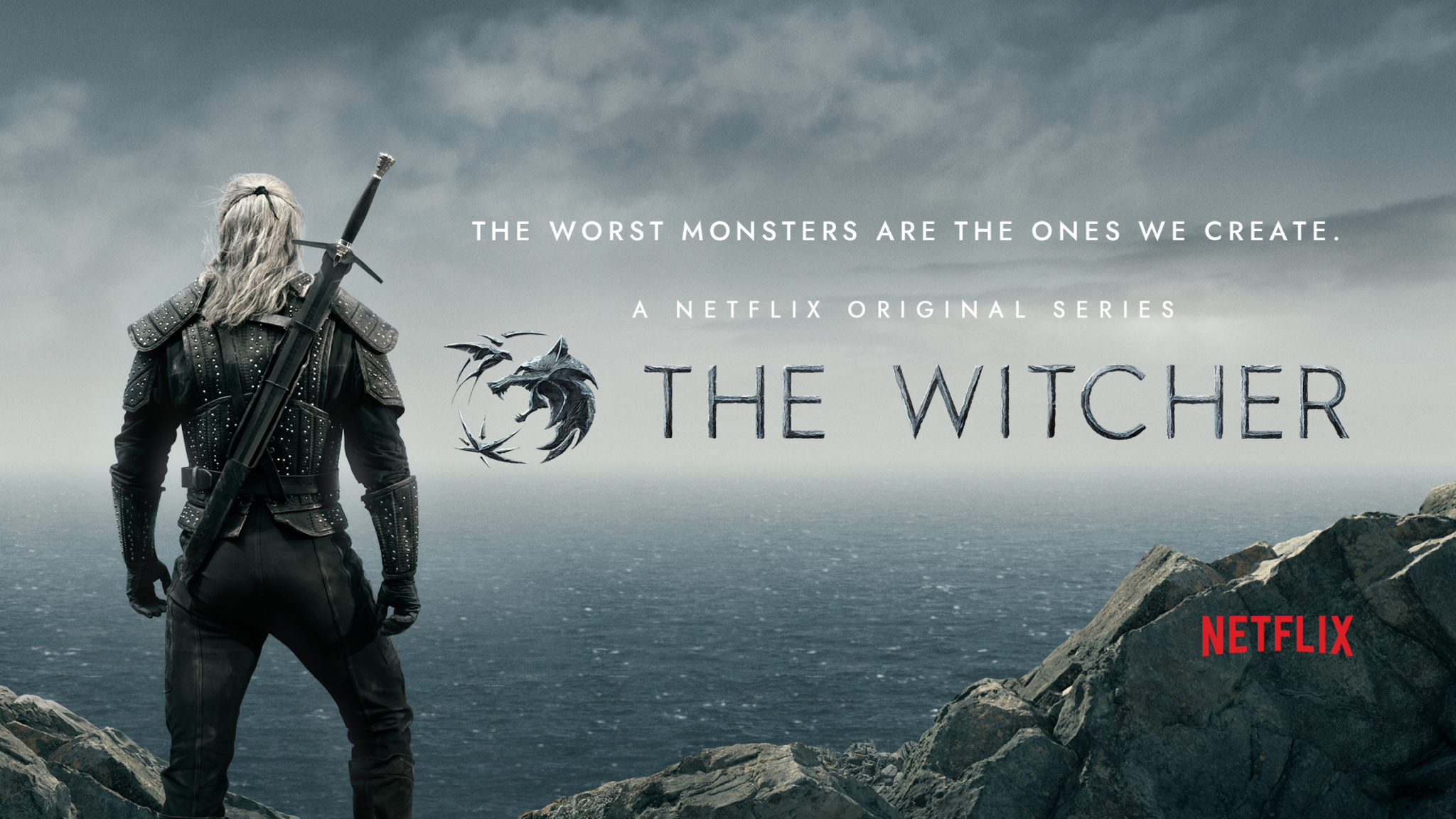
What's in an Adaptation? A Sapkowski Fanatic Watches Netflix's The Witcher

Literature is magical because, at some point, you read a book and grow convinced that it contains answers to all the mysteries of creation. I have felt this way several times in my life, particularly with esoteric novels. Many of my absolute favorite books, from Roberto Bolaño's fragmented mystery 2666 to William Gibson's cyberpunk classic Neuromancer, read almost like scriptures - arcane texts that require hermaneutics of interpretation. 

Indeed, it is not always clear what these books are about; at times they seem to be more vibes than plot, with hints of deep lore sprinkled like fairy dust across their pages. Neuromancer, for example, is a book I've read at least five times over the course of my adult life - and every experience has felt unique. The current rise of AI chatbots has even recontextualized this book once again, leading me to consider a sixth go around. 

Of all the fantasy series I have read (and there are many), none have given me that quasi-religious experience quite like Andrzej Sapkowski's Witcher cycle.* The characters are tremendously well articulated: complex, raw and human. The books are, I would argue, part of the dark turn in fantasy. But they are not just dark, they are also warm and romantic; they do not focus just on pain and suffering, but also on loyalty, friendship and what it truly means to love. 

The series is not, however, an easy read. The plot is more elliptical than linear, with a narrative focus on small groups of characters rather than big set-piece moments of great import - which happen offstage and are more referred to than described. The world-building is complex, but there is virtually no exposition to aid the uninitiated; like Gibson's science fiction, it is all showing and zero telling. Character motivations, meanwhile, can be opaque in the moment, only to revealed piecemeal through oblique reference. For all these reasons, I can see how the series could be frustrating to someone expecting Martin, Sanderson or Hobb. But for someone like me, who craves a literary puzzle, the Witcher books are pure magic.  

*[For those who don't mind spoilers, you can find more detailed, book-by-book analysis on The Last Wish, Blood of ElvesTime of ContemptBaptism of FireThe Tower of Swallows and The Lady of the Lake. But warning: these reviews will contain spoilers for the book and TV series.]

***

I actually first discovered the Witcherverse through other media - specifically, through CD Projekt Red's Witcher 2: Assassin of Kings. The world and characters were so captivating to me that I jumped online to find out more about the book series. I learned that Sapkowski's books were a sensation in Eastern Europe and Latin America, somewhat akin in popularity and influence to George R. R. Martin's Song of Ice and Fire series, which was (rightly) viewed as a breakout fantasy series when first published in the 1990s. I also learned that the Witcher books were being translated and published in English, so of course I had to read them. 

The games and books do not tell the same story; rather, the games pick up the story at the end of the book series. And as good and likable as the games are, the books to me are just on another level. What's interesting, though, is that I didn't stop liking the games after reading the books. If anything, my enthusiasm for the games grew. This is progress for someone who often gets hung up on changes made to revered media (e.g. some of the creative license taken for the Game of Thrones TV series). 

Really, the games feel like spiritual companions to the books. They tell a different story, but the characters and world they inhabit feel true to their literary roots. Sapkowski himself isn't a big fan the games, in part due to ambivalence toward games as a storytelling medium and in part due to licensing disputes with CD Projekt Red (which now appear to have been resolved). But what strikes me about the games is how loyal they feel to the world Sapkowski created. They are loving tributes to their source material. 

***


Enter Netflix, which in 2017 announced a new TV adaptation in development. The streaming service hoped to capitalize on both Game of Thrones mania and the popularity of the Witcherverse in other media, with a series launch scheduled to coincide with the end of HBO's mega hit. It was announced that the series would adapt the books rather than the games and would star known nerd Henry Cavill as the eponymous Witcher. 

The first season had the unenviable task of adapting The Last Wish, a short story collection that sets the stage for the cycle proper, which begins in Blood of Elves. The showrunners could have just adapted the stories in episodic format, but they wanted to reel people in the way only serialized programs can. The show also had to grapple with the fact that Witcherverse lore is so deep, complicated and - as I mentioned earlier - shown piecemeal rather than told straightforwardly. Their solution was a nonlinear narrative that combines episodic stories with backstories that unfold across different dimensions of time. Yennefer's story, for example, is told across a 70-year period while Ciri's happens within 2 years. 

The result, in my opinion, is a mixed bag. Overall I think the first season provides a solid introduction to the characters, world and general themes of the series - and I like some of the adjustments to character (e.g. fleshing out Yennefer's backstory). But I've never been sure whether it could truly capture the imagination of someone who never read the books or played the games. Nor how they would follow the world's complicated and often opaque politics. And on top of that, the pacing of season one can only be described as sluggish. 

Since comparisons are inevitable, I'll note that this contrasts unfavorably with the first season of Game of Thrones, which does a superb job of telling you what's at stake (Westeros), who the main players are (the Starks, the Lannisters and the Targaryens) and why it matters (emerging threat too everyone from the White Walkers). It seeds these vital pieces of information within a compelling political mystery plot with parallel narratives of discovery north of the wall and on the continent of Essos. Finally, through a truly shocking plot twist (which readers of the books already knew was coming but TV neophytes did not), the show sets viewers up brilliantly for season 2.  

With this in mind, I didn't exactly have high hopes for The Witcher season 2. Blood of Elves is an odd book - a good book, to the sure, but not the best in the series. As I noted in my review, it's the installment  where Sapkowski's preference for micro over macro perspectives works least well. A lot of the action takes place at the stronghold of Kaer Morhen, where Ciri trains to become a witcher. There is a very long passage, brilliant in writing but difficult to translate to the screen, where sorceress Triss Merigold castigates the all-male witcher cadre for expecting Ciri to behave like a boy and undervaluing her femininity. We are introduced to Rience, who is one of the series' main antagonists, and get glimpses of the political machinations that propel the macro plot across the cycle. My concern going into season 2 of the TV series was that this would not make for compelling television, which requires even more "watercooler moments" than books. What if the show remained sluggish? 

Boy was I wrong. Season 2 of The Witcher is fantastic. The pace picks up, as the story shifts from contained monster hunting and backstory exposition to the multi-pronged contest to capture and control Ciri, with Geralt and Yennefer desperately trying to keep her out of the hands of those who would manipulate her for their own ends. 

The shape and structure of Sapkowski's book series only really works in the medium of literature; in order to turn it into effective television, the showrunners had to make changes - opting to capture the tone and feel of the books while diverging from them in specific ways. In season 2, the plot is simpler, clearer and strikes a more even balances micro and macro events than does Blood of Elves. Which is not to say that it is better than Blood of Elves - the opacity and nonlinearity, even in its least compelling installment, has always struck me as a feature rather than a bug. But the streamlined narrative does work better as television.   

Season 3, half of which is available as of writing (with the second half dropping worldwide on July 27), wraps up events from Blood of Elves and shifts to the second novel in the cycle proper, Time of Contempt. In contrast to Blood of Elves, Sapkowski's elliptical narratives and micro-focus work tremendously well in this book. In fact, Time of Contempt is one of two Witcher novels I scored as a 10/10, and is a supreme example of what can be accomplished within the fantasy genre. I even suggested that it "may be the best fantasy novel I have ever read." - which it probably was, at the time (though now, having finished the series, I am inclined to think The Lady of the Lake is even better). 

***

Season 3 struggles a bit more with the source material than in season 2, perhaps because the roadmap to transitioning the story to television is less clear. But it is still quite good - and, knowing what comes next, I am very excited for part two. Having watched the preview trailer, it looks likely that the show will adapt the intensity and pure weirdness of Time of Contempt's denouement. I don't want to spoil anything, but since you can see them in the trailer, all I will say is this: unicorns. The unicorn sequence in Time of Contempt is batshit crazy, in the best possible way. 

The show is supported by a superb cast of actors; besides Cavill, British actresses Anya Chalotra and Freya Allen shine as Yennefer and Ciri, and Eamon Farren is superb as the enigmatic Nilfgaardian agent Cahir Mawr Dyffryn aep Ceallach. Some of the smaller characters are also quite memorable - sorceress Sabrina Glevessig, dwarven adventurer Yarpen Zigrin and magical detectives Codringher and Fenn all make the most of limited screen time. 

Notably, some characters from the book series have been altered past the point of recognition. Sometimes this works. Prince Radovid of Redania is far more interesting as King Vizimir's perennially underestimated brother than he is as Vizimir's young, stern son. Sorceress Fringilla Vigo is also transformed from a minor character in the early novels into to a major player with backstory, nuance and complexity. We similarly get a deeper look at elven Queen Francesca Findebair, who like Fingilla Vigo becomes a more important character later in the book series but isn't really a major player in Blood of Elves. This exposition should make it easier for Witcher neophytes to understand the roles Fringilla Vigo and Francesca Findebair play as the cycle unfolds. 

At other times, the changes work less well. Philippa Eilhart is one of the most intriguing characters in the books and games - a scheming puppet-master with the mercurial, predatory demeanor of her other form, the owl. The way she's played in the show feels off to me, she is more sensual and almost feline. Not that there is anything wrong with that, and as always with these things, your mileage mat vary - it's just a deviation from the books and games that doesn't really work for me. 

There are also a lot of new characters, some of which work better than others. Gallatin the elven insurgent appears in season 3 to create conflict but doesn't really have much of a role otherwise. Dara is another elven character who seems to exist more to move the plot along than anything else. But Istredd to me is a very strong addition to the story. 

Now, to be fair, Istredd does appear in the short story "A Shard of Ice," but he does not appear in the cycle proper. However, unlike, say, Stregobor, he is not the feature of the story nor does he have a major place in Witcherverse lore - rather, he is included in that story as a device that helps us delve deeper into Geralt and Yennefer's relationship. As such, his portrayal in the show as an academic mage with a key role in unfolding the central conspiracy at the heart of the first two novels feels more original than just expanded. 

***

All of this is a lengthy way to say the TV adaptation has to date surprised me with its quality, its depth and its ability to know when to adhere to what has been established in the books and games and when to deviate from them. 

With that in mind, I have some major concerns about how the series will wrap up. Let's start with the obvious: for some baffling, unimaginably stupid reason, the show's producers decided to let Henry Cavill go and replace him with Liam Helmsworth. It's not that Helmsworth is a bad actor or would make for a bad Geralt; it's that Cavill has embodied the character as only someone with a true passion for the role can. Cavill is a known nerd who came into the role as a big fan of the games; since taking on the role, he has dived deep into the books and broader Witcherverse, to the point where cast and crew have called him the set's expert on series lore. 

This may have been the reason for his dismissal. Cavill allegedly argued with the showrunners on deviations from the book series, whereas the showrunners would prefer not to stick too close to the books. Given my comments on the series above, you might think I'd take the showrunners' side here - but seasons 2 and 3 clearly show Cavill's influence. Without that, the deviations may become less authentic to fans of Sapkowski's writing. 

The show may also suffer from the ongoing WGA and SAG-AFTRA strikes (which we strongly support). The scripts for season 4 have apparently already been written, but the strike could impact necessary revisions. And does anyone, for a moment, think the studios might not just rush the product out to meet financial obligations, ready or not? 

I have even greater concerns about how Netflix will handle the show's ending in season 5. After all, we've now seen countless examples of streaming channels chasing ratings by letting beloved series series end miserably. Even worse is the new trend to cut costs by killing off projects that people love, no matter where we are in the storyline. Both would do a major disservice to what has been, up to now, a major success. I hope neither comes to fruition, but I do have serious concerns here.

Ultimately, though, we can only judge the series on what it's done to date - and it's hard for this Witcherverse fanatic not to see the adaptation as a glass more than half full. Sure, it's not the books - and it may not be the games either, but it is good. Very good. I hope that the show continues to live up to its promise. 

***

POSTED BY: The G--purveyor of nerdliness, genre fanatic and Nerds of a
Feather founder/administrator (2012).

Monday, May 2, 2016

Nanoreviews [TV]: 2015-2016 Speculative TV Shows


I have been busy fulfilling my 2016 resolution to watch more TV. This task has been made incredibly easy by the plethora of great speculative shows that have hit the airwaves, not to mention all the different methods of viewing them. Having recently broken up with my cable service, I am finally experiencing the joy that is Hulu, Netflix, and Amazon video streaming in this golden age of television.

In the spirit of my resolution, I have vowed to be less prejudiced when it comes to selecting which shows to watch, but I still have some criteria.  Mainly, no romances or supernatural beings (which are usually romances anyway), no superheroes (I'm burnt out), and the show must stay consistently below incredibly on the cheese-o-meter (tiny surges are tolerable in small doses).

So, without further ado, here are some minute reviews of what I've been watching and what’s next on my list:


The Expanse (SyFy): Space Opera.

Though a slow starter, The Expanse quickly became one of my all time favorite TV shows. The politics, while complex, was surprisingly easy to follow, the set was magnificent, and the acting superb. The only character I didn’t really care for was Miller. Thomas Jane’s stereotypically suave but mildly corrupt cop routine seems out of place in this world. But pretty much every other character blew my socks off, most notably Dawes, Holden, Nagata, and my favorite, Amos Burton. I am so excited for Season 2. Can. Not. Wait. Score: 9/10

The Shannara Chronicles (MTV): Heroic Fantasy.

The cheese is, at times, strong with this one. For the record, I know nothing about these books, except that they are Lord of the Rings-ish and the show definitely reflects that sentiment. But MTV pulled out all the stops here. It is filmed in New Zealand so the scenery is beautiful, and the CG is pretty spot on. At it’s heart Shannara is a show about teenagers in a love triangle,
but it hits some high notes along the way. The show opens with one of the main female characters training for and secretly competing in an all-male warrior competition, which, of course, she becomes the first female to win. The show has some powerful female characters all around and the relationships between characters are surprisingly complex. For the record, I am absolutely obsessed with Eretria. She is no nonsense and can hold her own, often having to bail the others out. But through her tough exterior she is also selfless and caring. Score: 7/10


The Magicians (SyFy): Urban Fantasy.

Watching truly great book to TV adaptions like this (and Jonathan Strange and Mr. Norrell) makes me doubly realized how some have really dropped the ball (coughGameOfThrones). What truly amazed me about The Magicians was how it deviated so far from the books at times, but never truly lost the narrative. My TV buddy is a non-reader and in explaining the book to TV differences, I was always able to justify why the show did what it did which surprised me because I’m usually pretty bratty about that kind of stuff. Each character except Alice is nearly perfectly cast, but Hale Appleman as Eliot wins for most perfectly cast adaptation character ever.  I do have to put a disclaimer here though, as this nanoreview does not contain the final episode, which I am refusing to watch. I thought we might get away without the god awful rape scene but I read the finale recap and discovered that not only do they air the rape scene, but they chose to make the woman dote on the event (not in the book) and have it drive her further arc (also not in the book). They also seem to have disregarded Alice’s great sacrifice all together, removed Eliot's sexuality, and seemingly negated everything good I have said about them. So, I’m not watching it. Head, meet sand. All but the finale score: 8/10


X-Files (Fox): Science Fiction.

I loved every second of this reboot. It was funny and at times moving, but always incredibly self aware. It goes without saying that Anderson and Duchovny have more on-screen chemistry than should be possible, and it is as strong now as ever. The only thing I didn’t like was the William story line. I guess they had to at least bring it up but it was gut wrenching at times and never got resolved. And speaking of not resolving things, how about that finale?! I loved it actually, and while it may seem like a major cliff hanger, I found it oddly satisfying because everyone finally saw what Mulder has been saying all along. Score: 8/10


Not necessarily speculative, but still relevant:


Mr. Robot (USA): Drama.

Mic drop.

No really, I don’t know what else to say about this show. First, I am shocked and impressed that it aired on USA. Mr. Robot is testament to the true nature of this golden age of television, which is a cascade of high quality material without regard to network or viewing medium. When I try to tell people about Mr. Robot, the words that come out of my mouth sound hollow and dull in comparison. “It’s a show about hackers, and it makes hacktivism seem tangible, and its kind of like Anonymous” only scratches the surface. Saying too much will give it all away. So if you haven’t watched it, do so now, even if you have to pay for it (like I did), it's worth every penny. Score: 10/10


Full Frontal with Samantha Bee (TBS): Satire.

I’ve only started watching Full Frontal. It’s a short, satirical topic show starring Daily Show alum Samantha Bee. Bee’s stage presence is slightly awkward at times, but the show is funny and the content is extremely relevant. Feminist and liberal in nature, Full Frontal is informative and entertaining. You can get a pretty good taste of what appears on the show from its Facebook pageScore: 7/10


What’s next:

Colony (USA): Science Fiction.

I am currently giving this one a try, but I’m not sure about it. The premise is intriguing, taking place in a dystopian near-future Los Angeles which is under military rule and encased within a giant wall. The presumption is that the invaders are aliens. The main characters are husband and wife and during the colonization they were separated from one of their children. But one partner is secretly a member of the rebellion and the other has openly been forced to work for the occupiers. I actually really hate the convention/trope where partners who are both main characters that we are supposed to like are hiding things from one another. Usually there is no believable justification for it, as is the case here, and it never works out well so I feel an uncomfortable anxiety whenever I encounter it. Overall, Colony has a heavy feel to it and I’m not sure the juice is worth the squeeze. Score: too soon to tell


12 Monkeys (SyFy): Science Fiction.

I’ve only watched the first four episodes so far, but am surprisingly impressed. I’m normally not a fan of time travel stories but this one had me captivated from the start. It is intense and exciting and mysterious and I want more. Amanda Schull completely captivates me as Cassandra. I can’t wait to catch up and I hope it doesn’t get stale. Score: looking good so far


What I’m looking forward to:

Preacher (AMC): Comic Adaption.

All I know of Preacher is what I saw in the trailer and it looks amazing, but possibly too gory for my taste. I must admit that it makes me think of Nicholas D. Wolfwood which pulls at my nostalgia strings hard. 


American Gods (Starz): Urban Fantasy.

 We have some time to wait for this but I have a feeling it is going to be fantastic. The casting is impressive and even though I love the book, I haven’t ready any of the other supporting material so I think the show will be even more intriguing.


Librarians (TNT): Urban Fantasy.

Others are starting to pick up on the greatness that is The Librarians, something I have pronounced before. The show doesn't take itself too seriously but tackles some serious issues and has some seriously kickass female characters. Season 3 is on its way.


See something I've missed? Let me know what to watch next!

----
POSTED BY: Tia   up and coming TV junkie and Nerds of a Feather contributor since 2014.


Monday, January 19, 2015

Microreview [TV]: The Librarians

The best new show you probably didn't watch.


I have to tell you all something…I am IN LOVE with The Librarians. Like, warm and fuzzy I wish I could hug it kind of love.

The Librarians is TNT’s new series based off their made-for-TV movie franchise of the same name (minus the s) from the mid 2000’s. But you don’t need to be familiar with the movies to watch the show, which is good for me because I had no idea they existed in the first place. The movies starred the fabulous trio of Noah Wyle, Bob Newhart, and Jane Curtin, and all three are present to help launch the inaugural episode of the TV series. Wyle plays the eccentric genius Flynn Carsen, now head Librarian, charged with protecting a secret collection of famous and powerful artifacts housed at a magical Library (I know right, how AWESOME?!). The Library chooses its own staff, and sensing a need it selects a guardian for Flynn, counterterrorism specialist NATO officer Eve Baird (Rebecca Romijn!) (seriously, I wish you could see me bouncing in my chair as I write this). And just in time too, because the Library has come under attack by evil forces who want to use its magic for bad. Flynn and Baird set out to locate three other geniuses selected by the library, with the intention of saving their lives, and consequently assemble a rag-tag group of assistant Librarians. Under the guardianship of Baird, these assistant Librarians are charged with protecting the world while Flynn ventures off to save the Library itself.


I love this show for the following reasons:

Nostalgia. I spent my formative years in the 90’s. I grew up reading books like Goosebumps and watching TV shows like Ghost Writer and movies like Indiana JonesA Kid in King Arthur’s Court, and The Goonies. TNT's The Librarians encompasses this spirit. Flynn fights with Excalibur, the Librarians get stuck in a labyrinth and have to fight the minotaur to get out, and the team even has to defeat an evil magic app created by Morgan le Fay. Needless to say, The Librarians reminds me of the stuff I used to live for. And yes the show is kind of cheesy but that’s okay because it embraces the cheese. One of my biggest peeves with genre TV (and all TV in general really) is that it’s barftastically cheesy but everyone pretends that it’s not.

Acting. Another issue with (genre) TV is that it is often rife with horrible acting. But the acting in The Librarians is really, really good. Not only does it have established actors like Noah Wyle, Rebecca Romijn, and John Larroquette (Night Court whaaaaaat), but Lindy Booth, John Kim, and Christian Kane (a.k.a. the assistant Librarians) are all phenomenal too.

Female Characters. We don't need to get into the generally appalling portrayal of women on TV and in other media, but I will tell you that the female characters in The Librarians are awesome. Eve Baird especially, and I think it’s a combination of how she’s written and how she’s played by Romijn. Baird is a strong woman, both physically and emotionally, who’s not [gasp] bitchy or manly. She’s not a woman trying to fill a man’s shoes or a bippity boop sporting a pink gun. Instead, she’s a person, and she’s badass, and if you mess with her or her protectees you’ll regret it. She is stern and gives direction but listens to what other people have to say and isn’t afraid to admit when she’s wrong. She's a great character, regardless of sex.


The Truth. The real reason I love this show so much is that, as nerds, we all know what it’s like to be outsiders. But the thing is, sometimes I don’t even fit in with the nerds because I’m not a really a gamer nerd, or a science nerd, or a comic book nerd….I’m a The Librarians kind of nerd. And I’m so happy this show exists, and I really hope there are enough nerds like me out there watching it so that it gets signed on for another season.

The Librarians season has just ended (although I expect it will be syndicated on TNT), but here are some ways you can watch the series from the beginning:

Available on iTunes and Amazon for purchase,
and free from your cable (or whatever) provider via TNT's website.

The Math:


Objective Assessment: 7/10

Bonuses: +1 for Eve Baird, +1 for helping bring back folklore and history as action fantasy, +1 for impressive cast/acting

Penalties: -1 for the unnecessary, albeit almost non-existent, romance sideline, -1 for Ezekiel's annoyingness at times, even though it's probably intentional

Nerd coefficient: 8/10 "Well worth your time and attention" 


------------
POSTED BY:  Tia,  putting the cool back in school and rocking socks here at Nerds of a Feather since 2014