Wednesday, July 6, 2016

Microreview [book]: Ancillary Mercy by Ann Leckie

The (Not Quite) Stunning Conclusion!


This is part 3 in a series and this review won't be mindful of spoilers from the previous two novels. The spoiler-free review is that Ancillary Mercy says a lot and does a little and failed to impress me like the first novel in the series. 4/10. 

I've already said it in the note above, so I'm not going to waste time here: Ancillary Mercy did not impress me. It continues the story left off at the end of Ancillary Sword in the same exact manner as Ancillary Sword picked up from Ancillary Justice. It's more Ancillary Sword than Ancillary Justice, and that was a huge disappointment to me.

 Following the events of Ancillary Sword, Breq remains committed to the protection of Athoek station and the continuing the sea change she brought to that region of Radchaai space. However, the Presger have taken notice of the loss of their translator, and Anaander has finally caught up with Breq. 

I struggle to think of any particular part in the 300 some odd pages of this novel that I genuinely enjoyed. It moves at a pace that doesn't seem to move fast enough, yet doesn't accomplish much in what it does. There are a lot of powers and forces at work in this part of space, but none of them seem to be moving until they've caught Breq's attention. The threat of the Radchaai fleet is reduced to a few ships and one angered instance of Anaander, but that's okay because Breq's crew consists of herself and maybe five others. Again, the enormous scope of Ancillary Justice is reduced to a dozen characters in a tiny corner of space doing very little. 

Of particular annoyance in the Presger visitor, whom I only lightly hesitate to call a Jar Jar Binks-like character. Much of the previous two novels make the Presger sound inscrutable and extremely dangerous in the way humans are dangerous to transient vermin. However, the manifestation of the Presger in this novel can be described as cute or funny. She's the comic relief. 

The other non-Radchaai character is snarky, sarcastic, and utterly toothless as well. Anaander herself, Lord of the Radch, isn't much of a threat. It's a problem that plagues the whole story: after Ancillary Justice, Breq has no threat and no mission. She's doing what feels right without much motivation. Sure, she's making changes, but there's no plan. We've gone from "I'm going to kill the Lord of the Radch" to "I don't know why I'm here, but I guess I'll try to make things better where I can". I genuinely don't see what's garnered so much praise about this novel. I'm going to go read some of the glowing reviews it got; maybe they'll help me figure out what I missed, if anything.

The Math

Baseline Assessment: 4/10

Bonuses: +1 it doesn't botch the ending like so many book trilogies do

Penalties: -1 it could've been so much more than it is

Nerd Coefficient: 4/10 (not very good)

***

POSTED BY: brian, sci-fi/fantasy/video game dork and contributor since 2014

Reference: Leckie, Ann. Ancillary Mercy [Orbit, 2015]  


Tuesday, July 5, 2016

Microreview [book]: The Unlicensed Magician by Kelly Barnhill

Sparrow! The Junk Man! Marla the Egg Woman!


Cover Art by Ben Baldwin


One thing I wondered about The Unlicensed Magician only after I finished reading the book and my heart finished soaring, is if the title of the book is "The Unlicensed Magician" - are there actually licensed magicians? This is not a question Kelly Barnhill elects to answer in her novella, unless the answer is "well, the Minister, obviously," but this is also a question that one probably doesn't need to dwell on for very long.

What we should dwell on is the story of Sparrow, a teenaged girl who almost nobody in the world can actually see or remember unless she chooses to let that person see. Even then, they are unlikely to remember, but that's a good thing because Sparrow is magic and in this world, magic is forbidden.


There were twenty magical children born that year. Nineteen, if you count the one that died. The Minister ordered that the nineteen children be shipped to the Tower to be worked and drained to nothing, and that the dead child be thrown on the rubbish heap, and never spoken of again. But the dead baby had other plans. When the half-drunk junk man witnesses the half-decayed corpse becoming a living, breathing, healthy baby, he knows at once that he must protect the child from the clutches of the Minister. Enlisting the help of the formidable egg woman and the sagacious constable, he manages to keep the existence of the child a secret.

But children grow. And so does magic. And secrets long to be told. 

If you've read any of Kelly Barnhill's previous fiction like her YA novel Iron Hearted Violet or her short story "Mrs. Sorensen and the Sasquatch", you have come to expect a certain amount of charm all wrapped up in a fantastically well told story and The Unlicensed Magician has both in spades. The most important characters all have names like Sparrow, The Junk Man, Marla the Egg Woman, The Constable, and The Minister. Their names are easy descriptions, but they're not facile. There is remarkable and painful depth to each of these characters.

That bit with The Minister acquiring and draining the magical children, it's been going on for a long, long time and there are some far reaching consequences that range from the structural in the city down to the oh so deeply personal. Barnhill doles out the personal histories in small bites, but each one resonates and each one hurts. Some things you just don't get over.

The Unlicensed Magician is a smoothly affecting novella told in alternating chapters of the present day with Sparrow and her looming confrontation with the Minister (not a spoiler, this is so obviously the storyline from the start) and the past with The Junk Man finding a living dead baby on a pile of trash. Barnhill compels the reader to smile through the heartbreak, cheer for bold heroism and defiance, and celebrate victories which come with a heavy cost. The Unlicensed Magician is a delight and a treasure.

Before we close, let's take one more look at Ben Baldwin's full wraparound art because, well, just look at it.


The Math

Baseline Assessment: 7/10

Bonuses: + for how perfectly drawn each of the characters are.

Penalties: -1 because sometimes the prose is a touch on the spare side.

Nerd Coefficient: 7/10 "a mostly enjoyable experience" See more about our scoring system here.


Reference: Barnhill, Kelly. The Unlicensed Magician [PS Publishing, 2015]


POSTED BY: Joe Sherry - Writer / Editor at Adventures in Reading since 2004. Nerds of a Feather contributor since 2015, editor since 2016. Minnesotan.

Friday, July 1, 2016

Summer Reading List (European Scribbler)

It's been a disquieting and stressful recent time in British politics and Europe in general. With violence in football and horror in Istanbul, and a narrowly-won yet regressive, small-minded result (I'm trying not to use swearwords here so will stick to my name-change to show my feeling) in the deceitful Tory plot of the UK referendum, I yearn for a mental escape even as I find it near-impossible to not flick to refresh the headlines on my phone every few minutes...
Solace in fiction is a long-admired element of reading, as well as its ability to hold a mirror to our world, so my Summer Reading List reflects this, along with a open desire to find the ties that bind Europeans across language, racial genetics and culture, and an additional and depressing influence of the grey, grey, drizzly June my patch of this continent has been 'enjoying'....


1. The Trial. Kafka, Frank (1914, penguin modern classics)
"Someone must have been telling lies about Josef K., because he had done nothing wrong, but one day he was arrested." One of the more famous opening lines in European literature, this century-plus old masterpiece of unease sprang to mind as the EU storm began brewing earlier in the Spring, and its brief hit of paranoia and confusion is perhaps more a mirror than an escape to another world right now. A fantasy and dystopia, Kafta nevertheless makes such clear parellels to his times and ours that to suggest it as such is perhaps straining the barriers of genre. One of those few 'required reading' novels that actually is such, it is also with my current re-reading of it a humbling reminder of how law and control in society can be a disease more than a medicine. The propaganda that British people could somehow 'take back control' was powerful yet as empty and bleak as Josef's fate. On a brighter note, it reminds me how wonderful such literature can be, even in translation, to bring us together as humans across borders and less physical divides.


2. Europe In Autumn, Hutchinson, David (Solaris, 2014)

Hutchinson's Twitter feed is a recommended read in itself (@HutchinsonDave), with its mix of political anger and surreal and pun-ridden humour (basically all my favourite human traits), and of late he has noted how his nightmare vision of a near-future Europe fracturing into smaller and smaller states feels more fact than the wild fiction he no doubt intended. Rudi the chef-turned-spy is our fascinatingly-drawn protagonist across this bizarre yet increasingly-familiar landscape. The sci-fi elements blend seamlessly with the future-reality and the thriller framework bolts along toward the (to my mind) superior sequel, so will be rapid and comforting mind fuel in anticipation of the third part in the series, due for publication in the Autumn- sorry, Fall... sorry, l'automne... sorry, Jesień...


3. The Troubled Man. Mankell, Henning (2011, Knopf)

Having just watched the English-language television version of this final story by perhaps the godfather of scandi-noir, and bowled over emotional and stylistically by its dignified and beautiful depiction of Wallender's (spoiler....) affliction with early on-set Alzheimers as he races to solve the mystery of his son-in-law's father, I'm very keen to go back to the novels which I struggled to get through. I hope I can shake Branagh's amazingly warm yet distant face from my mind however. An odd choice perhaps to start at the end, yet these slate-grey skies push me to such sombre codas, perhaps with James Blake or Radiohead on the headphones...


4. La Planète Des Signes. Boulle, Pierre (1963, France)

In search of some foreign (to Britain) sci-fi to defy this country's power elite's nationalism, I was reminded by my good friend Dr Wiki of the fact that one of my all time favourite films was first a French novel, and given my French needs a polish (in the same way you might say David Cameron needs a personality transplant) I thought I'd attempt to read it dans la langue original, innit, mate. Wish me bonne chance.. It can't be harder than sitting through Burton's remake, at least...


5. Belshazzar's Daughter. Nadel, Barbara (1999, Felony and Mayhem)

This is the first in the near-annually published detective series English author Nadel wrote set in Istanbul, a city I like very much. The first thing I did after hearing the referendum result was go into my nearby Turkish deli, buy some groceries and baklava, and ask to be retaught 'hello' and 'thank you' by the old lady behind the counter who spoke almost no English. It revitalised my belief that showing friendly interest in our differences brings us together and that much can be said with a smile and hand gestures, just as so much damage can be done through lies drawing on fear. Anyway, the plot seems ripe with cross-cultural intrigue for these fraught times : "When a brutal murder shocks Istanbul's rundown Jewish quarter, the Turkish police force unleashes their best weapon - the chain-smoking, brandy-swilling Inspector Cetin Ikmen, husband to a strict Muslim woman". Sign me up, hopefully when the sun is warm enough to make me feel I could be by the Bosphorus...


6. Excessiom. Banks, Iain M. (1996, Orbit)
As Scotland seems to represent all I like about the UK at the moment, as England Wales seem to have taken bad acid, and being a generally massive fan of Scottish culture in general and Banks (both genres) in particular, I'm going to attempt after all the above and as Autumn approaches his fifth Culture novel, which I stumbled on starting years back. Like a good haggis, the dense and uncompromising nature of his texts requires the consume too be in right mood. And to have a smooth Scotch to hand.

Posted By: European Scribbler, nervously-English writer and contributed to Nerds of a Feather since 2013.

Thursday, June 30, 2016

Microreview [book]: An Alphabet of Embers ed. Rose Lemberg

A huge collection of SFF stories with a focus on language 


In some ways this is a difficult collection to compose thoughts about. First and mostly, because An Alphabet of Embers is quite large. Like the letters in an alphabet, each story is small but intricate, and each is different. Together they form the building blocks on which language exists, and so I think my first reaction to reading this collection was being intimidated by it. By its layers, by its strangeness, by the innovative way it approaches language and image and meaning. Ultimately, I came back to the first story in the collection, Emily Stoddard's "Outfitting the Restless Heart, or How the Sky Was Made." I think that first stories are very important in anthologies, because they set the tone. And the more I thought about it, the more I saw what a great choice this story was for this anthology. It's a tale that to me speaks of being confronted by the vast, by the wide open space of the sky, and finding that you can fill it. That its vastness is no larger than your own. The story is told in the second person, is told to narrator and to the reader. That here is a collection that is deep and might seem at times too large or too strange or too impenetrable. But that you and me, the readers, can meet it, can grow because of it. It's a lovely story and a great way to think about approaching this collection, not that it's too large or too formally or linguistically challenging, but that it represents a space to grow into as a reader.

An Alphabet of Embers was not, for me, an easy read. The stories are short but dense and very impacting, so that sometimes reading felt like getting hit by very beautiful little bricks, devastating but rewarding. Stories like "Mistletoe and Copper, Water and Herbs" by Mari Ness, about promises and sacrifice, strike with a ragged edge, the character's desperation and grief thick as congealing blood. Or "Telomerase" by Ian Muneshwar, about terminal illness and love and the inability of words to wrap around certain feelings, certain tragedies. Or "The Binding of Ming-tian" by Emily Jiang, which felt to me about frustrated love and the cycle of violence that is tradition, that is systemic oppression. Or Nin Harris' "Moult," about transformations, shedding skin. The story follows through a series of changes, moultings, each bringing the main character on a journey inward, tearing away the different affectations and defenses that the world necessitates, each layer revealing something new, something beautiful.

There were also stories that were just plain fun, and the collection as a whole did a nice job of balancing the light and the heavy, the sinking and the lifting. "Transfers to Connecting Flights" by JY Yang is a sweet tale of transferring bodies and a love that won't die, that can't die, regardless of how much time must pass. And "Everything Under One Roof" by Zen Cho offers up a story of memory and food and friendship, the idea that the past is a place you can visit, but not something you can eat. "Single Entry" by Celeste Rita Baker has a jubilant voice cut a bit by the dire direction the Earth is being moved to. And "Ekphrasis" by Arkady Martine reveals a poet, part of a vast artificial memory collective, as they court annihilation but also art and creation and change, the most powerful forces in the universe.

There are a lot of stories here, and unfortunately I can't go into all of them. Variety is one of the great strengths of the collection. Most of the things that I struggled with, indeed, were more because of my own failings. Some of the stories were quite difficult for me to parse, and especially because some…well, don't require so much as strongly suggest that the reader have access to the tools of translation. Which, as this is a very internationally minded collection, only makes sense. Similarly, there were a few stories that I just struggled with because of their denseness, because of style or the imagery or the form. Not to the point that I didn't find them interesting or rewarding, but to the point where I personally was convinced I was missing something that refused to reveal itself. But as I said before, this quality also got me to work harder, to dig deeper, and to ultimately take more away from the stories than I would had they been more naturally easy for me.

Which brings me to the last story in the collection, "Only revolutions" by M Sereno, a story that fits very well as a bookend, as a sendoff. Because to me it's about the strength of stubborn refusal to submit. Refusal to let adversity or oppression or even death itself get in the way of love. It's a powerful story and one that echoes the first, that idea that people are larger than they think, more important, more capable. That they don't have to shrink from the challenges, that they can meet them, overcome them, and emerge changed and whole and full of fire. And in the end An Alphabet of Embers represents an ambitious gathering of voices and styles, places and people. It shines, and shines the harder for being daunting, for being unrelenting and unapologetic. And it is definitely something I'd recommend checking out for fans of short fiction or anyone looking to challenge their reading status quo.

The Math: 

Baseline Assessment: 8/10

Bonuses: +1 for the art! Oh my glob I didn't speak much of it but the art is amazing definitely look at all the GORGEOUS!!

Negatives: -1 perhaps an appendix of preferred translations for some of the non-English words/phrases would have helped me because online translation sites can be…not the best

Nerd Coefficient: 8/10 "well worth your time and consideration" see our full rating system here.

--
POSTED BY: Charles, avid reader, reviewer, and sometimes writer of speculative fiction. Contributor to Nerds of a Feather since 2014.

Reference: ed. Lemberg, Rose. An Alphabet of Embers [Stone Bird Press, 2016]

Thursday Morning Superhero


Welcome to another edition of Thursday Morning Superhero.  San Diego Comic Con is rapidly approaching and I am getting more and more excited as it gets closer.  Keeping a pulse on the nerd community, it seems like anxiety over lines and tickets is already at high levels.  So far I have been really impressed with what Funko has revealed, but today they are going to make me brave their new line policy in hopes of collecting on some nostalgic goodness.  Look at that Indiana Jones Pop!  Simply amazing!


Pick of the Week:Plutona #5 - It has been awhile since we have visited the world of Plutona, and it is a joy to return to this beautiful book from Jeff Lemire, Emi Lenox, and Jordie Bellaire.  Plutona, who was a great superhero, was killed and a group of kids found her body.  We see the story through the lens of Plutona's daughter, which is hauntingly illustrated by Lemire, and through the lens of the children as they wonder what to do with her body.  In this issue we learn that the Wasp is the villain that killed her and that Teddy is attempting to gain Plutona's super powers by stealing some of her blood.  The other kids in the group aren't too fond of this and it really hits the fan in this issue.  I recently watched the Goonies with my kids and the relationship between the kids reminds me of the Goonies crossed with Stand by Me.  I feel this book would make an amazing movie that harkens back to those days and the direction the story took in this issue has me completely sold on this book.  I cannot wait to see what happens in the next issue due to the repercussions of the events that happened at the end of this book.  This is truly a unique story that reminds me of the type of movies I enjoyed as a kid.   

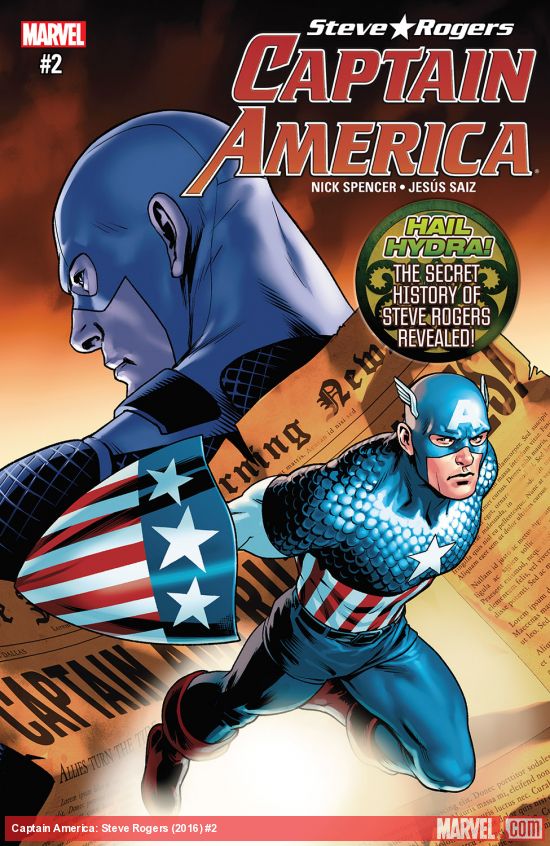
The Rest:Captain America #2 - Fans are claiming that Marvel is back pedaling as it is revealed in this issue that Captain America hasn't really been a Hydra agent for his entire life.  Fans who truly believed that Nick Spencer would rewrite the entire backstory in that fashion were a bit foolish in my opinion.  I told friends that I suspected his memory was manipulated by a cosmic cube, and I was partially right.  We now know how the Red Skull was able to alter Rogers memory, but we don't know how he will resolve this issue or what havoc he will cause until he is able to recover his memories.  I won't spoil how Red Skull was able to use the cube, but it was an interesting twist and one that reminded me a bit of Morning Glories.  Really digging this new arc from Spencer.  

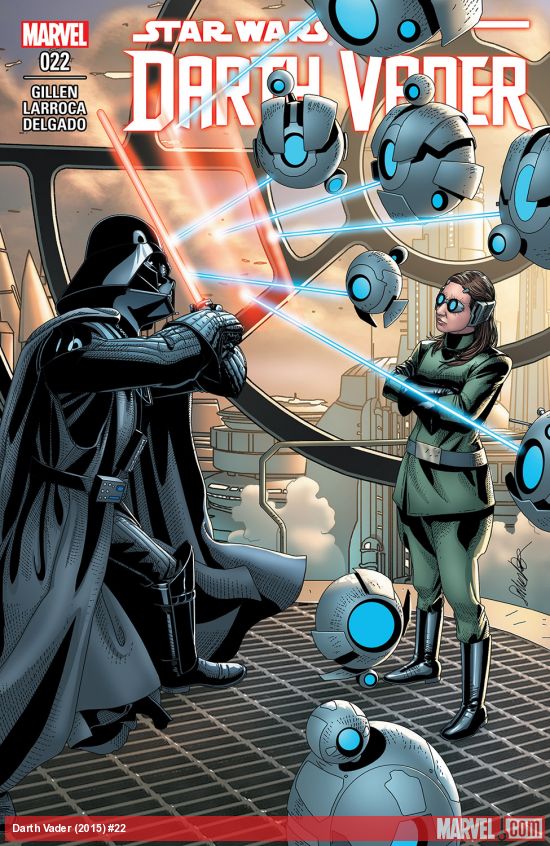
Darth Vader #22 - This series is finally starting to cause me to lose interest.  Darth Vader riding a cybernetic whale and crashing into another starship doesn't fall in line with what I know about the Star Wars Universe.  If it weren't for Triple-0, the barbaric and weaponized version of C3P0, I would probably give up on this comic.  Something happened when Dr. Aphra gave him a new order after he delivered her to Vader's ship that I won't spoil, that has me intrigued enough to pick up the next issue.  Hoping the the explosion of the whale ship will put that part of the story to pasture.

POSTED BY MIKE N. aka Victor Domashev -- comic guy, proudly raising nerdy kids, and Nerds of a Feather contributor since 2012.

Wednesday, June 29, 2016

Reading the Hugos: Fanzine

Today we continue our Reading the Hugos series with a look at the five Fanzine finalists. Observant readers of Nerds of a Feather will note that there are six finalists listed below, but Black Gate is crossed out. Following the announcement of the Hugo Award finalists, Black Gate withdrew from consideration and was replaced on the ballot by Lady Business.

Now, on to the finalists!

Black Gate  
Castalia House Blog
File 770  
Lady Business  
Superversive SF  
Tangent Online


Tangent Online: Tangent Online is a long running short fiction review website, and if you're looking for coverage of the short fiction market one of the best options you have (that I'm aware of) is Tangent. It's....fine. While I am happy that Tangent exists and that there are occasional sources and reviewers who cover short fiction, the reviewing at Tangent has never grabbed me.


Castalia House Blog: Having read through the selections included in the Hugo Voter's Packet, I've realized two things. First, the tenor of the blog does not at all line up with that of the publisher's (Vox Day) personal blog. This makes sense because the Castalia House blog is a group blog for other fan writers doing fan work, but it was worth noting because it is also nearly impossible to separate the publisher with the work published by Castalia House as well as from the content of the blog hosted by Castalia House. For some, that may be a net positive, but for me it is something to be overcome.

Second, at least based on the provided selections, the work over at the Castalia House blog is solid. It's just not for me. As much as I enjoy playing board games, the games covered at Castalia House appear to be heavier tactical / wargame variety or role playing games, neither of which appeal to me. Alternately, there are a number of deeper dives into early era science fiction and fantasy and that is something that, again, does not hold an appeal. So here I can appreciate the writers are doing fairly solid work, but I have no interest in reading that work because of the subject. I read fanzines for a number of different reasons and the work Castalia House's blog writers are producing is not work that fits into how I choose to interact with the genre.


Superversive SF: Prior to the nomination, I had never heard of Superversive SF before. They declined to include any content in the Voter's Packet, so I had to do some digging back through their archives to find some essays from 2015 and get a sense of who they are as a blog and what my opinion of their 2015 output was relative to the other nominees is. On the face of it, Superversive SF is very much a genre blog: there are essays on Star Wars, Daredevil, Firefly, Star Trek, book reviews, and pretty much everything else you might expect a group SFF fans to write about on their blog.

In reading back through several months of the essays on Superversive SF that I realized that I'm going to bounce fairly hard off of a lot of stuff written by Anthony M. He has a fairly strong bias against anything that smacks of "liberalism" or "feminism" and towards a very particular view of what is good, or "superversive", science fiction in terms of storytelling content. I half appreciate his writing, but he sometimes goes off on tangents against those aforementioned biases, but when he's not complaining about leftists, feminists, or SJW's, I've truly enjoyed his work. His review of Stephen Lawhead's Taliesin is a good representation of how strong his writing can be. I've singled out Anthony M here because, at least in the sample of essays I've read, he appears to be the most prominent and prolific writer.

Superversive SF is almost a blog I want to read on a regular basis, but that bias against stuff I personally value and the digging on the Hugo Awards prior to the advent of the Sad Puppy campaigns brings just enough of a perspective that I don't care to have in a genre blog I would choose to follow. There's good work here, and there's a lot that I like about Superversive SF, but there's just enough that I find antithetical to what I care about that I'm not interested in following or reading it on a regular basis.


File 770: I have had a love / hate relationship with File 770 over the years. Before I (briefly) get into that, we should note that File 770 is "Mike Glyer's news of science fiction fandom". So, what we're looking at isn't a genre blog like what we do here at Nerds of a Feather or SF Bluestocking or Lady Business or, well, name your genre blog. File 770 has its roots deep into fandom as well as in fanzine culture (back when fanzines were printed 'zines that had to be mailed out or distributed at conventions). Glyer first began publishing in 1978 and File 770 was first nominated for Best Fanzine back in 1980 and first won in 1984.

How you feel about File 770 likely has much to do with how much you value what Glyer is doing. If you're really into fandom as wide ranging and splintered institution, there's a lot to like. Glyer brings in guest writers to contribute essays, but that's not where I find my value. I hadn't put much thought into File 770 for a number of years until last year's Hugo Awards controversy with the Sad and Rabid Puppies erupted and Mike Glyer's daily roundup of links of all sides of the conversation became part of my daily reading. Much in the way SF Signal aggregating links surrounding the genre community, File 770 was pulling together news and commentary and putting it all in one place (with selected quotes to get a general idea of what the article might be about). Through File 770, Glyer wasn't shaping the conversation, but he provided both a resource for those who didn't know where to look or didn't wish to seek out all of these disparate blogs on their own as well as allowed a space for a small community of conversation to build up in the comments section to each post. While my interest in File 770 continues to wax and wane depending on how much awards conversation occurs, for Glyer's work in 2015 I would have to place File 770 as one of the top fanzines of the year.


Lady Business: Lady Business is smart, incisive, and should be considered a required stop for anyone who wants to read more about genre. It is one of my must read blogs and I don't have many of those anymore. When I talk about fanzines, this is what I mean. If you're not too familiar with what Lady Business is all about or where to start, take a look at this post. The editors at Lady Business comment on media, generally SFF media, with "an intersectional feminist perspective".  Whether they are reviewing books, video games, or recapping Xena: The Warrior Princess, Lady Business is always worth reading and is consistently one of my favorite blogs. You'd think that I would have more to say, but all I want to do is wave my arm, point, and mumble "Lady Business - Awesome - Read" and try not to be awkward about it.


My Vote:
1. Lady Business
2. File 770
3. Superversive SF
4. Castalia House Blog
5. Tangent Online


Also, feel free to look at the rest of our Hugo Awards coverage:
Novel
Short Story
Dramatic Presentation: Long Form 
Fancast

POSTED BY: Joe Sherry - Writer / Editor at Adventures in Reading since 2004. Nerds of a Feather contributor since 2015, editor since 2016. Minnesotan. 

Microreview [book]: The Fettered Flame by E.D.E Bell

Epic fantasy for lovers of dragons, magic, and generally awesome characters.


This is the second installment in the Shkode Trilogy by E.D.E Bell. You can read my review of the first book, The Banished Craft, here.

The Fettered Flame picks right up where The Banished Craft left off. President King and his council are trying to recoup Gardenia in the aftermath of an attack, the dragons Empress Zee and General Dronna are trying to hunt down the challenger to the throne, and the human Cor is living on a secluded island with the dragon Atesh, still trying to communicate with ‘mother’ to hopefully heal the fissure between worlds, which is growing more fragile every day.

It is usually a good thing when authors try to incorporate diverse characters and story lines into their writing, but it can sometimes feel forced. Such is not the case with The Fettered Flame. Diversity is woven so seamlessly and effortlessly throughout the narrative that if feels natural... because, well, it is. The female, different skin-toned, homosexual, and cross-dressing characters face adversity, often extreme, but they don’t come off as check marks on a writing to-do list. Instead, these characters are just people (or dragons) trying to exist outside the lines in a rigid society. One of my favorite things about this world is how much more laid back the dragon society is about such things and how they find it odd the humans would do it any other way.

Again, I have to praise Bell for the breadth of character development in this novel. There are some new characters but not many, and those given passing mention in The Banished Craft start to emerge here in The Fettered Flame as interesting and fulfilling individuals. Francie’s story line is perhaps the most engaging and grabs you immediately, and that’s all I’ll say without giving anything away.

We also get to learn a little more about the magic system which is as mysterious as it is intriguing, and I look forward to seeing where certain characters’ arcs are headed in later installments.

Down to it, this is a fantasy story that wraps novel and timely themes around a traditional core. There is a hero’s journey, acted out in parallel by Atesh and Cor, but unlike the traditional tale, our heroes here are doomed from the start. Sure, in them there is a glimmer of hope that the world will be save, but we the reader get the perspective of mother, a being outside the realm in peril, and mother laments that the world is on the brink of collapse and our heroes can only prolong the inevitable.

Once again, I don’t have any criticisms to add. I do prefer the human plot to the dragon one, but I think that is just personal preference and connections with certain characters. If you haven’t read the first in this trilogy, The Banished Craft, I highly suggest you do (buy it here or here) and then go pre-order The Fettered Flame (available September 1), I don’t think you’ll be disappointed.. that is, if dragons and magic and all kinds of awesome characters are your thing.

The Math

Baseline assessment: 7/10

Bonuses: +1 for treating 'diverse' characters as people and not check marks, and +1 for overall character development

Penalties: none

Nerd Coefficient: 9/10  "very high quality/standout in its category"


Reference: Bell, E.D.E, The Fettered Flame [Atthis Arts, LLC, 2016]

-----
POSTED BY: Tia    Nerds of a Feather contributor since 2014