Showing posts with label kaiju. Show all posts

Monday, October 6, 2025

Anime Review: Kaiju No. 8 — Season 2

A shift from character and comedy to action and intensity

After an entertaining and engaging first season filled with the right combination of comedy and action, Kaiju No. 8 successfully earned a nomination for Anime of the Year, joining powerhouses like Frieren, Solo Leveling, and The Apothecary Diaries. Season 1 gave us the unusual hero origin story of Kafka, an older, ordinary, working-class person who gets a last chance to chase his childhood dream of becoming a kaiju hunter. But when an unexpected attack turns him into a kaiju, he has to fight to remain a hero while keeping his newfound intermittent transformation a secret from the rest of the defense force. In season 2, Kafka’s kaiju secret is out and he must find a way to rebuild trust with his teammates and the rest of the defense force as they all take on a terrifying new enemy who seems unstoppable. While the first season focused on relationships and character motivations, the second season is primarily action. The pivot from character introspection to action results in a season 2 that is fast-paced and entertaining, but not as fully comedic or relationship-driven as season 1. However, the relatively short season 2 and the cliffhanger ending make it clear that viewers are still in the building portion of the larger story arc.

In season 1, thirty-two-year-old protagonist Kafka became part of a found family of much younger new recruits competing for a spot on the Kaiju Defense Force. Kafka’s best friend and confidant Reno supported Kafka as he used his kaiju transformation to secretly help his comrades out of lethal situations. However, an unexpected attack in a major battle forced Kafka to reveal himself publicly as he risked his life to save his team. Season 2 begins with Kafka’s role in the defense force redefined to include tests to use his kaiju powers to help in the fight. However, his fear that he might irreversibly lose control inhibits his ability to fully use his hidden strength. He also gets the bad news that repeatedly transforming will dramatically reduce his life expectancy. These new obstacles arise just as the unusually intelligent Kaiju No. 9 plots to destroy all humans in the country. Whereas season 1 focused on kaiju as mindless beasts, season 2 introduces thoughtful, strategic, super-strong monsters who are intentionally destroying people in coordinated mass attacks. As the human body count grows, Kafka has to decide if he can rise to the challenge.

Although season 1 was reasonably violent, season 2 is far grimmer as it brings viewers into the bleakest moments of the narrative. There are still some very funny moments, but comedy is no longer the primary story element. The original squad of diverse personalities is disbanded in season 2 as the original team of recruits is split up and sent to different squads. Some previous regular characters mostly disappear from the story as new characters compete for screen time. Although the cruel and creepy Kaiju No. 9 appeared in season 1, it now takes on a lead role as the main villain coordinating a team of similarly intelligent and homicidal monsters. As a result, the on-screen body count is specific and violent rather than vague and abstract. Additionally, the previously sassy and strong Shinomiya has a personal loss that drives her to greater seriousness in the ongoing battle.

All this intensity makes the 11-episode season seem very short, as the fast-paced stories fly by and end in an abrupt moment of mounting tension. Fortunately, despite the more serious tone, there are still some very funny elements that balance out the intensity. New character Gen Narumi is the pink-haired squad leader who is hilariously video-game-addicted and social-media-obsessed. His superficial immaturity stands in stark contrast to his cold-blooded killer skills on the battlefield, and the juxtaposition of both elements makes for great scenes in season 2. Shinomiya’s interactions with Narumi are entertaining as she moves from intimidated to irritated with Narumi’s immaturity. Additionally, the previously serious vice-captain Hoshino gets lots of funny moments. The season starts with a standalone short film called Hoshino’s Day Off, in which the members of the original squad secretly follow the vice-captain around on their mutual day off to see what he is up to as he engages in a series of suspicious activities. The short film (which was previously released in theaters) is a fun break from the carnage and a last look at the old squad working together during a comedic adventure. Also, each episode of season 2 has a post-credits scene featuring Hoshino as a late night television host interviewing various characters. One micro-episode references Narumi’s social media obsession, and another segment comments on the poor amount of screen time given to previously regular characters. The micro-episodes are a self-aware and amusing palate cleanser after the intensity of the primary stories.

Beyond the battle intensity and the still present comedy, season 2 has some moments of introspection. Kafka and Mina have a quiet lunchtime together for the first time in the series and reminisce about their childhood fears and dreams. There is also a poignant moment when Kafka admits to Shinomiya that he hasn’t looked at his phone messages because he is afraid of what his former teammates think of his monster status. Those quiet moments are a reminder of why Kaiju No. 8 retains its appeal even as the narrative tone shifts from comedy to intensity. Although the season ends in a moment of mounting action, it will hopefully lead to a worthwhile payoff if fans are willing to endure the wait for season 3.

Nerd Coefficient: 7/10.

Highlights:

  • More intense action, less comedy
  • Lots of hero angst but reduced focus on relationships
  • Strong new character, less time for prior regulars

POSTED BY: Ann Michelle Harris — Multitasking, fiction writing Trekkie currently dreaming of her next beach vacation.

Tuesday, July 9, 2024

Anime Review: Kaiju No. 8

An unexpectedly fun, feel-good, action-comedy.


2024 is becoming a kaiju celebration with stories like Ultraman Rising, Godzilla Minus One, and Crunchyroll’s anime contribution, Kaiju No. 8. Kaiju are giant monsters or powerful creatures who appear and wreak destruction in urban areas. One of the season’s most popular new anime, Kaiju No. 8 is the story of an underdog, clean-up worker, Kafka Hibino who rises to become a heroic protector by accidentally becoming the very thing he is fighting against—a kaiju.

As young children, Kafka and his friend Mina dream of joining the Anti-Kaiju Defense Force when their town is devastated by a kaiju attack. Through flashbacks we see the two comforting each other in the wake of their mutual loss. Kafka and Mina navigate their ensuing PTSD, while encouraging each other in pursuit of their goal of being officers together in the Anti-Kaiju Defense Force, the elite military-style team that fights the giant attacking monsters. Years later, the former friends are both thirty-two years old and estranged. Mina has risen to the rank of captain as a fierce fighter in the Anti-Kaiju Defense Force and is celebrated publicly for her victories. Kafka, on the other hand, is working with a local sanitation team to clean up kaiju carcasses so the surrounding areas can be rebuilt. The work is disgusting but also essential and he is paid decently. But Kafka wonders how he ended up on this side of the equation as a forgotten clean up worker, while his former childhood best friend Mina has risen to fame for her fierce heroics.

Things change when Kafka supervises an idealistic new young worker, Reno Ishigawa, whose determination to join the defense force causes Kafka to rethink giving up on his dreams. Kafka and Reno are unexpectedly attacked by a kaiju while off duty and the two show surprising strength and bravery in protecting each other until they are rescued by Mina. However, another unexpected attack transforms Kafka into a small scale kaiju, which terrifies him and Reno. Despite his terrifying appearance, Kafka holds on to his own consciousness and sense of humor. He is able to use his newfound transformation for good until he reverts back into a human. The series follows Kafka’s attempts to hide his kaiju side (with the help of confidant Reno) from the government while trying one last time to pursue his application to the defense force—whose job is to kill creatures like him. The hidden identity / secret hero trope results in an extremely funny story despite the fighting and carnage.

Many anime main characters fall into one of two categories: the lonely, abused outcast or the strong, good-looking, determined hero. Kafka is neither of these. He is normal, a representative of most of us as ordinary people, slogging through a day job that is essential but not glorious, working hard, going home to dinner and tv and a messy home. He is not particularly good looking and is somewhat out of shape as he navigates the field tests for the defense force in his human form. Kafka’s appeal as the center of the show is his infinite relatability. His ordinariness dramatically changes by the end of the first episode as Kafka experiences a Kafkaesque metamorphosis of his own. But the show still feels like an allegory for all of our lives: changed by disaster but maintaining a sense of grace and humor under pressure.

Another appealing aspect of the show is the persistent presence of both humor and kindness as a contrast to the intense action and violence of the show. Kafka’s cynical jokes and occasional hysterics are balanced out by Reno’s loyalty and deadpan pragmatism. Kafka and Reno’s co-workers on the clean-up team tease each other but are ultimately supportive. Their fellow competitors in the defense force tryouts are initially cynical but become ultimately loyal and encouraging of Kafka.

Kaiju No. 8 benefits from a good ensemble cast. Although Kafka’s humorous struggles are the heart of the show, Kaiju No. 8 surrounds him with a memorable team, including Reno who constantly refers to Kafka as “sir” or “senpai” and becomes Kafka’s protector as the only one initially who knows about his kaiju transformation secret. Reno is a classic cinnamon roll hero who worries about being strong enough to protect those he cares about. Kikoru Shinomiya is an arrogant young candidate who acts like a spoiled princess but is by far the strongest fighter in their cohort. Super strong Aoi and mega-rich Haruichi develop a close friendship despite the significant differences in their backgrounds. All of the characters have their own backstories and internal struggles as they chase the dangerous duty of protecting their community.

In addition to great characters, Kaiju No. 8 is filled with heavy symbolism and metaphors that connect the fantastical story to the reality we all live in. The kaiju attacks are representative of real life disasters like hurricanes, earthquakes, or the trauma of war. When a giant monster attacks and crushes buildings, people in neighboring areas calmly check their phones and speculate on which division will respond to manage things. The vibe feels like the arrival of FEMA after a hurricane or tornado. The potential for devastating loss is an accepted aspect of the characters’ lives. Kafka’s transformation into a kaiju symbolizes his transformation from a clean up worker to a fighter. Ironically, it is his background as a clean up worker that repeatedly gives him the intel needed to save his friends during critical moments. And, it is his innate internal strength and humanity that allow him to use the kaiju state for good instead of becoming a rampaging evil. The season ends in a powerful showdown that emphasizes these themes.

Overall, Kaiju No. 8 is an unexpectedly fun action-comedy with a nice balance of grim adventure and laugh-out-loud humor. The high-energy closing theme song, "Nobody" by OneRepublic captures the positive essence of Kafka and his friends. But the sharp character development is what will make the show appealing to so many people and have viewers binging and rewatching this hit series on Crunchyroll.

--

The Math

Nerd Coefficient: 8/10

Highlights:
  • Laugh out loud humor
  • Intense action scenes
  • Relatable hero with a great ensemble cast

POSTED BY: Ann Michelle Harris – Multitasking, fiction writing Trekkie currently dreaming of her next beach vacation.

Thursday, June 27, 2024

Film Review: Ultraman Rising

Enjoyable, angsty, trope-filled, family-friendly cuteness. 


Ultraman is a long running Japanese superhero franchise. It's sort of like Power Rangers with the superhero protecting people from Godzilla-like creatures known as kaiju. The concept is decades old and has had many variations of live action, animation, and books. Netflix previously did three seasons of an Ultraman animated series. Netflix’s new Ultraman Rising, an animated, family friendly, feature film, is the platform’s latest variation. If you’ve watched the recent Netflix Ultraman television series, the new Ultraman Rising is substantially different in plot, theme, tone, and animation style. However, the backstory basics of the reluctant, artificially super-powered son taking up the hero title from his father, remain the same. Ultraman Rising is the sort of brightly colored, feel-good, animated film that I normally find cloying and predictable. However, I found myself surprisingly drawn to the angsty family dynamics of the story. The theme of “family” is overtly woven throughout the film via the villain, the hero, and the kaiju “monsters.”

Young Kenji Sato lives with his baseball loving mom and his superhero dad in Japan. Kenji’s dad is Ultraman, a megazord sized superhero who protects Japan from the giant kaiju monsters who periodically appear and wreak havoc. Both parents are kaiju experts and Kenji makes clear in the opening monologue that kaiju are neither villains nor heroes. After an attack by a kaiju (Gigantron) interrupts their idyllic family evening, the story time skips twenty years. Kenji (Christoper Sean) and his mom (Tamlyn Tomita) have moved to the U.S. where Kenji has become a major league baseball superstar and is estranged from his father. However, after his mother’s mysterious disappearance and his father’s crippling injury, Kenji is summoned back to Japan to take on his father’s Ultraman responsibilities. All of this backstory happens in the first couple of minutes of the film. 

The real plot begins when Kenji returns to publicly play baseball in Japan and secretly (and unhappily) take on the Ultraman role on the side. During the course of defending a kaiju attack, Kenji comes into possession of an orb that hatches into a baby kaiju. The giant and adorable baby kaiju instantly bonds with Kenji and (for reasons that are unclear) he decides to hide it and take care of the baby himself. In the course of the film Kenji must deal with an angry military leader (Keone Young) in pursuit of the baby kaiju; his never-ending Ultraman obligations; his grief over the loss of his mother; and his bitterness towards his estranged father (Gedde Watanabe); all while enduring his exhausting day job as a major league baseball player. 

In a world where many of us feel exhausted by the pressures of work, family, social responsibilities, and other duties, Kenji’s struggles to handle it all effectively resonate beyond the cute, cartoon environment. An interesting plot element is that Kenji has such a sense of duty, that he leaves his superstar life in America behind and immediately complies with his father’s request even though he despises his father and doesn’t want to be Ultraman. When he struggles in his new roles, the community in Japan feels comfortable directly criticizing him as a superhero and as a baseball player. Instead of motivating him, the in-his-face insults cause him to retreat to mediocrity in both arenas. Speaking to Ami (Julia Harriman), a reporter, Kenji notes that he faced racism in the U.S. which caused him to overcompensate with excellence. Kenji later reveals that his intense pursuit of baseball stardom was an effort to get his father to notice him.

In the film, as in real life, parenting is shown as a collection of joy, frustration, and difficult choices. Kenji’s father chooses to leave his family so he can protect them. Kenji’s parenting of the baby kaiju moves from nurturing her to teaching her how to leave him and live without him. Dr. Onda, the film’s Javert/Ahab inspired antagonist, is grieving the loss of his wife and child to Gigantron’s original rampage and wants to use the baby to destroy all kaiju. Gigantron wants to find and protect her child. In the final, climactic battle scene, each participant is, in their own way, fighting for their family.

Despite the appeal of the core themes, there were many distracting plot inconsistencies. Kenji’s dad ages very dramatically after the timeskip—twenty years is a long time but it’s not that long. Additionally, since Kenji is annoyed by his Ultraman duties and initially has the support of the military-style Kaiju Defense Force (KDF), it is unclear why he chose to keep the baby instead of handing her off to the KDF. Later, when the baby kaiju gets loose, she destroys property in a way that would be devastating, but everyone seems okay. And, unlike the Netflix series, this Ultraman has no team. He is managing everything completely alone, in the family’s high-tech lair, with help from no one but his floating AI, Mina (Tamlyn Tomita). When Ken needs parenting advice, he’s forced to turn to Ami, the no-nonsense reporter who is also a single mom. There is also a side story about Kenji’s Japanese baseball team (ironically named the Giants) which wraps up a little too easily.

Ultraman Rising is ultimately a kids superhero film, so a willing suspension of disbelief and tolerance of extreme cuteness will be needed. Fortunately, Christoper Sean’s portrayal of Kenji Sato delivers enough heart to hold the story together as he ranges from egotistical superstar to grumpy new dad to insecure hero. Despite the outlandish story and the extreme animation style, the overall effect is very relatable.

--

The Math

Nerd Coefficient: 7/10

Highlights:
  • Intense animation style
  • Great family pressure commentary
  • Extreme baby dragon cuteness

POSTED BY: Ann Michelle Harris – Multitasking, fiction writing Trekkie currently dreaming of her next beach vacation.

Wednesday, January 4, 2023

'Troll' is a battle to define Nordic identity

This movie recycles all the clichés of the kaiju genre, but the setting gives the conflict a fascinating context of interpretation

Netflix film Troll can be summarized as any kaiju movie you've seen: humans mess with nature, nature lashes back, humans go splat, nature calms down—for now. But this is not a typical kaiju movie. When the Japanese make a movie where a rampaging monster causes mass chaos, they're drawing from centuries of historical trauma caused by living on an unstable land that can shake with primal violence at any moment, plus the more recent trauma of the nuclear bombs. Meanwhile, when the Norwegians make a movie where a rampaging monster causes mass chaos, the emotional resonance is totally different.

The closest thing to a national trauma for the Norwegians is the 2011 shooting spree by neo-Nazi terrorist Anders Breivik. Of course, Troll isn't about neo-Nazism, but it does portray a catastrophe with multiple deaths, while engaging with themes related to the ongoing battle for the soul of Scandinavian identity. Legends about trolls are a distinctive part of ancient Norse culture, which has become a contentious political topic, to put it mildly. One of the tensions currently underlying public discourse in Scandinavian countries is how to honor the ancestral heritage of the Norse peoples without perpetuating the same talking points of the supremacist fringe. So, when the characters of Troll comment on the repercussions of depaganization or the downsides of modernity or the value of traditional folklore, the connotations of the discussion inevitably extend beyond the plot and into the real world.

The first lines of dialogue in Troll feature a young person mocking an old person's supposed frailty, but the scene shows us the old one completing a feat of athletic prowess while the young one struggles to keep pace. In this brief setup, the film establishes one of its central themes: the folly of seeing a conflict between old and new. This refers to a long debate in Norwegian culture: the 19th century saw an entire literary and artistic movement try to grapple with how to define a national identity for a people that had been denied self-rule for centuries. That era sparked a reappraisal of pre-Christian beliefs, customs, stories, and material culture. Norwegians developed a renewed appreciation for their mythic heroes and fairy tales. This act of collective introspection about the past is repeatedly alluded to in the script of Troll: when the key to understanding the monster doesn't even come from the biologist, but from the literary scholar; when a highway construction project is implied to defile a once-sacred mountain; when one character illustrates the bloody cost of replacing the ancient Norse religion with Christianity; when our protagonist realizes that the actual mission is not to kill the monster but to empathize with it.

It's possible to sense an ambivalence in Troll about what exactly the monster represents. Modern Nordic culture seems to have no use for magic or spirituality; the return of a creature of legend would threaten the secular order based on reason. On the other hand, those legends still exert a strong pull on Nordic consciousness, which might view Christianity as a latecoming usurper. Note, for example, how the climax of the movie is about preventing the monster from reaching the royal palace, a not very subtle metaphor for a threat to the stability of the nation. The monster is simultaneously a sympathetic and tragic character: it's an authentic part of the Nordic soul that was unjustly cast out, but must stay that way lest the nation burn. This is the anxiety that Troll symbolizes: Scandinavians still need to figure out how to express due reverence for their history without having it turn into an incontrollable force of destruction. This is why the protagonist's father, the character most in touch with the Romantic side of his culture, alternates between dreading the monster and wanting to save it, and also why the ending is told in such a way that we lament the monster's defeat.

Troll isn't particularly notable in terms of spectacle. It's well filmed, albeit inconsistently paced and not always well acted. But it does shed a valuable light on the exercise of inward looking that is occurring in Scandinavian countries regarding how to feel about their national heritage and how to deal with its deformation.


Nerd Coefficient: 7/10.

POSTED BY: Arturo Serrano, multiclass Trekkie/Whovian/Moonie/Miraculer, accumulating experience points for still more obsessions.

Monday, October 25, 2021

Microreview [book]: Iron Widow by Xiran Jay Zhao

Irrepressible woman takes on structural misogyny: now with GIANT ROBOTS!

Wu Zetian is a woman on a mission. In a Chinese inspired world where humans are at war with the alien Hundun, giant beasts which regularly cross Huaxia's border wall and unleash devastation on the provinces beyond, humanity's only hope lies in the Chrysalises, giant robot fighters with two pilots, one male, one female, who can transform and unleash elemental attacks to keep the invaders at bay. Zetian dreams of becoming a concubine pilot, following in her older sister's path, but not for the reason one might imagine: while it's considered acceptable and normal for women to die while piloting the Chrysalises, as part of the mental strain of the process, Zetian's sister was killed out of battle by a pilot's misogynist violence. This has deprived her family of the payout they would normally receive for her sacrifice in a chrysalis, and also massively pissed Zetian off. In a move that has nothing to do with the finances of a family that doesn't want her anyway, she changes her own life course, and leaves behind Yizhi, a local rich kid who has taken a shine to her but isn't likely to offer her any real security, and signs herself up as a concubine to the same pilot, hoping to murder him before he gets the chance to kill any more women.

The bad news is that this plan doesn't work, and Zetian gets crammed into a Chrysalis cockpit after all. And yet, when the battle is over, it's the male pilot who has died of mental stress, and Zetian gets a brief moment of radiant feral awesomeness before she's thrown into even deeper water, pushed into the heart of the system of Chrysalis pilots and the people who control them. Zetian finds she has allies - importantly they are two hot boys, more about them later - but that being powerful and irrepressible is a tough role when the entire system is set up to control and/or kill you. Zetian also learns that piloting giant robots in battle against supermassive aliens while psychically linked to damaged boys is hard work, no matter how cool it looks to the reader. And hey, it sure does look pretty cool. They even transform and light up! I can only assume the line of action figures is on its way.

At its foundation, Iron Widow is an exploration of an exploitative, restricting misogynist system, one which takes a lot of its methods of control from Chinese history. For example, Zetian has bound feet and is often frustrated by the way they restrict her mobility, even as she gets more resources and options to deal with it. It's considered acceptable for women to die while piloting Chrysalises because they simply don't have the right levels of spirit energy, and families like Zetian's are perfectly happy to throw their love and expectations at male relatives, thinking of daughters only as a possible source of financial gain. There are a few rare female Chrysalis pilots who have formed "perfect matches" with their male counterparts, and these are held up as aspirational for the rest of the girls: sign up to a system that will probably kill you, because it might not! For the first third of the book, the level of restriction and violation and sheer unpleasantness thrown at Zetian made me feel physically ill. That it's a depiction rooted in historical fact - Zetian herself is a manifestation of a real Tang Dynasty empress, and many of her fellow characters are based on real historical figures too - makes that depiction all the more powerful and hard to stomach. It's a rough ride, but it's one that makes the connections Zetian goes on to make all the more powerful.

At the risk of a very obvious spoiler (yes, the YA protagonist survives to end of her own book!), Zetian's turning point is with her second pilot, the notorious convicted criminal Li Shimin. Li only remains alive because he's capable of piloting the Vermillion Bird, an extremely powerful Chrysalis, and the cost of his deployment is that, until Zetian, every girl who has been paired with him has died. Unlike many of his fellow pilots, Shimin is deeply traumatised at being part of this system, and Zetian's ability to match his power and forge a mental bond while they pilot together means the two of them get very close, very quickly. In any other book, the reappearance of Zetian's old flame Yizhi would set up some dramatic love triangle shenanigans, but instead Yizhi becomes another part of their pilot bond and the romance turns polyamorous. This is set up and executed in a way where I couldn't imagine it playing out differently: both are incredibly important to Zetian, who also has far more important things to do than agonise over which boy to pick, and both Shimin and Yizhi thrive on the connections with her and with each other as well. Their relationship provides a tiny anchor of hope and stability, giving Zetian - who started off the book ready to throw her life away on a small revenge quest - something to fight for as she unravels and challenges the assumptions behind the chrysalis system. Importantly, this involves a massive challenge to the gender essentialist aspects of that system, making this that rare book that confronts "gender based magic" as being just as much a social construct as gender itself.

This all makes Iron Widow sound like quite a heavy book, and in many ways it is, but its also about giant robots battling giant aliens and for that to work, there has to be some fun to go along with the desperation. Iron Widow delivers on that too: I'm not a regular consumer of kaiju and mecha content so perhaps I am getting excited about something basic here, but I enjoyed the descriptions and the physicality of the fights, as well as the explanations of the elemental magic system and how it affected the Chrysalises strengths and powers (also, did I mention that they transform and light up?). Beyond the Chrysalis - Hundun conflict, some of Iron Widow's worldbuilding gets a bit sketchier, and there's some big escalations and introductions towards the end of the book which come in very quick succession and could have benefited from having more space to develop. On the whole, though, this is a really entertaining package, one which delivers on some satisfying YA tropes while pushing others in different directions. I'll be awaiting the sequel with excitement!

Rating: 8/10

 Adri, Nerds of a Feather co-editor, is a semi-aquatic migratory mammal most often found in the UK. She has many opinions about SFF books, and is also partial to gaming, baking, interacting with dogs, and Asian-style karaoke. Find her on Twitter at @adrijjy

Reference: Zhao, Xiran Jay. Iron Widow (Rock the Boat, 2021)

Wednesday, April 14, 2021

The Godzilla vs Kong Roundtable: A Monsterously Good Time


G
: Okay, to start - if you were writing one of those snappy taglines for this film what would it be?

Dean: What if Pacific Rim was… Bad?

Joe: Monster Big Smash, People Dumb

Vance: Inevitable Monster Team-Up, Engage!

G: Here’s mine. Goodbye Rubber Suits, Hello CGI Overload! I admit it’s not very catchy.

Now tell me how you really felt about the movie.

Joe: This might color absolutely everything I’m about to say (and by might, I mean it will): I love disaster movies. I don’t care if it is a big budget smash (San Andreas, 2012) or a made for TV shlocky train wreck (Category 6: Day of Destruction, 10.5), or even friggin Sharknado, they’re all great even when they are not. Godzilla vs Kong is a disaster movie. It doesn’t have anything to say about anything, but it’s really pretty when the monsters are throwing down. As such, I loved it. It gave me most of what I wanted.

Dean: The disaster here is the actual movie, on SO many levels. Obviously, it's a big, dumb action movie - or, it's supposed to be, but it REALLY wants you to think it's smart. The antagonists motivation is some weird xenophobic ideal of keeping humans the dominant species? And since it has to deliver on the actual title of the movie, it forces Godzilla and Kong together in convoluted, stupid ways. Because they are convoluted and stupid, we have to spend a whole bunch of runtime with boring, vapid humans with cookie-cutter issues that set up the title fight (get it?) we are waiting for. But wait! Some people like Kong, and some like Godzilla, so we can't actually have a victor, so here is Mecha-zilla to be the heel and take the L.

Let history remember that this movie literally starts with The Truman Show: Kong.


Vance
: I couldn’t tell if the movie wanted me to think it was smart, or if it was winking at me telling me it knew this was all dumb. It was one of my biggest problems with it.

Joe: Let’s get the most important thing out of the way first: Godzilla won. They had a victor and it was clear. Kong was down, out, and dying. Kong only came back for the final MechaGodzilla fight because it got hit with some magic Hollow Earth core juice. Kong lost.

I won’t argue your boring vapid humans, because the humans in the movie were stupid (and I can’t believe I’m saying that about Kyle Chandler - Clear Eyes, Full Heart - Can’t Lose!). They were stupid and dumb and you’d think that doesn’t matter in a kaiju movie but I’ve started watching the original Godzilla movies and some of the humans are stupid there, but some of the movies are actually saying something and dealing with real tragedy of a monster destroying a city. The first Godzilla was made in the wake of the American atomic bombing of Hiroshima and Nagasaki, and it’s clearly a response.

Godzilla vs Kong is a response to monsters throwing down is awesome (which, it is).

Dean: That is probably my biggest issue with it, is that both the originals of Kong and Godzilla had heart, had something to say, and connected to the world at large. To reference my tagline up there, Pacific Rim does not it-but it doesn't pretend to, and it works because of that self-awareness. This TRIES to, or acts like it is, and it falls completely flat for me because of that (see: like half my content on this site). Also, Kong getting back into the fight via plot armor makes me basically fly into a Hulk-style berserker rage.

Joe: Kong: Skull Island had a LOT of heart.

Dean: I had such high hopes after that movie. It was brilliant.

Vance: Some of my kids are finally old enough to keep up with the subtitles, so they recently saw the original Gojira for the first time, and we talked a lot about the resonance and commentary on the Hiroshima and Nagasaki bombings. But we have loved some of the English-dubbed sequels for many years, especially the ones with King Ghidorah, Ghidorah, the Three-Headed Monster and Invasion of Astro-Monster. Those are dumb, but fun. And the humans are wildly outlandish, which I think gives the movies their particular flavor.

The Godzilla vs. Kong characters included a podcaster. It’s not the same.

Joe: I wonder if our responses to the movie are a matter of expectation. Skull Island was far better than I expected, I liked both previous Godzilla movies, but putting Kong and Godzilla together was about what I expected - dumbness and throwing down. But now that I’m watching the originals in order - yeah, that’s about right for the combo movies.

Look, I just watched Ghidorah, the Three-Headed Monster (1964) and a Mothra caterpillar spat silk in the faces of Godzilla and Rodan, told them to apologize to each other, and pretty much bullied them into teaming up to fight Ghidorah. Dumb is cooked into the franchise.

Vance: One of my favorite moments in that movie, yes.


Joe
: Which isn’t to say that Godzilla vs Kong couldn’t and shouldn’t have been more. There’s no reason why the people couldn’t have been smarter. Of course Apex was a shitty company that was causing Godzilla to attack (on purpose?) - but everything around it could have been way smarter than it was.

G: Parts of it were good, I think - mostly in the second half of the film. But it’s not a good film. For me the question is whether it’s bad bad or good bad. The Toho films, outside the original Gojira (which is a true classic), mostly fall into one of those categories. I mean, a lot of them are basically 80 minutes of boring exposition in a control room followed by 10 minutes of obvious dude in rubber suit stomping on obvious cardboard models. So cranking up the action factor isn’t per se a bad thing.

Guess my problem with the film is more on the production side than anything else. When I was a kid, I watched the original Godzilla vs. King Kong like a dozen times. And each time I’d get upset that Kong triumphs in the end (this being the US version). Each time I hoped that, somehow, Godzilla would win. And now here it is - the moment I’d been waiting for all those years! And all I can think of is…

….why the fuck doesn’t that aircraft carrier tip over, and Kong drown?

Also, what happened to me? As a kid, I could deal with obvious dude in rubber suit stomping on obvious cardboard models. Now I just can’t handle CGI overdesign. It’s ridiculous, and unrealistic. And yes, I know ‘realism’ in a kaiju film is an absurd to demand - but what I really want is a Godzilla who moves like an actual kaiju would move if it was real. Think the T-Rex in Jurassic Park, only better thanks to advancements in CGI. Instead we’ve got two ridiculous looking monsters moving and acting in ridiculous ways because CGI advancements also mean “not limited by actual laws of physics, biology and/or common sense.” Rant over.

Joe: I...liked….the CGI and movement and all of that mess?

Dean: My CGI rant is that ANY effects should be in service of the story. So I can deal with rubber suits and the wires in early SciFi if the story is there. The first moment of terrible CGI came as we saw Kongs Truman Show bubble, and a stupid tree spear, and get introduced to Apex - and all of that is SO DUMB. And not "dumb fun monster fight", DUMB dumb. So the CGI, good or bad, doesn't help or serve anything. Babylon 5 had terrible CGI and is one of the best shows ever.

Also, the ship fight was just SO bad. Godzilla could have drowned him in 10 minutes flat, and then resorts to horror movie levels of logic by NOT MAKING SURE KONG IS DEAD GOD I HATE THIS MOVIE.

Vance: It wasn’t specifically the CGI that kept making me angry, it was the over-design in general. You see dumb over-design in sci-fi stuff all the time, but this was intense. The Hollow Earth vehicles with their weird energy spiral jets were one thing, but the literal hallways of Apex being V-shaped, or diamond shaped...nobody builds walls like that. I don’t care how evil you are, you don’t build walls in a way that jettisons 10,000 years of human architecture just cuz.

This is a very nitpicky gripe, but the converse is one of the things that really sells effective sci-fi. The lived-in look of the original Star Wars was part of the reason why I adored it as a kid. It felt like an actual place that existed somewhere. In Forbidden Planet, the doorways are called out specifically as an anthropological clue to the previous inhabitants of the planet. But when you’re already asking me to believe the Earth is hollow and Kong lives in the Truman Show, just...please...just give me plumb walls.

G: THANK YOU. I was just ranting off screen about how the design in O.G. Star Wars has a sort of realism to it - what you more eloquently call “lived in.” But that’s it. The era of the CGI-diven action movie - which George Lucas helped usher in - is more or less defined by the idea that nothing needs to look lived in. Everything is spectacle.


Vance
: Along the same lines, the whole Hollow Earth aspect really rubbed me wrong. On the one hand, I appreciated the nod back to the early days of sci-fi writings and the tradition of Hollow Earth stories, but between that and the wall of conspiracies around everything...it just felt too close to our actual right now (I’m looking at you, Flat Earthers), without having anything to actually say about it.


Joe: Oh - point of contention, G - Kong also wins in the Japanese version of King Kong vs Godzilla. That was just a weird rumor when the Japanese version wasn’t available in the states. Random trivia for you.

G: Well shows how much I know. Maybe I just wanted there to be a Japanese version where Godzilla wins? I was really into Godzilla as a kid, but there wasn’t much of an internet back then, and I didn’t have access to it anyway.

Joe: Apparently (and according to the internet) - that was the story for decades about Godzilla winning in the Japanese and Kong in the US. But - Godzilla is the heel and the heel loses in those fights. Or is driven away.

G: Yeah he definitely is the heel. Kong is happy on his island until people disturb him. Humans are also to blame for Godzilla, but he’s more proactive about destroying stuff. Kong is more relatable in the end, except that Godzilla also protects children sometimes. Anyway, one thing I did like about Godzilla vs. Kong is that they made Kong more sympathetic. Despite my Team Gojira leanings, I found myself unhappy to see Kong losing. Just let him go live his life, man!

Joe: The humans definitely did Kong dirty. He was incredibly sympathetic - a thinking creature who protects and can learn language.

G: Have to say, I like that they’ve revived Kong as a character. I tried to rewatch the original a few years back - and it is an important, iconic film - but as a kid I never really picked up on how hideously racist it is. Like, even bad for its time. That’s as good a reason for a remake as any - to take something that just doesn’t translate today and re-examine it through a modern lens. Possibly I’m giving the new films too much credit here. But the new Kong films are generally pretty okay - as discussed above, Skull Island is arguably the best of the new Kaiju-verse films.

Joe: I haven’t seen much of Kong. I think I hated the Peter Jackson flick and I haven’t actually seen any of the earlier ones all the way through (except for King Kong vs Godzilla) I’m on a kaiju kick, so I do plan to start with the original 1933 flick and move on from there. I’m...not terribly surprised that it doesn’t hold up, though. I’m more curious how the Jessica Lange version is, to be honest.

G: Okay, let’s talk about what comes next for Godzilla and the Kaiju-verse. We’ve seen Godzilla and Kong, and we’ve seen a lot of the others too - King Ghidora, Rodan, Mothra and Mechagodzilla. So what’s next? If you ask me, there can only be one answer:

Godzilla Junior.


Vance
: They did a good job, I felt, with the MUTOs in the 2014 Godzilla, so they could always cook up some new threat, but with Godzilla Junior just waiting there for a turn in the spotlight? How do you not?

Joe: I’ve got two movies before I get to Son of Godzilla, but you know what? Sure, why the hell not? Otherwise, bring in space based threats. I assume in the new monsterverse everything is terrestrial, even Ghidorah, so something from beyond? Bonus points if they make up a story about how that threat destroyed all life on Mars or Venus.

Also - can I just assume we’re getting Kong: Hollow Earth at some point in the future and be happy about it?

G: Ghidorah is from another planet! At least, sometimes he is. Including King of the Monsters. Ha! Got you back for bursting my “Godzilla won in the Japanese version” bubble.

Joe: Well played. Apparently I forgot the story in King of the Monsters.

Vance: The aliens in the second Ghidorah film from back in the day are very special. And the mysterious princess in the first Ghidorah movie channeling the spirit of a Martian is also...very special. It’s this kind of goofiness that endears those movies to me so much.

Joe: Final question, just to put a final stamp on the whole thing - even granting particular gripes and nit picks, did you like Godzilla vs Kong?

I mean, Dean is notoriously subtle with his feelings….

G: On the first watch, I did not - though I did like King of the Monsters better on watch #2 so I decided to give it another go. And guess what! I enjoyed it a lot more. Guess the difference between “good bad” and “bad bad” is as much about your mindset and expectations as anything else. At first, I couldn’t get over the fact that I wanted a movie they didn’t make. And that fight on the aircraft carrier was just...so, so bad.

On my second watch I was able to appreciate the dumb fun a lot more. The fight in neon Hong Kong is ridiculous in all the right ways - though they missed an opportunity to use Makeup & Vanity Set’s music here (especially since “A Glowing Light, A Promise” is featured elsewhere in the film). That would have been amazing. Mechagodzilla is more or less Ultron, which...meh. But I did like the pacing and mechanics of that fight too.

So my end verdict is...not bad? I’ll probably watch it again sometime, hopefully with my nephew, who’s been Godzilla-obsessed for years.

Vance: In the end, I didn’t. I really wanted to. I liked the 2014 movie very much, and thought King of the Monsters was enjoyable, but I just kept bouncing off of this one.

Joe: Dean - you liked it, right?

Dean: What's not to love? A lot of my rambling on here is dedicated to the fact that I find it far worse to be mediocre than bad, and this fits the bill perfectly. Too full of itself, bloated, with middling execution. I would have loved a great film, that was either 90 minutes of monster smashing, or a high-minded visionary film with a powerful message. Instead, we got a rambling mess that was incoherent without being actually interesting or exciting.

Joe: Well. To leave on a high note - *I* liked it. I’m not going to argue the bloat or the humans being dumber versions of real people, but it was exactly the big budget blockbuster monster smash that I was looking for. And if it eventually sets up Kong: Hollow Earth in five years - I’m all for it.


Monday, April 12, 2021

"Pacific Rim: The Black" has an OK story, but it's hard on the eyes

This tale of loneliness and persistence goes to some familiar places and has a few interesting ideas, but the animation looks painfully unfinished

(Confession: I'm not a fan of Pacific Rim. I know most people's reaction to the announcement of the first movie was along the lines of "Hell yeah!", which I get. I know that its aesthetic knows how to push the right buttons. In my case, my reaction was a bewildered "But why?", and the reason is that Pacific Rim is made of pure, distilled nostalgia, and I'm allergic to nostalgia, so I didn't see a need for this movie to exist. I think it's fair to you that I start this review by being open about this position I have. I don't think it's a bad movie. It's just not my thing.)

Pacific Rim: The Black is an animated series that continues the plot after Uprising and pulls a bit more of the curtain of the monstrous alien invaders that have been threatening Earth since the first film. I was skeptic about the viability of any sequel to the original Pacific Rim; like Terminator 2 or Return of the Jedi, it raises the obvious question "But they already won, and the movie said it's final, so what's there to tell next?" To my surprise, Uprising did have something to add to the story, and the direction in which it chose to expand its monster lore has room for further intrigue.

To my bigger surprise, what The Black adds to this setting has good potential. But its ideas tend to stay at the "potential" phase and don't enter much into the "execution" one. I realized this when I noticed it only had seven episodes of less than thirty minutes each, and I wondered why it wasn't a full-length movie instead. The answer is that The Black doesn't tell a complete story in this season. It's designed to set up several future plot developments, which is fairly normal in any first season, but the actual story gives us so little that one can't avoid feeling shortchanged.

Not that the story even works. Much of it relies on just-so contrivances. In the first episode, Hayley, one of the protagonists, accidentally discovers an entrance to a military facility that was hidden below her community in an oasis in the middle of the desert. She didn't make any particular effort to search for places any of them hadn't walked by in the five years they'd been living there. The all-important secret door was just... there. In the second episode, when Hayley and her brother Taylor leave their giant robot to explore the streets of a city on foot, the monsters they meet are the right size for a chase scene with teenage humans.

Causal logic is not a strength of this show. The premise is that, even after the alien invasion was averted in the first movie (and averted again in the second one), interdimensional rifts are opening again, but this time they're not at the bottom of the Pacific Ocean, but on land, in the Australian desert. We don't get any explanation for this change, and I suspect the only one is that they wanted to tell a road trip type of story this time. The series starts with most of the continent already abandoned and our protagonists cut off from the world after the disappearance of their parents. They don't know whether the coastal cities are safe anymore, but their discovery of a battle robot attracts the attention of a beast that rampages through their oasis, so the only option they have left is to search in the direction their parents went. Inevitably, because this is Australia, the show gets a Mad Max feeling that gets more obvious with the introduction of Shane, the human villain, who commands a private army of pirates/smugglers/survivalists. And then all causal logic is forgotten, because this villain is only capable of making choices that sabotage his own objectives.

The road trip structure serves to showcase the Australian landscape, but the artwork is a mixed bag. The animation can have really spectacular details that are done no favors by the clumsy parts. Hair shines as if it were made of plastic, while metallic surfaces appear dull as leather. The palette of grays is a favorite of the show’s artists, and it puts unnecessary strain on the viewer’s eyes. It’s hard to follow the action on screen when the color of a character’s jacket is almost the same as the wall behind him, or the color of a monster’s body is almost the same as the background night sky. When a basket of potatoes or a shirt are given gray smudges to represent dirt, they look instead like they’re half-transparent and we can see the ground through them. The effect would look cool if it weren’t so distracting and obviously unintended. In a very strange instance in the first episode, a female character’s breasts are foregrounded in profile while she’s talking to another character in the background, and the gray on her shirt gives it precisely this transparent look that completely ruins an already ill-advised shot. Other scenes use the lighting on surfaces to create the impression of depth, but with so few gradations that the screen is filled with large, ugly blotches of gray. Gray next to gray. Gray over grayer. Green or red so desaturated they may as well be gray.

This lackluster handling of color is even more jarring in combat scenes. When fighting titans hit the ground in the first episode, the rendering of the wisps of dust looks like a datamoshing glitch. Low contrast + shaky cam = a very confused and dizzy viewer. This gets especially disappointing when one notices the beautiful variety of landscapes. The second episode achieves an amazingly detailed ruined city with delicate dust effects, and the third has water splashes that move as if by real physics. But then a giant salamander rises from the water, its vaguely brownish belly nearly indistinguishable from the rocks next to it, and all the visual charm is gone. The amount of work that was put into the scenery is wasted on the featureless blandness of the creatures that have to move in it. This really hurts. When the clouds are painted with so much care that you can tell apart the cirrus fractus from the cirrus spissatus, you know these artists know how to draw well. They just don’t do it consistently. The fourth episode revisits the sandy landscape of the first, and there’s that glitchy dust again, only to be followed by a jump cut to the ruined city and its perfectly rendered dust, as if the teams in charge of animating different settings had not been in communication with one another. The big, climactic explosion in the fourth episode looks childish, while the fifth has a long scene with expertly done layers of fire and smoke that puts it to shame.

Although the plot won't earn any awards, it does have valuable things to say about generational disillusionment. Our protagonists owe their lives to their parents' sacrifice, but have had to survive on their own for years, and now that they're learning to give themselves the protection that their parents should have provided, they're starting to appreciate the difficulty of the task. In direct opposition to this strained but loving relationship, Mei is a child soldier with a long abusive history under her surrogate father, the heartless Shane, who later we learn has been manipulating her to make her stay with him. To add a strong touch of tension to this theme of painful parenthood, the last episode reveals that the aliens now understand enough about human relationships that they've sent one of their own to infiltrate Earth in the guise of a fragile child, weaponizing our protective instincts against us.

My comparison with Mad Max brings another angle to the worldbuilding: starting from Mad Max 2, political regimes and borders have vanished to the point that the movie may as well take place on another planet. In contrast, the events of Pacific Rim happen in the very near future, and it's impossible to ignore the real-world associations that come to mind as a consequence of the decision to set The Black in what the characters still call Australia. The producers should have been aware that any story that features loss of land and orphanhood and is set in Australia is going to evoke the historical context of the violent displacement and systematic child kidnapping done to Aboriginal peoples, but The Black doesn't include any explicitly identified Aboriginal characters who could have provided a fuller exploration of that inevitable theme. And don't get me started on the problems with a story about refugees in Australia that doesn't acknowledge Nauru.

So, the Pacific Rim franchise has never had the most robust worldbuilding. But it knows how to hit the emotional mark. The need for telepathic connection between two pilots was one of the most out there elements about the movies, in that a credible in-universe justification was never given, but it was a powerful symbolic statement about the value of emotional vulnerability and mutual support in the face of danger. In the setting of Pacific Rim, shutting off your feelings gets you killed, but exposing them to the wrong person leaves scars. Shane exploits this mental connection to edit Mei’s memories and keep her under his control, and it's the protagonists' willingness to be open with each other that helps them win the day. The fact that no one in Shane's private army is capable of such honesty is an effective shorthand for who these people are and why even without Shane we shouldn't root for them.

A full assessment of what The Black brings to the table will have to wait until it actually completes an arc at some point in the future. For now, the mysteries it presents are good enough. There's a weird religious cult that seems to worship the giant monsters, and we still don't know what happened to the protagonists' parents. But the makers of the show are going to have to work hard to improve the quality of the animation. I'm sure those who truly enjoy the giant fights of Pacific Rim would appreciate being able to tell what's going on in the screen.

The Math

Baseline Assessment: 7/10

Bonuses: +2 for beautiful scenery, +1 for a continuous thread through the theme of parenthood issues, +1 for a creative twist on the franchise mythos.

Penalties: −2 for inconsistent visual quality, −1 for too much uncanny valley, −1 for a flat villain, −2 for ignoring the questions raised by the choice of setting.

Nerd Coefficient: 5/10

POSTED BY: Arturo Serrano, multiclass Trekkie/Whovian/Moonie, accumulating experience points for still more obsessions.

Wednesday, August 24, 2016

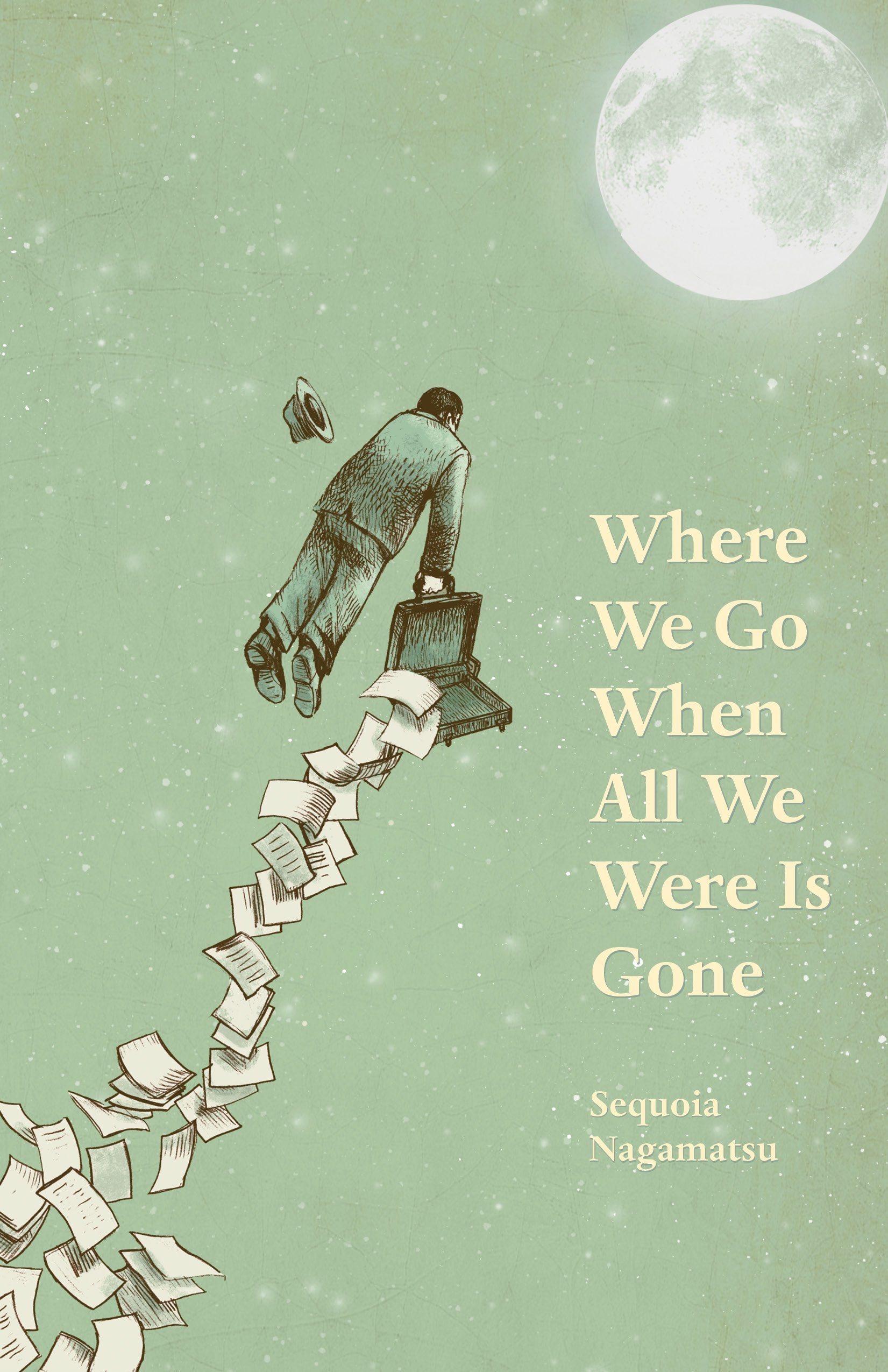
Microreview [book]: Where We Go When All We Were Is Gone, by Sequoia Nagamatsu

Its greatest fault: being too short to develop its tantalizing ideas/relationships further!

Nagamatsu, Sequoia. Where We Go When All We Were Is Gone. Black Lawrence Press, 2016.
Buy it here.


As my dozens of fans worldwide are no doubt aware, I’m generally not a fan of short story anthologies. That’s because there are only two types of short stories: (1) short stories so good the reader laments their shortness, wishing for a longer treatment, and (2) bad short stories. Ultimately, why read either one? Needless to say, I went into this assignment (and, you know, all other assignments) with a snarky, judgmental attitude.

The one glimmer of promise for this volume is that it’s a self-anthology, i.e. all short stories by the same author whose order, presumably, was also carefully considered by same, so it’s not as though it’s a typical third-person ‘throw it all in—the readers will never know the difference’ anthology hack-job.

The opening story in the volume took some time for me to get used to, but once I did, it fell neatly into category (1) above. (Not to ruin the suspense of this page-turner of a review, but I’m happy to report that actually all the stories were category (1)’s!) My reason for liking this story, about a family torn apart (in one person’s case literally!) by ‘kaiju’ (mega-monsters like Godzilla, etc.), was not so much the Japanese pop culture subject matter, though I’ll be the first to admit I like that stuff, but because of the central mystery: how, in just a few pages, did Nagamatsu manage to make me care about the characters involved? It’s written in a whimsical, nonlinear manner, from multiple perspectives, and although one of the central characters in this family drama had, it turns out, died years earlier, somehow I felt myself choked up imagining the trauma of this loss on the surviving family members. If you’d told me beforehand that I’d be crying at the end of a few-thousand-word story, I’d have chortled (a word that doesn’t get used nearly enough) right in your face, but sure enough, that’s what happened.

And it kept happening, for almost the entire collection! I began to perceive certain patterns to the stories, or perhaps to Nagamatsu’s own preoccupations: nearly all the stories (except, e.g., the one about the neck-extending yōkai and the one about the Kappa) feature a three-person family from which one person has been (usually violently) ripped away, and the stories, their supernatural content notwithstanding, are really all about bereaved family members making sense of their trauma. So even if you’re not really into the notion of, say, ghost visitations by a dead son inspiring his father to make a special fireworks display, I think you’ll find the way the father and the mother separately deal with their loss quite touching.

But that doesn’t absolve Nagamatsu of responsibility for writing category (1) short stories: almost any of these stories, in my novel-tinged opinion, would be better as novellas or novels, because that would afford Nagamatsu greater space to develop these triangular relationships more fully. So we’re back where we started, in the frustrating limbo of short story-land…let’s hope Nagamatsu will escape next time into the fully-fledged playground of the novel, because I can say with certainty that his ideas are great, and deserve longer treatment!


The Math


Objective assessment: 7/10

Bonuses: 
+1 for introducing a (hopefully!) wide audience to many of the coolest Japanese folk tales and supernatural legends, i.e. Kappa, rokurokubi, and more;
+1 for somehow making me care, in only a few short pages, about characters literally just brought to life on the page a few moments before!
+1 for the dendrophilic name!

Penalties: -1 for letting all these good ideas wither on the stupid vine of short storydom
-1 for the impossible-to-abbreviate title (a.k.a., WWGWAWWIG)

Nerd coefficient: 8/10 “It’s a bit of all right” in Australian, “kinda awesome” in American, and probably something silly like “capital” or “gobsmackingly good” in ‘English’ 


[For those unfamiliar with our draconian scoring method, see here.]

This little fireside chat (with the caveat that I’m not currently anywhere near a fire, and am not, in fact, chatting with anyone either) was brought to you by Zhaoyun, purveyor of exquisite long-form fantasy & science fiction and yes, even (ugh) short stories since forever, and reviewer at NOAF since 2013.


Extra-special bonus: +1 to Zhaoyun for using ‘chortled’

Friday, June 24, 2016

Summer Reading List 2016: Zhaoyun


Zhaoyun’s Totally Reasonable Summer Reading List, 2016 Edition

Summer is here, and that means fond memories of long-ago encounters with great (okay, probably not that great, but they seemed so at the time) books pilfered (or, you know, just loaned, mostly) from the library in the twilight before racing (more of a tortoise than a hare, to be honest) back home on my bike: the perfect end to perfect summer days! And aside from the library part, which is now out of biking range (i.e., I’m too lazy to go to libraries or bookstores or, in fact, anywhere, nowadays) I still feel there are few pleasures greater than a well-crafted, intriguing fantasy or science fiction novel to be sipped or gulped down in “those summer nights”, as John Travolta would warble. Will I get through all of these? No idea (some idea, actually: probably not), but I relish the challenge! (And that’s another thing I love: relish! Mustard/ketchup...ugh! What is it good for? Absolutely nothing!)

        
1. Pines, by Blake Crouch    

Yeah, the Matt Dillon one, but with words and pages and stuff, not Netflixery. Actually, I’ve already finished this book, and found it interesting if a bit uneven (or to put it in a more flattering light, it had a surprising structure); overall, I liked it enough to be annoyed by the subtle yet enormous changes from book to screen. I also liked it enough to add…


2. Wayward, by Blake Crouch
           
The just bearable hopelessness of the first book was intriguing enough to pique my curiosity: how will things develop in the horrid little town? How will the Burkes adjust to their idyllic prison? Is there any real future for the entire enterprise? I want to see how Crouch tunnels his way out of the dark-as-can-be pit of despair he left Wayward Pines in at the end of book one. Come to think of it, maybe he should change his name to “Bleak”…


3. The Obelisk Gate, by N.K. Jemisin

Because how could I not read it? I loved the first book in this new series (and, indeed, everything by Jemisin), and have high hopes for the second. I won’t be reviewing it at NOAF, because I’m not alone in my admiration for Jemisin, but that won’t stop me from reading it—in fact, nothing could possibly stop me!


4. Summerlong, by Peter Beagle


I’m trying to become shallower, more impulsive, and capable of baseless snap-judgments, so I base most book decisions these days on—you guessed it—the covers! Summerlong’s is delightful, and has raised my expectations quite high. But aren’t I just setting myself up for disappointment, you say? Maybe…but it’s the world’s fault for making such a pretty cover J


5. Where We Go When All We Were Is Gone, by Sequoia Nagamatsu

Intriguing title, and plus it’s based upon Japanese folk tales and legends, of which I am something of a connoisseur (or at least I aspire to be). On the potential minus-side is the fact that this is a collection of short stories (and unlike idiots like Edgar Allen Poe, I utterly reject the idea that a story should be short enough to enjoy in a single sitting—quite the opposite, in fact), but some of them are apparently about kaiju, and everybody loves kaiju! This is the perfect segue into…


6. The Kaiju series, by Jeremy Robinson


They say you shouldn’t read books by people you know (actually, I have no idea if ‘they’ say that, but I just felt instinctually like it was a bad idea), so for a long time I resisted the urge to read anything by this guy, who I knew as an older acquaintance/family friend long ago, in the halcyon days of my childhood. Then I tried reading something by him, and didn’t really like it, but it was the first book he’d written, and it didn’t seem really fair to judge him by his earliest effort (though that didn’t/doesn’t stop me from roundly condemning Patricia Cornwell and the cringe-worthy Postmortem—maybe the Kay Skarpetta series got better after that, but I certainly hope it didn’t manage to get any worse!). So I thought I’d give Jeremy another try, and somewhat randomly selected this Kaiju series. I’m a bit of the way into the series now, and am not at all disappointed—he’s really upped his game, as even if the story is somewhat familiar/well-trodden ground, the quality of the writing is top-notch, especially the “as ___ as ______” descriptive one-liners! Best of all (though not for the unfortunate characters caught by the monster thereabouts), much of the action takes place near, and a few scenes almost within sight of, my childhood home!

This list brought to you by Zhaoyun, ruthless devourer of fantasy and sci-fi novels and films since primordial times, and reviewer for Nerds of a Feather since 2013.

Monday, September 17, 2012

The Top 6 Movies of Our First 6 Months

[We nerds of a feather like things that come in sixes. So in celebration of our first six months of operation, we're presenting you with a retrospective series that looks at the best stuff we've covered in our short lifetime. In multiples of six, of course! Here are the six highest scoring movies reviewed to date by our in-house bloggers. Bear in mind, we gravitate toward cult and obscure movies, so "good" is a relative term, but the reviews should let you know what you're in for. Enjoy!]


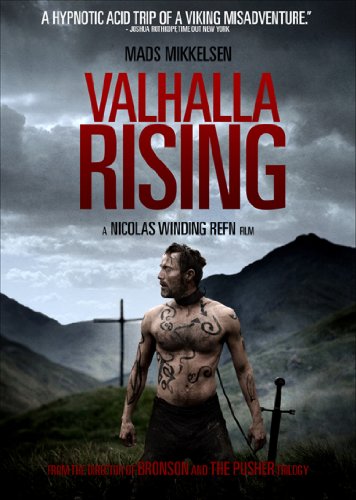
6. Valhalla Rising

The G's Score: 9/10, "very high quality/standout in its category"

"It's a highly atmospheric, very slow and totally surreal film, with a great score and cinematography that recollects Bergman and Fellini. It's very, very artsy. But then it's also ridiculously gory. I won't get into specifics, but if you are in any way, shape or form put off by violence in film, you should avoid this one. Violence in VALHALLA RISING is intimate, cruel and over-the-top."


5.Bubba Ho-Tep

Vance's Score: 9/10, "very high quality/standout in its category"

"We know movies rely on a willing suspension of disbelief. But Bubba Ho-Tep invites you to *not* suspend disbelief, and see how far you can make it. Bruce Campbell has never been better, and Ossie Davis was a titan, so by the time these two talk about being absent fathers before heading out with their wheelchair and walker to battle a 5,000-year-old soul-sucking mummy...well, dang it, you're going to believe them and you won't be able to help it."


4. The X from Outer Space

Vance's Score: 9/10, "very high quality/standout in its category"

"This movie is bad in a very unique and magical way, and deserves to be more widely known. You could think of this as the Plan 9 from Outer Space of kaiju movies -- it's not "good" in any reasonable sense of the word, but there are definitely worse movies, and this one lives at the intersection of terrible and entertaining that makes it a truly rare bird of cult movies."


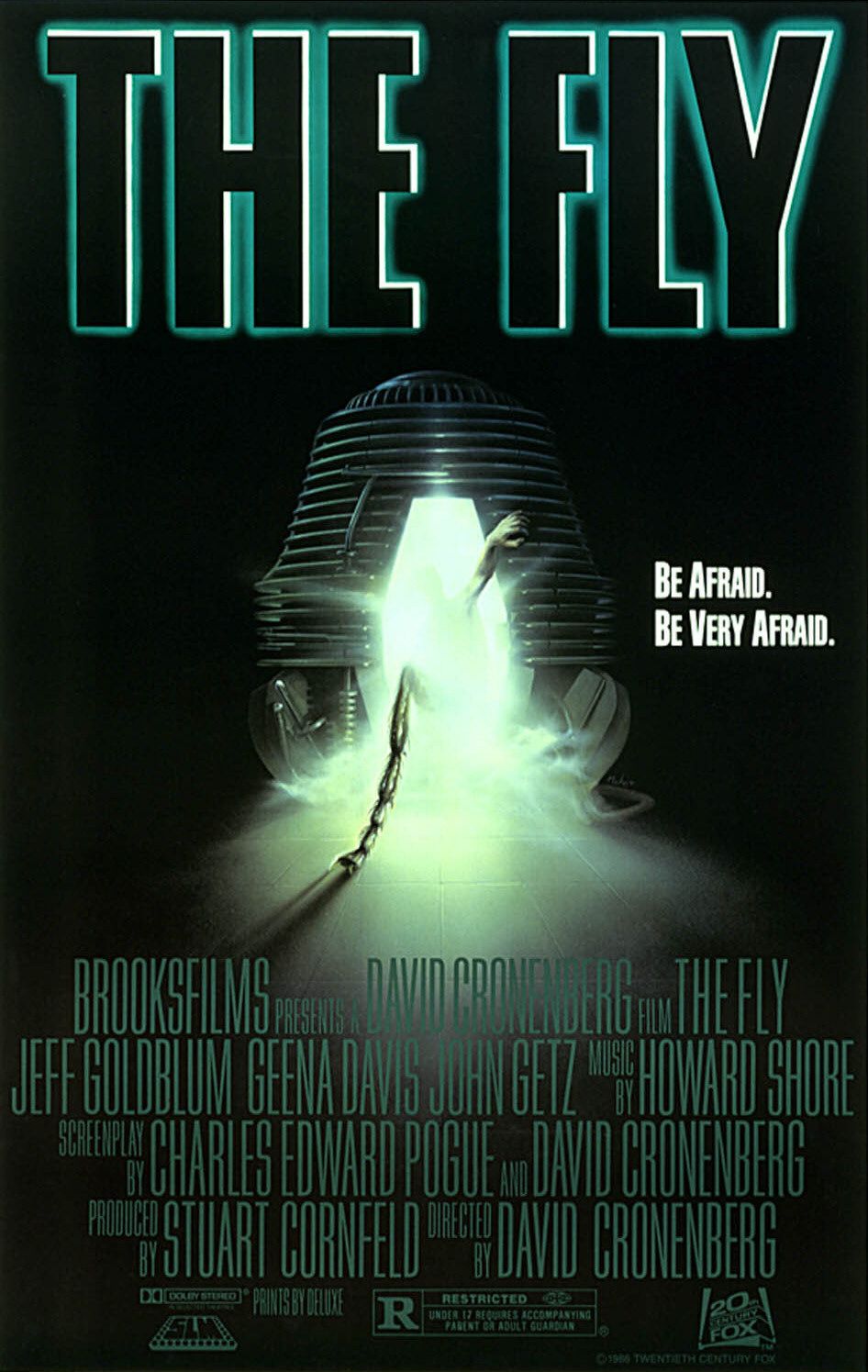
3. The Fly [1986]

Molly's Score: 9/10, "very high quality/standout in its category"

"The special effects for this movie are magnificently undated. They remain grotesque and horrifying. No really, it's seriously gross in a way that will satisfy every ten year old boy on the planet, but the love story and the conclusion -- the ultimate sacrifice -- are done so well that there is a surprising depth and sadness to the tragic path the characters follow."


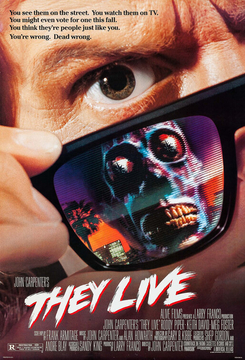
2. They Live

Vance's Score: 9/10, "very high quality/standout in its category"

"There is a moment when Rowdy Roddy Piper, the WWF wrestler, walks into a bank with a gun and says "I have come here to chew bubblegum and to kick ass, and I'm all out of bubblegum," at which point he begins shooting the hell out of the place because his magic sunglasses allow him to see most of the customers in the bank are actually skull-faced aliens masquerading as human beings and brainwashing us through advertising."


1. La Jetee

Vance's Score: 10/10, "Mind-blowing/life-changing/best ever"

"La Jetee's real accomplishment is a lyrical and emotional evocation that is as close as anything I've ever seen to actual visual poetry. My experience of La Jetee is like my experience of T.S. Eliot or e.e. cummings. On an intellectual level I understand what's happening -- what the words and images literally mean -- but I cannot consciously account for the emotions they evoke. To try to analyze it and tear it all apart would be to rob the work of its magic. And there is a tremendous amount of magic here."

Tuesday, June 5, 2012

Micro Review [film]: The X From Outer Space


The Meat

Look, I'll be honest, the only thing I really understand about this movie is that I love it. Starting with the swingin' 60s intro music that includes a spoken conversational break-down between a man and a woman that goes something like "Look, what's that up ahead? It's the future!" "Come on, everybody, let's embrace it!" to the fact that the name of the monster in this Japanese movie is filled with Ls, which are hard for Japanese folks to say, this movie is a masterpiece of oddity.

An entry in the Japanese kaiju genre (translation: "big friggin' monsters stompin' on stuff"), of which Godzilla is the most famous example, The X from Outer Space is about a group of Japanese astronauts (and one white girl) flying back and forth from Earth to Mars and the moon, maybe, while being regular 60s swingers. I think it takes them about a half hour to get to the moon, so when they return to Earth and figure out they forgot something, they just hop back on their ship and pop back to the moon real fast. On one of their trips, though, they get some gunk on their spaceship and it turns out to be an egg for a big monster that wants to get in on the action and step on Tokyo. Stepping on Tokyo is like the Super Bowl for giant alien/radioactive/mutated creatures. This particular monster's name is Guilala, and he's a giant space-chicken. Not kidding. Not one bit. He eats nuclear fuel, spits fireballs, and his only weakness is this foam that looks like fire extinguisher filler called "guilalanium," which causes him to shrink. This movie is bad in a very unique and magical way, and deserves to be more widely known. You could think of this as the Plan 9 from Outer Space of kaiju movies -- it's not "good" in any reasonable sense of the word, but there are definitely worse movies, and this one lives at the intersection of terrible and entertaining that makes it a truly rare bird of cult movies.

I caught this on TCM Underground a few years ago, and it's not on DVD. If you have a subscription, you can watch it on Hulu, thanks to their deal with Criterion.

The Math

Objective Quality: 5/10

Bonuses: +1 because the monster is a space chicken; +1 for the utter disregard for anything even approaching "science"; +1 for being so fundamentally Japanese; +1 for Guilala's recent and unexpected resurrection in a commercial for The Ladders job-seekers website:

Penalties: None. Like Billy the Kid vs. Dracula, if the description above sounds like a movie you'd enjoy, then there's no reason to dock it points for things like coherence, logic, or production value.

Cult Value Coefficient: 9/10

[See explanation of our non-inflated scores here.]