Showing posts with label hardboiled detective. Show all posts

Wednesday, May 28, 2025

Book Review: Harmattan Season by Tochi Onyebuchi

Playing with language, tone and contrast to make something that feels familiar and new at the same time.

This is a story of juxtapositions. Tone and content and setting and expectations and language, many unexpected bedfellows rub up against one another. It's interest and success comes from how well managed those contrasts are, and how the unexpected intertwine to emphasise the meaning coming from both sides.

Harmattan Season is set in West Africa under recent French colonial rule. The main character, Boubacar, has mixed ancestry, with one foot in each of the cultures in his home city. In the past, he has fought for the French, but in the present is a down on his luck, struggling for work chercher - someone who finds people for money. When a grievously injured woman stumbles into his room one night, the police hot on her tale, he's set on a journey to discover who she is, where she came from, what happened to her, and what it could mean not just for him, but for the whole city.

That sounds familiar, right? Maybe not the specifics, but the tone, the setup. A detective, a woman with a problem, a mystery that might be more than it first seems... if your genre senses are telling you "noir", you would absolutely be right. Within even the first few sentences, the vibe is settling itself in for the long haul:

Fortune always left whatever room I walked into, which is why I don't leave my place much these days. It works pretty well; I keep my office close (downstairs, actually) for others' sake. Means that the bad-luck radius stays small. But, of course, the work suffers.

This could be any hard-boiled detective in any black-and-white office in any number of stories. Onyebuchi sets out his stall on this right from the off, and that tone never dips, not even for a second. There are familiar phrases, quirks of grammar - a lot of sentences clipped at their beginning - that put you right into exactly that framework and keep you there. Obvious, but not so over the top as to be egregious. And part of why that is is because so much of the rest of the story runs counter to that clear tone.

To start with, the setting. It's about a generation into French colonisation (given that mixed heritage adult characters exist), which puts us a bit early for the typical time period of the hardboiled detective, never mind that none of the characters are speaking English. Obviously the book is in English, but there's a frisson that comes from these very familiar US-specific linguistic flourishes in a story that takes pains to specify when different languages are spoken. Onyebuchi wants you to remember what this is - and isn't. But even if not for the time, the noir detective is typically at home in his US city, so taking him out into the world beyond is already a little unexpected. Add into that the mentions of fashion - the gendarme uniform and the djellaba - and the picture we hold in our heads is never the pinstripe suit and the brimmed hat. Again, these details of dress are constantly noted, this is another contrast being made clear.

And then of course just... the story. The typical noir detective isn't dealing with bodies who float up into the air, their blood hanging in mesmerising droplets over the city square. Nor are they reckoning with the ongoing legacy of colonialism or the difficulties of being tied to two different and opposing sides in a conflict that keeps on going.

There's a lot going on here.

And somehow... it all works. It's not just that the disparate elements are kept tightly under control, but that they are used to intersect productively. The contrast and the frisson turns into something new and better, something that reinforces the points being made on all sides, rather than just adding an unexpected twist.

Take, for example, the standard fantasy trope of the woman in danger who needs the comfort of the hard-boiled detective. The dame. Or, in a French-speaking context, the dame. It's not just a pun. Several moments like this, where the language or tropes of one side of the equations cuts through into one of the other pieces in play and you realise there's a connection going on, that there's a through-current you hadn't thought about at all. The pun, the visual cue, the little moment of knowing is just the nudge you need to get you across into the deeper well of connection that Onyebuchi is drawing from.

And there are likewise moments of disconnection, of language choices that feel deliberately set to break you out of immersion, and make you step back from the story - anachronisms like the protagonist talking about "batting average" as a metaphor for success rating (and his conversation partner not knowing what he meant), meme references like "I don't think that word means what you think it means", sitting in an alley with a little kid planning a heist - an "impossible mission" - in a scene achingly reminiscent of the movie staple. It's full of knowing winks telling you that what's being done here is, always, deliberate.

And it works. It shouldn't, but it does, because it feeds back into this being a story about contrasting culture, and a character unsure of himself and his place in his city, his role in the events unfolding.

Aside from all this linguistic playfulness, there's a depth to the thematic core of the book that is surprisingly hefty for the relatively short page count. Because so much of the heart of the story turns back to the recently ended war and the very present current legacy of the violence enacted as part of it. Whether that's the injured ex-soldier we meet in a care-home, his one glass eye unnerving the protagonist, or the upcoming election whose result may bring about a Truth and Reconciliation Commission, uncovering ghosts and literal bones many wish left undisturbed, the spectre of the past hangs close overhead. Bouba himself fought, and he too must face up, by the end of the story, to his role in what came before, and what that might mean for his future.

And the story is unflinching about facing up to that reality. By the time it becomes a pressing concern, we've spent a lot of time along the road with Boubacar, seen him being kind to street kids, bantering with beautiful women, trying to do his best for a dead woman and to remember her as a person, not just a clue. There are things to be sympathetic with in his character and his actions. But there must also be a reckoning. Can doing good in the present outweigh the sins of the past? Can there ever be closure, or forgiveness? Those are all questions asked of the story, and the character. Onyebuchi doesn't necessarily have answers tied up in a bow, but he doesn't shy away from having his protagonist face up to them. There isn't an easy answer to many of these questions. But asking them on the page makes for deeply engaging, thoughtful reading, and a story that lingers after you close the final page.

There is one aspect of the whole that doesn't quite sing as loudly as the rest of the choir, and that's the logistical nuts and bolts of the mystery plot itself. If this were just a detective story, where the only focus was on solving the crime, that might be a problem. As it stands, there were a few moments where it was a little unclear how A led to B, but I found myself willing to gloss over them because it was far from the most important or most interesting thing going on. The mystery is there to serve some of the thematic interweaving, and so I found it less critical that it be executed absolutely perfectly. It never detracted from the atmosphere, the sense of a city poised on the edge of something big, and of a character trying to find how he fits into his own life. So it was more a niggle than anything else.

All in all, it's a beautifully written story, and I love how knowingly it messes around with how its different pieces all fit together. Tonal incongruity well managed is one of my absolute favourite things in books, and Onyebuchi does it with panache, leaving a novel worth lingering over, to make sure you enjoy how every word fits into the pattern of the whole. 

--

The Math

Highlights: 

  • Willing to look the hard themes square in the face
  • Thoughtful and unexpected use of language and genre cues to play with reader expectations
  • Plot that brings great surprises without being deceitful or sneaky

Nerd Coefficient: 8/10

Reference: Tochi Onyebuchi, Harmattan Season, [Tor Books, 2025].

POSTED BY: Roseanna Pendlebury, the humble servant of a very loud cat. @chloroformtea.bsky.social

Wednesday, October 11, 2023

Review: Kakistocracy

It's about rule by the worst, but it's written by the best

In the introduction to the anthology Down These Strange Streets, George R. R. Martin defined urban fantasy as the confluence of the hard-boiled detective story and the horror story. That, to some degree, shows why it is such a fertile subgenre, as it has license to draw from multiple literary traditions. One of them, of course, is the common wise-cracking, straight-talking detective. In the newer works of Alex Shvartsman, we have another great supernatural sleuth: Conrad Brent. Brent has now had his second foray in a planned trilogy, the first being 2022’s The Middling Affliction, which I previously reviewed for Warped Factor. That second foray is 2023’s Kakistocracy, published by Caezik.

The word ‘Kakistocracy’ means, literally, ‘rule by the worst people.’ Various real governments notwithstanding, the book examines multiple cases of such a situation, earthly and otherwise. James Madison, fourth president of the United States, said, ‘If men were angels, no government would be necessary. If angels were to govern men, neither external nor internal controls on government would be necessary,’ and Kakistocracy is an examination of that proposition in a way that only a fantasy novel can: with a literal government of angels (as well as demons and other creatures).

New York has just elected a populist real estate mogul with funny hair as mayor who hates those who can use magic, and intends to suppress the Watch, the quasi-government entity that defends the city from supernatural threats, also the employer of Conrad Brent. Conrad also has the misfortune of being assigned to hash out a real estate deal between Heaven and Hell, as well as prevent an invasion of the human realm by forces from another plane via a process that Shvartsman calls ‘rap battles with memories.’ It is a novel that is dense with plot threads, and yet Shvartsman succeeds in never letting it feel convoluted. It’s a circus juggling act with flaming torches of a plot, and yet, in the manner of a Timothy Zahn, all these simultaneous things keep moving along.

Shvartsman won my heart with Conrad Brent in the first book, and he doesn’t disappoint here in the character department. Conrad is striking as a male urban fantasy protagonist with a heart that has not yet succumbed to cynicism. There is goodness in him, and he believes in goodness, and in saving life and preventing conflict. He is given a deft foil in another character, who has begun to see the benefits of kindness rather than the naked self-interest so common in this genre. You also get some other great characters, although to give away too much would ruin the fun (one of them involves a house).

Shvartsman writes some of the best action scenes I’ve ever read, partially because his prose is just that good and partially because he never sinks into letting his action be meaningless. It’s also action with plenty of pyrotechnics, with some very creative use of magic in the proceedings. In this regard, he reminds me of the best of the authors Warhammer 40,000 has to offer, particularly Dan Abnett and Graham McNeill.

A more understated, but all the more potent, aspect of Kakistocracy is the setting: a living, breathing New York. Shvartsman knows what Stan Lee did, that a real city feels more vivid, more vibrant than a fictional city, and his New York leaps off the page, with both glory and grime, as big cities do. It feels more true-to-life that way.

Kakistocracy is one hell of a ride through both this realm and the next, with an engrossing plot and an all-too-real (and hysterically funny) protagonist as your narrator. Best of all, it is a book with so much heart undergirding the plot like the scaffolding of a sturdy building. Read The Middling Affliction first, then dive right into Kakistocracy—you won’t regret it.

Highlights: wonderful main character, great action, great supernatural stuff.

Nerd Coefficient: 9/10.

POSTED BY: Alex Wallace, alternate history buff who reads more than is healthy.

Tuesday, November 9, 2021

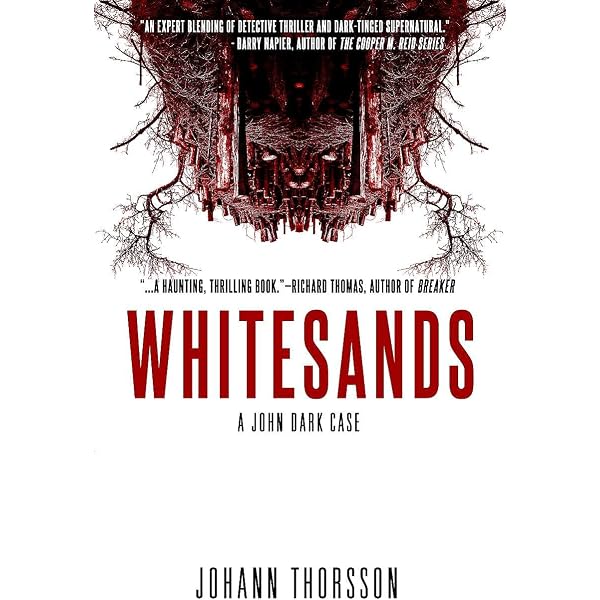
Microreview [book]: Whitesands by Johann Thorsson

A true creeper 


Thorsson is an Icelandic author and former contributor to Book Riot. His stories have appeared in Fireside Fiction and The Apex Book of World SF 4, among other places. Whitesands is his first novel, published in the US by Headshot Books. It is a supernatural thriller, skirting the line between hard-boiled detective fiction and horror - but approaches the genre in an unusual way. 

Whitesands tells the story of John Dark, a police detective in an unnamed American city. Dark and his partner Monique Moreno were once known as the best of the best, but have been reassigned to desk duty after an unsanctioned attempt to find Dark's missing daughter went wrong. They receive their first true case in months, a bizarre, ritualistic murder whose apparent perpetrator, despite clear physical evidence that he did it, has no apparent motive and zero memory of the deed. They are given the case because it's a slam dunk, an easy way to start rebuilding their reputations. But something about the video footage is off. There is, of course, no question as to whether the man committed the crime - but Dark comes to suspect that something else may be afoot...

I will say no more, because part of the fun is how Thorsson slowly introduces the concept of the supernatural into what up to that point reads like a fairly straightforward, fast-paced work of hardboiled detective fiction. To be honest, I'm a much bigger fan of hardboiled detective fiction than I am of supernatural horror, so I probably would have been perfectly content to let things evolve as they were. In this case, however, the horror elements both compliment and enhance the core thriller narrative. 

There are other details to note as well. For one thing, Whitesands takes place in an unnamed American city. Local color and lore are key components to the American detective novel (think: Chandler's Los Angeles, Hammett's San Francisco). The detectives are also presented in generic terms - their names, "Dark" and "Moreno" signaling with little subtlety that we are firmly in noir territory. But while "generic" is usually a pejorative term, in this case it's set up - since this is decidedly not a generic detective story. 

The book also has excellent pace. At several points, I made myself stop reading so I could better digest what I'd just taken in. But the urge to continue on was constant. This is the kind of book you could happily devour on a long plane ride, but there are definite advantages to taking your time. 

Without giving too much away, Whitesands ends on a cliffhanger - akin to the end of a TV season. I'm fine with that, as I intend to read the sequel when it comes out. But some readers may wish for more resolution, even if major storylines continue. 

All that said, Whitesands is not a perfect book. There are elements, like John Dark's preternatural instincts, that are referred to but not really developed in any way. And Moreno sometimes presents more like a vehicle for Dark's character exposition than a fully-rendered character in her own right - though the hints we do get about her back story are very intriguing. Hopefully this is explored more in later volumes. Finally, though I did enjoy the "Everywherescity, USA" approach to world building that Thorsson takes, there are times when it seems to come less from intentionality and more from a lack of the kind of intimate familiarity that a native or deeply embedded transplant would have. Yet the fact that these moments are rare is also notable. 

Overall, Whitesands is a brisk, enjoyable read that I recommend to fans of both detective fiction and supernatural horror. 


The Math

Baseline Assessment: 7/10

Bonuses: +1 for the slow introduction of supernatural elements, which is refreshing; +1 for brisk pace

Penalties: -1 for elements that could have been developed further

Nerd Coefficient: 8/10. Well worth your time and attention. 


***

POSTED BY: The G--purveyor of nerdliness, genre fanatic and Nerds of a
Feather founder/administrator, since 2012. 

Monday, November 24, 2014

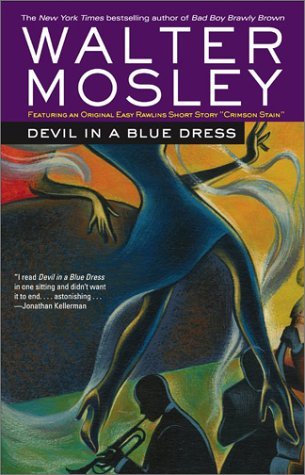
Microreview [book]: Devil in a Blue Dress by Walter Mosley

The other side of Chandler's Los Angeles


Regular readers know of my Chandler obsession--the unshakable, near-religious belief that his Marlowe novels and short stories are the most literary works genre ever produced, and contain enough mesmerizing prose and astute social commentary to transcend genre and sublimate to significant works of literature. They are, however, products of their time; nowhere is that more apparent than in Chandler's dismissive treatment of race.

Walter Mosley's Devil in a Blue Dress is a text both indebted to and in conversation with Chandler. It takes place in 1940s Los Angeles, stars a hard-nosed, persistent and stubbornly moral protagonist who takes a punch better than he throws one, and centrally involves a femme fatale. But if Chandler's fiction is ultimately about the relationship between corruption and class division in 1940s Los Angeles, then Devil in a Blue Dress is about those same things refracted through the deleterious race relations of the time.

It's an important point of contrast with Chandler, not least because of Marlowe's ambivalence towards the African-Americans he encounters. But it also made me think about the contrast between that time and this one. Though American society has improved, racism-wise, in any number of meaningful ways, Mosley makes the implicit point that in other ways things have gotten worse. Rawlins' LA is a place of economic opportunity, where manufacturing jobs are plentiful and social mobility is possible even for the city's downtrodden. Compare that with American inner cities of today--disproportionate populated by ethnic and racial minorities, and where jobs and opportunity are scarce--and today doesn't look so hot. In that sense, Devil in a Blue Dress is also thematically focused on a death of a specifically black version of the American Dream, which emerged in the immediate post-war days and closed sometime after "white flight" (i.e. re-segregation), de-industrialization and the crack epidemic gutted the American inner city during the 1970s and 1980s.

Howvever, though Devil in a Blue Dress addresses some weighty issues, it never feels heavy. Easy Rawlins is a likable rogue, a borderline drunk and a working stiff who has issues with his boss (who, for the record, is kinda racist). He's a homeowner and proud of it, but also has a problem--if he can't pay the mortgage, the bank will foreclose, and, well, he just told his racist boss where to shove it. Along comes Joppy, an ex-boxer turned speakeasy proprietor who might just have a line on some work for Easy. An old associate, DeWitt Albright, is looking for a white girl who was last seen in Watts. Joppy tells Easy it will be a cakewalk, but Easy has a bad feeling about Albright. But as it turns out, that bad feeling is only the tip of the iceberg...

Devil in a Blue Dress is a smart and perceptive novel whose social commentary blends into the background and never gets in the way of the fun. I certainly enjoyed reading it. At the same time, it does feel like Mosley is still working through the formula here. There are too many murders and, well, too many characters--many of which never really get much in the way of development. As a result, a couple major elements of the plot feel forced. Incidentally, the paperback version I bought also includes a short story, "Crimson Stain," which was written a number of years later and, perhaps uncoincidentally, feels a lot more sophisticated. But if that's what I have to look forward to with this series, then sign me up for the whole thing.  


The Math

Baseline Assessment: 7/10

Bonuses: +1 for doing social commentary the right way; +1 for bringing race into a literary conversation with Chandler;

Penalties: -1 for excess characters; -1 for "huh?" moments.

Nerd Coefficient: 7/10. "A mostly enjoyable experience."


***

POSTED BY: The G--purveyor of nerdliness, genre fanatic and Nerds of a
Feather founder/administrator (2012).


 Reference: Mosley, Walter. Devil in a Blue Dress [Washington Square Press, (1990) 2002]


Monday, May 19, 2014

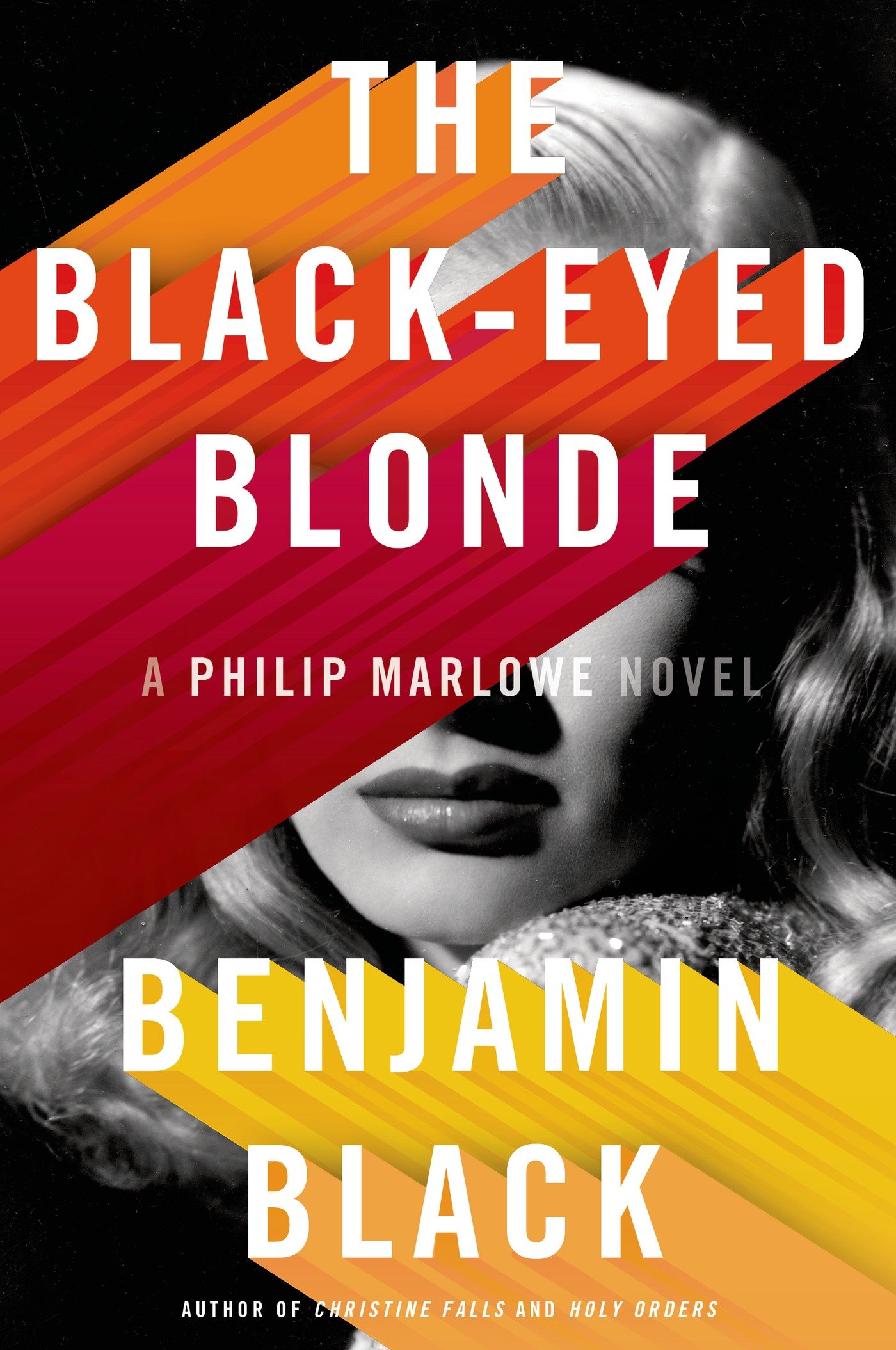
Microreview [book]: The Black-Eyed Blonde by Benjamin Black


Black, Benjamin. The Black-Eyed Blonde [Henry Holt, 2014]

I confess that I am a bit of a Raymond Chandler fanatic. I've read each of the seven Marlowe novels at least twice, and some several times more than that. I consider Chandler to be one of the most significant novelists of the Twentieth Century, and easily the best stylist genre fiction has ever produced.

Over the years, I've read a number of homages to the master, from lighthearted spoofs to more serious fare. The best of these, like Jonathan Lethem's science fictional Gun, with Occasional Music or the middle chapter in Ariel Winter's The Twenty-Year Death, adopt a playful tone and a respectful distance from the author whose work they celebrate but, really, can never hope to equal.

The Black-Eyed Blonde by Benjamin Black, otherwise known as Irish novelist John Banville, does not have that luxury. After all, it is not an homage, but a new Marlowe novel. Thus Banville faced the distinct challenge of producing something that would evoke Chandler but not just make you wish you were reading The Big Sleep.

The last time someone tried to do this was in 1989, when crime novelist Robert B. Parker completed Chandler's unfinished manuscript for Poodle Springs. It quickly became a joke among hardboiled fiction aficionados, with Parker memorably dismissed by Martin Amis for having turned Marlowe into "an affable goon." But there was good reason to think Banville might succeed where Parker failed. After all, while Parker is best described as a likeable, forward-thinking crime hack, Banville is a bona fide literary rock star. If anyone was going to do this right, it was going to be someone Don DeLilo once described as writing "dangerous and clear-running prose" with "a grim gift of seeing people's souls."

On that note, let me begin by saying that The Black-Eyed Blonde is orders of magnitude better than Poodle Springs. It's a crisply, efficiently-written and briskly-paced detective story set in Marlowe's Los Angeles. While Banville isn't exactly breaking new stylistic ground here, the book is an undeniably well-crafted and smart bit of hardboiled detective fiction.

Yet Chandler did not write "well-crafted and smart bits of hardboiled detective fiction"--he wrote artistically significant literature that wore the clothes of hardboiled detective fiction, and this is not that. Banville by his own admission views crime fiction as "cheap." And a lot of it is. But Chandler's fiction is anything but, and in the end The Black-Eyed Blonde does unfortunately feel like a cheapened rendition of the genuine article. Nearly every sentence Chandler wrote spawned a cliche, and at times it feels like Banville is channeling the cliches rather than the authentic item. Banville's Marlowe is too direct, too reliant on simile over metaphor and, well, acts a bit too much like Sam Spade.

So did I like it? Sure--though I didn't love it. Perhaps, if I'm feeling reflective, I might admit that I never could. But this is only partially my problem. After all, not only does Banville try to sell us on the authenticity of his Marlowe, but he fuddles with Chandler's penultimate achievement, The Long Goodbye (I won't spoil the book by saying how). This is sacrilege for someone like me, and there are enough of us to make me think that The Black-Eyed Blonde would have been better off as homage--starring someone else who just looks and talks like Marlowe, but isn't supposed to be Marlowe. Because this isn't Marlowe anyways.


The Math

Baseline Assessment: 7/10

Bonuses: +1 for being a good homage to Chandler's Marlowe.

Penalties: -1 for "but it's just not Marlowe"; -1 for thinking The Long Goodbye needed or even wanted a sequel.

Nerd Coefficient: 6/10. "Enjoyable, but the flaws are hard to ignore."

***

POSTED BY: The G--purveyor of nerdliness, genre fanatic and Nerds of a
Feather founder/administrator (2012).