Grime, Crime and...Magic
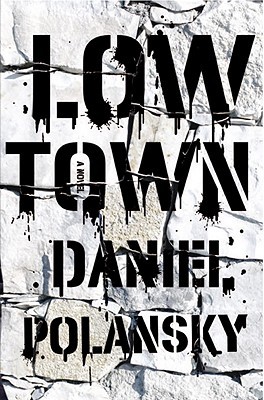
Low Town is part of a new breed of fantasy: small-scale and urban in focus, and taking cues as much from crime fiction (and films) as in-genre classics. Some have used the term "fantasy noir," but I don't really see much connection to Thompson, Cain or Chandler. Rather, Low Town feels rooted in gangland fiction (and film), while also evoking science fictional takes on the grime and crime aesthetic. Scratch that--not gangland, per se, but the "street novel" (or film). And the British kind at that--think Irvine Welsh only not as funny, but with magic.
Low Town is named after the rough and tumble quarter of Rigus, which is the capital of a very powerful state. It's a place where most are poor or struggling, the state is mostly absent, and criminals abound. It's the place where, when the plague hit, it hit hardest. It tells the story of a man known only as the Warden. As a child he was orphaned by the plague, but was then taken in by a mercurial and benevolent sorcerer. He is a veteran of a nasty war against a rival state, and a disgraced former member of Rigus' feared secret police. Now he peddles drugs on the streets, and is a fearsome enough figure that he doesn't need or want an organization.
Though the Warden is a hard man to the core, he is neither sadistic nor nihilistic. He lives by a code, and tries to use violence only when it is the most efficient means to an end, or when the person really had it coming. And when children begin showing up dead on Low Town streets, you just know someone's going to pay.
The Warden is the primary reason why Low Town works so well. He's world-weary and jaded, but his reactions to things that happen around him are extremely relatable. That is to say, despite the exterior, this is, fundamentally, a person who cares about right and wrong--in the way most people care about right and wrong. It's flexible, when necessary, but there are lines you just don't cross. As a reader, you come to really care about what happens to him and the people he depends on.
The Warden's (and by extension the book's) moral compass makes me hesitant to lump Low Town in with the style of fantasy frequently referred to as "grimdark." Yes, it's gritty as hell, and pretty gory in spots. This is not a book for the feint of heart, and those who have tired of contemporary fantasy's fixation with ultraviolence should probably look elsewhere. At the same time, it isn't nihilistic, and it isn't terribly relativistic either. The Warden is a troubled, flawed man, but he actually has a pretty clear sense of right and wrong and does what he can, in his way, to make Low Town a better place to live. He doesn't always get it right--and makes some major errors, in fact. But he tries.
The other thing I loved about the book was its mood--dark, cold and foreboding. And the action scenes are just fantastic.
My one quip is that the plot, while serviceable, isn't all that well constructed. There's a mystery, but it's never quite clear why things happen the way they do, or why the Warden draws the conclusions he draws. This makes the big twist at the end kind of superfluous. Twists, after all, depend on the reader having certain assumptions; yet if the reader never quite develops them, what exactly is the twist doing?
Still, it hardly matters--this book is propelled by character and setting, and those are fantastically well rendered. I can't wait to read book #2.
The Math
Baseline Assessment: 8/10
Bonuses: +1 for the Warden, who is all kinds of awesome.
Penalties: -1 for a plot that doesn't quite work.
Nerd Coefficient: 8/10. "Well worth your time and attention."
***
POSTED BY: The G--purveyor of nerdliness, genre fanatic and Nerds of a
Feather founder/administrator (2012).
- Reviews
- _Book reviews
- _Film and TV Reviews
- _Game Reviews
- _Thursday Morning Superhero
- _Short Fiction Reviews
- Lists
- _New Books Spotlight
- _6 Books Posts
- _We Rank 'Ems
- Features
- _Interviews and Blogtables
- _Talking About Books
- _The Hugo Awards
- _Mini-Projects
- Projects
- _Nerds on Tour (2020)
- _The Hugo Initiative (2019)
- _Feminist Futures (2018)
- _Dystopian Visions (2017)
- Meet the Flock
- Review Policy
- Home
Showing posts with label gritty fantasy. Show all posts
Monday, November 2, 2015
Friday, February 6, 2015
PERSPECTIVES II: "The Pornokitsch Theory of Grimdark"
Welcome to Perspectives II, the yin to Blogtable II’s yang!
Perspectives has now adopted the Blogtable format, so here’s how it works: an editoral, opinion piece or critical essay written by an external blogger, critic, journalist or creative person is presented by a regular contributor to nerds of a feather, flock together; it is then answered by three other regular 'nerds of a feather, flock together' contributors. Crucially, each respondent will also respond to each preceding respondent. This episode's cast o' characters:
The G (Prompter)
The G is founder and co-editor of ‘nerds of a feather, flock together’, which covers SF/F, crime fiction, comics, cult films and video games. He moonlights as an academic.
Charles (Respondent #1)
Charles is a reader, reviewer, and writer of speculative fiction. He's been a contributor to 'nerds of a feather' since 2014.
Jemmy (Respondent #2)
Jemmy is a failed leprechaun trainer and renowned domesticated cat tamer who has been moonlighting as a blogger for ‘nerds of a feather, flock together’ since 2012. Jemmy is in the process of repenting for a sordid history as a tool used by the darker elements of society, one where he was taken advantage of to force open windows and doors.
Tia (Respondent #3)
Tia is a writer and editor with background is in criticism, rhetoric, and culture, and has been a contributor here at 'nerds of a feather, flock together' since 2014. She has published works but doubts you would want to read them.
But enough about us...
EPISODE 2: In which three nerds of a feather react to “the pornokitsch theory of “grimdark” fantasy...
Link: http://www.pornokitsch.com/2015/01/new-releases-the-goblin-emperor-by-katherine-addison.html
Within a review of Katherine Addison’s The Goblin Emperor, often cited as a work of “anti-grimdark,” Jared has problematized commonsense understandings of what defines “grimdark” fantasy. In his words:
Charles
I have something of an aversion to genres, or perhaps I should say an aversion to the tendency of labeling genres so specifically that one can say "I like near-future-Earthbound-hard-medical science fiction but not far-future-Earthbound-hard-post-apocalyptic-medical science fiction." Because that sort of dogged defining of genre normally isn't just to say "these are the things I like" but rather a way of saying "this is my Team and all other books are the Opposing Team." It's a way of applying tunnel vision to speculative fiction, and I find that incredibly limiting.
Perhaps that's being a little dramatic. But it's what I see with narrow genres or categories within genres, especially with ones like Grimdark. To me, defining Grimdark in terms of tone, realism, and agency both narrows the genre far too much and also cannot stand to its own definition. Most every novel labeled Grimdark would then only be Grimdark in degrees. Maybe they would be 2.5/3 Grim-points, or even 3/3 to someone but then someone else would claim, really, it's only a 2.25/3. So while it's an interesting way of looking at Grimdark as a genre and trying to quantify it objectively, I personally don't find it helpful in knowing what Grimdark is.
So I'd like to posit more of a subjective definition of Grimdark. And to do that I want to look at what I would say Grimdark has arisen in opposition to. The review claimed that Grimdark was concerned with agency, a reaction to the common trope in fantasy of there being a Chosen One who is predetermined to win. But I think that's too narrow. I think that, instead, Grimdark has risen to oppose the idea in fantasy that an individual can make a difference and make the world a better place by hard work and doing "the right thing."
Grimdark seems very concerned with the idea that the "hero" really isn't a hero. Under the guise of "realism" the protagonists can perhaps have small, personal victories, but the worlds they live in are ugly, oppressive, violent, and utterly unchangeable. Grimdark basically calls other fantasy naive and instead claims that in a truly ugly world, "good" is not enough to win. That it is somehow more realistic for "good" to fail and for the only road to justice or revenge or whatever it is that the protagonist is seeking to be accomplished by being better at being violent, deceitful, and ruthless. It refuses to reward doing "the right thing" in favor of rewarding "whatever is required to win." Or, perhaps more troublingly, it claims that "the right thing" is "whatever is required to win."
But even that I find too confining a definition. So where does that leave me? What is Grimdark? To me, it must be about self-identification. If a novel claims to be Grimdark, then it is. If it claims not to be, then it is not. If it makes no claims at all about being or not being Grimdark, then put a big question mark on it and move on. Because the lines being drawn as to what is and what isn't Grimdark seem made in sand. What would make a novel truly Grimdark to me is its insistence that that is what it is. To declare that it wants to be separate and distinct from the rest of fantasy. That urge to separate itself and insist on its own specialness as strictly Grimdark is what defines Grimdark to me. It’s a very subjective definition of the genre, but one that I find more personally useful.
Jemmy
First off, let me state that I totally agree with Charles’ notion that labeling genres is overly limiting and obscures more than it illuminates. The problem with labels is that they destroy inclusivity. They allow people who dislike the term “grimdark” to define out of the genre the very books that grimdark fans see as essential reading. Is George R. R. Martin’s A Song of Ice and Fire grimdark? What about Steven Erikson’s Malazan Book of the Fallen? N.K. Jemisin’s Dreamblood Duology? The answer depends on our pre-existing notions of grimdark as a genre or style of fantasy. Personally, I am open to as wide a definition as possible for the genre. That way, the best works of literature could never be classified out of the genre, and grimdark would never be mistaken as a mere pejorative term for excessively dark, rapey, torturey, malevolent splatterporn (although the terrible term “grimdark” makes it particularly susceptible to such interpretations). And the books that wallow too deeply in betrayal, rape, or violence would simply be dismissed as “bad literature.”
That said, I disagree with what Charles wrote about self-identification. Sure, we can say that grimdark is as grimdark does, but I am not convinced that many authors actually claim to be writing grimdark. More to the point, even the author doesn’t have the final say on whether his/her novel is grimdark. It is the audience, the readership and fanbase, and the discussions that develop within the industry itself that attribute these limiting labels to works of fiction. The readership in particular has decided that grimdark is its own genre, so it is a label we all either have learn to love or learn to live with. Most authors are not writing grimdark, but grimdark lives on nonetheless.
This is why I appreciate Jared’s attempt to define the genre. But although his tripartite division of grimdark into tone, realism, and agency is brilliant, it runs into the problem of unintentionally defining out of the genre many books that grimdark fans love (or assigning only partial grimdarkness, which is simply confusing). In particular, I wonder about his notions of realism and agency.
Let’s take realism, for instance. Putting aside the notion of realism in stories that feature dragons, magic, beasts, gods, demons, and godlings in all their power, many novels in the genre maintain rather static impressions of what realism entails. As Foz Meadows noted in an earlier Blogtable on the subject, grimdark:
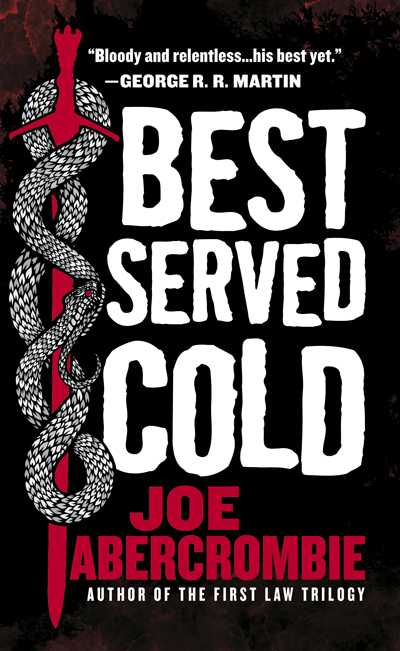
Agency, too, is a problematic notion. Where, for instance, can we find agency in the novels of Joe Abercrombie? Whether in his First Law trilogy, Best Served Cold, or Red Country (all notable examples of grimdark), Abercrombie’s protagonists are often characterized by an utter lack of agency. Perhaps the only true agents in his first major trilogy were Bayaz and Khalul (and perhaps Glotke, on a more limited scale)… everyone else could be characterized as mere pawns in their game of power and revenge. No group symbolizes this lack of agency like Abercrombie’s Northmen. Oftentimes, they have dreams of becoming better men, to redeem themselves as individuals and escape their fate as moral pond scum. But one wonders whether Abercrombie’s characters are ever able to redeem themselves. Instead, they are trapped in a cycle of violence, and find it next to impossible even to influence their own fate. Take the example of Logen Ninefingers or Caul Shivers. Both characters try to become better people. But they always appear to teeter on a giant precipice, waiting for the gentle push to fall back into the morass of lies, cowardice, and brutality that define them as individuals. In a sense, they are non-agents in their own lives, predestined to spend their time lives of the morally challenged. They are not even able to choose between good and evil.
So if realism and agency are out, where does the real heart of grimdark lie?
The real heart of grimdark, I believe, lies in Jared’s notion of tone, or what I think of as a moral realpolitik. Grimdark represents the darker turn in fantasy, a darker turn that was presaged by Glen Cook’s masterpiece, The Black Company (see my tribute to his work here). With The Black Company, fantasy began to move beyond the notion of climactic battles between universal notions of Good and Evil. The forces of “good” (the White Rose) were often responsible for unspeakable acts of depravity, whereas those of “evil” (personified by the Lady) often helped preserve law, order, and a variety of beneficial public goods. And the famed Black Company worked for the forces of evil, so readers find themselves rooting against the White Rose! A Song of Ice and Fire also highlights the difficulties in locating a definite moral compass. One would think the readers are rooting for the forces of fire to beat back the evil legions of ice. But the world is not so simple. Fire consumes and destroys, while cold preserves. People make horrible decisions for flawed understandings of the greater good. And “evil” characters oftentimes accomplish good, sometimes purposefully, other times not. Power, it seems, can create both good and evil in equal measure.
One can see similar trends in the epic fantasy of Steven Erikson, Peter Higgins, Scott Lynch, and N.K. Jemisin (to name but a few really good authors, some of whom may be shocked to find their works as classified as grimdark!). Instead of climactic fights between the forces of good and evil, what we really see are battles between two opposing sides for control over the emerging order. This is not realism. Instead, what grimdark is (despite my hatred for the term) is merely a reaction against the universalism of the fantasy of Terry Brooks, David Eddings, and others. It sees the world as a series of choices, none of which are truly black or white. There are no true heroes, as Charles argues, and some protagonists will do whatever it takes to win. If they hold to overly firm notions of morality, they may meet the fate of Ned Stark.
In exploring such notions, authors can lay bare the human condition, with all the positives and negatives it entails.
Grimdark is thus best understood in terms of its moral realpolitik--that there is no universal, objective “good” or “evil,” and that interests rather than moral fiber govern decision-making. The best writers in the genre generally use violence (in all its forms) as a means to probe this moral realpolitik, and in doing so offer important explorations of justice, hope, and the depths of the human soul. Re-reading the genre as such offers more of a sense of inclusivity. Instead of dividing fans between those who think that grimdark is rapey or splatterporn and those who believe the genre has literary value, it would bring us together and allow us to discuss--without scorn, without derision, and without division--the books we truly love.
Tia
I disagree that genre is too limiting. Sure, when we try to pick genre apart and subdivide it into categories like near-future-Earthbound-hard-medical science fiction then yes, definitions can become so narrow that only a select few will meet the criteria. But I don’t think grimdark falls into that narrow of categorization. Because labeling fantasy as high, low, epic, grimdark, sword and sorcery, etc. isn’t mutually exclusive. When you categorize genre in that way it becomes more like a venn diagram, with much overlap. It can be argued that A Song of Ice and Fire is part epic fantasy, part low fantasy, part historical fantasy, and part grimdark. I’d say all are right and I definitely don’t think any one of those labels is limiting. And really, who, or what, is being limited anyway? The reader? The work? It seems to me that if someone chooses to only read within a narrow subset of genre, then they are self-limiting, and that’s the fault of the reader not the fault of the construct of genre. We shouldn’t tiptoe through theory because people won’t read something that isn’t categorized to their standards. That’s a bigger cultural/societal/human nature problem and not one that can be fixed by eradicating genre classifications.
Right now grimdark is in its adolescence, androgynously clad in platform boots and black nail polish. It’s trying to discover itself and find its place in this world, but is facing much resistance. Some of the claims are founded but others are just petty mockery and bullying by those who don’t understand it. Grimdark’s identity crisis holds the blame for this resistance, because how can we effectively engage in discourse about something if we can’t even agree on what we’re talking about? Essentially, when we discuss grimdark we are really only talking about what it means to each of us, individually.
Charles is absolutely correct when he says, the lines being drawn as to what is and what isn't Grimdark seem made in sand. I was thinking of it more as being like mercury, an amorphous blob if you will, but lines drawn in sand is much more poetic. I also agree with Jemmy though, in that self-identification is too problematic a way to define grimdark, or any type of genre for that matter. As you may recall, J. K. Rowling doesn’t even like that Harry Potter is considered fantasy.
As for Jared’s definition, I agree that tone is central to grimdark, but I don’t think that agency is indicative of grimdark at all. In fact, I find lack of agency quite grimdark in itself. Jemmy has a nice list of characters in classic grimdark who lack agency, but what about those in definitive non-grimdark works that don’t lack agency? I mean, even Harry had the option to walk towards the bright light.
I was going to argue that realism is central (but not exclusive) to grimdark, and I will to some extent, but Jemmy just rocked my world with moral realpolitik. In my review of Brian Ruckley’s The Free, I called the book gritty but not quite grimdark, and I made that distinction based on the fact that no matter how grimdark the book’s tone seemed, I couldn’t consider it as such because the central characters were either inherently good or inherently bad, no in between. I always knew exactly who to root for. The bad guys were evil just because they were evil. There was no compassion drawn for them, and certainly no POV that made us fall in love with them and forgive that they pushed a kid out a window.
The argument that grimdark is uncaring and misogynistic and that shock has lost its value is problematic, in my opinion. In a poorly written book, yes, these things are true. But that’s true of ANY trope in any poorly written book. Critics complain that in grimdark and other related works we are just waiting for characters to die and that it’s all overdone. To that I say, go read The Malazan Book of the Fallen. Because it’s one thing to know your characters can die at any moment, but it’s a whole other thing to know that they could die at any moment for no reason. To me, that is realism in grimdark.
Charles says, under the guise of "realism" the protagonists can perhaps have small, personal victories, but the worlds they live in are ugly, oppressive, violent, and utterly unchangeable. Is that not reality? Yes, perhaps some of us don’t live in as ugly, oppressive, and violent a world as others, but I don’t think anyone can say that the world as a whole is not these things most of the time. We can have small personal victories, we can sometimes even have larger, positive impacts on our immediate surroundings, but often we are helpless to change the greater atrocities of this world. Really, the only thing we can do is act, and hope, and attempt to do the right thing…all why trying not to get our heads chopped off.
***
POSTED BY: The G--purveyor of nerdliness, genre fanatic and Nerds of a
Feather founder/administrator (2012).
Perspectives has now adopted the Blogtable format, so here’s how it works: an editoral, opinion piece or critical essay written by an external blogger, critic, journalist or creative person is presented by a regular contributor to nerds of a feather, flock together; it is then answered by three other regular 'nerds of a feather, flock together' contributors. Crucially, each respondent will also respond to each preceding respondent. This episode's cast o' characters:
The G (Prompter)
The G is founder and co-editor of ‘nerds of a feather, flock together’, which covers SF/F, crime fiction, comics, cult films and video games. He moonlights as an academic.
Charles (Respondent #1)
Charles is a reader, reviewer, and writer of speculative fiction. He's been a contributor to 'nerds of a feather' since 2014.
Jemmy (Respondent #2)
Tia (Respondent #3)
Tia is a writer and editor with background is in criticism, rhetoric, and culture, and has been a contributor here at 'nerds of a feather, flock together' since 2014. She has published works but doubts you would want to read them.
But enough about us...
Link: http://www.pornokitsch.com/2015/01/new-releases-the-goblin-emperor-by-katherine-addison.html
Within a review of Katherine Addison’s The Goblin Emperor, often cited as a work of “anti-grimdark,” Jared has problematized commonsense understandings of what defines “grimdark” fantasy. In his words:
The Goblin Emperor has been heralded as a "defiantly anti-grimdark" fantasy, the "antithesis" of the movement. But I tend to disagree - that's an oversimplification of both this book and the movement it is being pitted against. Of course, for that, we'll need a working description of grimdark, so... let's make one, shall we?Is this an appropriate way to describe/explain “grimdark” fantasy? What are the strengths and weaknesses of this approach? What does it add to the discourse and what’s missing? Oh, and if that wasn’t enough...how ‘bout that term, “grimdark?” Is it a synonym for “gritty” fantasy, as Jared uses it? Is it, by contrast, a distinctly pejorative term for “gritty,” as some have implied, or does the term denote something specific as (*cough*) someone else has argued?
For this purpose, I think grimdark fantasy has three key components: tone, realism and agency.
Tone is, of course, the bit that makes "grimdark" so noticeable - indeed, the very title is stylistic, taken as it is from the opening lines of Warhammer 40K, the most brutal of game settings. But grimness and darkness are a matter of relativity - and, frankly - of talent. A brutally ultra-violent setting where the protagonist is raped six times before sunrise isn't, by necessity, any grimmer. Contrast, for example, the opening pages of Luke Scull's The Grim Company with those of Mark Lawrence's The Prince of Thorns. In the former, we have an entire city wiped out by dark magics. In the latter, we have a few carefully-crafted words about the rape of two teenage girls. By the numbers, the genocide of tens of thousands should be grimmer and darker. But it is the deft casualness of The Prince of Thorns that makes that book the far more haunting. (Despite the author's own protests, grimness isn't a matter of word count, but of reader impact.) Splatterpunk is numbing. "Good" grimness and darkness is a matter of insight and impact. There's a difference between actual darkness and the exacerbated symptoms thereof.
...
But to take "grimdark" on tone alone is a mistake - one that, in fairness, many of contemporary grimdark authors are also making. What the best "grimdark" books have going for them is a sense of "realism" - as contrasted with the high fantasy, high magic, high concept books that preceded them. Clothes get dirty. Food tastes bad (and is is prepared by angry peasants). Monarchs are useless. Justice is uneven. And, most importantly, the heroes and heroines are flawed human beings in understandable ways. They're not wrestling with were-bear curses (Eddings) or love triangles with disguised princesses (everyone); they're dealing with creaky bones and empty purses and misunderstandings and a lack of clean clothes and occasionally being wrong about stuff. High fantasy characters aren't permitted to make mistakes - they're being railroaded by destiny. Grimdark protagonists are just as lost as we are.
…
And that leads us to the last key point - agency. Ultimately, where grimdark differed from its literary predecessors is that it featured characters carving out their own destinies: for better or for worse. High fantasy is the high church of predestination; grimdark is fantasy Protestantism - characters choose between good and evil.
High fantasy - from Tolkien to Brooks to Hobb to Jordan to Rowling to Eddings to Sanderson - features shades of a single plot: everything is predestined, the tension is around how that will be achieved. The great writers make that fascinating with compelling characters or absorbing worlds. But with grimdark, the future is mucky and undefined - evil could very well win.Perhaps that's the most realistic part of the genre. Or perhaps that's the grimmest - there's no longer a cosmic safety net for either the characters or the readers. Anything can happen. Remember the outcry that followed the ending of Abercrombie's The First Law? It was, in a sense, perfect - everyone got exactly what they deserved. Similarly, what George R.R. Martin brought with A Game of Thrones was that sense of surprise. Characters weren't being rewarded as the tradition demanded, instead their decisions - whether Good or Bad - brought them the appropriate, in-world consequences. This is the randomness of real life, coupled with a sort of karmic brilliance: there's a casual link between choices and conclusions.
Charles
I have something of an aversion to genres, or perhaps I should say an aversion to the tendency of labeling genres so specifically that one can say "I like near-future-Earthbound-hard-medical science fiction but not far-future-Earthbound-hard-post-apocalyptic-medical science fiction." Because that sort of dogged defining of genre normally isn't just to say "these are the things I like" but rather a way of saying "this is my Team and all other books are the Opposing Team." It's a way of applying tunnel vision to speculative fiction, and I find that incredibly limiting.
Perhaps that's being a little dramatic. But it's what I see with narrow genres or categories within genres, especially with ones like Grimdark. To me, defining Grimdark in terms of tone, realism, and agency both narrows the genre far too much and also cannot stand to its own definition. Most every novel labeled Grimdark would then only be Grimdark in degrees. Maybe they would be 2.5/3 Grim-points, or even 3/3 to someone but then someone else would claim, really, it's only a 2.25/3. So while it's an interesting way of looking at Grimdark as a genre and trying to quantify it objectively, I personally don't find it helpful in knowing what Grimdark is.
So I'd like to posit more of a subjective definition of Grimdark. And to do that I want to look at what I would say Grimdark has arisen in opposition to. The review claimed that Grimdark was concerned with agency, a reaction to the common trope in fantasy of there being a Chosen One who is predetermined to win. But I think that's too narrow. I think that, instead, Grimdark has risen to oppose the idea in fantasy that an individual can make a difference and make the world a better place by hard work and doing "the right thing."Grimdark seems very concerned with the idea that the "hero" really isn't a hero. Under the guise of "realism" the protagonists can perhaps have small, personal victories, but the worlds they live in are ugly, oppressive, violent, and utterly unchangeable. Grimdark basically calls other fantasy naive and instead claims that in a truly ugly world, "good" is not enough to win. That it is somehow more realistic for "good" to fail and for the only road to justice or revenge or whatever it is that the protagonist is seeking to be accomplished by being better at being violent, deceitful, and ruthless. It refuses to reward doing "the right thing" in favor of rewarding "whatever is required to win." Or, perhaps more troublingly, it claims that "the right thing" is "whatever is required to win."
But even that I find too confining a definition. So where does that leave me? What is Grimdark? To me, it must be about self-identification. If a novel claims to be Grimdark, then it is. If it claims not to be, then it is not. If it makes no claims at all about being or not being Grimdark, then put a big question mark on it and move on. Because the lines being drawn as to what is and what isn't Grimdark seem made in sand. What would make a novel truly Grimdark to me is its insistence that that is what it is. To declare that it wants to be separate and distinct from the rest of fantasy. That urge to separate itself and insist on its own specialness as strictly Grimdark is what defines Grimdark to me. It’s a very subjective definition of the genre, but one that I find more personally useful.
Jemmy
First off, let me state that I totally agree with Charles’ notion that labeling genres is overly limiting and obscures more than it illuminates. The problem with labels is that they destroy inclusivity. They allow people who dislike the term “grimdark” to define out of the genre the very books that grimdark fans see as essential reading. Is George R. R. Martin’s A Song of Ice and Fire grimdark? What about Steven Erikson’s Malazan Book of the Fallen? N.K. Jemisin’s Dreamblood Duology? The answer depends on our pre-existing notions of grimdark as a genre or style of fantasy. Personally, I am open to as wide a definition as possible for the genre. That way, the best works of literature could never be classified out of the genre, and grimdark would never be mistaken as a mere pejorative term for excessively dark, rapey, torturey, malevolent splatterporn (although the terrible term “grimdark” makes it particularly susceptible to such interpretations). And the books that wallow too deeply in betrayal, rape, or violence would simply be dismissed as “bad literature.”
That said, I disagree with what Charles wrote about self-identification. Sure, we can say that grimdark is as grimdark does, but I am not convinced that many authors actually claim to be writing grimdark. More to the point, even the author doesn’t have the final say on whether his/her novel is grimdark. It is the audience, the readership and fanbase, and the discussions that develop within the industry itself that attribute these limiting labels to works of fiction. The readership in particular has decided that grimdark is its own genre, so it is a label we all either have learn to love or learn to live with. Most authors are not writing grimdark, but grimdark lives on nonetheless.
This is why I appreciate Jared’s attempt to define the genre. But although his tripartite division of grimdark into tone, realism, and agency is brilliant, it runs into the problem of unintentionally defining out of the genre many books that grimdark fans love (or assigning only partial grimdarkness, which is simply confusing). In particular, I wonder about his notions of realism and agency.
Let’s take realism, for instance. Putting aside the notion of realism in stories that feature dragons, magic, beasts, gods, demons, and godlings in all their power, many novels in the genre maintain rather static impressions of what realism entails. As Foz Meadows noted in an earlier Blogtable on the subject, grimdark:
...is invariably justified by a commitment to a realism that is, in fact, selective at best and fictional at worst, and highly unimaginative in any case, given that we’re discussing the same genre that happily admits dragons and spaceships. To give just one example: while the average American man has a 1 in 33 chance of being raped, compared to roughly 1 in 4 for American women, the gender gap disappears in warzones, prisons and other violent environments. That is a verifiable reality; and yet for all that grimdark is happy to write in ugly detail about women being raped in war, I’m yet to see such a story apply this fact to its treatment of men.Further, good, moraled, principled characters are rarely rewarded, which is hardly realism. Perhaps this has more to do with the logic of writing than anything else. Principled characters are boring, or do not help drive the story forward (other than through their deaths). The Ned Starks of the genre no doubt find themselves thrust in the unenviable position of waiting to die. But true realism would note that life is even more capricious. Sociopaths would die off, only to have worse individuals take their place (the Stringer Bells of the world replaced by the sociopathic Marlos). Principled, good characters might also benefit from dumb luck, as can happen in real life. But true realism (in this sense) is boring, and not interesting writing.
Agency, too, is a problematic notion. Where, for instance, can we find agency in the novels of Joe Abercrombie? Whether in his First Law trilogy, Best Served Cold, or Red Country (all notable examples of grimdark), Abercrombie’s protagonists are often characterized by an utter lack of agency. Perhaps the only true agents in his first major trilogy were Bayaz and Khalul (and perhaps Glotke, on a more limited scale)… everyone else could be characterized as mere pawns in their game of power and revenge. No group symbolizes this lack of agency like Abercrombie’s Northmen. Oftentimes, they have dreams of becoming better men, to redeem themselves as individuals and escape their fate as moral pond scum. But one wonders whether Abercrombie’s characters are ever able to redeem themselves. Instead, they are trapped in a cycle of violence, and find it next to impossible even to influence their own fate. Take the example of Logen Ninefingers or Caul Shivers. Both characters try to become better people. But they always appear to teeter on a giant precipice, waiting for the gentle push to fall back into the morass of lies, cowardice, and brutality that define them as individuals. In a sense, they are non-agents in their own lives, predestined to spend their time lives of the morally challenged. They are not even able to choose between good and evil.
So if realism and agency are out, where does the real heart of grimdark lie?
The real heart of grimdark, I believe, lies in Jared’s notion of tone, or what I think of as a moral realpolitik. Grimdark represents the darker turn in fantasy, a darker turn that was presaged by Glen Cook’s masterpiece, The Black Company (see my tribute to his work here). With The Black Company, fantasy began to move beyond the notion of climactic battles between universal notions of Good and Evil. The forces of “good” (the White Rose) were often responsible for unspeakable acts of depravity, whereas those of “evil” (personified by the Lady) often helped preserve law, order, and a variety of beneficial public goods. And the famed Black Company worked for the forces of evil, so readers find themselves rooting against the White Rose! A Song of Ice and Fire also highlights the difficulties in locating a definite moral compass. One would think the readers are rooting for the forces of fire to beat back the evil legions of ice. But the world is not so simple. Fire consumes and destroys, while cold preserves. People make horrible decisions for flawed understandings of the greater good. And “evil” characters oftentimes accomplish good, sometimes purposefully, other times not. Power, it seems, can create both good and evil in equal measure.
One can see similar trends in the epic fantasy of Steven Erikson, Peter Higgins, Scott Lynch, and N.K. Jemisin (to name but a few really good authors, some of whom may be shocked to find their works as classified as grimdark!). Instead of climactic fights between the forces of good and evil, what we really see are battles between two opposing sides for control over the emerging order. This is not realism. Instead, what grimdark is (despite my hatred for the term) is merely a reaction against the universalism of the fantasy of Terry Brooks, David Eddings, and others. It sees the world as a series of choices, none of which are truly black or white. There are no true heroes, as Charles argues, and some protagonists will do whatever it takes to win. If they hold to overly firm notions of morality, they may meet the fate of Ned Stark.
In exploring such notions, authors can lay bare the human condition, with all the positives and negatives it entails.
Grimdark is thus best understood in terms of its moral realpolitik--that there is no universal, objective “good” or “evil,” and that interests rather than moral fiber govern decision-making. The best writers in the genre generally use violence (in all its forms) as a means to probe this moral realpolitik, and in doing so offer important explorations of justice, hope, and the depths of the human soul. Re-reading the genre as such offers more of a sense of inclusivity. Instead of dividing fans between those who think that grimdark is rapey or splatterporn and those who believe the genre has literary value, it would bring us together and allow us to discuss--without scorn, without derision, and without division--the books we truly love.
Tia
I disagree that genre is too limiting. Sure, when we try to pick genre apart and subdivide it into categories like near-future-Earthbound-hard-medical science fiction then yes, definitions can become so narrow that only a select few will meet the criteria. But I don’t think grimdark falls into that narrow of categorization. Because labeling fantasy as high, low, epic, grimdark, sword and sorcery, etc. isn’t mutually exclusive. When you categorize genre in that way it becomes more like a venn diagram, with much overlap. It can be argued that A Song of Ice and Fire is part epic fantasy, part low fantasy, part historical fantasy, and part grimdark. I’d say all are right and I definitely don’t think any one of those labels is limiting. And really, who, or what, is being limited anyway? The reader? The work? It seems to me that if someone chooses to only read within a narrow subset of genre, then they are self-limiting, and that’s the fault of the reader not the fault of the construct of genre. We shouldn’t tiptoe through theory because people won’t read something that isn’t categorized to their standards. That’s a bigger cultural/societal/human nature problem and not one that can be fixed by eradicating genre classifications.
Right now grimdark is in its adolescence, androgynously clad in platform boots and black nail polish. It’s trying to discover itself and find its place in this world, but is facing much resistance. Some of the claims are founded but others are just petty mockery and bullying by those who don’t understand it. Grimdark’s identity crisis holds the blame for this resistance, because how can we effectively engage in discourse about something if we can’t even agree on what we’re talking about? Essentially, when we discuss grimdark we are really only talking about what it means to each of us, individually.
Charles is absolutely correct when he says, the lines being drawn as to what is and what isn't Grimdark seem made in sand. I was thinking of it more as being like mercury, an amorphous blob if you will, but lines drawn in sand is much more poetic. I also agree with Jemmy though, in that self-identification is too problematic a way to define grimdark, or any type of genre for that matter. As you may recall, J. K. Rowling doesn’t even like that Harry Potter is considered fantasy.
As for Jared’s definition, I agree that tone is central to grimdark, but I don’t think that agency is indicative of grimdark at all. In fact, I find lack of agency quite grimdark in itself. Jemmy has a nice list of characters in classic grimdark who lack agency, but what about those in definitive non-grimdark works that don’t lack agency? I mean, even Harry had the option to walk towards the bright light.
I was going to argue that realism is central (but not exclusive) to grimdark, and I will to some extent, but Jemmy just rocked my world with moral realpolitik. In my review of Brian Ruckley’s The Free, I called the book gritty but not quite grimdark, and I made that distinction based on the fact that no matter how grimdark the book’s tone seemed, I couldn’t consider it as such because the central characters were either inherently good or inherently bad, no in between. I always knew exactly who to root for. The bad guys were evil just because they were evil. There was no compassion drawn for them, and certainly no POV that made us fall in love with them and forgive that they pushed a kid out a window.
The argument that grimdark is uncaring and misogynistic and that shock has lost its value is problematic, in my opinion. In a poorly written book, yes, these things are true. But that’s true of ANY trope in any poorly written book. Critics complain that in grimdark and other related works we are just waiting for characters to die and that it’s all overdone. To that I say, go read The Malazan Book of the Fallen. Because it’s one thing to know your characters can die at any moment, but it’s a whole other thing to know that they could die at any moment for no reason. To me, that is realism in grimdark.
Charles says, under the guise of "realism" the protagonists can perhaps have small, personal victories, but the worlds they live in are ugly, oppressive, violent, and utterly unchangeable. Is that not reality? Yes, perhaps some of us don’t live in as ugly, oppressive, and violent a world as others, but I don’t think anyone can say that the world as a whole is not these things most of the time. We can have small personal victories, we can sometimes even have larger, positive impacts on our immediate surroundings, but often we are helpless to change the greater atrocities of this world. Really, the only thing we can do is act, and hope, and attempt to do the right thing…all why trying not to get our heads chopped off.
***
POSTED BY: The G--purveyor of nerdliness, genre fanatic and Nerds of a
Feather founder/administrator (2012).
Monday, February 2, 2015
Quick Addendum to Blogtable #2
Interesting discussions on twitter and the r/fantasy board about our "grimdark"-themed episode of Blogtable. A good proportion of that discussion has been critical, which is absolutely fine with me--after all, the purpose of Blogtable is to stimulate broader discussions, and sometimes provocative arguments are the best conduit for that. However, I do feel compelled to address a few things:
1. What the hell is "grimdark" anyways?
Some may notice how I always (or almost always) put "grimdark" in scare quotes. This is, first and foremost, because there's little agreement on what the term means. The three definitions I've seen used most frequently:
As it happens, I like a lot of stuff that may be considered "grimdark" according to those parameters: Joe Abercrombie's Best Served Cold, George R. R. Martin's A Clash of Kings and A Storm of Swords, Glen Cook's The Black Company, and others. I think there is nuance and subtlety in all these works, but that's because the writers are all tremendously skilled at what they do.
2. "Why was your panel so damned negative?"
Some people have complained that the panel was overly negative on "grimdark" fantasy. That's their right, just as it's the right of others to say it was spot-on. I will say, however, that I don't think the panelists are by default negative about "grimdark" or gritty fantasy. To cite a small sample, see: Justin Landon's review of Red Country by Joe Abercrombie; Aidan Moher's review of Prince of Thorns by Mark Lawrence; and Foz Meadow's review of The Mirror Empire by Kameron Hurley.
The question then becomes: what are they actually negative about in their statements? A few themes:
Whether you choose to agree with these statements, or find them questionable, is another story.
3. Do the opinions of the invited panelists reflect your opinion/this site's institutional opinion?
No, except when they do.
That's a cheeky way of saying that I think they all have a point, and make those points strongly, though I don't 100% agree with any of the three statements. After all, my job here is just to select the discussants--after that, I don't censor or rewrite what they submit to fit my worldview.
As far as I'm concerned, I actually have a pretty basic view of "grimdark" or gritty fantasy, which is to say I like it: a) when I feel like grit is a means to an end, a mechanism for deeper insight; and b) when I feel like the creative work in question actually achieves that goal. I don't care for the superficial variant of that. To use 1990s film a a metaophor, think Fargo (yay!) vs. Natural Born Killers (boo!).
I don't expect any of my panelists to see things that way, however. Or you, dear reader, for that matter.
***
POSTED BY: The G--purveyor of nerdliness, genre fanatic and 'nerds of a
feather, flock together' founder/administrator.
1. What the hell is "grimdark" anyways?
Some may notice how I always (or almost always) put "grimdark" in scare quotes. This is, first and foremost, because there's little agreement on what the term means. The three definitions I've seen used most frequently:
- "Grimdark" is a synonym for grit and/or gritty, and refers to any work that puts regular people in difficult situations, explores dark side of human nature and/or presents a "shades of gray" moral order to the universe.
- "Grimdark" is an exclusively pejorative stand-in for grit and/or gritty, and is used to heap scorn and derision upon a style of fantasy the critic in question sees as deeply problematic.
- "Grimdark" is a very specific form or manifestation of grit and/or gritty, and is neither synonymous with grit and/or gritty nor pejorative-by-default.
Imported into fantasy from Warhammer 40k game culture, grimdark narrowly refers to a totalizing manifestation of grit. Gritty worlds are rough and tumble places where bad things can easily happen, but there’s always the understanding that, somewhere at least, things aren’t that bad. Grimdark worlds, by contrast, are irreparably violent and unavoidably sinister—so much that they can easily slide into absurdity.What I was attempting to do there (and it's up to readers to determine how successful I was), was to make:
Now I’m as guilty as anyone else of playing fast and loose with these terms, but this is, I think, an important distinction to make: grit is inherently limited and situational; grimdark is totalizing and manifest everywhere.
- A qualitative distinction between "gritty," as a broad approach, and "grimdark" as a more narrow one.
- A quantitative distinction (without a clear boundary) between "gritty" as an approach predicated on the application of certain things, and "grimdark" as an approach predicated on the application of lots of those things and much less of anything else.
- A normative or moral distinction between "good grit" and "bad grimdark."
As it happens, I like a lot of stuff that may be considered "grimdark" according to those parameters: Joe Abercrombie's Best Served Cold, George R. R. Martin's A Clash of Kings and A Storm of Swords, Glen Cook's The Black Company, and others. I think there is nuance and subtlety in all these works, but that's because the writers are all tremendously skilled at what they do.
2. "Why was your panel so damned negative?"
Some people have complained that the panel was overly negative on "grimdark" fantasy. That's their right, just as it's the right of others to say it was spot-on. I will say, however, that I don't think the panelists are by default negative about "grimdark" or gritty fantasy. To cite a small sample, see: Justin Landon's review of Red Country by Joe Abercrombie; Aidan Moher's review of Prince of Thorns by Mark Lawrence; and Foz Meadow's review of The Mirror Empire by Kameron Hurley.
The question then becomes: what are they actually negative about in their statements? A few themes:
- Gritty/"grimdark" fantasy is alleged to be past its prime (Landon)
- Gritty/"grimdark" fantasy is alleged to be a mostly phony label (Moher)
- Gritty/"grimdark" fantasy is alleged to be generally but not absolutely correlated with other negative things, such as misogyny (Meadows)
Whether you choose to agree with these statements, or find them questionable, is another story.
3. Do the opinions of the invited panelists reflect your opinion/this site's institutional opinion?
No, except when they do.
That's a cheeky way of saying that I think they all have a point, and make those points strongly, though I don't 100% agree with any of the three statements. After all, my job here is just to select the discussants--after that, I don't censor or rewrite what they submit to fit my worldview.
As far as I'm concerned, I actually have a pretty basic view of "grimdark" or gritty fantasy, which is to say I like it: a) when I feel like grit is a means to an end, a mechanism for deeper insight; and b) when I feel like the creative work in question actually achieves that goal. I don't care for the superficial variant of that. To use 1990s film a a metaophor, think Fargo (yay!) vs. Natural Born Killers (boo!).
I don't expect any of my panelists to see things that way, however. Or you, dear reader, for that matter.
***
POSTED BY: The G--purveyor of nerdliness, genre fanatic and 'nerds of a
feather, flock together' founder/administrator.
BLOGTABLE II: "After Grimdark"
Welcome to the second episode of Blogtable! Here's how it works: a prompt is issued by a regular contributor to nerds of a feather, flock together; it is then answered by three guest bloggers in turn. Crucially, each guest blogger will also respond to each preceding respondent. This episode's cast o' characters:
The G is founder and co-editor of ‘nerds of a feather, flock together’, which covers SF/F, crime fiction, comics, cult films and video games. He moonlights as an academic.
Justin Landon (Respondent #1)
Justin Landon used to be a blogger. Now he does other stuff for Tor.com. He won some awards and was nominated for some others. He’s got kids. Some people consider him hilarious. Sam Sykes calls him dead.
Aidan Moher (Respondent #2)
Aidan Moher is the Hugo award-winning editor of A Dribble of Ink, a blog about science fiction and fantasy. He likes his family and beaches, and lives in Canada.
Foz Meadows (Respondent #3)
Foz Meadows is a bipedal mammal with delusions of immortality and sometime fantasy writer. Her YA novels, Solace & Grief and The Key to Starveldt, are both available through Ford Street Publishing, and in 2014, she was nominated for a Hugo Award for Best Fan Writer for her blog, Shattersnipe. An Australian expat, Foz currently lives in Scotland.
But enough about us...
EPISODE II: In which The G asks whether "grimdark" has had its day in the sun and, if so, what might come after.
I cannot say it better than Elizabeth Bear:
Grimdark is a parody of itself, and the best grimdark writers are not writing grimdark at all. They're writing about hope. And if the authors who popularized the genre aren't writing grimdark, then who is?
Foz
As I’ve said before in relation to grimdark fantasy, I don’t think we can usefully discuss grit as a proxy for realism unless we’ve first defined what we mean - or rather, what its authors mean - by real. Overwhelmingly, the realism that grimdark chooses to reinforce is obsessed with the idea of misogyny as a human default: that we can only discuss ugly politics, hard choices, war, rape and every other facet of human evil through the lens of male power and violence, with women either repressed within or absent from the narrative.
This perspective is, I think, the real limitation on grimdark as currently exists: by definition, it can only show us a single, sad permutation on something we’ve seen a thousand times before. It can’t - or rather, doesn’t - give us a new culture to explore or make us rethink the inherent contradictions within our own, because it’s already committed to the idea that humanity is only really capable of exactly one flavour of bad, and for too many grimdark writers, this has a wag the dog effect on their portrayal of humanity: they create their cultures backwards from the same starting point, with the same assumptions about that point’s inevitability, and try to plead The Unassailable Muse when it’s subsequently noted that this produces a plethora of similar stories.
By contrast, and if you want a compelling look at what grimdark could be doing, if it wasn’t so obsessed with the violence of (overwhelmingly straight, white) men, examine the works of Kameron Hurley. Her stories are saturated with blood, war, violence, slavery, rape - all the grimdark favourites - and yet, because she writes with both an appreciation for cultural context and an eye towards diversity and original worldbuilding, these elements are used to conduct a nuanced dialogue on human nature, rather than, as is otherwise the case, a flat declaration that this is what we are, forever and ever, amen.
As such, what disappoints me most about the vast majority of grimdark isn’t its sameness; it’s that the sameness is invariably justified by a commitment to a realism that is, in fact, selective at best and fictional at worst, and highly unimaginative in any case, given that we’re discussing the same genre that happily admits dragons and spaceships. To give just one example: while the average American man has a 1 in 33 chance of being raped, compared to roughly 1 in 4 for American women, the gender gap disappears in warzones, prisons and other violent environments. That is a verifiable reality; and yet for all that grimdark is happy to write in ugly detail about women being raped in war, I’m yet to see such a story apply this fact to its treatment of men.
Because in the end, modern grimdark isn’t about reality: it is, rather, a profoundly hopeless - in the sense of denying hope - treatise, or collective of treatises, on the concept of masculinity. Under this thesis, men are at constant risk of descending into monstrousness, with every effort to claw civility from the carnage deemed praiseworthy. This is not a positive view of men. It isn’t even an accurate view of people. Gender isn’t the most vital determining factor in monstrousness,which is rather down to a combination of culture, nurture, circumstance and personality. This is what writes like Hurley understand: not only that monstrousness is contextual, but that the context itself is subject to change. And unless grimdark can wrap its hydra-heads around the concept, then it’s going to continue its deevolutionary trajectory into one-note gore, do not pass go, do not collect $200.
***
POSTED BY: The G--purveyor of nerdliness, genre fanatic and 'nerds of a
feather, flock together' founder/administrator.
The G (Prompter)
The G is founder and co-editor of ‘nerds of a feather, flock together’, which covers SF/F, crime fiction, comics, cult films and video games. He moonlights as an academic.
Justin Landon (Respondent #1)
Justin Landon used to be a blogger. Now he does other stuff for Tor.com. He won some awards and was nominated for some others. He’s got kids. Some people consider him hilarious. Sam Sykes calls him dead.
Aidan Moher (Respondent #2)
Aidan Moher is the Hugo award-winning editor of A Dribble of Ink, a blog about science fiction and fantasy. He likes his family and beaches, and lives in Canada.
Foz Meadows (Respondent #3)
Foz Meadows is a bipedal mammal with delusions of immortality and sometime fantasy writer. Her YA novels, Solace & Grief and The Key to Starveldt, are both available through Ford Street Publishing, and in 2014, she was nominated for a Hugo Award for Best Fan Writer for her blog, Shattersnipe. An Australian expat, Foz currently lives in Scotland.
But enough about us...
EPISODE II: In which The G asks whether "grimdark" has had its day in the sun and, if so, what might come after.
Prompt:
From an essay I wrote for The Book Smugglers:
So my question for all of you is: have we reached “peak grit?” Alternatively, are we just seeing a shift in or broadening of how people “do grit?” And what might any of this portend for the genre? What comes “after grimdark,” so to speak?
Justin
The Colonel turned his head and spit. It wasn't mere saliva, but that same caustic substance mixed with other more ruddy substances. Blood certainly, but bile too, a result of his gorge rising at the taste of human flesh on his tongue, now discarded on the cracked earth.
This flesh, recently belonging to the enemy soldier with whom the Colonel wrestled, was pearlescent in its whiteness. The wound gaping in the man's throat, courtesy of the Colonel's teeth, was a vermilion geyser, pumping with the regularity a metronome. Behind the man, who was dying even if he didn't know it, were scores of bodies—women and children predominantly, with the occasional geezer mixed in for good measure.
With a quick turn of his hips the Colonel deposited his foe on the blood soaked ground and gave the not-quite-corpse a swift kick in the ribs. A good soldier is a thorough soldier, the General always said. And the Colonel was nothing if not a good soldier. And looking around the detritus of the battlefield, the good soldier's work was done.
“Bravo, Colonel,” the General said behind his left shoulder. When the Colonel turned the General was gone, but his voice remained as it always did. “Move Colonel. There is work yet to be done.”
As the voice faded the Colonel was left with a sense of loss, not just because he was alone inside his head, but because he was once again surrounded only by death. Hundreds would be lonely tonight. The women and children dead at the hands of the Gremlins for sure, but also the families who would never see their loved ones again. It was a tragedy. The Colonel would not compound it by leaving them here to bake under the desert sun.
"You can. And you will," hissed the voice again. "You have somewhere to be." The General was always a son of a bitch.
He was also always right. If the General didn't care, the Colonel didn’t either. Turning his back on the death behind him, the Colonel ran. To the next battle. To the next blood letting.
I write this shitty piece of fiction not because I have a story to tell, but because I think it illustrates what is wrong with the idea of grimdark. It is functionally a genre of fiction built solely on the assumption that people don't care.
In an effort to portray a more authentic style of fantasy fiction than that published in the 1980s and 90s, an entire movement emerged. It's a movement that tries to take the worst moments of any story and put the focus on those moments and build a sense of shock and awe around those moments. However, like turning up the bass on a song, at some point the music becomes distorted and all that's left is window rattling. The lyrics are gone, replaced entirely by a visceral thrumming reaction inside your chest.
In other words, the future of grimdark is cannibalization. The volume has been maxed out and what meaning and intent remains behind the music is consumed. Like all cannibals, the odds of it contracting some weird brain disease as a result of eating itself are quite high. And like most weird brain diseases the outcome is death.
Grimdark is dead.
What will replace it? Something else. Hopefully something that reflects the changes grimdark called for without its absurd desire to appeal to the same part of our brain that likes beating up hookers in video games. I care about stories in which characters care about the outcome. I care about stories in which characters care about each other. I care about stories that want to make things better, even if they fail.
In the case of the Colonel and the General portrayed above, they can go find someone else to read them.
Aidan
To say grimdark is dying requires is first to admit that it was ever a living thing in the first place. Rather than a definable literary movement, grimdark was instead the collective fart of a very loud and flatulent community of readers who revel in the idea that rape and ultraviolence are more "realistic" or historically accurate or honest than the hopeful fantasy of Katherine Addison or Elizabeth Bear.
A portion of the Internet SFF fan community is so obsessed with this false idea of a genre that doesn't exist, that the label is being thrust upon anything with even a hint of violence. Is there a market for nihilistic, salt-in-your-wounds fantasy? Absolutely. Joe Abercrombie and Mark Lawrence sell like hotcakes, and Kameron Hurley's an ascending star. But, is this a literary movement that Abercrombie and Lawrence have intentionally waded into, or a pejorative that's been propagated by the unwashed masses to give a name to crotch-stomping fantasy that appeals to to the Call of Duty generation? In our pedantic society, everything needs a label, and that's all grimdark is. A label thrust upon an a false idea by people who don't understand that the term originated as a joke in the first place.
Grimdark is no more a genre than a fart is the voice of god.
Grimdark is not violence and depravity. Nobody writes about those things exclusively. Grimdark is about humanity at its lowest, and our ability to crawl up from the muck towards the light. And fantasy writers have been writing about that for decades. Millenium.
I wrote an essay recently about the power that speculative fiction has to instill hope in readers, to teach us lessons that we can apply towards the challenges that face us we fake our way from birth to death. Fiction always has and always will be be more powerful when it inspires hope than when it flays humanity and leaves it hopeless under the scorching sun and circling vultures.
From an essay I wrote for The Book Smugglers:
Gritty movements begin as reactions to the staid and overly safe status quo, whether it’s Tolkeinic fantasy, cozy mysteries or abstract expressionist painting. They are, in the first phase, exciting transgressions of boundaries and convention. They breathe new life into boring forms, and often feel more “realistic” because they do not flinch from the horrors of life (and of which there are many).
Yet as more and more people gravitate towards gritty art, the grit that made the original stuff revolutionary becomes an expectation. It is now no longer the avant-garde but the institutional center of the art form—the new status quo.I wrote that a year ago, but it seems even truer today than it did then. After all, 2014 was the year when two of gritty fantasy’s best-known practitioners, Joe Abercrombie and Mark Lawrence, turned down the grit factor for their new series, while the most popular author of gritty fantasy, George R. R. Martin, did so in a standalone (The Ice Dragon). These developments *might* reflect a broader shift in the genre, or they might not.
…
Seeking to replicate the visceral thrill and impact of the revolutionary phase, both producers and consumers begin to demand more grit. Grimdark, which previously was just an extremity of the gritty movement, itself becomes the status quo. And as levels of grit rise and envelop everything in their path, the probability of a slide into cheap shock n’ schlock rises as well. Taken together, these factors conspire to the gritty movement of its power, reducing it to cartoonish self-parody and rendering it passé.
…
The parabolic model suggests that gritty art movements are likely to sputter out after passing an all-important tipping-point, though the actual moment is usually only apparent in hindsight. Regardless, the expectation is that grittiness won’t be the selling point it currently is. But this doesn’t necessarily herald the end of the gritty fantasy; rather, we may instead see more authors employ grit as more tool than default mode. Even grimdark, that relentless and extreme manifestation of grit, can be utilized in this way.
So my question for all of you is: have we reached “peak grit?” Alternatively, are we just seeing a shift in or broadening of how people “do grit?” And what might any of this portend for the genre? What comes “after grimdark,” so to speak?
Justin
The Colonel turned his head and spit. It wasn't mere saliva, but that same caustic substance mixed with other more ruddy substances. Blood certainly, but bile too, a result of his gorge rising at the taste of human flesh on his tongue, now discarded on the cracked earth.
This flesh, recently belonging to the enemy soldier with whom the Colonel wrestled, was pearlescent in its whiteness. The wound gaping in the man's throat, courtesy of the Colonel's teeth, was a vermilion geyser, pumping with the regularity a metronome. Behind the man, who was dying even if he didn't know it, were scores of bodies—women and children predominantly, with the occasional geezer mixed in for good measure.
With a quick turn of his hips the Colonel deposited his foe on the blood soaked ground and gave the not-quite-corpse a swift kick in the ribs. A good soldier is a thorough soldier, the General always said. And the Colonel was nothing if not a good soldier. And looking around the detritus of the battlefield, the good soldier's work was done.
“Bravo, Colonel,” the General said behind his left shoulder. When the Colonel turned the General was gone, but his voice remained as it always did. “Move Colonel. There is work yet to be done.”
As the voice faded the Colonel was left with a sense of loss, not just because he was alone inside his head, but because he was once again surrounded only by death. Hundreds would be lonely tonight. The women and children dead at the hands of the Gremlins for sure, but also the families who would never see their loved ones again. It was a tragedy. The Colonel would not compound it by leaving them here to bake under the desert sun.
"You can. And you will," hissed the voice again. "You have somewhere to be." The General was always a son of a bitch.
He was also always right. If the General didn't care, the Colonel didn’t either. Turning his back on the death behind him, the Colonel ran. To the next battle. To the next blood letting.
I write this shitty piece of fiction not because I have a story to tell, but because I think it illustrates what is wrong with the idea of grimdark. It is functionally a genre of fiction built solely on the assumption that people don't care.
In an effort to portray a more authentic style of fantasy fiction than that published in the 1980s and 90s, an entire movement emerged. It's a movement that tries to take the worst moments of any story and put the focus on those moments and build a sense of shock and awe around those moments. However, like turning up the bass on a song, at some point the music becomes distorted and all that's left is window rattling. The lyrics are gone, replaced entirely by a visceral thrumming reaction inside your chest.
In other words, the future of grimdark is cannibalization. The volume has been maxed out and what meaning and intent remains behind the music is consumed. Like all cannibals, the odds of it contracting some weird brain disease as a result of eating itself are quite high. And like most weird brain diseases the outcome is death. Grimdark is dead.
What will replace it? Something else. Hopefully something that reflects the changes grimdark called for without its absurd desire to appeal to the same part of our brain that likes beating up hookers in video games. I care about stories in which characters care about the outcome. I care about stories in which characters care about each other. I care about stories that want to make things better, even if they fail.
In the case of the Colonel and the General portrayed above, they can go find someone else to read them.
Aidan
To say grimdark is dying requires is first to admit that it was ever a living thing in the first place. Rather than a definable literary movement, grimdark was instead the collective fart of a very loud and flatulent community of readers who revel in the idea that rape and ultraviolence are more "realistic" or historically accurate or honest than the hopeful fantasy of Katherine Addison or Elizabeth Bear.
A portion of the Internet SFF fan community is so obsessed with this false idea of a genre that doesn't exist, that the label is being thrust upon anything with even a hint of violence. Is there a market for nihilistic, salt-in-your-wounds fantasy? Absolutely. Joe Abercrombie and Mark Lawrence sell like hotcakes, and Kameron Hurley's an ascending star. But, is this a literary movement that Abercrombie and Lawrence have intentionally waded into, or a pejorative that's been propagated by the unwashed masses to give a name to crotch-stomping fantasy that appeals to to the Call of Duty generation? In our pedantic society, everything needs a label, and that's all grimdark is. A label thrust upon an a false idea by people who don't understand that the term originated as a joke in the first place.
Grimdark is no more a genre than a fart is the voice of god.
Grimdark is not violence and depravity. Nobody writes about those things exclusively. Grimdark is about humanity at its lowest, and our ability to crawl up from the muck towards the light. And fantasy writers have been writing about that for decades. Millenium.
I wrote an essay recently about the power that speculative fiction has to instill hope in readers, to teach us lessons that we can apply towards the challenges that face us we fake our way from birth to death. Fiction always has and always will be be more powerful when it inspires hope than when it flays humanity and leaves it hopeless under the scorching sun and circling vultures.
I cannot say it better than Elizabeth Bear:
But what some critics ignore is that the best of the current wave of gritty fantasy does not buy into this fallacy—what Gardner called the disPollyanna syndrome. Instead, it embraces a balance closer to reality: that the world is arbitrary and unfair, and that sometimes even well-meaning people do awful things: desperate, vicious things. But also, that complete jerks, sociopathic monsters, can and do accomplish good—sometimes purposefully, sometimes not.The best of the grimdark authors beat the reader down to an inch of their life, and then reveal there the base strengths of humanity, the kindness and strength that is in all of us. This is no different than Samwise carrying Frodo up the slope of Mount Doom. And to say that Tolkien began the grimdark movement would undermine the whole concept that it was created in direct opposition of the "status quo". Tolkien wrote The Lord of the Rings as a reaction to the horrors he experienced as a soldier during wartimes. Down the deepest, darkest wells, Tolkien managed to find light, to find goodness and honesty, even in the horrors of war. Sound familiar?
Grimdark is a parody of itself, and the best grimdark writers are not writing grimdark at all. They're writing about hope. And if the authors who popularized the genre aren't writing grimdark, then who is?
Foz
As I’ve said before in relation to grimdark fantasy, I don’t think we can usefully discuss grit as a proxy for realism unless we’ve first defined what we mean - or rather, what its authors mean - by real. Overwhelmingly, the realism that grimdark chooses to reinforce is obsessed with the idea of misogyny as a human default: that we can only discuss ugly politics, hard choices, war, rape and every other facet of human evil through the lens of male power and violence, with women either repressed within or absent from the narrative.
This perspective is, I think, the real limitation on grimdark as currently exists: by definition, it can only show us a single, sad permutation on something we’ve seen a thousand times before. It can’t - or rather, doesn’t - give us a new culture to explore or make us rethink the inherent contradictions within our own, because it’s already committed to the idea that humanity is only really capable of exactly one flavour of bad, and for too many grimdark writers, this has a wag the dog effect on their portrayal of humanity: they create their cultures backwards from the same starting point, with the same assumptions about that point’s inevitability, and try to plead The Unassailable Muse when it’s subsequently noted that this produces a plethora of similar stories.
By contrast, and if you want a compelling look at what grimdark could be doing, if it wasn’t so obsessed with the violence of (overwhelmingly straight, white) men, examine the works of Kameron Hurley. Her stories are saturated with blood, war, violence, slavery, rape - all the grimdark favourites - and yet, because she writes with both an appreciation for cultural context and an eye towards diversity and original worldbuilding, these elements are used to conduct a nuanced dialogue on human nature, rather than, as is otherwise the case, a flat declaration that this is what we are, forever and ever, amen.
As such, what disappoints me most about the vast majority of grimdark isn’t its sameness; it’s that the sameness is invariably justified by a commitment to a realism that is, in fact, selective at best and fictional at worst, and highly unimaginative in any case, given that we’re discussing the same genre that happily admits dragons and spaceships. To give just one example: while the average American man has a 1 in 33 chance of being raped, compared to roughly 1 in 4 for American women, the gender gap disappears in warzones, prisons and other violent environments. That is a verifiable reality; and yet for all that grimdark is happy to write in ugly detail about women being raped in war, I’m yet to see such a story apply this fact to its treatment of men.
Because in the end, modern grimdark isn’t about reality: it is, rather, a profoundly hopeless - in the sense of denying hope - treatise, or collective of treatises, on the concept of masculinity. Under this thesis, men are at constant risk of descending into monstrousness, with every effort to claw civility from the carnage deemed praiseworthy. This is not a positive view of men. It isn’t even an accurate view of people. Gender isn’t the most vital determining factor in monstrousness,which is rather down to a combination of culture, nurture, circumstance and personality. This is what writes like Hurley understand: not only that monstrousness is contextual, but that the context itself is subject to change. And unless grimdark can wrap its hydra-heads around the concept, then it’s going to continue its deevolutionary trajectory into one-note gore, do not pass go, do not collect $200.
***
POSTED BY: The G--purveyor of nerdliness, genre fanatic and 'nerds of a
feather, flock together' founder/administrator.
Labels:
blogtable,
books,
fantasy,
grimdark,
gritty fantasy
Tuesday, May 6, 2014
Microreview [book]: Malice, by John Gwynne
![]() |
| Gwynne, John. Malice. Orbit, 2012. |
The Meat
When this book makes
it big—and it certainly deserves to do so—people will be jumping all over
themselves to make comparisons to George R.R. Martin, the current king of
gritty fantasy (just as everyone used to compare everything to Tolkien, the doyen
of high fantasy). As a comparison, it's not entirely without merit: it's plenty
grim, with distinct echoes of Red Wedding-esque betrayal in particular, and plenty
of great game politics, with only a limited deployment of magic. But what
Gwynne has accomplished is both less and more than the Song of Ice and Fire.
First of all, the
scale—while impressively detailed—is noticeably smaller, and feels more
manageable than the grand epic drama of Westeros (let alone the rest of
Martin's wide world), with their huge armies and titanic clashes. If Martin
speaks of tens of thousands (or more), Gwynne limits himself to thousands—and usually
far fewer. In Gwynne's world of exiles decimated by an ancient
catastrophe, humans have only started to dominate the land recently, and while
the warrior arts are important to every man's life, each also seems to have a
trade: the 'armies' of this world are not professional soldiers but a
kind of clannish militia.
This should not be
thought of as a weakness of the book, not by any means. Combat in Malice takes place on a human scale,
where it is still possible to believe that individuals, perhaps even those
without any great martial skill, can affect the course of a battle. This is so
because a culture of honor—but not chivalry per se, at least not of the
Arthurian kind, the knights and ladies and foppery of high medieval romances—pervades
life in the world of Malice, and as
such, combat is still largely a series of duels, almost Homeric in its cadences
(though thankfully without Homer going on and on about Achilleus's shield in
book sixteen!).
Gwynne's work is
also more than the rather limiting knee-jerk comparison to Martin might
suggest. For one thing, he is to be commended for crafting such a powerful mythology
for this small-enough-to-be-comprehensible world, and keeping a tight focus on
the moral drama at the heart of the prophecy regarding the Zoroastrian struggle
set to commence between the nice god and his human avatar, Bright Star (the
good guy, who the attentive reader will correctly ID almost immediately) and the
bad god and his own avatar, the Black Sun (not such a good guy). Rather than
"malice" itself, I would say the one catalyst provoking much of the more
horrid events in the book is jealousy, which, combined with an honor culture in
which any sort of slight could lead to vicious duels (or any success to great
rewards), is a potent motivator indeed. One hopes Gwynne wasn't drawing on
personal experience to paint such a vivid picture of the sort of childhood feuds
that festered, in this honor-based society, into full-blown murder plots!
(For any foolish romantics who still long for a return to
the glorious days of the past, back when men were men and any problem could be
solved by sticking it with your sword until it stopped talking, you should read
Steven Pinker's book Better Angels on
the astonishing reduction in violence over the course of human history, and how
the last holdouts opposing this growing aversion to violence were honor-based
cultures.)
Naturally, some aspects of the book could be better. Stylistically, Gwynne's prose, and dialogue, is somewhat uneven, with his strongest passages tending to be the least dialogue-heavy; still, he does manage occasional flashes of true brilliance (the chapter describing Corban eventually selecting a name for his horse was especially memorable). And some aspects of the story he's begun to weave together here are formulaic enough to be predictable, and predictable enough to be, essentially, quite melodramatic dramatic irony; sometimes a good-hearted character keeps following at the beck and call of a(n obviously) black-hearted traitor for an unbearably long time. But lest we judge too harshly, remember this: Malice is Gwynne's first book, and as such is an astonishingly forceful tour (I've sworn off French expressions while writing under my nom de plume of Zhaoyun—haha!).
The Math
Baseline assessment: 7/10
Bonuses: +1 for consciously limiting the scale of his world,
+1 for the intriguing mix of realpolitik, magic lite, and various animal and
other factions (giants, wolven, draigs, wyrms, etc.), +1 for the scintillating
story of how Corban came to name his steed
Penalties: -1 for not managing that same scintillating
brilliance throughout the book (especially with the sometimes stilted
dialogue), -1 for making who is good and who is bad so obvious (despite their
little glamours!) that it amounts to dramatic irony/difficulty in suspending
disbelief that good-hearted people would continue to serve these monsters
Nerd coefficient: 8/10 "Well worth your time and
attention"
Don't be fooled by this score, which probably seems low to
readers used to other sites and their endless lists of 10/10; here at Nerds of a
Feather, an 8 is quite rare!
Wednesday, December 4, 2013
Grimdark Fantasy/Heavy Metal Pairings
I've always had eclectic taste in music, but Spotify has clearly exacerbated these scattershot tendencies. For a while, all I could listen to was opera. Then I fixated on the indie rock of my teenage years before switching gears to a heady mix of minimal techno, 90s hip-hop and alt-country. Lately, though, I've been listening to almost non-stop metal. Among other things, the experience got me thinking about parallels with fantasy, and specifically, with the dark, anti-heroic fantasy variously called "gritty" or "grimdark."
Both exhibit similar preoccupations--with death, violence, suffering and a moral compass that either problematizes or outright embraces the things traditionally categorized as "bad." Both, moreover, embrace "darkness" to such an extent as to border on the ridiculous. When it all works, both gritty/grimdark fantasy and metal can be some powerful, visceral shit. But most popular art isn't good, and neither grimdark nor metal is an exception to the rule. Making matters worse, in these cases the crap generally takes the form of corny-ass pubescent male power-fantasies. And we really need is more of those, right?
For the moment, though, let's put all that aside and concentrate on the good stuff, the expertly crafted, complex and full-bodied vintages of grimdark and metal alike. And while we're at it, let's wonder: what if we paired some really good grimdark books with some really good metal albums? After all, like wines and foods, or snacks and movies, certain albums just seem to go with certain books.
Selection Criteria
Okay, here are the rules. First, I've chosen 6 grimdark fantasy books, perhaps not the exact 6 best ever written, but 6 of the best I've ever had the pleasure to read. Next, I paired these will metal albums that, in my mind, best exemplify what these books mean to me. I decided to limit my choices to those available as full albums via Spotify. (This meant that I couldn't link to Black Sabbath's seminal album Paranoid, but that's not a huge deal.) I've embedded Spotify links to each, and if you listen to them, the bands will get some money (not much per listen, but it aggregates). I've also included Amazon links for both the books and albums, so if you like the look of any of them, you can support the creators (and us!) by purchasing via the link provided.
Now, keep in mind that, when it comes to metal, my tastes run to the black. Black metal is--and of this there can be no doubt--the most absurd style in music history. Its primarily influences are, in no particular order, thrash metal, Wagnerian opera, crust punk and "evil." The drumming and tremelo picking are so fast that melodies are typically forced to run at half-time. The guitar noodling of thrash and death metal is, by and large, dispensed with, yet compositional arrangements are as indulgent as the noodliest prog rock. And in its quest for "ultimate darkness," black metal often veers into self-parody. (Oh, and did I mention that a bunch of black metal fools in the 90s Norway went around killing people and burning down historical landmarks? Because they did.*) Still, if you can get past these kinds of things (and the growling), then you'll see that some of this shit, at least, is ill as fuck.
But even if black metal is overrepresented on this list, I've also included a few classic albums, and another that falls into the de-Satanized category of post-black. So without further ado, I present to you six Grimdark/Metal pairings. Don't forget to swish and spit after you taste...
The Pairings
1. Chronicles of the Black Company
by Glen Cook/Black Metal
by Venom
Glen Cook basically invented grimdark fantasy back in the '80s. Yet despite being the one who first raised banners against the dreary Tolkein clones that dominated the genre in those days, he remains criminally under-read and underappreciated--even, apparently, by many of the authors he blazed trails for. That led me to pair this omnibus of short novels with Venom's hugely influential album Black Metal, which, among other things, convinced a bunch of Scandinavians to put on corpse paint, declare their allegiance to Satan and start acting out the stuff Venom were having a laugh about. The fit is just about perfect: both Chronicles of the Black Company and Black Metal are almost absurdly grim, dripping with gooey Lovecraftian darkness to the point where it becomes funny. Not only do both Cook and Venom recognize that, they positively revel in it. And besides, doesn't "Countess Bathory" feel kind of like a tribute to The Lady?
Have a listen...
2. A Game of Thrones
by George R. R. Martin/Hammerheart
by Bathory
A Song of Ice and Fire has always reminded me a bit of the Niebelungenlied, the medieval epic about a hero who travels to a foreign court and gets murdered for it. It also served as a major inspiration for Wagner and a tidy slice of 19th century Germany Romanticism, and since that's basically the root of all modern fantasy, it makes sense to pair A Game of Thrones with the most Wagnerian of metal album: Bathory's 1990 Viking metal masterpiece Hammerheart. Like A Game of Thrones, Hammerheart has served a gateway of sorts for many a fantasy fan--the kind of thing that opens up a world of possibilities never before imagined. Neither is perfect, but they are touchstones for a reason, and a vast cut above the glut of impersonators that would follow in their wake. I mean, "Shores in Flame"--come on! Have you ever heard anything that epic? And for that matter, "One Rode to Asa Bay" could easily double as a lament for Ned.
Have a listen...
3. Best Served Cold
by Joe Abercrombie/Seventh Son of a Seventh Son
by Iron Maiden
Considering not only black metal's absurd darkness and comical grimness, but also its fixation with swords and other medievalisms, you might think I'd bust out the Enslaved for Lord Grimdark himself. Joe Abercrombie, though, is not your average grimdark practitioner. Superficially he seems a lot like Glen Cook, in the sense that they both write about violent mercenary antiheroes in war-torn fantasy worlds, and because they can both be awfully funny in the process. But Abercrombie's approach feels more playful, the humor more overt (and English) and thus distinct from Cook's nightmare absurdism. So corpsepaint and synthesizers just didn't seem like a fitting tribute my favorite of Abercrombie's novels. Rather, when I think of Best Served Cold, the sound I hear is a falsetto belted out above galloping rhythm guitar, from a singer grasping a sword raised high into the air as the pyrotechnics blaze behind him. And that could be mean only one thing: Iron Maiden!
Have a listen...
4. The Company
by K. J. Parker/Reign In Blood
by Slayer.
The Company is sort of an odd duck on this list, but not because KJ Parker may be a woman (as in, is a gender neutral pseudonym for a person commonly thought to be a woman) writing in a genre dominated by men, or because (s)he is an exceptionally good prose stylist (which (s)he is). Rather, the principle difference is of scale: though The Company centers on mercenaries in a war-torn land, a common theme among our entries, Parker dumps them on an island sandbox and then has them go at it. The result feels like a cross between Lost and the Danny Boyle film Shallow Grave. It's intimate and claustrophobic, like a tightening noose, with Parker studiously refraining from cutting the tension with humor. Claustrophobia and humorlessness combined with technical expertise? That sounds like death metal to me! And though Slayer isn't technically death metal, there would be no such thing without Reign in Blood, which incidentally is also cited by many as the greatest thrash album of all-time. Like Parker's novel, this album works because of Slayer's tight focus on the man-made horrors of war and violence. And because the riffs are just heavy as hell.
Have a listen...
5. The Book of the New Sun
by Gene Wolfe/Celestial Lineage
by Wolves in the Throne Room
The Book of the New Sun is considered by some to be the best fantasy novel/series ever written. Only it might not actually be fantasy. Categorization issues aside, Wolfe interweaves the assumptions and expectations of quasi-medieval fantasy into the fatalistic futurism and stargazing of dying Earth science fiction. Exactly like Wolves in the Throne Room's 2011 masterpiece, which is one of the most complex and challenging records metal has ever produced--I mean, just sit back and let the majesty of "Thuja Magus Imperium" cascade over you. It's ridiculously good. Of course, both Wolfe and Wolves are also distinctly acquired tastes, things that don't gratify quickly as much as reward patience. But that's all part of their appeal to me. And hey, you know what else? Wolves in the Throne Room not only make mesmerizing black metal symphonies, but actually have interesting things to say about life as well. So there's that too.
Have a listen...
6. Gardens of the Moon
by Steven Erikson/In the Nightside Eclipse
by Emperor
Though The Lord of the Rings and A Song of Ice and Fire are much more widely read, and though The Book of the New Sun and The Mists of Avalon are arguably more literary, you will never fall short of people making a case for Erikson's Malazan Book of the Fallen as the most significant fantasy series ever written. Whether that's true or not, the Malazan series (which also includes books written by Erikson's collaborator Ian Esslemont) is certainly one of the most ambitious. Ken from Neth Space once described this sprawling, complex and on-going work as "post-modern and meta-fictional," and I'll be damned if that's not exactly what it is. So what could possibly pair better with that than Emperor's meta-black metal opera In the Nightside Eclipse? Like Erikson's Malazan novels, Emperor delves into the darkness that inhabits the human psyche, human institutions and perhaps most interestingly, the environments humans inhabit. The vast nighttime wilderness of Norway can be felt in every riff and soaring synth pad. Plus it's one of those albums, like The Beatles White Album, that just feels like the definitive iteration of a sound, like there really isn't much else to be said after it's been said so emphatically. And to be honest, until I heard Wolves in the Throne Room and Deafheaven, I openly questioned whether there was anything left for metal to say post-Emperor. I was thankfully wrong, but this is still the most artistic and sophisticated metal album I've ever heard.
Have a listen...
*Now I know these are big hurdles for most people, and I respect that. I personally draw the line at Burzum (the one featuring the dude who killed the other dude and then became a Nazi).
Both exhibit similar preoccupations--with death, violence, suffering and a moral compass that either problematizes or outright embraces the things traditionally categorized as "bad." Both, moreover, embrace "darkness" to such an extent as to border on the ridiculous. When it all works, both gritty/grimdark fantasy and metal can be some powerful, visceral shit. But most popular art isn't good, and neither grimdark nor metal is an exception to the rule. Making matters worse, in these cases the crap generally takes the form of corny-ass pubescent male power-fantasies. And we really need is more of those, right?
![]() |
| Metalhead/Grimdark Aficionado |
Selection Criteria
Okay, here are the rules. First, I've chosen 6 grimdark fantasy books, perhaps not the exact 6 best ever written, but 6 of the best I've ever had the pleasure to read. Next, I paired these will metal albums that, in my mind, best exemplify what these books mean to me. I decided to limit my choices to those available as full albums via Spotify. (This meant that I couldn't link to Black Sabbath's seminal album Paranoid, but that's not a huge deal.) I've embedded Spotify links to each, and if you listen to them, the bands will get some money (not much per listen, but it aggregates). I've also included Amazon links for both the books and albums, so if you like the look of any of them, you can support the creators (and us!) by purchasing via the link provided.
Now, keep in mind that, when it comes to metal, my tastes run to the black. Black metal is--and of this there can be no doubt--the most absurd style in music history. Its primarily influences are, in no particular order, thrash metal, Wagnerian opera, crust punk and "evil." The drumming and tremelo picking are so fast that melodies are typically forced to run at half-time. The guitar noodling of thrash and death metal is, by and large, dispensed with, yet compositional arrangements are as indulgent as the noodliest prog rock. And in its quest for "ultimate darkness," black metal often veers into self-parody. (Oh, and did I mention that a bunch of black metal fools in the 90s Norway went around killing people and burning down historical landmarks? Because they did.*) Still, if you can get past these kinds of things (and the growling), then you'll see that some of this shit, at least, is ill as fuck.
But even if black metal is overrepresented on this list, I've also included a few classic albums, and another that falls into the de-Satanized category of post-black. So without further ado, I present to you six Grimdark/Metal pairings. Don't forget to swish and spit after you taste...
The Pairings
1. Chronicles of the Black Company
Have a listen...
2. A Game of Thrones
|
A Song of Ice and Fire has always reminded me a bit of the Niebelungenlied, the medieval epic about a hero who travels to a foreign court and gets murdered for it. It also served as a major inspiration for Wagner and a tidy slice of 19th century Germany Romanticism, and since that's basically the root of all modern fantasy, it makes sense to pair A Game of Thrones with the most Wagnerian of metal album: Bathory's 1990 Viking metal masterpiece Hammerheart. Like A Game of Thrones, Hammerheart has served a gateway of sorts for many a fantasy fan--the kind of thing that opens up a world of possibilities never before imagined. Neither is perfect, but they are touchstones for a reason, and a vast cut above the glut of impersonators that would follow in their wake. I mean, "Shores in Flame"--come on! Have you ever heard anything that epic? And for that matter, "One Rode to Asa Bay" could easily double as a lament for Ned.
Have a listen...
3. Best Served Cold
|
Considering not only black metal's absurd darkness and comical grimness, but also its fixation with swords and other medievalisms, you might think I'd bust out the Enslaved for Lord Grimdark himself. Joe Abercrombie, though, is not your average grimdark practitioner. Superficially he seems a lot like Glen Cook, in the sense that they both write about violent mercenary antiheroes in war-torn fantasy worlds, and because they can both be awfully funny in the process. But Abercrombie's approach feels more playful, the humor more overt (and English) and thus distinct from Cook's nightmare absurdism. So corpsepaint and synthesizers just didn't seem like a fitting tribute my favorite of Abercrombie's novels. Rather, when I think of Best Served Cold, the sound I hear is a falsetto belted out above galloping rhythm guitar, from a singer grasping a sword raised high into the air as the pyrotechnics blaze behind him. And that could be mean only one thing: Iron Maiden!
Have a listen...
4. The Company
|
The Company is sort of an odd duck on this list, but not because KJ Parker may be a woman (as in, is a gender neutral pseudonym for a person commonly thought to be a woman) writing in a genre dominated by men, or because (s)he is an exceptionally good prose stylist (which (s)he is). Rather, the principle difference is of scale: though The Company centers on mercenaries in a war-torn land, a common theme among our entries, Parker dumps them on an island sandbox and then has them go at it. The result feels like a cross between Lost and the Danny Boyle film Shallow Grave. It's intimate and claustrophobic, like a tightening noose, with Parker studiously refraining from cutting the tension with humor. Claustrophobia and humorlessness combined with technical expertise? That sounds like death metal to me! And though Slayer isn't technically death metal, there would be no such thing without Reign in Blood, which incidentally is also cited by many as the greatest thrash album of all-time. Like Parker's novel, this album works because of Slayer's tight focus on the man-made horrors of war and violence. And because the riffs are just heavy as hell.
Have a listen...
5. The Book of the New Sun
|
The Book of the New Sun is considered by some to be the best fantasy novel/series ever written. Only it might not actually be fantasy. Categorization issues aside, Wolfe interweaves the assumptions and expectations of quasi-medieval fantasy into the fatalistic futurism and stargazing of dying Earth science fiction. Exactly like Wolves in the Throne Room's 2011 masterpiece, which is one of the most complex and challenging records metal has ever produced--I mean, just sit back and let the majesty of "Thuja Magus Imperium" cascade over you. It's ridiculously good. Of course, both Wolfe and Wolves are also distinctly acquired tastes, things that don't gratify quickly as much as reward patience. But that's all part of their appeal to me. And hey, you know what else? Wolves in the Throne Room not only make mesmerizing black metal symphonies, but actually have interesting things to say about life as well. So there's that too.
Have a listen...
6. Gardens of the Moon
|
Though The Lord of the Rings and A Song of Ice and Fire are much more widely read, and though The Book of the New Sun and The Mists of Avalon are arguably more literary, you will never fall short of people making a case for Erikson's Malazan Book of the Fallen as the most significant fantasy series ever written. Whether that's true or not, the Malazan series (which also includes books written by Erikson's collaborator Ian Esslemont) is certainly one of the most ambitious. Ken from Neth Space once described this sprawling, complex and on-going work as "post-modern and meta-fictional," and I'll be damned if that's not exactly what it is. So what could possibly pair better with that than Emperor's meta-black metal opera In the Nightside Eclipse? Like Erikson's Malazan novels, Emperor delves into the darkness that inhabits the human psyche, human institutions and perhaps most interestingly, the environments humans inhabit. The vast nighttime wilderness of Norway can be felt in every riff and soaring synth pad. Plus it's one of those albums, like The Beatles White Album, that just feels like the definitive iteration of a sound, like there really isn't much else to be said after it's been said so emphatically. And to be honest, until I heard Wolves in the Throne Room and Deafheaven, I openly questioned whether there was anything left for metal to say post-Emperor. I was thankfully wrong, but this is still the most artistic and sophisticated metal album I've ever heard.
Have a listen...
*Now I know these are big hurdles for most people, and I respect that. I personally draw the line at Burzum (the one featuring the dude who killed the other dude and then became a Nazi).
Subscribe to:
Posts (Atom)