Showing posts with label social science fiction. Show all posts

Wednesday, October 22, 2025

Book Review: Living Memory, by David Walton

An effective blend of dinosaurs (and all that that entails) with social commentary

Thailand is apparently a great place to dig up maniraptor fossils. Maniraptors, in case you are not as up on your Cretaceous zoology, were a carnivorous dinosaur in the same clade that gave rise to modern birds. This is well accepted among modern-day paleontology, to the point that the Wikipedia page features photographs of geese and albatrosses alongside dinosaur skeletons. What is less generally accepted among modern day paleontologists is that maniraptors were sentient, with a scent-based communication system which operated by means of the synthesis of complex organic molecules that encoded thoughts, commands, social status, and even mathematics. Indeed, so advanced was this maniraptor civilization that it could create telescopes and calculate trajectories of stellar objects.

In other words, they knew that the asteroid was coming.

66 million years later, a team of American paleontologists working in collaboration with a local team of Thai scientists are on a promising dig in Thailand, and discover that bones are not the only things preserved in the stone. A strange, crystallized green chemical can also be found, which quickly condenses into liquid upon contact with air, and then evaporates into fumes. And when you breathe in the fumes… weird things happen.

The dig is further complicated when a Chinese-backed coup removes the Thai government. The new government nullifies the scientific contract with the Americans, on the grounds that they are CIA-funded spies rather than legitimate paleontologists. Worse, this accusation may not be entirely wrong: the CIA did help fund the expedition, after all. And then weirdly powerful organized crime syndicates start muscling in on the fossils, as if they knew something about them that the research team don’t.

Interspersed with these present-day events are scenes from 66 million years ago. A male technician, dreadfully subordinate to females in maniraptor society, discovers an anomaly in the sky, and calculates, with increasing terror, the probability of it hitting Earth. He struggles to convince the females that the danger is real, hampered by the habitual disdain with which females regard males in their society, and hampered further by the biological subordination they impose on him by virtue of their pheremones. If they don’t like what he’s saying, they can exude the right chemicals to silence him forcibly, rendering him unable to do anything but obey their will.

It feels like it should be goofy. I mean, it is goofy. We’ve got talking dinosaurs and magic fossil juice and spies and crime bosses and helicopter commando raids and a deposed princess alongside valiant scientists in white coats making discoveries in the lab. This is a fun book.

But also, it’s a book with a certain amount of heart to it. Yes, it’s telling us a slightly silly story about dinosaurs. But at the same time, it’s aware that there are political statements to be made, and it does a very good job at raising some quite thorny questions about the ethics of pretty much every plot point.

Consider the sequence at the beginning, when the research team is deported from Thailand after a coup. One of their colleagues, Kit, is a Thai paleontologist, who is excited about the work and eager for the project to be successful. But also he resents the fact—and rightfully so, I think—that this project would be impossible without the Americans paying for it. He dreams of a country that can afford to excavate its own fossils, led by its own scientists, without relying on international funding and losing the results to international universities. But the Americans do not feel the same. When the new regime forces the Americans out, without permitting them to take the excavated fossils with them, the team leader, Samira, is furious. I signed a contract, she keeps insisting. I have a right to take those fossils with me!

First of all, it’s cute that Samira thinks a new government will honour the agreements of the previous one that it deposed in a coup. But even leaving aside the political forces at play, her sense of entitlement to another country’s priceless scientific discoveries is not entirely comfortable. And that discomfort sits even more uneasily with her own personal history. She was adopted as an orphan in Nigeria by a married couple running a charity clinic. Her whole life since then has been shaped by her parents’ desires to Do Good In The Developing World, to the point that she sometimes feels less like their daughter and more like a tangible trophy of the Good that they have Done. This friction is exacerbated by their religious beliefs: they are young-earth creationists, which doesn’t mix well with her work in paleontology. And yet their love for her is real, and the career which she values so highly would have been utterly impossible if they had not adopted her and taken her to America—just as the paleontological research in Thailand would be impossible without American funding. It’s quite an elegant commentary on unequal power relations, which can appear in parallel ways in contexts both personal and international.

The other elements of the plot don’t shy away from engaging with the ethical complexities either. Gender inequality has a role in both maniraptor society and modern-day Thailand. With the maniraptors, it is entirely biologically coded. No dinosaur gender rights movement can change the fact that females produce pheromones that utterly dominate the will of the males. Still, the challenges that male dinosaurs face in society are a pretty straightforward mirror of the challenges that women face in the present day, especially when organized crime makes a good chunk of its cash through kidnapping and selling women into sexual slavery.

But what is a good solution to these injustices? The maniraptors are very skilled genetic engineers. The apparently insurmountable biological basis of their gender inequalities may not be so insurmountable to them as they appear to us. Unfortunately, the asteroid put an end to them before they could undergo their own equal rights revolution. The humans, by contrast, do get a chance to challenge the gendered misdeeds of the crime bosses. But when they do, the brutality of the retribution for the sexual violence gave me pause. In a simpler book, I would have been left with an uncomfortable sense that I was supposed to be cheering on the slaughter. But Walton does a good job balancing the inherent goofiness of his premise (magic dinosaur fossil juice!) with some genuine thoughtfulness about the complications inherent in combating and undoing unequal power structures.

I should acknowledge here that we have a white American author writing a book set largely in Thailand, with a lot of the plot focusing on Thai people’s thoughts and feelings about government, culture, crime, and the challenges of living in an internationally weak country beset by more powerful nations looking to exploit it. Viewpoint characters include Thai people and women of colour. There’s a lot of potential for missteps here, and I don’t myself have the lived experience or specialist expertise to assert confidently that Walton avoids them. I will, however, say that from my perspective as a reasonably attentive reader, the characters felt real; the details about Thai culture and politics felt as if they had research behind them; and the discussion of power imbalances seemed respectful and nuanced. It did not feel like a book designed to exoticize the Other; and to the extent that the nuances of Thai politics and culture were oversimplified, the exact same thing happens with the CIA and US politics and American universities.

The result is a ripping good yarn that absolutely delivers on the premise in the cover illustration. I had fun. How could I not? Dinosaurs!!

Nerd Coefficient: 7/10. An enjoyable experience, but not without its flaws.

Highlights:

  • Dinosaurs!
  • Paleontologists digging up stuff better left buried
  • Scent-based communication
  • Thailand

Reference: Walton, David. Living Memory [Archaeopteryx Books, 2022].

CLARA COHEN lives in Scotland in a creaky old building with pipes for gas lighting still lurking under her floorboards. She is an experimental linguist by profession, and calligrapher and Islamic geometric artist by vocation. During figure skating season she does blather on a bit about figure skating. She is on Mastodon at wandering.shop/@ergative, and on Bluesky at https://bsky.app/profile/ergative-abs.bsky.social

Tuesday, August 26, 2025

Book Review: Children of Doro by M. L. Clark

Me and the AIs thinking about thinking

On\e of the really nice things about BlueSky is that I got to find so many new writers, especially bloggers. The thing that I find that really attracts me to different writers is humaneness, a sense of ethics that highlights the importance of every single human being on the planet, a sense that does not make exceptions based on political convenience (they are rarer than you think!). One such writer that has brought me no end of intellectual stimulation is M. L. Clark, whose blog Better Worlds Theory I subscribe to. Clark has written a science fiction novel that will be the subject of our review today: Children of Doro, published in May 2023.

The planet Doro is unique by virtue of its governing structure: it is run by an artificial intelligence that is a gestalt of copies of the personalities of its residents, of various species. This is not an attempt to lecture on ideal systems of government, such as Plato’s Republic or Thomas More’s Utopia, for Clark is not so naive to think that simply outsourcing our problems to a machine would solve the human condition. No, this book is a lot of things (clocking in at 475 pages, it would have to be), among them an investigation into what sentience even is, what life even is, what intelligence even is. This is a book that is not afraid to get abstract, in a way that is traditional in the genre.

This is most obvious in Clark’s choice of narrator: an artificial intelligence (no, not the one that governs the planet, but that one is important too), which ends up being both a blessing and a curse for the reader, but maybe a curse that works. The narrator on several occasions talks about how fundamentally different its thought process is from organic life, and how incomprehensible it finds us. The end result was something that I, as an autistic person, found at parts to be very relatable as I feel that I often do not understand the neurotypicals around me particularly well. At its best, it is a form of Brecht’s distancing effect, thrusting you out of the story to consider why things are the way they are. Clark goes even farther than Brecht did with it, as Brecht was concerned with society (being a committed socialist), while Clark is concerned with the basics of thought and of consciousness.

Unfortunately, this does not always work. There are times when the AI can be so detailed in its observations you can lose track of what is being observed. The AI narrator is not the only problem; many of Clark’s characters are incredibly verbose, and very few of them speak in a way that real human beings do. The effect, at its densest, is like the more impenetrably written Victorian or Edwardian novels that induce the 21st-century reader to glaze over, as it can be so hard to figure out what the actual point being made is. There are parts of the plot, more towards the beginning than the end, where there are so many tangents that you can’t tell what characters are actually discussing, and that can pull you out of the story. Clark cites Fyodor Dostoyevsky’s The Brothers Karamazov as a major influence on this book; maybe this is a borrowing from Dostoyevsky, but not having read that book of his, I found it a bit of a thicket. Fortunately, the plot starts moving faster at about the 2/3 mark, and by that point the paragraphs have a more readable length, and the story is overall more engaging. As such, that last third was my favorite part of the book, where the characters get to be themselves more and avatars of raw ideas less, or perhaps are given a chance to turn their ideas into reality as shocking events upend life on Doro.

I really like what Clark did with the worldbuilding. Every major character is shown to be simultaneously, and contradictorily, both fully formed individuals and deeply products of their environments. This is most interestingly done for an alien whose species is hatched from eggs, and in litters of eggs at that; this character’s first real shock is the fact that one of the eggs is diseased and ultimately does not hatch a sibling. The AI narrator is sufficiently detached to reveal things, but sufficiently close to make them feel like characters.

There are also quite long passages that explain the worldbuilding in a more history-book-like way (although still narrated in-universe by the AI). I for one thought that they were very interesting and made Doro feel more like a real society, one with its contradictions and inefficiencies and a history to showcase that. The narrator talks about a previous AI that had governed Doro, but was ultimately removed from its position over its choice to effectively advise the residents of the planet in the way that King Solomon dealt with the two mothers in the Book of Kings. It’s an elegant solution, one with mechanistic efficiency—and it is something actual living beings could not bring themselves to accept. It was something that felt very real to me, to Clark’s credit.

Children of Doro is not a perfect book. Frankly, had it been pared down to somewhere between 300 and 350 pages, it would have been a far more readable book. But in a more positive sense, this book feels like the best of ‘Golden Age’ science fiction, which for all its paleness and maleness was certainly capable of delivering satisfyingly high-concept romps through assemblages of interesting ideas. Clark succeeds in doing that fantastically (and being ideas-focused is no bad thing—Cixin Liu is another contemporary writer that does it well). I can see what I liked in the blog in this novel.  It is, for all its verbosity, a book that is philosophically curious and deeply moral, both things I deeply admire. I shall conclude this review with the words that Clark uses to conclude every blog post; they are wise words, moral words, for our troubled and miserable times:

Be well, be kind, and seek justice where you can.


Reference: Clark, M. L. Children of Doro (Self-published, 2023).

POSTED BY: Alex Wallace, alternate history buff who reads more than is healthy.


Thursday, March 14, 2024

What was the point of Dream Scenario?

This surreal dramedy doesn't so much reach a resolution as just stop. Maybe it's because it still hasn't ended

With a creative twist on the Kafkaesque dread of The Twilight Zone, yet fortunately without the cheap moralizing of Black Mirror, Norwegian writer/director Kristoffer Borgli's 2023 film Dream Scenario presents the bizarre case of Paul Matthews, a random guy who for whatever reason starts showing up in people's dreams. Not quite prepared for the stresses of overnight fame, Paul staggers his way through some innocent blunders and some less innocent ones until his life is toppled over and swept away by the unforgiving tide of public opinion.

It's hard to pinpoint exactly what it is that Dream Scenario is trying to satirize. The dialogues include painfully unsubtle lines about cancel culture, but if we take that interpretation at face value, the movie becomes a misfired barb at an unrealistic target. The reason why Paul becomes a hated figure is that people stop seeing him as a passive background character in their dreams and start having horrible nightmares where he commits brutal violence against them. In essence, he's assigned undeserved blame for purely imagined misdeeds. And here's where the presumed allegory for cancel culture fails, because if that's what the movie claims is happening in real life, that people are just making up traumatic events in order to smear bosses or teachers or intimate partners who didn't do anything, then we have a vile instrument of victim invalidation before us. However, watching this movie provides ample evidence that we're dealing with a clear-sighted, self-aware story, born from a mind far too sophisticated to resort to such banal role-reversal tactics. Something more complex is at play here.

The casting of Nicolas Cage in the lead role is a first clue. More than for any other Hollywood star at this time, Cage's public persona occupies a peculiar place, one where embarrassment can't reach him. He's inherently memeable, because you know you can seamlessly drop him into any ridiculous scene, in the confidence that he'll perform his part with utmost seriousness. This is how the people in Dream Scenario first perceive his character's unobtrusive presence in otherwise outlandish dreams.

But for the middle-aged college professor Paul Matthews played by Cage, that's not enough. He's simply there. He's at the blurred edge of public awareness, even if it's everyone's awareness. In a bitter blow of irony, he has achieved what every TikTok influencer desires: he's become the world's most recognized person through no merit of his own. But he wants more. He's even disappointed that the collective unconscious doesn't give him something exciting to do. So there's an undeniable element of ego in Paul's characterization, but I'd err on the side of seeing this as not really unhealthy. I've learned that I'm in the minority.

In online discussions about Dream Scenario, I find an almost uniform trend of unwarranted meanness. At IndieWire, critic David Ehrlich finds the character of Paul "pathetic and annoying." He strikes Cracked's Tim Grierson as "a massive putz." Writing for Digital Trends, Alex Welch labels him "a constantly grinning vessel of pure cringe." "Nebbishy to the ninth power" and "a fiercely memorable loser," says Justin Cheng at the Los Angeles Times. For Rory Doherty of Flicks, he's an "insecure narcissist" and a "needling braggart." And finally, Kyle Anderson of Nerdist describes him as "an a-hole who plays the victim."

And that reminds me of the public attitude that emerges in the second half of the movie, once Paul's presence in dreams shifts into that of a serial murderer. Paul becomes a public enemy because of atrocities that happen entirely inside people's heads and that he has no control over. His students vandalize his car, a stranger spits on his food, he's suspended from his job, his wife doesn't want him anywhere near her, and one wants to shout at all those people: What's wrong with you? Why are you making him responsible for what your own head invented? What did this man actually do to you?

I get the same feeling when I read press articles about Dream Scenario that go out of their way to point out how utterly unlikable Paul is to the reviewer. And now it's time for me to jump to conjectures. I think this is where Borgli set his trap: outside of the movie. The character of Paul is portrayed, both in the script and in Cage's acting choices, as socially inexpert, eager to be liked, with a number of badly concealed resentments under the surface. (I think there's much to be inferred from the fact that his children are unusually young for a man of his age, possibly suggesting he didn't find a wife until sometime in his 50s.) So we have someone who has a very comfortable life but can't enjoy it because he hasn't really connected with people. But critics have gone into full detail to state en masse how much they find Paul detestable and pitiful. And I'd like to say in response: This is a person who carries a burden of loneliness that still haunts him, and who is desperate to feel that he matters. Plus he doesn't even exist in real life. And you go on the internet to call him all sorts of ugly names. What did this man actually do to you?

To be clear, there are things to dislike about Paul. But they are to be seen in his actions, not in his person. I can understand if you find fault with his ill-advised choice to barge uninvited into a school auditorium full of people who hate him. I don't understand why you would mark his nervous speech habits as a deep personal failure.

But perhaps Borgli does understand it, and he deliberately created a character who doesn't hurt anyone but that he knew you would still despise. And the events of Dream Scenario seem to match my speculation: all the people who dream of Paul are effectively watching a Nicolas Cage movie. They only turn against him when they no longer like the character he's playing in their heads. This is not a story about woke mobs and cancel culture; this is a story about hate raids by trolls who agree on a defenseless enemy to pick on. Paul isn't mistreated because he's a bad person; he's mistreated because he meets totally arbitrary criteria for cringe.

To speculate a bit further, I guess this is why Dream Scenario feels so off near the end. It doesn't have a true ending because it's still happening. The collective hatred for the character of Paul Matthews lives on in professional reviews and forum discussions, even though, just like in the movie, all you're hating is an image of a person, not a real one. I suspect Borgli knew viewers would react in that way, and he set out to steer our perception of this character in order to replicate in us the behavior the movie merely dramatizes. That's the trap Borgli built, and even some who think seriously about movies for a living fell into it.


Nerd Coefficient: 7/10.

POSTED BY: Arturo Serrano, multiclass Trekkie/Whovian/Moonie/Miraculer, accumulating experience points for still more obsessions.

Monday, December 4, 2023

Review: Out There Screaming

A clever take on the greatest horror of all: reality

As coldness creeps into the air and night arrives earlier, the days are perfect for ghost stories, monsters, and things out of the ordinary. Out There Screaming, An Anthology of New Black Horror is a collection of short stories edited by Jordan Peele and John Joseph Adams. The nineteen tales are penned by a selection of talented storytellers, including Hugo Award winning and popular favorites N.K. Jemisin, Nnedi Okorafor, and Nalo Hopkinson. Each of the stories offers a clever take on the greatest horror of all: reality.

Out There Screaming opens with an introduction from Jordan Peele discussing a medieval torture device designed to make people feel forgotten and degraded. Centuries later, the real horror is the way society still does this to us. As expected from a story collection associated with Jordan Peele, the tales in Out There Screaming have abundant and clever social commentary, as well as thoughtful insights into the human condition in general.

As several of the narratives remind us, reality can be particularly horrific when you are a person of color—even without the fantastical elements. This is a recurring theme in many of the stories, but not in the way we are used to seeing such narratives play out in our media. From a Reconstruction era Black town to a modern-day motorist police stop, we see real-life horror entangled with supernatural forces. But the anthology also includes stories dealing, in a twisted way, with other topics such as grief, jealousy, addiction, self-identity, and belonging. In every adventure, it is clear that we have crossed over into an existence where things are more than they seem, with storytelling in the style of The Twilight Zone, Black Mirror, and, of course, Get Out.

This is an anthology where every story delivers—some better than others, but all are memorable and powerful. A standout story in the collection is Eye & Tooth, about a pair of brother and sister monster hunters who meet their match during a job in Texas. The story hits many appealing elements, including sibling bonding, dramatic fight scenes, and even a bit of found family. A poignant entry is The Aesthete, a science fiction story that follows a day in the life of an artificially created young man who is constantly scrutinized on social media as a condition of his existence. It is a timely allegory for the constant pressure that young people face, in particular young Black men, and it is a story readers will think about long after finishing the collection. The book ends with a discussion in the form of a play that uses the script format to come full circle on the themes that started the collection.

Out There Screaming benefits from both the provocative style of storytelling and the fact that most of the tales have a very satisfying ending. Although some of the endings are also poignant, sad, or fully tragic, they all avoid traditional tropes of the martyred Black person or racism winning. The stories are primarily mind-bending and insightful rather than overtly slash and gore, although there is some slashing and gore, especially in The Norwood Trouble and A Grief of the Dead.

The anthology includes the following tales:

Reckless Eyeballing by N. K. Jemisin – A racist cop sees car headlights as eyes watching him.

Eye & Tooth by Rebecca Roanhorse – Monster-hunting brother and sister meet their match.

Wandering Devil by Cadwell Turnbull – A man with abandonment issues tries to avoid commitment.

Invasion of the Baby Snatchers by Lesley Nneka Arimah – A government agent fights against shapeshifting aliens who use humans to breed destructive creatures.

The Other One by Violet Allen – Things take a macabre turn after a couple breaks up.

Lasirèn by Erin E. Adams – The hunt for her lost sister leads a girl to a confrontation with a water creature.

The Rider by Tananarive Due – In the 1960s, a pair of confident female freedom riders cross paths with a different kind of monster on their bus.

The Aesthete by Justin C. Key – An artificial human tries to find peace in a world of constant online observation and prejudice.

Pressure by Ezra Claytan Daniels – A man deals with the pressure of returning home to his family as another kind of pressure grows around them.

Dark Home by Nnedi Okorafor – After burying her father in his home country of Nigeria, a grieving daughter brings back more than she expects to her quiet New Mexico neighborhood.

Flicker by L. D. Lewis – A young woman watching the world collapse around her has a startling revelation.

The Most Strongest Obeah Woman in the World by Nalo Hopkinson – A Jamaican girl’s encounter with a monster leaves her changed.

The Norwood Trouble by Maurice Broaddus – When a peaceful thriving Black town is attacked by violent racists, the town leaders come up with a solution.

A Grief of the Dead by Rion Amilcar Scott – A man struggles with grief after the death of his twin brother.

A Bird Sings by the Etching Tree by Nicole D. Sconiers – Two dead young women from different decades haunt a dangerous stretch of highway.

An American Fable by Chesya Burke – A Black WWII soldier returning to his racist hometown encounters a strange little girl on the train.

Your Happy Place by Terence Taylor – A prison worker investigates the disappearances of inmates who are part of a special reprogramming project.

Hide & Seek by P. Djèlí Clark – Two brothers in a family of magic wielders try to survive the backlash of their mother’s erratic behavior.

Origin Story by Tochi Onyebuchi – A play about children understanding the role of race unfolds through the characters’ voices.

Despite the description of Out There Screaming as A New Anthology of Black Horror, the stories will appeal to non-horror fans who want twisty, clever analyses of our bizarre existence as humans in the current era. It is sometimes said that art will save the world. These stories might not save the world, but they might help you see it through a new lens, and hopefully feel more empowered.


Nerd Coefficient: 8/10.

Highlights

· Clever social commentary

· Memorable stories

· Moderate, but present, horror violence

POSTED BY: Ann Michelle Harris – Multitasking, fiction writing Trekkie currently dreaming of her next beach vacation.

Tuesday, April 4, 2023

Festival View - Intense Science Fiction Short Films of 2023

In addition to being a nerd who lives and breathes zines and scifi goodness, I happen to be the co-head for Short Film Programming for the Cinequest film festival. That’s right, I get to watch a couple of thousand short films and choose a hundred or so to put on at the festival every year. It’s a fun job (so fun I’ve been doing it for 20 years even without being paid!) and I’ve been lucky enough to see some actors and filmmakers at a critical point in their careers and even help a few along the way.

Every year, there’s an unwritten theme that bubbles up from the best films. Some years, it’s a lightness, a visual aspect, or even just a technique. In 2022 and 2023, it was genre films that took on pretty big issues in a way that wasn’t lasers-and-dragons, but more near-to-home takes.

The best genre short films usually look like every other short film. Rarely is it the window dressing, the costumes or the sets or the effects, that set them apart from your average short. It’s the utter core of the concept. While films like Gattaca and Blade Runner drop you into a visual world that is clearly something else entirely, it’s the films that play in the world we know like Her and Eternal Sunshine of the Spotless Mind that have always appealed to me. They look like now, with a few minor exceptions, but the very idea at the heart of them is someplace else.

That can easily be applied to the masterfully dark I XXXX My Sex Doll, which showed at Cinequest this year.

The idea boils down to this—the British government has noticed that the levels of domestic violence have increased to epidemic levels. Like all governmental programs of the 2020s, they decided to regulate all dating by the use of an app where you meet people virtually, and then if you’re deemed suitable, you can date in reality. That seems logical, no? I mean, aren’t governments always getting in the way of our personal relationships in various ways, and they’re often trying to figure out a way to make use of those cell phones we’re all carrying these days.

Now, with the law in place, a new need arose—sex dolls.

Now, these dolls are human-shaped androids, and they’re ultra-realistic. Their voices are modulated, and there are problems with the software, like any other banal technology, and there’s even a customer service line you can call, and our unnamed main character does just that.

And he has to make a return because his doll is broken.

Let me be exceptionally clear—this is a film about men being violent to women, and has a high potential for triggering and general discomfort. It’s a commentary on the violence that lives within many men, and how our current thinking that technology can solve our problems will always bump up against that violence itself. This story could be told as a satire, about how dumb legislative ideas can have unintended consequences, but this is almost 180 degrees away from that. This is blunt, in-your-face, brutal light-of-day stuff meant to slap you out of your assumptions, and about the inevitability of violence. In this world, it can not be destroyed, merely channeled, and here, it is a humanoid who pays that price.

And people know it.

It could easily be read as a condemnation of men, and that’s a valid reading, I think, but there’s also more to it. Our main character is vile, and is viewed as such, but only behind the scenes. Those that know talk, quietly, but they do nothing. How often have we heard that story about humans doing terrible things to other humans and the loudest comments we hear about it are barely amped beyond a whisper as a warning to a friend? When the target of the terror is non-human, there are more questions, of course, but also more self-justification, perhaps. Fay Beck raises all these questions, and they each made me incredibly uncomfortable every time I watched it. It is high cinema when you can manage that sort of effect in such a compact package; she manages it all within 10 minutes.

This is a story that is told with strong aesthetics, the camerawork is precise, and the acting falls in with the kind of genre acting we don’t see as much these days. It’s not subtle, but it’s also not only showy to the edges, never beyond. Every choice made here is meant to make you question why this happens, and after a while, you realise that your assumptions are probably wrong.

Thought-provoking SF like this happens in short films from time to time, but rarely is the landing punch of the content quite this visceral. It is literally hard to watch, though the production is incredibly easy on the eyes and ears. The banality of evil presented here is so utterly thorough that you feel as if it’s the message, but I see it as something that hits deeper. It’s somewhere between a call-out and a cautionary tale, and one that wounds deeply. I went into my first viewing not even knowing the name of the short or anything about it (we do largely blind viewing for programming) and as I passed through the film, I was deeply moved, angered, and made dark realisations that this is a story that Ballard would have understood, Dick would have conceived of, and Butler would have written, though only as a stat down an even darker road.

I XXXX My Sex Doll is still on its festival run but keep an eye open. You can hear director Fay Beck talk about the film for the Deep Fried Film Festival here.

Fast recommendations

AlieNation (trailer). This is a very good short film about the perils of border crossings. Also, there’s a monster, both literally and metaphorically. There’s a lot here to see that makes it a commentary on what we should and shouldn’t be doing with regard to immigration, but also about the view of the ‘other’ we encounter in extraordinary circumstances. It's another punch-to-the-gut short, but it's so well done that I watched it three times to absorb it fully. When you've got a pile of a couple of hundred films you've got to watch in a week, that's a big compliment.

BEBE AI (trailer). Two young people with Down syndrome want to adopt an AI baby in a strange future. They have to fight for it, and get assistance and find new troubles along the way. It’s both a heavy story that deals with the disposableness of people with disabilities, and a somehow heartwarming tale of perseverance. It has elements of A Handmaid's Tale, as well as commentary on the idea of brand control and identification. There are so many great layers to it that it demands your full attention.


POSTED BY: Chris Garcia - Archivist, curator, and professional wrestling enthusiast. @johnnyeponymous


Thursday, August 25, 2022

Review: The Sleepless by Victor Manibo

An intriguing thought experiment that turns more complicated than it needs to be

In the 2040s, a worldwide plague of insomnia has made around two billion people permanently Sleepless. After a confusing period of panic and uncertainty, the economy has adjusted: those who are Sleepless rent smaller apartments with no bedroom, work three or four shifts without resting, or use the extra hours to learn new hobbies. No one is sure how the plague started (some speculate that artificial coffee may be the culprit), but the rate of contagion seems to have plateaued, and for the moment, things seem manageable. Some people sleep, and some don't. Some businesses are open for extra hours, and some cities spend more on lighting.

And that would be the end of it, were it not for the extremist clandestine militias that claim Sleeplessness is a superior stage of human evolution, and the other extremist clandestine militias that want to limit the civil rights of the Sleepless, and the shady corporations that want to create a tireless workforce, and the secret assassins that have been kidnapping top neurology researchers, and the biohacker labs trying to induce artificial Sleeplessness, and the other biohacker labs trying to cure Sleeplessness, and the tech bro billionaires trying to benefit from the controversy either way, and the news broadcasters struggling to maintain some independence in the middle of so many unpredictable changing winds.

This plot is dense, folks. Try not to doze off.

Our protagonist, investigative journalist Jamie Vega, has become Sleepless on purpose, to avoid the nightmares he's been having since a close friend died. But when he finds his boss dead at the office, just before they were supposed to publish an exposé on a corrupt politician, all his suppressed emotions resurface, and he's quickly embroiled in a web of conspiracies and betrayals and double agendas that converge on him as the prime target of multiple factions in a secret war with global stakes.

The novel opens as your standard detective mystery, with consecutive scenes of interrogating and revisiting previous locations to gather clues, but as our protagonist gets closer to the truth, the action escalates drastically. The final third of the book breezes by like a breakneck spy thriller that unfortunately hits the brakes too abruptly for an extended discussion scene where all the secrets are painstakingly explained to the reader. There is more action after this, but the momentum has been ruined, and then the denouement is a bit too long. But this clunky pacing is a necessary evil: there's just too much information that the reader needs to receive in order to fully comprehend the mammoth conspiracy that the author has concocted, so the bulk of the book is spent in page after page of backstory or dialogue.

The page count devoted to explaining the intricate machinations of our antagonists detracts from what would have been really interesting in this novel, which is to address the human-level implications of its premise. We get only scattered descriptions of what normal life looks like when people no longer need to sleep. There's some mention of the ethical risks of 24/7 work and the environmental threat of 24/7 consumption, but the narrative is focused mostly on our protagonist's chase against time to solve the mystery of who killed his boss, and we don't get enough opportunities to experience his world with him.

This is a regrettable combination of setting and theme: we take it for granted that sleep is an essential part of human nature, and the consequences of such a radical alteration of our biology could have been explored in much more compelling ways than in a corporate/political crime thriller. When the villain's full plan is revealed, it feels like the plot has lost sight of its theme and has turned into a typical Big Bad Company story. The central mystery turns out to hinge on the outcome of a corporate board vote, which is a massively unsatisfying reward for all the adrenaline we've spent in getting there.

To its credit, The Sleepless introduces a unique concept that on its own merits makes the reading worthwhile. But the way its premise is developed takes after too many familiar detective tropes, as if the writer is having more fun with the police procedural structure than with the psychological repercussions that a story like this demands. This is undeniably a fun adventure, but it shouldn't have needed to be one. The vertiginous experience of Sleeplessness itself would have made for a powerful hook; the hidden mics and poison bottles feel rather like an unwelcome distraction.


The Math

Baseline Assessment: 7/10.

Bonuses: +1 for achieving the difficult writing feat of describing the sensation of anomalous forgetfulness from a first-person perspective.

Penalties: −2 for endless scenes of exposition.

Nerd Coefficient: 6/10.

POSTED BY: Arturo Serrano, multiclass Trekkie/Whovian/Moonie/Miraculer, accumulating experience points for still more obsessions.

Reference: Manibo, Victor. The Sleepless [Erewhon, 2022].

Monday, May 9, 2022

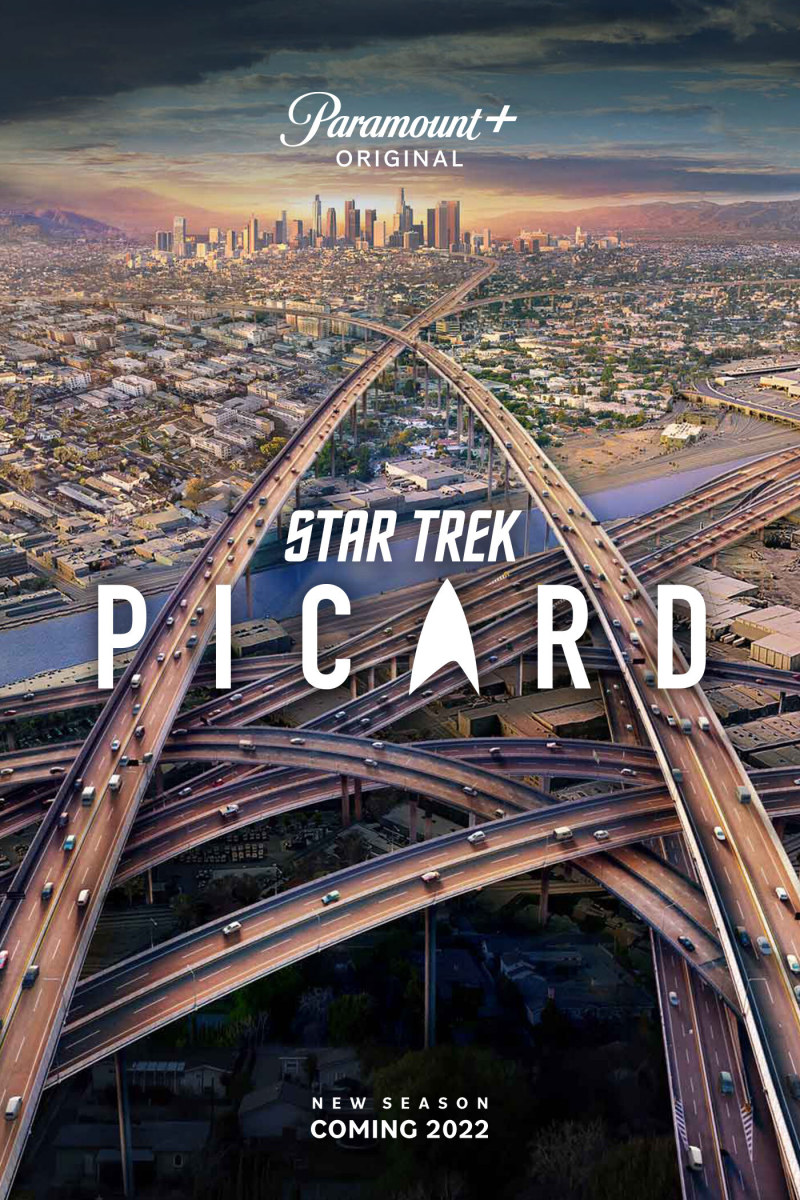
'Star Trek: Picard' season 2 is aimless and inconsistent

Its examination of the neofascist dangers of the 2020s breaks down into pointless nostalgia and superficial psychoanalysis

Season 2 of Star Trek: Picard bites more than it can chew. In the span of ten episodes, it tries to explore xenophobia, eugenicism, the weight of self-blame, repressed trauma, the tragedy of finitude, the tension between open and closed societies, the human yearning for intimate connection, the fear of loneliness, the responsibilities that come with parenthood, immigration policy, the purpose of life in old age, the narcissism inherent to the search for a legacy, authoritarianism, temporal paradoxes, suicide, and the uncertainty about the turbulent direction of humankind in the 2020s. Unfortunately, the show doesn't manage to say anything insightful about any one of its myriad themes.

The season begins by proposing a knock on the door: the Borg, old enemies of the United Federation of Planets, all of a sudden ask to join it. However, Admiral Jean-Luc Picard chooses to self-destruct his ship before allowing his old tormentors a foot in the door. This encounter sets up the argument between inclusion and exclusion that will continue in later episodes, and it gains heightened resonance by virtue of the characters who participate in it: captain Ríos, a Latino who gives commands in Spanish; Seven of Nine, an ex-Borg who was given a second chance at humanity; Elnor, a refugee from a destroyed world; Agnes and Raffi, chronic loners; and Jean-Luc himself, a techno-organic creature whose existence was illegal in the Federation just months before. This crew is composed of identities that, either in the real world or in the show's setting, have at some point been rejected, ignored, and excluded. And this is the crew that chooses to reject the Borg's open hand. This is the crew that consciously chooses death instead of risking further openness. So it's fitting that this is the moment when cosmic trickster Q steps in and shows Jean-Luc the flipside of that mindset.

Even before the revelations in the season finale, the thought of welcoming the Borg into the Federation shouldn't have been off the table. Star Trek has an established tradition of dissolving enmities: we've seen Earth gladly cease hostilities with the Klingons, the Xindi, the Andorians, the Romulans, the Orions. The Federation grows stronger each time it makes rivals into allies.

Q creates an alternate timeline where the fascist Confederation has a darker way of dissolving enmities: the eradication of every species that is not humankind. This world's version of Jean-Luc Picard is a mass murderer who serves supremacist ideals and gleefully performs televised executions. This reality is everything Star Trek has always warned against, which is why it's disappointing that we only spend one episode there.

To be fair, Star Trek had already shown us several examples of galactic history gone wrong in the Mirror Universe. But there was always the implied relief that those horrific events didn't happen to us, didn't affect our history. Our history was meant to be the peaceful Federation. The choice in this season of Picard to have the bad future happen in our universe makes the dystopia feel much more threatening. The cruelty and hopelessness of the Mirror Universe can no longer be relegated elsewhere. The potential for endless horror is right here.

Literally right here: one of the most compelling plotting choices of this season is to set the point of divergence in the real world's present. It's Earth in the 2020s where the future is decided. It's you and me watching Picard. It's up to us to decide whether our future will be an egalitarian utopia or a fascist nightmare. However, the show doesn't do anything interesting with that enormous idea. Captain Ríos suffers a random teleport mishap that conveniently puts him in the crosshairs of ICE, but his ordeal through arrest and imprisonment has a perfunctory air to it. The subplot where Ríos is in danger of disappearing forever in immigration jail has an obvious thematic link to the kind of future our heroes are trying to prevent, but the episode occurs in isolation from the rest of the story. The draconian proceedings of US immigration policy feel like they should, but really aren't, related to the flow of historical events at the center of the plot. By turning the capture and rescue of Ríos into a side quest completely untethered from the main mission, the show missed its best chance for relevant commentary.

There's nothing wrong per se in a story having a large number of themes. The problem with season 2 of Picard is that those themes have little to do with one another, and sometimes lead to contradictory messages. For example: when we learn that the crucial event that must be preserved in today's Earth in order to avoid the dystopian future is the participation of a certain ancestor of Jean-Luc's in a space mission (making this the millionth story to fall for the Great Man myth of history), we meet Tallinn, an alien secret spy tasked with protecting said ancestor until she flies to space. In the final episode, Jean-Luc tries to prevent Tallinn from sacrificing herself to complete her mission (in fulfillment of an Unnecessarily Cryptic Prophecy), and Tallinn protests that her life is hers to risk, and Jean-Luc has no right to interfere with her choices. However, interfering with someone's life and even guiding their choices to keep them from risk is exactly what Tallinn has been doing to Jean-Luc's ancestor for years. The point made in this discussion comes too close to mirroring the evil future's implied stance that some deaths are more acceptable than others. Moreover, the thematic thread about Jean-Luc's need to stop holding himself responsible for everyone else conflicts with the thematic thread about our historical responsibility to protect the future. These two messages didn't have to clash, but they have that result in this particular intersection of plots.

This incoherence reocurrs in regard to Jean-Luc's inner conflict. Q points out that his choice to leave his personal past intact and not prevent a chain of events that resulted in his mother's suicide shows growth on Jean-Luc's part. However, serenely accepting a painful reality is the opposite of what our team of heroes have been trying to accomplish the entire season. If it's a valid ethical choice to alter the past so that billions of people won't live in misery, why is it praiseworthy of Jean-Luc to not save his mother and himself? Tallinn asserts that we don't get to choose what losses we have to bear, which is an argument worth considering, but it comes off as a weak argument when presented in the same story where the main mission is to fix a cosmic loss. With these conflicting positions, the season comes off as uncertain of what it wants us to care about.

The key issue Q hoped his old frenemy would dare to face turns out to be family trauma, but there's no causal or even symbolic connection between Jean-Luc's mother and Jean-Luc's 21st-century ancestor. Q effectively assigned Jean-Luc one mission while intending him to complete another, and the narrative disjointedness feels too big at times, like two separate plots competing for centrality. The scenes we spend dealing with his difficult memories come at the expense of his time travel mission, not in the service of it.

This failure to achieve cohesion is especially regrettable when it comes to Jean-Luc's personal growth. The moment Q's actions affect is the self-destruction of Jean-Luc's ship (i.e., a suicide); the moment he expects Jean-Luc to not affect is his mother's release from confinement, which allowed her to hang herself. By helping Jean-Luc relinquish his guilt for his mother's suicide, Q means to prevent Jean-Luc's own suicide. And yet again, the method of execution has no relation to the ultimate goal. The switch to a dystopian timeline is something entirely apart from Jean-Luc's personal problems, and Jean-Luc's reward for fixing the galaxy is a trip back to his time at the cost of Q's suicide, which muddles whatever statement Q was trying to make.

The other big threat in this season, the emergence of a new Borg Queen in the 2020s, feels similarly undercooked. The writers don't take advantage of the chance to present the dangers of absolute control and enforced conformity that the Borg symbolize as a mirror for the similar tendencies reemerging in our real world. What would it look like for the Borg to come in contact with a culture that has already experienced the Trump era? That would have been a fascinating change of perspective, because in Star Trek the Borg have always served as a contrast to the Federation, but this season suggests that we, the humans of Earth, have the potential in our nature to become the same type of heartless all-devouring conquerors that the Borg are. That obvious low-hanging fruit is inexplicably left untouched.

Another missed opportunity occurs during the Borg attack on the Picard mansion, where our heroes retreat to the tunnels beneath. Those tunnels fulfill a double role in the backstory: they're the place where the young Jean-Luc learned that his mother's mental health was deteriorating, and also the shelter where the French resistance hid from the German occupiers. That history presented a fertile narrative possibility in connecting a refuge in the mind to a refuge against fascism. But once again, the writers didn't do anything with a thematic resonance that was crying out to be used.

Finally, the whole Soong situation makes no sense. It's already beyond tiresome to have Brent Spiner be the only face of the Soong family, but his role in this season is another instance of the Great Man myth. The new Borg Queen describes the forking road thusly: will humankind go the way of Picard, or the way of Soong? It's an extremely narrow view of how history works, an oversimplification of ongoing cultural trends that the writers should have been more aware of if they were going to set the story in our present day.

Yes, humankind in the 2020s is very much at risk of becoming the opressive regime of the Confederation. But this season of Picard only uses our present day as set dressing. The resolution of the threat Q created has nothing to say about our current situation, and repeats the familiar mistake of making a huge societal problem hinge on the choices of one individual.

It's even more frustrating to watch the season finale of Picard on the same day that Strange New Worlds premiered. In this new entry in the franchise, captain Christopher Pike recounts the difficult journey that Earth had to go through before becoming a Star Trek utopia. Using real footage from the violent conflicts of the past couple of years, Pike reaffirms the established canon that says 21st-century Earth had a world war motivated by eugenics. That's the immediate future Star Trek is saying awaits us. So what should we glean from our heroes' success at preserving the timeline in Picard?

This season had good material to work with, but didn't make the effort to make the best use of it. The writers knew that the season's themes had great significance for our current times, but didn't develop them beyond the barest box ticking. And the details added to Jean-Luc's backstory overcomplicate a character we already had a clear feel for. This portion of Picard's story is more notable for what it wastes than for what it adds to the ongoing Star Trek saga.


The Math

Baseline Assessment: 5/10.

Bonuses: +2 for Kirsten Beyer, who seems to always elevate any script she has a hand in.

Penalties: −1 for too much empty fan service, −1 for a contrived resolution to Kore's journey, −1 because it's incongruous to devote so much attention to Jean-Luc's childhood without acknowledging his troubled relationship to his brother.

Nerd Coefficient: 4/10.

POSTED BY: Arturo Serrano, multiclass Trekkie/Whovian/Moonie/Miraculer, accumulating experience points for still more obsessions.

Friday, May 6, 2022

Review: The Memory Librarian and Other Stories of Dirty Computer

The story of Dirty Computer continues in five richly plotted scenarios set in a dystopian future

Taken as a whole, Janelle Monáe's Dirty Computer art project consists of a music album (nominated for the Grammys in two categories), a short film (nominated for a Hugo), and now, from Harper Voyager, a collection of short stories written in collaboration with other authors of color. This production is not connected to Monáe's previous Metropolis storyline, centered on the android Cindi Mayweather. Both the album and the film of Dirty Computer follow a different character, Jane 57821, as she escapes an oppressive future in the company of her lovers. This book serves as a window into exactly what horrific world Jane is escaping.

The introduction to the collection is a quick summary of the rise of a totalitarian regime, New Dawn, whose control over society was possible because "we accepted their offer that an eye in the sky might protect us from… ourselves." With the assurance of total visibility, an immediate problem emerged regarding privacy and deviancy, and the regime decided that "what they struggled to see, they began to deem not worthy of being seen—inconsistent, off standard. Began calling it dirty—unfit to be swallowed by their eyes."

In the backstory that this introduction presents, the new social category of the dirty started being applied to modes of thought and identity that did not fit the rigid standards of the regime. The stories that compose this collection explore various characters' struggle to reclaim, preserve, and even celebrate the dirty.

The titular story, The Memory Librarian, cowritten with Alaya Dawn Johnson, follows Seshet, a government employee whose job is to gather, catalog, inspect and, if necessary, redact memories routinely collected from the citizens of New Dawn. What she thought she knew about her position in society is challenged by an unexpected romance with Alethia, an underground dissident whose thirst for independence of mind forces her to face thorny questions of power and intimacy. How can you learn to respect your partner as an equal when you have the legal authority to manage their mind? Is full access to your partner's every thought enough for you to say you know them? Why is it so difficult to be vulnerable in front of someone you don't control? And what does it do to you when you're given the power to edit how people—even you—remember you?

In the story that follows, Nevermind, cowritten with Danny Lore, we meet our main heroine, Jane 57821, in hiding after having survived New Dawn's attempt to remove her most precious memories (as seen in the Dirty Computer short film), and now turned into the unofficial leader of an intentional community that inhabits a hotel in the desert where women can experiment with alternative forms of social organization. Free from New Dawn's monopoly on memory, the members of this breakaway community find comfort in a storytelling ritual where each participant contributes the bits that the other struggles to articulate. Against this joyful act of sharing stand the hunters of the regime, mutated humans for whom sharing feelings is physically painful. While New Dawn weaponizes memory as an assault on reason, the dissidents paradoxically wield emotional openness as a protective deterrent. This story draws from ongoing discussions in contemporary activism about the need for an ever-expanding scope of inclusiveness.

Then comes Timebox, cowritten with Eve L. Ewing, about Raven, a newly independent young woman with barely any time for all her daily obligations, who discovers that her apartment has a paranormal room where the flow of time is suspended relative to the outer world. Her chronic sense of deprivation clashes with her girlfriend's shallow performance of generosity when they set out to decide what to do with an infinite resource.

We are next treated to Save Changes, cowritten with Yohanca Delgado. This is a brilliantly multilayered exploration of the fantasy of fixing the past. On the surface, this story is about the social difficulties experienced by the family of a political prisoner, whose shaky mental state after being sentenced to memory revision is placed in symbolic parallel with her daughter's project of repairing clocks dating from before New Dawn. But on a deeper level, this story is about the heart-rending sacrifices people are willing to make for their loved ones under unbearable oppression. In a regime that lays claim to all facts, a blatant lie can be the most unpredictable tool of resistance.

The last story is Timebox Altar(ed), cowritten with Sheree Renée Thomas, an uplifting metaphor about the social power of media representation (and therefore, a metafictional statement of purpose for the book itself). In a plot of overgrown land with disused rail tracks and rusty fairground equipment, a small child whose mother was taken away by New Dawn reshapes the abandoned objects into something new, following an inborn urge toward the raw potential of artistic creation. In doing so, they produce a miracle. This event establishes a correspondence between the fictional artists inside the story and the real artists writing the story, as well as between the characters who are shown a vision of a brighter future and the readers who might feel similarly inspired by seeing themselves in that future. The link between memory and time—namely the metaphor of reclaiming memory as a form of time travel—extends further to Monáe's role as a musician. As the protagonist of this story wisely proclaims, music is fundamentally made of time. This notion invests the musical record (and, by extension, any work of art) with the properties of a time machine. To make art is to reclaim memory is to exert power over time. This theme brings the book full circle back to the Dirty Computer album as a ritual whose performance is meant to effect change in the material world, as a cry for a liberation whose realization is contained in its utterance.

In each of these stories, but most notably in the introduction, which Monáe wrote by herself, her talent as a songwriter shines. Her prose vibrates with the telltale cadences that tell you this was written by an artist intimately familiar with the music of language. It takes an experienced lyricist to produce sentences with such rich sonority that they all but demand to be sung, like "She missed the music of the hotel the moment she exited, even as the wind hit her face, just cool enough to mimic the feeling of misting water," and "So they stared at the gray obelisk in the distance, shuddered and turned away, running in the opposite direction, racing down a path, not caring where it would go."

This collection adds important details to the otherwise barebones worldbuilding Monáe had laid out in her album and film. The characters she and her collaborators have created for these stories feel profoundly, compellingly human, even as the conditions they have to endure threaten to rob them of their most human qualities. That's the most remarkable trait that these stories have in common: even in the absolute worst of circumstances, the characters we meet here are not broken. They abound in hope and kindness, and meet each new day with the bold refusal to become jaded. In the nightmarish future of Dirty Computer, marginalized communities still fight to create spaces for solidarity, safety, and pure joy.


The Math

Baseline Assessment: 8/10.

Bonuses: +2 for the intricate work of worldbuilding and characterization.

Penalties: −1 for sometimes relying on overused turns of phrase.

Nerd Coefficient: 9/10.

POSTED BY: Arturo Serrano, multiclass Trekkie/Whovian/Moonie/Miraculer, accumulating experience points for still more obsessions.

Reference: Monáe, Janelle. The Memory Librarian and Other Stories of Dirty Computer [Harper Voyager, 2022].

Tuesday, May 25, 2021

Review: We Are Satellites

This amazing near-future novel weaves a delicate thread through the messy places where our personal, professional and political lives meet

Sometimes, current events seem to give us an ominous glimpse of the direction we're headed. I remember having that feeling in 2011, after Apple released an ad campaign with the disgustingly condescending slogan, “If you don’t have an iPhone, well, you don’t have an iPhone.” The implied message was that possession of this particular product gave you an advantage that you were hurting yourself by choosing to skip. That attitude was taken too literally by Chinese teen Wang Shangkun, who became famous in the same year by selling one of his kidneys to buy an iPhone 4, and now lives permanently bedridden and dependent on a dialysis machine.

The fetishization of high-end gadgets as social status markers is the topic of Sarah Pinsker's new novel We Are Satellites. In a world uncomfortably too like ours, pharmaceutical company BNL (not related to Wall-E's Buy'N Large, though it may as well be) has launched a brain implant that promises to improve attention and productivity by helping the human mind approximate real multitasking.

Through aggressive marketing, the implant ends up subsidized by the government and de facto required for job applicants. Sooner than society can adapt to the shift, schools become segregated between those who do not want or cannot use the implant and those who have it and function so efficiently that they leave their classmates far behind. In a bone-chilling segment, the novel explains, "There wasn't even a rich-poor divide since the company covered them for kids unable to afford the procedure; the divide was between approved brains and unapproved brains and degrees of acceptable neurodiversity." Because the operation to install the implant leaves a pretty blue LED on one side of the head, wearing that dot of light becomes the focus of a dangerous status game that implicates school authorities, army recruiters, ad strategists, grassroot activists, drug dealers, illegal surgeons, corporate spies, and unsuspecting children.

We follow the story through the lives of Val and Julie, a married couple of career women who are raising their kids David and Sophie with the best intentions. When David convinces his mothers to get him a brain implant so he can perform better at school, the societal tensions defined by this very visible mark of privilege start seeping into their family dynamics.

It turns out his sister, Sophie, cannot get the implant because she has epilepsy and the manufacturer would rather not mess with her brain. One of the mothers objects to the implant on principle, but her wife gets the operation shortly after David because she wants to stay competitive in her field. After David's implant is revealed to have sensory processing issues, we are carried through a deeply detailed plot of corporate irresponsibility, medical neglect, political opportunism, workplace discrimination, sibling envy, systemic ableism, and the many ways the external world can invade our private choices.

All four family members get first-person chapters, but David's are the most engaging. The long train of sentences does a great job of conveying his mind's permanent state of panicked hyperawareness. For example, "He could describe the location of every fly on every wall in a room full of flies but he didn't notice his body's reactions until he counterreacted to them." If the delight of science fiction is making unreal worlds feel close to us, this novel does one better: it makes us live a mental state that has never existed.

Sophie's chapters are also enjoyable. Her lifelong determination to gain the respect of the adults in her life takes her on an unexpected road to maturity. The inner voices of the mothers are harder to tell apart, but the author manages to communicate with heartfelt sincerity the stress of raising children in a world of cutthroat overachievement. As the narration helpfully describes, these characters are trapped in "a system in dire need of change, but the wrong change had arrived. The wrong changes were everywhere."

I still feel bedazzled by the skill with which a book that could have been a standard techno-thriller became also an intimate meditation on family, identity, self-discovery, trust, anxiety, and a love that stays alive and defiant against the pull of impersonal competition. Toward the end, the author employs an interesting metaphor about the uninformed use of medical devices: one character watches, without paying much attention, "a home improvement show where people got absurdly excited about other people removing all the personality from their homes." The BNL implant expects its users to submit their individual thought patterns to a standardized information model, and what the novel expects from us is to treat such a proposal with all the skepticism it ought to deserve. We Are Satellites is definitely one of the highlights of this year, and will surely spark fertile discussions between academics, healthcare professionals, and tech enthusiasts.

The Math

Baseline Assessment: 8/10.

Bonuses: +1 for nailing the tone of David's inner monologues, +1 for a masterful handling of the emotional storm brewing within a family that comes close to breaking apart but rises again stronger.

Penalties: −1 for too short chapters. The various POVs are not a problem in themselves, but the chapters are composed mostly of a single scene that ends too soon before we jump into another character's head. Halfway through the book, one has developed a sense for when a chapter is just about to end, and the effect is an abrupt start/stop/start/stop sequence that hurts the narrative pacing.

Nerd Coefficient: 9/10.

POSTED BY: Arturo Serrano, multiclass Trekkie/Whovian/Moonie, accumulating experience points for still more obsessions.

Reference: Pinsker, Sarah. We Are Satellites [Berkley, 2021].

Monday, February 22, 2021

Space Sweepers looks gorgeous... and that's about it

Impeccable visual effects don't suffice to hold up a paper-thin drama


This movie lost me before I was five minutes in. Our protagonist, Kim Tae-ho, has boarded the space elevator to his job as an orbital debris retriever, and when the trip takes him out of Earth's atmosphere, we see a floating pen. It's just... there, for no reason.

"Did you see that? Get it? GET IT?" the movie seems to scream in your face. Yes, we saw 2001. Yes, we recognize the cultural significance of the floating pen. But in 2001, the floating pen was used to illustrate a key theme of the story. In Space Sweepers, it's a gesture devoid of context, a cheap tug at the strings of nostalgia. And it's a physical impossibility in a vehicle undergoing acceleration. There is zero reason for that scene to contain a floating pen other than to wink at the audience, and that little instant breaks any trust we could have in the movie's sincerity.

And that's before it starts throwing Wall-E, Firefly, Elysium, Cowboy Bebop and Gattaca into a blender.

The plot takes a while to start, but eventually we follow Tae-ho in his quest to hide a thermonuclear bomb, which he and his crewmates found by chance, until they can sell it to a terrorist group because they wouldn't make any money by giving it to the authorities. His money problems are made very clear to the audience, multiple times, to the point of melodrama, and we know he can't just report the bomb because this government's untrustworthiness is on the comical side of Kafka.

Also, the bomb is a sentient robot in the shape of an adorable little girl that his crewmates are growing fond of.

With these elements, a movie could very well work. But we have to wait until almost the end of the first hour before we get any idea of who these characters are, and then it's given to us in a heavy montage of exposition. Suddenly, we're in a different movie. From a breakneck comedy of errors we're yanked into an intimate drama that wants to be social commentary. It turns out that Tae-ho had an adopted daughter, and he feels guilty for her death, and of course the robot girl reminds him of her, and just in case we've forgotten, the government is evil. But the emotional beats are too calculated, the manipulation of the audience too obvious. Once the sad flashback has done its job, we immediately return to the slapstick, and it's impossible to take this movie seriously anymore.

On the antagonist's side, the sloppy writing is even more painful. James Sullivan ("doctor, physicist, aerospace engineer, historian," "wealthiest man in the world" and, seriously, "savior of humanity") is a walking pile of evil CEO clichés taken to the cartoonish extreme. His scenes are bloated with exposition that alludes to more interesting events in the background than the ones we're watching, and the only enjoyable part about them is the actor's sincere effort to sell the nonsense he's saying (in mandatory evil British accent). In one scene, he monologues about how people's DNA reveals their moral character (which, for the record, is completely false), and he manages to deliver the whole of it with a straight face. That's being a professional.

For a movie that tries so hard to look realistic, this sort of bad science is everywhere. At the end of that early scene with the floating pen, the space elevator turns on its "artificial gravity," which, OK, we might pretend is a thing that exists in the future, except that the vehicle was already accelerating and thus should have its own gravity. Later, a search expedition for a victim in an orbiting debris zone, which normally takes days to prepare, is shortened to a five-minute launch when a larger payment is made, which is simply not how scarcity works, or logistics, or bureaucracy, or anything. But the worst instance of the movie failing to understand basic facts is the following line:

"Krypton waves have the ability to defuse nanobots..."

No point trying to decipher what this character is saying.

"... and are only emitted during the detonation of a hydrogen bomb."

 Now he's just making sounds.

"All of that is irrelevant to our presentation."

But it needed to be said anyway, because it will matter later, so to make sure we'll remember it, the movie puts it at the most incongruous moment.

A more meticulous direction could have repaired some of the missteps in the script. What we got instead is a beautiful-looking tonal mess where the wrong choice of execution was made every time. When the movie aims for serious, it's corny; when it aims for funny, it's ridiculous; when it aims for relevant, it's insufferably preachy.

But let's be charitable. Is there a meaning to this story? It seems like it's attempting to make a metaphor about how inequality forces people to treat each other as fungible assets, how desperation can twist human beings into accepting a price for the parts of life that should be invaluable. The robot girl is, after all, an intelligent lifeform, yet our protagonists have no problem with the plan to sell her, because they're so desperately broke that she's their only chance to make ends meet. But the circumstances that push them into such a choice are transparently contrived. Despite the fully integrated character of this pluriethnic society, there's a legal structure with separate civil rights for citizens versus non-citizens that is left unexplained. We're told the villain wants to enforce genetic segregation, but he does it by looking at moral choices, which he, as a doctor, should know are not genetic, and which he forces on his victims anyway. As a piece of criticism of technocracy, this doesn't work. Viewers hungry for a nuanced working-class perspective on near-space garbage retrieval are advised to watch the infinitely better Planetes.

Even without searching for a theme, it's hard to find any element in this movie's plot that makes sense. The action in the first half is driven by a sequence of misunderstandings and near-misses that is only possible because the heroes and the nameless minions alternate randomly between omnicompetent and hopelessly incapable. And there's a supposedly surprising revelation about the robot girl that should be obvious to anyone who saw her sneeze in the trailer. It's soon followed by still another revelation about her, but it's made of more bad science.

From that point on, the plot turns into a standard movie pursuit: good guys run, bad guy wants something good guys have. Then comes the reversal: bad guy seems to win, good guys fight to recover what's theirs from bad guy. As third-act movie chases go, this one is well done, filled with excitement, if sometimes over the top (the ending has the most shameless copy of the Death Star I've seen since Austin Powers), but its causal logic is tied to a secret evil plan so absurdly out of proportion with the antagonist's motivation (and so unnecessary given his resources) that the viewer has no option but to stop thinking and, I don't know, gape at how pretty space looks.

That's where Space Sweepers excels: in the art department. The shots that show us the nearly uninhabitable Earth are a gut punch, while every scene with the robot Bubs is a delight to watch. The rich bad guy's office has an appropriately menacing design, and the areas where the common people work and live feel genuinely crowded, chaotic, alive. Outer space is vast without being confusing, and spaceships wear all their scratches. The final battle is visually flawless. This oppresive version of the future appears believable on the screen, right until the moment someone speaks a line.

This movie is a world-class spectacle, impressive on a technical level, but it lacks something to say. It just looks cool for the sake of looking cool. There's certainly an audience for that content, but even some of them may get bored. We know South Korean science fiction has good writers; match them with a production budget of this size, and the results will be fantastic. Space Sweepers doesn't rise above OK.

The Math

Baseline Assessment: 6/10 still enjoyable, but the flaws are hard to ignore.

Bonuses: +2 for the quality of visual effects, +1 for building a seamlessly multilingual future, +1 for a touching portrayal of the experience of gender transition.

Penalties: −2 because the lines in Spanish are so badly mispronounced that they ruin the world's believability, −1 because the technobabble doesn't even pretend to make sense, −1 for an utterly laughable villain, speaking of whom, −2 for the harmful trope of Evil Disfigurement.

Nerd Coefficient: 4/10 not very good.

POSTED BY: Arturo Serrano, multiclass Trekkie/Whovian/Moonie, accumulating experience points for still more obsessions.

Monday, February 15, 2021

The Expanse asks: Who is the future for?

Season 5 delivers solid emotion, complex intrigue and the sharpest dialog in SF television


It reveals so much about the scope and ambition of The Expanse that the most bone-chilling line in this season isn't even "Having a front-row seat to the almost destruction of the universe tends to change you."

The Expanse is the delightful kind of science fiction that deals in ideas but never loses sight of how those ideas affect human lives. Since its first season, it's been telling the struggle of ordinary people to have a place in the universe while faceless institutions and organizations demand that they surrender their blood and sweat. In this imagined future, armies and companies still obsess over their power games with no care for individual casualties, and it's only when an extrasolar enemy is discovered that humans start to realize we're all equals before the cosmos.

This time, we're confronted with the terrorist mastermind Marco Inaros, self-proclaimed liberator of the asteroid belt and aspiring leader of the human journey to the stars. As we hear his grandiose speeches, where he proudly takes credit for throwing civilization-ending asteroids at Earth and blowing up the government of Mars, we're unnerved by the sinister mix of truth and delusion in what he says. It's undeniable that the inner worlds have exploited the Belters for decades, and that peaceful resolution has failed many times; it's only the path of devastation left by Inaros that prevents us from buying into his vision. There's a reason why the most bone-chilling line in this season isn't "Inner attention is measured by Belter corpses."

We're definitely going to need the spacefaring expertise and even the biological adaptations of the Belters if we want to become an interstellar civilization, but must we accept Inaros as the face of humanity that will represent us?

We better hope he's not. Inaros can't be the distillation of what it means to survive as a human in this universe. We need to be better than the roadmap he offers, because the most bone-chilling line in this season isn't even "I know he wouldn’t die for you, but he would let you die for him."

The Belters' grievances are justified. But what Inaros is doing is soulless revenge. That difference has got to mean something, and The Expanse has been carefully developing this theme for a long time. Back in season 3, the mysterious alien "protomolecule" opened the way to an extradimensional hub with gates to thousands of exoplanets, exposing the strategic balance of our solar system as the children's playground it was. Two seasons later, we're about to take the next giant leap for humankind. Are we mature enough to earn our place?

To tackle that question, season 5 takes its time to dwell on the nature of human relationships and the way extreme circumstances force us into less than ideal choices. And still, in spite of how heart-rending are the thorns of betrayal and disillusionment it's willing to explore, in spite of how deep it's willing to look into the abyss of human despair, the most bone-chilling line in this season isn't "The thing about civilization is it keeps you civil. Get rid of one, you can’t count on the other."

Indeed, nothing less than the character of our civilization is at stake. The discovery of exoplanets has caused massive emigration from the inner worlds. The great project to terraform Mars is now a question mark, and the asteroid belt is being outcompeted for mining jobs. No one knows who will win the deep space gold rush, but everyone wants in, and the pressure to claim a spot makes humanity retread its list of historical mistakes. Instead of cooperation, there's a free-for-all. Instead of unity, there's fanatic nationalism. Instead of understanding, there's mistrust. Instead of approaching the universe with humility and wonder, humanity is possessed by the same old tooth-and-claw ambition.

And still, the most bone-chilling line in this season isn't "You respect my claim, or you die and become a story I tell the next captain."

The reason I'm putting so many quotes here is that the quality of writing in The Expanse has jumped considerably, up from a past record that was already high. Characters' lines are economical and to the point, yet loaded with emotional meaning that only grows deeper once the viewer completes the season and has the full picture. There are skillful moments of foreshadowing, both verbal and visual, and not one establishing shot is wasted. Even if it didn't have the political maneuvers and the spaceship fights and the family drama and the questions over the future of our species, The Expanse would still be, on the sole merits of its technical production, a master class in effective storytelling. The whole spectrum of intrigue, suspense, romance, action, terror, drama and introspection is handled with breathtaking versatility.

There's also time for jokes.

So, a Belter, a Martian and an Earther walk into a bar.

No, that's no good. Let me try to better summarize the season.

A Belter, a Martian and an Earther walk into a trap.

Naomi, the Belter, purchases a spaceship that she hopes to gift to her estranged son to help him escape the manhunt that Earth is going to declare on Marco Inaros. Instead, she's forced to relive the pain of her broken family, and when her new family is threatened, she has to draw on every bit of her space smarts to prevent her ship from being used as a weapon.

The most bone-chilling line in this season isn't even "Walking away is the only choice anyone ever has."

Alex, the Martian, returns to his birth planet wishing to reconnect with a wife and son he hasn't seen in years, but what he finds is a home that doesn't need him, a military hierarchy that brands him as a stranger, and a world that is letting go of its dreams.

The most bone-chilling line in this season isn't even "You’re not a part of our lives anymore. We don’t owe you any closure."

Amos, the Earther, risks upsetting old acquaintances he isn't supposed to, because the recent death of the surrogate mother who lifted him from a life of senseless violence has moved him to pay forward the favor to a fellow lost soul. In the process, he realizes the fragility of his own conscience and his need for a human anchor.

The most bone-chilling line in this season isn't even "No one starts over, because no one really leaves anything behind."

These separate subplots merge into a race for survival and later into a vindication of the human spirit in direct defiance of the season's big villain. What Inaros represents, both in the fictional setting of the show and in the larger cultural conversation, is a version of guerrilla warfare that is deceptively appealing because it comes from legitimate pain, and the problem with pain is that over time it distorts one's perspective. I don't think I need to recount the ways real life has showed us the dangers of militant factionalism, but this season of The Expanse isn't afraid to cast an unblinking look straight into the absurdity of such a mindset. It's the kind of mirror into our dark impulses that we need from time to time in order to stay alert, to recognize the siren call of self-righteous brutality before it takes hold of us.

Marco Inaros is everything humanity needs to avoid becoming. And it's hard to express how much evil that is without asking you to just watch the entire show (which you should).

The most bone-chilling line in this season isn't "You must always have a knife in the darkness."

It isn't "We were already at war. You just couldn’t see it because they were killing us slow."

Not even "When someone is coming to kill me, the biggest mass murderer in history watching my back sounds pretty good."

The characters who say these lines sincerely mean them, but they don't quite convey the magnitude of the threat that Inaros represents. They don't cover how much harm he can do to the future.

Because the most bone-chilling line in season 5 of The Expanse is "Earth is the only source for live soil and complex biologicals."

Consider the ramifications of that little fact. Belter efforts to kickstart their own agriculture are still premature, yet Inaros is willing to keep throwing asteroids at Earth until its biosphere is rendered uninhabitable. He's not only a terrorist killer; he jeopardizes the food security of every human being if it will help him etch his name in posterity. That's the true extent of his evil.

It's to the show's credit that these stakes aren't stated explicitly. The screenwriters are content to let the horror dawn on us.

The Expanse knows it's a smart show, but it also trusts its audience to catch up. Its rigorous application of physics and its raw honesty in dealing with human psychology are honed in this season to a degree that feels impossible to match. Science fiction written for television has never been this excellent.

The Math

Baseline Assessment: 10/10. Mind-blowing. Life-changing. I could count bonuses for deep human drama and the most amazing visual effects achievable on a television budget, but they're not add-ons; they're part of the package. The bar for the genre has been raised far into space.

POSTED BY: Arturo Serrano, multiclass Trekkie/Whovian/Moonie, accumulating experience points for still more obsessions.