Showing posts with label 60s sci-fi. Show all posts

Thursday, August 7, 2025

TV Review: Star Trek: Strange New Worlds Season 3

Intense action, flawed characters, nostalgia, and just enough humor as Strange New Worlds enters its third season.
 

Fast pacing, jump scares, messy emotions, wry witty humor, questionable choices from beautifully flawed characters, and likeable new members of the ensemble cast. All of this composes the opening four episodes of Season 3 of Star Trek: Strange New Worlds. Historically, the third season of a Star Trek series is often when the show leans into bold awesomeness after an uncertain, exploratory start in the first season and a second season of settling into the characters and storytelling. However, Star Trek: Strange New Worlds benefitted from being a spin-off of another strong Star Trek show, Discovery. As a result, Strange New Worlds began in comfortable awesomeness from season one, telling the story of the earlier crew of the legendary starship Enterprise, and reimagining iconic characters (Spock, Uhura, Chapel, and even James Kirk) and presenting new (La’an, Ortegas) or underused pre-existing (Pike, Una, M’Benga) characters, who are all shown in their early, uncertain, but much more fully explored selves. Season 2 added a range of clever quirky storytelling devices, including a hilarious partial animation crossover (with Star Trek: Lower Decks) and song-filled musical episode. However, the second season ended on a more serious note in “Hegemony I,” with a return of the Gorn, the human eating, monster-like enemy race that hunted them in the first season. As several beloved characters are trapped in a Gorn invaded non-Federation world, Pike (Anson Mount) is forbidden by Starfleet from interfering due to the risk of triggering a war with the old enemy.

Hegemony, Part II

When the Enterprise is attacked and outgunned, with close friends still captive, Captain Pike must make a critical and potentially devastating decision. Season 2 of Strange New Worlds left us with an old-school cliff-hanger finale that is immediately picked up in the opening moments of season 3 and launches us straight back into the action. The transitional moment between the two seasons is a nice call back to The Next Generation’s “The Best of Both Worlds” part I and II. That jaw dropping moment when Riker responds with unexpected confidence when faced with an impossible choice involving his own captain is contrasted with Pike, in a similarly impossible situation, having a true internal decision paralysis crisis. This is one of the storytelling elements and character explorations that makes Strange New Worlds so intriguing: optimism, compassion, and boldness are balanced with the characters’ frailty, imperfection, and sometimes flawed judgment.

Wedding Bell Blues

The theme of Season 3 seems to be nostalgia and “Wedding Bell Blues” gives us another call back to a classic Trek episode, “The Squire of Gothos,” in addition to an overt nod to a particularly creepy episode of the original Twilight Zone: “It’s a Good Life.” A broken-hearted Spock (Ethan Peck) finds himself in an unexpectedly positive situation but has to grapple with what is real and what is not. Altered reality stories are one of the most entertaining ways Star Trek plays with our minds with a twisted, waking dream scenario. “Wedding Bell Blues” leans into the strangeness with humor and a nostalgic twist at the end.

Shuttle to Kenfori

After the relatively light, although mind-twisting, adventure of “Wedding Bell Blues,” the narrative returns to monsters and violence in “Shuttle to Kenfori.” Pike and Dr. M’Benga (Babs Olusanmokun) go on an unsanctioned away mission to find a rare but potentially life saving drug and, in the process, encounter a formidable old enemy as well as unexpected terrors when they land. This episode leans into the usual horror adventure narrative with plenty of jump scares and moderate gore. But, in true Star Trek form, the story uses the setting to show Pike processing troubling revelations about two people for whom he cares deeply, even as he comes to terms with what it means for someone to become a monster physically and psychologically.

A Space Adventure Hour

The often parodied style of original Star Trek television series (in everything from Saturday Night Live to Black Mirror) has become so iconic that the cold-opening moments of “A Space Adventure Hour” let you know we are in for a humorous, nostalgia filled treat. In this episode, directed by Star Trek icon, Jonathan Frakes, La’an (Christina Chong) and Lt. Scott (Martin Quinn) are drafted into test driving a new concept called a holodeck. Running a program of such stunning magnitude puts the ship's engines at risk so Scott is assigned to make it happen without blowing up the ship and La’an is assigned to do a walkthrough of a sample strategy based program. In a multi-level metaphysical piece of storytelling, La’an decides to create a murder mystery inspired by Amelia Moon, a beloved storybook detective from her childhood. However, instead of landing in an isolated mansion or on a luxury train, she ends up in 1960’s Hollywood near the set of “Space Adventure Hour,” a hilarious take on the original Star Trek. This episode is fun on so many levels for long time Trekkies. We get to see the holodeck in its infancy, unapologetically wreaking havoc with the ship’s safety. Viewers also have a fun foreshadowing of Captain Picard’s frequent Sherlock Holmes adventures on the holodeck in The Next Generation. To set up the look of the players, Scotty uses the transporter patterns of the most recent travelers. So, most of the show’s lead actors get a chance to play completely different characters in this comedic take on 1960’s Hollywood, including Strange New Worlds’s James Kirk (Paul Wesley) doing a very funny and very meta imitation of William Shatner’s James Kirk from the original series. And, we get to see a young version of Scotty in all of his stressed out engineering persona as the holodeck mystery takes on dangerous implications for the safety of the crew. But, most of all, we get a hilarious and poignant celebration of why Star Trek is beloved and iconic. In the character of a Hollywood agent, Uhura (Celia Rose Gooding) gives a timely monologue on why Star Trek remains an indelible, and still relevant, part of our real life culture.

With intense action, twisty mind games, and unapologetic, self-aware humor, the opening episodes of Season 3 feel like a nostalgic letter to long time Star Trek fans. The jump scares, plot twists, and character angst, are balanced with the strong ensemble chemistry of flawed but relatable characters. And, as always, we have the series’ enduring moral core to guide us (hopefully) as we all continue to explore what lies ahead.

--

Highlights:
  • Action and jump scares balanced with humor and nostalgia
  • Character angst and dysfunction
  • Perfect ensemble chemistry
Nerd Coefficient: 8/10

POSTED BY: Ann Michelle Harris – Multitasking, fiction writing Trekkie currently dreaming of her next beach vacation.

Wednesday, September 13, 2023

Lindsay, Leckie, and LeGuin: A century of pronouns and gender in SFF


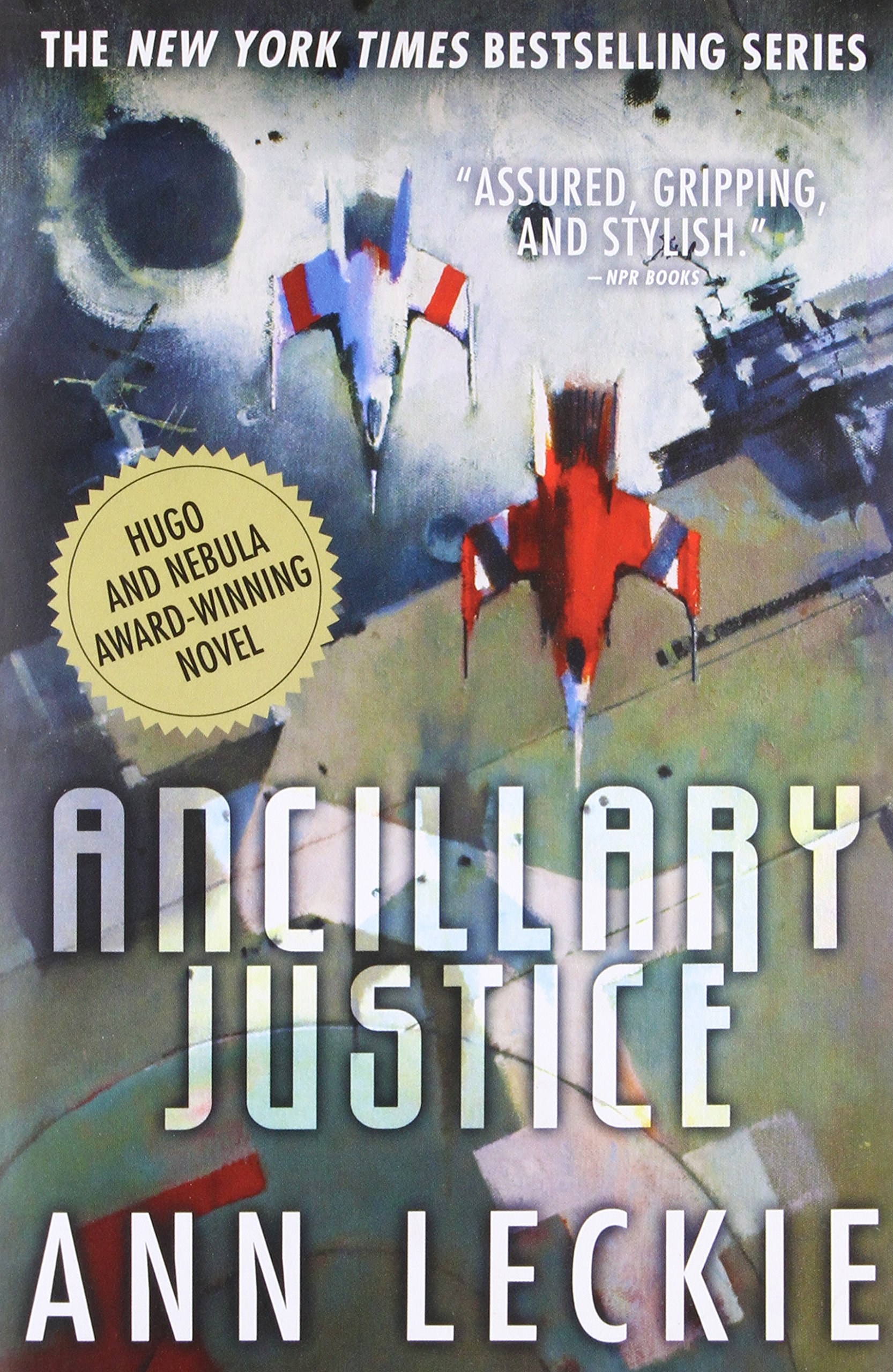
Ann Leckie’s Imperial Radch series burst upon the SFF world in 2013, drawing notice for (among other things) its linguistic worldbuilding. The Imperial Radch, the central power of the series, speaks a language that lacks any gender distinction in the pronouns. Linguistically, this feature in itself is hardly unusual. There are many languages spoken today (on Earth) that do not distinguish gender in their pronoun systems, ranging from Imbabura Quichua in Ecuador (pai), to Finnish (hän), to 252 other languages listed in the World Atlas of Language Structures as lacking all gender distinctions in their pronoun system (Siewierska, 2013).1  

No, what made the Radchaai gender invariance striking was that Leckie chose to render that single, gender-neutral pronoun in English as she. And since the narrator, Breq, is Radchaai, every character in the book is rendered as she, regardless of their own individual gender identity. Furthermore, in a nod to the Sapir-Whorf hypothesis, speakers of Radchaai struggle to recognize gender as a property of humans.2 When Breq is forced to use gendered pronouns in other languages, she3 often resorts to guessing, based on what she knows of that culture’s arbitrary and idiosyncratic cues, and hoping she got it right. To Breq, categorizing humans as one gender or another is as pointless as many English speakers find categorizing inanimate nouns. In Spanish, key is feminine and bridge is masculine. In German it is the reverse, and what is more, girl is neuter. Bantu languages distinguish as many as ten, fifteen, even twenty different categories, at which point even the most classical grammarian gives up on the idea of sex-based gender terms and just calls them ‘noun classes’ (Marten 2021). Surely, thinks many an English-speaker, this grammatical ornamentation is an entirely unnecessary and frivolous complication. Likewise, to Breq, pronouns and gender. 

But Leckie is not the first person to employ pronouns as a tool of linguistic world-building. Indeed, she is only the latest in a long series of SFF authors who have departed from English language pronoun conventions to enrich their creations. And by tracing the strategies these authors have used throughout the years, we can also trace the concerns of the time in which those authors were writing, both on the macro level of decades and generations, and also on the micro-level of years that separate a book and its sequel. 
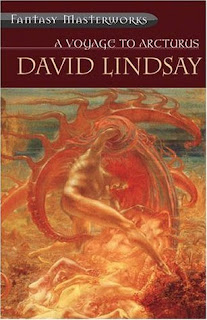
If we start our historical journey at a nice round centuryish ago, we discover that the neopronouns ae/aer are not, in fact, terribly neo. They were first introduced in 1920 by David Lindsay in his novel A Voyage to Arcturus, to describe the phaens:

[T]his person, although clearly a human being, was neither man nor woman, nor anything between the two, but was unmistakably of a third positive sex, which was remarkable to behold and difficult to understand. In order to translate into words the sexual impression produced in Maskull’s mind by the stranger’s physical aspect, it is necessary to coin a new pronoun, for none in earthly use would be applicable. Instead of “he,” “she,” or “it,” therefore “ae” will be used.

Note that the link between sex and gender is taken for granted. The need for a new pronoun has nothing to do with social self-presentation in the phaens, and everything to sex and procreation:

He found himself incapable of grasping at first why the bodily peculiarities of this being should strike him as springing from sex, and not from race, and yet there was no doubt about the fact itself. Body, face, and eyes were absolutely neither male nor female, but something quite different. Just as one can distinguish a man from a woman at the first glance by some indefinable difference of expression and atmospheres altogether apart from the contour of the figure, so the stranger was separated in appearance from both. As with men and women, the whole person expressed a latent sensuality, which gave body and face alike their peculiar character.... Maskull decided that it was love—but what love—love for whom? It was neither the shame-carrying passion of a male, nor the deep-rooted instinct of a female to obey her destiny. It was as real and irresistible as these, but quite different.4

Now, to be sure, Lindsay’s brainchild is hardly a masterpiece of progressive foresight. In 1920, it was an uphill battle to suggest that male passion need not be shameful; that female sexual pleasure need not stem from a biological urge to “obey her destiny,” and Lindsay was evidently not interested in fighting that battle. But he could at least suggest that it was possible for people to land in a third box—even if you had to go to Arcturus to find them.

If we jump forward half a century, to 1968, Ursula LeGuin continued this conversation about gender in The Left Hand of Darkness, and it’s quite striking to compare the choices Lindsay made with LeGuin’s decisions. Some of the contrasts are simply related to differences in world-building. Where Lindsay’s phaens have all the sexual organs, perpetually in abundance, LeGuin’s Gethenians have none of them, most of the time. Only when they enter the biological state known as kemmer once a month do they develop sexual characteristics, becoming either male or female, and possessed of an incredibly strong sexual drive. When kemmer ends, the Gethenian reverts to androgyny until the next month, when they may develop an entirely different set of sexual characteristics from before.

All or nothing, fixed or shifting, genders that don’t obey the male/female binary will run up against the question of pronouns. Lindsay, as we have seen, invented completely new ones. Intriguingly, although you’d imagine LeGuin’s readership in the 1960s would be willing to match Lindsay’s in their appetite for adventurous pronouns, LeGuin herself was more linguistically conservative. She decided to stick with the ‘gender neutral’ pronoun he/him/his in all contexts, defending this choice in an essay written from 1976: 

I call Gethenians “he” because I utterly refuse to mangle English by inventing a pronoun for “he/she” “He” is the generic pronoun in English, dammit. (I envy the Japanese, who, I am told, do have a he/she pronoun.) But I do not consider this really very important.

Yet ten years later, in 1989, LeGuin revisited that essay,5 and describes how she changed her mind entirely not too long after such a breezy dismissal of the importance of pronouns: 

This “utter refusal” ... collapsed, utterly, within a couple of years more. I still dislike invented pronouns, but now dislike them less than the so-called generic pronoun he/him/his, which does in fact exclude women from discourse; and which was an invention of male grammarians, for until the sixteenth century the English generic singular pronoun was they/them/their, as it still is in English and American colloquial speech. It should be restored to the written language, and let the pedants and pundits squeak and gibber in the streets. 

Despite its grammatical conventionality, The Left Hand of Darkness is a much more thoughtful meditation on gender and society than A Voyage to Arcturus. Part of that is that it’s just a better book. But it’s also a book written in a society that had moved on in which conversations about gender it’s willing to engage in. Linguists in the 1960s and 1970s were engaging in lively discussions about how sexism is encoded in language,6 and whether he truly is as neutral and generic as people (like LeGuin in the 1960s) like to claim.7 In this context, LeGuin’s Gethenians don’t just represent a wonky biology that requires a matching pronoun. If they did, then their pronouns would have to change every time they enter and exit kemmer. No, the Gethenians allow LeGuin to explore the idea that gender need not dictate one’s role and recognized capacities. That gender is not, in fact, a necessary part of society. 

Yet, like Lindsay, LeGuin was still controlled by the idea that sexual identity directly affects personality. Because, as we learn in Chapter 7, “the sexual impulse is tremendously strong in [kemmer], controlling the entire personality, subjecting all other drives to its imperative.” For all that the Gethenians are not sexual or gendered most of the time, the fact remains that when they acquire sexual organs, sex becomes dominant in defining their identity.

Furthermore, for all her progressive thoughtfulness, LeGuin still catered to a default male perspective. Beyond the decision to use default ‘he’ for Gethenians, she also presented the world of Gethen through the perspective of Genly Ai, a visitor whose own biology has fixed his gender as biologically male (a property that the Gethenians view as a bit perverse, to see a human who is perpetually and continuously a sexual being). And as the perpetually sexual and perpetually male Genly Ai grows closer to his Gethenian companion Estraven, who—if not always male—was always coded with male pronouns, we find that LeGuin also catered to a default heterosexual perspective. A certain amount of rhetorical gymnastics are used to sidestep the queer potential growing in the nascent intimacy and eventual sexual attraction between them.  (LeGuin does say, in the same essay where she revisits her pronoun decisions, that she also regrets this knee-jerk assumption in her worldbuilding. Her views changed remarkably in the space of that decade.) Indeed, more generally on Gethen, a committed couple will match their biological sex 50% of the time they enter kemmer, and yet when Gethenians are in kemmer, they only ever choose heterosexual partners. Once again, sexual attraction and sexual identity cannot be separated from procreation, even on Gethen.

Jump forward another half century, and we have in Ann Leckie’s Imperial Radch books another set of perspectives separated by a decade. The originally Ancillary series came out in 2013, and her most recent installment in that universe, Translation State, came out just this year, in 2023 (reviewed (by me!) on Nerds Of a Feather here). And once again, we can trace developments in social concerns about gender by looking at the differences between Leckie in 2013, and Leckie this year.

From the beginning, Leckie was not so considerate of the default male, default het, default binary conventions as LeGuin was. Indeed, she is downright provocative.8  Rather than treading a truly neutral path with default they, as LeGuin later wished she had done, Leckie builds a world where the default coding is female. Although superficially this decision had the same effect as LeGuin’s genderless society with default male coding—the same pronoun for everyone!—its impact was very different. Not only was the male perspective entirely erased, but the Radch isn’t like Gethen, where everyone is by default sexless. In the Radch, people still have sexual organs in profusion. Those organs are simply uncoded by gender. And that idea made a vocal, active subgroup of science fiction readers extremely uncomfortable. The very idea of it! People with the same plumbing doing things, cats and dogs living together, mass hysteria! 

What the original Ancillary books did not do, however (or not much), was touch on questions of gender identity or trans issues. How could they? Gender isn’t a thing in the Radch. Everyone is she. It’s as impossible to misgender someone within the Radch as it is for a 21st century human, whose culture simply does not recognize the concept of questors, to misquestor another 21st century human. 

I don’t know whether Leckie was deliberately side-stepping the issue, as LeGuin did on Gethen, or whether she merely overlooked it. Breq observes in Ancillary Justice that ‘the cues meant to distinguish gender changed from place to place, sometimes radically, and rarely made much sense to me’ (pg 3). This recognition that gender can be arbitrary certainly leaves open the possibility of transgender people outside the Radch. Yet, later, in a rather entertaining sequence in Ancillary Sword, we learn about the historical tendency of an annexed system, the Athoeki, to make ‘a division between people with penises and people without’ (pg 84), which is agreed among the Radchaai to be parochial and bizarre. Of course, there are more than just the Athoeki outside the Radch, but it is striking that one of the most in-depth discussions about gender-having, non-Radch is still explicitly linking gender to biology. 

Within the original Ancillary trilogy, it seems, Leckie was primarily interested in exploring what happens when gender and biological distinctions are both removed entirely from society. She wasn’t quite yet ready to explore what happens when they’re still present, but delinked in the way that is necessary for building a trans-inclusive society. 

And this decision is understandable, given the publication date of 2013 for Ancillary Justice. In 2013 society was not talking about trans rights the way it was talking about gender roles. 2013 was a lot longer ago, culturally, than it feels to middle aged ladies like me. Gay marriage in the US was not legal. J. K. Rowling had not yet alienated her readership with her anti-trans views. Trans people existed,9 but trans equality was not yet in the public spotlight the way it is now. Politicians were much more het10 up about which adults got to marry than about which people were allowed which kind of medical care. Forget banning gender-affirming surgery and hormone therapy—abortion was still legal in 2013. In 2013, only a decade ago, the dominant gender-related questions still centered on male-female binary oppositions. Sheryl Sandburg published Lean In in 2013. Remember Lean In? It’s the book that suggested that workplace sexism could be fixed if only women changed their behavior.
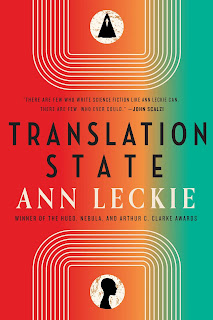
By 2023, however, trans rights have become a rallying cry for the progressive left (and a target of hate for the reactionary right), and Leckie has expanded the world of the Radch to address it in a fascinatingly deft way in her new book Translation State. Because, although the Radchaai do not distinguish gender in their pronouns, there are cultures around the Radch that do. The Athoeki of ten years ago stuck with a traditional Earthlike male/female-style binary, but in Translation State Leckie has introduced other cultures that have finally, fully delinked gender and sex, allowing more than just male-female binaries, and respecting people’s own choices about which gender category they use. 

And when these people interact with the Radchaai, they get misgendered. Unlike Breq, who at least makes an effort to guess at what the correct gender coding might be, most other Radchaai don’t even bother. In Translation State, when a Radchaai official is explicitly and repeatedly corrected, she waves it off with a disdainful ‘Whatever. Anyway . . .’ 

This is not, in the world of the book, any kind of transphobia at work. To be transphobic, you must believe that gender is immutable; to believe that gender is immutable you must know what gender is, and the Radch are entirely blind to it. Rather, in the world of the book, this attitude is a reflection of the political dominance of the Radchaai, and their refusal to recognize cultural traditions that they do not posess themselves. This is an American asking a colleague whether they have plans for Easter Break, assuming that of course the colleague is Christian. This is a bathroom technology engineer assuming that of course all hands look like white hands, resulting in automatic soap dispensers refusing to dispense soap for people of color. It is cultural imperialism behind these misgenderings, not transphobia.

And yet—and yet and yet and yet. Even though the Radchaai can’t see gender, it’s hard not to read the repeated misgenderings as transphobia. It feels oddly reminiscent of white people who insist that they ‘don’t see color’ and then proceed to indulge in all sorts of racial microaggressions. 

The insidiousness of this transphobic flavor to the Radchaai is characteristic of Leckie's deft touch. She never has the broader conversation explicitly with her readers. Her books are never about gender and pronouns, not the way that LeGuin’s work was, or even the bits dealing with the Phaens in Lindsay’s work. Leckie doesn’t have her characters discuss gender and pronouns explicitly. She doesn’t use them as mouthpieces, having them speechify her worldview, engage with each other to present The Gender Issue. Indeed, the books are very straightforwardly discussions of the consequences of cultural dominance and imperialism. But by simply presenting the treatment of gender and pronouns as she does, with their transphobic resonances, she forces the readers to have the conversation with themselves.

In the Ancillary books, Leckie also forced people to confront gender relations without ever explicitly discussing them, simply through the nature of the Radchaai’s pronoun system. This was an an important conversation in 2013. And now, Leckie is forcing people to confront transphobia and gender identity without ever explicitly discussing it, again, simply through the nature of the Radchaai’s pronoun system. In the space of a decade, the same linguistic worldbuilding has been repurposed to engage with the evolution of ongoing issues, without ever making those issues the focus of the book. It’s more elegant than Lindsay—no surprise there—but I’d argue it’s also more elegant than LeGuin. It’s all rather quite brilliant, actually.

——

1 This number is an order of magnitude more frequent than the other possible systems of pronoun gender expression listed. Although WALS is not an exhaustive inventory of all languages, it is constructed with a particular eye toward representing the range and scope of diversity across human languages (Comrie et al 2013), and so I’m inclined to believe that non-gendered pronoun systems may well be the rule, rather than the exception, to human language grammars. ↩
2 Earthling speakers of Quichua and Finnish and 252 other languages do not have this problem. ↩
3 Breq’s own relation to gender is not quite the same as other Radchaais’, because she is not a human. Rather, Breq’s body is one of many biological avatars of a spaceship’s AI, which controls many human bodies as extensions of her own consciousness. I use ‘she’ here simply because it’s what Breq would use for herself. ↩
4 This sequence goes on quite a bit, with a lot of rather quite rude remarks demands on the part of Maskull, who says things like, ‘Never mind that. It is your sex that interests me. How do you satisfy your desires?’ At least buy the nice phaen a drink first! ↩
5 If you have read The Left Hand of Darkness, I highly, highly recommend reading this revisitation. It’s called ‘Is Gender Necessary: Redux’, and it is formatted in two columns, with the original text on the left, and LeGuin’s revisions and annotations about how her thinking has shifted in the intervening years on the right. It is effectively a three-way conversation between LeGuin-in-1968, LeGuin-in-1976, and LeGuin-in-1989. One LeGuin is brilliant; three LeGuins are triply so. See references for link. ↩
6 For a very accessible example of one such discussion, see ‘Language and Woman’s Place’, by Robin Lakeoff, 1973, link in references. She even talks about the use of ‘he’ as the neutral, unmarked pronoun for mixed groups. ↩
7 I’m reminded here of a line from James H White’s ‘Sector General’ stories, originally written in the 1960s and 1970s, which offers an interesting perspective on the universal use of he: ‘. . . When O’Mara became quiet and polite and not at all sarcastic, when he began treating a person as a patient rather than a colleague in other words, that person was in trouble up to his or its neck.’ His or its. Not His, hers, or its, but his or its. Clearly, ‘his’ can’t be truly a gender neutral universal pronoun, or else it would have included aliens who individually would take ‘its’. And since this book is wildly misogynistic in many, many other ways (oh, good gravy, far too many ways to remain within the scope of a footnote), I think it’s unlikely that White intended for ‘his’ to mean ‘his or her’ the way grammarians intended. ‘His’ meant ‘his’. Women need not apply. ↩
8 She is not the first to be deliberately provocative, of course. Samuel R Delaney springs to mind as a writer who made a point of pushing all sorts of boundaries with respect to gender identity and sexuality a generation before Leckie. But Delaney was not representative of the SFF reading public’s preferences. Indeed, his willingness to push boundaries cost him publishing contracts with Bantam when he explicitly included the AIDS epidemic in his Nevèrÿon books in the 1980s (Lucas 2023). He would not spring to mind so easily if he were not so exceptional in his work, if he were not an exception to a more general tendency. ↩
9 Trans people have always existed. ↩
10 Get it? Get it? ↩

——

References

Comrie, Bernard, Matthew S. Dryer, David Gil, and Martin Haspelmath. 2013. Introduction.In: Dryer, Matthew S. & Haspelmath, Martin (eds.) WALS Online (v2020.3) [2013]. https://doi.org/10.5281/zenodo.7385533 (Available online at http://wals.info/chapter/44, accessed on 14 July 2023).

Lakoff, Robin, 'Language and the Woman's Place'. Language in Society 2(1). [Cambridge University Press 1973]. (Available online at https://web.stanford.edu/class/linguist156/Lakoff_1973.pdf, accessed 2 September 2023).

Leckie, Ann, Ancillary Justice. [Orbit 2013].

Leckie, Ann, Ancillary Sword. [Orbit 2014].

Leckie, Ann, Ancillary Mercy. [Orbit 2015].

Leckie, Ann, Translation State. [Orbit 2023].

LeGuin, Ursula K., The Left Hand of Darkness. [Ace Books 1969].

LeGuin, Ursula K., Is Gender Necessary? Redux. In: Dancing at the Edge of the World: Thoughts on Words, Women, Places. [Grove Press 1989]. Available online at https://americanfuturesiup.files.wordpress.com/2013/01/is-gender-necessary.pdf, accessed 2 September 2023].

Lindsay, David, A Voyage to Arcturus. [Methuen & Co., Ltd 1920].

Lucas, Julian, How Samuel R. Delany Reimagined Sci-Fi, Sex, and the City. [The New Yorker, 10 July 2023]. (Available online at https://www.newyorker.com/magazine/2023/07/10/samuel-r-delany-profile, accessed on 2 September 2023).

Marten, Lutz, 'Noun Classes and Plurality in Bantu Languages', in Patricia Cabredo Hofherr, and Jenny Doetjes (eds), The Oxford Handbook of Grammatical Number, [Oxford Handbooks, 2021]. (Available online at https://doi.org/10.1093/oxfordhb/9780198795858.013.26, accessed 16 July 2023).

Sandberg, Cheryl, Lean In: Women, Work, and the Will to Lead. [Knopf 2013].

Siewierska, Anna, Gender Distinctions in Independent Personal Pronouns. In: Dryer, Matthew S. & Haspelmath, Martin (eds.) WALS Online (v2020.3) [2013].  https://doi.org/10.5281/zenodo.7385533 (Available online at http://wals.info/chapter/44, accessed on 14 July 2023).

White, James H., Beginning Operations. [Tom Doherty Associates, 2001].

CLARA COHEN lives in Scotland in a creaky old building with pipes for gas lighting still lurking under her floorboards. She is an experimental linguist by profession, and calligrapher and Islamic geometric artist by vocation. During figure skating season she does blather on a bit about figure skating. She is on Mastodon at wandering.shop/@ergative.

Monday, August 21, 2017

Microreview [film]: Seconds (1966)

Shadowy, Faustian, and Sci-Fi-Adjacent

The premise of Seconds is solidly science fiction — a middle-aged, middle-manager type tired of his life allows a shadowy company to stage his death, give him a new face, a new name, and a new life — but the execution doesn't spend much time on the fantastic elements. Billed as a sci-fi movie, it actually unfolds more like a paranoid thriller. This feels natural since director John Frankenheimer's two previous movies were the paranoid classics The Manchurian Candidate and Seven Days in May.

The scenes inside The Company have an almost surrealistic feel to them, with unexplained rooms full of people sitting around and waiting for...who knows?...and offices with random people present, staring at the wall doing...who knows? This is essentially the extent to which the movie characterizes the science fictional or fantastic aspect of its tapestry. The main character, Arthur Hamilton, undergoes the surgery and recovery process, and emerges as Rock Hudson, well, his name is now "Tony Wilson," but as played by Rock Hudson. Rock Hudson was never one of those movie stars that pushed the boundaries of film acting, you might say — he always feels to me like Cary Grant, but not as witty or sharp-edged. He had a great role in Giant and did a good job with it. But he really surprised me in Seconds.

The bulk of the movie concerns itself with the reality of actually escaping oneself. Ok, let's just take as a given that some mysterious group can provide you with a new face, name, house, all that. But under the new exterior, you're still "you." And is it your circumstances that you were tired of, that made you want to go down this bonkers rabbit hole, or was it just...you? Beach house, servant, new girlfriend, sure, but can that make you happy? Can you really hit the reset button as easy as all that?

One of the most effective sequences in the film is also one of the strangest. Arthur/Tony goes with his new girlfriend, Nora, to a wine festival, and suddenly people start stripping off their clothes and dancing around in the wine vats naked. Arthur/Tony is repulsed at first, the way a middle-aged baner from 1966 might well be, but slowly lets himself go, allowing himself to get caught up in the moment. This is the first moment in the film where he really loosens the fist clenched around the idea of who he's "supposed" to be, and feels the freedom of this new, second chance at life. This sequence — and it has a lot of female nudity — was unsurprisingly cut from the American theatrical release, but has since been restored. I think without that experience, though, this would feel like a very different movie. From a character standpoint, I think it's an essential scene, and a lot would be lost without it. It's one of the only moments where I felt like I could start pulling for Arthur/Tony.

This is the most natural, and engaging performance I've ever seen from Rock Hudson. And he does a really convincing drunk, in one crucial scene. I have to wonder how much this role was informed by his real life as a closeted gay man. It feels like the kind of role, where he is having to hide his true self and can only let go in a couple of stolen moments, that he was probably living off-screen, as well. It is a heartbreaking idea to consider.

This movie did poorly on its initial release, but in recent years has bubbled up again. I first became aware of it because I am a big nerd for movie title design, and I saw the Saul Bass-created opening sequence maybe a couple of years ago. Criterion and the Library of Congress National Film Registry have helped raise the movie's profile recently, and I think it's well-deserved. It's an odd movie, and not perfect, but in the end, Seconds feels like an extended, darker-than-usual episode of The Twilight Zone. If that sounds good, you'll probably dig it.

The Math

Baseline Assessment: 7/10

Bonuses:: +1 for Rock Hudson's performance; +1 for Murray Hamilton's brief, but unsettling performance; +1 for gorgeous black-and-white cinematography by the legendary James Wong Howe

Penalties: -1 for an outcome that feels like a foregone conclusion; -1 for the sort of blasé approach to the sci-fi setup

Nerd Coefficient: 8/10. Well worth your time and attention.

Posted by Vance K — cult film reviewer and co-editor of nerds of a feather since 2012. Emmy-winning producer, and folk musician.

Monday, February 20, 2017

The Roger Corman Interview

Roger Corman has been, arguably, the single most important voice in the history of independent cinema. It was an absolute honor to be able to sit down with him in his office to discuss his new film, Death Race 2050, and specifics from a career that spans seven decades.


For the uninitiated, Roger Corman began writing, directing, and producing in the mid-1950s. He launched the careers of actors like Jack Nicholson and Peter Fonda, and revived or reinvigorated the careers of Vincent Price, Peter Lorre, Boris Karloff, and others. As a producer, he gave directors like Ron Howard, Martin Scorsese, Francis Ford Coppola, Joe Dante, and James Cameron their starts in filmmaking. He worked extensively with writers such as Twilight Zone alumni Richard Matheson and Charles Beaumont, who were also seminal sci-fi and horror writers in their own right. His distribution company won foreign language Oscars for the films of Ingmar Bergman and Federico Fellini.

But at the end of the day, this is a guy who just made a lot of great movies. From the 1950s beatnik satire A Bucket of Blood to the 1960s Edgar Allan Poe adaptations, to the 1970s punk hallmark Rock n Roll High School and beyond, Roger Corman may have spent a career working with low- and medium-budget films, but he managed to create lasting art, documents of the times, and just goddamn fun movies, and he continues to do so.

If you haven't, check out Death Race 2050, streaming on Netflix and on DVD and VOD or watch the original, Death Race 2000, on DVD or streaming on FilmStruck. And enjoy the interview. I sure as hell did.

Posted by Vance K — co-editor and cult film reviewer for nerds of a feather, flock together since 2012, musician and songwriter, and Emmy Award-winning producer.

Monday, September 12, 2016

We Rank 'Em: Star Trek TV Series


It goes without saying that Star Trek is one of, if not the, most influential franchises of all time. In celebration of the 50th Anniversary of the first episode, the team here at Nerds of a Feather put our heads together to determine the all time best Star Trek TV series. Naturally, no one person rated the series the same, so we resorted to our trusted group rating system, where we each rank to our liking and then take the group average.

6. Enterprise

Enterprise is no one's #1
- This is not Star Trek. There is no better world offered here, just a hodgepodge of the worst of the previous Treks: arrogant and paternal white dude captain, thin moralizing of us vs. them total war, confusing time travel bullshit, and a twist ending that...did not work in the slightest. This was the wound that killed Star Trek as I knew it. (Charles)

- Deeply flawed but finally found a soul in the fourth season, just in time to get canceled. I can't recall much of the series, but I'll never forget that it started the fourth season with alien nazis and that's when it started to get really good. It had the absolute worst opening theme. (Brian)

- Overall: 0/10. This is one of the worst shows ever. Bonuses: None. Penalties: ALL THE PENALTIES. IT IS THE PREQUELS OF STAR TREK. (Dean)


5. The Animated Series

TAS is no one's #1
- I know that limited animation (cost- and time-saving shortcuts, familiar from shows like Scooby-Doo: Where Are You?) isn't for everybody. But the original cast in stories that are at least as solid as an average TOS episode makes me tremendously happy. And the flashes back to Spock's youth in the episode "Yesteryear" I think formed the basis for a lot of the flashbacks in the 2009 STAR TREK reboot and at least one lyrical reference in a Weezer song, so consider me a fan. (Vance)

- I wish I had a cartoon like this growing up. It has not aged well at all, but the crew is all there (plus some interesting additions) and the adventures are pulled directly from the Original Series. While it doesn't stand well on its own, it has some big names attached to it and it certainly keeps the spirit of the Original burning bright. (Charles)


4. Voyager


Voyager is Dean's #1
- Overall: 7/10. I love Voyager because it is basically a pure adventure with great characters. Bonus: +1 for Janeway. (Dean)

- In the nature of Star Trek, Voyager embraces diversity in its cast. What stands out most to me are the female characters in more traditional male roles, like Janeway the captain and B'Ellana the chief engineer. I recently re-watched an episode the dealt with pregnancy and childbirth. Relatability is important in genre TV, and Voyager's diverse cast and overall premise - feeling trapped and lost but not giving up hope - is relatable to many. (Tia)

- This show took a complex political situation and then shot it to a remote corner of the galaxy, surrounded by deadly enemies. The hook was brilliant, and yet some of the complexity Trek was known for fell away in favor of looking at what these people would do to survive and to get back home. (Charles)


3. The Original Series

TOS is Vance's, The G's, and English Scribbler's #1
- There is some cognitive dissonance for me here because I don't think TOS is the best Star Trek show, but it is my favorite. I remember seeing WRATH OF KHAN in the theater, and I was only four years old when that came out, so Kirk, Spock, Bones, and the original crew simply are Star Trek to me. The hits on this show are some of my favorite sci-fi stories ever, even though the lows are just terrible. But "City on the Edge of Forever" more than makes up for "Spock's Brain" and "The Way to Eden." (Vance)

- The original boasted a delightful dynamic between Kirk, Spock, and Bones, with some episodes and a vision of the future that were revolutionary at the time. To say that the series has aged well, though...some episodes have, and some have most certainly not. (Charles)

- Watching TOS is like reading classic literature. At times the plot doesn't hold up well but hearing "to boldly go.." is like reading "wherefore with thee came not all hell broke loose." The dramatic acting is my favorite part of the show. It has the passion and feel of an old time movie and surprisingly deep themes and dialogue. And okay, I'll say it: Kirk is dreamy. But those pants. I just can't handle the pants. (Tia)

- It's the groundbreaking start of the franchise. The highs are very high, but the lows are real low. It's not the most even series, but it's still a classic. (Brian)

- Overall: 6/10. Bonuses; +1 maybe hindisght, but for doing what it did for SciFi. Penalties: -1 for only being OK when you really watch it. (Dean)

(It's worth noting that the difference in ranking averages between DS9 and TOS was one tenth of a point.)

2. Deep Space Nine

DS9 is Tia's and Charles' #1
- This show, more than any of the others, pushed the boundaries of how Star Trek could be told, spinning vast mythologies and character arcs that paid off in tremendous ways while weaving episodic mysteries and series-spanning storylines. It stripped away the pearly veneer of the Federation and yet still made it something worth fighting for, something worth dying for, in ways that I never felt the earlier shows managed to capture. Still my favorite show of all time. (Charles)

- I love DS9 so much because it feels different than the other Star Trek Series while still feeling like Star Trek. I really like the space station dynamic which gets us off the bridge and into the lives of civilians, but we still get the traditional upper level Star Fleet characters too. Bonuses: +1 for POC captain, +1 for Dax. (Tia)

- It broke the mold by focusing not on a ship, but a space station and the incredibly diverse group inhabiting it. It also escaped the episodic nature of all other series. (Brian)

- Overall: 6/10. Babylon 5 is the best show ever, and I love DS9 because it feels a lot like Babylon 5. That doesn't sound like the praise I quite mean it as, the trade and politics of the show are great. Bonuses: +1 for being brave enough to depart the standard formula. Penalties: -1 for just kind of being there sometimes, -1 for the cast not always being strong. (Dean)

- If I needed to recommend this show to anybody, I would simply have to tell them about the episode "Trials and Tribble-ations," and I think the show's greatness would be self-evident. (Vance)

1. The Next Generation

TNG is Brian's, Shana's, and Jemmy's #1
- Best crew, best stories, best ship. This is my generation's Star Trek for a very good reason. I rewatch it yearly. (Brian)
- Aptly named, this show took much of the promise of the original and offered more characters, more complexity, and a more vibrant and connected universe (and it lasted for more than three seasons). So much was established in this series, and yet it often suffered because of its strictly episodic structure and its unwillingness to question certain key problems with the Federation. (Charles)

- This was the series I grew up with on TV, and I readily admit it's a better show than the original. The crew is fantastic, the inclusion of Worf on the Enterprise speaks to the welcome optimism of the Star Trek universe, and I have never not wanted a holodeck. (Vance)

- Where TNG wins for me is when the cast are experiencing things that are foreign to them but normal to us. Right now I'm thinking of them being trapped in a Casino and them eating scrambled eggs. Other times I find this show kind of boring (gasp, I know) and can't really bond with the characters. Bonuses: +1 for Worf, Penalties: -1 for the ugliest Enterprise interior ever. (Tia)

- Overall: 7/10. Real talk: This is the best crew. Every single character is fantastic- I could go on, but you know it as well as I do. Bonus: +1 for Picard being the best Captain. -1 for every stupid episode where they get stuck in the bloody holodeck in some 20th century setting gaaaaah stop. (Dean)

----
Compiled by: Tia  inspiring couch potato and Nerds of a Feather contributor since 2014

Monday, April 4, 2016

Microreview [book]: A Canticle for Leibowitz by Walter M. Miller, Jr.

A disheartening look at humanity, and the perfect Cold War zeitgeist book


Published in 1960, A Canticle for Leibowitz is one of the books credited with forcing the mainstream press to begin taking speculative fiction seriously. Upon publication, even if it wasn't reviewed terribly positively, it was at least reviewed in some heavyweight publications that normally wouldn't touch sci-fi with a ten-meter cattle prod. In the five-plus decades since, it has continued to make appearances on prominent lists of the Greatest Sci-Fi Books ever.

To cut to the chase, reading it with fresh eyes today, it's not the pinnacle of the genre. It is, however, an engaging cornerstone of Cold War science fiction.

Over the last year, and for no particular reason apart from random chance, my reading list has included On the Beach by Nevil Shute and The Man Who Fell to Earth by Walter Tevis. I realized in reading A Canticle for Leibowitz, however, that these three books together give a profound, eerie, and usually moving picture of the Cold War-era zeitgeist. Tevis' book is about an alien that comes to Earth in an effort to save his own people, but falls victim to crushing alcoholism due in part to his realization that the planet cannot help but do itself in with its rapidly proliferating nuclear weapons. On the Beach is a haunting, unshakable portrait of the post-war world, where the few Australian survivors of the nuclear wars wait for the fallout clouds to come far enough South to poison and eventually kill them all.

Walter Miller's book begins several hundred years after the wars. Or, "The Flame Deluge," as the book's inhabitants refer to it. After the wars, there were few unaffected humans left, but those that remained rebelled against all knowledge, as too much knowledge had caused their destruction. The cities were all flattened, the books burned, literacy made verboten, and the outlands became dotted with tribes of murderous mutants. Seemingly the only thing that survived the transition from industrialized, nuclear-capable society to the new dark ages was the Catholic church. A Canticle for Leibowitz, like a medieval painting, presents a triptych of tales that cover some 1800 years of future history.

The first story concerns a young novice who stumbles across a fallout shelter that likely belonged to "the blessed Leibowitz." The cosmic joke here is that Leibowitz was probably a low-level electrical technician in Bell Labs or General Electric who probably worked on government contracts (and happened to be Jewish, to boot), but after 600 years he is on the doorstep of beatification. The second story takes place in essentially the second Middle Ages, when mankind has only just rediscovered science, and the monks of the Order of Leibowitz, who have been keeping the sacred documents (basic science texts and blueprints) for 1200 years, unwittingly hold the keys to scientific knowledge that predates The Flame Deluge. The final story, set some 1800 years after the nuclear decimation of the Earth, presents a futuristic setting that finds mankind capable of space travel, but on the verge of another nuclear conflict. History repeating, no less.

As grim as it may be to think that we'd annihilate the entire human race out of hubris and then do it again (...and again...and again...and again...), Miller's reminder is a prescient one. When the United States is currently locked into a presidential race that is echoing the worst rhetoric of the last 100 years of institutionalized mistakes, it is a chilling, and motivating, reminder about where we were as a nation just a half century ago. This is the best of what science fiction does. Through the lens of a fantastic world, it shines a light on our own. Walter Miller's book did that in 1960, and it continues to do it today.

Some of the prose, and some of the insights, are truly eloquent. That said, the book comes across as pretty solidly dated. There are, by my count, three women in the book. One of the things that the efforts of so many writers over the last few generations have shown us is that if we limit our storytelling to one group of people, or one gender, we're necessarily missing part of the story. So when I read the book today, I felt like there were a lot of good ideas that went into the world-building, and that the book presented a lot of philosophically and historically interesting notions, but I keenly felt aware that I was only getting part of the story. As much as I admired the noble intentions of the Brothers of Leibowitz, I found myself wondering often about the sisters outside of the abbey walls, and how they were navigating this post-apocalyptic future. And why did we return to a solid patriarchy? If we burned the books and plans and literacy that nearly wiped us out the first time, why did we not burn the patriarchy? The answer is probably because Walter Miller took it for granted. That's not intended as a knock on him, given the time he was writing and all that, but as a reader I was keenly aware of the fact that I was looking at "history" through the eyes of a bunch of white guys, and that there was a lot more going on in this world that I simply wasn't hearing about because those people's experiences were just out of frame.

On the whole, the book was keenly observed, and a solid, early example of thoughtful world-building, but not as emotionally resonant as the other two books I now consider the Cold War Zeitgeist Trilogy, and by virtue of the things it left out, it simply couldn't be, today, as pointed an examination of the human condition as it seemed evident it was intended to be.

The Math

Bonuses: +1 for managing the hand-off between three different tales in an emotionally continuous way; +1 for being such a precise barometer of the Cold War zeitgeist

Penalties: -1 for feeling dated in the very essence in the story it was telling

Nerd Coefficient: 7/10. It's still pretty good, but don't necessarily defer to every Best Sci-Fi poll you read online.

Posted by Vance K -- cult film reviewer, Cold War aficionado, occasional book reviewer, and co-editor of nerds of a feather, flock together, since 2012.

Reference:
Miller, Walter M. A Canticle for Leibowitz [EOS, 1996 (Reprint)].

Friday, May 22, 2015

Microreview [book/movie combo]: The Man Who Fell to Earth

How to adapt a sci-fi novel? Add rock stars. And sex. So much sex.

Book


Walter Tevis' brief 1963 novel is a heartbreaking examination of self-doubt. In it, an alien calling himself Thomas Jerome Newton lands his spaceship in a remote field in Kentucky with a mission and a sheaf of papers containing specifications for scientific breakthroughs unheard of on this planet. The scientific ideas he turns into patents, which he turns into an extremely profitable company called World Enterprises, which he uses to fund his mission. Pretty smart.

Seemingly the one person out there in the general public who catches on that all this technology coming out of this new company may be alien in nature is a heavy-drinking, burnt-out college chemistry professor named Nathan Bryce. Even the lawyer Farnsworth who helped Newton set up World Enterprises and runs the day-to-day operations doesn't have the same inklings Bryce develops regarding the reclusive Newton. So Bryce seeks Newton out and manages to talk his way into a job at World Enterprises. This new success leads Bryce to put the bottle down, and re-commit himself to chemistry.

But Newton finds himself in very different mental, emotional, and spiritual circumstances. After an unfortunate run-in with Earth's gravity leaves him convalescing, Newton befriends his de facto nursemaid, Betty Jo, who happens to be a Scotch-addled souse. His home planet of Anthea (the native name for either Mars or Venus) is a wasteland after global wars reduced the population to only a few hundred survivors, and it is Newton's responsibility to develop a space-going ferry to bring them to Earth. The stress upon him is tremendous, as is his profound loneliness, so the introduction of wine and Scotch whiskey come as a welcome diversion and sedative, but his increasing dependence on them threaten the success of his mission.

Walter Tevis himself was descending into alcoholism as he wrote the book. Although, as he discussed in interviews years later, he seems to have not realized it at the time. It's stunning, then, how the writerly part of his brain fundamentally understood and could successfully transpose onto the narrative ideas and experiences Tevis' conscious mind was keeping at arms' length. As much as this book is about alcoholism — and it is — it seems more fundamentally about failure. In the book, alcohol is the medicine that failures self-prescribe to forget their disappointment at having not become what they felt they might have if...whatever happened to them hadn't. 

Despite a relatively slight page count, this is an engrossing book unafraid of very big questions. Beyond failure, beyond alcohol, friendship and loneliness, it also seems resigned to the fact that we'll one day blow ourselves up and wipe ourselves out. There's some thematic overlap with Nevil Shute's On the Beach, and I found myself having a similar reaction to The Man Who Fell to Earth.

Film


Nicolas Roeg's 1976 film adaptation of The Man Who Fell to Earth has a troubled history, with the film's American distributor chopping some 20+ minutes out of the movie for its initial release because he apparently didn't understand it. But Criterion has released the full version in a characteristically wonderful edition with a bunch of wonderful special features.

The Man Who Fell to Earth is one of the most interesting book-to-film adaptations I've come across because it is actually quite a faithful adaptation, but very quiet about it. Roeg doesn't spend a lot of time explaining what's going on, but communicates the story with true visual mastery. It is a true testament to how much the oft-quoted mantra "show, don't tell" can really accomplish. It's also easy to see, however, how someone might find themselves utterly baffled by what's going on in this movie. 

One thing that is going on, without a doubt, is gettin'-it-on. The source material is almost entirely asexual. Newton is essentially sexless, Bryce is too old to be interested in sex, and Betty Jo is presented as dumpy and matronly. Boy, not the movie, though. David Bowie has rock star magnetism to burn, Betty Jo becomes the lithe and oft-naked Mary-Lou, who introduces Newton to a helluva lot more than just alcohol, and the aged Bryce is reimagined by Rip Torn as a student-shagging professor who only seeks out World Enterprises after it becomes clear his exploits will likely cost him his spot at the university.

But like Tevis' Cuban Missle Crisis-adjacent book, Roeg's film is one for its time. The sexual revolution had happened and TV had proliferated, so Roeg's version of T.J. Newton simply has more options at hand when it comes to losing himself. 

In the end, both versions stand alone as engrossing works taken on their own terms. 

The Math

Baseline Assessment: 7/10

Bonuses: +1 for the way each telling uniquely captures its time; +1 for the character of T.J. Newton, and the ways in which his trial of pretending to be something he isn't remains moving in both tellings 

Penalties: -1 for the total lack of outside scrutiny World Enterprises receives until very late in the proceedings

Nerd/Cult Film Coefficient: 8/10. Well worth your time and attentions.


Friday, March 27, 2015

Greatest Sci-Fi Movie of All Time Tournament (Round of 16)

VOTING ON THIS ROUND IS NOW CLOSED. TO VOTE IN THE NEXT ROUND, CLICK HERE.

Folks, I have to admit I'm surprised.

A bunch of my picks bit the dust in the Round of 32, and we had one MAJOR upset: the 8-seeded Brazil knocked off 1-seed Frankenstein. Frankenstein, people! But where you really twisted the knife is in the Gort Region, where Donnie Darko knocked off The Day the Earth Stood Still...and not the Keanu Reeves one. That I could understand, but...man. Here's where I make some crack about young whippersnappers and getting off my lawn.

Here's where we stand:
Click for a larger view.
My guess is the only 1-seed that makes it to the Round of 8 is Empire Strikes Back. And if Brazil is the little engine that could, then we may have to say goodbye to Ridley Scott and Stanley Kubrick, both. But that's for you to decide.

On to the voting!

Gort Region


HAL Region


Robbie Region


R2 Region


Polls will remain open until next Thursday night (Pacific), and the next round will open for voting on Friday.

Posted by Vance K — who knows where a life-sized Gort can be found if needed, and co-editor of Nerds of a Feather since 2012.

Friday, March 20, 2015

Greatest Sci-Fi Movie of All Time Tournament (Round of 32)

VOTING ON THIS ROUND IS NOW CONCLUDED. VOTE ON THE ROUND OF 16 HERE.

Last year it was sci-fi TV shows, and thousands of people weighed in, crowning — a little surprisingly to me — Firefly the winner of the Best Sci-Fi TV Show of All Time Tournament. This year to coincide with the NCAA Men's Basketball Tournament that has offices all around the country flouting local gambling laws, we present our second annual tournament: The Greatest Sci-Fi Movie of All Time.

Behold!
Click the bracket for an expanded view you can also print out.
Here's how the films were selected and seeded. First, I took the top 100 films from the IMDb "Highest Rated Sci-Fi Feature Films" List, and eliminated any films with fewer than 50,000 user votes. In what is essentially a popularity contest, films that few people have seen would skew the results and be easy marks for upsets. Then, to correct for the pronounced "recency bias" IMDb user ratings famously show, I made the following adjustments:
  • I revised the user rating of any films released in the last 2 years downward by ten percent
  • Any films released in the ten-year period before that, I revised downward by five percent
  • For films released between 1960 and 1975, I revised their rating upward by five percent, and
  • For any films released before 1960, I revised their user rating upward by ten percent
This is no doubt not a perfect system, and neither are the IMDb rankings themselves perfect (how Star Trek II: The Wrath of Khan isn't on that list, I can't imagine). But I think it's a good system that gave us a solid distribution of films from every decade (except the 1940s?) since the silent era of film. But enough about math! To the voting!

Gort Region


HAL Region


Robbie Region


R2 Region


Results and the next round of voting will be posted each Friday until we crown a winner. Happy voting!

Posted by Vance K — Co-editor and resident cult film reviewer of Nerds of a Feather since 2012