Showing posts with label Space. Show all posts

Wednesday, September 30, 2026

TV Review: Star Trek: Strange New Worlds, Season 4

60 Years of Star Trek wraps up with an unusual 4th season of Strange New Worlds


From its first season, Star Trek: Strange New Worlds quickly became one of my favorite Star Trek series. I have loved Star Trek as a franchise from the days when all that existed was The Original Series (and The Animated Series). I later grew to deeply love Star Trek: The Next Generation. And, I have enjoyed (loved, or at least open-mindedly watched) all other iterations of the flawed but always compelling storytelling. Star Trek has benefited from and been burdened by the high moral expectations of its storytelling. From its earliest days, Star Trek has tackled real life social justice issues while still dealing with its own inherent frailty: talking about the future through the limited and imperfect lens of the limited and imperfect present. Star Trek: Strange New Worlds captured that spirit in its opening seasons but did it with a focus on character relationships rather than the external plot. While the plots were intense and engaging, the real exploration was internal or interpersonal. Season three was more of a change with more quirky or humorous storytelling episodes mixed with a majority of intense, high stakes episodes. Season four has been even more of a shift with half of the episodes being quirky or humorous (not always overlapping concepts) counterbalanced with an approximately equal number of intense episodes. Humor has always been an essential part of Star Trek, not only to take an emotional break from the intensity of constant space travel peril, but also to add complexity and authenticity to the characters. 

Some of my all-time favorite episodes of Strange New Worlds have been humorous, including “Those Old Scientists” and “Four and a Half Vulcans.” There is a distinction between sharply humorous versus solely quirky or silly, but this distinction will vary from person to person, and the jokes will land or fail based on the audience's viewing experience and even their personal mood at the time of watching. Widow’s Bay is an example of a show that I found extremely, sharply clever and laugh out loud funny, while others I know found it absurd, grim, or strange and confusing. Several of this season’s episodes of Star Trek: Strange New Worlds didn’t land for me the way I would have hoped, although all of them were reasonably enjoyable, and some were particularly outstanding. Here is a quick episode roster: 

Valles Marineris – The crew is trapped on Earth during the age of dinosaurs and must find there way back and keep from getting eaten, without damaging the timeline by killing anything.

The Griffin Incident – A classic horror episode, where Kirk, Spock, La’An find a long lost starship whose crew died mysteriously and violently, and while exploring the very creepy ghost ship, the away team discover they are not alone and soon find themselves questioning reality and loosing their sanity as they face their own violent horrors. This episode has lots of creepiness and plenty of disturbing violence.

Human Best Friend – Shore leave on an inherently drunk atmosphere planet becomes a problem when a feuding (and inebriated) Ortegas and Scotty have to work together to complete a critical mission. This is a classic drunk vacation episode in the style of The Naked Time or The Naked Now.

A Case of Chiaroscuro – In an undercover mission to a planet, as a case of mistaken identity lands Una in the role of a mob leader secretly working against a Klingon occupation. There are plenty of plot twists as loyalties are tested and betrayed. The episode is an homage to films like Casablanca, even down to the black and white setting, jazz music, and “gin joint” references.

Level-Five Transporter Accident – A seeming transporter malfunction leaves Spock as the only normal person on the ship when the rest of the crew appears to be turned into small puppets and they collectively have to fight off invading pirates. It’s a Muppets style crossover that will test your tolerance for silliness.

Off-Hour – A disaster puts the ship in danger and critically injures M’Benga in a horrifying accident. Trapped with him, Chapel is determined to do the impossible to save him. This is a disaster episode mostly focused on the bond between Chapel and M’Benga, with plenty of intensity and emotions.

Like Chronitons Through the Hourglass – The Squire of Gothos returns to mess with the crew by turning the ship into a soap opera setting in which only Pike is normal and the rest of the crew is entrenched in melodrama. It’s the sort of premise that will be best appreciated by those who watched soap operas instead of (or while) doing their math homework after school. Otherwise, the sweet payoff at the ending may not be worth the initial silliness and the very fun Deidre Hall cameo.

Orders of Magnitude – The revered Admiral Reeger takes emergency control of the Enterprise while Pike and his landing party are trapped on an away mission. Visiting officer James Kirk becomes the ranking officer who must challenge the bitter admiral when his command to destroy a planet creates a moral crisis. This episode is a powerful reminder of why Star Trek storytelling is so enduring.

Once La’an a Time – La’an and the crew find themselves on a planet where doubles of themselves are characters in a traditional fairytale, with forbidden love, a wicked queen, comic side characters, and very elaborate costumes. Carol Kane’s Pelia makes lots of references to The Princess Bride which featured the actress decades ago. The episode is also a call back to the first season episode The Elysian Kingdom in which the crew recreates characters from a storybook adventure. However, without the poignant set up of the prior episode, this season’s adventure feels a bit more arbitrary. On the bright side, there are amazing costumes and the resolution of La’an’s season long angst about managing her inner dark side.

Tomorrow’s Enterprise – An encounter with a space anomaly creates a time rift that only Uhura and a future version of herself can sense. Both versions are motivated to fix it to save the life of a key crewmember. This is a great Uhura celebration and an inspiring reminder about believing in yourself even when you don’t feel fully confident.

Although some of the quirky stories were not my favorite, Season 4 should be celebrated for some top tier episodes. "Orders of Magnitude" managed to be riveting and powerfully acted, while also giving us an inviting character study of the young James Kirk and the loyalty of his brother Sam. The episode does a great job of showing Kirk as morally strong but also morally imperfect. That contrast made me like the character and the episode even more. While the ship’s crew is primarily neutrally obedient and star struck by the famous admiral, they too begin to question authority and consider their own moral positions. The episode is tour de force for Joe Morton whose acting is powerful and hypnotic, as we watch the admiral migrate from charismatic, to smug, to tyrannical, to unhinged. The secondary plot involves an away mission gone wrong where Captain Pike, Uhura, and Uhura’s Vulcan cadet are held hostage by Orion pirates. Uhura has a strong confidence evolution in this side story which sets her up nicely for the final episode of the season where she has to, literally, trust herself, to save the timeline.

The season’s final episode, "Tomorrow’s Enterprise," is a solid ending for Star Trek’s 60th year. Uhura, Scotty, and Ortegas go on a dangerous shuttle mission to explore a rare phenomenon known as a white hole. Things go wrong forcing an evacuation and on the return Scotty has disappeared. Uhura soon finds herself in a time travel crisis where she must work with a future version of herself to bring back their missing comrade while navigating the space anomaly which, as it turns out, is having its own crisis. The plot is a little wonky but the story is a great tribute to one of my favorite characters, giving her center stage and character growth and some much needed encouragement to trust her strength and become more confident. We also have a full time skip to the new Enterprise crew, with Captain Kirk, Mr. Spock, Lt. Uhura, and Nurse Chapel. It’s not quite all the way to the original series but it is getting closer in a way that builds anticipation for the final season’s potential handoff.

Overall, Star Trek: Strange New Worlds, Season Four has very solid episodes along with some significantly quirky departures. These quirky episodes will appeal to some but won’t be everyone’s cup of earl grey tea. As someone who deeply loved Star Trek: The Next Generation, I sat through many episodes which were intentionally (or, in some cases, unintentionally) quirky and silly. Many of these stories were justified by holodeck hijinks or the trouble-making, omnipotent Q messing with the crew. However, we had so many more episodes per season and we had so few other choices of what to watch. Now there are only ten episodes per season while hundreds of other series are poised to grab viewers' attention. As a result, there can be a sense of plotting urgency that may undercut the fun of watching something quirky. This is especially true since Captain Pike’s impending demise is an essential premise of the series. Ironically, and perhaps for this same reason, the story seems to want to veer into whimsical stories while we move closer to the inevitable, grim conclusion.

--

Highlights:
  • Lots of quirky episodes
  • A mix of powerful adventures
  • Plenty of character introspection
Nerd Coefficient: 7/10

POSTED BY: Ann Michelle Harris – Multitasking, fiction writing Trekkie currently dreaming of her next beach vacation.

Thursday, August 7, 2025

TV Review: Star Trek: Strange New Worlds Season 3

Intense action, flawed characters, nostalgia, and just enough humor as Strange New Worlds enters its third season.
 

Fast pacing, jump scares, messy emotions, wry witty humor, questionable choices from beautifully flawed characters, and likeable new members of the ensemble cast. All of this composes the opening four episodes of Season 3 of Star Trek: Strange New Worlds. Historically, the third season of a Star Trek series is often when the show leans into bold awesomeness after an uncertain, exploratory start in the first season and a second season of settling into the characters and storytelling. However, Star Trek: Strange New Worlds benefitted from being a spin-off of another strong Star Trek show, Discovery. As a result, Strange New Worlds began in comfortable awesomeness from season one, telling the story of the earlier crew of the legendary starship Enterprise, and reimagining iconic characters (Spock, Uhura, Chapel, and even James Kirk) and presenting new (La’an, Ortegas) or underused pre-existing (Pike, Una, M’Benga) characters, who are all shown in their early, uncertain, but much more fully explored selves. Season 2 added a range of clever quirky storytelling devices, including a hilarious partial animation crossover (with Star Trek: Lower Decks) and song-filled musical episode. However, the second season ended on a more serious note in “Hegemony I,” with a return of the Gorn, the human eating, monster-like enemy race that hunted them in the first season. As several beloved characters are trapped in a Gorn invaded non-Federation world, Pike (Anson Mount) is forbidden by Starfleet from interfering due to the risk of triggering a war with the old enemy.

Hegemony, Part II

When the Enterprise is attacked and outgunned, with close friends still captive, Captain Pike must make a critical and potentially devastating decision. Season 2 of Strange New Worlds left us with an old-school cliff-hanger finale that is immediately picked up in the opening moments of season 3 and launches us straight back into the action. The transitional moment between the two seasons is a nice call back to The Next Generation’s “The Best of Both Worlds” part I and II. That jaw dropping moment when Riker responds with unexpected confidence when faced with an impossible choice involving his own captain is contrasted with Pike, in a similarly impossible situation, having a true internal decision paralysis crisis. This is one of the storytelling elements and character explorations that makes Strange New Worlds so intriguing: optimism, compassion, and boldness are balanced with the characters’ frailty, imperfection, and sometimes flawed judgment.

Wedding Bell Blues

The theme of Season 3 seems to be nostalgia and “Wedding Bell Blues” gives us another call back to a classic Trek episode, “The Squire of Gothos,” in addition to an overt nod to a particularly creepy episode of the original Twilight Zone: “It’s a Good Life.” A broken-hearted Spock (Ethan Peck) finds himself in an unexpectedly positive situation but has to grapple with what is real and what is not. Altered reality stories are one of the most entertaining ways Star Trek plays with our minds with a twisted, waking dream scenario. “Wedding Bell Blues” leans into the strangeness with humor and a nostalgic twist at the end.

Shuttle to Kenfori

After the relatively light, although mind-twisting, adventure of “Wedding Bell Blues,” the narrative returns to monsters and violence in “Shuttle to Kenfori.” Pike and Dr. M’Benga (Babs Olusanmokun) go on an unsanctioned away mission to find a rare but potentially life saving drug and, in the process, encounter a formidable old enemy as well as unexpected terrors when they land. This episode leans into the usual horror adventure narrative with plenty of jump scares and moderate gore. But, in true Star Trek form, the story uses the setting to show Pike processing troubling revelations about two people for whom he cares deeply, even as he comes to terms with what it means for someone to become a monster physically and psychologically.

A Space Adventure Hour

The often parodied style of original Star Trek television series (in everything from Saturday Night Live to Black Mirror) has become so iconic that the cold-opening moments of “A Space Adventure Hour” let you know we are in for a humorous, nostalgia filled treat. In this episode, directed by Star Trek icon, Jonathan Frakes, La’an (Christina Chong) and Lt. Scott (Martin Quinn) are drafted into test driving a new concept called a holodeck. Running a program of such stunning magnitude puts the ship's engines at risk so Scott is assigned to make it happen without blowing up the ship and La’an is assigned to do a walkthrough of a sample strategy based program. In a multi-level metaphysical piece of storytelling, La’an decides to create a murder mystery inspired by Amelia Moon, a beloved storybook detective from her childhood. However, instead of landing in an isolated mansion or on a luxury train, she ends up in 1960’s Hollywood near the set of “Space Adventure Hour,” a hilarious take on the original Star Trek. This episode is fun on so many levels for long time Trekkies. We get to see the holodeck in its infancy, unapologetically wreaking havoc with the ship’s safety. Viewers also have a fun foreshadowing of Captain Picard’s frequent Sherlock Holmes adventures on the holodeck in The Next Generation. To set up the look of the players, Scotty uses the transporter patterns of the most recent travelers. So, most of the show’s lead actors get a chance to play completely different characters in this comedic take on 1960’s Hollywood, including Strange New Worlds’s James Kirk (Paul Wesley) doing a very funny and very meta imitation of William Shatner’s James Kirk from the original series. And, we get to see a young version of Scotty in all of his stressed out engineering persona as the holodeck mystery takes on dangerous implications for the safety of the crew. But, most of all, we get a hilarious and poignant celebration of why Star Trek is beloved and iconic. In the character of a Hollywood agent, Uhura (Celia Rose Gooding) gives a timely monologue on why Star Trek remains an indelible, and still relevant, part of our real life culture.

With intense action, twisty mind games, and unapologetic, self-aware humor, the opening episodes of Season 3 feel like a nostalgic letter to long time Star Trek fans. The jump scares, plot twists, and character angst, are balanced with the strong ensemble chemistry of flawed but relatable characters. And, as always, we have the series’ enduring moral core to guide us (hopefully) as we all continue to explore what lies ahead.

--

Highlights:
  • Action and jump scares balanced with humor and nostalgia
  • Character angst and dysfunction
  • Perfect ensemble chemistry
Nerd Coefficient: 8/10

POSTED BY: Ann Michelle Harris – Multitasking, fiction writing Trekkie currently dreaming of her next beach vacation.

Tuesday, December 31, 2024

Nanoreviews: Private Rites, Orbital, Three Eight One

A roundup of three British novels that play with genre and form to create something a little bit special

Private Rites by Julia Armfield

Julie Armfield is a pioneer in the microgenre of "melancholy lesbians," and has followed up her last sad banger Our Wives Under the Sea with another tragic hit, this time a climate-fiction/horror-adjacent reimagining of King Lear, in which three queer sisters navigate their lives and relationships, especially with one another, in the aftermath of the death of their famous architect father, all against the backdrop of a world being steadily drowned by unending rain.

The main focus of the text throughout remains on the three sisters, using each of them as viewpoint characters, interspersed with some others, including the city itself (predominantly washes of beautiful descriptions of place and vignettes of the various inhabitants trying to live their lives in this damp, changing, drowning world). But the rain is constant—its fact and effects a touchstone throughout the story, never the focus but constantly noticeable just out of the corner of your eye. And so, by the time we reach the end, it is a looming horror that overwhelms the true plot of the story, the disintegrating psychodrama of betrayal and inheritance.

What I found most interesting, and something I think Armfield manages very well, is how the climate-fictional aspects of the story do not read as SFnal in tone, sharing more with litfic and horror respectively in how they are presented—this is a story that rejects explanations, whose climate change takes on a hint of the arcane before the end—and uses it instead as a setting, a psychological spectre and an act of god, not something to be reckoned with or solved, or even survived, but merely endured. Or perhaps weathered (ha). It loses no power from being treated this way, and perhaps even gains some—there is a weight to treating the climate disaster aspect as something unstoppable, unsolvable, that lingers long after the book is done, and felt more impactful on me at least than any number of stories that tackle the issue more head on.

Like all of Armfield's books, Private Rites is chock full of beautiful prose work, lush descriptions of place that unite the profound and the mundane, and sad, queer women in whose interiority we are allowed to revel, finding almost uncomfortable levels of sympathy with their most personal thoughts. It is gripping in all its aspects, and in my opinion may be her best work yet.

Nerd Coefficient: 10/10.

Reference: Armfield, Julia. Private Rites [HarperCollins, 2024].


Orbital by Samantha Harvey

If we count Orbital as genre, the Booker has been on a three winner SFF streak, with 2022's The Seven Moons of Maali Almeida, 2023's Prophet Song and now Orbital. But that's a big if. The events of the story—such as there even are events—may not have strictly happened as yet, but they fall so closely into the realm of the possible that it feels an enormous stretch to call this speculative work, unless you consider all fiction that contains space travel to be that by default. In any case, whether or not it comes in under a technicality, its mode is far from the usual for genre fiction, and therein lie both its strength and its weakness. We follow six astro/cosmonauts on the ISS through one day—sixteen passes over the surface of the Earth—as they muse on their place in the universe, their relationship with Earth, each other and their loved ones, and the new manned mission to the moon they witness launching. They don't do much, and what they do isn't the focus anyway—instead it's a book of pondering, a rolling set of banger one-liners and intensely evocative descriptive passages, lush and wallowing in its use of language. All of which it does stunningly.

The problem comes with the unrelenting sameness of that—Harvey does a great job of evoking wonder at the view from the window of a tin can in space, and at the marvel of space travel at all, genuinely working to craft that emotional response where other books might rest on the assumption that the feeling comes pre-packaged in the reader (which it does not in me). But that feeling—that awe at everything—persists regardless of the variation in content, even when dealing with the cramped mundanities of astronaut life, and the lack of tonal variation rather wears the wonder thin by the end of its (quite short) duration.

However, what it does it does do remarkably well, and only begins to overstay its welcome towards the end. If, unlike me, you are truly dazzled simply by the reality of space travel, it may well continue to land all the way through.

Nerd Coefficient: 7/10.

Reference: Harvey, Samantha. Orbital [Vintage Publishing, 2023].


Three Eight One by Aliya Whiteley

A story of two texts. The first, a fantastical, quest-like, quasi-mythological narrative of a girl who must leave her home village to go on a ritualised journey. The second, in the margins of this, the footnotes of a far-future archivist, reckoning with her life via her connection to this text from a time far outside her ability to fully contextualise.

Three Eight One uses the interrelation of these two stories, their contrast in tone, in voice and in formatting on the page, to examine our relationship with the past and the present, with the nature of humanity and what might be lost to make a utopia, with the things that remain constant no matter how much humanity changes, and with the power of stories.

In the quest narrative, Fairly has to leave her village to follow the Horned Road, as is traditional for young people. This begins by pressing a button on a chain device, switching the narrative from third into first person, and far from the last time format will be played with in such a manner. Her progression through the quest—neatly parcelled out into sections, each of precisely 381 words—becomes increasingly stranger, leading us through a world that feels both modern and alien, both using and defying the tropes of fantasy as we know it. Even alone, Fairly's story, with its interrogation of the motivations of quests, of power structures and community, with its ambiguous and thought-provoking ending, would be worthwhile.

But it is not alone, and it is the annotation from the future author which, for me, really makes this book. We slowly learn through the story that she writes from a time so far ahead of ours as to render some of the context of the story beyond her grasp—the way that she talks about details of narrative and place make it clear through subtle repetitions the extent of her ignorance, despite her profession that she lives in an age of knowledge. We see glimpses into her world, a utopia she considers hard-earned but worthwhile, a world without conflict but where much has been lost to secure that safety. But we also see simple glimpses into her life, into her emotional relationship with a text from a long-dead civilisation. The connection that she herself can barely explain to a text she doesn't fully understand is one of the most compelling things in the story, and watching it develop over the pages, intertwining with that story itself, is incredibly rewarding.

Add to that her development in the later half of the book, where we meet her older, wiser self, and learn how her life has been shaped beyond the boundaries of the text she's annotating, and it becomes even more special.

Above all, it's a book of subtlety, refusing to spell things out for the reader but instead trusting them to make their own connections, while making sure all the tools are available to do so if they're willing. It's a book full of thoughtfulness, and one to sit with, digest and discuss, and one of the most fascinating things I've read this year.

Nerd Coefficient: 9/10.

Reference: Whiteley, Aliya. Three Eight One [Rebellion Publishing, 2024].


POSTED BY: Roseanna Pendlebury, the humble servant of a very loud cat. @chloroformtea.bsky.social

Monday, October 23, 2023

Review: Space Craze

A sojourn through the history of star-spangled science fiction


Gene Roddenberry called outer space ‘the final frontier,’ and those three words have become an iconic tagline of his most famous creation; after all, he pitched Star Trek as ‘wagon train to the stars.’ Such a comparison, of the gulf of space with the American West, is so common that we tend to forget how quintessentially American that conflation is, indeed how very American the science fiction genre has been. All that, and more, is the subject of the 2022 nonfiction book Space Craze: America’s Enduring Fascination with Real and Imagined Space Flight by Margaret A. Weitekamp.

Weitekamp is perhaps the most qualified person on the planet to write such a book; she is the chair of the Space History Department at the National Air and Space Museum in Washington D.C., a place I spent so many happy hours with my dad as a child growing up in the DC suburbs (although I probably made my dad sit through the planetarium movie too many times). Every chapter, she starts with a discussion of a piece of memorabilia in the museum’s archive that she has personally handled, grounding the book in a reality that many of us have seen if only second-hand.This book is, ultimately, a cultural history of America’s love affair with the heavens, the story of the dreaming that led to that one small step for a man.

Weitekamp clearly knows her stuff; she goes all the way back to the nineteenth century and the earliest literature that could be described as ‘science fiction.’ It allows her to do what she does best in this book: contextualize works of fiction that many of us have read or watched, indeed loved, but never thought of the world it came from. She talks about the strong influence of Westerns on early science fiction, and how its fingerprints are still felt today. She talks about the evolving role of extraterrestrials as the ‘other.’ She goes into great detail about the influence of Buck Rogers and the tropes that it spawned. One particularly striking moment is when she gets to the 1970s and is talking about the original Star Wars. She mentions a Black critic in California who calls that film, now a beloved classic (by myself included) as the most racist film he had ever seen, because it implied that no people of color would exist in the future (fortunately, this would improve in franchise history, but I can’t deny that the original is very white in its cast).

As I previously remarked with the chapter openings, she also does a wonderful job of humanizing this history. A lot of the book is about the history of science fiction fandom, from the earliest conventions to the myriad websites of today. I joined my local science fiction society in 2019, and I believe I am still its youngest dues-paying member; I was stunned to learn that people I was talking to had met Isaac Asimov. With the long view Weitekamp provides, you can see the world of fandom from an age where you could read every SFF book released that year evolve slowly into the world of today, with a plethora of work to lose yourself in.

There’s a part of me, though, that wishes Weitekamp were a bit more radical. A big theme here is the notion of frontier and its role in American mythology. Recent works on the American frontier, such as Roxanne Dunbar-Ortiz’s An Indigenous People’s History of the United States, Greg Grandin’s The End of the Myth: from the Frontier to the Border Wall in the Mind of America, and John Grenier’s The First Way of War: American War Making on the Frontier 1607-1814 have problematized the rosy, white-centric view of the frontier, rather revealing the truth that it was, to put it bluntly, a successful continent-scale genocide, a history that has defined America’s self-conception ever since (it makes sense, then, that a country that has never known a day of peace would create military science fiction).

This is a period of wholesale annihilation of entire peoples that is the basis of so much of America’s literature of futuristic dreaming. Weitekamp discusses Garrett Putman Serviss’ novel Edison’s Conquest of Mars, a novel that ends with the white male protagonist releasing floods to commit genocide against the Martians, because they are a ‘dying race.’ In his book A History of Bombing, Sven Lindqvist contextualized that book, among with many others, with the history of waging war on entire peoples that started in the colonial world and culminated in the Holocaust. Indeed, the American West was one of the great inspirations for Hitler’s plan for Eastern Europe (for the curious, I recommend Carroll P. Kakel’s book The American West and the Nazi East), a genocidal process of ‘civilized’ white people exterminating the ‘inferior’ natives and creating an idyllic land of hardy soldier-farmers living off the land. I’d imagine that an employee of a government-funded museum cannot be so candid about such history, but I feel like this was a missed opportunity (or the subject of another book - Lindqvist touches on this nasty history in the formation of apocalyptic narratives in American culture, but not enough to sate my curiosity).

Space Craze is a good, solid history of American science fiction, albeit whitewashed in the way that our mainstream history usually is. As a history of people, who played with toys and went to conventions and loved dreaming of new worlds, it is astounding, and I recommend it to every science fiction fan.

--

The Math

Highlights: seeing how SF fandom became what it is today

Nerd Coefficient: 8/10

POSTED BY: Alex Wallace, alternate history buff who reads more than is healthy.

Thursday, March 25, 2021

Microreview [Book]: Sun-Daughters, Sea-Daughters by Aimee Ogden

 A story that travels through land, sea, and space, evoking awe wherever it goes.

Space is often venerated in science fiction as an expanse full of many possibilities. Sun-Daughters, Sea-Daughters affirms that idea, but also proposes in some cases, the best possibility lies in being grounded where you are. There are still some boundaries that need to be crossed to attain happiness, but those boundaries lie in your identity and immediate proximity. You can cross from sea to land, change your genetic makeup to align with something else on your planet, or switch romantic partners, without being disoriented in dark, interstellar infinity. This is a novella that reaches for the stars, showing its impressive luminosity, while having its legs comfortably on the ground.

Atuale used to be a sea-dwelling person, and the daughter of a Sea-Clan lord. But she chose to change her genetic make-up and migrate to land, marrying a land dweller named Sareeval. Now a plague has wracked her husband and clan. She must go on a quest for a cure, along with her ex-lover Yanja, for help. Together, Atuale and Yanja explore the planets and the stars, with a lot of emotional baggage between the two of them.

The story doesn’t waste your time. It moves at a skillful pace, quickly laying its foundation, and then moves steadily as it satisfyingly plants information about its world while never feeling like it loses direction or rushes through things. However, I would’ve loved further information on Atuale and Sareeval’s partnership. Since the story starts off with Sareeval being incapacitated, we don’t get juicy interactions from the two of them, and are instead told - rather than shown - by Atuale of how strong their bond is, making Sareeval feel more like an object of affection than an entity of affection.

On the other hand, the relationship between Atuale and Yanja is rewardingly plotted out. Every interaction is threaded with a rich history of which Aimee Ogden gives just enough away to make it satisfying. It’s a relationship interlaced with wistfulness, heartbreak, and moments of camaraderie that add spice and an additional layer to the action. Despite the thrillingly frenetic pace of some later scenes in space, it’s grounded in the longstanding planetary bonds, whether it be relationships of the people therein or the planet itself.

Apart from the aforementioned pacing, and passage after passage of beautiful writing, the worldbuilding is especially commendable. Ogden manages to set up not just a believable planet, but a believable universe in one story. Different planets are mentioned, and through minor descriptions are richly drawn. The same goes for the different species. The novella has a wide foundation, while simultaneously begging for further exploration in other stories. Not because it feels empty like a dried up well, but because it’s overflowing with the most appetizing flood of plot.

Sun Daughters, Sea Daughters does take some story cues from The Little Mermaid, but it not only deviates from typical fairy tale retellings, but sometimes transcends them.  And that’s fitting because like a good retelling it both crosses boundaries and reconstructs the ones we’re confined in. We can look up at the stars for an escape, or we can gaze at the horizon, looking forward to how we’re going to better our lives here. There is no wrong method. The novella put me through the ringer, as I held my breath as if I was underwater. When it was over, I felt like I was on land, blessedly regaining my breath, while looking down, slightly missing the floatiness of the water. I hope Ogden has more stories in this world, because I can’t wait to dive back in.

The Math

Baseline Score: 7/10

Bonuses: +1 For some of the most impressively economical worldbuilding I've read in a while.

Nerd Coefficient: 8/10

POSTED BY: Sean Dowie - Screenwriter, stand-up comedian, lover of all books that make him nod his head and say, "Neat!"

Ogden, Aimee. Sea-Daughters, Sun-Daughters [Tordotcom, 2021].

Tuesday, October 13, 2020

Microreview [Book]: The First Sister by Linden A. Lewis

A grim but effective tale of interplanetary conflict and societal loyalties

Content note: Sexual Slavery, references to rape and sexual abuse

The First Sister opens on a solar system at war between the Icarii, humans who live on Mercury and Venus and have harnessed advanced technology based on a mineral that's only found there, and the Geans, who claim Earth and Mars and rely on scavenged tech and a radicalised religious population to maintain their own strength. With poverty and inequality rife in the societies of both sides, two very different individuals are thrown into the war for their own survival, and both have their already fragile loyalties tested as they start to uncover the reality behind the structures that govern their cultures.

The first of these characters is the titular First Sister, who serves on a ship as part of the Gean's religious order, and is effectively a comfort woman for the soldiers who use her to confess their sins and are then entitled to her body. The Sisters undergo an ambiguous procedure which removes the memory of their names, and prevents them from being able to speak; even the title "First Sister" is a transient one, a position which she has won by ingratiating herself with the captain of her ship; if she loses the position, the protagonist would go back to being completely nameless. Because of her rank,  First Sister has made herself exclusively available to the Captain, winning herself a reprieve from sexual assault from the entire crew, but at the opening of the book her former Captain leaves, breaking his promise to take her home with him, and she is forced to try and build a relationship with the unorthodox new captain, Saito Ren. It should be noted that while the threat of rape hangs over First Sister due to her position, and she euphemistically mentions a couple of past assaults, there are no depictions of rape or anything more than brief unwanted physical contact during the story's present.  There also aren't any instances where "safe" characters suddenly turn on her for shock value. Lewis does an effective job building up the horror of the Sisterhood and what they are expected to do without having to resort to the shock value of actually depicting rape, and I'm grateful to the book for treading that line so effectively.

Providing the view from the Icarii side is Lito Sol Lucius, a man from a poor family on the Venusian city of Cytherea who has risen to become a duelist, training at an elite academy to become one of the Icarii's Special Forces. All Icarii soldiers are given neural implants and in the case of the duelists, they are paired with another soldier, one becoming a "rapier" and the other a "dagger", both playing slightly different roles in their missions with the rapier given tactical command. Lito has recently lost the dagger he was paired with, Hiro Val Akira, after a mission on the contested asteroid Ceres; now it turns out that Hiro is not dead but that they may have defected from the Icarii, and Lito is given a new partner and charged with tracking them down. Interspersed with Lito and the First Sister's chapters are "recordings" which it quickly becomes apparent are from Hiro's point of view, as they recollect the events that led to their disappearance, as well as their own family history as child of the dynasty which created the implants and much of the other technology that makes Icarii society function.

The First Sister sets up a grim world, where at least for the first few chapters its hard for us to think beyond the characters' survival. This is particularly true for First Sister, whose distress at being abandoned and put at risk of losing her tenuous sense of security is incredibly hard to read. However, as the characters start to get a little more comfortable in their circumstances and find the space to start questioning broader elements of their situations, things start to get juicy very quickly. The relationship between First Sister and Saito Ren, while uncomfortable in some of its romantic elements (this isn't a romance plotline, just to be clear, and those feelings seem to be largely one-sided), sets up some really interesting questions about Ren's history and current views; equally intriguing are the glimpses we get of the Sisterhood, and the motivations of the Aunt on the ship who attempts to use First Sister to gain information on the captain. As Lito is less confined, it is through him that we see some of the wider world of The First Sister, including Ceres - which has recently changed hands from Icarii to Gean control - and the Asters, a culture of humans who have undergone extensive genetic modification to live in the less habitable parts of space, and are now considered a separate species and constantly discriminated against in Icarii society. Both characters' positioning is effective in showing the war crimes and oppresiveness of their respective societies, from the horrors of the Icarii neural implant process, the threats made against Lito's families, and the treatment of the Asters, to the normalisation of sexual slavery in Gean religion and the secretive, misogynistic nature of the power structures behind it.

After an uncertain start, I was intrigued enough by the character-driven mysteries of The First Sister that it kept me reading very effectively. Being the first book in a series, the climax of this novel answers some questions, but it leaves the character arcs hanging to some extent, particularly when it comes to a reveal around one specific character which upends a lot of what we thought about them throughout the book. In a way, both First Sister and Lito achieve some of their initial goals, only to have the realities of the world they live in make those goals far more complicated than they first thought. It's an odd climax in some ways - that character reveal mentioned above didn't do much for me at all - but satisfying enough for a series opener even while I might have preferred some more closure for the amount of emotional turmoil some aspects of this story put me through. That's probably me expecting too much from grimdark adventures though - and if you go into this expecting that to be the case, I think you'll enjoy it just fine.

Having noted above that I think The First Sister deals sensitively with the sexual violence inherent in its premise, I was much more disappointed with its depiction of disability, which comes across as much less thought through. One of the defining characteristics of the Sisters is that they can't speak, due to the mysterious operation conducted on them when they enter the sisterhood. They have a sign language, but knowledge of this is restricted to the sisters themselves and their Aunts, and writing is considered taboo, meaning that there is no way for First Sister and her kin to communicate with the soldiers around her. This inability to communicate freely with the sisters she doesn't think she can trust and the Aunt who is actively putting her into a dangerous situation is an effective part of the book - but it's done in a way that minimises the role of sign languages as complete, useful languages in their own right. There's nothing to suggest that the sign language that the Sisters use is incomplete or limited in vocabulary, but even in the opening chapter First Sister laments that it's their "only" language. More frustratingly, a late plot point involves some sisters regaining the ability to talk, and these characters immediately express relief and jump to using spoken communication even though they already had the ability to sign and mutually understand each other. What starts out as a rather on-the-nose symbol of the Sisters' powerlessness becomes tied up in an assumption that sign languages are an inherently lesser form of communication, and that's an inaccurate and deeply unfortunate portrayal given the number of people who use sign languages either exclusively or alongside verbal communication and most certainly aren't "voiceless" in any metaphorical sense.

That aside, The First Sister is a book that's highly effective in telling the story it wants to tell - and it's a story that I found myself drawn into despite not initially being convinced by its grimness. While I'm reserving my full judgement to see how things play out in later books, this is a story that's got a lot of interesting places it could go and, linguistic ableism aside, I'm intrigued to see what First Sister, Lito and their friends get up to next. 

The Math

Baseline Assessment: 8/10

Bonuses: +1 Feels a lot of care went into sensitively writing the sexual slavery aspects

Penalties: -1 An ending reveal that didn't really do it for me; -1 Throws sign languages under the bus for the sake of its metaphor around "voicelessness"

Nerd Coefficient: 7/10

POSTED BY: Adri, Nerds of a Feather co-editor, is a semi-aquatic migratory mammal most often found in the UK. She has many opinions about SFF books, and is also partial to gaming, baking, interacting with dogs, and Asian-style karaoke. Find her on Twitter at @adrijjy

Reference: Lewis, Linden A. The First Sister [Hodder and Staughton/Skybound Books, 2020]

Tuesday, March 28, 2017

Microreview [book]: From Ice to Ashes by Rhett C. Bruno

Where Cold and Dark Works


Space is making a comeback. Movies like The Martian, Interstellar, and Gravity have been big hits. Have you seen The Expanse? That's a pretty good TV show, better than the source material in my opinion. From Ice to Ashes tells a class struggle story and it succeeds in a lot of ways.

Kale Drayton is a Ringer; a descendant of colonists who escaped Earth on the Saturnian moon Titan. Ringers have physically adapted to the environment of Titan, making them physically weaker and lankier than their Earth counterparts but more adapted to the cold of their new home. Earthers, however, had to evacuate their mother planet due to planet-wide disaster, and now the two are rubbing against each other on Titan. However, the Earthers brought back Earth's many diseases, and Kale's mother languishes in a quarantine zone. Desperate to provide for her on meager wages, Kale takes a gas hauling rotation, with a secondary mission to simply plug in hand terminal (think future smartphone) into a computer onboard the hauler. This simple act puts a long lived plot in motion that eventually changes the entire Sol balance of power.

Let's be honest; From Ice to Ashes cribs a lot from the class conflict aspects of The Expanse books. Ringers are an oppressed people; the Earthers couldn't live without them, but they brought disease back to the ring that Ringers have no medications for. Ringers are the working class Belters, and Earthers are still Earthers. The Earthers in this novel are one-dimensional and there's not a single good one among them. The novel suffers for this because they're the primary antagonist and their every action can be spelled out from the start.

But this isn't really a story about Earthers, it's a story about Ringers and the complex interactions between the Ringer characters is what makes it work. In the Ringers, Bruno crafts more complex characters as Drayton struggles to do anything to make his mother suffer less while contending with a love interest, other Ringers trying to make due, and a people who've been unjustly treated by the Earther guests they descended from. The story takes some time to get moving, but it's hard to put down once it does.

From Ice to Ashes is the second book in this universe, and I intend on going back to read the first. It's a solid class conflict tale told among the rings of Saturn. Though it could stand for a less cartoonish antagonist (or antagonists), but the Ringer characters Bruno develops over the course of the tale more than make up for it.

The Math

Baseline Assessment: 7/10

Bonuses: +1 good character work in the Ringers

Penalties: -1 flat antagonists

Nerd Coefficient: 7/10 (an enjoyable experience, but not without its flaws)

***

POSTED BY: brian, sci-fi/fantasy/video game dork and contributor since 2014

Reference: Bruno, Rhett C. From Ice to Ashes [Hydra, 2017] 

Wednesday, February 8, 2017

Microreview [book]: Six Wakes, by Mur Lafferty

The elevator pitch: A clone murder mystery in space.


The heart of Six Wakes is a murder mystery. With that in mind, I don't want to give too much away because part of the fun in a mystery is seeing if you can solve it before someone else gives you the answers.

Here are the basic facts: There is a single ship headed into deep space on a mission to colonize a new planet. Travel time is such that the six-man crew must be cloned throughout the journey to extend their lifetime. Typically when a clone wakes, it is with all of the previous clone's memories. However, all six crew members wake up, at the same time, missing decades from their memories and surrounded by their floating murdered clones. One of them is the murderer.

Do you have goosebumps yet? I am giddy just thinking about what Mur Lafferty accomplishes with this book.

You see, I grew up watching Law & Order, Murder She Wrote, Perry Mason, the A-Team, etc. and Lafferty has managed to seamlessly join genre and mystery elements into this single volume thriller.

Lafferty sprinkles clues for both the crew and the reader. Because the crew is missing decades worth of memories, they know virtually nothing about each other so the reader experiences the same suspicions as the crew as we all learn backstories and new information is discovered. 

I kept thinking I'd figured it out and then BAM! Lafferty would reveal something new, and with new connections made I'd have to rethink my big Scooby-Doo GOTCHA moment.

I stayed up into the wee hours reading because I just had to know. More than just who the murderer was, I needed to know who each of the characters were and how they'd ended up where they did. Lafferty made me care about them and want to follow them. It is a page-turner of the best kind.

You aren't flying through, skimming passages just to get to the end. You are flying through, soaking up every line wanting more. More of the characters and their world. And when the end final does come there is the satisfaction of finally knowing the 'who dunnit' but also a sadness that you're saying good-bye to this crew you've spent all this time getting to know.

Hands down this will probably be one of my favorite books of 2017. It is a suspense-thriller-scifi-mystery adventure. One might ask, "But Shana, how can a single book possibly be all those things and do them well?" And I would firmly answer you, "Listen up, Mur Lafferty knows how to write, so you better sit back and enjoy the ride." (Side note, in person my answer would involve swearing for emphasis but I am keeping this family friendly.)

If you're looking for a fresh take on clones, scifi/mystery blends, or a fantastic stay-up-all-night-reading experience, you want to pick up Six Wakes.


The Math:
Baseline Assessment: 9/10 Bonuses: +1 Deftly combining scifi/mystery/suspense/thriller
Penalties:  -1 No additional books in this world have been announced (Orbit, if you're reading this, I formally request more please.)
Nerd Coefficient: 9/10 "a fantastic stay-up-all-night-reading experience"
  ***

POSTED BY: Shana DuBois--extreme bibliophile and seeker of raindrops.
Reference: Lafferty, Mur. Six Wakes [Orbit, 2017]
Our scoring system explained.

Friday, June 26, 2015

Microreview [book]: Echopraxia by Peter Watts

The Predator and the Prey


Echopraxia sounds like it's the start of a bad sci-fi TV series. What happens when you put hibernating monotheistic monks, an acolyte, a pilot, a military officer, a biologist, a vampire, and a small army of zombies on a space ship heading for the sun? Not wacky hijinks, as TV would tell us, but something much, much better.

Echopraxia follows Daniel Brüks, a so-called baseline human for being non-augmented in a time where everyone is augmented, in the role of the main character and the biologist in this crew. Daniel gets swept up in an attack on a Bicameral Order monastery and winds up on the Crown of Thorns, a Bicam ship headed for a platform close to the sun. How he ended up on the ship, what his role is, and what their mission was to begin with is all revealed in a more or less break-neck pace.

The story moves rather fast but not at the expense of approaching some topics of excellent discussion. The Bicameral Order practice science with faith. They're posthumans trying to find God. Heaven is also a place, and you can talk to people there. Brüks is a skeptic, and his discussions with the acolyte Lianna touch on the importance of faith and the role of God in a posthuman world. The pilot seemingly hates him, and the colonel takes him under his wing, but both of them are on the ship with their own motives.

And then there's Valerie. Valerie, the vampire. You see, science resurrected vampires, and they're even more lethal than most stories portray. They're so dangerous that they're normally kept contained and separate from each other because of the threat they pose to everyone else. She's got the classic vulnerability to crosses, but she's leaner, smarter, faster, and stronger than anyone else on the ship. She's rivaled only by her zombie bodyguards. They're not the shambling type, but the mindless, strong, hard to kill type. She's obviously the wild card of the crew and she's the most intriguing character among them.

The mystery of how the crew was assembled and what their mission is is the central conceit, and it's fantastic. Everyone has their own motives for being there, except Brüks, but even he has a purpose. The way Watts pulls the crew together and then jams wedges between them is excellent. There is a constant feeling of building tension as the crew learn more about each other, and it's extremely satisfying when everything pops.

If I have one complaint, and it's incredibly minor if you're a fan of hard sci-fi, it is that it is sprinkled with technical jargon. However, even if you don't grasp it all (I'm no biologist, so I didn't), it conveys enough to get the gist. It doesn't necessarily detract from the story, but it will give cause to slow down a it.

Slowing down, though, is hard. Echopraxia moves swiftly and doesn't let up once it gets started. It's very hard to put down because of the intricate relationships of the crew. Though it's the second part of a series, it doesn't suffer from "middle of a story" problems, but it did make me want to go back the first part. It's the kind of story that asks a lot of questions, answers most of them, but left me thinking about it long after I finished it. It's excellent.

The Math

Baseline Assessment: 9/10

Bonuses: +1 great use of unknown motives to build tension

Penalties: -1 might be jargon heavy for some readers

Nerd Coefficient: 9/10 (very high quality/standout in its category)

***

POSTED BY: brian, sci-fi/fantasy/video game dork and contributor since 2014

Reference: Watts, Peter. Echopraxia [Tor Books, 2014] 

Saturday, January 31, 2015

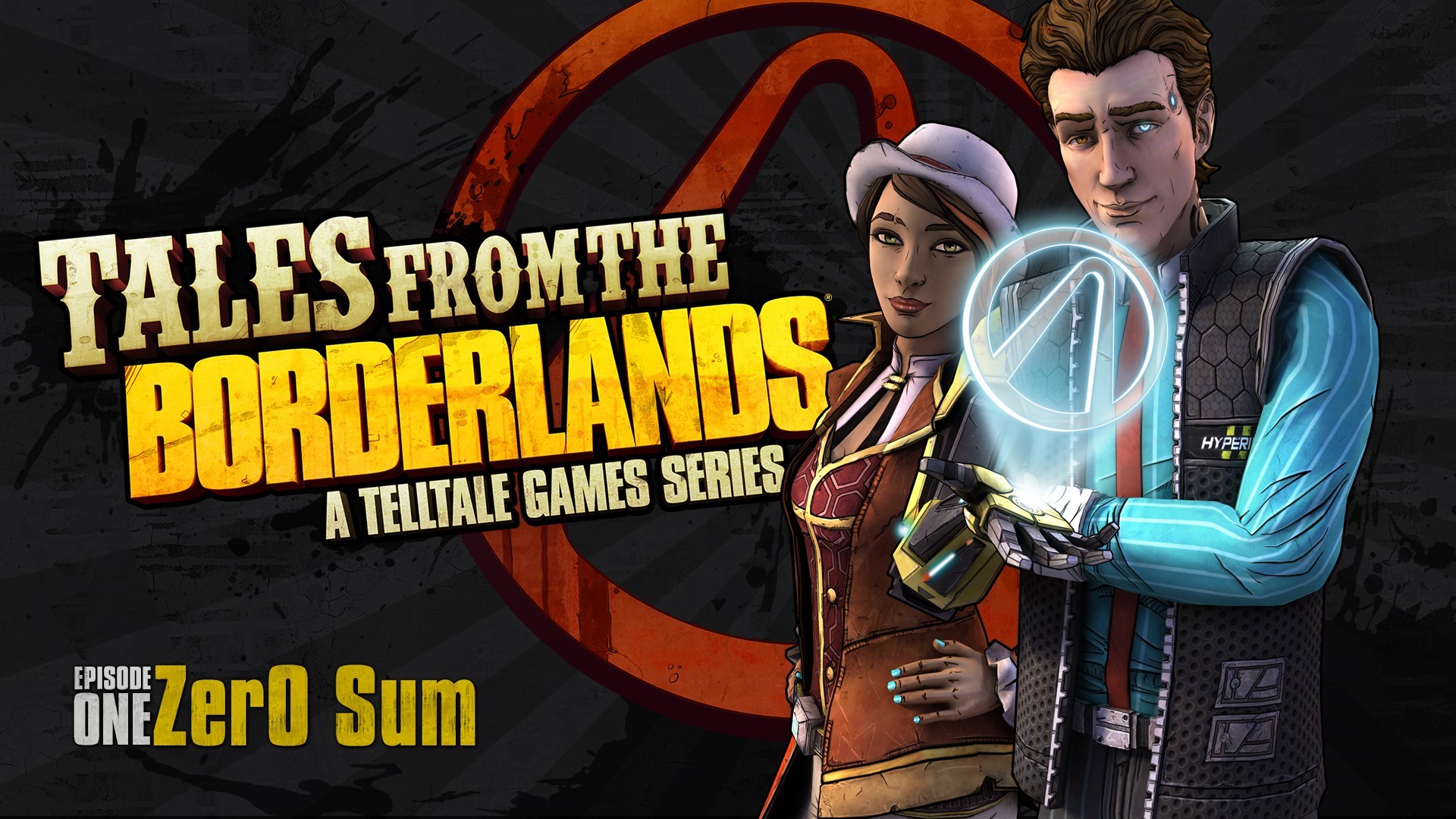
Tales From the Borderlands - Episode I: Zer0 Sum

[Tales From the Borderlands - Episode I: Zer0 Sum, Telltale Games, 2K Games, 11/2014]

What-tale Games?


I'll be honest, until The Walking Dead, I'd never heard of Telltale Games, yet now they seem to be dominating the market on some of the biggest titles in all types of entertainment across the board. From The Walking Dead and The Wolf Among Us to Borderlands, Game of Thrones, and the upcoming Minecraft series, none of which has yet to receive anything below an 80 on Metacritic, Telltale has put together what may be the most impressive library of titles in recent memory. They're making EA look like a small, indie production company that just figured out how to make Hexic into a high definition game for the PS3. On top of their plethora of quality releases, Episode 1 cost a whopping $2.50, which is quite possibly the best deal in gaming since The Orange Box. 


Choose Your Own Adventure...Wizard or Warrior?


One of the new gameplay additions that makes this Borderlands game different from the others is the ability to affect the outcome through decisions you make throughout the game. Unlike other games where your decisions can alter the plot, your decisions about how to respond to situations immediately effect how other characters feel about you and parts of the story as immediate as the following scene.

Is This REALLY a Borderlands Game? 


While making game-altering decisions is a great new addition to the gameplay in Borderlands, Episode 1 just didn't feel like a Borderlands game without the massive arsenal at your disposal, discovered and earned through hours of tireless grinding and mission completion. Although it's pretty clear the future episodes will contain plenty of the old-style FPS game mechanics that made the first three games so much fun to play, but they were sorely lacking in the first go-around in Telltale's 
Borderlands product. It's good, don't get me wrong, but it just doesn't have the feel of the Pandora we've all come to know and love. 

So If It Doesn't Play Like a Traditional Borderlands Game, How DOES it Play?


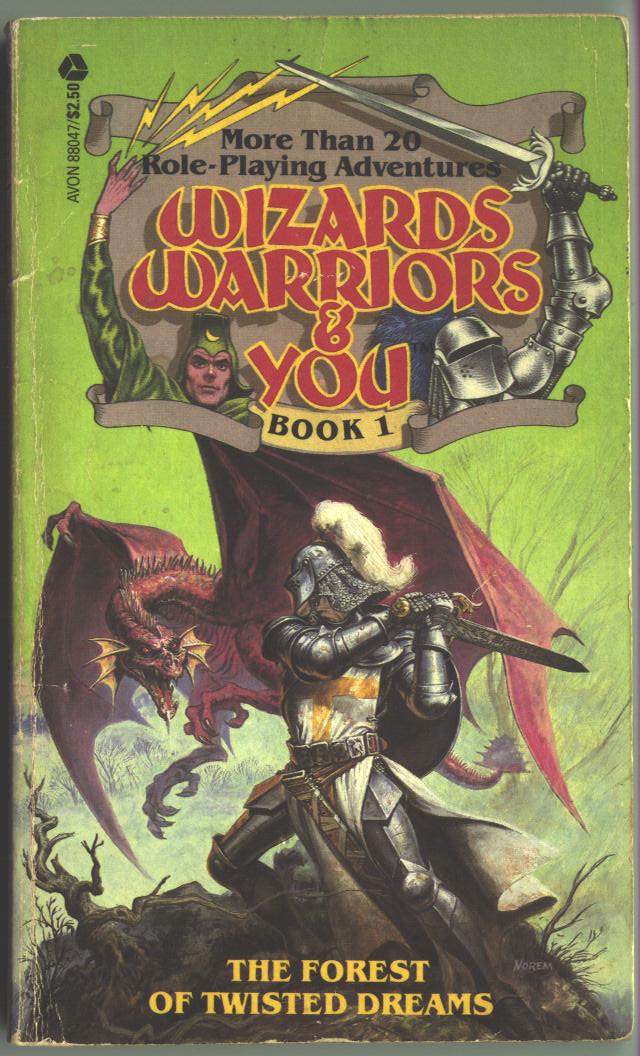
It honestly did remind me of those old Choose Your Own Adventure books, except you couldn't go back and switch to the other outcome if you didn't like what happened as you could with the books. Once you'd spent that ammo or made that other character angry, you were stuck with the repercussions. On top of that, you didn't get much time to consider your responses, like maybe five seconds, tops. Not only does this add to the sense of immediacy each time you are presented with a challenge but it raises the replayability significantly. This is due to the fact that you want to find out what would have happened if you had just been nicer to that one character or showed more of a spine with another. Although it felt as though many of the "choices" were just going to end up with you getting insulted no matter what response you chose, there were plenty that definitely affected how the game progressed. It will be interesting to see if they carry over your decisions from the first episode into the next four or if the decision-making effect is limited to each episode. Hopefully it's the former. 

A Little Bedtime Story


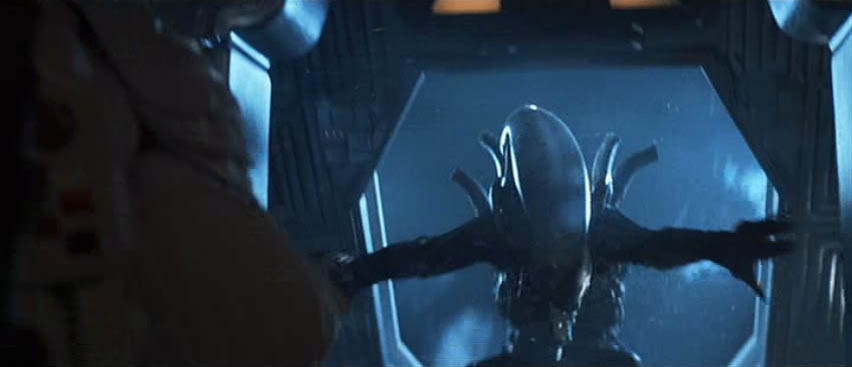
As usual, I don't want to get too far into the story line so as not to spoil the game for those who have yet to play it. I have to supply a little bit of backstory, but to give away the ending would probably get my figurative Interwebbian head chopped off by crazed jihadi gamers. To that end, I'll just give you the setup and some critique and let you decide if it's worth a play or not based on that. You start the game as Rhys, a lower-tier suit-and-tie at Hyperion who has dreams of middle management. However, instead of the raise and promotion you were expecting, you quickly learn that your former boss has been "Blown out of the g@&&^m airlock," to borrow a phrase from Aliens, and replaced somehow, repercussion free, with your arch-nemisis Vasquez. 


Needless to say this doesn't do good things for your career, with you ending up as Vice President of Janitors. You and your sidekick, Vaughn, come up with a quick plan to get back at Vasquez by stealing a deal he has set up to purchase a vault key for $10 million. Things get a bit off track from there and you end up trying to salvage what you can from the leftovers. 

At the same time, Fiona is a con artist that lives on Pandora alread. Rhys is lucky enough to at least live on the space station where there are working toilets and people don't eat one-another's eyeballs. Fiona is working with some other shady characters trying to set up the deal for a Vault Key planet-side. However, all hell breaks loose and you're being dragged through the desert that looks strangely like the male version of Princess Leia's bounty hunter from Jabba's Palace in Return of the Jedi. You know, the one that's holding a thermal detonator and says, "Yoto, yoto." 


"Where am I?"
"Jabba's Palace." 
"Who are you?" 
"Someone who loves you!" 

Anyway, sorry for the Star Wars flashback. Back to the game. While I will admit to being a bit disappointed with the lack of a real control mechanic and firefights, the place where this game really shines is in its story. Whereas Borderlands 1 and 2 seemed to be a bit disjointed at times when you got off on a side quest run for a few hours, Tales From The Borderlands never suffers from such side trips off the main course. Telltale Games was free to focus on creating a top-quality story set within the Borderlands universe, and they squeezed every ounce of goodness out of the opportunity. This game is fraught with the irreverent, sometimes dark humor of its predecessors. Where it lacks in control scheme, it more than makes up for with a hilarious and overwhelmingly engaging tale of Pandora and its unique and often freakish inhabitants. The only real problem I have with this game is waiting for the next installment to come out!


The Math

Objective Score: 9/10

Bonuses: +1 for having possible the best Borderlands story to come out yet and leaving me starving for more.

Penalties: -1 because, come on, Borderlands is a first-person shooter. I can count on one hand the number of times I fired a weapon in this game. Heck, I'd still be able to count the shots on one hand if half my digits got sheared off in a thresher accident at age nine. I know there are guns coming to the series from hints in the story, but I was a bit disappointed in the almost total lack of them in this episode. 

Nerd Coefficient: 9/10. A standout in its category. Very high quality. You should REALLY go buy this game, especially for just $2.50! If you don't like it, I'll personally refund your money. 

(But not really.)


Friday, January 9, 2015

Microreview [book]: The Galaxy Game by Karen Lord

Hard to Play


Does every book need to follow the typical story structure? Protagonist vs antagonist. A hook, building action, climax, resolution. Some sort of conflict or struggle that ultimately ends in growth or death. These are the types of things I expect in genre fiction. Don't expect any of these going into The Galaxy Game.

The Galaxy Game is about three friends: Rafi, Ntenman, and Serendipity. They all live at the Lyceum, a sort of boarding school for the psi-gifted, and they are all aliens. Or maybe they're human, but certainly from different planetary backgrounds. Rafi is Cygnian (sort of generic sapient being), Ntenman is Ntshune (social networkers, fast-talkers, gossips), and Serendipity is Sadiri (calm, reserved). Rafi is a psi talent, but something's wrong with him so the Lyceum wants to hold him down with a "cap". Ntenman isn't so gifted, and somehow well-traveled for his age. Serendipity isn't a student of the Lyceum, and both boys are attracted to her, despite her indifference.

The Game of The Galaxy Game is some sort of competitive rock climbing with a team, a team leader who guides the players, and a wall of differing pockets of gravity. Ntenman puts Rafi up to playing it and he just kind of sucks. Then Rafi runs away (or just kind of casually strolls off, because no one in particular seems to care except for the Ntenman) to escape the Lyceum and ends up on another planet with Ntenman. This planet is ruled by social networks. Rafi makes friends through playing The Game as a team leader, Ntenman makes friends in black market trading. This is 3/4ths into the book, by the way. Eventually they grow as people. Kind of.

Something bad happens, but it's more or less out of nowhere, and doesn't come across as particularly devastating. Rafi, Ntenman, and, to a lesser extent, Serendipity are around to help pick up the pieces. And that's it. I feel comfortable saying these things without risk of spoiling the story because it's hard to spoil. Not much happens. Or maybe a lot happens but there's no gravity to it (that's a space pun).

That's the problem with The Galaxy Game. It's either too long or too short. The pacing is entirely off for the whole book. I spent most of my time with it wondering both where it was going and when it would get moving. The surrounding universe in which it takes place is described with a lot of proper nouns, but nothing particularly descriptive. The three main characters (really, the two main characters) travel to alien planets and do things, but what they do is either too alien to properly describe, or I'm too dumb to have gotten a clear picture.

Rafi is so boring as to be non-existent. He spends almost the entire book as a fish out of water, which is great for us readers because it means everything has to be explained to us, but I can't describe who Rafi is. He just falls into everything that happens around him. Ntenman is the talker with something of a personality, but he doesn't do anything besides lead Rafi around. He makes some friends with Zhinuvians, who might be bad guys but not all of them. Even the Ain, a race who destroyed a planet far before the story begins, are non-existent in the big picture and redeemed in the end. The rest of the characters are too aloof to even begin to connect to.

It all feels like the book is a framework for more to come but, from the story told here, I don't feel the desire to keep going. It's all world-building, with no action or intrigue. It's names without faces and everyone is adjusting in their seat, and no one's position is challenged. When Rafi is (more or less) threatened with planetary deportation, it's from a friend of his aunt who is a space cop but won't do it for some reason. It's Star Trek's Federation of Planets without any Klingons, or Romulans, or schemes, or disasters. It's extremely hard to recommend, because it feels like I learned a lot about a world without stories.

The Math

Baseline Assessment: 5/10

Bonuses: +1 a seemingly diverse, alien universe

Penalties: -1 So bland that I can't describe any of it, -1 no conflict of note, -1 nothing earned or lost

Nerd Coefficient: 3/10 (Just bad)

***

POSTED BY: brian, sci-fi/fantasy/video game dork and contributor since 2014

Reference: Lord, Karen. The Galaxy Game [Del Rey Spectra, 2015]

Tuesday, May 20, 2014

Microreview [book]: Half Way Home, by Hugh Howey

Howey, Hugh. Half Way Home. 2010 (Print version: CreateSpace Independent Publishing Platform, 2013).
Buy the e-book here (on sale, apparently!).

The Meat


The short version: it's good enough, but Wool it ain't! 

My comments below, which might seem rather harsh at times, should be interpreted in light of the fact that I think the world of Wool and the subsequent books in that series; I wonder what I might have thought of this, apparently Howey's first effort, had I not had my expectations ratcheted up into the stratosphere by reading Wool first and expecting the same level of brilliance here. On the other hand, must we remain eternally chained by chronology, and be forever barred from unfavorably comparing, say, Picasso's Blue Period with his later work because it somehow isn't fair to judge an artist by earlier, more tentative efforts—will only a later masterpiece do?
But wait! Perhaps we should question the entire notion that the career of an artist necessarily follows a shaky/tentative early work->mature/brilliant later work trajectory? Isaac Asimov, somewhere in the Foundation series, had his mouthpiece emphasize the fact that (he believes) scientists are only really brilliant, only capable of exploding existing paradigms and so forth, when they're in their twenties; after that, creativity plummets, and scientists tend to settle down into more conventional patterns of thought. Might that not be equally true of literary artists?
And we should probably distinguish between two different types of quality, while we're at it: stylistic/writing quality versus the quality of ideas a given work presents. Elsewhere I tried to make the case that a writer's first work is likely to be very high in the latter, ideational category, especially when contrasted with sequels set in the same world or following the same characters. But as for the former, a first book might not be particularly well-written, since in this technical sense, at least, writers (or painters, etc.) often have plenty of room to improve over the course of their careers.
So why do we read books/look at paintings/watch movies? There are doubtless many reasons, but I at least give more weight to the content/ideas of a given work than its technical perfection. I'm not trying to deny there can be plenty of pleasure in a well-crafted but essentially vapid story (I enjoy Michael Bay movies: Q.E.D.!), or that ideas by themselves are somehow more entrancing than ideas when packaged in slick action scenes or what have you (I like the breathtakingly beautiful first eight minutes or so of Melancholia a lot more than the equally philosophically fascinating but less visually stunning rest of the movie, because I like pretty things!). I only mean to say that, on balance, ideas are (or should be?) more important than technical wizardry.
Since it was his first book, we might expect Half Way Home to be somewhat inferior in writing style and so forth to Howey's later works like Wool, and sure enough, it is—the dialogue is a bit less snappy, the descriptions less vivid/emotive. But great ideas can cover all manner of slight imperfections like that. Trouble is, I'm not sure the ideas at the center of the story are great enough to do so; they certainly aren't *as* great as those behind the Silo saga.
That said, the story is certainly engaging, and plenty interesting. It concerns one possible (if, I would say, rather improbable) model for human colonization of other worlds, when such colonization is under the purview of an entity eerily similar to the villain placing 13th on the AFI's all-time list. One can detect a glimpse or two of Howey's brilliant 'What if...' approach to science fiction (brought to glorious fruition in Wool) here, as many of the parameters of the story are fascinating. But the characters, particularly the first-person narrator, don't have quite the vitality of our Wool-en friends, and their trials and tribulations are consequently less emotionally engaging. Moreover, I found it quite difficult to swallow the idea that some humans would willingly ally themselves with "Colony" (the AI) after seeing such stark evidence of what it was capable of (think Shia LaBoeuf's Eagle Eye, not the much better Asimov story on which it is extremely loosely based), even though it's an interesting thought experiment.
Does all this mean that you should skip this and go straight to the Silo saga? Not at all—you should do what I say, not what I did, and read this one first, *then* graduate to the main course in Wool.


The Math


Objective Assessment: 7/10

Bonuses: +1 for conjuring up an intriguing thought experiment about human colonization

Penalties: -1 for not managing anything like the polished style (or, more importantly, the brilliant ideas at the heart) of Wool
  
Nerd coefficient: 7/10 "An enjoyable experience, but not without its flaws"

[Remember that a seven from NOAF is practically the equivalent of a 10/10 from many of the more effusive review sites or reviewers; see here for more information on our scoring system.]


Brought to you by Zhaoyun, sf/f book and movie aficionado and main cast member of Nerds of a Feather since early 2013.