Showing posts with label Boris Karloff. Show all posts

Monday, May 24, 2021

Genre Fight! Horror vs. Sci-Fi In Film: The 1930s

Welcome to the second installment of my series rounding up some key horror and sci-fi movies of a particular era, forcing them stare right at each other while standing too close together, and then making them duke it out. When last we met, the horror and science fiction genres were heading back to their respective corners, after horror decisively won Round One: the silent film era (1900-1929). The bell is ringing for Round Two — will science fiction even the score in the first full decade of sound film? Or will horror once again dominate the judge’s scorecard? Might there be controversy?

Let’s see who comes out ahead.

Genre Fight! 1930-1939

Sci-Fi: 1936 gives us a very interesting artifact — Things to Come, directed by William Cameron Menzies and written by H.G. Wells, himself. I discovered this movie many years ago and actually re-cut it into a music video for the first song on the first album by my then-new musical project, Sci-Fi Romance. I’m biased, I have a soft spot for it, but also, it’s a really cool movie. It envisions the coming of World War III, and the worldwide destruction that follows, sending civilization back to little more than the Stone Age. But from the ashes, mankind rises to ever greater heights, and the film features some top-shelf retro-futuristic visuals.


The 1930s overall give us something else that becomes a formative component of the visual landscape of sci-fi: the theatrical serial. Buck Rogers, Flash Gordon, and even the gadgetry of Dick Tracy may not have filled out feature films of the 1930s, but they were a key part of the moviegoing experience — along with newsreels and cartoons — and they helped shape the narrative and visual aesthetic of James Bond and Star Wars films to come, under whose shadows every big-budget tentpole movie of today lives.

But let’s be honest. The genre that is most closely associated with the 1930s — thanks primarily to two performers, a producer, and a studio working in concert — is horror.

Horror:
There's no mystery, here — the performers are Boris Karloff and Bela Lugosi, and the producer is Carl Laemmle, Jr., head of production for Universal Studios, which his father had founded. Working with directors like Tod Browning and James Whale, Laemmle made the decision to focus Universal's output on relatively inexpensive genre films during the early years of the Great Depression, and the studio produced a string of films that became synonmous with Classic Horror. Dracula (both the English and Spanich versions), Frankenstein, The Bride of Frankenstein, The Invisible Man, and The Mummy. I mean, books have been written about the Universal Monsters...many, many books. I don't need to elaborate.


But that's just the tip of the iceberg. The 1930s also brought Peter Lorre to the United States, and he starred in Mad Love, which was directed by fellow German ex-pat Karl Freund (who also shot Metropolis for Fritz Lang before coming to the States and shooting Dracula, directing The Mummy, and then essentially inventing TV studio production with I Love Lucy). Still in Europe, Carl Theodor Dreyer made Vampyr after his silent masterpiece The Passion of Joan of Arc. And speaking of H.G. Welles, his Island of Dr. Moreau was adapted as Island of Lost Souls with Charles Laughton.

But I hear some of you saying, "I thought Marty Shelley's Frankenstein is considered the first science fiction novel. So shouldn't Frankenstein be a science fiction movie?" You make a good point, invented naysayer. Frankenstein and Bride both have truly epic production design in the laboratories — the stuff of science fiction tropes from here to steampunk Victorian England and back. Yeah, good point. And, I mean, the movie James Whale made in between those, The Invisible Man, it's about a mad scientist...or at least a scientist whose work had the unfortunately side-effect of causing madness. And I guess in Mad Love, Peter Lorre plays a surgeon. Island of Lost Souls is about a doctor performing essentially genetic experiments. In a world that had only known that viruses were a thing for about the last forty years, a world where human flight was only a couple of decades old and the Jet Age was still beyond the horizon, science was not yet the massive portion of the zeitgeist that it would soon become.

So there's a lot of  overlap here. Too much for comfort.

The Winner: It’s a draw.

I know. I didn’t see it coming, either. But the 1930s present us with an earlier incarnation of a problem we face today, in the age of Peak Superhero. Is Jessica Jones a Neo-noir, or is it speculative fiction because of superheroes and mind control? Is it more one than the other? What’s WandaVision? What’s Frankenstein?

In the 1930s, there simply wasn’t a meaningful onscreen distinction between sci-fi and horror. They were treated largely the same way by the studios, in promotions and packaging, and shared the same talent in front of and behind the camera. At the bell that brings this round to a close, both of our battered combatants can return to their corners with their heads high. 

Posted by Vance K — cult film reviewer and co-editor of nerds of a feather, flock together since 2012; film nerd since the local UHF channel played Dracula and Frankenstein for Halloween, tinted blue and green, respectively, many, many years ago.

Tuesday, October 30, 2018

Frankenstein at 200: It's Alive

When I think of Frankenstein and The Bride of Frankenstein, I tend to think of them as a single, longer film that adapts the whole of Mary Shelley's source novel, although the two films were produced with some four years between them. And as indelible and enduring and influential as these films are, I have to wonder what kind of film we might have had if Colin Clive had not been crippled by alcoholism. This is selfish, certainly, to be handed a masterpiece and ask, "but what if...?"

Make no mistake: these two films are masterpieces. Masterpieces of horror, masterpieces of cinema. And they are masterpieces fitted together by a jigsaw of damaged human beings who continued the tradition, nearly 100 years on, of the outsider's love song that is Mary Shelley's Frankenstein, or the Modern Prometheus. And, believe it or not, here we are nearly 100 years later, looking back at these films. As I write this, the first film will soon be 88 years old. When I looked at the novel, I discussed some of the ways in which we are still wrestling with the themes that animated Shelley's 1818 work. When it comes to the films, though, the actual documents have less on the surface to do with ongoing human struggles of privilege, responsibility, accountability, and monstrosity, but many of those topics still roil under the surface of these films. What elevates the movies, in my mind, are the performances of Boris Karloff and Colin Clive under James Whale's direction.

Ernest Thesiger (L) and James Whale (R)
First, a quick look at the technical aspects of James Whale's direction. For an easy comparison, watch Tod Browning's Dracula and then Frankenstein. Browning's shots are almost all locked down, and treat the material like a stage play. This was common in the silent era, but directors began to innovate past it with moving cameras and using tracking shots to move through scenes in depth. But the advent of sound film set all that back again, due to the need to hide microphones in the scenes. You'd think from watching Dracula that directors might have still been limited in those ways, but Frankenstein gives the lie to that. There are gorgeous, subtle tracking shots, like the one that follows Henry Frankenstein and Fritz out of the graveyard shadows to the fresh earth they are going to dig up for body-harvesting purposes. And there are numerous extreme tracking shots. Some help convey the urgency of hunting for the creature in the Frankenstein home, shots that go through walls and from one room to the next to the next in single, unbroken takes. Another is the agonizingly long tracking shot that follows Maria's father at he carries her drowned body through the town as it prepares for a wedding feast and celebration.

Then, there are the performances. For all of the talk of "monster" and "creature," Boris Karloff does nothing but humanize the role he inhabits. There are the big moments, like when he reaches for the sun the first time he sees it — craving light in a metaphorical and literal sense — and the small, almost imperceptible moments, like when he pets Maria's small hand, marveling quietly at its perfection, in contrast to his own scarred hands. As lovely and engrossing as I find Karloff's performance in Frankenstein, it is in Bride of Frankenstein that he is permitted something not seen in any of the other Frankenstein films (Son of.., Ghost of..., House of...): he speaks. Karloff's wordlessness helps carry scenes like the famous moment in which he comes upon a hermit's hut in the forest, and two lonely souls find solace in each other's company (again, notice Whale's direction here in the slow dissolve out of the scene), but his joy at being able to begin making himself understood helps fully realize this character. Abnormal brain or no, this is a living being that simply wants to enjoy the company of others and not be tormented because of his appearance and the fears of others. I so connected with Karloff's performance in these moments that I wrote a song about it.

Boris Karloff and Colin Clive
 A decade before I did that, though, I wrote a different song inspired by Colin Clive's performance. There is a deep sadness in Clive's performance that has always struck me as conveying the weight of all that was lost in the gap between his ideas and their reality. The quest to stave off death, prolong life, and cure disease is certainly a noble one, although the introductions to both Frankenstein and Bride couch the doctor's obsession in terms of attempting to play God. I tend to think of this spoken moral more as a way to appease the censors of the time than the actual thrust of these films, but that could just be me. I find Clive's portrayal of Henry Frankenstein to be a deeply empathetic one, and the filmmakers have eliminated so much of what I find distasteful in the character of Victor Frankenstein from Shelley's novel. In the film, the doctor does not turn his back on his creation because of a shocking appearance, nor does he abdicate any responsibility toward it in favor of simply returning home to his former, aristocratic pursuits. Clive's Frankenstein agonizes over what to do with his creation, whether or not it can be taught, or helped, or made to understand. Yet his efforts are undercut by man's inhumanity to the other...first and notably by Fritz tormenting the creation with lit torches. Colin Clive's Frankenstein recognizes what Whale tells us implicitly in a lovely sequence of shots at the end of the first film, with Frankenstein and his creation looking at each other through the spinning mechanism of the windmill. Reflections of one another. Their fates bound together.

Clive's quiet intensity exists only in the first film, however. By 1935, the actor's alcoholism had purportedly advanced to such an extreme state that it isn't any wonder he spends most of The Bride of Frankenstein propped up in bed. He died less than two years later, at only the age of 37. As a result of Clive (and his character) being sidelined, much of the heavy lifting in the movie falls on the very odd shoulders of Doctor Pretorius, played by Ernest Thesiger. Pretorius is a deeply strange character, who I admit has grown on me, but it took a minute. What has not grown on me is the shriekingly hysterical performance of Una O'Connor. She was a longtime friend of James Whale, so I appreciate him giving her the work, but almost the first ten minutes of Bride revolve around her shrieking from one person to another about this and that. I'm reminded of the line in Ed Wood when Ed's financiers ask why he gave Tor Johnson all the lines, and Ed replies, "Lugosi's dead and Vampira won't talk. I had to give the lines to somebody." I cannot help but wonder what that film might have been with a more-active Frankenstein, but then, who knows? Maybe we would not have gotten the charming introduction featuring Elsa Lanchester as Mary Shelley herself, explaining that the story continued past the burning windmill. Who can say?

My favorite picture of Elsa Lanchester
One thing I must point out, however, is that the credits for Frankenstein read, in part, "Based on the novel by Mrs. Percy B. Shelley." This is abhorrent, even for 1931. To Whale's credit, as my wife pointed out, in Dr. Waldman's anatomy class at the university, which is shown near the beginning of the film, the students are both men and women, which had to be a conscious choice, and possibly one that somebody fought for. I can think of a number of other films with similar scenes (some of which I've reviewed for this site), and this is one of very few I can think of that features a co-ed science class.

In the end, I confess I enjoy the Universal Frankenstein movies, even those that came much later, and after a few other actors donned the flat head and neck bolts. I find Bela Lugosi very fun to watch as Ygor in both Son of Frankenstein and Ghost of Frankenstein, and enjoy spotting the same three or four actors cropping up in different roles throughout the series. But it's the first two films that created, cemented, and deserve the legacy of the Frankenstein tale. While shaving off some of the thematic elements that I think make the book resonate even today, they nevertheless provide a relatively faithful adaptation that succeeds on its own substantial merits.

Posted by Vance K — cult film reviewer and co-editor of nerds of a feather, flock together since 2012.

Monday, February 20, 2017

The Roger Corman Interview

Roger Corman has been, arguably, the single most important voice in the history of independent cinema. It was an absolute honor to be able to sit down with him in his office to discuss his new film, Death Race 2050, and specifics from a career that spans seven decades.


For the uninitiated, Roger Corman began writing, directing, and producing in the mid-1950s. He launched the careers of actors like Jack Nicholson and Peter Fonda, and revived or reinvigorated the careers of Vincent Price, Peter Lorre, Boris Karloff, and others. As a producer, he gave directors like Ron Howard, Martin Scorsese, Francis Ford Coppola, Joe Dante, and James Cameron their starts in filmmaking. He worked extensively with writers such as Twilight Zone alumni Richard Matheson and Charles Beaumont, who were also seminal sci-fi and horror writers in their own right. His distribution company won foreign language Oscars for the films of Ingmar Bergman and Federico Fellini.

But at the end of the day, this is a guy who just made a lot of great movies. From the 1950s beatnik satire A Bucket of Blood to the 1960s Edgar Allan Poe adaptations, to the 1970s punk hallmark Rock n Roll High School and beyond, Roger Corman may have spent a career working with low- and medium-budget films, but he managed to create lasting art, documents of the times, and just goddamn fun movies, and he continues to do so.

If you haven't, check out Death Race 2050, streaming on Netflix and on DVD and VOD or watch the original, Death Race 2000, on DVD or streaming on FilmStruck. And enjoy the interview. I sure as hell did.

Posted by Vance K — co-editor and cult film reviewer for nerds of a feather, flock together since 2012, musician and songwriter, and Emmy Award-winning producer.

Tuesday, October 28, 2014

How Classic Horror Continues to Inspire

Regular readers may know that I have an abiding love of classic horror movies, and some may also know that I am the singer and songwriter for the alt-folk band Sci-Fi Romance. This month, those two things came together in a way that, I have to admit, surprised me, when I found myself writing, recording, and releasing an EP of new songs inspired by a half dozen of those movies.

See, every October, my wife and I stock up on Fall seasonal beers, turn the lights down, and watch as many old horror movies as we can. The classic Universal monsters, Roger Corman and Vincent Price, Boris Karloff, Mario Bava, maybe Sam Raimi, the old micro-budget RKO pictures produced by Val Lewton, drive-in oddballs, and anything else that may be tangentially related or catches our eyes. This year, the first movie we watched was Corman's The Fall of the House of Usher, and while we were watching it, I got a weird, fully-formed idea completely out of the blue.

"Why don't I write a song for each movie we watch, dig up my old four-track cassette recorder I haven't touched in over 15 years, record the songs immediately after I write them, and put the whole thing out for free?" Yes. Why wouldn't someone do exactly that? Nostalgia upon nostalgia, and all my nerd buttons pushed simultaneously.

The thing that did it, I think, that sent me in this odd direction, was that for the first time I understood the humanity in Usher's decision to bury his sister alive. My experience of these films — many of which I saw for the first time when I was a kid — was one of sensationalism and spooky atmospheres, and something that fit in with my regular diet of Scooby-Doo and Adam West as Batman. You know, some crazy person in an old castle with lots of old candles and spiderwebs, and a bland dope who wanders into a bad situation they can't comprehend, before everything catches on fire and burns down 90 minutes later. So admittedly, much of my continued enjoyment of these films is nostalgic. Some of it comes from an increased appreciation for the craft of the actors and filmmakers involved, who were so evocative and (usually) inventive with very limited resources, either financial or temporal. But sometimes my enjoyment of them suddenly leaps beyond all of that, when I make a profound emotional connection with a character that everybody thinks is nuts.

This first happened a dozen years ago when I re-watched Frankenstein. I had long admired Karloff's performance as the monster, of course, but this was the first time I had really felt Colin Clive's Henry Frankenstein. Clive was a drunk who died in his thirties, so who knows how much of the haunted, longing pain in his eyes was acting and how much just followed him around everywhere he went. But man, it hit me, and I wrote a song about it. Now here it is 12 years and who knows how many bands later, and I had the same thing this time with Vincent Price in Usher. Just like it had before, that connection made me want to write a song.

And that turned out to be the key. I suddenly watched these movies with an entirely different outlook, realizing that these classically trained actors, who had all done Shakespeare and Ibsen and all of this had had to find an emotional way into these characters to ground their performance at the center of all this great atmosphere, set design, and macabre plot elements. I'd always found the 1931 Dracula to be bizarre, with Dracula's casual strolling about among people who know he's a vampire and have sworn to stop him. But this time, I asked myself why the hell he left Transylvania in the first place, and the answer made everything else fall into place: he was desperately lonely. He wants to be around people, he's used to unquestioned dominion, and he doesn't perceive a threat from Van Helsing and the dopey Jonathan Harker. Also, Dwight Frye's performance as Renfield is amazing.

I couldn't watch Dracula and not watch Ed Wood, and the fundamentally joyous soul of that movie has always spoken to me. Ed's response to being told he made the worst movie someone's ever seen is "Well, my next one will be better!" for Pete's sake. That song came easily. Karloff was kind enough to explain straight out in The Body Snatcher the reason behind his seething creepiness, which was that as a low-class, forgotten cab driver he had managed to get and hold sway over a powerful, well respected physician and medical professor, and he would do absolutely anything in his power to keep that sense of power and meaning. In Bride of Frankenstein, we watch Karloff's monster grow in his humanity and fill up with an aching pathos, like Dracula, seeking connection. His longing for it gave me a chance to write what I consider both a very funny and a very sincere song. It's a celebration of possibility, but since we know how the story ends, the context gives everything a very different meaning.

Finally, for what was probably my favorite song on the EP, I tackled Corman's Masque of the Red Death, which is my favorite of the Corman/Poe/Price movies. It has the most going on, and is to me the most interesting because of what is actually a pretty acute exploration of human nature. I had no idea what to write about, where to hang my hat, as it were, for a song about this movie. And then I saw the sadness with which Hazel Court portrayed Juliana, Prince Prospero's mistress, who had always resisted committing her path to unrepentant evil, as he had. I loved her performance, and hope I did it justice.

Our world is different now, and today a lot of violence comes out of nowhere. It is sudden, profound, and often committed outside of context. People with mental illness fire into crowds, terror attacks come out of nowhere, and we worry things like GMOs and technology may ultimately harbor us ill will. Horror movies of today have come to reflect those fears. For several years, most mainstream horror movies were simply sadistic parades of people being killed brutally for reasons that remained at arms' length, and now zombies have gnawed their way to the top of every medium's genre output. I think these earlier films, despite a lack of special effects, despite their limited budgets, and despite much actual onscreen violence, used what they had, which were their gifted casts. Products of a different time, they told different kinds of stories — fundamentally human stories — that might not get the recognition they deserve. I can't imagine writing a song about Paris Hilton in House of Wax, but I could write one about Henry Jarrod as played by Vincent Price. Beneath the arched eyebrows and pencil mustache, there was more of me.

October is available as a free download here. Happy Halloween, everybody.

Posted by — Vance K, cult film aficionado, lover of terrible movies, and resident baritone at Nerds of a Feather since 2012

Wednesday, November 20, 2013

Mario Bava on Netflix


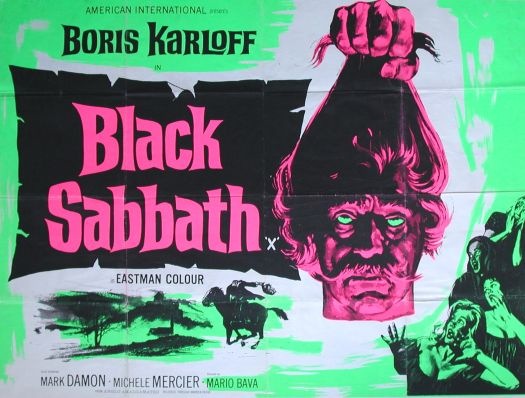
I have a soft spot in my heart for the 1963 Italian horror film Black Sabbath, directed by Mario Bava and from which the legendary band took its name. I first watched it on my fifteenth birthday, with a group of friends late at night after discovering that our local independent video store (International Video, it was called), had a VHS copy. It's a horror anthology film, with three separate closed-ended vignettes, and while watching it I eerily predicted the ending of one of the segments with a frightening level of detail, down to guessing the name of the "evil" character revealed at the end of the segment. It was creepy. Everybody looked at me funny and I had to swear I'd never seen the movie before. It was one of those odd moments where time seems to swallow its own tail.

I've seen both the American and Italian versions a few times in the intervening years, and a few weeks ago, just before Halloween, I had another urge to re-watch the movie. I was happy to find it on Netflix, and this discovery led me to another one -- the films from an out-of-print DVD series called The Mario Bava Collection have all found their way onto Netflix. So I've spent the last couple of weeks watching A LOT of Italian horror movies from the 1960s and 70s. It's been a lot of fun.

Mario Bava was a filmmaker who was imminently worthy of a two-volume "collection," but he isn't particularly well-known outside of die-hard genre circles. He was important in the evolution of several genres, so there's certainly a film history kind of appeal to watching his movies, but he was also an original and highly entertaining filmmaker, whose films continue to be evocative and engaging even when completely divorced from any historical significance they may have. He came of age in the Roger Corman horror-movie heyday of the early 1960s, tackling the kind of gothic horror films that were making Vincent Price an icon, and Bava went on to help shape the horror/thriller hybrid giallo films that came to embody much of Italian cinema in the 1970s and launched the careers of directors like Dario Argento.


Now we come to which of these films are available on Netflix for instant streaming. Black Sunday (1960) is one of these gothic horror stories, and it's a total standout among its peers. It starts with a witch being burned at the stake and having a mask of the devil nailed to her face (which is badass), and then leaps forward a couple of hundred years, when the witch's spirit grows restless. Black Sabbath, which I already mentioned, has Boris Karloff as a vampire (or, more specifically, a wurdulak), and features a genuinely moving and heartbreaking scene where a character has to confront what it costs to be a survivor among so many that have fallen under an all-consuming supernatural curse. One of a number of similar horror triptych films of the same vintage, it ranks among the best. The same year, Bava made The Girl Who Knew Too Much (1963), which was his last black and white film and is universally regarded as the first giallo film. It's not a great movie, and hews much more closely to the prototypical Hitchcock thrillers from which is cribs its name than to later (and bloodier) giallo films, but it has some genuine moments of humor and an interesting premise (a girl who reads too many murder mysteries thinks she witnesses a murder in front of the house she's staying in while visiting Rome), even if the mystery itself is kind of lame.

There are some Netflix gaps here in Bava's filmography, and the available titles pick up at the end of the decade, when Bava had fallen on hard times and was struggling to find distribution for his movies, but still managed to make interesting and visually striking films, even if they struggled at the box office. Bava used color to wonderful effect, and if some of his signature camera moves like zooms (so, so many zooms) and artistically out-of-focus shots lose a little of their appeal, his saturated color palettes never do. Movies like Hatchet for the Honeymoon (1970) don't necessarily hang together from start to finish, but they are beautiful to look at and have amazing sequences in them, such as a ghost that everybody except the killer can see. It's great stuff, and Bava would continue to jam non sequitur sequences into his later films, like Bay of Blood (1971), where he essentially invented the slasher movie ten years before its heyday by sending four horny teenagers to the woods and hacking them to bits in the middle of an entirely different plot about the murder of a wealthy dowager who has remarried and has people after her money. And yes, it is as awesome as it sounds.

After the success of Bay of Blood and a couple of other early 1970s hits, Bava regained total creative control over his movies and decided to make a surrealist tone-poem of a horror movie in Lisa and the Devil (1973). Telly Savalas maybe isn't the most convincing evil mastermind you've ever seen (especially if you remember Phil Hartman's parody of Telly on SNL for the "Player with Yourselves Club"), but the movie remains an engrossing and totally bizarre experience, even 40 years later. To try to piggy-back on the success of The Exorcist, the American distributor re-cut and re-titled the film The House of Exorcism, which is nearly unwatchable garbage, though, so stick with the Italian version.

I can't recommend these movies highly enough, and have to say it's one of the most consistent pockets of goodness I've found in Netflix's streaming offerings. There are a few other titles that I watched and haven't mentioned, and a couple more that I didn't get to, but Bava's output was never dull, and his films are uniquely entertaining. Check 'em out.

Tuesday, June 25, 2013

Richard Matheson, Rest in Peace. (1926-2013)


On Sunday, June 23, we lost a titan when Richard Matheson passed at the age of 87. When we lost Ray Bradbury, I wrote a piece memorializing him, so to not do so for Matheson would be a dereliction of duty, a shirking of my well meaning nerd blogging responsibilities.
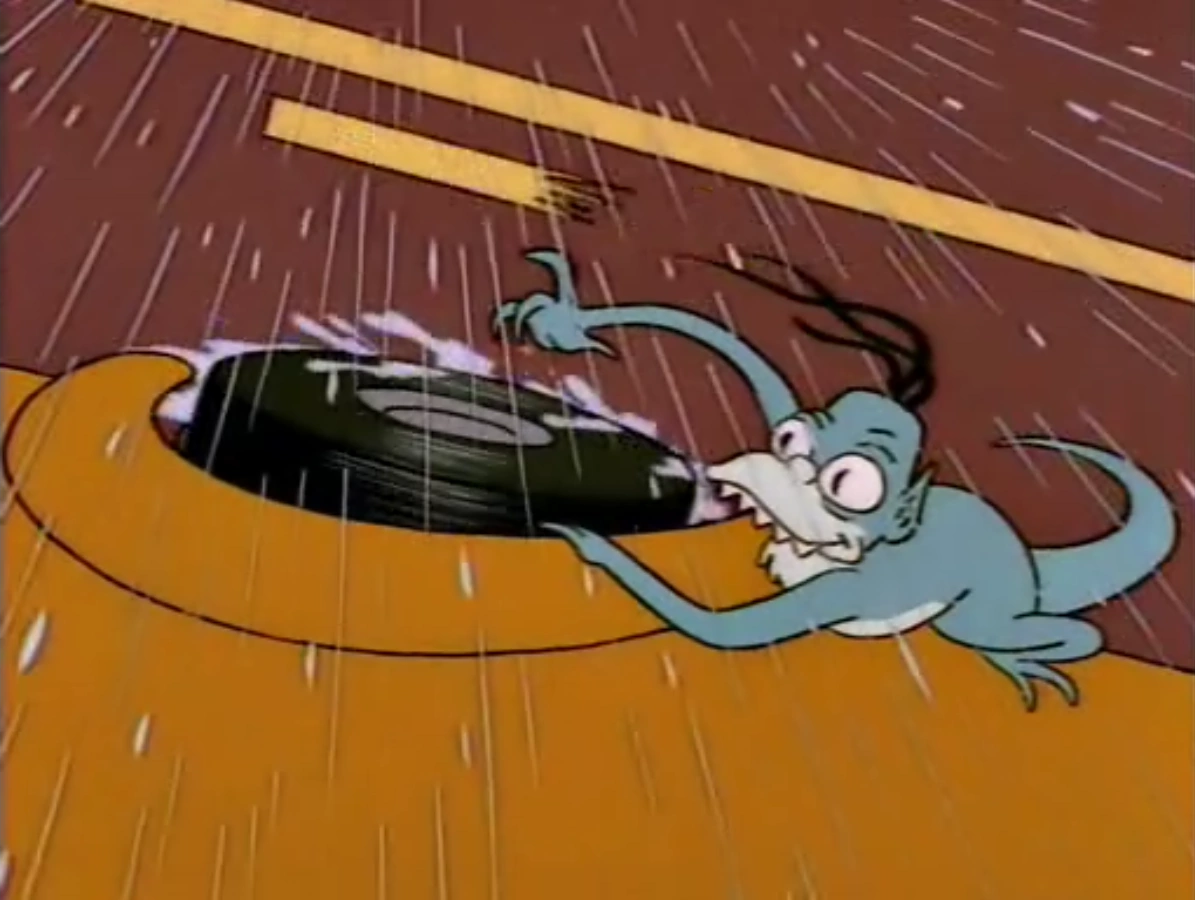
Also, Hans Moleman driving an AMC Gremlin.
Like Bradbury's, Matheson's output was prolific, diverse, and influential. His name, however, was not as widely known. When I discovered him in my early 20s, I was shocked to learn that I had already known a great deal of his work, and that it had all come from the same mind. Richard Matheson gave us more pop culture sci-fi hallmarks than arguably anyone else ever has. William Shatner losing his mind in an airplane after seeing a gremlin on the wing in The Twilight Zone episode "Nightmare at 20,000 Feet" (and the amazing Simpsons' Treehouse of Horror parody "Terror at 5 1/2 Feet"), a panicked father hearing his daughter's disembodied voice and unable to reach her in "Little Girl Lost" (and the amazing Simpsons' Treehouse of Horror parody "Homer3"), and many other non-Simpsons related moments such as zombies.

Yep, zombies.

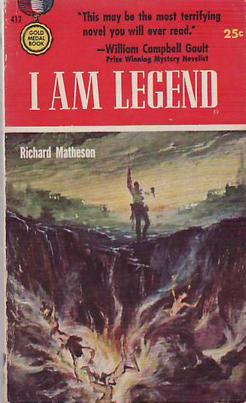
Here's where things get really interesting to me about Matheson's legacy. In 1954, Matheson published a very, very cool book called I am Legend about a scientist who appears to be the last living man on earth and spends his days killing members of the horde of zombie-vampires that torment him and now roam the city in the wake of a global plague that reduced humanity to insatiable carnivorous automatons. Starting with the 1964 Vincent Price picture The Last Man on Earth, there have been three adaptations of the book, including Charlton Heston in 1971's The Omega Man and 2007's Will Smith picture I Am Legend. I will intone in my best old man voice that none of these are nearly as good as the book, either in their plot, character development, or overall emotional impact. But for Matheson, the most faithful adaptation of his book was an uncredited one -- George A. Romero's Night of the Living Dead, which we can all thank for every modern zombie story since 1968, and which Brad Pitt can thank for giving him the biggest box office opening of his career. World War Z and I am Legend are almost totally compatible, and the story of Matheson's Robert Neville and his heartbreakingly misguided quest could just as easily be a series of journal entries in Max Brooks' epistolary novel.

Zombies have been around since ancient times, but Matheson codified in a single work (that is usually characterized as a vampire novel) almost all of the hallmarks that we now consider to be fundamental to the zombie genre. The plague/epidemic, the mindless hordes that want to eat the living, the isolated hero against an onrushing wave of non-humanity. All that. But he also advanced the haunted house genre, in print and on film, as I discussed in my review of Hell House, helped bring about the supernatural/psychological thriller genre with Burn, Witch, Burn, which I also reviewed for this site, and gave Boris Karloff's career a lovely, and loving third act through a series of films with Roger Corman. He also helped launch Steven Spielberg's directing career, which is nice, since our lives would all be slightly more empty without Indiana Jones in them (not Matheson's character).

I think I probably have more films/TV shows on my shelf written by Richard Matheson than by any other writer. I think I have reviewed more films written by Richard Matheson on this site than I have any other writer. If you have not read him or sought out his films, treat yourself to them.

Richard Matheson, you were Legend.

Monday, April 29, 2013

Alert! Cult Movie Titles Expiring from Netflix

Just a heads-up for those of you who subscribe to Netflix Instant: This Wednesday, May 1, hundreds of titles are expiring and will no longer be available to view instantly. These include a ton of 1950s sci-fi and classic horror titles (many of which I've reviewed here at Nerds of a Feather).

Some of these titles include:
  • Gog
  • Invisible Invaders
  • Burn, Witch, Burn
  • The Call of Cthulhu (independent silent film from 2005)
  • Beyond the Time Barrier
  • Dr. Phibes Rises Again (campy Vincent Price classic)
  • The Flight that Disappeared
  • The Black Sleep
  • The Dunwich Horror (loosely based on the Lovecraft story)
  • Red Planet Mars
  • The Crimson Cult (Boris Karloff and Christopher Lee)
  • I Bury the Living (one of my favorite b-horror movies)
  • The Brain that Wouldn't Die
So stock up on Mountain Dew or Starbucks gift cards and start watching, folks. We're less than 24 hours away from B-moviemageddon!

Wednesday, August 22, 2012

Microreview [film]: The Body Snatcher


Val Lewton was in charge of the "horror unit" at RKO Studios in the early 1940s. He produced nearly a dozen genre-defining movies, saving the studio from financial collapse, launching the careers of several directors, and resurrecting (pun intended) the career of Boris Karloff in the process.

The Meat

The Body Snatcher is my favorite of all the Val Lewton movies. It may not have be influential as Cat People or as lauded in later years as I Walked with a Zombie, but for me it does eerie, skin-crawling atmosphere about as well as any movie of the period, whatever the budget or pedigree. The movie is based on the short story of the same name by Robert Louis Stevenson (of Jekyll and Hyde fame, of course), which was in turn inspired by the real-life serial murderers Burke and Hare, who sold the bodies of the people they killed for medical dissection.

The movie follows Dr. Wolfe MacFarlane (what a name, right?!?) as he rises in prominence and social station due to his success as a surgeon. But he's only able to gain the surgical insights necessary for his breakthroughs from his work dissecting cadavers. To get those puppies, he enlists coachman (symbolism?) John Gray, played by Boris Karloff at his most oily and sinister, to dig them up out of graves. But after a while, Gray decides to go for...fresher...specimens. A very interesting power struggle goes on between the two men, and it raises interesting questions about the moral imperative of advancing medical knowledge and at what cost, but doesn't linger on the questions, keeping the proceedings a fun diversion.

The Math

Objective Quality: 6/10

Bonuses: +1, for being the first movie directed entirely by Robert Wise, who would go on to become a legendary director and producer; +1, for Karloff's nuanced and caustic performance; +1 for being the final onscreen pairing of Karloff and Lugosi.

Penalties: -1, for the comically out-of-place sound cue that mars what would've been an otherwise haunting murder of a singer.

Cult Movie Coefficient: 8/10. Well worth your time and attention.

[See explanation of our non-inflated scores here.]