Showing posts with label high fantasy. Show all posts

Wednesday, January 15, 2025

Review: Long Live Evil, by Sarah Rees Brennan

A genre-savvy romp with heart and depth

There’s a bit of a trend going around SFF these days, a willingness to break the fourth wall and allow characters in books to resemble readers not only in demographic features (the traditional meaning of ‘representation’) but also in knowledge of the genre. Jill Bearup’s charming Just Stab Me Now (2024), in which an indy writer tries to force her characters to participate in tropes that they have too much depth for, is one. Another is Django Wexler’s hilarious How to Become a Dark Lord and Die Trying (2024), in which a woman caught in a portal fantasy time loop decides to use skills learned from video games, such as ‘slum-running’, to take advantage of her 1000 years of repeated experience. Dark Lord also engages with another trend that has always been bubbling away in our collective genre-consciousness: the idea that the bad guys might have something to say for themselves. This is not a new idea. Natalie Zina Walschott’s Hench (previously reviewed here on NOAF), an unflinching indictment of capitalism and US health care systems, came out in (2020). But it stretches back literally centuries. I first encountered it in the last century, when my elementary school teacher read to us The True Story of the Three Little Pigs by John Scieszka (1989). And some —including my mother, who taught Milton at our local university— have argued that Satan got all the good lines in Paradise Lost (1667).

So, drawing on this wealth of cultural history, Sarah Rees Brennan’s Long Live Evil is hardly a novel idea, but it is a moving, thoughtful exploration of it. We open with Rae, a young woman dying of cancer. Her medical care is about to bankrupt her family, and it’s pretty clear that she’s not going to survive anyway. Her world has narrowed to her hospital room and her visitors—who no longer include her friends (they deserted her when she became too much of a downer) or her mother (who works around the clock in order to stave off bankruptcy a little longer), but do include her little sister, her beloved littler sister. Her sister has been reading aloud to Rae from Time of Iron, the first in an epic high fantasy series that Rae started reading late in the game, mostly because her sister adores it.

Rae thinks the best parts of the series are the later books, when the love interest from Book 1 succumbs to his grief at the loss of his beloved, and becomes the Evil Emperor, who is just awesome. She never really paid much attention to Book 1, before all this evil descent kicks off, and even though her little sister is reading aloud to her now, she’s having difficulty —what with chemo-brain and dying— paying much attention.

Then a mysterious lady enters the hospital room and offers Rae a choice: she can play out this ongoing death, or she can enter the world of Time of Iron, acquire the magical healing flower of Life and Death, and return to her life in the Real World. She is not the first person to have been offered this opportunity, but she would be the first person to succeed. Hesitantly, Rae takes this unlikely one-in-a-million last chance, and steps into Time of Iron.

Unfortunately, she steps into Time of Iron in the middle of Book 1 —the one she’s not as familiar with— and worse, she steps into the shoes of Rahella, on the eve of her execution, which is the rightful comeuppance for her dastardly misdeeds. So Rae must, naturally, find a way to avert execution, assemble a team of minions, and get herself to the Flower of Life and Death on the one day of the year that it blooms—only a few weeks from now. And she must do it as the villainess. Since playing by the rules and trying to be good has so far gotten her nothing but a lingering death in a hospital bed, Rae decides to seize life with both hands, and be as selfish and evil as she can. Because evil is awesome. And also sexy.

This book draws heavily on familiar tropes from high fantasy, at two levels. On the outer level, the Rae’s-story level, we have the portal fantasy combined with the time-constrained Quest narrative for the Magical MacGuffin. This works very effectively to structure Rae’s actions and provide high-stakes life-and-death motivation throughout all the rest of the events of Long Live Evil. But it is merely reflecting pressures from the inner level, where the internal book, Time of Iron, which hosts Rae’s Quest, is almost entirely constructed upon a heavy scaffolding of more tropes upon tropes. We get snippets of this host-tale at the beginning of each chapter, and they are all very high fantasy. Everyone’s got descriptive epithets: The Lady Dipped in Blood, the Golden Cobra, the Last Hope, the Iron Maid; everyone’s plot arc tends toward misery; and although we only ever see Book 1, the series itself has so many books.

It all feels very Game of Thrones in its general vibe, but there are familiar elements from other traditions too. Fairy tales are one such contributor. The reason Rahella (as in-book villainess) is originally caught is because her victim —who is also her little sister— confesses her woes ‘privately’ to an oven, which somehow is connected to a room elsewhere where sympathetic ears can overhear. I’ve never quite understood how this architecture is supposed to work, but I recognise it from The Goose Girl, and I’m sure that this isn’t an accident. Then we’ve got Rahella’s punishment, which Rae’s first task is to avert when she steps into Rahella’s body: to be forced to dance in red hot shoes until dead. This fate was originally a punishment for Snow White’s stepmother in one of the bloodier versions of that fairy tale. Beyond fairy tales, we’ve also got some extreme Joseph Campbell going on. The rise of the Emperor is necessarily preceded by a trip to the Ravine, where the Emperor-to-be must vanquish the undead to gain his power, all very Hero’s Journeyishly. Then, at one point, musical theater makes an appearance.

There are a couple of ways to interpret this hodge-podge of familiar elements. One is simply that Time of Iron, like any high fantasy book, is part of a genre, and engages with conventions that we expect any competent genre writer to be familiar with. Palace intrigue, trips to the underworld, attacking hordes of undead monsters—these are the bread and butter of high fantasy books; and there is more than a bit of winking at how silly it can all get. The snippets of Time of Iron at the beginning of each chapter are all highly, highly purple. This is distinct from Rae’s own narrative, which is characterised not only by its genre-savvy recognition of the tropes and types around her, but also by highly effective meditations on the effects, physical, social, and psychological, of living through treatment of terminal cancer. Beyond writing style, the ways in which Rae’s experiences affect her interaction with this fantasy world are nuanced and thematically tight, because Sarah Rees Brennan is no slouch in the writing skills department.

But there’s something else going on here, too. When Rae is invited to step into Time of Iron, she is told that this world is real because people believe it is real. And as she starts to take action to further her own aims, she sees the world itself responding. She is able to change the story from the inside. And if she can, then so have other people who have been offered this chance to save their lives. Time of Iron, the book, is written by ‘Anonymous’; and as Long Live Evil unfolds, it becomes clearer and clearer that the whole story of Time of Iron may not be the tale of a single writer. Rather, it is a kind of joint consensus, constructed by the engagement of thousands and millions of readers, and also by the uncounted number of people from the ‘Real World’ who have had the opportunity to step into this world and change it, as Rae is doing.

In this way, Time of Iron itself is not just an internal, tropey, silly high fantasy tale that Rae, winking at the readers of Long Live Evil, is going to spank with her genre-savvy smarts. No, it is a love letter to high fantasy as a whole, and a love letter to the fans who jointly construct the genre, and who engage with it deeply, whole-heartedly, unafraid to fall in love and fight and grieve and live whole lives in this alternative reality.

The very structure of the book highlights this intent. At first, we see everything through Rae’s eyes alone. But as she becomes more embedded, as the other characters become less characters and more people in her eyes, we start to see the story through their eyes, eyes untainted by genre-savviness; eyes of people for whom this world, this rich, dangerous, beautiful, unpredictable world is the only reality they know.

This is the first entry in a trilogy, and so does not wrap up the story in Book 1. If that’s going to be a problem for you, please buy the novel now without reading it, or take it out from the library and return it unread, or request it from your library, or do whatever it takes to tell the publisher that this is loved and wanted and the remainder of the trilogy should be published. This is for us, friends. Brennan is reaching out a clawed fist with love and affection for our genre and us, the readers. It would be churlish to reject it.


Nerd Coefficient: 8/10: Well worth your time and attention

Highlights:

A love-letter to high fantasy
Genre savvy use of tropes
Nuanced, sensitive character work
Sexy, sexy evil 

References
Bearup, Jill, Just Stab Me Now [Sword Lady Books 2024].
Brennan, Sarah Rees, Long Live Evil [Orbit 2024].
Campbell, Joseph. The Hero with a Thousand Faces [Princeton University Press 1949].
Milton, John. Paradise Lost [Samuel Simmons 1667].
Scieszka, John, The True Story of the Three Little Pigs [Viking Kestrel 1989].
Walschots, Natalie Zina, Hench [William Morrow 2020].
Wexler, Django, How to Become a Dark Lord and Die Trying [Orbit 2024].

CLARA COHEN lives in Scotland in a creaky old building with pipes for gas lighting still lurking under her floorboards. She is an experimental linguist by profession, and calligrapher and Islamic geometric artist by vocation. During figure skating season she does blather on a bit about figure skating. She is on Mastodon at wandering.shop/@ergative, and on Bluesky at https://bsky.app/profile/ergative-abs.bsky.social

Thursday, July 11, 2024

Book Review: The West Passage by Jared Pechaček

A world peopled by creatures straight from the pages of a medieval manuscript, with a story strange enough to match.


Weird stuff reviewing continues! No really, this one is also baffling, although in a very different way to either OKPsyche or Rakesfall. In The West Passage, the debut novel by erstwhile social media fashion commentator, strange art purveyor and all round interesting person Jared Pechaček, the story is relatively linear and comprehensible, but the visuals? Ooh the visuals are something else.

The story follows two apprentices from the Grey tower, one learning to become a Mother, caring for people at death and birth, and holding on to a great memory trove of song-lore in the meanwhile, and the other training to become a Guardian, charged with the defence of the palace against the Beast. Shit, as it often does in stories, goes all wrong, and they both have to travel away from their home in Grey to try to put the world to rights, and find a way to stop the looming arrival of the Beast, who threatens to destroy everything. Along the way, they discover that all is not necessarily as they expected to find it in the rest of the palace, find friends and enemies, learn, grow and all that good stuff. You know, stories?

So what is it that sets this one apart? Why is this part of weird shit summer?

Well, for a start, look at that cover. Is that a lady with a tower for a head? Yes. Yes it is. That is very much emblematic of what you're in for here. It starts slow, at the beginning. Off hand comments about twiggy hair or spiny hands that catch on the edges of your attention - did it really just say that? maybe it was metaphorical? - that keep on building and building, little hints, little wrongnesses, until you can't quite ignore them. And then the book hits you with art like this:

That thing on the right? With the gothic architectural twiddle for a head? That's a beehive. It pisses honey. Just... roll with it.

And once you get to this point, the floodgates really open, and it all comes gushing (sorry) out. Pechaček really shines in his visual descriptions - of people, of scenery - and doubly so in his ability to capture abstract, the almost indescribable, with metaphorical and whimsical and often somewhat grotesque language. For instance, we have this passage on the Beast:

the Beast might pass equally as a subtlety at the banquet table of the apocalypse, or as a costume at a masque where every player represents three simultaneous crimes. Now enters Madame Murder, all blood and bone, who is also Sir Larceny, all grasping hands and covetous eyes, who is also Treachery, all knives and masks.

Does this physically tell us what the Beast looks like? No, not at all. And yet somehow we come out with a sense of it nonetheless. And there are many, many things like it throughout the book - things that we have no easy map for within the world of simple physical description, but to which Pechaček gives life through these little passages of metaphor. These descriptions are also heavily grounded in the assumed chronology of the world of the story - as you can see from the manuscript styling of the art (which varies according to where in the setting we are for that part of the story, incorporating visual aspects of different real-world manuscript traditions to give a sense of the relation between the areas of the world), there's a strong medieval flavour running through it all - and so they feel all the more tied into the story itself. They make use of concepts at least passing familiar to either of our two protagonists, to set the scene for the reader in terms that make sense for the story's frame of reference, and so never falter, never break the cohesion of our immersion. Likewise the steady creep of it all, the absolute rejection the classic wall o' text, brick to the face exposition, makes it all the more clear that strange to us is normal to the world. People with bird heads are unremarkable, so of course it only comes up in the text as it becomes relevant (for instance in what sex acts they can and cannot perform). Otherwise, it's just sort of... there.

But that doesn't mean there's no explanation in the story - far from it. I would, in general, describe this as a worldbuilding-forward novel. Much of the core story isn't really about the protagonists; they're just the people it's happening to. They don't really make choices that change the way the plot flows, or perform feats that no one else could do. Instead, they're the vector through which we steadily uncover the mystery of the world... within its own terms, its own lore. Rooted in the perspective of someone from Grey, we learn to interrogate the (very little) we know, and dig further into the wider, richer history of the place we call home, and to understand that the stories we know aren't necessarily the  immutable truth we thought them to be. For the reader, that means a steady, gentle exposition, that last pretty much through the whole story, of the core question that hits you on the first page - what on earth is this world? It's a story to explore an idea, to understand a place, and simply to visit it. To see its many parts and begin to know it. And that's somewhat delightful.

Especially because that place is playing with the common fantasy trope of the fallen world - the story takes place in a crumbling, decrepit, enormous castle-like structure, full of tumbled masonry, empty halls and piled rubbish. Nothing is as it was in the days gone past, and people yearn for the glory of the stories of old. So far, so familiar, right? But because this story is so lore-forward, so focussed on that self-narration, the way that this fallen glory comes across is precisely alongside our interrogation of the truth of it all. We are constantly aware, from fairly early on, of the unreliability of our sources, and so we are constantly on guard, watching for the potholes in these songs of greater days, wondering what other information might be hiding there. It makes for a very interesting experience. It also goes hand in hand with one of the areas Pechaček dwells on often, around worship, holiness and magic, and how that plays into the strict hierarchical and inheritance based system that seems to be in place in his world. The Ladies - with their strange and varied morphology - are extremely powerful beings capable of miracles, who head up a governing structure whose steepness is nearly vertical. Our protagonists exist somewhere near the bottom in an even further fallen bywater of this fallen world. The Ladies are worshipped. But how does worship - and holiness, and miracles, all words Pechaček uses directly in the text - exist in a world where that power visibly flows from beings you can see and touch? That's a mystery the text does not exactly solve, but you can feel it being lingered on, in moments, the way the story takes us to these parts of the world, gives us these moments of something... magical.

And that is a word I don't believe is used even once. People are cursed, transformed, charmed and otherwise affected by incomprehensible power... but not once is anything referred to as "magic". In a fantasy book. Isn't that interesting?

Historically, at various points, what cultures conceptualised as prayer, song, poem and magic spell has has intersected and flowed together in ways that seem strange to a modern, Christian, Anglophone mind. We have plenty of historical examples of the holy and the magical overlapping, combining and working together without qualm, or the one being in a place we might expect to see the other. And so it is absolutely fascinating to see a work of fantasy take this historical truth and run with it - so much of this story is rooted in an alien perspective, so why not this thing too? It's another little, subtle... and yet enormous, fundamental thing that adds to the rootedness of the story perspective, layering and layering up the different aspects of the telling to feed into the creation and uncovering of this strange, beautiful world.

But there is a story - and there are characters - and I don't want to imply those aren't a part of the telling. We predominantly spend time with the two above mentioned, who begin the story as Pell and Kew, and both of whom have somewhat differing but interesting perspectives, but who have a common home and a great deal in common in their foundations and worldviews. They are also both incredibly driven by duty, a motivation I'm always a sucker for in fiction.

Once again playing with common tropes, there's something of the traditional narrative to taking these impoverished, ignorant, lowly characters and inserting them into a grander story. But where in many others they might end up politicking with the great and becoming the focus of a world that previously did not care about them, here their interactions with power are generally fleeting, and rarely upset the status quo (and if so, never for long). This isn't a story of their rise through the ranks to grander status. The world has its inertia which one, or even two, people cannot fight alone, even if they want to. Politics, throughout the story, remain obscured and distant to them, beyond the scale with which they are already somewhat familiar, and they are often pawns in someone else's story. Things generally happen to them. And again, for the story being told, for this uncovering of a world, I think this decision really works, even if it makes a lot of the time spent with the characters somewhat melancholic. We see how trapped and powerless they are, how their ability to do their duty - however sacred - is hindered by forces utterly beyond their grasp, and it's hard not to feel incredibly sorry for them, sad for the state of the world they exist in, and by extension and resonance, sad about a lot of other things in the real world besides.

So this is not an entirely cheery book, I have to say. But it's not quite so grim as all that, in the main because much of the story is so focussed on uncovering all this lore, all this wonder, that the awe, fear, confusion and mortal peril tend in the moment to overwhelm the quiet, unrelenting sadness of it all. But it is there, and after closing the final page, it does sit with you - this is a story that lingers in the mind, both visually and emotionally.

Is it a perfect story? I will admit not. I found the ending a little rushed, and somewhat out of tone with much of what went before, precisely because of that rush - everything else has proceeded at its own pace, and given that sense of pervasive doom, inevitable sadness, and when you give a sudden uptick, those are hard emotions to maintain. There's also just quite a lot going on to follow in the last 5-10% or so, and I think some of the more emotive parts of it might have hit harder and been more impactful (read: heartwrendingly sad) if they'd been given a little more time to breathe.

There are also a couple of loose ends of plot - one of which feels somewhat significant - that don't really get tied up in any meaningful way. They just sort of... trail off, as the narrative camera pans past, in a way I found somewhat unsatisfying, rather than plot hooks for a sequel, or deliberate mysteriousness. And they do niggle, now I sit back to reflect on the story.

But on the whole, I think I'm willing to ignore them, because so much of what I got from the rest of it was so good.

It's a deeply strange, intensely visually driven book, and a story you read to get a mad ride through a baffling world, rather than to fall in love with people or to be carried away by events. But so much of what is it is so beautiful, so vivid, so enthralling, that even an intensely character focussed reader (i.e. me) could be carried away by it.

--

The Math

Highlights: beautiful but surreal and intensely visual world; strong emotional resonance; sheer wtfery

Nerd Coefficient: 9/10

Reference: Jared Pechaček, The West Passage, [Tordotcom, 2024]

POSTED BY: Roseanna Pendlebury, the humble servant of a very loud cat. @chloroformtea.bsky.social

Monday, February 26, 2024

With the new Avatar series, one has to ask: What do we really want from an adaptation?

This version isn't perfect. It isn't horrible either. The world is at balance again.

Before anyone watched 2005's Batman Begins, one strong argument for its existence was that audiences' definitive memory of that world couldn't be allowed to be 1997's Batman & Robin. Such a lamentable misfire needed to be overwritten with something more dignified. The same reason explains the quasi-reboot of the X-Men films with First Class after the not-quite-beloved The Last Stand, the casting of Tom Holland to replace Andrew Garfield as Spider-Man, and the ongoing quest to one day, finally, make a decent Fantastic Four movie.

An even harsher approach is to not restart the timeline, but resume it from a well-liked beginning that was less well served by its sequels: 2019's Terminator: Dark Fate is intended to ignore everything that happened after 1991's T2, while Ghostbusters: Afterlife is a deliberate erasure of the unfairly hated 2016 remake. Although this method is called "soft reboot," it's actually more aggressive, because at least a "hard reboot" doesn't go out of its way to discourage viewers from enjoying previous works if that's what they prefer (e.g. Godzilla, Sherlock Holmes, Tarzan). While a "hard reboot" is content to do its own thing, a "soft reboot" executes a hostile takeover of an ongoing storyline and tells viewers to pretend that some portions of it never existed.

All this is necessary context before jumping into the rather complex relationship that viewers have had with the Aang/Korra franchise. The original cartoon show is now acclaimed as an almost perfect classic, but before the ending aired (and even for some time after), fan ships used to launch cannonballs at each other with the ferocity of Twilight subreddits. This situation didn't improve once the sequel series launched: one segment of fans flatly refuses to acknowledge Korra as part of the canon, another segment accepts only season 1, and yet another segment didn't believe the Korrasami pairing was official until the comic books spelled it out.

There ought to be a way for audiences to love a story without getting so petty about it. But one specific portion of such fierce protectiveness isn't totally unjustified: 2010's film adaptation The Last Airbender was so calamitously plagued with incompetence that any substitute was destined to be an improvement by default. And the 14 years fans had to wait for the palate cleanser couldn't pass fast enough.

The new live action adaptation, which just launched on Netflix, condenses the 20 short episodes of the cartoon's first season into 8 long episodes. Some plotlines have been condensed, others have been merged, and a few have been omitted. Whereas the cartoon took its time to explore at leisure the impressively varied and rich setting of its fictional world, the Netflix version focuses on a handful of key locations. This cutting and stitching of material isn't accomplished successfully. Sometimes an entire animated episode's worth of plot is wedged in as an easy-to-miss line of dialogue, and characters that are indispensable to the story but lived in locations that were removed from the adaptation appear now where it doesn't make full sense to find them.

For example, Teo, an inventor's son, no longer lives on a mountain, but he still has his mechanical flying wheelchair. The owl-shaped spirit of knowledge didn't even appear until the cartoon's second season, but here it makes a gratuitous cameo. Koh the Face-Stealer is moved to a completely separate plot in the Spirit World. And the traveling musicians from The Cave of Two Lovers are shunted to a scene of clumsily shoehorned exposition. The inclusion of characters and plot points that the cartoon didn't introduce this early in the story may be due to the fact that any show produced for Netflix exists under the hanging sword of capricious cancelation. Fire Lord Ozai, Princess Azula, Avatar Kuruk and even Fire Lord Sozin are shown much earlier than in the cartoon, consuming precious runtime in really unnecessary scenes that explain too much.

This is the main sin of this version of the story: it doesn't trust viewers' patience. The cartoon didn't  jump at the first chance to explain the backstories of Zuko, Iroh, Katara, or even protagonist Aang. It knew how to set up its mysteries and pay off its reveals at the right dramatic moment. The Netflix adaptation seems afraid of letting any question linger for more than two seconds. Part of this problem is caused by the quicker pacing, another part by the aforementioned risk of cancelation, and no small part by ongoing changes in viewers' preferences, namely the widespread misconceptions about what constitutes a plot hole. By this point in the story, the cartoon hadn't even revealed why the Air Nomads had been singled out for extermination in the first place.

What redeems the Netflix Avatar is the technical side of the storytelling. The combat choreography is flawless, and it takes care to represent the different styles of each elemental discipline. The degree of detail in set design is to be commended, as is the faithfulness of the casting (let it never be forgotten that the 2010 film is the whole reason why we have the word "racebending"). Even when the script leaves little space for emotional development, often replacing it with overstuffed lines of dialogue, the child actors do a fantastic job of portraying the anxieties of living through a world-changing crisis. Gordon Cormier understood the assignment perfectly: in the role of Avatar Aang, he knows how to channel with the same believability the enthusiasm of youth, the grief of absolute loneliness, and the paralyzing cluelessness of someone forced to grow up too soon. His antagonist Dallas Liu expresses the right mix of bravado barely concealing Prince Zuko's profound insecurity. As Katara, actress Kiawentiio displays both the tenderness of a gentle soul and the determination of someone who knows she can be much more. And Ian Ousley nails Sokka's brand of deadpan sarcasm every time.

In general, the visual effects are very good, except for a few acrobatic moves that look too obviously digital. And the makeup for Iroh and Bumi looks fake to the point of self-parody. As well-executed as this production is otherwise, it doesn't manage to justify its existence as something separate from the original cartoon. Unlike most reboots, this one retells exactly the same story viewers already know, which is always a recipe for unreachable expectations. Avatar: The Last Airbender set an incredibly high bar for fantasy animation aimed at children, and the openly confessed Game of Thrones-inspired grittification of this version doesn't make the story any more meaningful or exciting. It does fulfill more than satisfyingly the mandatory mission of giving fans something to show to newcomers that isn't the horrible 2010 film, but beyond that, it can't hope to match the first telling.


Nerd Coefficient: 7/10.

POSTED BY: Arturo Serrano, multiclass Trekkie/Whovian/Moonie/Miraculer, accumulating experience points for still more obsessions.

Wednesday, April 5, 2023

'Dungeons and Dragons: Honor Among Thieves' is just as cheerfully chaotic as your most memorable game sessions

This movie is what you get when your only writing guideline is Rule of Cool

Your average gamer isn't necessarily a professional writer, so an RPG campaign full of clichés is an expected part of the deal. How many times have you created a character whose backstory can be summarized as "marauders burned my village and I had to learn to survive alone"? In keeping with that not so venerable tradition, the D&D movie adaptation Honor Among Thieves draws from la crème de la crème of tired story beats: it starts with a threat of prison rape and soon after reveals that the entire plot rests on a fridged woman (complete with the most generic domestic look and bland under-the-blankets flashback). Not very promising for a fantasy movie produced in this century, but as an adaptation of the game, it's depressingly accurate. Backward storytelling choices aside, Honor Among Thieves is undeniably fun. The action is riveting, the humor is sincere, and the attention to detail is commendable. It will certainly recoup some of the goodwill Hasbro clumsily squandered earlier this year when it tried to squeeze more money out of players and independent game designers.

If each viewer brings their own interpretation to a movie, this death-of-the-author approach applies even moreso to the freeform experience of RPGs. There's a unique appeal to this curious form of interactive improvisational theater with occasional murder and pillaging. Now, the curious thing about adapting D&D to the screen in the era of 5e rules is that the game designers have grown averse to settling on any specific lore. The (very ill-advised) goal of D&D 5e is to be as nondescript as possible, to lend itself to any kind of story, to be all things to all people. In a truly generic system, that design choice can work wonders. In D&D, it detracts from the flavor of the story and punishes the players. Rules alone won't sustain a game that declines to adopt a distinctive identity because, to be brutally honest, 5e is not a terribly well designed system. To be successful, Honor Among Thieves couldn't just be a generic fantasy movie, and definitely couldn't rely too much on game stats.

This need to balance the faithful with the interesting adds difficulties to the adaptation process. As happens with videogame movies, the rules of the fictional world are constrained by very specific expectations that players bring to the viewing experience. The casual viewer of action cinema may not care for the Dificulty Class of item attunement or what it means to give birth to a tiefling, but those are the small details that D&D enthusiasts will be looking for. Can we nitpick this movie with the rules of D&D? Sure we can: the sorcerer's personality has too little Charisma for him to cast any spells; the druid isn't supposed to put on metallic armor; the paladin's ability to detect evil shouldn't be constantly active; the evil wizard casts too many spells per turn of combat; a fiery explosion can't harm a red dragon... but does any of that really matter for your enjoyment of the movie? Absolutely not. (Maybe D&D designers will watch this and finally learn that infinite spell slots don't break the game.) While Honor Among Thieves draws heavily from the geography and fauna of the official Faerûn setting, it isn't written to follow Monster Manual stats. It's written by Rule of Cool. That's what makes it excel above previous, and best forgotten, D&D movies.

One more factor in its favor is the media landscape it's made in. Although the superhero story structure has become exhaustingly ubiquitous these days, it still sells tickets. What this means for a D&D production is that it arrives into a moment in which once obscure geeky obsessions are finally perceived as cool, in which a basic, lazy, predictable Hero's Journey can still sustain an enjoyable blockbuster. Furthermore, where the movie fails to follow the narrative conventions of adventure cinema, RPG fans will know to read those deviations as normal. Plans and backup plans that fail one after another, endless interruptions for backstory infodumps, minor side quests, an ensemble of heroes who just so happen to share compatible motivations, a totally improvised winning strategy... that's just how the game goes. In any other fantasy adventure, those quirks would be marked down as amateur screenwriting mistakes. But they're precisely the quirks that give an RPG campaign that special flavor of constant uncertainty. Where a traditional narrative relies on causal logic and character consistency, RPGs are at the mercy of the dice. Just like when your Dungeon Master allows an action not specified in the manual because your idea is too awesome to care for game balance, Honor Among Thieves gives itself permission to ignore good screenwriting advice and go for what feels cool to do.

The unfortunate result is that you need previous immersion in the specific RPG flavor of collaborative storytelling to fully enjoy the experience. Many viewers will get a sense that the pieces don't quite fit, some cuts are too abrupt, some sequences go by too fast, characterization is implausibly flat, backstory is excessive, choices are too convenient. The thing is, that's exactly how a gaming session is structured: bite-sized chunks of unrelated plot stitched together by authorial fiat. If you're in the niche audience that has been waiting for a decent D&D adaptation for decades, this is finally the movie you were asking for.


Nerd Coefficient: 7/10.

POSTED BY: Arturo Serrano, multiclass Trekkie/Whovian/Moonie/Miraculer, accumulating experience points for still more obsessions.

Thursday, March 16, 2023

Review: A Day of Fallen Night by Samantha Shannon

 Sometimes the need to live up to the hype is what undermines the book.

I have heard Samantha Shannon referred to as the "sapphic daddy" for The Priory of the Orange Tree, and credited to an extent with kickstarting the current trend of lesbian high fantasy. Whether that's true or not is by the by, but the sentiment exists. Especially in the wake of the success of the sapphic trifecta (The Jasmine Throne, The Unbroken and She Who Became the Sun), and the sudden resurge of popularity of The Priory of the Orange Tree on tiktok. And, riding off the back of this surge in popularity, comes the new prequel - A Day of Fallen Night.

If you watch the tiktoks, you will notice a pattern in a lot of them - praise for the worldbuilding, the sapphic relationship, and also a number of people urgently wanting to reassure you that while it looks like a heckin' chonker of a book, it's really not that bad, honestly, truly it isn't. There's a whole microgenre of tiktoks that are people telling you books you may already have read that have a longer wordcount than it. The enormity of it has become part of the mystique and the selling point. And so it's no surprise that A Day of Fallen Night is also enormous. She is, as the kids say, thicc. And why shouldn't she be? If we cannot be sprawling and epic in high fantasy of all places, where can we be? But that chonkitude has, I think, come at something of a cost here. It's a slow book, and frankly, a book that feels bogged down by unnecessary fluff. It feels, if I'm being honest, like it's been made so big purely to fit into the brand that Priory created, rather than as necessitated by the story it wants to tell.

And that story is a good one! It's not all doom and gloom here. We follow primarily four viewpoint characters through a time 500 years before the story of Priory, when the world is becoming hotter and drier, and strange forces seem to be awakening. A mysterious plague has sprung up, spreading through the lands, and terrifying beasts are awakening from the dark recesses of the world. The viewpoints are arrayed initially at the four points of the compass, showing us the way this threat affects various places, and giving us different understandings and approaches to such mystical and deadly forces. These four characters are all close to, but not holding, great temporal power, and allow us to watch the political machinations that ensue from all the chaos. They're also all pretty compelling as people.

We have Glorian, the young princess of Inys, whose bloodline supposedly holds in check a great beast once vanquished by her ancestor the Saint, and who must, at all costs, produce an heir to that bloodline, as well as help her mother bolster their unshaky rule after a run of weak or terrible rulers before them.

Then there's Wulf, housecarl to the great uniter of the northern kingdom of Hróth, but originally from Inys, keen to prove himself and hoping to escape the dark rumours that have followed him everywhere since he was found abandoned at the edge of the supposedly haunted wood at the heart of the kingdom.

Then Tunuva, a sister of the priory of the orange tree, a woman trained from birth to defend the world against the great beast she knows Glorian's ancestor had no part in defeating, alongside her sisters, but also a woman carrying with her an old, old hurt in her heart that she cannot bear to let go, and trying, with her partner Esbar, to steer their daughter into good decisions as she grows to adulthood.

And finally Dumai, a godsinger living at the top of a mountain, waiting for the return of the ancient Seiikinese gods from the ages long slumber, wanting nothing more than to succeed her mother as the most senior of their number at the temple, and to climb the mountain with her closest friend, Kanifa.

All four are pulled into the threads of the great threat to the world, and must play their often disparate parts in trying to defeat it, or at least survive it.

And in that, the book is interesting - Shannon herself has talked about how this is not just a novel of defeating evil, but of enduring, of living through it. And that does show at points - the world, as is so often the case in epic fantasy, faces a threat absolutely insurmountable to mortal means, and maybe some part of how those threats are dealt with has to simply be getting through them. To survive is to win. And that is, at points in the story, something of a novelty and a boon.

But it is also part of the problem - because the characters are called to endure, to survive this thing they cannot possibly vanquish, they are at times stripped of agency. Which is part of the interest, but which leaves them unable to drive the novel forwards with the pace something of this size desperately needs. Especially during the middle third, the pace feels boggy and slow, and the various threads the characters are wandering along feel meandering and irrelevant. You know they'll resolve, because they always do, but it makes it a much less fun journey when they don't feel as if they will. And this feeds into the feeling that the book has been made long simply to be long. It covers the span of several years, and maybe, just maybe, we don't need such a long view? Maybe we can hurry things up, just a little bit.

It is also let down by the need for many of its arc-readers to reassure people that yes, you absolutely can read it if you've never read Priory, of course you can. And... yes, I suppose, technically, that's true. But so much of what is meaningful in this story landed for me precisely because Priory had already done the work for it. Yes, it is reiterated here, but none of that repetition managed to do for me what Priory did and infuse a sense of wonder and mystery into the world, and an appreciation that this ancient danger that threatens the whole of that world might be real and imminent.

What it instead does - and does well - is embellish what Priory did before. It adds richness to a world you already know. In my opinion, the Inys storyline in Priory is the best fleshed out one, and thus it is Inys I most remember. So getting to see more of Inys, and the ancestors (and indeed, namesake) of the queen I read first is a delight. Shannon has not lost her touch for worldbuilding - her Inys is one that feels reminiscent of both England of old and the England of myth and legend, and that balance of the real and the magical is one of the best parts, for me, of both Priory and A Day of Fallen Night. She's... less good at the world outside of fantasy-medieval-England, and the people there, though never without commitment to the world she's creating. It is always rich, and deep, and obviously thought through, there are just occasionally some choices that make me go "hmmm". What she has done here, however, is to swivel the focus a little less closely onto Inys, and give the other places in her world that bit more time to breathe, thus lifting them a little compared to how they fared in Priory. It's not perfect, but it's better, and in parts very good, and if immersive, sprawling and rich worldbuilding in a fairly traditional epic fantasy world (though one that does admit to and embrace the existence of places outside of Europe) is what you seek more than anything, this book is likely for you, especially if you've read Priory and want to inhabit that world longer, and pick up some threads of histories mentioned briefly there, and to understand some parts of it more.

But as a new book, for someone who hasn't read its predecessor? I'm not so sure. I think it's a book more concerned with fitting itself into the particular little legend of Priory, both in-story and in the meta, than in creating a standalone masterpiece. And that's fine. Just don't let the people who love it convince you it's anything else. And don't necessarily expect the drama of the plot or the people be what carries the most weight here. In my view, the primary purpose of A Day of Fallen Night is in that worldbuilding, in that creation of more content in Inys, and in Seiiki, and in all the other places we saw or heard about in Priory, and it is only in the secondary that it's concerned with a strong plot, or compelling character relationships. It lacks the substance that the central romance of Priory managed, because while there are romance threads, and the characters involved in them are individually delightful or interesting or complex, none of them have that focussed, slow burn chemistry that came through in Priory. Which, for me, is a real shame, as that was one of the things I really took and remembered from it.

On the whole, while I mostly enjoyed reading it, I definitely kept coming up for air with a sense that his really did not need to be quite as big, and slow and lumbering as it has ended up being, and wondering if the mythos of the first book has found its way into the creation of the second. I think there is a tighter, more elegant book that could have existed in the place of A Day of Fallen Night's place, but it's not what we go. If you go in wanting world building, wanting sprawl and slowness and to just sit in and immerse in the world? Then it may well be what you want. But it lacks, for me, the special something that made Priory sing, despite its flaws (A Day of Fallen Night is, by far, the better paced of the two, without the dramatic frenzy of happenings at the end that Priory has), and so I never felt I loved it, despite its connections. For me, it did not live up to the quite intense hype I've seen it get, and for that, I am a little sad.

--

The Math

Highlights: a re-examination of the lore of a well-constructed world, a genuinely interesting cast of varied characters, an interest in the place of motherhood in an epic fantasy narrative, sapphic as heck

Nerd Coefficient: 6/10

Reference:  Samantha Shannon, A Day of Fallen Night [Bloomsbury Publishing PLC, 2023]

POSTED BY: Roseanna Pendlebury, the humble servant of a very loud cat. @chloroform_tea

Monday, December 12, 2022

'Dragon Age: Absolution' packs dragon-sized themes in an elf-sized package

Against the common cliché that expects very little quality from videogame adaptations, this miniseries explores the danger of hunger for power with the depth of prestige TV

Across the iterations of the Dragon Age line of videogames, the common message has been about the tragedy of too much ambition. Time after time, someone seeks a quick path to greater power, and soon the repercussions become everyone's problem. Variations on this theme of human hubris range from the cosmic to the quotidian, turning the history of Thedas into a long series of misguided attempts to correct the excesses of the previous misguided attempt.

Any resemblance to actual events, etc.

The new Netflix miniseries Dragon Age: Absolution offers a chilling portrait of the insidious way ambition can seduce and eventually destroy. In a fantasy empire where humans reign and elves are a subjugated underclass, those in positions of power have seemingly never needed to learn that using others is wrong. The practice has taken root so strongly that it's reflected even in the smallest misdeeds: every time a character in the series is revealed to have done something bad, the badness is defined by a choice to use people—sometimes literally. This is consistent with the way the Dragon Age franchise has usually represented evil: humans using demons, demons using humans, humans using elves, Qunari using mages, mages using blood, mage hunters using lobotomized mages, armies using children, the noble families using each other as pawns... it's a very Kantian stance where the hallmark of evil is failing to see other people's autonomy and instead seeing only their usefulness. The main religion of the continent even has as its main precept that magic (i.e. power) should serve us, not be served by us. The fatal mistake of every overconfident mage in this setting is to lose their sense of purpose and become a plaything in the service of power.

What this worldview does for the Absolution miniseries is provide a moral anchoring point for characters' actions. One villain is so controlled by resentment that they plan to make a whole civilization pay for the atrocities committed by their rulers. Another is so disconnected from the lives of ordinary people that they plan to break the laws of nature to keep their former playmates. Even our heroic protagonist is at one point guilty of sacrificing the safety of a child to fulfill a job. And in each case, a plausible-sounding argument might be made for those terrible choices. This is a world that puts people in impossible situations and continues to punish them for desperately trying to break the cycle of mistakes. However, this is not a bleak world. The reason this particular type of moral failing has been represented so many times across Dragon Age continuity is not because the writers want to impart a nihilistic view; it's because multiple examples of the same mistake serve to illustrate how many opportunities people get (and miss) to make the world better. Nothing forces the factions in the setting to mistrust and scheme against each other; it's the unnecessary pattern of paying back revenge with more revenge that keeps the world burning. Underneath every well-written tragedy is this humanistic hope: it's not that the universe is fundamentally tainted; it's that people could choose better but don't.

The starkest metaphor for the way evils works in Dragon Age is blood magic, a route to power literally fueled by the suffering of others. In a neat practical symbolic package, blood magic can stand in for numerous forms of sociopathy, indifference, or exploitation. Quite intentionally, Dragon Age lore is vague enough about the earliest era of its universe that it's debatable whether it was the first demons who used the first humans or vice versa, but what is certain is that the theme of weaponizing others for one's ends is firmly established in the very foundation of the setting.

This is what makes the character of Rezaren, the main antagonist in the Absolution miniseries, so instantly compelling to watch. He is so deeply convinced of his own good intentions that he doesn't notice the incongruity of resorting to blackmail, backstabbing, torture and enslavement in order to regain a distorted idea of childhood harmony. In our times, we're sick of hearing of the ties between totalitarianism and toxic nostalgia, but the boring trope exists for good reasons. Rezaren exemplifies the villain with a motivation disproportionately smaller than his methods. A lifetime of infinite privilege has rendered him incapable of empathy, because, for the pampered nobility he comes from, the pain of growth is not a normal part of life but an embarrassment that must be punished.

Dragon Age: Absolution relies on too many flashbacks, which do the pacing no favors, but one key event in the past of both the heroine Miriam and the villain Rezaren is revisited from their opposite perspectives in a narratively fascinating manner. It's unfortunate that the plot takes so long to get to its actual theme (there's an air of the perfunctory in the boilerplate D&D party adventure of the first two episodes), but once the viewer learns what this series is actually about, once the extent of Rezaren's evil is exposed, the rest of the story goes by in a thrilling breeze. The mage Rezaren is a fantastic achievement of characterization precisely because of how casually appalling he can be. And again, we see an effective use of ambiguity in the portrayal of his backstory: is he a bad person because of the elitism of his upbringing, or was he honestly a good child who only turned bad because he was briefly in contact with a demon?

Be that as it may, Rezaren outshines our heroes in terms of viewer's interest. We've seen D&D campaigns so many times it's difficult to present an interesting group dynamic that doesn't resemble every game we've played. Rezaren is something else. He's so deluded by his privilege, so oblivious to the inherent dignity of others, that he considers the death of a slave as an affront to his property rights. He has lived such a suffocatingly sheltered life that he cannot comprehend why his former enslaved playmate would want nothing to do with him, and he even offers to enslave her again as if he were doing her the greatest favor.

The tragedy of Rezaren is that he knows no way of interacting with people apart from using them. This is nominally supposed to be Miriam's story, the epic journey that reconciles her with herself and heals her inner wounds, but as usually happens in epic stories, the heroine's victory is only as interesting as the villain's villainy.

If the viewer only gets to the first episode, it would be easy to be fooled by the appearance that Dragon Age: Absolution is like every other D&D-adjacent show. Miriam's companions are assorted flavors of generic archetypes and comic relief. But finishing the series (which should have been a single feature-length movie, honestly) is very much worth the less than stellar beginning. The combat scenes are decently animated, and the visual style fulfills its function of catching the eye, but where the show excels is in the moral drama. To be clear, there's never a doubt that Rezaren is in the wrong; there's no possible "other side" to the argument. What nonetheless makes him such an interesting character is how easily self-deceived someone can become when no one dares challenge the proclaimed goodness of their intentions.

Rezaren is a complex, fleshed-out villain on a par with the most wicked that Game of Thrones or its imitators can offer. There's no mystery to his motivation; there's just an incorrigibly warped perspective that no amount of emotional contact can fix. That such a feat of writing was possible in just six half-hour episodes is reason enough to recommend Dragon Age: Absolution. But for fans of fantasy warfare, heist missions gone catastrophically wrong, or gruesome forbidden magic, there's abundant material to sate that hunger. There's also a dragon, if you're into that. But the seriousness with which this story addresses horrifying extremes of pride, ambition and callousness is the true jewel hidden inside the sparkling, colorful exterior.


The Math

Baseline Assessment: 7/10.

Bonuses: +1 for the touch of genius that was using an imprisoned dragon to symbolize the lingering tensions of a highly unequal society, +1 for creating a villain that is at the same time fully reprehensible and fully understandable.

Penalties: −1 for excessive exposition of world history facts that are foreign to this specific plot.

Nerd Coefficient: 8/10.

POSTED BY: Arturo Serrano, multiclass Trekkie/Whovian/Moonie/Miraculer, accumulating experience points for still more obsessions.

Thursday, January 6, 2022

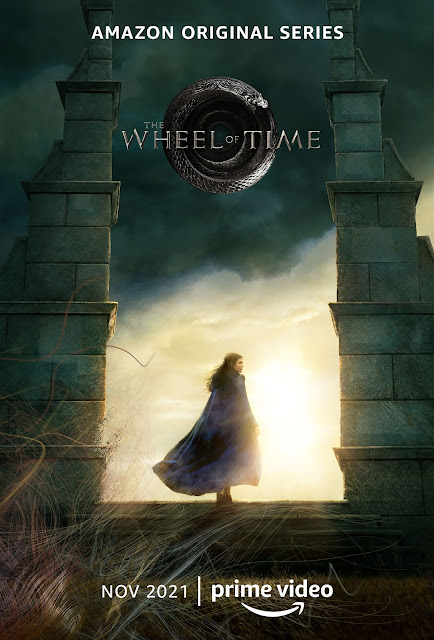
'The Wheel of Time' is an interesting exercise in adaptation

TV networks are searching for "the next Game of Thrones," but The Wheel of Time is playing a different game

After the colossally successful era of Game of Thrones (and its just as colosally divisive final season), it was to be expected that producers would scramble for something to keep feeding an audience still hungry for Medieval shenanigans. An earlier attempt by MTV to make The Shannara Chronicles the next hit resulted in failure (a big part of which can be blamed on the less than stellar source material), while Netflix seems to have struck gold with The Witcher, now on its eagerly awaited second season. In a strange turn inward, both Game of Thrones and Lord of the Rings have spawned prequel shows, a sign of risk aversion that runs contrary to the adventuring spirit of high fantasy. We can wish them well, for the sake of all artists involved, but the risk of Westeros and Middle Earth burnout cannot be left unmentioned.

Robert Jordan wrote the series of books that comprise The Wheel of Time more or less at the same time as George R. R. Martin started writing A Song of Ice and Fire,  but they are radically different responses to Lord of the Rings. Tolkien's theme of power as a corrupting influence is taken by Martin to ghastly extremes, with hardly any character in Westeros being fully free of the poison of ambition, whereas Jordan did something arguably more interesting: in his world, it's not that power per se is bad; rather, power has been corrupted, and it needs to be saved.

Jordan worked with this metaphor by dividing magic into masculine and feminine halves, and adding a backstory that resulted in masculine magic being tainted and incontrollable. This runs into an essentialist can of worms, on which enough has been commented, but the TV adaptation by Amazon Studios is doing a laudable job of lifting the female characters out of their simplistic archetypes. On another day, we could have a longer discussion on what it means for power to be so rigidly aligned with gender, but since this is already the source material Amazon is working with, we need to ask a different type of questions: what insight on power does a high fantasy show have to convey to current audiences that hasn't been explored by Game of Thrones in gory detail, and what deep truth about humanity can be expressed in a fictional world where masculine power is inherently harmful and deserving of suspicion?

The status quo we find in The Wheel of Time is one where women have been at work trying to repair the world while keeping masculine power in check. This feels like an unstable state of affairs, one imposed temporarily to give the world a chance to heal while people figure out what to do about men. In-universe, this period has lasted for thousands of years, but people are not satisfied with the way things have turned out. It's as if we envisioned a hypothetical future where patriarchy has been dethroned, but things are very much in flux, because a new, lasting structure for social organization has not yet been reached. As much harm as patriarchy is capable of causing, a world where an entire half of the population are viewed as dangerous is not a viable model of society. The journey of restoration that takes place across The Wheel of Time is about finding a way to reintegrate masculine power without throwing the world into darkness. This is a break from recent treatments of related themes. Where Game of Thrones consistently punishes characters for not being cruel and manipulative enough, and The Witcher repeats all the time that humans are the real monsters, The Wheel of Time trusts humans. It's not certain that the world can be fixed, but if anyone's going to do it, it's us.

To properly explore this theme in the 2020s, the first season needed to shed many elements from the original novel The Eye of the World that are no longer as well received as they were in the 1990s. There is less emphasis on traditional gender roles, less hyperfocus on a single protagonist, and less dependence on fate to propel the narrative. In the TV version, the key choice by which our hero Rand saves the world hinges on respecting female autonomy. That is an apt test of character for a male hero in the world of The Wheel of Time, and a smart move by the screenwriters, because, according to the rules set in the novels, masculine magic requires asserting one's will to dominate the flow of power. A quiet family life may be what Rand wants the most, so his true moment of heroism, at the easily suggestible time when he's just learned to wield masculine magic, is the realization that he doesn't want that life if it means superimposing his will over his beloved Egwene's aspirations.

In other words, the story trusts a male character to be responsible and considerate in his use of power. That's a level of humanization that was too often missing in the exhaustingly bleak Game of Thrones. This is not the horrible Dung Ages of impassive tyrants and cutthroat cunning; this is a more enlightened world that is actively in search of healing. The Wheel of Time is gritty, but not grim; and even when it deals with darkness, it does not revel in it. This is a world that used to have advanced technology and peaceful governments, so it is known for a fact that a less cruel life is possible.

However, the path to restoration is anything but easy. The subsequent novels in the series deal with intense scheming and backstabbing within the Aes Sedai sisterhood of witches, as well as the standard amount of palace intrigue between ruling houses. In the first season we get but the briefest glimpse of the entanglements of power play in this world, but so far it doesn't have the normalized dog-eat-dog mentality that made life so dreadful in Westeros.

The Wheel of Time is consciously setting some distance from the show that defined fantasy TV for the last decade, and that's for the better. It is a more hopeful, more empathetic look at the weaknesses of humanity. It benefits from a beautiful choice of shooting locations and a believable cast of heroes whose struggles and frictions are handled with the due maturity. This season is a very good start, and a very good promise for future seasons.


The Math

Baseline Assessment: 7/10.

Bonuses: +2 for the brilliant casting of Rosamund Pike, who delivers a precious mix of compassion and toughness, of mystery and vulnerability; +1 for making a sincere effort to update 1990s gender politics to today's sensibilities; +1 for the ethereal feel of Lorne Balfe's soundtrack.

Penalties: −3 for building up to a huge final confrontation that turned out to be inexplicably anticlimactic.

Nerd Coefficient: 8/10.

POSTED BY: Arturo Serrano, multiclass Trekkie/Whovian/Moonie/Miraculer, accumulating experience points for still more obsessions.

Friday, May 12, 2017

Microreview [book]: Wrath, by John Gwynne

A satisfying denouement to a tetralogy teetering on the edge of drowning in grimdark savagery

The reviewer isn't kidding about 'all manner of betrayals'!

Gwynne, John. Wrath. Orbit, 2016.
You can buy this book here.

A fundamental principle of fantasy (all?) literature is that a sufficiently melodramatic, cathartic victory/ending can only be achieved through the sacrifice of (usually) second-tier characters. These are the ones you can remember, whose names and backstories are vivid in your minds, but whose survival isn’t absolutely essential to the everything-and-everyone-tied-together happy ending the book or series has been moving towards since page one. A series like Harry Potter, hurtling towards happiness, could never dare off one of the three principals, forcing Rowling to select her final victims from the B-list: Snape, one of the Weasley twins, etc. Killing anyone more central to the narrative would jeopardize the catharsis. And I don’t mean to single out Rowling/Harry Potter: this is a near-universal feature of fantasy literature. A few B-listers have to die nobly so that the A-listers can live happily ever after.

Enter John Gwynne, who has taken this principle and grimdarked it. The essential calculus hasn’t changed—the principals will still survive and earn their happy ending—but the sheer quantity of second-tier characters required to throw themselves into harm’s way boggles the mind. Readers of the first three books of this tetralogy will be quite familiar with Gwynne’s penchant for throwing beloved but still slightly peripheral characters into the meat grinder, but he has savagely upped the ante here. I thought at one point of the memorable exchange from Casablanca: “What is [this book] like?” – “Oh, just like [the other three], only more so.” Remember Rowling’s judicious choice of a single quasi-central figure, one of the Weasley twins, as scapegoat? Gwynne puts almost the entire cast of B-listers on the sacrificial altar. I haven’t spoiled the story if I say: expect the very-most central characters to survive (obviously—no writer dare do otherwise) and practically no one else!

Multiply this scene of grief at a dead B-lister by a billion, and you will understand Wrath

This savagery may or may not register in the reader’s mind as a bad thing (it struck me as gratuitously excessive, but others might respond more favorably). But one feature of Gwynne’s approach does seem unambiguously problematic: his apparently quite dark view of mercy. Several times in the series, but especially in this fourth and final volume, “bad guys” spared by well-meaning heroes take their unexpected reprieve to (often literally) stab those same heroes in the back at the first opportunity. It’s as though Gwynne believes a) bad guys are incapable of change, or even of admitting their guilt, and (perhaps as a result) b) mercy is always a terrible mistake.

Take Nathair, who has sensed the error of his ways. Gwynne seems to be building to a tearful confession, leaving open the possibility of a way back to the light even for a treacherous viper like Nathair, only to slam that door shut and have the king double down on his evil deeds. Truly we are living in the age of the double-down! But the worst example of the heavy cost of mercy must be Rafe, who once again seemed potentially redeemable (indeed, quite a close approximation of the Harry-Draco dynamic is at play with Corban-Rafe), only to amass quite a body-count after the good guys (foolishly, it would seem) let him go. Naturally, some of the evildoers in the world, if granted a new lease on life, will misuse their second chance, to be sure, but since Gwynne’s only positive examples of the potential of bad guys to change were Veradis (the honorable if naïve warrior) and Alcyon (the honorable giant forced into evil due to magic and the fact his wife and son were held hostage), neither of whom, of course, is actually bad at all, his message is clear: genuine bad guys can’t learn from their mistakes, and will betray their merciful benefactors 100% of the time.

Ironically, this dark-as-grimdark-can-be attrition of B-listers and total denunciation of the idea, for bad guys, of moral rehabilitation after doing something terrible has restored my idealistic faith in humanity. I’m left strangely optimistic, muttering “Surely we humans can’t be that bad?”


The Math

Objective Assessment: 7/10

Bonuses: +1 for keeping victory for Corban at all almost inconceivable until the very last minute, +1 for managing a fairly emotionally satisfying denouement

Penalties: -1 for the somewhat gratuitous/monotonous near-total annihilation of the second-tier characters, -1 for reinforcing the pessimistic idea that those who have once done wrong have essentially no chance of reform (and instead will stab a bunch of beloved B-listers in the back)

Nerd coefficient: 7/10 “An enjoyable experience, but not without its flaws”

Read more on our nerdy scoring system here.


This message brought to you by Zhaoyun, still an unabashed optimist despite a steady diet of the most savage grimdark out there, and reviewer for Nerds of a Feather since 2013.


Friday, April 8, 2016

Microreview [book]: The Banished Craft by E.D.E. Bell

Yes, you can judge a book by its cover


Inspired by Zhaoyun's reading resolution, I chose to read this book firstly because of its cover, and then because of the publisher description:
The Banished Craft is a genre-bending fantasy saga that follows the adventures of Cor, a woman caught in a dying world that does not accept her, and Atesh, a dragon scientist who's been asked to violate his own ethics or put the lives of his family at risk. Follow their trials as they deal with a shattered world, mired in political upheaval, while they try to rediscover a lost magic. The Banished Craft begins the Shkode trilogy: a quirky and modern take on dragons and wizards, exploring themes of identity, prejudice, violence, compassion, and the ways we are all connected.
This publisher description leaves some pretty big expectations, and The Banished Craft does not fail to deliver.

Unbeknownst to its inhabitants, the triverse has been damaged by an event that caused it to split into two parallel realms or spheres, one inhabited by humans, and one inhabited by (personified) dragons. The human world, Teirrah, consists of  Marshstate, Cavestate, Seastate, and Farmstate, each with its own distinct terrain and culture. Naturally, the terrain corresponds to the state name (Marshstate is boggy, Seastate is seafaring), but each state also has its own way of life. The problem is that Teirrah is now unified under singular rule and the laws and customs enforced by Gardenia (part of Farmstate) are oppressive and inconsistent with the various cultures at hand. Primarily, in Teirrah women have no rights. They are not allowed to own or buy anything really (including books) and are not allowed to live in a house without an adult male.

Cor, the bronze skinned and red-haired protagonist featured on the book’s cover, will have none of this. She recently moved to Farmstate in an attempt to make her way into the university library, a place that is forbidden to women, to find out more about her parents' deaths. Cor is such a fantastic character and through her E.D.E Bell brilliantly captures what it is to be a woman, and to be different. Cor is not often taken seriously by her male peers, but ironically is treated with a little more respect by the older men she encounters, which may be an allegory for naivety.

And when I say Bell brilliantly captures what it is to be different, I mean that she does it on numerous levels. In one scene Iohn (Cor’s male ‘friend’) chides her dietary choices, stating she is alienating herself from the rest of society through the food she eats, or doesn't eat. (Try going out with friends while not eating meat or bread, or not drinking beer, and I guarantee you’ll hear this at least once.) In another scene Cor is called black, which completely baffles her: "Black? Her skin was a muted copper—she was no more black than the man in front of her was white.”

All this talk about Cor would make you think she’s the only character in the book, but that’s not remotely true. Cor isn’t even the only incredible female character. There is also Francie, the Grande Dame of Teirrah, who uses her privilege to help those in need. And Ma'Bay, a doctor from the Marshstate who has devoted her life to caring for her community. But it's not just a book full of strong female characters either, all the characters, both male and female, human and dragon, are complex and determined and well developed.

And I've only really talked about the human sphere. There is a whole parallel story running throughout that takes place in Arev, or the dragon sphere, which is just as nuanced. Both worlds are on the brink of political upheaval and there is a tension that permeates both storylines that keeps them engaging.

It is impressive that with all the character arcs and parallel universes, the book never feels crowded or rushed. Admittedly, I always longed for more Cor, but I never tired of reading about the other characters and other worlds. The multiple arcs serve as a world building device that creates a complex and layered universe (or triverse I guess) that leaps off the page. I want more of The Banished Craft world. And I want a wiki for it.

There are many highly promoted big publisher books that are supposed to be amazing and diverse and whatever that…fall flat, to say the least (I'm thinking of one in particular). Then, there are books like The Banished Craft which are small budget, crowd sourced, and independently published that are superb. 

I highly recommend you give The Banished Craft a try. You can buy the e-version here for a relatively low price. In fact, I was so impressed with The Banished Craft that it was one of just two novels I put on my Hugo ballot. Lucky for us all, the sequel has been funded and we should hope to see it sometime in the fall.


The Math

Baseline Assessment: 7/10

Bonuses:  +1 for seamless integration of multiple character arcs and worlds, +1 for capturing the true feeling of being different in a way that didn't seem forced or exaggerated

Penalties: none

Nerd Coefficient: 9/10 "very high quality/standout in its category"


---
POSTED BY: Tia  who hasn't read a fantasy book of this sort that was so impressive in a really long time

Reference: Bell, E.D.E, The Banished Craft [Atthis Arts, LLC, 2015]


Friday, March 13, 2015

Microreview [book]: The Goblin Emperor by Katherine Addison

Slice of Life Fantasy?


Addison, Katherine. The Goblin Emperor [Tor, 2014]

The Goblin Emperor, by Katherine Addison (well-known fantasy and horror author Sarah Monette), is a breath of fresh air. Perhaps all the more so considering the fact that it deliberately eschews the grittier or darker turn to fantasy. Part steampunk and part high fantasy, Addison has written a moving coming of age story of a boy who, after being thrust in to a position of power, begins to find himself. 

It revolves around the story of Maia, the half-goblin son of Emperor Varenechibel IV who has eked out a rather miserable life in exile, forgotten by the imperial capital and abused by his cousin, Setheris. When his father and three brothers are killed in a tragic airship accident, however, Maia finds himself thrust back into the imperial center. This young adult--at the tender age of 18, and almost wholly unschooled in the politics of the capital--is forced to succeed his father as the next Emperor of the Elves. Surrounded by sycophants and scheming nobles, Maia soon learns that he can trust nobody if he is to stay alive. All the while he yearns to fill one of the most basic needs in life: connecting to people. 

What is striking about this novel is how much it succeeds without having a compelling story arc. This is a coming of age story that almost reads like a slice of life novel (if there is such a term?). While there are plots against the throne that Maia has to deal with, for the most part the story avoids epic or traditional story arcs. There is no single, great conflict. Instead, it centers on smaller issues, issues we all deal with in daily life: finding friendship, remaining true to oneself, doing the right thing, and building bridges (in this case, both literal and figurative). In the process, Addison ably fleshes out perhaps the most sympathetic and lovable character ever found in fantasy. Readers can relate to Maia. We can sympathize with his pain, and we want him to succeed in life. And we love the fact that he is very liberal, because his progressive views were born from pain and isolation.  

But The Goblin Emperor is about so much more. It deftly deals with issues of race, gender, abuse  in all its forms (physical abuse, emotional abuse, and the abuse of power), the problems of isolation in social life, and the emotional impacts abuse can leave on people's lives. It highlights the difficulty of getting people to accept one another and see eye-to-eye on even the most basic issues. And it does so with a verve and style that I don't often find in the genre.    

Of course, it does have some weaknesses. The beginning of the novel is replete with infodumping, a pet peeve of readers here at Nerds of a Feather. And some may be turned off by the elvish language Addison invents for the novel. Personally, once I gave up trying to figure out the titles, position, and place names, I became a much happier reader and was finally to focus on the novel's unique strengths. 

In the end, The Goblin Emperor is a truly rewarding book. It succeeds marvellously as a slice of life novel (or a coming of age novel), one that eschews focusing on a great conflict or a single narrative arc. Instead, it is the minutiae of Maia's daily life, his social struggles, and his incessant worrying about whether he can do the right thing that truly pulls the reader in. Highly Recommended.

The Math 

Baseline Assessment: 8/10

Bonuses: +2 for succeeding as a slice of life novel

Penalties: -2 for the infodumping and the stilted language

Nerd Coefficient: 8/10 "Well worth your time and attention"

Read about our scoring system here. And remember, we categorically reject grade inflation!

POSTED BY: Jemmy, a SF/F fanatic, a failed wall gazer, and a Nerds of a Feather contributor since 2012.