Showing posts with label children. Show all posts

Wednesday, August 13, 2025

Film Review: Weapons

The director of Barbarian brings us another scary-as-hell, deeply unsettling horror film—this time about an entire classroom of children that goes missing in the middle of the night

Zach Cregger of Barbarian fame has a new movie out, and I purposely went into it not knowing a single thing about it. Over the past few weeks, I was goaded on by several friends-of-friends in the Atlanta film industry who kept hyping it up. Fun fact: Tons of things are filmed in Georgia because of generous tax benefits, so you'll often see movie set signs around town on any given day.

If you've seen Barbarian, you probably know what you're in for with a Cregger film, and if you haven't seen it, let's be honest: Weapons—in all its gory, stomach-churning, and dread-inducing glory—probably isn't on your radar.

Still reading? Okay, good. It's just us horror besties now. And if other folks are still here, I'll try my damndest to convince you to see it.

The premise is simple: One night, at 2:17 a.m., 17 children from the same elementary school class run out of their respective houses and vanish into the night without a trace. Their parents are distraught, the community is reeling, and the teacher and sole surviving student are questioned thoroughly. Is it aliens? Is it a monster? The absolute seeming impossibility of something like this happening is what gets you hooked.

This is where things get a little interesting for your average horror movie. Instead of the usual flow of spooky events → big bad reveal → thrilling denouement, Cregger breaks up the narrative into character-focused chunks. He's mentioned in interviews he was inspired by the fragmented storytelling in Paul Thomas Anderson's epic film Magnolia and Jennifer Egan's novel A Visit from the Goon Squad.

Everything's connected, of course, and each vignette brings you closer to understanding what's really going on, all without spoiling it too early. It's a fine line to toe, but Cregger manages to balance everything for the first two-thirds of the movie. Up until the final act, it actually feels less like a horror film and more like a thriller/procedural. You can tell something is definitely not right in this town, but there are only tiny glimpses of supernatural things—and maybe even those are red herrings. If nothing else, this film is a testament to the importance of locking your car doors (the haircut scene in the front seat gave me chills).

Everything changes, though, when we meet Gladys. Gladys, the 2025 Longlegs-esque villain that I guarantee will be all over DragonCon and Halloween costumes this year.

I love an old evil crone stereotype, and with Gladys, we get it in spades. From the chopped-up Chappell Roan wig and lipstick-smeared-around-the-lips grin to the bald horror of seeing her wigless, she's frightening. And the best part? Gladys is played by Amy Madigan, who you probably recognize from Uncle Buck and Field of Dreams.

With her arrival, we also get the backstory to why all the children disappeared, and it's absolutely wicked. Alex, the only boy who didn't disappear from his class, lives with his perfectly normal parents. One day, he finds out that his great-aunt Gladys will be coming to stay with his family. Very quickly, she hypnotizes the parents so they're in a trance, with Alex forced to feed them soup to keep them alive. This sounds weird, but the way it's depicted on screen is absolutely terrifying.

Turns out, Gladys is some sort of witch, and she was trying to steal the mother and father's energy to regain her youth. Or heal herself. It's not 100% clear.

When that doesn't work, she realizes she needs the big guns, so she dispatches Alex to collect talismans from the kids in his class. At 2:17 a.m. that night, they exit their homes and make their way straight to the basement, where Alex is forced to feed them soup as well. The best performance in this movie is actually this little boy being forced to deal with inhuman levels of evil while keeping a perfect poker face for both the school and his enemy/great-aunt/kidnapper Gladys.

It becomes apparent that it's a classic witch-stealing-the-youth-and-vigor-from-little-kids trope, but the twist is in how she does it. She can literally turn people into weapons, heat-seeking creatures who can attack other people until they drop dead. She can also get them to hurt themselves, as we see numerous times with various sharp objects that make you cringe.

Weapons' climax is where folks will lock in. It's easily one of the most bananas endings I've seen in a long time in a theater, and it was clear everyone else in the theater felt the same way.

Alex manages to outsmart Gladys and uses her black magic against her, resulting in the 17 missing kids breaking out of the basement and racing after her through the houses and backyards of their neighborhood. The chase is chaotic, intense, and incredibly violent—it is also clearly inspired by the chase scene in Point Break with the surfer gang. (I definitely wasn't expecting this movie to reference a Keanu Reeves flick when I walked in.)

The film ends with the 17 tiny children mobbing the evil Gladys and physically ripping her to shreds in a few seconds of gore that made my stomach turn. To be fair, she deserved it. But I can't stop thinking about the extra trauma these kidnapped kids now have on top of being placed in a trance and trapped in a basement for weeks.

While reading about other people's takes on Weapons, I noticed some are leaning into it as a metaphor for school shootings, and how when kids die, the community looks to place blame somewhere. In the film, the community becomes enraged at the children's teacher, assuming she planted the seed of their disappearance and is hiding what actually happened.

I don't think it's that deep. I think it's the tale of collateral damage around a horrific supernatural force hell-bent on saving her own life at any cost. Personally, that's the way I like my horror movies.

Also, the scene with the potato peeler is going to be etched in my brain forever.

Nerd Coefficient: 7/10.

Bonuses: Julia Garner from Ozark is fantastic as the school teacher; watching possessed kids bomb Naruto runs in the middle of the night was a little hilarious.

POSTED BY: Haley Zapal, NoaF contributor and lawyer-turned-copywriter living in Atlanta, Georgia. A co-host of Hugo Award-winning podcast Hugo, Girl!, she posts on Instagram as @cestlahaley. She loves nautical fiction, growing corn and giving them pun names like Timothee Chalamaize, and thinking about fried chicken.

Thursday, July 24, 2025

TV Review: Phineas and Ferb, 2025

Still funny after all of these years, using the fantastical to poke fun at the everyday ridiculousness of life.
 

One of the best gifts you can give to parents of young children is kid friendly programming that somehow also manages to include sassy, cynical, funny content aimed at adults. Over the years, there have been a few shows that have done a good job of this combo technique, giving us a break from bland kids content. For years, Phineas and Ferb was such a show, one filled with bright animation, humorously designed characters, and lots of silly songs but, at the same time, highly entertaining for grown-ups due to its funny social commentary tucked into its fantastical premises. It’s been ten years since the last adventures of the two very clever step-brothers and their bossy big sister. But now Disney has revived this gem and brought it back for a new decade of viewers. How does it compare to the original? Weirdly, the transition feels seamless, despite the years that have passed since the last episode aired. Phineas and Ferb is still funny after all of these years, perfectly using the fantastical to poke fun at the everyday ridiculousness we must all face.

The series follows the adventures of small town grade schooler Phineas Flynn, a fearless inventor with genius level engineering skills, and his equally talented, but quieter, British step-brother Ferb Fletcher, as they find outrageous ways to entertain themselves during the “104 days” of summer break from school. The boys’ daily creations are always NASA-level outlandish to the irritation of Phineas’s teenaged sister Candace who is obsessed with revealing her brothers’ antics to her mom. The large cast includes Phineas and Ferb’s grade school classmates: sweet and charming Isabella, nerdy and sarcastic Baljeet, and tough, loud mouthed Buford, all of whom help with the brothers’ inventions. A regular subplot involves their pet platypus Perry who is secretly a highly athletic super-spy who regularly battles the town’s philosophizing and bumbling evil genius Dr. Doofenshmirtz. In addition to these primary characters who appear in almost all episodes, there are minor characters who appear periodically and many of them get a chance to shine in the new season, including Candace’s bestie Stacy; Doofenshmirtz’s cynical teen daughter Vanessa; and the five other girls in Isabella’s campfire scout troop who sometimes assist with the daily inventions. Each episode traditionally follows a repeating structure: 1) the brothers get inspiration for a complicated project to entertain themselves; 2) after starting they passingly notice that Perry has disappeared; 3)Perry gets assigned to thwart Doof’s next plan and 4) Doof has an ill-fated plan to take over the tri-state area; 5) Candace tries in vain to convey her brothers’ antics to her mom; Doof’s and the brothers’ unrelated inventions collide in a way that cancels them out without each inventor realizing why.

At the end of the 2015 season, Doofenshmirtz decides to take a break from being “evil” but in the reborn 2025 season, he decides to go back to his evil ways but on a smaller scale. As a result, Perry returns to duty as his super-spy nemesis. So, despite the storyline shifts in the original series finale, the new season has reset itself back to the plot rhythms of the original show. The 2025 revival continues the theme of using outrageous scientific inventions, along with humor and sarcasm, to discuss small funny elements or relatable irritations in the drudgery of life including topics such as the ridiculously long wait windows for repair or delivery appointments or the annoyance of having a long awaited television episode ruined by a co-worker’s spoiler comment. Another hallmark of the show’s humor is the way it interiorly breaks the fourth wall. The opening song always ends with Candace complaining to her mom that Phineas and Ferb are making a title sequence. The boys often reference the scientific improbability of some of their escapades. In episode 3 they create an infinite ice luge track that runs amok in the town. When Candace ends up accidentally covered in clothes from a boutique while chasing her brothers, the store clerk wants to charge her but gives her a break because he notices that she’s in a song sequence. In episode 4, the kids design the world‘s largest zoetrope using the campfire girl scouts as models, and this leads Isabella to note that animation is so easy. And one episode comments on the formulaic elements of the episodes. The revival also has lots of celebrities, including Michael BublĂ© playing himself and belting out a zoetrope ballad in the zoetrope episode.

In addition to the self-aware humor, the most fun thing about the new season is seeing the stock characters continuing to take on complexities and contradicting their stereotypes, including Isabella becoming a bold leader, Buford engaging in literary analysis, and Baljeet discovering his fierce side. If you have never watched the show, it’s best to flip through a few early episodes from prior seasons to catch the rhythm of the repeated plot set up and the side character arcs. Much of the show is laugh-out-loud funny but not all of the episodes land with the same top level humor and a few are a little slow. And the ongoing gag of Candace trying to convince her mom of the boys’ inventions does start to wear thin as you wonder why there’s never just a photo taken. But, for parents with younger kids or for grown-ups who just need a break, the return of Phineas and Ferb is a much needed respite of humor, sarcasm, and tight social commentary packaged in a range of subtle to over the top humor.

--

The Math

Nerd Coefficient: 8/10

Highlights:

  • Still funny after all these years
  • Self-aware commentary and storytelling
  • Using the outrageous to tell stories of ordinary life

POSTED BY: Ann Michelle Harris – Multitasking, fiction-writing Trekkie currently dreaming of her next beach vacation.

Wednesday, August 7, 2024

Review: Harold and the Purple Crayon

A character who can create anything goes in search of his creator

Think of the character Harold in Stranger than Fiction, who learns his life has a narrator, and is desperate to go on living. Think of the character Augusto in Miguel de Unamuno's 1914 novel Mist, who learns that his life has a narrator, and is desperate to not go on living. Think of Daffy Duck in the short Duck Amuck, shocked at the revelation that an artist armed with a pencil can freely create or destroy his existence.

But also: think of the NPC Guy in the film Free Guy, who learns that his life is scripted by computer code, and decides to seize independence. Think of Jack Slater in Last Action Hero, who learns that his face and his voice belong to an actor, and decides to fulfill his mission no matter what. Think of Douglas in the film The Thirteenth Floor, who learns that his life is a digital simulation, and decides to go out into the real world. Think of Giselle in Enchanted, thrown out of a fairy tale into the endless whirlwind of modern urban life, and decides to search for happiness.

But also: think of Akira Kurosawa turning Van Gogh's paintings into whole worlds to get lost in. Think of Wile E. Coyote painting a tunnel that becomes real and traversable. Think of Cursor in Automan, able to create any object by drawing its outline. Think of Sphere and the cursed power to make imagination real.

Breaks in the boundary between fiction and reality have a long tradition going from Pygmalion and Galatea to Deadpool and She-Hulk. The classic children's book Harold and the Purple Crayon by Crockett Johnson is, like The Thirteenth Floor and Wile E. Coyote, a two-layered instance: it shows a drawn child who is able to draw things into existence. Its recently released film adaptation adds one more level: the child, now grown up, reasons that, if he can interact with the things he draws, he should be able to interact with the one who drew him. What ensues is an understated but deep exploration of the possibilities of fantasy.

In the movie, soon after Harold emerges from the world of the book into the real world, he runs into an aspiring fantasy writer whose style is the polar opposite of Harold's. Harold comes from a cute, whimsical picture book meant to inspire little kids. His nemesis in the film writes edgy grimdark with world-shattering weapons and unpronounceable names. In a literal case of the pen being mightier than the sword, Harold's sweet imagination proves capable of defeating the most twisted creations of a would-be tyrant sorcerer.

The genius part of the movie, however, isn't even in this unsubtle commentary on fantasy subgenres: it's in Harold's quest to meet his author. As it happens, Crockett Johnson has passed away. At first, this news leaves Harold feeling without purpose or direction. But he eventually learns that he doesn't need a creator when he has his own power of creation. In other words, the movie is presenting us with the provocative argument that to live under existentialism is basically to apply Death of the Author to reality. You are your own giver of meaning and your own interpreter.

Harold and the Purple Crayon coats these philosophical insights under shiny layers of common slapstick and fish-out-of-water misunderstandings. But even allowing for the contrivances of a fantasy for kids, this one is so full of them that one is tempted to suspect that the movie is deliberately drawing attention to the fictional quality of its setting, a version of Providence RI that seems to consist of just half a dozen blocks, judging by how frequently the characters run into each other when it's convenient for the plot. More care is employed in handling the parallel between Harold's sense of cosmic abandonment and his human friend's grief over his dead father. It's not only picture book characters who need to learn how to live by their own guidance.

It's a fortunate authorial choice to keep the plot at the right scale for human-sized drama. Other authors might have made Harold's all-powerful crayon end up in the hands of military tech researchers or something like that. It's a mistake that can happen in live-action adaptations. Instead, to stage the climactic conflict between tonally incompatible versions of fantasy keeps the ideas of the film at the right level of abstraction. It's not about what you'd do if you had a magical item that could create anything. It's what you'd do if you removed the restraints of your imagination. Some come up with gritty worlds of endless battle and hypermuscular champions. Others think beyond those limitations and come up with purple ice cream. I know which one I prefer.


Nerd Coefficient: 6/10.

POSTED BY: Arturo Serrano, multiclass Trekkie/Whovian/Moonie/Miraculer, accumulating experience points for still more obsessions.

Thursday, June 20, 2024

First Contact: Labyrinth

A puppet-filled, dream fantasy journey

Despite its enduring popularity, I had never seen the classic 1986 film Labyrinth until this week. I should have identified with a bookish, dreamy, fantasy-obsessed, teen girl protagonist. I have enjoyed, or at least consumed, many similar fantasy films from that time period. But the truth is, missing Labyrinth was not an accident. I deliberately skipped the film over the years because something about the vibe seemed a bit too juvenile. This is likely because of the large volume of bouncy, grotesque puppets in the trailers for the film. Now, before you send letters, please know that I live in Atlanta, home to the Center for Puppetry Arts. I loved The Neverending Story, The Princess Bride, and, of course, Star Wars: A New Hope—all of which had varying degrees of puppet-based fantasy. I was raised watching Sesame Street, which I loved, and watching The Muppet Show, which I tolerated just fine. But the film that broke me was The Dark Crystal, which, I admit, I did not enjoy. For me, The Dark Crystal amounted to too many creepy-style puppets and not enough plot. So I always feared Labyrinth would be too close to that vibe despite the plucky YA heroine and the presence of superstar David Bowie in a leading role.

I watched Labyrinth on a nighttime flight from LAX to Atlanta. The sleepy, small screen environment with dim lighting and the hum of cold air was a perfect setting for the dreamy, psychological journey of a self-absorbed teen feeling disquieted and generally irritated with the discomforts of her life. The film does a great job of efficiently delivering a lot of backstory for the protagonist Sarah in a few seconds, then it dives right into the plot. The story goes as follows: [minimum spoilers] Sarah (Jennifer Connelly) is a bored suburban teen, living with her dad, his new-ish wife, and Sarah’s toddler half-brother, Toby. It’s initially unclear whether Sarah’s mother is divorced/absent or deceased, but by the ending scene, it seems to be the latter. Sarah enjoys acting out a scene from a fairy tale about a princess who confronts a goblin king who has stolen a child. She is a sixteen-year-old cosplaying before cosplaying was cool. Her make-believe moment is interrupted when she remembers she is scheduled to babysit her baby brother while her parents go out on a date. Stuck with the crying toddler, she holds the child to comfort him, then, in frustration, verbally wishes him to be taken away by the goblin king from her storybook. The child disappears, and a frantic Sarah is told by the goblin king, Jareth (David Bowie), that the child is now his. To get Toby back, she has to navigate a massive labyrinth to reach the goblin king’s castle and rescue her brother. In the labyrinth she encounters various creatures who are variably grotesque or adorable, kind or dangerous, annoying or wise, and who are mostly in the form of puppet creatures. In particular, she meets grumpy goblin frenemy Hoggle, idealistic dog-like Didymus, and loveable fuzzy giant Ludo. On her journey, she learns the value of friendship (of course), the dangers of assumptions, and a new understanding that life isn’t fair as she is forced to stop whining and grow up.

First impressions: Jennifer Connelly is intensely, perfectly, young and dreamlike in the role of Sarah. She looks like a 1980s Snow White, and her dialogue and voice inflection are artificially fairy tale-like. It’s almost borderline annoying. But Sarah is actually the archetype of the unhappy teen searching for something more. In contrast to her sweet appearance, she hates her brother enough to wish him dead, straight out of the gate. The initial scene of her holding her crying brother was stressful for me to watch. There is no child abuse, but the intensity of her anger hovers over the moment in a way that worried me. Ironically, she is bitterly angry because she has to babysit for one night, although she concedes that she literally had nothing else to do. She’s not missing prom, her senior art show, or even a date with friends. Sarah is angry because babysitting Toby has interrupted her fantasy playacting. It’s clear that there are larger issues of grief and discomfort, as well as impatience with the mundaneness of ordinary life compared with the allure of fairy tales.

As she journeys through the labyrinth, Sarah periodically meets Jareth, who repeatedly encourages her to forget the search for the child and just enjoy her fantasy life. Sarah shows her growing maturity by refusing to give up. Sarah also encounters lots of the aforementioned goblins and other fantastical creatures who both help and hinder her in her classic journey story. The story overtly references The Wizard of Oz and Where the Wild Things Are (Sarah has copies of the books in her bedroom), but it also contains clear references to Peter Pan and Alice in Wonderland.

As a classic journey story, I felt I knew where the plot was heading, and I was mostly right. However, there were a few story elements which surprised me. Sarah’s frenemy Hoggle sprays poison to individually kill fairies (sentient, humanoid). Sarah initially finds this horrifying, but then rolls with the fairy killing after one of them bites her finger. She ignores the rest of his poisoning and enlists Hoggle’s help to find the entrance to the labyrinth. Sarah’s pivot from sentimental to pragmatic was a little startling. Labyrinth is a dreamscape, so I guess philosophical concepts of life and death are primarily symbolic. Secondly, David Bowie is perfectly cast as the goblin king Jareth. He is naturally quirky, chaotically elegant, but creepily enamored with Sarah. Additionally, there is a dreamlike scene of a masked ball with elegantly dressed humans dancing together, including Sarah and Jareth. Despite my fears about creepy puppet creatures, the attractive humans at the masked ball felt even more creepy and disturbing. That emotional irony was an artistic high point for me in the film. Another visual highlight was the room of dimension-defying steps where Jareth, Sarah, and Toby all navigate multi-directional, freeform stairs in an Escher-inspired, Inception-style scene.

In Labyrinth, Sarah is repeatedly accused of taking things for granted. I initially assumed this meant she did not appreciate the things she had (her comfortable lifestyle and relative freedom). But she is actually being reminded of the dangers of making assumptions about people and about life. During setbacks, she repeatedly complains “that’s not fair,” and eventually Jareth sarcastically tells her, “You say that so often. I wonder what your basis of comparison is.” It’s a great line. He is effectively telling her to grow up and face reality, a still timely lesson about the unfairness of life even while acknowledging the validity of the search for justice. In the same way, in a final scene, Sarah’s labyrinth friends remind her that they will still be there when she needs an escape. Labyrinth confirms the importance of living in the real world while also acknowledging the value of play, fantasy, and imagination. Hopefully, that is a life lesson that we can all agree on.


Highlights:

  • Classic journey coming of age film
  • So many puppets
  • Timeless dreamscape

POSTED BY: Ann Michelle Harris – Multitasking, fiction writing Trekkie currently dreaming of her next beach vacation.

Tuesday, October 29, 2019

LET'S FRIGHTEN CHILDREN! Bonus Conversation Edition

Welcome to a loverly punctuation mark at the end of the LET'S FRIGHTEN CHILDREN! series, in which I look at how to share horror with our offspring. Today's guest is Chloe N. Clark, an author and educator who has taught far more folks about horror than I have children. So let's talk scaring tiny people!

VK: Thanks for agreeing to chat about this!

CNC: Of course, I'm excited! Thank you for asking me!

VK: In your book recommendations for this series, you talked about how you got into horror at a very, very young age. I'm spending a lot of time thinking about how I roll this type of stuff out to my kids. But do you think, in the end, it matters? I mean, you seem to have turned out ok.

CNC: I honestly think it depends on a lot of factors: openness of the family in general and the kind of other media the child is consuming (as a child, I was also watching shows like Homicide: Life on the Street and talking about it with my parents, so there was certainly a level of my parents allowing me to be comfortable talking about adult matters); it also deeply depends on the child — I'm an immediate coward, I jump at jump scares like nobody's business but I also don't carry fears over. So as a child, I didn't get nightmares, for example. So I think a big thing is knowing that the child feels really safe in their surroundings. If they do, then I feel like horror is more manageable. There's also just the fact that a lot of children's entertainment is inherently scary — in Disney films and fairy tales, fucked up stuff happens, too.

VK: That's very true. I didn't realize how twisted even Snow White was until I re-watched it as I was getting into animation more generally as a late teenager. So much of that stuff just missed me as a small kid. Maybe it was because evil step-mothers and those fairy tale tropes felt so foreign. They didn't touch my life.

CNC: That's true, definitely — like they are based out of specifics that, in a way, are true to all genres of terror. There's a quote I love that I can't remember which Italian folklorist said, but is along the lines of "Don't believe fairy tales, they're true." Because at the time of their writings, they were the issues that people dealt with (where women died in childbirth way more frequently, etc), so there were stepmothers aplenty. Or where children did have to act as scullery maids (a la Cinderella)

VK: Right. For me, as someone who has always had very vivid dreams, as a kid the idea of the Nightmare on Elm Street movies was too much for me, and I steered clear of them for a very long time. It wasn't a burned-up guy with razor knives that did it, it was the idea of my dreams turning against me. When I talked specifically about Coraline and ParaNorman in this series, I discussed how it's given me an opportunity to talk with the kids about othering in very specific terms. It's easy for me, and my kids, to identify with Norman, or Coraline, as a kindred spirit with outsider interests. As those characters are othered and rejected by those around them, we've been able to have great talks about empathy, and how we don't want to make the mistakes of the crowd. Do you think that's a central part of the horror narrative overall?

CNC: Definitely, I can see that (fun side fact, Nightmare on Elm Street is how I realized I was a lucid dreamer as a child). And that's what horror does so well: it links into that idea of base primal fears (our own mind going against us, or the beach being dangerous, or whatever), but I almost think those are *good* lessons for kids to learn early. And yes, I think empathy is a key to horror. Obviously I think about othering and horror a lot — it's literally what I teach about. It is how we view monsters as others and how that shapes the narratives of fear told culturally. Horror is actively telling us to listen to those we might not listen to, and that's one of the biggest, most valuable lessons I think it can offer to us.

VK: This is one of the big reasons why I was looking forward to you participating in this series: Monster Theory! Can you talk in general terms about that?

CNC: So in general, Monster Theory is the critical lens of examining how monstrosity is used by different cultures in order to perceive of othering or social constructs, etc. I more specifically use it to talk about constructions of privilege and how horror is often a lens to examine that. This is something Get Out, for example, does exceptionally well. Making groups we fear into monsters has been a tactic since the beginning of storytelling. It's the most effective tactic for controlling a populace. And it's one, more and more, that we see horror narratives questioning in ways other genres are not.

VK: Right. Because there's an understandable, natural aversion to something that's different. But what separates humans from, say, my cats with new people in the house, is that we have an intellect and empathy and ways to synthesize those into an understanding of others. But routinely we see those impulses weaponized by leaders who want to divert someone's gaze away from where they should be looking. I feel like that's one of the most important lessons I can pass on to my kids, because it's a fundamental mechanic of the world. And you're right — I don't know other genres that consistently explore that theme.

CNC: Yeah, that exactly sums up why I teach horror in a rhetoric class. If there is one skill I want college students to have, it is to see the world with empathy and to understand the way fear is used to promote rhetorics of violence. Horror is the perfect genre to combat and explore that.

VK: Is the "what you thought was the monster isn't the real monster" (ie, Frankenstein, etc) a sub-genre in monster stories, or is it sort of the home key, do you think?

CNC: I think for the most part, it's the home key. I mean look at zombie movies — the whole premise is often, Oh shoot, wait! The humans are the ones we should be fearing after all!" The same goes for even things like Jaws — the shark is following its natural instinct, but it's the money-grabbing mayor who is actually the villain by not allowing the knowledge to spread/closing the beach. Like at their hearts, most horror stories operate on someone-did-something-awful-and-it's-created-a-monstrosity.

VK: That winds up getting perverted in the slasher genre, though, right? Because the "something awful" gets colored almost entirely by conformity/regressive morality. The promiscuous teens get chopped to bits, the virginal Final Girl lives on. I'm not showing the kids slasher movies. I mean, it's just something else that exists in the genre waters.

CNC: Definitely, Though I'd argue that in some ways those also have at least one, perhaps unintentionally, progressive bent — the premise is "listen to women." In almost all of them, the Final Girl susses out what's up and then absolutely no one takes her seriously. Which again becomes a people-in-power-not-doing-anything-to-help-stop-the-issue.

VK: Yeah — it's hard to imagine if Kevin McCarthy got pod-peopled in Invasion of the Body Snatchers and Dana Wynter was the one who went to the next town over for help, that anyone would take her seriously.

CNC: Yes! That exactly! In the remake with Donald Sutherland, we even sort of see that a little bit with Veronica Cartwright versus Donald Sutherland's character.

VK: And it's so, so great.

CNC: It is one of my favorite films.

VK: We talked about the dangers of othering and how horror can provide a powerful (however bloody) window into that, so I guess we should talk about the other side of the same coin, which would be to keep a healthy skepticism of the uber-normal. I don't want to wander into the weeds of "Stranger Danger" or anything, but there's a consistent thread that connects The Stepford Wives and Body Snatchers, American Psycho, and even Get Out, I suppose, where the ultimate villain is someone who appears super normal on the surface.

CNC: Yeah, definitely. The veneer of normalcy needs to be interrogated in horror movies a lot of the time. Which I think is important — we idealize certain qualities, right? From "nuclear families" to "perfect marriages," etc, but we don't question enough what goes on beyond the surface of that. Horror helps us to push the idea of, "We can never know what secrets lurk beneath the surface." In horror, it's extreme, right? "Oh no! That successful businessman is a psychotic killer!" or, "Your neighbor is actually an alien!" But on a less extreme level, we do find that out all the time. The perfect husband is actually abusive, the business that seems so environmentally sound and respectable is actually using slave labor. Interrogation of ideals is a good skill to have.

VK: Yeah, and a perfect message for kids. Bruce Springsteen tells a story in his autobiography that he can't stand wind chimes to this day because when he was a kid, the husband in the next house was an abusive drunk, but the wife hung up these wind chimes to try to make the house appear peaceful and "normal" on the outside. You can see how that same lesson informs his entire career, and it's so easy (it's the norm, probably), for people to encourage their kids to be "like" somebody else. What's that really teaching them?

CNC: Yeah, it's teaching them this horrible lesson that if things aren't like everyone else then it's their fault. So many people don't report abuse because they don't want to be seen as being outside those cultural norms, too. Which is much more horrifying to me than a horror movie is.

VK: Agreed. Horror allows us a lens through which to process our own fears, and I'm thankful we've had so many generations of genre storytellers helping us all out.

CNC: Yes, that exactly! It also, I think, helps us to think about the ramifications of those fears. Like, we get the safety of asking "what would I do" before we ever have to actually face that question in real life. What would I do in a dangerous situation? Who would I be and who would I want to be?

VK: "Who would I want to be?" It's a perfect question, and one I think we should be encouraging our kids to ask (be they small, or in college).

CNC: Definitely. It's a lesson it's never too late to learn, but I wish we'd all learn earlier.

Posted by Vance K and Chloe N. Clark — in agreement about horror movies at nerds of a feather since at least 2016.

Tuesday, October 1, 2019

LET'S FRIGHTEN CHILDREN! Books Under Bedsheets

Much of the genesis for this series came to me when my daughter asked if I would take her to see the Scary Stories to Tell in the Dark movie. Those three original Alvin Schwartz books (with their oozing, teeth-filled illustrations by Stephen Gammell) were a staple of my childhood, and while Christopher Pike, R.L. Stine, and a couple other authors were working in the middle-grade horror space (although I'm not sure if Goosebumps itself was a thing yet), I wound up giving those a miss and leaping straight to Stephen King at a pretty young age.

I think the first Stephen King book I read was Christine, because I dug old cars. But relatively quickly, I found myself immersed in what was at the time the Dark Tower trilogy. There are things I read when I was 12 that still stick with me. "Go then, there are other worlds than these," is a line and moment that has never been far from me since. The Eyes of the Dragon was another pivotal King novel for me, because it was my introduction to fantasy. By the time I read it, I had friends that were big into Lord of the Rings, but that series and world had never interested me before. After reading Eyes of the Dragon, however, I quickly scooped up a copy of The Hobbit in the next convenient book sale.

I've spent most of my time in this series talking about movies because that's really my area of relative expertise, but reading scary stories was a huge part of my own, youthful indoctrination. So I reached out to the rest of the NoaF flock to see what their experiences with horror were as young readers, and if there were any noteworthy titles we could pass along.

Gateway Books

Like they were for me, the series of Scary Stories to Tell in the Dark books and the novels of Stephen King were the gateway to horror for many of our writers who got into the genre at a young age.

Dean made the interesting recommendation of Roald Dahl, who I wouldn't have thought of, but it's a very astute suggestion. I read Charlie and the Chocolate Factory to my kids many times, as well as The Fantastic Mr. Fox (big fans of the movie in my house), but it wasn't until I was reading them The Witches, when I caught myself thinking, "Wait...this is waaaay dark." Dean also recommended A Series of Unfortunate Events, which skews more creepy and sinister than outright horrific, but is certainly in the same neighborhood that we're discussing.

Adri writes, "Maybe the single biggest horror influence in my young life was Robin Jarvis, especially the Deptford Mice trilogy, which was about a group of anthropomorphic mice struggling against the influence of an all-powerful evil cat god. Horror highlights included the trip to the countryside with a series of murders descending into scenes of creepy ritual in the middle book, and one character whose final fate is to get banished outside of the main timestream so he experiences the world an instant behind all other living things. The worldbuilding was dense and bizarre, the story was totally cool with killing off characters (the first book literally opens with the father of the main family getting eaten by the god-cat), and I sincerely hope they still hold up today because in my memory they were amazing."

In addition to another vote for Scary Stories..., Chloe offers this: "As the former child who at age 4 watched Aliens so much she wrecked the VHS and whose 8-year-old sick day reading was The Stand, my suggestions for what children can handle is, um, skewed. But — Goosebumps, Coraline, a lot of Robert Westall's stories (more for 10+ ages), and Something Wicked This Way Comes." I was very pleased to see this one show up on her list. Something Wicked... is probably my favorite Bradbury novel, for what it's worth.


Rites of Passage

There is, to be sure, a certain solitary pleasure in horror. A musician friend of mine, who is one of the most amazing drummers I know of, she recently shared the unattributed quote, "Sometimes the fear won't go away, so you'll just have to do it afraid." And that stuck with me.

As much fun as it was to read Scary Stories to Tell in the Dark with friends and enact the jump-scares built into those books, most of our true fears are quiet, and private. And while there is magic in watching a scary movie among friends (here I recall my 15th birthday, spent as a sleepover with an all-night marathon of movies like Silence of the Lambs and Mario Bava's Black Sabbath) or even among strangers in a theater, so too is there a sense of growing up, of the passing of rites, in huddling under bedclothes with a flashlight and a scary book, and walking through the fire by oneself. The flames may resemble ghosts, or goblins, or dead friends or uncanny versions of relatives, rabid dogs or haunted cars, terrifying lands full of magic or mystery, or a carnival come to town. However they shake, and whatever shadows they cast, eventually we must each face the flames on our own.

This is, to me, the great gift of horror, and why I have thought so much about passing it on to my kids. No matter what movies I watch with them, there will be scarier ones out there. Just like no matter what challenges in life I attempt to prepare them for, there will yet be greater ones ahead, entirely unlooked-for. No matter how I try to cushion the blow that ultimately lets them know there is profound, inexplicable evil in this world, I know that blow will always fall. The best I can do is lay the groundwork for the next, more frightening movie, or the next, more frightening revelation, and hope that, however feebly, I have helped them to cultivate the tools necessary to confront it.

Now, then. Let’s frighten children.

Posted by Vance K — cult film reviewer and co-editor of nerds of a feather since 2012. Late-night, white-knuckled page-turner since...approximately...the man in black fled across the desert, and the gunslinger followed.

Tuesday, September 24, 2019

LET'S FRIGHTEN CHILDREN! Sleepers

Now that I've looked at some entries in the more mainstream family horror canon, I'd like to take a side-trip through the overgrown, ominous field alongside the road here to peek at some less-conventional but still easily accessible options for sharing frightening entertainment with kids.

By and large, I'm still thinking about this issue with young kids in mind. When I was growing up in the 80s, it was the era where even grocery stores had large VHS rental operations (and, with Redbox, we see all that is old is new again). Depending on the clerk at the counter, you could be 10 years old and rent any of the (as a friend of mine recently called it) unholy trinity of horror movies -- Friday the 13th, Nightmare on Elm Street, Halloween, and any of their attendant sequels. So while I saw things like RoboCop or The Dead Zone at what was almost certainly too young an age, I don't think I'm any worse the wear for it. As a parent, you know your kids best and at a certain point, regardless of what the MPAA thinks, you're more than welcome to sit your tiny clone down on the couch and say, "Hey! Lemme show you something that scared the ever-loving shit out of me when I was your age!"

These are titles that kept popping up in my imagination as I thought about this series of posts, but that didn't conveniently fit in another post.

The Twilight Zone

Welcome to TGI McScratchy's, where it's constantly New Years Eve! Here we go again!
The Twilight Zone is on Netflix. Almost all of it. That means every day in your house can be New Year's Day, but even better, because you don't have to sit through the same three commercials on the SyFy Channel for however many hours you binge the show during their annual marathon. Something really fantastic happened in my house after I introduced the kids to Rod Serling's anthology masterpiece: the kids started asking me to tell them scary stories. But what they really wanted me to do was re-tell them the stories of the episodes. For a while there, I was really good at telling versions of And When the Sky was Opened, Mirror Image, Twenty-Two, and Little Girl Lost. The creepiness of so many of the episodes, from the uncanny to the paranoid to the unexplained, was a great way to introduce unsettling narratives into their media diet, and a lovely (for me) antidote to the Disney Channel. And the contained nature of each story makes them easily digested and easily understood. It was, and remains, a great thing to put on every now and again...if I can keep the kids from fighting about which episode to watch.

Animation

I spent a lot of time talking about animated features in the last installment of this series, but one of my favorite, favorite cartoons growing up was Disney's short The Legend of Sleepy Hollow. I don't recall how I watched this so many times, separate from The Adventures of Mr. Toad — the two were originally presented back-to-back as a feature film — but I can only assume I taped the Ichabod Crane segment off the TV at some point and watched it repeatedly from that homemade VHS recording. I'm so pleased that this film is now part of my family's annual Halloween viewing programme. One of the neat things about it is that the whole thing is told in voice-over by Bing Crosby. There's very little diagetic sound in the segment, apart from the Headless Horseman's laughter and some sound effects.

The same decade that The Legend of Sleepy Hollow was produced, the Disney Animators Strike resulted in a whole bunch of animators heading out on their own to create their own studios. The most accomplished of these was almost unarguably UPA, which is now probably best remembered for Mr. Magoo. UPA was a titanic force for animation innovation and experimentation, and one of my favorite of their films is 1953's The Tell-Tale Heart, directed by Ted Parmelee. It's so creepy, and so wonderful.


And it's very difficult not to love a film that pulls all of the posts in this series together, which is Tim Burton's short film Vincent, about a little boy named Vincent who idolizes Poe, and which is narrated by Vincent Price. It's simply a joy.


The Best Ways to Ruin a Vacation

Here are a couple of good ways to ruin a vacation: 1) come to learn there's a man-eating shark in the water, or 2) decide that your new neighbors are serial killers. Either one of these scenarios will wreck a couple of weeks for you.

In the first case, I'm clearly talking about Jaws. This isn't a traditional horror movie, I guess, but it's the movie that gave us blockbusters, and it's been making people scared to go in the water since longer than I've been alive, so it's probably a slam-dunk crowd-pleaser for your home. The thing about Jaws, I think, that makes it such a great choice for young audiences is that even though there are frightening sequences, it's such a propulsive adventure tale that it's hard to not get caught up and just fall in love with the ride, even if parts of it scare you.

When it comes to Joe Dante's The 'burbs, it's a similar equation with different variables. It's tough to be too scared when you're laughing, and who's going to thumb their nose at a David S. Pumpkins/Princess Leia team up? In this comedy-horror that doesn't show up on nearly enough listicles these days, Tom Hanks' Ray decides to do a staycation during the same week his idiotic neighbor friends Art and ex-soldier Rumsfeld decide that the Klopek family, who just moved in to the cul-de-sac, are a bunch of murderous psychopaths. While there is plenty of gentle satire about suburban America and fan service to some lesser-known horror titles, the bottom line is this movie makes me laugh a lot, while sitting in a sandbox full of horror movie toys. If it's been a while since you've seen this one, give it another look, and see if it might be a good way to get your kids to laugh at some familiar horror tropes.

But Then, There's No Place Like Home

Finally, I have to mention one of my favorite-ever movies, and another title that I watched until the iron oxide started falling off the homemade VHS recording: The Wizard of Oz. They used to show this movie every Easter on network TV (Easter? Why? Network TV? I didn't have cable.) and one year I taped it, Maxwell House commercials and all, so I could watch it over and over and over and over again. The only other thing I'll say about this movie is that the flying monkeys have traumatized every generation of Americans for the last 80 years, so why shouldn't they traumatize your kids, too?


Recommendations

The Twilight Zone
The Legend of Sleepy Hollow
The Tell-Tale Heart
Vincent
Jaws
The 'burbs
The Wizard of Oz
Ghostbusters

Posted by Vance K — cult film reviewer and co-editor of nerds of a feather since 2012, Wizard of Oz devotee since...well, for much, much longer.

Tuesday, September 17, 2019

LET'S FRIGHTEN CHILDREN! The Mainstream

When I saw Coraline in the theater, I thought, “Nope nope nope. This is way too scary for kids.” I loved it, but the movie was legitimately unnerving. Buttons for eyes, sewn-up mouths, dead kids, a spider-lady. But then I heard an interview with Neil Gaiman where he was asked basically the same question — why did you write such a scary thing for kids? His response was wonderful (I mean...Neil Gaiman), and it was that things that are scary to adults are not the same things that are scary to children.

I think about this a lot, and try to take it into account when thinking about what to show my own kids. At the bottom of it all, the way I understand Gaiman’s meaning is that what’s *truly* frightening is the notion that the world ultimately doesn’t make any sense and isn’t governed by any rules that can be understood. As a kid, you’re always finding yourself in trouble or with aggrieved parents for reasons you don’t understand. The great hope is that one day the world will make more sense, and the feeling of careening between invisible, unfair obstacles will lessen.

It's a lovely fantasy. We don’t want to burst their bubble too soon. There is a pervasive mindset that runs throughout much of horror, which is that evil is omnipresent, its application is essentially random, and it is unstoppable. This is a universal feeling and one that older audiences are generally forced to reckon with beyond the confines of movies. One of the great gifts of horror stories to audience members is these tales allow the listener/watcher to confront their very real fears of an impersonal, uncaring, and brutal world in a safe environment. But for kids, the concerns are not yet of that nature. They are personal, dealing largely with one's place in the world. And these fears, too, are more-or-less universal.

The good news is that there are a ton of films that address these fears in a family-friendly way. And by and large, they’re the films you’re probably already familiar with.

Stranger Things

This is probably more of a no-brainer today than I give it credit for. I had some mixed feelings about showing my kid the breakout pop-horror title of our moment, but then I got the, "EVERYBODY at school has seen all three seasons and I'm getting SERIOUS spoilers" treatment, so now we're plowing through.

After Stranger Things, Season 1, I weighed in on this site about what I thought was a bizarre co-opting of...well, pretty much all the other titles I'm going to mention in this series. But here we are, two seasons later, and if kids today don't have time to read/watch every single thing me and the Duffer Brothers read and watched a million years ago, well, who can blame them? If Stranger Things is what steps into the breech, I can think of far worse things.

Tim Burton and LAIKA

At some point, everyone feels alone. Everyone feels like an outsider, or an imposter. Everyone feels un-understandable. This makes sense -- we each experience the world discretely from within our own literal shell. We are unique, separate beings, and each of us experiences the world in a singular way. It's scary. When you get right down to it, it's terrifying. It's only through shared experience and through story that we begin to recognize our own experiences in the experiences of others. Many of us are lucky in that we overlap in many ways with those around us, and begin to recognize these shared impressions almost before we are conscious of them. I guess this is what's called "fitting in." But some of us take a long, long time to encounter another or others who make us feel like we're not the first ones to fight these particular battles.

Artists are generally outsiders. Otherwise, we'd all be businesspeople. Growing up, we're often bullied or shunned. The weird kid. The oddball. The quiet one. Like Tim Burton, who famously idolized Vincent Price as a child and struggled to fit in, yet grew up to put a stamp of weirdness across the whole of popular culture that continues to invite other oddballs to feel ok about standing out. As a creator under the ubiquitous Disney umbrella, it's probably easy these days to shrug off Tim Burton. But I don't. This is, after all, the man who directed Ed Wood. He's more than earned his place on my Mount Rushmore.

The first two horror-adjacent films that my kids loved and re-watched again and again at a very young age were The Nightmare Before Christmas and Edward Scissorhands. But there's a funny thing about the movie that is billed as Tim Burton's The Nightmare Before Christmas — Burton neither wrote nor directed it. Henry Selick directed and Caroline Thompson wrote the script. Now, Caroline Thompson's a helluva writer. She also wrote Edward Scissorhands, and The Addams Family, and The Corpse Bride, among many other titles in her 30-year-and-still-going career.

Henry Selick later moved to LAIKA and directed their first feature film, Coraline. You're sensing a pattern, I know. ParaNorman was the studio's second feature film, and is, to me, an indispensable family horror film. There is a lot of very dark thematic material in it, particularly when we learn about Agatha's backstory, but that character, like the rest of the film, is handled so empathetically and with so much care that I never hesitate to recommend the movie. Plus, the zombies are no scarier than Scooby-Doo villains, and are often played for laughs.

I mentioned how the film treats Agatha with empathy. This is a common thread in so many of these films. Norman himself is an outsider, someone who is misunderstood both at home and at school. Like Edward Scissorhands. Coraline is ignored, and feels invisible. And Jack Skellington is someone who seems cool and the guy everybody else wants to be like...but he feels out-of-place and like something's missing. For kids (and, let's be honest, most adults), these films model a way of existing in the world that resists being governed by the fear of not fitting in, encourages being open and welcoming to others who may be different, and highlights the fundamental human connections that bind us.

These are powerful messages, and they run counter to so, so many of the messages that kids receive on a daily basis.

If we can encourage our own little weirdos to be themselves and support each other, and we can do it with ghosts and spider-ladies, isn't it kind of incumbent on us to do so?

Recommendations

For kids, I recommend:
The Nightmare Before Christmas
Edward Scissorhands
Coraline
ParaNorman
Stranger Things


And though I haven't seen them, I have had good friends with kids recommend the more recent:
Goosebumps
The House with a Clock in its Walls


Posted by Vance K — cult film reviewer and co-editor of  Nerds of a Feather since 2012. Emmy-winning producer and director, and lifelong horror geek.

Tuesday, September 10, 2019

LET'S FRIGHTEN CHILDREN! Vincent Price & Scooby-Doo

You’re a parent. You love horror. But horror is scary. So how to share this love of horror with your young, innocent, in-love-with-the-world child?

Sure, you can Google “best horror movies for kids,” and get the usual results, which you kinda already knew anyway. But for myself, as a parent who has tackled this question four times over, I’d like to take a deeper dive into this idea. So today I’m introducing our “Let’s Frighten Children!” series, which I hope will at least prompt some discussion about how we grown-up nerds can indoctrinate our tiny replicas into the genre we love, without sending them, screaming, into therapy.

Over the years, I have documented on this site the way I came to love horror, which was through screenings of classic Universal monster movies on over-the-air TV back in the 1980s. But the world has moved on. No 21st-century kid is getting their creepy from UHF channels, so how do we, as loving, responsible parents who know the joys of floating skeletons and disembodied laughter, bring our little kids with us into the warm embrace of darkness?

Friends, I have ideas.

The Language of Horror

For me and my family, the first step to introducing horror was to introduce the language of scares without, really, the fear. It’s hard to be a little kid. You are tiny, and surrounded by giants. Nothing makes sense, and every outcome is uncertain. Mom’s leaving...Will she come back?! How long is an hour?! It’s unknowable. And worse, there might actually be a monster under the bed. Or in the closet — you just don’t know.


This is where Vincent Price and Scooby-Doo came in handy. It’s pretty unlikely any kid is going to be legitimately frightened by an episode of Scooby-Doo. And yet, there are ghosts, goblins, witches, vampires, werewolves, creepers, and more, all running about. I’m actually not a huge Scooby fan, but I found the Cartoon Network Scooby-Doo Mystery Incorporated series to be excellent. I watched a big chunk of it with my kids, who were five and seven at the time. They loved it, and still do. We re-watch episodes regularly. In a world where asking a kid who has grown up with an iPhone to watch Bela Lugosi’s Dracula seems like a bridge too far, this is a show that is fast-paced, conversant in horror tropes, dabbles in grotesque/frightening imagery, and is funny, smart, and good. It’s also a show that prominently features Vincent Van Ghoul, who is a not-at-all-disguised representation of Vincent Price.

I think the world of Vincent Price. And while you might shy away from some of his 1970s work when it comes to screenings for young kids (things got pretty bloody), he spent the majority of his career as a boogeyman in a system that shied away from realistic violence. The result is a trove of movies that are neck-deep in Gothic imagery, but that aren’t actually frightening. I showed my daughter the Roger Corman/Vincent Price The Pit and the Pendulum when she was five, and she was all in. Several years later now, I’m taking her to theatre performances about the life of Edgar Allan Poe, and she’s reading her first Stephen King novel.

Introducing horror tropes in a way that wasn’t actually threatening helped to get my kids familiar with mythologies, characteristics, and images that would come to have more meaning later on as they got a little older and began seeing more things. Bride of Frankenstein is, believe me, easier for a kid to understand after they’ve seen Edward Scissorhands (featuring, of course, Vincent Price).

Recommendations

If you have little kids and want to introduce them to horror iconography in a relatively subdued presentation, you’d do well to consider the various iterations of Scooby-Doo and the Roger Corman/Vincent Price Poe films of the 1960s.

Every kid is different, and what excites and engages my kid might not be perfect for yours. But one of the lovely things about starting with the sillier end of the horror spectrum is that a kid can experience the fun of a Halloween vibe without actually getting scared out of their wits. After all, not everybody is going to graduate to enjoying The Texas Chainsaw Massacre or The Exorcist or The Babadook, but everybody can enjoy a creepy, spooky aesthetic on their own terms.

For young kids, I recommend:
Scooby-Doo Mystery Incorporated
Scooby-Doo on Zombie Island
The Haunted Palace
Fall of the House of Usher
House of Wax
The House on Haunted Hill
Ghostbusters

Posted by Vance K — Emmy-winning director and producer, cult-film reviewer and co-editor of Nerds of a Feather since 2012.

Tuesday, April 3, 2018

Tip of the Hat: The Wollstonecraft Detective Agency

Occasionally, there's something that comes along that simply reminds you of the joy of fandom. The execution may not be perfect, but it's nevertheless touching, or thought-provoking, or simply fun. "Tip of the Hat" is our occasional series to shine a light on those things when we find them.


This month will see the release of The Perilous Palace, the final book in the Wollstonecraft Detective Agency series of middle-grade books by Jordan Stratford and illustrated by Kelly Murphy. As the series concludes**, what better time to celebrate it, and tip my hat to a job well done?

As a parent of my children — and they are very much my children in the apple-doesn't-fall-far-from-the-tree sense — it has been a joy to read them books that I loved as a kid like A Wrinkle in Time, The Hobbit, Charlie and the Chocolate Factory, and watch them fall in love with those stories, too. And there have been other classic kid-lit books that I personally missed, but thankfully found in time for them, like The Phantom Tollbooth. As a kid I loved the fantastic, but I also adored mysteries, and I read (I think, without hyperbole) every single Hardy Boys book that was in print through the mid-to-late 1980s. So, I gave one of my kids one of the original Hardy Boys books a couple of years ago, and they put it down immediately. I opened it up, read a few pages, and then didn't blame them one bit. As it happens, there seemed to be a lot more distance between 2015 and 1927 than there was for me between 1985 and 1927. It's no wonder, really. The world has moved on.

Luckily for my family, this Hardy Boys debacle went down right about the time that The Case of the Missing Moonstone: The Wollstonecraft Detective Agency Book 1 was released. I mentioned the series here at the time in my Summer Reading List post, writing:
Enter Jordan Stratford, and his amazing "what-if" scenario: what if, as children, Mary Wollstonecraft (later Shelley, who invented science fiction) and Ada Byron (later Lovelace, who invented computer programming) had known each other...and solved mysteries. I'll be...ahem, my kids...will be all over this, and I expect the wait for Book 2 will be a difficult one.
They were, and it was. Similarly for book three, and there was an actual cheer that went up in my house when I told them book four was coming. These books are well written and fun, loaded with so many historical and literary allusions that while I seem to catch most of them (if I'm not giving myself too much credit), the kids are able to catch some of them, too, like the appearance of a young Charles Dickens.

When it comes right down to it, there are just a lot of things that this series did fantastically well. Certainly, they are good stories well-told and the books are all connected in a way that feels organic and rewarding, but beyond that, these are stories of smart, determined girls doing awesome stuff when nobody thinks them capable of it. The  books prize logic and scientific inquiry, and highlight actual individuals from history that left profound marks in the sciences and literature (and resources at the back of each book suggest how to learn more about these actual people). And, on a personal note, Ada is clearly on the spectrum, and raising a child who is, as well, I can tell you that it meant something very profound to be able to read passages in which another kid — the hero of the book, no less — reacted in similar ways to similar stimuli, and thought of things in the same way, and struggled in the same way in many of the same situations.

So I tip my hat to Jordan Stratford and Kelly Murphy. And while I'm sad the series is concluding, I'm very grateful to have one more trip to take to a pre-Victorian London with this group of kids, and my own.

** After we published this, author Jordan Stratford reached out on Twitter to say that, despite what the Penguin Random House page for the new book says, the series will not be concluding. We regret the error. 

Posted by Vance K — cult film reviewer and co-editor of the proudly Hugo Award-nominated nerds of a feather, flock together since 2012.

Tuesday, November 22, 2016

Microreview [book]: Fortunately, The Milk by Neil Gaiman

A Gaiman Book My Children Aren't Terrified Of


This book makes me deeply happy.

I've never been shy about my love of Neil Gaiman's books, nor have our other contributors, and long did I look forward to the day when I could share Neil Gaiman with my children. I showed them Coraline and one of my kids immediately said they wanted to get it on DVD, a wish I accommodated with great joy, but since then the memory of the spider has been too much, I guess, and the DVD has sat upon the shelf collecting dust. So I tried reading them Coraline, but again, it seems the memory of the spider from the movie was a little too much, and we stopped shortly after we started. Someone recommended The Graveyard Book, telling me, "Things that scare adults don't seem to really scare kids that much." I took a look, and that one begins with a kid's parents being knife-murdered in the night, and I just decided to skip it.

Then one day I was at Target probably looking for the latest Wimpy Kid book, and I saw a lone copy of Fortunately, the Milk sitting all by itself in the wrong place on the book rack. I hadn't heard of it, and started reading right there in the aisle. I made it a handful of pages in, and knew this was my big chance!

Fortunately, the Milk is a shaggy dog story in which a young boy recounts the story his father told him and his sister about why it took so dang long to walk to the corner store for a jug of milk for the kids' breakfast and bring it home. The dad is given to elaborate excuses in general, and this one is a whopper. It involves, among other things:
  • green space aliens
  • time travel
  • a Pirate Queen
  • a stegosaurus who is also a scientist
  • a volcano god (named "Splod," no less), and
  • intergalactic police (who are also dinosaurs)
Fortunately, the Milk reads like Roald Dahl meets Douglas Adams, and was every bit as fun for me to read as it was for the kids to listen to me read. It is filled with Gaiman's usual wit, and does fun things with the idea of an unreliable narrator, which adds a level of manageable complexity you don't often find in this kind of kids' chapter book. Normally I'd do the whole "Math" section here and grade the book, but I don't know how to do that with a kids' book. I mean, if you're an adult and a fan of Gaiman, this book will be a fun, but probably forgettable, way to divert yourself for an hour or so. But if you're the parent of elementary-aged (or younger, I guess) kids and want to share your love of speculative fiction and imagination with them, for my money this book deserves a place of pride on your shelf alongside The Phantom Tollbooth. And that is high praise, indeed.

Reference: Gaiman, Neil. Fortunately, the Milk [HarperCollins, 2013].

Posted by Vance K — cult film reviewer and co-editor of nerds of a feather, flock together since 2012, musician, and Emmy-winning producer.

Monday, October 13, 2014

Microreview [(micro!) book]: The Ice Dragon, by George R.R. Martin

Super-short but surprisingly poignant story of self-discovery


Martin, George R.R. The Ice Dragon. Tor Books, 2014.

Buy it here starting on Oct. 21st.

This is one of those good news, bad news kind of situations. First, the good news: this packs a surprising wallop, emotionally speaking. Adara, a young girl, seems to have a very special relationship with winter--and, we soon learn, with the eponymous Ice Dragon. It is what sets her apart, and Martin reveals, in his skillfully understated way, that this yawning distance between her and her family cuts her deeper than any icy blast of winter. But ice must one day melt, and Adara chooses to risk her unique nature in an act of love for her family, despite the hurt their coldness has caused. It is a question well worth asking: would you give up what makes you unique, to save people who don't fully appreciate you? All in all, The Ice Dragon is a well-written, thoughtful, unexpectedly moving story of a young girl coming to terms with her own identity. What more could one ask for?

In a word: more! This, dear reader, is the bad news: it's really short! How I wish this lovely tale would continue longer, and take us deeper into Adara's adventures! (The chance of a 'sequel' to Adara's story as told here is virtually nil, due to developments near the end.) Of course, this is an illustrated novella, or in truth a short story, with a very young target audience, essentially late elementary school (another mark in its favor--despite being written for ten-year olds, this story captivated somewhat-older-than-ten me too), so I have no right to demand a Song of Ice and Fire-style multi-volume epic, I suppose, and yet that's exactly what I want to demand. The gauntlet has been thrown, Martin--now let's see if you can find a write-around and rescue Adara from the harrowing fate of being sequel-less!

Happy Columbus Day, by the way--never has there been a sillier holiday, in which we are meant to celebrate the breathtakingly Eurocentric notion of 'discovering' a new continent (comically mistaken as India, let us not forget) despite the facts that 1) Columbus wasn't even the first European to 'discover' the Americas, 2) he never landed on the continent, only on nearby islands, and 3) I'm still having trouble with the "there were lots of people living there already" angle!

I think this should be renamed Irony Day, and we should celebrate it by going out to buy Indian-American food. Put *that* chicken tikka masala in your pipe and smoke it, Chris!

The Math


Objective assessment: 7/10

Bonuses: +1 for being emotionally gripping (to older-than-ten-year-olds too), +1 for its thoughtful and well-written treatment of the uniqueness problem

Penalties: -1 for being short, and -1 for seriously, it's really short!

Nerd coefficient: 7/10 "An enjoyable experience--in the way that riding a nine-second roller coaster would be fun (as well as frustratingly short)"

Zhaoyun, NOAF stalwart since 2013, is reputed to like all manner of sf/f stories, but especially those that managed to sustain the thrill of a nine-second roller coaster yet offer the duration of a Noh play (and for those of you who don't know--that means looooooong). 


Wednesday, December 18, 2013

2013 Nerd Gift Guide - The G

Some of us nerds of a feather have distinct specialties, but I'm the jack of all trades. So it should come as no surprise that I've cobbled together an eclectic array of gift ideas for that special nerdy someone or someones in your life. Follow the links to purchase...

For Music Lovers: Black Metal by Dayal Patterson [Buy the book or download for Kindle.]


If you like black metal as much as I do, and chances are you do not, then you won't want to miss this. I mean, where else can you read the true stories of everyone from Necrobutcher to Necrocock? This ain't no tabloidy bullshit like Lords of Chaos--this is a real history of the "most evil" form of music ever made, in all its absurd glory. Though full of unintentional comedy, Black Metal is written by someone with both an appreciation for both the music's value and full understanding of how ridiculous it can be. This is easily the best music book I've read since England's Dreaming.

For Fantasy/Gaming Enthusiasts: Lords of Waterdeep, a D&D themed board game [Buy the game and the expansion.]


Do you know someone who waxes nostalgic about his/her days as a Dungeon Master, but doesn't have the time or inclination to plan/execute a dungeon drawl? How about that friend who loves both Settlers of Catan and Game of Thrones? Well, you're in luck, because Lords of Waterdeep promises the nerdy goodness of AD&D wrapped in the streamlined package of a European-style board game!

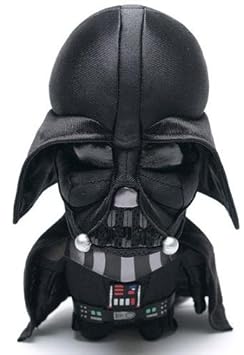
For "Your Kids": Collectible Darth Vader Taking Plus Toy Figure [Buy this awesomenes.]


Sure your kid asked for Rescue Bots/Sophia the First/a pony, but you know what's best for them, right? And this isn't just a gift--it's a hyperspace ticket to a lifetime of awesomeness! And who cares if it ends up in your room instead of theirs? You're just keeping it in good condition for them! They'll definitely appreciate that when they're older. No question.