Showing posts with label Marie Brennan. Show all posts

Friday, January 22, 2021

Microreview [book]: The Mask of Mirrors by M A Carrick

An epic fantasy that sets a high bar for itself, and winningly meets its own standards.


On the mean streets of the Venice-inspired city of Nadezra, young Ren’s life is not a good one. Under the thumb of the criminal Ondrakja, her existence is precarious and dependent on her capricious moods. Is it any wonder that she takes decisive action to get her and her siblings to escape, by poisoning her? 


Now, years later, Ren is back. Now she’s an adult, and with Tess, her skills have morphed into con artistry of a high order. She has a plan for wealth and power by targeting the weak and precarious noble family of Treamentis. Once the Treamentis was one of the leading families of Nadezra, but they have fallen on very hard times, a crumbling ruin of their former glory. But by posing as Renata Viraudax, a daughter of Letilia, a family member who fled long ago, Ren can infiltrate herself into high society and make some good coin. She has enough inside knowledge of “Renata’s” mother that she can socially engineer this. And as the Gods as her witness, she will never go hungry again. But it is a tough assignment, the Treamentis family are wary even given Renata’s polished patter, a local crime lord turned respectable businessman is suspicious of Ren, and just what are a number of the city nobles up to?


But that's not all by half. Ren’s major problem, unbeknownst to her, is that as she tries to infiltrate and fleece the family, she will be drawn, despite herself, into a plot that could topple the entire city, and everyone, including Ren, within it. There are dark forces afoot indeed. Ren is no hero, but when the city of her birth is existentially threatened, she might have to become one, like it or not.


This is the story of M. A. Carrick's - the pen name for authors Alyc Helms and Marie Brennan - The Mask of Mirrors.


Let’s set this up as a three card spread of Pattern Reading. In Nadezra, the tarot-like cards are used for fortune telling. There is the standard nine card spread, and then there is the simpler and more straightforward three card spread. The book goes into detail regarding this, as it forms a strong strand of the worldbuilding and the plot as well. Cards have positive and negative aspects, adding to the complexity of a potential reading, and providing maneuver room for interpretation. So where did this book come from, where does it stand in the course of this review, and where is it going?


The Face of Flame:

Making Something, pouring their heart and soul in the endeavor


This book is, very clearly, a labor of love from the two authors. This is the authors giving their all to characters and a world, not stinting on any of the good parts, putting it all out there and hoping that it is good enough and that it will resonate with readers. From the complex and complicated worldbuilding, to the richly described verse we have here, to the strong central character of Ren, it is clear that the authors decided to shoot for the moon. 


The Mask of Mirrors.


And here we come to my review and a rather appropriate card, being the title of the book itself. There is a lot I want to talk about in this review, and yet there is a lot I feel I should withhold, as that pleasant surprise for readers. There are plenty of pleasant secrets, lies, revelations, and things uncovered in the novel that it would be difficult for me to spoil everything and everything about it.


Sisters Victorious.


Rise to the Challenge. Reach inside for Strength. The negative side works well to talk about here. This book started as something that seemed insurmountable--something written for fun between Alyc and Marie. It was not something that I think anyone imagined could become a real life book--and yet, they rose to the challenge, reached inside for strength and now have a series to write. Can they build on the success of something they started for each other for fun into a series?


I’ve already mentioned Ren in the context of her posing as Renata Viradaux, but Ren is a complicated character. In the keeping of “threes” as being a foundational number, there are really three Rens.. There is the Ren of her youth, the thieving urchin. There is Ren in her guise as the noble Renata. And then there is her alternate  guise as Arenza, a fortuneteller of the Pattern. Her deck of cards, the only thing she has of her deceased mother, is not only a totemic object for her, but it seems that it has power of its own--or is it that Renata herself does? As the titular Mask of Mirrors card indicates, there are plenty of secrets and revelations in this novel. Many of them swirl around Ren, and we get flashbacks to her life on the street in addition to the opening sequence that sets her early life in the city, and provides the foundation for both of the present day Rens...and more than harkens back to her past in current events. 


Three is indeed a magic number. Three members of Ren’s adoptive family (herself, Tess and Sedge -- and can we talk about the interesting worldbuilding we have in this novel about families, both by blood and by choice) Three cards to the short spread. Nine (three threes) for the longer spread. Three living members of the Treamentis family that Ren is trying to infiltrate--Matriarch Donaia, and her children Leato and Giuna. Other numbers, particularly two and five, resonate throughout the novel. The authors do a great job with these patterns and structures and the more I read, the more I found, and I encourage you to do the same. Quaerendo Invenietis!


So let’s talk about Nadezra and the world the authors have created. Nadezra has a base chassis that is definitely meant to invoke Renaissance italy. Canals, masks (an important part of the culture), an entrepot of a port that connects far flung places, a oligarchy of powerful families in control, (a moon to the distant sun of other powers, Nadezra starts off with that chassis and then runs with it in fantastic invention. There are a number of magic systems and magic elements to the city--from the aforementioned Pattern cards through relatively inexpensive magics common to the city, to curses (and their removal)  to the geometric numinatria, geometric magics that range all the way from the small to complex and strange rituals that can affect the entire city. There is no one single magic structure here, there is a variety of them coming into contact, a reflection and a metaphor for the two cultures and peoples that make up the city. The authors reflect the worldbuilding of the local population and the ruling elite and their relationship and cast that across not only social relations, but magic, belief systems, and more. Nadezra is a much more socially complicated place than that original inspiration of Venice (or, frankly, a lot of other fantasy cities which are also inspired by Venice). The undercurrents of competing cultures and power create a rich tapestry for the city and its characters.


And such characters. Ren with her tripartite aspects is the center of the novel, and forms a trio with her found family Tess and Sedge. The Treamentis form another nexus of characters, in and of themselves even beyond Ren’s attempt to insert herself into that family. Then there is Vargo, a criminal gangster turned respectable businessman, or attempting to be the same. He is very much like a Wilson Fisk character who is trying to shed his disreputable past and insert himself in the upper echelons of society. He has an uphill climb, not only because he is a lower class Vraszen trying to be part of the dominant minority Liganti upper crust and so there is a double barrier there to his rise. Vargo was for me the most fascinating character beyond Ren herself, and he has complexity and depth to match. A novel of the events here with him as  primary, rather than secondary point of view would be fascinating (although it would prematurely reveal some of the mysteries about him that we get as the novel unfolds). The authors provide a variety of other characters from across the spectrum of societies, with interlocking and interdependent relationships. The world of the novel is very queer friendly as well, and this is a tolerance that is baked in on all levels of society. This is simply a world where queerness is normalized and accepted. 


The plotting is clockwork. While our entry into the world is Ren's impersonation, it is through that and the other characters that the greater overarching plot, and its elements, slowly become clear, an interlocking series of gears. By the time the reader (and Ren) is immersed into her own plot, she is also interlaced into the main plot, and with the reader joins the main story, and takes action. There is plenty of action and adventure to go along with the social maneuvering. As I mentioned above, the authors shot for the moon in putting everything they love--worldbuilding, characters, action, adventure, intrigue, grand plots, petty criminals and much more. And it all works together. It could have been easily a farrago but under the skilled writing here, it comes together into a wonderful package.


I do admit that with such a large cast on display, a couple of secondary characters could possibly have used another beat or two of character development (Tess, I am looking at you) and this is a complex secondary world fantasy that I would not hand to someone new to the genre. Otherwise, however, this is a collaboration that hits all the marks that I had hoped it would given the track record of the collaborators. It is clearly the first of a series, but it provides a solid complete story here that you can off ramp should you decide that you only want a one book visit to Nadezra. As for me, I look forward to what subsequent volumes will bring. M A Carrick, in the personage of Helms and Brennan, are really just getting started.


The Math

Baseline Assessment: 8/10

Bonuses : +1 for a rich, diverse, fractally complex and envisioned fantasy world

+1 for an intriguing and central main characters, whose strengths, flaws, character arc and depiction are all top notch.

Penalties: -1 A couple of the secondary characters could have used a tad more fleshing out. Hopefully book two will provide this.

Nerd Coefficient: 9/10 very high quality/standout in its category

POSTED BY: Paul Weimer. Ubiquitous in Shadow, but I’m just this guy, you know? @princejvstin.


Reference: Carrick, M A. The Mask of Mirrors [Orbit, 2021]


Wednesday, July 1, 2020

Microreview [Book]: Driftwood by Marie Brennan

Driftwood harnesses the power of the fix-up to tell the story of the people and characters living at the abattoir of all realities.


What happens after the world has an apocalypse and no help is forthcoming? What happens to dying worlds and the people living in them? In the verse of Marie Brennan’s Driftwood, dying worlds find themselves on the edges of a collection of broken realities and worlds and as new worlds join the fray, are slowly pushed from the margins toward the center. As they are pushed in, the world becomes squeezed, smaller and smaller, until what was once the size of a world is cut down to a country, to a province, to a city, a neighborhood, and then to even less. Once the world is pushed to the very center of Driftwood, and there, the bitter remnants of the world are extinguished. It's a continuous process, and even those who escape their world into the shards of another eventually have their cultures and societies extinguished and eventually themselves. It’s implacable and inevitable, and yet one mysterious character defies this rule.

Marie Brennan’s Driftwood is a collection of previous short stories using a recurring character, Last, and his relationship and connections to numerous characters and worlds within Driftwood. Lost is different than all others. His world must have gone to The Crush  long ago, and yet he is still alive. Or he was. The fix-up portions of the novel, the glue that binds the disparate stories together, is a meeting of a group of individuals who have heard of, or had their lives touched by Lost. But Lost himself seems to have disappeared, is gone. Has he been finally claimed by Driftwood?

The interstitial elements are, though, just a clothesline (and, honestly a rather thin one in my view, a weakness of the work) to get at the meat of the stories. The stories feature Lost as a character but he himself is really just a facilitator and opener that gives other characters a chance to have their Driftwood stories and adventures. In this way the interstitial elements are exactly the same at a more meta level--it exists just to allow the stories to be a little more than just a collection of short stories.

The stories themselves span a wide variety of tale types within the matrix of Driftwood. “A Heretic by Degrees” features a protagonist from a world relatively new to Driftwood, new enough that the King has declared that the world outside of his own does not exist...except that the King is dying and the cure might indeed exist in one of the worlds outside of his own.”Into the Wind” is a story of someone from a more fragmented world trying to rescue and save a piece of it from the apocalypse that ravages it still. “The Ascent of Unreason”  features someone who wants to make a map of Driftwood, a seemingly impossible task given its ever shifting and changing nature...but he has a cunning plan, and Last can help. “Remembering Light” is one of the darkest stories, making Last himself face his own doubts about being the last survivor of his civilization, and carrying the burden of that memory. It feels like the most personal of the stories, in terms of Last himself. “The God of Driftwood” shows the meanings people can attach to the randomness and utter nihilism of a place that destroys worlds, and the lies that we tell ourselves and each other. And “Smiling at the End of the World” is a short and intimate tale without Last at all, about the last two souls of their world, facing the Crush.

Beyond the individual stories, the core idea that Brennan works here is not knew--the interdimensional city where the laws of physics and magic vary even across a street goes back to Grimjack’s Cynosure, if not all the way back to Sidewise in Time, but Brennan makes it her own here by framing Driftwood as the end point of worlds and peoples and cultures. Whatever apocalypse happens to each world, and they are individual, the consequences of that apocalypse, at least as by the rules of her multiverse, is to bring that world into the sphere of Driftwood and slowly and inexorably be pushed and squeezed in and be destroyed. It reminds me of the city of Dis in the Planarch Codex supplement for the RPG Dungeon World, except Dis ion that world actively is eating other worlds and aggregating pieces to itself rather than other apocalypses bringing those pieces toward the singularity of the Crush.  It does occur to me, consequently, that Driftwood would be an interesting setting to set an RPG scenario within.

Brennan does soft pedal the various apocalypses that plague the worlds that are drawn to Driftwood and we’re left to wonder and speculate on our own (since the characters themselves don’t know) what brings a world into Driftwood in the first place, to inexorably be pushed to the Crush and be destroyed.And what brings worlds there in the first place to that doom isn’t the point, and as we learn in the stories, the slow destruction isn’t the point, either. The point is what the people of these worlds do with the time that they have. In the time of the Coronavirus, that’s a lesson worth remembering.

The Math

Baseline Assessment: 7/10.

Bonuses: +1 for a strong set of stories.
+1 for fascinating and inventive worldbuilding 

Penalties: -1 the connective material is the weakest element here by far.

Nerd Coefficient: 8/10 well worth your time and attention


Reference: Brennan, Marie. Driftwood  [Tachyon, 2020]

POSTED BY: Paul Weimer. Ubiquitous in Shadow, but I’m just this guy, you know? Hugo Finalist for Best Fan Writer. @princejvstin.

Thursday, March 26, 2020

Questing in Shorts: March 2020

I have a somewhat truncated edition of Questing in Shorts today, owing to March being, to put it mildly, a Month. From next month I'll be focusing back on magazines and some of the small press collections I already have on my shelves, but for this month, let's see what I did manage to get through in the circumstances. Luckily, it's all rather good:

The Voyages of Cinrak the Dapper by A.J. Fitzwater (Queen of Swords Press)


This collection, featuring a capybara pirate captain in a world full of anthropomorphic animals and magical creatures, is definitely more of a short fiction collection than a novel, but it's also a bit of an odd duck when trying to review as short stories, as there's a strong through narrative between each tale (or "tail") that makes it hard to speak about them individually. After an opening story (the aptly titled "Young Cinrak") that sees Cinrak take her first steps into piracy (in this world, apparently respectable career for those seeking freedom and a good community around them), the rest of the collection deals with her time as an established captain, taking on an increasingly mythological set of exploits, all while maintaining the affections of both opera prima donna Loquolchi, and the Rat Queen Orvillia, and looking after her diverse and entertaining crew of rodents and affiliated creatures.

Aside from the obvious parallels to its characters, there's something very soft and cuddly about these stories, in which krakens can become allies, stars can be freed from their royal captivity and sent back to the heavens, and pirates make for the most successful diplomats to all the various creatures of the earth (even the felines!) While it doesn't go particularly heavily into characterisation, its core cast all have enjoyable personalities and quirks to watch, and Cinrak herself is a delight at the heart of it all. The highlights for me came towards the middle, with the star-wrangling and celestial racing of "The Wild Ride of the Untamed Stars" signalling a shift into more magical adventure territory, and "Search for the Heart of the Ocean" following it up with an epic voyage which cements the compassion with which Cinrak, and the narrative around her, treats all the creatures in its orbit. I may have read this collection before "adventurous fluff in which everything is fundamentally OK" became one of the most important commodities on the planet, but my appreciation for it has only grown since then, and this is definitely a diversion I'd recommend to anyone who needs one at the moment.

The Nine Lands by Marie Brennan (Book View Cafe)


The Nine Lands is a collection of early stories from Brennan, all set in a shared world, although there's little overlap in the places and cultures covered. Despite being early work, the seven tales here are all highly enjoyable and, although its hard to get a full picture of the world as a whole, the individual pieces of worldbuilding and concepts are as accomplished and interesting as I'd expect from Brennan.

The stories themselves are relatively simple and self-contained in their narratives. Some are pretty bleak: "Execution Morning", the story of a Lieutenant dealing with a group of captured people from another culture who are due to be brutally executed in order to scapegoat them for their people's crimes, has very little in the way of hope or good choices for its characters, although it also offers a surprisingly sympathetic take for all involved. "The Legend of Anahata" tells the story of a King struggling to accept the impossible odds standing against his kingdom, and the sacrifices required from the Goddess. And "Sing for Me" is the story of a woman taken from her home in order to become the protege of a noble, and forced to develop painful talents she has no interest in making a name for herself over. In contrast, some of the stories do deal with forms of justice and belonging, from "Calling into Silence" and its story of a young woman cast out of her home and made to feel like a spiritual failure for her inability to complete a possession ritual, only to find the solution to her worries is rather closer to home, to "White Shadow"'s similarly spiritual tale of self-discovery among the shape-shifting Kagi people.

"Lost Soul"'s handling of a bard who has left bard college and is now struggling to find her passion within the magic of traditional music is a story that rivals some of the best musical stories of Sarah Pinsker, ending in a jam of epic proportions whose transitions and modulations you can almost hear through the invented song titles and descriptions. My favourite of the lot, however, is "Kingspeaker", in which a woman who has been raised to become the "voice" of a King, communicating his words to others as no others are able to bear the sound of him speaking, must find ways to reconcile her role with her broader duties to her Kingdom during wartime and the need to protect her young charge. Its a novel concept that dances between magical and cultural (though the author notes confirm that there is indeed something magical going on which makes the protagonist's role vital) and though the story is pretty light even for this collection, its a decent vehicle to showcase the concept and characters. Though it's hard, from an outside perspective, to automatically see that these stories belong to the same world, there's a common thread of highly accomplished worldbuilding which makes this early collection a worthy escape, especially for those who enjoy snippets of high fantasy in short fiction form.

Radicalized by Cory Doctorow (Tor Books)


This is, I think, my first time reading Doctorow, and it's a promising start. The four novellas in this collection deal in some way with near future scenarios which tackle aspects of US culture, and some of the more dystopian elements of late capitalism. There's "Model Minority", a story in which Not!Superman tries to take on a case of police brutality against a Black man, only to find his motives, his effectiveness and his own "whiteness" called into question as an alien. "Radicalized" deals with a man who finds comfort in an online community for men whose family members are suffering from cancer and whose insurance won't pay for the treatment which would save them. In "The Masque of Red Death", a man who has created what he considers the perfect post-apocalyptic survival community has his assumptions severely tested. Having sent away the family of one of his carefully selected co-survivalists, and learned a hard lesson in going up against an equally well defended other outpost and discovering what rampant post-apocalyptic gun violence actually looks like, it's illness (cholera, in this case) which really brings the realities of crisis survival home, and there's an interesting progression between the carefully curated image the protagonist puts forward at the beginning of the crisis, and the raw unpleasantness of the experiment's end.

The best story here, however, is "Unauthorized Bread", a story which creates an entire community of refugees living on the "poor floors" of a new build luxury apartment block, whose lives are dictated by the smart appliances installed in their flats which force them to use particular marked-up products to be compatible with them, or go without. When Salima's toaster company goes bankrupt, she finds a way to jailbreak it and toast all the bread she wants, but sharing this knowledge among her community sends them up against the system in a way she's not entirely sure she's prepared for. By turns chilling and heartwarming, and with a great supporting cast, Salima's story offers a terrifyingly plausible vision of a future where autonomy must be paid for, while also showcasing the hope and ingenuity that people can deploy against such systems.

POSTED BY: Adri, Nerds of a Feather co-editor, is a semi-aquatic migratory mammal most often found in the UK. She has many opinions about SFF books, and is also partial to gaming, baking, interacting with dogs, and Asian-style karaoke. Find her on Twitter at @adrijjy.

Tuesday, October 22, 2019

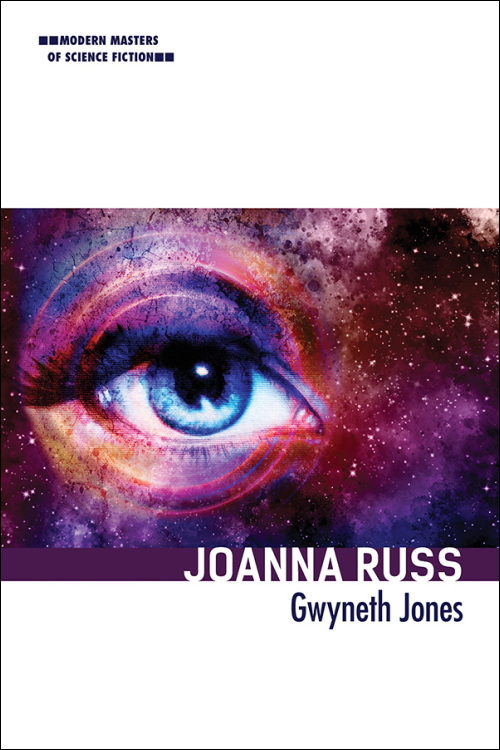
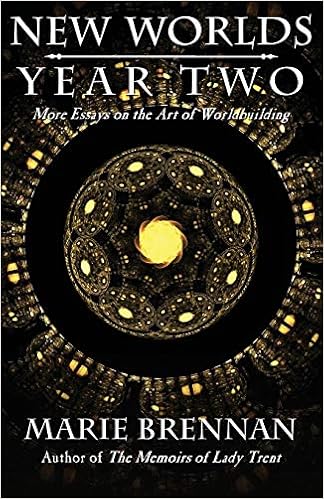
Nanoreviews [non-fiction]: Joanna Russ, New Worlds: Year Two

Image result for joanna russ gwyneth jones

Joanna Russ, by Gwyneth Jones

This academic biography, written by Gwyneth Jones, is one of the latest in the University of Illinois' Masters of Modern Science Fiction series on the works of prominent science fiction and fantasy writers - and the first of the series I've actually read. That means I don't have much to compare the particular style to, but I enjoyed the largely chronological deep dive into Russ' works, encompassing novels, short fiction and her extensive review work, much of which was unknown to me. In doing so, Jones charts - sympathetically but with an eye to contradictions and tensions within Russ' identity - her journey within science fiction, from a talented but not challenging fiction writer and a reviewer more likely to judge her female peers harshly while offering men a free pass for much worse books, to the explicitly feminist writing and stances which readers are more likely to associate with her today.

The focus here is very much on Russ' work and the highlights for me were reading the deep critiques of Russ' novels, particularly The Female Man and We Who Are About To (a work I tackled during Feminist Futures last year). Jones's reading of The Female Man, in particular, was interesting in the way it presented a radically different lens than the one I had read the novel in, taking the different aspects of the Joanna personality as a reading of identity across time rather than dimensions. It's a reading which brings Russ into conflict with her own identity as an SFF writer and Jones doesn't hold back from the implications of that reading, tracing it throughout the rest of her work and noting where the seeds come in at earlier points. If, like me, you don't often approach literature from a strongly academic lens, some of this will probably be well in the realms of "well I'd never thought of it like that", but it never comes across as particularly prescriptive or inherently dismissive to other readings, so I was able to enjoy the different ways of thinking about the texts rather than feeling put in my place by them, as is always the risk with more academic takes.

What I was missing from this - and, again, I'm not sure if this is me asking this book to be something it's not - was a greater elaboration of Russ 'relationships with others in the genre. There were some interesting gems of interaction here, notably the roundtable on "Women in Science Fiction" which took place over a period of years with other participants including Suzy Charnas, Samuel Delany, Ursula K. Le Guin, Vonda N. McIntyre, James Tiptree Jr and brought together by fanzine editor Jeffrey D. Smith, which gets a lot of attention - and which I'd love to learn more about! However, given the breadth of written correspondence which most writers were engaged in at the time, the lack of focus on how Russ was being received by her contemporaries - beyond those who were clearly afraid of what she represented, and its impact on her work - was an area I wish could have been incorporated more in the text.

All in all this is an interesting experience, if sometimes a little routine - collections of short stories are looked at together, followed by review periods, followed by the novels, in a chronological march that doesn't leave a lot of room for novelty. But despite the limitations of coverage and perhaps of the form, this is one to look out for, especially fans of Russ' work who want to read a more academic perspective on her writings, and I hope this is a contender for next year's Best Related Work Hugo.

Rating: 8/10

Image result for new worlds year two

New Worlds, Year Two: More Essays on the Art of Worldbuilding by Marie Brennan

This collection was released at the two year mark of Marie Brennan's Patreon of the same name, which publishes an essay per week on topics of interest to speculative worldbuilding, challenging creators to think about aspects of their fantasy or science fiction worlds which might not have crossed their minds. While I'm not in a fiction writing stage of life myself, I enjoyed the first year of essays which incorporated everything from plate tectonics to cannibalism, and this second volume delivers  the same experience on a similarly broad range of topics.

The essays are grouped into thematic areas, slightly separately from the Patreon itself, reflecting the experience of reading in a book rather than as week by week essays. It works well, and there's an impressive minimum of overlap even in those essays with similar subjects - its generally clear when a series has actually been written and posted in sequence, but there's no obvious drawbacks or unintentional skipping around even when it hasn't. Essays are bite-sized, running a couple of thousand words, and unpick both the technological and societal elements of each area being covered. That means that, for example, the series on weapons and armour which makes up the first few essays first looks at both the possible weapons one could use to do some duels, and the societal concepts of masculinity and honour that go into the culture of duelling, before looking at the historical contexts of duels themselves. Its all done in a way which draws mostly on Brennan's own areas of relative expertise (she did most of the work for a PhD in Anthropology before becoming a full-time writer): Japan and Europe come up a lot, as do the Pacific Islands, but there's an acknowledgement that this is far from the full range of real-world examples. Immediately after reading, I was torn on the question of whether guest entries from experts with different geographical or subject areas of expertise would improve the reading experience (either on Patreon or in book form), but regardless of the answer I don't think it detracts from what New Worlds is, which is effectively a series of writing prompts that challenge worldbuilders to go away and do their own research, rather than offering a full range of examples.

As well as weapons and duelling, the Year Two collection covers beauty and body modifications, clothing, weddings and courtship, writing and literacy, the societal concept of time (briefly discussed in book 1 but the subject of multiple essays here), religions, and superstitions and the supernatural. As in the previous collection, it closes with four more "meta" essays on the concept of worldbuilding itself which cover a little more of the "how" of what speculative worldbuilders might do with the prompts covered here. There's plenty to talk about under each of these concepts and a nice mix of "foundational" (clothes) and more "niche" (honeymoons, incense, "the social economy of clothing") topics - there's no sense that Brennan is at all running low on ideas or struggling to find topics of general relevance to write about. Perhaps because of their genesis on Patreon, the style is chatty and often quite informal, and there's no pretence to academic rigour on the historical examples; there's no citations here, and a few points where the text outright states something like "I know I've read an example of thing X, but I don't remember what it was". It doesn't affect the book's ability to do what it says in the tin, however, and as thought provoking elements the veracity of the examples given here (none of which stray into territory that I would consider particularly controversial or open to misinterpretation) isn't really the point.

The elephant in the room when reading these in ebook is whether this format adds to the reading experience - and, honestly, I don't think that ebook or Patreon lets these essays shine to their fullest extent. Patreon's system, while it has a lot of strengths and is linked to a monetary system that allows authors like Brennan to do this kind of work in the first place, isn't inherently great for archiving posts and allowing users to search for old content, and ebooks are similarly much harder than physical books to flip through and search for things rather than reading cover to cover. Luckily, Book View Cafe also has you covered if you want New Worlds in physical format - and I suspect that for people who really want this for its intended purpose, that's the version that is most going to allow its content and usefulness to shine.

Rating: 7/10

POSTED BY: Adri is a semi-aquatic migratory mammal most often found in the UK. She has many opinions about SFF books, and is also partial to gaming, baking, interacting with dogs, and Asian-style karaoke. Find her on Twitter at @adrijjy.

Monday, July 29, 2019

New Books Spotlight

Welcome to another edition of the New Books Spotlight, where each month or so we curate a selection of 6 forthcoming books we find notable, interesting, and intriguing. It gives us the opportunity to shine a brief spotlight on some stuff we're itching to get our hands on.

What are you looking forward to? Anything you want to argue with us about? Is there something we should consider spotlighting in the future? Let us know in the comments!


Brennan, Marie. Turning Darkness into Light, by Marie Brennan [Tor]

Publisher’s Description
As the renowned granddaughter of Isabella Camherst (Lady Trent, of the riveting and daring Draconic adventure memoirs) Audrey Camherst has always known she, too, would want to make her scholarly mark upon a chosen field of study.

When Lord Gleinheigh recruits Audrey to decipher a series of ancient tablets holding the secrets of the ancient Draconean civilization, she has no idea that her research will plunge her into an intricate conspiracy, one meant to incite rebellion and invoke war. Alongside dearest childhood friend and fellow archeologist Kudshayn, must find proof of the conspiracy before it’s too late.
Why We Want It: Turning Darkness Into Light is a follow up to Marie Brennan’s Hugo Award finalist Memoirs of Lady Trent series featuring the granddaughter of Isabella Camhurst and that’s really all that I need to know about it. I’m overdue to finish the Lady Trent novels, but Turning Darkness Into Light is a must read when I do.


DiLouie, Craig. Our War [Orbit]

Publisher’s Description
A prescient and gripping novel of a second American civil war, and the children caught in the conflict, forced to fight. 

Our children are our soldiers. 

After his impeachment, the president of the United States refuses to leave office, and the country erupts into a fractured and violent war. Orphaned by the fighting and looking for a home, 10-year-old Hannah Miller joins a citizen militia in a besieged Indianapolis.

In the Free Women militia, Hannah finds a makeshift family. They’ll teach her how to survive. They’ll give her hope. And they’ll show her how to use a gun.

Hannah’s older brother, Alex, is a soldier too. But he’s loyal to other side, and has found his place in a militant group of fighters who see themselves as the last bastion of their America. By following their orders, Alex will soon make the ultimate decision behind the trigger.

On the battlefields of America, Hannah and Alex will risk everything for their country, but in the end they’ll fight for the only cause that truly matters – each other.
Why We Want It: Our War is a novel painfully reflecting some of America’s greatest fears – that a President once impeached will refuse to leave office and America descends once again into a Civil War. It’s a story that could be ripped from the headlines of five minutes from now. While I hope Craig DiLouie’s novel is not prescient, it looks to be a searing near future worst case scenario of a novel that I both can’t wait as well as slightly dread reading.


Jones, Gwyneth. Joanna Russ [University of Illinois Press]

Publisher’s Description
The creative original who helped open the door to feminist SF 

Experimental, strange, and unabashedly feminist, Joanna Russ's groundbreaking science fiction grew out of a belief that the genre was ideal for expressing radical thought. Her essays and criticism, meanwhile, helped shape the field and still exercise a powerful influence in both SF and feminist literary studies.

Award-winning author and critic Gwyneth Jones offers a new appraisal of Russ's work and ideas. After years working in male-dominated SF, Russ emerged in the late 1960s with Alyx, the uber-capable can-do heroine at the heart of Picnic on Paradise and other popular stories and books. Soon, Russ's fearless embrace of gender politics and life as an out lesbian made her a target for male outrage while feminist classics like The Female Man and The Two of Them took SF in innovative new directions. Jones also delves into Russ's longtime work as a critic of figures as diverse as Lovecraft and Cather, her foundational place in feminist fandom, important essays like "Amor Vincit Foeminam," and her career in academia.
Why We Want It: Part of The University of Illinois Press’s Modern Masters of Science Fiction Series, Gwyneth Jones’ look into the life and the work of Joanna Russ is essential for readers looking to get a bit deeper into one of science fiction’s most notable and important writers. I read Paul Kincaid’s commentary on Iain Banks from the same series when it made the Related Work ballot last year, which brought the Modern Masters of Science Fiction series to my attention. This may well be the single volume of the series so far (though I’ll be looking forward to forthcoming works on Ursula K. Le Guin and Roger Zelazny as well)


Kuang, R.F. The Dragon Republic [Harper Voyageur]

Publisher’s Description
Rin’s story continues in this acclaimed sequel to The Poppy War—an epic fantasy combining the history of twentieth-century China with a gripping world of gods and monsters 

The war is over.

The war has just begun.

Three times throughout its history, Nikan has fought for its survival in the bloody Poppy Wars. Though the third battle has just ended, shaman and warrior Rin cannot forget the atrocity she committed to save her people. Now she is on the run from her guilt, the opium addiction that holds her like a vise, and the murderous commands of the fiery Phoenix—the vengeful god who has blessed Rin with her fearsome power.

Though she does not want to live, she refuses to die until she avenges the traitorous Empress who betrayed Rin’s homeland to its enemies. Rin’s only hope is to join forces with the powerful Dragon Warlord, who plots to conquer Nikan, unseat the Empress, and create a new republic.

But the Empress and the Dragon Warlord are not what they seem. The more Rin witnesses, the more she fears her love for Nikan will force her to use the Phoenix’s deadly power once more.

Because there is nothing Rin won’t sacrifice to save her country . . . and exact her vengeance.
Why We Want It: The Poppy War was a revelation. A debut novel and one of the best of 2018 (it was on my Hugo ballot and was my runner up for the best novel I read last year), the novel deserved every bit of praise it received. In a year filled with major releases from some of my favorite authors, not to mention a surprise sequel to The Handmaid’s Tale, The Dragon Republic is one of the top two or three novels I’m looking for this year. The Poppy War was that good, and I have no doubt The Dragon Republic will live up to the promise of Kuang’s debut.


Modesitt, Jr., L.E. The Mage Fire War [Tor]

Publisher’s Description
L. E. Modesitt, Jr., continues his bestselling Saga of Recluce with The Mage-Fire War, the third book in a story arc which began with The Mongrel Mage and Outcasts of Order. 

Once again, prejudices against the use of chaos magic force Beltur and his companions to flee their refuge in Axalt. The rulers of nearby Montgren have offered them sanctuary and the opportunity to become the Councilors of the run-down and disintegrating town of Haven.

Montegren lacks any mages—white or black—making this seem like the perfect opportunity to start again.

However, Beltur and the others must reinstitute law and order, rebuild parts of the town, deal with brigands—and thwart an invading army.
Why We Want It: The Mage-Fire War is the 21st Recluce novel from L.E. Modesitt, Jr and the third to feature Beltur as a protagonist. If my math is correct, this is the first sequence to feature the same main character for three books. Otherwise, we’ve had a number of two book sequences. While offering few of the delights and discoveries of the earliest Recluce novels, the Beltur sequence has been solid fantasy fiction and Recluce is a series I will always come back to.


Moreno-Garcia, Silvia. Gods of Jade and Shadow [Del Rey]

Publisher’s Description
The Mayan god of death sends a young woman on a harrowing, life-changing journey in this dark, one-of-a-kind fairy tale inspired by Mexican folklore.

The Jazz Age is in full swing, but Casiopea Tun is too busy cleaning the floors of her wealthy grandfather’s house to listen to any fast tunes. Nevertheless, she dreams of a life far from her dusty small town in southern Mexico. A life she can call her own.

Yet this new life seems as distant as the stars, until the day she finds a curious wooden box in her grandfather’s room. She opens it—and accidentally frees the spirit of the Mayan god of death, who requests her help in recovering his throne from his treacherous brother. Failure will mean Casiopea’s demise, but success could make her dreams come true.

In the company of the strangely alluring god and armed with her wits, Casiopea begins an adventure that will take her on a cross-country odyssey from the jungles of Yucatán to the bright lights of Mexico City—and deep into the darkness of the Mayan underworld. 
Why We Want It: Each of Silvia Moreno-Garcia’s three previous novels have been stupendous and as different from each other as can be. It has come to the point that it doesn’t matter to me what the book is about as long as I know it was written by Silvia Moreno-Garcia. With that said, a novel featuring the released spirit of the Mayan God of Death seeking help to get his throne back? Yeah, I’m there for that, too.


POSTED BY: Joe Sherry - Co-editor of Nerds of a Feather, 3x Hugo Award Finalist for Best Fanzine. Minnesotan.

Wednesday, December 19, 2018

Born to the Blade: Episodes 9 & 10

After a long absence, we return to my look at Michael R. Underwood's consistently excellent serial Born to the Blade. Following my thoughts on Episodes 7 & 8 (see here), we continue on with episodes 9 and 10, written by Malka Older and and Marie Brennan, respectively.


Episode 9: Assassination

The titular assassination is a bit of a tease if taken literally because the assassination in question does not occur until the final paragraphs of the episode. If taken figuratively, Malka Older could be referring to the overall assassination of peace that has been ongoing now for several episodes of Born to the Blade and now with the formal declaration of war, that peace has been shattered. I wonder about titles, sometimes.

Knowing the little bit that I do of Malka Older (at least as she presents herself online), I am not surprised by how gracefully she handles the growing refugee crisis on Twaa-Fei. Resources are being overwhelmed, tensions are escalating, but the refugees are not a faceless mass of invaders. They're people and Older writes them as such, even in the limited space she has for this episode and with all of the other work she has to do to propel the larger narrative forward. It's a fantastic piece of writing and "Assassination" might be my favorite episode of Born to the Blade so far.

Older also smoothly handles the politics of this episode. From the early formal declaration of war by the Merkitan Empire against Quloo to the dinner party thrown by the more junior Merkitan warder for all of the other warders, despite the war they just declared, it's an impressive balancing act of Older fitting all the pieces together. Is the party high level diplomacy or a show of supremacy? Maybe it's both.


Episode 10: Shattered Blades 

Born to the Blade, in some ways, is warfare writ small. It's aggression between diplomats, chaos on the island of Twaa-Fei, assassination attempts, and duels in place of large scale warfare. We know there is a larger war raging beyond the shores of Twaa-Fei, but "Shattered Blades" is about the personal stories.

Those personal stories, of course, are told through and around the best fight sequences in any of the episodes of Born to the Blade (and perhaps in just about any other story). Brennan absolutely nails the two major duels of "Shattered Blades". This episode is not just about the fighting, but damn, the duels are so damned good. But, so is the everything. Dealing with the fallout of the assassination attempt from the previous episode is powerful and meaningful for change and moving the story along. "Shattered Blades" is among the best episodes in a very strong season of Born to the Blade.


POSTED BY: Joe Sherry - Co-editor of Nerds of a Feather, 2017 & 2018 Hugo Award Finalist for Best Fanzine. Minnesotan.  

Monday, July 23, 2018

Reading the Hugos: Series

It's time for another installment of Reading the Hugos and it's time to either go big or go home. Since I'm already sitting at home while I write this, I think I'm going to go big and cover the abundance of excellence up for Best Series.

There is so much goodness here that it isn't even fair.

Best Series last year was a trial run, a special one time category (pending the ratification at the WSFS business meeting at last year's Worldcon) - which makes this the first full year of the category. I'm probably the only person who is going to think of things like this.

If last year was a proof of concept and this year represents the very high bar we should expect from the Best Series quality, we're looking at one of the strongest categories on the ballot year after year. The series I ranked lowest on my ballot is exceptional. The only challenge here is that there is a lot of reading to do to at least get a brief overview of each series, let alone do a deep dive.

Let's take a look at the finalists for Best Series.


The Books of the Raksura, by Martha Wells (Night Shade)
The Divine Cities, by Robert Jackson Bennett (Broadway)
InCryptid, by Seanan McGuire (DAW)
The Memoirs of Lady Trent, by Marie Brennan (Tor US / Titan UK)
The Stormlight Archive, by Brandon Sanderson (Tor US / Gollancz UK)
World of the Five Gods, by Lois McMaster Bujold (Harper Voyager / Spectrum Literary Agency)


The Books of the Raksura: I've only just come to Martha Wells via her excellent Murderbot novellas, though I had long intended to get to her novel length work - whether her Ile-Rien novels or The Books of the Raksura. What better time than now?

This isn't necessarily a new thing for fantasy (or science fiction), but I don't read many novels with non human protagonists. The Cloud Roads is one of them. The Raksura are humanoid (sometimes), but are shapeshifters and I don't quite now how to describe their other (primary?) forms. Dragon birds? Ultimately, it doesn't matter. What matters is the story of Moon, a raksura who doesn't know what he is. The Cloud Roads serves as introduction to the wider world and the series as a whole. The reader discovers along with Moon what it means to be a raksura.

Wells is a fantastic and accomplished storyteller. I regret that I'm only able to evaluate the series based on the first (excellent) novel, but as with every series on the ballot, I've run out of time to read more than I have. The good news is that I've discovered another series that I'm really excited to read more of.


Incryptid: After a five year gap between reading the first and second volumes of McGuire’s October Daye I was ready to fully embrace the series and spend the summer immersed in McGuire’s world. That plan was shot to hell when Incryptid, one of McGuire’s other series, was a finalist for the Hugo Award for Best Series. With the inclusion of the Best Series category, there is a LOT of reading to do for the Hugo Awards and Toby Daye was just going to have to wait.

Discount Armageddon introduces readers to Verity Price, a cryptozoologist / ballroom dancer spending a year in New York City where she has to decide if she’s going to take up the family trade of studying and protecting “supernatural” creatures from humans OR if she’s going to embark on a full time career in ballroom dance. It’s a conundrum. All of those legendary mythological creatures we’ve read about? They’re real and many of them are living among us, some in disguise, some in hiding, and some just living in the sewers. They’re not like the myths, but they’re even more fully realized than what we might come to expect. They’re people, except a completely different species. Several species, actually. The Incryptid novels are so silky smooth, but tense and occasionally intense. There’s plenty of action and new monster trivia and deep dives into particular creature cultures. The first two focus on Verity Price, the third on her brother Alexander as he works in Ohio doing his own thing for the family. The change in perspective was initially jarring, but McGuire handles the new viewpoint character perfectly and midway through I realized Half-Off Ragnarok was my favorite of the three Incryptid novels I have so far read.

I thought this was going to be the summer of October Daye, but it may well be the summer of the Price family. I will only have read the first three novels in the series by the time Hugo voting ends, but I will be working my way through the rest of the series this year. I’m hooked and I’m ready for the next four (as of this year). Maybe I’ll get back to Toby Daye next year.


The Stormlight Archive: I wonder if there will be a point in the future where Brandon Sanderson's entire Cosmere will be up for Best Series. I can see it happening. Happily, this finalist slot is for the three books so far published in The Stormlight Archive: The Way of Kings, Words of Radiance, Oathbringer. These are each epic fantasy writ large. Sanderson's magnum opus. Each volume is approximately a googolplex of something long (words, pages, doesn't matter). They're great, but damn. It's a lot.

That's not really a complaint. Just a statement. At this point I've only read The Way of Kings and Words of Radiance. Both were exactly what I was looking to read at the time I read them. Oathbringer has been on the nightstand by my bed since before it was published, looming, intimidating. I know I'm going to love it, but it's a commitment.

Regardless, The Stormlight Archive is an achievement of worldbuilding and long form storytelling. With only three books published thus far, the overall shape to the series is just beginning to form. Which is why, as good as these books are, I have a very difficult time saying this is the Best Series. It's one thing voting for an incomplete series that is mostly done It's another thing voting for a series that is only 3 books out of 10 complete. It's a good batting average in baseball, but it isn't good enough to push it to the top of my ballot.


The Memoirs of Lady Trent: There are two novels part of a Hugo Finalist series which I seriously regret not reading sooner. One is A Natural History of Dragons. The other is written by Lois McMaster Bujold and I'll talk about that one soon enough. Despite all of the praise Marie Brennan's novel received, there was something about the combination of the book cover (which is gorgeous, but not selling me as something I want to read) and the idea the series was "memoirs" of a "lady" that I found offputting enough to never pick up the book. Though, I did borrow it from the library once only to return it unopened. That was so very much a mistake. A Natural History of Dragons is absolutely wonderful and that wonder is tied to the glorious voice of Isabella Camherst.

Isabella is the titular "Lady Trent" of the series, and concept of A Natural History of Dragons being the first volume of "The Memoirs of Lady Trent" means that the much more accomplished Lady Trent is narrating her life and adventures. Late in life, Lady Trent is known as the foremost expert on dragons but in these early days, little is known by anyone. So, the first novel and presumably the series as a whole is a story of discovery and adventure. If the rest of the series is as good as A Natural History of Dragons, we're in for something special and I really, really should have been reading these books as they were published.

This does mean, of course, that I have only read the first volume of The Memoirs of Lady Trent and can only place it on my ballot based on one book rather than the full set of five. That's just the way this category goes, unfortunately. It is also a mark of just how good A Natural History of Dragons is.


The World of the Five Gods: Before the Hugo finalists were announced, I had read five of the six Penric novellas set in the World of the Five Gods, but none of the novels. So, I read The Curse of Chalion and re-discovered that I should always read everything written by Lois McMaster Bujold without question. My only defense is that I had not yet read anything by Bujold when The Curse of Chalion was first published in 2001 - but that's not much of a defense because she had published many books in the Vorkosigan series by that point (winner of the 2017 Hugo for Best Series, naturally).

The Penric novellas are very good. The Curse of Chalion is exceptional. With complete honestly, I was slightly angry when I finished it. Not because I didn't like it, but because I wasted so many years that I could have been reading this wonderful book and series. Next up, Paladin of Souls and The Hallowed Hunt. The truth is that readers should never sleep on Lois McMaster Bujold because she's always going to deliver a fantastic book and reading experience. As I mentioned, the Penric novellas are very good, but they only hint at just how good The Curse of Chalion was. The strength of Chalion pushes the entire series up the ballot.


The Divine Cities: Despite being my favorite of all the finalists up for Best Series (and the only one I had fully read prior to the announcement of the ballot), I have struggled to figure out my angle into writing about The Divine Cities. Each novel in the series was fully exceptional in its own right and, equally impressive, the sum of the series is even stronger than the individual volumes. The Divine Cities is urban epic fantasy with dead gods, magic, bureaucracy, and wretched tragedy (this could also be a description of a Max Gladstone novel). Each novel is self contained, but builds strongly off of the emotional beats of the previous work. You don’t need to have read a previous volume, but the emotion of City of Blades is strengthened by having gone on the journey of City of Stairs. The opening of City of Miracles works as a standalone set piece, but the rawest power comes from having lived the characters.

Somehow I have less to say about the Divine Cities than I expected, except to say this: City of Stairs, City of Blades, and City of Miracles were each among the best two or three fantasy novels published in their respective years. I can only give these novels my highest recommendation. They are absolutely fantastic. The trilogy hits the mark in telling a complete story spread across decades. If you like epic fantasy, you should read these books. If you like good books, you should read these books.


My Vote:
1. The Divine Cities
2. The World of the Five Gods
3. The Memoirs of Lady Trent
4. The Stormlight Archive
5. Incryptid
6. The Books of the Raksura


Our Previous Coverage
Novel 
Novella
Novelette
Short Story
Related Work
Professional Artist
Fancast
Fan Artist
Fan Writer
John W. Campbell Award for Best New Writer


POSTED BY: Joe Sherry - Co-editor of Nerds of a Feather, 2017 & 2018 Hugo Award Finalist for Best Fanzine. Minnesotan.  

Tuesday, June 19, 2018

Born to the Blade: Episodes 5 & 6

Today we return to my look at Michael R. Underwood's consistently excellent serial Born to the Blade. Following my brief thoughts on Episodes 3 & 4 (see here), we continue on with episodes 5 and 6, written by Malka Older and and Marie Brennan, respectively.


Episode 5: Trade Deal

Secrets are revealed that perhaps shouldn't be revealed. Now that Kris Denn was victorious in the Gauntlet and earned Rumika a seat on the Warder's Council, he immediately fulfills his promise to Ojo of Quloo and confirms the titular trade deal of aerstone (a relatively rare and expensive ore that allows all of these island nations to float in the sky + build airships) and help out the otherwise sinking island nation. Being relatively inexperienced and trying to make friends and influence people, he lets slip during a night of drinking that Rumika perfected a method to manufacture aerstone rather than just strip mining their island like everyone else does. Whoops.

Whoops, indeed.

Malka Older balances the intensely action packed fourth episode with a quieter episode, if equally explosive in term of revelations. I really like how Older gets across the inexperience and naivete of Kris more here than in any of the previous four episodes. He's great with a blade (though still has more to learn in that arena, too), but his diplomatic experience is sorely lacking and it shows. That's the heart of what "Trade Deal" gets across. Kris may be a primary character of this narrative, but he made a really stupid mistake and this may be one of a pivotal event in the Born to the Blade narrative.


Episode 6: Spiraling

It's not that I want to say the episode titles are a bit on the nose, but if I'm being honest, they're a bit on the nose. After the successful trade deal between Rumika and Quloo in the last episode (and Kris's lack of circumspection), the fleet delivering aerstone to Quloo is destroyed. Distrust and rumors begin to infect and infest the warders of Twaa-fei. Events are not out of control yet, but they're getting there. Things seem to be spiraling out of control. Like I said, on the nose.

Thing is, that spiraling is exactly what is happening here. Marie Brennan is very effective at communicating the growing distrust between the nations represented by the warders at Twaa-fei. Things are tense and growing increasingly moreso. That tension is palpable. We're at the midpoint of Born to the Blade, so it's quite clear that things have to get much worse before they get better, assuming they do get better. That's not guaranteed and even before I see how this season shakes out I know that I don't want this to end. I want a second and maybe even a third season. It's good not-television.


POSTED BY: Joe Sherry - Co-editor of Nerds of a Feather, 2017 & 2018 Hugo Award Finalist for Best Fanzine. Minnesotan. 

Monday, May 21, 2018

Born to the Blade: Episodes 1 & 2

I really should have gotten on this serialized fiction bandwagon earlier**. Sure, Charles Dickens was doing it back in the 1800's (pay by the word and leave readers waiting for the newspaper delivery for the next installment? Will Little Dorritt live?) and I can only imagine how much earlier the concept had truly originated, but similar to what Tor.com Publishing is doing with their novella line - Serial Box isn't so much innovating the form as re-popularizing serialization within the science fiction and fantasy genre (this is something that has long been done in audio / podcast format).

And so it is that, despite having the eleventy thousand page first season of Bookburners (also from Serial Box) on my night stand, I embark on a new serialized adventure: Born to the Blade.


Born to the Blade was created by Michael R. Underwood. You may be familiar with his Genrenauts series of novellas (also serialized. I'm sensing a theme here) originally published by Tor.com and finished on his own. It is an epic fantasy centering, at least initially, tightly in a neutral city where conflicts are resolved by formal duels by representatives of their respective nations. If that city is functioning in some ways as the United Nations of that world, the domineering Mertikan Empire appears to map to the United States in many ways.

Perhaps I'm reading a touch too much into this, and it may be that "Mertikan" echoes just a bit too close to "American" that I'm reaching for parallels that aren't intended. Certainly, Born to the Blade is not presenting as commentary on America today, but it is also something that won't go away in the back of my mind. We don't read in a vacuum, after all.

The first two episodes of Born to the Blade are written by Michael R. Underwood ("Arrivals") and Marie Brennan ("Fault Lines") and they both serve as introduction as well as hook. There's just enough cliffhanger at the end of each episode that I finish eager and ready for the next.

Thus far into Born to the Blade we are introduced to the politics of the island / city. At this point, Underwood and Brennan have only revealed the outlines of how things fit together. We know there was a rebellion, a captured "Golden Lord", and the Mertikans want him recovered and killed. We see how Kris, a young bladecrafter, is seeking a spot on the Warder's Circle - the first for his home country. We see Michiko work as a junior warder, learning the city, but also clinging to a fragile alliance. "Arrivals" and "Fault Lines" are apt titles for the first two episodes because Underwood and Brennan give us exactly that. They both serve as introduction and they are a fitting start to the serial. The fault lines are clear, the burgeoning conflict beginning to take shape. Our reading appetites are whet.

Given there was already one very significant surprise in the first episode, I have no idea where the writers of Born to the Blade are going to take this story. The one thing I do know is that I'm on board and along for this ride.


**I should also note the existence of Shadow Unit, which was also a serialized bit of fiction that was exceptionally well done, written and published in episodic format as if it were a television show, and featuring some of the finest damn writers this side of anything. That is almost beside the point, except that I want to take any opportunity I have to mention Shadow Unit, even if I am talking about something else. It was the best. I miss it daily. Shadow Unit forever.


POSTED BY: Joe Sherry - Co-editor of Nerds of a Feather, 2017 & 2018 Hugo Award Finalist for Best Fanzine. Minnesotan.