Showing posts with label Michael R Underwood. Show all posts

Monday, April 25, 2022

Mind Meld: Best Game or Interactive Fiction

Welcome back to the Mind Meld, where I ask a number of people in genre, fans, writers, podcasters, agents a single genre related question and collate the answers for you. 

Today’s Mind Meld question is the following...


The 2021 Hugos featured a special category for "Best Video Game", won by Supergiant Games' Hades. But despite proposals to make a permanent category for games and interactive work, there is no such category this year at the 2022 Hugos, to be held at Chicon. But what if there were? If there was a "Best Game or Interactive Experience" Hugo for 2022, for games released or substantially updated and modified in 2021, what would YOU want to see on the ballot, and why?

Mur Lafferty is an award winning podcaster and writer and “…one of the worst-kept secrets in science fiction and fantasy publishing.”

2021 didn't fully exist for me. I couldn't even think of what came out last year, and had to look them up. 
I played a lot of games in quarantine, of course, but most of them were continuations/replays from 2020 or earlier (Hades, Blaseball, Animal Crossing, Horizon Zero Dawn etc). However, I did watch a lot of gameplay on the Twitch platform, which is free, requires no skill, and you can distance yourself from emotional wear and tear, and got to see some incredible new games. 

If there was a 2021 Hugo for Best Game, Life is Strange: True Colors would be a contender for the top. Life is Strange games famously feature real world problems (in this case, mine explosions and corporate cover-up and the heavy grief families suffer) with the main character having one special trait (time manipulation, telekinesis) to navigate the conflicts. In True Colors the main character Alex can see and absorb the emotions of others, and uses her power to figure out what happened in the mine explosion that killed her brother. 

The game is gorgeous and the decisions are heart-wrenching. It was something I didn't want to play, but some folks enjoy depressing-as-hell stories and games (see last year's nominee, the laugh-riot The Last of Us 2) and watching the game narrative was enough to impress me.
 
The new Pokemon Snap was also fun to watch people play. It had much less emotional carnage. Seriously, who wants emotional carnage in these times? 

Sharang Biswas is a writer, artist, and game-designer based in New York. He has won numerous awards for his games, while his writing has appeared in publications including Eurogamer, Dicebreaker, Lightspeed, and Strange Horizons. He currently teaches game design at Fordham University and the NYU Game Center.
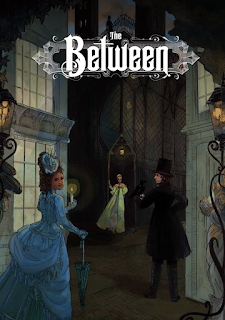
I think Jason Cordova's The Between is one of the most interesting games of 2021. Cordova builds off of the system he designed for 2020’s Brindlewood Bay: in both games, clues to a mystery are randomly selected by the game master, which players subsequently use to create rather than discover the solution to a mystery.

This time, the game is set in a supernatural, Victorian England, à la The League of Extraordinary Gentleman, and Cordova has introduced a heap of new mechanics and playable character types to immerse players in a seedy, macabre London filled with echoes of gothic horror.


Ira Alexandre is the primary campaigner behind the Games Hugo, a contributing editor at two-time Best Fanzine Hugo Award winning blog Lady Business, and a Co-Chair for WisCon for the second time. They live on Twitter at @itsjustira and, in the real world, with four cats and a corgi.
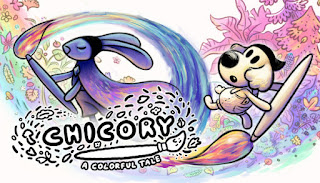
I have a confession to make: Even as I've been campaigning for a Games Hugo, 2021 was not a good year for me actually playing games. I know, it's weird — and bad — but one of the games that I did play actually gets at this very dilemma. Chicory: A Colorful Tale is a game about creativity, responsibility, depression, mental illness, burnout, and dismantling systems that no longer serve the communities they're meant to structure and support. But it's also a game about people who are so overwhelmed by a responsibility they've taken on that they don't get to enjoy what that work centers around. In Chicory, you play a (never gendered) dog who is the janitor for the titular Chicory. Chicory is current Wielder of the Brush, a powerful artifact that lets you bring colour to the otherwise colourless world. But Chicory buckles under the constant pressure to create art to serve those around her. She shuts herself away, at which point the player character, untrained and unchosen but eager, picks up the Brush — and discovers the darkness that has overtaken Chicory. The game looks like a digital colouring book, because it is one, and you can colour the world however you want, either for your own pleasure or to solve puzzles and deal with obstacles. The style, delivery, writing, and gameplay are all very gentle even as they grapple with truly dark and complex ideas. The game is not easy, with tricky puzzles and challenging boss battles. In the end, I found a lot of meaning in playing this game with my partners (it has a wonderful co-op mode) even as I worked on the Games Hugo campaign, getting a chance to actually enjoy the very sort of work I was championing. Now, working on the campaign in 2022, I'm learning to lean on my fellow campaigners and be gentle with myself to avoid burnout — and leave room for the very source of joy that I want our community to reward.

Anyone who's allowed me to talk about games for more than a minute will have heard that I love Outer Wilds, and the 2021 DLC for the game, Echoes of the Eye is... perfect. We're very lucky to have such a stellar example of what a Hugo-worthy "substantial modification" of a game could look like. Outer Wilds was a game so complete within itself that I could not imagine how a DLC could possibly work without undermining the structure and themes of the base game. And yet — Echoes of the Eye not only manages to preserve everything extraordinary and meaningful about the original game, but it actually builds on it and is even more clever and wonder-inducing. The environments are stunning, the secrets surprising and fascinating, and the atmosphere spot-on. Much as with the original game, saying basically anything about it takes away some of the joy of discovery, but I can say that the developers seemed to ask themselves, "What mechanic have we not yet thoroughly explored?" and then built not just an entire new gameplay paradigm, but an entirely different genre onto the base game. Incredible.

Honourable mentions to titles I haven't played: Speaking of time loops, Deathloop looks fantastic! I'm replaying Psychonauts because (a) of all it's awesome and (b) of all Psychonauts 2 sounds GREAT. And I absolutely cannot wait to try Inscryption, because games about games, games that interrogate the nature of gameplay, of play, of narrative, like The Stanley Parable and Bioshock, are pure catnip to me. I am so excited to check out these great 2021 titles and the others recommended here!

Joe DelFranco is a Fiction writer and lover of most things video games. On most days you can find him writing at his favorite spot in the little state of Rhode Island.
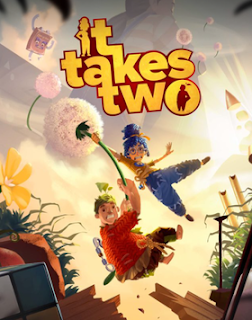
 
Three games come to mind when I think of the best games of 2021: Returnal, Ratchet and Clank: Rift Apart, and It Takes Two. If I were to look at 2021 as a whole, I would say that I didn’t see or experience anything that I would consider transcendental, but some great titles were released. 
 
Returnal did a wonderful job with fast-paced, frenetic, high stakes gameplay in a procedurally generated sci-fi atmosphere that exuded beauty and danger in equal measure. It fell short of being phenomenal because of its lack of boss difficulty, and vague/unsatisfying story conclusion, but it was still a great game overall and something I'd like to see a sequel to in the future. A great foray for rogue-lites in the AAA gaming space.
 
Ratchet and Clank: Rift Apart was a great continuation of a two-decade-old series. Impressive visuals in cartoony sci-fi worlds have never looked better, and the game delivers fun gameplay with exciting new weapons and weapon upgrades. While the game never tries to reinvent the wheel, they do well with the formula they've become comfortable with. Rift Apart delivers a good story with fun characters and is more than worth checking out. It's also a great example of the power of the new generation of console hardware.
 
It Takes Two is a wonderful co-op title that spans all different kinds of genres during its 12-hour runtime, not only story genres but gameplay genres as well. By constantly changing things around, It Takes Two keeps things fresh for players. The game is a mandatory cooperative experience with a heavy emphasis on couch co-op. In a world so divided, it was nice to have a game that did its best to bring people together. Some bugs and weird story beats/characters, and over-simplicity kept it from being perfect, but it was a ton of fun with a partner and highly recommended to play with a partner or close friend.
 
There are some other games I missed out on like Deathloop and Psychonauts 2, but I intend to get to some of them when I have time, Deathloop in particular. It was a great year for games, even if there were no earthshattering releases. Looking forward, 2022 will be a significant year for video games with the releases of Horizon: Forbidden West, Elden Ring, God of War Ragnarok, Starfield, and The Legend of Zelda: Breath of the Wild 2.

Gregory A. Wilson is an author of speculative fiction and TTRPG adventures and supplements, a college professor of literature and creative writing, a lead singer and trumpet player in a progressive rock band, the lead writer of the video game Chosen Heart (currently in development), and a long time game master of TTRPGS of every type and description. You can find him at his own website, www.gregoryawilson.com, on his Twitch channel, www.twitch.tv/arvaneleron, on his actual play podcast Speculate!, www.speculatesf.com, and on Twitter at https://twitter.com/gregoryawilson, as he gears up to launch his new Grayshade IP (with novels, a TTRPG, and an audio book) in June.  
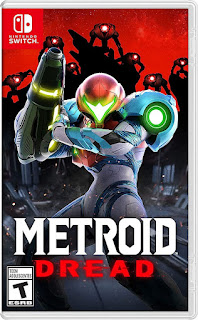
Here's the thing about the current video game landscape: as opposed to the 1980s and 1990s, when games came out less frequently and were more universally played, in 2022 there are so many thousands of games produced every year, from one person indie studios to AAA studios with hundreds of employees and budgets to match, that it feels like an awful lot of hubris to think I can come up with one best game for the year. But I do play a fair number of games on both GOG.com's and my own Twitch channel, and I've interviewed a number of developers and writers for these games, and of all the work I played, saw, or read about in 2021, there's one game I'd want front and center in a Best Video Game Hugo for 2022: Metroid Dread.
 
The Metroid series has always had a special place in my heart, with its blend of exploration, wonder, revealed lore, and challenging play. (It's also got Samus, one of the most iconic protagonists in video game history, which doesn't hurt.) The brilliant thing about Metroid Dread is that it understands this history without being weighed down by it. The typical play conditions of Metroid games are all here: no weapons, and thus a very limited area of travel, followed by the gradual opening of more areas as more weapons and equipment are discovered. As usual, the satisfaction of seeing previously inaccessible areas become available to explore is unmatched by almost any other game, and the feeling of growing power--balanced by the growing threat of increasingly dangerous bosses and environments--is as enjoyable as always.
 
But Dread goes further, both by introducing the (almost) unkillable EMMIs, which can only be defeated by getting to the weapons which can break their defenses, and by giving further backstory information about the mysterious Chozo, the source of Samus's weaponry and training. This is a completely new game, not a remake in the style of the brilliant Final Fantasy VII Remake, which redefines how such projects should be done. But it understands its own history, and gives those who spent much of their childhood wondering about that history a reason to again become fascinated in its own lore. You don't need to have played previous Metroid games to enjoy Dread, of course…but if you have played others, this Metroid game will hit even more strongly.
 
Dread isn't completely perfect; there are a couple of difficulty spikes which seem to come out of nowhere, and the early experiences with the EMMIs can be frustrating. But it's extremely, extremely good, and reflects an understanding of both the past and present of Metroid games and fans. If this is any indication of the care with which Nintendo and its affiliated studios are managing the franchise, the series is in good hands, and the upcoming Metroid Prime 4 will be a true tour de force. In the meantime, Metroid Dread is an incredible game, and well worthy of a Hugo award.
 
Dr. Shaun Duke is an Assistant Professor of Digital Rhetoric and Writing at Bemidji State University. He received his M.A. and Ph.D in English from the University of Florida and a B.A. in Modern Literature from University of California, Santa Cruz. He studies science fiction, postcolonialism, Caribbean literature, spatial theory, fan cultures, and social media.
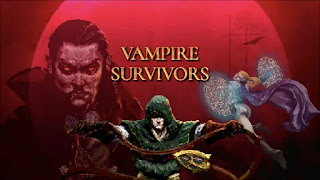
 
It figures you asked the guy who has been trying to play his entire Steam catalogue in alphabetical order, which has the effect of ensuring that I almost never play anything released after Biden became President... But here goes in no particular order:
 
Vampire Survivors (poncle): Released in March 2021, this action roguelite game has everything you could want in something designed to take away your entire evening: a fast-paced game with fairly simple mechanics but an easy-to-understand-but-kinda-complex strategy element. It's addicting and so much fun!
 
Riders Republic (Ubisoft): I am a sucker for any "racing, stunt, whatever you wanna do" game which gives me something other than a car or a motorcycle. Riders Republic is basically just Steep but with mountain bikes (same studio and all) and a lot more style. And it's a lot of fun. You can get competitive if you want, or you can just be a dork doing bonkers tricks for funsies. It's a good way to spend an afternoon! 
 
Sable (Shedworks): What else am I a sucker for? STYLE, baby! And Sable is stylish as hell and absolutely beautiful to look at. In a lot of ways, Sable reminds me of AER: Memories of Old (Daedalic Entertainment) with its lowkey quests, emphasis on exploration and discovery in an open world, and a general chill (and stylish), non-linear play format. It well worth checking out.
 
And here are some games that probably would get nominated by people other than me: Metroid Dread, Monster Hunter Rise, It Takes Two, Hot Wheels Unleashed, Shin Megami Tensei V, Back 4 Blood, and Pokemon Brilliant Diamond and Shining Pearl.

Do with this knowledge what you will...

Michael R. Underwood is the author of over a dozen books across several series, from dimension-hopping story heists in Genrenauts to found family space opera Annihilation Aria. When not writing, Mike streams games at Twitch.tv/TurboTango and podcasts with the actual play show Speculate! and occasional appearances on The Skiffy & Fanty Show.
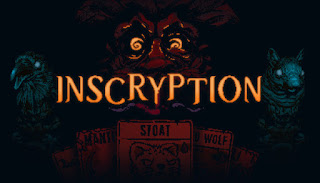
2021 gave me one game that stood head-and-shoulders above the others. Combining Roguelikes and Deckbuilders (a pairing that I've loved since 2017's Slay the Spire), Inscryption by Daniel Mullins games opens with incredible aesthetics - moody music, an evocative art style, and clear base mechanics. The game evolves as the story unfolds, revealing Inscryption to be much more than expected several times over. I had the great pleasure of playing the game entirely on-stream, sharing the twists and turns with friends, colleagues, and viewers.
 
Another surprising favorite was Eidos-Montreal's Marvel's Guardians of the Galaxy, which delivered solid combat and beautiful art stylings alongside very effective dialogue and character work. This version of the Guardians clearly draws from the James Gunn film versions without being fully constrained by the MCU versions. I'm very fond of single-player games with solid storytelling that don't overstay their welcome or pad out the game with endless busywork or uninspired side-quests, and thankfully, Guardians is as tight and propelling as a classic rock tune.

Adri Joy (she/her) is co-editor of Nerds of a Feather, Flock Together, a reviewer for Strange Horizons, and a dog owner. She lives in East London.
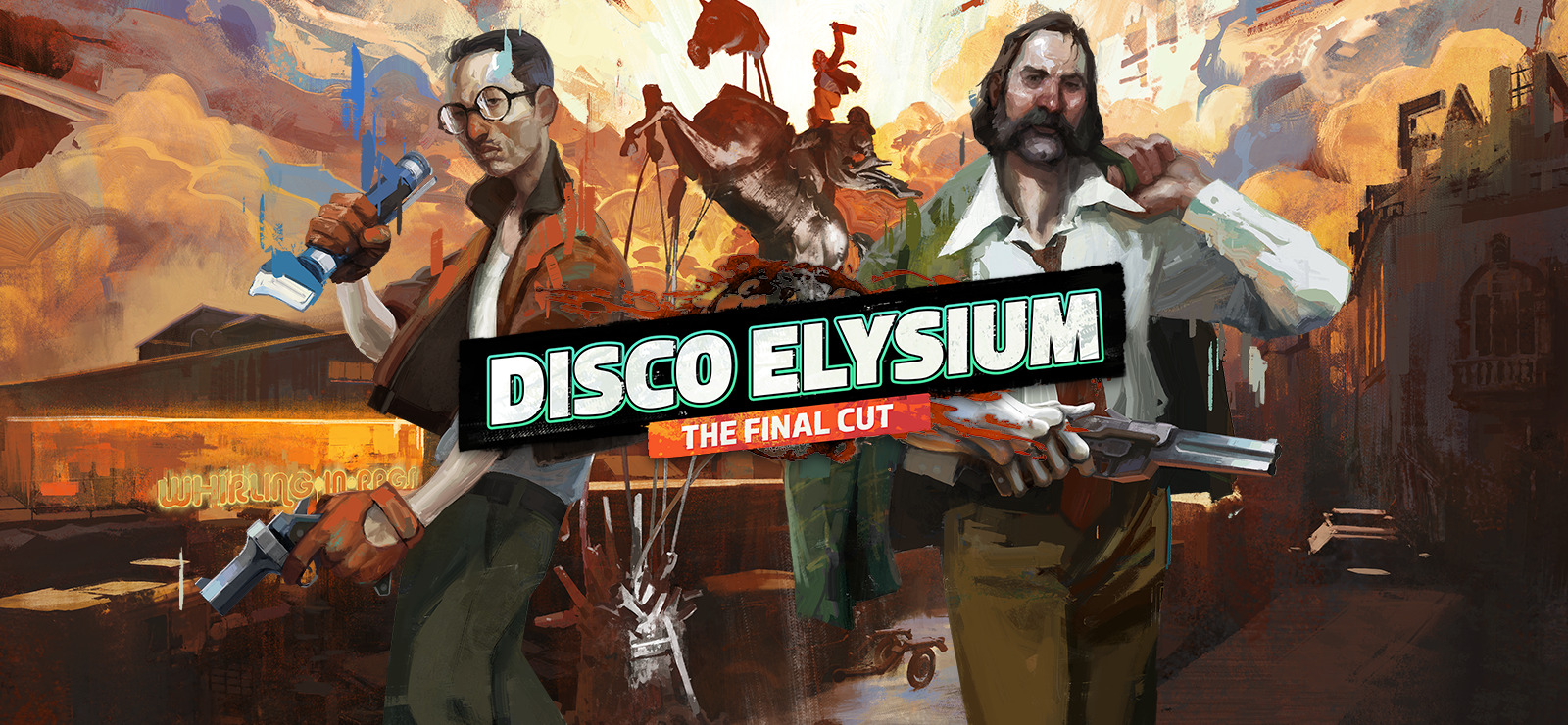
I've always been that person who fills half my Best Dramatic Presentation: Long ballot with video games (no I will not be getting into theoretical eligibility debates at this time), so last year's whole ballot of video games was a super exciting experience! That said, last year was more of a year for past favourites (i.e. Fire Emblem Three Houses) and catching up on the ballot with my shiny new Playstation than mainlining new game releases. Luckily, the 2021 game I sunk the most time into is one that would be perfect for a theoretical Hugo award ballot: ZA/UM's Disco Elysium: The Final Cut.

In Disco Elysium (which originally came out in 2019 but easily passes the substantial modification requirement with its 2021 content, which added full voice acting and several plot-relevant new quests), the player explores a tiny corner of a strange, epic world through the eyes of an amnesiac, addict detective on the brink of total mental collapse. Unfortunately for you, there's no time to wallow in the misery of your broken life: there's a dead body at the back of the hotel you're staying in, a simmering conflict between the local dockworkers' union and the international owners which is threatening to turn into a bloodbath, and your new partner Kim Kitsuragi keeps patiently but persistently expecting you to get your shit together and solve the case with him.

Disco Elysium does a great job giving the player just enough choice for each run to feel different - you make early choices about your detective's skill distribution and get to level it up accordingly, making some things trivially easy and others impossibly difficult depending on what kind of skillset you have - while telling a compelling, if sometimes deliberately anticlimactic, story about love, loss, and what humans cling to in the face of colonial destruction and a slow apocalypse. It balances humour with passionate political statements and some utterly haunting existential one-liners, all delivered through The Final Cut's excellent voice acting that brings all the weird denizens of Martinaise to life. That you get to do it alongside one of the best sidekicks in gaming history is the icing on the cake. Seriously, Kim is the best, and the alternate Hugo for Best Video Game or Interactive Experience should absolutely be his. No furhter questions.

---
POSTED BY: Paul Weimer. Ubiquitous in Shadow, but I’m just this guy, you know? @princejvstin.

Tuesday, February 12, 2019

Born to the Blade: Episode 11


The first season of Born to the Blade has come to an end and in some ways it is with more of a whimper than a bang. There is finally evidence that the inciting incident that sparked the war between Rumika and Quloo was instigated and perpetuated by the Merkitan Empire. The war should perhaps continue, but the directed wrath of the nations should all be pointed in one direction.

It's never that simple, of course. There are alliances and vassal states and interests that supercede "truth".

My problem with "All the Nations of the Sky" is that it works better (for me) as "Episode 11" than it does as the season finale. Michael R. Underwood does an excellent job setting up future storylines that I would like to see the resolution to in a presumed Season 2, but any episode can do that. Perhaps this is an instance of expectation clashing with storytelling choices, but this season ender felt smaller than I would expect from a finale. My excitement for a second season lies in the overall strength of the first season than it is for how it specifically ended.


Moments of "All the Nations of the Sky" are quite good. The duel (both verbal and with swords) between Kris and Bellona was exceptional. The development of Michiko going back home to foment rebellion is one that I would happily take a full novel of by itself. But somehow, the collected whole of how it all pulls together as a single episode capping off the season fails to fully satisfy.

With that underwhelming endorsement, I should remind myself (and anyone else who has followed along with my scattered thoughts on the full season since I began this project in May) that as a full season, Born to the Blade is delightful. One episode does not make (or break) a season. If it turns out that Season 1 did well enough for Serial Box, I look forward to seeing what Underwood and his team of writers has in store for us next. Having Malka Older, Marie Brennan, and Cassandra Khaw on the writing staff is a can't miss writers room.


Previous Reviews
Episodes 1 & 2
Episodes 3 & 4
Episodes 5 & 6
Episodes 7 & 8
Episodes 9 & 10


POSTED BY: Joe Sherry - Co-editor of Nerds of a Feather, 2017 & 2018 Hugo Award Finalist for Best Fanzine. Minnesotan.  

Wednesday, December 19, 2018

Born to the Blade: Episodes 9 & 10

After a long absence, we return to my look at Michael R. Underwood's consistently excellent serial Born to the Blade. Following my thoughts on Episodes 7 & 8 (see here), we continue on with episodes 9 and 10, written by Malka Older and and Marie Brennan, respectively.


Episode 9: Assassination

The titular assassination is a bit of a tease if taken literally because the assassination in question does not occur until the final paragraphs of the episode. If taken figuratively, Malka Older could be referring to the overall assassination of peace that has been ongoing now for several episodes of Born to the Blade and now with the formal declaration of war, that peace has been shattered. I wonder about titles, sometimes.

Knowing the little bit that I do of Malka Older (at least as she presents herself online), I am not surprised by how gracefully she handles the growing refugee crisis on Twaa-Fei. Resources are being overwhelmed, tensions are escalating, but the refugees are not a faceless mass of invaders. They're people and Older writes them as such, even in the limited space she has for this episode and with all of the other work she has to do to propel the larger narrative forward. It's a fantastic piece of writing and "Assassination" might be my favorite episode of Born to the Blade so far.

Older also smoothly handles the politics of this episode. From the early formal declaration of war by the Merkitan Empire against Quloo to the dinner party thrown by the more junior Merkitan warder for all of the other warders, despite the war they just declared, it's an impressive balancing act of Older fitting all the pieces together. Is the party high level diplomacy or a show of supremacy? Maybe it's both.


Episode 10: Shattered Blades 

Born to the Blade, in some ways, is warfare writ small. It's aggression between diplomats, chaos on the island of Twaa-Fei, assassination attempts, and duels in place of large scale warfare. We know there is a larger war raging beyond the shores of Twaa-Fei, but "Shattered Blades" is about the personal stories.

Those personal stories, of course, are told through and around the best fight sequences in any of the episodes of Born to the Blade (and perhaps in just about any other story). Brennan absolutely nails the two major duels of "Shattered Blades". This episode is not just about the fighting, but damn, the duels are so damned good. But, so is the everything. Dealing with the fallout of the assassination attempt from the previous episode is powerful and meaningful for change and moving the story along. "Shattered Blades" is among the best episodes in a very strong season of Born to the Blade.


POSTED BY: Joe Sherry - Co-editor of Nerds of a Feather, 2017 & 2018 Hugo Award Finalist for Best Fanzine. Minnesotan.  

Monday, August 27, 2018

Born to the Blade: Episodes 7 & 8

Today we return to my look at Michael R. Underwood's consistently excellent serial Born to the Blade. Following my thoughts on Episodes 5 & 6 (see here), we continue on with episodes 5 and 6, written by Cassandra Khaw and and Malka Older, respectively.


Episode 7: Dreadnought

War! Or, at least the first steps towards war have been taken. With the suspicion between Quloo and Rumika over the destroyed shipment of aerstone, Quloo has parked a warship over Twaa-fei and all the nations are more than on edge. They're taking sides, they're breaking old alliances and friendships. The neutral ground of Twaa-fei is looking more and more like it is going to be where the peace of nations is fully shattered.

Though the last episode was titled "Spiraling", that title would be just as apt for this one. Cassandra Khaw is extremely effective at bringing that spiraling distrust to the forefront. Each warder is on edge, Ojo in particular is as tightly wound as it is possible to be.

There is a moment of crowning awesomeness in "Dreadnought", which is that of Lavinia facing down that titular dreadnought. A loaded to bear warship is anchored above Twaa-fei and Lavinia, with just her sword and her skill, is able to use the magic of the forms and symbols of bladecrafting and single handedly take on that warship. It was spectacular and Khaw made that extended sequence do double duty, working through narrative of Kris feeling betrayed by a friend and Michiko's exerting a small bit of independence after finding herself the primary warder of her nation.


Episode 8: Refugees
"You mean like unprovoked attacks, colonialist rhetoric, stronger powers ganging up on the weak? Yes,  I'd say something is going around."
Even in an episodic series as smoothly written as Born to the Blade, there are certain story beats and landmarks that puts me in mind of who the writer is. A story tangentally dealing with refugees (despite the title, which is more a story driver than the story itself) is very much what I would expect from Malka Older.

We're still on the edge of a massive explosion into war. Both Quloo and Rumika are becoming increasingly isolated, though we see Kris Denn from Rumika still working to learn the truth of the destruction of the Rumikan fleet with hints that if he aligns Rumika with the Merkitan Empire that he will receive support. But that goes back to the opening quote about colonialism and stronger powers.

While I'm sure at some point Born to the Blade will erupt into all out war, I'm not in a rush. The gradual alienation is so effective and so - well, entertaining isn't the right word because the parallels to the real world is are just a touch too close for comfort. The alienation is compelling. Will Ojo be torn between duty to his nation or opposing what he feels is wrong? Will Lavinia succeed in driving every other nation to their knees in an echo of American arrogance? Will Rumika truly find allies? There's a lot to think about and more questions than that to see if Older will answer in Episode 9: "Assassination".


POSTED BY: Joe Sherry - Co-editor of Nerds of a Feather, 2017 & 2018 Hugo Award Finalist for Best Fanzine. Minnesotan. 

Tuesday, June 19, 2018

Born to the Blade: Episodes 5 & 6

Today we return to my look at Michael R. Underwood's consistently excellent serial Born to the Blade. Following my brief thoughts on Episodes 3 & 4 (see here), we continue on with episodes 5 and 6, written by Malka Older and and Marie Brennan, respectively.


Episode 5: Trade Deal

Secrets are revealed that perhaps shouldn't be revealed. Now that Kris Denn was victorious in the Gauntlet and earned Rumika a seat on the Warder's Council, he immediately fulfills his promise to Ojo of Quloo and confirms the titular trade deal of aerstone (a relatively rare and expensive ore that allows all of these island nations to float in the sky + build airships) and help out the otherwise sinking island nation. Being relatively inexperienced and trying to make friends and influence people, he lets slip during a night of drinking that Rumika perfected a method to manufacture aerstone rather than just strip mining their island like everyone else does. Whoops.

Whoops, indeed.

Malka Older balances the intensely action packed fourth episode with a quieter episode, if equally explosive in term of revelations. I really like how Older gets across the inexperience and naivete of Kris more here than in any of the previous four episodes. He's great with a blade (though still has more to learn in that arena, too), but his diplomatic experience is sorely lacking and it shows. That's the heart of what "Trade Deal" gets across. Kris may be a primary character of this narrative, but he made a really stupid mistake and this may be one of a pivotal event in the Born to the Blade narrative.


Episode 6: Spiraling

It's not that I want to say the episode titles are a bit on the nose, but if I'm being honest, they're a bit on the nose. After the successful trade deal between Rumika and Quloo in the last episode (and Kris's lack of circumspection), the fleet delivering aerstone to Quloo is destroyed. Distrust and rumors begin to infect and infest the warders of Twaa-fei. Events are not out of control yet, but they're getting there. Things seem to be spiraling out of control. Like I said, on the nose.

Thing is, that spiraling is exactly what is happening here. Marie Brennan is very effective at communicating the growing distrust between the nations represented by the warders at Twaa-fei. Things are tense and growing increasingly moreso. That tension is palpable. We're at the midpoint of Born to the Blade, so it's quite clear that things have to get much worse before they get better, assuming they do get better. That's not guaranteed and even before I see how this season shakes out I know that I don't want this to end. I want a second and maybe even a third season. It's good not-television.


POSTED BY: Joe Sherry - Co-editor of Nerds of a Feather, 2017 & 2018 Hugo Award Finalist for Best Fanzine. Minnesotan. 

Tuesday, June 5, 2018

Born to the Blade: Episodes 3 & 4

Welcome to the second part of coverage of Born to the Blade, the newest epic fantasy serial from Serial Box and created by Michael R. Underwood. After my look at the first two episodes (see here), I realized the format needed to change just a bit so I could focus a touch more on each episode rather than a weirdly generic essay.

Today we're going to look at episodes 3 and 4. 


Episode 3: Baby Shower

In the hands of Cassandra Khaw, even baby showers are political. On the island of Twaa-Fei, everything is political. We learned that Ojo Kante, a warder was the father of Penelope Krykos' baby. Penelope is another warder, known as a "fierce battlemistress" - which though I'm not completely sure what exactly that is, I'm pretty sure it means that Penelope is a complete badass. It also means that she has no interest in the baby shower being thrown on her behalf by Bellona, the junior warder for the Mertikan Empire. Bellona is attempting to both curry favor with Penelope as well as soften the forceful impressions and personality of her more senior warder, Lavinia.

There is a sense that "Baby Shower" is the calm before the storm. A baby shower should be an innocuous and happy event, but on an island where everything is politics and every warder is seeking to advantage their own nations (some more aggressively than others), the baby shower here is a political event and gathering filled with posturing and planning.

What I most appreciate so far is how deftly Khaw (as well as Underwood and Brennan before her) handles the characterization and development of the story so far - building on what came before and setting up what comes next - all the while telling a compelling story on its own.

Episode 4: The Gauntlet

Here's the action I've been waiting for since the teases in the first two episodes. "The Gauntlet" is the opportunity for the much smaller (but wealthy) nation of Rumika to earn a seat on the Warder's Circle of Twaa-Fei, to earn a voice in that quasi United Nations of diplomacy and dueling. It is the opportunity for Kris Denn to live up to the trust their nation put in them and to protect the future of Rumika. All they have to do is defeat four of the six sitting warders in armed combat, or earn enough respect and esteem in combat and diplomacy that they vote Rumika a seat at the table.

"The Gauntlet" is not a wall to wall fight scene, but it is packed with action, dueling, and (as always) scheming. Michael R. Underwood understands how to write action. The combat in "The Gauntlet" is tightly written and, similar how Robert Jordan wrote the swordplay in The Wheel of Time, we may not exactly get everything happened in each fight because of how certain forms and maneuvers are named, we get the flow of the fight. It's delightful and suspenseful. After the twist in "Arrivals", we don't quite know how this is all going to end up for Rumika. Maybe Kris will earn that seat on the Circle, but it is just as likely to the story Underwood and company are telling that Kris will lose and suffer Rumika to lose the right to challenge for that seat for a full decade.

The greatest success thus far into Born to the Blade is how much finishing each episode makes me want to immediately start reading the next one.


POSTED BY: Joe Sherry - Co-editor of Nerds of a Feather, 2017 & 2018 Hugo Award Finalist for Best Fanzine. Minnesotan.  

Monday, May 21, 2018

Born to the Blade: Episodes 1 & 2

I really should have gotten on this serialized fiction bandwagon earlier**. Sure, Charles Dickens was doing it back in the 1800's (pay by the word and leave readers waiting for the newspaper delivery for the next installment? Will Little Dorritt live?) and I can only imagine how much earlier the concept had truly originated, but similar to what Tor.com Publishing is doing with their novella line - Serial Box isn't so much innovating the form as re-popularizing serialization within the science fiction and fantasy genre (this is something that has long been done in audio / podcast format).

And so it is that, despite having the eleventy thousand page first season of Bookburners (also from Serial Box) on my night stand, I embark on a new serialized adventure: Born to the Blade.


Born to the Blade was created by Michael R. Underwood. You may be familiar with his Genrenauts series of novellas (also serialized. I'm sensing a theme here) originally published by Tor.com and finished on his own. It is an epic fantasy centering, at least initially, tightly in a neutral city where conflicts are resolved by formal duels by representatives of their respective nations. If that city is functioning in some ways as the United Nations of that world, the domineering Mertikan Empire appears to map to the United States in many ways.

Perhaps I'm reading a touch too much into this, and it may be that "Mertikan" echoes just a bit too close to "American" that I'm reaching for parallels that aren't intended. Certainly, Born to the Blade is not presenting as commentary on America today, but it is also something that won't go away in the back of my mind. We don't read in a vacuum, after all.

The first two episodes of Born to the Blade are written by Michael R. Underwood ("Arrivals") and Marie Brennan ("Fault Lines") and they both serve as introduction as well as hook. There's just enough cliffhanger at the end of each episode that I finish eager and ready for the next.

Thus far into Born to the Blade we are introduced to the politics of the island / city. At this point, Underwood and Brennan have only revealed the outlines of how things fit together. We know there was a rebellion, a captured "Golden Lord", and the Mertikans want him recovered and killed. We see how Kris, a young bladecrafter, is seeking a spot on the Warder's Circle - the first for his home country. We see Michiko work as a junior warder, learning the city, but also clinging to a fragile alliance. "Arrivals" and "Fault Lines" are apt titles for the first two episodes because Underwood and Brennan give us exactly that. They both serve as introduction and they are a fitting start to the serial. The fault lines are clear, the burgeoning conflict beginning to take shape. Our reading appetites are whet.

Given there was already one very significant surprise in the first episode, I have no idea where the writers of Born to the Blade are going to take this story. The one thing I do know is that I'm on board and along for this ride.


**I should also note the existence of Shadow Unit, which was also a serialized bit of fiction that was exceptionally well done, written and published in episodic format as if it were a television show, and featuring some of the finest damn writers this side of anything. That is almost beside the point, except that I want to take any opportunity I have to mention Shadow Unit, even if I am talking about something else. It was the best. I miss it daily. Shadow Unit forever.


POSTED BY: Joe Sherry - Co-editor of Nerds of a Feather, 2017 & 2018 Hugo Award Finalist for Best Fanzine. Minnesotan.