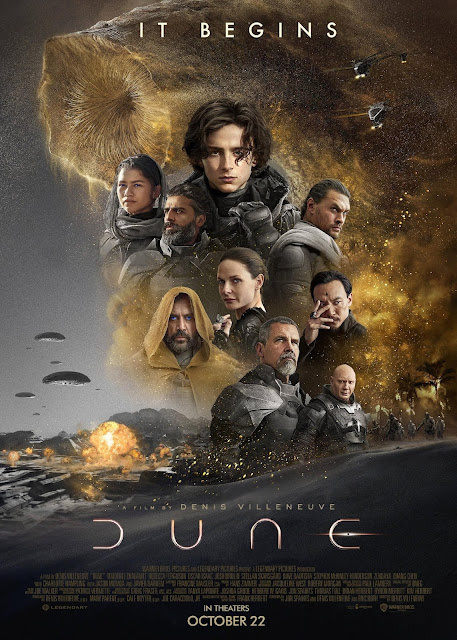
Showing posts with label Dune. Show all posts

Monday, July 14, 2025

The Sand in Our Lungs: The Desertification of Our Imaginations

Hi, folks! Unfortunately, I've had to pause my weekly Andor posts due to some unexpected life circumstances, but I will finish up my deep dive with a final essay on the last two episodes in the near future. Until then, here's an essay about why two sci-fi films with deserts might not be the best for our cultural imagination. Thanks for reading!

The Sand in Our Lungs: The Desertification of Our Imaginations
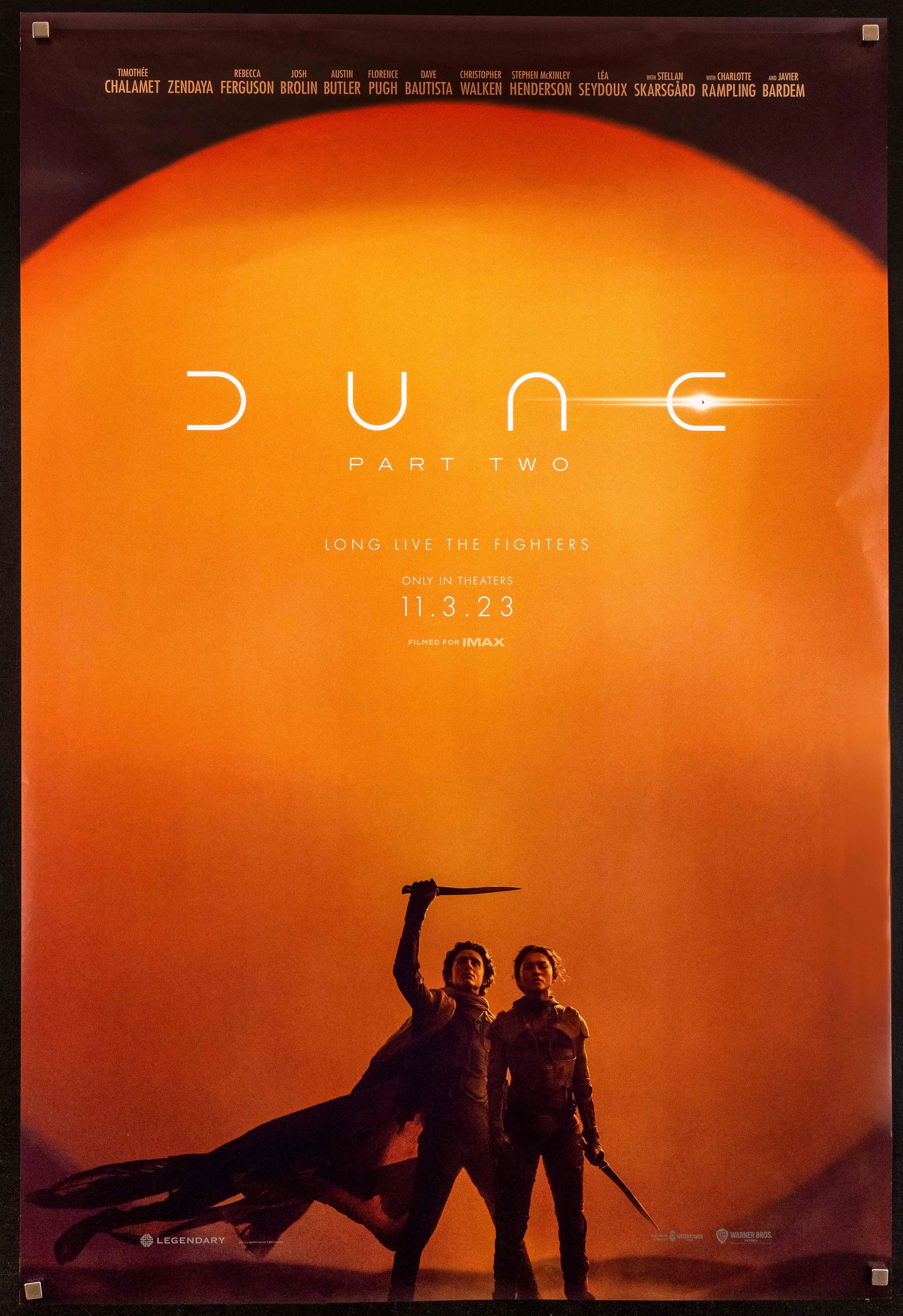
 

In 2024, two major science fiction franchises produced blockbuster sequels: Dune Part II, directed by Denis Villeneuve, and Furiosa: A Mad Max Saga, directed by George Miller. Both films overlapped in their depictions of the desert landscape, cults of survival, and a desire to return to a “green place.” These respective deserts are not seen as their own habitats, as unique biomes and cultural spaces, but rather as something dangerous that must be made green. This utopic desire combined with the extractive activities in both Villeneuve’s and Miller’s deserts suggests an inability to imagine life beyond extraction in the heat of global warming but only in lush greenness, where even the air is purer. The impact of this cultural imagining can be seen in the recent political landscape, as President Trump released an AI-generated video depicting the West Bank as an “oasis” with palm trees, and when Elon Musk, while heading DOGE, reposted a Mad Max meme with the text: “Ladies, it’s time to start thinking whether the guy you’re dating has post apocalyptic [sic] warlord potential.” In current political imaginings, the desert can either be greened to create some type of utopia or is full of savage warlords hoarding resources.

Rather than focusing on how humanity has adapted and survived these places, Dune Part II and Furiosa depict progress as the desire to return to green. While this view of the desert not only supports the current imperial actions in the Middle East, it also limits the ability to imagine and pursue survival in the heat of global warming. These coincidental releases suggest a turn toward imagining hot, dry futures where the air is poisoned or changing humanity, as in the Spice sands on Arrakis. Rather, we must (re)imagine these desert futures as more than extractive places where the heat and air can kill.

Unlike its predecessor Mad Max: Fury Road, which I’ve argued in my essay “Mad Max and the Wasteland of Commodification” has strong ecofeminist and environmental justice themes, Furiosa reverts to a biblical story of the sinful woman. The first shot of the titular character is her reaching for a lush piece of fruit while another girl whispers they should hurry. Immediately after she picks the fruit, Furiosa sees that men have invaded their sanctuary. While trying to warn the others, she is captured, which prompts her mother to follow them into the desert to rescue her. She fails, and Furiosa is enslaved and raised by Dementus (Chris Hemsworth) before she is eventually traded to Immortan Joe (Lachy Hulme) to be one of his or his son’s child wives as part of a deal for Dementus to run Gas Town, a petrol fortress. Indeed, it is the attempted rape by his son Rictus (Nathan Jones) that allows a young Furiosa to escape and hide among the War Boys, eventually growing up to become a mechanic and then learning to drive the War Rig alongside Praetorian Jack (Tom Burke). They become partners—both romantically and in their desire to escape. Meanwhile, Dementus is scheming to take over Immortan Joe’s fortress, which features fresh produce, green gardens, renewable energy, and—most importantly—unlimited water from underground aquifers. Caught up in his schemes, Praetorian Jack and Furiosa are captured, Jack is horrifically killed, and Furiosa escapes to tell Immortan Joe in hopes of enacting her revenge. After a forty-day war, she tracks Dementus through the wasteland to kill him. The film ends with the History Man (George Shevtsov) suggesting that Furiosa didn’t kill Dementus but rather planted the seed of the fruit she took from the Green Place where she was captured while eating the fruit, and the film ends with Furiosa now played by Charlize Theron handing one of these fruits to the enslaved women that she escapes with in the next film.

In many scenes, Dune Part II mirrors the plot points of Furiosa. Like Furiosa, Paul (Timothée Chalamet) comes from a place utopic for its greenery and, most importantly, water—a sacred element on Arrakis. Furiosa and Paul both seek revenge against grotesque villains known for their cruelty. In Dune Part I, Paul’s family, who have come to rule the desert planet, are murdered by the villainous Harkonnens, and Paul and his mother flee to hide in the desert, where they are taken in by the native population called Fremen. Paul’s mother, Jessica (Rebecca Ferguson), is part of a galaxy-wide religious order that has seeded prophecies and propaganda about an outsider who will turn Arrakis green again and lead the Fremen. While Paul is perfectly positioned to fulfill this prophecy, he is hesitant at first, but in order to defeat the Harkonnens and avenge his father, he must use the native practices of the Fremen to not only survive the desert but to control their loyalty. By ruling the Fremen, he regulates what makes Arrakis so important: Spice production. The drug called Spice enables interstellar planetary travel, so it is a necessary and valuable resource required by the empire. Ultimately, Paul takes leadership of the Fremen to oust the Harkonnens from Arrakis by force, which prompts the other ruling families to threaten violence, leading to the Fremen intergalactic war off their home planet.

The desert is the prime visual for both these films, but in Furiosa there is no cinematic beauty in the desert, only fear, while Dune features long shots of the sun catching Spice in the air, the shifting sands, the decorated sietchs where the Fremen live, often overlaid with a stereotypical Middle Eastern soundtrack. While both films depict the desert in different lights, survival and exploitation are still central to the desert, primarily for various types of fuel, whether it’s petrol, food and water, or Spice.

Furiosa is unable to escape her captors because she has no resources to survive the desert, and resources are exclusively stolen, not shared. The apocalypse of the Mad Max franchise is summarized in voiceovers at the beginning of the film, and the first two instances of destabilization listed are the power grid collapsing and that “currency is worthless,” (Miller 00:00:30), once again proving the quote commonly attributed to Fredric Jameson that “it’s easier to imagine the end of the world than the end of capitalism.” The voiceovers end with the final sentiment from the History Man: “‘As the world falls around us, how must we brave its cruelties?’” (Miller 00:01:21). The film’s answer to this question is revenge and the utopic desire to return to a green paradise. The cruelties that Furiosa survives depict what Naomi Klein and Astra Taylor call “end times fascism:” “A darkly festive fatalism—a final refuge for those who find it easier to celebrate destruction than imagine living without supremacy” (“The Rise of End Times Fascism”). Indeed, destruction—of both property and the human body—are moments of joy rather than horror, such as when Dementus orders a wasteland gang he’s overcome to fight each other for the honor of riding motorcycles attached to the body of their boss, pulling him apart (Miller 00:27:23). This destruction is linked directly to the desert because there is no alternative lifestyle presented in the sands. The only people living in this desert are destructive—except for our heroine, raised elsewhere, and her eventual romantic interest, who is murdered. Rather, the alternative lifestyle is rooted not in the desert but in an oasis of green where there are still trees bearing fruit, water, and animals.

In the first few minutes of Furiosa, what is called “the green place of many mothers” in Mad Max: Fury Road is depicted. In a rocky canyon, the few shots of daily life show men and women working together at chores while windmills turn in the background. In addition to human life, there is nonhuman life, from birds crying to the horse Furiosa’s mother rides in an attempt to rescue her. Shelters feature solar panels on the roofs, and the people use sustainable technology such as a pedal-powered whetstone and a solar oven (00:04:13). While they are not pacifist—Furiosa’s mother is a crackshot—they represent the opposite of the desert barbarism by incorporating advanced technology along with sustainable living to create an egalitarian community. This progressive community, though, is visually connected to the water and lush flora that surrounds them. Indeed, as Furiosa’s mother ventures deeper into the desert in her rescue attempt, she must take on more and more of the violent trappings of Dementus’s men—first abandoning her horse for one of their motorcycles, then putting on their clothes and helmets of human bone. Thus, the desert and its connection to scarcity—whether real or imagined—is the promoter of this savagery, not something brought to the sands. Indeed, as Imre Szeman points out, “We moderns are creatures of fossil fuels (if to different degrees in different places in the world)” (7). As she progresses into the desert, she becomes more a creature of fossil fuels by taking on the trappings and riding the bike. The focus on automobiles in the Mad Max franchise emphasizes this connection, and control of “guzzolene” is important to who rules the desert. Rather than adapt to the more sustainable and fossil-fuel-free life of the green place with many mothers, the people of the desert hold onto their desire for fossil fuels and the supposed modernity it produces, such as Immortan Joe’s brother, the lord of Gastown, painting a recreation of John William Waterhouse’s Hylas and the Nymphs (1896) while wearing a regimental coat (Miller 00:43:23).

Alternatively, in Dune Part II, the Fremen do present the desert as a unique environmental and cultural space, but their depiction throughout the film still connects to violence and is presented as uncivilized or lacking in empathy. Throughout both films, their martial prowess is partly what makes them unique, but early in Part II after a battle, Paul witnesses Chani (Zendaya) drain the water from a body of a still living Harkonnen, swatting away the Harkonnen’s weak arm (Villeneuve 00:11:19). This moment positions the Fremen as lacking empathy or respect for their enemy, by doing something brutal as they loot the water from the bodies, causing the pregnant Jessica to vomit. While Fremen violence begins and ends the film, there is worldbuilding around their culture and relationship with the desert. This connection is depicted visually through their eyes, which become a vibrant blue due to them breathing in and eating Spice. Additionally, the reason for collecting water from the dead is not only due to scarcity, but in the case of dead Fremen, their water is poured into an underground tank where it is being saved to turn the planet green. As Stilgar (Javier Bardem) explains to Jessica: “‘When we have enough water, the Lisan al-Gaib will change the face of Arrakis. He will bring back the trees. He will bring back a Green Paradise’” (Villeneuve 00:20:24). Even though they’ve adapted to live with the desert, have a culture intertwined with the desert, and have the ability to create advanced technology out of the desert (such as their stillsuits, which retain water), their religious purpose is to change the planet to a green paradise that they have no frame of reference for.

While Paul respects the Fremen and their understanding of the desert, they are still positioned as religious zealots willing to die for the Lisan al-Gaib in a war necessitated because the natural resource of their planet—Spice—is required for galactic travel. Indeed, the movie is framed around Spice, and its metaphoric connection to oil is emphasized visually. In a restructuring of the opening credits, sounds that do not necessarily mimic language seem to speak, with the words appearing on black screen: “Power over Spice is power over all” (Villeneuve 00:00:05). The production credits follow, creating an interruption of the story started with the truism on Spice. While Spice production happening on a desert planet being controlled by colonizers already prompts viewers to think of oil production, the connection is solidified by the main villain, Baron Harkonnen. He soaks in a black pool of liquid that clings to his white skin, the oily surface swirling (Villeneuve 00:49:02). While the Fremen offer an alternative few of the desert, the central conflict still revolves around the Harkonnens keeping the Spice flowing, thus limiting this imagining of the desert to an extractive space.

While Furiosa and Dune Part II come from very different franchises, the narrative of the protagonist’s revenge, violence, and extraction creates a unified view of “desert” as a space where scarcity leads to savagery. Another way this savagery can be read is a response to the question posted by Wilson, Szeman, and Carlson: “Energy transition will therefore involve not only a change in the kinds of energy we use, but also a transition in the values and practices that have been shaped around our use of the vast amounts of energy provided by fossil fuels” (4). Without these practices of modernity, these films suggest the only option when fossil fuels become limited is not adaptation or transition but violence, even though much of the Global South already does not operate with the same amount of energy usage as the Global North. While there are certainly other films that do not present the desert or its people in this framework, the release of two such blockbuster narratives in 2024 suggests the desertification of imagination in the U.S. and a need for alternative narratives, particularly for the masses. As Paul says of the Fremen to his mother: “It’s not a prophecy. It’s a story you keep telling. But it’s not their story; it’s yours” (Villeneuve 01:02:21). The Fremen are certainly more nuanced than the people of Furiosa, but because their values are created and manipulated by Paul and the religious order his mother Jessica belongs to, the Fremen’s agency is degraded. Their culture of wishing for a green utopia is entirely manufactured to make them more pliable in relation to collecting Spice. Additionally, the supposedly uninhabited and unlivable southern part of the planet being filled with a large population of “fundamentalists” who are mostly nameless and faceless, depicted as a mass, dehumanizes the Fremen. They become a tool for violence, another thing to be extracted from the desert in Paul’s galactic conquest.

As this violent and resource-drive depiction of the desert unites the movies, so, too, does the desire for a green utopia. The desert is not seen as a viable location, even though in Dune the Fremen have adapted to the desert. In Furiosa, the desert is not adapted to but rather something to be endured by scavenging and killing others in order to, someday, find what one of Dementus’s men calls a “place of abundance” (Miller 00:12:30). Both these narratives focus on a return to a green utopia, which suggests an imaginative reaction to global warming. As the climate changes and global warming causes places to become hotter and drier, this yearning for a green utopia will harm humanity’s ability to adapt. As the After Oil Collective writes in Solarities (2022): “Stories and myths are tools of immense possibility that provide powerful means of creating different worlds and making new futures, and of seeing the present in new ways” (61). While the releases of Furiosa and Dune Part II are coincidental, these narratives suggest we are struggling with “seeing the present in new ways” and instead relying on imperial, oil-driven narratives of scarcity, violence, and extraction in the desert. These narratives also reinforce the problematic idea that lush, green spaces are the only viable vision in the midst of climate change rather than presenting a diversity of flourishing landscapes and beings.

As the impacts of climate change continue to cause more desertification, our popular storytelling must adapt rather than react. Depicting deserts as spaces of scarcity and violence only serves extractive and imperial industries. Rather, we can use storytelling practices to imagine flourishing communities in the desert not beset by extraction. There is more to the desert than supposedly empty sands and oil; it is not a place that must be transformed in order to reach a more utopic state—and storytelling can develop our imagination in these directions as more of the planet experiences extreme heat and drought. At this time, we need our imaginations expanded, not limited by these imperial narratives.

Works cited

After Oil Collective et al., editors. Solarities: Seeking Energy Justice [U of Minnesota Press, 2022].

Dune Part II. Directed by Denis Villeneuve, Warner Brothers, 2024.

Klein, Naomi and Astra Taylor. “The Rise of End Times Fascism.” The Guardian, 13 April, 2025.

Furiosa: A Mad Max Saga. Directed by George Miller, Village Roadshow Pictures, 2024.

Szeman, Imre. On Petrocultures: Globalization, Culture, and Energy [West Virginia U Press, 2019].

Wilson, Sheena et al., editors. Petrocultures: Oil, Politics, Culture [McGill-Queen’s U Press, 2017].

POSTED BY: Phoebe Wagner (she/they) is an author, editor, and academic writing and living at the intersection of speculative fiction and environmentalism.

Thursday, January 2, 2025

Review: Dune Prophecy

We travel back in time 10,000 years before the Kwisatz Haderach to learn about the origins of what would become the Bene Gesserit—and get Game of Thrones-level chicanery and angling. (Spoiler-free)

In both Denis Villeneuve's and David Lynch's film versions of Dune, we get fleeting glimpses of the witchlike Bene Gesserit. We can see that these dark-clad, mysterious women are controlling the puppet strings of emperors and the great houses, but we don't real insight into their machinations.

An origin story focusing on why, and how, they came to be is the focus of Max's new series Dune Prophecy, which is set about a century after the Butlerian Jihad in which humans defeated thinking machines and banned AI technology. The planet Wallach IX is home to the Sisterhood's school, where women are trained in truthsayers to serve the great houses of the Imperium.

The show centers on Valya Harkonnen, the Reverend Mother of the Sisterhood. Played immaculately by Emily Wilson, she is ambitious, conniving, and Machiavellian in her approach to not only extending the influence of the Sisterhood but also in taking personal revenge against House Atreides, whom she blames for her family's fall from grace and exile.

When a Sisterhood-arranged marriage between the emperor and a great house falls apart due to treachery, chaos threatens the order, resulting in a series of plots, subplots, and flashbacks concerning Valya and Tula. It all gets very confusing—not unlike watching Game of Thrones for the first time—and Max very clearly is trying to launch this as the next Game of Thrones (despite already having one in the form of House of the Dragon).

What I love most about this show is how the Sisterhood is portrayed like the Jedi Order in the prequel Star Wars movies, and it's made me think more critically about both. This description, for example, can literally apply to either: "A quasi-religious organization with no external oversight that puts members of its order in positions of great power throughout the galaxy."

To be clear, I still think that the both the Jedi and Bene Gesserit are awesome, but it'd be naive to think that they're unproblematic. Modern storytelling has gotten really good about morally gray characters—the days of Pure Good Guy (Batman) vs. Pure Bad Guy (Joker) are long gone, and in their stead are the Jamie Lannisters, Walter Whites, and Omar Littles of the world.

As we learn more about the Sisterhood, we see that they are engaged in galaxy-ranging eugenics (I'm calling it as I see with their breeding program), covert political manipulation, and, sometimes even murder. This, of course, doesn't mean I won't root for these space witches, but it is something to think about. Truly good characters are boring, as we have learned from prestige TV over the years.

In terms of look and feel, it's no Villeneuve Dune—but the sets and product design feel futuristic enough that it's not a distraction. There's a scene in episode 6 where we finally see space folding around a heighliner for the first time and it's absolutely incredible. The only scenes where I'm taken out of the universe are the ones set in the bar/nightclub. It feels chintzy and like something out a Syfy original movie from the '90s.

The pacing is a bit hit-or-miss (I had to rewatch the first episode twice to really get into it because it's so exposition-heavy), but each successive episode picks up steam and gets you more invested. Overall, though, it's an enjoyable watch and a different take on Dune for those who, like me, have read one Dune book and really enjoyed the movies, but aren't as well versed in all the lore from Frank Herbert's other books. Hell, I'm now inspired to pick up Dune Messiah.


Nerd Coefficient: 7/10.

POSTED BY: Haley Zapal, NoaF contributor and lawyer-turned-copywriter living in Atlanta, Georgia. A co-host of Hugo Award-winning podcast Hugo, Girl!, she posts on Instagram as @cestlahaley. She loves nautical fiction, growing corn and giving them pun names like Timothee Chalamaize, and thinking about fried chicken.

Monday, March 4, 2024

In Dune: Part Two, the Hero's Journey takes a very dark turn

There's nothing more dangerous than a savior

Consider the above photo for a moment. It's one of many, many great shots to be found in Dune: Part Two. But to me, this one summarizes the core message of the film, and of the entire Dune series of novels. This shot happens when Paul Atreides has secured the fervent support of the Fremen, who see in him the fulfillment of their messianic prophecies. He will soon lead them in battle against the Emperor of the known universe, and then against all the noble houses, and then... If you've read past the first book, you know the ugliness that follows. War will spread from world to world and consume billions of lives.

And all that horror is (literally) foreshadowed in that photo. It shows Paul standing atop a rocky shelf, giving a speech before his gathered followers. But if you focus your gaze on the multitude, Paul's barely lit silhouette transforms into a gigantic shadow that falls over a good portion of his own army. His raised arm holding a dagger resembles the shape of a scythe. That is who Paul is destined to become: a bringer of death on an interstellar scale.

When Dune: Part One arrived in theaters, I was concerned about the sequel's ability to give equal attention to the numerous mass fights and the heavy philosophical themes that occupy the latter half of the first Dune book. Fortunately, after watching in Part One a movie basically made of setup, we get in Part Two dramatic rewards galore: Baron Harkonnen starts the story believing himself to be a cunning mastermind, only to end up losing everything; local warlord Stilgar becomes a religious fanatic who eagerly enables Paul's ambition; and Lady Jessica evolves from a minor operative in the Church of Painstakingly Slow Eugenics to a ruthless manipulator, a twisted blend of John the Baptist and the Virgin Mary, an unholy messenger that prepares the way for the Dark Messiah.

The film makes good use of its runtime to discuss the corrosive effects of proselytism on subjugated communities. Much like the Slave Bible in the US, the Reverend Mothers of the Bene Gesserit have spent centuries spreading doctrines calculated to facilitate their control over the native populations of several planets. Paul's rise to complete military and political power is viewed by the Fremen as the key to their freedom, but it's actually part of an immensely complex scheme of domination that not even Paul agrees with. The character of Paul Atreides is portrayed here with deep psychological awareness of the competing loyalties and urges that inundate his mind. It doesn't hurt that Timothée Chalamet is a fantastically talented actor who makes the expression of multiple simultaneous emotions seem effortless.

The rest of the cast performs impeccably as well. Zendaya serves as the audience's surrogate as she first becomes fascinated by Paul's rapidly growing skills as a fighter and leader, and later becomes alarmed and finally disillusioned as Paul learns to enjoy power a bit too much. Austin Butler makes a surprising impression as Feyd-Rautha, bringing into each of his scenes an uncanny mixture of ethereal beauty and deadly brutality. And I must again praise the character of Lady Jessica, who in the hands of actress Rebecca Ferguson displays a fascinating breadth of personality between the loving domestic figure she is in Part One and the poisoner of entire cultures she becomes in Part Two.

This film's most striking change to the novel's plot, the handling of Paul's little sister Alia, is in consonance with the larger themes. Alia awakens as a Reverend Mother when Lady Jessica passes the test of the Water of Life. This ritual opens access to the memories of all previous Reverend Mothers; however, since Alia is still an embryo with no identity of her own, she becomes a living repository of a continuous heritage that influences events through her. In a way, this is also true of Paul: his existence and his trajectory are the product of converging political machinations that steer him toward his inescapable tragic fate. Dune as a whole is very skeptical of the Great Man theory, which can be seen in the way Paul at first appears to be the promised hero who will fix everything, but instantly morphs into yet another blunt instrument of forces beyond human control.

Much of the plot of Dune is a curious multiplication of the standard tragic structure: the narrative beats result from the snowballing disaster that is everyone failing in turn to execute their respective plans. The Emperor fails to exterminate the Atreides family; Leto fails to humanize the living conditions in Arrakis; Doctor Yueh fails to avenge his wife; the Fremen fail to bring security and prosperity to their world; and the Bene Gesserit fail to give birth to the perfect man who will save the universe. From these successive failures come new, escalating crises that no one had made preparations for. This refusal of events to submit to human will feels much like the way history proceeds in the real world, and therein lies the secret to the continuing appeal of Dune.

The cherry on this cake of great storytelling is director Denis Villeneuve's eye for perfect composition. The landscapes of Arrakis appear as endless expanses of all the shades of brown and yellow; the sky can look inviting, dotted with millions of stars; or darkened by the unpredictable ferocity of Arrakis's sandstorms; or oppressively hot under the reign of a blinding sun.

Dune exists in a universe where not only political events, but also nature escapes any attempt at human control. You cannot tame the mighty sandworm, only ride it for a time. Humans will be lost as long as they keep trying to control the enigmatic spice that makes both physical and spiritual journey possible. This theme is reflected in the narrative device of having all major players fail in their schemes: merely having an Emperor is already a manifestation of the desire for absolute control, and therefore the precipitating cause of unending catastrophe. This has been a fundamental flaw of human history, as true in the year 10191 as in 2024.

This is the final ingredient that explains why Villeneuve's Dune produces such an alluring effect: even as it employs the trappings of ancient epic, the truths it communicates have never ceased to be relevant. We're still susceptible to the rousing speeches of a supposed savior. We're still collectively addicted to a toxic source of energy. We're still treating less powerful societies as pawns in the political chessboard. Volatility has somehow remained a constant of our time. However, if we manage to remember that fear is the mind-killer, we'll be able to identify the true intentions of anyone who shows up selling fear. Too many aspire to become a God-Emperor. We need stories like Dune to keep our eyes open.


Nerd Coefficient: 9/10.

POSTED BY: Arturo Serrano, multiclass Trekkie/Whovian/Moonie/Miraculer, accumulating experience points for still more obsessions.

Monday, June 13, 2022

Adri and Joe Watch the Hugos: Best Dramatic Presentation


Adri: Continuing our unorthodox sequencing of categories this year, let’s talk about Best Dramatic Presentation! This chat is mostly going to be about long form, because you’re a big movie watcher and somehow, despite normally skipping the category, I’ve actually made the effort to watch all the nominees this year. Not only that, but I’ve seen five out of six of the short form nominees, and there’s a chance I might even dive into a free Apple TV subscription and watch For All Mankind before voting closes in August too.

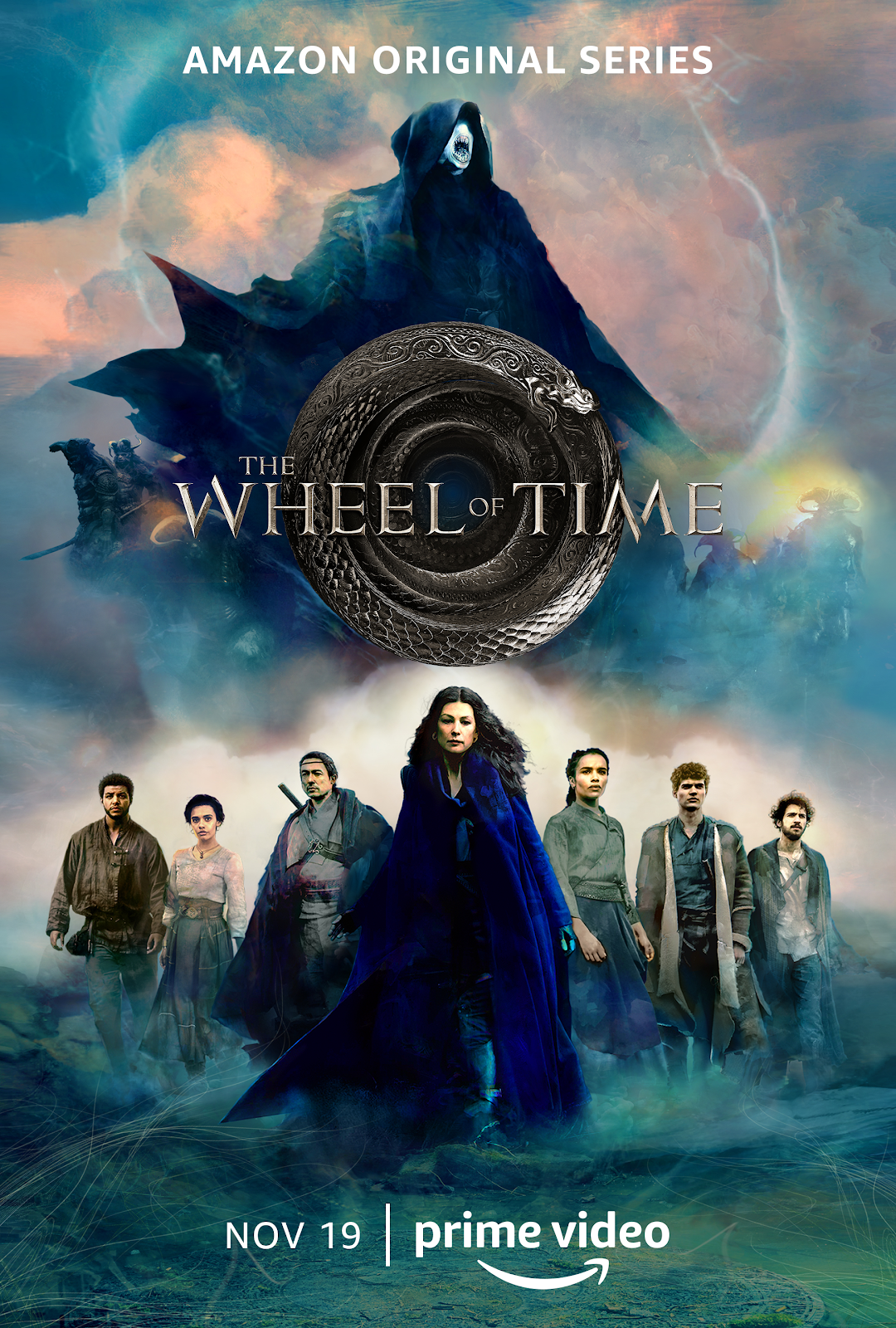
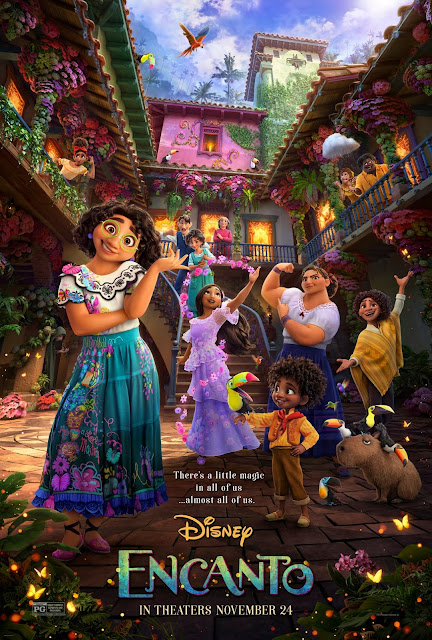
This year, the BDP long form list includes five movies and one series - WandaVision - which I definitely think benefits from being included as a whole piece of work. Half the nominees are in the Disney stable: one Disney animation (Encanto) and two Marvel properties (WandaVision and Shang-Chi). Rounding out the list, we’ve got a witty Korean space adventure, Space Sweepers, and two ultra-serious takes on cornerstones of genre: (the first half of) Dune and The Green Knight. It all feels solidly genre (no awful Eurovision-as-seen-by-America movies, thank you voters), solidly Hugo quality, and it makes for a pretty interesting and varied set of viewing experiences.

What are your thoughts on the finalists as a whole?

Joe: Well, I’d like to start by arguing with you about last year’s Eurovision movie which was an absolute delight despite the inclusion of Will Ferrell as lead actor - but outside of Ferrell, Eurovision was a lot of fun and “Husavik” should have won an Oscar over the song from Judas and the Black Messiah because it was perfection in a song and also music that is important in the context of the movie should always win over end credits songs (though “Fight For You” is a really good song, if I’m being fair).

Wait - we’re talking about the Hugos, right? Sorry, I’ve got Oscar opinions.

Adri: Perhaps we should schedule in a “retro” 2021 Hugo conversation about the merits of that movie and to what extent the presence of Will Ferrell completely negates and outweighs them. Husavik is solid though, I’ll give you that.

Joe: That would be a conversation to have over that hypothetical beverage of choice, I think, but I’m more than happy to detour / derail this year’s Hugo conversation if you’d like.

As a whole, though, this is a really nice lineup of finalists. You mentioned the three selections from Disney in Long Form, but there’s a lot of quality in those selections. You’ll note that The Eternals isn’t on the ballot (and I really hope it’s not #7 on the long list). Not that we need to spend any time on the Eternals, but it felt like the lesser parts of three different better movies and we didn’t get any of those movies - but Shang Chi was wonderful, WandaVision was something specific and special, and we’ve seen Encanto quite a few times in my house. In some ways the surprises are The Green Knight and Space Sweepers - only because I wasn’t sure how many people would have seen either.

Likewise, I dig the variety of Short Form even if some of the episodes are deeper cuts from series that I’m not watching and might not quite get to by the end of voting. I’m certainly not caught up on the category for this conversation, but I think that’s okay. It is a sign, though, of how widely the Hugo nominators are watching for their SFF. It could also be a sign about how diffuse the vote totals might be. That’ll be something to pay attention to when it comes to looking at the Long List in August.

I think I’d like to start by talking about the film I think is most likely to win Long Form, which is Dune (officially retitled as Dune: Part One now that Warner Bros gave Villeneuve the funding to make the second movie).

The existence of Dune doesn’t make it an automatic winner, though i will note that the SciFi Channel miniseries Frank Herbert’s Dune was a finalist in 2001 (losing to Crouching Tiger, Hidden Dragon) - but Dune is biiiiiiig budget “core” science fiction. Whatever your feelings about David Lynch’s adaptation from the 80’s and Sting’s codpiece, this was probably the most anticipated science fiction property we’re likely to get and if there was even a chance Villeneuve was going to get the movie right, it was going to pay off huge - especially within the genre communities, though we’re not as remotely starved for the good stuff as we were decades ago.

But I think Villeneuve did nail Dune: Part One. It’s incomplete in ways that are completely necessary (I shudder to think about how this works as a single film) - so I’d understand anyone who was less than fully satisfied by the storytelling of Dune - but for a property I’ve read a number of times and watched every adaptation of - this was fantastic.

I also think the “bigness” (and the Dune of it all) is what’s going to push it over the top in the voting. It’s what I think the Hugo voters want science fiction to be all about.

Adri: Ah, Dune. I agree with you that this feels like the most likely winner (the only thing I see beating it is WandaVision), and it’s amazing the sort of white messiah drama you can get away with in 2021 if it’s in service of a beloved book adaptation. Dune the film has all the orientalism (and fatphobia) of its precursors, and that annoys the heck out of me, especially when compared to Wheel of Time in short form which, despite its gender essentialist limitations, did put some effort into reinterpreting its source in a way that included people of colour and queer identities. But, that’s a tangent.

Setting aside the limitations of its source material, though, Dune is kind of amazing as a big, heavy, unapologetically weird and ritualistic spectacle of a film, full of lingering shots of giant machines - and sandworms - and slow builds towards climactic moments. Also there is Zendaya, looking cute and windswept in a dream desert. I’ve never seen the old adaptation but this one carefully avoids any hint of campiness that might suggest its taking itself less than 100% seriously. I can see the artistic merit in it all, but I’ll be honest: it bored me to tears. I don’t care about Frank Herbert’s big vision and despite the presence of Jason Momoa and Oscar Isaac (albeit not wearing their best configurations of facial hair), I found nothing to keep me invested in this ponderous, dated take on colonialism in space.

Joe: Here’s the thing, that big vision from Frank Herbert *has* to come into play for Dune to not be the white savior / pro-colonialist take that Part One feels like. Paul’s journey starts out that way, we’re told he is the chosen one, the result of generations of a breeding program (with a small twist at the end if you want to nerd about it) - but if Villaneuve can make Dune Messiah as well as Dune: Part Two, it’ll turn that concept on its head because it’s a failure. Dune itself, though, taken without the sequels - absolutely.

I was disappointed with the portrayal of Baron Harkonnen here. It could have been done differently and less fatphobic, and *still* gotten across everything about that character.

Adri
: Sticking with the big serious artsy films, let's chat about The Green Knight - because this is one I expected to really test my patience, and actually I enjoyed it a lot. It’s a retelling of Gawain and the Green Knight, with Dev Patel as a real wasteman version of the Arthurian hero. The story covers the Knight’s challenge and Gawain’s quest, a year later, to find him and allow him to return the mortal blow. It’s a very stripped down version of the official text and its moral - Arthur, Guinevere and Morgan are here, but unnamed, and the sequence of gift exchange at the castle is reduced to one of several events of the course of the journey - but what it lacks on that front is more than made up for by the constant unsettling tone and the tension it brings. It’s so sparse that it feels like a myth come to life - a feeling reinforced by the actual dream sequences and off-the-wall elements that show up for no reason that really moves anything forward. I came away from it not knowing what to think, but I certainly do think a lot about that movie now, and I feel like that means it’s succeeded at what it set out to do.

Joe: I don’t remember a time when I haven’t been reading Arthurian legends, or a time when I haven’t watched one adaptation or another. I’m a sucker for it all. John Boorman’s Excalibur was a particularly formative film experience for me as a teenager. Heck, I was even a sucker for First Knight, though I’m not sure Richard Gere was the best of all Lancelots. Or the okayest of all Lancelots. I digress, but the larger point is that I was inclined to like, if not love The Green Knight in many of the same ways that I was inclined to love Dune.

I….didn’t. The spareness mixed with excessive fever dream mythic-ness that stuck with you is where I got lost. The core of The Green Knight made sense, even if Gawain’s dumb-assery didn’t but I suppose it did drive the overall narrative, such as it is. The thing is - I’m not sure there was anything there. There’s no there there. Really, I just wanted to say that, but for me it’s true. It’s atmospheric, and that’s something that worked for a lot of people. The Green Knight is a mood, just as Licorice Pizza (not genre) was absolutely a vibe. What would have worked for me, not that anyone is in the practice of making movies or revising stories on my behalf, is the novelization of The Green Knight. The story of this story, which I suppose I can just go read whichever poet wrote Sir Gawain and the Green Knight.

Dev Patel *was* fantastic as Gawain, though. I have zero complaints in the casting and I would absolutely love to see another Arthurian movie with Patel as Gawain, but perhaps one a smidge more conventionally told. Oh! In random trivia, did you know that Liam Neeson played Gawain in Excalibur in one of his earliest roles?

Adri: I did not, thank you for adding to my disappointingly small pool of Liam Neeson facts!

Joe: Something I liked quite a bit more was Shang-Chi and the Legend of the Ten Rings. I’m not sure if every movie needs to be an origin story - but Simu Liu was spectacular as Shang Chi and the more of him in future Marvel movies the better. I’m also a big fan of Awkwafina in pretty much every movie I’ve seen (or heard) her in. I understand she’s somewhat controversial for some reason that I haven’t paid any attention to, but she hits just the right mark as Katy here and I likewise hope that Katy continues as Shang-Chi’s sidekick / best friend.

Adri: I’m aware Awkwafina has been pulled up for her use of Black American stereotypes in her comedy - for example, there’s a scene in Crazy Rich Asians where she puts on a “blaccent” that has been pulled up for critique. That clip is pretty yikes but it’s very difficult, as a white British person, for me to pick up on more subtle aspects of that appropriation without it being pointed out to me, so I don’t know to what extent it comes into play in Shang-Chi. On a surface level, I also really enjoyed her performance here.

Joe
: It’s also not something I necessarily pick up on, which is perhaps a sign of my particular privilege. I just tend to enjoy her performances without knowing anything else about her.

Shang-Chi and the Legend of the Ten Rings is straight up a Marvel movie, with everything that entails, but at the same time it felt fresher than most - possibly because this isn’t a story that I’m familiar with, not that a lack of familiarity made The Eternals any fresher. It helps that Simu Liu is charismatic as hell, Awkwafina is a delight, and Shang Chi is *fun*. Unlike the Eternals, these are characters I want to see again and if we’re thinking about the larger Marvel Cinematic Universe and what the future of it looks like - that future *has* to include Shang Chi in a very prominent position.

And, not to handwave away the idea of Shang-Chi as a Marvel movie to dismiss it, but it’s a Marvel movie. A good one, but it does what it does and hits the beats you expect and it is well done, but it’s a Marvel movie. We know what this is. We can contrast this with WandaVision because that’s a different sort of thing as a long form tv show and I also think it’s *fascinating* that WandaVision was intended to be the second show out before Falcon and the Winter Soldier was pushed.

Adri: Yeah, my feelings about Shang-Chi can be summarised with “that was a fun iteration of the standard formula”. Cool aesthetics, good characters,, and it’s nice to have a Marvel movie that can be almost entirely understood without all the prior Marvel baggage (if you leave before the credits, the only outright point of confusion for a new viewer will be “wait, half the world’s population disappeared before?”, and you’ll miss the relevance of Wong and Trevor Slattery (who, to be fair, I’d also forgotten the past appearance of until just now (whoops, brackets in brackets))). I’ll happily take more origin story superhero movies if it mitigates the increasing level of prior knowledge that you’re expected to have to watch the MCU, though of course more origin stories = more movies you have to watch to understand the big team-ups. I am terrible at watching films and therefore films that require you to watch other films are kind of the worst for me.

Anyway, so far I have only watched the post-Endgame stuff that has landed on this ballot, and my feelings are Loki = good but don’t care about that guy, Shang-Chi = lots of fun but doesn’t really set my world on fire, and then there’s WandaVision, which is formula breaking and emotionally intelligent and, I think, kind of amazing. I’d tried and failed to watch the series last year, tapping out fifteen minutes into the ‘50s sitcom homage (TV that expects you to have watched other TV, also not a good angle for me), but once you get past the first two episodes and their playing the sitcom premise relatively straight, things get a whole lot more interesting.

Joe
: I had to talk my wife through the first episode of WandaVision, which probably succeeded for me because I had read / heard enough about what was going on with the format - so I was on board for how absolutely cool the concept was (especially if you know there’s a concept and don’t nope out of the first fifteen minutes). But then, I was partially raised on television and have seen just about all of the reference points.

I’m on board with the general criticism of WandaVision, which is that it just *had* to conclude with a very Marvel big battle - but all of this is based on comic book characters so I just assume that it’s a given that someone is going to start throwing magical fists at some point. But around the magical fists was probably the most compelling and emotionally affecting story in the entire MCU.

Adri: That’s fair, it does end up in a far less interesting “place” than where it begins (and with a lot less Monica Rambeau than I expected). It is also very much in the midst of Big Marvel Storytelling, so you won’t understand what happened here unless you’ve seen a lot of previous content, and there’s further evolution for Wanda in Doctor Strange and clearly more stories to come. But I just really like the way it uses the evolving storytelling language of sitcoms, and does so to talk about grief through this angle of the lost potential for domesticity and quiet family happiness, when “normal family time” is something we very rarely see superhero movies do (except whatever happened for a moment there with Hawkeye, which was silly).

Joe: Yeah - as a whole, WandaVision was just so well done and interesting creatively. Which is in stark contrast to the show that was *supposed* to go first - Falcon and the Winter Soldier, which was just….basic (though not as dishwater dull as Loki was, but I maybe had higher hopes for Loki than I did for F&WS).

Adri: Funny aside about Loki, and short form in general: I spent episodes 1-4 (with 4, “The Nexus Event”, being the Hugo nominated episode) feeling increasingly invested in all the wild antics and the whole deal with the timeline authority and its weird authoritarianism. Then I got to The Nexus Event, watched it in all its post-credit cliffhanger glory, went “that’s exciting!” and have since felt no desire to go back and actually finish the story off. The same thing happened to me with Wheel of Time (who could the dragon reborn possibly be?? Is it Rand the Bland????), but at least with Wheel of Time I knew I was uninvested, whereas Loki’s shallow hold on me turned out to be a surprise! Contrast, again, with Star Trek: Lower Decks, which I also felt quite uninvested in - I’m not a Star Trek person, so most of the referential material has minimal resonance for me - but which very easily kept my attention after the specific Hugo nominated episode was done.

Joe
: I don’t re-watch a whole lot right now, but I adored The Wheel of Time so much I actually re-watched that first season. I wanted more, to the point that I also started my series re-read in order to scratch that itch. My only real complaint is that the season really should have been at least two episodes longer because the pacing was a bit rushed at times - but I’m obviously coming at that show as a long time fan of the books. Loki, on the other hand, I expected to be invested in because the character was a lot of fun in a supporting role - but the whole concept of Loki the show just did *not* work for me. There were moments, but nothing that coalesced to anything interesting. Contrast that to The Expanse, which is a show that I love but seldom feel compelled to rush through or make appointment viewing - but “Nemesis Games” was a hell of an exciting episode that I cared quite a bit about.

Adri: But let’s talk about the last couple of movies. Encanto is the core Disney formula’s take on Colombian aesthetics and culture, and it’s success in doing so was analysed by our own Arturo in his essay last year far better than either of us could articulate (though one key takeaway is that Colombia got a much better movie in Encanto than the region of South East Asia got in the blandfest that was Raya). Centred around the Madrigal family and their only non-magical daughter Mirabel as she tries to keep her home from (literally) falling apart, Encanto provides an entertaining and fresh-feeling take on the classic “young woman seeks self actualisation despite the obstacles presented by her family and/or culture” story that Disney has been telling, against one backdrop or another, since at least The Little Mermaid. It’s also got some excellent songs from Lin-Manuel Miranda. I live my life without the presence of small children and have therefore only seen Encanto once, so I don’t know if it gets better or worse on repeated watch - but there are worse things to have stuck in your head than “We Don’t Talk about Bruno”, I’m sure.

Joe: Yeah, I don’t know if we’re going to even approach Arturo’s essay, which I still maintain is the best thing we’ve ever published and probably should have been on more people’s ballots for Related Work. If I recall correctly, one of Encanto’s directors saw the essay and said he nailed it.

I won’t argue with you over Raya and the Last Dragon, which I likewise thought was delightful - but I’ve got kids, so I watch most of the Disney / Pixar movies a number of times and Encanto has been on repeat at our house since it came out. First - the music. We saw Encanto in the theater as a family, finding a nice early afternoon time slot that wasn’t too packed, since it’s movie watching in the time of Covid, and I *had* to buy the soundtrack - so that’s something that has also been on repeat in my house since November. Both the movie and the soundtrack hold up to repeat viewings / listenings.

Also, “Surface Pressure” is an absolute banger of a song. Team Luisa all the way.

Adri: I don’t think there’s a bad song in there, but Dos Oruguitas is something else.

The final film we haven’t talked about is Space Sweepers, a Korean space adventure that plays to a lot of very obvious tropes when it comes to character arcs and motivations, but which I thought came together really well, with a lot of funny moments and a surprising amount of emotional depth.

Joe: I really liked Space Sweepers! It’s not my favorite from the Long Form ballot, but it fits in very well. I’ll confess to not being able to give it my 100% undivided attention when I watched it, but it’s also something I would consider giving a re-watch.

Also, I found it interesting how the film envisioned a multi-lingual future. If I have the count correct (and by me, I mean the internet) there were 9 different languages and it all worked and fit together and made sense how that was a thing. It’s not a homogenised future where everyone looks and talks the same within a particular “culture” or location.

Adri
: Yes, I really appreciated the take on languages too - right down to how it has characters who naturally switch between languages and dialects even though it doesn’t make a difference to the way people understand them. Overall, this film didn’t blow me away as much as my favourites in the category, but I really enjoyed watching it and I hope we get to see more of this sort of diverse, irreverent, standalone science fiction in future.

Joe: Well, that’s that for Dramatic Presentation: Long Form. I don’t feel at all certain how I’m going to rank these, but I’m between Dune and WandaVision for that top spot and fairly certain The Green Knight will be at the bottom on my ballot. I could wave my hand at the middle of the ballot. Probably Encanto in third and flip a coin for fourth? What about yours?

Adri: My top three, in order, are WandaVision, Encanto, and The Green Knight! But really I have a top five, and then I have Dune.

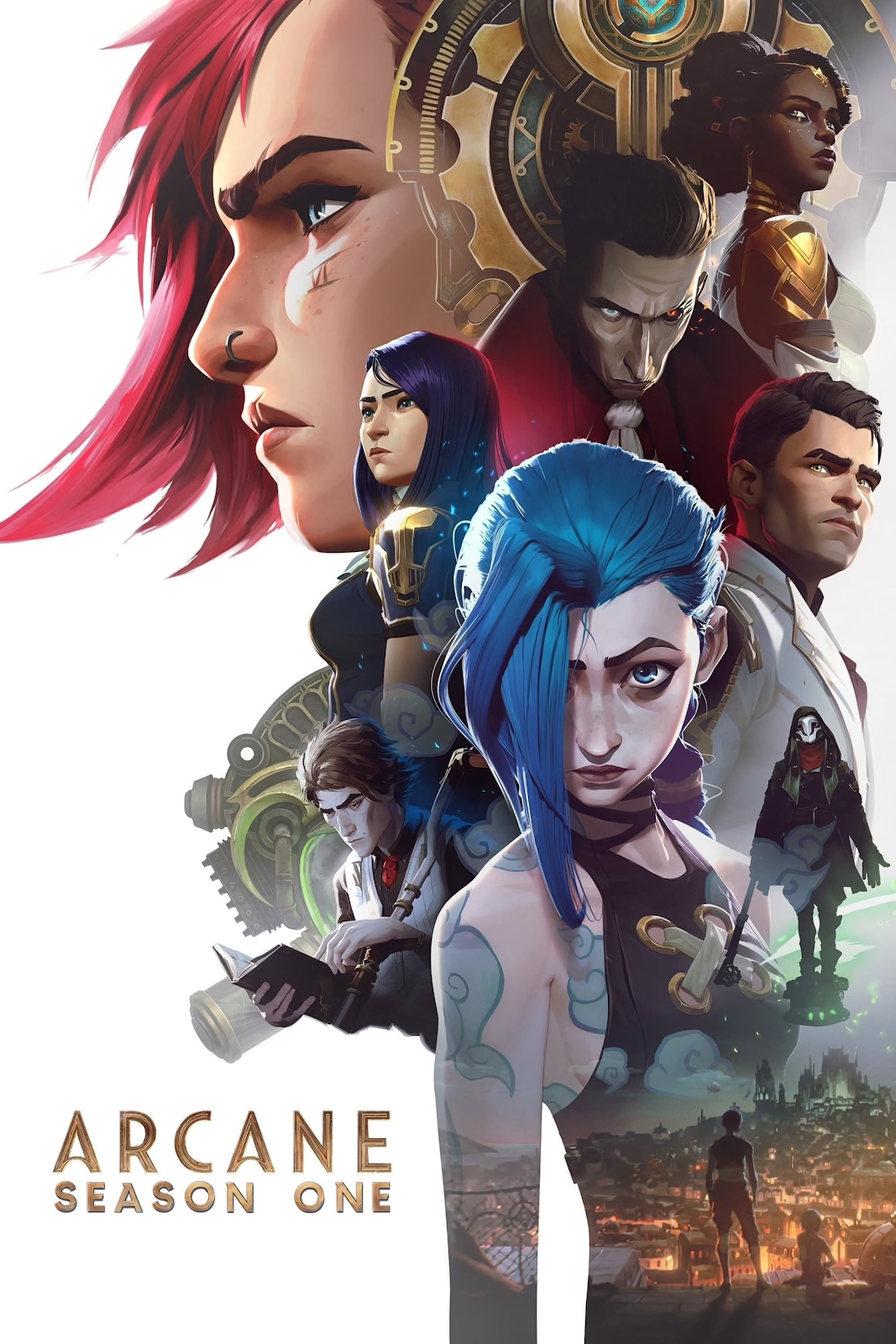
Neither of us have finished with the short form nominees yet (although I’m close: I just have to work through the two seasons of For All Mankind leading up to the nominated episode) but do you have any thoughts on the ones you’ve watched? It’s fun to have a category this year that’s not going to be won by The Good Place, and I appreciated the nudge to catch up on Arcane - which is on the whole excellent, despite its infuriating use of facial difference to denote the bad guys and the lack of full confirmation of its overt queer romance - and The Expanse. Overall, I don’t have very strong feelings on the category, but it does cover a lot of ground when it comes to TV sensibilities and that’s great to see.

Joe: We touched on some of my general thoughts earlier (I was bored by Loki, loved Wheel of Time, etc) - but I’m interested in how we, or maybe just I, think about Dramatic Presentation Short Form. In a very correct sense, this is about the discrete episode that is nominated. Is *that* the best piece of short form programming? But it’s also hard to evaluate separately from the context of the show itself. For me, “The Flame of Tar Valon” was one of my favorite episodes in a show that I adore, but it is a more successful episode because there is more context. The episode is earned.

On the other hand, I have absolutely no memory of “The Nexus Event” from Loki and even after reading a recap, only the vague understanding of how that episode fit in and to the overall arc of the show - so, did I like it more than the other episodes of the series. Do I think it’s good on its own? I’m certainly not going to rewatch an episode of a show I didn’t like to find out.

The only other episode I’ve seen (so far) is “Nemesis Games” from The Expanse. It’s the finale from Season 5 - after a brief refresh I remember it much more than the Loki ep, and (as with so much of The Expanse) - it was really good and a hell of a season finale. I haven’t been quite motivated to watch the full season of Arcane just to get to get to the finale, though I’ll admit to watching all 5 seasons of She-Ra last year just to get to the nominated episode(s) so really I’m a fraud. Likewise, I don’t have Apple+ right now and I somehow never started For All Mankind - so I do still want to watch the show, I’m going to wait until whenever an Oscar contender is on later this year and then try to catch up for that month. I’ve got enough streaming in my life that I just don’t have a strong desire to get another provider even just for 1-2 months. I *will* watch the episode of Star Trek: Lower Decks with absolutely no context prior to voting because it’s in the voter packet and I watched a lot of Deep Space Nine and Voyager with no context so why not get back into Star Trek television without context either? I probably will watch Arcane at some point, though. Just not sure if it’ll be before voting closes.

Adri: Nemesis Games suffered from the need to write out a major character following extensive sexual harassment and abuse allegations against one of their actors: it’s handled as well as possible in the context and it doesn’t detract from the overall story, but it does make the episode as a whole a bit odd. Still, I think the Expanse keeps earning its spot in this category. Plus, the Star Trek episode is absolutely watchable in zero context, though it benefits from an understanding and love for Trek in general.

It's going to be Arcane for me in this category, though, unless For All Mankind gets a surprise hold on me.

And with that, we’ve covered all of the dramatic presentations! Join us for our next conversation on short stories, coming (hopefully) soon!

Joe Sherry - Co-editor of Nerds of a Feather, Hugo Award Winner. Minnesotan. He / Him
 
Adri (she/her), Nerds of a Feather co-editor, is a semi-aquatic migratory mammal most often found in the UK. She has many opinions about SFF books, and is also partial to gaming, baking, interacting with dogs, and Asian-style karaoke. Find her on Twitter at @adrijjy 

Wednesday, October 27, 2021

'Dune: Part One' is pure visual perfection, but it doesn't stand on its own

The newest adaptation of the science fiction classic makes a high-stakes bet with an uncertain reward

Dune: Part One is a work of beauty. Stunning, captivating, jaw-dropping beauty. You could turn the volume all the way down and just gape for the whole two-and-a-half hours at the impeccable use of lighting and contrast, the narrative meaning added by the camera angles, the precise geometric elegance of every single shot. This film is sure to snatch next year's technical awards. But that's the extent of its achievements. Dune: Part One is a glorious feast for the eyes, and for the eyes only. Storywise, it has several issues, and they stem from the choice to split the novel in two.

The beginning proceeds like your classic political drama: in a far future, in which humankind has apparently learned nothing from history and returned to feudal monarchy, the Emperor grows suspicious of an ascending noble house and schemes to destroy it. He decrees that the Atreides shall take over production of the universe's most expensive substance, which is not only as a metaphor for the role of oil in modern geopolitics, but also brings to mind the literal spice trade, which used to motivate greed and betrayal at a similar scale in older times. This move by the Emperor reeks of obvious duplicity, but the Atreides can't just refuse it without exposing the true positions of the game. So Duke Leto Atreides obeys and moves his household to the hostile planet Arrakis, where he knows for a fact that he'll be targeted, so he sets about making alliances with the local population.

Dune: Part One takes the story up to the usual point where a Greek tragedy would end: the Atreides are betrayed, their patriarch is captured, and his relatives are sent to deadly exile. But that's the point where the weird stuff blows up and Dune reveals the universe-spanning repercussions of its events.

Part Two has just been officially announced, which is welcome but not expected news. The deal between director Dennis Villeneuve and Warner Brothers stipulated that he would only get to make the sequel if the first movie did well enough. So the project was overshadowed with uncertainty from the start. It was not a fatal risk; if you're eager to know how Dune ends, you can always buy the book. However, at the time of release, Part One did not have a solid assurance of continuation. Instead of telling a reasonably complete story, Villeneuve preferred to tempt fate and make a majestic spectacle, rich in cinematic artistry, but made primarily of setup. From conception, Part One wasn't meant to be watched alone.

A movie adapted from a book series full of repeated warnings about the dangers of seeing into the future shouldn't have been so overtly plotted and structured on the assumption that a sequel would happen. Part One shows narrative choices that seem intended to help the story maintain better cohesion, but which clash against the hard fact that Part One is telling an incomplete story. Many of the trailer's suggestive shots of Paul Muad'Dib living and fighting next to the Fremen turn out to be flashforwards, prophetic hints of events that don't happen in this installment. There are so many of these tantalizing visions that at times it feels like we're watching a two-and-a-half-hour trailer for the actual plot of Dune.

By the moment reached at the end of this movie, readers of Dune have already been introduced to the Emperor, and to his scholar-minded daughter Irulan, and to Baron Harkonnen's other nephew Feyd, and to the powerful Spacer Guild. However, since their respective arcs don't go anywhere until the end of the book, they're completely absent from this adaptation. On one hand, removing them frees Part One to focus more on the protagonists it needs us to still remember and root for in Part Two. On the other hand, this silence on events beyond the House of Atreides makes the plot feel dangerously smaller than it actually is. Dune is not supposed to be mainly the story of Paul's family tragedy. It's supposed to be an epic of cosmic proportions. Multiple powerful factions have competing hidden agendas that are only now converging, which means that the story suffers by planting itself on one world and staying stuck there.

Both previous adaptations of Dune began with voiceover narration by the imperial princess and scholar Irulan. Because Villeneuve's version omits all scenes at the imperial court, there is no Irulan in this movie, which leads to a more interesting choice: voiceover narration by the Fremen warrior Chani, accompanied by a montage of Fremen guerrilla attacks on Harkonnen infrastructure. To place these images at the start of the story does much to counter the accusations of white saviorism often thrown at Dune: these Fremen were not sitting on their hands, waiting for Paul to come and save them. They were busy fighting for their own liberation.

This discussion is central to Dune fandom. A story as complex and as loaded with real-world symbolism as Dune is too easy to misread. The classic complaint is that it celebrates hero worship, which is easy to disprove by reading on. To put it bluntly, Paul becomes a murderous monster, and the sequel novels reinforce the original's message that nothing is more dangerous than a hero. What David Lynch failed to understand, and through him, audiences failed to see, is that Paul's arc in Dune is not a canonical hero's journey. If anything, it's a supervillain origin story. Paul is scared now, but in time, he will buy eagerly into his own legend, which will ultimately burn the universe. Even as early as Part One, the recurring visual reminders of his bullfighting grandfather cement the unspoken warning that a trait of the Atreides family is the tendency to court danger.

By focusing on Paul's misadventures in Arrakis, Part One skips most of the novel's philosophical and anthropological themes. That choice needs a serious course correction in the sequel. Dune is not Game of Thrones in space, nor should it ever try to be. One of the tasks that Part Two must fulfill is to present, in their full complexity, the heavy discussions on fate, ego, evangelization, exploitation, environmentalism, fanaticism and generational responsibility that made the original Dune the most acclaimed novel in the entire history of science fiction.

Fans need not worry that a more ponderous and cerebral Part Two will turn people off. Part One works well enough as an explosive adventure, but the whole reason why Dune is so respected and beloved is precisely because it is ponderous and cerebral. A less thrilling, more meditative sequel would do more justice to what makes Dune special. That sounds contrary to the direction Hollywood prefers to go these days, but now that we know for sure that Part Two is coming, Villeneuve can afford to jump deep into the thematic substance that sustains the story.

It sounds risky, but fans should not fear. Remember: fear is the mind-killer.


The Math

Baseline Assessment: 9/10.

Bonuses: +3 for flawless cinematography, +2 for Timothée Chalamet's wonderful acting.

Penalties: −1 for overcorrecting the earlier Dune versions by giving too little exposition, −2 because the choice to not include the Emperor in this half of the story severely diminishes its sense of scope and makes the Arrakeen invasion feel like a rushed detour in pace, −3 for erasing the Middle Eastern influence on the source material.

Nerd Coefficient: 8/10.

POSTED BY: Arturo Serrano, multiclass Trekkie/Whovian/Moonie/Miraculer, accumulating experience points for still more obsessions.

Tuesday, December 22, 2020

The Final Frontier: A Haunting

 Hi all, this is the third out of four essay installments for you at the end of the year. The idea of the frontier is so prominent in much of speculative literature that I wanted to get some thoughts down on it, though I'm limited in my perspective as a settler currently on the stolen land of the Paiute, the Shoshone and the Washoe tribes.


The Final Frontier: A Haunting

screen cap of the title for Star Trek featuring "Final Frontier"

Speculative fiction is the ideal providence for continuing and supporting American frontier mythology as the map never ends—there’s always another frontier to explore, whether that’s a new planet, a land across a fantastical ocean, a portal, or cyberspace. While classic speculative texts have recast the frontier and its progenitors the cowboy and the adventurer on various planets and fantastical lands, very little about the frontier has changed—including its racist, genocidal nature. From Star Trek’s “final frontier” to newly imagined gold rushes of alien ores, capitalizing off the frontier remains a US fantasy perfectly suited to colonizing the galaxy. Yet, particularly in contemporary speculative fiction, frontier mythos and acts of colonialism are not only being questioned but actively written against. This shift aligns with a shift in who writes speculative fiction. The genre’s recent past is dominated by white men who actively kept other people out of the genre (and continue to attempt to do so as suggested by Robert Silverberg’s yearly comments on the Hugo Awards or the occasional attempt at resurgence of the Sad Puppies). Even so, speculative fiction is taking a turn from this foundational past “discovering” new lands and dominating them to troubling these ideas on the page and thus, in the real world.

Some of the earliest speculative texts utilized the travelogue format or involved the hero leaving the real/known world to adventure to the fantasy/unknown world. This fascination with the frontier in speculative fiction can be traced to Darko Suvin’s initial explanation of the genre: “However, at the beginnings of a literature, the concern with a domestication of the amazing is very strong. Early tale-tellers relate amazing voyages into the next valley, where they found dog-headed people, also good rock salt which could be stolen or at worst bartered for. Their stories are a syncretic travelogue and voyage imaginaire, daydream and intelligence report. This implies a curiosity about the unknown beyond the next mountain range” (5). While a curiosity of the unknown doesn’t have to be a bad intuition, often these texts came with troubling depictions of the Indigenous people and the hero’s perceived right to rule and dominate these people, such as in Edgar Allan Poe’s The Narrative of Arthur Gordon Pym of Nantucket (1838) and Edgar Rice Burroughs’s A Princess of Mars (1912). The travelogue format provides an easy—even lazy—way to engage with what Suvin considers to be a foundational aspect of speculative literature, the novum (a variation of Ernest Bloch’s Novum). While Suvin refers to science fiction specifically, I would argue that the novum is also necessary to fantasy and other subgenres of speculative literature, as can be seen from his definitions of the novum. He writes: “SF is distinguished by the narrative dominance or hegemony of a fictional ‘novum’ (novelty, innovation) validated by cognitive logic” (63). As suggested by this definition, the novum can be achieved by introducing the presence of an “other.” Thus, the alien frontier story or travelogue becomes an ideal narrative format to present the novum. Even Suvin acknowledge this tendency: “The essential tension of SF is one between the readers, representing a certain number of types of Man of our times, and the encompassing and at least equipollent Unknown or Other introduced by the novum” (64). Yet, even in these early days, authors troubled these ideas of the frontier and the “other” that Suvin recognizes as a distinguishing factor of the genre, such as Of One Blood: Or, The Hidden Self (1902) by Pauline Hopkins or Herland (1915) by Charlotte Perkins Gilman. 

In Herland, Gilman sets up the traditional adventure story with three male characters intent on entirely dominating whatever civilization they find on the other side of an unnamed mountain range, especially after they learn it is “Woman Country” (Gilman 7). The narrator, Van, writes: “There was something attractive to a bunch of unattached young men in finding an undiscovered country of strictly Amazonian nature” (Gilman 7). Yet, the civilization they find on the other side is verging on utopia, and it is the three men that must change or leave. Indeed, each time the men try to express how civilized their American life is, the women undermine their ideas of progress and modernity. Van writes: “I had always been proud of my country, of course. Everyone is. Compared with the other lands and other races I knew, the United States of America had always seemed to me, speaking modestly, as good as the best of them. […] These women, without the slightest appearance of malice or satire, continually [brought] up points of discussion which we spent our best efforts in evading” (Gilman 63). For example, at first, the men are proud that the American response to poverty is “the best in the world,” but the women don’t know what poverty is because their civilization does not experience poverty as it does not grow beyond their means (Gilman 64). As the three men attempt to explain, their description of poverty and its impacts sound more and more horrible: “Jeff […] solemnly replied that, on the contrary, the poorer [American women] were, the more children they had” (Gilman 64). Throughout the novel, the women question foundational ideas such as poverty, government, religion, and relationships. While Van and Jeff are able to adjust and have equal relationships with their partners, Terry ultimately has them banished when he attempts to rape his partner after she refuses to have sex with him. He is thwarted as, just like in most other ways, the women are superior physically and through their communal bond, and they easily overpower him. Yet, Terry’s inability to live in partnership with the women and his desire to dominate them ultimately creates the tension for this utopian novel while repeatedly troubling ideas of US superiority. 

During the mid-1900s, the travelogue developed into fully imagined worlds in need of exploration, sometimes for resources or a new home for humanity. This development created dependence on colonial tropes and reinscribed frontier mythology. For example, in many speculative fiction stories of that era, colonies are assumed. In Philip K. Dick’s Do Androids Dream of Electronic Sheep? (1968), humans are emigrating to Mars. Similarly, in Isaac Asimov’s I, Robot (1950), humans are living on, mining, or exploring other planets. While one could argue that the robots present in both books present commentary on colonialism, the fact they are not awarded the status of human (even by the end of these stories), sets a worrisome precedent. Even in socially aware texts, colonies on other planets are not questioned or scrutinized, such as in The Dispossessed (1974) by Ursula K. Le Guin. The reader is very aware that her main character is a colonist on a moon, but if anything, his life as a colonizer is dismissed since the moon has few resources or living beings. Indeed, Helen Young identifies this pattern in her book Race and Popular Fantasy Literature (2018): “Fantasy creates worlds structured by imperialist nostalgia. For much of its history, the Fantasy genre has avoided engaging with imperialism and colonialism¬ in any critical way, as has most Western popular culture” (12). While she is speaking of fantasy, this critique can be applied to much of speculative literature. So many of the foundational speculative tropes are rooted in racism and colonialism that more than awareness is needed. Rather, we must rethink fundamental aspects of the genre. 

This issue of “imperialist nostalgia” is evident even in novels aware of the imperial project, such as Frank Herbert’s Dune (1965).  This novel mixes colonial expansion and monarchy with the common “gone native” plot, as Paul Atreides must hide among the Indigenous Fremen in order to survive the assassination of his royal line. The Atreides acquired the planet Dune for a natural resource called Spice, which can be turned into a drug. The drug is required for faster-than-light travel and is taken by the upper echelons of political influence. Even before the reader has met the Fremen, they are immediately fetishized, and Paul is positioned as a white savior through each chapter’s epigraphs: “A beginning is the time for taking the most delicate care that the balances are correct. […] To begin your study of the life of the Maud’Dib, then, take care that you first place him in his time. […] Do not be deceived by the fact that he was born on Caladan and lived his first fifteen years there. Arrakis, the planet known as Dune, is forever his place” (Herbert 3). While Paul’s Fremen name is used, textual clues suggest that Maud’Dib is the boy Paul, named in the first chapter’s opening line. Interestingly, Dune is often mentioned as an example of environmentally-aware speculative fiction, but without environmental justice and decolonial justice, how can this novel truly engage in environmental discourse? Helen Young writes: “Western societies fetishize and commodify indigenous cultures, but histories of invasion, dehumanization of native peoples and genocide are largely buried in modern popular culture” (114). Indeed, in Dune, Paul remains squarely at the center of the story as he is adopted by the Fremen and begins to fulfill their prophecies as he learns to live in the hostile environment. Rather than explore the history of colonization for a natural resource, Herbert instead focuses on how a teenaged boy becomes the leader of an Indigenous people, sending them on an intergalactic “jihad” (Herbert 476). Indeed, at the end of the novel, Paul says: “‘The Fremen are mine. […] What they receive shall be dispensed by Maud’Dib. It’ll begin with Stilgar [a Fremen leader] as Governor on [Dune], but that can wait” (Herbert 482). Indeed, he fulfills his role as a white savior by giving back the planet but only in ways that suit him—by making the nomadic Fremen conform to a Western-esque system of government even as he leads them into a war. Ultimately, Herbert remains hegemonic in his fetishization of the Indigenous Fremen and usage of the white savior plot. 

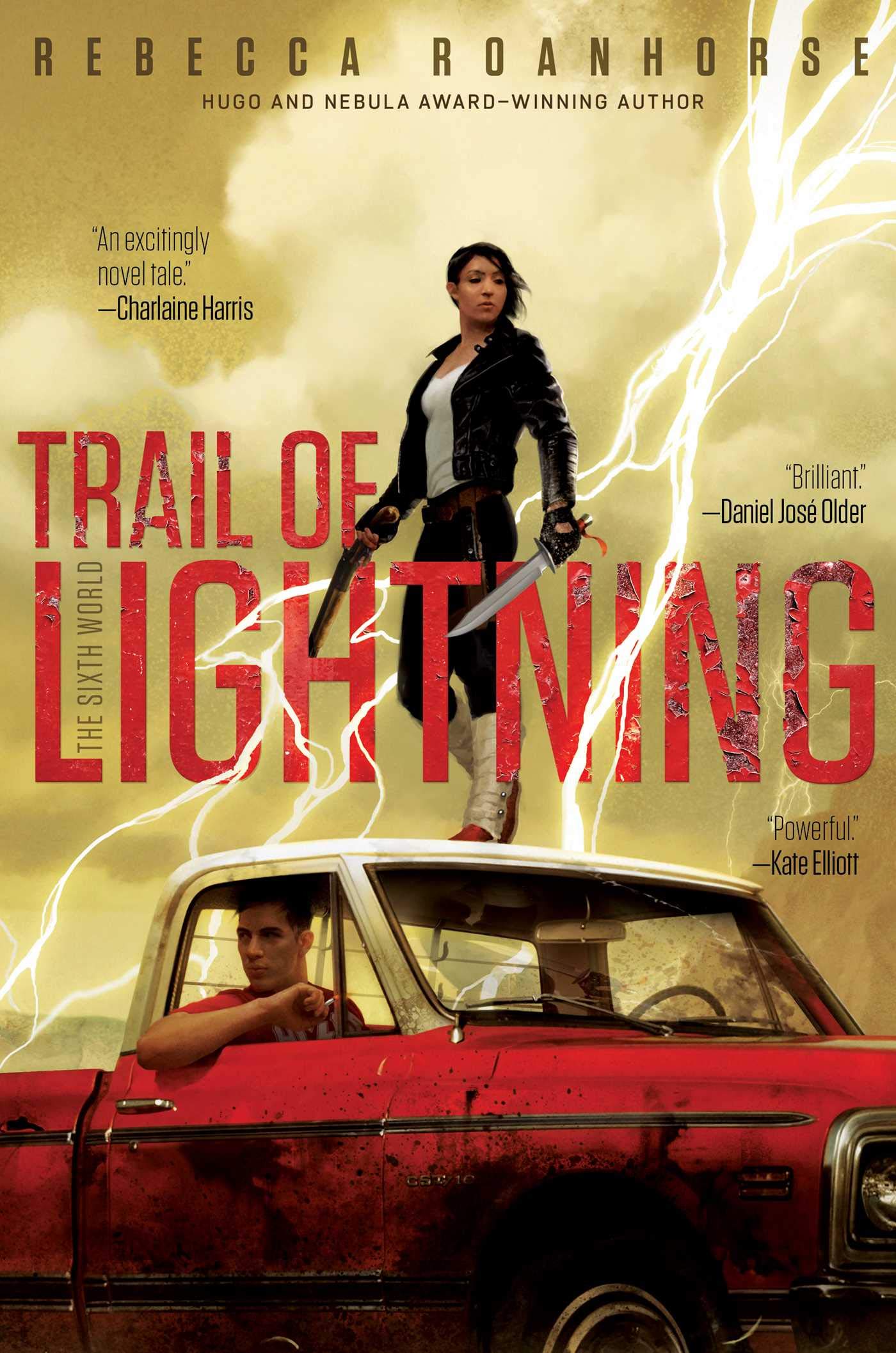
Cover of Trail of Lightning featuring Maggie standing on a truck with a knife
Even though the past of speculative fiction is founded in the frontier mythos and colonial tropes, contemporary speculative literature is actively troubling and questioning this past. Indeed, as the previous generation of largely white, male writers are becoming less active in the community, the trajectory of the speculative genre is shifting toward imagining more equitable futures. While there is much work still to be done, Helen Young acknowledges: “Fantasy—despite, or even perhaps because of, its long reception as a genre designed to ‘serve rather than subvert the dominant ideology’—has considerable power to dig up long-buried histories of colonisation and imperialism and to challenge the assumptions on which their power structures rely by offering new perspectives. This is so despite the ongoing legacy of colonialist ideology which permeates the genre” (114). Indeed, a cohort of authors have been actively publishing books that subvert such tropes: David Anthony Durham, N. K. Jemisin, Nnedi Okorafor, Sabrina Vourvoulias, Tananarive Due, China Miéville, Nalo Hopkinson, Stephen Graham Jones, Rebecca Roanhorse, Kai Ashante Wilson, Darcie Little Badger, Charlie Jane Anders, R. F. Kuang, Silvia Moreno-Garcia, Daniel José Older, and more. When thinking particularly about troubling the frontier and colonialism, Rebecca Roanhorse’s debut Trail of Lightning (2018) presents an interesting and fun example. While often cited as an urban fantasy, I’d argue that it’s more of a weird western—except Roanhorse banishes the figure of the white cowboy. Early on, she invokes the western genre: “Tse Bonito is still more Wild West frontier town than anything else. Bunch of cowboys and Indians, although everyone’s pretty much Diné. Last time I came through here looking for a Bad Man, I ended up in a shootout that felt more like OK Corral than a monster hunt” (Roanhorse 24). While invoking the western, Roanhorse reminds the reader that not all cowboys are white. In fact, in a slick worldbuilding move, Roanhorse easily disposes of the question of white colonists all together. 

Early in the novel, the main character, Maggie, reminisces about the recent history of the land. As the climate crisis worsened, a climate event flooded much of the US, an event the Diné called “Big Water.” This climate event prompted more resource grabs and the Energy Wars, so the Diné built a wall around their lands: “The head of the [Indian] Council, his name was Deschene, wrote some article for the Navajo Times that put the fear in people, especially after the Slaughter on the Plains. Navajo people weren’t safe anymore, he said. He invoked the specter of conquest, manifest destiny. And he wasn’t wrong. The Slaughter had ushered in a heyday of energy grabs” (23). While not everyone agrees with the Wall, Maggie later narrates: “I had forgotten that the Diné had already suffered their apocalypse over a century before. This wasn’t our end. This was our rebirth. […] And the Wall took on a life of its own. When the workmen came back the next morning, it was already fifty feet high. In the east, it grew as white shell. In the south, turquoise” (23). While much of the novel is fast-paced action sequences and monster hunting, the worldbuilding is rooted in anti-colonial discourse. 

I chose Roanhorse for this brief analysis not because her novel offers the best example of undermining colonialism and the frontier mythos but because her novel is not about that, at least, not entirely. Roanhorse’s novel is first and foremost an adventure and a fast-paced read. It’s not about Indigenous pain. Indeed, because of it being a speculative fiction novel rather than literary fiction, Roanhorse can remove white people to behind a wall. Just as earlier texts so easily dismissed Indigenous people, so Roanhorse imagines away white people. In other texts, Roanhorse has more directly engaged with the legacy of colonialism,  but I argue that part of moving forward is making sure that not every text that engages with colonialism does so through pain and suffering. While frontier mythos and colonialism are linked to speculative literature’s earliest texts and still haunts the genre today, contemporary writers are demonstrating that there is more to the genre than otherizing the unknown.


Works Cited

Gilman, Charlotte Perkins. Herland and Selected Stories. Signet Classic, 1992.

Herbert, Frank. Dune. Clinton Book Company, 1965.

Roanhorse, Rebecca. Trail of Lightning. Saga Press, 2018.

Suvin, Darko. Metamorphoses of Science Fiction: On the Poetics and History of a Literary Genre. Yale UP, 1979.

Young, Helen. Race and Popular Fantasy Literature: Habits of Whiteness. Routledge, 2018.


Phoebe Wagner is a PhD candidate at University of Nevada, Reno. When not writing or reading, she can be found kayaking at the nearest lake. Follow her at phoebe-wagner.com or on Twitter @pheebs_w.

Monday, December 2, 2019

Holiday Gift Guide: Books

Welcome to our annual Holiday Gift Guide, where the flock takes a break from our usual schedule to consider all the different things that the nerds in your life might appreciate for the holiday season this year. Today we'll talk about books and comics, with posts throughout the week on games, collectibles, movies and more.


The Girl Who Drank the Moon (Gift Edition) [Algonquin] (recommended by Joe)

Originally published in 2016, The Girl Who Drank the Moon by Kelly Barnhill is a Newbery Medal winning novel and it is an absolute delight (my review). I almost can't wait for my children to grow just old enough for me to read them this beautiful novel. Algonquin has recently published a new Gift Edition with a prequel story, new illustrations and a map. It's just lovely.


Of Wars, and Memories, and Starlight [Subterranean Press] (recommended by Adri)
Aliette de Bodard is, thus far, the only author to reach the ballot for the Best Series Hugo with a series entirely developed in short fiction, for her Xuya universe of mindships, filial piety and Vietnamese culture in a far future spacefaring world (at least in the more recent stories - there is an entire earth-based mythology for Xuya as well). This collection brings together a range of Xuya tales, along with a couple of pieces - including an original new novella - from the Dominion of the Fallen world, featuring fallen angels and dragon gods in a post-apocalyptic Paris and explored in the trilogy starting with House of Shattered Wings.

Because this is a Subterranean Press book, it's a beautiful object, coming in a signed and numbered edition with a cover illustration by Maurizio Manzieri which really brings the aesthetics of Xuya to life. There still aren't many opportunities to pick up printed editions of the Xuya stories, and this selection would look gorgeous on any shelf, to dive into when it next makes an appearance on the Best Series ballot.


Image result for dune deluxe edition

Dune: Deluxe edition [Ace] (recommended by Paul)
In November 2020, there will be a new screen version of Dune for the first time in nearly 20 years. If you have been waiting for a chance to finally read Dune in preparation for this movie release, have I got an edition for you. While the Folio Society version may be rather out of reach for a lot of buyers price wise, there is a new version of at a much more reasonable price point for readers both old and new to it: I present to you the deluxe version of Dune from Ace.

It’s a beautiful hardcover edition of one of my heart books, which I previously discussed here back in October. It has beautiful end papers, dust jacket, excellent binding, and a new and much clearer map of Arrakis than previous versions of Dune use. Readers and lovers of the novel can get a lasting and beautiful edition of the book. Readers who are new to the book can get a copy of the book in preparation for seeing the movie in an excellent edition that works for readers. Dune is a novel that really works best as a book (audio versions having real issues with its omniscient point of view) and this edition leans into that, using typography and layout to help make it clear who is speaking, thinking, and acting: no mean concession in this complex, complicated and wonderful book.


Zach-Like (recommended by Brian)
Reading Zach-Like by Zach Barth, you’re going to learn two things: Zachtronics isn’t a one-man affair, and the Zachtronics creative process creates a lot of cast-offs. If you’re not familiar with Zachtronics games, they make mostly puzzle programming games, the most popular being SpaceChem and Opus Magnum. They also, arguably, inspired Minecraft with a very early game called Infiniminer. Zach-Like shares some of the stories, diagrams, trials of these games, the rest of their published catalog, and lots of unpublished games as well. It’s a fascinating look at indie game development from a fairly niche studio that doesn’t necessarily want to fit in a niche.

Zach-Like is available through Steam in PDF form, and occasionally gets reprinted via crowdfunding.


Battle Angel Alita Vol. 1 by Yukito Kishiro (Recommended by Mike)

My family and I were very pleasantly surprised by Alita: Battle Angel this year and it left me with additional questions about the world that Alita inhabited. Fortunately this entire series is available on ComiXology Unlimited and my son and I were able to read all nine volumes. The story centers around Alita, a cyborg who is found in the dump in the scrapyards beneath Zalem (one of the last great floating cities). It is a quest for her to find her identity and for her friends to make peace with their own personal demons associated with living in as a second class citizen with no hope of upward mobility. The action sequences in this book are phenomenal, but the world building and character development are where this series shines. It can be hyper-violent at times, but it never felt unnecessary or graphic. If you enjoyed the film or are looking for an interesting post-apocalyptic tale I suggest you check this title out.
Image result for the nasa archives
The NASA Archives: 60 Years in Space (Recommended by Joe)
Covering 60 Years of the United States space program and including more than 400 photographs, this may be the coffee table book of all coffee table books for the space enthusiast who wants to see how it all came together. A collector's item.

Posted by: Adri, Nerds of a Feather co-editor, is a semi-aquatic migratory mammal most often found in the UK. She has many opinions about SFF books, and is also partial to gaming, baking, interacting with dogs, and Asian-style karaoke. Find her on Twitter at @adrijjy.