Showing posts with label essay. Show all posts

Monday, October 26, 2026

Essay: Language and Anti-Language in The Republic of Memory

cover art by Raja Nandepu

Republic of Memory, by Mahmud El-Sayed, previously reviewed on NOAF, is a deliciously rich text, full of chewy, intertwined meditations on memory, legacy, family, society, duty, revolution, collaboration, and identity. Since you all raced out to buy it and read it back when Stew's review came out in May, the details may be a bit fuzzy, so I'll remind you of the key bits here. (If you didn't race out and buy it and read it DO THAT NOW, jeez, how many times do we have to tell you a book is fantastic?)

The story is set on the generation ship Safina, two hundred years and halfway through its journey to its intended colony planet Hurriya, governed by an administration set up during a ship-board revolution shortly after launch. But the democratic, anti-fascist, anti-AI (w00t!) Compact that was put in place is breaking down. Time and and complacency have led to corruption, and disaffected crew have been dipping their toes back in the waters of revolt. In fact, the creeping collapse of the Administration resembles the Safina herself: ageing, suffering worsening technological malfunctions that range from transient inconveniences to deadly shipwide catastrophes. Complicating matters further are the cryogenically sleeping passengers, selected at ship's launch by the now-defunct Network Empire that funded the expedition. These sleepers are intended to be revived at Hurriya to from the first generation of colonists, and although the new Administration has broken from the Network Empire in most ways, this element of their mission is preserved.  Socially, the passengers are revered as Ancestors by the crew. But their preservation is eating up resources on a ship that is feeling the ever-increasing strain; and not everyone reveres them. They are, remember, perpetuators of the old order of the Network Empire that everyone now reviles, a symbol of everything both right and wrong about the ship's origin and purpose. Every time I try to pull on a single thematic thread to examine in isolation, the rest of the book comes with it; no one idea can be analysed independently of the others.

Nevertheless, I'm going to try. And because I'm a linguist, I want to discuss how brilliantly language — and, as we shall see, anti-language — is used to support all the other thematic components of this text, from culture to change to rebellion to rebirth.

1. Language and culture on the Safina

We can see this centrality of language from the start, in mind of Iskander Ezz, a Translator by profession. The first thing we learn about Iskander is that he feels like a different person depending on which language he speaks. This idea — that language affects thought — has been studied scientifically by Earth linguists from a number of angles, of which I will discuss two. The first angle, perhaps the more familiar to readers of SF, derives from the Sapir-Whorf hypothesis. This idea, also known as linguistic relativity, was invoked brilliantly in Ted Chiang's novella Story of your Life and later dramatized brilliantly in Denis Villeneuve' magnificent film adaptation Arrival. (It was also invoked less brilliantly in Heinlein's Stranger in a Strange Land.) This hypothesis proposes that the different structural features of the languages people speak direct their attention to different elements of existence, and so modulate their perception of the world. 

In its strongest form, the Sapir-Whorf hypothesis often seems to invoke the concept of time, specifically. Benjamin Lee Whorf himself famously claimed that because the Hopi language lacks any capacity to express the concept of time, the Hopi people are incapable of understanding the concept of time as Europeans do. (Whorf 1941/1956). (He was wrong on both counts.) More recently, Chen (2013) proposed that, if a language doesn’t explicitly encode for future tense, the grammatical unity between present and future might prevent speakers from discounting future gains or disregarding future harms. The future is now, Chen argues, and so the potential gains and harms are more immediate. As a result, speakers of tenseless languages they smoke less, watch their weight, use condoms, and invest their money more responsibly.1 In the limit, for the Chiangs and Heinleins among us, it's a short step from this sort of claim to add the SF-sparkle, and write stories wherein learning a language like Martian or Heptapod B, with sufficiently temporally transcendent grammar, grants its speakers the ability to see the future. 

Although no one has demonstrated tense-based clairvoyance in the laboratory, there is some reasonably persuasive evidence that language can affect perception in limited ways. For example, the range of basic colour terms in a speaker's language does seem to shape colour perception in small but measurable ways (Thierry et al 2009). If a language encodes agency, its speakers might better remember intentional actors than unintentional actors (Fausey & Boroditsky 2008).  Although most linguists agree that strong Whorfianism is not terribly well supported, weak Whorfianism may not be complete bunkum.

An alternative approach to this idea — i.e., that different ways of thinking depend on different languages — relates not to the linguistic structures of the languages themselves, but instead to the distinction between thinking in a native language and a second (or third, or fourth) language. If you have ever learned another language, think of how you might relapse into your first language in moments of high stress. Native languages tend to be more tied to emotional processing than second (or third or fourth) languages, and this difference can affect cognitive processing. Keysar et al. (2012), for example, asked people to choose between two options in both their first and second languages — e.g., selecting one of two treatment options for a deadly disease. Mathematically, the treatment options were equivalent in their outcomes, but they were framed differently across experimental conditions. In one condition a treatment option was presented such that it had a certain percentage probability of saving lives, while in the other the same option was described in terms of its failure rate. Even though the two options in each condition were numerically equivalent, participants were more likely to select the option framed as saving 33% of lives, rather than the option framed as letting 67% of people die — but, crucially, only when they were considering the options in their first language. When they did the same task in their second language, they instead recognized that the outcomes were equivalent, regardless of framing. These experiments were replicated across a variety of languages and scenarios, and the outcome was reliably similar: people were less susceptible to emotional framing in their second language. The authors propose that the mechanism relates to cognitive load: when you're thinking about a language you know less well, you don't have the brainspace to spare for emotional reasoning.

Iskander's split personality could be understood from either of these two perspectives. Arabek, his native language, is rich with different expressions of emotion — especially cursing (oh, especially cursing!). Why shouldn't using a language which encourages emotional expression result in a personality that is is quick to smile and laugh, effusive and expressive? By contrast, in Inglez, the language of ship administration, Iskander's second language, he is formal and proper, as would be expected in a language whose sole purpose is directed towards formal pursuits. 

Alternatively, you could imagine that the cognitive load of operating in a foreign language like Inglez would tax Iskander enough that he must tamp down on cognitive indulgences like emotion. (However, since he falls in love with a woman to whom he communicates in Inglez, this seems less persuasive).

But I think the personality-language match here is doing a third thing. Forget linguistic research. Instead, consider Iskander's personalities through a narrative lens. The Safina houses its thousands of inhabitants in different berths, and although its original crew members came from different nations and ethnic groups, the Compact’s First Crew after the revolution decided to group people not by ethnicity or religion, but by language. By grouping people based on voluntarily mutable characteristics — anyone can learn a new language — the crew can guarantee equality and unity, with translators to ease linguistic barriers to cooperative group action. Thus, the different berths speak Arabek, Manda, Canto, Malay, Russ, Nihon, Torkdil2 and others. And to communicate across berths, all are united by Inglez, the language of official administration. 

Inglez is no one's native language, but anyone who wishes to work in Administration, or indeed climb above the lowest ranks in other divisions, must learn it.3  But Iskander's role as a Translator also serves a second purpose: in addition to simply conveying meaning, he also serves as a kind of lawyer. He ensures that all the paperwork — for criminal defenses, marriages, births, deaths — is prepared and filed properly. His use of Inglez, then, is fundamentally administrative. No wonder he develops a stodgy, no-fun, stuffed shirt persona in Inglez: not necessarily because Inglez's grammatical structure encourages stodginess, and not because he is less emotional in a second language; but because that particular second language is tied primarily to the culture of paperwork.

And what goes for Inglez goes for all the other language on the Safina. The linguistic variety might have been intended to serve as a mutable grouping characteristic, but the different berths have preserved — or developed, or strengthened — their differences since launch day in more dimensions than just language. Religion, fashion, culture, and values vary enormously across berths, defying the original goals of preserving social mobility.

The fact that the ship's original crew contained so many speakers of so many languages, and yet not English, feels like a pleasing thumb in the eye of English linguistic imperialism. Whatever this future Network Empire was that had the power to dominate the world and build generation colony ships, it did not require English to do it. However, the fact that English — and thus Inglez — was consciously adopted to become the language of status and privilege on the Safina is harder to interpret. Is it a straightforward world-building consequence of what happens when one language is made the language of power? An authorial commentary on the inescapable dominance of English in our current world? A thematic invocation of the tensions inherent in any society where English-speakers specifically control all decisions, and vernacular speakers must learn English to have any power? 

The last option is certainly consistent with the unfolding events in the book. By 200 years into the journey, organized crime groups — or covens — are everywhere, spreading violence in their internecine disputes; and even law-abiding crew have started to develop linguistic bigotries, or 'berthisms' betraying the philosophy of social mobility that underpinned the berth-grouping structure. Administrators throw complications in front of crew who want to marry across berths, linguistic and religious fundamentalists are developing with berths. The Compact is breaking down (like the ship), or perhaps was imperfect from the start (like all societies). Chaos threatens; agitators whisper of revolution, and the crew, divided as they are across berths and languages, are losing touch with the shared purpose that is supposed to unify them in their mission. Iskander is different people in different languages. He's not sure which of them is the real him. It's not clear which version of the Safina will survive to see Hurriya. 

2. Language and change on the Safina 

Languages change over time. As we can see in the spellings of the Safina's languages, Arabek is not the same as its ancestor Arabic; Russ is not Russian; Torkdil is not Turkish; Inglez is not English. This shift is made all the more evident when one of the sleeping Ancestors, Heba Hilal, is woken from hibernation and finds herself confronted with 200 years of linguistic drift. From her perspective, she talks like a hard-boiled detective — appropriate enough, given her previous employment back on Earth as a military investigator. But when we see her from the Safina's crew's eyes, her speech is archaic.  'Grant you mercy,' she says. 'Wouldst thou like to come in?'

And yet not all speech changes at the same rate. Hilal observes that Inglez has changed much less from English than Arabek has changed from Arabic. This is linguistically believable: standardized languages that are formally taught (like Inglez) will remain far more stable across the centuries than  casual, vernacular languages (like Arabek). In fact, Arabek itself is diglossic, with different versions used in different contexts. Formal, scholarly, religious Arabek is much the same as Hilal remembers. Only the vernacular Arabek requires her to rely on her still-intact AI-implant to help her with automatic translations. 

This split in Arabek on the Safina echoes the status of Arabic in modern-day earth: Modern Standard Arabic is the language of news, politics, and education. It is no one's native language but everyone's second language (does that sound familiar?). Meanwhile, the vernacular Arabic dialects — Mahgrebi, Levantine, Gulf, Egyption, and others — have diverged from their common ancestor to the point that speakers of some varieties verge on mutually unintelligible. Speakers of Gulf dialects, spoken around the Arabian Gulf (e.g., Saudi Arabia, Kuwait, Qatar) can understand each other easily, but have difficulty understanding Mahgrebi dialects, spoken in Algeria and Morocco.4 On the Safina, the Modern Standard Arabic from Earth, like English/Inglez, have retained much of their 200-year-old character. Only the vernacular Arabic varieties have continued to grow and change until they are nearly unintelligible to Hilal's ear.

The shifting rates of language development mirror the Safina’s social tensions between conservatism and change. This parallelism is beautifully apparent in the role of the Ancestors. Is it respect for culture and heritage that leads the crew to maintain the Ancestors in cryogenic stasis, celebrating them on the anniversary of the launch, visiting them and honoring them on ship holidays? Or is it mindless subservience to the last remnants of the brutal Network Empire, whose voracious violence eventually destroyed Earth itself? Is there anything to be gained by preserving the Ancestors? They were selected, after all, for their expertise in geology, meteorology, agriculture, and all the other skills that will eventually be necessary for colonizing a new world. But they also are the last representatives of that same Network Empire, with the technological augments still in place, ideologically devoted to a regime which the ship's crew rejected centuries before. And it should not be ignored that they consume enormous quantities of Safina’s resources, at exactly the time when the ship is itself strained and breaking down. How can the ancestors' potential future contributions be balanced against the equally undeniable dangers they represent — both now, asleep, and in the future, awake? When they wake on Hurriya, they will speak old languages that none of the crew understand. In their mouths, a world that is 400 years dead and gone will return. 

3. Anti-language and anti-society

The fracture lines between embracing change and conserving the past fuel both crime and revolutionary fervor among the crew, who coalesce into multiple activist groups, also called covens. These covens both follow the language-based divisions and also cross-cut them. Along linguistic lines, for example, we have the Karls, or Kommunists among the Russ-speaking births, and the more violently-minded Vory; the Haraka in the Arabek-speaking births; the Gokudo in the Nihon-speaking berths; the Zendistas among the Portuguese-descendents. Although these covens have their own primary linguistic affiliations, they must also communicate with each other, both for purposes of illicit trade, but also for coordinating larger criminal or political actions. Crucially, though, they do not communicate in the existing lingua franca of Inglez. They use a different mode of communication: Nupol.

Nupol is described as an argot, a polyglot blend of words from every language on the ship — and some that didn't make it into space — slotted into an Inglez grammatical frame. Russ contributes numbers and a lot of body parts; German or Yiddish's descendant seems to have provided negatives and some obscenities; Portuguese or Spanish or some other Romance language provided some abstract ideas about work and thought  and freedom, along with some personal and relative pronouns, and temporal adverbs. Still, each word can be more or less directly with an intended English counterpart. The reason it's possible to learn Nupol is because it is not an entirely novel language. The syntax of the sentences remains familiar. Even the morphology is unremarkable: To cog — to think or feel — inflects like any other verb: Today I cog, right now I am cogging, yesterday I cogged, tomorrow I will cog. Gulliver — head — pluralizes into gullivers. Nupol is Inglez relexicalized, but not regrammaticalized. 

Nupol is almost a textbook example of what Halliday (1976) called an 'anti-language'. Anti-languages are the communicative practices of anti-societies. In Halliday's words, "An anti-society is a society that is set up within another society as a alternative to it. It is a mode of resistance, resistance which may take the form passive symbiosis or of active hostility and even destruction" (pg 570). The covens on the Safina are all of these things. Some — the Zendistas, the Gokudo — seem to be content simply to to exist in their own carved out domains, existing in mostly passive symbiosis with the ship’s administration. Other covens take more active forms of hostility, but differ in the degree to which they advocate for active destruction. The Vory want to overthrow the administration and replace it with their own head, but otherwise preserve the social order. The Kommunistas want to go further, and set up  a new social order, build a new Compact.

These revolutionary goals make literal another feature of anti-languages. As Halliday argues, every language reinforces the agreed-upon social order that structures its speakers' consensus reality. Every time someone speaks, they must decide what to say, and what to leave unsaid; and every one of those decisions conveys something about the interlocutors' shared reality: This thing is new, and require explicit remark, and so we say it. All of those other things are normal, background parts of daily life, and not worth saying. So we say, 'Hey, your fly is undone' to identify the bit of the world that departs from the norm, without bothering to remark on all the shared knowledge about the convention of going about clothed rather than naked, the standard modes and mechanisms of standard garments, or the particular tabooness of crotch-associated wardrobe malfunctions. In this way, language helps to construct and maintain our shared reality. 

By speaking Nupol, the members of the covens, the coves, are not simply communicating across berths that speak different languages, or signalling in-group membership to other coves, or avoiding being overheard by out-group members — although they are doing that too. But more than that, they are also building the new social reality they want to spread: one without the Administration in charge; one run by the covens, structured by coven social hierarchies, governed by coven values. 

Because this new social reality is defined in opposition to the existing standard, it is not, in itself, fixed. There are many ways to oppose the dominant order, and as the covens shift their goals and membership and internal power relations, so too does Nupol shift. The Nupol spoken by Badreddine, the leader of the Haraka, sounds old-fashioned to the younger members, and indeed one of them reflects that Badreddine himself is the oldest person speaking Nupol that she has ever seen. To her, Nupol is the language of youth, of change, of agitation. 

An early scene in the book illustrates Nupol's quicksilver changeability in action. Iskander’s sister Damietta is aligned with Badreddine and the Haraka, and in this scene she is approached by a former friend called Britva to convey a message to Badreddine. This is the first time they've met in years. In her youth, Britva had been arrested for smuggling and spent time in prison; and following her release she joined the Russ-speaking Kommunistas. Although both women know Arabek, they converse in Nupol, because the substance of their interaction is aligned with coven activity: Britva's message is a proposed alliance between her coven, the Kommunistas, and Damietta's, the Haraka. During this conversation, Britva uses words Damietta doesn’t know, and so needs to explain their meaning to Damietta: strax — itself derived from a Russ(ian) root — means to fear something. In other words, as Britva’s Kommunist-aligned influence spreads through these proposed alliances, she also influences the Nupol of the people she contacts. New words enter the anti-language and spread, reflecting changes in the structures of the anti-society that uses it.

4. The Inglez substrate

I mentioned earlier that Nupol is constructed by relexicalizing Inglez: new words are introduced to replace standard vocabulary, without altering the grammatical frame. But why must the grammatical frame, the substrate language, be Inglez specifically? As I see it, there are two reasons: one trivial, the other metaphorical and delicious.

Trivially, the coves needs to be able to understand each other.  The crew don't necessarily know Arabek and Russ and Manda and Torkdil and Canto. (Even Translators like Iskander don't know all the languages themselves. Iskander is actively working on learning Nihon.) What the crew do all know is Inglez, to one degree or another. So if Nupol is built upon Inglez, everyone has access to a recognizable scaffold from which the unfamiliar bits can be puzzled out. (The reader must do quite a lot of this. It helps to know a certain amount of Russian.)

Metaphorically, recall that Halliday describes anti-languages as the language of an anti-society, and describes anti-societies as organizations defined in opposition to the dominant social order. A completely new language would be a thing in itself, able to exist independently of any other social order beyond the one belonging to its speakers. An anti-language, on the other hand, must be built upon the substrate that it exists in opposition to. You need to start with Inglez before you can build a language defined in opposition to Inglez. 

The delicious consequence of this metaphor extends further. Inglez is the language of privilege and power, but by providing the substrate of Nupol, it is also the means of unifying the coves who might otherwise struggle to unite their forces to greater action. If the brewing revolution is to be successful, then the new consensus reality, constructed and reinforced by the use of Nupol, will sprout from seeds planted in the earth of Inglez. And what could be more appropriate? On the Safina, the dead are composted to create food for the new generations that replace them. The old consensus reality is dying. The new struggles to be born. Now is the time of anti-language.

 ——

1 This particular proposal got a lot of attention at the time, although I don’t believe it was ever accepted as more than a cool idea that lacked proper scientific support. Just last year my department — and I'm sure other linguistics departments in universities around the UK — was approached by a banking firm, because they were considering developing a marketing campaign about savings and investments based on this idea. They wanted to get some real linguists to approve it as valid science. I do not believe campaign ever launched. 

2 The languages that Arabic, Mandarin, Cantonese, Malay, Russian, Japanese, Turkish, and English become after hundreds of years.

3 Given that one component of the growing corruption in the ship relates to the way plum Admin posts are passed down within families; and given that people who fall in love across berths often end up speaking to each other in Inglez — as Iskander and his girlfriend Taki do — I have my doubts about how long Inglez can remain 'no one's native language'. It's not explicitly discussed, but I suspect a lot of those hereditary admin families and cross-berth couplings probably do end up speak Inglez at the breakfast table with their children. 

4 This information comes from my PhD student, who is currently studying the use of intonation to interpret syntactic ambiguities in Kuwaiti Arabic, and the extent to which Kuwait Arabic-English bilinguals can use the same perceptual strategies to interpret prosodic cues in the two language.

References

Berreby, D. 2012. Obese? Smoker? No Retirement Savings? Perhaps It's Because of the Language You Speak. The Big Think. http://bigthink.com/Mind-Matters/obese-smoker-no-retirement-savings-perhaps-its-because-of-the-language-you-speak 

Chiang, T. Story of Your Life, in Stories of Your Life, and others. [Tor, 2002].

El Sayed, Mahmud. The Republic of Memory. [Gollancz, 2026].

Thierry, G, Athanasopoulos, P., Wiggett, A., Dering, B., and J. Kuipers. 2009. Unconscious effects of language-specific terminology on preattentive color perception. PNAS 106:4567–4570. https://doi.org/10.1073/pnas.0811155106 

Fausey, C. M., and L. Boroditsky. 2008. English and Spanish Speakers Remember Causal Agents Differently. In Proceedings of the 30th annual meeting of the Cognitive Science Society. Washington, D.C. https://escholarship.org/content/qt4425600t/qt4425600t.pdf 

Halliday, M. A. K. 1976. Anti-languages. American Anthropologist, 78(3): 570-584. https://www.jstor.org/stable/674418 

Heinlein, R. Stranger in a Strange Land. [G. P. Putnam’s Sons, 1961].

Keysar, B., Sayuri, L. H., and S. G. An. (2012). The Foreign-Language Effect: Thinking in a Foreign Tongue Reduces Decision Biases Psychological Science 23(6): 661 – 668. https://www.jstor.org/stable/41489753 

Liberman, M. 2012. Cultural diffusion and the Whorfian hypothesis. Language Log. https://languagelog.ldc.upenn.edu/nll/?p=3764 

Pullum, G. K. 2012. Keith Chen, Whorfian economist. Language Log. https://languagelog.ldc.upenn.edu/nll/?p=3756 

Sedivy, J. 2012. Thought Experiments on language and thought. Language Log. https://languagelog.ldc.upenn.edu/nll/?p=3797 

​Whorf, B. L. (1940/1956). An American Indian Model of the Universe. In Language, Thought, and Reality: Selected writings of Benjamin Lee Whorf, ed. John B. Caroll. Cambridge, USA: MIT Press. Pg. 57​.

CLARA COHEN lives in Scotland in a creaky old building with pipes for gas lighting still lurking under her floorboards. She is an experimental linguist by profession, and calligrapher and Islamic geometric artist by vocation. During figure skating season she does blather on a bit about figure skating. She is on Mastodon at wandering.shop/@ergative or on Bluesky at https://bsky.app/profile/ergative-abs.bsky.social

Monday, July 14, 2025

The Sand in Our Lungs: The Desertification of Our Imaginations

Hi, folks! Unfortunately, I've had to pause my weekly Andor posts due to some unexpected life circumstances, but I will finish up my deep dive with a final essay on the last two episodes in the near future. Until then, here's an essay about why two sci-fi films with deserts might not be the best for our cultural imagination. Thanks for reading!

The Sand in Our Lungs: The Desertification of Our Imaginations


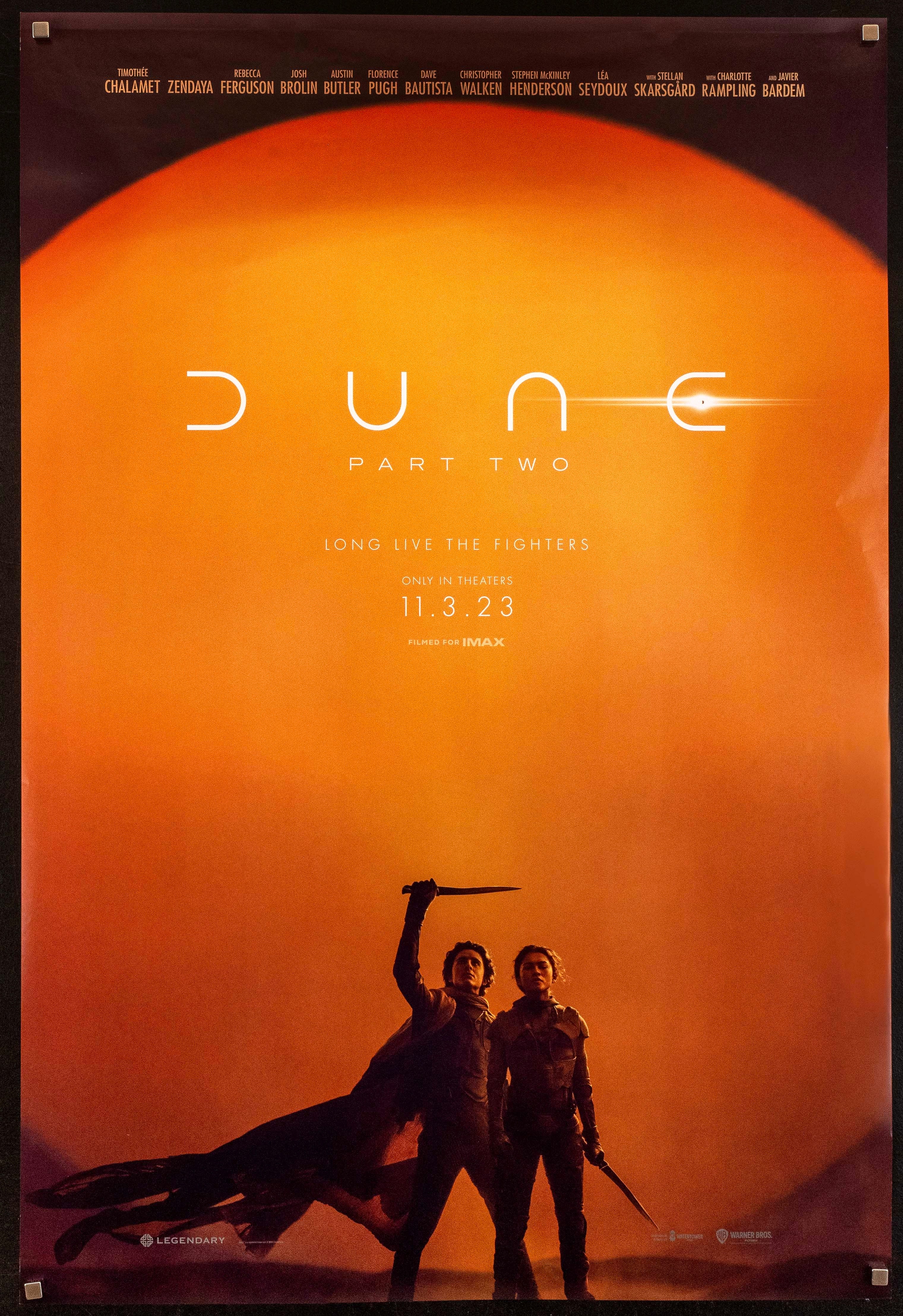
In 2024, two major science fiction franchises produced blockbuster sequels: Dune Part II, directed by Denis Villeneuve, and Furiosa: A Mad Max Saga, directed by George Miller. Both films overlapped in their depictions of the desert landscape, cults of survival, and a desire to return to a “green place.” These respective deserts are not seen as their own habitats, as unique biomes and cultural spaces, but rather as something dangerous that must be made green. This utopic desire combined with the extractive activities in both Villeneuve’s and Miller’s deserts suggests an inability to imagine life beyond extraction in the heat of global warming but only in lush greenness, where even the air is purer. The impact of this cultural imagining can be seen in the recent political landscape, as President Trump released an AI-generated video depicting the West Bank as an “oasis” with palm trees, and when Elon Musk, while heading DOGE, reposted a Mad Max meme with the text: “Ladies, it’s time to start thinking whether the guy you’re dating has post apocalyptic [sic] warlord potential.” In current political imaginings, the desert can either be greened to create some type of utopia or is full of savage warlords hoarding resources.

Rather than focusing on how humanity has adapted and survived these places, Dune Part II and Furiosa depict progress as the desire to return to green. While this view of the desert not only supports the current imperial actions in the Middle East, it also limits the ability to imagine and pursue survival in the heat of global warming. These coincidental releases suggest a turn toward imagining hot, dry futures where the air is poisoned or changing humanity, as in the Spice sands on Arrakis. Rather, we must (re)imagine these desert futures as more than extractive places where the heat and air can kill.

Unlike its predecessor Mad Max: Fury Road, which I’ve argued in my essay “Mad Max and the Wasteland of Commodification” has strong ecofeminist and environmental justice themes, Furiosa reverts to a biblical story of the sinful woman. The first shot of the titular character is her reaching for a lush piece of fruit while another girl whispers they should hurry. Immediately after she picks the fruit, Furiosa sees that men have invaded their sanctuary. While trying to warn the others, she is captured, which prompts her mother to follow them into the desert to rescue her. She fails, and Furiosa is enslaved and raised by Dementus (Chris Hemsworth) before she is eventually traded to Immortan Joe (Lachy Hulme) to be one of his or his son’s child wives as part of a deal for Dementus to run Gas Town, a petrol fortress. Indeed, it is the attempted rape by his son Rictus (Nathan Jones) that allows a young Furiosa to escape and hide among the War Boys, eventually growing up to become a mechanic and then learning to drive the War Rig alongside Praetorian Jack (Tom Burke). They become partners—both romantically and in their desire to escape. Meanwhile, Dementus is scheming to take over Immortan Joe’s fortress, which features fresh produce, green gardens, renewable energy, and—most importantly—unlimited water from underground aquifers. Caught up in his schemes, Praetorian Jack and Furiosa are captured, Jack is horrifically killed, and Furiosa escapes to tell Immortan Joe in hopes of enacting her revenge. After a forty-day war, she tracks Dementus through the wasteland to kill him. The film ends with the History Man (George Shevtsov) suggesting that Furiosa didn’t kill Dementus but rather planted the seed of the fruit she took from the Green Place where she was captured while eating the fruit, and the film ends with Furiosa now played by Charlize Theron handing one of these fruits to the enslaved women that she escapes with in the next film.

In many scenes, Dune Part II mirrors the plot points of Furiosa. Like Furiosa, Paul (TimothĆ©e Chalamet) comes from a place utopic for its greenery and, most importantly, water—a sacred element on Arrakis. Furiosa and Paul both seek revenge against grotesque villains known for their cruelty. In Dune Part I, Paul’s family, who have come to rule the desert planet, are murdered by the villainous Harkonnens, and Paul and his mother flee to hide in the desert, where they are taken in by the native population called Fremen. Paul’s mother, Jessica (Rebecca Ferguson), is part of a galaxy-wide religious order that has seeded prophecies and propaganda about an outsider who will turn Arrakis green again and lead the Fremen. While Paul is perfectly positioned to fulfill this prophecy, he is hesitant at first, but in order to defeat the Harkonnens and avenge his father, he must use the native practices of the Fremen to not only survive the desert but to control their loyalty. By ruling the Fremen, he regulates what makes Arrakis so important: Spice production. The drug called Spice enables interstellar planetary travel, so it is a necessary and valuable resource required by the empire. Ultimately, Paul takes leadership of the Fremen to oust the Harkonnens from Arrakis by force, which prompts the other ruling families to threaten violence, leading to the Fremen intergalactic war off their home planet.

The desert is the prime visual for both these films, but in Furiosa there is no cinematic beauty in the desert, only fear, while Dune features long shots of the sun catching Spice in the air, the shifting sands, the decorated sietchs where the Fremen live, often overlaid with a stereotypical Middle Eastern soundtrack. While both films depict the desert in different lights, survival and exploitation are still central to the desert, primarily for various types of fuel, whether it’s petrol, food and water, or Spice.

Furiosa is unable to escape her captors because she has no resources to survive the desert, and resources are exclusively stolen, not shared. The apocalypse of the Mad Max franchise is summarized in voiceovers at the beginning of the film, and the first two instances of destabilization listed are the power grid collapsing and that “currency is worthless,” (Miller 00:00:30), once again proving the quote commonly attributed to Fredric Jameson that “it’s easier to imagine the end of the world than the end of capitalism.” The voiceovers end with the final sentiment from the History Man: “‘As the world falls around us, how must we brave its cruelties?’” (Miller 00:01:21). The film’s answer to this question is revenge and the utopic desire to return to a green paradise. The cruelties that Furiosa survives depict what Naomi Klein and Astra Taylor call “end times fascism:” “A darkly festive fatalism—a final refuge for those who find it easier to celebrate destruction than imagine living without supremacy” (“The Rise of End Times Fascism”). Indeed, destruction—of both property and the human body—are moments of joy rather than horror, such as when Dementus orders a wasteland gang he’s overcome to fight each other for the honor of riding motorcycles attached to the body of their boss, pulling him apart (Miller 00:27:23). This destruction is linked directly to the desert because there is no alternative lifestyle presented in the sands. The only people living in this desert are destructive—except for our heroine, raised elsewhere, and her eventual romantic interest, who is murdered. Rather, the alternative lifestyle is rooted not in the desert but in an oasis of green where there are still trees bearing fruit, water, and animals.

In the first few minutes of Furiosa, what is called “the green place of many mothers” in Mad Max: Fury Road is depicted. In a rocky canyon, the few shots of daily life show men and women working together at chores while windmills turn in the background. In addition to human life, there is nonhuman life, from birds crying to the horse Furiosa’s mother rides in an attempt to rescue her. Shelters feature solar panels on the roofs, and the people use sustainable technology such as a pedal-powered whetstone and a solar oven (00:04:13). While they are not pacifist—Furiosa’s mother is a crackshot—they represent the opposite of the desert barbarism by incorporating advanced technology along with sustainable living to create an egalitarian community. This progressive community, though, is visually connected to the water and lush flora that surrounds them. Indeed, as Furiosa’s mother ventures deeper into the desert in her rescue attempt, she must take on more and more of the violent trappings of Dementus’s men—first abandoning her horse for one of their motorcycles, then putting on their clothes and helmets of human bone. Thus, the desert and its connection to scarcity—whether real or imagined—is the promoter of this savagery, not something brought to the sands. Indeed, as Imre Szeman points out, “We moderns are creatures of fossil fuels (if to different degrees in different places in the world)” (7). As she progresses into the desert, she becomes more a creature of fossil fuels by taking on the trappings and riding the bike. The focus on automobiles in the Mad Max franchise emphasizes this connection, and control of “guzzolene” is important to who rules the desert. Rather than adapt to the more sustainable and fossil-fuel-free life of the green place with many mothers, the people of the desert hold onto their desire for fossil fuels and the supposed modernity it produces, such as Immortan Joe’s brother, the lord of Gastown, painting a recreation of John William Waterhouse’s Hylas and the Nymphs (1896) while wearing a regimental coat (Miller 00:43:23).

Alternatively, in Dune Part II, the Fremen do present the desert as a unique environmental and cultural space, but their depiction throughout the film still connects to violence and is presented as uncivilized or lacking in empathy. Throughout both films, their martial prowess is partly what makes them unique, but early in Part II after a battle, Paul witnesses Chani (Zendaya) drain the water from a body of a still living Harkonnen, swatting away the Harkonnen’s weak arm (Villeneuve 00:11:19). This moment positions the Fremen as lacking empathy or respect for their enemy, by doing something brutal as they loot the water from the bodies, causing the pregnant Jessica to vomit. While Fremen violence begins and ends the film, there is worldbuilding around their culture and relationship with the desert. This connection is depicted visually through their eyes, which become a vibrant blue due to them breathing in and eating Spice. Additionally, the reason for collecting water from the dead is not only due to scarcity, but in the case of dead Fremen, their water is poured into an underground tank where it is being saved to turn the planet green. As Stilgar (Javier Bardem) explains to Jessica: “‘When we have enough water, the Lisan al-Gaib will change the face of Arrakis. He will bring back the trees. He will bring back a Green Paradise’” (Villeneuve 00:20:24). Even though they’ve adapted to live with the desert, have a culture intertwined with the desert, and have the ability to create advanced technology out of the desert (such as their stillsuits, which retain water), their religious purpose is to change the planet to a green paradise that they have no frame of reference for.

While Paul respects the Fremen and their understanding of the desert, they are still positioned as religious zealots willing to die for the Lisan al-Gaib in a war necessitated because the natural resource of their planet—Spice—is required for galactic travel. Indeed, the movie is framed around Spice, and its metaphoric connection to oil is emphasized visually. In a restructuring of the opening credits, sounds that do not necessarily mimic language seem to speak, with the words appearing on black screen: “Power over Spice is power over all” (Villeneuve 00:00:05). The production credits follow, creating an interruption of the story started with the truism on Spice. While Spice production happening on a desert planet being controlled by colonizers already prompts viewers to think of oil production, the connection is solidified by the main villain, Baron Harkonnen. He soaks in a black pool of liquid that clings to his white skin, the oily surface swirling (Villeneuve 00:49:02). While the Fremen offer an alternative few of the desert, the central conflict still revolves around the Harkonnens keeping the Spice flowing, thus limiting this imagining of the desert to an extractive space.

While Furiosa and Dune Part II come from very different franchises, the narrative of the protagonist’s revenge, violence, and extraction creates a unified view of “desert” as a space where scarcity leads to savagery. Another way this savagery can be read is a response to the question posted by Wilson, Szeman, and Carlson: “Energy transition will therefore involve not only a change in the kinds of energy we use, but also a transition in the values and practices that have been shaped around our use of the vast amounts of energy provided by fossil fuels” (4). Without these practices of modernity, these films suggest the only option when fossil fuels become limited is not adaptation or transition but violence, even though much of the Global South already does not operate with the same amount of energy usage as the Global North. While there are certainly other films that do not present the desert or its people in this framework, the release of two such blockbuster narratives in 2024 suggests the desertification of imagination in the U.S. and a need for alternative narratives, particularly for the masses. As Paul says of the Fremen to his mother: “It’s not a prophecy. It’s a story you keep telling. But it’s not their story; it’s yours” (Villeneuve 01:02:21). The Fremen are certainly more nuanced than the people of Furiosa, but because their values are created and manipulated by Paul and the religious order his mother Jessica belongs to, the Fremen’s agency is degraded. Their culture of wishing for a green utopia is entirely manufactured to make them more pliable in relation to collecting Spice. Additionally, the supposedly uninhabited and unlivable southern part of the planet being filled with a large population of “fundamentalists” who are mostly nameless and faceless, depicted as a mass, dehumanizes the Fremen. They become a tool for violence, another thing to be extracted from the desert in Paul’s galactic conquest.

As this violent and resource-drive depiction of the desert unites the movies, so, too, does the desire for a green utopia. The desert is not seen as a viable location, even though in Dune the Fremen have adapted to the desert. In Furiosa, the desert is not adapted to but rather something to be endured by scavenging and killing others in order to, someday, find what one of Dementus’s men calls a “place of abundance” (Miller 00:12:30). Both these narratives focus on a return to a green utopia, which suggests an imaginative reaction to global warming. As the climate changes and global warming causes places to become hotter and drier, this yearning for a green utopia will harm humanity’s ability to adapt. As the After Oil Collective writes in Solarities (2022): “Stories and myths are tools of immense possibility that provide powerful means of creating different worlds and making new futures, and of seeing the present in new ways” (61). While the releases of Furiosa and Dune Part II are coincidental, these narratives suggest we are struggling with “seeing the present in new ways” and instead relying on imperial, oil-driven narratives of scarcity, violence, and extraction in the desert. These narratives also reinforce the problematic idea that lush, green spaces are the only viable vision in the midst of climate change rather than presenting a diversity of flourishing landscapes and beings.

As the impacts of climate change continue to cause more desertification, our popular storytelling must adapt rather than react. Depicting deserts as spaces of scarcity and violence only serves extractive and imperial industries. Rather, we can use storytelling practices to imagine flourishing communities in the desert not beset by extraction. There is more to the desert than supposedly empty sands and oil; it is not a place that must be transformed in order to reach a more utopic state—and storytelling can develop our imagination in these directions as more of the planet experiences extreme heat and drought. At this time, we need our imaginations expanded, not limited by these imperial narratives.

Works cited

After Oil Collective et al., editors. Solarities: Seeking Energy Justice [U of Minnesota Press, 2022].

Dune Part II. Directed by Denis Villeneuve, Warner Brothers, 2024.

Klein, Naomi and Astra Taylor. “The Rise of End Times Fascism.” The Guardian, 13 April, 2025.

Furiosa: A Mad Max Saga. Directed by George Miller, Village Roadshow Pictures, 2024.

Szeman, Imre. On Petrocultures: Globalization, Culture, and Energy [West Virginia U Press, 2019].

Wilson, Sheena et al., editors. Petrocultures: Oil, Politics, Culture [McGill-Queen’s U Press, 2017].

POSTED BY: Phoebe Wagner (she/they) is an author, editor, and academic writing and living at the intersection of speculative fiction and environmentalism.

Friday, January 31, 2025

Wherein I struggle to express how I feel about Silo

This story hit me with a gut punch. This is my attempt to find my breath

I was very skeptical when I first heard news of the show Silo. Post-apocalyptic dystopias are not my thing, and in my experience, most stories about a small fraction of humankind sheltered in a self-contained city are destined to reveal that (a) the shelter is a trap, (b) the ones who rule the shelter aren't benevolent, and (c) there's a way to survive outside. This has been proven true countless times from Logan's Run to Snowpiercer to WALL-E to Attack on Titan to Ɔon Flux to Divergent to Ergo Proxy. Even the unfairly underrated The Matrix Reloaded ended up revealing that letting the last human city exist was part of an elaborate system of control. So my suspicion was that Silo would go through the same motions while pretending that they were a big surprise.

But then I started finding comments in my timelines from everyone who was watching the series, and the high praise was unanimous. Silo was definitely doing something special. Some time later, when I learned that it had started streaming a second season, I knew for sure that there was more story to it than the usual reveals I had predicted. Plus I'd already seen Rebecca Ferguson do a stellar job in both parts of Dune, so I finally decided I'd try watching Silo.

Still, I pressed play without shedding my reservations. I've written before that I'm not impressed by science fiction that allegorizes class inequality; it achieves little more than preach to the choir and bore the rest, wasting any impact its message may carry. When I noticed that the titular Silo had a stratified division of labor, with manual workers all but forgotten in the lower levels and white collars ruling from the top, I feared I was in for another simplistic fable. I needn't have worried. As the plot unfolded, I forgot what I was so apprehensive about, and instead was captivated by the cultural distinctiveness of a society that has been molded by centuries of self-sufficient isolation. These are people who make a heroic effort every day to stave off extinction, and are educated and skilled enough to succeed at it, yet have never heard of seas or birds or elephants or stars. Their ignorance of the natural world, as deliberately induced as it is, doesn't hinder their hyperspecialized technical expertise. The Silo harbors exceptionally competent doctors and mechanics and waste treatment engineers and computer programmers who lack any clue of biology or geography or philosophy or sociology. In other words, their only available preoccupation is keeping themselves alive, without the time, inspiration or even permission to cultivate the uniquely human interests that make life worth living.

As often happens in stories about societies so radically different from ours that a full explanation is indispensable, this series begins as a police procedural. And the first characters we meet in that investigation, who will soon die by the rules of the system, experience one of the stains in the administration of the Silo: they have too much innate curiosity to be allowed to raise children. Those with the inclination to question the status quo are discreetly prevented from influencing the generations that will follow. And that realization pulls a thread that will irreversibly unravel the entire fabric of their society. It turns out the Silo can only operate if the general population doesn't know their own past and doesn't even figure out that governments can be replaced. Life must go on in a perpetual state of frozen present. Whereas the Big Brother in 1984 kept control by rewriting the past, the IT department in Silo has abolished the past, as well as the future: no one can learn how things were different before, or suggest how they may be different someday. The Silo is designed to ensure peace by bringing about a contradiction: a human population for which history doesn't move.

Except there's no such thing as a society free from history: memory and aspiration are inseparable from human nature. And it is by memory and aspiration that the inhabitants of the Silo eventually prevail against their totalitarian rulers.

Which leads me to talk about the fascinatingly complex people we follow in this story. There's the honest-to-a-fault Paul Billings, a legal expert turned cop, who believes so sincerely in the rigid laws of the Silo that he ends up working against the government he serves when its corruption becomes too blatant to ignore; there's the Lady-Macbeth-esque Camille Sims, a former armed enforcer who has grown disillusioned with the system and now hides her ambitions behind a bureaucrat's desk; there's the no-nonsense Martha Walker, an aged tinkerer who never leaves her apartment yet sees the events in the Silo with more clarity than anyone; there's the world-weary, tragically idealistic Mary Meadows, the Silo's maximum authority in name only; there's the self-blaming survivor Jimmy Conroy, single-handedly keeping hope alive while surrounded by thousands of corpses.

And in the eye of the storm, of course, is the irresistibly compelling Juliette Nichols, played by Rebecca Ferguson with a carefully balanced blend of jaded fury and vulnerable abnegation. As the moral center of the series, this character snatched my interest from her first appearance. I didn't find myself caring much about the fate of the Silo until she came into scene and suddenly made the story make sense. I want the Silo to survive because of what she represents.

Juliette isn't a woman of action; she is shown many times to be a lousy fighter and not particularly athletic. Her strength is in her resourcefulness, tied to an engineer's conviction that problems are solvable. She's frank, sometimes bluntly so; she's reliable, pragmatical, and an optimist at heart. It may sound strange to speak of optimism in a post-apocalyptic dystopia, but you don't embark on a life-threatening quest to uncover the truth unless you believe that the truth makes a difference and that it's there to be found. I was touched by her deep thirst for justice, not only for the inhabitants of the Silo, but for the dead loved ones she carries with her. She wouldn't have risked taking the first steps toward rocking the boat of her fragile social order if she didn't have promises to keep to dead people; that's a type of loyalty I find inspiring. And the more I watched her ask forbidden questions, dig into uncomfortable parts of her past, plead with the violent to consider other choices, and stubbornly refuse to just leave well enough alone, the more I wished I could live by the same virtues.

On a regular day, I think of myself as a reasonably decent person, but Silo's Juliette is a paragon of decency. I'm an easy target for the appeal of a character motivated by a sincere set of principles. Raised by a doctor and later by a mechanic, she has a drive toward fixing things; and in the middle of the dangerous machinery that keeps the Silo running, she learned the importance of cooperation. When (you believe that) there's only a few thousands left of you on the planet, you rely on each other or you die. Those experiences are the fuel of her capability to defy the secretive authorities that share the same precarious existence as her but not her sense of interdependency. She lives in an unnaturally tiny world built to teach her docility, and her response is to cling to her own instinct for what is right. She starts her self-imposed mission with all forces aligned against her, and even while aware that she has no visible path to winning, her small example lays bare the dishonorable actions of the Silo's upper levels.

Silo boasts excellent writing, set design, music, pacing, and direction, but it's the fortitude of a fundamentally moral character like Juliette Nichols that makes the series shine. I'm glad I gave this powerful story a chance.


Nerd Coefficient: 9/10.

POSTED BY: Arturo Serrano, multiclass Trekkie/Whovian/Moonie/Miraculer, accumulating experience points for still more obsessions.

Thursday, January 25, 2024

Seven Kennings Trilogy and the Power of Story

With the publication of the final volume of the Seven Kennings trilogy, we read back through the series and consider the three books as a whole.


At a book event Hearne did in Minnesota in early November, he remarked that before his popular Iron Druid series took off, the first book he wrote for submission was a prototype version of A Plague of Giants. While that book was on submission, for fun, he wrote Hounded, and so the Atticus stories took off. That early version of A Plague of Giants, he confessed, was ultimately not good--only the tiniest fraction of it made it into the new novel when he set to writing it.

But now that he has written the entire trilogy, what has he accomplished, and what was his ambition? His ambition, it is clear to me upon reading and completing this trilogy, is to have written an epic fantasy trilogy that at it’s heart is about how epic fantasy stories are told, and the consequences and power of telling that story.


A Plague of Giants begins with the following words:

"When we encounter a voice that moves us on an emotional level, by turns wringing tears from our eyes and plucking laughs from our bellies, there is an ineffable quality to its power: all we know is that we like listening to it and want to hear more."


Right at the start, we find that this novel, and this trilogy is about the telling of story. A bard with the power of a Kenning, in particular the magical ability to project his voice, begins to tell the war-weary city of the war that they themselves are suffering privation under.  We are in medias res of the Giant’s War, and the bard, we soon learn, has been sent to tell the story of the Giants War and prepare the populace for what is to come next.


But it’s not a simple linear narrative. This is not a simple recitation of facts. The bard has collected and (with his flawless memory) organized a raft of stories from, ultimately, twenty or so points of view. This sounds absolutely unwieldy and unsustainable and it is a high wire act that Hearne works at through the books. Hearne manages it by telling the stories of these characters through the bard in a narratively interesting and engaging order, which is not a straight up order by dates. And by having the bard tell the stories, we can use present day events in Pelemyn itself as a breather and a buffer from the stories he tells. 


What’s more, this ambitious three volume out of order narrative drives plot right up to the “present”, when Fintan the bard announces that, fifty days in, he has caught them all up. That is all well and good, but the way that Fintan has told his story, the order he has taken, has in itself frustrated and driven to action the bard’s putative partner, Dervan the historian, to actions himself in that aforementioned present day narrative. The ordering of the tales is itself a layer that drives some of the action itself. 


At the end of A Curse of Krakens, Hearne gives his game away. He gives a complete order of all the events in the three books by date and reference to the “Day” Fintan tells the story or incident, and it really shows just how much of a high wire act that Hearne has been doing across three volumes in order to tell the story in the order that gives the most narrative impact. Even if, as he is driven to action, Dervan is frustrated by the out of chronological order of events that are spun out of the bard and says so. 


So the three novels are in a dialogue with history (and having the present day MCs (until the actual war fleet and strike back against the Giants) be a storytelling bard and a historian is an incredibly interesting and rich choice by Hearne. The three novels as a throughline in the present allows the author to explore the differences, the important differences between telling and ordering events for a history (which Dervan has been commissioned to write) versus the ordering of events and narratives and stories of people to tell an epic fantasy story. 


I am reminded of a favorite quote of mine from the author Roberto Calasso, who wrote a ouroboros sort of mythological book in The Marriage of Cadmus and Harmony:


Stories never live alone; They are the branches of a family that we have to trace back, and forward.”


The choices in transitions and when to break off from a character are disguised as Fintan wanting to tell different stories to different days to a populace suffering deprivation, and seeking distraction by any means. That is the Holmesian version of why he switches characters when he does in the narrative (usually two or three characters get a POV in a particular “day”) But in the Doyleist view. The reason why Hearne does it is to give the story tension, to add suspense and mystery. It frustrates Dervan and I think, too, in a Doyleist vein, it is a tip of the cap from Hearne to the reader as to why we have to break and the order that things are told, time and again, Dervan, as our primary POV in the present, shows his own frustration and reactions whenever things break.  As an example, in A Blight of Blackwings, when Gondel Vedd makes a stunning discovery and makes a resolution that clearly was not fulfilled, but then, to show a thematic change rather than following up immediately, the bard switches to Abbinava. 


Part of all of this narrative switching and telling tales and trying to untangle them is the theme of espionage that goes through most of the volumes. From the get go, although his help is appreciated, Fintan is seen by the government of Pelemyn as a possible spy, and Dervan is recruited to, while overtly, to write down the bard’s tales as history, but really to be a spy (much to his own chagrin, he protests throughout the series that he is not a spy and does not want to be).  That tension is ramped up when we start to learn, as the series progresses, is that the Bone Giants have spies in the various kingdoms, and baffling their intelligence gathering and untangling those networks, becomes an important plot both in the stories Fintan tells as well as our reluctant spy, Dervan, who winds up getting caught by same. 


Readers of NOAF may recall that Hearne’s book is not the only book this year that deals with the power and narrative power, and importance, and implications of story. R.R Virdi’s The First Binding, first in a series [my review here] , has a storyteller protagonist, and the narrative unfolds in a present that is broken by long passages showing us the storyteller’s past, but those past events are told in such a way and manner as to reflect and look upon the present. Virdi has ambition equal to Hearne’s in that he is investigating narrative in a way that, in its way, is deeper than Hearne in looking at the narrativeology of stories in a somewhat more structured and deliberate manner. Virdi does use this instead of a raft of points of view and so we get a more focused epic story  But Virdi’s use of a magic-infused storyteller and Hearne’s use of a magic-infused storyteller shows readers that sure, fighters, mages and even clerics can be cool, but so can bards. Don’t count out the power of a bard. 


I want to talk about formats, and their reading experience, and this goes again to something that Hearne said in the aforementioned event in Minnesota. He said that his sales of print and ebooks were decreasing over time, but his audio sales were not only strong, but actively growing. He gave all credit for this to one of his narrators, Luke Daniels (the other for the Seven Kennings trilogy is Xe Sands). I consumed these books in both ebook and audio form and tried to switch back and forth between the audible app and the ebook. This only worked sporadically according to plan and sometimes I needed to forward one to catch up with the other, and other times it seemed to pick up the change and offered the update.  


I have mixed feelings about the three potential formats here, there are strengths to the print that the ebook mitigates, somewhat, and the audiobook has, but the reverse applies as well. Hearne, in addition to writing, also did the entrancing maps of the series, showing an eye for cartography as well as writing. These come across best in the hardcovers, less well in the paperbacks, even more frustrating in the ebooks, and of course do not exist in the audiobook at all, really, aside from the “accompanying PDFs” (which in the end are even more inconvenient than the ebook in looking at the maps and other associated matter). 


So while this consideration alone might drive one toward the print books, there is a reason to consider the reverse. This is a story which is mostly narrated by a bard. This is a story, a work that, to my reading and opinion, hits its cylinders best when Fintan is telling the stories of twenty characters.  (I feel the last portion of the story, which are diary and journal entries of the expedition, is somewhat weaker because of the huge strength of Fintan as narrator). And hearing Daniels and Xands voice the characters as Fintan is doing so is an experience that at points is positively revelatory. They understand the material, they love the material and that appreciation comes through. I think, then, that for its disadvantages as noted above, the audiobooks are, for me, the definitive version of these epic tales.


In the end, Hearne, in three volumes, has laid a marker down on using the long form epic fantasy trilogy to explore the nature of story, how they are told, who tells those stories and what that all means. There is a joy and power to stories, that is made clear right on the first page of the trilogy, as a bard is sent to a city under deprivation, to tell stories to inform, and distract an audience that has already been through a lot, and more sacrifice is yet required. Stories inform us, educate us, enlighten us, lift us up, and ultimately, give us hope. There is much else to unpack in this series, so much that Hearne has to say, but for the reader or potential reader, I urge you: quaerendo invenietis: Seek and you shall discover.


--


References:

Hearne, Kevin, A Plague of Giants, [Del Rey, 2017]

Hearne, Kevin, A Blight of Blackwings, [Del Rey, 2020]

Hearne, Kevin, A Curse of Krakens, [Del Rey, 2023]

POSTED BY: Paul Weimer. Ubiquitous in Shadow, but I’m just this guy, you know? @princejvstin.