Showing posts with label Wheel of Time. Show all posts

Monday, July 1, 2024

The Wheel of Time Reread: Crossroads of Twilight

Welcome back, dear readers, to The Wheel of Time Reread. Today we’re going to talk about Crossroads of Twilight, the tenth book in the series. This is also going to be much briefer than most of the other rereads that we’ve done so far for reasons that will be evident quite quickly.

I first read Crossroads of Twilight in 2003, very shortly after it was published. I bought the hardcover, which wasn’t (and still isn’t) something that I do all that often. It had been just over two years since Winter’s Heart, which very notably ended with the cleansing of saidin and whatever happened next was going to be so incredible and thrilling that, like most fans of the series, I just couldn’t wait. What a huge thing that was!

That’s not what this novel is.

Crossroads of Twilight didn’t build off of the cleansing so much as catch everyone else up to that same point—often with moments of noticing that something really big is happening far away and wondering what it was, if it is an attack from the Forsaken, or if Rand might need help.

It was such a disappointment right up until the end where (spoilers for book 10 of a reread) Egwene is captured by the White Tower. There wasn’t much movement in the rebel almost-siege of the White Tower or in Elayne’s not-exactly-a-fight for the throne of Andor. There wasn’t much movement on Perrin’s it’ll-happen-any-book-now rescue of Faile or much of anything with Mat and Tuon. Crossroads of Twilight just treads water. Heck, this book has one of the dullest prologues of the series—though at least the White Tower section does show just how far the Tower has fallen and what Elaida’s influence has been since the Tower split, but that’s not a moment to hype the reader for the rest of the novel.

What makes all that even worse is that I just didn’t have it in me to spend more time thinking about Crossroads of Twilight without having a better Wheel of Time experience, so I didn’t wait to finish this write-up before I started (and finished) reading Knife of Dreams and man, what a palate cleanser that book is, and having that time to read Knife of Dreams puts in stark contrast just how bad Crossroads of Twilight is.

I found it interesting to read over my thoughts on the novel from back in 2009 and what I see is a significant decline in my patience with Crossroads of Twilight over time. I suggested then that I wasn’t nearly as bothered the first time I had read the book, but even fifteen years ago I wasn’t having it anymore.

Friends: I’m older now. I find myself returning to some of the books of my younger years (hence this and other rereads) as if they were old friends, and typically those have been positive experiences that reminded me why I loved those books and series in the first place, even if my experiences are different now that I’m older and in a different place in my life. What all of that does, however, is make the experience of rereading Crossroads of Twilight all the more disappointing.

It made me question everything right up to the point where I read Knife of Dreams again and realized that the problem isn’t that I’m not engaged with The Wheel of Time; the problem is that Crossroads of Twilight is a bad and fully unnecessary book.

Knife of Dreams is a different story and more on that when The Wheel of Time Reread continues. Thank you for sticking with me on this journey.


Joe Sherry - Senior Editor of Nerds of a Feather. Hugo and Ignyte Award Winner. Minnesotan.

Thursday, February 29, 2024

The Wheel of Time Reread: Winter's Heart

Welcome back, dear readers, to The Wheel of Time Reread. Today we’re going to talk about Winter’s Heart, the ninth book in the series.

Winter’s Heart is the book where I start to feel like we are making a real push to the end of the series, though we are going to move from the holy shit that really happened at the end of the book right into Crossroads of Twilight in which the rest of the world reacts to something happening somewhere that is probably important but no matter it’s very far away. We’ll get into it, but before we do we’re going to talk about *this* book first.

You know, one interesting thing about reading The Wheel of Time as a single volume ebook is that at any given time I have no idea where I am in the specific book I’m reading. If I don’t check on the chapter count all I know is that I’m on something like page 6700 of 10,000+. Because I’ve read these later books fewer times than the earlier ones, my memories of particular events are less clear and I just don’t know how close I am to the end. I’m just enjoying the ride.

If you’re reading a Wheel of Time re-read deep enough that we’re talking about the ninth book, I assume nothing here is going to be a spoiler. But just in case, we’re going to talk about the ending first.

You’ve been warned.

Chekov’s Cleansing. Rand’s first act plan to cleanse saidin from the Dark One’s taint goes off in the third act. If anyone asked me what happens in Winter’s Heart I would respond that this is the book in which Rand and Nynaeve cleanses saidin. If anyone asked me what else happens in Winter’s Heart I would shrug, because, well, first, that’s a series defining moment for anyone who has been reading from The Eye of the World. The taint on saidin that makes male channelers go crazy? Gone. It’s pure again. It is one of the singularly most important moments of the entire series besides, you know, winning The Last Battle.

It’s such a small moment in the book. Rand announces it early, and then goes and fucks off to Far Madding for a fair amount of the book. Far Madding is a weird city that has some ter’angreal that prevents men and women from touching the Source. There are, of course, ways around that, but what Far Madding also allows is for Cadsuane to shine some more, a bit of a scene with Alanna, and Verin being awesome.

Honestly, I didn’t mind it. Oh, Rand is still just about the least interesting part of any book he is in but Far Madding is a very different setting that most other cities we’ve seen thus far so it still feels refreshing even at the same time there’s a bit of treading water and *another* moment where Rand declaims his need to be hard and Cadsuane notes that she still needs to teach Rand to laugh and cry otherwise the world is doomed even if the Light wins. I don’t think there are therapists enough in the world to deal with the collective trauma everyone is going through.

I do still find the Faile / Shaido / Perrin storyline to be tedious. More specifically, I find Perrin’s part in that storyline to be tedious. He’s probably my least favorite major character not named Rand right now. Faile, Alliandre, and Morgase are much more compelling as captives of the Shaido than anything Perrin is doing to rescue Faile. The fact that Perrin’s storyline is intersecting with the bloody flaming Prophet, Masema, does not help one bit. What *does* help one bit, though, is that this is a much smaller part of Winter’s Heart than I remember. There is almost no forward progress but fewer chapters are spent on the storyline than the nearly half of the book I misremembered. This makes me nervous for Crossroads of Twilight, honestly.

I also don’t mind the Elayne / Andor Succession drama. It’s just that, like so many other things the last few books, there is very little progress. Realistically, Elayne securing the throne in the particular way of Andoran politics is not something that would occur very quickly. Narratively, it’s a bit of a drag. I just happen to enjoy spending time with Elayne and Andor.

Possibly more importantly, that particular storyline leads to Elayne, Min, and Aviendha all bonding Rand as their collective warder as Rand declares his creepy love for all three of them. Which, really, that’s fine because it’s not like he spends any sort of time with any of them except for Min (and when the Aiel required Aviendha to be his shadow) or have any sort of real conversations with any of them. The relationships don’t feel quite real, but, eh, he’s just going to wander off and do Rand things somewhere else and this at least allows the chance to make more Dragon Babies to set up the next generation.

Back to The Cleansing. I think that’s a moment which should be capitalized. The Cleansing looms large, but it’s only one chapter in the book and there’s a massive battle with Forsaken and darkfriends trying to get to Rand and Nynaeve doing the work and there are all of the lightfriends guarding our dynamic duo and….most of it happens off page. There are hints of what’s happening, but so much of that action is not described. Heck, most of the actual Cleansing isn’t described but I guess there is only so much description one can write about filling a saidar tube with saidin and pushing it into Shadar Logoth until the city explodes. There are hints for the duration of the Cleansing but at the same time it could have been forty five minutes of active Cleansing or two days and it’s all unclear.

I’m making it sound like the Cleansing is not thrilling, but this is probably the fourth or fifth time I’ve read Winter’s Heart and there is no recapturing the shock and wonder of reading the Cleansing for the first time. It’s still a big deal and still a really cool moment, but it just doesn’t land the same this time.

All of this sounds waaaay more negatively about Winter’s Heart than I mean it to be. This is a better book, overall, than The Path of Daggers and absolutely a better book than Crossroads of Twilight. Oh! I also never mentioned Mat. Mat is consistently the best part of any book he is in and Winter’s Heart is the book where he finally meets The Daughter of the Nine Moons, one of the daughters of the Empress of the Seanchan and Mat’s future wife. Shenanigans will ensue, mostly in the future books but Winter’s Heart has Mat working on being a hero and saving some captured damane Aes Sedai. And - we discover the male a’dam that was supposed to be dumped in the middle of the ocean was unfortunately not dumped in the middle of the ocean and that’s something that should probably stay far away from Rand and will certainly come into play later.

Next up: Crossroads of Twilight, in which things happen (more or less). Plus, some people notice something is happening somewhere, a siege begins, the falcon is still in captivity, and courting the nine moons.


Joe Sherry - Senior Editor of Nerds of a Feather. Hugo and Ignyte Winner. Minnesotan.

Wednesday, December 6, 2023

The Wheel of Time Reread: A Crown of Swords

Welcome back, dear readers, to The Wheel of Time Reread. Today we’re going to talk about A Crown of Swords, the seventh book in the series.

We’ve been on a *journey* thus far, but we’re here at the midpoint of the series (not counting New Spring as part of the main series, though we may well include it in the Re-read, either at the end or in publication order after Crossroads of Twilight) and it’s been a wonderful journey. My memory of A Crown of Swords is that this novel is square up in the midst of the “not much happens” part of the series (beginning with the previous novel, Lord of Chaos) - though this re-read will tell me if that’s actually the case.

In order to figure that out, though, I need to actually start the conversation and work my way through the book. Along the way there will be spoilers. It’s all spoilers at this point. For everything. .

One thing I’ve noticed reading A Crown of Swords is that Robert Jordan’s prologues are basically the “Cold Opens” from television shows. Some of the earliest prologues would give a significant scene from a part of that story that we would not typically get as part of the narrative, but now it’s “let’s just spend more time in Elaida’s head” - which is effective and obviously comparing anything to the “Dragonmount” or even the one with Bors in The Great Hunt is a loser’s game, but it does lessen the “specialness” of the prologue, for lack of a better term.

A Crown of Swords offers the fallout from Dumai’s Wells, which is happily not nearly as long as the upcoming novel length fallout of the climactic event of Winter’s Heart - which needed to happen, but there is certainly a bit of lessened impact because we’ve already seen Dumai’s Wells and now we’re recapping it from the perspectives of other characters. The end result, though, is Aes Sedai are prisoners and others have sworn loyalty to Rand and are furious and confused about it because they certainly didn’t plan to do so but were ta’verened into the whole thing (not to mention Mazrim Taim’s iconic “Kneel and swear to the Lord Dragon, or you will be knelt” - which is from the end of Lord of Chaos but plays out here).

The real fallout from Lord of Chaos and Dumai’s Wells is that Rand is so intensely focused on the need to be “harder” and unbending to face what’s coming and to never trust again. It’s about as pleasant to read as it sounds, which is why I also really appreciate every time the novel steps away from Rand. It’s kind of fascinating how a series can be so successful for me when everything I like about it is NOT the protagonist. That owes a lot to the story structure because there really isn’t a single main character. This is all ultimately about Rand and being the Dragon and facing the Dark One and the Last Battle and Using Capital Letters but the only way any of that occurs is because of everyone else. It really takes a village to save the world. Thank you, Emond’s Field.

But, to return to Rand’s quest to become an unbending stone, let’s talk about Cadsuane.

Cadsuane! I’m fairly certain that I really didn’t like this character when she was first introduced, but now all I can do is fantasy-cast Shohreh Aghdashloo as Cadsuane because she would be absolutely fantastic if the show gets deep enough to introduce Cadsuane. That’s how I read the character now and my brain rejects any interpretation to the contrary. To the book character, though, we have one of the most powerful Aes Sedai who will not settle down into strictly political power because she believes in the work she’s doing out in the world. She’s a bit of an analogue to Moiraine without the interpersonal baggage that Moiraine has with Rand, and that might have been another issue I had with the character back in 1996 when this was first published.

Now - I dig how she swoops in with very little build and bullies herself into such a prominent role. To compare to the show one last time, the show has at least introduced her name multiple times so that if she appears they’ve been seeding her for a future appearance. This obviously has nothing to do with the book, where we’re blindsided by Cadsuane’s appearance / introduction.

She’s brash (but not brassy) and is absolutely in control of any moment she places herself in. I almost said “any moment she finds herself in”, but Cadsuane doesn’t find herself in particular moments, she commands and controls those moments. She is a legend of an Aes Sedai, long rumored to be retired, if not dead, longer lived than most Aes Sedai, and up until the time of the series the most powerful channeler in perhaps a thousand years.

Cadsuane straight up forces herself into Rand’s orbit with a stated goal to teach him to remember laughter and tears. She knows what’s up and what is needed and even though she’s a terrible bully she doesn’t have time for anyone’s shit.

To further that, there is Min’s vision:
It's Cadsuane. She is going to teach you something, you and the Asha'man. All the Asha'man, I mean. It's something you have to learn, but I don't know what it is, except that none of you will like learning it from her. You aren't going to like it at all.
The funny thing is that Cadsuane is not as large of a part of A Crown of Swords as the time I have spent on the character would suggest. She looms large.

In things that have nothing to do with Cadsuane, the Mat and Tylin “relationship” begins, and it’s uncomfortable. It’s played for humor (and I think I enjoyed it when I was younger) but that’s fully gender based. If this was flipped and Mat (or some king) was pushing his attention on a younger woman it would correctly be viewed as assault. Especially since we mostly see these scenes from Mat’s perspective and he’s uncomfortable with what’s happening.

I really enjoy Elayne coming more into her own as an Aes Sedai - this is different from Egwene’s journey because Elayne was trained into leadership and raised with an expectation of authority, but learning authority is different than using it and being accepted into it. So when Elayne finally uses her command voice and talks down the Aes Sedai in Ebou Dar and controls the expedition - it plays really well - which while leading directly towards The Bowl of Winds, it’s the gathering of the Kin, cast out and never made it wilders and those not permitted to train as Aes Sedai - with dwindled numbers, there are as many Kin as there are full Aes Sedai out in the world.

Reading The Wheel of Time is an experience of encountering fantastic moments, and it’s always a question of how much you enjoy the journey. Elayne being accepted as an Aes Sedai and bringing the Kin into the fold of the White Tower (albeit the rebel White Tower with the assumption that Egwene and Salidar will prevail) is a journey that I absolutely enjoy. Also, the way that Elayne and Nynaeve discover the Kin when it’s been an otherwise open secret for The White Tower is significant - and it’s probably as significant of a future change for the Aes Sedai as anything that happens in this series (I mean, besides actually winning The Last Battle).

A Crown of Swords is also the book where Nynaeve finally breaks her block that prevented her from channeling unless she was angry and it’s given sufficient time to breathe. Nynaeve is almost killed, and how she was about to drown is what settled her to enough peace that she could just focus and get to work on channeling and then Lan is there - finally - and she can freely channel now and has no chill and pretty much married him on the spot and it’s all a whirlwind but the sequence is what the character needed.

I do also appreciate the moments of Forsaken plotting amongst themselves, though it’s always frustrating when a character leans in to tell someone else their grand plot, and Robert Jordan cuts away from that revelation. The most we get is something like “let the Lord of Chaos rule”. Thanks, Mr. Jordan. Thanks.

It’s all incredibly vague, but those glimpses are still appreciated. Plus, we have the path and punishment of Moghedien after her escape from Salidar (with help of Halima / Aran’gar). Additional chances are given by the Dark, but there is a significant cost and consequence for those failures.

I’ve also ignored, to this point, the arc of Egwene working to solidify her authority as Amyrlin. I have thoughts about how this might be introduced as a concept in the show, but really what’s happening is a mirroring of Rand’s plotline with individual Aes Sedai swearing an oath of loyalty to her as Amyrlin.

On this re-read, some ten years after I last read any Wheel of Time, I’m enjoying the experience - especially on the stretches when it corresponds with watching the tv show. The combination of reading the books while watching the show really has me fired up about Wheel of Time.


Next up, The Path of Daggers, in which things happen (probably). Plus: Tedious kidnappings, reclaiming a throne, weather magic, armies clash, betrayals, oaths are given.


Joe Sherry - Co-editor of Nerds of a Feather, Hugo Award Winner. Ignyte Award Finalist. Minnesotan. He / Him

Wednesday, September 20, 2023

The Wheel of Time Reread: Lord of Chaos

Welcome back, dear readers, to The Wheel of Time Reread. Today we’re going to talk about Lord of Chaos, the sixth book in the series.

We are almost to the midpoint of the series and the farther we get away from those first books the less I have specific memories of which events happened in which books. Lord of Chaos is Dumai’s Wells, but everything else was a complete mystery - with the caveat that reading the previous book reminds me of what is upcoming in the next, like Nynaeve being the first, possibly in history, to heal stilling. I can tell you the major event in Winter’s Heart and a significant storyline in Knife of Dreams and the Tower of Midnight, and obviously A Memory of Light being the last book, but until I read Lord of Chaos I could not tell you what happened in A Crown of Swords - which is fine because I’m actually hear to talk about Lord of Chaos and not the next two books.

So - before I digress myself into submission let’s move into these charted sections of the map where they may not be dragons but there will be spoilers. You have been warned.

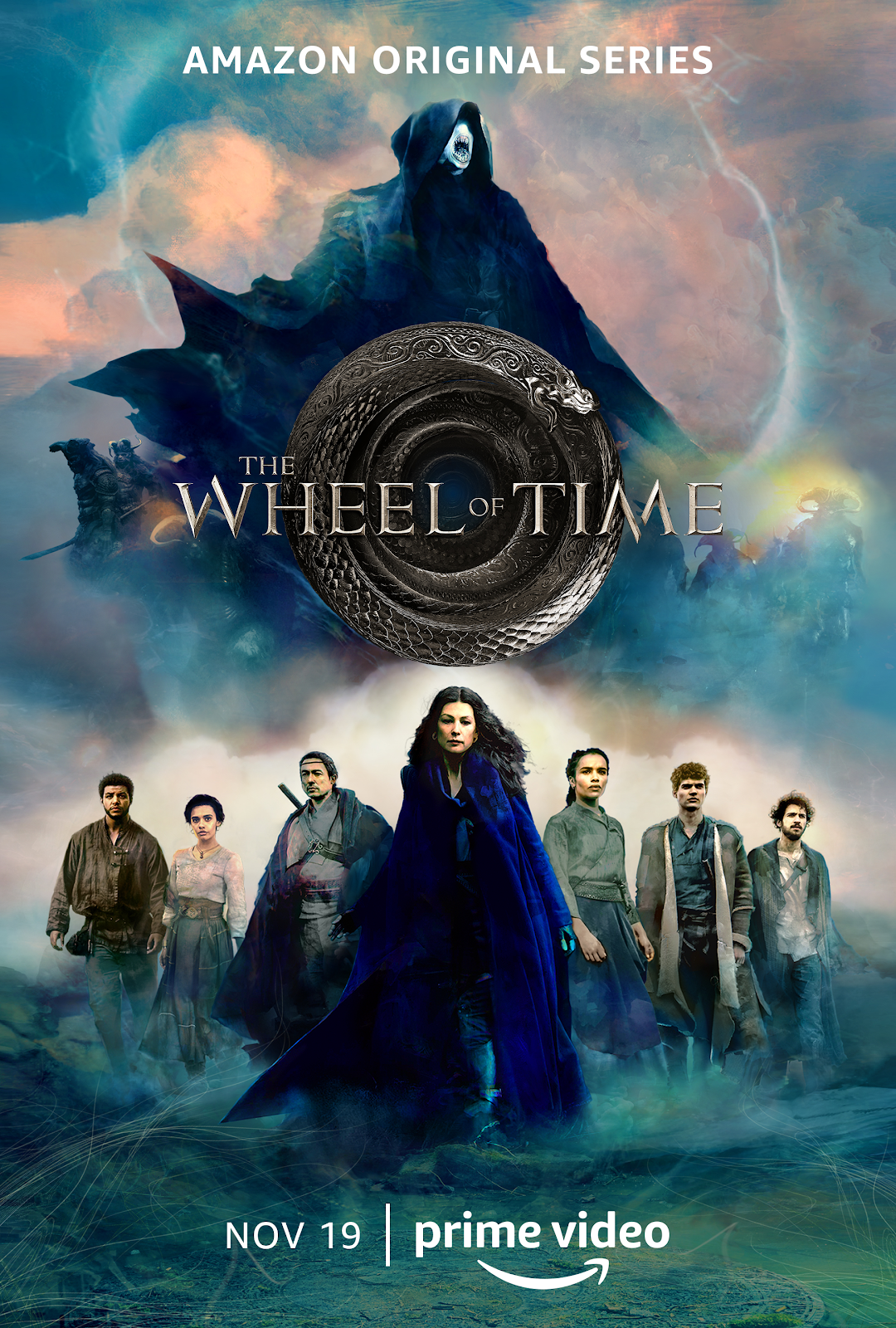
I’m also writing this as the first episodes of Season Two of Amazon’s Wheel of Time adaptation have dropped and I am incredibly pumped and motivated for Wheel of Time content, so I’m feeling good right now. Let’s go!

Lord of Chaos introduces Demandred, who is absolutely not a major character in this book, though it does lead to one of the most significant theories in Wheel of Time fandom until A Memory of Light’s publication and his identity was revealed to be someone we hadn’t seen at all on page and from a land only talked about.

The Demandred intro in the prologue is cool and interesting, though, because it provides a solid glimpse of a Forsaken visiting Shayol Ghul, what that entails, and The Dark One actively speaking. Plus, Shaidar Haren, the Myddraal who is now in charge of all sorts of stuff, including some Forsaken - the Osan’gar and Aran’gar of it all. More to come on that.

Lord of Chaos also introduces Mazrim Taim, who is absolutely not Demandred, visiting Caemlyn to accept amnesty and is immediately put to work testing and training men who wish to learn to channel to build an alternate school / army. I do appreciate the moments where Rand having a bug nuts crazy Lews Therin in his head pushing to the front and everyone, including those with a lot of personal power, pauses and realizes how close to the edge Rand is and thus how close they are as well because if Rand goes, so do they. Even Taim, who has this supreme confidence of being a grown-ass man who has mastered his power, takes a step back to pause. It’s amazing.

Despite how it all worked out in the books, I think Demandred should have been revealed as being Mazrim Taim. Taimendred. It’s the fan theory I mentioned, and if memory serves it is a plot point that fans picking up on really quickly that Robert Jordan may have actually changed it to something much less satisfying than Demandred being from Shara. Apparently there were notes left behind after Jordan passed away that confirmed Taimendred, though perhaps not the author’s reason for the change. Taim has a very strong story arc regardless of also being Demandred, but Taimendred seems like a lost opportunity.

To the Taim of it all, I appreciate that besides the Black Tower school Rand founds for male channelers, he is also founding schools. Places of learning, but also, functionally, libraries - places that consolidate knowledge so that maybe when Rand Breaks the World again something will be saved. It’s a fascinating bit of forward thinking for Rand, which is all the more remarkable when we consider that he’s only 20 years old. Rand is maturing, to a point, with all this “hardening” he is doing and into the leadership role that he has placed himself into. It’s really interesting when we look back to The Eye of the World and the Great Hunt and then forward to Lord of Chaos. For some of the characters it seems like more time has passed than actually has.

Also, In case I forget to write about this when I get to the final book of the series in a few years, I had a moment when I thought about what happens next if they win the Last Battle. Obviously, the focus is Rand being able to fight and win “The Last Battle” whether it is truly final or not. I think that’s why I appreciate Rand trying to build something to last - because once they survive, they have to live. It’s also something I like about the flash forwards in those final books. I’d also really like a short story showing how Rand is living after the end. I assume the answer is similar to that coda to The Hunger Games, which is that he’s dealing with the trauma of surviving and overcoming. It’s not without cost. He’s living quietly, which is why he fakes his own death. I’ve gone far afield, but with some extended Rand chapters, I’m thinking about the future we’re never going to get to read about.
“But I have been thinking. It can’t be the Last Battle. I don’t think it can. Maybe every Age has a Last Battle. Or most of them.”
This has come up in the past with Ishamael claiming to have fought Lews Therin again and again in the turnings of the Wheel, but this hits differently because it’s a regular world thinker working through the idea of what the Wheel of Time truly means - that at some point the seal on Dark One’s prison will be made truly whole and time enough for the Dark One to be forgotten - that this really is an unending cycle, though I suppose how would anyone know? I did really like Herid calling the whole thing about the wheel of time turning and “ages come and go” to be a catechism. It’s a nice self aware touch. Every now and then Robert Jordan has these really nice turns of phrase.

As often happens in this series, there are stretches in Lord of Chaos of what feels like stagnation. As much as I tend to appreciate Nynaeve and Elayne’s overall storyline, their time in Salidar feels like a huge pause - though my consolation we’re building up to what I ultimately know is Egwene being selected as Amyrlin by the rebels in Salidar and I wonder how many of those clues are obvious without hindsight. But everything else about Nynaeve and Elayne is treading water. To be fair, at least *they* also feel like they are treading water - though Nynaeve is getting the lessons from various Aes Sedai to help break her block so she can channel saidar without needing to be angry. And also, though Elayne and Nynaeve discover The Bowl of Winds through the world of dreams, though they don’t know what it is. They just know it is important.
“Gathering every scrap of courage she could find, hoping it was enough, Egwene put the silk dress aside and stood. Strangely, beginning seemed to make going on easier. She still had to look up to meet their eyes, but she did it proudly, head high, and she did not need to force the words at all. “I have toh.” Her stomach was not fluttering any longer. “I ask the favor, that you will help me meet my toh.” Salidar was going to have to wait.
Everything about what I love of Egwene’s storyline comes together here (and shines later in Knife of Dreams) - her maturity and self possession is developed and trained by the Aiel and it has shaped her into the woman who is going to wrest her own power as Amyrlin from those who want to control her as a puppet and who stages such a perfect rebellion in captivity later in the series. Of course, we need to get to and through the bullshit with Egwene and Halima later, which is something that I remember being frustrated by. But that moment when Suian thinks that Egwene would develop into an Amyrlin to make thrones tremble - perfect. She would know.

“This woman has no toh to me” - after Egwene finally confesses her lies to the Wise Ones and accepts the consequences. Just so beautifully done.

I’ve apparently skipped over Dumai’s Wells - which is such an explosive conclusion to this book. Rand is captured and beaten by Red Sisters from the White Tower - which will do nothing for his ability to trust anyone and especially not Aes Sedai, and then rescued by Asha’man from the Black Tower. This is literally explosive and we see a hint of what can happen when the Power is used as a weapon. Hooooooo, when Robert Jordan wants to write action he writes an incredible action scene.

Other smaller notes on the book

*Perrin is back and I immediately sighed because it is told through Faile holding court in Emond’s Field, basically forcing Perrin into being a Lord - though ultimately I don’t mind most of that building of the greater Two Rivers into a growing center of importance not quite in opposition to Andor. I enjoy that as a concept. And then, of course, there is a loooong gap of no Perrin in this book.

*I actively dislike Morgase with the Whitecloaks. One thing that I do appreciate is that communication across distances are difficult and there is a general lack of trust. Morgase knows that she escaped Gaebril, but maybe not that he was a Forsaken. She knows that Rand has taken Caemlyn and Andor, but I don’t believe she knows that he is holding it for Elayne (nor do most people). So now there is this other rebel holding the throne. Connected to this, Elayne doesn’t quite understand what Rand is thinking, and certainly will not take her throne as a gift (that’s a decent future storyline, if I recall correctly).
*Bonus Forsaken - meaning Osan’gar and Aran’gar, the reincarnated Aginor and Balthamel. Aran’gar is hiding in Salidar and leads to the revelation that one of Siuan’s oldest friends is Black Ajah.

*I should spend more time on this, but there’s the holy shit moment where Nynaeve heals stilling. She heals Logain first and freaks out, but it allows for such a great and weird moment when she is immediately whisked away and then Siuan and Leane are brought before her for their own healing. An interesting bit is that Logan is basically back at full power whereas Siuan and Leane are much, much weaker.

*Holy shit Nynaeve healed stilling. This is one of her Crowning Moments of Awesomeness (her second such, thus far). She healed Logain first and freaked out - but such a great / weird moment when she is whisked away and then Siuan and Leane are brought before her - but that Logain is basically at full power where Siuan and Leane are much, much weaker.


Well, that’s it. Thank you for continuing on this journey back through The Wheel of Time with me.

Next up, A Crown of Swords, in which things happen (probably). Plus: The return of the Seanchan, secret societies, Cadsuane, Sea Folk, another bonus Forsaken, and a broken block with a surprise marriage.


Joe Sherry - Co-editor of Nerds of a Feather, Hugo Award Winner. Ignyte Award Finalist. Minnesotan. He / Him

Monday, June 19, 2023

The Wheel of Time Reread: The Fires of Heaven

Welcome back, dear readers, to The Wheel of Time Reread. Today we’re going to talk about The Fires of Heaven, a novel of which I remembered far less than I expected, especially in comparison to how much I clearly remembered the events of the first four books. Midway through, I had several moments of asking myself “is this the book where X happens?” and then continuing on as if I can see the threads of the story leading to where I think they are going to go.

It’s worth noting, I think, that I’ve been in a fairly significant (for me) reading funk the last few months and I really don’t know why or quite how to kick myself out of it. I’m still reading, that’s a core part of my identity, but I’m only finishing between 4 and 7 books a month. I know that’s a lot for some, but it’s fairly small by my standards. Maybe I’m picking the wrong books at the wrong time for the wrong reasons, but even books I expect to love are a struggle right now.

What hasn’t been a struggle, though, is reading The Fires of Heaven. This book has been a compulsive joy.

It also occurs to me that this could be the final time I read The Wheel of Time. At most, I have one more re-read in me in a couple of decades when I’m retired, imprinting myself into a reading chair, and feeling nostalgic. I had a birthday earlier this year and I’m feeling a little nostalgic as it is, which probably explains why I have this urge to re-read Dragon Prince, Deryni, Recluse, Pern, Crystal Singer, Riftwar, and pretty much everything else I read as a teenager. I’m having a moment, which is as good of a bad segue as I am likely to get to roll us into a discussion of the book.

There will be spoilers for everything. You have been warned.

The core storyline of The Wheel of Time is Rand Al’Thor marching ever closer to his Final Battle against The Dark One. It is almost never the most interesting storyline in any of the novels. Everything revolves around Rand, but he is the cipher being pushed and pulled while digging in his heels until he is ready to make whatever move he thinks will get him closer to uniting the world behind his banner and against the Dark One.

It’s sometimes easy to forget that Rand is all of twenty years old - though he, perhaps moreso than Perrin and Mat, argue like the very young adult that he is. Rand’s maturity is hard won, and - as we will see deeper in series - becomes coldly dictatorial.

I’m also not sure what it says that a lot of what I appreciate in The Wheel of Time is when the story steps away from Rand - though there is also a distinct lack of Perrin in this novel. So really what I appreciate is Mat, once he starts on the path The Fires of Heaven sets him on and the story of the Super Girls.

For example, I note the increasing maturity of Egwene after having trained under the Aiel Wise Ones, which sets up my favorite storyline in the series a bit earlier than I had anticipated. She’s now acting and speaking with a sense of authority, even to her friends and in particular not when speaking to the Wise Ones (nothing will give her that authority as a student). It’s a character beat that is so strong in Knife of Dreams, but it begins here.

Nynaeve had her Crowing Moment of Awesomeness in the previous book, The Shadow Rising, when she straight up beat and captured Moghedien, one of the Forsaken. In The Fires of Heaven, Nynaeve is caught by Moghedien and this time isn’t able to take down a Forsaken - because apparently they are really freaking strong and skilled at using their powers. The end result is that Moghedien almost dies of an arrow to the chest and Birgitte is ripped from the World of Dreams and, rather than being born out into the world as a baby, is dropped into the world with all of her knowledge and bonded as Elayne’s Warder so that Birgitte can survive.

Speaking of Birgitte, we haven’t talked much about her at all beyond a quick mention after the last book - but in Randland (for lack of a better term) - there have been heroes throughout the ages who are born again and again and are heroic again and again to the point that - if you remember the Horn of Valere from The Great Hunt - can be called back to fight in the Last Battle (or anytime the horn is blown). Birgitte is one of those heroes who….live, again for lack of a better term, in “The World of Dreams” until she is next born out into the world to grow up into another hero - but now she’s live an in color and with full knowledge of who she was and is. It’s a fascinating idea and in this book and beyond, it really really works.

Late in the novel Nynaeve and Elayne make it to Salidar where the rebel Aes Sedai are (remember the coup in the White Tower?) and after meeting up with Siuan Sanche and Leane (former Amyrlin and her Keeper, both deposed and stilled / cut off from the magic) Nynaeve immediately starts thinking “i can heal stilling” - which is a perfectly normal thing for Nynaeve to think and a completely bug nuts insane thing for anyone else in the world to truly comprehend because it is Just Not Done.

There’s probably a phrase for this in fiction and there is certainly something to be said for learning the the traditions of a place and rising up through the ranks and gain power and enacting change that way (it’s the entire basis for Seth Dickinson’s Masquerade / Traitor Baru Cormorant series) - but it is also a lot of fun when these less trained but incredibly talented and determined young people just come up with answers and paths and solutions because they don’t know they can’t. Of course, they’re also not exactly making friends and influencing people at the same time - but hey, the Last Battle is coming and we use capital letters when we talk about it so sometimes change is necessary.

The Fires of Heaven is the book where a lot of things happen, and by that I mean this is the book where I am continually surprised that a particular thing occurred here.

*This is the book where Masema (remember him from The Great Hunt?) becomes The Prophet, thus beginning one of my least favorite storylines in the entire series. Seriously. Fuck that guy.

*This is the book where **** kills Asmodean, which sparked YEARS of theories and arguments on various message boards and cheerful avoidance of the answer by Robert Jordan himself until it was finally and officially revealed in The Towers of Midnight and was ultimately a bit anticlimactic but what else can years of speculation result in.

*This is the book where Mat gets his moment when the memories of past generals pushes him to get his Band of the Red Hand, taking over a partial battalion mixed with soldiers from Tear and Cairein. There is a moment where he glances at a map and instantly comes up with pretty much the same battle plan that Lan and another general had already worked out and which all leads into what is generally a fun storyline of Mat becoming one of the Great Generals of the era.

*This is the book where we get a much stronger bleed through of Lews Therin into Rand’s head and we get Rand talking to / arguing with his past life. I believe this began in the previous novel but now Rand is noticeably nervous about it.

*Finally, This is the book in which Moiraine has her own crowning moment of awesomeness in a fight against Lanfear. I spent most of the novel wondering if this was that book, because that’s something I remember happening, and Moiraine spends the entire novel with a frantic sense of urgency that she needs to teach Rand everything she can to prepare him - almost as if she knows (and she may, having gone through the ter’angeal rings assuming it’s not the other doorway) that her time is short. But she doesn’t know how to say it or may be something she can’t say.

But then when it actually happens it is not actually a real crowning moment of awesomeness, rather more of a resigned charge of desperation in how it plays out when Moiraine and Lan are each tossed to the side and Lanfear is working on crushing Rand when she (Lanfear) realizes that she will never have him and that was the only thing holding her back from truly going after Rand - the thought that she could turn him to love her and serve by her side - but somewhen Lanfear had been told that Rand / Lews Therin had been with another woman - and Lanfear is incandescent with fury about Aviendha.

The result of that is the Resigned Charge of Desperation has Moiraine taking out Lanfear and pushing both of them through one of the special ter’angreal doorways which severs Moiraine and Lan’s warder bond and the assumption that Moiraine is dead - though I’m pretty sure I wondered for the rest of the series if she was really dead. When future books start reincarnating some of the bad guys and we never see Moraine’s body, maybe she is only Mostly Dead as Miracle Max once said.

Well, that’s it. Thank you for continuing on this journey back through The Wheel of Time with me.

Next up, The Lord of Chaos, in which things happen (probably). Plus: Rand in a box, magical healing, dueling Amyrlins (but not really), an epic battle, bonus Forsaken, a queen in hiding, black towers, and the return of Perrin.


Previous Re-reads
The Eye of the World
The Great Hunt
The Dragon Reborn
The Shadow Rising


Joe Sherry - Co-editor of Nerds of a Feather, Hugo Award Winner. Minnesotan. He / Him

Tuesday, September 13, 2022

The Wheel of Time Reread: The Shadow Rising

Welcome back, dear readers, to The Wheel of Time Reread. Today we’re going to talk about The Shadow Rising, the novel I’ve long considered to be my favorite in the series. The Wheel of Time is what could be affectionately (or derisively) called Big Fat Fantasy.

I first discovered The Wheel of Time somewhen between the publications of The Shadow Rising and the next book, The Fires of Heaven. I have strong memories of the Rush City Public Library, browsing the shelves, finding new epic fantasies to read, the comfort of Darrel K. Sweet’s cover art, going through a really primitive semi-online catalog to find and request new books that I was so excited to read.

They say that the Golden Age of Science Fiction is twelve, and that feels right because even now when science fiction and fantasy has permeated the “culture”, it’s the age of discovery for kids who start to have more agency in choosing exactly what they want to read and diving into all the things on their own. That would be a much larger conversation to refine that idea and it’s one that many other people have had - so we should go back to The Wheel of Time.

The larger point here is that I was thirteen when The Shadow Rising was published and was either thirteen or fourteen when I started mainlining this series. The fact that The Shadow Rising is the longest book in The Wheel of Time was just gravy for me at the time. But, how does it hold up?

Well, let’s take a look at the map and the spot marked Here Be Spoilers, and find out.

If you reduce The Shadow Rising to the biggest and most significant moments it’s easy to gloss over just how long the opening of the novel feels. This seems to be a trend with the series, that after “The Wheel of Time turns and Ages come and pass” and after the wind blows and it isn’t the beginning but “a beginning” Robert Jordan eases us back into the novel at a very leisurely pace.

It just so happens that I *like* spending time in this world - as much as the waiting periods can be a couple hundred pages of frustrating, though it’s interesting that the characters are also equally (if not moreso) frustrated about being stuck in Tear because Rand won’t say what he’s going to do. Narratively, it (mostly) works because it builds the particular concerns that Moiraine needs Rand to be moving towards the Last Battle and fulfilling what he needs to (and specifically, what *she* thinks he needs to) as well as the Black Ajah hunting that Egwene / Nynaeve / Elayne need to do and Mat’s need to be *somewhere* else and Perrin’s desire for the stability of not following Rand. Once there is a further Trolloc attack inside Tear, Jordan begins to move the pieces on the board and once the group splits - the story really kicks into the gear it needs to.

I considered ending this essay with my favorite part of the novel, but why bury that lede? Possibly one of my favorite aspects of the entire series, which I clearly love otherwise I wouldn’t spend so many words on it, is the time Rand spends at Rhuidean. There are these magical rings that Rand has to walk through, the same rings that the Wise Ones and the Clan Chiefs of the Aiel must walk through to be given glimpses of the past, of the truth of who the Aiel were and how they became who they are now. It is those glimpses that show us the Age of Legends and moments leading up to the Breaking of the World and the aftermath, of how the Aiel were tasked to save so much knowledge and so many artifacts but how much of that was lost in the generations upon generations upon generations. And how the fierce warrior culture of the Aiel we know is so far from the sworn to peace Aiel that served the Aes Sedai.

The Shadow Rising is packed with a lot more than I remember, even in the thirteen years since I’ve last read this book. I didn’t remember that THIS is the book where Nynaeve fights and defeats Moghedien, one of the Forsaken. That’s a Crowning Moment of Awesomeness. This is also the book where Rand meets / fights Asmodean, which is going to work out for him because the only person who can help Rand learn to control his power is another man and those are few and far between, so Rand gets his pet-Forsaken. Perrin becomes a “Lord” of the Two Rivers. Not really, but kind of really and truly. It’s a weird sub-plot but it sort of makes sense in a hand-wavy Ta’veren sort of way. A lot of these books can get waved away with a mutter of “ta’veren” and just accept it.

The battle for / rebellion of The White Tower is in The Shadow Rising and that’s really something I thought was in the next book. I both can’t wait for that scene in the show and dread it because the stilling of Siuan Sanche and Leane is just brutal and wrongheaded (though that it eventually leads to the quiet rebellion of Egwene in the Tower, which is another of my favorite bits is an ultimate mark in its favor) - but having The White Tower ineffectively led at best and under the control of the Black Ajah at best is just really a damn shame for the world. I just didn’t realize that was *this* book.

Which is a long way to say that despite the several hundred pages of inaction, when Robert Jordan pushes the story he really gives it a strong shove and if you’re inclined to like this sort of thing you’re inclined to love this book.

Here are some random final notes I took while I was reading. :

*The visit to Rhuidean is still absolutely thrilling. I love learning the history of the Aiel. I want more of this even if I don’t think I want an actual prequel novel or even novella. I just want more glimpses of the Age of Legends and how the Aiel became the Aiel. How the Tinkers were an early splinter off the Aiel, still following the Way of the Leaf but following a path trying to find the song (or songs) they were known for as Aiel serving the Aes Sedai. Then the warrior Aiel we know were a later splinter off to protect themselves while the Jenn Aiel continued to follow the Way of the Leaf AND who stayed true to their original mission of protecting the artifacts from the Aes Sedai and to find a home where they could be safe. How hard it is for Aiel to accept this (which is why only those chosen to lead are allowed to learn of this, to see and live that history through the ter’angreal rings at Rhuidean).

*I think I just appreciate the time spent in the Waste, in the Three-Fold Land, with Egwene learning.

*Mat and his spear and his trips through the ter’angreal doorways. Snakes and Foxes.

*Nynaeve and Elayne on a Sea Folk ship - the customs and learning that the Windfinders can channel.

*Ordeith means to scour the Two Rivers (as he did with Perrin's family farm and all his family) - obvious reference to the Scouring of the Shire.

*I don't remember being a big fan of the Perrin / Faile / Two Rivers plotline, but it is a nice anchor and reminder that all of this war (waves hands) has an impact on regular people and not just lords and prophesied heroes and magicians and dragons reborn. RJ is, overall, very good at that even when those common dead are unnamed and just burned out villages.

*At the Two Rivers there is a proper introduction to Alanna - she who will hold Lan's Warder Bond when Moiraine disappears.

*A little bit of background on the Tower of Ghenji and a glimpse of Birgitte and Gadal Cain, though neither are named. More on this MUCH later.

*I also don't remember how much Verin is acting against the Light up until she is discovered much later.


*Part of the game Faile plays with Perrin is super annoying - but remember Perrin and Faile are all of 20 years old and it's more of a kids game of relationships, but it's a pain to read.

*Verin recoginizing that Perrin's growing authority is very quickly going to change the nature of the Two Rivers - and also that he is ta'verening all over the place.

*The raw hate of Couladin and the Shaido Aiel

*Twice and twice he shall be marked.

*The idea that the ancestors of Cairhain let the Aiel have water three thousand years ago, which led to the friendship between the Aiel and Cairhain later, which led to the Avendesora cutting as a pledge of friendship, Laman cutting it down, the Aiel War and all of that leading to Rand being born during that war and carried off to the Two Rivers. Each step that needed to be taken to bring to where he would be,.

*Rand's insistence that he has to carry the load. Duty is heavier than a mountain.

*A quote:
"You knew my mother," he said. Egwene leaned forward as intent as he, and Mat shook his head.

Amys's hand paused on his face. "I knew her"

"Tell me about her. Please"

*Confirmation that Bors is Jaichim Carridan - High Inquisitor as he is threatened by Liandrin.

*Jain Nateal - a gleeman in the Waste (later revealed to be Asmodean) notes “Aiel? Not what I would have expected. I can still hardly credit it” which reads at first as a man who had never met the Aiel before but when you know that he is Asmodean you realize that he knows what the Aiel were during the Age of Legends and before the breaking. What Rand got glimpses of, Asmodean lived.

*Male A’dam - given to Bayle Domon to dump in the deepest part of the sea. Probably not going to end up well.

*Major showdowns in the Two Rivers - probably partial ta’veren stuff where Perrin ends up as the functional Lord of the Two Rivers - fights off waves of trollocs and sends the Whitecloaks running - this would have been a very different novel if the Whitecloaks actually helped to defend the Two Rivers and Perrin would have turned himself in (and likely been executed).

*There’s this whole thing with a Slayer in the world of dreams where the person looks like he could be a relative of Lan - but it’s Lord Luc in the real world, and that person looks like he could be related to Rand. Connections and only moderately important spoilers for the rest of the series.

Luc is the brother of Tigraine - the Daughter-Heir of Andor who disappeared to become Far Dareis Mai and eventually Rand’s birth mother. Luc eventually disappeared into The Blight.

Isam, which is also the word the trollocs were chanting, is cousin of Lan and is of the Malkieri royal family. They are some sort of an amalgamation where both exist in the same body and can change forms? I don’t fully understand and I don’t think we get a lot of answers until late in the series. But collectively, they are Slayer.

Alright. That’s it.

Next up, The Fires of Heaven, in which things happen (probably). Plus: the power of balefire, more battles with the Forsaken, Rand takes over another city, and Robert Jordan’s adaptation of Gandalf and the Balrog.


Previous Re-reads
The Eye of the World
The Great Hunt
The Dragon Reborn

Joe Sherry - Co-editor of Nerds of a Feather, Hugo Award Winner. Minnesotan. He / Him

Monday, June 20, 2022

The Wheel of Time Reread: The Dragon Reborn

I’d like to welcome you back, dear readers, to The Wheel of Time Re-read. Today we’re going to talk about The Dragon Reborn. We are still in the heady early part of the series where Robert Jordan’s storytelling is firing on all cylinders and if you want some big budget 1990’s epic fantasy - this is it, y’all.

The Dragon Reborn is the third volume of The Wheel of Time and we’re charging headlong into some sort of acknowledgement that Rand is, in fact, the titular Dragon Reborn. Rand has twice now faced Ba’alzamon (and twice assumed that he has defeated the Dark One) but the battle against the darkness has only just begun (or, never ended if you pay attention to what Ba’alzamon says). There are any number of prophecies that need to be fulfilled for Rand to be proclaimed and acknowledged as the Dragon Reborn and one of the more significant ones is that the Stone of Tear must fall (be captured) and before that happens, that Callandor (“the sword that is not a sword”) is held by the Dragon. It’s a seemingly contradictory prophecy because Callandor is the greatest treasure of the Stone and how does one get so deep into the Stone to claim the sword without having first captured the fortress. That’s one question The Dragon Reborn (the novel) will answer.

But first, Rand (and everyone else) needs to get there.

Let’s find out how.

Spoilers, ho!


I wish I could remember every prologue in the series so I could figure out just where The Dragon Reborn’s prologue ranks, but I can’t, so I’m just going to assume it’s pretty low. This is the Ordeith prologue, the new incarnation of Padan Fan who has now wormed (his name means Wormwood in the Old Tongue) his way into being an advisor of Pedron Niall, the Lord Captain Commander of the Whitecloaks.

If you’re thinking this sounds a bit like Grima Wormwood in Lord of the Rings, you’d be right. It does. Ordeith is a poison. Similar to Mordeth at Aridhol / Shadar Logoth, Ordeith is going to further rot the Whitecloaks from within, twisting their plans. Pedron Niall does not appear to be a Darkfriend, but it’s not going to matter when the evil that Ordeith exudes takes hold. That’s it for Ordeith in this novel, it’s more of a set up after Fain escaped from Fal Dara in The Great Hunt than it is something that directly comes to play in this novel.

Despite the title of the book, The Dragon Reborn is not really Rand’s novel. We spend far more time in Tar Valon with Egwene, Nyneave, Elayne, and Mat and then on the road towards Tear with those same characters (though Mat is mostly riding with Thom Merrilin, initially to deliver a letter on behalf of Elayne and later in a hope to rescue Team Super Friends).

Early on, Rand is *very* isolated. He meets with and frequently yells at Moiraine and also has absolutely no control over his power. Unless Egwene, Rand has nobody to teach him how to use saidin. What’s the quote from Moiraine? Easier for a fish to teach a bird how to swim? He’s on his own with a destiny he does not want, with a power he can’t control and sometimes can’t even reach and has no idea what’s going to happen even if he can - even in the midst of a trolloc attack. It’s bad, though we mostly see this from Perrin’s perspective before Rand runs off for Tear by himself with Moiraine / Perrin / Lan / Loial in chase.

I don’t remember how I felt about Rand in my first read-through, but he’s not a lot of fun to read this time. He’s important, but his chapters are tedious. He’s suffering, terrified, driven, and struggling. I wish I could say that this is the last time that Rand will be a deeply unpleasant protagonist in this series, but this is only the beginning and there is a lot of breaking Rand down to go.


The good thing, though, is that this isn’t his story except for at the beginning and the ending. Rand is the table setting that isn’t doing it for me right now. But once the story got moving, I was there. I love Egwene / Nynaeve / Elaye in the White Tower - I think tower politics is always a favorite for me (bring on Knife of Dreams!) - but a crowning moment of awesomeness is Mat vs Gawyn / Galad with the quarterstaff, though it is tempered by Mat being a bit of a dick. But most of my favorite bits are generally tied to Egwene and Mat’s respective storylines.

What’s interesting to me is how much Mat comes into his own in this book. Once he’s healed and he’s not as ravenous or having fever dreams, he really starts to take control of how he interacts with the world. He’s a much more assured character in the back half of the novel.

The Amyrlin gave an exasperated sigh. "You remind me of my uncle Huan. No one could ever pin him down. He liked to gamble, too, and he'd much rather have fun than work. He died pulling children out of a burning house. He wouldn't stop going back as long as there was one left inside. Are you like him, Mat? Will you be there when the flames are high?

He could not meet her eyes. He studied his fingers as they plucked irritably at his blanket. "I'm no hero. I do what I have to do, but I am no hero."
This is a moment of Siuan Sanche talking about her uncle, but she also pegs Mat perfectly. This is touched on multiple times in The Dragon Reborn, when Mat rescues Aludra from the Illuminators, when Mat goes after the Super Girls, even when Mat throws food over the side of the boat to help feed hungry people - but it gets into the core of who is he and who he becomes, much as he will deny it time and again.

There is a point in The Dragon Reborn where everyone starts rushing headlong to Tear: Super Girls chasing the Black Ajah at the behest (or at least with the permission) of the Amyrlin to Tear, possibly led on by Lanfear, but they’re hoping to spring the trap. Rand because that’s where he knows he needs to be in order to claim Callandor and more officially proclaim himself. Moiraine to follow Rand because it’s not time to let him off the leash even if the least was ineffective and chafing. After delivering Elayne’s letter to her mother Morgase and discovering that Morgase’s lover has a plot to harm Elayne, Mat and Thom follow the Super Girls. Perrin is with Moiraine.

As we run into the conclusion of the novel I *think* this is the last time that anyone thinks they actually killed the Dark One and as such should be the end of someone claiming “shai’tan is dead” and having the world lurch while Moiraine yells at them.

To that point, Moiraine is a much more prickly character than I remember. I suppose few Aes Sedai actually explain everything, but her basic attitude is to tell people to do the thing because the thing needs doing but don’t tell anyone and then get frustrated when folk just don’t understand her rightness and wisdom. The show is like that, too.


Brief Notes on Stuff I found interesting:

*Egwene, Nynaeve, and Elayne meet Aviendha, which begins the relationship Egwene will have with the Aiel - another future favorite storyline of mine when Egwene is in the Three-Fold Land. Right now Aviendha is just a new character introduced, but she’ll be much more.

*Egwene’s “Dreams” mirror Min’s visions regarding Perrin with the falcon and hawk, Mat’s putting his eye on the balance scale, Mat and the Seanchan (Tuon!)

*The introduction of Faile was not as quite as annoying as I remember, but I think what gets missed (often by me) is how young Faile is and also how young Perrin is. For large parts of the series I think they’re mid 20’s at the youngest, but really they’re still teenagers and that’s really rough. They’re acting like it here.

*Speaking of Perrin, a scene of incredible poignancy is Perrin working in the blacksmith’s shop.

*”If you see the most beautiful woman you’ve ever met, run” - I’ve always associated this with Berelain and all the trouble she causes Perrin, but I think I’ve been wrong for a really long time. It’s Lanfear, isn’t it?

*Balefire is talked about, and then eventually used. Moiraine talks about how she could be stilled for even knowing about it, let alone casting it. She balefires Be’lal (Forsaken) and Darkhounds. Nynaeve balefires Myddraal. Ishamael tries to balefire Rand, but he blocks it.

*There is a stereotype of Nyneave tugging her braid and while it occurred in the first two books, this is where it becomes noticeable and somewhat cliche.

Next up, The Shadow Rising, which possibly my favorite book in the entire series. Plus, the truth about the Aiel, a game-changing coup (aren't they all?), a Forsaken in Hiding, and Nynaeve’s moment of crowning awesomeness.


Previous Re-reads
The Eye of the World
The Great Hunt

Joe Sherry - Co-editor of Nerds of a Feather, Hugo Award Winner. Minnesotan. He / Him

Monday, June 13, 2022

Adri and Joe Watch the Hugos: Best Dramatic Presentation


Adri: Continuing our unorthodox sequencing of categories this year, let’s talk about Best Dramatic Presentation! This chat is mostly going to be about long form, because you’re a big movie watcher and somehow, despite normally skipping the category, I’ve actually made the effort to watch all the nominees this year. Not only that, but I’ve seen five out of six of the short form nominees, and there’s a chance I might even dive into a free Apple TV subscription and watch For All Mankind before voting closes in August too.

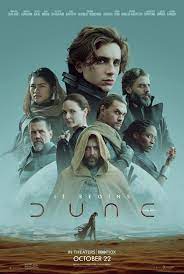
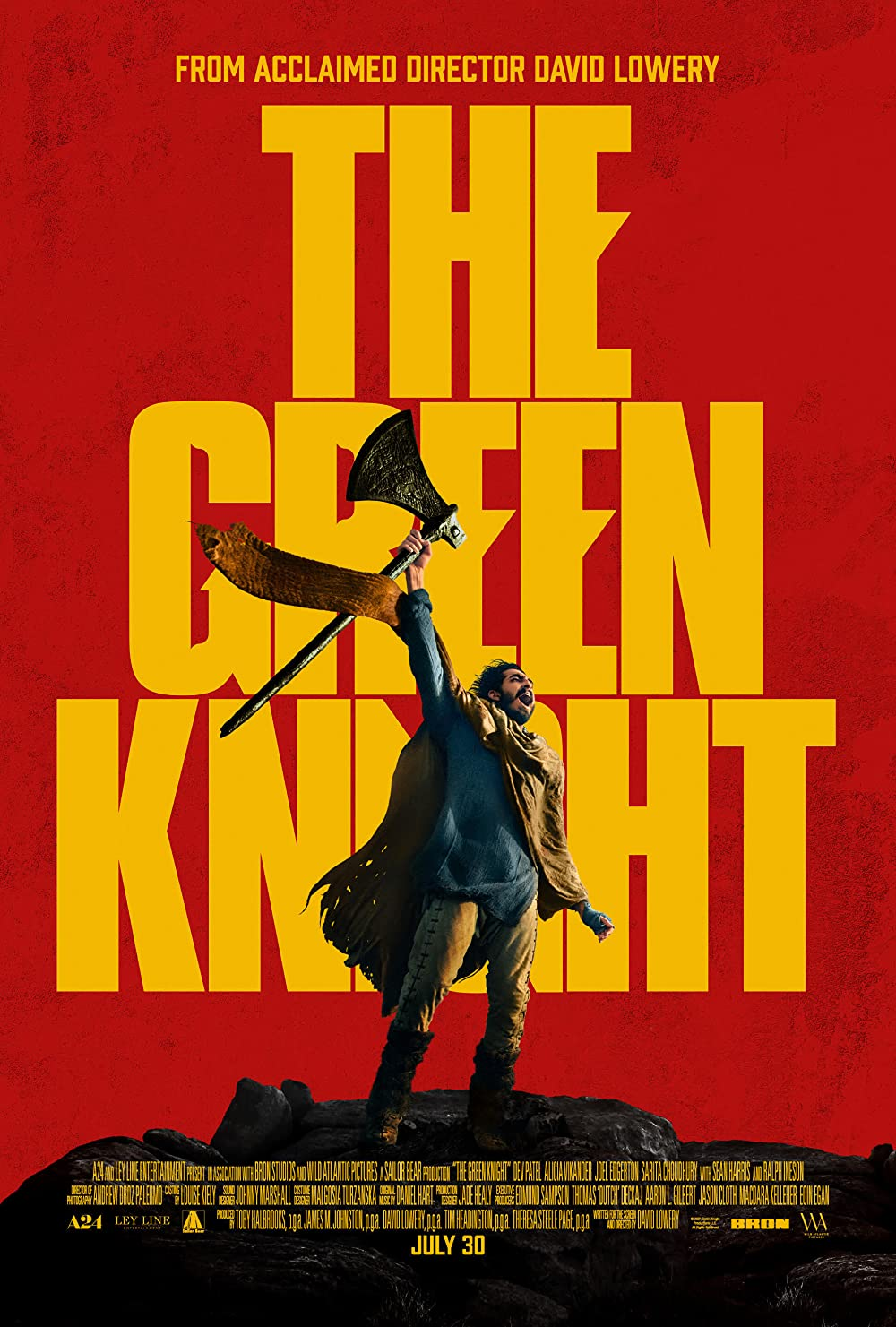
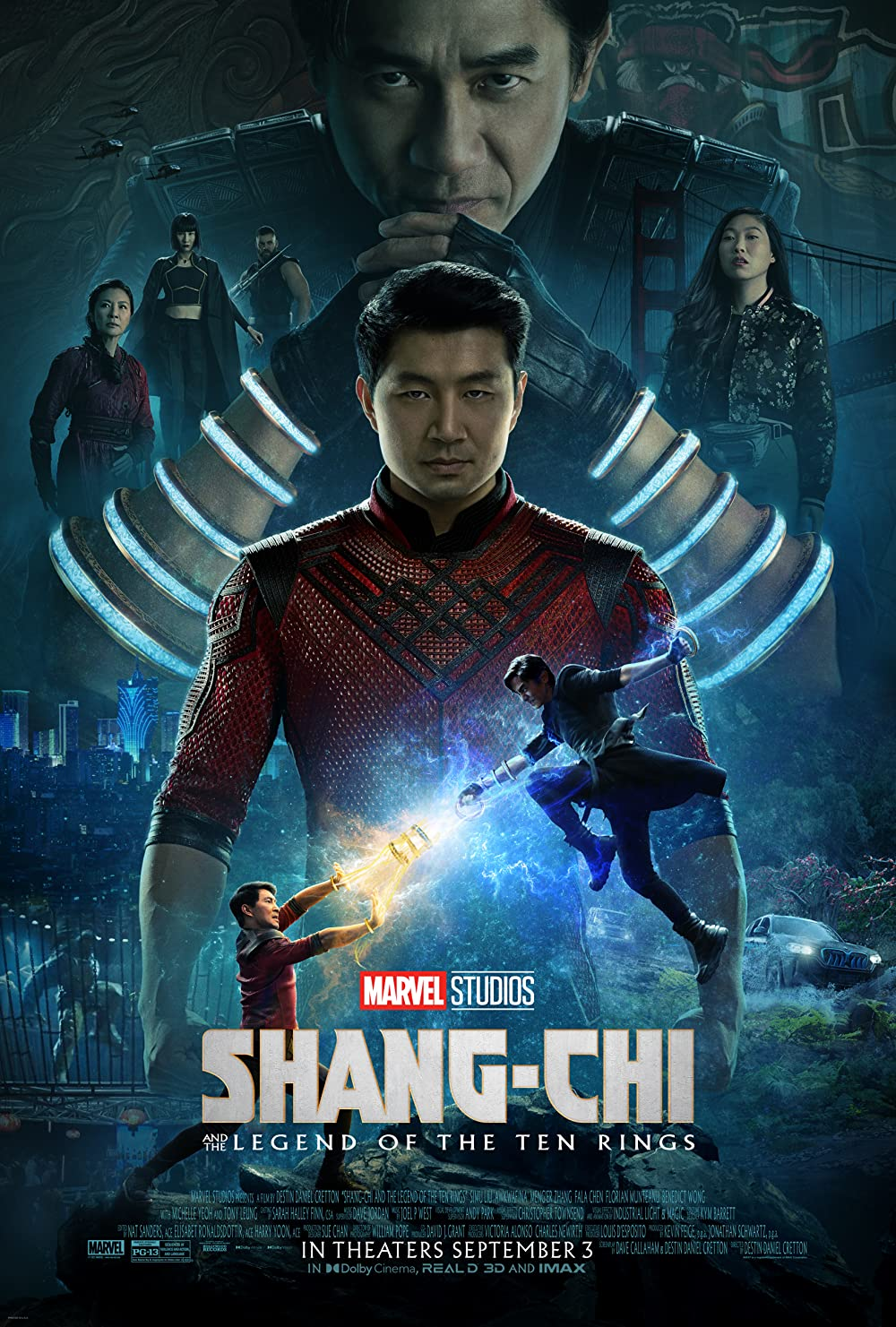
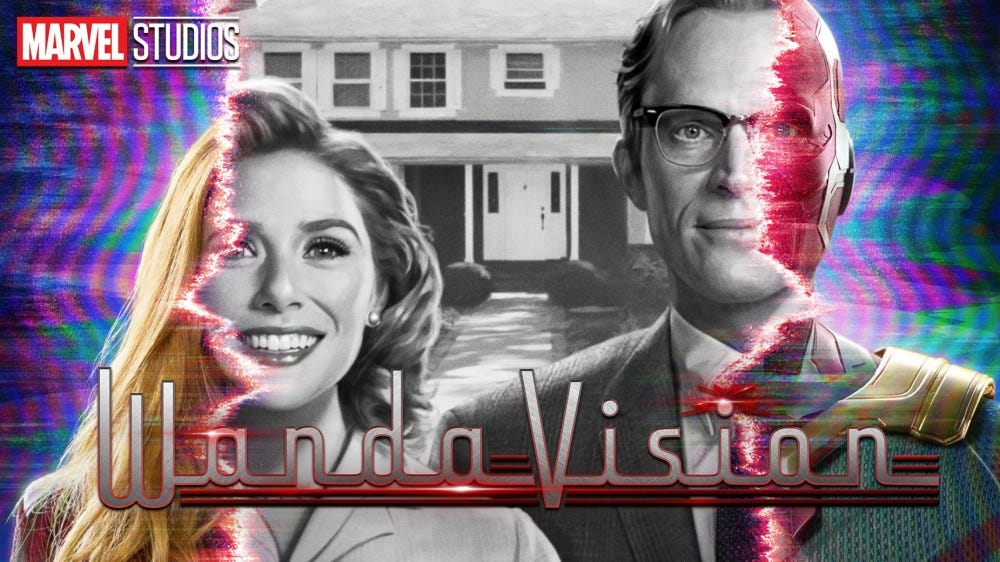
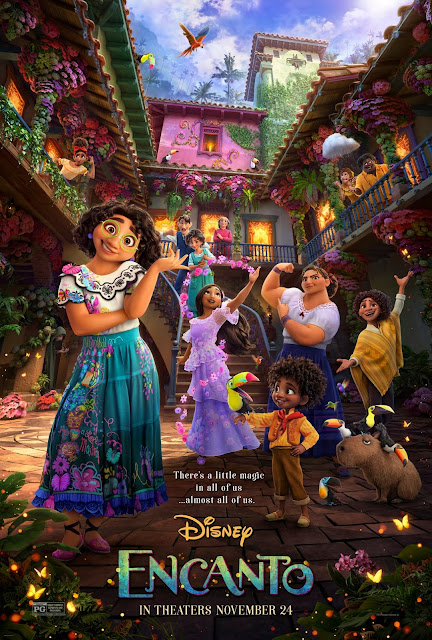
This year, the BDP long form list includes five movies and one series - WandaVision - which I definitely think benefits from being included as a whole piece of work. Half the nominees are in the Disney stable: one Disney animation (Encanto) and two Marvel properties (WandaVision and Shang-Chi). Rounding out the list, we’ve got a witty Korean space adventure, Space Sweepers, and two ultra-serious takes on cornerstones of genre: (the first half of) Dune and The Green Knight. It all feels solidly genre (no awful Eurovision-as-seen-by-America movies, thank you voters), solidly Hugo quality, and it makes for a pretty interesting and varied set of viewing experiences.

What are your thoughts on the finalists as a whole?

Joe: Well, I’d like to start by arguing with you about last year’s Eurovision movie which was an absolute delight despite the inclusion of Will Ferrell as lead actor - but outside of Ferrell, Eurovision was a lot of fun and “Husavik” should have won an Oscar over the song from Judas and the Black Messiah because it was perfection in a song and also music that is important in the context of the movie should always win over end credits songs (though “Fight For You” is a really good song, if I’m being fair).

Wait - we’re talking about the Hugos, right? Sorry, I’ve got Oscar opinions.

Adri: Perhaps we should schedule in a “retro” 2021 Hugo conversation about the merits of that movie and to what extent the presence of Will Ferrell completely negates and outweighs them. Husavik is solid though, I’ll give you that.

Joe: That would be a conversation to have over that hypothetical beverage of choice, I think, but I’m more than happy to detour / derail this year’s Hugo conversation if you’d like.

As a whole, though, this is a really nice lineup of finalists. You mentioned the three selections from Disney in Long Form, but there’s a lot of quality in those selections. You’ll note that The Eternals isn’t on the ballot (and I really hope it’s not #7 on the long list). Not that we need to spend any time on the Eternals, but it felt like the lesser parts of three different better movies and we didn’t get any of those movies - but Shang Chi was wonderful, WandaVision was something specific and special, and we’ve seen Encanto quite a few times in my house. In some ways the surprises are The Green Knight and Space Sweepers - only because I wasn’t sure how many people would have seen either.

Likewise, I dig the variety of Short Form even if some of the episodes are deeper cuts from series that I’m not watching and might not quite get to by the end of voting. I’m certainly not caught up on the category for this conversation, but I think that’s okay. It is a sign, though, of how widely the Hugo nominators are watching for their SFF. It could also be a sign about how diffuse the vote totals might be. That’ll be something to pay attention to when it comes to looking at the Long List in August.

I think I’d like to start by talking about the film I think is most likely to win Long Form, which is Dune (officially retitled as Dune: Part One now that Warner Bros gave Villeneuve the funding to make the second movie).

The existence of Dune doesn’t make it an automatic winner, though i will note that the SciFi Channel miniseries Frank Herbert’s Dune was a finalist in 2001 (losing to Crouching Tiger, Hidden Dragon) - but Dune is biiiiiiig budget “core” science fiction. Whatever your feelings about David Lynch’s adaptation from the 80’s and Sting’s codpiece, this was probably the most anticipated science fiction property we’re likely to get and if there was even a chance Villeneuve was going to get the movie right, it was going to pay off huge - especially within the genre communities, though we’re not as remotely starved for the good stuff as we were decades ago.

But I think Villeneuve did nail Dune: Part One. It’s incomplete in ways that are completely necessary (I shudder to think about how this works as a single film) - so I’d understand anyone who was less than fully satisfied by the storytelling of Dune - but for a property I’ve read a number of times and watched every adaptation of - this was fantastic.

I also think the “bigness” (and the Dune of it all) is what’s going to push it over the top in the voting. It’s what I think the Hugo voters want science fiction to be all about.

Adri: Ah, Dune. I agree with you that this feels like the most likely winner (the only thing I see beating it is WandaVision), and it’s amazing the sort of white messiah drama you can get away with in 2021 if it’s in service of a beloved book adaptation. Dune the film has all the orientalism (and fatphobia) of its precursors, and that annoys the heck out of me, especially when compared to Wheel of Time in short form which, despite its gender essentialist limitations, did put some effort into reinterpreting its source in a way that included people of colour and queer identities. But, that’s a tangent.

Setting aside the limitations of its source material, though, Dune is kind of amazing as a big, heavy, unapologetically weird and ritualistic spectacle of a film, full of lingering shots of giant machines - and sandworms - and slow builds towards climactic moments. Also there is Zendaya, looking cute and windswept in a dream desert. I’ve never seen the old adaptation but this one carefully avoids any hint of campiness that might suggest its taking itself less than 100% seriously. I can see the artistic merit in it all, but I’ll be honest: it bored me to tears. I don’t care about Frank Herbert’s big vision and despite the presence of Jason Momoa and Oscar Isaac (albeit not wearing their best configurations of facial hair), I found nothing to keep me invested in this ponderous, dated take on colonialism in space.

Joe: Here’s the thing, that big vision from Frank Herbert *has* to come into play for Dune to not be the white savior / pro-colonialist take that Part One feels like. Paul’s journey starts out that way, we’re told he is the chosen one, the result of generations of a breeding program (with a small twist at the end if you want to nerd about it) - but if Villaneuve can make Dune Messiah as well as Dune: Part Two, it’ll turn that concept on its head because it’s a failure. Dune itself, though, taken without the sequels - absolutely.

I was disappointed with the portrayal of Baron Harkonnen here. It could have been done differently and less fatphobic, and *still* gotten across everything about that character.

Adri
: Sticking with the big serious artsy films, let's chat about The Green Knight - because this is one I expected to really test my patience, and actually I enjoyed it a lot. It’s a retelling of Gawain and the Green Knight, with Dev Patel as a real wasteman version of the Arthurian hero. The story covers the Knight’s challenge and Gawain’s quest, a year later, to find him and allow him to return the mortal blow. It’s a very stripped down version of the official text and its moral - Arthur, Guinevere and Morgan are here, but unnamed, and the sequence of gift exchange at the castle is reduced to one of several events of the course of the journey - but what it lacks on that front is more than made up for by the constant unsettling tone and the tension it brings. It’s so sparse that it feels like a myth come to life - a feeling reinforced by the actual dream sequences and off-the-wall elements that show up for no reason that really moves anything forward. I came away from it not knowing what to think, but I certainly do think a lot about that movie now, and I feel like that means it’s succeeded at what it set out to do.

Joe: I don’t remember a time when I haven’t been reading Arthurian legends, or a time when I haven’t watched one adaptation or another. I’m a sucker for it all. John Boorman’s Excalibur was a particularly formative film experience for me as a teenager. Heck, I was even a sucker for First Knight, though I’m not sure Richard Gere was the best of all Lancelots. Or the okayest of all Lancelots. I digress, but the larger point is that I was inclined to like, if not love The Green Knight in many of the same ways that I was inclined to love Dune.

I….didn’t. The spareness mixed with excessive fever dream mythic-ness that stuck with you is where I got lost. The core of The Green Knight made sense, even if Gawain’s dumb-assery didn’t but I suppose it did drive the overall narrative, such as it is. The thing is - I’m not sure there was anything there. There’s no there there. Really, I just wanted to say that, but for me it’s true. It’s atmospheric, and that’s something that worked for a lot of people. The Green Knight is a mood, just as Licorice Pizza (not genre) was absolutely a vibe. What would have worked for me, not that anyone is in the practice of making movies or revising stories on my behalf, is the novelization of The Green Knight. The story of this story, which I suppose I can just go read whichever poet wrote Sir Gawain and the Green Knight.

Dev Patel *was* fantastic as Gawain, though. I have zero complaints in the casting and I would absolutely love to see another Arthurian movie with Patel as Gawain, but perhaps one a smidge more conventionally told. Oh! In random trivia, did you know that Liam Neeson played Gawain in Excalibur in one of his earliest roles?

Adri: I did not, thank you for adding to my disappointingly small pool of Liam Neeson facts!

Joe: Something I liked quite a bit more was Shang-Chi and the Legend of the Ten Rings. I’m not sure if every movie needs to be an origin story - but Simu Liu was spectacular as Shang Chi and the more of him in future Marvel movies the better. I’m also a big fan of Awkwafina in pretty much every movie I’ve seen (or heard) her in. I understand she’s somewhat controversial for some reason that I haven’t paid any attention to, but she hits just the right mark as Katy here and I likewise hope that Katy continues as Shang-Chi’s sidekick / best friend.

Adri: I’m aware Awkwafina has been pulled up for her use of Black American stereotypes in her comedy - for example, there’s a scene in Crazy Rich Asians where she puts on a “blaccent” that has been pulled up for critique. That clip is pretty yikes but it’s very difficult, as a white British person, for me to pick up on more subtle aspects of that appropriation without it being pointed out to me, so I don’t know to what extent it comes into play in Shang-Chi. On a surface level, I also really enjoyed her performance here.

Joe
: It’s also not something I necessarily pick up on, which is perhaps a sign of my particular privilege. I just tend to enjoy her performances without knowing anything else about her.

Shang-Chi and the Legend of the Ten Rings is straight up a Marvel movie, with everything that entails, but at the same time it felt fresher than most - possibly because this isn’t a story that I’m familiar with, not that a lack of familiarity made The Eternals any fresher. It helps that Simu Liu is charismatic as hell, Awkwafina is a delight, and Shang Chi is *fun*. Unlike the Eternals, these are characters I want to see again and if we’re thinking about the larger Marvel Cinematic Universe and what the future of it looks like - that future *has* to include Shang Chi in a very prominent position.

And, not to handwave away the idea of Shang-Chi as a Marvel movie to dismiss it, but it’s a Marvel movie. A good one, but it does what it does and hits the beats you expect and it is well done, but it’s a Marvel movie. We know what this is. We can contrast this with WandaVision because that’s a different sort of thing as a long form tv show and I also think it’s *fascinating* that WandaVision was intended to be the second show out before Falcon and the Winter Soldier was pushed.

Adri: Yeah, my feelings about Shang-Chi can be summarised with “that was a fun iteration of the standard formula”. Cool aesthetics, good characters,, and it’s nice to have a Marvel movie that can be almost entirely understood without all the prior Marvel baggage (if you leave before the credits, the only outright point of confusion for a new viewer will be “wait, half the world’s population disappeared before?”, and you’ll miss the relevance of Wong and Trevor Slattery (who, to be fair, I’d also forgotten the past appearance of until just now (whoops, brackets in brackets))). I’ll happily take more origin story superhero movies if it mitigates the increasing level of prior knowledge that you’re expected to have to watch the MCU, though of course more origin stories = more movies you have to watch to understand the big team-ups. I am terrible at watching films and therefore films that require you to watch other films are kind of the worst for me.

Anyway, so far I have only watched the post-Endgame stuff that has landed on this ballot, and my feelings are Loki = good but don’t care about that guy, Shang-Chi = lots of fun but doesn’t really set my world on fire, and then there’s WandaVision, which is formula breaking and emotionally intelligent and, I think, kind of amazing. I’d tried and failed to watch the series last year, tapping out fifteen minutes into the ‘50s sitcom homage (TV that expects you to have watched other TV, also not a good angle for me), but once you get past the first two episodes and their playing the sitcom premise relatively straight, things get a whole lot more interesting.

Joe
: I had to talk my wife through the first episode of WandaVision, which probably succeeded for me because I had read / heard enough about what was going on with the format - so I was on board for how absolutely cool the concept was (especially if you know there’s a concept and don’t nope out of the first fifteen minutes). But then, I was partially raised on television and have seen just about all of the reference points.

I’m on board with the general criticism of WandaVision, which is that it just *had* to conclude with a very Marvel big battle - but all of this is based on comic book characters so I just assume that it’s a given that someone is going to start throwing magical fists at some point. But around the magical fists was probably the most compelling and emotionally affecting story in the entire MCU.

Adri: That’s fair, it does end up in a far less interesting “place” than where it begins (and with a lot less Monica Rambeau than I expected). It is also very much in the midst of Big Marvel Storytelling, so you won’t understand what happened here unless you’ve seen a lot of previous content, and there’s further evolution for Wanda in Doctor Strange and clearly more stories to come. But I just really like the way it uses the evolving storytelling language of sitcoms, and does so to talk about grief through this angle of the lost potential for domesticity and quiet family happiness, when “normal family time” is something we very rarely see superhero movies do (except whatever happened for a moment there with Hawkeye, which was silly).

Joe: Yeah - as a whole, WandaVision was just so well done and interesting creatively. Which is in stark contrast to the show that was *supposed* to go first - Falcon and the Winter Soldier, which was just….basic (though not as dishwater dull as Loki was, but I maybe had higher hopes for Loki than I did for F&WS).

Adri: Funny aside about Loki, and short form in general: I spent episodes 1-4 (with 4, “The Nexus Event”, being the Hugo nominated episode) feeling increasingly invested in all the wild antics and the whole deal with the timeline authority and its weird authoritarianism. Then I got to The Nexus Event, watched it in all its post-credit cliffhanger glory, went “that’s exciting!” and have since felt no desire to go back and actually finish the story off. The same thing happened to me with Wheel of Time (who could the dragon reborn possibly be?? Is it Rand the Bland????), but at least with Wheel of Time I knew I was uninvested, whereas Loki’s shallow hold on me turned out to be a surprise! Contrast, again, with Star Trek: Lower Decks, which I also felt quite uninvested in - I’m not a Star Trek person, so most of the referential material has minimal resonance for me - but which very easily kept my attention after the specific Hugo nominated episode was done.

Joe
: I don’t re-watch a whole lot right now, but I adored The Wheel of Time so much I actually re-watched that first season. I wanted more, to the point that I also started my series re-read in order to scratch that itch. My only real complaint is that the season really should have been at least two episodes longer because the pacing was a bit rushed at times - but I’m obviously coming at that show as a long time fan of the books. Loki, on the other hand, I expected to be invested in because the character was a lot of fun in a supporting role - but the whole concept of Loki the show just did *not* work for me. There were moments, but nothing that coalesced to anything interesting. Contrast that to The Expanse, which is a show that I love but seldom feel compelled to rush through or make appointment viewing - but “Nemesis Games” was a hell of an exciting episode that I cared quite a bit about.

Adri: But let’s talk about the last couple of movies. Encanto is the core Disney formula’s take on Colombian aesthetics and culture, and it’s success in doing so was analysed by our own Arturo in his essay last year far better than either of us could articulate (though one key takeaway is that Colombia got a much better movie in Encanto than the region of South East Asia got in the blandfest that was Raya). Centred around the Madrigal family and their only non-magical daughter Mirabel as she tries to keep her home from (literally) falling apart, Encanto provides an entertaining and fresh-feeling take on the classic “young woman seeks self actualisation despite the obstacles presented by her family and/or culture” story that Disney has been telling, against one backdrop or another, since at least The Little Mermaid. It’s also got some excellent songs from Lin-Manuel Miranda. I live my life without the presence of small children and have therefore only seen Encanto once, so I don’t know if it gets better or worse on repeated watch - but there are worse things to have stuck in your head than “We Don’t Talk about Bruno”, I’m sure.

Joe: Yeah, I don’t know if we’re going to even approach Arturo’s essay, which I still maintain is the best thing we’ve ever published and probably should have been on more people’s ballots for Related Work. If I recall correctly, one of Encanto’s directors saw the essay and said he nailed it.

I won’t argue with you over Raya and the Last Dragon, which I likewise thought was delightful - but I’ve got kids, so I watch most of the Disney / Pixar movies a number of times and Encanto has been on repeat at our house since it came out. First - the music. We saw Encanto in the theater as a family, finding a nice early afternoon time slot that wasn’t too packed, since it’s movie watching in the time of Covid, and I *had* to buy the soundtrack - so that’s something that has also been on repeat in my house since November. Both the movie and the soundtrack hold up to repeat viewings / listenings.

Also, “Surface Pressure” is an absolute banger of a song. Team Luisa all the way.

Adri: I don’t think there’s a bad song in there, but Dos Oruguitas is something else.

The final film we haven’t talked about is Space Sweepers, a Korean space adventure that plays to a lot of very obvious tropes when it comes to character arcs and motivations, but which I thought came together really well, with a lot of funny moments and a surprising amount of emotional depth.

Joe: I really liked Space Sweepers! It’s not my favorite from the Long Form ballot, but it fits in very well. I’ll confess to not being able to give it my 100% undivided attention when I watched it, but it’s also something I would consider giving a re-watch.

Also, I found it interesting how the film envisioned a multi-lingual future. If I have the count correct (and by me, I mean the internet) there were 9 different languages and it all worked and fit together and made sense how that was a thing. It’s not a homogenised future where everyone looks and talks the same within a particular “culture” or location.

Adri
: Yes, I really appreciated the take on languages too - right down to how it has characters who naturally switch between languages and dialects even though it doesn’t make a difference to the way people understand them. Overall, this film didn’t blow me away as much as my favourites in the category, but I really enjoyed watching it and I hope we get to see more of this sort of diverse, irreverent, standalone science fiction in future.

Joe: Well, that’s that for Dramatic Presentation: Long Form. I don’t feel at all certain how I’m going to rank these, but I’m between Dune and WandaVision for that top spot and fairly certain The Green Knight will be at the bottom on my ballot. I could wave my hand at the middle of the ballot. Probably Encanto in third and flip a coin for fourth? What about yours?

Adri: My top three, in order, are WandaVision, Encanto, and The Green Knight! But really I have a top five, and then I have Dune.

Neither of us have finished with the short form nominees yet (although I’m close: I just have to work through the two seasons of For All Mankind leading up to the nominated episode) but do you have any thoughts on the ones you’ve watched? It’s fun to have a category this year that’s not going to be won by The Good Place, and I appreciated the nudge to catch up on Arcane - which is on the whole excellent, despite its infuriating use of facial difference to denote the bad guys and the lack of full confirmation of its overt queer romance - and The Expanse. Overall, I don’t have very strong feelings on the category, but it does cover a lot of ground when it comes to TV sensibilities and that’s great to see.

Joe: We touched on some of my general thoughts earlier (I was bored by Loki, loved Wheel of Time, etc) - but I’m interested in how we, or maybe just I, think about Dramatic Presentation Short Form. In a very correct sense, this is about the discrete episode that is nominated. Is *that* the best piece of short form programming? But it’s also hard to evaluate separately from the context of the show itself. For me, “The Flame of Tar Valon” was one of my favorite episodes in a show that I adore, but it is a more successful episode because there is more context. The episode is earned.

On the other hand, I have absolutely no memory of “The Nexus Event” from Loki and even after reading a recap, only the vague understanding of how that episode fit in and to the overall arc of the show - so, did I like it more than the other episodes of the series. Do I think it’s good on its own? I’m certainly not going to rewatch an episode of a show I didn’t like to find out.
The only other episode I’ve seen (so far) is “Nemesis Games” from The Expanse. It’s the finale from Season 5 - after a brief refresh I remember it much more than the Loki ep, and (as with so much of The Expanse) - it was really good and a hell of a season finale. I haven’t been quite motivated to watch the full season of Arcane just to get to get to the finale, though I’ll admit to watching all 5 seasons of She-Ra last year just to get to the nominated episode(s) so really I’m a fraud. Likewise, I don’t have Apple+ right now and I somehow never started For All Mankind - so I do still want to watch the show, I’m going to wait until whenever an Oscar contender is on later this year and then try to catch up for that month. I’ve got enough streaming in my life that I just don’t have a strong desire to get another provider even just for 1-2 months. I *will* watch the episode of Star Trek: Lower Decks with absolutely no context prior to voting because it’s in the voter packet and I watched a lot of Deep Space Nine and Voyager with no context so why not get back into Star Trek television without context either? I probably will watch Arcane at some point, though. Just not sure if it’ll be before voting closes.

Adri: Nemesis Games suffered from the need to write out a major character following extensive sexual harassment and abuse allegations against one of their actors: it’s handled as well as possible in the context and it doesn’t detract from the overall story, but it does make the episode as a whole a bit odd. Still, I think the Expanse keeps earning its spot in this category. Plus, the Star Trek episode is absolutely watchable in zero context, though it benefits from an understanding and love for Trek in general.

It's going to be Arcane for me in this category, though, unless For All Mankind gets a surprise hold on me.

And with that, we’ve covered all of the dramatic presentations! Join us for our next conversation on short stories, coming (hopefully) soon!

Joe Sherry - Co-editor of Nerds of a Feather, Hugo Award Winner. Minnesotan. He / Him
 
Adri (she/her), Nerds of a Feather co-editor, is a semi-aquatic migratory mammal most often found in the UK. She has many opinions about SFF books, and is also partial to gaming, baking, interacting with dogs, and Asian-style karaoke. Find her on Twitter at @adrijjy