Showing posts with label mad max. Show all posts

Monday, July 14, 2025

The Sand in Our Lungs: The Desertification of Our Imaginations

Hi, folks! Unfortunately, I've had to pause my weekly Andor posts due to some unexpected life circumstances, but I will finish up my deep dive with a final essay on the last two episodes in the near future. Until then, here's an essay about why two sci-fi films with deserts might not be the best for our cultural imagination. Thanks for reading!

The Sand in Our Lungs: The Desertification of Our Imaginations
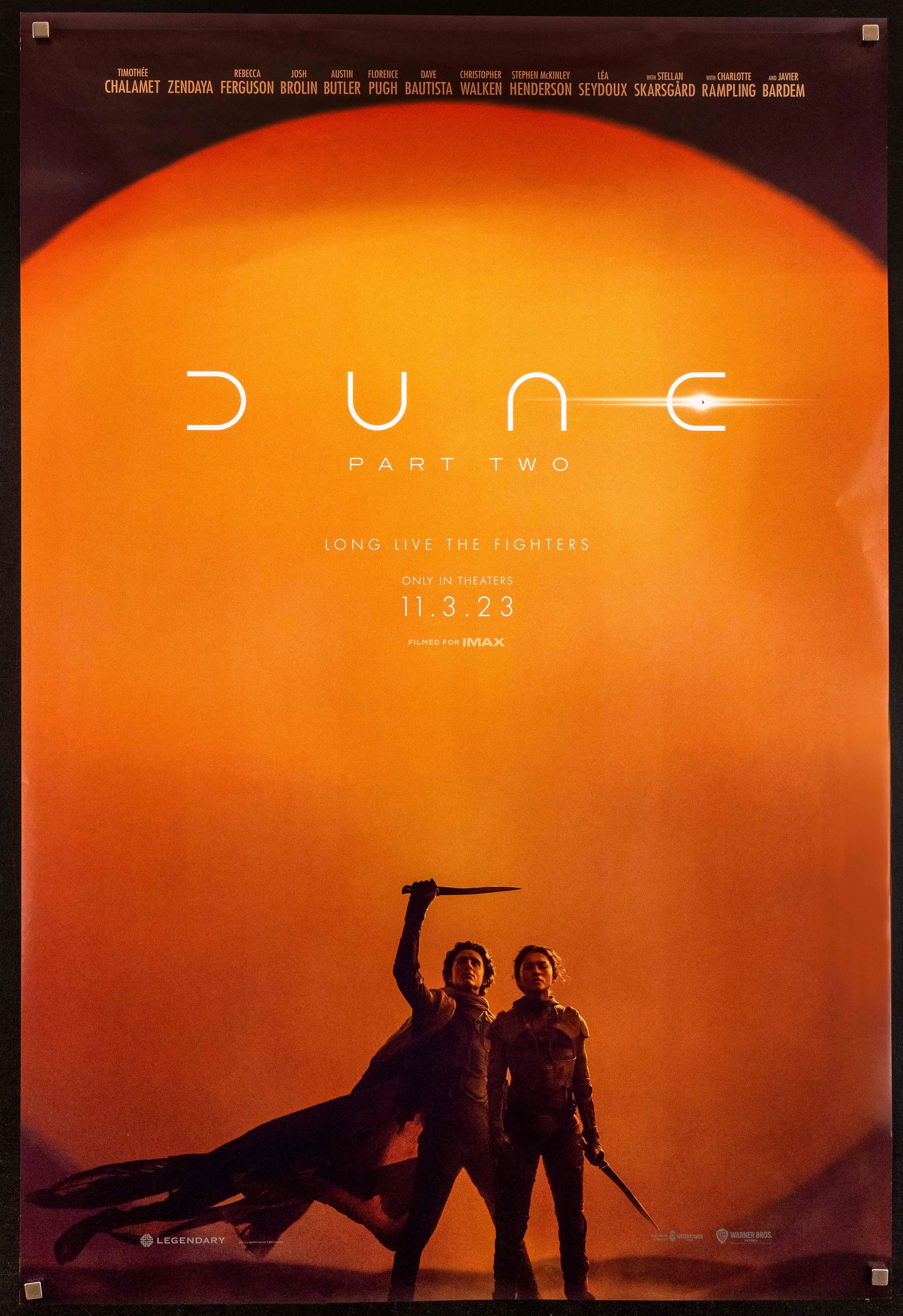
 

In 2024, two major science fiction franchises produced blockbuster sequels: Dune Part II, directed by Denis Villeneuve, and Furiosa: A Mad Max Saga, directed by George Miller. Both films overlapped in their depictions of the desert landscape, cults of survival, and a desire to return to a “green place.” These respective deserts are not seen as their own habitats, as unique biomes and cultural spaces, but rather as something dangerous that must be made green. This utopic desire combined with the extractive activities in both Villeneuve’s and Miller’s deserts suggests an inability to imagine life beyond extraction in the heat of global warming but only in lush greenness, where even the air is purer. The impact of this cultural imagining can be seen in the recent political landscape, as President Trump released an AI-generated video depicting the West Bank as an “oasis” with palm trees, and when Elon Musk, while heading DOGE, reposted a Mad Max meme with the text: “Ladies, it’s time to start thinking whether the guy you’re dating has post apocalyptic [sic] warlord potential.” In current political imaginings, the desert can either be greened to create some type of utopia or is full of savage warlords hoarding resources.

Rather than focusing on how humanity has adapted and survived these places, Dune Part II and Furiosa depict progress as the desire to return to green. While this view of the desert not only supports the current imperial actions in the Middle East, it also limits the ability to imagine and pursue survival in the heat of global warming. These coincidental releases suggest a turn toward imagining hot, dry futures where the air is poisoned or changing humanity, as in the Spice sands on Arrakis. Rather, we must (re)imagine these desert futures as more than extractive places where the heat and air can kill.

Unlike its predecessor Mad Max: Fury Road, which I’ve argued in my essay “Mad Max and the Wasteland of Commodification” has strong ecofeminist and environmental justice themes, Furiosa reverts to a biblical story of the sinful woman. The first shot of the titular character is her reaching for a lush piece of fruit while another girl whispers they should hurry. Immediately after she picks the fruit, Furiosa sees that men have invaded their sanctuary. While trying to warn the others, she is captured, which prompts her mother to follow them into the desert to rescue her. She fails, and Furiosa is enslaved and raised by Dementus (Chris Hemsworth) before she is eventually traded to Immortan Joe (Lachy Hulme) to be one of his or his son’s child wives as part of a deal for Dementus to run Gas Town, a petrol fortress. Indeed, it is the attempted rape by his son Rictus (Nathan Jones) that allows a young Furiosa to escape and hide among the War Boys, eventually growing up to become a mechanic and then learning to drive the War Rig alongside Praetorian Jack (Tom Burke). They become partners—both romantically and in their desire to escape. Meanwhile, Dementus is scheming to take over Immortan Joe’s fortress, which features fresh produce, green gardens, renewable energy, and—most importantly—unlimited water from underground aquifers. Caught up in his schemes, Praetorian Jack and Furiosa are captured, Jack is horrifically killed, and Furiosa escapes to tell Immortan Joe in hopes of enacting her revenge. After a forty-day war, she tracks Dementus through the wasteland to kill him. The film ends with the History Man (George Shevtsov) suggesting that Furiosa didn’t kill Dementus but rather planted the seed of the fruit she took from the Green Place where she was captured while eating the fruit, and the film ends with Furiosa now played by Charlize Theron handing one of these fruits to the enslaved women that she escapes with in the next film.

In many scenes, Dune Part II mirrors the plot points of Furiosa. Like Furiosa, Paul (Timothée Chalamet) comes from a place utopic for its greenery and, most importantly, water—a sacred element on Arrakis. Furiosa and Paul both seek revenge against grotesque villains known for their cruelty. In Dune Part I, Paul’s family, who have come to rule the desert planet, are murdered by the villainous Harkonnens, and Paul and his mother flee to hide in the desert, where they are taken in by the native population called Fremen. Paul’s mother, Jessica (Rebecca Ferguson), is part of a galaxy-wide religious order that has seeded prophecies and propaganda about an outsider who will turn Arrakis green again and lead the Fremen. While Paul is perfectly positioned to fulfill this prophecy, he is hesitant at first, but in order to defeat the Harkonnens and avenge his father, he must use the native practices of the Fremen to not only survive the desert but to control their loyalty. By ruling the Fremen, he regulates what makes Arrakis so important: Spice production. The drug called Spice enables interstellar planetary travel, so it is a necessary and valuable resource required by the empire. Ultimately, Paul takes leadership of the Fremen to oust the Harkonnens from Arrakis by force, which prompts the other ruling families to threaten violence, leading to the Fremen intergalactic war off their home planet.

The desert is the prime visual for both these films, but in Furiosa there is no cinematic beauty in the desert, only fear, while Dune features long shots of the sun catching Spice in the air, the shifting sands, the decorated sietchs where the Fremen live, often overlaid with a stereotypical Middle Eastern soundtrack. While both films depict the desert in different lights, survival and exploitation are still central to the desert, primarily for various types of fuel, whether it’s petrol, food and water, or Spice.

Furiosa is unable to escape her captors because she has no resources to survive the desert, and resources are exclusively stolen, not shared. The apocalypse of the Mad Max franchise is summarized in voiceovers at the beginning of the film, and the first two instances of destabilization listed are the power grid collapsing and that “currency is worthless,” (Miller 00:00:30), once again proving the quote commonly attributed to Fredric Jameson that “it’s easier to imagine the end of the world than the end of capitalism.” The voiceovers end with the final sentiment from the History Man: “‘As the world falls around us, how must we brave its cruelties?’” (Miller 00:01:21). The film’s answer to this question is revenge and the utopic desire to return to a green paradise. The cruelties that Furiosa survives depict what Naomi Klein and Astra Taylor call “end times fascism:” “A darkly festive fatalism—a final refuge for those who find it easier to celebrate destruction than imagine living without supremacy” (“The Rise of End Times Fascism”). Indeed, destruction—of both property and the human body—are moments of joy rather than horror, such as when Dementus orders a wasteland gang he’s overcome to fight each other for the honor of riding motorcycles attached to the body of their boss, pulling him apart (Miller 00:27:23). This destruction is linked directly to the desert because there is no alternative lifestyle presented in the sands. The only people living in this desert are destructive—except for our heroine, raised elsewhere, and her eventual romantic interest, who is murdered. Rather, the alternative lifestyle is rooted not in the desert but in an oasis of green where there are still trees bearing fruit, water, and animals.

In the first few minutes of Furiosa, what is called “the green place of many mothers” in Mad Max: Fury Road is depicted. In a rocky canyon, the few shots of daily life show men and women working together at chores while windmills turn in the background. In addition to human life, there is nonhuman life, from birds crying to the horse Furiosa’s mother rides in an attempt to rescue her. Shelters feature solar panels on the roofs, and the people use sustainable technology such as a pedal-powered whetstone and a solar oven (00:04:13). While they are not pacifist—Furiosa’s mother is a crackshot—they represent the opposite of the desert barbarism by incorporating advanced technology along with sustainable living to create an egalitarian community. This progressive community, though, is visually connected to the water and lush flora that surrounds them. Indeed, as Furiosa’s mother ventures deeper into the desert in her rescue attempt, she must take on more and more of the violent trappings of Dementus’s men—first abandoning her horse for one of their motorcycles, then putting on their clothes and helmets of human bone. Thus, the desert and its connection to scarcity—whether real or imagined—is the promoter of this savagery, not something brought to the sands. Indeed, as Imre Szeman points out, “We moderns are creatures of fossil fuels (if to different degrees in different places in the world)” (7). As she progresses into the desert, she becomes more a creature of fossil fuels by taking on the trappings and riding the bike. The focus on automobiles in the Mad Max franchise emphasizes this connection, and control of “guzzolene” is important to who rules the desert. Rather than adapt to the more sustainable and fossil-fuel-free life of the green place with many mothers, the people of the desert hold onto their desire for fossil fuels and the supposed modernity it produces, such as Immortan Joe’s brother, the lord of Gastown, painting a recreation of John William Waterhouse’s Hylas and the Nymphs (1896) while wearing a regimental coat (Miller 00:43:23).

Alternatively, in Dune Part II, the Fremen do present the desert as a unique environmental and cultural space, but their depiction throughout the film still connects to violence and is presented as uncivilized or lacking in empathy. Throughout both films, their martial prowess is partly what makes them unique, but early in Part II after a battle, Paul witnesses Chani (Zendaya) drain the water from a body of a still living Harkonnen, swatting away the Harkonnen’s weak arm (Villeneuve 00:11:19). This moment positions the Fremen as lacking empathy or respect for their enemy, by doing something brutal as they loot the water from the bodies, causing the pregnant Jessica to vomit. While Fremen violence begins and ends the film, there is worldbuilding around their culture and relationship with the desert. This connection is depicted visually through their eyes, which become a vibrant blue due to them breathing in and eating Spice. Additionally, the reason for collecting water from the dead is not only due to scarcity, but in the case of dead Fremen, their water is poured into an underground tank where it is being saved to turn the planet green. As Stilgar (Javier Bardem) explains to Jessica: “‘When we have enough water, the Lisan al-Gaib will change the face of Arrakis. He will bring back the trees. He will bring back a Green Paradise’” (Villeneuve 00:20:24). Even though they’ve adapted to live with the desert, have a culture intertwined with the desert, and have the ability to create advanced technology out of the desert (such as their stillsuits, which retain water), their religious purpose is to change the planet to a green paradise that they have no frame of reference for.

While Paul respects the Fremen and their understanding of the desert, they are still positioned as religious zealots willing to die for the Lisan al-Gaib in a war necessitated because the natural resource of their planet—Spice—is required for galactic travel. Indeed, the movie is framed around Spice, and its metaphoric connection to oil is emphasized visually. In a restructuring of the opening credits, sounds that do not necessarily mimic language seem to speak, with the words appearing on black screen: “Power over Spice is power over all” (Villeneuve 00:00:05). The production credits follow, creating an interruption of the story started with the truism on Spice. While Spice production happening on a desert planet being controlled by colonizers already prompts viewers to think of oil production, the connection is solidified by the main villain, Baron Harkonnen. He soaks in a black pool of liquid that clings to his white skin, the oily surface swirling (Villeneuve 00:49:02). While the Fremen offer an alternative few of the desert, the central conflict still revolves around the Harkonnens keeping the Spice flowing, thus limiting this imagining of the desert to an extractive space.

While Furiosa and Dune Part II come from very different franchises, the narrative of the protagonist’s revenge, violence, and extraction creates a unified view of “desert” as a space where scarcity leads to savagery. Another way this savagery can be read is a response to the question posted by Wilson, Szeman, and Carlson: “Energy transition will therefore involve not only a change in the kinds of energy we use, but also a transition in the values and practices that have been shaped around our use of the vast amounts of energy provided by fossil fuels” (4). Without these practices of modernity, these films suggest the only option when fossil fuels become limited is not adaptation or transition but violence, even though much of the Global South already does not operate with the same amount of energy usage as the Global North. While there are certainly other films that do not present the desert or its people in this framework, the release of two such blockbuster narratives in 2024 suggests the desertification of imagination in the U.S. and a need for alternative narratives, particularly for the masses. As Paul says of the Fremen to his mother: “It’s not a prophecy. It’s a story you keep telling. But it’s not their story; it’s yours” (Villeneuve 01:02:21). The Fremen are certainly more nuanced than the people of Furiosa, but because their values are created and manipulated by Paul and the religious order his mother Jessica belongs to, the Fremen’s agency is degraded. Their culture of wishing for a green utopia is entirely manufactured to make them more pliable in relation to collecting Spice. Additionally, the supposedly uninhabited and unlivable southern part of the planet being filled with a large population of “fundamentalists” who are mostly nameless and faceless, depicted as a mass, dehumanizes the Fremen. They become a tool for violence, another thing to be extracted from the desert in Paul’s galactic conquest.

As this violent and resource-drive depiction of the desert unites the movies, so, too, does the desire for a green utopia. The desert is not seen as a viable location, even though in Dune the Fremen have adapted to the desert. In Furiosa, the desert is not adapted to but rather something to be endured by scavenging and killing others in order to, someday, find what one of Dementus’s men calls a “place of abundance” (Miller 00:12:30). Both these narratives focus on a return to a green utopia, which suggests an imaginative reaction to global warming. As the climate changes and global warming causes places to become hotter and drier, this yearning for a green utopia will harm humanity’s ability to adapt. As the After Oil Collective writes in Solarities (2022): “Stories and myths are tools of immense possibility that provide powerful means of creating different worlds and making new futures, and of seeing the present in new ways” (61). While the releases of Furiosa and Dune Part II are coincidental, these narratives suggest we are struggling with “seeing the present in new ways” and instead relying on imperial, oil-driven narratives of scarcity, violence, and extraction in the desert. These narratives also reinforce the problematic idea that lush, green spaces are the only viable vision in the midst of climate change rather than presenting a diversity of flourishing landscapes and beings.

As the impacts of climate change continue to cause more desertification, our popular storytelling must adapt rather than react. Depicting deserts as spaces of scarcity and violence only serves extractive and imperial industries. Rather, we can use storytelling practices to imagine flourishing communities in the desert not beset by extraction. There is more to the desert than supposedly empty sands and oil; it is not a place that must be transformed in order to reach a more utopic state—and storytelling can develop our imagination in these directions as more of the planet experiences extreme heat and drought. At this time, we need our imaginations expanded, not limited by these imperial narratives.

Works cited

After Oil Collective et al., editors. Solarities: Seeking Energy Justice [U of Minnesota Press, 2022].

Dune Part II. Directed by Denis Villeneuve, Warner Brothers, 2024.

Klein, Naomi and Astra Taylor. “The Rise of End Times Fascism.” The Guardian, 13 April, 2025.

Furiosa: A Mad Max Saga. Directed by George Miller, Village Roadshow Pictures, 2024.

Szeman, Imre. On Petrocultures: Globalization, Culture, and Energy [West Virginia U Press, 2019].

Wilson, Sheena et al., editors. Petrocultures: Oil, Politics, Culture [McGill-Queen’s U Press, 2017].

POSTED BY: Phoebe Wagner (she/they) is an author, editor, and academic writing and living at the intersection of speculative fiction and environmentalism.

Tuesday, May 28, 2024

Film Review: Furiosa: A Mad Max Saga

Fury Road is nearly impossible to follow, but Furiosa is a solid, entertaining, and well-made addition to the Mad Max universe.


In 2015, I saw Mad Max: Fury Road three separate times in the theatre. My mind was delightfully blown with the incredible world-building in it, and I was uttlerly gobsmacked by Charlize Theron's performance as Furiosa. It was probably even the last physical DVD I ever purchased, so intent was I on always having it available to watch. The movie would go on to be nominated for best picture at the 2016 Academy Awards, which is a wild honor for a summer blockbuster action film. 

Needless to say, my hopes were very high for Furiosa: A Mad Max Saga — the prequel we've all been waiting for. And before I launch into a million thoughts, this was a very good movie. It's perhaps the second-best Mad Max movie after Fury Road. It's also very easy to see how it was presaged in The Road Warrior, too, from its shared crucifixion imagery to its charismatic muscular leader and early war rig.

But it's nearly impossible to watch Furiosa without constantly comparing it to the absolute perfection that is Fury Road. And I think that's okay! With this new entry, George Miller gives us two and half more hours to spend with some of the most interesting characters in the wasteland while introducing us to several new ones. But at the end of the film, I didn't felt like I knew much more about anyone's motivations or relationships. Maybe this is because Fury Road did its world-building just right — you hear about the Green Place and understand it's mythology, but never see it. Characters talk about half-lives, and being awaited in Valhalla, and that's all you need to know. 

In Furiosa, we take trips to the actual Green Place, and the Bullet Farm, and Gas Town, but there is no more real world-building that that, just a quick physical tour of the surroundings. This will be a running theme throughout the movie, and it left me with either a simple appreciation (Oh cool! That's what Gas Town looks like!) or just more questions. 

The Green Place, what few seconds we get to spend in it, resembles Themyscira from Wonder Woman, as it is also a place where women are warriors and men seem to be scarce. I would have LOVED to spend a few more minutes in this oasis, and narratively I think it would have served the story more to show exactly how much was lost when it disappeared. 

What Works in Furiosa

As I like to say about the Star Wars universe, I appreciate any glimpse into a world that I love, and Furiosa is no exception. Settling back into the wasteland was enjoyable and fun, and it harkens back more to some of the older Mad Max movies with its strange characters and ridiculous interactions (a character named Scrotus is one of Immortan Joe's sons and blusters with the best of them). The wasteland is alive and well in Furiosa, from the lost war boy wondering if he's made it Valhalla finally to the motorbikes bedecked with doll forms and helmets adorned with human skulls.

Also, the entire movie I experienced what I call Chekhov's arm: We know Furiosa loses her appendage, but we don't know exactly when or how. Never in a million years would I have guessed that it would have contained a tattoo to her lost Green Place on it, and that to survive in the wasteland she'd have to cut it off herself a la 127 Hours. That's some good writing, there.

Mary Jabassa

The opening sequences where Mary Jabassa, Furiosa's mom, chases her kidnappers across the dunes is an blood-pumping way to kickstart our story in the first minutes, with high-octane motorcycles, sniping, and brute force physical violence. Watching her interact with the wasteland gets you thinking, "Hell yeah, of course this is Furiosa's bad-ass mother!" The Vuvalini, the group of elderly female warriors, was one of my favorite parts of Fury Road, and I would have killed to have learned even more about their training and ethos. From the short bursts we see, they're incredible warriors with a keen sense for justice. 

Dr. Dementus

Hannah Arendt wrote about the banality of evil; George Miller in Furiosa showcases the absurdity or even hilarity of evil. Humongous had his Jason mask; Dementus has his prosthetic nose and ridiculous wig. Chris Hemsworth portrays the primary antagonist in the film, and he's responsible for the gruesome death of Furiosa's mother, which he forces her to watch. She spends her life waiting for revenge on him, and ultimately gets it, but before the climax we spend a lot of time with him — most of it enjoyable. 

Dementus is a wild ride that alternates between moments of sheer comic perfection (his Roman chariot of motorcycles) and ambivalent cruelty. You know he does bad things — you often witness them — but he doesn't reek of unbridled evil. He wants power, but is strangely pragmatic about it. He's also bad at leading, which is actually what would happen in a dystopia with strong cults of personality.

The war rig chase scene

Miller returns to his Fury Road bread and butter with an incredible war rig chase scene in the middle of the movie, and he somehow manages to come up with new ideas and exceed what he did last time. We get a thrilling raider scene where the good guys fend off attackers with motorized parachutes, and I could collectively hear jaws drop in my screening as the chutes danced and criss-crossed over the truck with breathtaking precision. The metal spinning mommy knockers on the back, once they are activated, deliver a very satisfying new way to destroy motorcycles, too. I can't wait to watch this scene multiple times. 

What I Struggled With


ATJ

My chief complaint, honestly, is with the casting of Anya Taylor-Joy. And to be fair to her, my love for the character of Furiosa apparently has built up a mythology that may well be impossible to live up to, and I apologize for the following criticisms that may well be nit-picking.

For her to work in this role, you have to completely buy her as Furiosa — and I just didn't. Charlize Theron's performance was brutal, emotional, and physical in a way that ATJ didn't pull off. To me, she was too doe-like, too delicate — all cheekbones and skinny arms (compare this to the hairless, muscular and 8% body fat of Hemsworth. I found myself wondering where he found creatine and whey protein powder in the apocalypse, much like I did with Humongous in The Road Warrior).

But after seeing Katy O'Brien in Love Lies Bleeding this year, I was hoping that a younger Furiosa would be more clearly a dominant fighter with a strong and aggressive physical presence. Also, when she finally shaves her head in the final minutes of the movie a la G.I. Jane, you can tell ATJ's wearing a wig, though she has stated that this was because of the disjointed filming schedule. Granted, not everyone can shave their head for a role (though Theron did!) you can absolutely notice the difference. None of this is to say that ATJ's performance is bad, it was just missing something for me.  It's not her fault that Miller didn't write a ton of dialogue for her — huge swathes of time pass with her speaking only a sentence or two — but it just felt like she was a stand-in.

Not enough delving into the relationship between Furiosa and Immortan Joe

There's no denying that Immortan Joe is not a good dude. He keeps women enslaved and harshly deprives citizens of vital natural resources. But in Furiosa, he comes across as a voice of reason in the wasteland, especially when compared to lunatic Dementus. However, we don't know learn hardly anything new about Joe the whole movie. I found this interesting, because at the very end of Fury Road, as Furiosa kills him, the last thing she shouts is "Remember me?" I assume she's referring to her time spent as an enslaved child captive in his harem, but it's a little unclear. She spends time as a praetor first then as an imperator for Joe, and he never seemed to realize who she really was. I suppose I expected some more tension or more insight into their relationship. Also, Hugh Keays-Byrne unfortunately passed away in 2020, so there's a new Joe in this one, and though he looks nearly identical, his stentorian voice is definitely missing.

Overall

This is a very good Mad Max movie, and it builds upon all of its predecessors in interesting and impressive ways. But following Fury Road is a nearly impossible feat to best in any sense. George Miller is one hell of a storyteller, though, and I will gladly enjoy any new addition to this decaying world. It's perfect! Perfect in every way.

Unanswered questions

  • How much time elapses between when Furiosa returns after killing Dementus and when she smuggles the brides out? The movie makes it look like just a few days.
  • What does the rank of Imperator mean in the world of the Citadel?
  • Does our beloved Scrotus die? The same actor plays Slit in Fury Road.
  • When does the People Eater get a promotion to ruler of Gas Town?
  • Why does the war rig in this film have the steering wheel on the right while the Fury Road war rig has it on the left? Does society in post-apocalyptic Australia get more American?
  • Why didn't we get a young Miss Giddy? 
  • Did Taylor Swift swipe her idea for her new Eras tour dress from the History Man?
  • How DOES the Green Place disappear in 20 years?
  • Did Furiosa have her tattoo memorized after she loses her arm?
  • Do the deformed and depressed citizens of the citadel really subsistence farm on maggots from dead bodies? Poor things.
  • There's very clearly a Fury Road that runs between the equilateral triangle that is the Citadel, Gas Town, and the Bullet Form. Who maintains it and keeps it paved?
  • What do they do with all that cabbage?

--

The Math

Baseline Score: 8/10

Bonuses: Stellar production and stunts; a Max Max cameo that's unexpected; a lovely History man looking like a male Bene Gesserit; We get to watch the war rig get concepted and built.

Penalties: Some clunky dialogue like "Do you have it in you to make it epic?"; pacing is a bit off; I don't feel like it expanded the world a ton more than already existed; Anya Taylor-Joy is no Furiosa.

POSTED BY: Haley Zapal is a lawyer-turned-copywriter living in Atlanta, Georgia. A co-host of Hugo Award-winning podcast Hugo, Girl!, she posts on Instagram as @cestlahaley. She loves nautical fiction, growing corn and giving them pun names like Timothee Chalamaize, and thinking about fried chicken.

Friday, December 23, 2016

Holiday Gift Guide: TV, Film & Movies

Welcome to our annual holiday gift guide, where the flock takes a break from talking about all the awesome and not so awesome things to... talk some of the awesome things you might want to consider for your Holiday shopping this year. And, unlike Joe's entry, this will be 100% Hamilton free.


Joe: For the Hamilton obsessed in your life (Editor's note: are you kidding me right now)


by Lin-Manuel Miranda and Others
(why are you doing this)

While less explicitly speculative fiction than everything on this list, one could certainly make an argument about the Hamilton musical itself being alternate history due to the race bending cast (and a number of people did last year in considering the soundtrack for the Best Related Work Hugo Award). In the case of the Hamilton Mixtape I'm more than willing to put forth the idea that Lin-Manuel Miranda and Nas wrapping on the sublime "Wrote My Way Out" is some sort of best and alternate dream of our world and even though it really happened, is still so perfect that it surely counts. Also, this is NERDS of a Feather, and if Hamilton love isn't the best example of Nerddom, I don't know what is. The Mixtape also features contributions from Dessa (don't miss "Congratulations"), Usher, The Roots, Kelly Clarkson, Alicia Keys, John Legend, Chance the Rapper and more!

 
Shana: For the horror obsessed in your life

2015, Dir Guillermo del Torro

Crimson Peak is a masterful and beautifully rendered gothic horror/romance movie. The plot centers around a young woman being swept off her feet by a hopeful businessman and inventor come to the city to meet with her father. They soon wed and he whisks her away to his family estate which sits atop a blood-red clay deposit. Unclear if the poor woman is haunted by her past or her new husband's, we watch as secrets slowly reveal themselves. The stunning visuals transport the viewer into Guillermo del Toro's world and serve to create a sensory experience unmatched by many. The bonus features allow for an in-depth behind-the-scenes look at how Guillermo del Toro created this lavish world. This movie will delight any gothic horror fan and provide endless enjoyment with multiple viewings just to catch all the delightful details.
Gustav: For the 80's obsessive in your life...

 by Kyle Dixon and Michael Stein

Everyone's favorite summer show wouldn't have been the same without the killer score by Dixon and Stein, who are both in the incredible Austin-based synth band S U R V I V E. It's hard to remember the last time a TV show had original music this evocative--probably Seinfeld.


Brian: for the person in your life who has a strong tolerance for dumb humor

Conrad Vernon and Greg Tiernan (dirs.)

I know you're probably laughing already, which is good! Get warmed up, because you're going to laugh at Sausage Party. Sausage Party is stupid. It's really stupid. It might be the stupidest movie I've ever seen. It's 90 minutes of computer animated food talking and trying to have sex with each other. I've spent a lot of time wondering how Sausage Party got made; who thought of it, who wrote it, who listened to the pitch, who agreed to make it, who distributed it, and how did they sell it to theaters. But when I was watching this movie, I was laughing. It got the most laughs out of me I've had all year. It's so incredibly stupid, but it works.


Dean: For the person preparing for January 20th in your life


Mad Max: Fury Road: Black & Chrome
 Dir George Miller

Fury Road is in my top five favorite movies for a whole host of reasons. Its few detractors knock it for "not having a story", which is silly, because it has an amazing story. We are just used to being spoon-fed stories from movies, whereas this is a masterclass in not telling us anything, but rather presenting it organically and viscerally.

Speaking of.

Black & Chrome takes that to new levels- George Miller said he meant for it to be this way, and who are we to argue with ol' Happy Feet? In any case, this is an amazing take on an amazing feature, in a way that most films would suffer from, but for this base brutality of storytelling and spectacle, feels just right.

Tuesday, November 8, 2016

The Best & Worst SFF Governments

Every now and then (read: all the stinkin' time), there is some controversy in SFF and comics about how they should be a-political. This is usually the result of something in those worlds pushing forward, and conservatives trying to protect "the good old days" or some such. I reject the notion that SFF & comics are not political, indeed, that they even can be. Even if you're not trying to make a statement, anything you create will naturally reflect one's own views and beliefs.

Since SFF inherently involves visions of the future or alternates realities, there are governments there. Sometimes they are very good to show what humanity can be, or very bad to show... the same thing. Today is a Presidential Election here in the You Ess of Eh, and, frankly, it's terrible and terrifying, so I thought we'd retreat into fiction to look at some of the best and worst governments out there (NOTE: I have not seen every movie, read every comic, or read every book, though not for lack of effort. So if you disagree, awesome, add it in the comments. This is just for fun).

The Best:

The Federation, Star Trek. This seems like the obvious one. The Federation is great for a whole slough of reasons, but primarily because is really does show the best of humanity, and what can be achieved if everyone works together and accepts one another. Also, bad ass spaceships, obviously.

Vote Spaceship

Gondor, Return of the King. Under Aragorn, after Sauron has been defeated, just so we're clear. Gondor went through some stuff, didn't they? Denethor was worse than useless, Faramir (book Faramir) was awesome, but Daddy loved Boromir, so he got shoved to the side. BUT, Aragorn took over, evil was gone and good times again in Gondor. Tell me you don't want Aragorn as your king, and Arwen (BOOK Arwen) as your queen.

The Worst:

The Old Republic, Star Wars. Wait, you're saying. They had Jedi and united the galaxy and were basically awesome. To which I say: oh, yeah? The Jedi sucked and were ineffective, unable to keep the peace or see threats in their own midst. The government was so bloated and weighed down by corporate influence, it allowed itself to be taken over by a scheming, selfish, wrinkled idiot from within. Do you see a parallel?


Immortan Joe, Mad Max: Fury Road. You could throw any number of dystopian governments on this list, since they all basically exist to highlight extreme class disparity. Most of them, though have the governing class outfitted in fancy garb and eating the best food, and, hey, I get it and it works for those stories. The problem, is that actually appeals to a certain class of people, who want their own happiness, no matter the expense to others. The difference with Joe is, his life is crap, too, just a little less crappy than those he oppresses. His chest is covered with metals and decorations - of his own making and award. His children are deformed and power hungry and delusional, just like him. He has a collection of women, which he thinks represents his prowess, when in fact, they hate him. And while he fancies himself all-powerful, in fact, he relies on others who are richer, smarter and more powerful than he is. Sadly, there is no such parallel in real life, and we should all be glad of it. Oh wait.