Thursday, August 18, 2022

Microreview[Novel]: A Taste of Gold and Iron by Alexandra Rowland

 A sweet, pacy and gleefully self-aware queer fantasy romance romp, complete with AO3 content tag bingo and a seasoning of economic malpractice.


Apparently when A Taste of Gold and Iron was announced, it came with a list of AO3 style content tags, thus:

- exquisitely beautiful prince/hot stoic bodyguard
- chronic anxiety
- oaths of fealty
-washing each other’s hair and talking about ethics
- found family
- what we owe each other
- enemies-to-lovers
- kissing to avert suspicion
- hurt/comfort
- slow burn
- there’s only one bed

This in many ways tells you exactly what sort of book this is. There’s an enormous ticklist of tropes that crop up throughout the story – the above list only covers the non-spoiler ones – and they are introduced with such palpable glee that you feel like Alexandra Rowland was giggling along as they were writing it, just as I was giggling along reading it. It is tremendously silly, abundantly playful and totally self-aware of what it’s doing as a story. There’s even a character who laughs out loud at the romance he’s seeing before him and the events that unfold, in case the rest of it had been too subtle on that point. And because there’s this sense of laughing with the author, it’s an absolute joy of a reading experience. Add to this that it’s a queernorm world with at the very least gay, pan, ace and third gender representation, and it’s just the perfect escapist delight.

Both the romantic leads are compelling characters, and manage to make a good middle ground between opposites attracting and finding unexpected commonalities, so you feel like they genuinely would find ways to get along and care for each other (which I often find lacking in total opposites attracting situations). Their dynamic manages to balance fun and tension throughout the story, without indulging so hard on either side as to strain enjoyment. Yes it’s silly, yes there’s only one bed… but the reason there’s only one bed, and the stresses and worries that come from it, are plausible enough as a framing device that it works.

Particularly of note is Kadou, the prince – though not labelled as such, he’s very clearly portrayed as suffering from quite severe anxiety, and the way that’s managed, how he and other characters respond and relate to it, is done extremely well. It’s framed in terms that make sense for the culture he is in, and dealt with likewise, but without resorting to “no one believes in mental health issues in the past”. Solutions are sought from the medicinal (teas) to the theological, but it is generally just accepted as being part of the person he is, and he and those who love him just need to figure out how best to manage it when it starts to impact his happiness or ability to do what he needs to do.

Aside from the leads, there are a whole cast of entirely lovable secondary characters, from the slightly frazzled older sister sultan to the tough love and exasperation captain of the guard to the absolute chaos goblin friend/armsman and more besides.

Outside of the characters and romance, the world is wonderful – a fantasy peusdo-Ottoman-ish kingdom of merchants, with relations with pseudo-France and others. There are some wonderful details of points of fashion, of culture and of styles of dress, and part of what’s great about this not being yet another fantasy-medieval-western-Europe setting is we get approaches to gender as it intersects with culture and behaviour that aren’t what you’d get in something that was clearly fake-historical-London. There are glimpses of how the characters conceive of masculinity which I really enjoyed exploring – what fabrics, behaviours and clothing was appropriate to a man in a particular station, for instance – and it was very gently introduced throughout, though I’d have liked more of it. Likewise, we don’t see enough of it to be sure, but at least in the setting country (Arasht), power seems to be gender-non-specific, and we get hints of some interesting rules around inheritance, parenthood and the ties of family, all of which feed into the main plot, but without being overburdened by exposition. If anything, I could have done with a bit more exposition, because I was so interested in what was going on.

But the plot is very much inward focussing, and so we are mostly denied that (at least in this book – I have hopes for any future sequels). The core issue of the story, besides the romance, is that in our fantasy mercantile kingdom, full of people who can tell at a touch the purity of metal, and whose relationships with other countries, and whose standing and reputation with them relies on the absolute quality and integrity of their coinage… someone has been debasing the currency! I never knew the dearth of fantasy books with this as a core theme was something that needed to be rectified until I read this one, but apparently it is. And in many ways, it’s a story point that’s absolutely perfect for a fantasy retelling – it’s something that was, at times in history, a really critical and kingdom shattering issue, and one that’s graspable on the scale of individual actions. This is especially true for a book with a protagonist who has the magical sense for metals – he’s perfectly placed in power and ability to be the one investigating exactly who’s messing with their money.

We don’t get to see much of the world outside Arasht, despite the extent to which those outside opinions are a massive driver for solving the coinage crisis, and I think this does weaken the strength of that part of the plot – so many people emphasise quite how catastrophic and image management situation this is, it would have been nice to be able to see how correct they were on that score.

We also, frankly, don’t get enough of it as a plot point in general for my liking. The story is definitely far more interested in the romance and the tension inherent in that to dwell too hard on the geopolitical tensions that are set up, and there are times – when the drama of the story is in full swing but we focus more on the headspace of the characters in love than how they are thinking about the crises that surround them – when this feels a little like the plot has been done dirty by the romance. There’s so much in it that’s exciting and good, so much I want to explore, and it gets skimmed over that few too many times for my liking, especially in a book as pacy as this one – we could absolutely stand to have a bit more time spent exploring exactly what was going on with all the different parts of the conspiracy at play, without even needing to cut down on the romantic sides, and it would still have managed to be a light, fun and fast-reading book. 

There’s also one character who gets, at least for me, a little sidelined towards the end, and again, the issue with that is how good what we get up to that point has been – I’m left wanting more, especially as there are some great hints about his internal struggles and development that I really wish we could have managed to get more of a handle on.

But, all in all, those are far more problems I find when looking back than ones I experienced while reading. In the moment, the book was an absolute romp that I found impossible to put down. It is far more a romance with a fantasy story in than a fantasy story with romance in, but it’s easy to forgive when the romance is quite so fun and so funny as this one.

--

The Math

Baseline Assessment: 7/10 

Bonuses: +1 sarcastic chaos goblin character

+1 genuinely laugh out loud funny

Penalties: -1 more economics needed please

Nerd Coefficient: 8/10

Reference:  Alexandra Rowland, A Taste of Gold and Iron [Pan Macmillan, 2022]

POSTED BY: Roseanna Pendlebury, the humble servant of a very loud cat. @chloroform_tea


Wednesday, August 17, 2022

Review: How to Date a Superhero (and Not Die Trying)

A hilarious and sweet novel that deconstructs comic book tropes about relationships

Astrid Rose has everything under control. In her meticulously plotted trajectory towards a medical degree with top grades, she has planned her daily tasks to the exact minute and second. She has allotted time to study, time to sleep, time to shower, time to do homework, time to run between classes, time to cram for tests, time to use the college lab, time to go to the library, time to eat a hurried brunch while she reviews flash cards, time to socialize with her one friend, time to collapse in tears for her weekly nervous breakdown. Not a moment is wasted. She has regimented her life into a nonstop cycle of millimetric efficiency.

But Astrid can't control how she feels around Max Martin. She has known him since high school, and now that they're finally dating, she has added time for him in her perfect schedule, but his gentle, soothing presence melts everything inside her. When she's with him, her entire methodology for time micromanagement goes out the window. He's funny, smart, responsible, and a total gentleman to her. It doesn't hurt that he also has the perfect smile, perfect hair, perfect eyes, perfect biceps. So Astrid is more than happy to allow this fountain of chaotic sensations into the otherwise monastic strictness of her routine. As things stand, Astrid's life is looking bright.

Until one night, when an incident with a superpowered villain forces Max to reveal his secret to her: he is a superhero. He has the strength, and the speed, and the enhanced senses, plus he can fly. And this is actually not too uncommon, because they live in a world where superheroes and their catastrophically destructive fights are an accepted part of life. Alien invasions and mad scientists and extradimensional monstrosities appear on a daily basis, and while mutants and demigods fight to save the world, normal people keep doing their normal stuff.

Except Astrid's life is not normal anymore. As a superhero's girlfriend, she has new duties to take care of. In addition to her double major at premed school, now she has to attend a secret school for significant others of superheroes, where she learns the practical lessons of any Lois Lane and MJ Watson worth her salt: how to run from danger, how to handle being kidnapped, how to untie your knots, how to make up excuses for unexplained absences, how to hide during an epic battle, how to hang from a ledge while you wait to be rescued. No matter how tight her schedule is, she absolutely needs those classes. The irresistibly gorgeous Max may be the dream boyfriend, but being near him means standing directly in the line of fire. Will Astrid stay alive long enough to get a passing grade? How many world-ending crises can their relationship survive? And what's with the mysterious lab saboteur who appears to be turning into her own archenemy?

How to Date a Superhero (and Not Die Trying), the debut novel by Cristina Fernandez, is a clever parody of every super-girlfriend story ever, as well as a hot romance story bursting at the seams with barely contained desire. Astrid is head over heels for Max, even as windowpanes explode and vehicles crash and buildings crumble right next to her. It's a delightful experience to watch the plot shift back and forth between serious, intense emotions and absurdist comedy without skipping a beat. The key to this stellar feat of narrative skill is the character of Astrid, the most relatable weirdo you've never met. Her obsession with living a life exactly according to plan is a heightened version of the anxieties we've all had in our youth, when we suddenly faced responsibilities for the first time and feared that one small mistake could derail our future. Inevitably, her overcomplicated coping strategies clash against each other and reveal glimpses of the lingering insecurities she's been nurturing since a close brush with death led her to take "seize the day" a bit too literally.

The result is a fascinatingly layered personality that carries the plot through the fun and the drama, through ridiculous dorm room antics and crucial life-or-death decisions. What allows this novel to weave so many different emotional tones without unraveling from incongruity is the robustness with which Astrid is written. The exquisite fragility from which she experiences the world is kept concealed under a regime of panicked self-castigation. I know this sounds like it should produce a numbing effect, but somehow it's the complete opposite. The more you see Astrid aggressively discipline herself, the more you want to know her and hug her and tell her that you hope she finds happiness. And the unique workings of her mind provide an inexhaustible torrent of outlandish yet irrefutable reasonings and unexpectedly gut-punching insights. If her uncontrollable bodily reactions clearly show what she finds attractive in Max, her immensely interesting thought process explains why Max loves her.

Building on the rock-solid basis of this protagonist, Fernandez poses profound questions that the superhero setting amplifies to unavoidable proportions. How much sacrifice is acceptable and fair as a show of love? Why would you need to be a world-class champion before you have the right to feel good about yourself? If you view happiness as a project, when can you say it's finished? (And doesn't it sound kind of alarming to finish it?) Should the prospect of death make us more or less motivated? (But why should death be a source of motivation in the first place?) Is it worth the effort to love someone that you know could die at any time? (Well, isn't that the case for everyone who has loved someone?)

By the time Astrid reaches her senior year at college, her growth as a person is by no means complete, because no one ever gets there, because we can't know in advance which lessons life will force us to learn. But she's become a more open person, still impressively organized, but more accepting of herself, more adaptable to failures. As she rides the rollercoaster of falling in love and falling into depression and falling from buildings and falling behind in her career, she discovers a healthier reason to go on than the raw urgency of time. And that is, in its own way, a form of superstrength we can all achieve without having to survive a freak accident.


The Math

Baseline Assessment: 8/10.

Bonuses: +1 for consistently uproarious humor.

Penalties: −1 because the big villain reveal was obvious all along, −1 because the author seems to love the verb "to hover" way too much.

Nerd Coefficient: 7/10.

POSTED BY: Arturo Serrano, multiclass Trekkie/Whovian/Moonie/Miraculer, accumulating experience points for still more obsessions.

Reference: Fernandez, Cristina. How to Date a Superhero (and Not Die Trying) [Katherine Tegen Books, 2022].

Tuesday, August 16, 2022

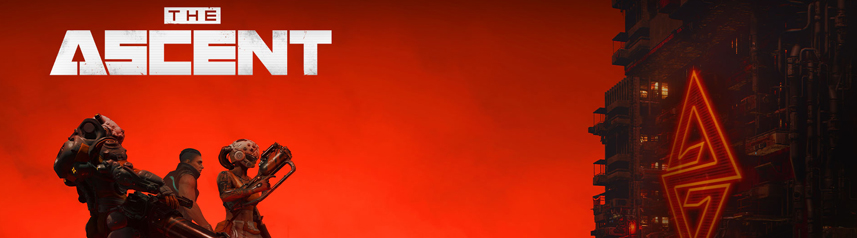
Nanoreviews: The Ascent, Hitman Trilogy, Guardians of the Galaxy

 I'm generally suspicious of subscription services, but decided to give Xbox Gamepass Ultimate a try - and I'm happy to report that it's been great. Aside from Halo Infinite, I've only picked winners so far. Here are 3 games that I thoroughly enjoyed, though they are all quite different from one another. Noting that The Ascent is Xbox/PC exclusive, while Hitman and Guardians of the Galaxy are also available for PS4/PS5 users. 

The Ascent by Neon Giant (2021)

The Ascent is a stylish, isometric-view action game set in a rich cyberpunk world. It's big on mood, with bright neon colors and a killer soundtrack, but also a lot of fun to play. And it's quite challenging too, though never frustrating. Shows what a small team of dedicated developers with a clear vision can achieve. My only complaint is that they haven't added a New Game Plus feature yet. 

Score: 9/10. 

Hitman Trilogy by IO Interactive (2016-2021)

Hitman Trilogy collects volumes in the Square Enix series reboot. The results are...mostly but not uniformly good. The Hitman games are stealth, but each mission is a sandbox - with multiple, branding paths and a number of different ways to accomplish your goals. The missions in Hitman 1, though, are a bit bland and the solutions generally too easy to figure out. The games do improve - Hitman 2 is somewhat better and Hitman 3 is, well, a lot better. I'd go so far as to say it's the best stealth game I've played since Splinter Cell: Chaos Theory, back in the ancient days of 2005. 

Score(s): Hitman 1: 6/10, Hitman 2: 7/10, Hitman 3: 9/10. 


Guardians of the Galaxy by Eidos Montreal (2022)

I love the 2 Guardians films - along with Thor Ragnarok, they are far and away my favorite MCU films. Why? Really comes down to 3 things for me: mood, humor and the way the characters interact with each other. I'm happy to report that Guardians of the Galaxy, the game, captures all 3 in a fully original story (with some creative deviations from the films). At its heart, Guardians is a squad-based action-RPG where progress unlocks new powers and team-based combos. In that sense, it evokes the Mass Effect series, though the gameplay is quite different. Actually the gameplay is the weakest part of the game - its battles, too often, are overly long, repetitive button-mashing affairs. But what Guardians does well, it does exceptionally well. This is a narrative game, driven by plot and character development - and in that sense it's one of the best I've ever played. It really feels like an interactive movie, which captures the films' signature humor and features superb dialogue throughout. Story, which can often feel like an afterthought in games, takes center stage here - and packs a real emotional punch. 

Score: 8/10. 

Monday, August 15, 2022

6 Books with Jane Yolen

The prolific Jane Yolen is an American writer of fantasy, science fiction, and children's books. She is the author or editor of more than 400 books


Today she lists her Six Books.


1. What book are you currently reading? 


How to Find your Way in the Dark 
by Derek B. Miller


2. What upcoming book are you really excited about?


Bad Company by Adam Stemple


3. Is there a book you’re currently itching to re-read?


 No.  I already have a stack lined up on my bedside table that will take me about six months to get through.


4. A book that you love and wish that you yourself had written.


Any Peter Beagle story. Or ANY of Diana Wynne Jones' books.


5. What’s one book, which you read as a child or a young adult, that has had a lasting influence on your writing?


FERDINAND about the bull who refuse dto fight in the bull ring. Not only was it important to me because my father was then off in London while then buzz bombs raged (he came home
wounded ) but the short, lyrical text rang deep in my heart.


6. And speaking of that, what’s your latest book, and why is it awesome?


 I have a book of love stories and poems (published and unpublished in the fantasy/science fiction mode,
called Scarlet Circus which I hope will lift the hearts of readers of all ages teen and up making them smile or sigh, but always making them aware of the many ways one can love and be loved..


Thank you, Jane!

POSTED BY: Paul Weimer. Ubiquitous in Shadow, but I’m just this guy, you know? @princejvstin. 

Thursday, August 11, 2022

Microreview: Uncanny Times by Laura Anne Gilman

Laura Anne Gilman’s Uncanny Times leverages her skills at Urban Fantasy to tell a Historical fantasy tale of a supernaturally oriented pair of siblings who bump back the things that bump in the night.


Rosemary and Aaron have a problem. Being Huntsmen, with a touch of the supernatural, the weird, to them, trouble is something they are drawn to, and vice versa. Their role as Huntsmen is to police and deal with the supernatural elements when they rise and threaten people. When a relative dies, and calls for them to come to their town, Rosemary and Aaron find that there is definitely a supernatural creature in the town, but something beyond the brownies in the bakery, or even the Merwoman. Something...they aren’t familiar with. Something extremely deadly.


This is the story of Uncanny Times, a historical urban fantasy from Laura Anne Gilman.


For Me, reading Laura Anne Gilman has always been a dive into communities. Overlapping penumbras of communities, relationship webs and characters interacting and working together is a hallmark of her fiction. Be it the epic fantasy of the Vineart War, the intense relationships in the Casa Nostradamus series, the bonds seen in the Devil’s West saga, and more, it is those relationships that one can read for in a Laura Anne Gilman story, or novel. Gilman makes us care about the characters, who they are, what they are, to themselves, to each other and the world around them.


Here we have, first and foremost, the brother and sister relationship. They are an effective team, have been for quite a while, and Gilman does an excellent job in showing us their past competence, allusions to prior encounters and sets us up for the adventure at hand, their trip upstate New York, and working to uncover the mystery.of what Uncanny (supernatural creature) is causing trouble in the town, and what is to be done about it. Gilman makes this story seem like an episode in a long running series, this episodic nature grounding the reader in the illusion that there are many more stories about them, past and forward, without making a reader have to read more to understand their story.  We are given enough to understand them, their role, their tools, and why they do what they do.


 I thought it was a nice touch to make the last name of the brother and sister Harker, a nice little touch of the hat to Dracula. They each have their strengths and abilities and complement each other nicely, both on a professional and a personal level.


The brother and sister relationship extends to their dog, Botheration, or, Bother. Bother is a descendant of Molossian hounds, bred and sculpted to deal with the Uncanny and is a character in and of himself. His loyalty and doggedness remind me of another recent SFF dog that I (re)read and that would be Bortan from Roger Zelazny’s THIS IMMORTAL. Both dogs are tirelessly loyalty, intelligent, and characters in their own right. Both are called Hellhounds in the text. Was Bother inspired by Bortan? I don’t know, but I was charmingly reminded of Bortan in reading about Botheration.


Beyond the brother, sister and dog relationship, we also get the social relationships of the town, and the uncanny in the area as well, providing a rich depth of character background for even the most minor of characters up to the eventually revealed antagonist. The book is, in the end, a mystery, a unfolding of secrets and history of the town that describing the plot too much would spoil.  The relationship between various Uncanny in the town put me in mind of Juliet McKenna's Green Man novels and how the supernatural creatures in that verse relate to each other.


Brunson itself is an imaginary town, but I couldn’t have told that it wasn’t just lifted from real life until I looked it up. And it is in the creation of Brunson and its grounding in history, culture and the historical moment that the novel takes place in (1913). What Gilman gets to work with, in the time period for her novel, is social change in the twin streams of the labor movement, and women’s rights (voting) movement. As always, SFF is often about the time and place in which it is written, rather than where and when it is set. This is a time, a moment, as of the publication of this novel, where both labor rights and women’s rights (bodily autonomy) are being litigated and coming under threat. Gilman’s use of this time period puts a lens on us, as well as this moment before World War One, and she does it to good effect. The tools that capital and the rich use against these are different in 1913 than 2022, but the feel of that oppression is real. As far as how this ties into the main plot of the uncanny murdering people in the town, I leave for the reader to discover. Gilman’s mastery of plotting had me guessing throughout, trying to anticipate the answers eventually revealed. This is a case of where competent and experienced protagonists are running up against the unknown and Gilman does a great job at the balance.


There is also a community in the background, sketched in and indistinct but real enough from the hints, and that is the Huntsmen community itself. It’s made clear through the text that the Huntsmen is a calling, something you are born to, and a society for lack of a better world that has been going on for decades, perhaps centuries. How and where the Huntsmen came from was a question burning in my mind, That’s not the focus of this novel, of course, but given my relentless curiosity, I want to Know More.  And there is a hint here in the book that some longstanding ideas and principles are under threat.


As mentioned above, this is clearly a “one shot” episode of the Harker’s adventures and the novel concludes satisfactorily with a complete and whole story. The bottom of the novel says “A Huntsmen Novel” which provides the hope that there are going to be more Huntsmen stories, either with the Harkers, or with other Huntsmen, elsewhere and elsewhen. I would be most interested in reading more stories of these individuals who stand between the normal and the uncanny and the adventures and situations they get entangled with.


The Math


Baseline Assessment: 7/10


Bonuses: +1 for a strong and interesting worldbuilding


+1 for excellent characterization and relationship maps.


Penalties: -1 A couple of shifts of point of view are not quite as effective as they might be.


Nerd Coefficient: 8/10


Reference: Gilman, Laura Anne, Uncanny Times [Saga Press, 2022]


POSTED BY: Paul Weimer. Ubiquitous in Shadow, but I’m just this guy, you know? @princejvstin.

Microreview [Novel] - Her Majesty's Royal Coven by Juno Dawson

 A take on the idea of magic users in a secret bureaucracy, but with an extra tasty layer of interrogation of power structures.

“What if there are magical people, and they’re also in power in some way?” is not an uncommon question for urban fantasy to attempt to answer – Ben Aaronovitch’s Rivers of London series does it with the Met(ropolitan Police), Charlie Stross’ Laundry Files with the intelligence/civil service, to name just a couple of British examples. Magic people secretly in the government is an easy and appealing mirror to throw up against existing structures and ask “what if?”. However, many of them tend to take those power structures at face value, as neutral, if not good actors in the world they exist in, and as a vector for interesting storylines, rather than a theme in and of themselves.

In Her Majesty’s Royal Coven, however, Juno Dawson feels the need to take it a step further.

You have all the good elements of a traditional urban fantasy – there are witches in/alongside the British government, they’ve been there for hundreds of years, and they live secretly among the rest of us, doing their witchy business but with rules and laws like, and unlike, their mundane counterparts. We have viewpoint characters within and without HMRC (yep) itself, and so we see multiple sides of an unfolding drama that could threaten the very foundations of the witching woooorrrllld! <end movie trailer voice>. And that’s all great – stories in that mould are often fun, compelling, pacy reads with a wonderful balance of the familiar and strange. You get to see a place you may know (or at least know of) but with a magical twist, and imagine what it would be like if there was that little extra spice in the world. 

But HMRC strives to be more than simply a romp through magical Greater Manchester. In its twin narratives of the present day and memories of a secret magical war that most of our adult actors fought in, it shows us a reflection of real world concerns of supremacy and authoritarianism, and the legacy that lives on even after such a conflict seems to have been won. But in its multiple voices, in its queer and black characters who are reckoning with that legacy not just as the other characters are, but filtered through their own trauma of existing in a white-centred, straight-centred, cis-centred world, it throws away the mirror and brings the real world in wholesale. Analogy isn’t enough, it says. It isn’t just about the bad guys, the magical fascists, who we can let our minds glide over as a historical problem solved, or a fantasy one. Instead, it’s about the here and now, and the problems caused by people who were once on the right side of history but refuse to listen when the time comes for them to accept change.

It is a book enormously about straight, cis, white women and the privilege they hold, when we take away their own gendered oppression, at least somewhat. It is, in fact, one of the rare books that does an inversion of gendered power without kicking itself ignobly in the face – Dawson’s witches are matriarchal, yes, there’s gendered inequality in a world where warlocks (male witches) are seen as inherently weaker and less important, in a world where the women speak in universals that forget or exclude the men. But it’s not the whole focus of the book, merely a part of the picture, and, critically, it is a world that remembers that trans and non-binary people exist, and explores where they fit into those power structures (or are prevented from fitting). Many books whose sole purpose is asking “what if women were more powerful than men?” manage to fail spectacularly, either ignoring trans and nb folks altogether, or bringing them half-heartedly into a story in such a way as to reveal unpleasant biases held. Dawson, unsurprisingly, does neither of these, and highlights queer experiences in this inversion, while presenting us with the good, the bad and all the complicated that inversion might bring.

That being said, there are some issues. The narrative is a little slow to find itself – once I got about a third of the way through and figured out what sort of book it was trying to be, I loved it, and couldn’t put it down, but up until that point there was a bit of a waiting for the other shoe to drop. Not a mystery, but just uncertainty about exactly what sort of story we’re getting ourselves into. However, the remaining two thirds more than make up for it, and once things get going and we realise quite what the antagonistic force is going to be, it entirely lives up to the romp one might expect it to be from the blurb, with a few small hitches and bumps here and there towards the end. This, unfortunately, makes it a very difficult book to review - a lot of the core of what makes it good is somewhat hidden behind some rather plot critical spoilers in the early to mid parts of the book, whose slow revelation is a lot of what goes into making the later parts of the story quite so satisfying.

There’s also something of an issue of character voice – a good number of the characters, even though they have quite different ages and backgrounds – speak in what felt to me like exactly the same voice. That it felt quite similar to my own – mid-thirties, British, female and spending far too much time on the internet – softened the blow somewhat, but the disjoint was occasionally noticeable when, for instance, a very well to do, proper man in his at least forties speaks exactly the same way. It feels very authentic for the core cast of adult characters, and the cultural touchpoints they all lean towards ring incredibly true, with the Spice Girls a strong recurring motif. But by the end of the book, the lack of strong variation in voices starts to feel a little strange, especially in a book that is striving so hard towards (and otherwise mostly achieving) a representatively diverse set of viewpoints.

Relatedly, and mostly in its favour, it is also a book very heavily situated in the now. And in its core themes, this is a great thing, because it is addressing problems that feel like they critically need to be addressed in this sort of urban fantasy, and often aren’t. But on the flip side, it also leans very heavily on the less critical trappings – it’s a book that feels like it will shift to “visibly dated” in not too long, although possibly managing the shift again to “nostalgic” or “classic” later down the line. Because it is heavily rooted in the perspectives of a group of thirty-somethings, and their lives and concerns, and the way they speak to each and relate other in the cultural and linguistic artefacts of the now, and because it takes such pains to realise them in their context of the modern north of England (and it is a very English book), it’s always going to be at the mercy of that context.

But to read it right now, in that context? It’s fantastic.

It is very much a pleasure to read a book that does all the fun, rompy, pacy storytelling I want, but actually gives us a world of authentic problems as well. People can fight the big bad monster and racism at the same time, and the two work together in symphony here, never in conflict. The range of characters and concerns feels far more authentic, far more real, than a book of quietly cis, straight, white characters (if we even know that about them at all) because it feels so much more connected to the world as we live in it. And that’s the core appeal of urban fantasy, at least for me – give me magic, give me drama and adventure, but also give me the pancake shop opposite my old workplace, and memes and slang and the internet and veg box delivery men. Give me people who are like the people I know. Let the real, modern and entirely mundane world be just as magical as the distant, invented one. And it works so much better when the real world we’re shown is… actually real. Is it perfect? No, not at all. But it fills a niche that really needed filling, and does so with joy as well as critique, striking that really tasty balance between thoughtful and escapist.

--

The Math

Baseline Assessment: 7/10 

Bonuses: +1 urban fantasy England but not based in London

+1 being a person who has done some good in the past does not excuse being a really really bad person in the present

+1 it’s so pink

Penalties: -1 parts of what fed into the ending were a little abrupt

-1 it’s so pink

Nerd Coefficient: 8/10

Reference:  Juno Dawson, Her Majesty’s Royal Coven [HarperCollins, 2022]

POSTED BY: Roseanna Pendlebury, the humble servant of a very loud cat. @chloroform_tea


Wednesday, August 10, 2022

6 Books with R.B. Lemberg

R. B. Lemberg is a queer, bigender immigrant from Eastern Europe to the U.S. R. B.'s Birdverse novella The Four Profound Weaves (Tachyon, 2020) was a finalist for the Nebula, Ignyte, Locus, and World Fantasy awards and was an Otherwise Award honoree. R. B.'s poetry memoir Everything Thaws was published by Ben Yehuda Press in 2022. Their stories and poems have appeared in Lightspeed Magazine's Queers Destroy Science Fiction!, Beneath Ceaseless Skies, e Are Here: Best Queer Speculative Fiction 2020, Sisters of the Revolution: A Feminist Speculative Fiction Anthology, and many other venues. You can find R. B. on Twitter at @rb_lemberg, on Patreon at http://patreon.com/rblemberg, and at their websites rblemberg.net and birdverse.net.


Today, R.B Tells us about their Six Books

1. What book are you currently reading?


At this particular moment I am deeply engrossed in  the work of Julian Talamantez Brolaski, a two-spirit and trans poet whose words I discovered by accident, reading through trans oral histories at the NYC Trans Oral History Project. Brolaski's poetry speaks to me on a very deep level - it is linguistically border-crossing and stunning and painful in all the best ways. I am reading its poetry collection Of Mongrelitude, which is astounding really. You can find its poetry at the Poetry Foundation and elsewhere. https://www. poetryfoundation. org/poets/julian-brolaski

I'm going to take a moment to recommend another poetry book, Words for War: New Poems from Ukraine, edited by Oksana Maksymchuk and Max Rosochinsky (2017). It's a powerful collection of translated Ukrainian poetry, which discusses Russian Federation's violence in Ukraine before the current war began. I can imagine that in a year or two we will have new collections of war poetry focusing on the current conflict, but meanwhile, this valuable and hard-hitting book is here as well.

2. What upcoming book are you really excited about?


I am beyond excited for two upcoming books by Sofia Samatar: her memoir The White Mosque, coming out in October - I have been waiting years for that; and her newly announced book The Practice, the Horizon, and the Chain, which was just announced from Tor. com. Everything Sofia writes reduces me to ash, from which can only hope to rise again in better plumage; I cannot wait, really.


3. Is there a book you're currently itching to re-read?


 I am a rereader, and especially at difficult times. It's been difficult times rather endlessly, lately. My brain has short-circuited and I've been rereading things I have not touched in ages, especially nonfiction and poetry. Right now I am rereading Meletinsky's "Edda and the Early forms of the Epic" (in Russian), which is a book I always wanted to have and which Meletinsky sent to Alan Dundes. When Dundes passed away, I got this book and "The Tale of Kind and Unkind Girls." I have a note inside the Meletinsky book which says in faint pencil, "Rescued for you. Mabel" (Thanks, Mabli). Years keep passing. Now that the Russian Federation is committing acts of unspeakable horror in Ukraine, I am reevaluating everything I ever felt about the Russian academy, but it is a good reminder for me that Meletinsky and Dundes both existed before the world tumbled even deeper into the abyss. This is not very cheerful now, is it? Sorry. I keep thinking about scholarship, and how the work I've done early on in historical linguistics and folklore has shaped me, and how I yearn for a world in which international scholarly camaraderie was not tainted by genocide. Perhaps that world never existed. Anyway, I am rereading the book.

4.  A book that you love and wish that you yourself had written.


 I don't want to write anybody else's books, but I admire Eduardo C. Corral's Slow Lightning, Sofia Samatar's collection Tender, Le Guin's The Lathe of Heaven (an imperfect book, but still), but beyond anything else I want to write my own yet unwritten books.


5. What's one book, which you read as a child or a young adult, that has had a lasting influence on your writing? 


Hm, Le Guin's Left Hand of Darkness, I've discussed this one endlessly I feel; it spoke to me, and more importantly it made space for me - an imperfect and painful space, but space nonetheless, where no space existed before. Aleksandr Grin's novels and novellas (in Russian) set in fantastical Crimea, simply because he dared make his writing so lyrical, so fragile, so wistful and so ornate, despite all the hardships of his life and despite how strange his works were in the context of his time. It was a certain kind of bravery I now associate with queer writers.


6. And speaking of that, what's your latest book, and why is it awesome? 


 My upcoming Birdverse novel The Unbalancing channels some of Aleksandr Grin's writing about the sea into a story about the price of queer utopia. It's a story of community's faults and triumphs, a story of magic and caring for something imperfectly, a story of monumental failure, and at the same time it is a queer romance with an extra cat. I recommend it to people who want more nonbinary worldbuilding and who do not need everything to have perfect resolutions, because this one doesn't, and life doesn't, but the romance story holds true (and the cat survives).


Thank you, R.B!

POSTED BY: Paul Weimer. Ubiquitous in Shadow, but I’m just this guy, you know? @princejvstin