Showing posts with label fantasy romance. Show all posts

Thursday, July 2, 2026

Book Review: The Dragon Has Some Complaints, by John Wiswell

A multi-headed allegory that rewards multiple readings

It’s tricky to attempt to pin down in a few paragraphs all the things that The Dragon Has Some Complaints is trying to say, because it operates on several layers of meaning at the same time. Its tale of a grumpy, battle-weary dragon who infiltrates a city of dragon riders to get free food while he quietly plots his revenge on humans is both hilarious and heart-wrenching, and the points it has to make about pain, kindness, hubris, cruelty, loyalty and resilience get richer the more one reflects on them.

The first and most obvious level of analysis has to do with disability and chronic pain. When we meet the protagonist, the fierce dragon Garrodigh, he’s badly injured and traumatized. In one of the frequent and interminable wars between human kingdoms, a cannon shot knocked him down from the sky, leaving him with the bones of one leg shattered, his wings torn to shreds, his four heads reduced to three, and his memory partially erased. Other dragons shun him because of an alleged closeness to humans he can’t remember. He can barely hunt his food, much less defend himself. If hunger doesn’t kill him soon, a stray cannon ball will. By the time the book starts, he already has nothing to lose.

Author John Wiswell has spoken openly and at length about his own experience with disability and chronic pain, and he uses that personal perspective to great effect in the book. Because the nature of dragonkind is all explosive fire and brimstone, Wiswell employs the imagery of water and ice whenever he needs to refer to things that harm dragons. The pain in Garrodigh’s broken bones is described as a freezing sensation, like being stabbed with needles of ice. To a dragon’s mind, the nearness of death feels cold. And in a fascinating bit of worldbuilding, dragons in this universe can’t swim. A dragon’s fire can’t survive immersion in water.

The reader will find such allusions repeatedly, because once Garrodigh sneaks his way into a dragon-friendly human city, the book takes its time to very gradually depict his recovery. These humans have an entire arsenal of techniques to rehabilitate injured dragons, but even after he has laboriously regained his full mobility, an echo of the pain still lingers. There’s no perfect cure, and a body that has taken that kind of beating will never not carry its old wounds. For a book that has dragons, this is a strikingly realistic representation of physical therapy in both its benefits and its limitations.

How the narration treats Garrodigh’s inner life is another point of interest. This dragon has three remaining heads, but the book is told exclusively from the perspective of Centerhead, who seems more in touch with reality than the perpetually hungry Bottomhead, who has no interest in complicated ideas and prefers to follow more animalistic urges, and the delusional Upperhead, who is horrified at dragon behavior and is convinced that he’s a human trapped in a bad dream. The constant disagreements between Garrodigh’s heads, with Centerhead almost always taking the role of the mediating and decision-making personality, can be read as a creative reinterpretation of the Freudian trinity of Id/Ego/Superego, with the missing four head serving as Garrodigh’s life-defining trauma, the symbolic castration in reference to which everything else is framed.

(Another possible reading of Garrodigh’s heads would view them as representing the fractured self that emerges in cases of dissociative disorders, with Bottomhead’s and Upperhead’s maladaptive coping mechanisms, as well as their selective amnesia, having developed to protect the primary identity from its life-defining trauma.)

(YET another possible reading of Garrodigh’s personality would use a Lacanian lens. The primordial Lack of the fourth head is what drives Garrodigh’s every goal and choice, and his inner conflict isn’t resolved until a later chapter where he crosses an ocean, facing the thing that can kill him. Here I should be careful not to spoil too much, but the turning point in this part of his journey is that he recovers a lost Archetypal Mother at the same time as he helps humans recover a lost Archetypal Father, an encounter that reconciles Garrodigh with both the order of nature and the order of society.)

Interestingly, with all the details the book provides on Garrodigh’s mind, it never mentions how dragons experience (or not) desire. This omission stands out because the narration goes out of its way to make a recurring joke about Centerhead’s bafflement at human sexual habits, and these moments showcase how humans can look outright alien when viewed at a distance. The human Rania, Garrodigh’s self-appointed rider, caretaker and confidant, has a head-spinningly convoluted love life that the reader only gets to see as filtered through the dragon’s inevitably inaccurate perception.

On the human side, things are no less complicated. Rania is an immigrant in the dragon rider city, a native of another kingdom with which her new home is at war. Some of her superiors expect her to simply fulfill her duty and fight, but others mistrust her by default and question the truthfulness of her sworn loyalty. These questions about belonging and acceptance mirror Garrodigh’s own dilemma regarding his place among humans: he hates them and wants to eat them all, but he’s unexpectedly met a human community where dragons are valued and cared for. Neither Rania nor Garrodigh see any reason to expect they’ll end up being loved, and finding exactly that will be the final test of their respective characters.

The Dragon Has Some Complaints continues Wiswell’s literary exploration of what we mean by the category “monster” and what we do to beings that label is applied to. Sometimes prejudice makes us eschew any attempt at communication, and sometimes we wish nothing more than to open up to each other, but never learned what to do if such connection succeeds. If you’ve ever felt it’s dangerous to open your mouth, imagine having three.

Nerd Coefficient: 8/10.

Reference: Wiswell, John. The Dragon Has Some Complaints [DAW, 2026].

POSTED BY: Arturo Serrano, multiclass Trekkie/Whovian/Moonie/Miraculer, accumulating experience points for still more obsessions.

Tuesday, January 6, 2026

Film Review: Eternity

Someone ought to speak to the manager

According to Matthew 22:30, Mark 12:25 and Luke 20:35, when the Saducees asked Jesus about the eternal legal status of a widow who remarried, he replied that there was no marriage in the afterlife. That was a wise managerial decision; otherwise I suppose Henry VIII’s afterlife welcoming party would have been very awkward.

The movie Eternity illustrates the exact same problem that the Saducees presented before Jesus: a twice widow goes to heaven and meets her dead husbands, and her eternal fate depends on which one she chooses. Standard jealousy jokes ensue.

If this movie aims to convey any message about the nature of love and the value of the prosaic, quiet life, it’s lost amid the tension of its torturedly contrived premise. The version of the afterlife we see in Eternity is an extremely bureaucratized dystopia with rigid rules and arbitrary prohibitions. Our poor lady simply has to make a choice, and she has one week to do it, and after moving to a specific flavor of heaven, she can’t ever change her mind, and if she tries to undo her choice, she’ll be thrown into an eternal abyss of darkness. Because that’s what upper management has decreed. And no, despite all the trappings of corporate culture, you can’t file a complaint, because what passes for customer service makes one suspect that this place is actually hell.

Let’s go into a bit more detail. In the afterlife presented in Eternity, when you die, you’re assigned a handler who will guide you for a week until you pick a flavor of heaven to permanently move to. Competition is fierce: you’re inundated by every manner of advertisement trying to sell you the gardening heaven, the weightlifting heaven, the nail spa heaven, the mountain cabin heaven, the beach resort heaven, the ’70s cocaine party heaven, the aristocratic mansion heaven, the Parisian literary café heaven, and so on. But our lady’s problem isn’t so much which form of eternity to choose, but whom to spend it with.

Her first husband was, as we’re told endless times, perfect in every way (it doesn’t help that for this role they cast Callum Turner, who I can’t bring myself to believe is handsome at all, but the plot requires us to close our eyes and pretend he’s a 10). Alas, he was sent to war and died too soon, and those blissful young memories have stayed with her all this time. Her second husband was rather normal, and she stayed married to him until old age took them. She had a standard family life with him, having children and grandchildren, without much in the way of complaints. But the ghost of that vigorous first love stayed there, overshadowing the ordinary flow of everyday life. Now that they’re all dead and she has the opportunity to choose again, should she remain with the good but unexceptional guy who gave her 65 adequately unobjectionable years, or should she take her chances with the dreamy guy she never stopped missing?

The amount of tweaks that the plot has to make to its idea of heaven in order for the characters to even have this problem in the first place makes it difficult for the story to say anything meaningful to the viewers. If you squint, maybe you can glimpse a stance against naïve nostalgia, but the movie’s happy ending puts our lady in one of the afterlives that were taken out of circulation: the placid suburbia heaven. So it’s not clear how sincerely Eternity is warning us against taking refuge in rosy memories.

Because the afterlife is presented as a top-down system with unquestionable rules, the plot can’t let the characters consider pushing for the rules to be changed. A short line in the script alludes to a solution where our lady gets to live with her two husbands, but the husbands won’t have that. As a result, the completely unnecessary and unjustified constraints of the story lead to a way too narrow range of possible endings. It’s the least useful type of allegory, the one that only works if you accept a thousand artificial caveats.

What does work in this movie is the acting. Elizabeth Olsen and Miles Teller have to speak and move like old people suddenly put in young bodies, and they succeed, with Olsen taking full advantage of the gorgeous ’50s hairstyles and dresses she’s put in, and Teller milking every drop of his naturally raspy voice. Meanwhile, Turner has a unique assignment: his character is a guy from the ’50s who never grew old, so his mannerisms and general outlook on life have to feel like they’re stuck in time, even though he has existed through the years since. We aren’t told whether dead people can learn and grow in this afterlife, but what Olsen’s character eventually discovers about her true desires reveals a maturity in accordance with her actual age.

Eternity seems to know what it wants to say, but it needs to resort to an absurd scenario for that message to begin to make sense. At least next time you’re forced to choose an irrevocable forever, you’ll know what to do.

Nerd Coefficient: 5/10.

POSTED BY: Arturo Serrano, multiclass Trekkie/Whovian/Moonie/Miraculer, accumulating experience points for still more obsessions.

Thursday, November 20, 2025

Anime Review: 7th Time Loop

There's a little bit of everything in this compact time loop/romance/action/adventure

Anime series usually fall into distinct categories: shonen adventure, romance, magic and fantasy, portal adventure, etc. Seventh Time Loop is a fun, compact story that offers a little bit of all the things viewers might want from an anime. Its full title is: The Seventh Time Loop: The Villainess Lives a Carefree Life Married to Her Worst Enemy. Although it seems to tell the complete story, the title is intentionally misleading. The protagonist Rishe is not a villain, and her life in her seventh time loop is not at all carefree.

Rishe is a young noblewoman forced into an engagement to her kingdom’s arrogant prince. When false rumors paint Rishe as a villain, the prince denounces her and publicly cancels the engagement. Rishe takes the opportunity to flee and start life anew in an unexpected trade. However, she is eventually killed and reborn into the same moment of the original engagement being broken. In the style of Russian Doll, Groundhog Day, or Source Code, Rishe restarts her life with all the knowledge she amassed from her prior incarnations. In each time loop, Rishe has extended time to build skills, find practical mentors, create friendships, and learn about the world before she dies. Through her various incarnations she learns, with the help of others, to be a maid, a merchant, an herbalist, an academic scientist, a soldier, and other practical tasks, and she becomes stronger and smarter after each life.

In each time loop Rishe’s death is, directly or indirectly, brought about by Arnold, the cruel prince of a neighboring kingdom whose warmongering brings, in various forms, destruction to Rishe. However, in her seventh reincarnation, Rishe has had enough of her fate being controlled by both princes. She tells off her fiancé and jumps from a balcony to escape. She is intercepted by the same prince Arnold, who stabbed her to death when she was a soldier in her last life. Arnold is powerful, sharp-tongued, and stoic, but intrigued by Rishe’s fierce, unladylike behavior. Fascinated, he immediately proposes to her. With several caveats, Rishe decides to accept in the hopes that a closer relationship to her six-time killer may give her insight into him and possibly help her bring peace to the realms.

In many romance anime stories, the protagonist is shy, unpopular, or otherwise insecure, and is constantly dazzled or flustered by the other stronger/more popular/richer person’s attention. In Seventh Time Loop we don’t have that sort of unbalanced dynamic. Rishe is smart, physically strong, and very clever. Arnold is the same. Arnold is confident, although stoic, and he knows Rishe is no ordinary princess. Intellectually, Rishe has the upper hand, since she has relived this existence six times. The cat-and-mouse dynamic is reminiscent of the always entertaining The Apothecary Diaries but without the mystery elements. Both characters call each other out when they detect deception or manipulation.

However, the slow-burn, enemies-to-lovers romance takes a back seat to explorations of a range of issues, including class oppression, the role of women, using commerce to help build economic stability, and the unending cost of war. Since Rishe has lived life as everything from a scullery maid to a royal to a merchant to a soldier to an academic, she has insight into options other than war and oppression. But these are the options Arnold feels compelled towards. In each episode she uses one of her past experiences to redirect Arnold.

In addition to Rishe’s time looping, we also get insight into Arnold’s backstory, including how his abusive father shaped his bitter personality and led to a toxic relationship with his troubled younger brother. The story also introduces likeable side characters from various aspects of Rishe’s reincarnations. For those who like action and adventure, there is plenty of sword fighting, palace intrigue, war flashbacks, family drama, and political upheaval. For those who like romance, there is plenty of witty parlor banter (in the vibe of Queen Charlotte), ballroom scenes, and swoon-worthy moments between our bold heroine and her morally gray fiancé. The writers do a good job of painting Prince Arnold as a complex and problematic but still potentially redeemable character. In the vibe of Bon Appetit, Your Majesty, the time travel premise provides a perfect device for subtly redirecting a tyrant.

For fans of The Apothecary Diaries, this is an ideal short series to tide you over until the next season finally drops. But, the storytelling is more linear and direct, and lacks mystery elements or extended moments of introspection. The overall tone and animation style is much more simplistic. And the historical setting means there will be plenty of troubling content to wrestle with without resolution because of the short length of the series. However, despite these limitations, Seventh Time Loop packs a lot of entertainment, social commentary, humor, and adventure into twelve very bingeable episodes. With optimistic, brightly colored animation, and a pragmatic point of view, the series provides balanced storytelling with just enough adventure, moral depth, romance, and humor to keep you satisfied.

Nerd Coefficient: 8/10.

Highlights:

  • Slow burn, time travel romance
  • Clever exploration of social issues
  • Compact, linear storytelling

POSTED BY: Ann Michelle Harris – Multitasking, fiction writing Trekkie currently dreaming of her next beach vacation.

Thursday, October 2, 2025

TV Review: Bon Appetit, Your Majesty

Outlander meets Iron Chef in this addictive time travel K-drama rom com


When it’s time for your next guilty pleasure, Netflix’s Bon Appetit, Your Majesty has a tasty twelve course menu for your indulgence. The twelve episode series follows the adventures of a confident, modern-day French-trained chef, who falls through time to ancient Korea and lands in the court of a tyrannical young king who has a demanding palate for gourmet food when he isn’t tormenting his subjects. The new series is a romantic combination of the time travel elements of Outlander, the tyrant king and daily survival of Scheherazade in The Arabian Nights, and the intense cooking competition of Food Network shows like Iron Chef, Top Chef, and Chopped. As the stressed chef tries to find a way back to her own time, she must survive the dangers of ancient life and the palace’s political intrigue, while being forced to prepare meals for an angry young king who will kill her if the food displeases him. Despite a fair amount of drama and bloodshed towards the end, the story is primarily humorous with appealing enemies to lovers, mistaken identity, and fish out of water story elements.

The story starts in modern day France where elite chef Yeon Ji-young (Im Yoon-ah), wins an international cooking competition and is headed back to her home in Korea. Her father asks her to get a copy of an antique cooking manuscript from an academic colleague. During her flight home, the ancient book pulls her through a time travel portal to Korea in the Joseon Era. She soon encounters an angry, pompous young man Yi Heon (Lee Chae-Min). Not realizing he is the king, she assumes he is from a movie set and he believes she is a witch / spirit creature due to her strange clothes and manner of speaking. King Yi Heon’s intention to kill her for annoying him is interrupted when an archer assassin shoots him and Ji-young reluctantly keeps him from bleeding out and cooks for him while hiding out in the home of a local girl who befriends her. When the king is rescued, Ji-young finds herself in prison for her disrespect to the king. But the king is intrigued by her unusual cooking and orders her to become his chief royal cook. However, he promises to execute her if she serves something he doesn’t like. Over time the two grow closer despite their bickering and they bond over food. However, due to the king’s past tyranny, multiple enemies are plotting his demise and Ji-young finds herself in danger as assassins target the king and those close to him. In particular, the king’s uncle, Prince Jesan (Choi Gwi-hwa) and one of the king’s consorts, Kang (Kang Han-na), are determined to overthrow Yi Heon.

The series uses elements of Korean history with King Yi Heon inspired by (and recognized by Ji-young) as a real life sixteenth century tyrant known for his cruelty due to the murder of his mother. The balance of upsetting, true history with the rom com elements creates an interesting contrast. In Bon Appetit, the king is grieving the murder of his mother by undisclosed members of the royal family (and with collusion of others). This occurred when he was a child and he is determined to solve the mystery of her execution. Due to his bitterness, he treats his own people with contempt and cruelty, taking land, executing or exiling dissenters and earning the anger of his political rivals who seek to dethrone him. Ji-young’s presence and influence over the king gradually creates an alternate history timeline as she persuades the king to be more compassionate. Despite the general elements of lightness, there are moments where otherwise likeable characters admit to having done terrible acts. Additionally, although there are several strong female characters in the story, the historical context makes it clear that women are treated as commodities and are offered as tribute or payment in negotiations.

The villains are, unfortunately, mostly two dimensional and lack subtlety. Viewers are subjected to the evil uncle’s villainous laugh and the consort’s perpetual sneer. Initially, there seems to be no clear motive articulated for their desire to overthrow the king. However, a consideration of the real life history as well as the show’s backstory adds some context for the escalating hate and reciprocal violence between the tyranny of the grieving king and his political rivals’ vengeance.

Against that historical backdrop, we still have a swoony rom com love story between the arrogant king and the spunky modern chef. Bouncy rom com music alternates between intense moments as Ji-young tries to convince the king that she is from the future and needs to find the ancient book to portal her way back home. There are funny moments where the king struggles to understand Ji-young’s modern slang and, despite his tyrannical tendencies, endures her lecture on consent when he unexpectedly kisses her. Ji-young also has her medieval bestie Gil-geum (Yoon Seo-Ah) who provides comic relief elements along with the comedic royal kitchen team who struggle to warm up to the idea of a woman as the head chef.

However, the true heart of the show is not the romance, or the political intrigue, it’s the cooking. Each episode is named after a particular dish or cuisine and Bon Appetit unapologetically treats viewers to a detailed examination of unique ingredients, thoughtful preparation techniques, and the emotional power of cooking as a means of human connection. When people taste Ji-young's cooking they enter a fantastical sensory realm where the taste of the food is conveyed through dramatic visual symbolism in a way that is reminiscent of the Food Wars anime. In an homage to Food Network shows like Top Chef and Chopped, Ji-young repeatedly finds herself racing against the clock and cooking with her life on the line. In fact, a particularly long food competition arc stretches over four episodes in which Ji-young and her team face off against three sharp Ming chefs with the fate of the kingdom at risk. Their competition leads to the invention of the pressure cooker and lots of dangerous adventures outside of the kitchen.

The two lead characters have great chemistry and the journey feels like an authentic, slow-burn redemption story. However, that kind of potential happiness is fighting against the truth of history and the consequences of hate. As the last episodes grow more grim and violent, beloved characters meet their end and it becomes hard to imagine how things will conclude. But this story is a fantasy that leans into the fantastical when it needs it. Bon Appetit, Your Majesty ultimately brings the tale to a satisfying, although stressful, ending that’s literally and figuratively a chef’s kiss.

--

The Math

Highlights:
  • Time loop, time travel, portal fantasy
  • Tropey villains and supporting characters
  • Gorgeous food explorations
Nerd Coefficient: 7/10

POSTED BY: Ann Michelle Harris – Multitasking, fiction writing Trekkie currently dreaming of her next beach vacation.

Wednesday, August 27, 2025

Book Review: The Raven Key by Harper L. Carnes

Can you hope for love if your heart is filled with shadows?

Seth is a troubled high school student. His first boyfriend dumped him without saying why, and his second turned out to be a violent abuser. Maybe his newest crush, a mysterious college student with a melancholic air, will be Mr. Right? The only problem is that his crush is an adult, and Seth won't be for some months, so the legal implications of pursuing that relationship leave everyone looking bad. Choosing lust over good sense, Seth lies about his age, betting that soon enough it won't matter anyway. Spoiler: it does turn out to matter, with heartbreaking results.

But his age isn't the worst secret Seth is keeping. There's a darkness inside him, an ancient power that has remained dormant all his life. The threat he carries moved his mother to try to kill him as a child, and he's been dealing with that trauma ever since. Even with her locked away in a mental hospital, he hasn't gotten rid of the constant nightmares. Of course, he has never believed her desperate claims that he's too dangerous for this world, that the thing that lurks within him must be eliminated. He tells himself she's just hopelessly deluded. She has to be.

Still, strange events seem to follow Seth everywhere. His touch starts giving people small electric shocks. A wolf crosses his path, looking at him like it knows him from somewhere. And no matter where he goes, a flock of ravens is never far behind, watching out for anyone who dares to threaten him. He takes refuge in his new relationship to try to forget about all the weirdness, but his Tall, Dark, Handsome obviously knows more of occult matters than he's letting on, and the way his eyes gleam sometimes hints of something beyond this realm...

The Raven Key is a slow-burn romantasy that takes its sweet time to really get going, but the extended buildup is no less enjoyable than the action. For most of the first half of the book, we follow Seth taking the risk to fall in love again after some awful past attempts, and the hidden encounters with his crush are narrated with the sweetness of youthful yearning. One almost forgets this was supposed to be a fantasy story, with how much space is given to developing this growing relationship, but the author knows how to make the mundane feel compelling and meaningful. Seth just wants to be happy, despite the indelible way his mother hurt him, despite his self-doubts, despite the legally questionable choices he knows he's making. And by the story's midpoint, it almost looks like he's succeded.

But the weirdness only gets worse from there, snowballing into an unstoppable train of awful consequence after awful consequence that starts when his boyfriend finds out about his age. That part is painful enough, but at the same time the presence that lives inside Seth gains more power and starts manifesting its intentions in horrific ways, seizing more and more control over him. He needs to find where this curse came from, even if it means talking to his mother after all these years, because if he doesn't stop what's happening to him, he will lose himself completely, and the whole world will suffer.

The escalating revelations that come during the second half of the book do a good job of rewarding the reader for waiting all through the first half. The truth behind Seth's curse points to a layer of mystical phenomena underlying our reality, giving the reader the right amount of detail to satisfy this book's longstanding mysteries but leaving ample space for further secrets to be explored. The ending, however, comes too abruptly, a cliffhanger at the wrong time that makes the built-up momentum crash against the last page. It's one thing to write your book as the first in a series and leave some events unfinished; it's another to take your climactic scene and rip it with a machete. The misjudged execution of this ending is the only reason I don't give the book a higher score.

The Raven Key is written with impressively polished prose for a debut, and the thorny legal question at the center of its plot is handled with the proper care and nuance. It's clearly conceived as introducing a whole series, and the reader must be prepared for a less than conclusive ending to this first entry. Setting aside that last bit, it's a captivating story with a solidly delineated protagonist and judicious doses of worldbuilding. Recommended with minor reservations.

Nerd Coefficient: 6/10.

POSTED BY: Arturo Serrano, multiclass Trekkie/Whovian/Moonie/Miraculer, accumulating experience points for still more obsessions.

Reference: Carnes, Harper L. The Raven Key [self-published, 2023].

Monday, August 4, 2025

Book Review: A Witch's Guide to Magical Innkeeping by Sangu Mandanna

Another go around at cosy, witchy romance, but this one doesn't quite hit the mark.

Back in 2022, I read, enjoyed and reviewed Sangu Mandanna’s The Very Secret Society of Irregular Witches. It was cosy and heartwarming, but with just enough depth to keep it the right side of the line of schmaltz, and with a well-developed cast of characters and some genuinely excellent chemistry between the main character and love interest, as well as a decent character arc for that MC outside of just her romance. It wasn’t perfect, by any means, but it was intensely enjoyable fluff and just the right sort of thing for a certain sort of mood.

Thus, when another book in a similar vein was announced, I was delighted enough to pre-order immediately. Publishing is publishing and delays are delays, but A Witch’s Guide to Magical Innkeeping came out this July, and I immediately devoured it seeking the same sort of comforting warmth I got from her previous novel.

And I did get that. And that might, slightly, be the problem.

While the details of the plots differ, the two books share a hell of a lot in common, especially in their characters, themes and vibes. Both feature love interests from the UK but not England who seem spiky and unwelcoming to the MC at first but upon further investigation have soft, mushy centres, and are devoted to one or several little girls who aren’t their daughter(s) but whom they care about fiercely nonetheless. They are also very bookish and knowledgeable, and very particular about their books. And hot. But it’s a romance novel so that goes without saying. They are also both slightly outsiders in some way. The main character is likewise slightly an outsider (because racial background, class, upbringing) and has her hangups, especially about her self-worth, but having persevered through many trials and loneliness has a core of determination. Magic sits in the hands of a small and conservative group whose beliefs/strictures the main character chafes against. A lot of people’s biological parents are absolutely terrible. Or dead. Or both. The plot predominantly takes place in a household that offers a supportive sanctuary away from the hardships imposed by the world and those conservative magic users, and which is, at some point, under threat from an external force. The main character ends up in a quasi-family, quasi-teacher role to a younger person with magic that she is not fully prepared for.

There’s probably more that I’m missing, but already, that feels like a pretty chunky overlap. For some of it, I’m tempted to assume it’s just how the author do - especially for the love interest. How many Guy Gavriel Kay novels have I read that contain That One Woman, after all? Many authors do it. And likewise, many authors have their pet themes and ideas that resolve again and again in their work. But this… feels just a little too close.

And even then, maybe I would have rolled with it, except… it’s just not quite as good at nearly all of it as The Very Secret Society is. It’s not terrible! But when you have something that occupies quite so much of so very similar a space, it’s really hard not to feel let down when the second one just doesn’t quite tick those boxes as well as the first. And especially so, when some of those boxes are the romance and the found family, the two key things that these books need to deliver on to be what they so clearly set out to be.

I’ll tackle the found family first. This is a book with a small cast of misfits who live together in the titular inn, because its magic draws them in as someone whom the inn and its owners can help in some way. Some of them, though they don’t get a tonne of attention, feel like they have a safely closed arc (if a relatively short one), like the cousin from Iceland whom the main character, Sera, coaches through a little moment of self-doubt and upset about his relationship with his family. He has his Moment. But there are two characters in that cast whose threads feel, to me, as though they are left hanging. The first is Nicholas, a slightly odd young man who works as a knight reenactor at a local medieval fair and who… certainly seems like he’s in love with the main character. And while he gets his Emotional MomentTM, it is handled mostly off-screen with a brief conversational acknowledgment, and the way he behaves towards the MC is never really addressed. It just sort of… sits there. More significant however is a character we meet right at the very start, whose “help” causes the initial conflict of the book in the prologue, and who continues to play a role of very mixed help and problem-causing right the way through to the end. Her name is Clemmie, and she’s trapped in the body of a fox. And she is a Problem.

Upon finishing the book, it seemed pretty clear to me what her arc was shaped to be, as a mischievous and self-serving person who comes to see the value and love available in the sanctuary of the inn. And some of the beats of it are there. Certainly the ending is trying to have that arc as if it’s been completed. But there aren’t enough moments throughout the story to fully support that arc and make her actions at the narrative climax feel plausible. It just felt a little flat. And there are moments throughout that have this quality - they conform to the overall shape of the narrative but just don’t quite feel fleshed out enough for it to work emotionally or intuitively.

Which brings me to Luke, the love interest, who has exactly the same problem, but far more prominently because well… he’s the love interest in a romance. He’s load-bearing.

One of the great things about The Very Secret Society (look, it’s too long of a title to type out every time and you know what I mean) is that the beginning and end points of the romance felt totally believable, and the middle spent a lot of words getting us from A to B, ramping the chemistry up over scene after scene and making it impossible not to buy. The two characters are very different from one another, and don’t really like each other, but I totally buy how they ended up there, because I have seen it happen. And that’s what we don’t get in A Witch’s Guide to Magical Innkeeping. We skip a lot of the necessary middle work, relying a little on flashback and implied previous interaction, and mostly on the reader knowing what shape of story this is and just being willing to go along with it. The ingredients are absolutely there, but they have, to stretch a metaphor, only been given the briefest of stirs. I’d have preferred she used the blender.

But if all that is missing, in a book almost exactly the length of her previous work, what’s there in its place?

Well, a couple of things. For a start, A Witch’s Guide is much more peopled than The Very Secret Society. We get to see more of an actual world - an England - in which this story is taking place, and that England is both a great strength and a minor weakness of Mandanna’s writing. On the one hand, she has a great skill for writing an obviously diverse world that absolutely feels like the world I know in reality - it is just casually peopled by a wide range of people, noticeably but unobtrusively because why would it be obtrusive? That’s just how the world is. And if this book had been set in a city, I would never have given it another thought. But it’s not. It’s set in the rural northwest, and includes some places I was quite familiar with growing up, and which, in my experience, were rather less diverse and wholly less accommodating of difference than, for instance, I have found London to be. And while this is a book that makes a point of the racial, ableist and classist tensions of modern England - they form, in many ways, the core of the narrative conflict - those tensions are predominantly centred Elsewhere, in the magical Guild that exists off in Northumberland, with only a brief nod to racism in the local area (a pub the MC no longer frequents). My experience of the northwest is hardly universal, and I cannot speak for every single village and magical B&B in the area, but in a book where a lot of the location and culture work feels so true, this felt oddly out of place to me.

There is also a brief moment when we are first introduced to characters in that stuffy, old-fashioned magical guild where their snobbery and Englishness has the dial turned to 11 and I likewise felt it just that little… off. But we get a snippet of one of them that hints to that parodic Englishness being a performance, just a little nod, and while that thread isn’t really developed from there, it sows enough discord into the characterisation that I took it much more in stride. This is something being done with purpose. Which makes me assume the other off note is purposeful too, even if I can’t quite grasp it in the moment.

Because the thing is, Sangu Mandanna is excellent at character writing. Even when other elements are awry, she crafts instantly graspable, distinctive characters. When I met each one in this book I instantly got who I was dealing with, and wanted to spend time with them. I wanted to see how they would develop and interact, and the plot was of somewhat secondary significance, a vector through which to reach more interesting character dynamics. That’s still true here, but it feels a little like she’s sacrificed full commitment to it in her core cast to give us a slightly wider supporting one, and it’s not a bargain I think, ultimately, is worthwhile. I’d have rather had a longer novel, or one with fewer characters, but where the dedication to that core cast gave me a fully satisfying set of scenes and interactions, and where the tension was palpable, the development really sold. But that’s not what we’ve quite got here. It’s most of the way there, but it’s missing the spark it really needs, and that I know she has because I’ve seen it before in her work, and the elements needed were all right here in this book, but they just never quite resolved.

It’s still a fun read. She’s still really good at a lot of the key elements needed for this kind of cosy, heartwarming fantasy romance. The message of the core plot is a schmaltzy one, but with its heart absolutely in the right place, and the two main characters feel well-crafted and suited to one another. It’s a romance I really want to believe. But it’s not quite there. Close - so very close - but just not quite at the mark. I would still recommend it as a fun read. I still had fun. But I can’t help but compare it to The Very Secret Society of Irregular Witches, because that, truly, did have the spark.

--

The Math

Highlights:
  • A realistically peopled England
  • Places that feel absolutely real
  • Genuine warmth

Nerd Coefficient:
6/10

Reference: Sangu Mandanna, A Witch's Guide to Magical Innkeeping, [Hodderscape, 2025].

POSTED BY: Roseanna Pendlebury, the humble servant of a very loud cat. @chloroformtea.bsky.social

Thursday, October 26, 2023

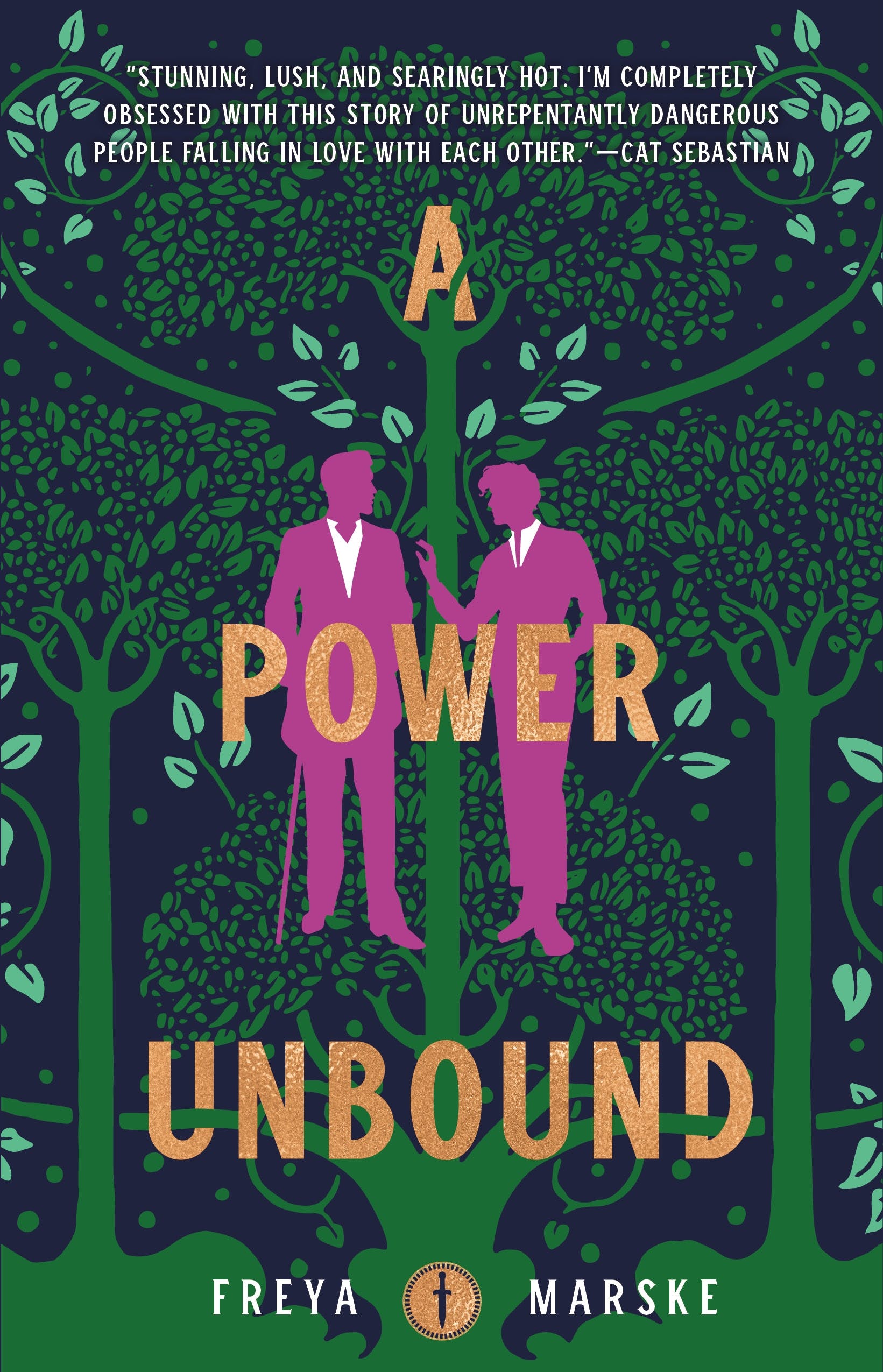
Review: A Power Unbound by Freya Marske

Building on what comes before, a heady blend of adventure, politics and personal growth... with not a little flirting and sex thrown in for good measure.

A Marvellous Light, the first in Freya Marske's trilogy of queer Edwardian fantasy romances, was also my first ever review on Nerds of a Feather, lo those whole two years ago. It really doesn't feel that long at all, especially with regard to this series - three books across those two years is not to be sneezed at. And now we get to see the trilogy as a thing whole and complete, as well as go "ooh another book" and devour it whole (as I may or may not have done).

But I'll start with A Power Unbound simply as itself, rather than as the culmination of the series. As was teased relatively heavily before the book came out, it follows two characters we already knew - Lord Hawthorn, who has featured in both previous book, and Alan(zo) Ross(i) whom we met in the second installment - who had me tipping my head to one side and pulling a face when I found out. Because it is an... interesting pairing, to say the least. They have very different backgrounds, aims, pursuits, contexts, and, most critically, classes and they very much did not get on when last we met them. How... exactly is that going to work?

Well, the answer lies in a criticism I had of A Restless Truth, in fact. Where there, Marske dabbled briefly into examining the politics of the players in her world - peers and posh nearly all, bar one - but stopped short of actually interrogating it, here she's actually taken a full step into that thorny bush of problems. For all that romantasy in the style she's writing is relatively recently in vogue, she's also playing with tropes and settings that abound in non-magical romance stories, and one of those is, as she begins with, a set of characters who all come from the very upper echelons of society. Peerages everywhere. Can't walk through a room without stepping on a lord. And there's a lot to be said (and has been said by people who engage far more thoroughly with romance as a genre than I do) about what that means, when we fill our stories with only the tiniest percentage of the people in the world we're talking about. We get to play in beautiful settings - country manors with fashionable wallpaper and lovingly landscaped gardens - and gad about the country without needing to think of the cost, or the jobs our characters ought to be attending. But... it's a fiction, on top of the fiction we're already consuming. It hides behind it all the pain and suffering and struggle atop which those peers sit. And Marske does, in bits, pick up on this in her second book, without ever being fully willing to grasp the nettle.

But once you cast one of your two love interests as someone outside of that tiny circle of privilege, you do just have to go for it. And she does. And so she solves - to an extent (I'll come back to this) - her personality problem by making it explicitly somewhat political. Jack and Alan's relationship is entirely built on their respective places in the social hierarchy. It starts and ends with Alan being willing to tell Jack to his face that he's a rich bastard, and the reader having to sit with that, fully ponder it, as we get spelled out throughout the book what that truly means in a romantic relationship. What someone in Jack's position might take away from someone, the harm they could do. And what someone in Alan's might have to be willing to tolerate for the sake of simple survival.

And she lets it get incredibly messy.

Because these are two people for whom politics, sex, romance and conflict are all bundled together in a chaotic heap, with both of their coping mechanisms gearing towards bickering and sexual interests that intersect very very heavily with their contexts in life. And so, by focusing us on the politics upon which so much of this rests, she manages to create a very tight atmosphere and a palpable sexual tension that rockets you through the story... unless you pause to really think about it, that is.

Which is my "to an extent". For the duration of the book, especially if you read it in two hurried sittings, you can totally buy into what she's doing. You can enjoy the sniping and the sarcasm and the building heat of their interactions. It absolutely works. It ties in beautifully with a lot of what's happening in the world. But... when you come away from it after finishing the book, when you let it settle in your mind for a bit, you can't help but be convinced it won't last. That they don't really work together, at least not in the secure way the previous couples have. They're both, in and of themselves, really great characters, and their relationship developing is fascinating, but there's something not quite right about it, that feels like there's no chance it'll stand the test of time. Not so much happily ever after as happily for now.

But they are both great characters, individually, and for all that doubt, if you can focus purely on what happens in the book as it happens, it's an awful lot of fun. Their dynamic being such a confrontational one means there's a huge opportunity for banter and snark, and Marske does this exceptionally, while critically managing to stay on the right side of the line so neither of them says anything truly unforgiveable for the reader. They're assholes, but they're only assholes, not actually awful. This is particularly true for Hawthorn, who has been a sarcastic bastard throughout the series, and now gets to undermine that a little with his inner monologue, while continuing to be the same jackass we've known and loved throughout. For him, it was always going to be tricky trying to humanise him without overdoing it - yes, he's had some bad shit happen to him throughout his life, but if we push too hard into "actually he's all mushy on the inside", it ruins the fun. But she manages to tread the careful line both for the sake of his personality, and for allowing him to have genuine, traumatic life events while still having the narrative hold him somewhat accountable for his enormous privilege.

Alan though... Alan is just fascinating. There's a whole essay you could write about Alan and attraction and sex. The man has a lot going on. But in a story that is so wholly dominated by rich people and rich people problems, where he has to carry the entire weight of "so hey, remember the majority of the population isn't like this", he manages to do so while still being such a delight to read.

One of the ways in which his character - and his relationship with Jack - is resolved though is through the lens of sex, and this is where we start to see things veering off a little from the previous two... because there's a lot more sex, and a lot sooner, for the POV characters in this than previously. It makes sense in context - they're different people who are just much less het up about sex being the end point of a pre-existing romantic dynamic than other characters have been - but it gives the book a whole different pacing and vibe than what you might have expected going in. The sex is also rather less... vanilla. Which isn't to say it's a full kinkfest (it's really really not), but things have definitely kicked up a notch, even while looping back to some content we saw right from the beginning in book 1.

For me personally, this was a bit of a downside. Not because I don't think it ought to have been there - I think as a lens onto the characters it's incredibly useful and realistic, this is the relationship they would absolutely have - but simply because I am, in general, a massive sucker for pining. And neither of the two characters falling for one another here are capable of pining in any meaningful way. It's not in their nature. So if you love them, if you love how they relate, then it's a plus, because it is such an accurate, well-drawn reflection of them. But for me... it held the place of other things I'd have wanted to see more, even as I knew they made no sense. Preferences like this don't have to be logical.

But it is also emblematic a little of the series - where the first two are somewhat in lockstep in how they approach many things, the third takes a bit of a turn. It's more political, it's sexier, and it's more willing to look outside the bounds of the relationship that's happening and instead focus on a lot wider ramifications. Some of this was inevitable for the conclusion of a trilogy - we need that resolution to all the threads that have been teased out beforehand - but some of it does feel like it represents a true shift. It feels as though, in this book, Marske is interested in different things, different characters, different parts of her world, and while neither approach is better than the other, it's that change that feels a little... odd. Not bad, just unexpected.

That being said, there were some things that felt a little wedged in at the end that possibly could have done with a bit more work to make them fit. We gain a new character about two thirds of the way into the book, who changes an awful lot, who has an awful lot of information, and there simply isn't time to process most of it because we've got the crescendo of all the events of the series to deal with. Likewise, by getting to that crescendo, by getting all the information from various places that has to lock together to get us there, we get this sudden rush of all sorts of stuff that just never gets bedded down. The "other types of magic" that have been teased from book one, the things Flora Sutton was good at and that Edwin was so fascinated by, really needed fleshing out a bit more by the end of things. Not necessarily giving us answers, but defining the scope of the questions, would have been enough.

But this is often the way with trilogies, it's just disappointing when another one doesn't quite manage to land the ending. And it's most of the way there, it has most of the parts, we just have had so much time being able to acclimatise to new information through all the previous content that when we're deprived of that here, it feels all the worse for it. I'm hard-pressed to hold it against it too much though. I just had so much fun for so much of it, and for so much of the series, and the characters are so fun, and there's so much promise... I'm willing to forgive a little chaotic mess at the ending. It's not perfect, but it's still a great time, and without going into too much detail on exactly how it all goes down, I very much like the spirit of the choices made, even if not always the execution.

What I do think though, is that for all the changes in this entry into the series felt like a shift from what came before, maybe jarringly so, they're all good changes, they're things it's so worth exploring in stories like these, and I hope they speak to how future Marske books will go. Because the more I think about it, the more I would have loved this more thoughtful approach throughout the series - it's something so many fantasy/historical novels are sorely lacking, and there's so much more she could do with it, with time and maybe a new series or perspective character to play with. A whole series from someone like Alan Ross? Amazing. And so I keep my fingers crossed for more books from her, with more of this right from the start, so we can see how far she can run with it.

--

The Math

Highlights: Genuine engagement with the politics and inequalities of the time period, Jack Alston - snarkiest bastard in England, return to some very enjoyable background characters from book one

Nerd Coefficient: 7/10

Reference: A Power Unbound, Freya Marske [Pan Macmillan, 2023]

POSTED BY: Roseanna Pendlebury, the humble servant of a very loud cat. @chloroform_tea

Tuesday, June 27, 2023

When Charry Met Soggy

Pixar's latest production boasts the usual artistry you know to expect from the studio, but the story it tells is generic and forgettable

As anthropomorphized allegories go, it's hard to do better than Inside Out or Zootopia. Their capable handling of theme, characterization, tone, pacing, worldbuilding, humor, dramatic stakes and background design set a standard of excellence that Disney/Pixar are now cursed with having to live up to every time. Their newest film, Elemental, is the quadrillionth romantic comedy about star-crossed youths from incompatible families, and feels like an unambitious retread of better movies. Although its message of love and unity is sorely needed in these divisive times, the execution fails to satisfy.

It's not impossible for a story to be about many things, but Elemental struggles to integrate the various points it wants to make. It falls into the all-too common trap of focusing on an individual happy ending that makes no difference in the existing social structure. One woman made of fire and one man made of water manage to unlearn the usual stereotypes about each other's people and form a successful couple. But the rest of their community doesn't benefit from their example. Prejudice against fire people stays unchanged, the fire neighborhood is still neglected by the municipal authorities, and the derelict infrastructure that causes massive damages each time a ship sails by is still not fixed. Even more damningly for a movie that wants to address xenophobic segregation, the details of the allegory fall apart. There are very logical reasons why anyone would be wary of people made of fire; a plea for mutual acceptance rings false when one of the parties is an ongoing menace to everything they touch.

Ember, our protagonistic fire lady, might as well have been a redhead for all the tired stereotypes written into her: she's short-tempered, energetic, volatile, and dangerously unstable. Her character arc reduces to admitting that she's lying to herself about her true aspirations, and until she achieves that goal, she'll continue to be a literal walking timebomb. Not a bad concept in general, but we've watched enough romantic comedies with the trope of the overemotional woman who needs to calm down. Her romantic plot, which is sold to us as the focus of the movie, isn't as touching or believable as her relationship with her parents. She's a doting daughter, mindful of her responsibilities and appreciative of the effort her parents have made to rise above hardship. The inner conflict between her sense of duty and her need for fulfillment mirrors every second-generation immigrant story ever made, but would have made for a more interesting movie than the watered-down romance we got.

The emotional flow of the movie is hindered by the very strange rhythm it follows. The first scenes go by at breakneck speed, as if desperate to get past the infodump. This is not like the opening montage in Up, which does cover decades in minutes, but treats each emotional beat with respect. Here the montage is edited as if it were a "previously on" segment that needs to mercilessly cut inessential seconds to get the story proper going. This tendency to avoid lingering, to not let the audience breathe, reoccurs at key moments of the story, causing a whiplash effect when a thoughtful scene is instantly followed by action. On the other hand, the rhythm of quiet but intense scenes is interrupted by badly misplaced flashbacks that hit like a digital glitch in a song. There's no acceptable excuse for a narration done in fits and starts to extend well into the second act.

Although the city where Elemental is set harbors a fabulous variety of creatures, we don't get to know them outside of short, groanworthy gags. The different buildings, streets, houses, public squares, shops, and vehicles hint at fascinating divergences in usability needs depending on whether the user is made of, say, air or earth, but the richness suggested by the setting is relegated to quick glimpses. The animators created a vast, elaborate space that the story has no time to show us. This kind of oversight is a headscratcher, especially coming from the same artists who lovingly boasted every corner of Zootopia.

And yet, the part of the story where the movie focuses the most attention, the boy-meets-girl drama that upends the whole worldview of its society, is the least interesting thing about it. Bland, predictable and shamelessly derivative, this romance has all the spark of water thrown over fire and all the spice of wet ashes. That this civilization took so many centuries until someone finally figured out that personal contact was possible between fire and water people is an unintentional but clear sign of how little thought went into the writing of this story. A much better movie could have been made in the same setting and with the same characters, but the script of Elemental gives them too little to do that is worth watching.


Nerd Coefficient: 4/10.

POSTED BY: Arturo Serrano, multiclass Trekkie/Whovian/Moonie/Miraculer, accumulating experience points for still more obsessions.

Thursday, April 13, 2023

Review: Death by Silver by Melissa Scott and Amy Griswold

Death by Silver is a classic murder mystery that brings gay romance and a fascinating magic system to Edwardian England.

Cover by Matthew Bright

In 2013, Amy Griswold and Melissa Scott self-published Death by Silver, going on to win a Lambda Award the following year. Now in time for the tenth anniversary, the book is being republished by Queen of Swords Press.

In this historical fantasy, magic can be learned by anyone with the right education. Ned Mathey is a metaphysician who trained at Oxford and who is finding money a bit tight after establishing his business as a practitioner. When he is approached by the father of his childhood bully to check the family's silver for a curse, he is reluctant to take the job. However, the money is decent and it is a straightforward job... up until his client turns up dead days later. To help clear his name, he seeks help from Julian Lynes, boyhood friend and lover, now a private detective.

Death by Silver deftly weaves fantasy, romance and mystery together into a seamless whole. The natural comparisons here are with KJ Charles's series A Charm of Magpies and with Jordan Hawk's Whybourne and Griffin. However, it is worth noting that the romance is different in a few key elements. Death by Silver opens with an existing relationship between the protagonists. Having met at school and become lovers, Ned and Julian drifted apart when they went to university, though never entirely lost touch. Having recently reconnected, their relationship is best characterised as friends with benefits. Each wants something more, but are uncertain of the other and unwilling to make the first move. This relies on a reluctance to communicate which may annoy some readers, even if the reasons for this reluctance are somewhat understandable on both sides.

Another difference from the comp titles is the treatment of sex. While it unequivocally takes place, the action fades to black rather than features explicitly on the page, which may suit readers of historical fantasy and mystery rather more than dedicated readers of romance and erotica.

However, even though the story features no explicit sex, it is by no means without landmines. I would give content warnings for bullying, as well as physical and sexual abuse. Most of this occurs in flashback scenes detailing Ned and Julian's time at boarding school together.

The main characters are a study in contrasts, tending to fall into the sunshine/storm-cloud trope but with a little more nuance than usual. Ned is almost universally beloved, a sportsman who also has a talent for magic. While he may not be exactly cheery all the time, he nevertheless has a relatively sanguine outlook on life.

Julian, on the other hand, tends to be the sharper of the two. He has an ongoing war with his landlady and a tendency to use magic in the place of drugs, to energise or calm himself down. He has more of an affinity for literature and art, though he detests the opera, and is from a lower class background than Ned.

Unsurprisingly for a mystery, there is a strong theme of justice throughout the book. This is one of the more subtle areas of difference between the main characters. Julian, of course, is the more extreme of the two. Even as a boy, he had a well developed sense of injustice and is inclined to speak out, paired with a willingness to take matters into his own hands where society turns a blind eye. Ned tended to go along with the conventionally accepted, even if it isn't really fair. He tempered Julian's more extreme impulses. As they grow and mature, these attitudes shift closer together.

As is often the case in m/m romance, the female characters are rather less detailed than their male counterparts and tended to serve as plot functions. However, I recognise that it is hard to flesh out every character and still have a plausibly long suspect list for a murder mystery. One of the best realised female characters was Ned's secretary, Miss Frost, who was a charming during her somewhat rare appearances. Keen to study magic, she is hampered by society's attitudes regarding what is appropriate for women. Nevertheless, she is able to offer some important insights that further the investigation.

Which brings me to the magic system. This was for me one of the most fascinating elements of the book. Death by Silver is the first in the Lynes and Mathey series, a punny name that, in addition to referring to the title characters, is also an allusion to the magic system. Magic or planetary squares form the basis for this system, and are an element that has been part of occult practice for hundreds of years. Much like sudoku, planetary squares are a grid of numbers where each line and column adds up to the same number—generally one significant to the planet associated with the particular grid. This is then paired with alphabets so that sigils can be generated by tracing a path between the numbers that correspond to the letters of any given word. Hence lines and math.

The story at times lacks a bit of clarity around how a given spell is cast, perhaps relying on knowledge of the historical process to fill in the gaps or simply allowing space for readers to use their imaginations. However, where it excels is in the worldbuilding tied to the magic. Planetary squares lend themselves well to the kind of institutionalised learning that's featured in Death by Silver; they become just another thing to be learned alongside multiplication tables and Latin vocabulary. This is reinforced by adding a kind of grammar system to the construction of spells—get the word order wrong and you could have quite the mess on your hands.

There's also an interesting intersection with the time period. While I'm a little hazy on the exact year, the technology and fashion suggest the Edwardian Era. Certainly, we're post Industrial Revolution, with its ability to mass produce items. This includes magic kits; trace the sigils as they are laid out for you and you too can trap a burglar or banish your acne. Or, more likely, you could lose your money and end up needing to call in a trained metaphysician to clean up the result. Such details show the consideration that has been given to the worldbuilding and provide a wonderful richness to the setting.

The plot is a classic mystery format. I found the ultimate villain perhaps a touch predictable, but not overly so.

All in all, I found it a delight to read and can easily see how it earned a Lammy. The sequel is due to be released in December and I am already looking forward to it.


The Math

Baseline Assessment: 8/10

Bonuses: +1 for excellent magic world building, +1 for deft balancing of fantasy, romance and mystery elements

Penalties: -1 for flat female characters, -1 for the lack of communication between characters

Nerd Coefficient: 8/10


POSTED BY: Elizabeth Fitzgerald, a writer, binge reader, tabletop gamer & tea addict. @elizabeth_fitz@ wandering.shop


References

Death by Silver. Griswold, Amy, and Scott, Melissa (Queen of Swords Press, 2023)

The Magpie Lord. Charles, K.J. (KJC Books, 2013)

Widdershins. Hawk, Jordan L. (Widdershins Press LLC, 2012)

Thursday, February 16, 2023

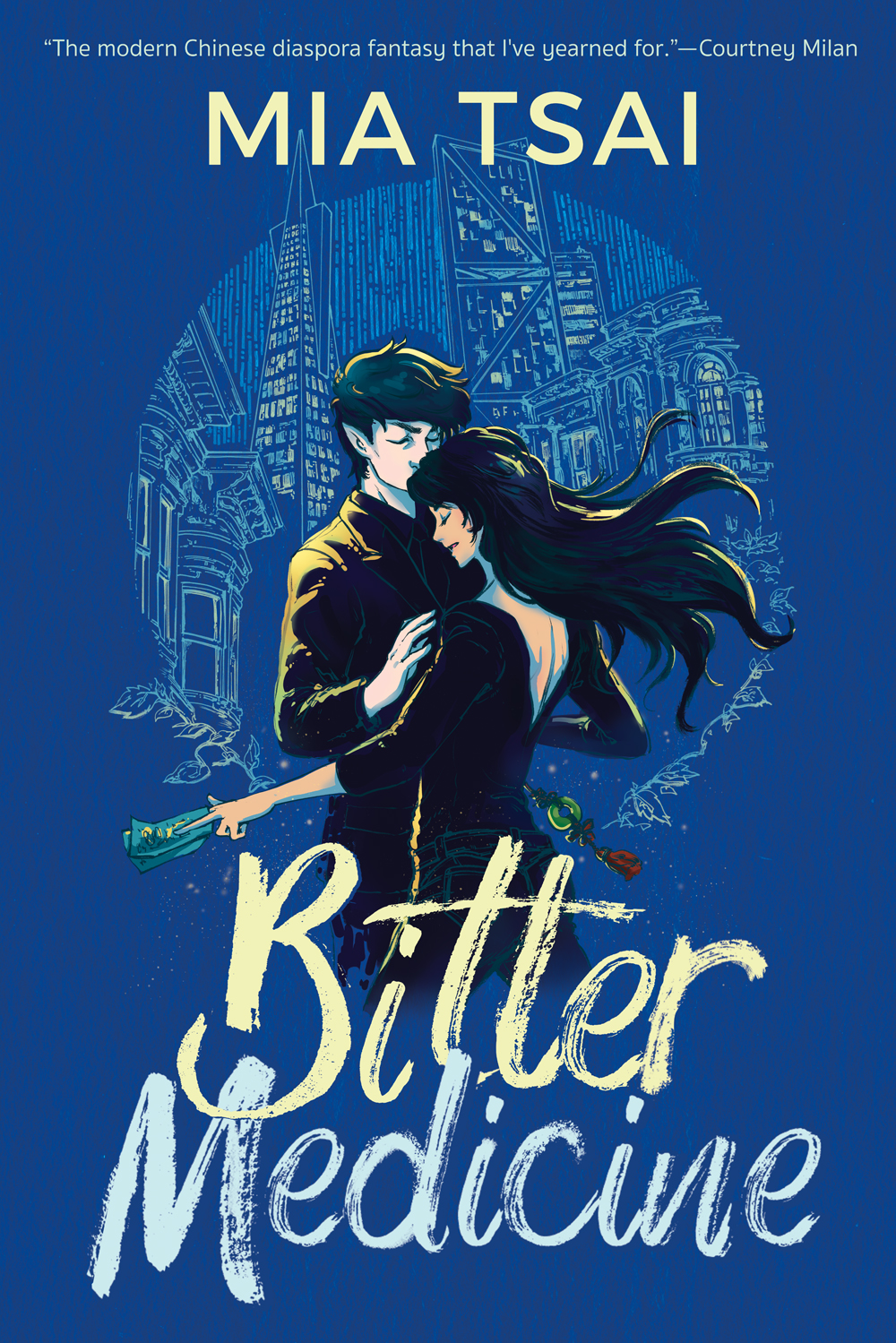
Microreview[Novel]: Bitter Medicine by Mia Tsai

 An interesting setting full of promise that never quite settles on which of two sorts of story it wants to be, and so never quite manages to be either of them.


Is this an urban fantasy adventure story of fairies and magic and longstanding oppressive interpersonal relationships? Or is this a romance where a female main character who has suppressed her own wants, desires and even her very self for years to protect those dearest to her finally finds something for herself (and it just so happens to be an extremely hot guy)?

Er... sort of yes to both. But also sort of no?

In short, Bitter Medicine is a book that hasn't really figured out what it wants to be, and so persists in trying to be both things at once, which has never ever gone wrong in the history of books, as everyone knows, and definitely won't result in narrative whiplash for the reader as the plot swings wildly from side to side and trope to trope. Which is a shame, because when it's not doing that, there's a lot of good stuff in there, but it's either hidden or overridden or contradicted or sometimes just entirely elbowed out of the way for the sake of this strange chimera tone that we have going on.

The story follows Elle, a descendent of Shennong, the god of medicine, who is hiding out in mediocrity in order to protect her brother (and herself) from the attentions of the rest of their family, particularly their other brother, after some magical shenanigans some years previously. She's an incredibly talented magic user, but in order to keep herself on the dl, she is only classified as middle ranking in the magical agency she works for, so can only do a limited range of crafting to fill this niche. However, whenever Luc, the extremely hot and entirely mysterious guy who also works for the agency in an unspecified role, comes in to buy her crafts, she can't help but tweak them a bit to make them work better for him. And of course, that sort of thing can't go unnoticed forever. When Luc realises what Elle is capable of, she's catapulted back into the world of... well of interacting with literally anyone ever, and has to deal with the long-hidden tribulations of her family, as well as her feelings for Luc and her place in the world as it is now.

All of which is really fun, if not exactly groundbreaking stuff. However, the plot of her being found out, having to protect her brother still, use her magic and do adventurous hijinks, as well as discovering Luc's place in the agency they both work for, and deal with some of his own history and adventures, all settles very squarely into your usual urban fantasy romp. There are fights, escapes, escapades, magic to be uncovered, a whole world of hidden magic that mortals can't see to learn about. Meanwhile, the parts of the plot that centre on Elle's history, her feelings and relationships with her family, and her feelings about Luc (as well as his own feelings about himself, her and how he lives his life) feel, tonally, like a cosy but slightly angsty romance. It's not a subtle difference either - it genuinely feels like you're reading two different books smushed together. And in some cases, this could result in something new and interesting in unique... but in this case, what it mostly feels like is that both halves end up missing parts of what they need to make them whole, which is just unsatisfying.

The biggest loss, from my perspective, is in the worldbuilding. For the type of urban fantasy romp we get here, the creation of a world of hidden magic, and an agency controlling how it is used, by whom, and who does what, would be a huge part of the appeal. Rivers of London and Neverwhere work so well in part because we get that fascinating insight into these worlds that are imagined alongside or underneath our own, just hidden from view. They are an opportunity to wonder and imagine what else there could be around us. Urban fantasy, on the whole, is an incredibly setting driven subgenre, after all. But Tsai seems to have just left huge chunks of this out. We never really get a coherent sense of what Roland & Riddle does, or how it makes money, or how it came about, or what it's exactly for. Instead, it exists around the edges, to give us a reason Elle is restricted to less extravagant magics than she's capable of, to give Luc a shitty boss to be beholden to, to give him a job that overwhelms his life, and to give the two of them a reason to have met. But beyond that, we get no sense of scope, no idea what position Roland & Riddle occupies in the wider world. Is everyone magical in some way beholden to it? Or is it a small few? Who pays them? What for? We see missions and rules, but we see no real purpose behind them, and it leaves things feeling scrappy and thrown together, and very much like the setting is only there to support the plot at critical moments. There's no underlying coherence to it, and that feels like an enormous loss.

And it goes deeper than that. We get hints of what these magical people are - some of them are elves, for instance, and elves are somehow different to humans (despite looking similar). And these are different again from people with a godly ancestor. But none of this is every really explained in a wider way, nor do we really get enough in context of the story to put it all together ourselves. There's just... a lot of stuff lying about.

Which makes space for the romance narrative. While urban fantasy stories do often have a romance component to them, the one in Bitter Medicine feels tonally and qualitatively different - and more substantial - than is often the case, and far more like a romance story in its own right. More of a The Midnight Bargain or The Very Secret Society of Irregular Witches style, where the common plot beats and flow of the story move differently and have different focuses than your typical urban fantasy. Critically - character development and relationships work differently. But Bitter Medicine manages to short us out on a lot of the character work I'd expect to see in those type of stories - we get a lot of information on Elle's backstory by the end, but we don't get as much of a sense of who she is currently, and doubly, quadruply so for everyone else in the story. Her brother has such an interesting core idea, and could have been a great character, but is reduced to one, maybe two traits. Likewise her best friend Lira seems to have a lot going on... we just never see it.

But hey, we get some really, really long sex scenes to make up for it, so that's... something?

That being said, there are some good parts. The fusion of different bits of folklore from different parts of the world to create the setting, when we see it, is far more interesting than is often the case for these types of stories. Likewise, the magic system (such as we see it), is unusual, and I would have loved to see more. We also get a much better told and nuanced view of the ties that bind us to family, and the tension between the duty one might owe to one's relatives vs to oneself, and how that might bring pain and difficult decisions. Elle is someone with a difficult family but whose situation is genuinely understandable in its difficulty - where often we see the protagonist dither over what feels to the reader like a very simple good/bad dichotomy.

Equally, for all that the intimate scenes, when they happen, are stretched out somewhat longer than their benefit to progressing the story truly warrants, there are nods within them to making things a bit more real, a bit more natural (condoms rarely turn up in books I read, sex scenes or no, and it was a good surprise to see one turn up here). Things aren't film-smooth and perfect, in a way that feels refreshing to read, especially in a setting with characters set up to be so flawed. This isn't, alas, universally true for the scenes, and there are bits that made me a little dubious, but in general, it was nice to see those scenes approached at least in part a bit more relatably.

That being said, this could not really make up for the flaws elsewhere. The attempted blending of two types of story - especially when, as happens here, the both parts are mostly quite tropey and traditional for their subgenre - has not particularly succeeded, and left us with an unsatisfying whole, made all the more so by those moments of interest or innovation. The two halves of the story have ultimately very different end goals, and so it feels like the book has two endings in order to give us both sets of resolution. This has a somewhat stilting effect on the pacing, as an unfortunate coda to the issues we see throughout the book. The world was interesting, the ideas potentially likewise, but it would have been nice to see more of them in a more coherent and pared down narrative, rather than having to watch the two different parts fight each other for page space.

--

The Math

Baseline Assessment: 5/10

Bonuses: +1 for genuinely tense and conflicting family conflict

Penalties: -1 for incoherent worldbuilding, -1 for constant tonal whiplash

Nerd Coefficient: 4/10

Reference:  Mia Tsai, Bitter Medicine [Tachyon, 2023]

POSTED BY: Roseanna Pendlebury, the humble servant of a very loud cat. @chloroform_tea

Thursday, October 13, 2022

Microreview[Novel]: The Very Secret Society of Irregular Witches by Sangu Mandanna

 An extremely cosy novel of found family, romance and magic, that may just be slightly too nice for its own good.


Cosy fantasy seems to be more and more prevalent recently - and with good reason. When times are stressful, turning to a book where you know things are all going to turn out fine is a very reasonable reaction to have. Romance is a perfect vector for that kind of comfort, and when paired with a nice fantasy, all the better. But there's a risk with that kind of narrative too, where the inevitability of the happy ending becomes so overpowering that it saps even the slightest tension and suspense from the story, leaving you bored. There needs to be at least mild peril, some stakes, for the happy ending to really have the full effect.

The problem is, I'm not sure if The Very Secret Society of Irregular Witches quite had enough stakes to pull off what it was trying to do.

Which is a shame, because a lot of the trappings around the core story were done really well.

We follow Mika Moon, a 30 year old British witch living a somewhat lonely life. Witches in her world are necessarily solitary creatures, all orphaned, and never joining together in communities, as meeting up in groups brings with it a great deal of danger. She sees her fellow British witches irregularly, in remote locations, for a brief and unsatisfactory secret meetings organised by their very strict and risk-averse leader. She has to move around a lot so no one realises what she is. But she has her one outlet - making TikTok videos in which she "pretends" to be a witch, as the closest way she feels she can get to being her true self in public, and even this is a cause of censure from her elders.

But one day, someone finds her on TikTok, seemingly having realised what she really is, and comes to her with an intriguing offer to come to a remote house in Norfolk to teach three very young witches how to use their powers. Drawn in by the semblance of a true family she finds there, as well as the determination to protect the girls, she's unable to resist, even once she finds out there's a very imminent need for her tuition.


And of course, there's a handsome but grumpy librarian who is very protective of the children and wary of strangers at the house too. We can all see where that goes.

Mika is simultaneously a great character, a young woman of colour whose upbringing in an empty house, by a revolving cast of nannies hired by an emotionally distant white woman, has left her not only desperate for some sort of affection, but cut off from her heritage. She knows almost nothing about where she came from and who she is, and Primrose, her adoptive mother, is not exactly forthcoming with information. But Mika is surprisingly cheerful about the whole situation. She sees her problems but isn't overcome by them most of the time, and tries to live a positive life despite the hand she's been dealt. She's also a delightfully realistic thirty year old, dealing with a lot of very modern stresses of being a single adult at 30 without a proper support system. There's also a strand of extremely self-aware humour in the way she talks about herself within the narrative, reflecting on the whimsy of her own name, for instance, which undercuts the silliness of it that might result in rolled eyes from the reader.

On the flip side, she's so trusting, so good, that she seems sometimes impossible. She bounces back, refuses to become bogged down by her troubles to such a degree that it feels hard to relate to her. And there's only so much the self-awareness can do to undercut the whimsy. Mika's dream of opening a witchy shop and solving everyone's problems with really good tea sometimes tests that limit.

The other characters have similar problems as well - the little girls are improbably and constantly nice to one another (with one brief exception later in the book), the old married gay couple are impossibly wholesome and the housekeeper is... well she's mostly absent from the story but when she's there, lovely. It's a sweetness that is definitely cosy, but can border on the saccharine.

If you stopped reading it at about 60%, I think that would be a fair assessment of the book. However, for the last portion, things shift a little, the stakes get more real, and some of the ridiculous, even artificial-feeling parameters of the early story are revealed to be not exactly what they seemed. The central problem of the story becomes both more complex and more plausible, and the relationships more fraught because of what Mika learns about the people she has come to help out of the goodness of her heart. Things we learned early on are refocused, and it becomes a much tighter seeming bit of world building than we first assumed it was.

The pace also picks up a bit, in contrast to the somewhat slice of life, dreamy tone of the early section, in which pretty much everything goes smoothly and no one has all that much to worry about.

And this is great, because the end part of the story is really very well done, but because it has that noticeably tone-shift, and that massive disjoint, it does also risk the reader looking back less favourably on what came before. You can see what building work has been done there, and why it was necessary as scene-setting for what we get at the end... but it is really quite jarring, too.

And then there's the relationship with Jamie. It is absolutely, from the first mention of him in the story, inevitable-feeling. There is simply no doubt. But for the first 60%, we get a slow-burn, will-they-won't-they that borders on infuriating. In-text, there's only the most minimal, most chaste of hints that romance may be coming between them, even while, metatextually, it is incredibly, face-slappingly obvious. And then again, we flip a switch in the last 40%, and their relationship takes a turn to both the sexual and the fraught, and they become a pair of very real, emotionally messed up 30-somethings, approaching each other in a very messed up but compelling way. And a pair of absolute, massive nerds.

And the resolution of the ending is genuinely excellent. It's not as simple or as clean as the early book would imply. It ties up threads we didn't even realise were loose, leaves things in a great place and with optimism but realism about what comes next for everyone involved. It's not a perfect happiness, but it's one where a lot of people have learned, or grown, or changed, and maybe realised their previous mess-ups and started the work of fixing them, and it is all the more satisfying for that. 

But we have to reckon with the early part of the story, and what it took to get to that end. Does it balance out the oversweetness of the start by the much more complex ending? It depends. If this is a book read for comfort on a bad day, needing happy endings and good people, then yes, it probably does. But you do need to be in that headspace, to be willing to forgive a little more cosy than credulity can necessarily bear. Ultimately, I think it's worth forgiving, as both the ending and the romance are genuinely satisfying... but you're probably not going to forget, even so.

--

The Math

Baseline Assessment: 7/10

Bonuses: +1 genuinely satisfying and complex ending

Penalties: -1 somewhat sickly sweet start to the story that the ending doesn't wholly overcome

Nerd Coefficient: 7/10 an enjoyable experience, but not without its flaws

Reference: The Very Secret Society of Irregular Witches Sangu Mandanna [Hodder and Stoughton, 2022]

POSTED BY: Roseanna Pendlebury, the humble servant of a very loud cat. @chloroform_tea

Wednesday, September 14, 2022

Love is a freely chosen yoke in "Three Thousand Years of Longing"

This perfectly executed visual feast disentangles the ties between desire, renunciation, the vertigo of choice, and the need to feel desired

When one encounters an impeccably beautiful work of art, the attempt to explain it feels like a desecration. Three Thousand Years of Longing is that kind of art that you're meant to experience more than understand. It does follow a plot, and the plot does make arguments, but to dissect those arguments risks losing sight of the experience. I can't properly communicate to you the emotional content of this story. What I can try to do is describe what happens in it, but I will fall short of conveying all it says. This is one of those films that leave you permanently changed, and the only way for that secret alchemy to happen is to go yourself to the theater and let it wash over you.

Our protagonist is Alithea, a proudly independent divorcée with no time for personal attachments, who one day stumbles upon a genie in a bottle and is offered the proverbial three wishes. This genie has spent far too long inside the bottle and is desperate for a human to make up their mind and request the full set of wishes. To his dismay, he's put before a challenge no genie has had to face before: Alithea is a literary scholar, versed in all the tropes used in genie tales. She knows that every wish comes with strings attached. Unfazed, the genie insists there must be something she wants more than anything in the world. But after a lifetime of consuming classic literature, she has every reason to reject the deal, and none to trust that the genie is being sincere.

How do they resolve this clash of interests? They tell each other stories.

There have been thousands of stories-about-stories, but this one makes the case that the ordinary act of desire is already an authorial move, a transmutation of the human will into an arbiter of the universe. Who do we think we are, to want reality to be different? But then again, what can we do in this life but want? It's not fantasy to agonize over which life we ought to wish for; it's the common business of day-to-day choices. If genie tales are an allegory of anything, it's of the inevitability of consequences. No matter which path we take, we'll find something unexpected, sometimes unwanted. That's not a curse; that's life. At first, Alithea doesn't understand that. When presented with the inescapable need to choose, she applies the wrong set of rules by trying to metagame her life. What at first resembles a typical wish-fulfillment story becomes a self-reflective exercise where Alithea tries to ascertain what type of story she's in, what the rules are, and therefore what endings are available to her. This is why it's so important for the movie to focus on the theme of wishes: they are the mechanism by which human beings steer their story.

However, as I've said many times in this blog, life is not a story. Alithea's clever attempt at metagame is headed nowhere, because it's pointless to live on the assumption that events are headed toward a clear ending, because we're always situated in the middle of events, and it's not given to us to know how many pages are left. The genie presents Alithea with a similar warning: she can't expect the literary conventions of genie tales to apply to her, because what happens to her is shaped by her decisions. In spite of the fact that life is not a story, each one of us is still, in some manner, the author. We don't walk along the lines of established tropes. We write life every time we act upon our wishes. The key is to be aware that there's no plot, and we can't see the ending from where we stand. As if to make us conscious of that limited perspective, the film gives several times the impression that it's ended, only to fade back in with yet more story to tell.

For a story about stories, this one is quite unconventional. It dances from one genre to another, and joyfully refuses to fit the three-act structure we're used to look for in the Western narrative tradition. The only contemporary film that is remotely comparable to Three Thousand Years of Longing is the fantastic Everything Everywhere All at Once, which succeds at the impossible narrative feat of playing with all genres, all tones, all styles and all modes of stories to encapsulate the elusive human experience of lamenting the road not taken. Three Thousand Years of Longing also uses a multitude of stories to express a complex truth from various angles, and the truth at the core of this story is that it's worthwhile to choose love, even if it's terrifying, even if we don't know how it will end, even if it exposes our vulnerable side, even if it demands we bet everything on it. The genie explains the rules of the game: you can't wish for eternal life, or resurrection, or world peace. That makes the stakes relatable to the rest of us: if we must be mortal, and we must be in this world as it is, what form of happiness is still possible?

Before we even watch the first scene, Alithea warns us in voiceover that, even though this story contains truth, it is disguised in symbols. So what's beneath the colorful parade that dazzles the eyes in this film? This is, of course, a love story, but it takes a long time to admit it is one. Without the trappings of fantasy, it's about a lonely woman who on a trip abroad meets a tall, dark, handsome stranger but dreads the uncertainty of opening her heart again. If we read this film as a love story, we can notice some familiar behavioral patterns. The genie needs someone to need him, which is the textbook definition of codependency, while Alithea pretends she needs nothing, which in interpersonal psychology is called a dismissive-avoidant attachment style. Put them together, and you obtain the frustrating mishaps that fill 95% of romantic comedies. This film wants to do something more mature than that. Both lovers must relinquish their flawed coping strategies before they can love wholeheartedly.

After the film presents this idea, all the other pieces fall into place. If you can be granted any wish, what happens if the target of your wish is a person? One could call that love. But to be complete, love cannot work like possession. I can wish for a new hat, and then I own that hat. Not so with a person. Owning someone is contrary to love. And here is where the master/genie dynamic becomes key to the story. When you love someone, you trust them to satisfy your needs, which is akin to the relationship we would have with a genie, except that the genie is magically forced to obey you. Your lover is only bound by their own love for you, which means that you fall under that same expectation. Preferably not to the degree that a genie is magically bound to; it's not healthy to go to the other extreme and forfeit your existence if you're not needed. That strange balance is what makes love, and I mean truly honest love between equals, look so daunting from the outside. No less than what you ask will be asked of you; no more than what you offer will be offered to you. You can't compel your lover's services, not without killing the love, but the love you feel compels you to serve.

And it's a joyful servitude we happily accept, isn't it? To exist for someone, to satisfy their every wish. But it's a servitude that can only be given, never demanded. That's the final lesson Alithea learns: she wants to be loved by a genie, and he's happy to be a genie to her, but she can't treat him like a genie, because that means killing the love. To use the rules of magic to command him to love her is to negate any truth there could have been in his love. She believes the genie will hide strings attached to anything he grants, but actually it's she who has strings attached to the act of asking. It's a tricky conundrum, and it's the human tragedy explored in each flashback told by the genie. We must be careful with what we wish for, because our wants can easily morph into demands, and love cannot survive under duress. It can't be love if you treat your beloved like a genie. Instead, we must risk the very real chance that our beloved may refuse our wish. We must risk the pain of abandonment. Some reject that risk, and stay preemptively abandoned. But if we each take that blind leap, if we mutually voice our heart's desire without making it into a requirement, then magic can happen.


Nerd Coefficient: 10/10.

POSTED BY: Arturo Serrano, multiclass Trekkie/Whovian/Moonie/Miraculer, accumulating experience points for still more obsessions.