Tuesday, October 12, 2021

Review: Civilizations by Laurent Binet

A fun thought experiment without a clear aim or meaning
If you move past the thousands of stories where the Nazis win and the thousands more where the Confederacy wins, the third most popular alternate history scenario would probably be reverse imperialism. Novels like Orson Scott Card's Pastwatch, Christopher Evans' Aztec Century and Federico Andahazi's The Conqueror play with the suggestive possibility of Native Americans being equipped to fight off the European invaders and maybe even conquer Europe. Because of the nontrivial technological difference between both continents in the 1500s, plotting a believable Montezuma's Revenge requires either inserting an earlier event that delays the development of European warfare and/or boosts Native military capabilities. Unfortunately, this also requires the attribution of European colonial practices to Native populations, which ends up revealing more about Europe's unconfessed anxieties than about real-world justice.

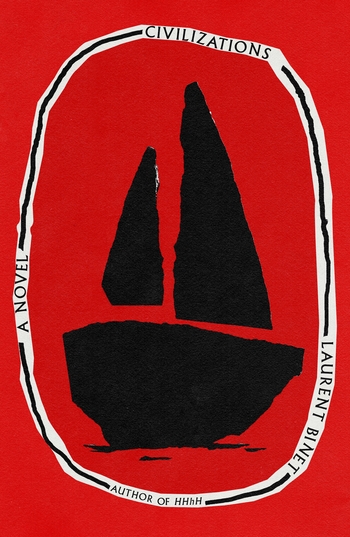
Laurent Binet's alternate history novel Civilizations was originally published in French in 2019 and since then has been translated into a number of languages, with the English version by Sam Taylor just out this year. It describes an Inca invasion of Western Europe, starting with the aftermath of the Lisbon earthquake of 1531. Just as the weakened Portuguese are starting to recover, Inca leader Atahualpa marches on and accumulates victory after victory until he becomes a force capable of challenging the Holy Roman Emperor and the Ottoman Sultan.

The book is written in a breakneck pace that does no service to its massive scope. Instead of reading literature (in the artistic sense of the word), it feels like reading a history book. This kills any chance for enjoyment. Civilizations covers centuries' worth of plot across dozens of countries, but it's written in an over-summarized style that is set at too much distance from the events. The reader would like to witness the diplomatic meetings and the battle planning sessions and the oceanic trips, but what the book delivers is the CliffsNotes version of itself. Conversations that should be captivating and impactful are instead reported second-hand, as if by a journalist held to a word count limit. Huge military campaigns breeze by without taking the time to leave an effect on the reader. World-changing decisions are remarked upon with no weight; romantic liaisons and political betrayals proceed matter-of-factly. The plot just occurs by a methodical procession of steps. No event is allowed to breathe.

The substance of the novel is the third section, where Atahualpa marches over Europe. The first two exist only to provide the bare minimum of justification for why Atahualpa is able to do this. They tell how Native Americans learned ironsmithing (from stranded Vikings) and shipbuilding (from a doomed Christopher Columbus), but they hurry past the reader's eyes so soon that their characters don't feel like full people but like ingredients in a recipe, as if the author was irritated with the need to explain the story and couldn't wait to be done with this part. It doesn't fulfill any deeper purpose to have Vikings reach precolonial Cuba and Peru: they're just there under a painfully shoehorned excuse with the sole purpose of delivering horses and antibodies before promptly exiting the stage. Likewise with Columbus, who only seems to be in this novel to leave his ships in Cuba and die.

This use of people as pawns is consistent with the novel's stated position on history as a process that does not follow the direction of human choices but merely unfolds from impersonal forces that take no account of our wants. At one point the narrator says, "if we are honest enough to recognize the truth, rather than imagining that we are masters of our own destiny, circumstances made the decision," and later it refers to "fatal destiny, which directs, arranges and settles everything in its own way." If a destiny beyond the grasp of human comprehension is already a suspect notion in historiography, it's fatal in fiction. Binet does not treat his characters as autonomous moral agents but as pebbles dragged by the river of history.

If the beginning of the novel is about putting the pieces in place, the main, third section tells an even more improbable journey by Atahualpa, the last heir to the Inca throne, all the way from the Peruvian mountains to the Caribbean islands. He has no logical reason to go there, but the plot needs him to stumble upon the ships left by Columbus and refurbish them for a trip to the unknown lands of Europe, which for some reason he finds preferable to the more urgent matter of resolving the civil war in his own kingdom. Binet can't seem to decide whether Atahualpa is a shrewd tactician or a political amateur; the way he somehow never loses a battle yet fails to understand the larger context of European royal rivalries has a just-so quality that makes the whole affair harder to swallow.

Civilizations is a good example of why you need sensitivity readers when writing about oppressed peoples. The first two sections, where Europeans make contact with Native Americans, abound in otherizing clichés like "We are at the mercy of Skrælings more ferocious than trolls" and "It was obvious to me that these were people lacking in everything." Even later, when telling events from Atahualpa's perspective, the text still refers to him as a being possessed of an "animalistic survival instinct," and the Nahua tribes are described as "a fierce, bloodthirsty people." And for a French writer to treat the conquest of Algiers as a historical necessity leaves a lingering bad taste.

Although this was probably not a good story idea for a white writer to undertake, it's curiously fitting that a French writer expends so many lines in singing the praises of Cuban vegetation as a place of mysterious wonders, given that it was precisely Cuban writers steeped in French literature (Lezama, Sarduy, Carpentier) who first spread the tropes of magical realism that so often have reduced the Americas to an exotic stereotype. Unsurprisingly, Binet treats this stereotype as unquestioned fact when he writes about the "dazzling torrent of colors" that assaults Europeans when they land on Cuba.

The alternate world of Civilizations is an experiment that doesn't bother to reach conclusions. Completely ignoring the fact that the Inca Empire was in every way an empire, Binet imagines a utopia of agrarian reform and religious equality that has too much of guilty wish fulfillment. If in the real world the French imposed an emperor on Mexico, in this fictional timeline the Mexicans impose an emperor on France. What does this say? What truth about humanity are we meant to infer? Binet does not seem interested in those questions. The novel comes off as a "Heh, take that" and nothing more.

The Math

Baseline Assessment: 5/10.

Bonuses: +1 for the fictional letters between historical figures, the only sections where events appeared to be of serious consequence.

Penalties: −1 for being the millionth novel to perpetuate the myth that Medieval Europeans thought the world was flat.

Nerd Coefficient: 5/10.

POSTED BY: Arturo Serrano, multiclass Trekkie/Whovian/Moonie/Miraculer, accumulating experience points for still more obsessions.

Reference: Binet, Laurent [author], Taylor, Sam [translator]. Civilizations [Farrar, Straus and Giroux, 2021].

Monday, October 11, 2021

Microreview [book]: When Sorrows Come, by Seanan McGuire

A surprisingly and ultimately happy novel, which is not necessarily the norm for for Seanan McGuire and October Daye.


I remember reading Katherine Kurtz’s novel King Kelson’s Bride when I was younger (but not quite as young as I thought I was since the novel was published in 2000) and being disappointed that it was a novel about a wedding. It was, potentially and partly, *gasp* a romance. Other things happened in that novel, but the main thing is the wedding. It was King Kelson’s “Bride” after all. I was younger then.

When Sorrows Come is the fifteenth October Daye novel and this is the wedding novel, the one where Toby and Tybalt get married. Seanan McGuire is really good at exposition and recapping, because you could *almost* jump into When Sorrows Come without having read the preceding 14 novels, and you probably can, but the problem with that (and it is not a problem) is that When Sorrows Come is earned by everything that came before it. Readers care because they’ve been on the journey with Toby from the start - from being turned into a fish and trying to have as little to do with faerie as possible to reclaiming her position as Sylvester’s Knight to becoming a Hero of the realm, from an initial distaste regarding Tybalt to a casual alliance and almost friendship to straight up courtship and romance. The other character arcs are just as notable and it matters that you’ve been on this journey because When Sorrows Come pays off so much.

Toby actually makes a comment relatively early in the novel that her wedding dress will end up covered in blood and readers will nod along because if there is anything this series has taught us is that Toby will end up covered in blood, usually her own, but that it’ll still turn out mostly okay.

The wedding party makes their way to the High King’s Court in Toronto, moving the action away from San Francisco and into the family home of Quentin’s parents (the High King and Queen, naturally) and it’s pretty quickly evident that something is wrong because of course something is wrong and as such, things go wrong pretty quickly and there are dead bodies and Toby is leading the investigation on why there is treason and dead bodies and all the while inching ever closer to her wedding (for which is only a day or so away) and with fears from Tybalt that this is all just a way for Toby to get out of marrying him, thought not going so far as to suggest that this is her fault but more that she always jumps in with everything she has and is.

There’s a larger plot against the High King’s throne and several swords of Damocles hanging over Toby - there’s no way we’re done with Amandine and at some point Oberon has to officially decide he wants to announce himself and return and that’ll change everything - but despite all of the blood and death and not knowing, When Sorrows Come is ultimately a celebration.

It is perhaps a funny thing to say after talking about all the blood and plots and dead bodies, but When Sorrows Come is ultimately a positive novel. On one hand there is a lot packed into a few tight chapters, on the other hand it feels spread out and diffuse as we gradually work our way to the actual wedding ceremony. It would have been such a cop out to delay Toby and Tybalt’s wedding any further and McGuire doesn’t. Spoilers, I suppose, but this is the wedding novel and we do get to that happy event. There is a brief sense of a farce (in the category of a comedic sub genre) when we finally get to the ceremony and oh, it’s one more thing! But we get there and there are some very nice and deeply satisfying moments. There are moments to breathe and there is, ultimately, a happy ending for Toby. This isn’t the final novel in the series, but maybe this is the book we need in the middle of a pandemic that just won’t end.

The Math

Baseline Score: 8/10

Bonuses: + 1 the included bonus novella "And With Reveling" is a really nice postscript that is functionally just the wedding party and all of the formal blessings Toby and Tybalt receive. There are some nice moments and it serves as an epilogue more than a bonus novella.

Penalties: - 1 Some readers will be disappointed by the relatively smaller narrative and (thus far) lack of follow through on the major event from the previous novel.

Nerd Coefficient: 8/10


Reference: McGuire, Seanan. When Sorrows Come (DAW, 2021)

Joe Sherry - Co-editor of Nerds of a Feather, 5x Hugo Award Finalist for Best Fanzine. Minnesotan. He / Him

Thursday, October 7, 2021

Microreview: When the Goddess Wakes by Howard Andrew Jones

 When the Goddess Wakes solidly ends Howard Andrew Jones’ Ring-Sworn Trilogy, as the titular threat, building since the beginning of the series, brings danger, adventure, and notes of heroic sacrifice. 


Howard Andrew Jones Ring-Sworn Trilogy has been a recent highlight and hallmark of positivist heroic epic fantasy. In strong contrast to grimdark, morally grey epic fantasy that has long been a dominant note, the Ring-Sworn Trilogy has opted for the path of less ambiguous protagonists and antagonists, and highlighting and emphasizing the importance, and effectiveness of positive action and standing up for one’s beliefs, family, and country.  All of this takes place in a richly created multiverse.

So what about this last volume,  When the Goddess Wakes, about in particular? 

This book follows quickly on the heels of the second novel, Upon the Flight of the Queen. The Dendrassi war with the multiverse spanning invasion of the Naor has ended in peace and a tentative alliance against the greater threat of the aforementioned Queen. Alantris is a wreck, Elenai is being hailed as a Queen, much to her chagrin, but the threat and stakes have been raised, as the Goddess that the Queen wants to raise would and could have the power to unmake the entire multiverse, and has the desire to do so.

The challenge in this final volume is to face off against the Queen, and her Goddess. It is a quest that takes the characters across the realms in a desperate search for the tools to do so. Meantime, of course, their enemies are not idle, and there are those who would take advantage of this conflict for their own ends. And plenty of surprises and revelations about various characters and even the nature of the multiverse. 

Our points of view remain the same from the first (and second) novel, keeping the deep focus on our heroes: Elenai, the young Altererai Corps member whose discovery of a false sword hanging in place of a real one sparked the events of the entire series, is uneasy with people acclaiming her as a Queen. And yet it is her that the Naor (especially in the personage of their leader, Vannek) respect and it is her that is the glue for that alliance and for what of the decimated forces remain to face this last and most greatest threat. When the Goddess Wakes tests Elenai to the greatest extent yet, making her live up to her heroic epithet of Oddsbreaker.

Rylin (Rylin of the Thousand), in the meantime, has had it rough in extricating himself from his infiltration of the enemy councils to manage uneasy relationships with allies of dubious provenance in order to find a way to counter the threat of the Queen and the Goddess she is raising. His is also a slightly lovelorn story, as his attraction to Varama, leader of the resistance against the Naor in the second volume, is obvious, and not reciprocated (Varama, frankly, has Other Things to Do). Readers going back to the first volume and following his story can find some irony in this turn of events for him.

And then there is Vannek. Vannek is the leader of the remnant of the Naor horde which was the big threat in the second book. Now an uneasy ally with their former enemy, Vannek must navigate holding his forces together and facing an even greater threat, and be true to themselves as well. Vannek provides an outsider perspective to the world of the Altererai, Darassus and Alantris in general. One thing that Jones touches on, for readers who might have forgotten, is the filip and twist that the Naor are, in a real sense, the “humans” and the Darassians are, in effect, to the Naor, Elves of Faerie. The Naor “horde” is really humans trying to invade Fairyland.  It makes sense- despite the blood magic of the Naor, and their dragons, they don’t have the magical abilities Elenai, Rylin and company share. They live, relative to the Naor, in the midst of changing, and shifting realms of reality, the shards. Some of them even might be gods from a certain point of view, or to their own mind. This makes me think of Steve Brust’s Dragaera, which is of course a Faerieland to the few humans (like Vlad) who just happen to be living there amongst the native population.

But what this novel has over Amber, and yes, Dragaera is its commitment in word and deed, to inclusivity. This novel, especially of the three novels, makes it clear how welcoming a fantasy this is for all readers of any stripe. The aforementioned Vannek, although the term isn’t used in the series itself, is transgender and Vannek’s struggle with finding themselves is a theme that was touched in the second volume but gets more play here with Vannek’s further importance to the leadership of the remaining Naor horde. Other characters are depicted as gay, bisexual, and polyamorous and while having a character call this all out in dialogue may seem like “virtue signaling” to a certain mindset, it does help hammer home Jones’ point that heroes come in all stripes and types. You, too, can earn a heroic epithet, if 

As in the previous novels, there is a real “second generation of Amberites” feel to Rylin, Elenai, Vannek and their peers. The big wheels of the previous generation are here, sometimes in unusual or not quite hale and complete manners--Kyrkenall and N’alhr in particular, make room for the new generation to step up and take charge. The older generation, in power and influence are important, crucial, even, but in the end this is the story of the new generation rising up and facing challenges and overcoming them, not taking an assistant role to their mentors and higher ups. Throughout the series, Jones has done a great job with this from the beginning, and it is here in the final volume that the “second generation” really steps up. This sort of handoff is a tricky thing to do in any fantasy but it is part of the fabric and the point of Jones’ world.

While the second novel was somewhat darker that the first in terms of plot and events, this third novel, while remaining true to its roots, definitely leans into the third book of the trilogy where the hard choices have to be made, the most noble of stands, and yes the heroic sacrifices. Characters that go back to the beginning of this series are tested, and do die bravely against terrible enemies. 

The characters live up to the Oath of the Altenerai:

"When comes my numbered day, I will meet it smiling. For I will have kept this oath.

I shall use my arms to shield the weak.

I shall use my lips to speak the truth, and my eyes to seek it.

I shall use my hand to mete justice to high and to low, and I will weight all things with heart and mind.

Where I walk the laws will follow, for I am the sword of my people and the shepherd of their lands.

When I fall, I will rise through my brothers and sisters, for I am eternal."


Or, from our own world,  to quote Horatius:

Then out spake brave Horatius,

The Captain of the Gate:

"To every man upon this earth

Death cometh soon or late.

And how can man die better

Than facing fearful odds,

For the ashes of his fathers,

And the temples of his Gods."


I can hope that this series will make more readers, and publishers take notice of Jones’ talents in specific and in general the value, importance, and joy in positivist, heroic, optimistic fantasy, even as terrible things happen and noble heroic sacrifices occur.  There will always be a place for morally grey protagonists, hard and dark situations and themes, and “evils which exist to oppose other evils”. I wouldn’t want grimdark and dark fantasy to ever go away. The Ring-Sworn Trilogy, ending here with When the Goddess Wakes, however, shows that for me, oftentimes, I would like scoop sof the complex and bright Madagascaran Vanilla ice cream of Heroic epic fantasy in my reading diet  to go with the dark chocolate ice cream of Grim and dark epic fantasy in it. 


As always you won't want to start here. Go start with For The Killing of Kings and plunge into this world, characters and ethos of entertaining heroic fantasy.

---

The Math

Baseline Score: 8/10

Bonuses: +1 for excellent action beats and spirit of adventure that keeps the pages turning.

+1 for a strong, diverse and interesting cast of characters.

Penalties: -1 A couple of the bits of plotting felt a little jangled and rushed

Nerd Coefficient: 9/10

Reference: Jones, Howard Andrew, When the Goddess Wakes (Tor, 2021)

 POSTED BY: Paul Weimer. Ubiquitous in Shadow, but I’m just this guy, you know? @princejvstin.


Wednesday, October 6, 2021

Thursday Morning Superhero

It is officially October and horror season has arrived. In addition to some amazing spooky comic adaptations hitting Netflix in the near future (Locke and Key season 2 and Sandman), ComiXology is celebrating with exclusive Scott Snyder books for Scottober! If you are a horror fan, I wanted to share some recent comics that I have really been enjoying that are well worth your time. If you are looking for some older classics you can do no wrong with Locke and Key, The Sixth Gun, Harrow County, Nailbiter, and Baby Teeth.

I can't help myself.  I am far too excited about the second season of Locke and Key and wanted to share the new trailer here before delving into some new books.


We Have Demons - Only available on ComiXology from Scott Snyder and Greg Capullo


I was introduced to the dynamic duo of Scott Snyder and Greg Capullo when the New 52 launched with their incredible Court of Owls run.  Scottober features eight exclusive, creator owned books from Snyder in a partnership with ComiXology.  This book features Lam, a pastor's daughter, discovering that there is more to her father, and the world she lives in, then she previously understood. This includes a secret society that I cannot wait to learn more about and of course it also involves demons given the title.  I thoroughly enjoyed the first book and cannot wait to read more.

Silver Coin - From Michael Walsh and an amazing cast of collaborators


Michael Walsh has teamed up with a variety of a-list creators in this shared universe that revolves around the mysterious silver coin and stories associated with it throughout the ages.  The first book was set in the 70's and focused on the impact the silver coin had as a guitar pick for one of the band members, and others have included tales of summer camp, home invasions, and future scavengers.  The only spoiler is that things don't tend to end well for those who are connected with this cursed item, but I have loved the range and depth of stories that have been featured thus far. They connect, but each can be enjoyed on its own and the trade just dropped this week!

The Lot - from Marguerite Bennet and Renato Guedes and the good folk with Bad Idea 


Centered around a cursed soundstage, Aviva Copeland makes the grave mistake of unlocking the door of this studio asset for the first time in 50 years.  She is unaware of its violent and satanic past and unleashes an unknown horror that grown restless in all of these years locked away.  This book might be a bit tricky to track down, as it is only in print and sold at certain retailers, but you should be able to find it online. The art from Guedes is stunning and this book is horrifying and a lot of fun. 

POSTED BY MIKE N. aka Victor Domashev -- comic guy, proudly raising nerdy kids, and Nerds of a Feather contributor since 2012.


Microreview [Book]: Under the Whispering Door by T.J. Klune

Fans of The House in the Cerulean Sea are in for a treat that's both somewhat familiar in tone to what came before, but with more than enough deviations to feel fresh.

In Under the Whispering Door, the protagonist is dead almost from the novel's start. His body is buried, unable to scramble out of the ground. His life was not a life well lived. It was one of bitterness and heartless misdeeds. And now death has robbed his body of any opportunity for redemption. It's an image of hopelessness, of being tamped down by earthly forces out of your control without any recourse of getting out. But while his living body's journey is complete, he has a new one in ghostly form. That ghost, as it leaves his body, is a form of a second chance. Just because his life was a lost cause doesn't mean his death has to be, too.

Following Wallace's death, he is situated in a place where people with fantastical gifts, including Mei, a reaper, and Hugo, a ferryman, work to acclimate Wallace to his death with eventual plans of him transitioning to what lies beyond. His rehabilitation and preparation is done at a tea shop owned by Hugo. Warring with Wallace's protestations are feelings of affection beginning to form for those in the tea shop. Feelings that he never felt before, even when he was alive.

While the premise doesn't exactly break new ground in fantasy, the character interactions are where the novel is at its best. Whether its friendship between the protagonist and other the other ghosts he meets,  budding, believable romance that had its hooks in me until I was tensed and engaged, along with heartbreak and grief that is native to deathly situations--everything is handled with sincerity and emotional intelligence. The bits of wisdom might be parceled with a couple anodyne platitudes, but that adds to the cozy feeling that covers Under the Whispering Door like a warm blanket.

Don't go into the novel expecting rollicking, action-packed chapters. The roiling is more within the characters than pyrotechnic spectacles. The settings aren't varied, with most of the interactions confined to the tea shop--which sometimes have conversations extended to superfluity. But often it feels like a crucible for character growth with all the epiphanies, realizations, and disillusionments that comes with it. Just because the setting is relatively static doesn't mean that characters are taking steps of their own, even if they're metaphorical rather than literal.

Wallace might have been stuck in a rut in life, but in death the novel showcases him finding a pathway of ascending. In the year I'm writing this (2021), in which I am confined, often static, and sometimes pathless, Under the Whispering Door has come at a perfect time to offer a roadmap forward in literary form. Its pages might not be literal steps, but as the characters evolve internally, the novel's words made my heart warm and molded it into something sweeter, something that I think is more capable of approaching the world's clinical processes and rampant rage with more grace.

The Math

Baseline Score: 7/10

Bonuses: + 1 For having so much heart that even the grinchiest people will be moved. +1 For expertly vibrant banter.

Penalties: - 1 For a middle-third that is a little too slow and long.

Nerd Coefficient: 8/10

ReferenceKlune, T.J. Under the Whispering Door (Tor, 2021)

POSTED BY: Sean Dowie - Screenwriter, editor, lover of all books that make him nod his head and say, "Neat!”

Tuesday, October 5, 2021

Microreview [book]: Light from Uncommon Stars by Ryka Aoki

A genre-bending debut about finding safety, connection and space to create in the most challenging circumstances

What does a book about a trans teen runaway trying to find safety in a world hostile to her existence, a book about a music virtuoso who sold their soul to the devil and is about to come to the end of their pact, and a book about alien refugees hiding among us as donut shop employees all have in common? Well, sometimes they have everything in common, because sometimes they are the same book, and on that note, let me introduce you to Ryka Aoki's Light From Uncommon Stars.

That trans teen runaway is Katrina Nguyen, who has left her abusive home and parents with nothing but the beloved violin that she can barely play. Katrina takes up an older queer friend's offer of a sofa to sleep on, only to find that said friend and his housemates are also abusive in a different way. Desperate and without anywhere else to go, Katrina finally gets a break when her violin practice (in a local part) comes to the attention of Shizuka Satomi, a notoriously selective violin teacher who only takes the best, though her pupils seem to both rise and fall with meteoric speed. Shizuka has just rejected the prodigy who everyone expected to become her seventh - and, to her, final - student. But something about Katrina - who is only doing basic exercises - captivates her, and she ends up offering Katrina both a place to stay and a formal violin teacher.

Unfortunately, as you might have gathered, Shizuka has a second agenda: after selling her own soul for talent and fame, she has renegotiated her debt from one soul to seven, and now she needs to find seven students who will make the same bargain as she did and are willing to accept the consequences. So far, she's justified luring six children into demonic pacts because they receive the benefits of fame and glory that they desperately want. But, from the outset, her relationship with Katrina seems to be on a different footing: here is a student who hasn't had any of the chances that her violinist peers take for granted, with the potential to outshine them all. What Shizuka offers, first and foremost, is safety. She doesn't understand Katrina's challenges or traumas, and she frequently fucks up when she makes assumptions about how the outside world will treat a non-passing trans teen girl, but she perseveres and spends a lot of time making Katrina feel comfortable and seen in a way that goes beyond bringing out her artistic talent. Shizuka's past is immensely problematic, and her conflicted intentions with Katrina equally so, but somehow through sheer force of characterisation, what could have been a predatory relationship becomes something much warmer, with far more room for mutual growth.

Rounding out the trio of protagonists is Shizuka's other chance encounter: this one with Lan Tran, donut shop owner and refugee starship captain (also, the ship is now the donut shop). Lan and her family are biding their time, using the onboard replicator to create donuts from the shop's original owners and trying to blend in to Californian life. Shizuka and Lan have an extremely adorable meet-cute over the need for a bathroom, and this quickly evolves into romantic feelings which are explored further over the course of the novel, through the many twists and turns of their lives. While Lan's story feels more peripheral to Katrina and Shizuka's dilemma, Aoki somehow weaves her intergalactic perspective, and the personalities and challenges of her children, into the fabric of the story in a way which just makes the whole blend work. (It also provides all the pieces for an excellent climax and a nice ending befitting the overall tone of the novel).

Now, I don't want to be out here still trying to make "hopepunk" happen when I think the genre community has decided it's not going to happen, but Light From Uncommon Stars seems to really fit what that genre tag is aiming for. It's a story where things are often bleak, and traumatic things happen (there is on-page rape,  multiple forms of abuse and transphobia, and a really unpleasant murder-disappearance involving some side characters) but the core relationships are about kindness and basic human (or alien) decency, and how people can try to uphold those values and carve out space for themselves to be. And that's a state that everyone deserves, whether you're an abuse survivor trying to catch a break or a parent worried about the decisions of your kids or even, maybe, someone who has got themselves into a sticky situation through past mistakes. Where Katrina and Lan and Shizuka - and many of the supporting characters - intersect is in learning how to move past survival and towards being able to create and share and be successful. It's a concept encapsulated in the descriptions of the Endplague, the catastrophic galactic event Lan and her family have run from, which is not a physical malady but something far more existential.

A little note on writing style. Aoki's style breaks scenes up into vignettes, putting in section breaks even when a scene carries on immediately afterwards with the same character, enforcing its emotional pauses and beats. It takes a bit of getting used to but it really underlines when something in a scene has changed the context or the world for the character experiencing it, forcing the audience pause with them as their reality adjusts itself and then pick back up where we left off. In other circumstances I could see myself finding this style difficult to get on with, but here it really, really works. I don't know why, but it's quirky and delightful without being intrusive, and something about it fits the style of Light From Uncommon Stars very well.

In short, this is a wonderfully quirky ensemble piece, with a character at its heart who deserves everything and is ultimately given... well, enough. Read it.

The Math

Baseline Score: 8/10

Bonuses: + 1 really cool writing style that I still don't really understand, but trust me it works! + 1 Katrina, just Katrina

Penalties: - 1 Maybe a little bit too normalising of the woman who sold six children's souls to the devil

Nerd Coefficient: 9/10

 Adri, Nerds of a Feather co-editor, is a semi-aquatic migratory mammal most often found in the UK. She has many opinions about SFF books, and is also partial to gaming, baking, interacting with dogs, and Asian-style karaoke. Find her on Twitter at @adrijjy

Reference: Aoki, Ryka. Light From Uncommon Stars (Tor, 2021)

Monday, October 4, 2021

Microreview [book]: The Actual Star by Monica Byrne

A cyclical epic about the connections and divisions between us

The Actual Star is a demanding book. It tells three interdependent stories, each a novel in its own right, separated by centuries but connected by reincarnation and by the eternal recurrence of myths. It opens with three maps of the same location, each set in a different era, oriented in a different direction, and containing different landmarks that reflect the passage of colonial devastation and sea level rise. It has a massive glossary at the end, which I recommend you read first, because it explains much of the backstory that the text of the novel proper is content to leave implied. It has entire pages of untranslated dialogues in Spanish, futuristic neo-Spanish, and Belizean Kriol. And at every step it asks you to reevaluate your assumptions about how societies work, how cultures survive, and how people seek their own way of transcendence.

In the year 1012, Ixul and Ajul are the twin heirs of the Tzoyna throne in one of the many Mesoamerican kingdoms that comprise what we call the Maya civilization. Their younger sister Ket starts having prophetic visions that they hope will guide their people to renewed prosperity, but their ascent to the throne coincides with a period of climate change that destabilizes the necessary trust between farmers and rulers.

In the year 2012, American teenager Leah Oliveri flies from her boring frozen town in Minnesota to Belize, the home of her biological father, following an irresistible yet indescribable pull toward a deeper meaning. Right at the time the Maya calendar is turning over a leaf, she becomes the lover of two tourist guides and develops a dangerous fascination with a sacred cave which she believes guards the answers she's looking for.

In the year 3012, after modern civilization has collapsed and humanity has narrowly survived extinction, the dominant social structure is the religion of Laviaja (futuristic neo-Spanish for "The Journey"), a syncretic blend of anarcho-nomadism, Maya myth, and radical sex positivity that reveres Leah Oliveri as a saint and her two one-night-stands as her first apostles. This belief system has kept peace on Earth for centuries, but now is at risk of fossilizing into yet another oppressive institution.

These three plots are braided together in a polyphony full of thematic resonance, where events in one time period are mirrored in the next, a character's prayer in the future is fulfilled in the past, and particular sensory experiences reverberate across the eras at key moments of decision. Even quiet, contemplative scenes bear the tension of multiple threads leading to other characters having the same thought, other conversations wrestling with the same question, other versions of humanity dealing with the same basic yearning.

Yearning is a core theme of this novel. The reader is made aware of it since the very first page, where a quote by C.S. Lewis says, "If we find ourselves with a desire that nothing in this world can satisfy, the most probable explanation is that we were made for another world." That is absolutely not how probabilities work, or how explanations work, or how desires work, or how worlds work, but it's the frame of mind from which the whole story is conceived: the ancient doctrine that this material world is made of imperfect reflections of a more "real" world, and that the purpose of life is to heal the divide between us and that other world. The title of the book refers to the difference between seeing a reflection of a star with our flawed human senses and perceiving the real thing via more direct means. Across the novel, this is expressed through the frequent motif of characters pausing to notice Venus in the sky. Every time it is mentioned, Venus is used as a symbol of the things that are desired but appear unreachable.

Much is made of the condition of Venus and Earth as twin planets, because twins are another motif in the book. Twins appear in Maya creation myths as the heroic founders of humanity, and twins reappear in each era of The Actual Star as symbols of the fundamental tragedy of human life: that we are so much like each other, yet are irrevocably unique and separate, that we desire togetherness, but the universe tends toward increasing separation. Every variation of this is explored, from the trope of quarreling twins separated at birth, to the mythic cosmology of a spherical universe cleft in halves, to the enmity directed inward in the act of self-cutting. A cut can be understood as an abyss separating two parts, but also as a passage connecting them. The sacred cave that connects the three narratives is clearly a wound in the earth, a wound turned into its own world. The most dramatic extrapolation of this motif is the notion of afterlife in Laviaja, whose devotees hope to be snatched into the other world through a cut in the fabric of reality.

Now one may wonder why they would want to leave this world, if Laviaja has supposedly turned it into a utopia. But no utopia can satisfy every wish. In the pacifistic anarchy of 3012, nation states no longer exist. In their stead, each individual builds their own identity from three key components, the terms for which are an imagined evolution from real Spanish words. "Genéra" corresponds to gender identity, except that the options available are named after cardinal points. "Manéra" is aesthetic presentation, more or less like the way you can tell apart an emo from a hipster from a furry from a ganguro, but expanded to include every possible aesthetic, even ancient Romans, mermaids, or Swan Lake Odettes. Finally, "preféra" is this world's version of the top/bottom axis, which is a choice open to all because humans in this future are genetically engineered for fully functional hermaphroditism (another instance of the ancestral yearning for the reunion of split halves).

Where it gets dystopic is in the extreme way Laviaja handles social relations. As the book itself declares, "peace needs enforcement," and later, "peace requires sacrifice," which is a nicer way of saying that any sufficiently coordinated anarchy is indistinguishable from a state. I wouldn't want to live under a regime where anyone who sees my face can instantly know every conversation I've ever had and every place I've ever been and exactly what I like to do in bed; where a world-spanning computing network dictates what job I'll do that day and whom I can gift my possessions; where the entire world can cast me out for speaking in favor of lasting human connection. A world where privacy is frowned upon as a form of hoarding, where the justice system is literally panoptic, is not a very desirable world. Laviaja was founded originally as a movement of climate refugees, who became the majority of the human population after unchecked exploitation of resources reached the point of unsustainability. The problem is that emergency measures devised to deal with an extreme situation became codified as the norm of everyday living. That is the conundrum the protagonists face in 3012: must they continue a lifestyle adapted to near-extinction conditions, now that human survival has been ensured? Just because it is the nature of the universe to break apart and break away, must they hold on to nothing?

The sections set in 1012 present a horrifying alternative: instead of escaping this world, you could submit to the captivity in which we are all born. The scenes in the royal palace describe the sacred ball game of the Maya people as a ritualized ratification of the social contract whereby some are always fated to win and some are always fated to be sacrificed.

The sections set in 3012 suggest a different way: we cannot pretend that change won't happen. What we can do is to consciously steer it. Otherwise, we no longer belong to the order of things. We may as well not be in the world.

Rejection of this world by comparison to a perfect afterlife is nothing new. In her recent video interview with John Scalzi, Byrne described the religio-political structure of Laviaja in these terms: "it's as if the entire planet is one nomadic monastery." That choice of wording points to the danger at the core of this system: for all its emphasis on individual freedom, it lends itself too easily to dogmatism. In each era of the story, we see the harmful effect of rigid social rules, which the reader can infer by the degree of access allowed to the sacred cave, a stand-in for access to ultimate fulfillment: in 1012, only the royal family can reach it; in 2012, only those with disposable income and lucky passports can; in 3012, it is supposedly open to everyone, but no one is allowed to stay. Time and again, the yearning for union clashes against the reality of separation, but it is separation which makes desire possible.

As a story about the way all things break apart and break away, it is remarkable that The Actual Star holds together until the end. Byrne displays here an expert mastery of the techniques of the craft, using repeated themes as a vehicle for unique characters to come alive, letting their choices speak the points and counterpoints of a long discussion spanning centuries of history. The plot transmutes the cruelty of empire into the joy of perpetual diaspora, the rudeness of the tourist gaze into a celebration of impermanence, the disjointedness of an incomplete historical record into a tool of narrative creativity. Just like Leah was said to have disappeared in the cave, but actually found transcendence, just like the Maya people are said to have disappeared in history, but actually survive in new ways in the real world, you may feel at times that you lose yourself in this book. What you find at the end of the passage is unique to you. It depends on the god of the place where you are while you experience it.

The Math

Baseline Assessment: 8/10.

Bonuses: +2 for the skillful interweaving and rhyming between the three timelines, +2 for numerous poetic descriptions that serve as an effective complement to the narration.

Penalties: −1 because Leah, the central character of the book, the foundation for a major religion of mutual help and acceptance, the pivot around which the entire history of the planet turns, too often comes off as an insufferably fastidious brat, −1 because too many dialogues and choices in the 2012 sections are evidently inserted because the plot demands that they happen, −3 because, for a novel that relies so heavily on Spanish, it commits numerous orthographic and semantic errors in representing the Spanish of the present day. (The ones that are most impactful to the plot are the false friend actual, which means "current" or "up-to-date," not "real;" and the noun jugador, which does derive from the verb jugar, but does not share its dual meaning. Jugador only means "player" of a sport or a game, not "player" of a theatrical role. Less crucially, but more irritatingly, "vámanos" is not even a word that exists in Spanish. The correct spelling is "vámonos.")

Nerd Coefficient: 7/10.

POSTED BY: Arturo Serrano, multiclass Trekkie/Whovian/Moonie/Miraculer, accumulating experience points for still more obsessions.

Reference: Byrne, Monica. The Actual Star [Harper Voyager, 2021].