Friday, July 18, 2014

Microreview [book]: The Shadowed Sun by N.K. Jemisin

Even better than The Killing Moon!


N.K. Jemisin, The Shadowed Sun [Orbit, 2012]

Readers of this blog know how much I enjoyed The Killing Moon, the first book of N.K. Jemisin's The Dreamblood Duology. It absolutely blew me away. After all, where could a story that features ninja priests go wrong? But Jemisin's first installment was about so much more. At the same time a political thriller and a coming of age novel, The Killing Moon laid bare the personal and social power of belief and skepticism, revealed the power inherent to sexuality, and featured a powerful character-driven story of conflict and forgiveness! But it ended on such a high note (and so completely) that I wondered whether the second book in the duology, The Shadowed Sun, could match up. What could Jemisin have left to say? 

A lot, as it turns out. Shockingly, The Shadowed Sun is even better than the first book in the duology. Nay, it blows The Killing Moon out of the sky. The prose is as rich and engaging as in the first novel, and Jemisin weaves a detailed tapestry that binds together such difficult issues as civilization, barbarity, sex, abuse, and even love and lust in meaningful ways. 

The Shadowed Sun centers on two interconnected stories, both which take place 10 years after the events in The Killing Moon, when Gujaareh remains occupied by the Kisuati. Both stories are driven by main characters who are out of place in their respective societies. The first story is that of Sharer-Apprentice Hanani. The first woman to become a Sharer in the Hetawa, Hanani found that success  as a woman using dream magic necessitated repressing her femininity. Every action she took would be judged harshly by her male peers, so she had to strive for perfection -- to become the perfect, sexless Sharer. This no doubt added layers of complexity to her relationship with her mentor, Mni-inh, which in many ways reflects the master-disciple relationship between Gatherers Ehiru and Nijiri in the first volume. Hanani's story begins in the dreamworld: she he fails in a ritual of healing, with her client dying in the process. Only slowly does the Hetawa realize that this might be the result of a mysterious plague afflicting Gujaareh, a plague in which victims die screaming in their sleep.

The second story focuses on Wanahomen, the son of King Eninket and heir to the Sunset Throne who fled Gujaareh at the end of book one. Taking refuge with "barbarian" Banbarra tribes, he rises in Banbarran society to become a man of importance, and hatches a plan to retake the Sunset Throne. But at the same time, in the process he becomes a man without a place, neither Gujaareen nor Banbarran, neither fish nor fowl. And to take back the throne, he will have to do the impossible: this outsider will have to unite the diverse Banbarran desert tribes to launch an attack on Gujaareh.   

The complexity at all levels of this book is astounding. The reader soon learns that the "barbaric" Banbarrans are in many ways more civilized than the "civilized" Gujaareen. The "ruthless" Kisuati overlords are not necessarily so ruthless--while issues do emerge, the Kisuati Protectorate for much of the novel is guided by Sunandi, someone who has grown to love and care for her adoptive city state. In fact, there are few issues that Jemisin shies away from tackling. She thrives when characterizing people who are out of place in their respective societies. But more strikingly, she deals with the personal and emotional consequences of death, religious belief, rape, (and shockingly) child abuse with a level of sophistication rarely seen in the genre.

What makes this book so satisfying, however, is that the characters feel real. The main and supporting characters are so well thought out that I found myself identifying with each of them--with their strengths and foibles, their motivations and feelings. 

I could go on and on. Suffice it to say that The Shadowed Sun really won me over. The Shadowed Sun is a masterpiece, and a book you should definitely read. Run, don't walk, to your nearest [online?] store to buy it. 

The Math

Baseline Assessment: 9/10

Bonuses: +1 for its rich detail and complexity; +1 for dealing with rape and abuse in a sophisticated manner

Penalties: -1 for the book's resolution   

Nerd Co-efficient: 10/10 Mind-blowing/life-changing.

Read about our scoring system here. And remember, we categorically reject grade inflation!

POSTED BY: Jemmy, a SF/F fanatic, a failed wall gazer, and a Nerds of a Feather contributor since 2012.

Thursday, July 17, 2014

Thursday Morning Superhero

In less than a week I will be enjoying sunny San Diego and rubbing elbows with over 100,000 of my closest friends. As I prepare for my upcoming journey, I present to you good folk my top panel from each day.  I hope that I will be able to attend these panels, but plans are fluid.  It was hard to pick just one, but Batman, Horns, Saga, and a chance to impress my son with insider information is pretty good.


Thursday:
DC Comics: Batman 75: Legends of the Dark Knight
In his 75-year publishing history, Batman has grown into one of the most popular and influential icons of all time. Don't miss this historic panel with the legendary creators such as Neal Adams, Greg Capullo, Geoff Johns, Jim Lee, Frank Miller,Grant Morrison, Denny O'Neil, and Scott Snyder, who have shaped the Dark Knight into the hero he is today.

Friday:
RADiUS-TWC Previews Horns and Everly
First-time Comic-Con attendee and star of Horns Daniel Radcliffe joins co-star Juno Temple, director Alexandre Aja, and novelist Joe Hill to debut the world premiere of the Horns movie trailer, chat about the film, and hold an audience Q&A. In addition,Salma Hayek will be introducing new footage from her kick-ass film Everly. The panel will also reveal new scenes from upcoming RADiUS titles with some special surprises.

Saturday:
Saga
You know Saga. You love Saga. You can't get enough of Saga. Luckily, this year, series creators Brian K. Vaughan and Fiona Staples are ready, rested, and eager to talk to you about Saga. What's coming up next on you-know-what? How could they do that thing to you-know-who? Whether you're coming in your finest cosplay or street clothes, you need to come to this panel..

Sunday:
LEGO: Ninjago
The LEGO: Ninjago team talks about the development of the TV show and toys.Tommy Andreasen (senior creative manager, LEGO), series writers Dan Hageman and Kevin Hageman, and Simon Lucas (product designer manager, LEGO) discuss the behind-the-scenes development of the LEGO Ninjago product line and TV series, with Brian Bowler (brand marketing director, LEGO) moderating the panel.

Enough about me, time for this week's reviews!


Pick of the Week:
The Auteur #5 - Rick Spears managed to give this comic the ending it deserved.  Nathan T. Rex may be a deranged individual who drugs women, bails out convicted serial killers, and has an extremely loose moral compass, but I ended up caring about him by the end of this series.  Rex taking his crew to Vegas for a wrap party was as insane and trippy as you would expect from this series.  Oni Press has confirmed that there will be more Auteur moving forward which makes me one happy camper.  There is nothing else like this in comics and I have nothing bad to say about the series.  Shocking, hilarious, disturbing, and fun. 

The Rest:
Stray Bullets #5 - In an odd, but highly entertaining story, David Lapham delivers a surreal fairy tale including the cast of characters he introduced in the first four issues.  While it still has the same feel as the other issues, it was difficult to read at times because the other issues feel so real.  It felt like I was watching a B-movie from 1971.  Definitely enjoyable, but quite the departure from the other issues.


The Wicked + Divine #2 - This stellar title from Image picks up steam this week as the Gods are recovering from the framing of Lucifer for the Judge's death.  Laura offers her assistance to Lucifer as we learn more about her rebirth, Laura's back story, and are introduced to a new formidable foe.  This series is hipster gold and is one of the most unique books I have laid eyes on.


POSTED BY MIKE N. -- comic guy, proudly raising nerdy kids, and Nerds of a Feather contributor since 2012.

Wednesday, July 16, 2014

Desert Fox by Shenandoah Games for iOS

New Wrinkles to a Winning Formula


I missed out on the 1970s/1980s heyday of board wargaming, but I was big into the 1990s video game translations--Panzer General II being my personal favorite. Sadly, these and other turn-based strategy games faded with the rise of the RTS. But though I appreciate the frenetic action of Starcraft and C&C, I never stopped loving this slower, more genteel breed of strategy game.

As with isometric RPGs and point-and-click adventure games, iOS has stimulated a resurgence of interest in the faded genres of yesterday. In 2012, specialist studio Shenandoah Games released Battle of the Bulge, a small-scale but deep wargame set on a classic board divided into pieces (though not hexagonal, as in the classic model). The game let you play out several scenarios related to the historical battle, and even choose the general you would face (the A.I. for which would then pursue a strategy in line with their historical predilections). Games were relatively short, but never seemed to play out the same way. And it came chock full of history lessons! It was, in a word, awesome.

Desert Fox: The Battle of El Alamein is the third installment in the Crisis in Command series, after The Battle of the Bulge and 2013's Drive on Moscow: War in the Snow--and it may be the best one yet. The game puts you in the midst of the Western Desert Campaign of 1942, in which Axis forces (under the command of the eponymous "Desert Fox," General Erwin Rommel) attempted to drive the Commonwealth forces out of Egypt to clear a path to Persia and its oil fields. Historically speaking, the campaign featured a whole bunch of German advances until the stalemate at the First Battle of El Alamein (July 1-27, 1942) slowed Rommel down. Then new British commander Lt. General Bernard Montgomery ended Hitler's oil dreams permanently at the Second Battle of El Alamein (October 23 - November 11, 1942). It was the first major victory for the Allies since the start of the war. 

Desert Fox is built on the same engine and features the same general gameplay dynamics as earlier entries in the series. You take the role of Axis or Allied commander, and either face off against a historical opponent or a friend. Each side has a limited number of days, divided into a discrete number of turns, to achieve specific goals, most of which involve either capturing a set number of vital points on the board or getting units past the enemy defenses (while maintaining supply lines). Each player moves units on one hexagon per turn--a departure from the normal way of things in a lot of wargames (where players move all available units in each turn), but which lends the battles a gratifying chess-like feeling. There are different units--infantry, armor, APC, etc.--all with different advantages and disadvantages. And there are serious terrain effects, ranging from armor bonuses gained while defending cities to roads that facilitate breakouts. The elegance of this formula is what made The Battle of the Bulge such an inviting and addictive experience.


Though the core gameplay returns in tact, Desert Fox nevertheless adds a few new wrinkles that keep things fresh. Now you have to contend with--or receive protection from--landmines and barbed wire. Even if you wipe out enemy units on a given space, you won't be able to advance until you clear the mines and wire, and only certain units (i.e. infantry or mechanized infantry) can do that.

There are also significantly altered supply dynamics. In the first two entries in the series, units were supplied as long as they sat on an unbroken chain of friendly territories. But now any unit can go out of supply after taking action (or retreating after being attacked). Each side has a limited amount of supply they can airdrop in, and unsurprisingly, the Axis has less supply to go around, while also having to contend with bombing runs on supply lines. But the Axis get a more complex array of units, allowing for tactical approaches not available to the Commonwealth. There are the standard armor and infantry, plus mechanized infantry, super fast recon and flak, which can negate Commonwealth air power and help keep units in supply.


Desert Fox gives you three different scenarios of progressive complexity: Ruweisat Ridge, a fast-paced battle where the Axis attempt to seize strategic sites (which garner victory points); Second Alamein, where the Commonwealth tries to shove the Axis back into Libya; and The Campaign, a massive, longer-term and more open-ended scenario than the others. It's advisable, after completing the tutorials, to learn each one well before progressing to the next. (Here are some additional tips if you need them.)

Finally, Shenandoah made some neat decisions with the menu system that really top off the experience nicely. Keeping track of things is super easy, and you always have access to historical information on the events portrayed in the game. Everything is nicely presented and intuitive, and the tutorials are among the best I've ever encountered in a strategy game. My only real complaint is that it would be fun to have an additional mode where each side has to deploy its units at the start.


In the end, Desert Fox presents a balanced, challenging and deep strategy experience. And it manages to present something that can appeal to both hardened wargamers and genre neophytes. While I'd still recommend the latter to check out The Battle of the Bulge first, it's not necessary to enjoy Desert Fox.


The Math

Baseline Assessment: 8/10

Bonuses: +1 for managing to make a wargame that is simultaneously deep and accessible; +1 for the supreme elegance of the game design. 

Penalties: -1 for where's that deploy-ever-unit-myself mode?

Nerd Coefficient: 9/10. "Very high quality/standout in its category."


***

POSTED BY: The G--purveyor of nerdliness, genre fanatic and Nerds of a
Feather founder/administrator (2012).


Tuesday, July 15, 2014

AiIP: Five Indie Books to Read This Summer

Since I started writing-or, rather, publishing- I have met lots of cool people, and made some great and lasting friendships. It's also been a journey of self-discovery, and one of the things I have discovered is that I am really, really terrible at writing reviews. I can talk about a book for days, but for whatever reason, putting that to paper is always hard. I generally kind of go "I liked it, you should read it" or "I didn't; don't". So that's what I am going to do here- five books that do indie publishing right. Enjoy.

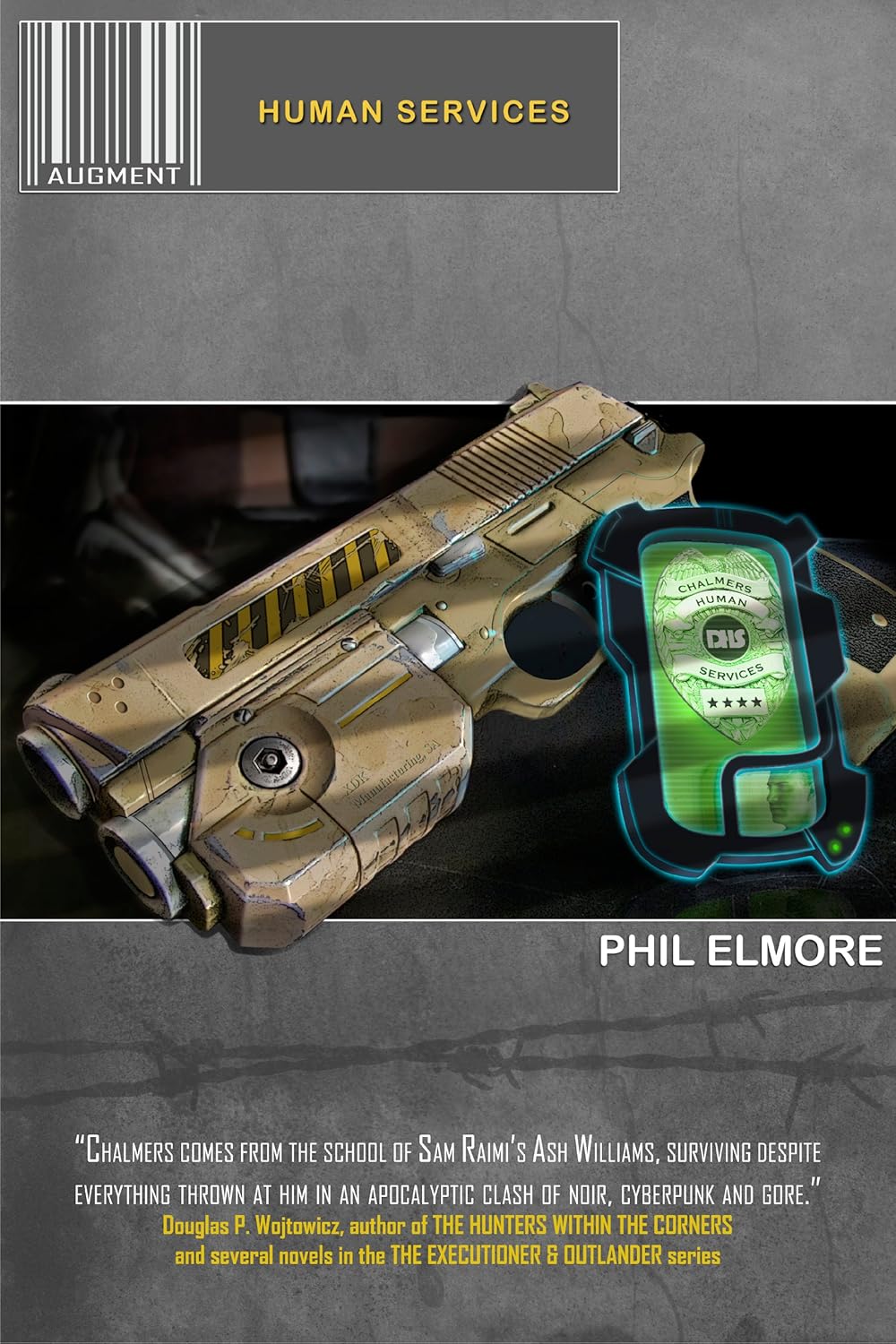
Augment: Human Services, Phil Elmore: This one was sent to me by Johnny Atomic, who did my cover. He had worked on this one as well, and it took me forever to get around to it, but I wish I hadn't waited. It's clever and different than a lot of the scifi out there. If you like grit and conspiracies, you'll love this.

Augments: They're the plague of the modern world, a deviant class of cyborg surgery addicts who've been herded into ghettos for the safety of those still legally human. As tensions in the tech ghetto rise, David Chalmers, an agent for Human Services, is sent behind the walls on a routine extraction. What he discovers is a helpless young woman maimed by unthinkable implant technology... and a murder, for which Chalmers is promptly framed.
Hunted by assassins and wanted by his own government, Chalmers must peel back the layers of a conspiracy without losing his own humanity to a back-alley surgeon's knife -- but first, alone and unarmed, he must survive the tech ghetto itself.


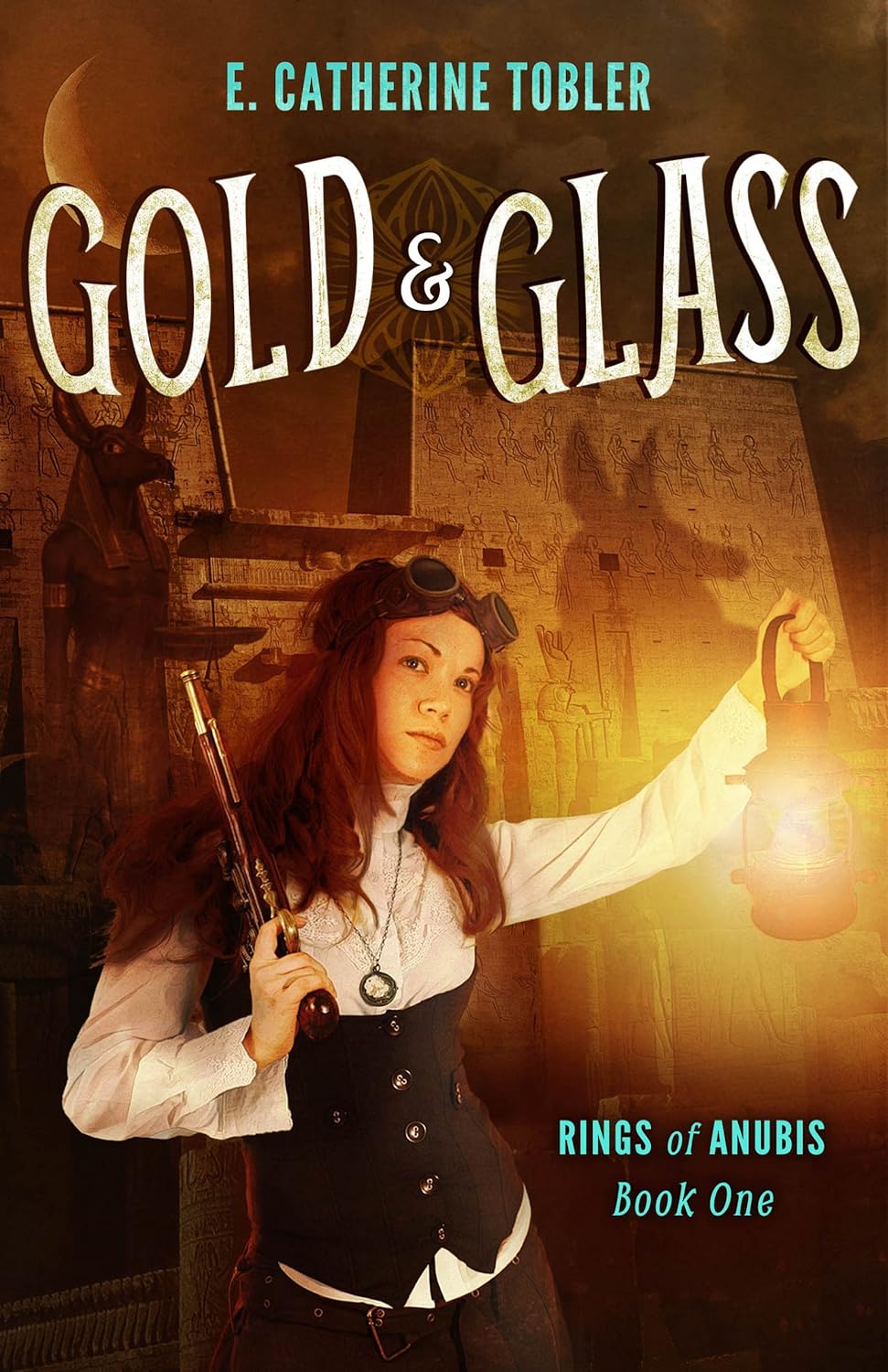
Rings of Anubis, E Catherine Tobler: A steampunk adventure in all the best ways. Adventure stories are always my favorite, and this one is suspenseful and fun. Plays with time travel, exploration of Egypt as well as real-world events (the Paris World Fair is described wonderfully).

Paris, 1889: A time when the world looks to a future of revolutionary science and extraordinary machines. Archaeologist Eleanor Folley looks back to Egypt’s ancient mysteries and her mother’s inexplicable, haunting disappearance. Agent Virgil Mallory, a man with ghosts and monsters his own, brings evidence of a crime that leads Eleanor into deepest Egypt again. Dangerous marauders and revelations from beyond the grave are part and parcel of adventures in the desert, but Eleanor doesn’t count on crossing paths with the guardian of the underworld—Anubis himself!

 Discovering Aberration, S.C. Barrus: Another steampunk adventure, although a bit more traditional- but that's the idea. Written to the tune of most major steampunk tropes, it doesn't take itself seriously at all and constantly pokes fun at the conventions that populate the world. All the while, it manages to tell a fun treasure-hunting story.

An ancient map stollen. A lost civilization discovered. A terrible secret unleashed.
Thaddeus Lumpen's archaeology career is near collapse, thanks to the machinations of rivals who would kill to claim a discovery for themselves. In desperation he turns to Freddy Fitzgerald, a rebellious writer who still maintains connections from his days as a street hooligan. For Lumpen to get ahead of his even less scrupulous competitors he must steal an ancient map and forge a path to an island where a lost civilization waits to be found. For Freddy, it's a chance to sell the story of a lifetime.

But nothing is as simple as it appears from halfway across the world. Old acquaintances become enemies, professional rivalries turn violent, and a notorious gang lord wants his map back. The island itself holds dangers that Freddy and Lumpen couldn't have prepared to face--and horrifying secrets that might be better left buried. Beset by wild beasts, cutthroat competitors, and dangers darker still, the two men fight not for glory, but their own survival... before the island pushes them past the brink of insanity. 


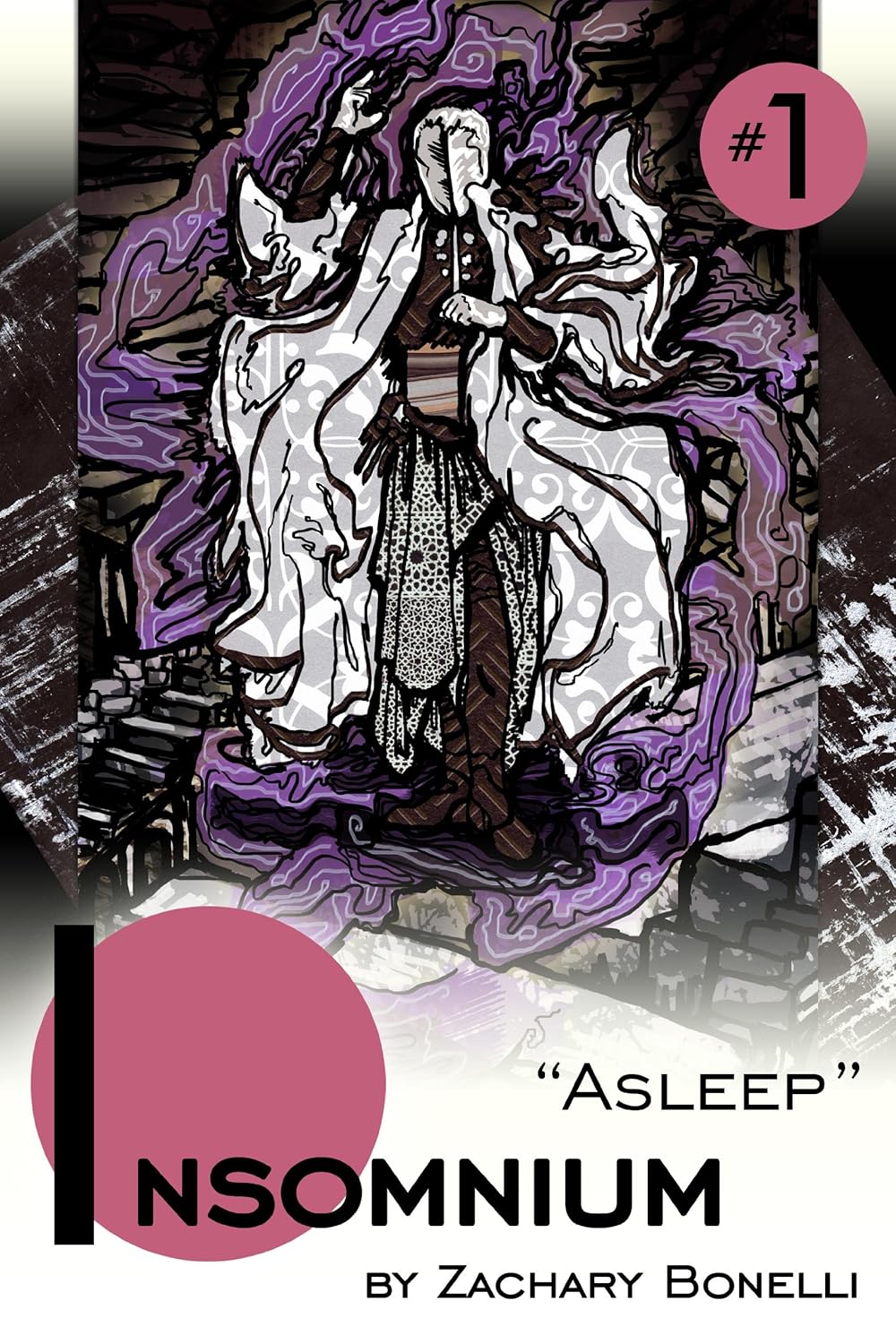
Insomnium, Zachary Bonelli: This is the first is a series of great reads, which I always struggle to describe properly. Think Sliders, maybe. But... better. As I've said, I love adventures, and this is an adventure though a series of artfully-crafted alternate universes, with great characters and great stories.

Nel Hanima lives in Seattle of 2089, a citizen of the newly organized Western Union. Life has stabilized since his childhood, when he lived with his parents in the Queen Anne community bunker. Government has been reestablished, and order restored. Famine and disease no longer run rampant, and the economy has stabilized. But still, the trees and grasses grow browner. The Sound continues to rise, swallowing up neighborhood after neighborhood of Nel's youth.

A faint tug drags at Nel day after day. The suspicion that his life is without purpose or meaning or hope grows ever stronger.

One night, he falls asleep in his apartment and awakens in the City of Nowhere, an impossible conundrum world of inhuman citizens, where time and space are an illusion and paradoxes run rampant.

As Nel explores the city, he meets Giniip Pana, Rev Merveille, and Drogl Belgaer, humans from alternate versions of his world's timeline. Together with his new friends, Nel works to unravel the mysteries of Nowhere, to learn how he came to be there, and discover not only a way to return to Seattle, but also the purpose and meaning his life has lacked. 


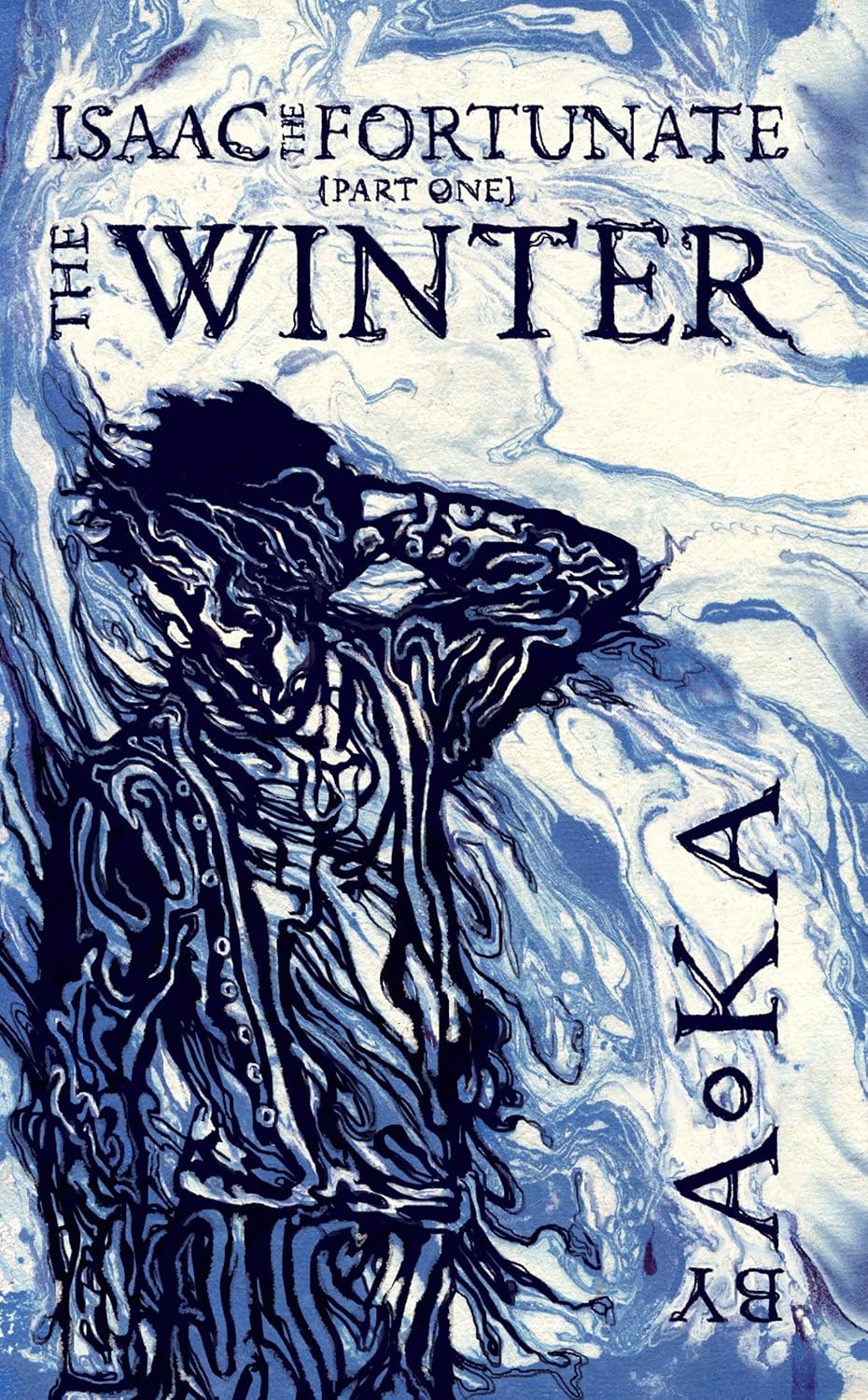
Isaac the Fortunate, A. Ka.: This is a fantasy series (The Winter is book one) that doesn't drag on forever or star some kid from a village in the middle of nowhere who is the chosen one, so it gets instant points in my book. Instead, it plays off much better scenarios, consequences and human emotion.

Beltran had humble ambitions—to farm his land, to grow his family, and to live fruitfully with his wife, Amaranta. The winter of 1553 had different plans. After a crippling famine, unbearable storms, and a devastating plague known as the Delirium, the winter had taken everything dear to him.
Then, through the backhanded kindness of a mysterious traveler and her time-obliterating potion, he got everything back.

His salvation is the beginning of his problems, as he discovers just how stubborn history can be. Greater forces are at work. The more Beltran learns about the circumstances, the less he understands—especially when it comes to the traveler and her inept husband, Isaac. In their quest to stop the Delirium, she and Isaac won’t let anything, or anyone, get in the way of their senseless plans.

Beltran fights for his simple life, his love, and his future... again, and again, and again, even when he finds nobody on his side, not even his dear Amaranta.


There you go- a few books for your summer TBR pile. I hope you enjoy them!

-DESR
 
Dean is the author of 3024AD and other stories, engineer, and geek about many things. He lives and writes in the Pacific Northwest. You can listen to him ramble on Twitter and muse on his blog.

Monday, July 14, 2014

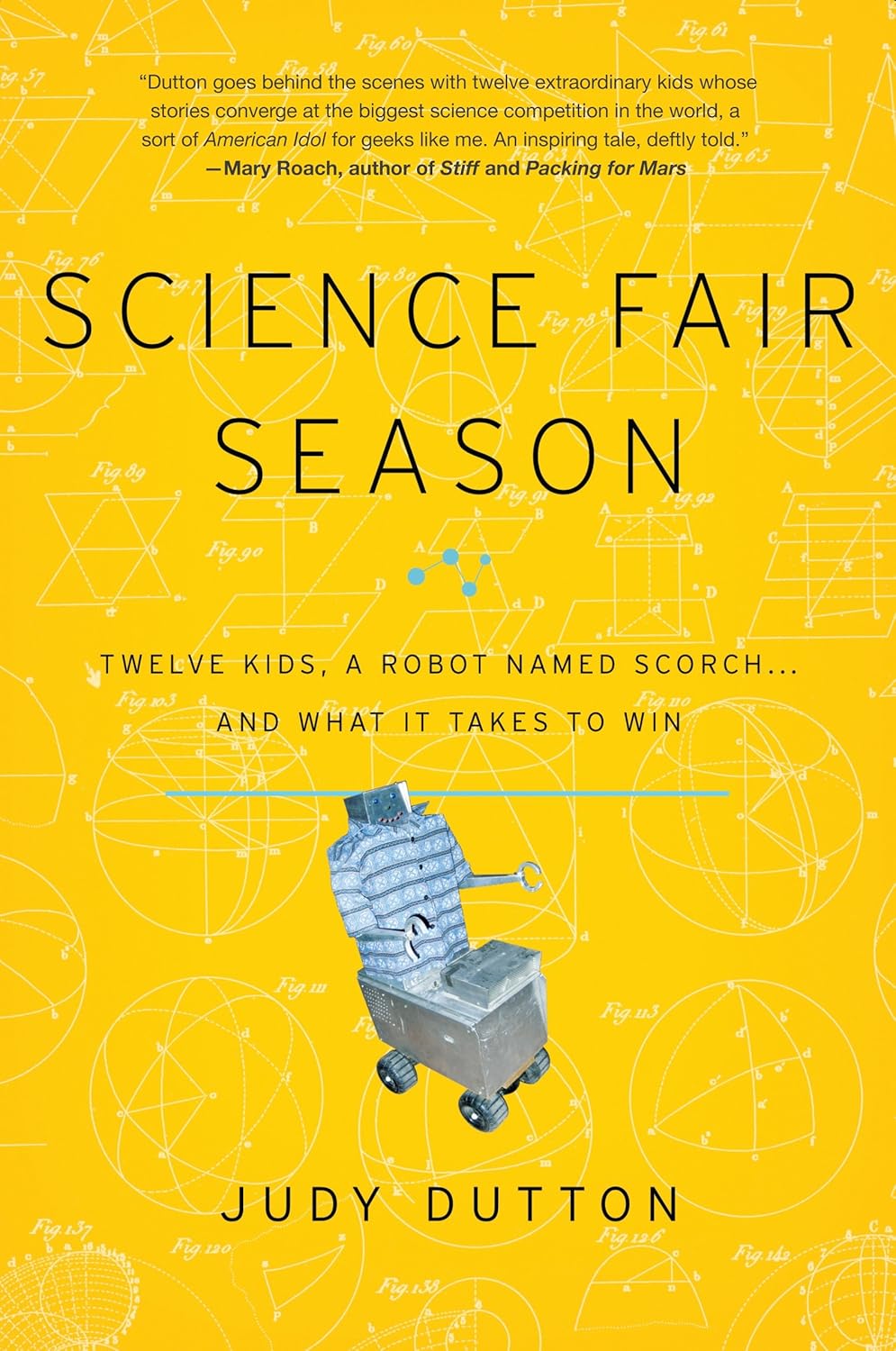
Microreview [book]: Science Fair Season by Judy Dutton

An Unexpectedly Emotional Peek Behind the Posterboard


Dutton, Judy. Science Fair Season [Hyperion, 2011]

This book was on my Summer Reading List I posted a few weeks back, and I think was actually the first book I ever bought for the Kindle after hearing a story about it on NPR after the book was released in 2011. I'm glad I finally got to it, because it was simultaneously exactly what I'd hoped it would be and yet something I had not expected.

Science Fair Season is a journalistic profile of a number of kids who competed in the 2009 Intel International Science and Engineering Fair (ISEF), and others who were either in their orbits or who had set precedents certain of these kids built upon. Lots of the summaries and press materials for this book talk about kids building nuclear reactors in their basements and creating flame-throwing robots. Those claims got me interested in the book in the first place, but they turn out to be either hyperbolic or amalgamations of different kids, which is a true shame, since I think the actual stories inside the book are far more compelling than the splashy blurbs they were shoehorned into on the book's covers. Author Judy Dutton interviewed and profiled kids who were among the 1502 competitors at the ISEF, digging into the paths that got them there, and where not only their projects, but their more fundamental involvement with the sciences, began. She then takes us to the competition itself, going into the presentations, the judging, and the awards ceremony, which has the power to utterly transform kids' lives.

And these kids, man. I was expecting to be blown away by their outsized smarts, but instead, I was consistently floored, humbled, and heartbroken by their spirit. So many of them came from unimaginable hardship — abuse, dire poverty, medical trauma, social dysfunction, or familial upheaval — and yet each of them found a way to be uniquely true to him- or herself and accomplish feats of astounding imagination and sweat equity. One of the few failings of Science Fair Season, however, is in seemingly biting off a little more than it can chew, in terms of the number of individuals profiled. There are multiple kids who have an entire chapter dedicated to them who get no follow-up. Even with a "Conclusion" chapter that ties up a few loose ends, not getting a little more about what happened to some of the people left out of that section was frustrating.

But more frustrating, and compelling, are the questions suggested in between the lines of all these kids' stories. Dutton does an extremely elegant job of bringing up larger social implications, trends, and failures without getting bogged down in these areas. Instead, the reader has to ask the next question, and ponder the implications of what is usually an ugly answer. For example: Several of the disadvantaged kids she profiles have no hope of attending college if they don't win/place/show at ISEF. This should be an outrage. We give so much lip-service to the idea that America needs to perform better in math and the sciences, and that we need more women in the STEM fields, and yet here, every year, is assembled a collection of the 1500 brightest young minds in those areas, many of them young women, and dozens of them will never be able to even attend college. It was five years ago Judy Dutton followed these kids around, and the introduction of abysmal Common Core teaching standards, the blossoming of the student debt crisis, the widening wealth gap, and the increase in the percentage of Americans living in poverty have all made the situation worse since then. As gut-wrenching as many of these kids' stories are, even more so is the knowledge that many kids just like them are tumbling headlong through the cracks — even kids that may have stood right alongside them at the nation's premiere high school science competition.

I feel like a miser for doing this last thing, but I have to point out how poorly edited this book is. I only bring it up because this is a) a book about science, and b) the product of a Big-Five publisher. I'm not a scientist, but I am a nerd and I know enough to understand that atomic nuclei don't have electrons, you don't need formal musical training to hear the difference between one three-note piano sequence and another, and to catch several other factual slip-ups throughout the book. In addition, the word "hypothesis" is consistently used incorrectly, which either the author or editor confused with the "Ask a Question" step in the Scientific Method, and with so many kids leaving high school for college in this book, the persistent use of the grammatically incorrect (and infuriating!) "graduated high school" instead of "graduated from high school" made me want to pull my hair out.

The Math

Objective Quality: 7/10

Bonuses: +1 for the tremendous emotional impact so many of Dutton's stories make; +1 for not romanticizing the social difficulties so many of these kids have as a result of their advanced intelligence or single-minded fixation on things like electricity or radiation; +1 for simply being here to shine a light onto this world and sub-culture in an accessible way

Penalties: -1 for failure to provide closure on some kids' stories; -1 for grammatical errors, factual errors, or a muddiness on how some of the science actually works

Nerd Coefficient: 8/10. We tend to be pretty tough with our scoring here, but this one gets a bump for its subject matter being particularly near and dear to our readership's heart.

Posted by — Vance K, reader of over-his-head books about quantum physics, unapologetic lover of terrible movies, and Nerds of a Feather contributor since 2012.

Friday, July 11, 2014

WE RANK 'EM: The 6 Worst Baen Books Covers of All-Time

Baen Books has long been an influential player in SF/F circles. Now, of course, the imprint is best known for cornering the market on politically-conservative SF and fantasy--though perhaps too strong of an association would be unfair (they do also publish Bujold's Vorkosigan Saga, after all). Regardless, the one thing everyone can agree on is that Baen is justifiable famous for its...unique art style. Here are some of the finest most insanely terrible awesomely terrible examples I could find:

6. Poul Anderson and Gordon R. Dickson. Hokas Pokas! [Baen, 2000].


Hokas Pokas is just your average teddy bear in 19th century naval blues riding a horse-like thing on an icicle under the cosmos. I will remember to always bet on the hocus.

5. David Weber. At All Costs [Baen, 2005]


Why is the cat trying to hypnotize that baby?

4. David Drake and Janet Morris. Explorers in Hell [Baen, 1989]


I have no idea what to do with this one.

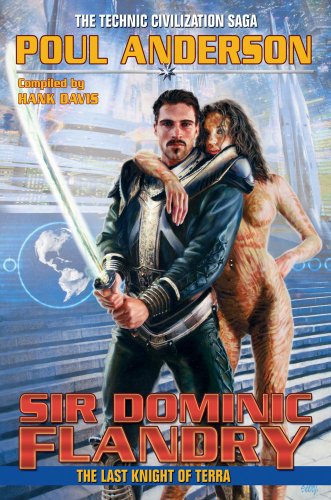
3. Poul Anderson. Sir Dominic Flandry: the Last Knight of Terra [Baen, 2010].


Another winner for Mr. Anderson. this one gets extra Baen points for Flandry's tight grip on the meter-long electroschlong protruding from his loins.

2. Sarah A. Hoyt. A Few Good Men [Baen, 2013].


This little gem of wingnuttery looks like something Sean Hannity might paint if Colmes returned to the set and dosed him with LSD.

1. Eric Flint, ed. The Best of Jim Baen's Universe [Baen, 2007].


A masterpiece of clusterfuckery that speaks for itself.

Thursday, July 10, 2014

Thursday Morning Superhero


It is hard to believe that San Diego Comic Con is a mere two weeks away.  New panels are announced multiple times a day and I find myself dizzy trying to keep up with the news.  My convention plans this year include a return to Gen Con so my head is spinning twice as fast!  What is interesting is the news that excites me seems to always relate to how I can impress my kids after returning home from the Con.  This week's big news is that Gravity Falls officially announced its panel for Friday. One of my favorite shows to watch with my kids, I hope to attend the panel and bring my kids the inside scoop!


Pick of the Week:
The Life After #1 - Oni Press is quite the innovative publisher and isn't afraid to push the comics envelope.  Once again the company is pushing forward with an exciting title that examines life in purgatory.  I had to read this comic a second time to truly appreciate some of the nuances in the book. The main character paces through a mundane existence until he challenges his routine.  This leads to a series of events and he ultimately learns that he is in purgatory.  It seems that his role is going to be to help a variety of people find peace and escape purgatory.  Beautiful art breathes life into this moving title and I hope people give it a try.  If you are looking for something different and beautiful, you should check this title out.

The Rest:
Ghosted #11 - Featuring the best cover of the week (although I hear this week's Avengers featured Angel on a motorcycle), Joshua Williams brings us a new Ghosted arc that shines some light on Anderson.  It was highly entertaining to learn about her existence prior to becoming a ghost.  One of the things that I have truly enjoyed about this series is a fresh take on things like heists and weapons running.  The first arc included an attempted heist of a ghost and Anderson's back story features the smuggling of occult weapons.  If you are looking for a fresh series that breaks the mold of conventional comics then I urge you to hop on with this issue.


The Walking Dead #129 - This is the issue I have been waiting for in the current arc.  While I have enjoyed the time jump and the new characters, it was lacking edge.  Sure Negan and Carl were becoming friends, but I wanted some excitement.  This week, Kirkman and company delivered.  Carl finally ships up to the Hilltop and we learn more about the community that Rick has created.  The newcomers find themselves in a similar position that Rick and his crew experienced as with other groups.  Even though the reader knows that they should trust Rick, they have reason to doubt Rick and his intentions.  It is ripe for drama and the big question is when, and it is when, will Negan be set free?  I am curious if there will be a new villain in this arc, but even if there isn't I am once again excited about this series.

Spider-man 2099 #1 - This was recommended by the manager at my LCS and I thought I would check it out.  Miguel O'Hara is the Spider-man of the future and is stuck in 2014 trying to prevent the death of some key family members.  Meanwhile, a T.O.T.E.M (temporal oversight team eliminating mistakes) has traveled back in time to kill Miguel.  This first issue is a good leaping on point to a series that I knew very little about.  It was an enjoyable read and I will have to thank Monti for the suggestion. 

Daredevil #5 - Like my buddy Jeff, I have not been enjoying Daredevil as much since his move to the West Coast.  I will most likely remain loyal to the series as long as Mark Waid is penning it and this issue was a nice one-shot that was quite fun.  We learn how Matt Murdock faked the death of his best friend and former partner, Foggy Nelson.  Waid continues to inject some heart and emotion into Murdock's and Nelson's relationship and sprinkles in some humor for good measure.

POSTED BY MIKE N. -- comic guy, proudly raising nerdy kids, and Nerds of a Feather contributor since 2012.