Showing posts with label mobile gaming. Show all posts

Monday, June 22, 2015

Mortal Kombat X - Mobile Edition

[Moral Kombat X (mobile), NetherRealm Studios, Warner Bros. Entertainment, 2015]

The Violentest Game Ever Comes to Your Apple and Android Device

That's right, the title that brought us the E for everyone, E10+, T for teen, and M for mature game rating system has finally come to your mobile device of choice, and not in a throwback nod to the original 1992 version, but in the form of a massive 1.1 Gigabyte, state-of-the-art addition to the wildly popular console title of the same name. Although it requires a hefty bit of free memory to download, it's worth every penny. By that I don't mean to insult the game. That was my witty way of saying, "It's FREE!" That's right, for once a game that isn't made for 6-year-olds that involves colored, avian balls or talking cats. This one is for the Mature gaming audience, down to the inclusion of the ever-controversial Fatalities. If you haven't had the pleasure of witnessing the brutal, match-ending murders that take place in this title, let me be the first to tell you that they maybe the most violent thing I've ever seen in a video game to date including the multitude of Calls of Duty, Auto Theft of the Grandest Kind, and their ultra-violent cousins in the gaming universe. 


First, a Little History

Not only is Mortal Kombat singly responsible for the ratings system we now have on all games, but it was the proud owner of the highest opening weekend sales for a short time following the release of Mortal Kombat II. Not only that, but it signalled a shift in financial paradigms. The debut weekend sales of $50 million marked the first time that a video game surpassed Hollywood movies in opening weekend sales. In the summer of 1994, it topped every last Hollywood blockbuster from that year including Mask, True Lies, Forrest Gump, and Lion King. Considering the acceptably arguable statement that this list includes both Jim Carrie's and Arnold Schwarzenegger's best films as well as the best thing Disney has done in decades, then top it off with a six-time Academy Award winning film that garnered Best Picture, Best Actor, and Best Director awards, among others. 


MKII didn't just beat a bunch of humps. That list makes up one of the best ever in combined quality of summer blockbusters. Go ahead, tell me you'd rather see Avengers 2, Furious 7, Jurassic World, and the remake of Poltergeist for the first time instead of getting a second chance at reliving your first viewing of that list from 1994, but be prepared to be called a stinking liar. Fair warning. 


MKII didn't just create a new set of laws about what kids could and couldn't play with it's murderous violence, it was THE pioneer in a change in the way investors look at our top two forms of entertainment. What had been seen as the purvey of sad loners and prepubescents busted onto the scene with blood-dripping savagery, proving that this was an art form that would not be ignored. Yes, I believe games, especially the really good ones, to be a form of art on par with film, television, literature, comics, photography, painting, and any other traditional and/or non-traditional undertakings that require great creativity to produce. The trend that was started in 1994 by the most violent video game created up to that time has continued and the gap in revenues between games and movies has only grown since that time. 


Pop culture they may be, but I challenge you to play Valiant Hearts and not cry at the touching emotion found within, or Contrast and not spend the next several days contemplating the possibilities of the multiverse and all the variations to existence that title implies. My old man might argue with me, but he doesn't believe that Hip Hip is an art form, either. My immediate retort is, if rhyme isn't an artform, then what was Shakespeare doing penning those 34 plays and 154 sonnets that are nearly all about sex, violence, war, and murder? His answer is always Gangsta Rap. My answer is Tribe Called Quest, Digable Planets, and pretty much the entire Ninja Tune catalog. He doesn't know I'm speaking English. The saddest part about that is that we're all inevitably going to turn into our parents. Argh. Oh well, enough losing the plot, let's get back to the game!


I Used to Know Every Fatality in the Game

I even knew the Babalities and other alternative endings. However, that was in 1994-96 or so. Along with the free mobile versions of Mortal Kombat X, I also purchased the Xbox One version, but I've spent twice as much time playing the iPad version as I have on the console one. One of the big reasons for that, I suspect, is that I have forgotten the vast majority of special moves and Fatalities. Luckily, that doesn't matter in the mobile version. Anybody can pick up this game and be decent at it. You don't have to spend hours memorizing controller combinations then practicing them in two-player mode against nobody. The control scheme for the mobile title is exactly what all successful mobile title control schemes are: simple. You tap the screen with one finger to attack and hold down two fingers to block. That's pretty much it. There are occasional prompts to swipe the screen for extra moves as seen above 
and successful attacks build your special attack meter, which appears on the bottom left as seen below. 


So It's Easy to Play, What's the Game About?

What is any fighting game about? Kicking arse and leaving the dead in your wake! Like all previous Mortal Kombat Games, they attempt to put some unintelligible plotline together about Elder Gods, invading demons, some evil God, and some sort of tournament for the future of "Earth Realm." It falls as flat on my 2015 ears as it did on my 1994 pair, but it doesn't really matter. If you're playing Mortal Kombat for the plotline, then I'm afraid it's you who have lost the plot, seriously and to an unrecoverable point. 


Force + Form


The gameplay itself takes on a singular form with several small variations. Basically, you pick a team of three fighters and they face off against three others. The fighting character can one of the two remaining ones if they have sustained too much damage or you just want to switch it up. There are three tiers of character: bronze, silver, and gold. Their attack, health, and recovery levels increase significantly with each jump in the corresponding metal's worth. You can also purchase increases in these statistical categories for individual characters using "Koins" (See what they did there? :-) or by earning equipment through battle. The equipment can be moved from character to character, but the statistical category increases can not so choose wisely, unlike this poor Nazi sympathizer. 


There are usually two main types of gameplay with a special offering going on now for a limited time. The first is Battle Mode. Here you move from tower to tower taking on (usually) six groups of opponents that contain three fighters each. There are 33 such towers and you must beat every group in each of them to beat the game. The second is Faction Wars. This takes you online to fight against other real players' teams. While it's not a true online multiplayer in the same sense as Call of Duty or Elder Scrolls Online where you are facing off against other players live in real time, it brings an interesting aspect to the gameplay in that you never really know who you're going to face. Sometimes you get three bronze level characters who belong to a level 4 player. Other times it's two golds and a silver that have been carefully crafted by a level 35 opponent. Although I would prefer live face-offs against real opponents, I'm not sure that mobile platforms are up to that challenge yet, at least with a game of this size and graphic superiority. I'm afraid it would cause lag of unbearable proportions that would make the game mode unplayable.


Whatever the developers' reasoning, they have mostly made up for the lack of true online battles with the addition of factions. You join a particular faction at the beginning of every week. Depending on how many points you get for your faction and how well the team does throughout the week, you will get a certain set of rewards. If your team comes in last, guess what? Sucky rewards. First place, though, and it's rare equipment and statistical increases out the wazoo, not to mention the money. 


Finally, there are the limited time Character Challenge Towers. This week completion of the challenge will land you Raiden, my personal favorite character in the MK series. You have to complete five increasingly difficult towers in order to earn the elusive character types, and keep your eye on that clock, because if you haven't completed every last one before it runs out then you're S.O.L. 

Summ Fun, Huh?

I had initially planned to review the console version of Mortal Kombat X, but while in the Play Store looking for a companion app, I discovered this free game and decided to give it a try, especially considering I haven't discussed a mobile game for some time now and there are considerably more readers with smartphones out there than next-gen consoles. I was afraid I would quickly lose interest and long for the console game, but that hasn't happened. If anything, it's a relief to not be forced into re-learning special moves and Fatalities combinations that I used to know by heart but have long since forgotten. Don't get me wrong, the console version is far and away the best fighting game I've played in years. That said, NetherRealm Studios did a fantastic job in creating this game and not trying to push the control scheme past the abilities of the platform to handle. There's nothing I hate more than trying to play a game on my phone or tablet where the controller is drawn onto the screen. My thumbs continually slip off their appointed areas and it's nearly impossible to control them with any semblance of dexterity. So, if you're looking for a mobile app that is high on action, graphics, and gameplay options, give Mortal Kombat X a try (unless you're too young). Even if you haven't played an MK title since high school, you should be able to pick it up quickly and easily, and you'll have a lot more fun than flinging around a flock of angry pigeons in the process. 


The Math

Baseline Assessment: 8/10

Bonuses: +1 for vastly exceeding my expectations and making a really solid mobile version that could very easily have turned out to be nothing more than a piss-poor carbon copy of the actual game.

Penalties: -1 I almost feel bad for taking a point away for this, but if you're going to call it "Fight Online" then you should supply an online opponent, not a team of Avatars that someone else created. That said, I don't know the logistics of online match play on mobile platforms, especially for a game of this size and memory requirements. I'd like to give them a pass, but I've got to take off for something. 

Nerd Coefficient: 8/10. Well worth your time and attention.

See here for our scoring system. 

Monday, April 27, 2015

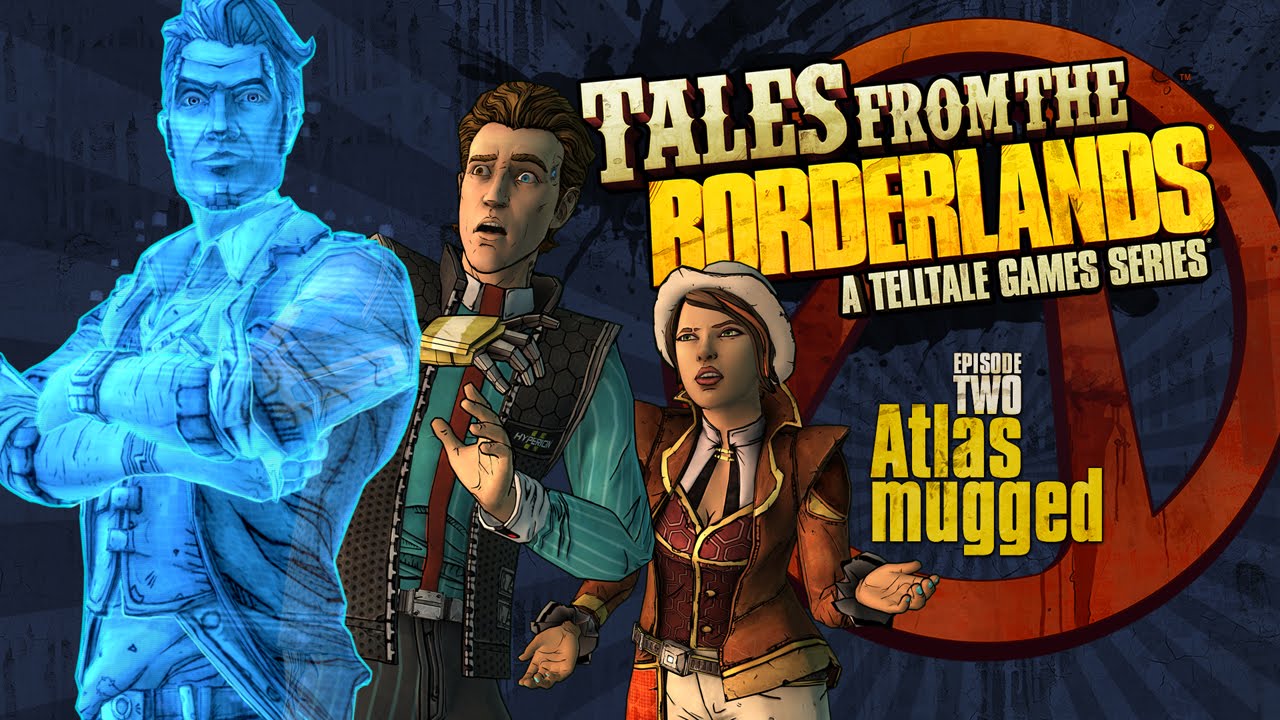
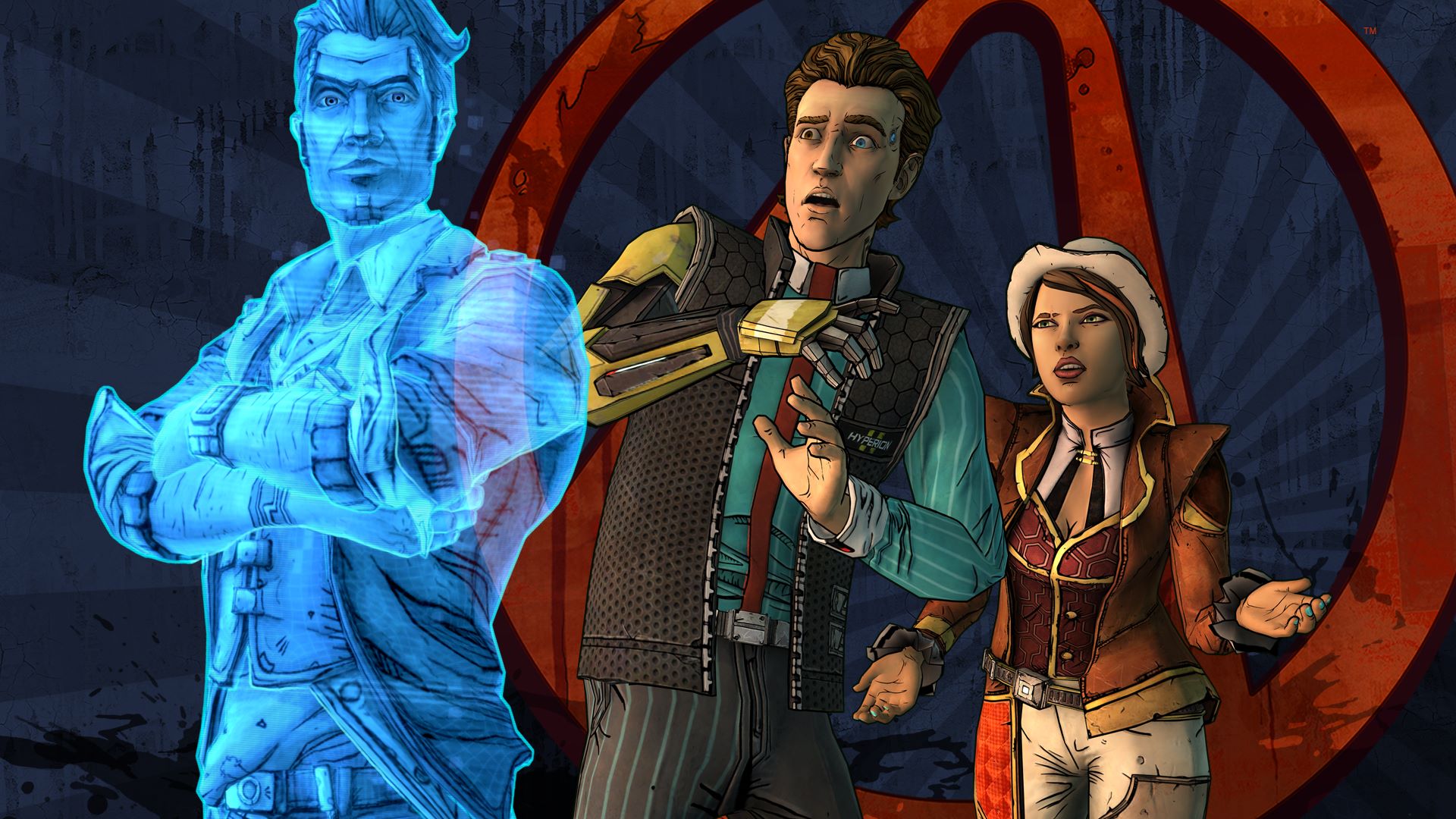
Tales from the Borderlands - Episode 2: Atlas Mugged

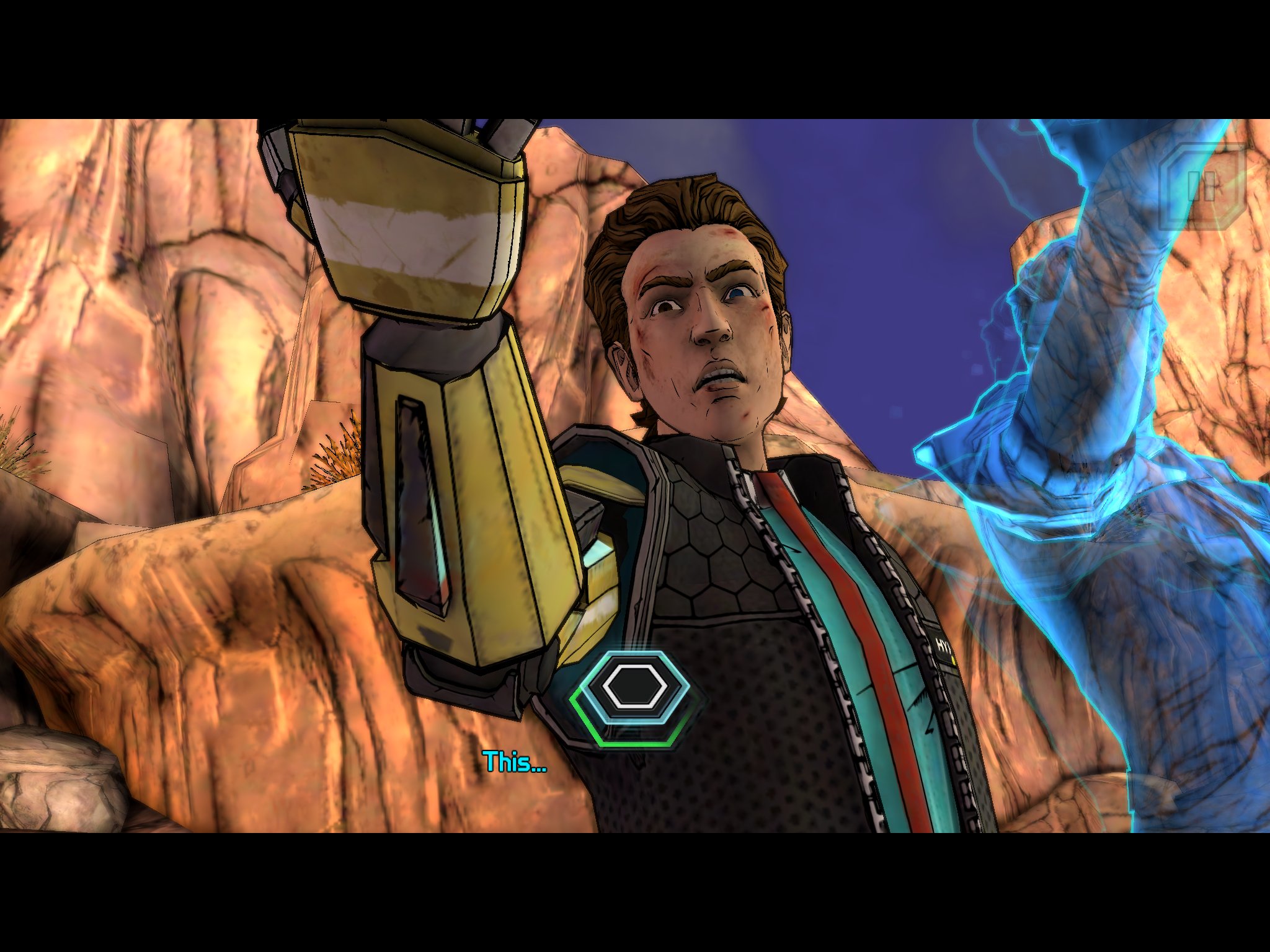
[Tales from the Borderlands - Episode 2: Atlas Mugged, Telltale Games, 2K Games, 2015]

The Art of the Cliffhanger


Ah, the lost narrative style of the cliffhanger. I have only just started with Telltale's Game of Thrones series and while Walking Dead is on my playlist, it hasn't made it to my hard drive yet, so I can't tell you if all of their titles contain this type of plot device, but through the first two episodes, it appears to be a staple of the Tales from the Borderlands series. Just as Episode 1 left players with their jaws in their laps, Episode 2 has a similar, "What the frack?" ending that serves to deftly re-employ the ancient, somewhat lost art of the cliffhanger. 

L'Histoire


<Episode 1 Spoiler Alert>

When we last left Ryhs and Fiona, they were trying to get away from Vasquez, Rhys' Hyperion nemesis, fittingly-voiced by Patrick Warburton of David Putty (Seinfeld) fame. Warburton does a fabulous job of playing the part of the scummy, yet somehow amiable corporate ladder-climber who keeps crushing Rhys' dreams of a bigger and better future. Much like his counterpart on the long-running sitcom, while you wouldn't ever want to be seen in public with Vasquez for fear he would say something awful and put everyone in earshot in a state of extreme discomfort, you can't help but enjoy the completeness of the character's persona. 


Anyway, Rhys (and his sidekick Vaughn) and Fiona (plus her partner Sasha) manage to avoid Vasquez's attempts to corral and kill them and end up falling into the Gortys Project, a room full of Atlas tech introduced by the former Hyperion headman and current inhabitant of Rhys' brain, Handsome Jack. All of this takes place as a retelling by Rhys and Fiona to an unknown captor who is holding them hostage and forcing them to recount all the details they know about the mysterious Gortys Project. Some of the more fun parts of both episodes 1 and 2 take place when the two protagonists begin to argue about the details of the story. It also serves to remind the gamer that he is re-playing a story rather than experiencing it first-hand. It is an interesting plot device and one you don't see outside of literature very often, certainly not in video games. 

<Spoiler Complete>

Episode 2


I will go into more detail about this episode in the upcoming review of Episode 3. I hate to spoil the fun for anyone who has yet to play it, but I don't like leaving out major plot-points for the sake of avoiding spoilers, either. I guess that's a prime reason the serial format lends itself to game reviews. By the time the newest episode has been released, you can pretty much assume that 90% of the people who were going to play the last episode have finished it already, so it's spoilers...AWAY!!! Until then, I will just give a brief synopsis while trying not to divulge too many details and stick to telling you what I think of the game. 


Episode 2 finds Rhys still suffering with random appearances of his unwanted AI implant, Handsome Jack. Since Rhys is the only one that can see Jack, he's kind of like Jimmy Stewart stuck with the six-foot rabbit, Harvey, where everyone else believes he's either having some sort of psychotic break or just putting them on. If he could only convince the right people at Hyperion that Handsome Jack's intelligence continues to survive inside his head, it could be his ticket to Easy Street, but unfortunately he's on Pandora and the only people he can tell are his lackey friend Vaughn who is in even less of a position to do anything for him than Rhys himself, and Vasquez, who could care less if the presence of the Almighty himself was inhabiting Rhys' brain so long as he gets his vault key. 


Again, I don't want to go into too much detail, but suffice it to say that Rhys, Fiona, their respective counterparts Vaughn and Sasha, and the ever-loyal Loader Bot who is always there to lend a hand continue on their quest to discover the meaning behind the Gortys Project and, hopefully, uncover a vault key in the process. They are hotly pursued by Vasquez and his lackeys who have all the ethical standards of a Ponzi scheme plotter. Also, this episode ends with an even greater cliffhanger than the first. Not only are you left wondering what's going to happen next, but what the heck just happened. It leaves you hanging with all the skill of the best Saturday morning serial from the movie theatre glory days of old. 

The Mechanic's Shop


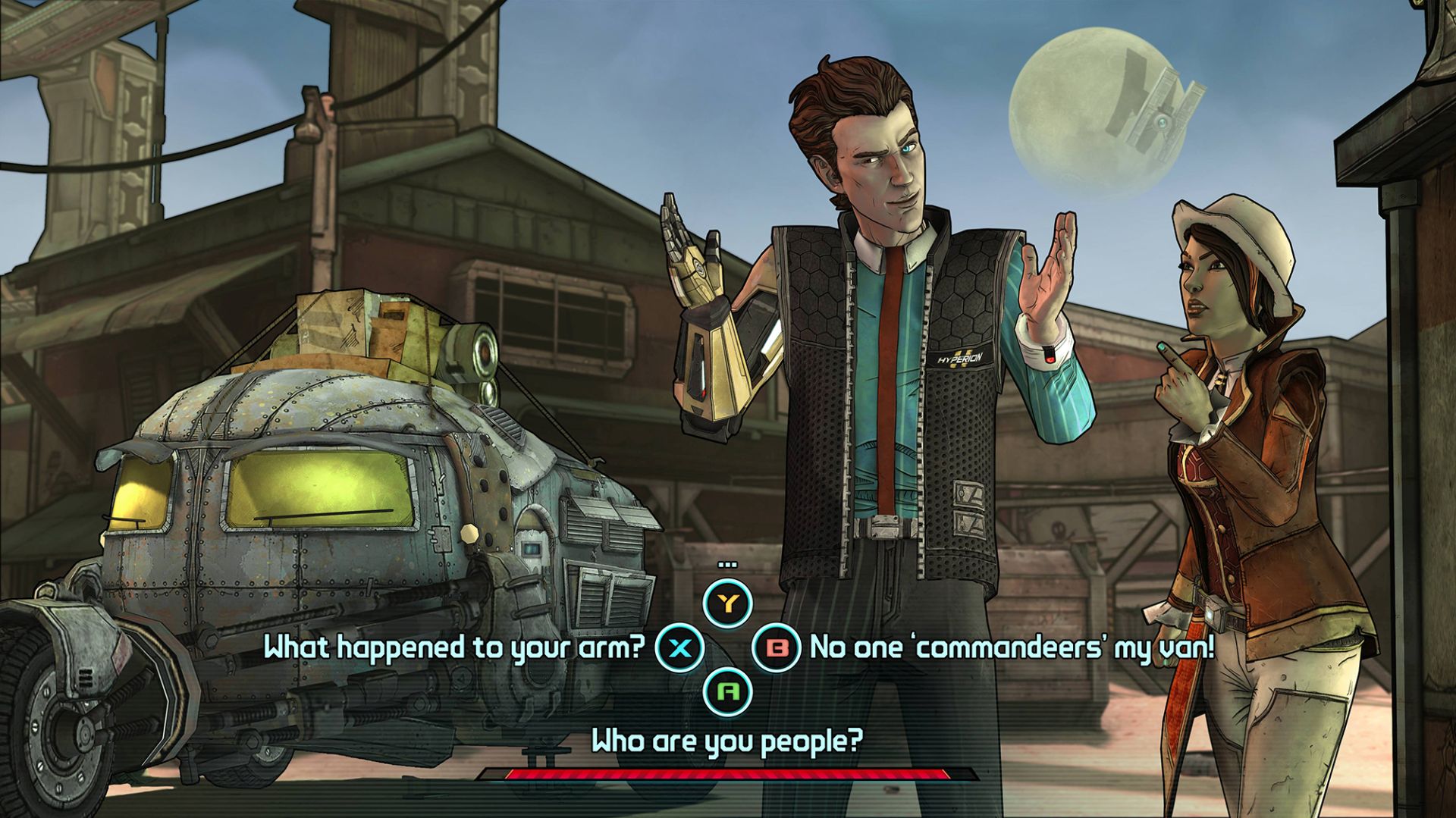
One place where this game both shines and leaves something to be desired is in the gameplay mechanics themselves. It's more of a "Choose Your Own Adventure" story that takes place in the Borderlands universe than an actual Borderlands game. You have to make dialogue decisions a la Mass Effect that change the way the story goes and can have series-long consequences for your protagonists. Not only that, but the dialogue choices are on a short timer, so you are extremely pressed for time and only given a few seconds to make a decision that could alter the entire game experience. That said, it's not an RPG, it's not an FPS, it's not a looter. Basically it lacks all of the components that made Borderlands so addictive and gave it virtually neverending replayability. 


The only action, controller-wise, in the game is limited to a series of button-mashing commands, controller swipes, and the occasional matching of a hexagon with the indicated spot on-screen before you had to hit right trigger/R2. There are also small portions where Rhys uses his bionic eye to investigate the area, but the solutions are fairly obvious and present little in the way of a challenge. It's not like Borderlands required the complicated melange of button mastery needed to keep from getting constantly annihilated in Call of Duty: Advanced Warfare, what with its cryosuit boosts, slides, powers, grenades, and the like, but it certainly asked more of a player than smashing down on the X button until a green circle was filled in to keep the play continuing. This lack of anything but the simplest mechanics may be acceptable in the mobile gaming market, but for consoles with controllers boasting ten buttons and three directional controllers, it's just too simplistic. 


I realize that these Telltale Games titles are available on mobile devices, as well, and maybe it was the cross-platform requirements that restricted the controller options on the XBox One, PC, and PS4. However, as a long-time Borderlands fan and addict, it has been somewhat of a letdown, albeit a minor one as the games contain the same brand of off-color humor that make the original and it's pre- and post-sequel some of this reviewer's favorite titles of the last generation. That said, I'll be honest, I'm looking for a little bit more in a Borderlands game. I guess I shouldn't complain given the price and the ability to return to Pandora one more time for just a few bucks. It's well worth the money for any fan of the series. I don't see Tales From The Borderlands bringing in many new fans, though. If you have a miniature ClapTrap sitting on your desk, then these are definitely for you. If you have no idea what I'm talking about, you should probably consider looking elsewhere, or just waiting for Elder Scrolls Online to finally hit consoles this summer...maybe. 


The Math

Objective Score: 7/10

Bonuses: +1 for showing us a part of the Borderlands universe that was, as yet, unseen. So far, everything has been from the Vault Hunters' perspective. It's nice to see what an average Hyperion employee goes through. 

Penalties: -1 for a control scheme that would leave one of the three buttons on a Sega Genesis controller mostly untouched, nevermind today's complex pieces of ergonomic artwork. 

Nerd Coefficient: 7/10. A mostly enjoyable experience. 

Read about our scoring system here


Wednesday, July 16, 2014

Desert Fox by Shenandoah Games for iOS

New Wrinkles to a Winning Formula


I missed out on the 1970s/1980s heyday of board wargaming, but I was big into the 1990s video game translations--Panzer General II being my personal favorite. Sadly, these and other turn-based strategy games faded with the rise of the RTS. But though I appreciate the frenetic action of Starcraft and C&C, I never stopped loving this slower, more genteel breed of strategy game.

As with isometric RPGs and point-and-click adventure games, iOS has stimulated a resurgence of interest in the faded genres of yesterday. In 2012, specialist studio Shenandoah Games released Battle of the Bulge, a small-scale but deep wargame set on a classic board divided into pieces (though not hexagonal, as in the classic model). The game let you play out several scenarios related to the historical battle, and even choose the general you would face (the A.I. for which would then pursue a strategy in line with their historical predilections). Games were relatively short, but never seemed to play out the same way. And it came chock full of history lessons! It was, in a word, awesome.

Desert Fox: The Battle of El Alamein is the third installment in the Crisis in Command series, after The Battle of the Bulge and 2013's Drive on Moscow: War in the Snow--and it may be the best one yet. The game puts you in the midst of the Western Desert Campaign of 1942, in which Axis forces (under the command of the eponymous "Desert Fox," General Erwin Rommel) attempted to drive the Commonwealth forces out of Egypt to clear a path to Persia and its oil fields. Historically speaking, the campaign featured a whole bunch of German advances until the stalemate at the First Battle of El Alamein (July 1-27, 1942) slowed Rommel down. Then new British commander Lt. General Bernard Montgomery ended Hitler's oil dreams permanently at the Second Battle of El Alamein (October 23 - November 11, 1942). It was the first major victory for the Allies since the start of the war. 

Desert Fox is built on the same engine and features the same general gameplay dynamics as earlier entries in the series. You take the role of Axis or Allied commander, and either face off against a historical opponent or a friend. Each side has a limited number of days, divided into a discrete number of turns, to achieve specific goals, most of which involve either capturing a set number of vital points on the board or getting units past the enemy defenses (while maintaining supply lines). Each player moves units on one hexagon per turn--a departure from the normal way of things in a lot of wargames (where players move all available units in each turn), but which lends the battles a gratifying chess-like feeling. There are different units--infantry, armor, APC, etc.--all with different advantages and disadvantages. And there are serious terrain effects, ranging from armor bonuses gained while defending cities to roads that facilitate breakouts. The elegance of this formula is what made The Battle of the Bulge such an inviting and addictive experience.


Though the core gameplay returns in tact, Desert Fox nevertheless adds a few new wrinkles that keep things fresh. Now you have to contend with--or receive protection from--landmines and barbed wire. Even if you wipe out enemy units on a given space, you won't be able to advance until you clear the mines and wire, and only certain units (i.e. infantry or mechanized infantry) can do that.

There are also significantly altered supply dynamics. In the first two entries in the series, units were supplied as long as they sat on an unbroken chain of friendly territories. But now any unit can go out of supply after taking action (or retreating after being attacked). Each side has a limited amount of supply they can airdrop in, and unsurprisingly, the Axis has less supply to go around, while also having to contend with bombing runs on supply lines. But the Axis get a more complex array of units, allowing for tactical approaches not available to the Commonwealth. There are the standard armor and infantry, plus mechanized infantry, super fast recon and flak, which can negate Commonwealth air power and help keep units in supply.


Desert Fox gives you three different scenarios of progressive complexity: Ruweisat Ridge, a fast-paced battle where the Axis attempt to seize strategic sites (which garner victory points); Second Alamein, where the Commonwealth tries to shove the Axis back into Libya; and The Campaign, a massive, longer-term and more open-ended scenario than the others. It's advisable, after completing the tutorials, to learn each one well before progressing to the next. (Here are some additional tips if you need them.)

Finally, Shenandoah made some neat decisions with the menu system that really top off the experience nicely. Keeping track of things is super easy, and you always have access to historical information on the events portrayed in the game. Everything is nicely presented and intuitive, and the tutorials are among the best I've ever encountered in a strategy game. My only real complaint is that it would be fun to have an additional mode where each side has to deploy its units at the start.


In the end, Desert Fox presents a balanced, challenging and deep strategy experience. And it manages to present something that can appeal to both hardened wargamers and genre neophytes. While I'd still recommend the latter to check out The Battle of the Bulge first, it's not necessary to enjoy Desert Fox.


The Math

Baseline Assessment: 8/10

Bonuses: +1 for managing to make a wargame that is simultaneously deep and accessible; +1 for the supreme elegance of the game design. 

Penalties: -1 for where's that deploy-ever-unit-myself mode?

Nerd Coefficient: 9/10. "Very high quality/standout in its category."


***

POSTED BY: The G--purveyor of nerdliness, genre fanatic and Nerds of a
Feather founder/administrator (2012).


Monday, June 16, 2014

Lost Echo for iOS

A Short and Stylish Adventure for iOS


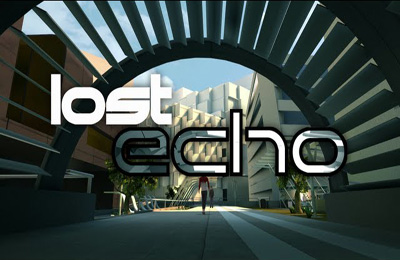
Tablets are a natural home for point-and-click adventure games, both because of the multitouch interface and because the 30-somethings who buy tablets are, for the most part, a nostalgic bunch. Early in the cycle you had ports of classics like Beneath a Steel Sky and The Secret of Monkey Island; then, more and more, you started to see originals--adventure games designed for tablets from the ground-up. Lost Echo is one such game, a memorable and melancholic journey that is short, sweet and stylish.

As the game begins, you find yourself in an outdoor cafe with your girlfriend Chloe, a well-known journalist. She says she has something important to tell you, but a phone call interrupts. Just then you see a surge of blinding light. You black out and wake later in the hospital. Your friend Greg visits you, but when you ask about Chloe, he claims not to know who you are talking about. No one does, in fact. The doctor wonders if you have sustained brain damage, but you feel just fine--you just need to find out what happened to Chloe.

Your quest follows the standard adventure game format: you explore, have conversations and solve puzzles--some of which are brain teasers and others of which depend upon your having scoured every corner of every environment to find the right items (the usefulness of which may not have been evident at the time). The puzzles aren't particularly great, but they're good enough. It does, however, help that the touch interface is so well done; you can really tell this was designed for tablets and not ported from PC or console.


What really makes Lost Echo stand out, though, is its engaging, science fiction story, its tight focus on character and (gasp) character development--such a rarity in the world of video games. A  beautiful soundtrack centered on Eric Satie's "Gymnopedie" gives the game an appealing and memorable air of melancholy--also a rarity in the world of video games.

Overall, Lost Echo is an excellent choice for tablet gamers, adventure game enthusiasts and those who like the idea of an interactive story.


The Math

Baseline Assessment: 7/10

Bonuses: + for emphasis on character and emotionally resonant storytelling; +1 for visual and auditory style.

Penalties: -1 for some of the puzzles feeling a bit too random.

Nerd Coefficient: 8/10. "Well worth your time and attention."

POSTED BY: The G, purveyor of nerdliness, genre fanatic and Nerds of a Feather founder/administrator.

Monday, April 14, 2014

Shadowrun Returns!

As S. C. Barrus wrote in a guest post, crowdfunding has facilitated the re-emergence of the isometric RPG as a viable market segment in the crowded field of video games. Though primarily developed for PC/Mac, tablets are a natural home for these games. After all, most can be programmed by a relatively small group of developers (and thus sold for a pricepoint mobile gamers will tolerate), while featuring point-and-click gameplay that translates well to multitouch and doesn't require a hell of a lot of computing power to run smoothly. And the consumers these games target--nostalgic 30-somethings who want to relive a 90s gameplay experience--are, as far as I can see, slowly gravitating away from attention-requiring console or PC gaming and towards something that better fits a life defined by constant multitasking. Shadowrun Returns, then, seems a perfect fit for iOS and Android--and, indeed, most elements of the 2013 PC/Mac hit translate well. More on that in a bit. First, though, some background...

The '90s ruled, man
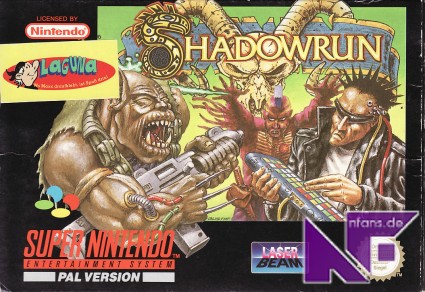
Shadowrun Returns is based on the famous pen-and-paper RPG Shadowrun, as well as the legendary 1993 isometric adaptation for SNES. The basic premise of Shadowrun is to put AD&D races/classes into a near-future cyberpunk universe, so that elves, trolls, shamans and mages quest alongside "runners" (people who go on "dungeon" crawls in corporate offices) and "deckers" (people who hack into "the matrix").

The original iterations produced remarkably balanced and deep gameplay, but 2007's ill-fated attempt to turn extract a console FPS out of the beloved franchise sparked anger and consternation among fans clamoring for something more faithful to the original vision. Enter Jordan Weisman, developer of the pen-and-paper game (as well as Heroclix and BattleTech), and Kickstarter. One year and $1.8 million in donations later, Weisman's studio Harebrained Games released Shadowrun Returns for PC/Mac. By the end of 2013, an iOS version hit the market.

...with elves!
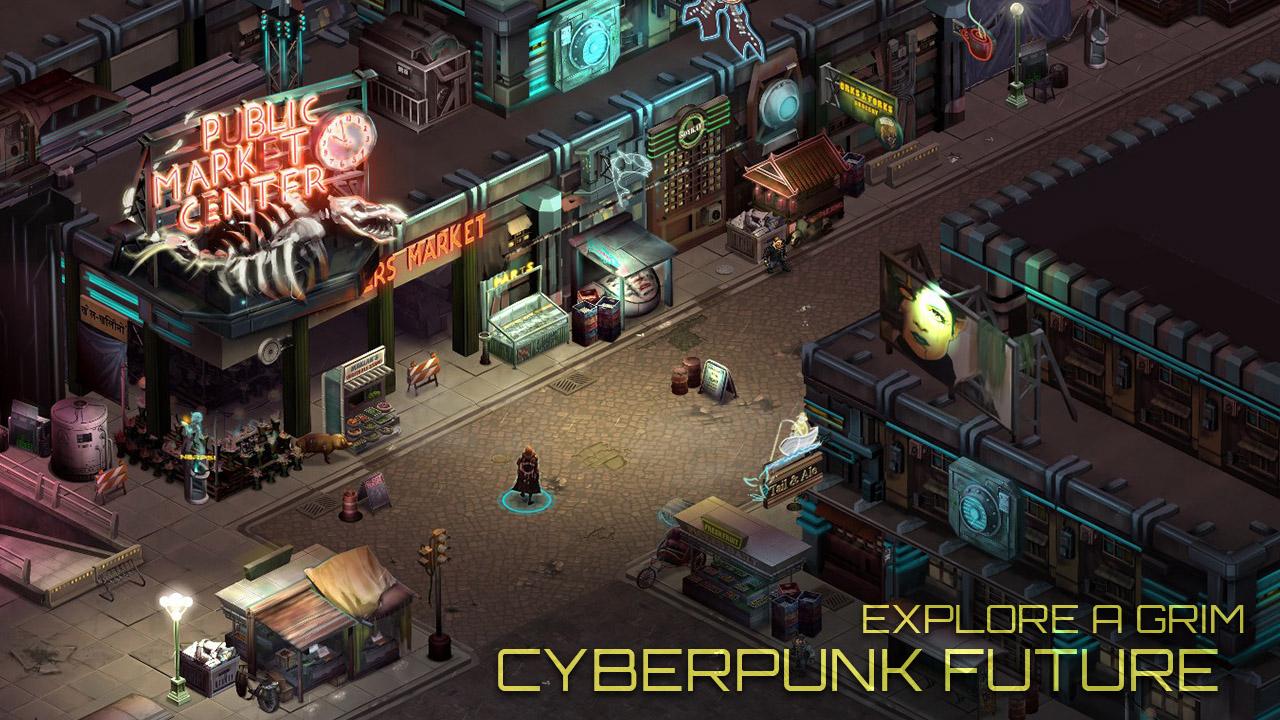
Shadowrun Returns is, like the 1993 SNES classic, a true isometric RPG--featuring turn-based squad combat, highly customizable character classes, balanced gameplay and a well-developed and engaging story. Rather than attempt a modernization, Harebrained smartly doubled-down on the early 90s cyberpunk nostalgia--evident in everything from character hairstyles to the goofy drum-n-bass music triggered by combat. The result is a highly enjoyable, addictive experience that hits the right note of nostalgia for life-long Shadowrun fans, as well as those who, like me, cut their teeth on PC games during the 90s (and 80s).


On the other hand...

There are, however, some issues I'd like Hairbrained to address in the sequel. First off, I experienced some stability issues: freezing, crashing and so forth. After some online consultation, I learned that these could be mitigated by putting the iPad on airplane mode and closing all other apps. It did work, but eh...this kind of thing should have been dealt with in beta, no?

Of course, that might have just been a minor annoyance if it weren't for the game's frustrating "checkpoint only" save system. I guess the PC/Mac version has already been patched to allow for quick saving, but iOS has not. Though Shadowrun Returns is not a large game, a few of the levels could have benefited from some extra checkpoints--especially considering the game's propensity to crash. Going back and replaying 30+ minutes five times and not by choice is retro in the wrong way.


It's a testament to how fun this game is, though, that I didn't quit in frustration. I found myself thinking about the game when I wasn't playing, and waking up an extra half hour early so I could get a level in before the day began. Last game I did that for was Skyrim, and that's basically my favorite video game ever.

See, Shadowrun Returns isn't perfect, but it's a hell of a good time, and a great way to relive the good old days without the crappy hardware.


Tips and Vitals

If you decide to buy a copy of Shadowrun Returns, you may naturally wonder whether it's better on PC/Mac or iOS/Android. I can't speak to the PC/Mac version, but I will say that the touch interface was solid but at times less responsive than I would have liked. And I do think a two-button mouse would have come in handy. On the other hand, I spend most of the day hunched over in front of a computer screen. When relaxing, I prefer to be on the couch, with my feet up and either a controller or mobile device in my hands. So in that sense the trade-off worked in my favor; the iOS port is definitely good enough to justify not sitting at a computer desk.

After committing to iOS/Android, though, there's still the question of phone vs. tablet. Some games naturally work better on one or the other (e.g. FPS on phone; adventure games on tablet). Bottom line, I think Shadowrun Returns is clearly made for tablets, and would feel cramped on a phone. But maybe that's just my fat thumbs talking.

Once you've gone procured the game and fired it up, you are faced with a host of character creation questions. My character, "Nerd," was officially a shaman (dude who can summon creatures under certain conditions) but was fairly balanced between summoning, decking and the use of ranged weapons. I also made him a tank, which helped a lot towards the end of the game. By the time you can select your own party, however, you realize that the easiest rode involves balance among characters, rather than within them.

Badass.
It's okay to be a jack-of-all-trades, as I was, but every party needs one straight up soldier (armed with a shotgun, which is immensely overpowered). Coyote, who you meet in the course of the game, will do for this role--so keep her close. And it's vital you hire a decker--unless you are one yourself. I also found support mages useful for the fourth and final slot--someone who can up your accuracy, lay down fire or lightning fields if you get attacked from both sides and, crucially, heal squadmates without spending precious medpacks. Conversely, I found specialized shamans and assassins basically worthless.

Oh, and one other piece of advice: defensive tactics are your friend, particularly in the matrix.

Enjoy the ride, chummers...


The Math

Baseline Assessment: 8/10

Bonuses: +1 for balanced, lively isometric retro; +1 for the 90s are back, man!

Penalties: -1 for stability issues; -1 for stupid checkout-only save system.

Nerd Coefficient: 8/10. "Well worth your time and attention."