Monday, March 4, 2013

Microreview [book]: Adrift on the Sea of Rains by Ian Sales


Adrift on the Sea of Rains, Ian Sales [Whippleshield Press]

My first exposure to serious science fiction came around age 12. I was already deep into fantasy and detective novels, but for whatever reason felt tugged to this one shelf of my father's book collection, where there sat a row of worn paperbacks with names like Childhood's End and The Martian Chronicles. I'd always found the notion of space travel romantic--I was a child of the Space Shuttle-era, after all, and I'd loved the kid-targeted SF films I'd been exposed to at a young age--Star Wars, E.T., The Black Hole, etc. So perhaps it was foreordained that I would gravitate to that part of the library? Before I dared read them, I would just pick the books off the shelf and sit there, staring at the detailed sketches of space stations, star ships and extra-planetary colonies that graced their covers.

When I did finally bite the bullet, I started with Arthur C. Clarke's Islands in the Sky, a 1952 novel about a boy who wins a contest and gets to go up to an orbital space station. It felt incredibly realistic, like something that could actually happen--to me, when I was older and the space program was as advanced and evolved as it was sure to be. After devouring that and every other Clarke novel on the shelf, I moved on to Bradbury and Asimov. My father's taste for science fiction, though, trailed off sometime in the mid-1960s, and so I was left to discover things like the New Wave and everything that came after on my own. As I've grown older, my tastes have changed, reflecting changes in the genre. I am, generally speaking, more attracted to the "speculative" side of the past forty years, embodied by authors like J.G. Ballard and Iain M. Banks, than I am to "realistic" or "hard" side popularized by Larry Niven, Greg Bear and others like them. But I still have a soft spot for the exuberant, nuts-and-bolts SF of the 1950s and early 1960s.

And so it is with great pleasure that I recommend Adrift on the Sea of Rains to you. I'm tempted to say it feels simultaneously forward-thinking and like a throwback to those classics, but Lavie Tidhar beat me to the punch. Still, it is a good way to describe this strange, oddly satisfying novella, because injects a healthy dose of New Wave weirdness to a well-rendered Clarke-ian nuts-and-bolts setting.

Adrift of the Sea of Rains follows the decaying fortunes of a group of American astronauts stationed on the Moon in alternate-historical version of the late Cold War. The United States and Soviet Union have, in this timeline, done the unthinkable, and nuked each other (and the rest of the world) to oblivion. While this might ultimately doom the stranded astronauts, they have in their possession a Nazi Wunderwaffe called the Bell, which can cycle through "evolutions--alternate dimensions in a physics apparently ruled by M-Theory. The astronauts use the Bell to search for a version on Earth in which nuclear Armageddon has not, in fact, already happened.

Sales intersperses this story (told in present tense) with the (italicized and past-tense) recollections of protagonist Commander Vance Peterson. These segments tell the backstory of war, and Peterson's role in it, in some detail, though Sales never leaves character perspective, and thus mercifully keeps us safe from the horrors of infodumping. Throughout these sections Sales sprinkles little details about experimental aircraft that, judging from the appendix, are based on real Pentagon projects from the Cold War. It's all very nerdy, in the best possible sense of the term.

That said, I did take issue with one thing--the Wunderwaffe. To me it felt like a splotch of deus ex machina on an otherwise meticulously tidy fabric. I see how it gets Sales where he wants to go in the story, and I do appreciate how it allows him to talk about the psychology of the Cold Warrior, but I can't help but wonder if this was the most effective mechanism for getting there. In the end, though, that's a question I don't have an answer to, and it also didn't greatly reduce my enjoyment of this rather unique book. As it happens, Adrift on the Sea of Rains isn't just a good read, but the kind of book that begs for a re-read. And there aren't that many books I review that fit that bill, so take that as the high praise it's meant to be.

One Final Thing...

We all know about the lols involved with self-publishing, but we also should, by now, understand that there are legitimately good books being published this way. There's a reason for that, as this story attests. Now, I don't know if Sales tried to take Adrift to established publishers or if he thought it would be too much bother, but either way he's produced and published exactly the kind of book the established publishers should be trying very hard to get ahold of. The BSFA nomination is well-deserved. 

The Math

Baseline Assessment: 8/10

Bonuses: +1 for a happy marriage between the old school and the new; +1 for all the rich detail delivered through character perspective.

Penalties: -1 for the deus ex machina.

Nerd Coefficient: 9/10.

Saturday, March 2, 2013

PS4 Announcement


finally!!!

It has seemed like decades since the PS2 and original Xbox became surpassed by the current crop of console offerings. In reality, it's only been 7 and 8 years respectively, if you count by Christmases like Sony and Microsoft do! Unless you were living under a rock last week, you heard Sony has debuted the PlayStation 4. Kind of. They unveiled some gameplay and trailers, but they didn't give us a look at the actual machine. The picture above is concept art.

In order to be completely honest, I'll cop to owning an Xbox 360. However, I'm not a raging fanboy. Not being able to play God of War any more is killing me! When people ask me for advice, as a young girl at Best Buy did just last week, I tell them to ignore the Blu Ray player. You can buy an off-brand Blu Ray player for fifty bucks and a Sony for ninety. It's no reason to choose a console considering the fact that you're going to spend hundreds if not thousands of dollars on games over the life of the purchase. There are two main factors to consider when choosing whether to go with Sony or Microsoft. Wii is for families and doesn't compete much in the hardcore gamer market so we'll ignore them for now. The first and most important factor to consider when choosing which system to purchase is what your gaming friends play. You'll want to play online some, even if you aren't a big Call of Duty multiplayer addict. The only way to play with friends is to have the same brand console. The second and less important, but still pronounced differentiation between the PS4 and the new Xbox are the exclusive titles. Most games come out on both so it isn't a huge issue, but you should consider if you're more of a Halo/Gears of War type player or if you like Metal Gear, God of War, and Gran Turismo instead. Other than these two factors, there isn't much that should persuade you one way or the other, in my humble opinion. They are far and away the most important pieces of your console purchasing decision.


ps4 dual shock 4 controller

The only piece of actual hardware that was debuted was the new controller. They have added a touchpad that is clearly visible in the picture above. It boasts a microphone and headphone jack so you can catch every last highly offensive word the 8-year-olds are throwing at you on Call of Duty. There is also a new "share" button that allows you to intrude further into the lives of people you knew 17 years ago on Facebook. Hopefully that "friends" list is limited to those on the PlayStation Network. I really don't want social media news feed updates about how a former high school teammate is doing in Gran Turismo 6. I wouldn't mind updates within the Sony Network, but taking it to social media is a bit of a stretch unless you have a purely gaming identity there, separate from your main profile page.


the firepower

Leaks coming out of CES say that the PS4 is going to use an AMD Jaguar 8-core chip to churn through software like butter. There are also several articles saying the 4 will boast 8 Gig of DDR5 RAM (one article I read said this would actually be 4 Gig of DDR3). What this means to you, if you don't speak fluent nerd, is that Sony hopes to have the ability for their PS4 to be turned off in the middle of a game, then picked up hours later and started within seconds. No more 60 second boot times and returning back to your last save point. It's like having a non-stop autosave feature and a machine you no longer have to turn off...EVER! I mean, technically it's "off", but when it will start up and return to play in under 5 seconds, what's the difference? 


The graphics processing unit is equivalent to an AMD Radeon 8750. I currently have a Radeon 8750 in my home tower, so this isn't a great leap forward. It's the combination of this quality chip with the other components that will allow this unit to make a big improvement in graphic capabilities. Besides, consoles are easier to program for than CPU games. I feel somewhat sorry for PC game programmers because they're writing for a massive array of computer types. They want to make the best game possible while keeping the system requirements low enough that the highest number of systems can handle the game. Think of the original Crysis. There were four total computers in the US that could run that game at the highest graphic settings. It was supposedly the best-looking game ever on a CPU, but nobody could play it because the system requirements were so high. They essentially programmed their way out of profits.


Console programmers, on the other hand, know exactly what processor, RAM capabilities, graphics card, and hard drive limitations for which they're writing. There is no need to write code so that older machines can handle the workload. As with most generations, the early games won't maximize the console's abilities  As programmers get used to what a machine can do, graphics improve for a period of time, then hit a wall and can't really get better beyond that point. Black Ops 2 (2012) was a massive improvement over Medal of Honor: Airborne (2007). Dead Space 1 (2008) and Dead Space 3 (2013) showed similar improvement in graphics. However, anyone that has played Fallout 3 (2008) and New Vegas (2010) didn't see a massive improvement in graphics between the two. Same goes for Borderlands 1(2009) and 2 (2012). It was pretty much the same gameplay and look with a different environment for those sequels.  


the ps4 eye


One of the most obvious additions is the PS4 "Eye". To call this a copy of the Kinect would be a statement of the obvious so pointless I can't believe I'm typing it right now. Eye-ready games will be controllable using body movements and voice commands. It will be able to take video of players and insert them into the game. It will use two 1280 x 800 resolution (essentially 720p), 85% wide angle cameras and be able to differentiate between players in the foreground and background. While none of this is new to Kinect users, it will bring an even playing field to Sony and Microsoft in the ever-growing motion capture game market. This was a no-brainer to those who follow the console market closely.

i'm psyched!!!

Like I said before, it seems like a long time since we got a console generation upgrade. The Xbox 720, or whatever they're going to call it (the current "secret" project name is Durango), is scheduled to be announced on April 26th. Both consoles should be available for Christmas this year. Let the console wars continue! I'll probably stick with Microsoft since 90% of my friends and family own Xboxes, but that is in no way an endorsement. Ask your friends what they have, then review the exclusive titles and make your own decision. And by the way, is there anybody out there that will let me come over and play God of War: Ascension? That game looks sick!


Friday, March 1, 2013

The Nerdy Kitchen

I’m a kitchen appliance and gadget junkie. My sister is a scientist. In my search for the perfect gift for her birthday (which I've already missed), I've found there's a lot of common ground between us in the kitchen: chemistry! Here are some nerdy books about cooking and food.

For the chemistry nerd:
Cook's Illustrated is responsible for America's Test Kitchen, arguably the most scientific show on TV. They tweak recipes until they get them just right with a lot of trials and controlled variables. Plus there's the nostalgia factor because it's a little like watching "The Anal-Rententive Cook" SNL sketch -- with a bowtie. The Science of Good Cooking (Cook's Illustrated Cookbooks) reads a little dry, but the knowledge in it is absolutely invaluable, especially if you want to be the kind of cook that can just wing it in the kitchen.

For the history nerd:
Salt: A World History is a pretty fascinating read that explores the cultural, chemical, and historical story of salt through time. It's less funny than Bill Bryson, but it still gives you the smug satisfaction from reading well-written popular non-fiction.


For the math nerd:
A must-read for any baker, Ratio: The Simple Codes Behind the Craft of Everyday Cooking simplifies the math of baking. The secret? Vodka.
No, really, vodka is the secret to a lot of baking, especially pie crust. It cooks off faster than water, leaving the flaky crust your dirty mind is adding apple filling to.


For the n00b:
Good Eats: The Early Years is hands down one of the best Christmas presents I've ever gotten. Pair it with Good Eats DVD sets and you're giving any nerdy foody the brain+mouthgasms that Alton consistently delivers. He's silly, smart, and empowering.

There's more: Good Eats 2: The Middle Years and Good Eats 3: The Later Years.

Thursday, February 28, 2013

Thursday Morning Superhero

Another week of comics has come and gone and we are left with a great title from Image Comics as pick of the week.  While Hawkeye put up a good fight (might be the best comic design out today), it fell just a bit short of the humor that was infused into Uncanny Skullkickers.


Pick of the Week: Uncanny Skullkickers #1 - I will be the first to admit that I have not read much Skullkickers in the past.  The few issues I cruised were quite refreshing.  Nice tongue in cheek humor, good fantasy elements, interesting cast of characters, and some good action.  For whatever reason I never really got into the title.

This week, author Jim Zub, takes a nice jab at some of the larger publishers by releasing an issue that breaths new life into the series.  "We figured out what our series was missing: Adjectives!" is sprawled across the top of the cover and this issue is a natural jumping on point as it is the "first issue, again!".  


The first couple of pages provide a nice background leading up to the events of this book and we are quickly informed that we are going to be treated to bonus content.  This comic features two stories in one!  In the recap we learn that the Dwarf has drowned and at the bottom of each page there is a panel of him floating in the ocean to verify his status.  He is dead.

Meanwhile, Rex (a man) and Kusia (an elf) are washed up on an Island and scramble for survival.  We are treated to a "good times jungle exploration montage", some evil turtles get "re-extincted", and Rex gets relieves some stress through an inanimate object attack. 

The hook at the end of this book is enough to bring me back for issue #2 and may cause me to go back and read the back issues.  In the end you have a witty book that provides moments of genuine laughter and has an interesting cast of characters.  Throw in some creative baddies and jabs at other publishers and I am on board.

The Rest:
Hawkeye #8 - Bro, the guys in track suits have more reason to hate Clint Barton after the hijinks this month that left Hawkeye in prison, in what is the best looking comic on the market today.

Young Avengers #2 - I am guessing that the Young Avengers have not watched Fringe as they don't appear to know the risk of saving someone from another dimension and the impact it might have.

Deadpool Killustrated #2 - Lacking the charm of the first issue, it still entertained and a gauntlet including Beowulf and Mulan spearheaded by Sherlock Holmes is waiting for Deadpool in issue #3.

Wednesday, February 27, 2013

Microreview [book]: Orphans of the Sky by Robert Heinlein


I often romanticize the notion of sitting down on a lazy Sunday with a classic SF novel I bought for under $2 at a used bookstore. Several attempts to go through with this, though, have foundered on an iceberg of hack writing, outdated social norms and the naive optimism about science, technology and "progress" that permeates so much pre-New Wave SF. So it was with some trepidation that I began Orphans of the Sky, a novel structured as two novellas by Robert Heinlein, an author I know primarily (and not positively) from the militarist novel Starship Troopers to the more interesting, but tediously smug Stranger in a Strange Land.

Orphans of the Sky tells the story of Hugh Hoyland, an illiterate peasant living on a generation starship whose inhabitants have long-since forgotten the purpose of their voyage (or even that they are on a voyage). The "crew" live on the high-weight decks of the ship, and are organized into a highly stratified and rigidly patriarchal society dominated by "scientists," who are really priests of a sort, and whose religious texts are the ship's technical manuals. The lower-weight decks are the home of "the muties," a group named either for their descent from the plotters of a long-ago mutiny or for the frequency of genetic mutations among them (which don't exist among the crew because they commit infanticide whenever a mutation occurs).

Hugh, being an intelligent young person, is promoted to the position of scientist, and quickly falls in with a group of hyper-rationalists that want to supplant the more superstitious officers ahead of them and then wipe out the muties. Before the plan can be realized, though, Hugh is taken captive by Bobo, a short, none too bright but fierce mutie, and Joe-Jim Gregory, his two-headed dilettante master. In captivity, High comes to learn of the ship's real nature, and its mission to reach the star system of Far Centaurus. He returns to the high-weight decks to "convert" the ship's officers, setting off a complex chain of political events that result in a crisis the ship has not seen since the days of the original mutiny.

So How Was it?

Perhaps it was the depressed expectations, but I actually enjoyed Orphans of the Sky a lot more than I expected to. It is written in the hack style, but it's fairly efficient and clean and thus perfectly suitable to that idle Sunday. It's unfortunate that Heinlein switches between third-person restrictive and third-person omniscient, especially as the latter appears directly addressed to an audience of Earth-bound contemporaries to the central characters, who presumably would never hear of their story. I found this annoying.

Then there's the whole "dated social norms" thing. I'd imagine that if someone were to write the character of Bobo today, they would not describe him as a "pinhead dwarf moron." This is partially mitigated by the fact that Bobo is possibly the most relatable and likable character in the book, but only partially. And gender relations in the book, for that matter, are positively neolithic. Heinlein does provide an explanation for this--the crew live in a highly-stratified priest society, and severe oppression of women is an integral part of its power structure, as it was for many historical analogues. But even as Hugh and his associates grow enlightened about many things, they never even consider the women except as an afterthought. And over in mutie country, whose residents are meant to be wildling-style "free folk," there's really only one woman--and she's an old crone who makes knives for everyone else and appears in exactly one scene. Maybe there's a touch of realism there, given how long it's taken/is taking real actual human societies to treat women as equal citizens, but the sausage-fest dynamic is seriously dated and seriously corny.

If you can give Heinlein a "that was then/this is now" pass, or can rationalize the misogyny in Orphans of the Sky as the intellectually justified function of the societies he is describing, then you'll probably find the rest of the book to be an enjoyable and at times thought provoking adventure story. I particularly liked how he resisted making either the crew or the muties "the good society"--actually, they are both terribly unfair. And there's a relatively interesting take on post-revolutionary politics that, while not quite up to Animal Farm standards, is still more subtle and nuanced than most Cold War-era parables about communism.

In the end, though, while this did satisfy my urge for a quickly-digestable SF classic, the good stuff isn't good enough for me to look past all the frustrating anachronisms.

The Math

Baseline Assessment: 6/10.

Bonuses: +1 for it only cost $1.75 and I bought it at my favorite SF specialist second-hand bookshop; +1 for being a solid all-around adventure story that had some intelligence and thoughtfulness to it.

Penalties: -1 for the distracting switches to third-person omniscient; -1 for the near total absence of women characters; -1 for not even giving them a tiny modicum of subjectivity when they do appear.

Nerd Coefficient: 5/10. "Average" or "Mediocre." Take your pick.

Tuesday, February 26, 2013

Microreview [film]: The Baby


The Meat:

The Baby is the kind of movie where after each take, you get the feeling everybody involved hung their heads a little and whispered under their breath "How the hell did I wind up here?" Lead actress Anjanette Comer had worked with Marlon Brando, composer Gerald Fried was probably wondering if Stanley Kubrick would ever take him back after scoring that guy's first four movies, and the colossal Ruth Roman, who had worked with Jimmy Stewart, Kirk Douglas, and Alfred Hitchcock, probably had to drive past her own star on the Hollywood Walk of Fame to get to the set each day. Director Ted Post (who directed one of my favorite Twilight Zone episodes) probably didn't give too much of a damn, since this was only one of about 11 directing gigs he had from 1971-1973, actress Marianna Hill probably got the taste out of her mouth playing Fredo's wife in The Godfather, Part II, but during the making of this bad-boy (pun intended), I'm pretty sure everybody involved felt like there were in the blackest night of career disintegration. Here's why:

The Baby is about a social worker, Ann, grieving the loss of her husband and throwing herself back into her work with a vengeance. She takes on a particularly challenging case regarding the Wadsworth family -- a domineering mother, two busty daughters, and son Baby, a twenty-something-year-old man who is apparently mentally handicapped and still lives as a baby. You know, crib, diapers, sucking at a reluctant babysitter's tit, the whole thing. Ann doesn't believe that Baby's really handicapped, but that "negative reinforcement" from the crazy mom is responsible for his arrested development. She's not privy to one sister poking him repeatedly with a cattle prod for attempting to speak or stand, or the other sister climbing naked into the crib with him while he sleeps, but Ann appears to be onto something. Suffice to say, drinks will be drugged, multiple women hog-tied, throats slashed, and people will be ambushed with hatchets and meat cleavers. Which is I'm sure exactly where you saw this whole thing going, right?

The film's poster and reputation suggest a depraved horror movie, possibly in the lunatic matriarch sub-genre along with Tallulah Bankhead's nutty Mrs. Trefoile in Die! Die! My Darling, and user reviews suggest a twisted psychodrama with a shock ending along the lines of Sleepaway Camp, but this movie isn't really either of those things. It tries to be a little of each, and throws in a hint of possible inbred frolicking, but that's dropped as quickly as a nonsensical reversal of roles (who's really crazy here?) is picked up. I don't really want to spoil the ending in case you see it, but, seriously, just don't bother seeing it.

The Math

Objective Quality: 3/10

Bonuses: +1 for the cello-based score, which was inappropriately evocative of Bergman

Penalties: -1 for the series of twist endings, none of which make sense; -1 for the start/stop nature of the various transgressions/depravities trotted out in the movie

Cult Movie Coefficient: 2/10. Just bad.

[See explanation of our non-inflated scores here.]

Monday, February 25, 2013

Scalzi, The Human Division Eps 5-7

Hello! This is my first entry since switching from the once-a-week to once-every-three-weeks format, so bear with me. In case you are just getting on board, here are my reviews for Episode 1, Episode 2, Episode 3 and Episode 4. To summarize, "book good/interludes kind of annoying" for a cumulate score of 7.5/10. So how are the next three?

The Meats and the Maths


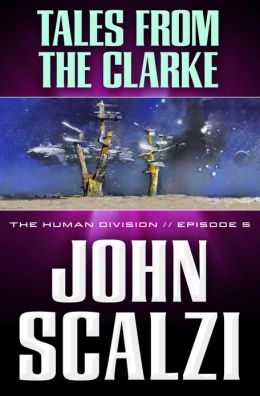
Episode 5Tales from the Clarke

Remember Captain Coloma from way back in Episode 1? That would be the gruff-but-caring Captain who's all righteous but really cares most about her crew. If you recognize that characterization, then it's because you read it in my review of Leviathan Wakes, and recall the phrase as criticism of that book's reliance of stock characters. Only, Captain Coloma isn't a stock character. Or maybe she sort of is, but it doesn't really matter because she's interesting! That's right--a female authority figure who is actually interesting! The fact that this excites me shows how low the bar is set for gender relations in science fiction and fantasy, but credit Scalzi with taking the obvious stock character, making her a woman and then making that an asset. Basically any scene with Coloma is gold, and here we get a whole chapter--a whole chapter whose plot is convoluted and full of irritating America-in-space-isms, but which is rendered compelling by the fact that it's about Coloma. Fingers crossed that we get at least one more chapter from her perspective.

[INPUT 8/10 (+1 for Coloma; -1 for baseball...really?) OUTPUT 8/10]


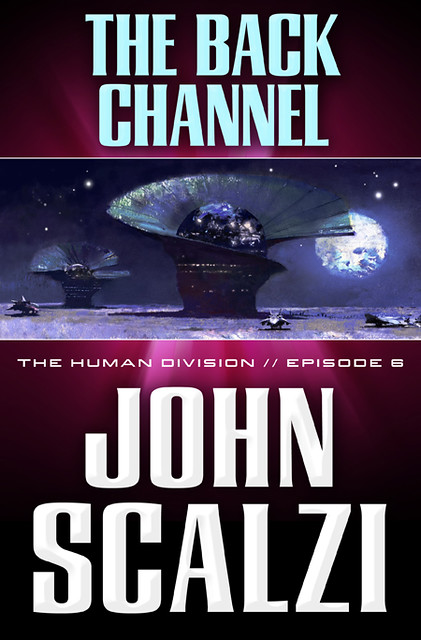
Episode 6: The Back Channel

At this point I'm giving up on the whole "this is like a serialized TV show" idea, because it's just not. Why? Because in six episodes to date, three are interludes that don't feature any of the central characters. And that does create problems for The Human Division specifically as a serialized novel (there is, after all, a very good reason why TV shows don't really do this). But unlike the frustrating interlude we get in Episode 4, this one is a total blast to read. It's definitely the funniest entry so far, and introduces a great character in Hafte Sorvalh--advisor to Conclave leader General Gau and lover of churros. You can really feel Scalzi hitting his stride at this point.

[INPUT 8/10 (+1 for Sorvalh and the churros; +1 for space neo-nazi douchebags being just as fun to shit on as regular neo-nazi douchebags; -1 for it's another interlude) OUTPUT 9/10]


Episode 7: The Dog King

Now this one's just silly. And centers on a little dog wearing a crown. I won't say anymore, because then I might spoil the episode for you, and that wouldn't be any fun, would it. Suffice to say, Wilson, Schmidt and the rest get into a mess, hijinks ensue, diplomatic relations are threatened and a wacky solution emerges that just might solve everyone's problems in one fell swoop. Does that sound like your kind of thing? Sometimes it is my kind of thing, like when I'm sleep deprived and watching The Big Bang Theory because it's easy and kind of funny and I know exactly what to expect. Or Psych because it's silly and full of references to things no one remembers unless their approximately my age, like Terence Trent D'arby. But I ask more from books than television, and prefer Scalzi's writing when the humor isn't quite so upfront and center. So yeah, this one is funny, but kind of unsatisfying as well.

[INPUT 6/10 (+1 for yes, it is genuinely funny; -1 for but I was expecting a bit more than just wacky comedy) OUTPUT 6/10]

Cumulative Score - Episodes 1-7: 7.57