Tuesday, September 22, 2015

Microreview [book]: Seveneves, by Neal Stephenson

The Most Stephenson-esque Book Yet!
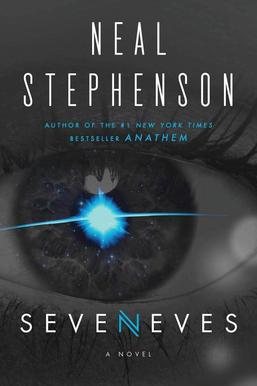

Stephenson, Neal. Seveneves. William Morrow: 2015.


Neal Stephenson is the Gary Oldman of novelists—he can take on practically any genre, and do it well. He went from straight post-cyberpunk sci fi to quasi-historical to quite historical epic, followed by a dip into the near-present, then veered into the murky realm of speculative fiction. His most recent book, Seveneves, weaves together his entire oeuvre (I can never remember how to spell the funny-looking word for “body of work”, constantly getting it confused with the French word for ‘egg’, so just in case I’m wrong this time, I mean the one that’s not an egg!). It’s got plenty of speculation, a veritable mountain of hard sci fi concepts and babble (more on that below), and takes place in two distinct time-frames, the immediate future and the so-distant-it’s-almost-unrecognizable future 5000 years hence.

If you, like me, love a mind-bending initial premise, then you’ll take to Seveneves immediately: its first sentence begins, ‘The moon blew up.’ This seemingly random, unexplainable event sets in motion what amounts, we learn quickly, to the End of the World. This is awesome! I was thinking as I read those early pages, a cool ‘what if?’ premise that asks the hard questions about, for instance, what actually has value if only the tiniest fraction of the human population is to survive (genetic diversity, scientists and engineers, intrepid no-nonsense types who can Get Things Done, etc.), and what has absolutely none (friggin’ politicians who interrupt messianic scientists constantly to talk incessantly, almost everything and everyone on earth, cloak-and-dagger plotters (=politicians), and also politicians and their sycophantic, cannibalistic lackeys. Politicians!). Of course, if none of the latter list would have any value in a high-pressure survival situation, one cannot help but begin to question their value even in our day-to-day lives…

Yes, the beginning of Seveneves is masterful and entertaining. And actually the ending, 5000 years in the future, is fairly intriguing as well. Even the middle has its moments. But the story definitely gets bogged down, or indeed bedeviled (the devil is, after all, in the details), due to Stephenson’s almost obsessive need to explain the workings of every single physics concept in excruciating detail. Ever wondered how orbit adjustments are/might soon be made in low earth orbit? Prepare to have all your questions answered, multiple times.

I’m probably even nerdier than Stephenson in most ways, but even I was taken aback by the loving, painstaking effort he put into all such descriptions. Trademark Stephenson, to explain the workings of thrusters or whatever in lavish detail, yet deadpan though multiple romantic encounters. He’ll spend dozens of pages on what amounts to background world-building, in a style that, while always entertaining to read, flirts with an almost footnote-like “here’s what you need to know about this physical process” approach, but skip through anything with the barest hint of melodrama (the inevitable attrition of the Cloud Ark population, for example, essentially isn’t described at all; instead we lurch forward in time to the critical moment for that dwindling population, skipping all the human drama in between).

As my previous reviews on this site will attest, I think romance, melodrama, and human emotions are all super-awesome, but techno-babble not so much. Given that context, you might be expecting me to “grade” Seveneves harshly. Expect again! (An expression that, I just noticed, doesn’t really roll off the tongue like “Think again”…)  Midway through I was gearing up to Go Negative due to all the descriptions of minute course corrections and the near-zero discussion of how everyone felt about things, but before I could bring my Guns of Negativity to bear, it suddenly hit me: all that emotional stuff is ALSO more or less useless in a high-pressure, ‘survival of the species’-type test. Who cares about a given character’s internal monologue about how much of a bummer it is that they had to work hard? Or whether so-and-so is getting married, or whatever? It’s all made irrelevant by the enormity of the challenge facing humanity. 

Seveneves is quite an unsettling story, in that respect, much like the recent Australian apocalyptic film These Final Hours. If there were an extinction-level meteor strike whose atmosphere-igniting firestorm will reach your country in twelve hours (or, in the case of Seveneves, a similar catastrophe in about three years), all of the normal narrative logic fails to apply. Hey, it seems like Jimmy and Zoe will get together after all—thank goodness he didn’t end up with horrid Vicki! Plus, Zoe’s pregnant, so happily ever after it is! But wait a minute…none of these relationships ultimately mean what we normally think they mean, because all (or, in Seveneves, virtually all) of the characters have been denied any chance at a future. Their ability to influence things, whether through making a genetic contribution (having kids) or by swaying the hearts and minds of others, is literally zero. If humanity will soon cease, for all intents and purposes, to exist, does anything we normally care about matter anymore? Stories such as these force the viewer to ask terrifying questions about what has ultimate value, and we might be surprised by what we discover in the night at the end of the tunnel.

So ultimately, Stephenson won me over with the unshakable logic that hardly anything, including who shacks up with whom, is of any import at all, and can safely be elided, whereas the physics of movement in space and such things are suddenly of tremendous importance (and perhaps have been all along, but we humans can only see this clearly when we are standing in our own graves!).

There were things about the book that struck me as not fully successful/satisfying, notably the transition from the present to 5000 years in the future (I’ve drunk the cool-aid that the journey is more important than the destination, but Stephenson clearly doesn’t rate how things came to be as of any significance compared to the simple matter of what is, and thus decided to skip ahead to the ‘good part’). Yet it was close to spell-binding throughout, even during the long near-asides to describe the workings of a thingamabob. Despite having only the faintest traces of melodrama about it, even to the point that we pretty much know almost none of the characters have any chance at a future at all, Seveneves was quite emotionally satisfying nonetheless, at least to me. Any fan of Stephenson’s prior work will likely find Seveneves, to paraphrase Rick Blaine, “just like his other books, only more so.”


The Math:

Objective Assessment: 8/10

Bonuses: +1 for forcing readers to confront the bitter reality that all the crap we spend our time obsessing about (who ‘ends up with’ whom romantically, etc.) is of questionable value

Penalties: -1 for taking the Battlestar Galactica gambit of moving the story one year into the future, but multiplied by (literally) 5000, thereby demanding readers just accept our solar system’s future without any chance to see how things developed the way they did

Nerd coefficient: 8/10 "Well worth your time and attention, even if 40% of it is scifibabble!"


Zhaoyun, Wearer of Rose-Colored Glasses and Reader of Dreams, has been keeping it real here at Nerds of a Feather since 2013.

Monday, September 21, 2015

Microreview [film]: The Manitou

For a one-star movie, not too bad


The Manitou shows up regularly on Turner Classic Movies' "TCM Underground" series, and has a reputation for being a uniquely bizarre film, along with a one-star rating on the cable guide. But for the first half of the movie, the strangest thing about it is that Hollywood legend Tony Curtis plays the lead.

Curtis plays Harry Erskine, a charlatan psychic to chiefly old women with deep pockets. But Harry's girlfriend Karen (played by Susan Strasberg, daughter of acting coach Lee), suddenly develops a rapidly metastasizing tumor on her shoulder that doctors soon discover is a fetus. What follows are a series of familiar scenes: strange happening when doctors attempt to operate, the possessed old woman who begins speaking a strange language, a seance (which is actually super cool), and consulting with an expert on this particular form of occult weirdness — played with relish by Burgess Meredith. These scenes all put me in mind of films like Rosemary's Baby and the more recent Drag Me to Hell. While those films certainly did this stuff better, The Manitou dies it well enough to keep things fun.

Harry and his expanding team of helpers discover that the growth on Karen's shoulder is the reincarnation of an ancient Native American medicine man, so they enlist the help of a current medicine man, who can't work fast enough to keep the weird little devil from being born — which is certainly a hell of a memorable scene. Then they've got a fight on their hands.

Is it an odd movie? Sure, is the dwarf playing the reincarnated medicine man more goofy than scary? Sure. But there are some genuinely memorable visuals in the film, and the saddest takeaway from the whole thing is that we may have missed out on some truly great horror films when the film's writer/director, William Gridler, was killed scouting locations for his next film, at only the age of 30.

The Math

Baseline Assessment: 5/10

Bonuses: +1 for Susan Strasberg's totally creepy screaming; +1 for a cast that did their best to commit, even though they were clearly slumming it; +1 for some compelling visuals (especially the ice-covered hospital wing)

Penalties: -1 for your standard wooden dialogue and bizarre logical leaps; -1 for the final confrontation, which is just silly

Cult Film Coefficient: 6/10. Better than it probably should've been

Posted by Vance K — co-editor and cult film fake psychic at nerds of a feather, flock together since 2012

Friday, September 18, 2015

Microreview [book series]: Yesterday's Gone, by Sean Platt and David Wright

A bit of alright, as the Australians might say


How did I stumble across this series, you ask? Simple: I got my eyes burned by a laser. So I knew, post-laser, that I’d have to rest my eyes for a day or two, and decided to stock up on interesting-sounding-yet-still-reasonably-priced Audible titles. Nor was I sorry! I thoroughly enjoyed listening to what the dual authors have dubbed, in what they call an homage to narrative arc TV series storytelling, “season one.” (I also liked season two, but season three wasn't available on Audible, only as a regular e-book, and perhaps as a consequence, didn't really "do it for" me, as Bill Pullman said so emphatically as Lonestar.) They claim in their author’s note/afterward that they were inspired by the episodic but still character-driven nature of Lost to try an experiment with this project, exploring the capabilities of the e-book format and aiming for the feel of a TV series. And I was mildly surprised to find this formula pretty effective, in fact, though it ironically reproduces some of the most frustratingly contrived aspects of serial TV (such as characters not doing something anyone on earth would immediately do, like close the door or whatever, because it is just so much more convenient for the diegesis if the idiots keep making spectacularly bad decisions). My generally positive impression of seasons one & two, in particular, might stem partly from the skillfully done audio recording; the narrator really brings Boricio, in particular, to life.

I won’t say much about the story, except to note that it’s not so much post-apocalyptic as “right in the middle of the apocalypse”, a Manichean nightmare where darkness and light are locked in furious battle…and darkness is mopping the floor with light. Boricio is awesome despite the suggestion that to psychopaths empathy is like a switch that can be turned back on; Luca is a weird, irritating drag, despite obviously being hugely important to the story. And the vaguely quantum theoretical underpinnings of the series’ main premise/conceit is interesting enough, and if not wholly original, at least a major improvement over the typical “zombie plague” kind of storyline.

The only real objection I have is about what I’ll call the “infected” or, if you prefer, the “monsters”,  which I felt to be a singularly odd combination of lethal traits (massive physical strength and speed, claws, bullets to anywhere but the head seldom effective, etc.) and absurd vulnerability (sometimes human characters just stepping on the monsters’ heads is enough to end them). Do the authors intend for the infected/monsters to be scary? They end up conjuring fear in the hearts of this reader only when a) there are tons of them, and b) the humans are almost out of bullets.  Which happens pretty much all the time, now that I think about it!

Anyway, if you’re looking for an engrossing read (or “listen”!) that, at least for the gateway drug of the first volume (or “season”), is free or nearly so, you can’t do much better than Yesterday’s Gone—the shockingly vulgar one-liners from Boricio alone make it worth your time!

The Math

Objective Assessment: 6/10

Bonuses: +1 for Boricio, +1 for a refreshing quantum-ized look at the apocalypse

Penalties: -1 for failing to render the monsters/infected in a truly scary/consistently tough way (if they can form claws or whatever as hard and sharp as steel, why are their heads ripe watermelons waiting for a stiff breeze to explode them?)

Nerd coefficient: 7/10 “A bit of alright” (ß throw some prawns on the barbie and smoke ‘em!)


This has been a test of Nerds of a Feather flock-mate Zhaoyun’s emergence-ee broadcast system. It was only a test; if it were a real emergence-ee, I wouldn’t have time to tell you I’ve been doing this for literally two years!

Thursday, September 17, 2015

Thursday Morning Superhero

There is a lot going on for Star Wars fans.  Funko recently announced a subscription based box, BB-8 continues to mesmerize me every time I lay eyes on that darn droid, and each bit of news from The Force Awakens makes it harder to wait until December.  Fortunately for us fans, Marvel has stepped up big time and is delivering some amazing content for us to digest as quick as they can get it into print.  It truly is a great time to be a Star Wars fan and I cannot wait for the new film to introduce a new generation to this amazing franchise.


Pick of the Week:

Star Wars #9 - This issue opens up with a bang!  Luke quickly regains his lightsaber from the smuggler who swiped it, only to run into Grakkus the Hutt, a fiendish relative of Jabba who bears a necklace adorned with lightsabers.  Mix in his robotic legs, and you have an odd smash-up of Jabba and General Grievous.   Grakkus is anything but a typical Hutt, and is a welcome addition to the family.  Han and Leia actually get a small improvement to their situation.  When we last left them, Sana, Han's wife (?), called the Empire fleet down to claim Leia's bounty.  I remain in awe of how much fun this series is and can't recommend it enough.
 
The Rest:

Beauty #2 - We are treated to the second issue in this thrilling story about the STD that people are trying to catch.  For a refresher, the Beauty is a disease that makes the individual who is ill more attractive.  Unfortunately, spontaneous combustion appears to be a side effect.  This is not a good thing and the first issue ended with detective Foster learning he was infected.  This issue picks up with the investigation, but shows how awkward it is for individuals infected with the Beauty.  Foster has a hard time going about his day as everyone is aware of his change in appearance.  This issue introduced the idea of a government cover-up of the side effects of the disease and possible motivations to encourage infection.  Really digging the premise and the introduction that will delight your average conspiracy theorist. 

Captain America: White #1 - Jeph Loeb and Tim Sale have reunited to share another classic story of Captain America and Bucky.  The story is from the perspective of Cap while he is adjusting to waking up from his coma.  This is a must purchase for any Captain America fan and it is always refreshing to return to to the 40's and watch Cap and Bucky vs. the Germans.  While I enjoy what is currently happening with Captain America, I always welcome a return to what Captain America does best.  Kicking some Nazi butt!


POSTED BY MIKE N. aka Victor Domashev -- comic guy, proudly raising nerdy kids, and Nerds of a Feather contributor since 2012.


Wednesday, September 16, 2015

6 Books with Fantasy Author Zen Cho


Zen Cho was born and raised in Malaysia. She is the author of Crawford Award-winning short story collection Spirits Abroad, and editor of anthology Cyberpunk: Malaysia, both published by Buku Fixi. She has also been nominated for the Campbell Award for Best New Writer and the Pushcart Prize, and honour-listed for the Carl Brandon Society Awards, for her short fiction. Her debut novel, Sorcerer to the Crown, is the first in a historical fantasy trilogy published by Ace/Roc Books (US) and Pan Macmillan (UK). She lives in London with her partner and practises law in her copious free time.


1. What book are you currently reading?

I'm getting back into the Regency era as I'm working on the second book in my trilogy, which is set in Regency England. So I have just finished Pamela Horn's Flunkeys and Scullions: Life Below Stairs in Georgian England, which is historical nonfiction about servants in Georgian England — really useful and enlightening. I'm also savouring Mrs Hurst Dancing: And Other Scenes from Regency Life, 1812-23, which is a delightful collection of paintings by Diana Sperling, an amateur artist who recorded scenes from the life of her family at their estate in Essex. It appears to have involved a lot of hilarious tumbles off horses.


2. What upcoming book you are really excited about?

I can't wait to read Ann Leckie's Ancillary Mercy , the third in her much-lauded space opera trilogy. I think of the Ancillary books as being the type of books I really like disguised as the type of books I'm usually not interested in at all.


3. Is there a book you're currently itching to re-read?

I'm always rereading old favourites so I never let it get to the point of being itchy. I think I might start on Pride and Prejudice for the millionth time.


4. How about a book you've changed your mind about over time--either positively or negatively?

I used to love Enid Blyton's school stories as a kid, but you grow out of Blyton very quickly.


5. What's one book, which you read as a child or young adult, that has had a lasting influence on your writing?

Terry Pratchett's Discworld series taught me that writing was allowed to be funny, smart and serious, all at the same time.


6. And speaking of that, what's *your* latest book, and why is it awesome?

My debut novel Sorcerer to the Crown is coming out in September and it's a historical fantasy set in Regency London. It's about England's first African Sorcerer Royal, Zacharias Wythe, whose many problems are compounded when he meets runaway orphan Prunella Gentleman — a female magical prodigy, of all things! I describe it as "like Georgette Heyer, but with magic and jokes about colonialism".
Tuesday, September 15, 2015

WE RANK 'EM: Shows That Were Awesome and Then Sucked

In no particular order...

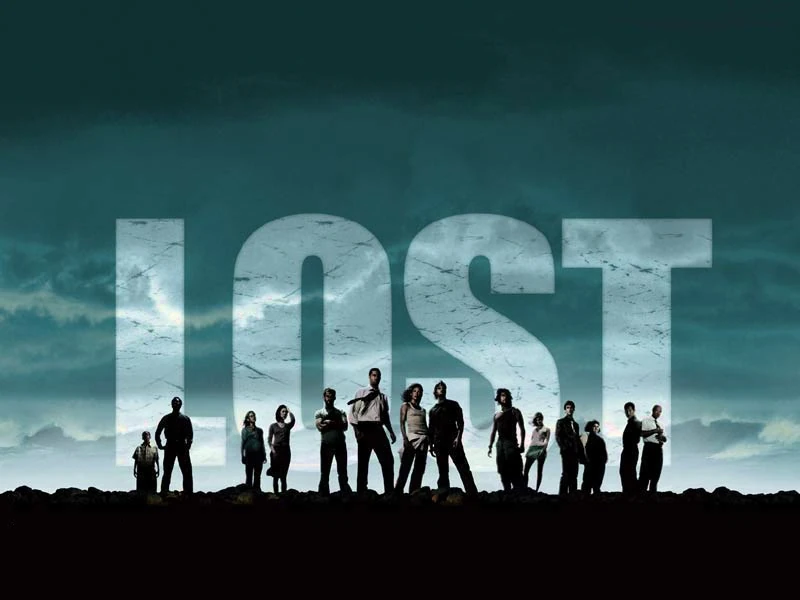
1. Lost

For a while, I dedicated any and all free time to binge-watching Lost via Netflix. I had no idea what was going on, but that was all part of the fun. "The Others? The numbers? The Dharma Initiative? GIMME MOAR!" Then the show reached its natural end point with the season 3 finale and...kept going. Only now it was about time travel and something.

It isn't that seasons 4-6 were bad, per se; it's just that show lost its focus and went on tangents that eroded the sense of wonder developed in the first 3, while never quite replacing it with something of equal value. Instead we watched that rarest of rare birds--the 'A' grade network TV drama--slide into 'B-' range.

2. Revenge

In its inaugural season, Revenge introduced us to a corrupt financier and his wife, who once betrayed her lover to protect her husband's assets; and to Emily Thorne, the daughter of said lover and a highly-trained revenge ninja, who is now singularly focused on exacting vengeance from all involved. It was ridiculous and over-the-top, but delightfully so. Then, in season 2, we found out that it was really all the work of some illuminati-style conspiracy and the eternal struggle of the revenge ninjas to stop their evil plotting. BARF! Though the showrunners tried to right the ship in season 3, the magic was gone. And so were the ratings.

3. Heroes

Heroes was cool before the Marvel cinematic universe really pushed superheroes into the moving picture spotlight (yes, I know--there had been major superhero movies prior to that, but let's face it: superhero films are bigger and more important now than ever). It had likable characters, a strong central mystery and just enough moving plot pieces to keep you riveted without getting overcomplicated. Unfortunately, the second season was poorly plotted, featured tiresome romance tangents and characters who suddenly began behaving out of character. (Mohinder the spider, anyone?) Ratings plummeted by 15%; the show sputtered on for a couple more seasons, then died an unceremonious death.

4. The Simpsons

Unarguably the greatest television show of all time...for a few years. That thing that has the form of The Simpsons but neither its heart nor soul, and which has continued to run since the year 2000? I don't know what that hot garbage is.


5. Law & Order 

I used to watch a LOT of this, and by a LOT, I mean the new one every week and a shit ton of episodes in syndication per week. There was a formula: cops discover scene of crime; cops investigate crime; early suspect turns out to be wrong; second suspect turns out to be right; lawyers build case; lawyers often but not always get a conviction. The high point, in my opinion, were the Briscow/Green and McCoy/Southerlyn years. But the formula was plug-and-play--you could pick any number of cop and lawyer combinations, and provided the formula remained (and the show remained physically in New York, not some fake-ass "New York" set at Universal Studios), you could be guaranteed a watchable show. Yet in the later years, the showrunners evidently thought we really wanted more plot twists, because that's what we got. Twist after after fucking twist. So many, in fact, that Law & Order was cancelled after an epic 20-season run--the vast majority of which had not involved said unwanted twists. Oh, and SVU? Same as above, only worse with the twists...and inexplicably still on the air! Occasionally I get the urge to watch it. This is invariably a very bad life decision.


6. True Detective

This is it, folks--a descent from the absolute pinnacle of small-screen achievement to midway down the $5 bargain bin at Best Buy. No, scratch that--if there is any justice in the world, Best Buy will refuse to sell you a DVD of season two on principle. So what went wrong? Well, think on this: season one worked because creator Nic Pizzolato had a singular vision, which was then executed to perfection by director Cary Fukunaga and actors Matthew McConaughey and Woody Harrelson. It featured: (a) a complex narrative structure; (b) haunting visuals; and (c) absurdly good performances. And that stuff was so good that we not only forgave the hokey, "dude in college who took philosophy 101 and hangs out in cafes trying to impress girls with how deep he is" dialogue, we ate it right up! So how do you follow that up? With a story that lacks all of these things, and worse, replaced its auteur with...the guy who directs Fast and Furious movies. Now try pairing that with "dude in college who took philosophy 101 and hangs out in cafes trying to impress girls with how deep he is" dialogue, and see what it gets you. As far as I'm concerned, well, now now I want to punch that dude in the face. I have never, and probably never will be, as disappointed with a TV show as I was with season two of True Detective.

Oh, and future showrunners note: when the thing you're putting out there is hot garbage, you *might* want to reconsider taking that cheap shot at the guy who made people want to watch it in the first place. Truly embarrassing.


***

POSTED BY: The G--purveyor of nerdliness, genre fanatic and Nerds of a
Feather founder/administrator (2012).

Monday, September 14, 2015

Microreview [book]: The Annihilation Score by Charles Stross

Not Quite a Symphony

When a long-running series makes significant changes to the noteworthy tropes of the series, is it really a continuation or more of a spin-off or sidestory? The Annihilation Score is not the first book in the Laundry Files series, but it is the first to feature Dr. Dominique (Mo) O'Brien as the protagonist, and she doesn't spend much of the story interacting with the Laundry proper. How does she, and the rest of the novel, stack up? Not favorably.

Following a disaster at the Laundry (a kind of government intelligence agency for supernatural horrors), Mo is dropped right into the middle of a new threat: CASE NIGHTMARE GREEN, a sudden increase in the number of people able to perform magic and leading to the ultimate destruction of Earth. However, these people don't realize that what they're doing is sorcery, and attribute it to superpowers, thus leading to an increase in superpowered vigilantism. After deftly stopping on such superpowered villain in a very public manner (very un-Laundry of Mo) with her possessed violin made of bone can devour demonic souls by being played (named by Mo "Lecter"), Mo is charged with assembling a superhero team and being a public face to draw attention away from the very secretive activities of the Laundry. However, Mo's admin team consists of a superpowered policeman, a vampire, and a mermaid. The vampire and mermaid have had previous relations with Bob, Mo's husband and protagonist of all prior Laundry books, and Mo's relationship with her husband is strained by the fact that he's inherited a great power that drives Lecter to try to compel Mo to kill him. And on top of all of this, the mysterious Dr. Freudstein appears to be a superpowered villain that Mo's agency has been formed to stop.

As with all Stross novels (at least those I've read), the story is deftly written, despite all of the moving parts. Just as impressive, there is not a lot of handwaving of the struggles that come with forming an agency that is designed to combat superpowered problems. However, in this case, the story could've used some more handwaving if it meant less words spent on meetings and bureaucratic drudgery and more time spent investigating the Freudstein menace and fighting bad guys. It almost seems like the story knows it spends too much time in meetings, as the question "why aren't you spending more time looking for Freudstein?" comes up in the novel. Yes, of course, the meetings and drudgery get stuff done, but it doesn't make for a good read. The cool stuff, the villains, the investigations, that stuff doesn't get near enough focus for all the time spent on meetings and relationships with characters that don't have a lot of meat to them. Overall, it's a story with some cool concepts (one of my favorite conundrums is whether or not superheroes are sorcerers!) that don't really pan out in the end, and leaves more than a few loose strings.

The Math

Baseline Assessment: 5/10

Bonuses: +1 Some sharp references to current events re: internet abuse bleeding into real life.

Penalties: -1 There are meetings. Lots of meetings. I hope you like Powerpoint.

Nerd Coefficient: 5/10 (problematic, but has redeeming qualities)

***

POSTED BY: brian, sci-fi/fantasy/video game dork and contributor since 2014

Reference: Stross, Charles. The Annihilation Score [Ace Books, 2015]