Showing posts sorted by date for query neuromancer. Sort by relevance Show all posts

Wednesday, July 3, 2024

Review: Identiteaze

A cyberpunk allegory about the dangers of reducing human life to binary codes

Inspired by Legacy Russell's theory of glitch feminism as a deliberate embracing of anomaly as resistance to imposed norms, and by José Esteban Muñoz's theory of queer utopianism as a project that can be realized in the present by performing it, Jessie Earl's short film Identiteaze, released last week for streaming on Nebula, satirizes the corporate cooptation of human self-expression by proposing a cyberspace where blank digital avatars reclaim the agency to assert who they are outside of their designed parameters.

Identiteaze is set in a future where AdVent, a tech megacorporation, has created a virtual space for employees to live and work in. Passing mention of "physical asset storage" implies that their bodily functions are suspended while they exist in the VentiVerse. According to the in-universe promotional website, the VentiVerse is intended by the company's founder as a family. And it's precisely this prescribed family model that causes trouble for our protagonists.

We follow Aaron and Erin, who, strictly speaking, aren't people yet. They're created as options in a menu, two possible looks for an employee's digital avatar. In the VentiVerse, you're supposed to be either male or female. When one is selected, the other is deleted—consciousness and all. Because subtext is for cowards, this piece of exposition portrays the fundamental problem with imposed binaries: to conform is to kill a part of yourself. It is simultaneously betrayal and self-mutilation. The rules of the binary demand that you commit a profound violence against yourself in order to adopt one of the allowed values.

Normally, a movie shouldn't need a handbook to understand it, but "normal" is one of the concepts that Identiteaze calls into question. Earl has posted on BlueSky, with evident excitement over the completion of this project, enumerating instances of visual shorthand she resorted to and the respective meanings she used them for. Of course, this is optional reading; a movie ought to be able to speak for itself, but viewers unfamiliar with the symbolic conventions of queer cinema will find the thread illuminating.

Speaking of symbols, an interesting metaphor that the dialogues embed throughout the story is that of a symphony. Its tempo is set by the pace of a metronome. One can notice it hidden in the soundtrack: Tick. Tock. Male. Female. Either. Or. The logic of the VentiVerse is inextricably tied to the Law of the Excluded Middle. The company's founder casts himself as director of this symphony, and his motivational speeches invite users to dismiss the space in between Tick and Tock, to reject the melody it may suggest. The moral stance of Identiteaze inhabits this space in between and argues for the beauty of the atonal, undirected music that we could hear if only we eschewed the rigidity of the metronome.

Apart from this ever-present aural cue, the dehumanization inherent to binary codes is stated repeatedly, both in dialogue and by visual language. On this topic, Identiteaze wastes no time being subtle: in one scene, a middle manager recites a training script at our protagonists without looking up from the page, and doesn't start having a truly personal interaction with them until she finally notices them face to face and realizes that they've rejected the mandatory binary choice.

A later scene is no less straightforward, but it explores the movie's theme in an unexpected way. To correct the glitch in the system, a villain tries to manipulate the protagonists into betraying each other. The format of this coercion has a clear resemblance to the classic prisoner's dilemma. What makes this scene special is that it posits a prisoner's dilemma between the parts of one consciousness. Decision theory tell us that the rationally optimal solution to the prisoner's dilemma is for both parties to refuse to betray. Only cooperation wins, and that decision must begin with each individual refusing to betray themself.

A bonus treat for viewers of Identiteaze is the behind-the-scenes video posted by Earl on her YouTube channel. It's heartwarming to hear an indie creator describe the hard work and dedication it took to bring a piece of sincere art into the world. Earl explains that there's much more plot and lore already created behind Identiteaze, and depending on the short's success, she hopes to eventually turn it into the pilot of a TV series.

The theoretical grounding Earl drew from includes not only the two philosophers named above, but a handful of science fiction predecessors: Cube, Tron, The Matrix, Neuromancer and Severance are cited among the influences that informed Earl's creative process and left their imprint on the aesthetic, the worldbuilding, the dramatic stakes, the tone and the emotional message of Identiteaze.

With so much thought and so much love at the center of this movie, it feels almost mean to have to point out the growing pains that one sometimes finds in indie productions. While the set design is impressive (even more so once you learn from Earl's behind-the-scenes video how it was built), and the CGI effects are used in the right measure, and the frequent symmetrical shot composition is both aesthetically and thematically perfect, the sound quality isn't always ideal. The whole movie is supposed to take place in an abstract cyberspace, yet a background echo from recording in a semi-enclosed set persists in some scenes. In quick, scattered moments, the acting or the writing noticeable stumble, and there's a distracting distortion in the sound of many of the protagonists' ADR lines.

Still, for the minuscule budget it was made with, Identiteaze achieves a professional-level look. A movie as loaded with symbols as this one demands a very deliberate use of the camera, and Earl relies heavily, with a well developed eye, on the possibilities of shot composition and, especially, the shot/reverse shot technique to underscore the themes of duality and nonduality. This is the first Nebula production that has convinced me to subscribe to its streaming service, and the decision has certainly paid off.


Nerd Coefficient: 7/10.


POSTED BY: Arturo Serrano, multiclass Trekkie/Whovian/Moonie/Miraculer, accumulating experience points for still more obsessions.

Thursday, May 16, 2024

Introducing the First Contact Project

What's it like to experience a classic for the first time?

As a very wise person once said, there's no science fiction canon. There's no mandatory reading list, no admission test to join the community of geekdom, and most fortunately, no enforcing authority in charge of declaring who is authorized to speak about works. Someone who has never seen a movie can simply decide one day to try Godzilla and then say how they felt. That's all you need.

That said, some experience with previous works will enrich the repertoire of the things you can say, and the quality of the arguments you can produce. Interstellar is a great movie, but you enjoy it more if you're familiar with 2001. Any discussion of The Matrix will be very limited without considering the ideas introduced in Blade Runner, Neuromancer and Ghost in the Shell (at the very minimum). If you haven't seen Ratatouille, a subplot in Everything Everywhere All at Once is almost incomprehensible. And you may be impressed with Ready Player One if you aren't aware of how it misunderstands and betrays The Iron Giant.

So, while knowledge of the classics isn't required (unless you're an academic), it's definitely useful. This puts fans who want to discuss genre works in a curious position. Every time I write an opinion on this blog, I need to remember that I'm entering a conversation that started before me and whose terms are already established. At the same time, contributing my personal perspective depends on maintaining a degree of freshness. I guess someone could write a good dissection of the flaws of monarchy as shown in The Lion King while ignorant that its plot mirrors Hamlet. You can read Don Quixote with no previous contact with the medieval adventure novels it's parodying. But how much of value can one say about the hyper-stylized violence of Kill Bill without bringing up the context of Bruce Lee's career? Is there even any point in analyzing Madoka Magica without taking into account how its mere existence is a reaction to Sailor Moon?

First exculpatory argument: We don't know what we don't know. In Pinky and the Brain, there are jokes, and some entire episodes, that only make sense to devoted fans of black-and-white cinema. I was last month years old when I learned that A Bug's Life tells essentially the same story as Seven Samurai, which means I'll never know whether that bit of trivia would have altered my impression of A Bug's Life. I was eager to watch the first Chicken Run because it was made by the people who made Wallace and Gromit; I would have felt less excited if all I'd known was that it retold The Great Escape. And this brings me to my second exculpatory argument: One viewer's classic is another viewer's meh. I have friends who adore The Mandalorian because it does visual homages to old Westerns, and that bit of trivia makes me even less interested in watching The Mandalorian. Reading that Joker referenced Taxi Driver didn't make me want to check out Taxi Driver, and I doubt anything in it would improve my subterranean opinion of Joker.

In a less snobbish world, we should be free to choose our classics the same way we choose our current obsessions, but sometimes there's no escaping the need to learn the language one is trying to use. I detested every second of Close Encounters of the Third Kind, but I must admit that having added that crayon to my coloring box makes my picture of Nope more complete. An independent taste is important to have, but one must not let it mutate into incuriosity.

With all this in mind, I've summoned the nerds of our flock to try first contact with classic works with which they haven't had a chance to get acquainted, for whatever reason, until now. Over the next few weeks, we'll be reporting our raw, first impressions of stories that you may have reread or rewatched a hundred times, that have remade in their image the shape of their genres or perhaps even invented those genres.

We embark upon this experiment aware that it cannot replicate the way it felt for those original first viewers. To be a moviegoer in the 1930s and watch the premiere of a Flash Gordon serial was only possible in those specific historical circumstances. Those of us who exist on this shore of time already carry the cultural baggage of everything that was influenced by Flash Gordon and everything that happened in real life since then, which prevents the story from having the same effect and meaning for us that it had upon release. That's my third exculpatory argument: What we can expect to get from art is inescapably tied to the context of reception.

So maybe we'll discover a new passion. Maybe we'll more deeply understand a tradition we had trouble connecting with. Maybe we'll find reasons to reappraise an artist we had underestimated. At the absolute least, we'll become better informed critics, which is what you should never be shy to demand of us.


POSTED BY: Arturo Serrano, multiclass Trekkie/Whovian/Moonie/Miraculer, accumulating experience points for still more obsessions.

Tuesday, July 25, 2023

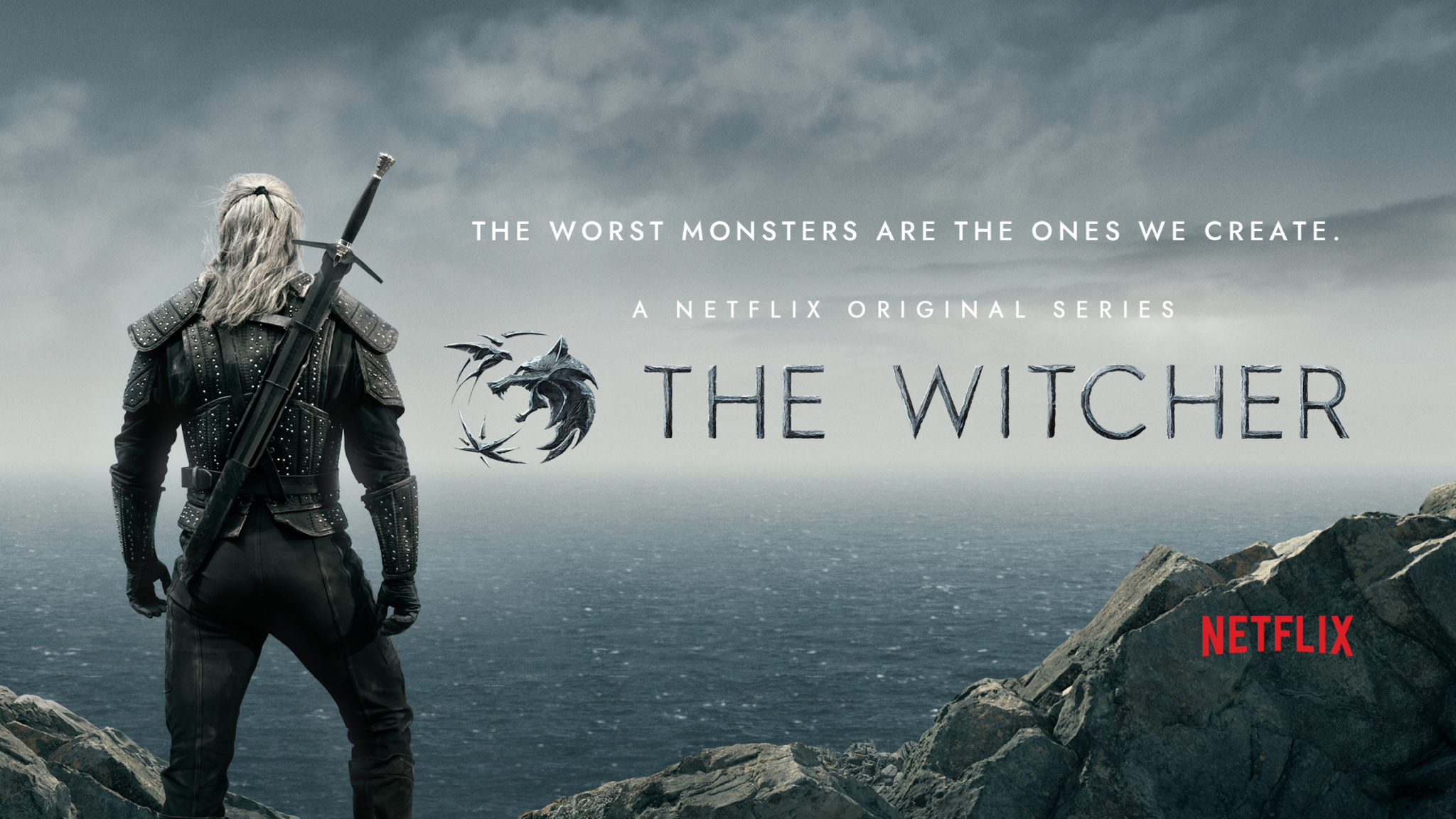
What's in an Adaptation? A Sapkowski Fanatic Watches Netflix's The Witcher

Literature is magical because, at some point, you read a book and grow convinced that it contains answers to all the mysteries of creation. I have felt this way several times in my life, particularly with esoteric novels. Many of my absolute favorite books, from Roberto Bolaño's fragmented mystery 2666 to William Gibson's cyberpunk classic Neuromancer, read almost like scriptures - arcane texts that require hermaneutics of interpretation. 

Indeed, it is not always clear what these books are about; at times they seem to be more vibes than plot, with hints of deep lore sprinkled like fairy dust across their pages. Neuromancer, for example, is a book I've read at least five times over the course of my adult life - and every experience has felt unique. The current rise of AI chatbots has even recontextualized this book once again, leading me to consider a sixth go around. 

Of all the fantasy series I have read (and there are many), none have given me that quasi-religious experience quite like Andrzej Sapkowski's Witcher cycle.* The characters are tremendously well articulated: complex, raw and human. The books are, I would argue, part of the dark turn in fantasy. But they are not just dark, they are also warm and romantic; they do not focus just on pain and suffering, but also on loyalty, friendship and what it truly means to love. 

The series is not, however, an easy read. The plot is more elliptical than linear, with a narrative focus on small groups of characters rather than big set-piece moments of great import - which happen offstage and are more referred to than described. The world-building is complex, but there is virtually no exposition to aid the uninitiated; like Gibson's science fiction, it is all showing and zero telling. Character motivations, meanwhile, can be opaque in the moment, only to revealed piecemeal through oblique reference. For all these reasons, I can see how the series could be frustrating to someone expecting Martin, Sanderson or Hobb. But for someone like me, who craves a literary puzzle, the Witcher books are pure magic.  

*[For those who don't mind spoilers, you can find more detailed, book-by-book analysis on The Last Wish, Blood of Elves, Time of Contempt, Baptism of Fire, The Tower of Swallows and The Lady of the Lake. But warning: these reviews will contain spoilers for the book and TV series.]

***

I actually first discovered the Witcherverse through other media - specifically, through CD Projekt Red's Witcher 2: Assassin of Kings. The world and characters were so captivating to me that I jumped online to find out more about the book series. I learned that Sapkowski's books were a sensation in Eastern Europe and Latin America, somewhat akin in popularity and influence to George R. R. Martin's Song of Ice and Fire series, which was (rightly) viewed as a breakout fantasy series when first published in the 1990s. I also learned that the Witcher books were being translated and published in English, so of course I had to read them. 

The games and books do not tell the same story; rather, the games pick up the story at the end of the book series. And as good and likable as the games are, the books to me are just on another level. What's interesting, though, is that I didn't stop liking the games after reading the books. If anything, my enthusiasm for the games grew. This is progress for someone who often gets hung up on changes made to revered media (e.g. some of the creative license taken for the Game of Thrones TV series). 

Really, the games feel like spiritual companions to the books. They tell a different story, but the characters and world they inhabit feel true to their literary roots. Sapkowski himself isn't a big fan the games, in part due to ambivalence toward games as a storytelling medium and in part due to licensing disputes with CD Projekt Red (which now appear to have been resolved). But what strikes me about the games is how loyal they feel to the world Sapkowski created. They are loving tributes to their source material. 

***


Enter Netflix, which in 2017 announced a new TV adaptation in development. The streaming service hoped to capitalize on both Game of Thrones mania and the popularity of the Witcherverse in other media, with a series launch scheduled to coincide with the end of HBO's mega hit. It was announced that the series would adapt the books rather than the games and would star known nerd Henry Cavill as the eponymous Witcher. 

The first season had the unenviable task of adapting The Last Wish, a short story collection that sets the stage for the cycle proper, which begins in Blood of Elves. The showrunners could have just adapted the stories in episodic format, but they wanted to reel people in the way only serialized programs can. The show also had to grapple with the fact that Witcherverse lore is so deep, complicated and - as I mentioned earlier - shown piecemeal rather than told straightforwardly. Their solution was a nonlinear narrative that combines episodic stories with backstories that unfold across different dimensions of time. Yennefer's story, for example, is told across a 70-year period while Ciri's happens within 2 years. 

The result, in my opinion, is a mixed bag. Overall I think the first season provides a solid introduction to the characters, world and general themes of the series - and I like some of the adjustments to character (e.g. fleshing out Yennefer's backstory). But I've never been sure whether it could truly capture the imagination of someone who never read the books or played the games. Nor how they would follow the world's complicated and often opaque politics. And on top of that, the pacing of season one can only be described as sluggish. 

Since comparisons are inevitable, I'll note that this contrasts unfavorably with the first season of Game of Thrones, which does a superb job of telling you what's at stake (Westeros), who the main players are (the Starks, the Lannisters and the Targaryens) and why it matters (emerging threat too everyone from the White Walkers). It seeds these vital pieces of information within a compelling political mystery plot with parallel narratives of discovery north of the wall and on the continent of Essos. Finally, through a truly shocking plot twist (which readers of the books already knew was coming but TV neophytes did not), the show sets viewers up brilliantly for season 2.  

With this in mind, I didn't exactly have high hopes for The Witcher season 2. Blood of Elves is an odd book - a good book, to the sure, but not the best in the series. As I noted in my review, it's the installment  where Sapkowski's preference for micro over macro perspectives works least well. A lot of the action takes place at the stronghold of Kaer Morhen, where Ciri trains to become a witcher. There is a very long passage, brilliant in writing but difficult to translate to the screen, where sorceress Triss Merigold castigates the all-male witcher cadre for expecting Ciri to behave like a boy and undervaluing her femininity. We are introduced to Rience, who is one of the series' main antagonists, and get glimpses of the political machinations that propel the macro plot across the cycle. My concern going into season 2 of the TV series was that this would not make for compelling television, which requires even more "watercooler moments" than books. What if the show remained sluggish? 

Boy was I wrong. Season 2 of The Witcher is fantastic. The pace picks up, as the story shifts from contained monster hunting and backstory exposition to the multi-pronged contest to capture and control Ciri, with Geralt and Yennefer desperately trying to keep her out of the hands of those who would manipulate her for their own ends. 

The shape and structure of Sapkowski's book series only really works in the medium of literature; in order to turn it into effective television, the showrunners had to make changes - opting to capture the tone and feel of the books while diverging from them in specific ways. In season 2, the plot is simpler, clearer and strikes a more even balances micro and macro events than does Blood of Elves. Which is not to say that it is better than Blood of Elves - the opacity and nonlinearity, even in its least compelling installment, has always struck me as a feature rather than a bug. But the streamlined narrative does work better as television.   

Season 3, half of which is available as of writing (with the second half dropping worldwide on July 27), wraps up events from Blood of Elves and shifts to the second novel in the cycle proper, Time of Contempt. In contrast to Blood of Elves, Sapkowski's elliptical narratives and micro-focus work tremendously well in this book. In fact, Time of Contempt is one of two Witcher novels I scored as a 10/10, and is a supreme example of what can be accomplished within the fantasy genre. I even suggested that it "may be the best fantasy novel I have ever read." - which it probably was, at the time (though now, having finished the series, I am inclined to think The Lady of the Lake is even better). 

***

Season 3 struggles a bit more with the source material than in season 2, perhaps because the roadmap to transitioning the story to television is less clear. But it is still quite good - and, knowing what comes next, I am very excited for part two. Having watched the preview trailer, it looks likely that the show will adapt the intensity and pure weirdness of Time of Contempt's denouement. I don't want to spoil anything, but since you can see them in the trailer, all I will say is this: unicorns. The unicorn sequence in Time of Contempt is batshit crazy, in the best possible way. 

The show is supported by a superb cast of actors; besides Cavill, British actresses Anya Chalotra and Freya Allen shine as Yennefer and Ciri, and Eamon Farren is superb as the enigmatic Nilfgaardian agent Cahir Mawr Dyffryn aep Ceallach. Some of the smaller characters are also quite memorable - sorceress Sabrina Glevessig, dwarven adventurer Yarpen Zigrin and magical detectives Codringher and Fenn all make the most of limited screen time. 

Notably, some characters from the book series have been altered past the point of recognition. Sometimes this works. Prince Radovid of Redania is far more interesting as King Vizimir's perennially underestimated brother than he is as Vizimir's young, stern son. Sorceress Fringilla Vigo is also transformed from a minor character in the early novels into to a major player with backstory, nuance and complexity. We similarly get a deeper look at elven Queen Francesca Findebair, who like Fingilla Vigo becomes a more important character later in the book series but isn't really a major player in Blood of Elves. This exposition should make it easier for Witcher neophytes to understand the roles Fringilla Vigo and Francesca Findebair play as the cycle unfolds. 

At other times, the changes work less well. Philippa Eilhart is one of the most intriguing characters in the books and games - a scheming puppet-master with the mercurial, predatory demeanor of her other form, the owl. The way she's played in the show feels off to me, she is more sensual and almost feline. Not that there is anything wrong with that, and as always with these things, your mileage mat vary - it's just a deviation from the books and games that doesn't really work for me. 

There are also a lot of new characters, some of which work better than others. Gallatin the elven insurgent appears in season 3 to create conflict but doesn't really have much of a role otherwise. Dara is another elven character who seems to exist more to move the plot along than anything else. But Istredd to me is a very strong addition to the story. 

Now, to be fair, Istredd does appear in the short story "A Shard of Ice," but he does not appear in the cycle proper. However, unlike, say, Stregobor, he is not the feature of the story nor does he have a major place in Witcherverse lore - rather, he is included in that story as a device that helps us delve deeper into Geralt and Yennefer's relationship. As such, his portrayal in the show as an academic mage with a key role in unfolding the central conspiracy at the heart of the first two novels feels more original than just expanded. 

***

All of this is a lengthy way to say the TV adaptation has to date surprised me with its quality, its depth and its ability to know when to adhere to what has been established in the books and games and when to deviate from them. 

With that in mind, I have some major concerns about how the series will wrap up. Let's start with the obvious: for some baffling, unimaginably stupid reason, the show's producers decided to let Henry Cavill go and replace him with Liam Helmsworth. It's not that Helmsworth is a bad actor or would make for a bad Geralt; it's that Cavill has embodied the character as only someone with a true passion for the role can. Cavill is a known nerd who came into the role as a big fan of the games; since taking on the role, he has dived deep into the books and broader Witcherverse, to the point where cast and crew have called him the set's expert on series lore. 

This may have been the reason for his dismissal. Cavill allegedly argued with the showrunners on deviations from the book series, whereas the showrunners would prefer not to stick too close to the books. Given my comments on the series above, you might think I'd take the showrunners' side here - but seasons 2 and 3 clearly show Cavill's influence. Without that, the deviations may become less authentic to fans of Sapkowski's writing. 

The show may also suffer from the ongoing WGA and SAG-AFTRA strikes (which we strongly support). The scripts for season 4 have apparently already been written, but the strike could impact necessary revisions. And does anyone, for a moment, think the studios might not just rush the product out to meet financial obligations, ready or not? 

I have even greater concerns about how Netflix will handle the show's ending in season 5. After all, we've now seen countless examples of streaming channels chasing ratings by letting beloved series series end miserably. Even worse is the new trend to cut costs by killing off projects that people love, no matter where we are in the storyline. Both would do a major disservice to what has been, up to now, a major success. I hope neither comes to fruition, but I do have serious concerns here.

Ultimately, though, we can only judge the series on what it's done to date - and it's hard for this Witcherverse fanatic not to see the adaptation as a glass more than half full. Sure, it's not the books - and it may not be the games either, but it is good. Very good. I hope that the show continues to live up to its promise. 

***

POSTED BY: The G--purveyor of nerdliness, genre fanatic and Nerds of a
Feather founder/administrator (2012).

Monday, December 26, 2022

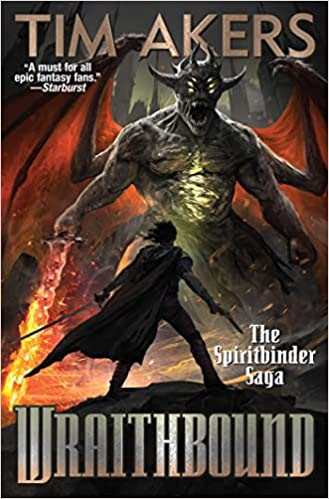
Six Books with Tim Akers


Tim Akers grew up in rural North Carolina, and now lives in unrural Chicago, with his wife and about a million unwritten books in his head. He is the author of the Veridon series, Knight Watch, and the forthcoming Wraithbound


Today he tells us about his Six Books 


1. What book are you currently reading?

 I tend to read more than one book at a time. First is Destroyer of Worlds, by Larry Correia. It's a grand Sword & Sorcery tale set in an India-inspired world. Great fun, though I have to laugh because it's Larry. Guns have just made an appearance in book three, and everyone's like GUNS ARE AMAZING. Yes, Larry, guns are amazing. But I'm here for the swords and the sorceries.


The other book that I'm reading is Garden of Empire, which is the second book in JT Greathouse's Pact and Pattern series, the first of which was Hand of the Sun King. This series really flew under the radar, and I think it's the best fantasy to come out in the last decade. It's simply breathtaking in its scope and ambition, and Greathouse delivers.


2. What upcoming book are you really excited about?


The Lost Metal, the next Wax and Wane novel from Brandon Sanderson. That's a pretty obvious choice, but for me, they hit that sweet spot between epic and urban fantasy, between high fantasy and steampunk, between comedy and grimdark. It's a difficult balancing act, but a real joy to read.


3. Is there a book that you're currently itching to reread?

 I don't reread a lot of books. There are simply too many good books being written. The only time I really reread a book is to study its structure, or sometimes to prepare to read the next book in a series when there's been a really long delay. So at the moment, no, nothing I'm dying to go back to.


4. Book that I love and wish I'd written...


I certainly feel that way about The Long Price Quartet, by Daniel Abraham. Another series that really fell under the radar. It had one of those truly brilliant magic systems, heavily based in character development, rather than a complicated game of world building and math. It might be the best magic system I've ever seen. And because of the way it was developed, it gave rise to some of the best characters in a fantasy series.


5. What's one book that has had a lasting impact on your writing style?


Unquestionably Neuromancer, by William Gibson. It changed the way I think about stories in a fundamental way, and his style impacted me so heavily that it took nearly a decade before I could write something that wasn't just an obvious rip off of Gibson's works. I've strayed away from that a bit, especially with the Knight Watch stuff, but there will always be a port somewhere, tuned to the color of a dead television


6. What's your latest book, and why is it awesome?


My next book is Wraithbound, out in April 2023. It's awesome because the main character accidently binds the ghost of a murdered mage to his soul, drawing the attention of an apocalyptic cabal of demon worshipping assassins. The world has already fallen to Chaos, other than a narrow bubble of civilization preserved by Order magic, but the very magic that protects them is slowly strangling them. It's a story of conspiracies, murder, high magic, low crime, sharp wit and blunt force trauma. Also there are airships.


Thank you, Tim!

POSTED BY: Paul Weimer. Ubiquitous in Shadow, but I’m just this guy, you know? @princejvstin.

Friday, April 8, 2022

Microreview [book]: The Extractionist by Kimberly Unger

A comprehensive and realistic view of the future of the Internet, centered around a complex and well drawn protagonist.

In the near future of Kimberly Unger’s The Extractionist, our current Internet has evolved into a more complicated, and dangerous place, the Swim. The march of technology has provided for a lot of new ways to interact with that technology for ordinary people, and as always, for those on the bleeding edge. Eliza McKay is on that bleeding edge, with a rare and dangerous XWire setup in her brain that gives her an immersive connection to the data of the Swim that few can match. Few would, because Xwire installations can cause psychosis, or worse. 

For all of those skills and equipment, though, McKay  is on the margins of the technosphere, banned from doing most of what she has trained and studied and is rather good at. What McKay is doing these days is rescuing people who cannot extract themselves from virtual worlds and for various reasons simply can’t be unplugged. But when a government agency hires McKay, currently in Singapore, for such an operation, McKay finds herself caught in the middle of a story of corporate ambition, government surveillance, greed, and a lurking threat in the Swim.

McKay is the titular Extractionist.

Predicting the future of the internet or any technology is a tricky business. At best one can predict and describe a plausible future internet, given trends, technology, and human nature. Plausibility, and providing an Internet that provides the capacity for story are key to writing a story using a future iteration of current technology.  That so, it was inevitable that I kept thinking of previous genre works. Given McKay’s experimental technology and her deep connections to it and the Swim, it is natural to think of cyberpunk and cyberpunk novels, particularly. Given that there is one friendly AI and antagonist ones as well, Vernor Vinge’s True Names came to mind much more than, say, Neuromancer, because we don’t quite have the dystopian background of the latter in the world building of this novel. A more obscure connection I think also may go to Web of Angels by John Ford. While I don’t know if the author has read the novel (sadly, it is long out of print), the concept of Gailer as a Webspinner does connect with what McKay can do, which are both outside the bounds of what should be and have the potential to upend a lot of apple carts if fully manifested.

The technology in the novel goes beyond the Swim, though. There is a lot of speculation and invention involving devices in the real world, particularly nanotech, in the form of “bots”. These bots are a ubiquitous feature of Unger’s digital figure and landscape and are much like, say, a wifi signal today. One expects bots in this world to be everywhere, and Unger has some clever ideas on how they could be used on a day to day basis as well as for malfeasance and the bleeding edge of what’s possible in her future world. Between the bots and Xwire and other ways to connect to the Swim, the novel spends a lot of time thinking about levels of technology, who has access to it and what they do with it. Indeed, the “Street” does find its own uses for Technology in Unger’s world.

Early on, I had wondered why people could not simply be "unplugged" from the Swim. Instead of a relatively unrealistic "this would kill the person" sort of answer, instead, Unger uses an approach that reminded me of David Brin's Kiln People, except the alternate people are virtual beings whose later memories are incorporated into one's own. So, an unplugging from the Swim would work, but that lack of integration of memories could mean anything learned in the Swim would be lost. For many people, that's no big deal, but say, for a corporate spy or a government agent, the information is the crucial thing. So, McKay's skills find more use and a niche in this society. I also thought of the modern internet--imagining losing all of your stored emails or your twitter followers or the groups on Facebook you follow. You could reconstruct some of that, but the loss would be bitter.

As far as McKay herself as a character, I am going to turn to another genre work, a genre character as a point of reference for how I saw her, and that would be Dominic from INCEPTION. Like Dominic, McKay does not have an outlet for a lot of her skills and so has to make do with a series of marginal jobs. The novel opening with her away from her home in San Francisco and instead in Singapore reinforced that for me. Although unlike Dominic she is not banned from the United States for fear of arrest, she is under a ban for most of her work, and is constantly seeking to avoid notice by the government  And, like Dominic, she is seeking a way to get back into good graces so she can do her craft again.  And she has connections and longtime relationships that she draws upon for the “big score” that, if she plays her cards right, will give her all that she wants, just like Dominic, with the same high risk as well. 

But like her previous novel, Nucleation, the novel is strongest when we play with the technology, and not as strong when it is in more straightforward technothriller realms. However, given how immersive and ubiquitous the Swim is, and given the bleeding edge of McKay’s technology and its uses, this means that the technothriller elements are much more infused with that technology, and so, for me, they come off much better and much smoother than her previous novel. As mentioned above, the author’s strengths are in technology and the extrapolation of technological trends, and what people will do with that technology more than action beats. So the beats here, so infused with that technology and its uses (and misuses) came off much smoother for me this time around.

If there is a weakness for me for this novel, and it is something Nucleation didn’t have to deal with because it was so bottled, but this novel does have scenes on two sides of the Pacific, is a lack of consideration or extrapolation of how the world is doing besides the march of technology. Especially given how McKay is wrapped up with a government agency, and such concerns would affect someone in her position and her forced-into-profession of an Extractionist for hire, sometimes globally, the world outside the technological world portions at best static and at worst, a cypher. I think a big opportunity for a fully formed future was missed, here. 

Ultimately, The Extractionist is a successful second novel that builds on the author’s first and is in good conversation with previous novels exploring this space. It’s hard to write near future SF, to the point that authors I know actively avoid it. Unger, however, is continually ready to dive into it, and I am very interested in seeing what she will do next. 

The Math

Baseline Assessment: 6/10.

Bonuses: +1 for very strong extrapolation and presentation of future technology, including the “Swim”

+1 for a well rounded and complicated central character with a fully realized past, present and future.

Penalties -1 for too light of a touch on extrapolation of the future beyond the technological.

Nerd Coefficient: 7/10 

Reference: Unger, Kimberly. The Extractionist [Tachyon, 2022]. 

POSTED BY: Paul Weimer. Ubiquitous in Shadow, but I’m just this guy, you know? 2020 Hugo Award finalist for Best Fan Writer. @princejvstin.


Tuesday, May 12, 2020

Interview: Corey J. White author of Repo Virtual

At what point does an AI reach personhood? Once you've defined personhood, and what it takes to get there, what now?  If you suddenly found yourself in possession of a sentient AI, what would you do? Or I guess, the more interesting question is, what wouldn't you do?

If that sounds interesting,  Corey J White's Repo Virtual may be right up your alley.  Online,  Julius Dax is a repoman. But IRL,  he's a thief.   While nearly everyone plays in the online intergalactic war in the stars,  in real life, people are starving and hustling just to make it through another day.   Think Neuromancer meets Ready Player One, but crank the capitalism up to even worse, and bring in a ton more diversity.

Something that caught my eye, when the earliest reviews started coming out,  was the possibilities of being someone else in a Virtual world.  Julius has a physical disability.  Can he leave that behind in the virtual world?  Every time I make an avatar in an online game, I feel like it's my opportunity to  be a more attractive/interesting version of myself - taller, thinner, fewer zits. Now I know Repo Virtual isn't about any of those things, but still, it got my attention and made me want to learn more about the novel and about the author.   A lot of times I get something completely different out of a piece of fiction than what was intended.

Corey J. White was kind enough to answer all my ridiculous questions while offering a view behind the scenes of how this intriguing novel came to be. Other topics we discuss include AI Personhood, what might a teenage AI think about,  sci-fi body-horror novel, Creeper Magazine, and more! And I've got to say, now I'm even more interested in reading the book!  Repo Virtual is making a number of recommended and "best of the month" lists. It could be exactly the escapism we all need right now.

Corey J White is also the author of the space opera Voidwitch Saga series of novellas - Killing Gravity, Void Black Shadow, and Static Ruin.  He lives in Melbourne, Australia. You can learn more about Corey by checking out his website or following him on twitter at @cjwhite.

Let's get to the interview!

NOAF: I've read some early reviews on GoodReads, and what stood out to me first is how much your readers love the characters in Repo Virtual. Introduce us to Julius Dax (JD), Soo-hyun, Troy, and Enda. Who are these folks and what are they all about?

Corey J. White: JD is our window into the world - a precarious worker, online repo man, and real-life thief with scruples. Soo-hyun is JD's step-sibling. He loves them immensely, but is never really sure he can trust them. They've gotten caught up in a streaming cult living in the dilapidated flood ruins on the edge of Songdo, and the cult leader is the one that puts the entire plot into motion: tasking Soo-hyun with recruiting JD to steal a virus she claims to have a hand in creating.
Troy is JD's ex. They both still love each other, but they've been too hurt to admit it. He's also a philosophy professor, which comes in handy when you're trying to talk about the personhood of AI. Enda is the retired operative turned private eye that's blackmailed into retrieving the stolen virus... but she's also not the type of women you should ever even consider blackmailing.

NOAF:  Repo Virtual is being compared to Neuromancer, Ready Player One, and other novels that involve cyberpunk and people working in virtual worlds. What were your inspirations for Repo Virtual? How does it feel to be compared to William Gibson, the father of cyberpunk?

Corey J. White: Neuromancer was less of an inspiration and more of a touchstone for Repo Virtual. I almost didn't want to write an "AI heist" plot because I knew it would be compared to Neuromancer, and any cyberpunk book is going to suffer in comparison to the formative text, but the more I thought about the story and the themes I wanted to address, the more I realised that the heist was the best way to go (for me, at that point in time). Then once I'd made that choice, I couldn't not recognise Neuromancer with the book, but it's more something I reference, rather than anything I was inspired by.

The real inspiration came largely from the way Damien Williams talks about the personhood of non-biological intelligences, and searching for a way to talk about that in a story. All the disparate ideas I had for the story only really started to come together when I realised what I wanted to write about.

Other inspirations include Nexus War, the first MMORPG I ever really lost myself in, and one that I made friends from that I still talk to today; articles and stories about EvE Online (but not the game itself); reportage on some contemporary Silicon Valley adjacent cults; the increasing cyberpunk-ification of our lives; and I took some inspiration for the structure of the story from Nick Harkaway's Gnomon. I don't think I would have written one of the POVs the way I have if I hadn't read his novel.

NOAF:  Something I love about the idea of virtual reality is that I can be anyone I want there. I can be 8 inches taller, I can have my ideal beach body. JD has a physical disability that hampers in him the real world. Do your characters take advantage of virtual reality to present a different version of themselves? Does virtual reality give them other benefits (or disadvantages)?

Corey J. White: For a book with "Virtual" in the title, the Virtual Reality stuff in the book is admittedly pretty slim. If I'd gone too far down that route I would have been stepping on Neal Stephenson's toes too with Snow Crash.

That said, in the book, Augmented and Virtual realities are just another facet of a hyper-connected, digitised life, a deception that sometimes scrapes at JD's psyche like pop-up ads in your browser window. In a virtual world, JD can walk without a limp and without pain, but that just tells him he can't trust it. At least if it hurts, he knows it's real.

NOAF:  I'm a sucker for anything AI related. HAL, Data, the three laws, how does sentience work, hook me up with that positronic thinks-it-understands-people goodness! How did you develop the AI in Repo Virtual?

Corey J. White: Because I'm specifically looking at the personhood of AI, I ended up looking at it in the terms of relationships, both the relationship this AI forges as the story unfolds, and relationships between ideas, concepts, people, history, etc, allowing the AI to gain context and understanding beyond the level of a simple data analysis tool. So it's AI as an agent of connection, in more than one way.

One thought I had early on in the development of the book was that if we created a race of strong AI that could travel out into the universe longer after humankind has gone extinct, they might look back on us the way kids look back at dinosaurs. That when the AI are in their developmental stages, they'd all have a favourite human, whether that's a great figures from history, or just one particular teenager from Osaka in 2019 who created their all-time favourite meme.

So I guess I was thinking of AI as our future children, and what we might owe them, rather than thinking of them as powerful tools of corporate control.

NOAF: What was your writing process like for this novel? Are you a plotter, or a pantser?

Corey J. White: The strangest thing about the process with Repo Virtual was that I signed the contract with just an outline and an introduction, which was a first for me. So every time I was faced with self-doubt or doubts about the book I was writing, I had to push that aside and keep going, because I'd already signed the paperwork and taken the money . . .

But, yes, I'm a plotter. Of course, the plot as planned may not survive contact with the blank page, and that's alright. I think some people push back against the idea of plotting because they think they'll be too constricted by it. The secret though is that it's your plot, and you can change, destroy, or ignore it as you see fit, as and when the story starts to take you to other places. It's not a plan, it's a map, and sometimes you want to set the map aside and let yourself get lost.

NOAF:  What's next for you? Do you see yourself writing more stories about JD and his adventures in Neo Songdo?

Corey J. White: Next for me (because I've almost finished the first draft already) is a sci-fi body-horror novel about our culpability and responsibilities in the face of mass extinction caused by anthropocentric climate change. After that I already have a loose idea of the sequel, but I'm also putting aside notes on a Repo Virtual follow-up. It wouldn't be a proper sequel, because I've told the story of all those characters (well, Mirae could reappear, who knows), but something that uses the world I've set up to delve into some more themes concerning this online reality we've constructed for ourselves. I'd particularly be looking at some of the questions you were asking about virtual reality before, but in regards to augmented reality.

NOAF:  What are some favorite books, comics, movies, TV shows, and other entertainment that you've enjoyed lately?

Corey J. White: This could easily get out of hand, but, recently I've read and enjoyed Drive Your Plow Over the Bones of the Dead by Olga Tokarczuk, Octavia Butler's Clay's Ark, Pretty Deadly by Kelly Sue Deconnick, Emma Rios, and others, and Stranger Than We Can Imagine by John Higgs.

TV-wise, I recently started on Castlevania Season 3, which has more great additions to an already stellar cast, and the dialogue tells me that Warren Ellis was really enjoying himself when he was writing it. I've also been rewatching Schitt's Creek in the lead up to the final season. Catherine O'Hara is a treasure. And I finally saw First Reformed. I should have watched it on release as it definitely shares some DNA with the book I'm currently writing.

NOAF:  On your website, you mention your involvement with Oh Nothing Press, and something about "Weird Cultural Errata". Those being three of my favorite words, what is Oh Nothing Press all about? Where can we learn more?

Corey J. White: I guess the whole point of Oh Nothing Press is that it can be about whatever we want it to be about. So far we've released two capsules - the first was MechaDeath, a story of cosmic black metal mecha warfare told with a meticulously designed zine and some fantastic t-shirt designs.

The second capsule was Creeper Magazine issue 1, and our third capsule will be Creeper issue 2. I sometimes say that Creeper is about the horror of The Now, but that doesn't really say much about the content, so, to quote: Weird crime, conspiracies, paranoia, folklore, the occult, modern myth, bizarre philosophy, fringe tech and genre-exploding fiction. CREEPER is the sort of magazine that could never exist in the mainstream, so we had to make it ourselves!

It's really interesting watching themes and through-lines come through as we're putting together Creeper 2, so I'm keen to see it out in the world later this year.

After that, we've always got ideas for new projects, it just comes down to which of those ideas keep us inspired, and how much time we can spare after day jobs and other creative projects.

NOAF: Thank you so much Corey!

POSTED BY: Andrea Johnson lives in Michigan with her husband and too many books. She can be found on twitter, @redhead5318 , where she posts about books, food, and assorted nerdery.

Friday, April 10, 2020

6 Books with Chris Kluwe


Chris Kluwe is the author of the acclaimed non-fiction collection Beautifully Unique Sparkleponies, a contributor to Press Start To Play, and the lead designer of the tabletop card game Twilight of the Gods.

A former NFL player, Kluwe has received wide attention for his TED talk about the future of technology, virtual reality, and empathy, and has been profiled in The New York Times, The Wall Street Journal, USA Today.

Today Chris Shares his Six Books with Us....

1. What book are you currently reading?

I just finished reading A Pale Light In The Black by K.B. Wagers,
which I enjoyed quite a lot. It's a sci-fi space military type story,
but with lots of excellent character building and representation. I do
book reviews for Lightspeed Magazine so I get lots of ARCs sent my way
:)


2. What upcoming book are you really excited about?

Alecto the Ninth, the third book in Tamsyn Muir's Locked Tomb trilogy
that started with Gideon the Ninth. The second book, Harrow the Ninth,
comes out in June, and both it and Gideon are spectacularly weird. I
haven't read an author that original in a long time. I'm also looking
forward to Rhythm of War, the fourth book in Brandon Sanderson's
Stormlight Archive.


 3. Is there a book you’re currently itching to re-read?

Nothing springs to mind, but I'll usually go back and reread one of
Terry Pratchett's Discworld novels at least once a month. It's like
returning to an old friend.


 4. How about a book you’ve changed your mind about – either positively or negatively?

I don't know that I've ever read a book that I liked/disliked and then
went back later and had the opposite opinion. Usually within the first ten pages I know if I'm going to like it or not (I've read a LOT of books, and the only one I forced myself to finish was Atlas Shrugged just to say I'd read it (it's terrible)), and I can't think of any that have shifted. I will say there are definitely books I read as a
kid that I have a different perspective on as an adult (lots of Orson
Scott Card's stuff, David Eddings' work), but I still like them as
stories.


5. What’s one book, which you read as a child or a young adult, that has had a lasting influence on your writing?

Probably Neuromancer by William Gibson. Up until then I hadn't really
read anything I'd consider seminal, but that one blew my mind. If I
can get even close to writing something that good I'll be fortunate,
as the way Gibson constructs characters and environments out of the
world we inhabit is amazing.


6. And speaking of that, what’s your latest book, and why is it awesome? 

My latest book is called Otaku, and it's a love/hate letter to gaming
culture, along with some other ideas I wanted to explore about our
current society. I've been playing games all my life and if I'd been
born ten years later I probably would have become a professional video
game player instead of an NFL player. Otaku is a reflection on both
the positives and negatives of that world, as well as how that world
is usually portrayed in media, and I'm hopeful people will enjoy a new
perspective on what's traditionally considered a white male space
(there are definitely going to be some people who don't enjoy it,
because I'm, uh, not exactly shy with my feelings about the regressive
elements inhabiting it). Plus I got a nice blurb from William Gibson
so that's one of the highlights of my life so far.

POSTED BY: Paul Weimer. Ubiquitous in Shadow, but I’m just this guy, you know? @princejvstin.

Monday, September 30, 2019

The Hugo Initiative: Mind Meld: Favorite Best Novel Hugo Winner

Editor’s note: For years, the essential sci-fi blog SF Signal published Mind Meld, a regular column that featured a weekly roundtable discussion of the tropes, themes, politics, and future of genre fiction. The Mind Meld solicited answers from writers, editors, readers and fans on a rotating basis. After the closure of SF Signal, this feature was picked up and continued for a time by the Barnes and Noble Sci Fi Blog. We at Nerds of a Feather are proud to honor those traditions today as part of our Hugo Initiative.

Today’s Mind Meld question is the following...

What is your favorite winner of the Hugo award for best novel? Why?


Charlie Jane Anders is the Hugo Finalist co-host of Our Opinions are Correct, as well as the author of All the Birds in the Sky and The City in the Middle of the Night.

The Dispossessed by Ursula K. Le Guin

This is my favorite Le Guin novel, and I think about it all the time. The story of a physicist who travels from a dirt-poor socialist anarchist world to a decadent capitalist one, this book asks so many important questions about money, property, scientific progress, and the balance between the individual and society. And even better, it doesn't really give us any easy answers. Le Guin probes the flaws in both Urras and Anares with great precision, while managing to make both worlds feel real and lived-in. And when you read all of her Hainish novels and stories in one go, as I highly encourage you to do, you start to realize that this novel's hero, Shevek, has an impact that extends far beyond these two worlds --- Shevek invents the Ansible, a instantaneous communications device that provides a crucial plot point in many of the other Hainish stories. The natives in Le Guin's "The Word For World Is Forest" are only really saved because of an Ansible, and it also helps in many other stories to provide a crucial connection to the wider universe. For all its focus on the fate of two worlds and the never-ending clash between ownership and collectivism, The Dispossessed ends up being a story of how technology can connect us to many other worlds and help us to realize that we're all connected.


Casey Blair writes speculative fiction novels including the cozy fantasy web serial Tea Princess Chronicles, which is available online for free. She lives among the forests of the Pacific Northwest and is most frequently found trapped by a cat. Follow her on Twitter as @CaseyLBlair, or visit her website at caseylblair.com. 

On one hand my answer is N.K. Jemisin, particularly The Stone Sky for the glorious, visceral thrill of such a brilliant author and series being uplifted by the voters to stick a metaphorical finger in the eyes of racist naysayers by winning three times in a row. Every book in the Broken Earth series is unflinching, and reading the truth Jemisin lays bare in it and knowing people have recognized the value of her work is incredible. It was a powerful series to read, and it was powerful to see it win every single time.

But for me it is also Lois McMaster Bujold's Paladin of Souls, which was my first encounter of a fantasy book that centered an older woman and mother who still gets to experience adventures. Bujold's work is always stunning, but this one in particular mattered for me to read: among a great deal of heavy narrative lifting, it was also a dream of a future for women where we exist, and are relevant, and can have fun past our early twenties or past bearing children. Reading that masterfully wrought story and realizing how rare this aspect was and is in our fantasy changed how I thought about the genre, the world, and what it mattered for me personally to do in both.


Cheryl Morgan is an editor, critic, publisher, radio presenter, occasional writer of fictions, and
possibly a few other things that she has forgotten. Most of her writing can be found via her blog,
Cheryl’s Mewsings and she is on Twitter as @CherylMorgan.

I have often been asked to pick my favourite science novel. That’s not an easy question, but it is actually easier in some ways than picking my favourite Hugo winner. After all, people rarely agree on which novel is the best of the year. If they did there would be no point in having the Hugos. So in many years my favourite book fails to win the Hugo. Indeed, quite often it doesn’t even make the final ballot (Cathrynne M Valente’s Radiance being a case in point). As a result, the exercise of picking a favourite Hugo winner becomes more a matter of picking a favourite among a bunch of books that I thought were a bit meh, or even actively disliked.

Thankfully there are some years in which books I did like were winners. I still have a soft spot for China Mièville’s The City and The City, for example. I also love Ancillary Justice, and the whole of N.K. Jemisin’s Broken Earth Trilogy. (Are the Hugo winners getting better, or at east coming closer to my taste?) But I’m slightly nervous of picking something recent in case it doesn’t pass the test of time.

A case in point is William Gibson’s Neuromancer. It is a book I loved when it came out. It also
kickstarted the entire cyberpunk genre. It is clearly a very important book. But is it still a favourite, now that we live in a world in which cyberspace has proved very different to the one that Gibson imagined? The real internet is far more like something out of Pat Cadigan’s Synners than out of the Sprawl Trilogy. Of course, there are also books that I haven’t read. And there are books that I read so long ago (The Demolished Man, for example) that I have no idea whether I still like them or not. I have this year’s Hugo reading to do, so I’m not going to be re-reading the backlist for this project. So where does that leave me? Well, there are a handful of absolute classics of the genre on the Hugo Winner list, and among those I am fortunate enough to find one of the books I often mention when people ask me for my all-time favourite science fiction novel. That book is The Dispossessed by Ursula K Le Guin. What is so special about The Dispossessed? Well to start with it is by Le Guin, who is as close to a  genius that our genre has produced (and note that Gene Wolfe did not win a Hugo with any of his novels, nor did Octavia Butler). But the main reason I love it is that it does a thing that many science fiction novels try; and does it superbly well. The Dispossessed is a Utopian novel, harking all the way back to Thomas More’s original. Whereas More’s Utopians dig a channel to separate themselves from the mainland, the people of Anarres have gone to live on an entirely separate world. They have, in classic Utopian manner, tried to create a perfect society. And, just like everyone else who tries this, they fail. Le Guin understands that one man’s Utopia is another man’s Dystopia. What suits some of us does not suit all of us. Also, humans are naturally competitive, and any attempt to create a totally egalitarian society is doomed to failure. Someone will always find a way to make themselves seem better than everyone else, even if that is only “better” by their own definition. As a result, The Dispossessed is less of a political polemic and more of an extended analysis of the merits and demerits of different forms of social organisation. It is a book that debates with itself, and makes a very good attempt at doing so neutrally and fairly. Obviously there are those who think that the book is a stunning portrayal of the evils of Capitalism, and others who think it is a stunning portrayal of the evils of Communism. I think both of those groups are wrong, and I think Le Guin would be disappointed in their reaction as well. This attempt at a balanced political analysis puts The Dispossessed head and shoulders above so many other science fiction novels that have attempted to portray utopian societies. (I’m thinking in particular of Sheri Tepper who kept trying to enforce correct behaviour by various sorts of mind control.) I wish there were more books out there that admitted that they don’t present a solution to problems of mankind, and indeed that no such solution is possible. People are individuals, cultures are individuals. Attempting to impose a one-size-fits-all solution will always be a disaster for a lot of people. We need that lesson more than ever right now.


Elizabeth Bear was born on the same day as Frodo and Bilbo Baggins, but in a different year. She is the Hugo, Sturgeon, Locus, and Campbell Award winning author of 30 novels and over a hundred short stories, and her hobbies of rock climbing, archery, kayaking, and horseback riding have led more than one person to accuse her of prepping for a portal fantasy adventure. 

She lives in Massachusetts with her husband, writer Scott Lynch. 

“Favorite" is a hard question, and probably changes depending on my mood. But I can tell you the most formative one for me, which is John Brunner's STAND ON ZANZIBAR, a dazzling and difficult novel that manages to be cyberpunk before cyberpunk was a thing. I read it when I was very young, and I've reread it at intervals since. The actual metric of whether science fiction is any good or not is not whether it manages to predict the future, and yet STAND ON ZANZIBAR and its companion novel THE SHEEP LOOK UP manage to predict algorithm-targeted advertising, fake organic food, spree killers, and a number of other issues that feel pretty relevant today. Stand on Zanzibar is very concerned with overpopulation as an "if this goes on" kind of issue, which sometimes makes it feel a little dated, but the concern with corporate control of media, fake news, and the management of what people think and feel through information siloing are eerily prescient.

The book's written in a non-trad format that was radical enough for its day that there's actually a note at the beginning explaining how to read it, but any modern reader who can handle recent Hugo-winning novels (or Alfred Bester or Ursula Le Guin, for that matter) won't find it too daunting, I think.


Michael J. Martinez has spent 20 years in journalism and communications writing other people's stories. A few years ago, in a moment of blinding hubris, he thought he'd try to write one of his own. So far, it's working out far better than he expected. Mike currently lives in the Los Angeles area. He's an avid traveler and beer aficionado, and since nobody has told him to stop yet, he continues to write fiction.. His latest novel is MJ-12: Endgame.

I’m extraordinarily pleased to be doing another mind meld and I hope this feature finds a permanent home soon. I’m less pleased about having to actually choose my favorite among the Hugo Award winners for Best Novel. It’s honestly not fair. Joe Haldeman’s The Forever War? The Left Hand of Darkness by Ursula Le Guin? Dan Simmons’ Hyperion? I mean, Neuromancer is on this list! We got several Connie Willis books, some Kim Stanley Robinson novels, we got Neil Gaiman, Ann Leckie’s awesome Ancillary Justice, John Scalzi’s too-much-fun Redshirts and N.K. Jemisin’s brilliant landmark Broken Earth trilogy in a historic three-peat. I almost went with Jonathan Strange & Mr. Norrel by Susanna Clarke, which remains one of my favorite books and was a true pleasure to read. But if I’m truly honest, I need to go with Michael Chabon’s The Yiddish Policeman’s Union.

Right? I know. I’m the last guy to get all literary, believe me. I’m not necessarily a fan of Chabon’s other works. But this book in particular stuck with me, made me think, opened some doors in my head and is a tiny bit to blame for my own career. I’d had an interest in alternate history and historical fantasy works for years, going back to The Guns of the South by the iconic and amazing Harry Turtledove, as well as Fatherland by Robert Harris. I liked the intellectual exercise of plotting history based on changes to these wonderful inflection points. They planted the seeds that would bloom in my brain years and years later and lead me down a similar road. Chabon did all this, of course, in developing the community of Sitka, Alaska, turning that sleepy little town into a bustling haven for the Jewish people during and after World War II. He imagined a very divergent post-war society with all kinds of cool details only alluded to in the book. But what he did so well, and what truly captured my imagination, was not his political alternatives, but his cultural ones. Here, he took Jewish culture and used his setting details to truly make it a living, breathing thing, divergent and strange but yet recognizable and comfortable all the same. And he populated the story with truly memorable characters and a resonant story. All of this combined to make Chabon’s alternate history truly immersive. In some alt-histories, I find myself still comparing the divergences in history as the story moves forward. But in The Yiddish Policeman’s Union, I surrendered completely and utterly to the story. The brilliant setting was yet another character, permeating the narrative perfectly.

Did I have more fun reading Strange and Norrell and Redshirts? You betcha. But Chabon was perhaps the most brilliant example of the kind of alternate history that I aspired to write years later.


Nebula-nominated Beth Cato is the author of the Clockwork Dagger duology and the Blood of Earth trilogy from Harper Voyager. She’s a Hanford, California native transplanted to the Arizona desert, where she lives with her husband, son, and requisite cats. Follow her at BethCato.com and on Twitter at @BethCato.

Paladin of Souls by Lois McMaster Bujold. What makes it stand out among so many excellent Hugo winners? First of all, it's the second book in a series, following up the excellent Curse of Chalion. As much as I loved that book, however, Paladin resounded even more for me because of its heroine, Ista. She's an older woman who has lost her husband and child. Other people underestimate her, assuming her to be fragile and insane after all she has endured. Ista is a woman who wants to escape and truly live again, and as someone with major anxiety and depression, wow, can I relate. This is one of those books that I wished would never end. Fortunately, there ARE more books in this setting; in particular, the Penric novellas are cozy and wonderful, and I am woefully behind in reading the rest of them. I should correct that. Thank you for reminding me to do so, Mind Meld.


Marguerite Kenner is a native Californian who has forsaken sunny paradise to live and work with her partner, Alasdair Stuart, in a UK city named after her favorite pastime but pronounced differently. She manages her time between co-owning Escape Artists, editing its YA imprint Cast of Wonders, lecturing, grappling with legal conundrums as a lawyer, studying popular culture (i.e. going to movies and playing video games), and curling up with really good books. You can follow her adventures on Twitter.

My favorite best novel Hugo winner is from 1982 -- 'Downbelow Station' by C. J. Cherryh. I still own my first copy of it, a dog-eared, well-loved paperback. Captain Signy Mallory was the first 'unlikable woman' protagonist I remember resonating with, and I think I still know all the words to the filk song...


Sara Megibow is a literary agent with kt literary out of Highlands Ranch, CO. She has worked in publishing since 2006 and represents New York Times bestsellers authors including Margaret Rogerson, Roni Loren, Jason M. Hough and Jaleigh Johnson. 

My favorite winner of the Hugo Award for Best Novel is THE WINDUP GIRL by Paolo Bacigalupi. It was 2010 and I was a newbie agent only four years into my publishing career. My local sci-fi con is MileHi Con in Denver and Paolo Bacigalupi was one of the guests that year. Way before the con (and before the Hugos), I read THE WINDUP GIRL and fell in love with it – the writing, the characters, the mind-expanding nature of the world – all made for an amazing and memorable read. What made this book extra special for me, though, was the opportunity to hear the author speak in person. I can’t quote the panel accurately all these years later but I do remember how Mr.
Bacigalupi described imagining the concept and creating THE WINDUP GIRL from there. Listening to him speak about his work helped me appreciate the nuances and conflicts in his book even more. Cons can be expensive but if it’s in the budget they are an amazing experience! THE WINDUP GIRL sits on a place of honor on my bookshelf because meeting the author in person after already having fallen in love with his book was such a wonderful experience.


Jaime Lee Moyer is a writer of fantasy and science fiction, herder of cats, occasional poet, and maker of tangible things. Her first novel, Delia's Shadow, was published by Tor Books, and won the 2009 Literary Award for Fiction, administrated by Thurber House and funded by the Columbus Arts
Council. Two sequels, A Barricade In Hell and Against A Brightening Sky, were also published by Tor. Her new novel, Brightfall, came out from Jo Fletcher Books on September 5, 2019.

In 1979, Vonda McIntyre’s novel, Dreamsnake, won the Hugo for best novel. I didn’t discover the novel until years later, one of the few books I hadn’t read in the paperback rack at the library. The three racks full of paperbacks were a constantly changing treasure chest of SFF books, and Dreamsnake was definitely a treasure. I remember falling in love from the first word. The protagonist of this novel is Snake, a young healer who relies on her three snakes, Grass, Mist, and Sand, to heal the people who seek her out. Grass is her dreamsnake, rare and precious and hard to come by. When a desert tribe asks her to heal a very sick little boy, Snake knows these people are afraid of her, and afraid of her snakes. What she doesn’t realize is how deep that fear runs and what it will cost her. Snake blames herself. McIntyre painted a vivid picture throughout Snake’s travels of what it means to be different and other, to be needed and feared at the same time, and did so in a way that felt emotionally true. I saw so many parallels to the real world. Great characters, and excellent worldbuilding, suck me into a book every time. This book made a lasting impression on me. Not only is Dreamsnake my favorite Hugo winner, it’s in my top ten list of all-time favorite novels.

POSTED BY: Paul Weimer. Ubiquitous in Shadow, but I’m just this guy, you know? @princejvstin.