Showing posts with label The Witcher. Show all posts

Wednesday, November 12, 2025

TV Review: The Witcher Season 4

A big casting change and a return to linear storytelling redefines the tone in season 4


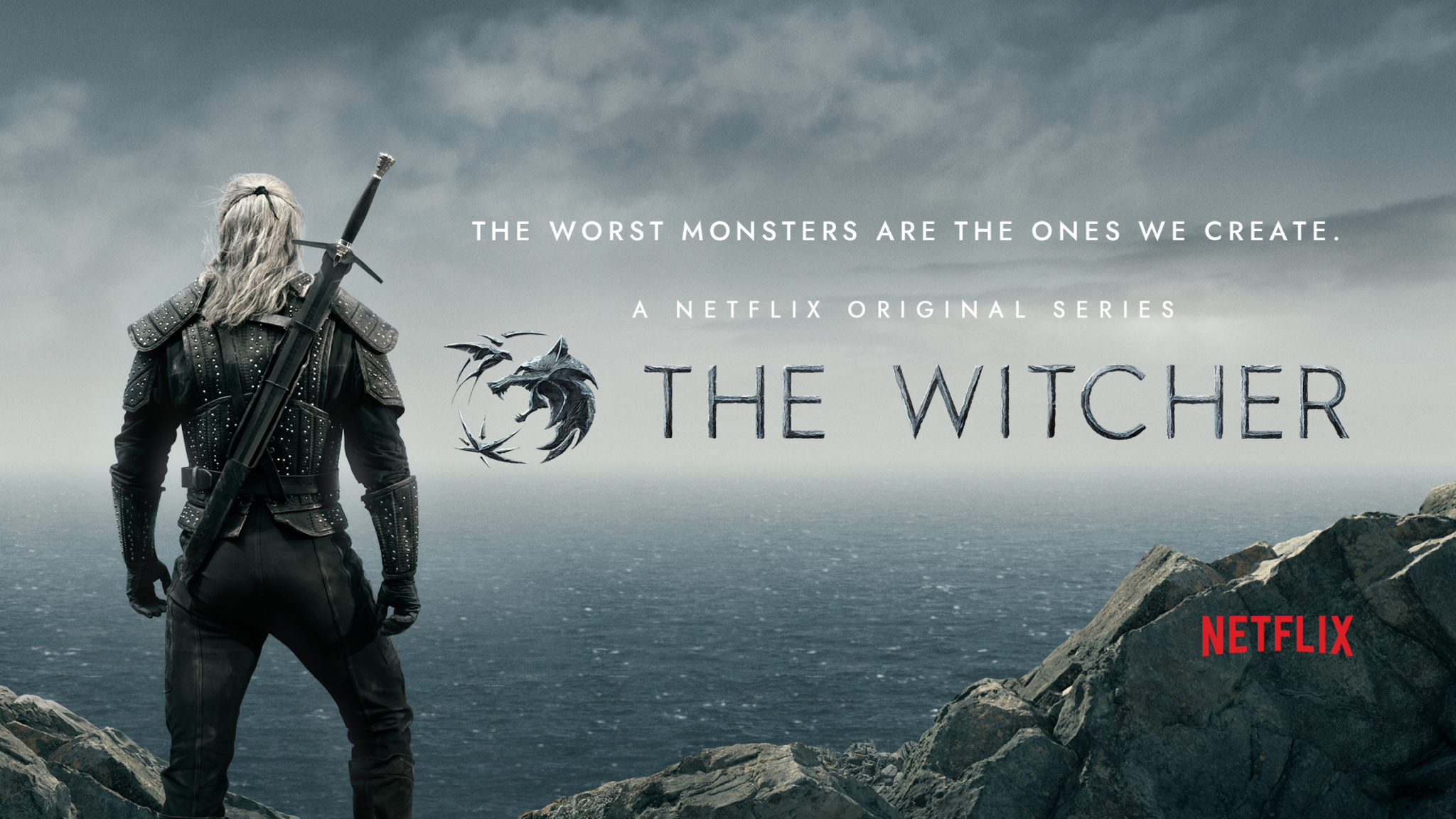
Netflix’s popular fantasy adventure series, The Witcher, has returned for its fourth season with a significant change. The title character is no longer being played by the formidable Henry Cavill but has instead been replaced by Liam Hemsworth. After three seasons, the change is undeniably disorienting and results in a significant change in the overall aura of the show. 

The Witcher is the story of Geralt of Rivia, a magically enhanced, but emotionally repressed, professional monster killer whose destiny changes when he becomes a spiritual father to Ciri (Freya Allan), a hunted, deposed princess with supernatural powers. As evil forces attack both of them, they are aided by Yennifer (Anya Chalota), a powerful, morally gray (but ultimately good hearted) mage, and Jaskier (Joey Batey), a cheerful bard who provides cynical comic relief and helps nudge the stoic Geralt towards appreciating human emotions and connections. 

Season 1 gave us the satisfying adventures of the journeys of Yennifer, Geralt, and Ciri converging on each other as the intimidating Geralt and the fugitive child Ciri, fight to find each other. Season 2 focuses on Ciri, with Geralt as her new father, training to fight while sinister forces (and some allies) plot to take Ciri’s power for themselves. Season 3 offered a highly complicated plot where multiple villains, antagonists, and traitors from multiple kingdoms and cultures all fight and betray each other in an attempt to capture or duplicate Ciri. Season 4 opens with a more cynical Ciri abandoning her family of Geralt and Yennifer, changing her name to Falka, and joining up with a ragtag band of thieves called the Rats. In the meantime, Yennifer reassembles a team of mages to fight the current central villain Vilgefortz (Mahesh Jadu), the evil mage who is helping the other central villain, Emhyr (Bart Edwards) in a plot to capture and marry Ciri (who is his daughter) to create an ultimate power that will give him world domination. 

While many of the characters remain the same, the biggest issue of season 4 is obviously the replacement of Henry Cavill with Liam Hemsworth, which is a major and distracting cast change. For better or for worse, re-cast characters happen in series periodically and it’s always odd. The issue is not the quality of the acting, which is fine in season 4, nor is it the physical difference which is, admittedly, very significant. The strangeness also comes from the distinct onscreen change of personality, aura, and chemistry. The new version of Geralt is delivered in a way that is much more passive and quiet. He periodically smiles in a way that is out of character with the brooding, grumpy, always vaguely irritated hero of the earlier seasons. The intrigue of The Witcher often lay in the contrast between Geralt’s monstrous strength, lethal focus, and stoicism being unexpectedly juxtaposed against surprising moments of compassion and empathy. But, in season 4, we no longer have that contrast. The new Geralt is more quietly sad rather than being a smoldering, fierce killer. From a plot perspective, this could arguably be due to the many losses he has suffered over the seasons. But, probably the best way to enjoy season 4 is to calibrate your expectations and perhaps treat the new Geralt as if he were a new version of the Doctor on Doctor Who. Same memory and relationships, different body and personality. 

On the bright side, season 4 gives us much more linear storytelling which is a relief from the overly complicated and confusing machinations of season 3. While season 3 gave us a dizzying amount of villains and antagonists, season 4 distills them down to just the evil mage Vilgefortz and the evil ruler Emhyr, and a brief appearance by a local villain Leo Bonhart (Sharlto Copley). The remaining antagonists are either killed off or redeemed into helpful anti-heroes and allies. In a return to the format of season 1, we have three separate stories of Yennifer, Geralt, and Ciri. 

Plot one involves Yennifer gathering her mages, including her former enemies, to kill Vilgefortz. This is the most cliched but also the most enjoyable part of the three part storytelling. The story of the team up of the mages is filled with lots of girl power, diversity, plenty of enemies to allies energy, and a good amount of entertaining action. It’s also filled with lots of melodrama and some great stand out moments from former antagonists Fringilla (Mimi Khayisa) and Phillipa (Cassie Clare). 

Plot two involves Geralt and his new loyal traveling crew, including Milva (Meng’er Zhang), Zoltan (Danny Woodburn), and Regis (Laurence Fishburne), along with Geralt’s longtime ally Jaskier. They are all on a misdirected journey to find Ciri because, unfortunately, the Ciri he’s chasing is a decoy. In this adventure, Geralt repeatedly finds himself vulnerable due to a leg injury and is repeatedly being saved by others. Obviously there’s lots of good messaging about reliance on others and the need for community but this is not the intense Geralt of season one. The addition of the legendary Laurence Fishburne as Regis, an observant and seemingly helpful vampire, creates some much needed gravitas to the tone of the story. However, the introductory plot connecting him to Geralt and crew is one of the most unbelievable moments in the story and is another indicator of how different and passive the new Geralt is from the old one.

Plot three involves Ciri inexplicably hanging out with a morally gray band of tropey ragtag thieves. The group includes one member whose attempt to assault her is just brushed off and then she moves on to intimacy with another member. The acting is solid and the anti-establishment heist plot is predictable. But the characters are all so shallowly presented and unlikeable that when they finally get their comeuppance it’s hard to feel sorry for them. This storyline also includes violent bad guy Leo Bonhart as the local over the top villain. Considering Ciri’s immense power, her interaction with him is ultimately a little disappointing.

In season 4 major many issues are raised and then completely discarded so it’s hard to know who or what to become emotionally invested in. This is fine as long as you calibrate your expectations. The only true surprise is that the story continues to end on a cliffhanger. The tale is no longer must see television, but it is still entertaining as a standard fantasy. Especially, if you want a bit of escapism without having to think too hard about it.

--

The Math

Nerd Coefficient: 6/10

Highlights:
  • Major casting change shifts the energy of the series
  • Cliched but more streamlined storytelling
  • Lots of appealing girl power and diverse characters
POSTED BY: Ann Michelle Harris – Multitasking, fiction writing Trekkie currently dreaming of her next beach vacation.

Tuesday, July 25, 2023

What's in an Adaptation? A Sapkowski Fanatic Watches Netflix's The Witcher

Literature is magical because, at some point, you read a book and grow convinced that it contains answers to all the mysteries of creation. I have felt this way several times in my life, particularly with esoteric novels. Many of my absolute favorite books, from Roberto BolaƱo's fragmented mystery 2666 to William Gibson's cyberpunk classic Neuromancer, read almost like scriptures - arcane texts that require hermaneutics of interpretation. 

Indeed, it is not always clear what these books are about; at times they seem to be more vibes than plot, with hints of deep lore sprinkled like fairy dust across their pages. Neuromancer, for example, is a book I've read at least five times over the course of my adult life - and every experience has felt unique. The current rise of AI chatbots has even recontextualized this book once again, leading me to consider a sixth go around. 

Of all the fantasy series I have read (and there are many), none have given me that quasi-religious experience quite like Andrzej Sapkowski's Witcher cycle.* The characters are tremendously well articulated: complex, raw and human. The books are, I would argue, part of the dark turn in fantasy. But they are not just dark, they are also warm and romantic; they do not focus just on pain and suffering, but also on loyalty, friendship and what it truly means to love. 

The series is not, however, an easy read. The plot is more elliptical than linear, with a narrative focus on small groups of characters rather than big set-piece moments of great import - which happen offstage and are more referred to than described. The world-building is complex, but there is virtually no exposition to aid the uninitiated; like Gibson's science fiction, it is all showing and zero telling. Character motivations, meanwhile, can be opaque in the moment, only to revealed piecemeal through oblique reference. For all these reasons, I can see how the series could be frustrating to someone expecting Martin, Sanderson or Hobb. But for someone like me, who craves a literary puzzle, the Witcher books are pure magic.  

*[For those who don't mind spoilers, you can find more detailed, book-by-book analysis on The Last Wish, Blood of ElvesTime of ContemptBaptism of FireThe Tower of Swallows and The Lady of the Lake. But warning: these reviews will contain spoilers for the book and TV series.]

***

I actually first discovered the Witcherverse through other media - specifically, through CD Projekt Red's Witcher 2: Assassin of Kings. The world and characters were so captivating to me that I jumped online to find out more about the book series. I learned that Sapkowski's books were a sensation in Eastern Europe and Latin America, somewhat akin in popularity and influence to George R. R. Martin's Song of Ice and Fire series, which was (rightly) viewed as a breakout fantasy series when first published in the 1990s. I also learned that the Witcher books were being translated and published in English, so of course I had to read them. 

The games and books do not tell the same story; rather, the games pick up the story at the end of the book series. And as good and likable as the games are, the books to me are just on another level. What's interesting, though, is that I didn't stop liking the games after reading the books. If anything, my enthusiasm for the games grew. This is progress for someone who often gets hung up on changes made to revered media (e.g. some of the creative license taken for the Game of Thrones TV series). 

Really, the games feel like spiritual companions to the books. They tell a different story, but the characters and world they inhabit feel true to their literary roots. Sapkowski himself isn't a big fan the games, in part due to ambivalence toward games as a storytelling medium and in part due to licensing disputes with CD Projekt Red (which now appear to have been resolved). But what strikes me about the games is how loyal they feel to the world Sapkowski created. They are loving tributes to their source material. 

***


Enter Netflix, which in 2017 announced a new TV adaptation in development. The streaming service hoped to capitalize on both Game of Thrones mania and the popularity of the Witcherverse in other media, with a series launch scheduled to coincide with the end of HBO's mega hit. It was announced that the series would adapt the books rather than the games and would star known nerd Henry Cavill as the eponymous Witcher. 

The first season had the unenviable task of adapting The Last Wish, a short story collection that sets the stage for the cycle proper, which begins in Blood of Elves. The showrunners could have just adapted the stories in episodic format, but they wanted to reel people in the way only serialized programs can. The show also had to grapple with the fact that Witcherverse lore is so deep, complicated and - as I mentioned earlier - shown piecemeal rather than told straightforwardly. Their solution was a nonlinear narrative that combines episodic stories with backstories that unfold across different dimensions of time. Yennefer's story, for example, is told across a 70-year period while Ciri's happens within 2 years. 

The result, in my opinion, is a mixed bag. Overall I think the first season provides a solid introduction to the characters, world and general themes of the series - and I like some of the adjustments to character (e.g. fleshing out Yennefer's backstory). But I've never been sure whether it could truly capture the imagination of someone who never read the books or played the games. Nor how they would follow the world's complicated and often opaque politics. And on top of that, the pacing of season one can only be described as sluggish. 

Since comparisons are inevitable, I'll note that this contrasts unfavorably with the first season of Game of Thrones, which does a superb job of telling you what's at stake (Westeros), who the main players are (the Starks, the Lannisters and the Targaryens) and why it matters (emerging threat too everyone from the White Walkers). It seeds these vital pieces of information within a compelling political mystery plot with parallel narratives of discovery north of the wall and on the continent of Essos. Finally, through a truly shocking plot twist (which readers of the books already knew was coming but TV neophytes did not), the show sets viewers up brilliantly for season 2.  

With this in mind, I didn't exactly have high hopes for The Witcher season 2. Blood of Elves is an odd book - a good book, to the sure, but not the best in the series. As I noted in my review, it's the installment  where Sapkowski's preference for micro over macro perspectives works least well. A lot of the action takes place at the stronghold of Kaer Morhen, where Ciri trains to become a witcher. There is a very long passage, brilliant in writing but difficult to translate to the screen, where sorceress Triss Merigold castigates the all-male witcher cadre for expecting Ciri to behave like a boy and undervaluing her femininity. We are introduced to Rience, who is one of the series' main antagonists, and get glimpses of the political machinations that propel the macro plot across the cycle. My concern going into season 2 of the TV series was that this would not make for compelling television, which requires even more "watercooler moments" than books. What if the show remained sluggish? 

Boy was I wrong. Season 2 of The Witcher is fantastic. The pace picks up, as the story shifts from contained monster hunting and backstory exposition to the multi-pronged contest to capture and control Ciri, with Geralt and Yennefer desperately trying to keep her out of the hands of those who would manipulate her for their own ends. 

The shape and structure of Sapkowski's book series only really works in the medium of literature; in order to turn it into effective television, the showrunners had to make changes - opting to capture the tone and feel of the books while diverging from them in specific ways. In season 2, the plot is simpler, clearer and strikes a more even balances micro and macro events than does Blood of Elves. Which is not to say that it is better than Blood of Elves - the opacity and nonlinearity, even in its least compelling installment, has always struck me as a feature rather than a bug. But the streamlined narrative does work better as television.   

Season 3, half of which is available as of writing (with the second half dropping worldwide on July 27), wraps up events from Blood of Elves and shifts to the second novel in the cycle proper, Time of Contempt. In contrast to Blood of Elves, Sapkowski's elliptical narratives and micro-focus work tremendously well in this book. In fact, Time of Contempt is one of two Witcher novels I scored as a 10/10, and is a supreme example of what can be accomplished within the fantasy genre. I even suggested that it "may be the best fantasy novel I have ever read." - which it probably was, at the time (though now, having finished the series, I am inclined to think The Lady of the Lake is even better). 

***

Season 3 struggles a bit more with the source material than in season 2, perhaps because the roadmap to transitioning the story to television is less clear. But it is still quite good - and, knowing what comes next, I am very excited for part two. Having watched the preview trailer, it looks likely that the show will adapt the intensity and pure weirdness of Time of Contempt's denouement. I don't want to spoil anything, but since you can see them in the trailer, all I will say is this: unicorns. The unicorn sequence in Time of Contempt is batshit crazy, in the best possible way. 

The show is supported by a superb cast of actors; besides Cavill, British actresses Anya Chalotra and Freya Allen shine as Yennefer and Ciri, and Eamon Farren is superb as the enigmatic Nilfgaardian agent Cahir Mawr Dyffryn aep Ceallach. Some of the smaller characters are also quite memorable - sorceress Sabrina Glevessig, dwarven adventurer Yarpen Zigrin and magical detectives Codringher and Fenn all make the most of limited screen time. 

Notably, some characters from the book series have been altered past the point of recognition. Sometimes this works. Prince Radovid of Redania is far more interesting as King Vizimir's perennially underestimated brother than he is as Vizimir's young, stern son. Sorceress Fringilla Vigo is also transformed from a minor character in the early novels into to a major player with backstory, nuance and complexity. We similarly get a deeper look at elven Queen Francesca Findebair, who like Fingilla Vigo becomes a more important character later in the book series but isn't really a major player in Blood of Elves. This exposition should make it easier for Witcher neophytes to understand the roles Fringilla Vigo and Francesca Findebair play as the cycle unfolds. 

At other times, the changes work less well. Philippa Eilhart is one of the most intriguing characters in the books and games - a scheming puppet-master with the mercurial, predatory demeanor of her other form, the owl. The way she's played in the show feels off to me, she is more sensual and almost feline. Not that there is anything wrong with that, and as always with these things, your mileage mat vary - it's just a deviation from the books and games that doesn't really work for me. 

There are also a lot of new characters, some of which work better than others. Gallatin the elven insurgent appears in season 3 to create conflict but doesn't really have much of a role otherwise. Dara is another elven character who seems to exist more to move the plot along than anything else. But Istredd to me is a very strong addition to the story. 

Now, to be fair, Istredd does appear in the short story "A Shard of Ice," but he does not appear in the cycle proper. However, unlike, say, Stregobor, he is not the feature of the story nor does he have a major place in Witcherverse lore - rather, he is included in that story as a device that helps us delve deeper into Geralt and Yennefer's relationship. As such, his portrayal in the show as an academic mage with a key role in unfolding the central conspiracy at the heart of the first two novels feels more original than just expanded. 

***

All of this is a lengthy way to say the TV adaptation has to date surprised me with its quality, its depth and its ability to know when to adhere to what has been established in the books and games and when to deviate from them. 

With that in mind, I have some major concerns about how the series will wrap up. Let's start with the obvious: for some baffling, unimaginably stupid reason, the show's producers decided to let Henry Cavill go and replace him with Liam Helmsworth. It's not that Helmsworth is a bad actor or would make for a bad Geralt; it's that Cavill has embodied the character as only someone with a true passion for the role can. Cavill is a known nerd who came into the role as a big fan of the games; since taking on the role, he has dived deep into the books and broader Witcherverse, to the point where cast and crew have called him the set's expert on series lore. 

This may have been the reason for his dismissal. Cavill allegedly argued with the showrunners on deviations from the book series, whereas the showrunners would prefer not to stick too close to the books. Given my comments on the series above, you might think I'd take the showrunners' side here - but seasons 2 and 3 clearly show Cavill's influence. Without that, the deviations may become less authentic to fans of Sapkowski's writing. 

The show may also suffer from the ongoing WGA and SAG-AFTRA strikes (which we strongly support). The scripts for season 4 have apparently already been written, but the strike could impact necessary revisions. And does anyone, for a moment, think the studios might not just rush the product out to meet financial obligations, ready or not? 

I have even greater concerns about how Netflix will handle the show's ending in season 5. After all, we've now seen countless examples of streaming channels chasing ratings by letting beloved series series end miserably. Even worse is the new trend to cut costs by killing off projects that people love, no matter where we are in the storyline. Both would do a major disservice to what has been, up to now, a major success. I hope neither comes to fruition, but I do have serious concerns here.

Ultimately, though, we can only judge the series on what it's done to date - and it's hard for this Witcherverse fanatic not to see the adaptation as a glass more than half full. Sure, it's not the books - and it may not be the games either, but it is good. Very good. I hope that the show continues to live up to its promise. 

***

POSTED BY: The G--purveyor of nerdliness, genre fanatic and Nerds of a
Feather founder/administrator (2012).

Tuesday, June 13, 2017

Microreview [book]: The Lady of the Lake by Andrzej Sapkowski

All great things must come to an end.


I've agonized over how to write this review, of the final chapter in a fantasy series that I can say without hesitation is the best I've ever read. To be frank, I'm not even sure I could adequately summarize the plot--not without giving something away that's best left to the joy of discovery. But here goes nothing.

The Lady of the Lake is the fifth and final volume in The Witcher Cycle, a series first published in Polish and then translated into Spanish, French, Russian, etc. Though an international sensation, English readers are getting it late. The only reason we are getting it at all is because CD Project Red adapted the series into a successful game franchise.* As they say, though, better late than never.

The book begins with Geralt on the trail of his erstwhile protege Ciri, the prophesied "destroyer of worlds." She is also being pursued by agents of the Nilfgaardian Empire, who seek to marry her off to the Emperor; renegade sorcerer Vilgefortz and his henchman, Bonhart, who seek to harness her power for their own nefarious ends; and the Lodge of Sorceresses, who seek to restore a balance of power between the Empire and the Northern kingdoms (presently in the midst of a cataclysmic war). Ciri enters the Tower of the Swallow and promptly disappears...

...and ends up in an Elven dimension that exists in parallel not only to the Witcher's world, but also to our own. The elves have their own designs on Ciri, namely, to give birth to the child that will restore elven greatness. She escapes, with the help of interdimensional telepathic unicorns, who help Ciri discover that her true gift is, essentially, the power to melt spacetime.

Yes, you read all that correctly.

Once back in the real world (not ours, but the Witcher's), the main actors in this drama begin to converge on Stygga Castle, where Vilgefortz holds both Ciri and Yennefer captive. As this unfolds, the Imperial and Northern armies meet in a battle so intense and bloody that it makes the Blackwater look like a back alley slap fight. I'd say more, but you really should just read the damned thing.

The Lady of the Lake is an immensely gratifying yet deeply unnerving conclusion to the series. There are moments when it is touching, romantic, funny and just plain fun. At others, it is unbearably sad and utterly terrifying. It is a deeply political book, as I've discussed earlier. Sapkowski deconstructs the archetypes of good and evil that Tolkein modeled for the genre, but without resort to the tired "everyone is terrible" canard. Racism plays a central role in the narrative, as does misogyny. In both cases, it feels like Sapkowski is way ahead of the curve for 2017; then you remember that these books were written 15 years ago.

Another appealing element of the book, and the series, is the moral ambiguity of its powerholders. Nilfgaard is an oppressive, autocratic and megalomaniacal power; yet the Northern kingdoms--which would be coded as "Western" (and thus "good") in traditional fantasy, are monstrously violent and cruel places, where nonhumans are forced to live in ghettoes where they are defenseless against pogroms and other, more mundane indignities. Meanwhile, the Elven Scoia'tael, who resist by force of arms, are straight-up terrorists who seemingly take joy from violence against defenseless civilians. Does this dynamic sound familiar? It sure does to me.

Sapkowski clearly draws from the darker side of Polish and European history, using his fantasy setting to explore various aspects of human behavior (sociological, psychological, etc.) in a strikingly sophisticated manner. Like I said, this is a smart book.

The Lady of the Lake is not, however, the kind of monotonically grim fantasy that has proliferated over the past decade. There is goodness in the world, as well as in all but the very worst actors in this drama. And people surprise you--just when you think you've got things figured out, someone does something unexpected. It may be an unexpected kindness from a character who has hitherto appeared cold and calculating; or someone Geralt or Ciri came to trust demonstrates why trust, in this world, should be conferred selectively.

The overarching theory, then, isn't that the world that is inherently dark and foreboding, and human nature irredeemable in the face of naked self-interest. Rather, it is of corruption by ignorance, jealousy and the pursuit of power, and redemption through personal bonds of friendship, love and loyalty. These are timeless concepts, and by no means original to the series; yet they are striking nonetheless, by virtue of their flawless execution, and the degree to which we come to care about what happens to Geralt, Ciri, Yennefer and the others.

The Lady of the Lake is also stylistically daring. As in The Tower of the Swallow, narratives are often fragmented across several timelines and character perspectives. However, it works better this time. The epic Battle of Brenna shifts between the perspectives of various combatants, and the doctor running a field hospital in its midst. Throughout Sapkowski intersperses vignettes, often centered on peripheral characters, which themselves may link back to events occurring elsewhere. Keeping everything straight can be a challenge, but when the book concludes, the payoff is considerable.

The book ends on a curious note, which I will not mention. But suffice to say it raises as many questions as it provides answers. I have my theories, but will have to read the cycle again in order to see how they are borne out.

I could go on, but in the interests of brevity, let me just say this: The Lady of the Lake is, without any doubt, the best and most profound fantasy novel I have ever read. It is hard to put down, yet also a challenging and deeply rewarding book. And it is genuinely moving. I have never read a fantasy series like this, and suspect I never will again.

*Note: the games have a different plot from the books. It has been suggested that they are a sequel to or alternate version of the Saga, though Sapkowski says this is not possible.


The Math

Baseline Assessment: 10/10.

Bonuses: None. You can't top perfection.

Penalties: None.

Nerd Coefficient: 10/10. "Mind-blowing/life-changing."

***

POSTED BY: The G--purveyor of nerdliness, genre fanatic and Nerds of a Feather founder/administrator, since 2012.


Reference: Sapkowski, Andrzej. The Lady of the Lake [Orbit/Gollancz, 2017]

Wednesday, September 7, 2016

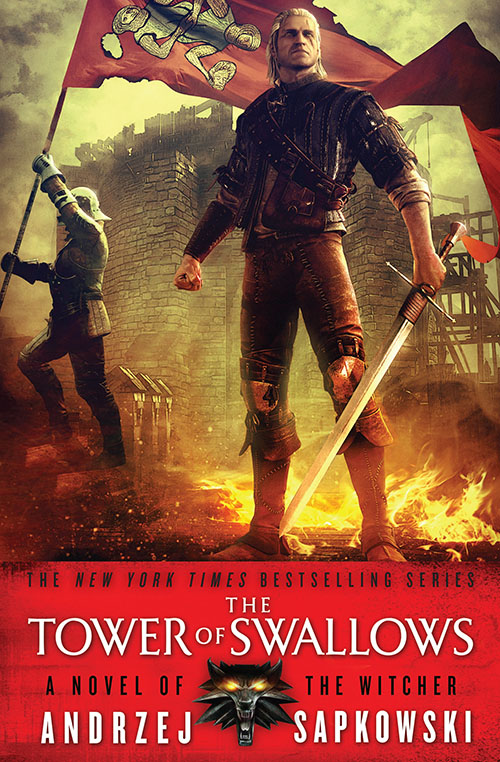
Microreview [book]: The Tower of Swallows by Andrzej Sapkowski

Bridging chapters are a flat circle.


The Witcher Cycle, as I've argued before, is a grand subversion of fantasy tropes--and written before trope subversion became a trope in and of itself. Problem is, whereas Polish, Spanish, Russian and other readers have enjoyed these books for quite some time, English-language readers are just getting getting them now. That means we can only retroactively grant Sapkowski's epic the canonical status it deserves. Better late than never, though, at least as far as this reader is concerned, because this darkly humorous yet also deadly serious work of fiction, with its elliptically structured narrative that draws as much from Latin American magic realism as it does from Tolkein, is truly special.

If you haven't guessed already, the Witcher Cycle is a fantasy epic with literary ambitions--or perhaps it's just literary by accident. Either way, it exists on a different plane from most of its fellow series--both in terms of quality and the challenge it presents to the reader. Even in that context, however, The Tower of Swallows is a difficult book to define, or even to recap. It is often disjointed, with stories told across several timelines and by multiple interlocutors. If often feels as if it is about to fall apart, until it finally manages to come together--with monumental effect.

Of note, The Tower of Swallows isn't really about the eponymous witcher, Gerald of Rivia. He has his moments, but really this is Ciri's tale. It's also one of those tricky "get to Mordor" volumes that bedevil so many authors. Unsurprisingly, this is the weakest volume in the series so far. On the other hand, his is not Sapkowski's A Feast for Crows or A Dance with Dragons. There is clear direction here.

Most real estate is devoted to Ciri telling the story of how she escaped Bonhart, a deeply menacing bounty hunter of unclear motivations; his erstwhile employer, Nilfgaardian coroner Stefan Skellen; and the Archmage Vilgefortz, who appears to be the series' Big Bad. Eventually she leaves her hiding place to make her way to the tower, followed by said pursuers, who are determined to catch her before she can enter the tower and reassume her powers. Geralt, Dandelion, Milva and Regis, meanwhile, are trying to make their way to Ciri, or to where they believes Ciri might be. Yennefer and Triss are also on Ciri's path, albeit on different timelines, and likely for different reasons.

The character narratives contained within The Tower of Swallows are not always linear, or even told straightforwardly in the close third person favored by the genre. Yennefer's story, for example, is told over several timelines, with crucial parts related by individuals who may not be reliable narrators. More often than not, the stylistic gambit works, but there are instances in which The Tower of Swallows would have benefitted from more conventional plotting. For example, there is far too much space given to the spy Dijkstra's visit to a far-flung (and newly introduced) kingdom--a plot point that doesn't really develop and, frankly, isn't necessary. Meanwhile, several great characters from earlier volumes--Yennefer, Regis and Milva in particular--get too little screen time, so to speak. 

It's also worth noting that The Tower of Swallows, like its predecessor Baptism of Fire, is an extremely violent and at times disturbing read. You need to have a high tolerance for that kind of thing, but the violence is highly purposive. Political commentary is central to The Tower of Swallows, and Sapkowski is a clearly a keen observer of politics. Similarly, the series continues to satirize the questionable politics of traditional fantasy (something I commented on extensively in reviews of the last two books). These are, in my opinion, major points of strength--for the book and even more so for the series writ large.

All in all this is a flawed volume in a superlative series, which makes it pretty good by my standard, but just short of excellent.


The Math

Baseline Assessment: 7/10.

Bonuses: +1 for experimenting with narrative structure; +1 for a picture perfect ending; +1 for Bonhart.

Penalties: -1 for the digressions; -1 for not paying enough attention to good characters.

Nerd Coefficient: 8/10. "Well worth your time and attention."


***

POSTED BY: The G--purveyor of nerdliness, genre fanatic and Nerds of a Feather founder/administrator, since 2012.


Reference: Sapkowski, Andrzej. The Tower of Swallows [Orbit/Gollancz, 2016]

Wednesday, July 1, 2015

Microreview [video game]: The Witcher 3: Wild Hunt

Following the Path


The Witcher 3 is great, and you should play it immediately.

The Witcher 3 follows closely after the events of The Witcher 2: Assassin of Kings. Geralt is a witcher (not a witch, or witch-hunter), a human transformed by mutagens and trained to kill monsters that prey on common people. He has recovered his lost memory and is on the search for his love, the sorceress Yennefer. He finds Yennefer in the service of Emhyr var Emreis, the emperor of Nilfgaard. Emreis has a mission for them: to find his daughter (and Geralt's adopted daughter) Ciri. Ciri has been missing for a long time, but Emreis's intelligence has spotted her in the conflicted lands of Velen, Novigrad, and Skellige. Ciri is thought to be pursued by the Wild Hunt, a mythical group of spectral riders that bring death everywhere they go. Geralt goes out in search of Ciri and the hunt begins.

If you've never played a Witcher game, the most obvious comparison is to a third-person Skyrim. It's a huge, third-person action RPG with a single character focus. You're not an avatar of yourself, but Geralt. Geralt has a voice, and history, but his conduct is largely up to the player. Dialog options aren't restricted to "saint" or "asshole" but several shades in between. Sometimes you can use witcher magic to manipulate conversations, but (in contrast to previous games) this sometimes backfires. Geralt can freely summon a horse, and fast travel is available at semi-regular intervals throughout the world. The main quest is not time-limited, so you're free to pursue side quests, witcher contracts (monster hunts), and play mini-games. Areas are not auto-leveled to provide a particular challenge and it's not difficult to wander into a fight you're not ready for, which gives exploration an appealing degree of danger. The quests in the game are helpfully labeled with a suggested player level, which I found to be mostly accurate to the degree of challenge I expected.

If you played The Witcher 2 (and you should, it's amazing), then you're likely pretty familiar with how to play The Witcher 3. It still has two swords, heavy and light attacks, potions, throwables, and magical signs. It has, however, been thoroughly tweaked to make the gameplay a little smoother. Melee attacks are not as easily interrupted. Potions are brewed once (after recipe and ingredients have been found) and then they stay in limited quantities in your inventory and auto-refill with every rest period. Potions don't last as long as they used to, so they're more freely chugged during combat. There are no knives to throw, but they've been replaced with a crossbow and bombs auto-refill like the potions do. The axii sign (mind control) actually works outside of dialog in The Witcher 3 to stun enemies, and yrden (magical trap) is less of an instant stun and more of an area-of-effect debuff zone. The availability of traps is far, far lower in The Witcher 3, which is great news if you're still having nightmares about that trap-filled jungle outside of Flotsam. You can freely dodge, block, and parry without worrying about a stamina meter. Signs require a recharge time per casting, but it can be sped up with character development. Overall, some of the rough corners of The Witcher 2's main combat loop have been smoothed over in positive ways.

Beyond the mechanics of the gameplay, this is very much an evolution of The Witcher games of the past. No easy choices, and very few of them shake out entirely from the start. You find out hours later how your choices have affected the world. It doesn't only affect characters either, as the actual world of The Witcher 3 changes. Not in huge ways, but little details such as seeing more soldiers in the streets, or different background conversations as the game progresses.

Quest design is incredible. The main story has a few interesting turns, but some of the side quests almost overshadow it. It felt like the designers got to where most video games would end a quest line, and decided to continue it for a few more beats. Of all the many, many quests I completed, I only ran into one that got stuck on a bug, and even that quest could be completed in another way due to its design. Even beyond quests, the landscape is littered with stuff to do, like destroy monster nests, find hidden treasures, and liberate areas from bandits. There's a CCG-ish mini game called Gwent that some people are huge fans of. I'm not one of them, but I appreciate it for doing something other than simple dice poker. Secondary quests include Gwent, fist fighting tournaments (like those in The Witcher 2), and horse racing. The amount of stuff to do in the game easily rivals or surpasses the largest RPGs.

There is also a huge amount of little details that The Witcher 3 gets right, where most games do not. There is no unspoken dialog. Every conversation is voiced. Even though the world is absolutely enormous, the parts of it all seem unique and different. Where most games this big might feel like they've been cut and paste together, the world of The Witcher 3 feels crafted. Every piece of equipment changes Geralt's look with very few palette swaps. Cutscenes are all rendered in-game, so every Geralt looks like your Geralt. If you're riding your horse, you can hold down the run button and the horse will (mostly intelligently) follow the trail you're on. It's all of these little touches that add up to The Witcher 3 being an amazingly immersive experience. There's very little in the game that pulls you out of its world.

If I had to make one complaint about the game, it's that the crafted narrative experience comes at the expense of having a character that represents the player. Playing the whole game as Geralt simply isn't going to appeal to every single person, and it doesn't have to, but it limits the audience. Your Geralt probably differs from mine in many ways, but we're both still playing as Geralt, not some representation of ourselves. It's a downside to the improved narrative you get from playing a single character. When you're playing a character, you can't play as yourself. Compared its modern RPG contemporaries, such as Pillars of Eternity, Dragon Age, or Skyrim, this makes The Witcher 3 rather limited in choice of player representation.

But if you're into Geralt, this is the best Witcher game yet. It's an enormous open world that is fun to explore and live in for the many, many hours you'll spend in it. It's an extremely immersive game that sends The Witcher series out on a very high note.

The Math

Baseline Assessment: 10/10

Bonuses: It's an amazing video game.

Penalties: -1 unless you're not into playing as Geralt. Then it's an excellent game that might not be for everyone.

Nerd Coefficient: 9/10 (very high quality/standout in its category)

***

BONUS MICRO-MICROREVIEWS

The Witcher 3 Free DLC

In the time since release, CD Projekt RED have released 10 pieces of free DLC, two pieces every two weeks since release. These pieces of DLC are truly DLC sized additions consisting of three quests, two sets of armor, two alternate costumes, an alternate set of art for Gwent cards, alternate hair and beard styles, and a new crossbow set. They are mostly minor additions, but the quests add more time and are of a quality consistent with the rest of the game. One of the new quests alone (a scavenger hunt) added another two hours to my time.

The new stuff, however, blends in so well with the rest of the game that it might be hard to locate new quests or items without some directions. Contrary to Elder Scrolls fashion, the new items are not accompanied by quests or mysteriously delivered notes, and the quests must be stumbled upon like any other quest. If you're just trying to check out the new stuff, it would behoove you to find a wiki page or forum post from someone who can tell you where to find the new stuff so you're not sifting through a sea of stuff you already know about.

They're nice bonuses that will give me a reason to fire the game up again when the rest are released. I am very much looking forward to the more substantial expansions that are planned for the game. 


The World of the Witcher [book]

I'm a sucker for video game art books. The World of the Witcher is, specifically, an art book for the video game series and not necessarily the book series. It's heavy on finished art and lore, but doesn't pull back the curtain much on concepts or designs, and the lore won't tell you much that you won't already know from playing the games. It's weighty and well-built, but not mindblowing.

***

POSTED BY: brian, sci-fi/fantasy/video game dork and contributor since 2014

Reference: CD Projekt RED. The Witcher 3: Wild Hunt [CD Projekt RED, 2015]
Reference: CD Projekt RED. The World of the Witcher [Dark Horse Books, 2015]

Wednesday, June 25, 2014

Microreview [book]: Baptism of Fire by Andrzej Sapkowski

A Cut Above

 
Epic fantasy is one the least prestigious genres of fiction, perhaps only surpassed by the supermarket romance novel, video game tie-in and that peculiar subset of cozy mysteries in which cats solve the crimes. And though there are a lot more decent fantasy novels than detractors might believe, very few can credibly claim to be significant works of literature. Andrzej Sapkowski’s Witcher Cycle is a rare exception.

Baptism of Fire is the third entry in the Cycle proper, the fourth Witcher book available in English translation, and the fifth overall. Series neophytes are recommended to start with the linked short story collection The Last Wish (and then lament the fact that the second such collection, Sword of Destiny, remains untranslated.*) before moving on to Blood of Elves. Those who have not yet read Time of Contempt may also want to skip the italicized summary below, as it contains spoilers for that book.

But first, some background: Sapkowski originally wrote the Witcher Cycle during the years 1990-2000, while fantasy was in the midst of a paradigm shift from the heroic archetypes of Tolkein and Howard to the pessimistic antiheroism that arguably stands as the institutional center of the genre today. And while all the great series of the 1990s are a part of that transition, none embody it quite like the Witcher Cycle.

As detailed in reviews of previous volumes, the series begins with subversion—of fairy tales, Tolkein and all the tropes produced from that source material. The books are playful and romantic—yet sharply critical of the binary archetypes (good/evil; heroic/cowardly; virginal/depraved) that once dominated heroic fantasy. In Time of Contempt, the critique widens, portending a shift into grittier territory.

Baptism of Fire begins in the forest of Brokilon, where the dryads tend Geralt’s wounds after his battle with archmage Vilgefortz on Thanedd. Here we meet the archer Milva, a rare human tolerated by the dryads. We find out that Milva, for unexplained reasons, works to guide shattered Scoia’tael commandos to the shelter of the forest after engagements with Northern armies, most of which do not go well for the elves.

Word reaches Brokilon that the Emperor of Nilfgaard, Emhyr var Emreis, has captured Geralt’s protĆ©gĆ© Ciri—heir to the throne of Cintra and carrier of the fabled “Elder Blood”—and plans to marry her in order to legitimize the Empire’s occupation of Cintra. Accompanied by Milva and the indomitable bard Dandelion, he crosses war torn lands in quest to rescue her. At this point, of course, there is little hope that Ciri can save the world, though everyone—from the Emperor of Nilfgaard to the Northern Kings to various Elven factions to a cabal of sorceresses plotting to redraw the political map—appears ready to use her for their own devices. Geralt simply wants to save Ciri from a life where she would be little more than a symbol and tool of the politically ambitious. 


Ciri, meanwhile, is not captive at the Imperial court, but a member of the Rats—a band of outlaws preying on the Imperial aristocracy near the northern border. As her identification with the Rats grows, the tether to former lives as princess, witcher’s apprentice and novice mage grow weakens, and Ciri herself grows increasingly hard and violent.

As anticipated, Baptism of Fire is much grittier than previous entries in the series. The quest for Ciri takes Geralt and his companions across a desolate landscape of massacre, pillage and displacement, through harrowing encounters with the entrepreneurs of violence and fortuitous ones with like-minded souls. It presents a world engulfed by apocalyptic war between an expansionist, authoritarian and vaguely Teutonic Empire and the supposedly heroic kings of the north—who, when not losing battles to “evil” Nifgaard, are busy massacring elves and dwarves or herding them into decrepit urban ghettos.

Many readers will doubtlessly intuit a link with A Clash of Kings and A Storm of Swords—books similarly sanguine about warfare in a medieval setting and equally contemptuous of heroic fantasy’s romantic notions of “the good war.” Like George R. R. Martin’s epic, the experience of war is painted in decidedly unromantic (grim and dark) terms.

Yet in other ways Baptism of Fire contrasts with A Song of Ice and Fire—first and foremost in how it frames the central political conflict. Both begin with the assumption that power games are ultimately about hoarding and little else, and that cynicism and self-interest drive most political calculus. But in A Song of Ice and Fire, nearly everything is at risk, and most everyone feels they have a stake in the outcome. Everyone, moreover, is aware that it matters, and that it matters to them personally. In this regard, the Witcher Cycle is far more radical in its departure from heroic convention: the central conflict between Nilfgaard and the Northern Kingdoms doesn’t matter, beyond the death and destruction it creates: there is little appreciable difference among the belligerents, and their interests are remote from those of nearly everyone else.

At the same time, Baptism of Fire contains a very clear notion of what heroism looks like in such a context—a primarily symbolic heroism like that found in the hardboiled variant of noir fiction. Geralt is no "white Knight"; rather, like Chandler’s Marlowe, he is an ethical man in a sociopathic age, swimming against the tide of darkness. As Marlowe finds in the dark recesses of Los Angeles, that tide may be insurmountable. But the presence of some goodness, divorced from simple self-preservation or the acquisition of power, is in and of itself redemptive, or at least suggests that redemption is still possible.

There are also differences of scale. Though Martin’s strength as a writer, arguably, is his tight focus on character, the series is unmistakably epic in scope. Baptism of Fire, feels decidedly microscopic in comparison. The political conflict happens around Geralt, Ciri and the others, though it frequently threatens to envelope them. There are a few passages—mostly involving Redanian spymaster Dijkstra or his unrequited love, the sorceress Philippa Eilhart—that do speak to the grand conflict. But the bulk of action, whether following Geralt or Ciri, focus on small vignettes, and are constructed out of Sapkowski’s sophisticated, elliptical dialogue.

Regis
What’s more, despite the grim darkness of the world it presents, Baptism of Fire is nonetheless charming and funny, and is in another sense a celebration of good companionship. The new characters introduced in this volume are wonderful additions. Fans of the video game series will rejoice at the introduction of Zoltan Chivay, while Milva exactly the kind of independent and highly competent female character many critics find lacking in male-authored gritty fantasy. But my personal favorite is Emiel Regis Rohellec Terzief-Godefroy (aka Regis), the teetotaler vampire, because he, more than any other character in the series to date, best exemplifies Sapkowski’s quirky humor.

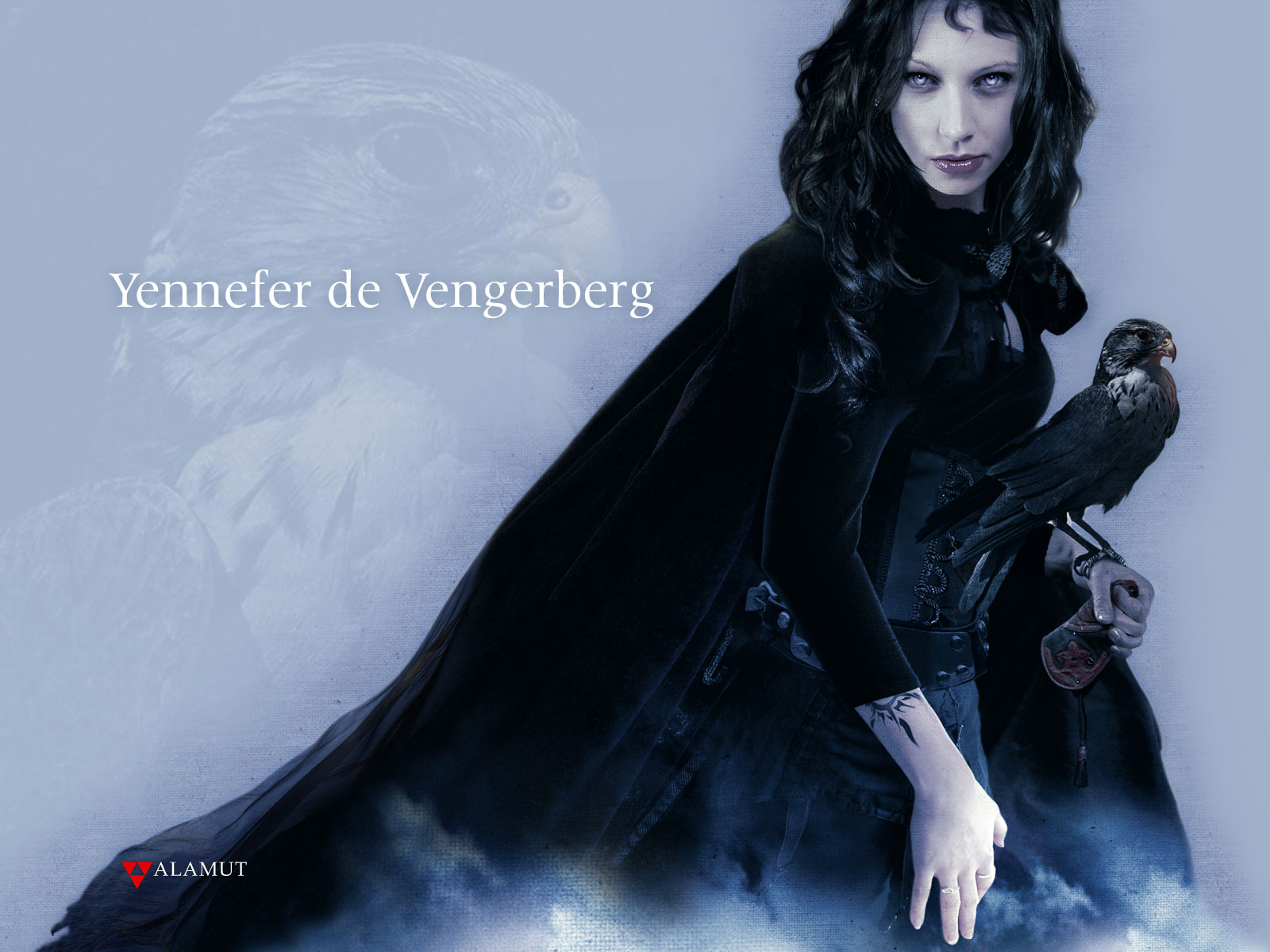
Yennefer
As great as the new additions are, I nevertheless found that we were given too little of Ciri and Yennefer of Vengerberg, who for my money is just as interesting and compelling a character as Geralt. The small taste we do get serves as a reminder: any scene she is involved with is pure gold. But Baptism of Fire felt poorer for the lack of Geralt/Yennefer interaction, even in the form of their letters to one another, which was such a bizarre joy in Time of Contempt. (Note: I amaware this doesn't fit the plot at this point; nevertheless, I missed it.)

In sum, while perhaps not transcendent in the manner of its immediate predecessor, Baptism of Fire nevertheless solidifies the Witcher Cycle as one of the best and most interesting fantasy series I’ve ever read. Though it functions well as adventure fiction, it has added depth and value as satire and commentary on fantasy literature.

Moreover, though there are many good writers working in fantasy, Sapkowski is a genuine stylist. His prose is not as dense as Gene Wolfe’s, or as elegant as Elizabeth Bear’s, but it is supremely clever—hiding texts and subtexts in the most innocuous of places—and uniquely playful. I see a clear affinity with Latin American greats Luis Borges and Roberto BolaƱo—an affinity that may go far in explaining Sapkowski’s immense popularity in Spanish translation. That’s rare praise for a genre writer, and especially for one who plies his trade in epic fantasy—a category of fiction that is only rarely, to invert Gene Wolfe’s turn of phrase, magic realism in English.


The Math

Baseline Assessment: 9/10.

Bonuses: +1 for Milva, Zoltan and Regis.

Penalties: -1 for relative lack of Yennefer and Ciri.

Nerd Coefficient: 9/10. "Very high quality/standout in its category."

***


Sapkowski, Andrzej. Baptism of Fire [Orbit/Gollancz, 2014]

POSTED BY: The G--purveyor of nerdliness, genre fanatic and Nerds of a
Feather founder/administrator (2012).
Monday, August 26, 2013

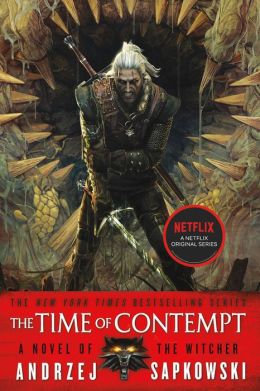
Microreview [book]: Time of Contempt by Andrzej Sapkowski

Sapkowski, Andrzej. Time of Contempt [Orbit US/Gollancz, 2013]


The Meat

Sometime in the 1990s, fantasy's center of gravity shifted. Simple heroism (and anti-heroism) were out, along with magical trinkets, gallant knights, noble savages, evil gods, prophesied chosen ones, elves, dwarves, dragons and most other mainstays of both the neo-Tolkeinic and sword & sorcery questing traditions. Moral ambiguity, violence, greed, vice, corruption and, above all, politics reigned in their stead.

The gritty revolution was, and remains, a reaction to all the ridiculous tropes and cliches that once defined fantasy. Regardless of whether (and to what degree) gritty fantasy has grown captive to its own tropes, it was at one point inarguably fresh and inarguably revolutionary. The revolution did not, however, occur overnight. Glen Cook's The Black Company was published in 1984--a good dozen years before A Game of Thrones and fifteen before Gardens of the Moon. Rather, the transition occurred over the course the 1990s; as a result, most of that decade's major works straddle both worlds.

Andrzej Sapkowski's Witcher cycle is one of these hybrid beasts, and perhaps the most profound and significant of them all. On the face, you have an Elric clone questing through a Tolkeinic world drenched in cliche and populated by nearly every sentient non-human creature ever touched upon in fantasy (yes, there are even centaurs, werewolves and unicorns). He is trying to save the prophesied one from the evil, vaguely Teutonic/Russian Emperor to the South/East. He is handsome! He scores with hot chicks! He has a wisecracking sidekick! He kicks ass and everyone knows it!

Only, if you peel off the bark off this cavalcade of fantasy tropes, you discover the degree to which Sapkowski picks apart these assumptions and their underlying moralities. That chosen one? Well, she isn't prophesied to save the world, but to destroy it. That evil, vaguely Teutonic/Russian Emperor to the South/East, then? At least he isn't organizing pogroms against elves and dwarves like his supposedly heroic counterparts to the north. And virile hero Geralt? Well, he is definitely handsome--it's just that he doesn't so much score with hot chicks as engage in complex and painful relationships with independent and capable women (e.g. with the asskicking Yennefer of Vengerberg). And as far as his whole monster hunting/ass-kicking thing goes, turns out he does it for money, and because it's the least political thing he can do in a world where his skills and talents make him an attractive tool for the powerful. But even this act is fraught with guilt and pain--after all, Geralt knows that, through this act, he is contributing to the ongoing disenchantment of the world.

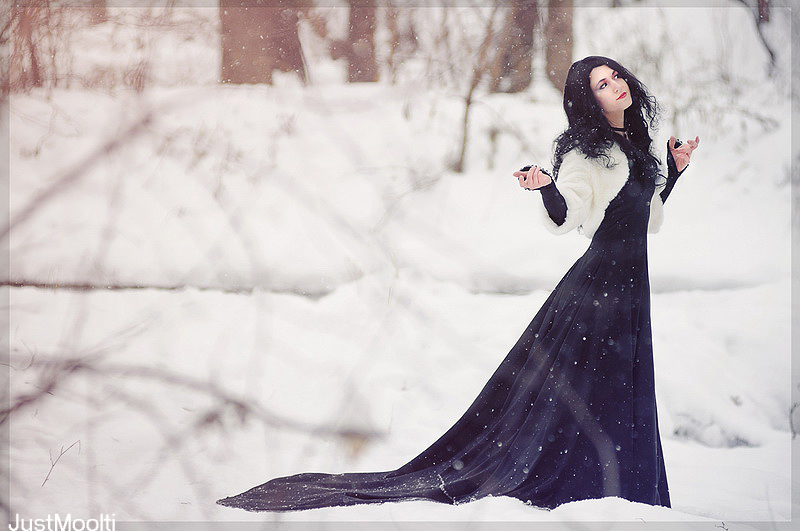
Yennefer of Vengerberg Cosplayer
Time of Contempt is many things. It is a disturbing and deeply political novel about what life might really be like in an traditional fantasy world. It is a deconstruction of traditional fantasy tropes and it is a devastating critique of the racism, sexism and nationalism that have done so much damage to our world, and which are casually reproduced in much traditional fantasy. Yet though the book is, ultimately, gritty as hell, it's also funny and charming and intimate. It's playful with the source material, not dismissive of it. This only makes its core pessimism all the more arresting.

Sapkowski's writing is nearly as impressive, and considering how many people have complained about the English translation, I can only imagine how good it is in the original Polish. For the first half of the book, things aren't as much happening as being revealed. Every conversation is thick with backstory, often told in a circular manner reminiscent of Gene Wolf's masterpiece The Book of the New Sun--if only the prose weren't so ponderous or dense. Oddly, I found myself thinking of Shakespeare--and no, I'm not saying that Time of Contempt is on par with Hamlet. But I am saying that Sapkowski often conveys information in a distinctly dramaturgical manner, and that he does it exquisitely well. This lends a complexity to his storytelling that's rarely found in genre fiction.

Yet when things kick off, the book is impossible to put down. In fact, the more I talk about it, the more I want to go read it again. So here's the bottom line: Time of Contempt is easily one of the most sophisticated fantasy novels I've ever read, and it may even be the best fantasy novel I've ever read. More people need to check out this series.

The Math

Baseline Assessment: 10/10

Bonuses: I'm not really allowed to add anything, am I...

Penalties: ...since I can't think of anything to deduct points for.

Nerd Coefficient: 10/10. "Fucking masterpiece."

Find out why these kinds of things are so rare here.

Monday, October 29, 2012

Microreview [book]: Blood of Elves by Andrzej Sapkowski

Blood of Elves, by Andrzej Sapkowski [Orbit 2009]


The Meat

I reviewed the first witcher book, The Last Wish, not too long ago. Suffice to say, I really, really liked it. The characters were memorable, the prose was far more sophisticated than in most fantasy, and the world Sapokowski created was deeply compelling. I loved almost everything about it, from the sharp dialogue to the complex and multifaceted treatments of racism, sexism, colonialism and other socio-political issues that affect us in the real world. And I particularly appreciated the way the book managed to operate simultaneously as serious fantasy and as a tongue-in-cheek deconstruction of genre's tropes and cliches. All of that returns, and is explored in greater detail, with Blood of Elves, the first of a five novel witcher sequence published by Orbit.

Action starts in the wake of a failed Nilfgaardian invasion of the northern kingdoms. Though turned back at the Battle of Sodden, Nilfgaard has managed to conquer the southern Kingdom of Cintra, as well as several of its neighbors. Unfortunately for the Emperor and his cronies, the princess Ciri has escaped. Geralt, who the girl was promised to in the short story "A Question of Price" (from The Last Wish), finds her and brings her to the castle Kaer Morhen, where he begins training her as a witcher. As the book unfolds, it becomes clear that there's much more to this girl than meets the eye, though it isn't exactly clear what--even the by end of the book. Nevertheless, many important people are interested in her, from the Emperor of Nilfgaard and his wizard crony Rience, to the various kings of the North.

The book is hard to put down, but unlike with George R. R. Martin's Song of Ice and Fire, it's not because of the plot. That actually meanders a bit, which might make more sense in the context of the finished series, but with only one novel (so far) to judge, occasionally drags. In fact my biggest complaint is that Sapkowski dwells on small things, and largely glosses over major plot points. This is probably exacerbated by the decision by Orbit not to publish Sapkowski's second short story collection, Sword of Destiny, which includes some key background information and introduces several major characters. Action can be stilted as a result, and when the book is over, you are left a bit unsatisfied, craving more Geralt, Yennifer, Dandelion, Ciri and Triss.

That, of course, is in part because the characters are just ridiculously good. Geralt, who superficially looks like an Elric clone (and Michael Moorcock sure thinks he is), is actually one of the most fully realized protagonists in fantasy--and with apologies to Mr. Moorcock, I think he's much more interesting than Elric. He's powerful, yes, but reluctant to use his power in a way that might play into the world's terrible, yet for us familiar, politics. He'd like nothing more than to opt-out completely, and go about his business killing monsters for coin, but he cannot, and is inevitably dragged into affairs of war and peace. He's quiet, yet thoughtful; violent yet only hesitantly so; hard yet evidences a greater capacity for empathy than anyone else in his world.

The powerful enchantresses he is romantically involved with, Yennefer of Vengerberg and Triss Merigold, are no less compelling. Any scene with Yennefer is pure gold. She's prideful, antagonistic and fierce; yet, beneath the hard exterior, undoubtedly caring and sympathetic--exactly the kind of complex, independent female character that male writers often have trouble writing. Her tortured relationship with Geralt is one for the ages, and works because she is his equal in every way. The letter she writes to Geralt may be the single greatest moment in the book--dripping with sarcasm, it perfectly encapsulates Sapkowski's gift for tragicomedy.

Cosplay Yennefer of Vengerberg

The backdrop to Blood of Elves, of course, is a distinctly sociopolitical tragedy. As the kingdoms of the north fight off the Empire of Nilfgaard, the remnants of their own conquered populations--elves, dwarves, gnomes and dryads--live on the margins of society as second-class citizens, or in small, impoverished enclaves where humans would't even bother settling. If this sounds familiar, it should--the plight of the native peoples of the Americas come to mind, as do those of other conquered peoples from modern Asia and Africa to medieval Europe and the ancient Middle East. Yet Sapkowski is subtle enough to add complexity to the picture. The threat posed by Nilfgaard isn't too different from the threat once posed by humans to the non-humans of the north--yet even the realization of this doesn't lead the kings to better treatment of their non-human subjects. The opposite, in fact.

On the other side of the coin, the non-human resistance group, the Scoia'tael, may be the pawns of decidedly unsympathetic Nilfgaard, and their acts of violence--often against civilians--provoke reprisals against innocent elves, dwarves and other non-humans. We are, like Geralt, meant to understand and sympathize with their plight, but grow deeply uncomfortable with their chosen methods. We see this kind of tragedy play out on the news regularly, but eading it in a fantasy context actually made me reexamine a lot of assumptions I'd held. That's literature at its best.

The bottom line is, if you like your fantasy brainy and character-driven, Blood of Elves is a must.

The Math

Baseline Assessment: 8/10

Bonuses: +1 for the most compelling cast of characters you could imagine in a fantasy novel; +1 for the powerful, complex mediations on political morality--way more sophisticated than this genre is used to.

Penalties: -1 for an odd structure that, while not taking away from your enjoyment of the book, leaves you a bit unsatisfied at the end; -1 for too much attention spent on trivial matters, and not enough on major plot points.

Nerd Coefficient: 8/10